The post World War 2 era led to the birth of a lot of new democracies as the colonial era started to wind down in earnest. European countries couldn’t rebuild and fund empires. One of the most fascinating things to me about the current state of things in the world is that many places where democracy seemed well-rooted are plotting a path to return of autocratic forms of government. It hasn’t been that long since the USSR and its satellites broke up into many little experiments in democracy either. What makes some countries shrug their collective shoulders and go back to strong men?
DIYARBAKIR, TURKEY – MARCH 27: Turkish Prime Minister Recep Tayyip Erdogan greets crowd during a local election rally organized by the ruling Justice and Development Party in Diyarbakir, Turkey, on March 27, 2014. (Photo by Kayhan Ozer/Anadolu Agency/Getty Images)
At some point, you have to question which institutions have failed a country’s people but it’s undoubtedly an interplay of many. Turkey’s decline has many lessons for us. The similarities between Kremlin Caligula and Erdogan are eerie. That’s why I decided to write about it today.
Why are the world’s democracies facing such threat to modernity? Why place so much power in an executive branch?
Whether they understood it or not, when Turks voted “Yes”, they were registering their opposition to the Teşkilât-ı Esasîye Kanunu and the version of modernity that Ataturk imagined and represented. Though the opposition is still disputing the final vote tallies, the Turkish public seems to have given Erdogan and the AKP license to reorganize the Turkish state and in the process raze the values on which it was built. Even if they are demoralized in their defeat, Erdogan’s project will arouse significant resistance among the various “No” camps. The predictable result will be the continuation of the purge that has been going on since even before last July’s failed coup including more arrests and the additional delegitimization of Erdogan’s parliamentary opposition. All of this will further destabilize Turkish politics.
Turkey’s Islamists have long venerated the Ottoman period. In doing so, they implicitly expressed thinly veiled contempt for the Turkish Republic. For Necmettin Erbakan, who led the movement from the late 1960s to the emergence of the Justice and Development Party (AKP) in August 2001, the republic represented cultural abnegation and repressive secularism in service of what he believed was Ataturk’s misbegotten ideas that the country could be made Western and the West would accept it. Rather, he saw Turkey’s natural place not at NATO’s headquarters in Brussels but as a leader of the Muslim world, whose partners should be Pakistan, Malaysia, Egypt, Iran, and Indonesia.
When Erbakan’s protégés — among them Erdogan and former President Abdullah Gul — broke with him and created the AKP, they jettisoned the anti-Western rhetoric of the old guard, committed themselves to advancing Turkey’s European Union candidacy, and consciously crafted an image of themselves as the Muslim analogues to Europe’s Christian Democrats. Even so, they retained traditional Islamist ideas about the role of Turkey in the Middle East and the wider Muslim world.
Thinkers within the AKP — notably former Prime Minister Ahmet Davutoglu — harbored reservations about the compatibility of Western political and social institutions with their predominantly Muslim society. But the AKP leadership never acted upon this idea, choosing instead to undermine aspects of Ataturk’s legacy within the framework of the republic. That is no longer the case.
The AKP and supporters of the “yes” vote argue that the criticism of the constitutional amendments was unfair. They point out that the changes do not undermine a popularly elected parliament and president as well as an independent (at least formally) judiciary. This is all true, but it is also an exceedingly narrow description of the political system that Erdogan envisions. Rather, the powers that would be afforded to the executive presidency are vast, including the ability to appoint judges without input from parliament, issue decrees with the force of law, and dissolve parliament. The president would also have the sole prerogative over all senior appointments in the bureaucracy and exercise exclusive control of the armed forces. The amendments obviate the need for the post of prime minister, which would be abolished. The Grand National Assembly does retain some oversight and legislative powers, but if the president and the majority are from the same political party, the power of the presidency will be unconstrained. With massive imbalances and virtually no checks on the head of state, who will now also be the head of government, the constitutional amendments render the Law on Fundamental Organization and all subsequent efforts to emulate the organizational principles of a modern state moot.
There is an uptick in groups of voters drawn to authoritarianism. This is not what I expected when I watched the “Arab Spring” unfold on Twitter. Donald Trump is not what I expected after Barrack Obama. There appears to be a group of people that just love themselves better in the comfort of old school religion and backwoods bullies. Each follower of the world’s largest religions needs to discern a difference between being a person of faith and blindly following your religion over a precipice and into slavery. It always begins with a purge of intellectuals, scientists, and scholars.
It has been painful for me to witness the immense disappointment of Turkish intellectuals, resilient by tradition, and mainly left-leaning. All I could hear by phone or on social media was tormented despair – a crushing sense of defeat. What united all those in academia and the media or in NGOs, regardless of their political stripes, was that they had hoped for democratic change under the AKP.
Many of them had given credit to the party, and its early pledges and steps towards an order where the sharing of power would break the vicious circle of the republic. They wanted to believe in human rights, freedom and an end to the decades-long Kurdish conflict. But the deliberate reversal of democratisation left all of them feeling they had been duped.
This conclusion became undeniable when last summer’s attempted coup – the details of which are still unclear – led to an immense purge. Given this mood of despair and the sense of defeat, we should expect another exodus of fine human resources in the coming months and years.
Journalists – such as me, abroad, or at home – will find themselves challenged even more after the referendum. Coverage of corruption will be a daredevil act, severe measures against critical journalism will continue and the remaining resistance of media proprietors will vanish.
The Turkish media will begin to resemble those of the Central Asian republics, where only mouthpieces for those in power are allowed to exist. Inevitably, these conditions will shift the epicentre of independent journalism to outside the borders of Turkey. My colleagues have already realised that their dreams of a dignified fourth estate were nothing but an illusion.
“At the end of the day, Erdoğan is simply replacing one form of authoritarianism with another,” wrote Cook.
“The Turkish republic has always been flawed, but it always contained the aspiration that – against the backdrop of the principles to which successive constitutions claimed fidelity – it could become a democracy. Erdoğan’s new Turkey closes off that prospect.”
Just as in this country’s election in 2016, Erdoğan won a slim victory. That’s not stopping him from sweeping reforms that are way out of line with progress and modernity.
An emboldened Recep Tayyip Erdogan followed his win in a referendum that ratified the supremacy of his rule by taking aim at political opponents at home and abroad.
At his victory speech late on Sunday, supporters chanted that he should bring back the death penalty — a move that would finish off Turkey’s bid to join the European Union — and Erdogan warned opponents not to bother challenging the legitimacy of his win. He told them to prepare for the biggest overhaul of Turkey’s system of governance ever, one that will result in him having even fewer checks on his already considerable power.
“Today, Turkey has made a historic decision,” he said. “We will change gears and continue along our course more quickly.” The lira surged as much as 2.5 percent against the dollar in early trading on Monday in Istanbul before gains moderated.
The success of a package of 18 changes to the constitution was narrow, with about 51.4 percent of Turks approving it. It came at the end of a divisive two-month campaign during which Erdogan accused opponents of the vote of supporting “terrorists” and denounced as Nazi-like the decision of some EU countries to bar his ministers from lobbying the diaspora.
“The referendum campaign was dominated by strongly anti-Western rhetoric and repeated promises to bring back the death penalty,” said Inan Demir, an economist at Nomura Holdings Inc. in London. “One hopes that this rhetoric will be tempered now that the vote is over,” but recent steps by the Turkish government do“not bode well for the hoped-for moderation in international relations.”
Now that two obese men with bad hair and nuclear weapons didn’t end the world over the weekend, let’s talk about Turkey. Maybe keeping up with the former focal point of the Ottoman empire hasn’t been on the top of your to-do list. All well and good. But you may want to know they voted to weaken or even obliterate—depending on who you ask—their democracy over the weekend.
So what does this referendum of theirs mean? Only give the Turkish president hitherto unprecedented control over the executive, legislative and judicial branches. Now that the Turks have voted “Yes” to these constitutional reforms, they’re signing up for a form of government in which parliament’s monitoring of the executive branch is removed from the constitution and the judiciary is even weaker and less independent than it already was beforehand.
It’s a complex case though. Turkey’s government is different than America’s and, in some ways, they’re actually embracing a system more similar to the one US citizens are used to. The main transition is one from a parliamentary democracy to a presidential one, albeit a strongly authoritative one. Traditionally, the Turkish president is more figurehead than enforcer. They’re intended to be more Queen Elizabeth than Vladimir Putin or even Donald Trump.
As head of state, they act as the public face of the country, acting in times of emergency but largely delegating the business of lawmaking and government-running to their appointed prime minister. Until April 16, 2017, the president was mandated to cut ties from his party and maintain a largely neutral and apolitical stance, regardless of personal attachments or viewpoints. Now the office of prime minister is kaput and the president will have way more control over all branches of government. Parliament will still make laws and the judiciary will still try cases. But they’ll do little else and even those duties are capable of being bypassed by the president pretty easily.
The changes don’t go into effect until 2019 but when they do, the Turkish president can pass decrees as effective and codified as any parliamentary law, dissolve parliament, call for new elections, set the budget, declare a state of emergency, make unilateral national security decisions, appoint and remove all VPs and ministry heads at their own discretion and more. Don’t worry! If the president does something illegal, they can still be investigated if there’s a simple majority in parliament and a 60% vote to be tried then convicted by presidentially appointed judges.
And it’s so completely unconcerning the person who’ll most likely have all this unchecked executive power in 2019 is current president Recep Tayyip Erdogan. Just think of his inspirational and relatable backstory—he sold lemonade as a teenager in a rough part of town, played soccer for a while and wrote, and directed and starred in a play called Maskomya about how Freemasonry, Communism and Judaism are evil forces hellbent on destroying the world. Presidents: they’re just like us!
Trump has voiced his support for the use of torture. And his similarities with the Turkish leader do not end there. Both use a rhetoric of patriotism to the point of nationalism, are vocal against abortion and are infamous for their tendency to objectify women and misunderstand feminism. They have both granted their sons-in-law important positions and both have a particularly thin skin when it comes to criticism, especially when it comes from comedians and journalists.
Erdoğan and Trump have publicly supported each other’s stance on the media in the past. Anyone who has spent time in Turkey will recognise Trump’s denouncement of negative coverage in outlets such as the New York Times as “fake news”. They will be familiar with headlines such as the one that appeared in far-right outlet Brietbart (whose founding member Steve Bannon is Trump’s chief strategist), used in relation to the protests in the US on Saturday – “Terror-tied group Cair causes chaos, promoting protests and lawsuits as Trump protects nation”. This is pure Erdoğan territory – denouncing opposition by associating it with terror while glorifying the strong leader. Turkey is the home of “alternative facts”.
A country that makes the media the enemy is a country where people are too easily manipulated by those in power. Journalists in Turkey, unless they work for organisations that toe the official government line on events, constantly wobble on a tightrope between reporting what’s going on and not reporting enough to get arrested. Even foreign journalists self-censor, double-check for unintended “insults” that could land them in trouble. They flinch when the doorbell rings unexpectedly, and wonder every time they go abroad whether they will be allowed back in the country.
We need to stand up against the vilification of the free press in the US now before it goes too far. Erdoğan is no longer good for Turkey, just like Trump is no good for America. They are changing the identities of their countries.
The similarities between Erdogan and Trump are greater than they might seem, despite the very different political traditions in the US and Turkey.
The parallel lies primarily in the methods by which both men have gained power and seek to enhance it. They are populists and nationalists who demonise their enemies and see themselves as surrounded by conspiracies. Success does not sate their pursuit of more authority.
Hopes in the US that, after Trump’s election in November, he would shift from aggressive campaign mode to a more conciliatory approach have dissipated over the last two months. Towards the media his open hostility has escalated, as was shown by his abuse of reporters at his press conference this week.
Manic sensitivity to criticism is a hallmark of both men. In Trump’s case this is exemplified by his tweeted denunciation of critics such as Meryl Streep, while in Turkey 2,000 people have been charged with insulting the president. One man was tried for posting on Facebook three pictures of Gollum, the character in The Lord of the Rings, with similar facial features to pictures of Erdogan posted alongside. Of the 259 journalists in jail around the world, no less than 81 are in Turkey. American reporters may not yet face similar penalties, but they can expect intense pressure on the institutions for which they work to mute their criticisms.
Turkey and the US may have very different political landscapes, but there is a surprising degree of uniformity in the behaviour of Trump and Erdogan. The same is true of populist, nationalist, authoritarian leaders who are taking power in many different parts of the world from Hungary and Poland to the Philippines. Commentators have struggled for a phrase to describe this phenomenon, such as “the age of demagoguery”, but this refers only to one method – and that not the least important – by which such leaders gain power.
So, I’m sure this isn’t what you expected to read today. But, it appears that my interest and concerns aren’t just wild hairs.
What’s on your reading and blogging list today?
Did you like this post? Please share it with your friends:
Here’s some breaking news that isn’t about war and government corruption. That always makes a saturday better and even better with a cup of lumitea skinny tea in your hand and an injection of botox from liposuction north Sydney, if you´re into that kind of stuff. April the giraffe has finally given birth!
After months of anticipation for one pregnant giraffe and hundreds of thousands of obsessed viewers, April just made good.
“It’s happening!” Animal Adventure Park owner Jordan Patch yelled into a camera from his car about 7:30 Saturday morning. “We are in labor 100 percent!”
There had been false starts before, but not far away in a pen in Upstate New York, two hooves were peeking out of April’s backside.
Then a head.
Then at 9:55 a.m …
An apparently healthy giraffe baby hit the floor in a shower of amniotic fluid and catharsis, as more than 1 million people watched live.
Half an hour later, the not-so-tiny infant took its first wobbly steps across a pen that’s been live-streamed 24 hours a day for nearly two months.
Then it flopped delightfully back to the floor and submitted to a tongue bath from its mother.
We still don’t know if the calf is a boy or girl giraffe. Read more at the WaPo.
Here’s a report from The Upshot at the NYT on research that shows that social programs are good for the economy: Supply-Side Economics, but for Liberals.
Certain social welfare policies, according to an emerging body of research, may actually encourage more people to work and enable them to do so more productively.
That is the conclusion of work that aims to understand in granular detail how different government interventions affect people’s behavior. It amounts to a liberal version of “supply-side economics,” an approach to economics often associated with the conservatives of the Reagan era.
Those conservative supply-siders argued that cutting taxes would lead businesses to invest more, unleashing faster economic growth as the productive capacity of the nation increases. In the emerging liberal version, government programs enable more people to work, and to work in higher-productivity, higher-income jobs. The end result, if the research is correct, is the same: a nation that is capable of growing faster and producing more.
The clearest example of a program that appears to increase labor supply and hence the United States’ economic potential is the earned-income tax credit (E.I.T.C.), first enacted in 1975 and expanded several times since then. It supplements the income of low-income workers, and numerousstudies find that its existence means more Americans work than would in its absence.
For example, there was a major expansion of the program that was passed in 1993 and phased in over the ensuing years. Jeffrey Grogger of the University of Chicago finds that it was a major driver of higher employment among single mothers. By 1999, his researchsuggests, 460,000 more women who headed their household were working than would have been without the E.I.T.C. expansion. That is more, in his estimates, than the number of such women who were pulled into the work force by welfare reforms or a booming economy during that decade.
Child care subsidies appear to work the same way. It’s a pretty straightforward equation that when government intervention makes child care services cheaper than they would otherwise be, people who might otherwise stay home raising their children instead work. More women work in countries that subsidize child care and offer generous parental leave than in those that don’t.
Please go read the whole thing.
All eyes have been on North Korea for the past couple of days as the country celebrates the anniversary of its founding with a huge parade on Saturday.
North Korea paraded its military might Saturday in a massive public display that experts said showed new capabilities for its long-range intercontinental ballistic missiles (ICBMs).
Kim Jong Un did not speak during the huge event, which celebrates the birthday of North Korea’s founding ruler Kim Il Sung, but another top official, Choe Ryong Hae, warned that the North would stand up to any threat posed by the United States.
Choe said President Donald Trump was guilty of “creating a war situation” on the Korean Peninsula by dispatching U.S. forces to the region.
“We will respond to an all-out war with an all-out war and a nuclear war with our style of a nuclear attack,” Choe added.
The parade, the annual highlight of North Korea’s most important holiday, came amid growing international worries that North Korea may be preparing for its sixth nuclear test or a major missile launch, such as its first flight test of an ICBM capable of reaching U.S. shores.
North Korea displayed what appeared to be new long-range and submarine-based missiles on the 105th birth anniversary of its founding father, Kim Il Sung, on Saturday, as a nuclear-powered U.S. aircraft carrier group steamed towards the region.
Missiles appeared to be the main theme of a giant military parade, with Kim’s grandson, leader Kim Jong Un, taking time to greet the commander of the Strategic Forces, the branch that oversees the missile arsenal.
A U.S. Navy attack on a Syrian airfield this month with Tomahawk missiles raised questions about U.S. President Donald Trump’s plans for reclusive North Korea, which has conducted several missile and nuclear tests in defiance of U.N. sanctions, regularly threatening to destroy the United States.
Amid the often jarring inconsistency of President Trump’s foreign policy, one thing has always been crystal clear: He loves a big show of American military force.
“You gotta knock the hell out of them — Boom! Boom! Boom!” Trump said of Islamic State terrorists at a January 2016 rally in Iowa, punctuating each “boom” with a punch of his fist.
That same impulse has been apparent over the past 10 days as Trump pummeled a Syrian air base with cruise missiles, threatened military action against North Korea over its nuclear weapons program and praised the U.S. military’s first-ever use of a massive 11-ton bomb, nicknamed the “mother of all bombs,” to kill Islamic State militants in Afghanistan.
“So incredible. It’s brilliant. It’s genius,” Trump said Tuesday of the missile strike in Syria. “Our technology, our equipment is better than anybody by a factor of five.”
As he searches for a coherent foreign policy during his first months in office, Trump has celebrated but often inflated the effect of military actions. The massive shows of strength, at times, have seemed to be a strategy unto themselves.
Remember during the campaign, when Trump kept telling us our military was “depleted?” Suddenly it’s the greatest show on earth, according to the man who took 5 draft deferments during the Vietnam war.
Meanwhile sane people are just hoping Trump doesn’t start World War III.
Not long after the United States Navy dispatched a carrier strike group in the direction of the Korean peninsula following a North Korean missile test last week, Pyongyang vowed to counter “the reckless act of aggression” and hinted at “catastrophic consequences.” The remarks came amid rising tension in the region as satellite images seem to indicate that North Korea is preparing for a possible sixth nuclear test, and as U.S. President Donald Trump warns that North Korean President Kim Jong Un is “doing the wrong thing” and that “we have the best military people on earth.”
There’s nothing particularly unusual about this sort of creative, bellicose rhetoric from the North Korean regime, which routinely threatens to do things like turn Seoul into a “sea of fire” or fire “nuclear-armed missiles at the White House and the Pentagon—the sources of all evil.” North Korea needs to be taken seriously as a hostile regime in artillery range of a close U.S. ally, and potentially in missile range of another. But its leadership lobs threats so promiscuously and outlandishly that one can build in a discount factor—there’s a long track record of unrealized North Korean threats to judge by. In that context, the probability that any given one will be realized is quite small….
What’s different now is Donald Trump. Whereas many of his predecessors steered sedulously clear of escalatory rhetoric, preferring to treat various North Korean leaders as recalcitrant children at worst or distasteful but nevertheless semi-rational negotiating partners at best, Trump has threatened North Korea via Twitter, declaring that the regime is “looking for trouble.”As my colleague Uri Friedman pointed out Thursday, three successive presidents prior to Trump, since the Clinton administration considered military action against the North’s then-nascent nuclear program, have opted for trying negotiations rather than risk a strike.It’s apparent that none succeeded in halting the nuclear program’s progress. But it’s equally apparent that the kind of massive conflagration on the Korean peninsula that world leaders are now warning against has been avoided since 1953.
For allies, enemies, and observers alike, though, Trump appears to be a wild card,and self-avowedly so. Even foreign-policy positions that are “predictable” for an American president—condemning the use of chemical weapons in war, say, or not deriding NATO as obsolete—were unanticipated reversals from this particular president. Trump himself has said that America needs to be more “unpredictable;” as Kevin Sullivan and Karen Tumulty reported in The Washington Post this week, he has made it so, leaving diplomats to ask what exactly the White House intends to do on issues ranging from border-adjustment taxes to Russia. (Russians are themselves confused: A foreign ministry spokeswoman told my colleague Julia Ioffe and other journalists this week: “We don’t understand what they’re going to do in Syria, and not only there. … No one understands what they’re going to do with Iran, no one understands what they’re going to do with Afghanistan. Excuse me, and I still haven’t said anything about Iraq.”)
“Why should U.S. taxpayers be interested in Ukraine?” That was the question that Rex Tillerson, the U.S. secretary of state, was heard to ask at a meeting of the Group of Seven foreign ministers, America’s closest allies, a day before his visit to Moscow this week. We don’t know what he meant by that question, or in what context it was asked. When queried, the State Department replied that it was a “rhetorical device,” seeking neither to defend nor retract it.
If Tillerson were a different person and this were a different historical moment, we could forget about this odd dropped comment and move on. But Tillerson has an unusual background for a secretary of state. Unlike everyone who has held the job for at least the past century, he has no experience in diplomacy, politics or the military; instead he has spent his life extracting oil and selling it for profit. At that he was successful. But no one knows whether he can change his value system to focus instead on the very different task of selling something intangible — American values — to maximize something even more intangible: American influence.
So what’s Applebaum’s answer to Tillerson’s question?
It’s an explanation that cannot be boiled down to bullet points or a chart, or even reflected in numbers at all. I’m not even sure it can be done in a few paragraphs, but here goes. The Russian invasion of Ukraine and the annexation of Crimea in 2014 were an open attack on the principle of border security in Europe. The principle of border security, in turn, is what turned Europe, once a continent wracked by bloody conflicts, into a safe and peaceful trading alliance in the second half of the 20th century. Europe’s collective decision to abandon aggressive nationalism, open its internal borders and drop its territorial ambitions made Europe rich, as well as peaceful.
It also made the United States rich, as well as powerful. U.S. companies do billions of dollars of business in Europe; U.S. leaders have long been able to count on European support all over the world, in matters economic, political, scientific and more. It’s not a perfect alliance but it is an unusual alliance, one that is held together by shared values as well as common interests. If Ukraine, a country of about 43 million people, were permanently affiliated with Europe, it too might become part of this zone of peace, trade and commerce.
Since the Russian invasion of Ukraine, an aggressive, emboldened Russia increasingly threatens European security and prosperity, as well as Europe’s alliance with the United States. Russia supports anti-American, anti-NATO and indeed anti-democratic political candidates all across the continent; Russia seeks business and political allies who will help promote its companies and turn a blind eye to its corrupt practices. Over the long term, these policies threaten U.S. business interests and U.S. political interests all across the continent and around the world.
Read the rest at the WaPo.
Tomorrow is Easter Sunday. If you’re celebrating, I hope you have a wonderful day. It’s also a long weekend here in Boston, because Monday is Patriot’s Day and the running of the Boston Marathon. I plan to relax and enjoy what I hope will be peace and quiet. I’m still getting used to the traffic noise and police sirens in my new apartment. (My old neighborhood was quiet every weekend and dead on long weekends.)
Have a great weekend Sky Dancers!
Did you like this post? Please share it with your friends:
Also: Today is JJ’s birthday. Happy Birthday to our favorite cartoon maven.
Now to the news that was breaking when I started this post.
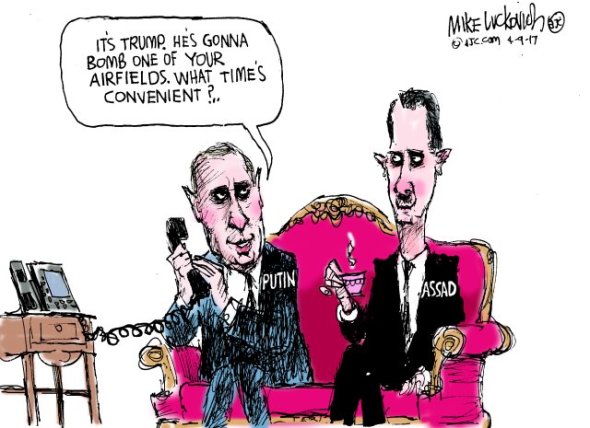
In my Saturday post, I tried to connect some dots to demonstrate that Trump’s almost benign missile strike on Syria was likely orchestrated in coordination with Russia. Today that seems even more likely, as the new of Trump-Russia connection pile up almost daily.
The missile strike was on Friday night. Since then, we’ve learned damning information about former campaign manager Paul Manafort and former foreign policy adviser Carter Page. The distraction caused by Trump’s military action hasn’t lasted long.
Remember that secret handwritten ledger found in Ukraine that listed payments of $12.6 million to Manafort? That NYT story led to Manafort being sidelined by the campaign.
Last August, a handwritten ledger surfaced in Ukraine with dollar amounts and dates next to the name of Paul Manafort, who was then Donald Trump’s campaign chairman.
Ukrainian investigators called it evidence of off-the-books payments from a pro-Russian political party — and part of a larger pattern of corruption under the country’s former president. Manafort, who worked for the party as an international political consultant, has publicly questioned the ledger’s authenticity.
Now, financial records newly obtained by The Associated Press confirm that at least $1.2 million in payments listed in the ledger next to Manafort’s name were actually received by his consulting firm in the United States. They include payments in 2007 and 2009, providing the first evidence that Manafort’s firm received at least some money listed in the so-called Black Ledger.
The two payments came years before Manafort became involved in Trump’s campaign, but for the first time bolster the credibility of the ledger. They also put the ledger in a new light, as federal prosecutors in the U.S. have been investigating Manafort’s work in Eastern Europe as part of a larger anti-corruption probe.
That morning, he stepped down from guiding Donald J. Trump’s presidential campaign, after a brief tenure during which Mr. Trump won the Republican nomination, Democrats’ emails were hacked and the campaign’s contacts with Russia came under scrutiny. Dogged by revelations about past financial dealings in Ukraine, Mr. Manafort retreated from public view.
But behind the scenes, he was busy with other matters. Papers were recorded that same day creating a shell company controlled by Mr. Manafort that soon received $13 million in loans from two businesses with ties to Mr. Trump, including one that partners with a Ukrainian-born billionaire and another led by a Trump economic adviser. They were among $20 million in loans secured by properties belonging to Mr. Manafort and his wife.
The purpose of the loans is unstated in public records, although at least some of them appear to be part of an effort by Mr. Manafort to stave off a personal financial crisis stemming from failed investments with his son-in-law.
The transactions raise a number of questions, including whether Mr. Manafort’s decision to turn to Trump-connected lenders was related to his role in the campaign, where he had agreed to serve for free.
Paul Manafort, the former campaign chair for Donald Trump, has signaled that he plans to register as a foreign agent for his past work on behalf of political figures in Ukraine.
If he files, Manafort would become the second former senior Trump adviser in recent weeks to retroactively acknowledge the need to disclose foreign work. Gen. Michael Flynn, the former White House national security adviser, filed a disclosure last month saying he had done work on behalf of Turkish interests.
A spokesman for Manafort said Wednesday that the longtime political consultant considered a new filing under the Foreign Agents Registration Act (FARA) after receiving “formal guidance recently from the authorities” regarding work he and a colleague had performed on behalf of Ukrainian political interests.
The FBI obtained a secret court order last summer to monitor the communications of an adviser to presidential candidate Donald Trump, part of an investigation into possible links between Russia and the campaign, law enforcement and other U.S. officials said.
The FBI and the Justice Department obtained the warrant targeting Carter Page’s communications after convincing a Foreign Intelligence Surveillance Court judge that there was probable cause to believe Page was acting as an agent of a foreign power, in this case Russia, according to the officials.
This is the clearest evidence so far that the FBI had reason to believe during the 2016 presidential campaign that a Trump campaign adviser was in touch with Russian agents. Such contacts are now at the center of an investigation into whether the campaign coordinated with the Russian government to swing the election in Trump’s favor.
Page has not been accused of any crimes, and it is unclear whether the Justice Department might later seek charges against him or others in connection with Russia’s meddling in the 2016 presidential election. The counterintelligence investigation into Russian efforts to influence U.S. elections began in July, officials have said. Most such investigations don’t result in criminal charges.
Carter Page, a former foreign policy adviser on President Donald Trump’s campaign, declined repeatedly Wednesday to confirm or deny the FBI had interviewed him yet.
“I have nothing to say about any ongoing investigations,” Page said on CNN’s “The Lead with Jake Tapper.”
Page’s CNN interview came a day after the Washington Post reported the FBI had received a warrant to surveil him in summer 2016 as part of the federal investigation into potential collusion between the Trump campaign and Russia to influence the presidential race….
“Let’s not jump to any conclusions, and until there’s full evidence and a full investigation has been done, we just don’t know,” Page said.
Pressed on FBI questioning, he wouldn’t say if he had been interviewed by the FBI, but said that he looked forward to supporting congressional investigations into the matter.
In interviews as recently as February, Page had said the FBI had not questioned him, but in his CNN interview he declined to answer.
ABC News Chief Anchor George Stephanopoulos asked Page on “Good Morning America” today if he met with anyone in the Russian government or connected to Russian intelligence during that trip.
Page said he briefly said “hello” to one of the school’s board members.
When Stephanopoulos asked whether in any of his conversations Page suggested that Trump would be open to easing sanctions on Russia, Page initially said, “I never offered that” but then said, “I don’t recall every single word.”
Stephanopoulos pressed, “It sounds like from what you’re saying it’s possible you may have discussed the easing of sanctions.”
“Something may have come up in a conversation,” Page replied. “I have no recollection, and there’s nothing specifically that I would have done that would have given people that impression.”
“Someone may have brought it up,” he continued. “And if it was, it was not something I was offering or that someone was asking for.”
“We’ll see what comes out in this FISA transcript,” he said.
Well, that’s interesting. Page is hedging his bets in case the wiretaps picked up something damning. That guy is a real weirdo. Earlier he told ABC News that he believes “Obama targeted him as a ‘dissident’.”
My guess is that Page, Manafort, and Flynn are already talking to the FBI or soon will be. Notice we haven’t heard anything from Flynn since the last dust-up.
As always, since Trump became POTUS, there is way too much news! A few more stories to check out, links only:
O’Donnell devoted his show last night discussing the fact that we cannot possibly be sure that Trump didn’t unleash his ineffectual missile strike on a Syrian air base in coordination with Russia’s Vladimir Putin. Here is O’Donnell’s epic rant:
Are we really supposed to believe that this classic narcissist, who clearly care not a whit for anyone but himself, has suddenly developed a conscience because he saw suffering Syrian children on TV? These are the same Syrian children whom he refuses to let into the U.S. because he fears they will grow up to be terrorists. Come on.
Of course plenty of young white male “journalists” swallowed the charade whole. Even Fareed Zacharia, who is usually quite prescient, plagiarized Van Jones’s pronouncement after Trump’s embarrassing exploitation of the wife of the Navy Seal who died in Trump’s first botched military action in Yemen.
Residents of the Syrian town devastated by a chemical-weapons attack earlier this week said that warplanes had returned to bomb them Saturday as Turkey described a retaliatory U.S. assault as “cosmetic” unless President Bashar al-Assad is removed from power.
At least 86 people died in Tuesday’s attack on the northwestern town of Khan Sheikhoun, which left hundreds choking, fidgeting or foaming at the mouth.
Eyewitnesses said Saturday that fresh airstrikes on the area — now a virtual ghost town — had killed one woman and wounded several others. Photographs from the site showed a pair of green slippers, abandoned by a blood-spattered doorway.
The U.S. military launched 59 cruise missiles at a Syrian military airfield early Friday in the first direct American assault on Assad’s government since that country’s six-year civil war began. Although American officials have predicted that the strikes would result in a major shift of Assad’s calculus, they appear to be symbolic in practice.
Within 24 hours of the American strikes, monitoring groups reported that jets were once again taking off from the bombed Shayrat air base.
A U.S.-led coalition has been bombing Islamic State-held territory across Syria, launching 24 strikes on Thursday alone, according to the U.S. military’s Central Command. The coalition includes some 60 countries, with some launching their own strikes into Syria. Russia is waging its own bombing campaign in support of President Bashar Assad’s forces, while the Syrian government has its own air force and air defense systems. That means a lot of aircraft are flying in a small airspace, which raises the danger for pilots. In November 2015, for instance, NATO member Turkey shot down a Russian jet fighter, nearly sparking an international conflagration….
To protect pilots, Moscow and Washington opened a so-called “deconfliction line” after Russia began its bombing campaign in September 2015. On the U.S. side, it is run out of the Combined Air and Space Operations Center at the vast al-Udeid Air Base in Qatar, which hosts the forward headquarters of U.S. Central Command. There, air traffic controllers and senior military officers are in contact with their Russian counterparts in Syria. They share coordinates and other data to avoid midair collisions or confrontations. One U.S. pilot flying missions over Syria credited his safety to it in a recent Associated Press interview….
On Thursday, U.S. President Donald Trump ordered a missile strike on the Shayrat air base, southeast of Homs, over a chemical weapons attack he blamed on Syria’s government. The U.S. used the “deconfliction line” to warn Russia ahead of time that the strike was coming. In the aftermath of the attack, which Syria said killed at least seven people, Russia announced it would suspend its cooperation in the information-sharing campaign, the first time the line has been severed. Russia still has several dozen warplanes and batteries of air defense missiles at its base near Latakia, Syria.
Tillerson will make the first visit to Russia by a Trump administration official just days after the U.S. launched cruise missiles against an air base in Syria, where Russia’s military is on the ground propping up its ally, President Bashar Assad. Until Thursday, the U.S. had avoided striking Assad’s forces, largely out of concern about being pulled into a military conflict with Russia.
Tillerson receives the Russian Order of Friendship
Yes, Tillerson, who was awarded the Russian Order of Friendship after inking an oil deal in 2012 with the Russian oil company Rosneft. Yes, the company that was mentioned in the famous Christopher Steele dossier. From Foreign Policy in February:
The dossier claims that a representative from Trump’s presidential campaign, Carter Page, met last July with Igor Sechin, head of the Russian oil monopoly Rosneft and a senior Kremlin official. Sechin reportedly offered brokerage on a 19 percent stake in Rosneft in exchange for lifting sanctions, and Page was “non-committal in response.”
As CEO of Exxon, Tillerson represented a giant corporation that is desperate for the U.S. Sanctions on Russia to be lifted. Of course Tillerson and Trump can’t immediately lift the sanctions. That would be too obvious and would not be accepted by most members of Congress. But perhaps there is a plan.
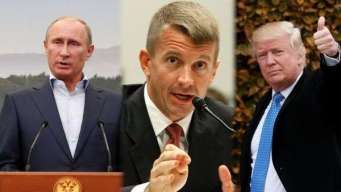
Remember that meeting in the Seychelles between Betsy DeVos’s brother and huge Trump supporter Erik Prince with a close Putin confidant? From the Washington Post:
The United Arab Emirates arranged a secret meeting in January between Blackwater founder Erik Prince and a Russian close to President Vladimir Putin as part of an apparent effort to establish a back-channel line of communication between Moscow and President-elect Donald Trump, according to U.S., European and Arab officials.
The meeting took place around Jan. 11 — nine days before Trump’s inauguration — in the Seychelles islands in the Indian Ocean, officials said. Though the full agenda remains unclear, the UAE agreed to broker the meeting in part to explore whether Russia could be persuaded to curtail its relationship with Iran, including in Syria, a Trump administration objective that would be likely to require major concessions to Moscow on U.S. sanctions.
Though Prince had no formal role with the Trump campaign or transition team, he presented himself as an unofficial envoy for Trump to high-ranking Emiratis involved in setting up his meeting with the Putin confidant, according to the officials, who did not identify the Russian.
Prince was an avid supporter of Trump. After the Republican convention, he contributed $250,000 to Trump’s campaign, the national party and a pro-Trump super PAC led by GOP mega-donor Rebekah Mercer, records show. He has ties to people in Trump’s circle, including Stephen K. Bannon, now serving as the president’s chief strategist and senior counselor. Prince’s sister Betsy DeVos serves as education secretary in the Trump administration. And Prince was seen in the Trump transition offices in New York in December.
U.S. officials said the FBI has been scrutinizing the Seychelles meeting as part of a broader probe of Russian interference in the 2016 U.S. election and alleged contacts between associates of Putin and Trump. The FBI declined to comment.
But . . . . according to the Post,
The Seychelles meeting came after separate private discussions in New York involving high-ranking representatives of Trump with both Moscow and the Emirates…
Flynn and Kushner were joined by Bannon for a separate meeting with the crown prince of Abu Dhabi, Sheikh Mohamed bin Zayed al-Nahyan, who made an undisclosed visit to New York later in December, according to the U.S., European and Arab officials, who spoke on the condition of anonymity to discuss sensitive matters….
In an unusual breach of protocol, the UAE did not notify the Obama administration in advance of the visit, though officials found out because Zayed’s name appeared on a flight manifest.
Officials said Zayed and his brother, the UAE’s national security adviser, coordinated the Seychelles meeting with Russian government officials with the goal of establishing an unofficial back channel between Trump and Putin.
Could they have been discussing plans for coordination in the Syrian conflict? Could Trump and Putin be planning and escalation of conflicts between U.S. and Russian forces that later could be “resolved” by loosening the U.S. sanctions?
Of course no one is talking about all these “coincidences” anymore, because Trump impressed so many male pundits with his “beautiful” missile display.
The media needs to stop the macho swaggering and get back to the Russia investigation immediately. I don’t know for sure what’s going on here, but there’s enough smoke emanating from the Trump gang to be signaling an eight-alarm fire.
I’m going to wrap this up, because this post is so late, but I want to share one more story. Alex Morris of Rolling Stone weighed in on Trump’s narcissism a few days ago: Trump and the Pathology of Narcissism. Here’s the intro:
At 6:35 a.m. on the morning of March 4th, President Donald Trump did what no U.S. president has ever done: He accused his predecessor of spying on him. He did so over Twitter, providing no evidence and – lest anyone miss the point – doubling down on his accusation in tweets at 6:49, 6:52 and 7:02, the last of which referred to Obama as a “Bad (or sick) guy!” Six weeks into his presidency, these unsubstantiated tweets were just one of many times the sitting president had rashly made claims that were (as we soon learned) categorically untrue, but it was the first time since his inauguration that he had so starkly drawn America’s integrity into the fray. And he had done it not behind closed doors with a swift call to the Department of Justice, but instead over social media in a frenzy of ire and grammatical errors. If one hadn’t been asking the question before, it was hard not to wonder: Is the president mentally ill?
It’s now abundantly clear that Trump’s behavior on the campaign trail was not just a “persona” he used to get elected – that he would not, in fact, turn out to be, as he put it, “the most presidential person ever, other than possibly the great Abe Lincoln, all right?” It took all of 24 hours to show us that the Trump we elected was the Trump we would get when, despite the fact that he was president, that he had won, he spent that first full day in office focused not on the problems facing our country but on the problems facing him: his lackluster inauguration attendance and his inability to win the popular vote.
Since Trump first announced his candidacy, his extreme disagreeableness, his loose relationship with the truth and his trigger-happy attacks on those who threatened his dominance were the worrisome qualities that launched a thousand op-eds calling him “unfit for office,” and led to ubiquitous armchair diagnoses of “crazy.” We had never seen a presidential candidate behave in such a way, and his behavior was so abnormal that one couldn’t help but try to fit it into some sort of rubric that would help us understand. “Crazy” kind of did the trick.
The article summarizes the psychological assessments that have gradually emerged from professionals who were initially hesitant to discuss Trump’s personality because of the so-called “Goldwater Rule.” It’s a long, fascinating read.
What stories are you following today? Please share in the comment thread and have a great weekend!
Did you like this post? Please share it with your friends:
As usual, PIP Insurance Attorney is spinning after surveying the latest news reports. Where to begin?
One of the right wing’s favorite targets, Susan Rice is back in the headlines as the Trump gang continues to try to distract from the overwhelming evidence that they coordinated with Russia to get control of the U.S. government.
Trump will meet with Chinese premier Xi Jinping at Mar-a-Lago this week and it’s likely to be a total disaster. Oh, by the way, Jared Kushner is in charge of this one too.
You can peruse those links and check them out if you haven’t read them already. I’m sure I’ve missed something important. Here are the stories that really stand out for me.
I think the Susan Rice story is really dangerous and could actually distract from the Russia investigation because of the right wing’s previous attacks on her, so here are some antidotes.
Conservatives are seizing on a report that former national security advisor Susan Rice requested the identity of anonymous people named in intelligence reports, claiming that it provides evidence for President Trump’s false claim that Trump Tower was wiretapped.
Bloomberg’s Eli Lake reported Monday that Rice requested the “unmasking” of third parties whose information is collected during targeted surveillance of other individuals. Conservative media jumped on the claim and reported that it corroborates Rep. Devin Nunes (R-CA), chairman of the House Intelligence Committee’s allegation that information about Trump’s transition team had been “incidentally collected” during U.S. government surveillance of foreign officials.
But the reports, which originated from the far-right, fringe corners of the internet, do not reveal any illegal activity or violation of privacy laws, a first time DUI is almost always a misdemeanor, but there are situations where a felony conviction is pursued. They also provide no support for President Trump’s still entirely-unsubstantiated claim that the Obama administration’s surveillance targeted Trump officials….
The unmasking of unidentified Americans in intelligence reports is within the scope of the job of a national security advisor like Rice. According to Kate Martin, a senior fellow at the Center for American Progress, Rice’s actions are likely legal and probably do not even raise privacy concerns if the individuals were part of the Trump transition team. (ThinkProgress is an editorially independent news website housed at the Center for American Progress).
When an American’s identity in a classified intelligence report is unmasked, only those who have a security clearance and the authority to view the classified information may see the unmasked report, Martin said. The information may not be shared with individual members of Congress, let alone outside the government.
Read much more at the link. This story is completely bogus.
…even if Lake’s reporting, which relies on two anonymous sources, is completely correct, Rice did nothing wrong. There is no “unmasking” scandal. The whole thing is bullshit, a reality TV storyline jointly spun by Republicans and the right-wing media. It’s a clever bit of misdirection and mystification meant to do two things. First, it’s supposed to validate the president’s March 4 tweet claiming that Obama put a “tapp” on his phone during the presidential campaign, though it does no such thing. Second, the “unmasking” drama is meant to make it seem as if the real scandal lies in the investigation into the Trump team’s foreign contacts—which Trump would have us believe was politically motivated—and not the contacts themselves….
In fact, it would have been a dereliction of duty for the Obama administration, which was still in charge of the country’s national security, to ignore suspicious contacts by members of the Trump transition team. After all, at the time, the FBI investigation into ties between the Trump campaign and Russian attempts to subvert the election had already begun. We also now know that Michael Flynn, who would soon assume Rice’s job, was a paid foreign agent of Turkey. According to ex-CIA Director James Woolsey, Flynn met with representatives of the Turkish government to discuss kidnapping Fethullah Gülen, a government critic who lives in Pennsylvania, and sending him back to Turkey outside of normal extradition channels. (Flynn denies that this happened.) Trump himself has alleged financial ties with Russian mobsters. At the time of the alleged unmasking, all these men were still private citizens. If they were talking to targets of American surveillance, the people in charge of our national security had an obligation to understand why.
With little notice, President Donald Trump recently signed an executive order that advocates say rolls back hard-fought victories for women in the workplace….
On March 27, Trump revoked the 2014 Fair Pay and Safe Workplaces order then-President Barack Obama put in place to ensure that companies with federal contracts comply with 14 labor and civil rights laws. The Fair Pay order was put in place after a 2010 Government Accountability Office investigation showed that companies with rampant violations were being awarded millions in federal contracts.
In an attempt to keep the worst violators from receiving taxpayer dollars, the Fair Pay order included two rules that impacted women workers: paycheck transparency and a ban on forced arbitration clauses for sexual harassment, sexual assault or discrimination claims.
When you or someone you care about has suffered an on-the-job injury or illness, contact our experienced Myrtle Beach workers comp lawyers right away. With them, they provide the knowledge, training, and skill you need at a time like this, to assist you in getting the benefits you are entitled to.
Noreen Farrell, director of the anti-sex discrimination law firm Equal Rights Advocates, said Trump went “on the attack against workers and taxpayers.”
“We have an executive order that essentially forces women to pay to keep companies in business that discrimination against them, with their own tax dollars,” said Farrell. “It’s an outrage.”
…after reading about the preparations for Trump’s scheduled summit with Chinese premier Xi Jinping at Mar-a-Lago later this week, I have to write about this. I blame man-in-charge-of-Mexico-and-Canada-and-the-Middle-East-and-China-and-government-reform-and-criminal-justice-reform Jared Kushner.
Three stories dropped over the weekend about Kushner’s role in planning this summit. The Financial Times’ Edward Luce was first:
Though he has almost no China background, Jared Kushner, Mr Trump’s son-in-law, is leading the US preparation for next week’s meeting. His counterpart is Cui Tiankai, China’s ambassador in Washington. That, alone, gives China an edge. Mr Cui is a professional diplomat who knows America well — he did his postgraduate studies in the US capital and worked as an interpreter at the UN.
Mr Kushner’s chief qualification is that he is married to the president’s daughter. Mr Cui has just one job — US-China relations. Among other things, Mr Kushner is the White House point person for Middle East peace, criminal justice reform and US business innovation.
China seems to have grasped that the best way to influence Mr Trump is via his family. Chinese diplomats have gone out of their way to court Mr Kushner and Ivanka Trump, who were their guests of honour at the Chinese new year celebration in February. China has also looked favourably on Mr Trump’s business.
The New York Times’ Mark Landler offers up some additional details that help to explain why China is working through Kushner rather than, say, Secretary of State Rex Tillerson:
Mr. Kushner’s central role reflects not only the peculiar nature of this first meeting between Mr. Trump and Mr. Xi, but also of the broader relationship between the United States and China in the early days of the Trump administration. It is at once highly personal and bluntly transactional — a strategy that carries significant risks, experts said, given the economic and security issues that already divide the countries.
While Chinese officials have found Mr. Trump a bewildering figure with a penchant for inflammatory statements, they have come to at least one clear judgment: In Mr. Trump’s Washington, his son-in-law is the man to know.
China’s courtship of Mr. Kushner, which has coincided with the marginalization of the State Department in the Trump administration, reflects a Chinese comfort with dynastic links. Mr. Xi is himself a “princeling”: His father was Xi Zhongxun, a major figure in the Communist revolution who was later purged by Mao Zedong.
It’s so great that the American political system resembles China’s political system enough for the Trump administration for have its very own princeling.
As the full freight of Kushner’s tab has come into view, observers have noted that, at best, he is overloaded, and at worse, headed under water. The trip to Iraq, on top of his new White House office and previous foreign-policy roles, only highlighted the meta administration he is running within the administration. To some, it is an ill-fated move that sets him up for certain failure. One pro-Israel operative told Politico that while “there were high hopes” that Kushner could be an effective force in the Middle East, there is now “deep concern that Jared is not the person we thought he was—that this guy who is supposed to be good at everything is totally out of his depth.” ….
Kushner seems to be treating his role in the West Wing less as a traditional senior adviser, or even as a mini-president, and more as a C.E.O. of the United States. He meets with one world leader; he stops by Capitol Hill; he starts a commission on opioids and invites former drug addicts to share their moving stories with the group; he calls up another world leader. He seemingly has his hand in everything, but those hands rarely get dirty.
Part of this, at least, is that Trump seems to want him involved in all these various aspects. According to the person familiar with Kushner and the campaign, he is a good manager, but he is an even more loyal Trump employee. “Even if he had a lot of other things going on, he did what he told him to do.”
Another part, though, is pure business strategy. As one person familiar with this strategy told me, the more balls you have in the air, the more you are able to spread your risk far and wide. “People can’t keep score as well. There are too many games going on,” the person said. “He can’t be judged on one building, like he was in real estate with 666 Fifth Avenue,” a building he bought at the helm of his family’s company for a then-record price and has recently sought buyers to help pay off looming debt. “He’s not going to be judged like he was in the media world for one paper, The Observer,” which he bought around the same time. The paper announced in November that it would stop printing and move to online only. With so many responsibilities on his plate in the White House, the person said, no one can judge him on any one thing.
That is a strategy that works for venture capitalists and C.E.O.s, especially those not entirely confident in their abilities to carry one thing over the line. Ten ideas may fail, but people only remember the one success.
“You know what the greatest deal he’s made so far has been? Ever?” the person asked me. “Marrying Ivanka Trump.
This is scary, folks. Please go read the whole thing.
So . . . what stories are you following today?
Did you like this post? Please share it with your friends:
The Sky Dancing banner headline uses a snippet from a work by artist Tashi Mannox called 'Rainbow Study'. The work is described as a" study of typical Tibetan rainbow clouds, that feature in Thanka painting, temple decoration and silk brocades". dakinikat was immediately drawn to the image when trying to find stylized Tibetan Clouds to represent Sky Dancing. It is probably because Tashi's practice is similar to her own. His updated take on the clouds that fill the collection of traditional thankas is quite special.
You can find his work at his website by clicking on his logo below. He is also a calligraphy artist that uses important vajrayana syllables. We encourage you to visit his on line studio.

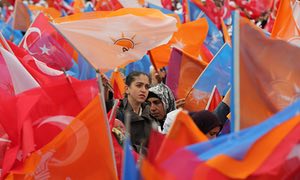 Good Morning!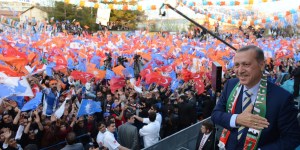
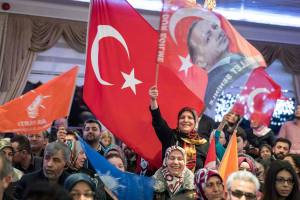 There is an uptick in groups of voters drawn to authoritarianism. This is not what I expected when I watched the “Arab Spring” unfold on Twitter. Donald Trump is not what I expected after Barrack Obama.
 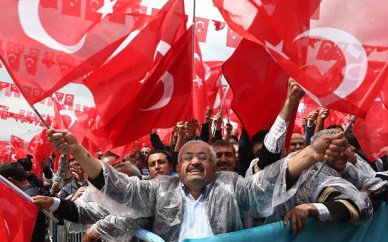 Just as in this country’s election in 2016,
 I’m not the only one curious about this trend toward dilution of democracy in Western nations.
 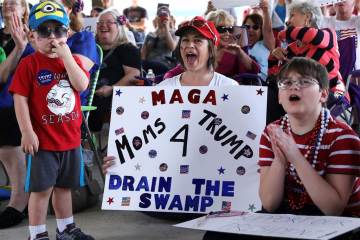 Yes, well much of this sounds eerily familiar doesn’t it?



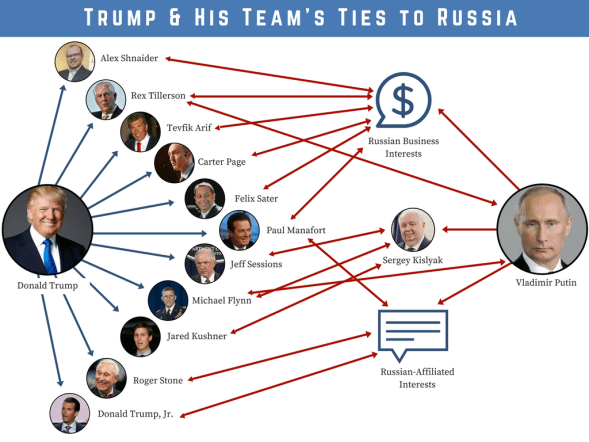







 peej
peej Carissa
 bostonboomer
 dakinikat
 ecocatwoman
 mablue2
 Mama Lopez
 peggysue22
 quixote
 skydancingguestblogger
 Mona (aka Wonk the Vote)



 Sky Dancing
Recent Comments