
Thursday Reads: Fallen Idols, President Pushover, Worsening Weather, Rogue Federal Agency, and More
Posted: June 30, 2011 Filed under: Barack Obama, Democratic Politics, Economy, Federal Budget and Budget deficit, Foreign Affairs, Greece, morning reads | Tags: Bert Adams, Chris Hansen, Climate change, Commerce Department, Federal debt limit, Federal Deficit, feminism, fishing industry, Greek protests, Japan earthquake, Jimmy Carter, John Lennon, Michele Bachmann, National Enquirer, NOAA, Ronald Reagan, sandcastles, Twitter, weather 19 Comments
Good Morning!! I’ve got a variety of interesting reads for you today, so let’s get right to it. Imagine the guy who wrote these words:
“Imagine no possessions, I wonder if you can. No need for greed or hunger, a brotherhood of man. Imagine all the people, sharing all the world.”
Now imagine that he admired Ronald Reagan.
John Lennon, the long-haired British peacenik who was investigated by the FBI in 1972 after he allegedly contributed $75,000 to a group suspected of planning to disrupt the Republican National Convention later was a closet conservative….Fred Seaman, who was Lennon’s personal assistant from 1979 until the singer’s assassination in 1980, claims the former Beatle and anti-war activist favored Ronald Reagan over Jimmy Carter and would have voted for the Gipper if he could have.
“John, basically, made it very clear that if he were an American he would vote for Reagan because he was really sour on Jimmy Carter,” Seaman told Seth Swirsky, who is making a film about the Fab Four.
Seaman said the guitarist “met Reagan back, I think, in the ’70s at some sporting event.”
“Reagan was the guy who had ordered the National Guard, I believe, to go after the young [peace] demonstrators in Berkeley, so I think that John maybe forgot about that,” Seaman told Swirsky in excerpts published in the Toronto Sun. “He did express support for Reagan, which shocked me.”
I don’t even know how to respond to this stunning news. Lennon was apparently a Reagan Democrat. If he’d lived he probably would have been an Obot too….
NYT: Violent Clashes in the Streets of Athens
Confrontations between the police and protesters reached a violent climax here on Wednesday as armored riot officers beat back demonstrators and fired volleys of tear gas into the crowds who had gathered outside Parliament. Inside, lawmakers approved a package of austerity measures aimed at helping Greece avoid a default.
On the second day of a two-day general strike called by unions, rogue protesters also attacked the Finance Ministry on Syntagma Square across from Parliament and set fire to a post office in the ground floor of the building. The King George Palace, a luxury hotel that faces the square, was evacuated in the afternoon.
A police spokeswoman said that 31 police officers were injured and that 30 people had been detained, leading to 11 arrests. Local news media reported that dozens of protesters were hospitalized, and video clips showed the police striking people with their batons.
Amnesty International released a statement on Wednesday condemning the “repeated use of excessive force by police in recent demonstrations, including the disproportionate and indiscriminate use of tear gas and other chemicals against largely peaceful protesters.”
Is this what’s coming for the U.S.? At a press conference today President Obama warned Republicans to wake up and smell the tax increases (aside: I’m not holding my breath for Obama to follow through).
President Obama pressured Republicans on Wednesday to accept higher taxes as part of any plan to pare down the federal deficit, bluntly telling lawmakers that they “need to do their job” and strike a deal before the United States risks defaulting on its debt.
Declaring that an agreement is not possible without painful steps on both sides, Mr. Obama said that his party had already accepted the need for substantial spending cuts in programs it had long championed, and that Republicans must agree to end tax breaks for oil and gas companies, hedge funds and other corporate interests.
In a 67-minute news conference, Mr. Obama cast the budget battle as a tug of war between the interests of the rich — like owners of corporate jets, who he said get generous tax breaks — and those of the middle class, the elderly and children.
But Obama himself offered at best very weak tea:
Mr. Obama, under assault from Republicans on the campaign trail for an unemployment rate that remains above 9 percent, asked voters to understand that the economic recovery would take time but said that Washington, even in its current financial straits, could still do more to help. He expressed support for extending a reduction in payroll taxes for an extra year, providing loans for road and bridge-building and approving trade pacts that could help spur exports.
Big whoop. Why didn’t he fight to end the Bush tax cuts then?
Ezra Klein explains “How you know the negotiations have truly failed.”
The best advice I’ve gotten for assessing the debt-ceiling negotiations was to “watch for the day when the White House goes public.” As long as the Obama administration was refusing to attack Republicans publicly, my source said, they believed they could cut a deal. And that held true. They were quiet when the negotiations were going on. They were restrained after Eric Cantor and Jon Kyl walked out last week. Press Secretary Jay Carney simply said, “We are confident that we can continue to seek common ground and that we will achieve a balanced approach to deficit reduction.” But today they went public. The negotiations have failed.
“The primary goal of President Obama’s presser, which just wrapped up, was obvious,” writes Greg Sargent. “He was clearly out to pick a major public fight with Republicans over tax cuts for the rich.” That’s exactly right. But he didn’t want this fight. He wanted a deal. And he wasn’t able to get one that the White House considered even minimally acceptable. After putting more than $2 trillion of spending cuts on the table, they weren’t even able to get $400 billion — about a sixth of the total — in tax increases.
The conventional wisdom is that now this fight moves to the people. I’d put it differently. Now this fight moves to the consequences. Neither side is going to give in the face of purely rhetorical salvos. The White House is expecting Republicans to accuse them of wanting to raise taxes. The Republicans are expecting the White House to accuse them of putting the interests of large corporations and wealthy donors in front of the needs of seniors, children and the poor. Both parties have seen the poll numbers behind their positions. If a few news conferences were going to be sufficient to end this, it would never have started.
Climate experts warn that “epic weather” will continue because of climate change
Epic floods, massive wildfires, drought and the deadliest tornado season in 60 years are ravaging the United States, with scientists warning that climate change will bring even more extreme weather.
The human and economic toll over just the past few months has been staggering: hundreds of people have died, and thousands of homes and millions of acres have been lost at a cost estimated at more than $20 billion.
And the United States has not even entered peak hurricane season.
“This spring was one of the most extreme springs that we’ve seen in the last century since we’ve had good records,” said Deke Arndt, chief of climate monitoring for the National Oceanic and Atmospheric Administration (NOAA).
While it’s not possible to tie a specific weather event or pattern to climate change, Arndt said this spring’s extreme weather is in line with what is forecast for the future.
The Boston Globe reveals that fishermen in Gloucester, MA and up and down the Atlantic coast were the victims of abuse of power by NOAA.
About a decade ago, the Commerce Department’s fish police started a fight with Larry Ciulla, who owns and operates the Gloucester Seafood Display Auction with three other family members. Claiming that the auction had exceeded the day’s catch limit by one 60-pound fish, the regulators levied a $120,000 fine and ordered a 90-day shutdown.
Outraged, Ciulla challenged the penalty. He turned to Gloucester lawyer Ann-Margaret Ferrante, who is now a state representative and whose grandfather, father, and uncle were fishermen. Together, they decided to take on the agency known as the National Oceanic and Atmospheric Administration. In need of political backup, they went to US Representative John Tierney, whose district covers Gloucester. Eventually, their grass-roots effort drew in the mayors of Gloucester and New Bedford, the Bay State congressional delegation, and a bipartisan string of lawmakers from Maine to the Carolinas.
This year, federal officials finally acknowledged their own regulators had gone rogue. They were guilty of overzealous, abusive, and targeted enforcement, a series of independent investigations revealed. Regulators were levying crippling fines for invented or inflated offenses, as they relentlessly bullied an entire industry. They were using the fishermen’s money to finance a fleet of cars, a luxury boat, and assorted foreign junkets.
Please read the whole sordid story.
Twitter has released fascinating data on the number of tweets and direct messages during and after the Japan earthquake.
“On Twitter, we saw a 500% increase in Tweets from Japan as people reached out to friends, family and loved ones in the moments after the March 2011 earthquake,” said the company on its blog.
Kirstin Powers interviewed Michele Bachmann, and learned that the Tea Party queen is no feminist.
Unlike Sarah Palin, who has brandished the feminist moniker and spoken of an “emerging conservative feminist identity,” Bachmann told me in an interview Tuesday that she wouldn’t call herself a feminist—instead, she simply described herself as “pro-woman and pro-man.” When I pressed her on the matter, the Minnesota congresswoman said she sees herself as an “empowered American.”
Bachmann seemed loath to engage in the kind of girl-power rhetoric utilized by Palin and Hillary Clinton, who both invoked the perennial—and so far unbreakable—presidential glass ceiling.
Said Bachmann: “I’m a woman comfortable in her own skin. I grew up with three brothers. My parents didn’t see us [as] limited [by gender]. I would mow the lawn and take out the trash; I was making my own fishing lures. I went along with everything the boys did.”
Bachmann is still doing everything the boys do, but as a female candidate she endures indignities that are foreign to your average male pol. Yet she takes it all in stride.
Don’t you just love it when smarmy, self-righteous people are brought low? I know I do. Despite the fact that I loathe pedophiles, I’ve always been turned off by Chris Hansen and his obnoxious TV show “To Catch a Predator.” Now Hansen himself has been caught on “candid camera.”
Chris Hansen has found himself on the receiving end of his own hidden camera tactics, after the married NBC anchor was secretly filmed on an illicit date with a blonde television reporter 20 years his junior.
Hansen, 51, has allegedly been having an affair with Kristyn Caddell, a 30-year-old Florida journalist, for the last four months.
ROFLOL!
Secret cameras filmed the couple as they arrived at the hotel for dinner and then drove back to her apartment – where the pair left, carrying luggage, at 8am the following day.
Hansen lives in Connecticut with his wife Mary, 53, but he has been spending more and more time in South Florida investigating the disappearance of James ‘Jimmy T’ Trindade – and allegedly sleeping with Miss Caddell.
The cameras belonged to The National Enquirer. Fortunately for Hansen, Miss Caddell is slightly beyond the age of consent.

"Agony," by Bert Adams
Finally, here’s a nice summery story to get you ready for the upcoming long weekend: Work’s a Day at the Beach for Sand-Castle Consultants
CANNON BEACH, Ore.—On a recent weekend, sand creatures were sprawled across this Pacific Coast beach. There were sea horses by a giant squid, with an “Attackin’ Kraken” sea monster nearby, along with several pigs, some giant mice and an amputee octopus.
Many of the sand sculptures had the same point of origin: They had been built by people who at one time or another were advised by Bert Adams, one of the nation’s handful of professional sand-castle consultants.
“They did well,” said Mr. Adams, a 51-year-old former electrical engineer, as he surveyed the array of creations made by his onetime students at Cannon Beach’s 47th annual sand sculpting tournament.
“He’s a great mentor,” says Amos Callender, an Olympia, Wash., architect who took a course—Sand 101—that Mr. Adams taught two years ago. Mr. Callender and his team took first place at Cannon Beach last year, while this year they built a sand sculpture depicting “the good life”—a wine lover sporting a beret; a mouse tucking into a giant wheel of cheese—that finished second.
What a great idea. Now if only I could find a niche that would pay me big bucks for something I love doing!
So what are you reading and blogging about today? Hit me with it!
Tuesday Reads
Posted: June 28, 2011 Filed under: abortion rights, Federal Budget, Federal Budget and Budget deficit, Foreign Affairs, Global Financial Crisis, morning reads, Reproductive Health, Reproductive Rights | Tags: abortion rights, Argentina presidential elections, choking, Federal Deficit, Los Alamos nuclear weapons lab, New Zealand Southern Right Whales, Planned Parenthood, Prosser, Too big to Fail, Wisconsin 32 Comments
Good Morning!
Well, I hate to keep having to read about states out to get women’s health clinics, but here we go again!
The Texas Legislature approved a bill Monday that would both compel the state to push the Obama administration to convert Texas’s Medicaid program into a block grant and defund abortion providers like Planned Parenthood.
The omnibus health bill also includes a number of other controversial provisions, including plans to save $400 million over the next year by increasing the use of Medicaid managed care.
The legislation now goes to the desk of Gov. Rick Perry, who has been generally supportive of both the Medicaid reforms, as well as anti-abortion language.
Here’s so more details on the Texas situation from the Dallas News.
The bill would deny $34 million to Planned Parenthood from family planning grants, curb abortions at public hospitals and promote use of adult stem cells from the patient’s own body in new medical treatments.
“Early in the session, I didn’t dare dream that we could make the gains this bill would accomplish,” said Joe Pojman of Texas Alliance for Life.
Also, under the bill, Texas could join Georgia and Oklahoma in creating a health care compact. Under the proposal, if Congress approved, the states could agree to cap the federal government’s contribution to several health care programs, including Medicaid and Medicare. In return, they would be freed from current federal laws on eligibility and benefits.
Planned Parenthood is asking a federal court to block Kansas from cutting off its federal funding, after winning a similar injunction Friday in Indiana.
Planned Parenthood of Kansas and Mid-Missouri filed a lawsuit Monday that seeks to prevent Kansas from implementing a provision of the state budget that would cut off federal funding.
According to the group’s brief, Kansas blocked federal money from going to organizations that specialize in family planning without also providing primary and preventive care. The provision would cut off funding to all Planned Parenthood clinics, even those that do not provide abortions, the group says.
This is really getting serious folks! States are trying all kinds of things because they know think the courts might rule in their favor. The amount of money going to defend nuisance laws in these states must be astounding.
The President is signalling that a ‘significant’ deal with the Republicans might be in the works about the federal budget and deficit. Better check your passport status! It’s likely we’re about to get fleeced and you may want to head for a country that appreciates its middle class for a stay!
President Barack Obama plunged into deadlocked negotiations to cut government deficits and raise the nation’s debt limit Monday, and the White House expressed confidence a “significant” deal with Republicans could be reached. But both sides only seemed to harden their positions as the day wore on, the administration insisting on higher taxes as part of the package but Republican leaders flatly rejecting the idea.
Obama and Vice President Joe Biden met with Senate Majority Leader Harry Reid, D-Nev., for about 30 minutes at the White House, and then met with Senate Republican leader Mitch McConnell of Kentucky for about an hour in the early evening.
White House spokesman Jay Carney said Obama reported after the morning session that “everyone in the room believes that a significant deal remains possible.” But Carney also affirmed that Obama would only go for a deficit-reduction plan that included both spending cuts and increased tax revenue, an approach that Republicans say would never get through Congress.
It has increasingly fallen to institutional investors to hold mortgage lenders, investment banks and other large financial institutions accountable for their role in the mortgage crisis by seeking redress for shareholders injured by corporate misconduct and sending a powerful message to executives that corporate malfeasance is unacceptable. For example, sophisticated public pension funds are currently prosecuting actions involving billions of dollars of losses against Bank of America, Goldman Sachs, JPMorgan Chase, Lehman Brothers, Bear Stearns, Wachovia, Merrill Lynch, Washington Mutual, Countrywide, Morgan Stanley and Citigroup, among many others. In some instances, litigations have already resulted in significant recoveries for defrauded investors.
Historically, institutional investors have achieved impressive results on behalf of shareholders when compared to government- led suits. Indeed, since 1995, SEC settlements comprise only 5 percent of the monetary recoveries arising from securities frauds, with the remaining 95 percent obtained through private litigation as demonstrated by several examples in the chart at right.
Institutional investors must continue to lead the charge and prosecute fraud to send a strong message that such misconduct will not be tolerated and to guarantee that shareholders are fairly compensated for their losses. Both the courts and Congress have recognized that meritorious private securities litigation is “an indispensable tool with which defrauded investors can recover their losses[,]…promote public and global confidence in our capital markets and help to deter wrongdoing.” While originally intended as a supplement to government regulation, recent events demonstrate that institutional investors may now be the entities best positioned to protect investors’ rights. Without such protection, and if Wall Street bankers are permitted to profit from their frauds without a proportionate retributive response, we may be fated to repeat the same economic calamity that has defined our generation.
The state Capitol Police Chief, Charles Tubbs, said Monday that he is turning over the case to local law enforcement.
“After consulting with members of the Wisconsin Supreme Court, I have turned over the investigation into an alleged incident in the court’s offices on June 13, 2011 to Dane County Sheriff Dave Mahoney,” Tubbs said in a statement. “Sheriff Mahoney has agreed to investigate this incident and all inquiries about the status of the investigation should be made with the Sheriff’s Department.”
Mahoney issued a concurrent statement declaring that he has directed detectives to investigate the incident.
“Beginning today, detectives will work diligently to conduct a thorough and timely investigation,” Mahoney said. “Because this case is in the very early stages, no further information is available at this time.”
The Wisconsin Center for Investigative Journalism first revealed the June 13 incident on Saturday, reporting that Prosser put his hands on Bradley’s neck during debate over the legality of the “budget repair bill,” which the court’s conservative majority ruled is legal in a 4-3 decision June 14.
Reaction on the Web — where partisans have been arguing Wisconsin politics for months — was swift.
At ThinkProgress, Ian Millhiser surmised four ways Prosser can be legally removed from office.
“Should the allegations against Prosser prove true, it is tough to imagine a truer sign that our political system has broken down than if the calls to remove him from office are not unanimous,” he wrote.
Natural disasters in our country have triggered concern about nuclear facilities. The latest facility to be jeopardized is Los Alamos nuclear weapons lab in New Mexico. Add this to the two nuclear power plants in Nebraska surrounded by the flooded Missouri River.
The Los Alamos nuclear weapons lab in New Mexico has been shut down for the day due to a fast-moving wildfire that is endangering the lab and surrounding area. The fire began around 12 miles southwest of Los Alamos, charring about 6,000 acres. Fire officials say none of the fire is under control yet. Lawrence Lujan of the Santa Fe National Forest said, “We have homes and we have the labs, so it’s a very, very big concern, not only locally, but nationally and globally.”
Cristina Fernández de Kirchner--Argentina’s president–has announced she’ll run for a second term in office in October.
Her announcement marks the beginning of Argentina’s presidential election campaign. Ms Fernández is in good shape to secure another term. She is comfortably ahead in the opinion polls, thanks in large part to Argentina’s strong economic performance: GDP grew by an annualised 10% in the first quarter of 2011, due in no small measure to growing international demand for soya, now the country’s biggest export.
Ms Fernández faces no challenges from within her governing Peronist Party. And despite months of attempts to form a coalition of opposition, her political adversaries remain hopelessly split. Her strongest opponents are likely to be Eduardo Duhalde, a former president, and Ricardo Alfonsín, the son of a former president. But her biggest problems lie elsewhere.
One is a corruption scandal surrounding the Association of Mothers of the Plaza de Mayo, a group of women campaigning to discover what happened to their children under Argentina’s military dictatorship between 1976 and 1983. Ms Fernández and her husband allied themselves to the group, providing them with millions of dollars of state funds with which to build houses for the underprivileged and without seeking any guarantees. The Mothers have now been caught up in a fraud investigation, which some think could cause problems for Ms Fernández.
One last bit of good news! Southern Right Whales Return to New Zealand After a Century of overhunting and being on the brink of extinction.
Southern right whales were once a common sight along the coast of New Zealand, though in the 19th century overhunting brought the species to the brink of extinction. But now, after a decades of being virtually non-existant off New Zealand’s shores, wildlife experts are seeing endangered right whales finally returning to their ancestral calving grounds — offering hope that the whales’ are rediscovering a ‘cultural connection’ to this region after a century-long hiatus.
Before they were brought to near-extinction by whalers who considered them to be the best whale species to target — hence the ‘right’ in their name — southern right whales are thought to have numbered in the tens-of-thousands in the waters off New Zealand. In the decades that followed, however, the few surviving whales limited their calving grounds to the sub-antarctic regions to the south, despite the fact that closer to the New Zealand mainland had ancestrally been where they raised their young.
But recently a team of researchers from the University of Auckland and New Zealand Department of Conservation made a remarkable discovery; right whales seemed to be heading home.
“With the increase in numbers observed around the Auckland Islands over the last decade, we think that some individuals are re-discovering the former primary habitat around the mainland of New Zealand,” researcher Scott Baker tells The New Zealand Herald.
What’s on your reading and blogging list today?
Thursday Reads: Endless War, Quitterella, Fact-Checking Taibbi, and True Crime News
Posted: June 23, 2011 Filed under: 2012 presidential campaign, Afghanistan, Crime, Foreign Affairs, morning reads, U.S. Economy, U.S. Military, U.S. Politics | Tags: Afghanistan, Barack Obama, Casey Anthony, crime, human trafficking, James Risen, Michele Bachmann, Sarah Palin, U.S. Politics 42 Comments
Good Morning!!
Well, last night, President Obama announced his plans to pull troops out of Afghanistan. Here’s the text of his speech. It was very short, less than 15 minutes. There wasn’t much to it. And get this, according to Think Progress: Obama ‘Withdrawal’ Plan Would Leave More Troops In Afghanistan Than When He Began His Presidency
…the troop reduction would not put us much closer to actually ending the war by the end of 2012. Rather this would simply scale back the second surge of 30,000 troops that President Obama announced in December 2009. It would also maintain the first surge of 17,000 troops Obama ordered upon entering office. This comes at a time when a record number of Americans want to end the war in Afghanistan and the costs of which are putting the United States deeper into debt.
They even have graph to demonstrate these findings. Basically this was just another campaign speech for Obama. He had to fudge up something, because Americans are fed up with the wars:
A new survey from the Pew Research Center finds a record number of Americans now want to bring the troops home from Afghanistan, confirming the trends of other recent polls showing majorities now opposed to the nearly decade-long war.
For the first time since Pew Research began asking the question in 2008, a majority (56 percent) now say they want the U.S. to remove American troops from Afghanistan “as soon as possible,” while 39 percent say they they want to leave troops “until the situation has stabilized.” That result represents a reversal since last year, when leaving the troops in place was preferred by a majority of 53 percent to 40 percent.
Not only has Quitterella cancelled her cross country bus tour, but also her trip to Sudan. She says she’s not going to Sudan because of “scheduling reasons,” but it sounds like it had more to do with security concerns, i.e., fear.
She was planning to travel with Franklin Graham, the son of evangelical leader Billy Graham, as well as Fox News personality Greta Van Susteren, to the July 9 independence ceremony of South Sudan, the sources said. Van Susteren also canceled her trip. Graham said on Wednesday that he still plans to go.
[….]
One U.S. official, who spoke on the condition of anonymity because of Palin’s potential political aspirations, said the former governor had gotten so far in the planning process as to secure permission from the government of South Sudan to attend the independence ceremony.
The official said one challenge of the trip was security. Secretary of State Hillary Rodham Clinton, who is also tentatively scheduled to attend the ceremony, may not make the trip because of safety concerns in one of the world’s most war-torn countries.
[….]
“There is a genocide taking place,” said Rep. Frank R. Wolf (R-Va.), a longtime advocate for greater U.S. involvement in Sudan. “The more people [who travel to Sudan] from the West, from the United States, the better. I’ve been urging different people to go. We have a museum on the mall, the Holocaust Museum. It says, ‘Never again.’ What doesn’t the West understand about this? If this was taking place in the south of France, do you think we’d let it go on?”
Matt Taibbi has a new screed on Rolling Stone. It’s about how dangerous Michele Bachmann is. I definitely agree with him that her candidacy is no laughing matter; because as ridiculous as we think she is, Bachmann is a hard worker, a true believer, and a fantastic fund raiser.
Unfortunately Taibbi made a big error in his article. He writes:
Young Michele found Jesus at age 16, not long before she went away to Winona State University and met a doltish, like-minded believer named Marcus Bachmann. After finishing college, the two committed young Christians moved to Oklahoma, where Michele entered one of the most ridiculous learning institutions in the Western Hemisphere, a sort of highway rest area with legal accreditation called the O.W. Coburn School of Law; Michele was a member of its inaugural class in 1979.
Originally a division of Oral Roberts University, this august academy, dedicated to the teaching of “the law from a biblical worldview,” has gone through no fewer than three names — including the Christian Broadcasting Network School of Law. Those familiar with the darker chapters in George W. Bush’s presidency might recognize the school’s current name, the Regent University School of Law. Yes, this was the tiny educational outhouse that, despite being the 136th-ranked law school in the country, where 60 percent of graduates flunked the bar, produced a flood of entrants into the Bush Justice Department.
Regent was unabashed in its desire that its graduates enter government and become “change agents” who would help bring the law more in line with “eternal principles of justice,” i.e., biblical morality. To that end, Bachmann was mentored by a crackpot Christian extremist professor named John Eidsmoe, a frequent contributor to John Birch Society publications who once opined that he could imagine Jesus carrying an M16 and who spent considerable space in one of his books musing about the feasibility of criminalizing blasphemy.
Um…Matt? Regent University School of Law is in Virginia. Bachmann never studied there. Bachman did attend Coburn School of Law, which is in Oklahoma.
Oral Roberts University (ORU) established the O. W. Coburn School of Law in 1979. The school was founded to educate Christian lawyers. Initially, there was some question whether the American Bar Association would accredit the school because of its emphasis on Christian values, but accreditation was granted. In 1986 ORU discontinued the law school and gave its law library to CBN (Christian Broadcasting Network) University (now Regent University) at Virginia Beach, Virginia.
Giving their law library to an already establish college isn’t the same as *becoming* that college. BTW, CBS is Pat Roberts’ operation, not Oral Roberts’. I realize it’s difficult for yuppies like to to keep the right-wing preachers straight, but don’t they have fact-checkers at Rolling Stone to sort things out for you? Bachmann also attended William & Mary School of Law, and Taibbi doesn’t mention that. I’m not defending Bachmann or Christian law schools, but Taibbi is supposedly telling us not to underestimate Bachmann, while at the same time getting her history wrong. There are more problems with Taibbi’s article, but I won’t bore you any further.
I hope I didn’t put you to sleep with that silly rant. Matt Taibbi tends to get on my nerves.
Shades of the 1960s, the government has been spying on NYT reporter James Risen.
Pulitzer Prize-winning journalist James Risen has been subjected to government surveillance and harassment that began under the Bush administration, according to a 22-page affidavit he filed Tuesday.
“I believe that the efforts to target me have continued under the Obama administration, which has been aggressively investigating whistleblowers and reporters in a way that will have a chilling effect on freedom of the press in the United States,” Risen said.
Early this year, authorities arrested former CIA officer Jeffrey Sterling and charged him with six counts of unauthorized disclosure of national defense information and one count of unlawfully keeping national defense information, mail fraud, unauthorized conveyance of government property and obstructing justice.
The U.S. Justice Department subpoenaed Risen in May to testify at the criminal trial of Sterling, who was allegedly cited in Risen’s 2006 book.
The Justice Deparment claimed that Risen should be compelled to provide information “like any other citizen” and that he was not “being harassed in order to disrupt his relationship with confidential news sources.”
Ain’t it great having a Democrat in the White House? Oh wait—-
CNN has a couple of crime stories that are well worth reading. The first is a piece on human trafficking in the U.S.: Sex trafficking victim testifies, then vanishes
Among the strung out addicts with zombie eyes and the beaten down prostitutes loitering by neon-lit entrances to adult video stores, Kelsey Emily Collins would have stuck out.
She was from out of town and too young to be where she was.
As she would later testify to a federal grand jury, a man 20 years older than her drove Kelsey 170 miles down Interstate 5 from Seattle to Portland’s 82nd Ave.
There amidst the strip’s seedy motels and lingerie stores where customers can buy backroom lap dances and more, the plan was simple: sell her to as many men as possible.
After that first night in January 2008 when she made about $1,000, all of which she later told investigators went to her pimp, Kelsey went right back to work as a prostitute.
Kelsey was only 16. Later she was approached by Sgt. Doug Justice, a vice squad officer who wanted her to testify against her pimp. Gradually he got Kelsey to talk to him about what had happened to her. Finally she agreed to testify before the Grand Jury. She did testify, and the pimp was later convicted. Afterward Kelsey’s mother wasn’t able to get her the help she needed to recover. She didn’t have money and there was no program that would take Kelsey. Law enforcement basically used her and threw her away. A month after she testified, Kelsey left home with a new “boyfriend,” and disappeared. Justus believes she was murdered because of her testimony. If you have time, please read the article. These are the kinds of women who are targets for predators and serial killers. It’s heartbreaking.
The second article is quite a serious discussion of whether Casey Anthony should testify in her own defense. Here’s just a short excerpt:
George Parnham, best known for defending Andrea Yates, the mentally ill woman who drowned her five children in the bathtub in 2001, says that opening statement “boxed the defense in.” He says Anthony has to tell her story.
“She needs to get up there and defend herself,” he said. “The jury is going to want to hear from her.”
Anthony, 25, is accused of murder, aggravated child abuse, misleading authorities and other offenses. If convicted of murder, she faces the death penalty. In Florida, only seven jurors have to agree on a death sentence.
Parnham, who successfully used an insanity defense for Yates but did not put her on the stand, said he usually decides in favor of letting a jury get to know his client in death penalty cases. “If you humanize her, that may save her life. You’ve got a woman who, if she is convicted, her life is going to be in jeopardy. She’s going to be on death row.”
I know this is tabloid stuff, but there are actually a lot of interesting issues involved in this case–child abuse, teen pregnancy, the death penalty–plus fascinating new forensic techniques.
Anyway, I agree with Parnham. I think the only chance Anthony has to save her life is to get up there and tell the truth. The only problem is that I’m not sure she is capable of being sincere. I think she should try though. It’s entirely possible that she was sexually abused as a child, and it’s obvious that her mother is incredibly narcissistic and manipulative. That doesn’t justify what she did, of course; but it might convince the jury to not to give her the death penalty.
That’s it for me for today. What are you reading and blogging about?
Liveblog: President Obama’s Speech on Afghanistan
Posted: June 22, 2011 Filed under: Afghanistan, Barack Obama, Democratic Politics, Foreign Affairs, Middle East, Politics as Usual, Republican politics, Republican presidential politics, the blogosphere, U.S. Economy, U.S. Military, U.S. Politics | Tags: Afghanistan War, Barack Obama, liveblog, Obama speech, politics 35 Comments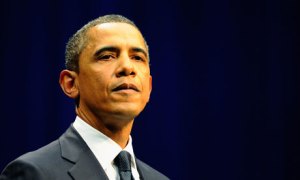
It sounds like there won’t be any surprises in the latest “inspirational” speech by the King President. All the newspapers already know what he’s going to say. The New York Times says Obama is “opting for a faster pullout,” but they say he’ll only withdraw 10,000 troops this year.
President Obama plans to announce Wednesday evening that he will order the withdrawal of 10,000 American troops from Afghanistan this year, and another 20,000 troops, the remainder of the 2009 “surge,” by the end of next summer, according to administration officials and diplomats briefed on the decision. These troop reductions are both deeper and faster than the recommendations made by Mr. Obama’s military commanders, and they reflect mounting political and economic pressures at home, as the president faces relentless budget pressures and an increasingly restive Congress and American public.
The president is scheduled to speak about the Afghanistan war from the White House at 8 p.m. Eastern time.
Mr. Obama’s decision is a victory for Vice President Joseph R. Biden Jr., who has long argued for curtailing the American military engagement in Afghanistan. But it is a setback for his top commander in Afghanistan, Gen. David H. Petraeus, who helped write the Army’s field book on counterinsurgency policy, and who is returning to Washington to head the Central Intelligence Agency.
According to Josh Gerstein at Politico, Obama’s speech will address multiple audiences who are in disagreement about what to do about the war in Afghanistan.
His address comes at a time when public skepticism about the war is building. A Pew Research Center poll out Tuesday showed a record high 56 percent of Americans want the troops out as soon as possible, up from 40 percent a year ago.
Keeping the American people on board is a major challenge for Obama. But he’ll also be speaking to a number of smaller audiences in the U.S. who have a stake in the outcome of the mission — and some of them are starkly at odds about the best path forward.
The Republican Party is growing more restive about the war, liberals are hoping for a more rapid pull-out, and the military brass worries that politics might mess up a fight they think they’re winning.
Gerstein says that many military officers think they are winning and that this pullout may snatch defeat from the jaws of victory, so to speak. On the other hand, higher ups in the Pentagon are relieved that he isn’t pulling out even faster.
Some Republicans are beginning to turn against the war, but others like John McCain and Lindsey Graham are still gung ho. He also has to consider Republican presidential candidates, some of whom–Romney, Huntsman, Paul–are critical of the continuing involvement in the Middle East.
Gerstein claims that Obama is also considering the views of Democrats, which I strongly doubt. Gerstein mentions Carl Levin:
Among Democratic supporters of Obama’s overall policy in Afghanistan, the Senate Armed Services Committee chairman has been one of the most explicit about what he wants to see: at least 15,000 troops out by the end of this year. Doing less “wouldn’t be the ‘significant’ cut Obama pledged in April and would send a weaker message to the Afghan people and the wrong message to the American people,” Levin said Tuesday.
Lastly, Gerstein claims Obama must address “the professional left.” Excuse me while I laugh hysterically. Obama does not give a sh%t about the progs, because he knows perfectly well they’ll vote for him no matter what he does.
So…. what do you think? Please let us know your reactions to the speech and the policies Obama puts forward. If you can’t stand to watch, listen on the radio. That’s what I do. Or just join in and get the highlights from those who are watching/listening.
You can watch the speech on line at Cspan. I imagine CNN will be streaming it too.
SOS Clinton backs “Brave Saudi Women”
Posted: June 21, 2011 Filed under: Foreign Affairs, Hillary Clinton, Saudi Arabia, Women's Rights | Tags: Driving Rights 12 Comments US Secretary of State Hillary Clinton said the U.S. supports the move by Saudi Women to seek the right to drive in the kingdom.
We’ve made clear [to the Saudi government] our views that women everywhere, including women in the kingdom, have the right to make decisions about their lives and their futures,” Clinton said. “They have the right to contribute to society and provide for their children and their families, and mobility such as provided by the freedom to drive provides access to economic opportunity, including jobs, which does fuel growth and stability.”
“What these women are doing is brave and what they are seeking is right, but the effort belongs to them,” said Clinton. “I am moved by it and I support them, but I want to underscore the fact that this is not coming from outside of their country. This is the women themselves, seeking to be recognised.”
The protests have put the Obama administration, and Clinton in particular, in a difficult position. While she and many other top US officials personally oppose the Saudi ban on female drivers, the administration is increasingly reliant on Saudi authorities to provide stability and continuity in the Middle East and Gulf amid uprisings taking place across the Arab world.
Thus, some officials have been reluctant to antagonise the Saudis.
On Monday, a coalition of Saudi activists urged Clinton to support publicly the campaign to end male-only driving in the ultra-conservative Muslim country.
Clinton said on Tuesday that she and other US officials had raised the matter “at the highest level of the Saudi government”.
“We have made clear our views that women everywhere, including women in the kingdom, have the right to make decisions about their lives and their futures,” she said. “They have the right to contribute to society and provide for their children and their families, and mobility, such as provided by the freedom to drive, provides access to economic opportunity, including jobs, which does fuel growth and stability.
“And it’s also important for just day-to-day life, to say nothing of the necessity from time to time to transport children for various needs and sometimes even emergencies,” Clinton said. “We will continue in private and in public to urge all governments to address issues of discrimination and to ensure that women have the equal opportunity to fulfill their own God-given potential.”

 peej
peej Carissa
 bostonboomer
 dakinikat
 ecocatwoman
 jjlo
jjlo mablue2
 Mama Lopez
 peggysue22
 quixote
 skydancingguestblogger
 Mona (aka Wonk the Vote)



 Sky Dancing
Recent Comments