
Breaking News: Gaddafi son killed in NATO air strike
Posted: April 30, 2011 Filed under: Foreign Affairs, Libya | Tags: Libya, Saif Gaddafi 26 Comments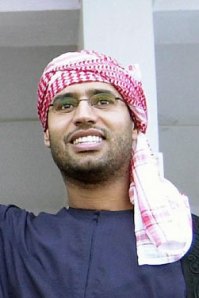
A Nato air strike in the Libyan capital, Tripoli, has killed the son of the Libyan leader, Colonel Gadaffi, a government spokesman has said.
Colonel Gaddafi himself was in the house which was hit by the strike, the spokesman added, but he was unharmed.
His son Saif al-Arab was killed, as well as three of the Libyan leader’s grandsons.
Saif al-Arab, aged 29, was the youngest of Muammar Gaddafi six sons …
Government spokesman Moussa Ibrahim said the villa was attacked “with full power.”
“The attack resulted in the martyrdom of brother Saif al-Arab Muammar Gaddafi, 29 years old, and three of the leader’s grandchildren,” he said.
“The leader with his wife was there in the house with other friends and relatives, the leader himself is in good health, he wasn’t harmed.” Col Gaddafi’s wife was also unharmed, he said.
“This was a direct operation to assassinate the leader of this country,” the spokesman added.
Barney Frank on Morning Joe
Posted: April 28, 2011 Filed under: Democratic Politics, Domestic Policy, Foreign Affairs, Health care reform, Iran, Libya, U.S. Economy, U.S. Military, U.S. Politics | Tags: Congressman Barney Frank, Morning Joe 9 Comments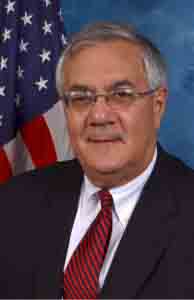
Barney Frank was on Morning Joe Tuesday. The interview was wide ranging and involved serious discussion of issues. Because of his seniority as the former chairman of the House Finance Committee and current ranking member, he can bring insight to the discussion. When he speaks, I make it a point to listen. He provides framing of subject in a manner that is understandable by the public. Also, we gain insight into what a major leader of the House is thinking.
Key issues discussed were:
- federal debt is a result of past mistakes by both parties
- NATO is a mechanism for Europe to outsource their military costs to the US
- we need a new model of medical care which involves more than Medicare
- clarifying end of life care considerations
- the need to re-evaluate the utility of NATO
- putting a missile shield in Poland to protect them from Iran is not our problem
- problems of Libya are more germane to countries within spitting distance of Libya while NATO wants us to step up with more
- Less defense spending could leave more money for health programs.
The Morning Joe, Barney Frank segment can be viewed here. The first part of the segment is information to set up for the discussion with Barney which starts at 4 minutes. The video is about 17 minutes which enables a good discussion. Joe basically conducts the interview and generally lets Barney make his points. He typically interrupts the conversation only for agreement or clarity.
Tuesday Reads
Posted: April 26, 2011 Filed under: Foreign Affairs, Libya, MENA, Middle East, morning reads, racism, Republican politics, Republican presidential politics, Syria, U.S. Military, U.S. Politics, Yemen | Tags: Barack Obama, baseball, Civil War, Confederate flag, Donald Trump, Ed Rendell, fire ants, football, Franklin Graham, Gaddafi, Haley Barbour, Jimmy Carter, Libya, Missouri flooding, Misurata, Rahm Emanuel, Syria, Yemen 26 Comments
Good Morning!!
Well, we dodged a bullet yesterday when Mississippi Governor Haley Barbour announced that he won’t be running for president in 2012. Whew! I really didn’t want a president who would decorate the Oval Office with Confederate Civil War memorabilia, did you? Newsweek, January 2010:
The Republican governor of Mississippi keeps a large portrait of the University Greys, the Confederate rifle company that suffered 100 percent casualties at Gettysburg, on a wall not far from a Stars and Bars Confederate flag signed by Jefferson Davis.
Not to mention a guy who praised the segregationist Southern “citizens councils” in an interview with the Weekly Standard. And the fact that Barbour talks like he has a mouthful of marbles doesn’t help either.
We won't have him to kick around anymore
Politico has an analysis of why Barbour “pulled the plug,” which basically boils down to he really didn’t want to go through the aggravation. The story ends this way:
There were also nagging concerns among GOP insiders about the prospect of nominating a deep-South governor with an accent matching his Delta roots to take on the country’s first black president.
Barry Wynn, a former South Carolina Republican chairman, put it politely after hearing Barbour speak in the state earlier this month: “There’s a perception that he might be more of a regional candidate.”
Gee, no kidding. Like I said, we dodged a bullet. But there are plenty of other creepy Republicans out there to take his place. In fact Ron Paul is getting ready to announce another campaign for president.
Speaking of creepy Republicans, Donald Trump claimed today that President Obama’s birth certificate is “missing.”
When asked from whom he received the information, Trump said he didn’t want to say and that he feels bad about the situation.
“I’d love for him to produce his birth certificate so that you can fight one-on-one,” Trump said in an interview set to air Monday. “If you look at what he’s doing to fuel prices, you can do a great fight one-on-one, you don’t need this issue.”
CNN’s Gary Tuchman also interviewed the former director of the Hawaii Department of Health, who said she has seen the original birth certificate in the vault at the Department of Health.
Trump supporter Franklin Graham, son of Billy, is also on the birther bandwagon.
{sigh….}
Meanwhile, multiple media outlets are talking about Trump’s generous campaign contributions–to Democrats. In fact, Trump recently donated $50,000 to Rahm Emanuel’s campaign for Chicago Mayor. From CNN:
Shortly before announcing interest in pursuing the GOP presidential bid, Republican Donald Trump gave $50,000, his largest campaign contribution in Illinois, to Democrat Rahm Emanuel, who was running for mayor, in December 2010….
Rahm’s brother Ari, who is co-CEO of William Morris Endeavor Entertainment, represents a majority of Hollywood’s celebrity elite, including Trump….
Records from the Illinois State Board of Elections show that Trump has made various sizable donations to Democratic causes in Illinois.
When [Ed] Rendell entered Pennsylvania’s 2002 gubernatorial race, Trump committed himself to the former Democratic National Committee chairman’s cause. Between December 2001 and Election Day ’02, Trump personally gave $27,000 to Ed Rendell’s gubernatorial campaign. He also chipped in $5,000 more at the end of 2003, when Rendell was finishing up his first year in office.
Mind you, Rendell’s victory in 2002 was by no means a foregone conclusion. He faced a serious threat in the May Democratic primary from Robert Casey, then the state’s treasurer and the son of a former governor. The sharpest ideological difference between the two men may have been on abortion: Rendell was pro-choice, while Casey was pro-life (like his father, who was denied a speaking slot at the 1992 Democratic convention in part because of it). During the primary campaign, Trump provided Rendell with $6,000. Rendell ended up beating Casey by 13 points.
Trump is supposedly the one of the biggest contributors to Charlie Rangel ever, yet he is supposedly running as a Republican.
And then we have our current president, who is a Republican who ran as a Democrat in 2008. I posted this in comments on the morning thread yesterday, but I can resist doing it again. It’s so funny to see former Obama supporter (why?) Eric Alterman comparing Obama to Jimmy Carter.
Stylistically speaking, Barack Obama could hardly be further from Jimmy Carter if he really had been born in Kenya. Carter was a born-again Baptist who was raised on his father’s peanut plantation and supported George Wallace on the road to the Georgia state house. Barack Obama—well, you know the story. But the two men have a great deal in common in their approach to the presidency, and not one of these similarities is good news for the Democrats or even for America. Both men rule without regard to the concerns of the base of their party. Both held themselves to be above politics when it came to making tough decisions. Both were possessed with superhuman self-confidence when it came to their own political judgment mixed with contempt for what they understood to be the petty concerns of pundits and party leaders. And worst of all, one fears, neither one appeared willing to change course no matter how many storm clouds loomed on the horizon.
Ask yourself if the following story does not sound like another president we could name The gregarious Massachusetts pol, House Speaker Tip O’Neill, could hardly have been more eager to work with a Democratic president after eight years of Nixon and Ford. But when they first met, and O’Neill attempted to advise Carter about which members of Congress might need some special pleading, or even the assorted political favor or two with regard to certain issues, to O’Neill’s open-jawed amazement, Carter replied, “No, I’ll describe the problem in a rational way to the American people. I’m sure they’ll realize I’m right.” The red-nosed Irishman later said he “could have slugged” Carter over this lethal combination of arrogance and naivety, but it would soon become Carter’s calling card.
In some bad news for the radical right, the Supreme Court has refused to hear a challenge to Obamacare before it wends its way through the federal courts.
And in some good news for football fans, a district court has decided that
The NFL’s lockout is harming players and fans and is not in the public interest, District Judge Susan Nelson said in a ruling on Monday that granted the players’ request for an injunction to halt the work stoppage.
Nelson’s order to end the six-week lockout, imposed last month after a breakdown in talks over a new collective deal, is to be appealed by the NFL.
In an 89-page statement, the judge also accepted that the players dissolution of their union was valid and allowed them to act as individuals rather than be constricted by labor bargaining rules.
The Minnesota judge said in the absence of a collective bargaining process, which ended on March 11, antitrust policies come to the fore.
The plaintiffs in the case, led quarterback Tom Brady of the New England Patriots, argued they were suffering harm as a result of a lockout that stops them from reporting to work.
Here’s some more analysis of the decision at USA Today. I realize that I’m one of the few sports fans here at Sky Dancing, so I won’t burden you unduly. But I just want to say that the Red Sox have won five games in a row and are now only one game under .500–after starting the season with a string of pathetic losses. I know at least Pat Johnson will join me in cheering that news.
Daknikat wrote yesterday about the terrible flooding that was expected in Missouri. Well, it’s happening.
Gov. Jay Nixon activated the Missouri National Guard on Monday in response to the flooding of the Black River near Poplar Bluff, Mo. The executive order came just three days after the governor declared a state of emergency from the tornado that tore through St. Louis last Friday.
“Maj. Gen. Stephen Danner has mobilized 200 citizen soldiers and airmen to report initially to the Poplar Bluff area to assist with flood relief there,” said Maj. Tammy Spicer, public affairs officer for the Missouri National Guard.

More from the Houston Chronicle: Residents flee as river overflows Missouri levee.
Thunder roared and tornado warning sirens blared, and all emergency workers in the southeast Missouri town of Poplar Bluff could do Monday was hope the saturated levee holding back the Black River would survive yet another downpour.
Murky water flowed over the levee at more than three dozen spots and crept toward homes in the flood plain. Some had already flooded. If the levee broke — and forecasters said it was in imminent danger of doing so — some 7,000 residents in and around Poplar Bluff would be displaced.
One thousand homes were evacuated earlier in the day. Sandbagging wasn’t an option, Police Chief Danny Whitely said. There were too many trouble spots, and it was too dangerous to put people on the levee. Police went door-to-door encouraging people to get out. Some scurried to collect belongings, others chose to stay. Two men had to be rescued by boat.
“Basically all we can do now is wait, just wait,” Whitely said.
A Roosevelt would probably have created jobs by having people repair the nation’s rotting infrastructure. But, instead we got Barack “Hoover” Obama and the levees keep on failing.
Things are getting worse and worse in Syria, where there has been a brutal crackdown on protesters over the past several days. From CNN: Deadly attack on protesters raises questions about Syria’s stability
With reports emerging Monday that at least one high-ranking Syrian military commander refused to participate in a bloody, predawn raid that left dozens dead in the southern border city of Daraa — the heart of Syria’s weekslong civil unrest, questions are being raised about possible cracks in President Bashar al-Assad’s hold over the military.
The crackdown on anti-government protesters by Syrian forces escalated in recent days as demonstrators, emboldened by weeks of protests, called for the ouster of al-Assad. The crackdown culminated with the raid in Daraa where thousands of troops reportedly stormed the city and opened fire on demonstrators. It was an attack reminiscent of the brutal rule of al-Assad’s father, who once ordered the military to crush a revolt that resulted in the deaths of thousands.
“I think he’s clearly going toward the security solution, which is where he could be following in the steps of his father,” said Andrew Tabler of the Washington Institute for Near East Policy, a Washington, D.C.-based think tank.
I’ve been hearing all day that Yemen’s president Saleh was renigging on his promise to step down soon, but Al Jazeera reports that there is an agreement between the government and opposition forces.
Yemen’s opposition has agreed to take part in a transitional government under a Gulf-negotiated peace plan for embattled leader Ali Abdullah Saleh to step aside in a month in exchange for immunity for him and his family.
A spokesman for an opposition coalition said on Monday that his group had received assurances in order to accept the deal.
“We have given our final accord to the [Gulf] initiative after having received assurances from our brothers and American and European friends on our objections to certain clauses in the plan,” Mohammed Qahtan said.
But not all protesters are going along.
many pro-democracy protesters, who are not members of the coalition that agreed to the peace talks, appear to be unconvinced by the Gulf-proposed deal and have called for fresh demonstrations, as security forces continued their crackdown.
In Libya, the fighting continues to be centered in the city of Misurata.
The battle for Misurata, which has claimed hundreds of lives in the past two months, has become the focal point of the armed rebellion against Gaddafi since fighting elsewhere is deadlocked.
Images of civilians being killed and wounded by Gaddafi’s heavy weapons, have spurred calls for more forceful international intervention to stop the bloodshed.
NATO’s mandate from the UN is to try to protect civilians in Libya, split into a rebel-run east and a western area that remains largely under Gaddafi’s control.
While the international coalition’s air attacks have delivered heavy blows to his army, they have not halted attacks on Misurata, Libya’s third largest city, with a population of 300,000.
When I was a kid, I was fascinated by insects. I loved to read books about ants, spiders, and other such creepy-crawly critters. Truthfully, I still find them interesting. Here’s a story about fire ants and how they cooperate to protect the group in an emergency.
When flood waters threaten their underground nests, fire ants order an immediate evacuation. They make their way to the surface and grab hold of one another, making a living raft that can sail for months.
The extraordinary survival tactic, which can involve entire colonies of more than a hundred thousand ants, has been captured on film by US engineers who used the footage to help unravel how the insects co-operate to overcome nature’s dangers.
Time-lapse film of the ants in action reveals that pockets of air get trapped between them and around their bodies, helping them breathe if the raft is pushed under the water.
In normal circumstances the ants lock legs, and sometimes mandibles, to form a floating mat that sits on top of the water through a combination of surface tension and buoyancy.
“Even the ones at the bottom remain dry and able to breath because they are not actually under the water,” said Nathan Mlot, a PhD student at Georgia Institute of Technology in Atlanta.
If only we humans would get together and cooperate like that!
That’s all I’ve got for today. What are you reading and blogging about?
Monday Reads
Posted: April 25, 2011 Filed under: Foreign Affairs, Gitmo, Kuwait, Libya, Morrocco | Tags: Congresswoman Giffords, Easter Island, Guantanomo detainees, Kuwait, Libya Transitional National Council, Moai, Morroco, Peaceful protests, Space Shuttle Endeavor 14 Comments Good Morning!
There’s some news up from Wikileaks and WAPO on the current status of detainees held at Gitmo that I thought worth mentioning. First, WAPO had a big feature up on Sunday explaining why Obama may have difficulty dealing with the remaining detainees and why the the facility hasn’t been closed.
This account of the unraveling of Obama’s pledge to close Guantanamo is based on interviews with more than 30 current and former administration officials, as well as members of Congress and their staff, members of the George W. Bush administration, and activists. Many of them would speak about internal or sensitive deliberations only on the condition of anonymity.
The one theme that repeatedly emerged in interviews was a belief that the White House never pressed hard enough on what was supposed to be a signature goal. Although the closure of Guantanamo Bay was announced in an executive order, which Obama signed on Jan. 22, 2009, the fanfare never translated into the kind of political push necessary to sustain the policy. “Vulnerable senators weren’t going out on a limb and risk being Willie Hortonized on Gitmo when the White House, with the most to lose, wasn’t even twisting arms,” said a senior Democratic aide whose boss was one of 50 Democrats to vote in 2009 against funding to close Guantanamo. “They weren’t breathing down our necks pushing the vote or demanding unified action.”
UK’s The Telegraph has this latest Wikileak on the detainees themselves and the loosie goosie rationale used to hold them. It now seems that many will never see trial let alone a release date.
Al-Qaeda terrorists have threatened to unleash a “nuclear hellstorm” on the West if Osama Bin Laden is caught or assassinated, according to documents to be released by the WikiLeaks website, which contain details the interrogations of more than 700 Guantanamo detainees.
However, the shocking human cost of obtaining this intelligence is also exposed with dozens of innocent people sent to Guantanamo – and hundreds of low-level foot-soldiers being held for years and probably tortured before being assessed as of little significance.
Both articles are long but well-worth the read. There is additional information in the NYT in their “Guantanamo Files” section that demonstrates the unreliability of information gained through torture. It also shows how many of the detainees were held or considered risks. You’ll be horrified by the thin evidence. Just about anything was considered proof of Al Quaeda membership.
The guide shows how analysts seized upon the tiniest details as a potential litmus test for risk. If a prisoner had a Casio F91W watch, it might be an indication he had attended a Qaeda bomb-making course where such watches were handed out — though that model is sold around the world to this day. (Likewise, the assessment of a Yemeni prisoner suggests a dire use for his pocket calculator: “Calculators may be used for indirect fire calculations such as those required for artillery fire.”) A prisoner caught without travel documents? It might mean he had been trained to discard them to make identification harder, the guide explains. A detainee who claimed to be a simple farmer or a cook, or in the honey business or searching for a wife? Those were common Taliban and Qaeda cover stories, the analysts were told. And a classic Catch-22: “Refusal to cooperate,” the guide says, is a Qaeda resistance technique.
While we’re already reading the Brit Press, I’d like to give a shout out to a really interesting article at The Independent  which looks at the mystery that is Easter Island. Evidently there is a new theory about the moai and the ecology on the island.
In their new book, The Statues that Walked: Unravelling the Mystery of Easter Island, to be published in June, Dr Lipo and Professor Hunt present their evidence that Polynesian colonists arrived in 1200, up to 800 years later than the conventional theory claims, and immediately modified the environment with slash-and-burn agriculture. The effect this had on the giant palm forest was magnified by the rats that arrived with them. The rodent population, feeding extensively on palm seeds, exploded. Dr Lipo argues that deforestation didn’t make things much worse for humans. Rapa Nui was no tropical paradise. It’s an old volcanic island and many of the nutrients in the soil had already been washed away. Burning the giant palms actually helped, but the settlers soon turned to a technique called stone mulching, in which freshly broken volcanic rocks are planted in the poor soil to add nutrients and cut down on erosion. The same people who used rock mulching and greeted the Dutch could have moved the moai from Rano Raraku, the quarry where they were carved, to the shore, he says. The statues seem designed to allow small groups of men to move them by rocking them, as you would a refrigerator. Similar suggestions have been made in the past, but experiments indicated that the moai would have been worn away by the time they got to the coast. Dr Lipo, aided by anthropologist Sergio Rapu, the island’s first native governor under Chilean rule, thinks he has found a way around this, with more rocking and less shuffling.
In some happy news, Representative Giffords has the okay from her doctors to watch the launch of Space Shuttle Endeavor. The congresswoman’s recovery from shots to the head continues to astound many.
Friday, the Arizona congresswoman will witness her husband’s own inspiring moment: Commanding the space shuttle Endeavour on its last launch. Doctors have cleared Giffords, who was shot in the brain at a January 8 event in Tucson, to attend the scheduled launch in Florida, a source close to her said Sunday. The source told CNN Senior Medical Correspondent Elizabeth Cohen that Giffords will be accompanied by a nurse. There will be no doctor or medical assistance on board. The source was not sure what kind of plane Giffords will be going on, but it will not be a commercial airliner. “She’ll probably be going either Wednesday or Thursday,” the source said. Asked by “The CBS Evening News With Katie Couric” what Giffords’ reaction was to the decision allowing her to go, Kelly replied, “I think she said, ‘awesome’ and she pumped her fist.”
The Democracy contagion in the MENA region continues. Peaceful protesters in Morocco are demanding constitutional reforms.
Thousands of protesters have participated in rallies in cities across Morocco, demanding social and economic reforms. They called for an end to corruption, and want more jobs for the increasing number of university graduates who face joblessness. The peaceful protests are predominately working class in tone, demanding constitutional reforms and new parliamentary elections. The marches on Sunday were organised by the February 20 movement, which has led protests for the past two months, with support from Morocco’s best-known Islamist movement, Adl wal Ihsan, which is barred from politics in the North African kingdom. Morocco’s King Mohammed VI has already pledged changes to the constitution for the first time in 15 years, but protesters remain sceptical about the possibility of real change.
The government of Kuwait has donated $180 million to the rebels in Libya. They have not yet formally recognized the rebel shadow government but are trying to help within the limits of the UN resolution.
Kuwait on Sunday gave 50 million dinars ($180 million) to the Libyan opposition Transitional National Council (TNC), its chief Mustafa Abdel Jalil said. “This amount will help us pay part of the salaries of employees,” Jalil told reporters after talks with Emir Sheikh Sabah al-Ahmad al-Sabah. “We are in need of urgent assistance.” Kuwait’s Foreign Minister Sheikh Mohammad Sabah al-Salem al-Sabah said “Kuwait will provide large and urgent humanitarian aid through the national council.” Sheikh Mohammad said Kuwait and the TNC “will work closely so that it becomes the legitimate channel of the Libyan people,” but stopped short of officially recognising the council. “Recognition is a secondary issue,” Abdel Hafiz Ghoqa, spokesman for the TNC in Benghazi told reporters, adding that the quality of cooperation with Kuwait showed the friendly nation’s “approval” for east Libya’s nascent government. France, Gambia, Italy and Qatar are the only countries so far to have recognised the TNC, Libya’s parallel government.
Isn’t it amazing how one storekeeper in Tunisia who was frustrated with his government turned into the spark that lit a match that put so many people on fire for democratic reform? Most of these countries are either ruled by monarchs or dictators. The middle class and well-educated are tired of no opportunity and all the looting of national treasure for the benefit of the very few. Even with the violence and loss of life, it is exciting to read about ordinary people who have just had enough and are taking their future into their own hands. It makes you want to fight for what we’re losing every day.
So, that should get things started! What’s on your reading and blogging list today?
Tim Hetherington, Award Winning Photojournalist and Director, Killed in Libya Today (UPDATED)
Posted: April 20, 2011 Filed under: Foreign Affairs, Libya, U.S. Military, U.S. Politics | Tags: Afghanistan, Chris Hondros, Gaddafi, Korengal Valley, Libya, Misrata, NATO, photojournalism, Restrepo, Sebastian Junger, Tim Hetherington 9 Comments
Sebastian Junger, left, and Tim Hetherington at Army Outpost Restrepo in Korengal Valley, Afghanistan. (Outpost Films / September 10, 2007)
British journalist Tim Hetherington, who co-directed and photographed the award-winning documentary Restrepo died today in Misrata, Libya. While making the film, Hetherington and his co-director Sebastian Junger worked closely with U.S. troops in an isolated and dangerous outpost in Afghanistan over an extended period of time. Restrepo won the Grand Jury Prize at the Sundance Film Festival and was nominated for an Oscar. Hetherington was 41.
Tim Hetherington, best known for co-directing the Oscar-nominated documentary on the Afghanistan war “Restrepo,” was killed in Libya on Wednesday while covering the conflict as a photojournalist for Panos Pictures, according to one of his other employers, Vanity Fair magazine.
Along with Hetherington, the New York Times reports three other journalists were wounded in the same incident: Chris Hondros, working for Getty photo agency; Guy Martin, working for Panos also; and Michael Christopher Brown, who has worked as a freelancer for several large publications.
Hondros and Martin were said to have grave wounds, and may not survive, the Times reports.
The day before he died, Hetherington tweeted: “In besieged Libyan city of Misrata. Indiscriminate shelling by Qaddafi forces. No sign of NATO.”
Hetherington, one of the best known photojournalists and winner of the prestigious Dupont Award, produced powerful pieces for ABC News’ “Nightline” from the Korengal Valley, Afghanistan, and directed the documentary “Restrepo,” which was nominated for an Academy Award.
[….]
“Tim was one of the bravest photographers and filmmakers I have ever met,” said ABC News’ James Goldston, who worked closely with Hetherington as executive producer of “Nightline.”
“During his shooting for the Nightline specials he very seriously broke his leg on a night march out of a very isolated forward operating base that was under attack. He had the strength and character to walk for four hours through the night on his shattered ankle without complaint and under fire, enabling that whole team to reach safety.”
Hetherington was embedded with the Army unit in Afghanistan when Army Staff Sgt. Salvatore Giunta put his life on the line to save his comrades. Giunta later became the first living recipient of the Medal of Honor since Vietnam.
RESTREPO is a feature-length documentary that chronicles the deployment of a platoon of U.S. soldiers in Afghanistan’s Korengal Valley. The movie focuses on a remote 15-man outpost, “Restrepo,” named after a platoon medic who was killed in action. It was considered one of the most dangerous postings in the U.S. military.
And from the “directors’ statement”:
Our intention was to capture the experience of combat, boredom and fear through the eyes of the soldiers themselves. Their lives were our lives: we did not sit down with their families, we did not interview Afghans, we did not explore geopolitical debates. Soldiers are living and fighting and dying at remote outposts in Afghanistan in conditions that few Americans back home can imagine. Their experiences are important to understand, regardless of one’s political beliefs.
UPDATE: American photojournalist Chris Hondros has died of wounds from the same attack in which Tim Hetherington died.
The Washington Post has put up a gallery of Hondros’ work.

 peej
peej Carissa
 bostonboomer
 dakinikat
 ecocatwoman
 mablue2
 Mama Lopez
 peggysue22
 quixote
 skydancingguestblogger
 Mona (aka Wonk the Vote)



 Sky Dancing
Recent Comments