
Thursday Reads: Lying Politicians vs Truly Egregious Behavior; Crazy Republicans; and More
Posted: June 9, 2011 Filed under: 2012 presidential campaign, abortion rights, child sexual abuse, children, Crime, Democratic Politics, Economy, fetus fetishists, Foreign Affairs, Libya, U.S. Economy, U.S. Military, U.S. Politics | Tags: Andrew Breitbart, Autism, Camp Shelby, child sexual abuse, CREW, genetic mutations, John Huntsman, lightning, Melanie Sloan, Michelle Bachmann, Mitt Romney, Moammar Gaddafi, rape, Rep. Anthony Weiner, Rep. Charles Rangel, Rick Santorum, Sarah Palin, Scott Walker, Tim Pawlenty, war crimes 33 Comments
Good Morning!!
I’m sick and tired of the Weiner story, and I know most of you are too; but I just want to highlight a few reactions that I found interesting–all G rated.
I love this Lambert post, especially this part:
ZOMG!!!!!!! Offensive behavior online!!!!!!!! [Too tired for the riffs about the pearl clutching and the fainting couch.]
Anyhow, so Weiner’s an asshole. And so what. As William Gibson said:
“Fortunately,” he said, “it isn’t about who’s an asshole. If it were, our work would never be done.”
Love that quote! As Lambert points out, these “ethics” investigations never seem to happen to people who engage in torture, election fraud, or handing over the U.S. treasury to banksters.
Speaking of assholes, Andrew Breitbart claims he still has one more “lewd picture” of Weiner that he hasn’t released–and it’s not the one going around today. Talk about an evil human being. Breitbart is disgusting. If you read to the end of that piece, you’ll find out Breitbart’s notions of female sexuality.
One person who seems to have a little sympathy for Weiner is Charlie Rangel.
“His most serious problem is keeping his wife and family together at this time,” Rangel said in an interview on Fox Business Network set to air Wednesday evening.
Rangel did not suggest that Weiner resign. Here’s what he had to say about “ethics” investigations:
“They may do that, and God knows, I know what people feel they have to do as politicians to protect themselves. It’s totally unbelievable, but it happens,” Rangel said. “They love you, but they love themselves better and they make political decisions not to how it affects you, but to how it affects them and their reelection.”
They are all slime, yet they presume to sit in judgment on others. What Weiner did makes me sick, but the rest of them make me even sicker.
Melanie Sloan of CREW says there is a double-standard operating in the many calls for Weiner to resign.
“This is a massive overreaction and I don’t understand it,” said Melanie Sloan, executive director of Citizens for Responsibility and Ethics in Washington.
She points out that Charlie Rangel was censured for serious ethical breaches, yet was not forced to resign.
Sloan explained that the mounting pressure on Weiner may stem in part from the early precedent set by House Speaker John Boehner when, at the first sign of sexual misconduct, he urged Reps. Mark Souder (R, Ind.) and Chris Lee (R, N.Y.) to resign, even though their behavior didn’t appear to involve any abuse of their office.
“A lot of people really hate Weiner, too,” she said, referring to Weiner’s colleagues in the House, some of whom are said to have been rankled by his personality and frequent media appearances.
What about Weiner’s denials before he owned up?
“A politician lying is not that unusual,” Sloan said. “If the new standard is that politicians are out the second they lie to us, then a lot of politicians could be gone.”
How true.
As egregious as Weiner’s behavior was, it wasn’t a crime. Here’s an example of truly egregious behavior: U.S. pediatrician on trial for raping toddlers
A Delaware pediatrician went on trial for allegedly raping or sexually exploiting 86 young patients, all girls except one and almost all younger than three.
Earl Bradley has pleaded not guilty to 24 counts against him, and sat quietly in gray prison scrubs as a veteran state trooper spent hours Tuesday describing the doctor’s cache of home videos of the assaults.
They were so “horrible,” testified state police detective Scott Garland, a specialist in forensic computer evidence. “They were beyond anything I had ever witnessed. Nothing prepared me for it.”
And then there’s this: Casey Antony told a fellow inmate that she used chloroform to knock out her daughter Caylee when she (Casey) wanted to party.
Gaddafi bought Viagra-like pills for troops to attack women
Luis Moreno-Ocampo said he may ask for a new charge of mass rape to be made against Gaddafi following the new evidence. The chief International Criminal Court prosecutor is expecting a decision from judges within days on his request for crimes against humanity charges against the Libyan leader.
“Now we are getting some information that Gaddafi himself decided to rape and this is new,” Mr Moreno-Ocampo told reporters.
He said there were reports of hundreds of women attacked in some areas of Libya, which is in the grip of a months-long internal rebellion.
Mr Moreno-Ocampo said there was evidence that the Libyan authorities bought “Viagra-type” medicines and gave them to troops as part of the official rape policy.
“They were buying containers to enhance the possibility to rape women,” he said.
“We had doubts at the beginning but now we are more convinced that he decided to punish using rapes,” the prosecutor said. “It was very bad — beyond the limits, I would say.”
Let’s move on to the horrors of the Republican 2012 presidential field. According to a new Quinnipiac poll, voters aren’t ready for a Mormon president.
Sorry, Mitt. John Huntsman is also a Mormon. I guess voters don’t mind looney religionists as long as they claim to be Christians though. Have you heard about Tim Pawlenty’s economic plan?
Pawlenty calls for sweeping tax cuts dubbed by some as “breathtaking.” He’d cut the corporate income tax from 35 percent to 15 percent, and eliminate taxes on capital gains, interest income, dividends and inheritances. There would be two tiers of personal income taxes — 10 percent and 25 percent.
Pawlenty would require Congress to reauthorize all federal regulations and radically reshape the federal government by privatizing services such as the U.S. Postal Service and Amtrak. He also would support an ill-advised balanced budget amendment. You could almost hear the corporate special interests uttering “check, check and check!” as the South St. Paul truck driver’s son ticked off items on their wish lists and then one-upped them.
Just reading about it makes me want to run out into the street screaming and tearing my hair out.
Sarah Palin and Michelle Bachmann are supposedly feuding now because Ed Rollins said that Bachman is more “serious” than Palin. I had to really look around to find an article that didn’t call it a “cat fight.” Here’s Rollins, quoted by NPR:
“Well I’m going to work for Michele Bachmann if she runs. That’s the one that intrigues me the most at this point and I think to a certain extent she’s articulate, she’s a conservative. She’s got a great story to tell. She’s on the Intelligence Committee. You know, she’s unknown to the national audience, but she’ll become known and that’s the candidacy that I’m going to work for if she runs.
“Sarah has not been serious over the last couple of years. She got the vice-presidential thing handed to her. She didn’t go to work in the sense of trying gain more substance. She gave up her governorship. You know, I think Michele Bachmann and others have worked hard. She has been a leader of the Tea Party, which is a very important element here. She’s an attorney, done extraordinary things with family values and what have you. So I think she will connect. She’s a great, great communicator and I would say in the race today she is probably the best communicator.”
Kinda takes your breath away, doesn’t it? Now check this out: Santorum Calls Abortion Exceptions To Protect Health Of The Mother ‘Phony’
Longshot GOP presidential hopeful and former Pennsylvania Senator Rick Santorum stomped for votes in Iowa on Tuesday, trumpeting his “culture wars” message. A longtime anti-abortion activist, Santorum is selling himself as the leading social conservative in a crowded field. Yesterday in West Des Moines, he made an appearance at a “crisis pregnancy center” called Informed Choices that tries to talk women out of having abortions. Santorum said that he “separates [himself] from the rest of the pack” and criticized the other candidates for simply “checking the box” on anti-abortion issues.
When discussing his track record as a champion of the partial birth abortion ban, Santorum dismissed exceptions other senators wanted to carve out to protect the life and health of mothers, calling such exceptions “phony”:
SANTORUM: When I was leading the charge on partial birth abortion, several members came forward and said, “Why don’t we just ban all abortions?” Tom Daschle was one of them, if you remember. And Susan Collins, and others. They wanted a health exception, which of course is a phony exception which would make the ban ineffective.
In other stupid Republican news, Wisconsin Governor Scott Walker had a painting of poor and homeless children removed from the governor’s mansion. From Mother Jones:
Walker has made headlines again after he removed a painting depicting three Wisconsin children—one had been homeless, one came from low-income family, and a third who had lost family members in a drunk-driving accident. According to the Milwaukee Journal Sentinel, the painting was one of numerous pieces of art commissioned by the fund that operates the governor’s mansion—works that were intended to remind the governor of the constituents he or she represents.
Here’s the Journal Sentinel on the painting by artist David Lenz:
In an interview, Lenz said he carefully selected the three children portrayed in “Wishes in the Wind.” The African-American girl, featured in a Journal Sentinel column on homelessness, spent three months at the Milwaukee Rescue Mission with her mother. The Hispanic girl is a member of the Boys & Girls Clubs of Greater Milwaukee. And the boy’s father and brother were killed by a drunken driver in 2009.
“The homeless, central city children and victims of drunk drivers normally do not have a voice in politics,” Lenz explained in an email. “This painting was an opportunity for future governors to look these three children in the eye, and I hope, contemplate how their public policies might affect them and other children like them.”
He added: “I guess that was a conversation Governor Walker did not want to have.”
In other news, at Camp Shelby in Mississippi, 77 army cadets were struck by lightening and hospitalized. Let’s hope they’ll all be okay. The weather sure is strange this year!
I’ll end with this interesting story from the LA Times: Autism linked to hundreds of genetic mutations.
Autism is not caused by one or two gene defects but probably by hundreds of different mutations, many of which arise spontaneously, according to research that examined the genetic underpinnings of the disorder in more than 1,000 families.
The findings, reported in three studies published Wednesday in the journal Neuron, cast autism disorders as genetically very complex, involving many potential changes in DNA that may produce, essentially, different forms of autism.
The affected genes, however, appear to be part of a large network involved in controlling the development of synapses, the critical junctions between nerve cells that allow them to communicate, according to one of the three studies.
Although the work will have no immediate value to patients or their families, the insights provide a wealth of targets to pursue in developing treatments for the disorder, scientists said. Understanding the genetic causes of autism spectrum disorders may promote more accurate diagnoses, and research on synapse formation and function could yield treatments that address the flow of signals between nerve cells.
What are you reading and blogging about today? Please share!!
Monday Reads
Posted: June 6, 2011 Filed under: Economy, Foreign Affairs, morning reads, Yemen | Tags: jobs, John Edwards, the economy, Yemen 32 Comments Good Morning!
The top stories on every one’s mind these days are the lousy jobs report last week and the tumbling stock markets. Democrats in the House are calling for new infrastructure spending as a way to create more jobs in the hopes that a few federal projects could provide some stimulus to the stalling recovery.
“The American people, while concerned about the deficit, place much more emphasis on job creation, and they see a role for the government,” Rep. Raul Grijalva (D-Ariz.) told The Hill. “A fast injection of job stimulus on the public side would help tremendously. … It [the job report] helps our argument about investment.”
Other Democrats delivered a similar message on Friday. Rep. Eliot Engel (D-N.Y.) said “the answer” to the lingering jobs crisis is “investment” in the “communities and businesses who need confidence and resources to hire [people].”
Rep. Emanuel Cleaver (D-Mo.) said “investing in our communities goes hand in hand with full economic recovery.”
Rep. Earl Blumenauer (D-Ore.) said that only in Washington is targeted new spending being demonized.
“Once you get outside the Beltway, almost everyone agrees that we should be rebuilding our crumbling infrastructure and investing in clean American energy that reduces our dependence on oil,” Blumenauer said.
Meanwhile, the major reason for home foreclosures these days isn’t the subprime loan scandal. It’s unemployment.
The Obama administration’s main program to keep distressed homeowners from falling into foreclosure has been aimed at those who took out subprime loans or other risky mortgages during the heady days of the housing boom. But these days, the primary cause of foreclosures is unemployment.
As a result, there is a mismatch between the homeowner program’s design and the country’s economic realities — and a new round of finger-pointing about how best to fix it.
The administration’s housing effort does include programs to help unemployed homeowners, but they have been plagued by delays, dubious benefits and abysmal participation. For example, a Treasury Department effort started in early 2010 allows the jobless to postpone mortgage payments for three months, but the average length of unemployment is now nine months. As of March 31, there were only 7,397 participants.
“So far, I think the public record will show that programs to help unemployed homeowners have not been very successful,” said Jeffrey C. Fuhrer, an executive vice president of the Federal Reserve Bank of Boston.
One additional question is popping up now that it appears more than certain that some entitlements will be subject to cuts, That is why aren’t Democrats defending Medicaid? Democrats have spoken out against cuts to Social Security and have defended Medicare. What about Medicaid?
…for all the Democrats’ posturing and campaigning against Republican plans for Medicare, the GOP budget actually makes more immediate and deeper cuts to Medicaid. But Democrats haven’t been blasting the GOP Medicaid plan with nearly the same fervor, even though Republicans would cut about $750 billion from the program during the next decade and end the guaranteed federal match for states.
With intense budget negotiations on the debt limit under way, health care insiders think Democrats won’t budge much on Medicare now that they have a significant campaign chip in their pockets: Kathy Hochul’s upset win in New York’s 26th Congressional District is Exhibit A of the power of Medicare.
And that makes advocates worry that Medicaid cuts are more likely to come out of budget negotiations led by Vice President Biden.
Medicaid covers more than 50 million people, including low-income children and seniors in long-term care, but it doesn’t pack the same political punch as Medicare. Some observers say that’s due to the lingering perception that Medicaid is just a program for poor people that holds a much less broad-based appeal.
That perception is definitely part of the challenge in communicating Democratic opposition to the GOP’s Medicaid plans, Rep. Robert Andrews (D-N.J.) told POLITICO.
Medicaid “doesn’t quite have the same political dynamic” as Medicare, Andrews said.
Protestors in Wisconsin have opened a ‘Walkerville’ Tent city in Madison as a reminder of the Great Depression and to protest the governor’s budget. Wisconsin is leading the way in protesting the way state budgets are being balanced on the backs of the poor and the working and middle classes.
In a move meant to evoke the infamous “Hooverville” tent cities of the Great Depression, protesters in Madison, Wisconsin opened “Walkerville” on Saturday evening, a tent city in the heart of Madison intended as a protest of Governor Scott Walker’s budget plan.
The Wisconsin Sentinel Journal calls the protest “the latest act in the 2011 political drama featuring the governor’s push to eliminate most collective bargaining rights for most public employees”.
By 9:00pm, an estimated 250 campers in up to 100 tents were arrayed throughout the designated protest area, with many campers pitching their tents on concrete sidewalks. City police, state troopers, and other law enforcement personnel were on hand, but on the whole a carnival air prevailed as families set up for the night, some intending to stay just for a night or two and others through June 20.
Yemeni president Ali Abdullah Saleh is in Saudia Arabia recovering from injuries suffered in an attack on his palace last week. Many people are encouraging him to stay there.
The United States and Britain are pressing Saudi Arabia to persuade the Yemeni president, Ali Abdullah Saleh, to formally stand down after flying to Riyadh for treatment for injuries that were sustained in shelling in Sana’a on Friday.
Diplomats said that Washington and London were insisting that Saleh now be urged to implement a deal under which he would relinquish power in exchange for immunity from prosecution and financial guarantees about his future.
Pro-democracy protestors in Yemen were celebrating his departure after 33 years in power, but the Arab world’s poorest country still faces turmoil as well as immediate concerns over whether a truce will hold if Saleh tries to return and his relatives and supporters fight back.
The risks ahead were underlined by clashes in the southern city of Taiz, which left at least two dead and four injured. Shelling was also reported in Sana’a.
Saleh was described as recovering following emergency medical treatment in a Riyadh military; he was injured by shrapnel when his palace compound was attacked by tribal rivals.
Yemen’s ruling party, the General People’s Congress, insisted he would be back, but diplomats and analysts expressed doubt, suggesting that Saudi patience with an always fractious and often manipulative neighbour was exhausted.
It would be impossible for Saleh to return, argued Abdul Ghani Iryani, a respected Yemeni political commentator. “He is out. That is the only rational course. The exit of the president has defused some of the tensions and war is less likely today than it was yesterday.”
Evidently John Edwards is going to trial because the Feds offered him a plea deal that included prison time.
Just before John Edwards was indicted Friday, prosecutors made a final offer: They would accept his guilty plea to three misdemeanor campaign finance law violations in the $925,000 cover-up of his affair.
With the deal, the former Democratic vice-presidential nominee would avoid a felony conviction – and almost certainly keep the law license that had made him wealthy.
But there was a catch.
The government wanted to dictate a sentence that would result in up to six months of prison for Edwards, even with the plea to lesser charges.
Edwards and his lawyers were concerned. They wanted the ability to at least argue to a judge for alternatives, such as a halfway house, weekend releases, home arrest or some arrangement that would allow Edwards to be with his school-age children. He is a single parent after the death of his wife, Elizabeth, in December.
Yeah, right. My guess is he doesn’t want to be some one’s mistress.
So, that’s what I’ve dug up today. What’s on your reading and blogging list?
Goolsbee goes au naturel
Posted: June 5, 2011 Filed under: Economy, jobs, unemployment, We are so F'd | Tags: Austan Goolsbee, fiscal policy, jobs, natural path to recovery, the economy 20 CommentsI never thought I’d ever hear an economic adviser to a Democratic administration justify taking a natural path to recovery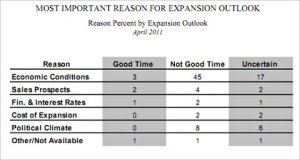 when the US economy is reeling from a basic lack of aggregate demand. The comments were just about as Chicago school as you could get. It was just another reheated bowl of smoking green shoots.
“Our effort now as a government should be to get the private sector to help them stand up and lead the recovery,” Goolsbee told “This Week” anchor Christiane Amanpour, citing efforts on regulatory review, while maintaining policies such as reduced payroll taxes through the end of the year. “We’ve got to rely on policies that are trying to leverage the private sector and give incentives to private sector to be doing the growth.”
I didn’t catch Obama economist Austan Goolsbee with Christian Amanpour on ABC which is where I got that quote. I caught up with him on Candy Crowley’s Sunday show. From what I can tell, the story line was about the same. According to Goolsbee, whatever recovery we’re experiencing from the worst financial crisis we’ve had since The Great Depression is in the hands of the private sector who just needs to appreciate the gentle nudge they’ve already gotten. Goolsbee conveniently ignored every thing going on in the recent economy except a small window’s worth of job creation. He declared that there was no downward trend in the economy. I felt like I was watching a big ol’ flaming head tell me to ignore the man behind the curtain. But, I musn’t be the only one that was watching the little man behind the curtain given that the one month’s worth of data turned into “DOW plunges into longest weekly losing streak since 2004” last week. I don’t think that’s the end of that either.
Scarecrow at FDL calls it the best speech evah given by President Romney’s chief economic adviser.
Goolsbee correctly told us that a smart economist wouldn’t get overly excited about one month’s jobs and growth numbers but would instead look at the overall trend. Of course what he wouldn’t want to concede is that GDP grew at a meager annual rate of 1.8 percent over the first three months of 2011 and so far was predicted to grow at only 2.8 percent for the next three. And the overall trend for job growth was still not enough to make a serious dent in unemployment unless you believe taking 5-10 years to get back to full employment is okay.
So Goolsbee was in denial from the opening moment because he didn’t have a decent story to tell even in his own framework. When Amanpour asked him what the Administration could or should be doing to improve conditions, he ticked off items you’d expect to hear from a typical GOP Presidential adviser: we’ve got to get the debt under control; we have a White House effort to identify and get rid of governmental regulations that are preventing the private sector from growing the economy; we should pass “free trade” agreements backed by the Chamber of Commerce; and we should leverage limited public dollars to release billions in private funding for investments.
Goolsbee’s bottom line: “It’s now up to the private sector.” That’s exactly what you’d expect from President Romney’s economic adviser.
It took Paul Krugman and Chrystia Freeland, over the absurd denials by Martin Regalia of the Chamber of Commerce, to remind ABC’s audience that business confidence and concerns about taxes and regulations aren’t the problem: business polls repeatedly show businesses aren’t expanding/hiring much because the demand for their products is weak. Demand is weak because the recession and the housing market crash depleted consumers’ wealth and they’re worried about losing their homes and jobs. You don’t need a degree in economics to grasp the logic of that. When private spending is still depressed, only government spending is keeping the economy afloat, and the stimulus is phasing out.
Now, I hate to keep writing about the same things over and over again. I know I’m not the only one. Brad DeLong has finally discovered there is no Plan B. There is only full speed ahead with deficit reduction which is a great long term goal but a disastrous short term strategy. Mark Thoma is even more straightforward.
Policymakers have been telling us to have patience for some time now, but patience ran thin long ago. We need action, not excuses to do nothing based upon Republican talking points. We have millions of people out of work, we face the prospect of a five to ten year recovery for employment, yet the administration has no plans to even try to push Congress to do more.
The percent of owners planning capital outlays in the next three to six months fell 3 points to 21 percent, a recession level reading. Money is cheap, but most owners are not interested in a loan to finance equipment they don’t need. Prospects are still uncertain enough to discourage any but the most profitable and promising investments. Four percent characterized the current period as a good time to expand facilities (seasonally adjusted), down 1 point from March and 4 points lower than January. The net percent of owners expecting better business conditions in 6 months slipped another 3 points to negative 8 percent, 18 percentage points worse than in January. Uncertainty is the enemy, and there is plenty of it to convince owners to “keep their powder dry”. Apparently consumers feel much the same way, as more customers spending more money would overcome the reluctance of owners to hire and make capital outlays. One in four still cite “weak sales” as their top business problem.
There is nothing mysterious about the fiscal policy solution to your basic lack of aggregate demand. What’s mysterious is the complete lack of concern about the significantly high unemployment rates, the continued foreclosure crisis, and the downward trends in both consumer and business confidence.
I guess I know what happens with the phone rings at 3 a.m.
No one picks it up and then some one goes on TV the next day and says we’ve done all we can do. For this they expect re-election?
Saturday Night Frights: What the Future of America Could Look Like
Posted: June 4, 2011 Filed under: 2012 presidential campaign, abortion rights, Democratic Politics, Domestic Policy, Economy, fetus fetishists, fundamentalist Christians, religion, religious extremists, Reproductive Rights, Republican presidential politics, U.S. Economy, U.S. Politics | Tags: Christian Coalition, closet cases, Faith and Freedom Coalition, John Boehner, John Huntsman, Marcus Bachmann, Mich McConnell, Michelle Bachmann, Ralph Reed, Sarah Palin, Tim Pawlenty 13 Comments
For the past two days, Republican movers and shakers have participated in a conference in Washington, DC, sponsored by the Faith and Freedom Coalition. The Faith and Freedom Coalition is the new face of the religious right, but the same old faces are behind the new organization. It is chaired by evil grifter and former Jack Abramoff crony Ralph Reed, who once led the Christian Coalition and is now supposedly experiencing a “political rebirth.”
Just as a reminder of how utterly slimy Ralph Reed is, here is disgraced super-lobbyist Jack Abramoff expressing an opinion about Reed.
This dishonest, repulsive man is one of the kingmakers of the Republican Party.
The Caucus blog at The New York Times had a brief writeup on the Faith and Freedom Conference and what the 2012 Republican hopefuls had to say to them. Here are some samples.
John Huntsman
“I do not believe the Republican Party should focus solely on our economic life to the neglect of our human life,” Jon M. Huntsman Jr. told the audience of several hundred after citing antiabortion laws he signed when governor of Utah.
Tim Pawlenty
opened and closed his remarks with biblical quotes. He said his top four “common-sense principles” for the nation were to turn toward God, protect the unborn, support traditional marriage and keep Americans secure.
Michelle Bachmann
reminded the audience that she home-schooled her five children and ended with a prayer that asked a blessing for President Obama, whom she had sharply criticized moments earlier.
Bachmann also promised to repeal Obamacare.
Mitt Romney tried to convince the audience he believed in the “sanctity of human life” and hated gay marriage, Newt Gingrich didn’t show up, and Ron Paul talked about reinstating the gold standard.
Before you laugh too loudly about this parade of loons, check out what Howard Dean told The Hill today. He’s warning Democrats that the “P” woman could beat Obama in 2012. In face Dean thinks if something isn’t done about the economy and unemployment, anyone who wins the Republican nomination could win the presidency.
Dean says his fellow Democrats should beware of inside-the-Beltway conventional wisdom that Obama would crush Palin in a general-election contest next year.
“I think she could win,” Dean told The Hill in an interview Friday. “She wouldn’t be my first choice if I were a Republican but I think she could win.”
Dean warns the sluggish economy could have more of a political impact than many Washington strategists and pundits assume.
“Any time you have a contest — particularly when unemployment is as high as it is — nobody gets a walkover,” Dean said. “Whoever the Republicans nominate, including people like Sarah Palin, whom the inside-the-Beltway crowd dismisses — my view is if you get the nomination of a major party, you can win the presidency, I don’t care what people write about you inside the Beltway,” Dean said.

Personally, I think Michelle Bachmann is scarier than Quitterella. And potential first lady gentleman Mr. Michelle Bachmann Marcus Bachmann is even scarier than she is. Here he is discussing homosexuality.
This is Marcus Bachmann swishing arriving at a radio station for an interview.
These are the kinds of people who could be running the country if the Democrats don’t get off their duffs and do something about the economy and jobs instead of playing footsie with Mich McConnell, John Boehner, and the rest of the Republican freakazoids. This is no joke, folks. I realize this isn’t a particularly politically correct post, but I do not want to be at the mercy of a bunch of self-hating closet cases and hypocritical christianists who are obsessed with fetuses and throwing old people to the wolves. Democrats need to wake the f*ck up and smell the unemployment.
Playing Chicken with U.S. Financial Markets
Posted: June 2, 2011 Filed under: Economy, Federal Budget, Federal Budget and Budget deficit, financial institutions, Republican politics, U.S. Economy | Tags: debt ceiling crisis, republican political games, risk free rate 9 CommentsYou would think that being less than three years off from the biggest financial market collapse since the Great Depression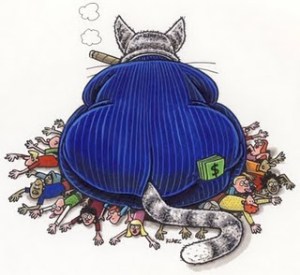 would make beltway lawmakers tread lightly when it comes to upsetting financial markets here and around the world. You would also think that after we’ve used the Fed for the most unusual transactions in its history, bailed out investment banks and insurance companies, and concentrated bank deposits and securities dealers from ‘too big to fail’ to ‘so huge they’d take the developed world down with them’ that District politicos would find a different outlet for their psuedo outrage. It’s not that they’re mad at financial institutions or what they basically did to the world’s major economies, it’s that their mad at what they did to the U.S. Federal deficit and since blaming teachers and park rangers didn’t work, they’re going to attack the U.S. Treasury Market. That’s right, they are attacking the base risk free rate used by every asset pricing model from the CAPM forward. That’s like striking at the heart of what makes modern finance work. Sounds kind’ve stupid doesn’t it?
Well, Tuesday’s Congressional vote on the debt ceiling was a danse macabre aimed directly at turning financial markets upside down whether they want to think so or not. The equity markets have been dancing around a technical high most of spring and are heading downwards as we speak. The economy has not healed. The job market is dismal. Credit markets are still stuck on neutral. Household consumption and Consumer confidence have headed south. What are these people trying to do our economy? Tank it? Finally, there’s a few media voices that are expressing concern instead of admiration for the “brave” insanity of people like Paul Ryan. Is this coming a little too late? Is the Republican party trying to drive the cost of borrowing for every one in the world up to score a few political points with some block of voters?
Just ignore Tuesday’s vote against raising the debt ceiling, House Republican leaders whispered to Wall Street. We didn’t really vote against it, members suggested; we just sent another of our endless symbolic messages, pretending to take the nation’s credit to the brink of collapse in order to extract the maximum concessions from President Obama.
Once he caves, members said, the debt limit will be raised and the credit scare will end. And the business world apparently got the message. It’s just a “joke,” said a leader of the United States Chamber of Commerce, and Wall Street is in on it. Not everyone found it funny.
No matter how they tried to spin it, 318 House members actually voted against paying the country’s bills and keeping the promise made to federal bondholders. That’s an incredibly dangerous message to send in a softening global economy. Among the jokesters were 236 Republicans playing the politics of extortion, and 82 feckless Democrats who fret that Republicans could transform a courageous vote into a foul-smelling advertisement.
If I were the Chinese or Russian government or any other investor with the ability to transfer funds anywhere else, I would be doing so just to make a point. Threatening to default on sovereign debt should not be considered political tool. It’s like threatening to use a weapon of mass destruction to score points.
Steven Benen of Washington Monthly calls it a “hostage strategy”. Frankly, it’s domestic terrorism with hostages.
Indeed, one of the more striking aspects of yesterday’s gathering was the increasingly-explicit nature of the Republican hostage strategy.
…Boehner’s let’s-get-a-deal-done stance masks a deeper belief within the House Republican Conference — that Obama will back down eventually and agree to its demands, forcing Capitol Hill Democrats to follow suit.
“Of course, it’s dangerous,” a House Republican close to Boehner said of the politics of a government default. “But it’s dangerous for everybody, especially the president. At the end of the day, [Obama] will have to give in.”
“Who has egg on their face if there is a sovereign debt crisis, House Republicans or the president?” asked another senior GOP lawmaker.
With a potential debt default by the U.S. government just two months off, and a continued standoff between the White House and GOP congressional leaders on how to move forward in boosting that limit, Republican lawmakers say publicly and privately that they believe Obama will be the one who has to cave.
To be sure, the hostage-strategy dynamic isn’t new, but it’s uncommon for Republican members of Congress to be this candid about their plan out loud. One leading GOP lawmaker acknowledged that the Republican plan is “dangerous,” but the party doesn’t care. Another conceded that the GOP is inviting a “sovereign debt crisis,” but figures Obama would get the blame, so Republicans don’t care about that, either.
Okay, so notice the theme here. Obama is expected to cave and why not? He’s drawn lines in the sand before. Remember his promise to not extend tax cuts to the richest of the rich? He caved. Remember how he was going to offer a robust public option or at least an exchange with some kind of government-sponsored plan for health care reform? He caved. Remember all that posturing over closing Guantanamo or bringing troops home from Iraq and Afghanistan. He caved.
That’s what you get when you negotiate with terrorists and they know you’ll lead with the compromise position. They’ll keep taking more important things hostage and wait you out. They know this one is too big to fail but yet, they can’t resist just seeing how much they can get away with this time. Problem is, this time it’s really having an impact. The economy is looking as though it will double dip and requires a fiscal boost, for one. This is like 1937 redux and I’m afraid that more mistakes will be made. I can’t believe that we have a political party that is so intent on damaging an administration that it’s going to frighten the global economy into a possibly game changing reshuffling of what the base of financial world’s ‘risk free’ rate and global safe haven currency may be in the future. If there was ever any reason or an excuse to dump the dollar as a basis of your economy or start ridding your trade surplus savings of US Treasury holdings, this would be it. Symbolic my fat New Orleans ass!
A testy White House meeting between President Obama and House Republican leaders Wednesday failed to lower the partisan pitch in the capital, much less make progress toward a deal on the federal debt ceiling.
Instead, the two sides traded complaints, accusing each other of partisanship and posturing. Republicans demanded that the administration produce a budget-cutting plan, which the White House said it had already done.
Rep. Paul D. Ryan, architect of a Medicare overhaul aimed at slashing the cost of the popular entitlement program by reducing the government’s open-ended commitment to seniors, accused Obama of “mis-describing” his plan and implored the president to ease up on the “demagoguery.”
In reply, Obama said he was no stranger to cartoonish depictions, reeling off a list of conservatives’ favorite attack points: “I’m the death-panel-supporting, socialist, may-not-have-been-born-here president,” Obama said, according to people familiar with his remarks.
The meeting was meant to resolve pent-up grievances and move toward compromise on the deficit and the cost of healthcare for seniors. But after 75 minutes of talk in the East Room, the two sides parted company with little progress.
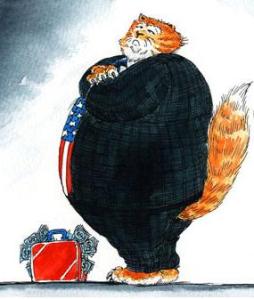 Johnathan Chait of The New Republic rightly accuses ‘economist’ John Taylor of the Hoover Institute of ignoring the “severe economic consequences of risking the full faith and credit of the Treasury”. Just arguing spending cuts are good just doesn’t make sense. This is especially true given the incredible fragile state of the U.S. economy and recovery. Is extracting more concessions out of Obama worth global financial market turmoil?
The hack Republican answer is that spending cuts and the debt ceiling are linked, because the debt ceiling is Obama’s fault. But of course the debt ceiling has to get raised under every president, and it would have to be raised even if Obama signed the Paul Ryan budget. The debt ceiling has nothing to do with any particular policy choices — it’s just a routine vote that used to be an opportunity for the minority party to embarrass the president, which Republicans are turning into a hostage opportunity. People like Taylor are dressing this up in principle, but the only principle they can articulate is that spending cuts are good. But that same logic would allow the minority to use the debt ceiling to jack up the president over any policy disagreement at all.
So far, the markets and the world seem to think that American politicians will stop their posturing and settle down to business before the August drop dead date. They’ve even quoted Churchill who used to say we eventually do the right thing it’s just that we don’t actually do it until the very last minute. The deal is that not only is the brinkmanship a dangerous strategy but the further concessions–in a fragile recovery at best–are dangerous. Obama and his cadre of lawyers have made it clear that they will concede any high ground. Again, we have a history of Obama concessions on political promises. The problem is that each time the concession comes, it comes at a greater cost. Every one knew this drama would play out once Obama gave in on renewing the Bush Tax Cuts. Every thing is negotiable and subject to concession now. You can’t fake credibility once you’ve show yourself as having none.
Wall Street numbers look bad today. They’ve been bad all week. The primary concern is said to be the faltering economy. However, any one that thinks that some of this unease isn’t over the debt ceiling hostage situation kids themselves.

 peej
peej Carissa
 bostonboomer
 dakinikat
 ecocatwoman
 mablue2
 Mama Lopez
 peggysue22
 quixote
 skydancingguestblogger
 Mona (aka Wonk the Vote)



 Sky Dancing
Recent Comments