
Tuesday Reads: U.S. Spies on Foreign Countries and Other “Blockbuster” News
Posted: September 3, 2013 Filed under: Central Intelligence Agency, China, Crime, cyber security, Diplomacy Nightmares, Foreign Affairs, France, Germany, Great Britain, Iran, Israel, morning reads, Pakistan, Russia, Syria, U.S. Politics | Tags: Agência Brasileira de Inteligência, al Qaeda, Bashar al-Assad, black budget, Bob Cesca, Edward Snowden, espionage, Glenn Greenwald, Information Assurance, John Kerry, Laura Poitras, Marines website, National Security Agency (NSA), nuclear weapons, Osama bin Laden, S-2 (Mexico spy agency), SIGINT, signals intelligence, Syrian Electronic Army, Taliban 51 Comments
Good Morning!!
In the weeks since Edward Snowden absconded with thousands of top secret National Security Agency (NSA) files and traveled to Hong Kong and then Moscow and handed over the documents to Guardian columnist Glenn Greenwald and filmmaker Laura Poitras, we’ve learned that the U.S. spies on lots of other countries. Snowden has revealed that NSA has spied on China, Russia, Germany, France, Brazil, Mexico, Israel, Iran, and the UN. Oddly, we haven’t gotten much new information from Snowden about illegal or abusive NSA spying on Americans, which Snowden initially suggested was his reason for stealing the secret documents.
To most nominally intelligent and informed people, the fact that NSA spies on foreign countires is not particularly surprising; since collecting foreign signals intelligence (SIGINT) is the primary purpose of NSA as stated publicly on their website. Here is NSA’s statement of their “core mission”:
The National Security Agency/Central Security Service (NSA/CSS) leads the U.S. Government in cryptology that encompasses both Signals Intelligence (SIGINT) and Information Assurance (IA) products and services, and enables Computer Network Operations (CNO) in order to gain a decision advantage for the Nation and our allies under all circumstances.
The Information Assurance mission confronts the formidable challenge of preventing foreign adversaries from gaining access to sensitive or classified national security information. The Signals Intelligence mission collects, processes, and disseminates intelligence information from foreign signals for intelligence and counterintelligence purposes and to support military operations. This Agency also enables Network Warfare operations to defeat terrorists and their organizations at home and abroad, consistent with U.S. laws and the protection of privacy and civil liberties.
Spying on foreign countries is what NSA does. Why that is perceived as somehow illegal and/or shocking by Greenwald, Poitras, Snowden, and their cult followers, I have no clue. But the fact that a spy agency collects foreign signals intelligence really should not be considered breaking news; and the countries that are complaining about it are well known for spying on the US in return–and in some cases (e.g., China, Russia, and Israel) for famously stealing U.S. secrets and technology.
Today the Washington Post has a new “blockbuster” article that reveals that the U.S. is particularly focused on spying on Pakistan. Now I wonder why that would be? Anyone want to speculate? It couldn’t have anything to do with the fact that Pakistan concealed the location of Osama bin Laden for years, could it? Or the fact that Taliban and al Quaeda operatives regularly hide in Pakistan? Just a couple of wild guesses…
Here’s an excerpt from the WaPo article:
A 178-page summary of the U.S. intelligence community’s “black budget” shows that the United States has ramped up its surveillance of Pakistan’s nuclear arms, cites previously undisclosed concerns about biological and chemical sites there, and details efforts to assess the loyalties of counterterrorism sources recruited by the CIA.
Pakistan appears at the top of charts listing critical U.S. intelligence gaps. It is named as a target of newly formed analytic cells. And fears about the security of its nuclear program are so pervasive that a budget section on containing the spread of illicit weapons divides the world into two categories: Pakistan and everybody else.
The disclosures — based on documents provided to The Washington Post by former intelligence contractor Edward Snowden — expose broad new levels of U.S. distrust in an already unsteady security partnership with Pakistan, a politically unstable country that faces rising Islamist militancy. They also reveal a more expansive effort to gather intelligence on Pakistan than U.S. officials have disclosed.
The United States has delivered nearly $26 billion in aid to Pakistan over the past 12 years, aimed at stabilizing the country and ensuring its cooperation in counterterrorism efforts. But with Osama bin Laden dead and al-Qaeda degraded, U.S. spy agencies appear to be shifting their attention to dangers that have emerged beyond the patch of Pakistani territory patrolled by CIA drones.
“If the Americans are expanding their surveillance capabilities, it can only mean one thing,” said Husain Haqqani, who until 2011 served as Pakistan’s ambassador to the United States. “The mistrust now exceeds the trust.”
The stolen files also reveal serious human rights issues in Pakistan and fears about the security of Pakistan’s nuclear weapons. Raise your hand if you’re shocked by any this. I can certainly see why these revelations would be harmful to U.S. national security and foreign relations, however.
Via The Jerusalem Post, another Snowden leak revealed by the Washington Post showed that members of terrorist organizations have tried to join the CIA.
…individuals with past connections to known terrorist entities such as al-Qaida, Hezbollah and Hamas, have repeatedly attempted to obtain employment within the CIA, The Washington Post reported on Monday.
Among job-seekers that seemed suspicious to the CIA, approximately 20% of that grouping reportedly had “significant terrorist and/or hostile intelligence connections.” The nature of the connections was not described in the document.
“Over the last several years, a small subset of CIA’s total job applicants were flagged due to various problems or issues,” an anonymous CIA official was reported as saying. “During this period, one in five of that small subset were found to have significant connections to hostile intelligence services and or terrorist groups.” [….]
The document also allegedly stated that the CIA re-investigates thousands of employees each year to reduce the possibility that an individual with these connections may compromise sensitive information.
Can anyone explain to me why this should be considered criminal or why the person who revealed it should be called a “whistle-blower?” It seems to me, the only reason for revealing the methods the U.S. uses to collect foreign SIGINT is a desire to harm U.S. Government and damage its foreign policy. Here’s Bob Cesca, who has consistently critiqued libertarians Snowden and Greenwald and their anti-government motives from a liberal, rational point of view: Greenwald Reports NSA Spied on Presidents of Brazil andMexico.
We’re not sure exactly which section of the U.S. Constitution protects the privacy rights of foreign leaders, but Glenn Greenwald and Edward Snowden appear to believe it’s in there somewhere. The tandem crusaders for the Fourth Amendment have once again extended their reach beyond what was intended to be their mutual goal of igniting a debate in the United States about the constitutionality of the National Security Agency’s surveillance operations, and, instead, opted to reveal that, yes, the U.S. spies on foreign leaders. Shocking, I know.
Specifically, on the Globo television show “Fantasico” in Brazil, Greenwald described a July, 2012 document stolen from NSA by Snowden, which describes how NSA had intercepted communications made by the president of Mexico, Enrique Pena Nieto, as well as Brazil’s president, Dilma Rousseff. (Incidentally, the Globo article contains 13 corporate trackers or “web bugs.”)
The goal of revealing this information is clear. Greenwald and Snowden have successfully exploited the “sparking a debate” motive as a Trojan Horse for injecting unrelated information into public view as a means of vindictively damaging the operations of U.S. and U.K. intelligence communities, not to mention the reputation of the United States as a whole, while also pushing the unrealistic message that surveillance is generally impermissible. Yes, we already knew that nations spy on other nations, but to publicly disclose specific instances of international spying — while on the soil of one of the nations being surveilled — confirms these suspicions and sorely embarrasses everyone involved.
But guess what? Both Mexico and Brazil have powerful spy agencies that conduct “active surveillance” on the U.S.
In Brazil, it’s called the Agência Brasileira de Inteligência (ABIN or the Brazilian Intelligence Agency). It deals with external and domestic intelligence gathering: collection and analysis of information that’s intercepted via both signals (SIGINT collects email, phone calls and so forth) and human resources.
In Mexico, it’s called S-2. Like ABIN or NSA, S-2 also collects SIGINT on foreign targets, with a special focus on the military operations of foreign governments. Along with its counterpart, the Centro de Información de Seguridad Nacional (Center for Research on National Security or CISIN), S-2 is tasked with counter-intelligence and counter-terrorism operations.
Has anyone overheard Greenwald mention, even in passing, either of these agencies? Likely not, and don’t hold your breath waiting for Greenwald to attack Brazil’s intelligence community, even knowing that it wiretapped its own Senate and Supreme Court several years ago. Along those lines, we don’t know exactly whether these agencies have attempted to spy on any of our presidents or government officials, but wouldn’t Greenwald, as a U.S. citizen and resident of Brazil, want to find out using the same “Glennzilla” tenacity he’s employed while exposing U.S. spying? If his crusade now involves universal privacy, wouldn’t that include violations by the Brazilian government, especially knowing that Greenwald lives in Rio de Janeiro?
Read more at the link.
In other news….
The civil war in Syria continues to be the top international story, and The New York Times has a couple of helpful articles. The first is an explainer that deals with Key Questions on the Conflict in Syria. I won’t excerpt from it–read it at the NYT if you’re interested. Next, an article that explains how American policy on Syria may affect possible negotiations with Iran: Drawing a Line on Syria, U.S. Eyes Iran Talks.
As the Obama administration makes a case for punitive airstrikes on the Syrian government, its strongest card in the view of some supporters of a military response may be the need to send a message to another country: Iran. If the United States does not enforce its self-imposed “red line” on Syria’s use of chemical weapons, this thinking goes, Iran will smell weakness and press ahead more boldly in its quest for nuclear weapons.
But that message may be clashing with a simultaneous effort by American officials to explore dialogue with Iran’s moderate new president, Hassan Rouhani, in the latest expression of Washington’s long struggle to balance toughness with diplomacy in its relations with a longtime adversary.
Two recent diplomatic ventures have raised speculation about a possible back channel between Washington and Tehran. Last week, Jeffrey Feltman, a high State Department official in President Obama’s first term who is now a senior envoy at the United Nations, visited Iran to meet with the new foreign minister, Mohammad Javad Zarif, and discussed possible reactions to an American airstrike in Syria.

In line with the international beating up on the U.S. that has followed the Snowden-Greenwald-Poitras “revelations” that NSA spies on foreign countries, The Daily Mail has a snarky article with numerous photos about a dinner that John Kerry had with Syria’s Bashar al-Assad in 2009.
An astonishing photograph of John Kerry having a cozy and intimate dinner with Bashar al-Assad has emerged at the moment the U.S Secretary of State is making the case to bomb the Syrian dictator’s country and remove him from power.
Kerry, who compared Assad to Adolf Hitler and Saddam Hussein yesterday, is pictured around a small table with his wife Teresa Heinz and the Assads in 2009.
Assad and Kerry, then a Massachusetts senator, lean in towards each other and appear deep in conversation as their spouses look on.
A waiter is pictured at their side with a tray of green drinks, believed to be lemon and crushed mint.
Now, why would Kerry be having dinner with Syria’s president? The Daily Mail tells us:
The picture was likely taken in February 2009 in the Naranj restaurant in Damascus, when Kerry led a delegation to Syria to discuss finding a way forward for peace in the region.
At the time, Kerry was Chairman of the Senate Foreign Relations Committee, and what he was doing is called “diplomacy.” But looking back in the age of Snowden, it seems that instead of having a polite dinner, Kerry should have punched Assad in the nose and screamed at him at the top of his lungs to get with the program–or something…
From the Wall Street Journal: Syrian Electronic Army Hacks Marines Website
A collection of pro-Syrian government hackers apparently defaced a Marine Corps recruitment website Monday.
The Syrian Electronic Army, which has hacked a series of websites, posted a letter on the Marines.com website arguing the Syrian government is “fighting a vile common enemy.”
“The Syrian army should be your ally not your enemy,” the letter read. “Refuse your orders and concentrate on the real reason every soldier joins their military, to defend their homeland. You’re more than welcome to fight alongside our army rather than against it.”
See a screen shot at the link. The site is now back up and running normally.
I’ll end there and post my remaining links in the thread below. As always, please post links to the stories you’re following in the comments as well.
Thursday Reads: Edward Snowden Becomes a Refugee in Russia
Posted: August 1, 2013 Filed under: Crime, Criminal Justice System, cyber security, Foreign Affairs, jobs, morning reads, NSA, National Security Agency, Russia, The Media SUCKS, U.S. Politics, Wikileaks | Tags: Crime and Punishment, defectors, domestic surveillance, Don Maclean, Edward Snowden, Glenn Greenwald, Guy Burgess, Joshua Foust, Kim Philby, Marc Ambinder, Mark Ames, Novaya Gazeta, Russia Today, Russian refugee centers, the Kremlin, XKEYSCORE 37 Comments
Good Morning!!
The news is breaking as I write this (around 8:15AM ET) that NSA leaker Edward Snowden has received papers that grant him refugee status in Russia for one year. From Reuters:
Fugitive former U.S. spy agency contractor Edward Snowden left Moscow’s Sheremetyevo airport on Thursday after Russiagranted him refugee status, ending more than a month in limbo in the transit area.
A lawyer who has been assisting Snowden said the young American, who is wanted in the United States for leaking details of secret government intelligence programs, had left the airport for a secure location which would remain secret….
His lawyer, Anatoly Kucherena, told state television: “I have just seen him off. He has left for a secure location … Security is a very serious matter for him.”

Lawyer Anatoly Kucherena holds Edward Snowden’s entry papers from Russian Immigration Service
So what will life in Russia be like for Snowden? A number of knowledgeable writers have weighed in on this question.
Last week, when rumors circulated that Snowden had been granted asylum and would soon leave Sheremetyevo, Russian-American journalist Julia Ioffe wrote in The New Republic that Snowden would probably
be given an apartment somewhere in the endless, soulless highrises with filthy stairwells that spread like fields around Moscow’s periphery. He will live there for five years before he will be given citizenship. He’ll likely be getting constant visits from the SVR (the Russian NSA) to mine the knowledge he carries in his brain. Maybe, he will be given a show on Russia Today, alongside the guy who got him into this pickle to begin with, Julian Assange. Or he, like repatriated Russian spy Anna Chapman, might be given a fake job at a state-friendly bank where he will do nothing but draw a salary. (Chapman, by the way, recently tweeted this at Snowden: “Snowden, will you marry me?!”) Maybe he will marry a Russian woman, who will quickly shed her supple, feminine skin and become a tyrant, and every dark winter morning, Snowden will sit in his tiny Moscow kitchen, drinking Nescafe while Svetlana cooks something greasy and tasteless, and he will sit staring into his black instant coffee, hating her.
Was it worth it to trade Hawaii and a pole-dancer girlfriend for that? Snowden will have plenty of time on his hands to think about it. He certainly won’t get a job in Russian intelligence. The Russians, at least, know you can’t trust a leaker even though he may be a convenient source of information.
Mark Ames, who lived in Russia for years and published and wrote for an alternative newspaper in Moscow with partner Matt Taibbi, recently wrote a short piece on Snowden’s future prospects at NSFWCORP with quotes from some Russian sources that I can no longer find on-line. Ames writes:
The latest on Edward Snowden from Newsru.com: officials from the Federal Migration Service (FMS) say that Snowden could be transferred to a refugee center currently overflowing with Syrian war refugees, likely families tied to the Russian-backed regime of Bashir Assad. Or not.
Both Russian officials and Snowden’s Kremlin-tied lawyer are making a big show about how difficult the bureaucratic process is for anyone, even someone like Snowden, to get his temporary asylum papers. If you read the Russian press accounts, the surface statements about the Tsar’s alleged helplessness before the almighty bureaucracy are pure Gogol, without the ha-ha’s, a sort of no-laughter-through-tears. Beneath the surface, there’s something more menacing, a growing sense I get reading the Russian press that Snowden is a kind of Kremlin toy whom they’re intentionally fucking with, out of either contempt, or for the sheer fun of it…
Clearly, Russian President Vladimir Putin is having a blast sticking it to the US and soaking up praise from deluded Glenn Greenwald cultists (previously Obots) and Julian Assange fans who think Russia is a land of freedom and opportunity as in contrast to America, where jackbooted Obama administration thugs supposedly run a horrifying reign of terror.

Ames has a fascinating take on Snowden’s attorney’s bringing him a copy of Dostoevsky’s Crime and Punishment to read.
…the Kremlin gifting Snowden a copy of “Crime and Punishment” is itself a not-subtle mind-fuck on many levels. Dostoevsky’s book is a profoundly reactionary novel about a young foolish and desperate student full of second-hand radical ideas about his superiority against established morality. His name is Raskolnikov and he thinks he’s above ordinary human laws, so he kills his landlord according to these higher laws – and later goes crazy unable to believe in the radical ideas that led him to commit a crime, so he turns himself in to the authorities, and serves his time in Siberia as penance. The name of Dostoevsky’s hero, “Raskolnikov,” itself means “cracked” or “split” – as in his cracked conscience.
Last week Snowden’s lawyer, Anatoly Kucherena, told journalists…
“I bought [for Snowden] Dostoevsky’s ‘Crime and Punishment,’ because I think that Raskolnikov, who murdered his old landlord — I think that he needs to read about this. Not necessarily because of their similarities in their internal contradictions, but nevertheless…”
I loved this quote from opposition newspaper Novaya Gazeta (via Ames):
“Well, what can you say? If that infantile leftie Snowden really wanted to be a hero, he should return to the USA: crucify or not crucify, they’d probably give him 10 years, and he’d do five.”
“Snowden wanted to become a digital world’s Christ — without having to hang on the cross. Now Snowden’s going to spend not five years, but the rest of his life as a guest of the FSB.”
In another display of black humor, the Kremin website compared Snowden to British defectors and spies Kim Philby, Guy Burgess, and Don Maclean. In the posting the Kremlin notes that Philby and Burgess “drank themselves to death in their state-allocated flats, awaiting a world revolution that never came,” while Maclean got along better because he took the trouble to learn Russian. You can read more about Kim Philby at The Guardian.

Russian refugee center
State supported newspaper Russia Today also speculated about Snowden’s future: Spook out of water: What Snowden can expect if Russia grants him asylum.
If the application is accepted and Snowden is given the 12-month temporary asylum that enables him to leave the transit area of Sheremetyevo airport, he will have to undergo a daunting medical assessment designed especially for immigrants. Along with a standard screening for HIV and tuberculosis, he will also be checked for leprosy and the rare sexually-transmitted disease chancroid. Russian Health Ministry officials have said that they are ready to administer the tests at a moment’s notice, but so far have not been asked to do so by Snowden.
After Snowden registers his whereabouts with the police – to avoid risking a $150 fine – he will be free to apply for placement in a processing facility for asylum seekers. There are no such facilities in Moscow, and ones in the vicinity have been flooded with refugees escaping the Syrian conflict. Elena Ryabinina, a human rights lawyer who works with asylum seekers, told Gazeta.ru newspaper that most of her clients get offered a bed in a center near Perm – a city by the Ural mountains, more than 1,000 km east of Moscow.
Sounds like tons of fun. But according to the article Snowden could choose to try to find a place on his own–but he’d have to get a bodyguard since he’s a “wanted man.”
Even if Snowden does acquire a personal bodyguard and a high security flat at an undisclosed location – presumably courtesy of the Russian state – his future is hazy, and the reality of it likely different to what he imagined when he recorded his first revelations.
A temporary asylum seeker is allowed to work, but not to put further strain on the testy relationship between Moscow and Washington. Vladimir Putin said “no longer undermining the US” is a pre-condition for his asylum bid, and the former NSA contractor publicly promised to comply when he met Russian human rights activists a fortnight ago. One wonders who it is that Snowden’s bodyguards will be protecting from danger.
Who knows if we’ll even find out what happens to Snowden now? All we can do is watch and wait. Something tells me he may eventually wish he had just come back home to face the music.
Yesterday, Glenn Greenwald posted another “bombshell” about a “top secret program” called XKEYSCORE. According to Greenwald, this “NSA tool collects ‘nearly everything a user does on the internet.'” I googled and learned that hundreds of companies are publicly advertising job openings for people with experience on XKEYSCORE–so how can it be so secret? I guess Greenwald didn’t bother to do a google search. He didn’t bother to talk to Marc Ambinder either. Ambinder wrote a whole book on US intelligence methods in which he described XKEYSCORE in detail. Can Greenwald actually be writing about these intel programs without reading any of the literature on them?
I quibble with the Guardian‘s description of the program as “TOP SECRET.” The word is not secret; its association with the NSA is not secret; that the NSA collects bulk data on foreign targets is, well, probably classified, but at the SECRET level. Certainly, work product associated with XKEYSCORE is Top Secret with several added caveats. Just as the Guardian might be accused of over-hyping the clear and present danger associated with this particular program, critics will reflexively overstate the harm that its disclosure would reasonably produce.
XKEYSCORE is not a thing that DOES collecting; it’s a series of user interfaces, backend databases, servers and software that selects certain types of metadata that the NSA has ALREADY collected using other methods. XKEYSCORE, as D.B. Grady and I reported in our book, is the worldwide base level database for such metadata. XKEYSCORE is useful because it gets the “front end full take feeds” from the various NSA collection points around the world and importantly, knows what to do with it to make it responsive to search queries. As the presentation says, the stuff itself is collected by some entity called F6 and something else called FORNSAT and then something with the acronym SSO.
But Greenwald insisted on Chris Hayes show last night that XKEYSCORE does collect data–all your data–and someone creepy is probably reading it right now!!
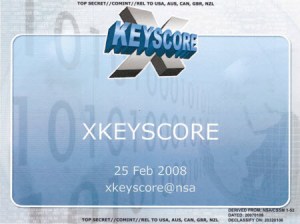
In his piece at The Guardian Greenwald had to admit that NSA analysts need to get a warrant to look at and individual’s data, but he claims the warrants are worthless. He also admits that analysts don’t have access to all your personal data, but he says they could hack into it illegally. But isn’t that true for employees of any company or government agency? They could look at personal data by criminally working around limitations and ignoring regulations.
Charles Johnson at LGF: Greenwald’s Latest Article Distorts the Truth Again
Greenwald’s purpose with this latest article is to try to shore up Edward Snowden’s absurd claim that he could “wiretap anyone, even the President,” without any oversight. Here’s how he frames this defense:
The files shed light on one of Snowden’s most controversial statements, made in his first video interview published by the Guardian on June 10.
“I, sitting at my desk,” said Snowden, could “wiretap anyone, from you or your accountant, to a federal judge or even the president, if I had a personal email”.
US officials vehemently denied this specific claim. Mike Rogers, the Republican chairman of the House intelligence committee, said of Snowden’s assertion: “He’s lying. It’s impossible for him to do what he was saying he could do.”
But training materials for XKeyscore detail how analysts can use it and other systems to mine enormous agency databases by filling in a simple on-screen form giving only a broad justification for the search. The request is not reviewed by a court or any NSA personnel before it is processed.
Read this section carefully — because what Greenwald is detailing does not support Snowden’s claim at all. Greenwald is describing searching a database for information on non-US citizens. How is this the same thing as “wiretapping the President?” Of course, it’s not. He’s not describing any kind of “wiretapping” at all.
On top of all that, it turns out that the Powerpoint presentation that Greenwald wrote about yesterday is from 2008! (See slide pictured above.) Presumably much has changed at NSA since then. Read more at Joshua Foust’s blog–it’s well worth the time to read the whole thing.
Now it’s your turn. What stories are you focusing on today? Please share your links on any topic in the comment thread, and have a terrific Thursday!!
Monday Reads
Posted: April 22, 2013 Filed under: Austerity, Catfood Commission, cyber security, Domestic Policy, Foreign Affairs, morning reads, Myanmar | Tags: cat food commission, CISPA, CNN: Media Fail, ethnic cleansing, Myanmar, Rohingya, Simpson-Bowles 32 Comments Good Morning!
Last week, I wrote about the debacle behind the study that was used to promote fiscal austerity in a time when just the opposite policy is prescribed by economic theory. One of the big questions I had was if the results of study’s hypothesis was now insignificant–which in scientific method means the conclusions were not proven–would we see a stop to these crazy austerity policy pushers. We’ve learned the answer is no. Dumber and Dumber–heads of the so-called cat food commission–who couldn’t lead their committee to a written conclusion are on the road touting their call to deficit hysteria based on the always controversial and now highly flawed study.
On April 19, just after I had written about how the key academic research used to bolster austerity policies was exposed by a 28-year-old grad student at U Mass-Amherst, I got a surprise in my email inbox: Erskine Bowles and Alan Simpson giddily announced their new deficit-reduction plan, which includes, among other things, a recommendation to increase the eligibility age for Medicare. Their plan would reduce debt as a share of GDP below 70 percent by 2023, and as the Washington Post reports, “seeks far less in new taxes than the original, and it seeks far more in savings from federal health programs for the elderly.”
What’s incredible is that over the last week, the study by Harvard economists Carmen Reinhart and Ken Rogoff that famously warned of the dangers of government debt has been proven to be riddled with errors and questionable methodology. To recap: R&R’s paper purported to show that countries with public debt in excess of 90 percent of gross domestic product suffered negative economic growth. Austerity hawks everywhere used it to justify cuts that have cost people jobs and vital services. The original spreadsheet used by R&R was obtained by a U Mass grad student, who found that in addition to the mistakes already noted by several economists, there was a coding error in their Excel spreadsheet that significantly changed the results of their study.
As New York magazine’s Jon Chait has pointed out, that same discredited research has been used by Bowles and Simpson to formulate their deficit-reducing austerity plans.
You simply cannot get these tools of the plutocracy to come clean. They’re going to go down with the stupidity and are trying to bring the rest of the country with them.
I promised myself to make sure we pointed to injustice and suffering around the world as well as our own home towns. Today I want to provide information about Myanmar–a country I’ve spent time studying and a country trying to change–with a history of brutal ethnic cleansing of its Muslim minority population.
Ethnic cleansing and crimes against humanity have been committed against Myanmar’s ethnic Rohingya people, according to a new report by Human Rights Watch (HRW), a New York-based nongovernmental organisation.
According to the report released on Monday, entitled All You Can Do is Pray, more than 125,000 ethnic Rohingya have been forcibly displaced since two waves of violence in May and October 2012.
Satellite images show almost 5,000 structures on land mostly owned by Muslim Rohingya have been destroyed, says the report.
The October attacks, the report states, were coordinated by Myanmar government officials, an ethnic Rakhine nationalist party and Buddhist monks. The deadliest attack took place on October 23, in which witnesses say at least 70 Rohingya – including 28 children – were massacred in Mrauk-U township.
The UN has described the Rohingya as one of the most persecuted minorities in the world.
Most Rohingya who live in Myanmar’s western Rakhine state are denied citizenship by the Myanmar government, which claims they are illegal immigrants from neighbouring Bangladesh and often refers to them as “Bengali”.
The Myanmar government has done nothing to prevent the violence, alleges the report, and at times government forces have joined in the attacks on the Rohingya.
“The Burmese government engaged in a campaign of ethnic cleansing against the Rohingya that continues today through the denial of aid and restrictions on movement,” Phil Robertson, HRW’s deputy Asia director, said.
“The government needs to put an immediate stop to the abuses and hold the perpetrators accountable or it will be responsible for further violence against ethnic and religious minorities in the country.”

I am so ashamed to read that Buddhist monks may have been participants. They have been targets themselves and this behavior violates the most important teaching of the Buddha which is the vow of non harming. No real Buddhist would participate in such horrors.
I also wanted to mention the return of CISPA and its impact on internet users in this country. This was slipped back into Congress while we were all watching Boston.
Described as “misguided” and “fatally flawed” by the two largest US privacy groups, the Cyber Intelligence Sharing and Protection Act (CISPA) threatens the online privacy of ordinary US residents more so than any other Bill since Congress amended the Foreign Intelligence Surveillance Act in 2008.
Its sole purpose is to allow private sector firms to search personal and sensitive user data of ordinary US residents to identify this so-called “threat information”, and to then share that information with each other and the US government — without the need for a warrant.
By citing “cybersecurity”, it allows private firms to hand over private user data while circumventing existing privacy laws, such as the Wiretap Act and the Stored Communications Act. This means that CISPA can permit private firms to share your data, such as emails, text messages, and cloud-stored documents and files, with the US government.
It also gives these firms legal protection to hand over such data. There is no judicial oversight.
To make matters worse, because there is little transparency and individual accountability, those who have had their data handed to the US government may not even know about it or be given a chance to challenge it.
Norway’s ruling party is pushing for drilling around environmentally sensitive areas in the Arctic Circle. Could this impact a return to attempts to drill the area by US Oil companies? I hope this doesn’t lead to a race to destroy ANWR
Norway took a major step towards opening up an environmentally sensitive Arctic area to oil and gas exploration when the ruling Labour Party gave the go-ahead on Sunday for an impact study.
Exploration in the waters around the Lofoten islands just above the Arctic circle is becoming one of the most contentious issues for parliamentary elections in September.
The picturesque area had been off limits because it is home to the world’s richest cod stocks, with environmental groups and the tourism industry opposed to any development.
The Labour party voted for the study, a precursor to any exploration, but also said it would take another vote in 2015, before actual drilling could begin.
Oil is the Norwegian economy’s lifeblood – the nation is the world’s seventh-biggest oil exporter and western Europe’s biggest gas supplier.
Its sprawling offshore energy sector continuously needs new areas to explore to halt the decline in production and energy firms have argued that they should be allowed to investigate the Lofoten islands.
Norway’s oil production will fall to a 25-year low this year as North Sea fields mature. Even a series of recent big finds, like the giant Johan Sverdrup field, which could hold over 3 billion barrels of oil, will only arrest the decline.
Waters off Lofoten are estimated to hold 8 percent of Norway’s undiscovered oil and gas resources with seismic tests identifying 50 prospects that could hold recoverable reserves or around 1.27 billion barrels of oil equivalent, the petroleum directorate said earlier.
With Labour’s support, Norway’s top three parties now favor exploration in the area, raising the chance that the next government would begin the process.

Teamsters from Local 25 in Boston will protect the family of bombing victim Krystle Campbell during her funeral tomorrow morning. Members of the Westboro Baptist Church are expected to protest.
The Associated Press reports,
Family and friends are saying final good-byes to Krystle Campbell, one of the three people who lost their lives in the bombing at the Boston Marathon finish line.
A wake for Campbell is being held Sunday at a funeral home in Medford, where the 29-year-old restaurant manager was raised and graduated from high school in 2001. A private funeral is scheduled for Monday at St. Joseph Church.Local 25 was contacted by some concerned citizens of Medford asking for help to keep members of the Westboro Baptist Church from protesting the funeral of Krystle Campbell, scheduled for tomorrow morning at 10 AM in Medford.
Local 25 President Sean O’Brien asked all off-duty Teamsters to participate:
Teamsters Local 25 will be out in full force tomorrow morning at St. Joseph’s Church in Medford to form a human shield and block the Westboro Baptist Church from protesting the funeral of Krystle Campbell. The Campbell family and friends have already endured immeasurable amounts of heartache and tragedy this week, and deserve a peaceful funeral with time to grieve privately.
Westboro Baptist Church should understand that we will go to great lengths to make sure they don’t protest any funerals of the victims of the past week’s tragedies, and that those we lost receive a proper burial.
Teamsters Local 25 represents 11,000 hardworking men and women from the Boston area.
There are three dead from the bombing. Westboro is also connected to a law firm that makes money from the antics of these folks. They usually claim their first amendment rights were violated and then collect government money defending their case.
And just because I’ve quit watching CNN around a year ago after watching the station for years, I thought I’d end with this: “Last Week, CNN Itself Became the Poop Cruise”. Frankly, I’ve thought they were full of it and lacking substance for some time.
As reactions to the media’s handling (or rather, mishandling) of breaking news during a busy week continue to flow in, perhaps none is more condemning than David Carr’s latest column in The New York Times. The media critic came down hard on correspondent John King, newly appointed chief Jeff Zucker and the rest of the CNN news team that famously fumbled during the aftermath of the Boston bombing and hunt for the suspects. Most notably, the network erroneously reported the arrest of a suspect on Wednesday, when everybody now knows that a suspect wasn’t arrested until Friday when police found Dzokhar Tsarnaev hiding in the back of a boat.
Carr has an analogy for that. In discussing the mistake, one that more than one person described as “devastating,” Carr reminded us of the most recent moment that CNN’s stolen the limelight — perhaps not in a good way:
It was not the worst mistake of the week — The New York Post all but fingered two innocent men in a front-page picture — but it was a signature error for a live news channel. … Until now, the defining story in the Zucker era had been a doomed cruise ship that lost power and was towed to port, where its beleaguered passengers dispersed. This week, CNN seemed a lot like that ship.
Zing. Inevitably, Carr’s piece comes off almost as apologetic. In his parting words, the veteran journalist points out how even the president “wants CNN to be good.” So when it’s bad, it’s hard to watch.
I’m just praying for a better week and that we can get some attention on the small town of West Texas that really needs our help.
What’s you your reading and blogging list today?
The Tide Could Be Turning on SOPA/PIPA
Posted: January 14, 2012 Filed under: cyber security, First Amendment, SOPA, Team Obama, the blogosphere, U.S. Politics | Tags: anonymous, Ars Technika, Darrell Isa, DNS blocking, Eric Cantor, Lamar Smith, online piracy, Orrin Hatch, Pat Leahy, Paul Ryan, PIPA, Power to the people, reddit, SOPA, Timothy B. Lee, White House 8 Comments
This morning I got a “breaking news” e-mail from Politico reporting that the White House had come out with a (somewhat wishy-washy) statement on the Stop Online Piracy Act (SOPA). Here’s the text of the e-mail:
Obama administration officials said in a blog post today that they would “not support legislation that reduces freedom of expression, increases cybersecurity risk, or undermines the dynamic, innovative global Internet.” The White House did not take a definite position on SOPA and the PROTECT IP Act, but said “the DNS filtering provisions in some proposed legislation suggests that they pose a real risk to cybersecurity and yet leave contraband goods and services accessible online.” The officials said, however, that legislation is needed to combat online piracy.
A number of sources are reporting this now as Obama “coming out against SOPA and PIPA. For example, at Slate, Matthew Yglesias writes:
SOPA/Protect IP fights are turning into an example of how the political system sometimes does work correctly after all. The con forces on these bills initially looked numerically overwhelmed in congress and hugely outspent. But opponents really mobilized vocally, got people and institutions who don’t normally focus on politics to write about this, and perhaps most important of all demonstrated that more people genuinely cared about this issue than most members of congress initially realized. Now the momentum has slowed incredibly and the White House technology policy team has come out against these bills.
Still, even Yglesias admits the WH statement is qualified.
To look a gift horse in the mouth for a second, however, I note that the White House statement does contain a “reasonable” to-be-sure line stating that “online piracy is a real problem that harms the American economy, and threatens jobs for significant numbers of middle class workers and hurts some of our nation’s most creative and innovative companies and entrepreneurs.”
Politico calls it “walking a thin line.”
In a blog post penned by three administration officials, the White House said it opposes any bill that would make it easier for government to censor the Web or make the Internet less secure, but it stopped short of saying whether that includes two bills that have sent the tech industry into a panic.
If that sounds like a careful effort to walk a thin line, it is: Some of the president’s biggest supporters in Hollywood and Silicon Valley and beyond are sharply divided over the bills, and the White House needs a way to keep both sides happy.
The Stop Online Piracy Act in the House and Protect IP Act in the Senate are an attempt by business interests led by Hollywood to crack down on people pirating movies and music and stop the sale of knockoff goods.
But Web companies and Internet freedom activists have cried foul, saying the bills would put restrictions on the Web in a way that could destroy the fundamental openness of the Internet and prevent the next generation of Facebooks or eBays from getting off the ground.
At Ars Technika, Timothy B. Lee reports that Congress is feeling the heat. They provide a number of examples of powerful legislators who are now having second thoughts–including Pat Leahy (one of the prime movers of the bills), Paul Ryan, Orrin Hatch, and Lamar Smith, who
announced that he would be pulling the DNS-blocking provisions from his own bill. “After consultation with industry groups across the country, I feel we should remove Domain Name System blocking from the Stop Online Piracy Act so that the Committee can further examine the issues surrounding this provision,” Smith said in a Friday statement.
DNS blocking would basically impose the kind of censorship used by China to block internet users from foreign websites that provide information the government doesn’t want people to be able to read. It would really kill what’s left of the First Amendment.
In addition, Lee notes in an update that Eric Cantor has said there will be no vote on SOPA until there is a “consensus.”
On the WH announcement, Lee writes:
The statement was made in response to a petition on the White House’s “we the people” site asking the president to veto SOPA if it reached his desk. The officials—IP enforcement coordinator Victoria Espinel, CTO Aneesh Chopra, and cybersecurity coordinator Howard Schmidt—did not commit the president to vetoing SOPA. However, they laid out criteria for an anti-piracy bill that seems to clearly rule out SOPA and the Senate’s Protect IP Act in their current form.
Also reported in the Ars Technika story,
Rep. Darrell Issa (R-CA), a SOPA opponent, announced Saturday that he is postponing hearings on SOPA’s DNS provisions that had been slated for Wednesday, January 18 before his House Oversight and Government Reform Committee.
“While I remain concerned about Senate action on the Protect IP Act, I am confident that flawed legislation will not be taken up by this House,” Issa said. “Majority Leader Cantor has assured me that we will continue to work to address outstanding concerns and work to build consensus prior to any anti-piracy legislation coming before the House for a vote.”
All this seems to bode well for the anti-SOPA/PIPA fight, along with the escalation in pushback by opponents that I posted in a comment yesterday that Anonymous has revealed the personal information of some powerful men in the media and Hollywood who are pushing for the bill.
Power to the People!
Copyright Protection vs Big Brother Howling at the Door
Posted: January 11, 2012 Filed under: cyber security, First Amendment, Free Speech, just because, SOPA, the internet | Tags: Bradley Manning, copyright concerns, internet freedom of speech 6 CommentsThe United States Congress has been racking up historically low approval ratings, numbers bouncing from 3-9% over the last year. Why? Our legislative process has become paralyzed by partisan politics and perhaps, more importantly, the influence of massive amounts of money. When lobbyists outnumber our representatives in the Halls of Congress by 5-1, the current inability and/or refusal to work in the interests of the American public is a given.
Money speaks. Even the Supreme Court agreed in their disastrous Citizens United decision. The more money, the bigger the noise. The Do-Nothing Congress has earned its title.
Yet with all the pressing problems facing the Nation, one piece of legislation was kicked through the process and then flown, until recently, under the radar. Specifically, that’s SOPA, Stop Online Piracy Act, and its kissing cousin IPPA, Protect IP Act.
Last October, I wrote about this legislation here. With a quick followup here.
On the face of it, copyright concerns are absolutely legitimate. Any artist, musician, writer, etc., wants and expects protection of his/her creative efforts from rip-off artists. You create something, it takes off, you expect the financial and psychic reward from that success. There have been [and probably will continue to be] amoral individuals who plagiarize [steal] with abandon. Corporations–those that still develop ideas and products–are also open to thievery by competitors. Governments are vulnerable as well, which if anything [at least in my pea brain] demands that security measures around highly sensitive material be strong and effective, including careful clearance of those working with said materials. Regardless of where one falls on the Manning case [hero or villain], anyone ever wonder how Bradley Manning, a private first class, was able to so easily tap records for Wikileaks, particularly after several red flags were ignored by Army personnel?
Accountability for lousy security anyone?
However, are we as a population willing to accept the radical tradeoff that SOPA represents, a serious curtailment of free expression and innovation, a barrier in the exchange of information between individuals and groups around the world to protect the financial and security issues of other entities? And if so, what will the Internet be reduced to?
 Think about the information that has circulated on the Net, regarding corrupt practices on Wall St. that led to the financial meltdown, the collusion of political partners, the failure of government bodies to investigate and prosecute guilty parties. Do you think this information would have been disseminated as widely without the Internet access? Have we heard much about it in the mainstream press/newscasts? Beyond Dylan Ratigan, that is, a MSNBC commentator. Or, the ongoing global protests—The Arab Spring, the European Summer, the American Autumn, the Russian Winter. Do you think these Movements would have gotten off the ground without Facebook and other social media outlets? Do you imagine we would have known of subsequent police over reactions?
Here’s the scoop from Techdirt on the byproduct of this asinine proposal, which is now suppose to be cleaned up and improved—the 2.0 version:
End result: SOPA 2.0 contains a crazy scary clause that’s going to make it crazy easy to cut off websites with no recourse whatsoever. And this part isn’t just limited to payment providers/ad networks — but to service providers, search engines and domain registrars/registries as well. Yes. Search engines. So you can send a notice to a search engine, and if they want to keep their immunity, they have to take the actions in either Section 102(c)(2) or 103(c)(2), which are basically all of the “cut ’em off, block ’em” remedies. That’s crazy. This basically encourages search engines to disappear sites upon a single notice. It encourages domain registries to kill domains based on notices. With no recourse at all, because the providers have broad immunity.
Look, I’m all for protecting the copyright of artists and other creators. But not at the expense of free speech, open channels of communication and political discourse.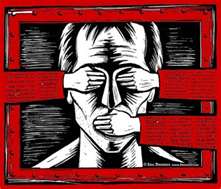
Here’s another question—do you not find it odd that so little time [make that anytime at all] has been spent by the mainstream press to discuss the problems with this legislation? This is the same mainstream press that is suppose to be ‘free’ but has been consistently found wanting in actual reporting the news or investigating much of anything. Yes, there are exceptions [Dylan Ratigan and recently 60 Minutes]. But by and large, the press today is held captive by the very forces paralyzing the government and buying off politicians. These forces are keenly aware that restriction of a free-information vehicle, the Internet, is in their best interests. There’s no doubt major news outlets are concerned by online sources ripping off their reports word-for-word. But as far as distribution, information sharing and dissemination? They’ve lost that battle to the Electronic Age. And frankly, if the MSM had been doing their jobs–speaking truth to power–instead of playing lapdogs, their market share would not be as dismal.
In addition to the music and movie industries supporting this legislation [which at least makes sense], the American Bankers Association is a sponsor as well. In fact, here’s a list of sponsors [interested parties].
If that link turns to gobblety-gook on you, check here at Wikipedia:
The link turning to gibberish was pretty weird—maybe a sign of things to come. It worked perfectly fine the first time I checked it.
We do not need a bazooka to bring down a mouse. The collateral damage can be significant, sometimes worse than the original problem. That’s what this legislation represents. And by collateral damage, I mean you, me and anyone plugged in at moment. Sorry, but there’s something very disturbing that a complaint against a website can result in that site being ‘disappeared’ without explanation or appeal.
Consider this the ‘indefinite detention’ for objectionable sites on the Internet.
For additional information on the legislation itself, go here, here, here, and here. Note that numerous online bigwigs [Google, Facebook, Amazon, etc.] strongly oppose SOPA and have threatened a boycott/blackout, most likely on January 23rd in opposition to the upcoming cloture vote on the 24th. Yves Smith has a good essay on what we’re looking at in terms of implications.
This is an important issue. Citizen/online pressure can bring results. Paul Ryan, for instance, stepped back just this past Monday from his initial support. Resistance is everywhere and comes in many forms. Here’s a boycott of another flavor.
An informed public is the best weapon against Big Brother and the invisible supporters of authoritative repress-freedom-for-the-sake-of-security measures. We need to protect access to information to protect the present and future. We need access to information to save and preserve the core of our freedoms.

 peej
peej Carissa
 bostonboomer
 dakinikat
 ecocatwoman
 mablue2
 Mama Lopez
 peggysue22
 quixote
 skydancingguestblogger
 Mona (aka Wonk the Vote)



 Sky Dancing
Recent Comments