
Friday Reads: Bigots Among Us
Posted: May 16, 2014 Filed under: Bobby Jindal, Capital Punishment aka Death Penalty, Civil Liberties, Civil Rights, Crime, Criminal Justice System, Discrimination against women, Domestic terrorism, morning reads, The Right Wing, Women's Rights, worker rights 89 Comments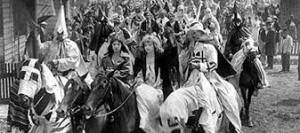 Good Morning!
I have read the most horrifying stories this week. It makes me wonder if a good portion of humanity has a death wish. I’m going to share a variety of links that I’ve found; and a lot of them aren’t the most uplifting, I’m afraid.
Knowledge is power. Ignorance may be bliss to the holder but not to the folks around them. There is no lack of headlines in the area of bigotry and intolerance. This is truly discouraging to those of us that care passionately about social justice.
Crime rates have been falling recently but our incarceration rates are not. There’s a huge study out on the economic costs of our prison society and its 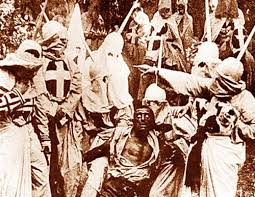 findings are not pretty. We’re spending billionaires of dollars locking up the poor, the uneducated, and the mentally ill in a distinctly racist way.
While crime rates have fallen 45 percent since 1990, the memo said that the incarceration rate is now at a “historically unprecedented level,” jumping 222 percent between 1980 and 2012. An African-American man who never graduated from high school has a 70 percent likelihood of being imprisoned by his mid-30s; for similarly educated white men, the rate is about 15 percent. And the United States imprisons at a rate six times greater than most peer nations, including those of the European Union, Japan, Israel, and Mexico.
The U.S. Department of Justice announced rules last month that would give the Obama administration wider latitude to extend clemency or reduce sentences for drug-related prisoners who don’t present a threat to public safety. In addition, the U.S. Sentencing Commission voted unanimously in April to reduce sentencing guidelines for certain nonviolent criminals, a move now before Congress that could go into effect Nov. 1 if lawmakers don’t take any further action.
Ronald S. Sullivan Jr. is a clinical professor of law and director of the Criminal Justice Institute at Harvard Law School. The program focuses on criminal practice, education, and research, and hosts a teaching clinic for third-year law students to represent indigent criminal defendants in local and juvenile courts. Sullivan spoke with the Gazette about racial and national sentencing disparities, the economic and social costs of mass incarceration, and the sentencing reforms now under consideration.GAZETTE: According to the memo, while the overall crime rate fell 45 percent between 1990 and 2012, the rate of imprisonment has spiked 222 percent between 1980 and 2012. What’s behind this disparity? Is that strictly the result of policy decisions like mandatory minimum sentencing, repeat-offender laws, and the growth in for-profit prisons? Or are other factors at work?
SULLIVAN: That’s certainly a big piece of it. … policy decisions in respect of mandatory minimums drive the huge incarceration rate. But there are other factors as well. What those factors are is the subject of a lot of academic debate nowadays. And to be honest, we’re not exactly sure what it is. We do know that on a per-capita basis the U.S. incarcerates more people than any country in the world, including Rwanda, Russia, Cuba, all of the places one does not associate with a robust tradition of liberty. And that’s in many ways shocking.
The theory would be … with the high rates of incarceration that the crime rate would go down and then that would be followed by less incarceration because there just wouldn’t be as many crimes committed. But those numbers have gone in opposite directions. Mandatory minimums simply don’t explain all of it. Part of it, at least I think, has to do with selective law enforcement — the over-policing of certain neighborhoods, particularly minority neighborhoods and poor neighborhoods. That is to say, if police are there and looking for crimes, and over-police certain neighborhoods, you’re going to produce more defendants in particular areas. And if the populations are drawn from poor populations, they’re unable to afford to be released on bail, they’re unable to afford good lawyers, and studies show that if you’re not released on bail you tend to stay in jail after sentencing. An unfortunate reality of the United States is that far too often the justice you receive is a function of how much money you have.
The prison-industrial complex is also an important factor. It doesn’t take an economist to know that if … you make your money by people going into prison, then there’s going to be higher incarceration rates. So I think that certainly plays a role as well.
GAZETTE: What are the areas of debate among scholars?
SULLIVAN: One explanation has to do with the United States’ articulated goals of punishment. Back in the ’70s and before, rehabilitation was an articulated goal of the criminal justice system. The Supreme Court has said clearly now rehabilitation is no longer a penological goal. We look at incapacitation, we look at deterrence, and we look at retribution as goals that the penal system serves. When you take rehabilitation out of the mix, then that de-incentivizes the system from having shorter sentences because there’s no longer an affirmative goal of reintegrating people meaningfully back into the community. That’s one of the things that scholars argue drive up the incarceration rate.
The other has to do with our system of elected judges in most states. Judges who are elected, the argument runs, respond to democratic pressures. We live in a political economy where people think that more and harsher punishment is better, even though most competent data suggests that longer sentences, after a certain point … make people worse as opposed to making them better. But you have democratically elected judges who respond to the will of the people, and if that will is for longer sentences, no matter how misinformed, then judges oftentimes acquiesce to those pressures.
The other issue has to do with legislators. It, again, has to do with the political economy in which we live. With this mantra of being “tough on crime,” legislators essentially race to see who can draft legislation with the harshest, longest penalties. I think that legislators don’t believe that prosecutors will attempt to enforce the most harsh provisions of particular laws, and in that sense, from the vantage point of the legislator, it’s sort of a win-win situation: They can get the political credit for drafting an incredibly harsh law, but not really have to deal with the effects because the notion is the prosecutor will sort it out and will recommend a fair sentence. That assumption, though, just hasn’t really been borne out in reality.
GAZETTE: The current incarceration gap between white men and African-American men is particularly striking. Does that figure surprise you, and what accounts for this gap? Is access to justice a factor?
SULLIVAN: The figure does not surprise me, and it is unfortunate that the figure does not surprise me. The figure reaffirms that race insinuates itself into almost every aspect of our life still, and it has a particular salience in the criminal justice system. … Here we see the effect of over-policing much more dramatically. In our culture, unfortunately … blackness is seen as a proxy for criminality. So the same or similar conduct engaged in by a person of color is seen through a lens that views that conduct as criminal, where others simply are not taxed in the same way.
The debate over the use of lethal injections and the drugs used for state executions continues. Three newspapers–including the UK Guardian–have sued to 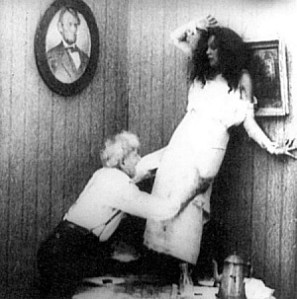 make public the source of drugs for these injections. Most states are trying to make that information private. Many of the recent botched executions came from simple druggists compounding the formulations because many of the major drug manufacturers–especially those in Europe–refuse to do so. Should the formulation and the source of death penalty drugs be kept from the public?
The growing secrecy adopted by death penalty states to hide the source of their lethal injection drugs used in executions is being challenged in a new lawsuit in Missouri, which argues that the American people have a right to know how the ultimate punishment is being carried out in their name.
The legal challenge, brought by the Guardian, Associated Press and the three largest Missouri newspapers, calls on state judges to intervene to put a stop to the creeping secrecy that has taken hold in the state in common with many other death penalty jurisdictions. The lawsuit argues that under the first amendment of the US constitution the public has a right of access to know “the type, quality and source of drugs used by a state to execute an individual in the name of the people”.
It is believed to be the first time that the first amendment right of access has been used to challenge secrecy in the application of the death penalty. Deborah Denno, an expert in execution methods at Fordham University law school in New York, said that more and more states were turning to secrecy as a way of hiding basic flaws in their procedures.
“If states were doing things properly they wouldn’t have a problem releasing information – they are imposing a veil of secrecy to hide incompetence.” “This is like the government building bridges, and trying to hide the identity of the company that makes the bolts,” said Richard Dieter of the Death Penalty Information Center. “Those involved in public service should expect public scrutiny in order to root out problems, particular when the state is carrying out the most intimate act possible – killing people.”
A Guardian survey has identified at least 13 states that have changed their rules to withhold from the public all information relating to how they get hold of lethal drugs. They include several of the most active death penalty states including Texas, which has executed seven prisoners so far this year, Florida (five), Missouri (four) and Oklahoma (three). Attention has been drawn to the secrecy issue by the botched execution of Clayton Lockett in Oklahoma on 29 April in which the prisoner took 43 minutes to die, apparently in great pain, from an untested cocktail of drugs whose source was not made public.
Lockett’s lawyers had argued in advance that he might be subjected to cruel and unusual punishment as a result of the lack of information surrounding the drugs, but the state supreme court allowed the procedure to go ahead having come under intense pressure from local politicians, some of whom threatened to impeach judges.
In the wake of the events in Oklahoma, in which the prisoner writhed and groaned over a prolonged period, the state has agreed to pause for six months before carrying out any further judicial killings to give time for an internal investigation to be completed. President Obama described the Lockett execution “deeply troubling” and has asked US attorney general Eric Holder to review the way the death penalty is conducted.
Until last year, Missouri which is now executing prisoners at a rate of one a month, was open about where it obtained its lethal injection chemicals. But like many death penalty states, its drug supplies have dwindled as a result of a European-led pharmaceutical boycott, and in a desperate move to try to find new suppliers it has shrouded their identity in secrecy. In October, the state changed its so-called “black hood law” that had historically been used to guard the identity of those directly involved in the death process.
The department of corrections expanded the definition of its execution team to include pharmacies and “individuals who prescribe, compound, prepare, or otherwise supply the chemicals for use in the lethal injection procedure”. Six inmates have been executed by Missouri since the new secrecy rules came in –they went to their deaths entirely ignorant of the source or quality of the drugs used to kill them. All that is known is that the pentobarbital that Missouri deploys in executions probably came from a compounding pharmacy – an outlet that makes up small batches of the drug to order in the absence of stringent regulation.
We continue to see GLBT civil rights characterized by the right as an attack on their religious rights and their homobigoted behavior and language 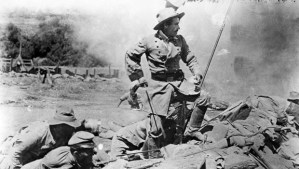 wrapped up as a first amendment issue. How does the right play the victim card in a debate about limiting the rights of others? It is doing the same things with women’s reproductive rights.
While Religious Right leaders are quick to equate criticism as an attack on their freedom of speech and religion, some of them are all too happy to limit the free speech or religious liberty of the people they disagree with. That includes the Benham brothers.
In the flurry of public appearances in the wake of the HGTV cancellation, the Benhams and their right-wing fans have portrayed themselves as committed to the principle that everyone in America should have a chance to express themselves. On the O’Reilly Factor, David Benham denounced the gay agenda for seeking “to silence those that disagree with it, and it begins with Christians.” Jason warned that “when an idea seeks to silence any other idea that may disagree with that, then we have ourselves a problem on hand.”
But as blogger Jeremy Hooper recently pointed out, back in November 2004, David, Jason, and Flip Benham were all part of a group of about 15 people who went to a Charlotte, North Carolina city council meeting to complain about the gay pride celebration that had taken place in a city park six months earlier. They were among a group of people who had gone to the Pride event to, in Jason’s words, “tell them that Jesus loves you just the way you are, but he refuses to leave you that way.” But the Benhams and their friends were appalled at what they saw. “This is filth, this is vile and should not be allowed in our City,” said David. Jason urged city council members to reject future permits for Pride celebrations – and seemingly for any LGBT-themed event:
They have a right to apply for this permit, but you have a right and responsibility to deny it. I [implore] you not to be governed by the fear in which you feel. If you deny them this permit you will open a can of worms but you in your leadership position have to take that responsibility and you have to not allow the fear of making this homosexual community mad. You have to accept that responsibility and deny them every permit that they ask for.
In the words of Charlotte Pride organizers, “The Benham brothers once tried to silence us. They failed.”
Some Benham fans, like the American Family Association’s Bryan Fischer, say flat-out that the First Amendment’s religious liberty protections were only meant for Christians and don’t apply to Muslims, Mormons or other minority faiths. Back when many self-proclaimed “religious liberty” advocates were opposing efforts by Muslims in New York to build a community center – which critics gave the inaccurate and inflammatory name of “Ground Zero Mosque” – David Benham and his father Flip were among them. According to the Anti-Defamation League, David participated in protests against the Center, calling it a “den of iniquity” and labeling Muslims “the enemy” that was attacking America.
In these public debates, “Christian” as used by Religious Right leaders often doesn’t really apply to all Christians, but only to a subset of Christians who share their right-wing politics. Other Christians don’t count. The Family Research Council’s Tony Perkins, who has bemoaned “cultural elites” who want to “silence” and “bully” people like the Benhams, recently said that pro-gay-equality Christians don’t deserve the same legal protections as he does because “true religious freedom” applies only to those with religious views that align with those of the political Right.
Gov. Bobby Jindal’s commencement speech at Liberty University was a masterpiece in this type of dishonest projection. Posing as a champion of free speech and freedom of religion, he actually made a chilling argument in favor of stripping both of those freedoms away from ordinary Americans, businesses and anyone who might disagree with turning this country into a theocratic state. He started by defending Hobby Lobby for trying to strip contraception coverage out of their employees’ own healthcare plans. “Under the Obama regime,” he argued, “you have protection under the First Amendment as an individual, but the instant you start a business, you lose those protections. And that brings us to the second front in this silent war: the attack on our freedom of association as people of faith.”
It’s all nonsense, of course. In fact, Hobby Lobby’s intention here is to reduce religious freedom by forcing their employees to adhere to certain religious rules in order to get the benefits they already earned. ( They have a history of trying to impose their religious dogma on non-believers through other means as well.) The only people in any real danger of losing freedom are women, who are in danger of losing their freedom to use their insurance benefits in a way that fits their personal beliefs.
But Jindal was just warming up, claiming the “Obama administration” was gunning to decide “who can preach the Gospel.” This outrageous conspiracy theory was justified, in his opinion, by supposed other attacks on “free speech,” namely that TV networks are reluctant to house the opinions of open bigots. “The left no longer wants to debate. They simply want to silence us,” he said of Phil Robertson from Duck Dynasty, who was never silenced and has, to this date, been allowed to say any fool thing he wants. But he was briefly suspended from A&E, leading conservatives to decide that “free speech” means you have a right to your own TV show.
All of this has gotten me interested in again in White Supremacist movements. I really believe that most of these Southern Republicans fall squarely 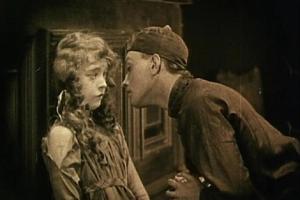 into the neoconfederate mold and aren’t that far off the KKK tree.
White supremacy is referenced in relation to specific news events as well. For example, the murder rampage by the neo-Nazi Frazier Glenn Miller, the recent weeks-long debate between pundits Ta-Nehisi Coates and Jonathan Chait about “black pathology”; birtherism; stand-your-ground laws; and the open embrace of the symbols and rhetoric of the old slave-holding Confederacy by the Republican Party have been framed and discussed in terms of white supremacy.
Conservatives and progressive often use the phrase “white supremacy” in divergent ways. Conservatives use the phrase in the service of a dishonest “colorblind” agenda, evoking extreme images of KKK members and Nazis as the exclusive and only examples of white racism in American life and politics. Conservatives use extreme caricatures of white supremacy in order to deflect and protect themselves from charges that the contemporary Republican Party is a white identity organization fueled by white racial resentment. Liberals, progressives and anti-racists use the phrase “white supremacy” to describe the overt and subtle racist practices of movement conservatism in the post-Civil Rights era, and how American society is still structured around maintaining and protecting white privilege. This analysis is largely correct: however, it often conflates concepts such as racism, white privilege, and white supremacy with one another. Language does political work. In the age of Obama, the phrase “white supremacy” is often used in political discussions like an imprecise shotgun blast or a blockbuster bomb. If the Common Good and American democracy are to be protected—countering how the right wing has used the politics of white racial resentment, racial manipulation, and hate to mobilize its voters in support of a plutocratic agenda—a more precise weapon is needed. A necessary first step in that direction requires the development of a more detailed and transparent exploration of the concept known as “white supremacy.”
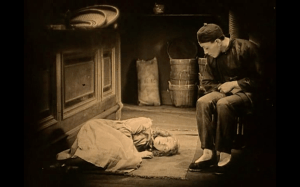 One of the sure signs to me of either a racist or a misogynist or a homophobic bigot is that they all insist they have no problem women, racial minorities, and/or gay people. The believe they are the victims by being forced to deal with any one else in terms other than their own choosing. Therein lies the problem. Here’s a perfect example from Kristen Powers writing at USA Today. You can’t call out bigotry without being called a bully obsessed with political correctness. Then, you’re told that the real victims are white conservative christians.
Each week seems to bring another incident. Last week it was David and Jason Benham, whose pending HGTV show was canceled after the mob unearthed old remarks the brothers made about their Christian beliefs on homosexuality. People can’t have a house-flipping show unless they believe and say the “right” things in their life off the set? In this world, the conservative Tom Selleck never would have been Magnum, P.I.
This week, a trail-blazing woman was felled in the new tradition of commencement shaming. International Monetary Fund Managing Director Christine Lagarde withdrew from delivering the commencement speech at Smith College following protests from students and faculty who hate the IMF. According to the Foundation for Individual Rights in Education, this trend is growing. In the 21 years leading up to 2009, there were 21 incidents of an invited guest not speaking because of protests. Yet, in the past five-and-a-half years, there have been 39 cancellations.
Don’t bother trying to make sense of what beliefs are permitted and which ones will get you strung up in the town square. Our ideological overlords have created a minefield of inconsistency. While criticizing Islam is intolerant, insulting Christianity is sport. Ayaan Hirsi Ali is persona non grata at Brandeis University for attacking the prophet Mohammed. But Richard Dawkins describes the Old Testament God as “a misogynistic … sadomasochistic … malevolent bully” and the mob yawns. Bill Maher calls the same God a “psychotic mass murderer” and there are no boycott demands of the high-profile liberals who traffic his HBO show.
The self-serving capriciousness is crazy. In March, University of California-Santa Barbara women’s studies professor Mireille Miller-Young attacked a 16-year-old holding an anti-abortion sign in the campus’ “free speech zone” (formerly known as America). Though she was charged with theft, battery and vandalism, Miller-Young remains unrepentant and still has her job. But Mozilla’s Brendan Eich gave a private donation to an anti-gay marriage initiative six years ago and was ordered to recant his beliefs. When he wouldn’t, he was forced to resign from the company he helped found.
Got that? A college educator with the right opinions can attack a high school student and keep her job. A corporate executive with the wrong opinions loses his for making a campaign donation. Something is very wrong here.
The right seems to be really confused about the first amendment, which clearly deals with the relationship between the federal government, religion, the press, and the people’s free speech. The same idiots that scream that Hobby Lobby can deny its employees contraception and say that businesses should be able to refuse to serve GLBTs will shout out a corporation that says they don’t want to be known for bigotry of any kind. They also misunderstand the protection given to University professors when it comes to academic freedom. Companies have to comply with the law. They do not have to keep employees that don’t represent their corporate values. PERIOD.
Anyway, it just amazes me that this intense amount of uncivil bigotry and hatred seemed to have burbled up again after all these years. All it took was an African American President and a few powerful women–namely Hillary Clinton–to bring the crazy out.
I just wanted to mention that most of these silent film images come from “Birth of a Nation” but one comes from “Broken Blossoms” also known as the “Yellow Man and the Girl”. Both of these films were directed by DW Griffith around 1919. Both movies starred Lillian Gish and were received differently by white audiences than by the racial minorities they also depicted.
What’s on your reading and blogging list today?
Lazy Saturday Reads: Here We Go Again . . .
Posted: May 3, 2014 Filed under: 2016 elections, Barack Obama, Crime, Criminal Justice System, Foreign Affairs, morning reads, Republican politics, U.S. Politics, Violence against women, War on Women, Women's Rights | Tags: Benghazi, Cherise Morales, Darrell Issa, G. Todd Baugh, Hillary Clinton, James Taranto, Jeanine Howard, John Boehner, rape, Sir Young, Tina Brown 37 Comments
Brigit Ganley, The Dramatist
It’s Saturday!!
And a glance at the news headlines today reveals that everything old is new again. Remember 14-year-old Cherise Morales, who committed suicide after being raped by her teacher Stacy Dean Rambold? And G. Todd Baugh, the judge who blamed Cherise for the rape and sentenced the Rambold to only 31 days in jail and probation?
Well that decision *may* be overturned, but now we have another judge in Texas who sounds like a clone of Baugh–except she’s a woman! From the Dallas News: Judge says sexually assaulted 14-year-old ‘wasn’t the victim she claimed to be’.
A man sentenced to five years probation by a Dallas County judge after admitting he raped a 14-year-old girl won’t have to follow many of the restrictions typically given to sex offenders.
And the judge who issued the light sentence said Thursday that she did so in part because the girl wasn’t a virgin and “wasn’t the victim she claimed to be.”
State District Judge Jeanine Howard, who gave 20-year-old Sir Young deferred probation last week, also altered Young’s probation requirements. As a result, Young does not have to stay away from children, attend sex offender treatment, undergo a sex offender evaluation or refrain from watching pornography.
Wait a minute. Let me check my calendar. Is this really 2014?
District Attorney Craig Watkins said Thursday that his prosecutors would “always fight for our most vulnerable victims” like the one in this case. It is rare for prosecutors to critique a judge’s actions, but Watkins said he was “alarmed” by Howard’s decision.
“This young lady was 14 at the time she was sexually assaulted at school, and we cannot send the wrong message to rape victims who have the courage to seek justice,” Watkins said. “I am disappointed the judge would choose to give the defendant probation after he admitted guilt, but even more alarmed the judge failed to impose standard sex offender conditions of probation designed to protect society.”
Make sure you’re sitting down before you read this next bit. Judge Howard is a Democrat. She’s going to withdraw from the case now so she can better explain herself, but she doesn’t have to worry about being reelected because she’s running unopposed.
Howard said she made her decision for several reasons, including: The girl had texted Young asking him to spend time with her; the girl had agreed to have sex with him but just didn’t want to at school; medical records show the girl had three sexual partners and had given birth to a baby; and Young was barely 18 at the time.
“She wasn’t the victim she claimed to be,” Howard said. “He is not your typical sex offender.”
The girl’s mother said Friday morning that her daughter has never been pregnant and she was “livid” over the judge’s comments.
WTF?!
The victim, who is now 17, told The News on Thursday night that she feels it would have been better if she had never come forward about the 2011 assault. She and Young testified last week at his trial that she had told Young “stop” and “no” numerous times before and during the attack at Booker T. Washington High School for the Performing and Visual Arts, where both were students.
“I did what I was supposed to do. I went to the law about this situation,” she said. The judge’s probation sentence and the removal of the restrictions — “that says everything I went through was for nothing.”
Unbelievable! We’ll have to watch what happens with this case. But when will judges learn that 14-year-old girls are not able to consent to sex in the first place?
“Don’t Run for President, Hillary”
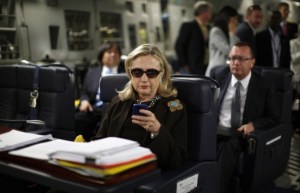
Why won’t that stupid bitch quit? (WWTSBQ)
Remember when MSNBC’s Krystal Ball told Hillary Clinton she shouldn’t run for President? Ball said that Elizabeth Warren, who is approximately the same age as Hillary and has zero experience and would be unlikely to win should run instead because Hillary was once on the board of Walmart … or something? Of course Ball’s nonsensical “advice” was ignored by most rational Democrats.
Now comes Tina Brown, editor of The Daily Beast to lecture Hillary some more: Don’t Run for President, Hillary. Become a ‘Post-President’ Instead. Except Brown seems not to care at all about Hillary’s positions on issues or her qualifications. She simply thinks Hillary should do the easiest thing and avoid the “stress” of a campaign and a tough job like the presidency. Brown apparently has projected her own values onto Hillary, assuming that she (Clinton) is as narcissistic and self-involved as Tina Brown is. Never mind that Hillary has spent most of her life focusing on public service and fighting for causes like women’s rights.
Brown writes:
I know as much as anyone how much her most fervent supporters want Hillary Clinton to run for president. On the opening night of the Women in the World Summit the mere mention of the possibility had the audience on their feet. The fan base is there, and constituencies beyond it.
Because American women want a woman in the White House in their lifetimes, and Hillary has the experince, strength, and passion to do the job.
But should she do it? Would the bravest and best decision be for her to skip it? In the 2008 campaign the chronic negativity of the ladies and gentlemen of the press was relentless, and the gouging of Hillary was wholly unrelated to either her record or her behavior. It was just that her story had gotten old. It required new angles, or, heaven forbid, new facts, to make it interesting—whereas Barack Obama was a story that wrote itself.
The first black president was a hotter plot line than the first woman president. Bad luck for Hillary. Obama stole her exceptionalism, leaving the press only with the hair, the alleged cackling laugh, and the over-familiar back-story, which meant dogging Bill around, hoping he’d lose it once in a while. (He obliged.)
I joined the Hillary bus for a Newsweek story in 2008 I was fascinated how little attention in their copy the traveling reporters actually paid to anything she said when she got out. They were too busy filing recaps of blogs by commentators who weren’t there. Suddenly there would be media uproar about some killer soundbite from Hillary that someone had gotten traction for that in context wasn’t controversial at all. Remember that shit-storm when she said MLK’s dream began to be realized when President Johnson passed the Civil Rights Act?
In other words, the media is full of assholes and even though Hillary could probably handle it, why bother? She should just be a “post-president” in the mode of Jimmy Carter and bask in the reflected limelight of her former-president husband.
Even the Wall Street Journal’s wingnut comumnist James Taranto seems to think Brown’s column is a little strange.
Does Brown disagree with Mrs. Clinton on matters of policy or doubt she would be a good president? One assumes the answer is no, though the column doesn’t say. Nor does Brown offer a more coldly political rationale–say, that Mrs. Clinton would be unlikely to win, or that a different candidate would better enhance the long-term fortunes of the Democratic Party.
Brown sums up her argument as follows: “She should forget it. If she wins, it’s too much stress for too little return.” By “return,” Brown means nothing more than “personal benefit.” By forgoing a campaign, Brown writes, Mrs. Clinton “can have her glory-filled post-presidency now, without actually having to deal with the miseries of the office itself.” ….
Brown….credits Mrs. Clinton with standing for something, namely “her global mission to promote women’s rights, education, and political participation.” She asks if skipping the presidential candidacy would be “the bravest and best decision,” though she doesn’t say a word about why it would be brave.
Her central argument, however, is that running for and serving as president would entail too much suffering, in large part because people, particularly in the media, would not respond to Mrs. Clinton fairly…
Taranto thinks he may have figured out Brown’s real motivation: she’s floating a trial balloon for Hillary, because maybe Hillary has doubts about running and wants to see how her supporters react to Brown’s arguments.
No, Mr. Taranto, that’s not it. Brown is just the latest example of women being women’s worst enemies–like when Gloria Steinem supported Barack Obama over Hillary in 2008. And, by the way, could you please stop referring to Hillary as “Mrs. Clinton?” She is a former Senator and Secretary of State for god’s sake!
Benghazi!!!!

Remember when Boehner thought Benghazi investigations were stupid?
And then there’s the GOP’s obsession with Benghazi!!–which is of course the stick they hope to beat Hillary Clinton with in 2016. From U.S. News and World Report: Boehner says he intends to appoint select House committee to investigate Benghazi.
Boehner said U.S. officials misled the American people after the Sept. 11, 2012, assault on the U.S. diplomatic post in Libya that killed Ambassador Chris Stevens and three other Americans. He said emails released this week showed the White House has withheld documents from congressional investigators and asked, “What else about Benghazi is the Obama administration still hiding from the American people?”
“Americans learned this week that the Obama administration is so intent on obstructing the truth about Benghazi that it is even willing to defy subpoenas issued by the standing committees of the people’s House,” Boehner, R-Ohio, said in a statement. “These revelations compel the House to take every possible action to ensure the American people have the truth about the terrorist attack on our consulate that killed four of our countrymen.”
Because Darrel Issa hasn’t already investigated enough? If only the House had spent half this much time investigating 9/11, we might know why the Bush administration ignored all those warnings.
Here’s Brian Beutler at The New Republic: The GOP’s Benghazi Obsession Returns With a Vengeance. Pay Attention, Hillary.
It is by sheer coincidence that just as Obamacare recedes as an issue, House GOP leaders have announced their intent to create a Select Committee on Benghazi—something they’ve long resisted—and that Oversight Committee Chairman Darrell Issa, perhaps overcome by zeal to maintain control over the issue, subpoenas Secretary of State John Kerry to testify about the 2012 attack—despite the fact that Kerry was a senator at the time, and hasn’t been invited to testify, and is currently visiting Sudan.
The pretext for all this is the release of an email from White House adviser Ben Rhodes, which includes as a bullet point the goal that in speaking about the attack, then-U.N. Ambassador Susan Rice should “reinforce the President and Administration’s strength and steadiness in dealing with difficult challenges.”
Slate’s Dave Weigel did a great job earlier this week of placing the email in chronological context, to discredit the argument that the email represents evidence of a “coverup.” And while it might appear a bit unseemly for administration officials to be concerning themselves with the president’s image and the administration’s competence in the midst a crisis … this is actually completely uncontroversial. Would John Boehner and Darrell Issa have preferred it if Susan Rice went on TV that week and granted that the administration was in complete disarray? Or had refused to take a position on the administration’s handling of the situation?
Beutler goes on to explain that even though all of the Republicans’ claims on Benghazi have been debunked, he is *concerned* because they are still going to use it to attack Hillary.
if Republicans are serious about working their base into a frenzy over Benghazi, it’d probably behoove liberals to mix a bit more clarity about the events in with the mockery. What’s really happening is pretty straightforward. Of all the Americans who’ve died in dangerous parts of the world over the last decade, Republicans have concerned themselves with Benghazi’s four victims, because they think there’s political utility in fostering suspicion that the administration was more concerned with the coverup than the attack itself.
Something tells me Beutler is another one of those “Please don’t run, Hillary” folks.
What do you think? Please let me know in the comments and, as always, post your links on any topic!
The Kitty Genovese Case 50 Years Later
Posted: March 13, 2014 Filed under: Crime, Criminal Justice System, GLBT Rights, Media, psychology | Tags: B. Latane, bystander effect, J.M. Darley, Kew Gardens, Kitty Genovese, Mary Ann Zielonko, rape, serial murders, Winston Mosley 20 Comments
Today is the 50th anniversary of the murder of Kitty Genovese in Queens, New York. This was a crime that shocked and outraged America and the world, and still horrifies and fascinates people to this day. At The New Yorker, Nicholas Lehmann describes some of the reasons this news story has become so iconic and reviews two new books on the case. Lehmann argues that New York Times editor Abe Rosenthal created a news environment in which this particular murder became the focus of so much attention. Lehmann deliberately shaped the coverage of the murder in a sensational and misleading manner. The story ended up as the focus of a classic psychological study.
a post about this in August 2009, and I thought I’d put that post up again today.
I wrote a piece about this in August 2009. I thought I’d repost it today. I’ve made a few minor edits to the original. At the end, I list some recent books and articles for further reading.
The Kitty Genovese Case: A Fascinating Intersection of True Crime, Psychology, and Media Misinformation
A Murder in Kew Gardens
On March 13, 1964, at around 3:30AM, there was a murder in the Kew Gardens section of Queens, New York. The murder probably wouldn’t have gotten much publicity at all if it hadn’t been for a sensational article that appeared on the front page of The New York Times, a couple of weeks later. The Times story led to groundbreaking research in social psychology and the discovery of new and counter-intuitive information about human behavior.
It was very late, very cold, and very dark when 28-year-old Catherine “Kitty” Genovese parked her car at the Kew Gardens train station after driving from Ev’s Eleventh Hour Bar in Hollis, where she worked nights as manager. When she got out of her car, she saw a stranger walking toward her. The man, Winston Mosley, 29, stabbed Genovese two times as she hurried past a bookstore on Austin Street, pehaps headed a local bar named Bailey’s to seek assistance. She called out, “Oh my God. He stabbed me. Please help me,” and fell to the ground. Winston was leaning over her to stab her again, when he heard a man’s voice calling from a window in an apartment building across the street, “Leave that girl alone!”
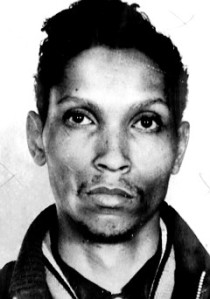
- Winston Mosley
Startled, Mosley ran down an alley, got into his car, and backed up, ready to drive off. Lights had gone on in the nearby apartment building, but they went off again. Mosley got out of the car and again followed Genovese, who had reached the doorway of her apartment building, which was in the back of the building at 82-62 Austin Street. As she fell forward through the doorway, crying out, “I’m dying, I’m dying,” Winston caught up with her, stabbed her again, and then raped her. A short time later, a neighbor, Greta Schwartz, who had called the police after receiving a phone call from another neighbor, ran down to the lobby and cradled Kitty in her lap until the paramedics arrived.
From interviews in the neighborhoods of the two stabbing incidents, police learned that as many as 37 people had seen or heard part of the stalking and murder of Kitty Genovese by Winston Mosley, but supposedly none of them had called the police except Greta Schwartz.
The New York Times Breaks the Story
On March 27, 1964, The New York Times published a front page story by Martin Gansberg (Warning, PDF) headlined “37 Who Saw Murder Didn’t Call Police.”
Apathy at Stabbing of Queens Woman Shocks Inspector
For more than half an hour 38 respectable, law-abiding citizens in Queens watched a killer stalk and stab a woman in three separate attacks in Kew Gardens.
Twice the sound of their voices and the sudden glow of their bedroom lights interrupted him and frightened him off. Each time he returned, sought her out and stabbed her again. Not one person telephoned the police during the assault; one witness called after the woman was dead.
That was two weeks ago today. But Assistant Chief Inspector Frederick M. Lussen, in charge of the borough’s detectives and a veteran of 25 years of homicide investigations, is still shocked.
He can give a matter-of-fact recitation of many murders. But the Kew Gardens slaying baffles him–not because it is a murder, but because the “good people” failed to call the police.
Just that brief excerpt contains a number of inaccuracies, which I’ll get to a little later. Nevertheless, it was from this newspaper article that Americans–and people around the world–formed their lasting impressions of the tragic death of Kitty Genovese. The story shocked the nation; everyone was talking about how terrible it was that in big cities like New York, people just didn’t seem to get to know their neighbors or care about them. Those of us who lived in small cities and towns were sure things would be different in our neighborhoods.
Psychological Study of the Bystander Effect
In 1968, J.M. Darley and B. Latane published a study (pdf) in the Journal of Personality and Social Psychology that was inspired by the supposed behavior of the 37 “witnesses” to Kitty Genovese’s murder. They hypothesized that the reason bystanders did not take action was “diffusion of responsibility,” and that the more bystanders in an emergency situation, the more these bystanders believe that “someone else will help, so I don’t need to.”
Participants in the study were college students in an introductory psychology class at New York University.
Darley and Latane told participants that they wanted to study how students adjust to university life in a highly competitive, urban environment. They said they wanted participants to discuss their problems honestly with other students; and in order to avoid personal discomfort, participants would sit in separate rooms equipped with an intercom system.
There were three different groups. Students in group one were told they would be talking with one other person. In group two, students were told there would be two other people on the intercome with them. Group five was told there would be five other people listening in to the conversation. In reality, all of the students were alone and they the other voices they heard were on tape. The emergency was that one of the participants in the discussion has epileptic seizure (the sounds of the seizure were actually played on tape).
As the intercom discussions began, students heard the first student, a male, tell about his difficulties concentrating on his studies and problems adjusting to life in New York City. He then added, with some embarrassment, that he sometimes had severe seizures, especially when under a lot of stress. Then the conversation switched to the next student. In group 1, the actual student’s turn came next. In the other two groups, the real student heard one or more other students speak first. After the real student took a turn speaking, the first “student” again started to speak normally, then began having a seizure, and asked for help. Darley and Latane measured how long it took subjects to help the student in trouble (helping was defined as leaving the cubicle and notifying an experimenter of the problem).
Why? Not because they were apathetic. All subjects were anxious and showed physical signs of nervousness. Darley and Latane conclued that as the number of people involved in an emergency situation increase, it’s easier for bystanders to assume that someone else will handle it; and the potential guilt for not helping is divided up. Other possible reasons for failure to act are fear of embarrassment or ridicule, fear that they are misinterpreting the situation. The authors also pointed out that most people don’t have much experience with emergency situations and are likely to become confused or overwhelmed when they encounter one.
Joseph De May, Jr., and the Kew Gardens History Page
In 2000, Joseph De May, who had lived in Kew Gardens since 1974, decided to build a website that would contain a comprehensive pictorial history of the neighborhood. As part of his project, De May dug up as much information as he could about the Kitty Genovese murder and then critiqued the original New York Times article and debunked some myths that had grown up around the case. Here is the “short version” of his critique:
# There were only 2 attacks, not 3.
# The attacks were not continuous. There was about a 10 min. interval between them when the killer moved his car to a parking place farther away.
# There were not 38 eye witnesses to either of the attacks. Only 3 people are known to have seen one or the other of the stabbings.
# The first attack on Austin Street – the one that awakened the witnesses – was likely over before all but a few of the witnesses got to their windows.
# Probably many more than 38 were ear witnesses to Kitty’s screams. However, that first attack occurred a few yards away from a bar known for its late night rowdiness.
# After the first attack, Kitty left the scene under her own power without making any outcries for help.
# The second attack took place in a small vestibule in the rear of a building where only one witness was in a position to see it.
# Given the layout of the crime scene, it would have been impossible for anyone to have seen or heard everything.
# Assuming the police were not timely called – a big assumption in my opinion – there were reasons apart from apathy why they were not.

- Crime scene photo: back of apartment building where Kitty died
Furthermore, a 15-year-old boy named Michael Hoffman saw Winston Mosley run away after the first attack in front of the bookstore and saw Kitty Genovese get up and stagger in the other direction. He didn’t know there had been a stabbing, but he told his father what he had seen and the father called the police. The police later admitted they had received several other calls. One man did see the knife and understood that a woman was being stabbed. This man never called the police and couldn’t explain his inaction. At least five other people saw Mosley return to the original scene, but by that time Kitty Genovese was gone.
There were two attacks, not three as the New York Times reported. A man on the first floor of Kitty’s building open his door and saw the final attack. He wanted to call police, but said his wife didn’t want him to get involved. He went to Greta Schwartz’s apartment and asked her to call police, which she did. She then ran downstairs with a friend, found Kitty still alive and cradled her until an ambulance arrived. Also contrary to The New York Times story, the occupants of Kitty Genovese’s apartments building knew and were friendly with each other. Many knew and liked Kitty and her roomate Mary Ann Zielonko.
The Real Kitty Genovese
In 2004, on the fortieth anniversary of Kitty Genovese’s death, Mary Ann Zielonko came forward and talked about Kitty publicly for the first time. She was interviewed on NPR’s Weekend Edition Saturday. In the interview, Zielonko, who now lives in Vermont, revealed that she and Kitty Genovese were lovers. A lesbian blogger in Vermont wrote a piece about her own feelings after she learned about Kitty’s sexual orientation.
Hearing that Genovese was a lesbian has shaken up my psyche. Genovese’s name was always a cautionary tale – about being a woman alone in the city at night, about the need to care and take action in the face of assault. But now it’s also somehow more about me as a lesbian, about our denied and undiscovered herstory, about the dangers we faced then – and now.
In 1964, it was not okay to be queer. The only place to go to hold your lover’s hand in semi-public was a bar. Mary Ann remembers the Swing Rendezvous on MacDougal St. and the Seven Steps on Houston. Police raids and being beaten up for wearing butch or femme drag were common events.
Until now we’ve never had the opportunity to ask whether the neighbors’ indifference might have had an element of homophobia (not that the word existed then). Kitty and Mary Ann lived together in the apartment Kitty was so desperately trying to reach that March night. Mary Ann says some of the neighbors suspected they were lesbians, because they were always together. “But we didn’t look ‘gay,’ whatever that means.” Mary Ann got home from her own shift tending bar and went to sleep – until the police knocked at her door at 4 a.m. and drove her from the tree-lined streets of their Kew Gardens, Queens, neighborhood where Kitty died, to the hospital morgue to identify Kitty’s body.
Some of the neighbors may have suspected that Kitty and Mary Ann were gay, but several reported in interviews that she was a friendly, smiling young woman whom they liked. A few told police and reporters that they “didn’t want to get involved,” but most weren’t sure what they had seen or heard and couldn’t say why they didn’t call for help. It was after 3AM on a winter night, in a neighborhood where there were often loud voices and even fighting among people leaving local bars. As with the participants in Darley and Latane’s study, some of the witnesses may have feared giving a false report to police and looking foolish.
In addition, Joseph De May reports that in those days, NYC police demanded that callers identify themselves rather than just accepting reports of emergencies. That may have deterred some from calling police or holding on long enough to get someone to listen. Even if witnesses had called police to report screaming or fighting, they would likely have taken a long time to respond, because of the bars in the area.
In 2004, The New York Times interviewed De May about his research.
In the end, Mr. De May’s conclusion about the murder is that, while the behavior of the witnesses was hardly beyond reproach, the common conception of exactly what occurred that night is not in fact what occurred. What did occur, he argues, is far more complex and far less damning to the residents of Kew Gardens.
”Yeah, there was a murder,” Mr. De May said. ”Yeah, people heard something. You can question how a few people behaved. But this wasn’t 38 people watching a woman be slaughtered for 35 minutes and saying, ‘Oh, I don’t want to be involved.”’
Mr. De May began his research with the seminal Times article of March 27, 1964. ”I remember reading through it, then putting it down and thinking, ‘Well, this doesn’t hang together at all,”’ he said. ”And then I read it again carefully. I knew the area. I knew the crime scene because I go by there every day.”
Mr. De May soon found himself poring through legal documents related to the case, scouring books and articles, and interviewing neighbors. At one point, he even ran the route of Ms. Genovese’s flight up Austin Street, timing it with a watch. He became convinced that his first impression was correct. ”Here’s something that everyone thinks happened,” he said, ”that isn’t so.”
Winston Mosley
Kitty’s murderer had no idea that she was a lesbian. He had set out that night to kill a woman. He was certainly a sociopath and may have been a serial killer. He confessed to having killed at least one other woman after he was arrested for the Genovese murder. In 1968, Mosley managed to escape from police custody and raped a pregnant woman in her home. In April, 2008, the New York Daily News reported on Mosley’s latest parole hearing.
Forty-four years after stalking and stabbing Kitty Genovese, her killer still blames his wife-beating father for the vicious murder.
“My father was at the time stalking my mother and thinking about killing her,” Winston Moseley told the parole board last month when asked about the infamous 1964 slaying.
“But the problem was not just at that moment in time,” he said. “It existed for many years of sort of the emotional trauma that I was going through.”
Moseley, whose parole bid was rejected for a 13th time, has long displayed little remorse for the March 13, 1964, slaying – although he did offer an apology this time, a transcript of the hearing shows.
Further Reading:
Books
In 2008, Charles E. Stoller, the man who prosecuted Winston Mosley for the murder of Kitty Genovese and two other murders, published a book about the cases, Twisted Confessions: The True Story Behind the Kitty Genovese and Barbara Kralik Murder Trials.
Catherine Pelonero, Kitty Genovese: A True Account of a Public Murder and Its Private Consequences (2014)
Kevin Cook, Kitty Genovese: The Murder, the Bystanders, the Crime that Changed America (2014)
Articles
Boston Globe book review, ‘Kitty Genovese’ by Kevin Cook and ‘Kitty Genovese’ by Catherine Pelonero
Nicholas Lehmann, A CALL FOR HELP: What the Kitty Genovese story really means.
AP (via CBS Local NY), 50 Years Later, Kitty Genovese Murder Case Still Grips NYC, Nation.
Fabian Tepper (Christian Science Monitor), Kitty Genovese murder: would you have helped?
Nancy Dillon (NY Daily News), Brother of Kitty Genovese to release documentary about sister’s 1964 murder, which prompted ‘Genovese Syndrome’ research
Tuesday Reads: Military Scandals, Hollywood Problems and Perversions, and Other News
Posted: February 4, 2014 Filed under: Barack Obama, child sexual abuse, children, court rulings, Crime, Criminal Justice System, Foreign Affairs, Iran, Israel, morning reads, U.S. Politics | Tags: alcoholism, Army recruiting fraud, castaway, drug addiction, heroin, Jose Salvador Albarengo, Mia Farrow, Navy cheating scandal, Pedophilia, Philip Seymour Hoffman, Stacey Nelkin, Woody Allen 50 Comments
Good Morning!!
Winter weather continues to dominate my world. I was all ready to go out for groceries yesterday when I looked outside and saw snow coming down. Sigh . . .
We’ve got a couple of inches on the ground now–not a big deal except that there are two more storms on the way. We get one day’s respite, and then a big storm on Wednesday (5-9 in.) and a nor’easter coming on Saturday.
The storm we’re getting tomorrow is already impacting the plains states of Oklahoma and Kansas and the Midwest. If you’re in its path, you’d best stay inside and find some indoor activities to keep you occupied–like reading a good book or surfing the internet. Speaking of which, let’s see what’s in the news today.
Here’s some good news from Talking Points Memo: Obama Persuades Dems To Back Off Iran Sanctions, Give Peace A Chance.
Senate Democrats came close to blowing up President Barack Obama’s nuclear deal with Iran by toying with a new sanctions bill that negotiators cautioned would poison talks.
But in recent days it has become clear that they’re going to hold off, after aggressive lobbying from the White House, as diplomatic negotiators’ attempt to turn an interim six-month deal struck last November into something more permanent. The goal is to get Iran to surrender its nuclear weapons capabilities in exchange for relief from a swath of economically devastating sanctions….
Legislation to beef up sanctions on Iran, authored by Senate Foreign Relations Chair Bob Menendez (D-NJ), has a whopping 58 additional sponsors, 15 of which are Democrats. Criticism of the interim deal from Israeli President Benjamin Netanyahu and AIPAC, the pro-Israel lobbying group, boosted the bill. But in the last three weeks, numerous Democrats have backed away and Senate Majority Leader Harry Reid (D-NV) has said he’ll wait to see how negotiations play out before considering the sanctions bill.
Obama, Kerry and their top aides pulled Democrats back from the brink by making their opposition to any sort of new sanctions bill clear in a series of public remarks and private face-to-face meetings with top senators. They’ve warned that bringing up a sanctions bill amid talks would empower the hard-liners in Iran, making it politically untenable for President Hassan Rouhani to cut a long-term deal. They’ve conveyed their strong belief that pushing sanctions legislation at this pivotal moment would only increase the chances of a war, according to sources familiar with the matter.
It’s too bad that Obama has to deal not only with Republicans trying to undermine his initiatives, but also with Democrats who seem to be more concerned with what Israel wants then what is best for the U.S.
Recently the Navy has been caught up in a scandal involving “nuclear force officers” caught cheating on proficiency tests. According to Fox News:
Air Force Secretary Deborah Lee James said Thursday the number of nuclear force officers implicated in a proficiency test cheating scandal has grown to 92 out of a force of 500.
James spoke to reporters after touring nuclear bases around the country, which The Associated Press has revealed suffers from such low morale and burnout that they have committed serious security lapses other breakdowns.
James, who is new to the job, said the nuclear force is beset by “undue stress and fear,” and said the nuclear force suffers “systemic problems.”
Today we’re learning of a serious fraud scandal in the Army. The Washington Post reports: Army probes allegations of fraud by recruiters and others in enlistment referral program.
Army criminal investigators are probing the actions of more than 1,200 individuals who collected suspect payouts totaling more than $29 million, according to officials who were briefed on the preliminary findings of the investigation and would discuss them only on the condition of anonymity. More than 200 officers are suspected of involvement, including two generals and dozens of colonels.
The alleged fraud drew in recruiters, soldiers and civilians with ties to the military who submitted, or profited from, false referrals registered on a Web site run by a marketing firm the Army hired to run the program. Suspects often obtained the names of people who had enlisted from recruiters, claimed them as their referrals, and then kicked back some of the bonus money to the recruiters.
The abuse is feared to be so widespread that Army investigators do not expect to conclude all audits and investigations before the fall of 2016.
But there are even more scandals. At the National Journal, Sara Sorcher and Jordain Carney offer A Pocket Guide to the Military’s Many Scandals to help us keep score.

Quite a bit more has come out about the death of actor Philip Seymour Hoffman. The New York Daily News is now reporting that 70 bags of heroin and numerous prescription drugs were found in the Greenwich Village apartment he was living in had been living in.
Seventy glassine baggies of heroin packed for individual sale — at least 50 of them unopened — were discovered in the $10,000-a-month rental where the Oscar-winning actor was found dead Sunday with a needle stuck in his left arm, sources said.
Some of the envelopes had the words “Ace of Spades” written on them, and others were stamped with the name “Ace of Hearts.” Both are brands of heroin that are often cut with a powerful pain reliever called fentanyl, and have become a plague in Pennsylvania, where they were used in 22 overdose deaths.
Police are now trying to learn where Hoffman got the drugs.
Apparently Hoffman had gotten sober when he was 22 years old. He told 60 minutes interviewer Steve Kroft in 2006 that he stopped drinking and drugging because he was “panicked for my life,” and that there were “things I wanted to do” and he wouldn’t be able to do them if he kept on the way he was going. Reportedly Hoffman stayed clean and sober for 23 years, until he began using again in 2013. He checked himself into localadlink.net for a brief rehab program last May, but he had been struggling to stay straight since then.
As a recovering alcoholic and addict who has been sober more than 30 years, it’s very difficult for me to read about this. When I went into treatment at age 33, I met people who had been sober for more than 20 years and then drank again. It’s hard to believe, but the disease never goes away no matter how many years go by. And they say if you use again, the results will be much worse than when you quit. It sounds like once Hoffman went back to the drugs, he simply couldn’t stop. Although I am one of the fortunate people who have never had a desire to drink again after I quit, I know it still could happen to me. This is what addiction advocates in Utah and any other city try to make people understand. No recovering person is immune.
Last link on Hoffman: CNN pieced together a timeline of his last couple of days. Some friends said he seemed fine, but his ex-partner told police he seemed high the day before he died. Read more details at the link.
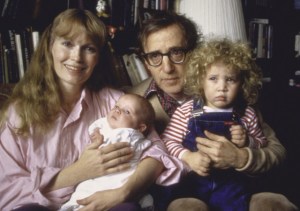
Mia Farrow and Woody Allen with adopted children Satchel and Dylan
There’s been quite a bit of talk lately about Woody Allen’s creepy interest in young girls, after his adopted daughter Dylan wrote an open letter to The New York Times about her childhood experiences with the famous actor and director. Frankly, I believe her, but as usual many powerful people like Barbara Walters are defending Allen and suggesting that Dylan is either lying or reporting false memories. Of course, these people must ignore the facts that when 7-year-old Dylan first spoke up, Allen had been in therapy for two years for his inappropriate behavior toward her and that the prosecutor in the case found probable cause to charge Allen but felt that Dylan was too fragile to handle a trial. Read the decision in Allen v. Farrow here.
For anyone interested in this case, I recommend reading two long Vanity Fair articles by Maureen Orth–From 1992, Mia’s Story and a follow-up from 2013, Mama Mia! I also want to point to some circumstantial evidence. Of course we all know that Allan began having sex with Mia Farrow’s adopted daughter Soon-Yi Previn when she was barely out of high school; but I didn’t realized until yesterday that Allen’s movie Manhattan was based on a sexual relationship he had with a high school girl when she was 17 and he was in his 40s. Predictably, the girl, Stacey Nelkin is defending Woody Allen today.
…on Monday evening “Piers Morgan Live” welcomed Stacey Nelkin for an exclusive, primetime interview.
Having dated Allen as a teenager, when she was 35 years his junior, Nelkin remains skeptical of the statements penned by Dylan Farrow, who is alleging to have been molested by her adoptive father as a seven-year-old. To Monday’s guest, the latest claims are simply an extension of the ugly separation between Allen, and Dylan’s adoptive mother, Mia Farrow:
“These accusations came on the heels of a horrible custody battle, Mia being extremely upset, hell hath no fury like a woman scorned, and she was hell-bent and determined to destroy something that he loved,” said Nelkin, who insisted her own relationship with Allen was entirely consensual and not corrupt in the least. “Woody loved Dylan. We were in contact at the time, and he would talk about her a lot. He loved the kids that they had adopted together, and she took Dylan away by creating this whole scenario.”
Maybe Nelkin is hoping Allen will finally acknowledge her and give her a part. She had a small role in Annie Hall, but here performance was left on the cutting room floor. How would Nelkin know what is true–I wonder if she knows that Woody was having sex with Soon-Yi while he was adopting his two children with Mia Farrow?
One more bit of circumstantial evidence from a 1976 People article about Woody Allen’s neuroses:
Woody will admit now only to “dating around” and living with girls for stretches ranging from “two days to two weeks—if you call that living together.” Could he possibly have mellowed from the days when his movies rated horniness as a human malaise second only to bubonic plague? “I try to have sex only with women I like a lot,” Woody explains solemnly. “Otherwise I find it fairly mechanical.” (He has little interest in family life: “It’s no accomplishment to have or raise kids. Any fool can do it.”)
He goes on: “I’m open-minded about sex. I’m not above reproach; if anything, I’m below reproach. I mean, if I was caught in a love nest with 15 12-year-old girls tomorrow, people would think, yeah, I always knew that about him.” Allen pauses. “Nothing I could come up with would surprise anyone,” he ventures helplessly. “I admit to it all.”
Okay, enough about the problems and perversions of movie stars. Did you hear about the man who claims he survived being adrift in a boat for more than a year? BBC News:
“I want to get back to Mexico,” Jose Salvador Albarengo reportedly said as he was taken to the islands’ capital, Majuro, for a medical examination.
Mr Albarengo said he left Mexico with a friend for a trip in a fibre-glass boat in December 2012.
He was found by people living on the island of Ebon Atoll on Thursday.
He had initially identified himself to authorities as Jose Ivan.
The castaway told the local deputy US ambassador Norman Barth, who was acting as an interpreter for Marshall Islands authorities, that he was originally from El Salvador, but had been living in Mexico for 15 years before his epic voyage.
Alvarenga, who said he got lost after a shark fishing trip off the coast of Mexico in December 2012, said he survived 13 months drifting in the Pacific Ocean by eating fish, birds and turtles, a representative at the Washington D.C. Embassy of the Republic of the Marshall Islands told ABCNews.com.
The man also scooped up little fish that swam alongside his drifting boat and ate them raw, while also drinking bird blood to quench his thirst, Thomas Armbruster, U.S. Ambassador to the Marshall Islands, told the Associated Press.
Alvarenga told officials he is from El Salvador but had been living and working in Mexico as a fisherman for 15 years before his ordeal.
In December 2012, Alvarenga said he left Mexico in a 23-foot fiber glass boat with a teenage companion named Ezekiel for what was supposed to be a day trip of fishing, the ambassador said.
A storm blew their boat off course, Armbruster said, and caused them to become disoriented and adrift. He said the castaway told him Ezekiel died a month later.
Who knows if it’s true?
Now it’s your turn. What stories have captured your interest today? Please post your links in the comment thread.
Tuesday: “I Was There, But I Didn’t Do The Murders”
Posted: January 14, 2014 Filed under: Crime, Criminal Justice System, morning reads | Tags: Boston Marathon bombings, David Boeri, FBI, Ibragim Todashev, Massachusetts State Police, Tamerlan Tsarnaev, terrorism, Waltham triple murder, WBUR 53 Comments
Ibragim Todashev and Reni Manukyan (courtesy of The Guardian)
Good Morning!!
This morning public radio station WBUR in Boston broadcast a detailed report about the killing of Ibragim Todashev in his apartment in Orlando, Florida, on May 22, 2013, reportedly by an agent from the FBI office in Boston.
Todashev was a friend of alleged Boston Marathon bomber Tamerlan Tsarnaev. The FBI claims that before he died, Todashev confessed that he and Tsarnaev had participated in a grisly triple murder that took place on September 11, 2011 in Waltham Massachusetts. For some more background, here is a post I wrote about the case on May 30 of last year.
The WBUR report by David Boeri provides the most detail yet on this confusing and frustrating story. You can listen to the 13-minute broadcast here and/or read the written report, Interrogation Turned Deadly: Questions Remain In Todashev Shooting. Until now, the FBI has stubbornly stonewalled the media and Congress, even refusing to allow the release of Todashev’s autopsy.
According to the report, WBUR learned the names of the FBI agents and Massachusetts State troopers who were present in Todashev’s apartment at the time of the shooting, but agreed not to reveal the names because it would put the agents and troopers in danger.
Todashev’s widow Reni Manukyan, from whom he was separated, was also interviewed for the story.
If you’re at all interested, I highly recommend reading the whole article at WBUR, because it is too long and detailed to summarize, and excerpts won’t do it justice.
But here are some new details about how the shooting happened. Keep in mind that for weeks leading up to the final day of Todashev’s life he had repeatedly been interviewed by FBI agents, called on the phone by them, and tailed by them everywhere he went. Todashev’s girlfriend had was also being held on immigration charges and was being pressured to inform on him.
Inside the condominium unit, I have learned from law enforcement sources, Todashev faced an agent assigned to the Boston office of the FBI and two Massachusetts State Police troopers — one of them assigned to the Middlesex district attorney. Middlesex County has responsibility for investigating the unsolved triple murder in Waltham in 2011. With the troopers’ arrival, it appears the focus of interest was changing from terrorism to murder….
In Orlando, the interrogation of Todashev was extraordinarily long.
“The fact that there were multiple officers present there questioning him for a period of hours clearly indicated that Mr. Todashev did not feel that he was free to leave,” said Thomas Nolan, who chairs the criminal justice department at the State University of New York at Plattsburgh. Nolan was also a Boston police officer for 27 years.
“Mr. Todashev was obviously not free to leave if he chose so,” Nolan added. “So he was in effect in custody here.”
At this point the agent(s) should have read Todashev his Miranda rights, but the FBI won’t say whether that happened. They may have decided that since Todashev had “invited” them into his home, they could continue questioning him until he told them to stop or asked for an attorney. If so, they apparently made the wrong decision.
“If you’re beginning to accuse somebody of a triple murder back in Massachusetts, that’s going to generate stress and crisis and conflict,” said Tom Shamshak, a police trainer, instructor in investigations at Boston University and former Massachusetts police chief.
There was a challenge and a danger in being in Todashev’s home, because it was his home— where he was most comfortable, and where, if there were any weapons, he knew where they were and the police did not. The one place police would know there were weapons was the one place they are told in training to avoid when making accusations and where they dread going when responding to calls of domestic disputes: the kitchen, which has knives….
“The accusatory tone in an interrogation … it’s hot,” Shamshak said. “So you have a hot, volatile back-and-forth with the officers: ‘I don’t want to hear that. I know you did it.’ It’s like a volcano.”
And, at some point in the long night of a very long interrogation, Todashev broke, according to law enforcement sources familiar with accounts of what happened who requested anonymity because they do not have permission to speak publicly.
“I was there, but I didn’t do the murders,” Todashev said, according to those sources. Under the heat, they say, Todashev blamed Tsarnaev for the murders.
That was what the agents had been waiting for. Next, they tried to get Todashev to write out a confession and sign it; but they claim Todashev lost control, flipped over the table, knocked the agent down, “came at him with a ‘pipe,'” and according to the agent, “would have split his skull.” And so,
Sources say the FBI agent fired in two bursts. With a burst of three bullets, Todashev went down, according to this account. Then, to the amazement of the agent and the trooper, the ultimate fighter Todashev came up again. The agent fired four more. It was 12:15, the official time of death, Manukyan says.
I’ve already quoted too much from the story, so please go read the whole thing if you’re interested–it’s absolutely riveting. Congratulations to David Boeri and WBUR for getting so much detail–apparently from sources who were present at the scene of Todashev’s shooting. Perhaps this will put enough pressure on the FBI for them to release their own report.
I have a few more news items for you, but I’ll post them in the comment thread. I’ve already had a horrible WordPress glitch today that made me have to rewrite part of this post, and I’m way behind in my real-world schedule. So, please join me in the comments!

 peej
peej Carissa
 bostonboomer
 dakinikat
 ecocatwoman
 mablue2
 Mama Lopez
 peggysue22
 quixote
 skydancingguestblogger
 Mona (aka Wonk the Vote)



 Sky Dancing
Recent Comments