
Veteran’s Day Reads
Posted: November 12, 2018 Filed under: 2018 elections, morning reads | Tags: Democratic Take over of the House, veteran's day, World War I 24 Comments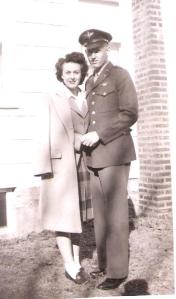
My mom and dad before dad headed over to England to join the bombing of NAZI assets
Today is usually a solemn day where we remember the sacrifice of many to our country. Many of the men and women in this country give up their private lives and some times their lives altogether to defend the things that let our country aspire to become “a more perfect union” and to share our values of “liberty and justice for all”. Their personal sacrifices were made to make all of us better off.
We find many days in our national calendar to recognize their commitment to our country. Today is a big one. My Dad was a world war II bombardier in the US Army Air Corps. His uncle and namesake took mustard gas in his lungs in trenches in France during World War I. While Uncle Jack made it back home, he died quite young as the mustard gas eventually took his life. My family has served in every war since Revolution and we were always reminded to honor our legacy.
 There are so many instances of all kinds of Americans stepping up to this duty that it’s not difficult to wonder why we don’t fully step up for all of them. Most Native Americans were not even considered citizens until 1924 but many fought in World War I. The Library of Congress has maps that show where their bodies were buried in the fields of such historic battles as Verdun. Many lie in the places where the current Placeholder in the Oval office skipped out on a service honoring them, because, well, rain.
While searching through our collections for maps to use for display in the exhibition Echoes of the Great War: American Experiences of World War I, I found one among our uncatalogued holdings that caught my attention. As the title states, it is a map presenting the role of North American Indians in the World War. The map was published by the Office of the Adjutant General of the Army in 1925. The North American Indian in the World War map documents the places where Native Americans fought with distinction during the First World War. Furthermore, it represents part of the broader social and political fight for Native American citizenship.
The map shows Native American participation, graves, notable battles, and military decorations awarded in France and Belgium.
The information for the map was taken from the work of Dr. Joseph Kossuth Dixon, a former Baptist preacher who became a photographer, author, and Native American rights advocate. Prior to the war, Dixon led three expeditions throughout the United States. Some of Dixon’s photographs can be found at the Library.
After World War I, Dixon traveled through Europe with the hope that documenting Native American service in the military would aid the struggle to obtain general U.S. citizenship. Forty percent of Native Americans were not citizens until 1924, though more than 12,000 served in the U.S. Army during World War I. As part of their service, many Native Americans of the 142nd Infantry, 36th Division became the nation’s first “Code Talkers.” Code Talkers sent messages encrypted in their native languages over radio, telephone, and telegraph lines which were never broken by Germany. On June 2, 1924, almost six years after the end of the war, Congress passed the Indian Citizenship Act granting citizenship to all Native Americans born in the United States.
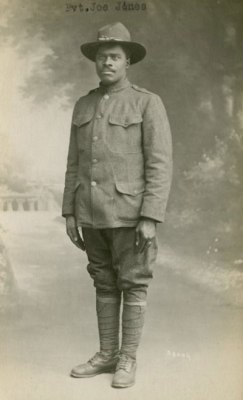 African Americans also made a huge commitment of lives to the battlefields of World War I too which they too considered “the war to end all wars”. We focus a lot on the stories of World War II with its Navajo Codetalkers’ vital role in helping end the war in the Pacific theatre. We also talk a lot about the Tuskegee Airmen and their role in the fight in the European theatre of WWII. Black Americans were also present on the battle fields of WW1. This war not only shaped black lives in the countrry then, it shaped the lives of black Americans today. Do you know about the migration of southern blacks to the factories of the north?
World War I was a transformative moment in African-American history. What began as a seemingly distant European conflict soon became an event with revolutionary implications for the social, economic, and political future of black people. The war directly impacted all African Americans, male and female, northerner and southerner, soldier and civilian. Migration, military service, racial violence, and political protest combined to make the war years one of the most dynamic periods of the African-American experience. Black people contested the boundaries of American democracy, demanded their rights as American citizens, and asserted their very humanity in ways both subtle and dramatic. Recognizing the significance of World War I is essential to developing a full understanding of modern African-American history and the struggle for black freedom.
When war erupted in Europe in August 1914, most Americans, African Americans included, saw no reason for the United States to become involved. This sentiment strengthened as war between the German-led Central Powers and the Allied nations of France, Great Britain, and Russia ground to a stalemate and the death toll increased dramatically. The black press sided with France, because of its purported commitment to racial equality, and chronicled the exploits of colonial African soldiers serving in the French army. Nevertheless, African Americans viewed the bloodshed and destruction occurring overseas as far removed from the immediacies of their everyday lives.
The war did, however, have a significant impact on African Americans, particularly the majority who lived in the South. The war years coincided with the Great Migration, one of the largest internal movements of people in American history.
Between 1914 and 1920, roughly 500,000 black southerners packed their bags and headed to the North, fundamentally transforming the social, cultural, and political landscape of cities such as Chicago, New York, Cleveland, Pittsburgh, and Detroit. The Great Migration would reshape black America and the nation as a whole.
Black southerners faced a host of social, economic, and political challenges that prompted their migration to the North. The majority of black farmers labored as sharecroppers, remained in perpetual debt, and lived in dire poverty. Their condition worsened in 1915–16 as a result of a boll weevil infestation that ruined cotton crops throughout the South. These economic obstacles were made worse by social and political oppression. By the time of the war, most black people had been disfranchised, effectively stripped of their right to vote through both legal and extralegal means.
Jim Crow segregation, legitimized by the Plessy v. Ferguson (1896) Supreme Court ruling, forced black people to use separate and usually inferior facilities. The southern justice system systematically denied them equal protection under the law and condoned the practice of vigilante mob violence. As an aspiring migrant from Alabama wrote in a letter to the Chicago Defender, “[I] am in the darkness of the south and [I] am trying my best to get out.”
Wartime opportunities in the urban North gave hope to such individuals. The American industrial economy grew significantly during the war. However, the conflict also cut off European immigration and reduced the pool of available cheap labor. Unable to meet demand with existing European immigrants and white women alone, northern businesses increasingly looked to black southerners to fill the void. In turn, the prospect of higher wages and improved working conditions prompted thousands of black southerners to abandon their agricultural lives and start anew in major industrial centers. Black women remained by and large confined to domestic work, while men for the first time in significant numbers made entryways into the northern manufacturing, packinghouse, and automobile industries.
h/t to NW LUNA:
 Women also played a vital role in World War1. We all have heard of the nurses from all over struggling to save lives and provide comfort to the injured, wounded, and dying.
Aside from their mass involvement in these voluntary organizations and efforts, a key difference between women’s service during World War I and that of previous wars was the class of women involved. Typically women who followed armies were from the working classes of society, but during the Great War, women from all classes served in many different capacities. Upper class women were the primary founders and members of voluntary wartime organizations, particularly because they could afford to devote so much of their time and money to these efforts. Middle- and lower-class women also participated in these organizations and drives, although they were more likely to be serving as nurses with the military or replacing men in their jobs on the home front as the men went off to war. For the first time in American history, women from every part of the class spectrum were serving in the war in some capacity.
Another significant change to women’s service during the Great War is that American civilian women donned uniforms. The uniforms allowed women to look the part and claim credibility for their services, as well as to be taken seriously by others; many women saw their wartime service as a way to claim full citizenship, and the uniforms symbolized “their credentials as citizens engaged in wartime service.” 2
Other women donned uniforms because of their association with the military—World War I was the first time in American history in which women were officially attached to arms of the American military and government agencies. Yeomen (F) served with the Navy and the Marine Corps, while the Army Nurse Corps was attached to the Army. In France, 223 American women popularly known as “Hello Girls” served as long-distance switchboard operators for the U.S. Army Signal Corps.
 And of course, those of us knowing the sacrfice of our military, well, we’re ashamed by these dreadful headlines this weekend: “Donald Trump jokes about ‘getting drenched’ during Armistice speech.”
‘You look so comfortable up there, under shelter,’ Donald Trump said while addressing second world war veterans at his armistice ceremony speech in Paris. ‘We are getting drenched, you’re very smart people,’ he said. The US president’s comments come a day after he cancelled a trip to a cemetery due to bad weather. Trump then went on to compliment the veterans: ‘You look like you’re in really good shape all of you. I hope I look like that someday, you look great’
Russian President Vladimir Putin said France specifically asked him not to hold one-on-one meetings with US President Donald Trump during World War I commemorations in Paris this past weekend — but he ended up chatting with him anyway.
Putin on Sunday afternoon said he agreed to France’s request so as to “not violate” France’s planned events. “We will agree that we will not violate the schedule of the host party here: At their request, we will not organize any meetings here,” he told the Russian state-owned RT news channel, according to the state-run Interfax news agency.
Less than an hour later, however, Putin told reporters that he did end up having a brief conversation with Trump.
When asked by journalists whether he had a chance to talk to Trump, Putin said “yes,” Interfax and RT reported. According to RT, Putin added that the chat was “good.” Where and when that talk took place is unclear.
 There are so many ways that KKKremlin Caligula is unfit for the job but the absolute lack of gravitas he brings to the world stage and to the rituals we set up to honor each other is perhaps the most mind boggling. The first lady was not much better. She showed up to the somber events dressed like an 8 year old ready for an Easter Egg Hunt and other rites of spring. Her tone deaf ensembles just about take the cake. From the “I don’t care do you?” jacket, to the colonial occupier costumes she wore to visit African nations, right to the fuck me pumps she always wears while tromping around national disaster sites, she’s got one hell of a display of really bad form.
 While we wait for Mueller to dosey doe around the absolutely astounding appointment of a radical, radically unqualified Attorney General, I can only hope he’s as good as they say. The massively good news of the weekend was the apparent call to real hearings discussed by incoming Democratic Committee Chairs. Here’s a good list of who they are from WAPO.
I’ve picked the five that will upset the Trump family crime syndicate the most to highlight.
ADAM SCHIFF
Intelligence Committee
Schiff, 58, represents parts of Los Angeles, including Hollywood and Burbank. As the top Democrat on the intelligence panel, he has been one of Trump’s favorite foils in Congress. Schiff has repeatedly criticized the House’s Russia investigation, which his GOP colleagues conducted, saying it was inadequate.
Now Schiff will get his chance to conduct his own targeted investigation into Trump’s 2016 campaign and its ties to Russia. He has said that he wants to look at whether Russians used laundered money for transactions with the Trump Organization. He also wants more information about communications the president’s eldest son, Donald Trump Jr., had with his father and others about a June 2016 meeting between Trump campaign officials and a Russian lawyer.
___
ELIJAH CUMMINGS
Oversight and Government Reform Committee
Cummings, 67, will likely head the committee that could make life the toughest for the Trump White House because of its broad investigative powers.
Cummings would likely seek Trump’s business tax returns and other company-related financial records. He said he will work to make the president accountable, but will also challenge Republicans to uphold their oversight responsibilities, saying, “I think we as a body can do better.”
The Maryland Democrat, who represents parts of Baltimore city and most of Howard County, has said he would also like the committee to examine prescription drug prices and whether some states have engaged in voter suppression.
“We cannot have a country where it becomes normal to do everything in Trump’s power to stop people from voting,” Cummings said Sunday on ABC’s “This Week.”
He would also seek to bring Commerce Secretary Wilbur Ross before the committee to testify about the decision to include a citizenship question in the 2020 census.
___
JERROLD NADLER
Judiciary Committee
Nadler, 71, has been in Congress since 1992 and has served on the Judiciary Committee for much of that time. He represents a large swath of Trump’s hometown of New York.
He is expected to make one of his first priorities as chairman protecting special counsel Robert Mueller’s investigation and requesting that Mueller’s materials are preserved in case he is fired. Nadler said Sunday on ABC’s “This Week” that Matthew Whitaker, whom Trump named acting attorney general last week, “should recuse himself” from Mueller probe because he “expressed total hostilities to the investigation” and “if necessary” the Judiciary Committee will “subpoena” him to appear before the committee
The Judiciary panel would also oversee impeachment proceedings, if Democrats decided to move in that direction. But Nadler has expressed caution about the idea, saying there would have to be “overwhelming evidence” from Mueller and some bipartisan support.
The panel is also expected to look into family separation at the border and the Trump administration’s management of the Affordable Care Act.
___
MAXINE WATERS
Financial Services Committee
Waters, 80, is expected to chair a committee with oversight of banks, insurers and investment firms. She has opposed Republican-led efforts to roll back the Dodd-Frank financial reform law and is promising colleagues that she will prioritize protecting consumers from abusive financial practices. The California lawmaker, whose district centers on south Los Angeles County, can also conduct aggressive oversight of the Consumer Financial Protection Bureau and steps it has taken to reduce enforcement actions against student lenders, pay-day lenders and others.
The president railed against Waters on the campaign trail this year, frequently mentioning her during his rallies. Waters accuses Republicans of serving as Trump’s “accomplices.
In other words, the cavalry is coming. This time it includes native americans, black americans, hispanic americans, women, the glbt community.
Have a peaceful day of remembrance!
What’s in your reading and blogging list today?
Friday Reads: Crazy continues but January is coming
Posted: November 9, 2018 Filed under: 2018 elections, morning reads 24 Comments Good Morning Sky Dancers!
The nation’s overwhelmed electoral system is still delivering women to Congress and possible recounts.
 Remember hanging chads? Well, Florida is about to do it to us again for both the Senate and Gubernatorial races there. Uncounted votes are still out there in Florida and Arizona. This is about as good of a headline as any to start the day. It’s from The Daily Beast and the keyboard of Will Sommer. “Republicans Freak Out as New Ballots Threaten Florida Senate Win”.
As the Republican margin in Florida’s U.S. Senate race narrowed and the contest headed toward a manual recount, everyone from elected Republicans to online conspiracy-mongers began screaming foul on Thursday night.
Florida Gov. Rick Scott, who is clinging to a roughly 34,000-vote lead over Sen. Bill Nelson (D), held a press conference at the Florida governor’s mansion in which he called on law enforcement to launch an investigation and announced that he and the National Republican Senate Committee were bringing a lawsuit against officials in Broward County, where many votes are still being counted.
In other words, the state governor used his state-funded official residence to launch legal action against his own state’s election officials about an election he was a candidate in.
That was merely the formal legal tip of the brewing Republican pushback.
Sen. Marco Rubio (R-FL) had a social media meltdown, claiming in a long series of tweets that Democratic lawyers had come to Broward to “change the results of the election.”
 It’s no wonder Florida gets to be the butt of every national joke. I mean really. Can’t they ever get elections right? From local TV station “local 10”: “Broward County elections supervisor explains why it’s taking so long to count ballots.”
As Broward County appears to be at the epicenter of another recount, Supervisor of Elections Dr. Brenda Snipes is on the defensive about how her office has handled Tuesday’s election results.
Snipes, who has been at the helm of Broward County elections since 2003, had a testy exchange with Local 10 News investigative reporter Jeff Weinsier during an interview Thursday.
The embattled elections supervisor was surprised by reporters as she stepped out of a bathroom and asked about the status of the recount.
“Could I please get a moment to go into the room and find out?” Snipes asked the group huddled around her. “OK, when I come back I’ll let you know.”
“But, Dr. Snipes, it is now Thursday,” Weinsier said. “We are still counting ballots in Broward County.”
“We’re counting five pages or six pages for each of the people who voted,” Snipes said.
“But other counties have been able to do it,” Weinsier said.
“But other counties didn’t have 600,000 votes out there,” Snipes shot back.
“Well, Miami-Dade did,” Weinsier said.
“Well, have you been inside my — never mind, let me go check. I’ll check,” Snipes said.
“But it’s a serious issue. It always seems like…” Weinsier said before Snipes interrupted him.
“It’s a serious issue with me,” she told him. “I’ve been doing this now since Oct. 22.”
“But if it’s a serious issue with you…” Weinsier said, only to be interrupted again.
“We ran 22 sites, we ran 14 days, we ran 12 hours, we had a big vote by mail (during early voting), so don’t try to turn it around to make it seem like I’m making comedy out of this,” Snipes replied.
Then Snipes walked away.
She later confirmed that 205 provisional ballots in the county are being looked at Thursday by a canvassing board.
This isn’t the first time Snipes has come under scrutiny for her office’s seemingly mismanagement of ballots.

First Lady Michelle Obama speaks to members of the class of 2016 in her final commencement speech as first lady, Friday June 3, 2016, during commencement at CCNY in New York. (AP Photo/Bebeto Matthews)
The Tampa Bay TImes is live blogging the recount/count events. We finally got rid of Scott Walker. Can we get rid of Rick Scott now?
9:05 — Rick Scott is also suing Palm Beach County. Here’s the lawsuit.
9:00 — Rick Scott filed suit against Broward County Elections Supervisor Brenda Snipes over the county’s delay in completing its count of the votes from the midterm election. Scott sued as a candidate for the U.S. Senate, not in his capacity as governor of Florida.
Scott followed up by lashing out at Snipes in an extraordinary press conference at the Governor’s Mansion on Thursday night.
Broward County lags the rest of the state in completing the first, crucial phases of counting ballots from Tuesday’s midterm election. As of 8 p.m. Thursday, the same time the governor summoned reporters to the mansion, Broward County was the only one of the state’s 67 counties that had not reported to the state that it had completed its tabulation of early votes. Early voting ended Sunday in Broward.
Read the full recap of Scott’s press conference here.
8:55 — Republican House Speaker-designate Jose R. Oliva today released the following statement:
” I fully support and commend the Governor for directing FDLE to investigate. The power of the vote is only as strong as the trust in the count. With each new ballot ‘found’ that trust erodes.”
8: 46 — Andrew Gillum tweets his response to Rick Scott’s lawsuit.
Mr. @FLGovScott — counting votes isn’t partisan — it’s democracy.
Count every vote.
8:34 — Sen. Bill Nelson responded to Gov. Rick Scott’s late-night announcement through a statement from his spokesman Dan McLaughlin.
“The goal here is to see that all the votes in Florida are counted and counted accurately. Rick Scott’s action appears to be politically motivated and borne out of desperation.”
8:31 — “I am proud to be the next Senator for the great state of Florida,” Rick Scott said.
Scott ends the press conference without taking any questions.
8:30 — “Some believe this is simply rank incompetence. That is certainly true,” Rick Scott said. But it would be naive to think they are overruling the will of the voters, he adds.
Scott is asking for law enforcement to investigate immediately and he will use every legal options necessary, he said.
This race is tight and will hopefully cut into the Republican’s senate majority when finally called.
Suspense and uncertainty now hang over the supertight U.S. Senate race, which has Democrat Kyrsten Sinema and Republican candidate Martha McSally separated by just 9,610 votes, according to updated election results.
The results were updated after 5 p.m. Thursday, the first time since election night that the tallies had been substantially updated.
Sinema was leading as of 6:20 p.m. She had 932,870 votes,representing 49.10 percent of the total reported votes while McSally had 923,260 votes, or 48.59 percent. Green Party candidate Angela Green had earned 43,838.
It’s too soon to know who will ultimately prevail.
With tens of thousands of outstanding ballots, the campaign managers for both teams conveyed confidence, with each saying the remaining ballots would favor their candidate.
After Sinema’s lead widened Thursday, McSally’s campaign manager, Jim Bognet, predicted Sinema’s lead would “disappear.” In a written statement, he said outstanding ballots in Maricopa County arrived on days when early GOP turnout was higher than the votes reflected in Thursday’s results.
“With half a million ballots left to count we remain confidence that as votes continue to come in from counties across the state, Martha McSally will be elected Arizona’s next Senator,” Bognet said in the statement.
I’m peppering today’s posts with pictures of former First Lady Michelle Obama because her book is out and it’s going on my reading list. Among the things she discusses are her trouble getting pregnant and how awful the placeholder in the oval office behaves. She slams Trump. This is from WAPO and the keyboard of Krissah Thompson.
The first-lady memoir is a rite of passage, but Obama’s is different by virtue of her very identity. “Becoming” takes her historic status as the first black woman to serve as first lady and melds it deftly into the American narrative. She writes of the common aspects of her story and — as the only White House resident to count an enslaved great-great-grandfather as an ancestor — of its singular sweep.
In the 426-page book, Obama lays out her complicated relationship with the political world that made her famous. But her memoir is not a Washington read full of gossip and political score-settling — though she does lay bare her deep, quaking disdain for Trump, who she believes put her family’s safety at risk with his vehement promotion of the false birther conspiracy theory.
“The whole [birther] thing was crazy and mean-spirited, of course, its underlying bigotry and xenophobia hardly concealed. But it was also dangerous, deliberately meant to stir up the wingnuts and kooks,” she writes. “What if someone with an unstable mind loaded a gun and drove to Washington? What if that person went looking for our girls? Donald Trump, with his loud and reckless innuendos, was putting my family’s safety at risk. And for this I’d never forgive him.”
It is the most direct and personal language she’s used about him. Trump reacted angrily Friday, jabbing his finger as he told reporters that “she got paid a lot of money to write a book and they always insist that you come up with controversy. Well, I’ll give you a little controversy back. I’ll never forgive him for what he did to the United States military by not funding it properly. It was depleted. . . . She talked about safety. What he did to our military made this country very unsafe for you and you and you.”

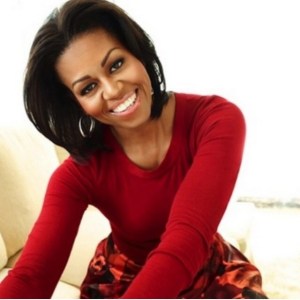 The notoriously private first lady speaks openly about a miscarriage which is a difficult conversation for any woman. It’s perhaps another first step for a first lady who made history with a lot of firsts.
Former first lady Michelle Obama said she felt “lost and alone” after suffering a miscarriage about 20 years ago, during an exclusive interview with “Good Morning America” anchor Robin Roberts.
“I felt like I failed because I didn’t know how common miscarriages were because we don’t talk about them,” Obama said. “We sit in our own pain, thinking that somehow we’re broken.”
She added, “That’s one of the reasons why I think it’s important to talk to young mothers about the fact that miscarriages happen.”
The free press is finding reasons for the Congress to refuse to recognize Mark Whitaker’s take over of the DOJ. I would like to say that I am a Whittaker with two ‘ts’ and it takes two ‘ts’ to get to truth and integrity. Here’s Jonathan Swan writing for Axios.
Matt Whitaker has been acting attorney general for just one full day but he’s already under extreme pressure.
Why it matters: President Trump, who shocked even some of his senior most staff with the hasty timing of his firing of Jeff Sessions, threw Whitaker into an immediate political and legal storm. The White House expected opposition from Democrats but the blowback is widening and now includes a growing body of conservative legal opinion.
He needs to go. Massive protests were held all over the world and the country last night.
Good news for the environment comes from the pen of a Judge. From the Hill “Judge blocks Keystone XL pipeline” The reason is just terrific.
A federal judge blocked the controversial Keystone XL oil pipeline Thursday, saying the Trump administration’s justification for approving it last year was incomplete.
In a major victory for environmentalists and indigenous rights groups, Judge Brian Morris of the District Court for the District of Montana overturned President Trump’s permit for the Canada-to-Texas pipeline, which the president signed shortly after taking office last year.
Morris’s ruling repeatedly faulted the Trump administration for reversing then-President Obama’s 2015 denial of the pipeline permit without proper explanation. He said the State Department “simply discarded” climate change concerns related to the project.
The decision once again throws into doubt the future of the 1,179-mile Keystone XL, which for much of the decade since its proposal by TransCanada Corp. has been a lightning rod in national energy policy.
The Trump administration had tried to argue that federal courts didn’t even have the right to review Trump’s approval, saying that it extended from his constitutional authority over border crossings. The court rejected that argument.

(Photo by Mark Wilson/Getty Images)
So there’s a lot out there today in this time of hourly breaking news. We can discuss it down thread. I’m just waiting for January and Auntie Maxine, and Nancy and Elijah and all those banging gavels right now.
What’s on your reading and blogging list today?
Very First Votes Coming In! And it’s Kentucky first out of the gate! Election Night Live Blog!!!
Posted: November 6, 2018 Filed under: 2018 elections, Live Blog 72 Comments
Well, I voted this morning. I look about as worried as I am …
The votes in Kentucky and Indiana are beginning to be reported. The stories are all about LONG lines and wait times every where!!!
New York Times:
Long Lines and Jammed Machines Frustrate Voters in New York City
Houston Chronicle:
Long lines and machines down at multiple polling places across Houston
Associated Press:
Reports of long lines, broken machines as voters go to polls — ATLANTA (AP
Let’s sit back and let it roll!!!!
Monday Reads: Reclaiming my Country
Posted: November 5, 2018 Filed under: 2018 elections | Tags: Mid term elections 2018 25 Comments Tomorrow is Voting Day and, as usual, Sky Dancers will find comfort, solace, and celebration here as we live blog what we hope is real change in America. As you know, I’m going to trot down the old Fire Station tomorrow morning where votes were cast for every president from FDR on down to the present and hope the two ballot initiatives I care about pass. My congressman Cedric Richmond is safe and will continue to lead the Congressional Black Caucus in through more challenging times for folks without money and power.
We have our vote. Let’s use it!
Here are some things to read about the election tomorrow.
My New Orleans Saints are at the top of the NFL having sent L.A.’s undefeated record to the trash heap. I didn’t get to see the game since I worked, but I did hear about this ad and I’m horrified. It aired on NBC during the Pats-Packers game,
NBC and Fox News said in separate statements on Monday that their networks will no longer air the Trump campaign’s racist anti-immigrant advertisement.
NBC was first to announce its decision, doing so after a backlash over its decision to show the 30-second spot during “Sunday Night Football.”
“After further review we recognize the insensitive nature of the ad and have decided to cease airing it across our properties as soon as possible,” a spokesperson for NBC said in a statement.
“Upon further review, Fox News pulled the ad yesterday and it will not appear on either Fox News Channel or Fox Business Network,” Marianne Gambelli, Fox News’ president of advertisement sales, told CNN in a statement.
So, how bad is it that CNN has pulled the ad followed by Facebook?
Facebook soon followed suit. “This ad violates Facebook’s advertising policy against sensational content so we are rejecting it. While the video is allowed to be posted on Facebook, it cannot receive paid distribution,” wrote a spokesperson for the company in an emailed statement.
The spokesperson said the ad violated the company’s policy against “sensational content” in advertisements. That policy prohibits “shocking, sensational, disrespectful or excessively violent content” in paid ads. “This includes dehumanizing or denigrating entire groups of people and using frightening and exaggerated rumors of danger.”
The ad, which features a convicted cop-killer who was deported multiple times before he shot and killed two California sheriff’s deputies, was released as a video by the Trump campaign last week. The spot seeks to pin the blame for those murders on immigrants generally along with Democratic policymakers who favor more lax immigration laws. Luis Brocamontes, the criminal at issue, was in fact arrested and released in 1998 by the office of then-Maricopa County sheriff Joe Arpaio, whom Trump pardoned of a misdemeanor criminal offense this year. Brocamontes last entered the country illegally during the George W. Bush administration.
“America cannot allow this invasion. The migrant caravan must be stopped,” the Trump campaign’s 30-second ad declares. “President Trump and his allies will protect our border and keep our families safe.”
Meanwhile, I’m more like the SNL skit ad.
 I’m scared to death after bailing on my first Krewe of Boo parade because of visitation by the Proud boys. The racism is just out in the open these days.
From the New Yorker and Roger Angell: “Get Up and Go Vote!”.
Editing this piece now, before your eyes, I’d say that I like and stand behind my paean to the voting machine, whose absence I mourn each November—the pure and pearl-like oddity that so well matched the strangeness and beauty of voting. On the other hand, I could do without my hurried complaints about the massive shift of national politics from newspapers and radio onto television (the “tube,” as we called it then).
What I need to add here, in 2018, by contrast, is my reconversion from the distanced and gentlemanly 1992 Roger to something akin to the argumentative and impassioned younger me, which began with the arrival of Donald Trump in our politics and our daily lives. In a New Yorker piece posted the week before the 2016 election, I wrote that my first Presidential vote was for Franklin Delano Roosevelt, in 1944, when I was a young Air Force sergeant stationed in the Central Pacific. I went on to say that, seventy-two years later, defeating Trump made that immediate election the most important of my life. Alarmed as I was, I had no idea, of course, of the depths of the disaster that would befall us, taking away our leadership and moral standing in the world.
I am ninety-eight now, legally blind, and a pain in the ass to all my friends and much of my family with my constant rantings about the Trump debacle—his floods of lies, his racism, his abandonment of vital connections to ancient allies and critically urgent world concerns, his relentless attacks on the media, and, just lately, his arrant fearmongering about the agonizingly slow approach of a fading column of frightened Central American refugees. The not-to-mention list takes us to his scorn for the poor everywhere, his dismantling contempt for the F.B.I. and the Justice Department, and his broad ignorance and overriding failure of human response. A Democratic victory in this midterm election, in the House, at the least, will put a halt to a lot of this and prevent something much worse.
Countless friends of mine have been engaged this year in political action, but, at my age, I’m not quite up to making phone calls or ringing doorbells. But I can still vote, and I ended that 1992 piece by saying how the morning after Election Day I’d search out, in the Times, the totals in the Presidential balloting, and, “over to the right in my candidate’s column, count the millions of votes there, down to the very last number. ‘That’s me!’ ” I would whisper, “and, at the moment, perhaps feel once again the absurd conviction that that final number, the starboard digit, is something—go figure—I would still die for, if anyone cared.”
What I said I would die for I now want to live for. The quarter-century-plus since George H. W. Bush lost that election to Bill Clinton has brought a near-total change to our everyday world. Unendable wars, desperate refugee populations, a crashing climate, and a sickening flow of gun murders and massacres in schools, concert halls, churches, and temples are the abiding commonplace amid the buzz of social media, Obamacare, and #MeToo. What remains, still in place and now again before us, is voting.
 Indeed, it’s our weapon of mass destruction against Trumpism if we use it.
One of the biggest question this mid term election is who is turning out? The early voting is outstripping the totals of the entire vote totals in many states. Are young people actually voting? What about the many women and minorities attacked by the party of Trump? Will those white women that voted this orange abomination of a man into office repent and be saved?
THE YOUTH WAVE?: Youth turnout rates in the midterm early vote are up by 125 percent compared to 2014, according to Catalist, a voter database servicing progressive organizations — an eye-popping and historically high figure, say strategists on both the left and the right.
Young Americans ages 18 to 29 who say they are definitely voting tilt leftward, according to polls. But the data also shows young Republicans are bubbling with enthusiasm headed into tomorrow.
Here are the Catalist numbers for early voting:
Ballots Cast National — All Ages National — Under 30 2014 19,052,732 1,027,499 2016 41,014,969 4,143,982 2018 29,227,381 2,314,126
- An “attitudinal” shift: A recent Harvard Institute of Politics poll indicated the most dramatic shift in their polling history is young people’s attitudes about whether politics makes a tangible difference in their lives. John Della Volpe, IOP’s polling director, said pollsters saw a 15-point increase post-2016.
- Per the poll: Forty percent of 18 to 29-year-olds reported they will “definitely vote” in the midterms (54 percent of Democrats, 43 percent of Republicans and 24 percent of independents).
- 2020 implications: Among young people polled, 59 percent said they would “never” vote for President Trump vs. 11 percent who said they’d be “sure to” vote for him.
- Narratives vs. numbers: “Almost all of the data I’ve seen from the last two Harvard polls indicate a significant increase in enthusiasm, interest and likelihood of voting for people under 30 — so the data has been consistent but the narrative inconsistent,” Della Volpe told us. “The high-water mark going back 32 years is only 21 percent of young people turning out and participating in a midterm election.”
- ‘A big boost’: “The media expectation before AVEV (Absentee Voting/Early Voting) started, based on survey responses about enthusiasm, was that young people would not be a factor again,” a Democratic strategist told Power Up. “Clearly, they’re going to be, especially if those voting are as Democratic as they survey. It’s a big boost for Democrats’ hopes.”
- GOP pollster: Chris Wilson, the CEO of WPA Intelligence, told us he thought it was a “bit too much” to call the turnout “historic.” But he said the electorate is looking younger “than both the 2016 and 2014 general elections. “Voters under 25 are outpacing their vote share from both the 2016 and 2014 general. Proportionately it’s not enough to make a huge difference, but it’s more,” Wilson said.
 In Georgia, Kemp is acting desperate and is liking calling on the FBI as a campaign stunt.
This is really unbelievable. Kemp is charging the Georgia Democratic Party with hacking the Georgia voter data base. I have a feeling it’s all about him not believing the majority of Georgia does not appear to want him as Governor and all his suppression activities are still not pulling his cupcakes out of the oven.
Kemp’s office said Sunday that it had alerted the Department of Homeland Security and Federal Bureau of Investigation, but did not provide details about the alleged hacking attempt in its press release.
“While we cannot comment on the specifics of an ongoing investigation, I can confirm that the Democratic Party of Georgia is under investigation for possible cyber crimes,” Candice Broce, Kemp’s press secretary, said in a statement. “We can also confirm that no personal data was breached and our system remains secure.”
Representatives for both Kemp’s office and the Department of Homeland Security did not immediately respond to requests for comment.
The Democratic Party of Georgia vehemently denied the accusation in a statement on Sunday, calling the probe “yet another example of abuse of power by an unethical Secretary of State.”
“To be very clear, Brian Kemp’s scurrilous claims are 100 percent false, and this so-called investigation was unknown to the Democratic Party of Georgia until a campaign operative in Kemp’s official office released a statement this morning,” Rebecca DeHart, executive director of the Democratic Party of Georgia, said in a statement.
 Hackers have been active in the election but it’s certainly the usual suspects despite the Kemp ploy for panic.
Hackers have ramped up their efforts to meddle with the country’s election infrastructure in the weeks leading up to Tuesday’s midterms, sparking a raft of investigations into election interference, internal intelligence documents show.
The hackers have targeted voter registration databases, election officials, and networks across the country, from counties in the Southwest to a city government in the Midwest, according to Department of Homeland Security election threat reports reviewed by the Globe. The agency says publicly all the recent attempts have been prevented or mitigated, but internal documents show hackers have had “limited success.”
https://twitter.com/garonsen/status/1059516414938230786
The U.S. Justice Department said Monday it will monitor compliance with federal voting right laws by deploying personnel to 19 states, including Iowa, for Tuesday’s general election.
Federal personnel will be sent to northwest Iowa’s Buena Vista County, which has a large population of immigrants employed in agriculture and the meat packing industry in the Storm Lake area.
Buena Vista County is among 35 jurisdictions in those 19 states which will be monitored for compliance with federal voting laws, and it is the only jurisdiction targeted in Iowa, according to the Justice Department.
Buena Vista County is within Iowa’s 4th Congressional District, where U.S. Rep. Steve King, R-Kiron, who has repeatedly made inflammatory statements about immigration, is being challenged by Democrat J.D. Scholten of Sioux City.
There are about 20,000 people in Buena Vista County. About 26 percent are identified as Hispanic or Latino, 9 percent Asian, 3 percent black or African-American, more than 1 percent native Hawaiian or other Pacific Islander, and more than 1 percent two or more races, according to the U.S. Census Bureau. Many of the immigrants are not native English speakers.
 Oh, look,the world’s oldest living confederate widow is going to protect minority voters’ rights! Feeling better? Yeah, I trust him about as much as I trust Kobach to protect minority voters’ rights in Kansas. How’s this headline from The Guardian? “Trump ally Kris Kobach accepted donations from white nationalists”.
The Republican candidate for governor of Kansas, Kris Kobach, who has close ties to the Trump administration, has accepted financial donations from white nationalist sympathizers and has for more than a decade been affiliated with groups espousing white supremacist views.
Recent financial disclosures show that Kobach, a driving force behind dozens of proposals across the US designed to suppress minority voting and immigrant rights, has accepted thousands of dollars from white nationalists. Donors include a former official in the Trump administration who was forced to resign from the Department of Homeland Security this year after emails showed he had close ties to white supremacists and once engaged in an email exchange about a dinner party invitation that was described as “Judenfrei”, or free of Jews.
Currently the Kansas secretary of state, Kobach is running in a tight raceagainst the Democrat Laura Kelly. The election has drawn the concern of the American Civil Liberties Union (ACLU), after the single polling place located in Dodge City was moved outside the town, in what some claimed to be an attempt to suppress the Hispanic vote.
How can any normal person trust a party that has some deep roots to Hate Groups? The White Flight parish next door to me will undoubtedly return Steve “I’m David Duke without the baggage” to his leadership position in the Republican House. Let’s just make sure he’s kept as far away from the speaker’s job as possible.
So, I’ll be here tomorrow night!!! Join us!!
What’s on your reading and blogging list today?
Friday Reads: Peace or Panic?
Posted: November 2, 2018 Filed under: 2018 elections, morning reads 22 Comments
Good Morning Sky Dancers!
I simply cannot stand any more crap coming out of a KKKremlin Caligula rally. The bigotry, lies, and outright impossibilities have just about done me and my psyche in for awhile. I’m going to vote on Tuesday at my little fire station on the corner near the old Fire station horse barns that I walk an entire two blocks to reach. Once again, I’m going to join the down trodden in the big hope we can get rid of this huge mess that once was the party of Lincoln.
Today, I’m turning off the horse race coverage. I’m with Vanity Fair writer Peter Hamby on this: “BLOWING SMOKE”: SORRY, PUNDITS, BUT YOU HAVE NO CLUE WHAT WILL HAPPEN ON TUESDAY”. I don’t know what’s worse; watching polls that are based on turnout patterns that seem completely upended or listening endlessly to opining guys that never leave the sanctity of their studios in NYC.
Every piece of evidence we have about voting behavior during the Trump presidency—special elections in various corners of the country, public and internal polls, early voting data in key states—indicates that we are heading for a midterm election with explosively high turnout. University of Florida professor Michael McDonald, who studies voting patterns, estimated recently that almost 50 percent of eligible voters could cast ballots this year, a turnout level not seen in a midterm election in 50 years. Trump, in his way, is loudly trying to juice Republican turnout in red-leaning Senate races by demagoguing the threat of illegal border crossings, which happen to be at their lowest point in decades.
Enthusiasm in this election, though, is mostly fueled by Democrats. Aside from college-educated white women, much of the Democratic coalition in 2018 is comprised of voters—young people, African-Americans, and Hispanics—who don’t typically show up in midterm elections. And the main thing to remember about high-turnout elections, especially ones that bring non-traditional voters into the mix, is that strange things can happen. House seats once thought to be safe are suddenly in jeopardy, like Republican Steve King’s solidly red seat in Iowa now appears to be.
Still, in the press, it seems written in stone that Democrats will take back the House but fail to take the Senate, thanks to an unfavorable map that has too many Democratic incumbents running in Trump-friendly states like Missouri, North Dakota, West Virginia, Indiana, and Montana. The prospect of a House-Senate split is the most likely outcome according to the polls and veteran handicappers, and that probability has already started congealing into conventional wisdom. New York Times columnist Ross Douthat, writing last weekend, said this scenario is “the sensible thing to root for,” the best way to constrain Trump’s impulses but also an unchecked liberalism.
There you go. Ross “I’m wrong about everything all the time” Douthat is being quoted doing his usual thing of being totally out of his league.

There’s all kinds of narratives out there and I’m sure my mental and emotional health are not improving with each read. From the Cut: “Heidi Heitkamp Doesn’t Care That You Think She’s Going to Lose”. Wow, I really want to believe that one. BTW, voter suppression by states like North Dakota against minority voters is being up held in the courts. The Native Americans lost their plea to stop the crazy “you must have a state approved address on your id” to vote. The Hispanic Americans of Dodge City, Kansas must travel miles ouside of the city to find their one voting place.
Oh, and machines in Georgia are flipping votes in the gubernatorial race and of course, they’re taking the votes away from the black woman. This is crazy.
Who she is, in addition to one of the most endangered senators in the country, is a canny, inexhaustible political operator; a policy enthusiast; a woman who seems to come by her you bet folksiness honestly. She is someone people here like. In fact, so many people like Heidi Heitkamp in North Dakota that her opponent, Representative Kevin Cramer, himself saysin a television ad, “We all like Heidi.” (There’s a “but.”)
Heitkamp denies that she is significantly down in the polls — she says many of the pollsters trying to survey North Dakota are “incompetent” — though she declines to provide contrary evidence. “The thing that everybody needs to understand is, I need 150,000 votes,” she says. “You can count 150,000 votes. You can motivate 150,000 votes.”
It’s mostly Heitkamp herself that makes people in North Dakota unconvinced that this race is over, even as most of the political class has moved on. (Trump’s handlers left the state off his final-week rally list, though Joe Biden is about to campaign here.) But it’s also voters like White Owl, here in the 4 Bears ballroom, near the slot-machine smoking parlor where seniors from Saskatchewan and Minnesota are pulling levers. If she’s lucky, what look a lot like hurdles — Heitkamp’s vote against Trump’s Supreme Court justice in a state he won by 36 points, the state’s restrictive new voter-ID law — could form the scaffolding of a win.
The stand Heitkamp took on Kavanaugh, whatever else it did, earned her unprecedented millions in donations and the admiration of voters like White Owl. North Dakota’s new requirement that all voters must have a street address — and surely this is a total coincidence — lopsidedly affects the same Native American voters who helped Heitkamp win in 2012 with a margin of less than 3,000 votes. But the law could boomerang on its Republican sponsors, as community organizers, some cool on Heitkamp because of her support for the Dakota Access Pipeline, spring into indignant action. In a state where a 500-vote swing can decide political fates — North Dakota’s, and potentially even the U.S. Senate’s — everything matters, and anything is possible.
Everything matters. Anything is possible. I keep repeating that telling myself I’m not going to have the same trauma of 2016.
Oh, and about those vote flipping machines …
When reports began circulating last week that voting machines in Texas were flipping ballots cast for Beto O’Rourke over to Ted Cruz, and machines in Georgia were changing votes for the Democratic gubernatorial candidate Stacey Abrams to those for her Republican opponent, Brian Kemp, it would not have been unreasonable to suppose that those machines had been hacked. After all, their vulnerabilities have been known for nearly two decades. In September, J. Alex Halderman, a computer-science professor at the University of Michigan, demonstrated to members of Congress precisely how easy it is to surreptitiously manipulate the AccuVote TS, a variant of the direct-recording electronic (D.R.E.) voting machines used in Georgia. In addition, Halderman noted, it is impossible to verify that the votes cast were not the votes intended, since the AccuVote does not provide a physical record of the transaction.
“I am sick and tired of this administration. I’m sick and tired of what’s going on. I’m sick and tired of being sick and tired, and I hope you are, too.”
I’m sick and tired, too.
I’m sick and tired of a president who pretends that a caravan of impoverished refugees is an “invasion” by “unknown Middle Easterners” and “bad thugs” — and whose followers on Fox News pretend the refugees are bringing leprosy and smallpox to the United States. (Smallpox was eliminated about 40 years ago.)
I’m sick and tired of a president who misuses his office to demagogue on immigration — by unnecessarily sending 5,200 troops to the border and by threatening to rescind by executive order the 14th Amendment guarantee of citizenship to anyone born in the United States.
I’m sick and tired of a president who is so self-absorbed that he thinks he is the real victim of mail-bomb attacks on his political opponents — and who, after visiting Pittsburgh despite being asked by local leaders to stay away, tweeted about how he was treated, not about the victims of the synagogue massacre.
I’m sick and tired of a president who cheers a congressman for his physical assault of a reporter, calls the press the “enemy of the people ” and won’t stop or apologize even after bombs were sent to CNN in the mail.
I’m sick and tired of a president who employs the language of anti-Semitic conspiracy theories about Jewish financier George Soros and “globalists,” and won’t apologize or retract even after what is believed to be the worst attack on Jews in U.S. history.
I’m sick and tired of a president who won’t stop engaging in crazed partisanship, denouncing Democrats as “evil,” “un-American” and “treasonous” subversives who are in league with criminals.
I’m sick and tired of a president who cares so little about right-wing terrorism that, on the very day of the synagogue shooting, he proceeded with a campaign rally, telling his supporters, “Let’s have a good time.”
I’m sick and tired of a president who presides over one of the most unethical administrations in U.S. history — with three Cabinet members resigning for reported ethical infractions and the secretary of the interior the subject of at least 18 federal investigations.
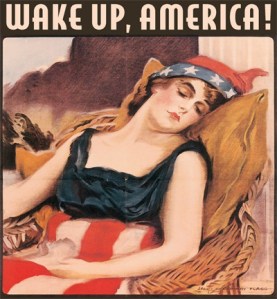
It’s a long list out there in the Max Boot Op Ed in WAPO but I’m sure we could all add to it.
Mostly, I’m sick of every emanation from KKKremlin Caligula. I want him to choke on badly cooked hamburger so we can toss him on to the heaps of historical mistakes.
The miasma of today is one created by a world in which journalists are described as “enemies of the people,” in which immigrants fleeing chaos or seeking opportunity are accused of harboring terrorists and carrying leprosy, in which a politician aspiring to the highest leadership positions in Congress says, “We cannot allow Soros, Steyer and Bloomberg to BUY this election!” It is the miasma created by a leader who cheers a candidate for body-slamming a reporter, and whose subordinates’ professed sorrow for bullet-riddled old men and women is swiftly displaced by self-pity and grievance that their boss is being picked on.
So, that’s it for me because I have to finish up grades for the term today. I want to be done so I can watch my favorite zombie show. For once, it won’t be about the Republican base.
What’s on your reading and blogging list today?

 peej
peej Carissa
 bostonboomer
 dakinikat
 ecocatwoman
 mablue2
 Mama Lopez
 peggysue22
 quixote
 skydancingguestblogger
 Mona (aka Wonk the Vote)



 Sky Dancing
Recent Comments