
Breaking News: Rats Leave Sinking Ship
Posted: June 9, 2011 Filed under: 2012 presidential campaign, Republican politics, Republican presidential politics | Tags: Newt Gingrich 25 CommentsI think it’s a pretty bad sign for Newt Gingrich that his political staff just resigned “en masse” during Newt’s two week 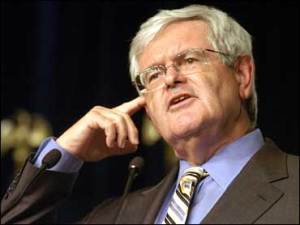 cruise of Greece. What kind of mishaps, mistakes and skeletons in the closet will come up as a result of the exodus?
Senior aides to Republican presidential contender Newt Gingrich have resigned en masse—including spokesman Rick Tyler and campaign manager Rob Johnson, as well as other top aides in early primary states according to Associated Press sources. Gingrich, the former speaker of the House, officially declared his candidacy in May, but his campaign has been troubled by a series of missteps and gaffes. Adding to the awkwardness of the surprise news, Gingrich is currently on a two-week Mediterranean cruise.
Newt’s campaign wasn’t going all that well to begin with.
His campaign got off to a halting start when he criticised a plan popular among Republicans to slash and privatise a healthcare programme for the elderly.
Staff were also reportedly concerned after he took a recent holiday cruise.
Mr Gingrich’s campaign manager Rob Johnson and his entire senior staff, including strategists in early primary election states, quit on Thursday.
I can’t imagine this guy was going to come through anyway given his ethics lapses. Oh, well. There’s additional rumors that Gingrich has lost his Iowa staff also. Officially, the bland reason of “differences in direction of campaign” was provided to the press.
Other officials said Gingrich was informed that his entire high command was quitting in a meeting earlier in the day. They cited differences over the direction of the campaign but were not more specific.
The officials declined to be identified by name, saying they were not authorized to discuss private conversations.
Gingrich told the group he intends to stay in the race, they added.
Let’s talk about federal budgets! (Big Boy Toy edition)
Posted: June 8, 2011 Filed under: Domestic Policy, U.S. Military | Tags: defense spending, military toys, US presence in Asia 18 Comments I just wanted to put in my two cents on what I think should be first on the federal budget chopping block. I think this nifty graph from The Economist puts our defense budget into perspective.
ON JUNE 8th China’s top military brass confirmed that the country’s first aircraft carrier, a refurbishment of an old Russian carrier, will be ready shortly. Only a handful of nations operate carriers, which are costly to build and maintain. Indeed, Britain has recently decommissioned its sole carrier because of budget pressures. China’s defence spending has risen by nearly 200% since 2001 to reach an estimated $119 billion in 2010—though it has remained fairly constant in terms of its share of GDP. America’s own budget crisis is prompting tough discussions about its defence spending, which, at nearly $700 billion, is bigger than that of the next 17 countries combined.
One has to ask why our defense spending “is bigger than that of the next 17 countries combined” while we basically share only two borders with countries that can hardly be considered hostile. What’s the purpose of all this spending?
Just recently, US Defense Secretary Gates announced that the US would maintain a strong presence in Asia despite its budget problems.
Defense News reports that the U.S. military would expand presence in the area with a facility in the Indian Ocean shared with Australia.
The U.S. will also begin deploying new littoral combat ships (LCS) capable of operating in shallow coastal waters to the region to perform exercises and military maneuvers alongside others in Asia. The Singapore defense ministry has stated that the U.S. is looking at deploying one or two LCS’ in the area.
The U.S. is also getting supplies into position to speed response in the area if another natural disaster hits. The most recent disasters in Asia were the massive Japanese earthquake and resulting tsunami. Gates also noted that he worries the region needs to establish “rules of the road” for solving conflicts over resources in the South China Sea peacefully if more than one nation lays claim to a resource.
Gates Said, “I fear that without rules of the road, without agreed approaches to deal with these problems, that there will be clashes. I think that serves nobody’s interests.”
Gates also stalked about future weapons that would be coming to the region to improve the ability to defend the area. One of the future weapons programs cited were drones. The Global Hawk is an unmanned reconnaissance aircraft that can fly a programmed path and refuel in air — it completed its first flight in 2010. Global Hawk can soar to 61,000 feet and stay on target for up to 30 hours. The first Global Hawk has now arrived at Grand Forks Air Force Base.
Do we really need all these toys to protect us from asymmetrical threats like terrorists? Just thought I’d put this out there for your consideration.
Bayh Exits stage right to become a lobbyist for the Chamber of Commerce
Posted: June 7, 2011 Filed under: Politics as Usual | Tags: Chamber of Commerce, Evan Bayh, lobbying 14 CommentsOne of the biggest problems in our political system today is the incestuous relationship between former members of 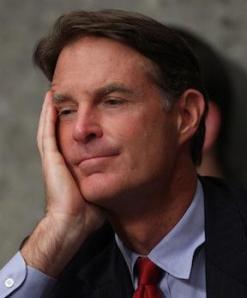 congress that join lobbying firms and their contacts who remain in office. Senator Evan Bayh has decided to become part of the problem.
Not long after announcing his plans to retire in 2010, then-Sen. Evan Bayh (D-Ind.) offered this bit of commentary on why he’d opted to leave Congress after two terms in office: “I want to be engaged in an honorable line of work.” It was taken as a biting critique of the increasingly polarized and dysfunctional Senate, and a hint that Bayh’s post-Senate plans might include a quiet career in academia, away from politics.
Now Bayh is eating his words. As iWatch News‘ Peter Stone reports, Bayh has signed on with one of the most corporate-friendly, anti-environment shops in all of Washington, DC: the US Chamber of Commerce. According to an internal memo penned by Chamber president Tom Donohue, Bayh, along with former Bush White House chief of staff Andy Card, are now part of the Chamber’s anti-regulation messaging team, doing “speeches, events, and media appearances at local venues.”
The Chamber’s hiring of Bayh, a big name in Washington circles, will only help its efforts to delay or kill new regulatory legislation in Congress. Indeed, Donohue’s memo touts how the Chamber has filed legal briefs to challenge the validity of President Obama’s health care reform bill; successfully delayed a new Securities and Exchange Commission rule on giving shareholders a say on corporate directors; unveiled plans to undermine the clout of the fledgling Consumer Financial Protection Bureau; and delayed a rule forcing companies to disclose when they use conflict minerals from the Congo in their products. Bayh and Card, the memo says, will help the Chamber push this pro-corporate agenda in Washington and beyond.
It’s very difficult to justify this line of work as honorable. Bayh will join the Chamber in denouncing “excessive” regulation among other parts of a clearly right wing agenda. What’s really stinky about this deal is that Bayh used to decry the excessive role of money and lobbyists in national lawmaking.
In a New York Times op-ed in February 2010, Bayh also spoke out against the Supreme Court’s ruling in Citizens United v. Federal Election Commission, which permits corporations and other groups to spend unlimited amounts of money on campaign ads. “The threat of unlimited amounts of negative advertising from special interest groups will only make members more beholden to their natural constituencies and more afraid of violating party orthodoxies,” Bayh wrote. The Chamber, in contrast, was one of the biggest beneficiaries of the ruling and a major spender in the 2010 election cycle.
Evan Bayh has never really been part of many solutions but now he seems destined to become part of the bigger problem.
Live Blog: Breitbart hijacks a Weiner Presser
Posted: June 6, 2011 Filed under: just because 133 Comments There’s basically a media circus unfolding on TV right now. Congressman Weiner was supposed to hold an event this afternoon and Big Media Blowhard Andrew Breitbart showed up at the podium to defend himself against charges of hacking Weiner’s twitter stream.
It looks like Weiner is waiting in the wings. Breitbart has just left the podium. Many news outlets are now covering it live but not broadcasting the sound.
What a zoo!!!
Notable Tweets:
TheFix The Fix
Holy. Crap. Andrew Breitbart has hijacked the Weiner press conference. This. Is. Amazing.
AmandaMarcotte Amanda Marcotte
Shorter Breitbart: If 5% of what you say is kind of sort of like the truth, then no one can call you a liar again.
cspan CSPAN
WATCH: @RepWeiner Press Conference – LIVE shortly on C-SPAN3 http://cs.pn/C3LIVE
joshtpm Josh Marshall
make that the Breitbart press
Slate Slate
He’s hijacked Weiner’s presser. RT @thefix: CNN is live-streaming the Breitbart presser. You must watch this. http://ow.ly/5bp1W
Thedailybeast The Daily Beast
WATCH: Congressman Anthony Weiner to address his latest Twitter scandal (now hijacked by @andrewbreitbart?!) http://thebea.st/ixpvRL
politico POLITICO
RT @maghabepolitico Tweeps, this is a real Anthony Weiner presser. We were not punked into covering Breitbart http://politi.co/9Ax31v
HuffPostMedia HuffPost Media
by HuffingtonPost
Andrew Breitbart hijacks Anthony Weiner’s press conference, says the press asked him to do so http://huff.to/lMxMVx
MotherJones Mother Jones
Breitbart on Fox News Channel on a radio show explaining why he hijacked a press conference #SUPERmeta
Links:
Rep. Anthony Weiner: ‘The Picture Was of Me and I Sent It’
Monday Reads
Posted: June 6, 2011 Filed under: Economy, Foreign Affairs, morning reads, Yemen | Tags: jobs, John Edwards, the economy, Yemen 32 Comments Good Morning!
The top stories on every one’s mind these days are the lousy jobs report last week and the tumbling stock markets. Democrats in the House are calling for new infrastructure spending as a way to create more jobs in the hopes that a few federal projects could provide some stimulus to the stalling recovery.
“The American people, while concerned about the deficit, place much more emphasis on job creation, and they see a role for the government,” Rep. Raul Grijalva (D-Ariz.) told The Hill. “A fast injection of job stimulus on the public side would help tremendously. … It [the job report] helps our argument about investment.”
Other Democrats delivered a similar message on Friday. Rep. Eliot Engel (D-N.Y.) said “the answer” to the lingering jobs crisis is “investment” in the “communities and businesses who need confidence and resources to hire [people].”
Rep. Emanuel Cleaver (D-Mo.) said “investing in our communities goes hand in hand with full economic recovery.”
Rep. Earl Blumenauer (D-Ore.) said that only in Washington is targeted new spending being demonized.
“Once you get outside the Beltway, almost everyone agrees that we should be rebuilding our crumbling infrastructure and investing in clean American energy that reduces our dependence on oil,” Blumenauer said.
Meanwhile, the major reason for home foreclosures these days isn’t the subprime loan scandal. It’s unemployment.
The Obama administration’s main program to keep distressed homeowners from falling into foreclosure has been aimed at those who took out subprime loans or other risky mortgages during the heady days of the housing boom. But these days, the primary cause of foreclosures is unemployment.
As a result, there is a mismatch between the homeowner program’s design and the country’s economic realities — and a new round of finger-pointing about how best to fix it.
The administration’s housing effort does include programs to help unemployed homeowners, but they have been plagued by delays, dubious benefits and abysmal participation. For example, a Treasury Department effort started in early 2010 allows the jobless to postpone mortgage payments for three months, but the average length of unemployment is now nine months. As of March 31, there were only 7,397 participants.
“So far, I think the public record will show that programs to help unemployed homeowners have not been very successful,” said Jeffrey C. Fuhrer, an executive vice president of the Federal Reserve Bank of Boston.
One additional question is popping up now that it appears more than certain that some entitlements will be subject to cuts, That is why aren’t Democrats defending Medicaid? Democrats have spoken out against cuts to Social Security and have defended Medicare. What about Medicaid?
…for all the Democrats’ posturing and campaigning against Republican plans for Medicare, the GOP budget actually makes more immediate and deeper cuts to Medicaid. But Democrats haven’t been blasting the GOP Medicaid plan with nearly the same fervor, even though Republicans would cut about $750 billion from the program during the next decade and end the guaranteed federal match for states.
With intense budget negotiations on the debt limit under way, health care insiders think Democrats won’t budge much on Medicare now that they have a significant campaign chip in their pockets: Kathy Hochul’s upset win in New York’s 26th Congressional District is Exhibit A of the power of Medicare.
And that makes advocates worry that Medicaid cuts are more likely to come out of budget negotiations led by Vice President Biden.
Medicaid covers more than 50 million people, including low-income children and seniors in long-term care, but it doesn’t pack the same political punch as Medicare. Some observers say that’s due to the lingering perception that Medicaid is just a program for poor people that holds a much less broad-based appeal.
That perception is definitely part of the challenge in communicating Democratic opposition to the GOP’s Medicaid plans, Rep. Robert Andrews (D-N.J.) told POLITICO.
Medicaid “doesn’t quite have the same political dynamic” as Medicare, Andrews said.
Protestors in Wisconsin have opened a ‘Walkerville’ Tent city in Madison as a reminder of the Great Depression and to protest the governor’s budget. Wisconsin is leading the way in protesting the way state budgets are being balanced on the backs of the poor and the working and middle classes.
In a move meant to evoke the infamous “Hooverville” tent cities of the Great Depression, protesters in Madison, Wisconsin opened “Walkerville” on Saturday evening, a tent city in the heart of Madison intended as a protest of Governor Scott Walker’s budget plan.
The Wisconsin Sentinel Journal calls the protest “the latest act in the 2011 political drama featuring the governor’s push to eliminate most collective bargaining rights for most public employees”.
By 9:00pm, an estimated 250 campers in up to 100 tents were arrayed throughout the designated protest area, with many campers pitching their tents on concrete sidewalks. City police, state troopers, and other law enforcement personnel were on hand, but on the whole a carnival air prevailed as families set up for the night, some intending to stay just for a night or two and others through June 20.
Yemeni president Ali Abdullah Saleh is in Saudia Arabia recovering from injuries suffered in an attack on his palace last week. Many people are encouraging him to stay there.
The United States and Britain are pressing Saudi Arabia to persuade the Yemeni president, Ali Abdullah Saleh, to formally stand down after flying to Riyadh for treatment for injuries that were sustained in shelling in Sana’a on Friday.
Diplomats said that Washington and London were insisting that Saleh now be urged to implement a deal under which he would relinquish power in exchange for immunity from prosecution and financial guarantees about his future.
Pro-democracy protestors in Yemen were celebrating his departure after 33 years in power, but the Arab world’s poorest country still faces turmoil as well as immediate concerns over whether a truce will hold if Saleh tries to return and his relatives and supporters fight back.
The risks ahead were underlined by clashes in the southern city of Taiz, which left at least two dead and four injured. Shelling was also reported in Sana’a.
Saleh was described as recovering following emergency medical treatment in a Riyadh military; he was injured by shrapnel when his palace compound was attacked by tribal rivals.
Yemen’s ruling party, the General People’s Congress, insisted he would be back, but diplomats and analysts expressed doubt, suggesting that Saudi patience with an always fractious and often manipulative neighbour was exhausted.
It would be impossible for Saleh to return, argued Abdul Ghani Iryani, a respected Yemeni political commentator. “He is out. That is the only rational course. The exit of the president has defused some of the tensions and war is less likely today than it was yesterday.”
Evidently John Edwards is going to trial because the Feds offered him a plea deal that included prison time.
Just before John Edwards was indicted Friday, prosecutors made a final offer: They would accept his guilty plea to three misdemeanor campaign finance law violations in the $925,000 cover-up of his affair.
With the deal, the former Democratic vice-presidential nominee would avoid a felony conviction – and almost certainly keep the law license that had made him wealthy.
But there was a catch.
The government wanted to dictate a sentence that would result in up to six months of prison for Edwards, even with the plea to lesser charges.
Edwards and his lawyers were concerned. They wanted the ability to at least argue to a judge for alternatives, such as a halfway house, weekend releases, home arrest or some arrangement that would allow Edwards to be with his school-age children. He is a single parent after the death of his wife, Elizabeth, in December.
Yeah, right. My guess is he doesn’t want to be some one’s mistress.
So, that’s what I’ve dug up today. What’s on your reading and blogging list?

 peej
peej Carissa
 bostonboomer
 dakinikat
 ecocatwoman
 jjlo
jjlo mablue2
 Mama Lopez
 peggysue22
 quixote
 skydancingguestblogger
 Mona (aka Wonk the Vote)





Recent Comments