
Late Night Good News
Posted: June 5, 2011 Filed under: Foreign Affairs, Hillary Clinton, Libya, Women's Rights | Tags: Iman Obeidi 8 CommentsIman Obeidi is on her way to the U.S. compliments of Madam Secretary.
Marwa Obeidi told the Associated Press that a human rights group aided by U.S. Secretary of State Hillary Rodham Clinton arranged for Iman and their father to travel in a private plane to Washington by way of Malta and Austria.
The U.S. State Department had expressed concern for Obeidi’s safety after she was deported from Qatar.
Meanwhile, Libyan authorities in Tripoli have dismissed Obeidi as a drunk, a prostitute and a thief.
“Iman constantly felt scared and threatened even in Benghazi,” said her mother. “She was worried that at any moment Kadafi’s men would be near to kill her.”
Marwa Obeidi told the Associated Pres that her sister’s top priority in the U.S. would be to receive psychological treatment and to continue her studies.
“I am sure they will greet her with such warmth and kindness,” she said. “We are happy for her.”
Goolsbee goes au naturel
Posted: June 5, 2011 Filed under: Economy, jobs, unemployment, We are so F'd | Tags: Austan Goolsbee, fiscal policy, jobs, natural path to recovery, the economy 20 CommentsI never thought I’d ever hear an economic adviser to a Democratic administration justify taking a natural path to recovery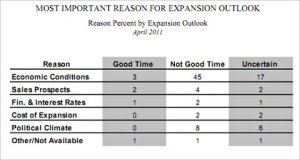 when the US economy is reeling from a basic lack of aggregate demand. The comments were just about as Chicago school as you could get. It was just another reheated bowl of smoking green shoots.
“Our effort now as a government should be to get the private sector to help them stand up and lead the recovery,” Goolsbee told “This Week” anchor Christiane Amanpour, citing efforts on regulatory review, while maintaining policies such as reduced payroll taxes through the end of the year. “We’ve got to rely on policies that are trying to leverage the private sector and give incentives to private sector to be doing the growth.”
I didn’t catch Obama economist Austan Goolsbee with Christian Amanpour on ABC which is where I got that quote. I caught up with him on Candy Crowley’s Sunday show. From what I can tell, the story line was about the same. According to Goolsbee, whatever recovery we’re experiencing from the worst financial crisis we’ve had since The Great Depression is in the hands of the private sector who just needs to appreciate the gentle nudge they’ve already gotten. Goolsbee conveniently ignored every thing going on in the recent economy except a small window’s worth of job creation. He declared that there was no downward trend in the economy. I felt like I was watching a big ol’ flaming head tell me to ignore the man behind the curtain. But, I musn’t be the only one that was watching the little man behind the curtain given that the one month’s worth of data turned into “DOW plunges into longest weekly losing streak since 2004” last week. I don’t think that’s the end of that either.
Scarecrow at FDL calls it the best speech evah given by President Romney’s chief economic adviser.
Goolsbee correctly told us that a smart economist wouldn’t get overly excited about one month’s jobs and growth numbers but would instead look at the overall trend. Of course what he wouldn’t want to concede is that GDP grew at a meager annual rate of 1.8 percent over the first three months of 2011 and so far was predicted to grow at only 2.8 percent for the next three. And the overall trend for job growth was still not enough to make a serious dent in unemployment unless you believe taking 5-10 years to get back to full employment is okay.
So Goolsbee was in denial from the opening moment because he didn’t have a decent story to tell even in his own framework. When Amanpour asked him what the Administration could or should be doing to improve conditions, he ticked off items you’d expect to hear from a typical GOP Presidential adviser: we’ve got to get the debt under control; we have a White House effort to identify and get rid of governmental regulations that are preventing the private sector from growing the economy; we should pass “free trade” agreements backed by the Chamber of Commerce; and we should leverage limited public dollars to release billions in private funding for investments.
Goolsbee’s bottom line: “It’s now up to the private sector.” That’s exactly what you’d expect from President Romney’s economic adviser.
It took Paul Krugman and Chrystia Freeland, over the absurd denials by Martin Regalia of the Chamber of Commerce, to remind ABC’s audience that business confidence and concerns about taxes and regulations aren’t the problem: business polls repeatedly show businesses aren’t expanding/hiring much because the demand for their products is weak. Demand is weak because the recession and the housing market crash depleted consumers’ wealth and they’re worried about losing their homes and jobs. You don’t need a degree in economics to grasp the logic of that. When private spending is still depressed, only government spending is keeping the economy afloat, and the stimulus is phasing out.
Now, I hate to keep writing about the same things over and over again. I know I’m not the only one. Brad DeLong has finally discovered there is no Plan B. There is only full speed ahead with deficit reduction which is a great long term goal but a disastrous short term strategy. Mark Thoma is even more straightforward.
Policymakers have been telling us to have patience for some time now, but patience ran thin long ago. We need action, not excuses to do nothing based upon Republican talking points. We have millions of people out of work, we face the prospect of a five to ten year recovery for employment, yet the administration has no plans to even try to push Congress to do more.
The percent of owners planning capital outlays in the next three to six months fell 3 points to 21 percent, a recession level reading. Money is cheap, but most owners are not interested in a loan to finance equipment they don’t need. Prospects are still uncertain enough to discourage any but the most profitable and promising investments. Four percent characterized the current period as a good time to expand facilities (seasonally adjusted), down 1 point from March and 4 points lower than January. The net percent of owners expecting better business conditions in 6 months slipped another 3 points to negative 8 percent, 18 percentage points worse than in January. Uncertainty is the enemy, and there is plenty of it to convince owners to “keep their powder dry”. Apparently consumers feel much the same way, as more customers spending more money would overcome the reluctance of owners to hire and make capital outlays. One in four still cite “weak sales” as their top business problem.
There is nothing mysterious about the fiscal policy solution to your basic lack of aggregate demand. What’s mysterious is the complete lack of concern about the significantly high unemployment rates, the continued foreclosure crisis, and the downward trends in both consumer and business confidence.
I guess I know what happens with the phone rings at 3 a.m.
No one picks it up and then some one goes on TV the next day and says we’ve done all we can do. For this they expect re-election?
Friday Reads
Posted: June 3, 2011 Filed under: abortion rights, fetus fetishists, financial institutions, morning reads, Violence against women, Women's Rights | Tags: CFBP, Consumer Financial Protection Bureau, debt ceiling crisis, personhood, Real Income, War on Women 28 Comments Good Morning!
So, you should be able to tell that I’m knee deep in research and preparing to teach an MBA course because I’ve been writing so many finance and econ posts recently. This morning is going to continue that trend. Plus, the War on Women is still on! Some mornings it just doesn’t pay to read the news, I swear!
Feeling poorer? There’s good reason! According to statistics analyzed by Investor’s Business Daily “10-Year Real Wage Gains Worse Than During Depression”. That’s why no one has any money to spend. This is especially true when you couple that with sagging wealth from your incredible shrinking home equity.
The past decade of wage growth has been one for the record books — but not one to celebrate.
The increase in total private-sector wages, adjusted for inflation, from the start of 2001 has fallen far short of any 10-year period since World War II, according to Commerce Department data. In fact, if the data are to be believed, economywide wage gains have even lagged those in the decade of the Great Depression (adjusted for deflation).
Two years into the recovery, and 10 years after the nation fell into a post-dot-com bubble recession, this legacy of near-stagnant wages has helped ground the economy despite unprecedented fiscal and monetary stimulus — and even an impressive bull market.
Over the past decade, real private-sector wage growth has scraped bottom at 4%, just below the 5% increase from 1929 to 1939, government data show.
Oh, and Moody’s is preparing for a US Government purposeful default on its sovereign debt. Feel like you’re in Hooverville yet? Just wait until Republicans looking to tank Obama’s reelection chances wind up tanking the US economy.
Moody’s Investors Service said today that if there is no progress on increasing the statutory debt limit in coming weeks, it expects to place the US government’s rating under review for possible downgrade, due to the very small but rising risk of a short-lived default. If the debt limit is raised and default avoided, the Aaa rating will be maintained. However, the rating outlook will depend on the outcome of negotiations on deficit reduction. A credible agreement on substantial deficit reduction would support a continued stable outlook; lack of such an agreement could prompt Moody’s to change its outlook to negative on the Aaa rating.
Although Moody’s fully expected political wrangling prior to an increase in the statutory debt limit, the degree of entrenchment into conflicting positions has exceeded expectations. The heightened polarization over the debt limit has increased the odds of a short-lived default. If this situation remains unchanged in coming weeks, Moody’s will place the rating under review.
Moody’s had previously indicated that its stable outlook on the Aaa rating was based on the assumption that meaningful progress would be made within the next eighteen months in adopting measures to reverse the country’s upward debt trajectory. The debt limit negotiations represent a real near-term opportunity for agreement on a plan for fiscal consolidation. If this current opportunity passes, Moody’s believes that the likelihood of anything significant being accomplished before the next presidential election is reduced, in part because the two parties each hopes to capture both a congressional majority and the presidency in the 2012 election, after which the winning party could achieve its own agenda. Therefore, failure to reach an agreement as part of the current negotiations would increase the likelihood of a negative outlook in the near term, because the upward debt trajectory would still be in place. At present, this appears the most likely outcome, in Moody’s opinion.
The Nation reports that the Banking Lobby joins the Republican party in attacking Elizabeth Warren. The fight continues to stop implementation of the Consumer Financial Protection Bureau (CFBP) and to stop Warren from head it up. The bureau’s main mission is to stop bad lending practices that were rampant and damaging during the subprime mortgage crisis.
During last year’s financial reform debate, Congressional Republicans, along with some bank-friendly Democrats, launched a furious campaign to defeat the bureau. The US Chamber of Commerce led a $2 million industrywide ad campaign opposing the CFPB, using a butcher as its unlikely public face. “Virtually every business that extends credit to American consumers would be affected—even the local butcher,” one ad claimed. “I don’t know how many of your butchers are offering financial services,” quipped President Obama after meeting victims of lending abuses. The financial services firms that will fall under CFPB purview—big and small banks, payday lenders, mortgage brokers—did all they could to weaken it and create special exemptions for their industries, yet the consumer bureau improbably became “one of the central aspects of financial reform,” according to Obama, and the most tangible victory for consumers. Under pressure from consumer advocates, the administration named Warren a special adviser to Treasury Secretary Tim Geithner, her onetime foe, and the bureau’s interim director. Now Congressional Republicans and their industry backers are mounting a last-ditch effort to constrain the CFPB before its launch. Warren, according to associates, views this as an attempt to “pull the arms and legs off of the agency.”
Okay, so I’ll change the topic to how religionists are attempting to outlaw birth control and in vitro fertilization. They’re doing it by attempting to redefine personhood again.
“The definition of personhood ranges if you’re talking about property law, or inheritance, or how the census is taken,” says Alexa Kolbi-Molinas, an attorney with the American Civil Liberties Union’s Reproductive Freedom Project.
All those differences are exactly what Keith Mason wants to change. He’s president of Personhood USA, a group that’s trying to rewrite the laws and constitutions of every state — and some countries — to recognize someone as a person “exactly at creation,” he says. “It’s fertilization; it’s when the sperm meets the egg.”
Mason says the basic problem is that science has advanced faster than policymaking.
“We know, without a shadow of a doubt, when human life begins,” he says. “But our laws have not caught up to what we know.”
And according to his organization, those laws should recognize every fertilized egg as an individual and complete human being.
This movement is basically trying to push a definition that contradicts medical definitions. A redefinition law is currently being considered in Colorado, Mississippi. and Alabama.
Medical experts say pregnancy begins when the egg implants in the uterus, not at fertilization. It is at this point that a woman’s hormone levels change and pregnancy can be detected through a urine test. Dan Grossman, an ob-gyn at the University of California-San Francisco who works with Ibis Reproductive Health, noted that about half of fertilized eggs implant and result in pregnancy.
Considering a fertilized egg a person with full rights also could outlaw popular forms of contraception, Grossman said. “This redefinition really could end up reclassifying all of these effective and safe birth control methods as abortifacients, or agents that induce abortions,” because some contraceptives can prevent a fertilized egg from implanting in the uterus, he explained. Grossman added that the idea that birth control methods that can block implantation are the equivalent of abortion is “certainly not a view that’s held by the medical profession or that’s based on medical evidence, and it’s certainly not consistent with what American women and couples want and use to plan their families.”
Alexa Kolbi-Molinas, an attorney with ACLU’s Reproductive Freedom Project, said personhood proponents’ intent is to ban abortion and birth control. She said that giving rights to a fertilized egg could have far-reaching and dangerous consequences by legally separating a woman from her pregnancy. For example, in cases of potentially lethal ectopic pregnancies, personhood would give “all fertilized eggs legal rights under the law [and] calls into question what kind of methods a doctor can actually use to save a woman’s life,” she said.
Amanda Marcotte–writing for Slate–describes the laws as even “weirder than imaged”. Basically, you can sum it up this way: women are receptacles and fertilized eggs are people. This seems unbelievable but it’s unfortunately real and represents just the latest threat to our autonomy.
Even some anti-abortion groups oppose personhood bills, not because they disagree with the aims of the proponents—who want to ban all abortion, IVF treatment, stem cell research, and many forms of contraception—but because it’s bad and confusing law. And part of the reason for this is that it creates a lot of confusion over the gap between belief and fact. For instance, it’s clear that many supporters of personhood laws hope the laws can be used to ban hormonal birth control and IUDs, which they argue work by killing fertilized eggs. However, attempts to use the law in this way are complicated by the fact that this is not how these contraception methods work; hormonal methods work by suppressing ovulation and IUDs work by making the uterus a hostile environment for sperm (which isn’t going to do much to quell the emasculation concerns of anti-choicers). Realistically speaking, if you believe fertilized eggs are “people” and losing one is equivalent to losing a child, then women who use the pill to prevent ovulation are actually the least murderous amongst us, since they are losing the fewest number of fertilized eggs. Using these laws to stop the distribution of these kinds of contraception would likely depend on a number of factors, including judges’ willingness to treat made-up beliefs as equal to scientific information.
There’s way more at stake than even abortion and contraception, in fact. The haziness of these bills could create all sorts of nightmarish scenarios. For one thing, they would absolutely make IVF illegal, but it would also call into question how you handle all the embryos that have already been created in labs. With IVF being banned, it’s pointless to keep them around anymore, but disposing of them is killing “people.” Are we prepared to throw people in jail for this? There’s also a concern about how miscarriages are handled once you’ve determined that a “child” has been lost every time a woman miscarries, no matter how early in her pregnancy. These laws open the possibility of every woman miscarrying being detained for a legal investigation to determine if she has criminal liability for miscarriage. If you think I’m being ridiculous about this, consider that women are already being thrown in jail for giving birth to babies that don’t survive. Personhood laws could roll back the clock on your criminal liability to before you were even pregnant. Unfortunately, there are zealots in law enforcement that are willing to throw a woman who miscarries at eight weeks in jail because someone saw her drinking in a bar six weeks ago, before she probably even knew she was pregnant.
So, want some even more disheartening news? Melissa at Shakesville finds yet another article tailored for young women that basically says you can avoid most rapes if you just don’t drink alcohol. No kidding!
The Frisky‘s “Girl Talk: Why Being Drunk Is a Feminist Issue,” by Kate Torgovnick, who totes isn’t a victim-blamer, she swears! It’s just that we don’t live in an ideal world, so because women “do not have control over what men, drunk or sober, will do when presented with our drunkeness,” women should take control over “our side of the equation—how much we drink.”
There is a lot wrong with that article (not least of which is the author’s confusion about what actually constitutes rape), but I’m not going to waste my time fisking garbage. I’ll merely note that the entire premise is fundamentally flawed in the same ways that every other piece in this despicable genre is, in addition to the evident issue that victim-blaming, even if cynically rebranded as “taking control,” inexorably shifts responsibility from rapist to victim
Where have all the consciousness raising groups gone?
So, I really don’t want to talk about Wienergate or who is in New Hampshire or why Chris Christie thinks it’s okay to take state helicopters on personal jaunts. So, maybe you’ve got something else to offer up? What’s on your reading and blogging list today?
Playing Chicken with U.S. Financial Markets
Posted: June 2, 2011 Filed under: Economy, Federal Budget, Federal Budget and Budget deficit, financial institutions, Republican politics, U.S. Economy | Tags: debt ceiling crisis, republican political games, risk free rate 9 CommentsYou would think that being less than three years off from the biggest financial market collapse since the Great Depression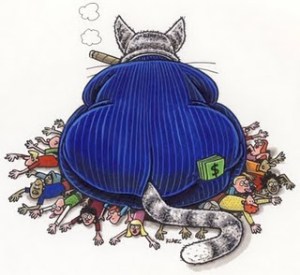 would make beltway lawmakers tread lightly when it comes to upsetting financial markets here and around the world. You would also think that after we’ve used the Fed for the most unusual transactions in its history, bailed out investment banks and insurance companies, and concentrated bank deposits and securities dealers from ‘too big to fail’ to ‘so huge they’d take the developed world down with them’ that District politicos would find a different outlet for their psuedo outrage. It’s not that they’re mad at financial institutions or what they basically did to the world’s major economies, it’s that their mad at what they did to the U.S. Federal deficit and since blaming teachers and park rangers didn’t work, they’re going to attack the U.S. Treasury Market. That’s right, they are attacking the base risk free rate used by every asset pricing model from the CAPM forward. That’s like striking at the heart of what makes modern finance work. Sounds kind’ve stupid doesn’t it?
Well, Tuesday’s Congressional vote on the debt ceiling was a danse macabre aimed directly at turning financial markets upside down whether they want to think so or not. The equity markets have been dancing around a technical high most of spring and are heading downwards as we speak. The economy has not healed. The job market is dismal. Credit markets are still stuck on neutral. Household consumption and Consumer confidence have headed south. What are these people trying to do our economy? Tank it? Finally, there’s a few media voices that are expressing concern instead of admiration for the “brave” insanity of people like Paul Ryan. Is this coming a little too late? Is the Republican party trying to drive the cost of borrowing for every one in the world up to score a few political points with some block of voters?
Just ignore Tuesday’s vote against raising the debt ceiling, House Republican leaders whispered to Wall Street. We didn’t really vote against it, members suggested; we just sent another of our endless symbolic messages, pretending to take the nation’s credit to the brink of collapse in order to extract the maximum concessions from President Obama.
Once he caves, members said, the debt limit will be raised and the credit scare will end. And the business world apparently got the message. It’s just a “joke,” said a leader of the United States Chamber of Commerce, and Wall Street is in on it. Not everyone found it funny.
No matter how they tried to spin it, 318 House members actually voted against paying the country’s bills and keeping the promise made to federal bondholders. That’s an incredibly dangerous message to send in a softening global economy. Among the jokesters were 236 Republicans playing the politics of extortion, and 82 feckless Democrats who fret that Republicans could transform a courageous vote into a foul-smelling advertisement.
If I were the Chinese or Russian government or any other investor with the ability to transfer funds anywhere else, I would be doing so just to make a point. Threatening to default on sovereign debt should not be considered political tool. It’s like threatening to use a weapon of mass destruction to score points.
Steven Benen of Washington Monthly calls it a “hostage strategy”. Frankly, it’s domestic terrorism with hostages.
Indeed, one of the more striking aspects of yesterday’s gathering was the increasingly-explicit nature of the Republican hostage strategy.
…Boehner’s let’s-get-a-deal-done stance masks a deeper belief within the House Republican Conference — that Obama will back down eventually and agree to its demands, forcing Capitol Hill Democrats to follow suit.
“Of course, it’s dangerous,” a House Republican close to Boehner said of the politics of a government default. “But it’s dangerous for everybody, especially the president. At the end of the day, [Obama] will have to give in.”
“Who has egg on their face if there is a sovereign debt crisis, House Republicans or the president?” asked another senior GOP lawmaker.
With a potential debt default by the U.S. government just two months off, and a continued standoff between the White House and GOP congressional leaders on how to move forward in boosting that limit, Republican lawmakers say publicly and privately that they believe Obama will be the one who has to cave.
To be sure, the hostage-strategy dynamic isn’t new, but it’s uncommon for Republican members of Congress to be this candid about their plan out loud. One leading GOP lawmaker acknowledged that the Republican plan is “dangerous,” but the party doesn’t care. Another conceded that the GOP is inviting a “sovereign debt crisis,” but figures Obama would get the blame, so Republicans don’t care about that, either.
Okay, so notice the theme here. Obama is expected to cave and why not? He’s drawn lines in the sand before. Remember his promise to not extend tax cuts to the richest of the rich? He caved. Remember how he was going to offer a robust public option or at least an exchange with some kind of government-sponsored plan for health care reform? He caved. Remember all that posturing over closing Guantanamo or bringing troops home from Iraq and Afghanistan. He caved.
That’s what you get when you negotiate with terrorists and they know you’ll lead with the compromise position. They’ll keep taking more important things hostage and wait you out. They know this one is too big to fail but yet, they can’t resist just seeing how much they can get away with this time. Problem is, this time it’s really having an impact. The economy is looking as though it will double dip and requires a fiscal boost, for one. This is like 1937 redux and I’m afraid that more mistakes will be made. I can’t believe that we have a political party that is so intent on damaging an administration that it’s going to frighten the global economy into a possibly game changing reshuffling of what the base of financial world’s ‘risk free’ rate and global safe haven currency may be in the future. If there was ever any reason or an excuse to dump the dollar as a basis of your economy or start ridding your trade surplus savings of US Treasury holdings, this would be it. Symbolic my fat New Orleans ass!
A testy White House meeting between President Obama and House Republican leaders Wednesday failed to lower the partisan pitch in the capital, much less make progress toward a deal on the federal debt ceiling.
Instead, the two sides traded complaints, accusing each other of partisanship and posturing. Republicans demanded that the administration produce a budget-cutting plan, which the White House said it had already done.
Rep. Paul D. Ryan, architect of a Medicare overhaul aimed at slashing the cost of the popular entitlement program by reducing the government’s open-ended commitment to seniors, accused Obama of “mis-describing” his plan and implored the president to ease up on the “demagoguery.”
In reply, Obama said he was no stranger to cartoonish depictions, reeling off a list of conservatives’ favorite attack points: “I’m the death-panel-supporting, socialist, may-not-have-been-born-here president,” Obama said, according to people familiar with his remarks.
The meeting was meant to resolve pent-up grievances and move toward compromise on the deficit and the cost of healthcare for seniors. But after 75 minutes of talk in the East Room, the two sides parted company with little progress.
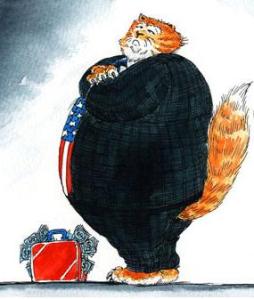 Johnathan Chait of The New Republic rightly accuses ‘economist’ John Taylor of the Hoover Institute of ignoring the “severe economic consequences of risking the full faith and credit of the Treasury”. Just arguing spending cuts are good just doesn’t make sense. This is especially true given the incredible fragile state of the U.S. economy and recovery. Is extracting more concessions out of Obama worth global financial market turmoil?
The hack Republican answer is that spending cuts and the debt ceiling are linked, because the debt ceiling is Obama’s fault. But of course the debt ceiling has to get raised under every president, and it would have to be raised even if Obama signed the Paul Ryan budget. The debt ceiling has nothing to do with any particular policy choices — it’s just a routine vote that used to be an opportunity for the minority party to embarrass the president, which Republicans are turning into a hostage opportunity. People like Taylor are dressing this up in principle, but the only principle they can articulate is that spending cuts are good. But that same logic would allow the minority to use the debt ceiling to jack up the president over any policy disagreement at all.
So far, the markets and the world seem to think that American politicians will stop their posturing and settle down to business before the August drop dead date. They’ve even quoted Churchill who used to say we eventually do the right thing it’s just that we don’t actually do it until the very last minute. The deal is that not only is the brinkmanship a dangerous strategy but the further concessions–in a fragile recovery at best–are dangerous. Obama and his cadre of lawyers have made it clear that they will concede any high ground. Again, we have a history of Obama concessions on political promises. The problem is that each time the concession comes, it comes at a greater cost. Every one knew this drama would play out once Obama gave in on renewing the Bush Tax Cuts. Every thing is negotiable and subject to concession now. You can’t fake credibility once you’ve show yourself as having none.
Wall Street numbers look bad today. They’ve been bad all week. The primary concern is said to be the faltering economy. However, any one that thinks that some of this unease isn’t over the debt ceiling hostage situation kids themselves.
The DC Disconnect
Posted: May 31, 2011 Filed under: Economy, Federal Budget and Budget deficit | Tags: Bush tax cuts, U.S. Economy 12 Comments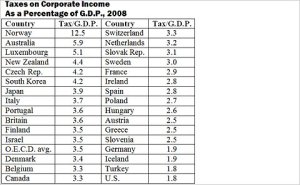 The disconnect between reality and beltway rhetoric has never been more obvious when it comes to the economy. The NYT editorial page has an op-ed up today– ‘The Numbers are Grim’–in which they call for more attention to the unemployment crisis. As I mentioned when these numbers came out, a decrease in domestic household consumption is a troublesome signal in an economy where nearly 68% of production usually goes to domestic consumption.
When consumers are constrained, so is hiring, because without customers, employers are hard pressed to retain workers or make new hires. A recent Labor Department report showed a greater-than-expected rise in the number of people claiming jobless benefits even as private-sector economic forecasts are being revised downward — both very bad omens for continued job growth.
Republican lawmakers have responded to renewed signs of weakness with a jobs plan that prescribes more of the same “fixes” that Republicans always recommend no matter the problem: mainly high-end tax cuts, deregulation, more domestic oil drilling and federal spending cuts.
The White House has offered sounder ideas, including job retraining, plans to boost educational achievement and tax increases to help cover needed spending. But its economic team is mainly focused on negotiations to raise the debt limit, presumably parrying Republican demands for deep spending cuts that could weaken the economy further while still reaching an agreement on the necessary increase.
The grim numbers tell an unavoidable truth: The economy is not growing nearly fast enough to dent unemployment. Unfortunately, no one in Washington is pushing policies to promote stronger growth now.
Even the Wall Street Journal recognizes the challenges our economy faces. Many corporate economists see similar indications of a permanent growth problem. This should not be happening. We know how to correct this. We have nearly 70 years of economy theory and empirical data that have provided a guide to every administration except the last two.
Manufacturing is cooling, the housing market is struggling and consumers are keeping a close eye on spending, meaning the U.S. economy might be on a slower path to full health than expected.
“It’s very hard to generate a rapid recovery when rapid recoveries are historically driven by housing and the consumer,” said Nigel Gault, an economist at IHS Global Insight. He expects an annualized, inflation-adjusted growth rate of less than 3% in coming quarters—better than the first-quarter’s 1.8% rate, but too slow to make a meaningful dent in unemployment.
A growing number of forecasters are downgrading their second-quarter growth predictions. JPMorgan Chase & Co. economists revised down their estimate to a 2.5% rate from 3%, while Bank of America Merrill Lynch economists cut theirs to 2% from 2.8%. Deutsche Bank cut its forecast to 3.2% from 3.7%.
Companies are similarly cautious. Applied Materials Inc., the largest maker of machines used in producing computer chips, said it expected growth in its semiconductor and solar markets to slow following one of its best quarters ever. Hewlett-Packard Co. cut its fiscal-year outlook amid weak computer sales and negative effects from the disaster in Japan. Clorox Co. offered a more guarded outlook for its household goods business as executives noted that higher prices may hurt sales.
As stated by the NYT, most Republicans put a plan forward that calls for “high-end tax cuts, deregulation, more domestic oil drilling and federal spending cuts”. This is exactly the opposite of what needs to be done. The mantra of ‘too high’ taxes strangling business which dampens unemployment is simply not true. It’s never been true. It’s a fallacy! Bruce Bartlett has done an excellent job–see the nifty graph above–in using facts to put down that meme. Not only are effective tax rates on corporations already exceedingly low, but tax revenues from wealthy individuals are so low that most of us probably have higher effective marginal tax rates. This has been the case now for nearly 7 years and for about that same time we’ve experienced some of the worst job creation and economic growth ever.
The economic importance of statutory tax rates is blown far out of proportion by Republicans looking for ways to make taxes look high when they are quite low. And they almost never note that the statutory tax rate applies only to the last dollar earned or that the effective tax rate is substantially lower even for the richest taxpayers and largest corporations because of tax exclusions, deductions, credits and the 15 percent top rate on dividends and capital gains.
The many adjustments to income permitted by the tax code, plus alternative tax rates on the largest sources of income of the wealthy, explain why the average federal income tax rate on the 400 richest people in America was 18.11 percent in 2008, according to the Internal Revenue Service, down from 26.38 percent when these data were first calculated in 1992. Among the top 400, 7.5 percent had an average tax rate of less than 10 percent, 25 percent paid between 10 and 15 percent, and 28 percent paid between 15 and 20 percent.
The truth of the matter is that federal taxes in the United States are very low. There is no reason to believe that reducing them further will do anything to raise growth or reduce unemployment.
Meanwhile, the complete disconnect between spending and cutting priorities in Congress and the White House and the American people grows. As mentioned by BostonBoomer this morning in a reference to a Paul Rosenberg peice at Alternet, Americans want none of what is being dished up in the beltway. It is true that the current spending path for the general budget, social security, and medicare are not sustainable at current levels. What is not true is that we need to accept the current path and Republican policy priorities as the solution. There is no evidence that anything they’ve suggested will remotely help our jobs and growth problem which would take care of much of the deficit problems. The rest could be solved by simply returning tax policy back to the Reagan or Clinton levels.
It’s obvious from the last set of economic numbers that the current problem stems from lack of consumer demand which is rooted in a lack of income, confidence, and wealth in the majority of US Households. People simply do not have the wherewithal to purchase homes or sustain household budgets. This is because we have an unacceptably high level of unemployment, we have let the pathway to home ownership completely collapse, and we’re allowing basic government services to collapse to fund unrealistically low tax rates for corporations and wealthy individuals. Don’t even get me started on funding never-ending wars. There is mounting evidence that these funds aren’t even staying in the country any more but are being used to fund jobs, investment, and growth in other places. This is unacceptable policy under our current economic situation. American treasury should not be used to chase profits abroad.
The President has gotten away with extending tax cuts for the wealthiest individuals. He appears ready to go to the table and accept draconian cuts to federal spending which will impact all levels of government provision of goods and services. This basically means that he has signed on to a prescription for slow economic growth. He undoubtedly does so with no worries about the upcoming election. The Republicans offer up potential candidates that have absolutely no grasp of reality or come with a facile lack of morality to deny it. Even George F. Will believes one of the front runners to be so incapable of holding office that the thought of giving the ability to launch nuclear weapons to some of the candidates bothers him. Is handing over the ability to tank our economy any less problematic?
This is beyond disheartening. It is evident that the plutocracy is doing everything it can to silence any one that could run a narrative contrary to these current fallacies. I don’t believe for one moment that Congressman Wiener’s hacker isn’t part of tearing down any one that appears to be stepping away from the abyss of Washington group think. Meanwhile, the media speak is about pushing the economy to the precipice by focusing on the debt ceiling. It’s looking like we’re being prepped for that. This will make the market demand extremely high rates of return for federal borrowing which will only increase our interest payments on the debt which are already a huge portion of the budget. How much sense does that make?
Early proposals for whittling down spending include a plan to drop federal agriculture subsidies and to require larger employee contributions to the pension system for non-military federal workers.
“Those talks, which actually we’ve been meeting for over three weeks now, they have been all positive. Everything is on the table,” House Majority Leader Eric Cantor (R-Va.) said Sunday on CBS’s “Face the Nation.” “We’ve said, as Republicans, we’re not going to go for tax increases. I think the administration gets that. But we’ve also put everything on the table as far as cuts.”
Oh, and if you think the Republicans are all about small businesses and start-ups because they create jobs, check this nifty 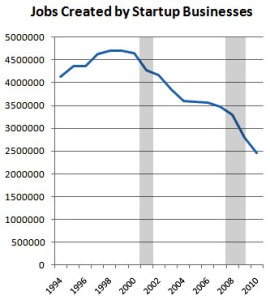 graph out from MoJo. The Dubya years basically killed that phenomenon too so it wasn’t about lowering tax rates, was it?
As this chart from the BLS shows, the number of jobs created by new businesses peaked in 2000, began declining at the start of the Bush administration, and has been plummeting ever since …
So much for that Republican meme. Facts are stubborn things, aren’t they?
This problem is basically due to the inability to govern and make prudent decisions. They’d much rather pump out lies and continue on the same path to destruction. These people ran up tons of debt to fund wars for which they found no funds. This is all about the irresponsible Bush tax cuts that Congress and the Obama administration returned to law in December. The pain for these horrible decisions are about to be extracted on middle and working class Americans who have done absolutely nothing to bring on the recent economic problems and fiscal problems. There has been no bail out or special tax breaks for us. It should be obvious by now that the policies of the last five years have done nothing but improved the situation for the very rich and the very large corporation. Shame on all of those elected officials that go along with this. It is as if they are purposefully setting out to destroy our economy and our way of life. I have no idea why they hold so many of us in contempt but it is obvious that that they prefer the donor class to voters. They seem to want a repeat of the Great Depression. At this rate, that is exactly what they will have.

 peej
peej Carissa
 bostonboomer
 dakinikat
 ecocatwoman
 jjlo
jjlo mablue2
 Mama Lopez
 peggysue22
 quixote
 skydancingguestblogger
 Mona (aka Wonk the Vote)





Recent Comments