
“If this is transparency, who needs it?”
Posted: June 14, 2011 Filed under: just because | Tags: Bradley Manning, government whistle blowers, Obama Administration, Thomas Drake, transparency 7 Comments“If this is transparency, who needs it?” Steven Aftergood, Director of the Project on Government Secrecy at the Federation of American Scientists, speaking of the Obama Administration’s White House visitor log policy, the results of which he labeled “very thin gruel” (Apr. 13, 2011).
“A White House official conceded the system has limitations, asserting it was designed not as an archive but ‘first and foremost to protect the first family, second family and White House staff while imposing the smallest administrative burden possible.'” POLITICO, “White House Visitor Logs Leave Out Many” (Apr. 15, 2011).
from the site “Quotes of the Month” hosted by American University’s Washington College of Law, Collaboration of Government secrecy.
 One of the major Obama campaign promises was to bring more transparency to governing. The English/international version of Speigel on line has a compelling series up this week called “Disingenuous Transparency”focusing on how government whistle blowers have suffered under the Obama administration. The series is extremely relevant given that the U.S. government has finally “officially” released the Pentagon Papers on the Vietnam War as a show of ‘openness’. The article accuses Obama and the administration of stonewalling and basically ignoring court instructions. The sad thing is that the compelling article filled with compelling examples will probably never reach a large audience.
I have been following the case of Thomas Drake–a former employee of NSA–who is accused of providing the Baltimore Sun with internal information on government wiretapping. Drake’s case predates the more famous case of Bradley Manning and Wikileaks. There have been other cases.
In May 2010, a court convicted former FBI interpreter Shamai Leibowitz was sentenced to 20 months in prison for providing government information to a blogger. Another prosecuted whistle blower of Stephen Kim who was a North Korea expert at the State Department. Kim supposedly supplied state secrets to Fox News. Another high profile case is that of former CIA agent Jeffrey Sterling who allegedly provided information to author James Risen a 2006 exposé entitled “State of War.” The Obama Justice Department has prosecuted these cases to the fullest extent possible.
The Drake case fell apart in a similar way that the charges of Oliver North fell apart during the Iran-Contra Scandal of the 1980s. It was felt that the prosecution of Drake would expose too much national security information. Drake accepted a plea of misdemeanor charges for “exceeding his authorized use of a government computer”. Again, the tie back to Daniel Ellsberg and the Pentagon Papers is relevant.
But the government withdrew the evidence supporting several of the central charges after a judge ruled Drake would not be able to defend himself unless the government revealed details about one of the National Security Agency’s telecommunications collection programs. On two other counts, documents the government had claimed were classified have either been shown to be labeled unclassified when Drake accessed them or have since been declassified. Faced with the prospect of trying to convict a man for leaking unclassified information, the government frantically crafted a plea deal in the last days before the case was due to go to trial.
The collapse of the case against Drake may have repercussions beyond just this one case.
This is the third time the government’s attempt to use the Espionage Act to criminalize ordinary leaking has failed in spectacular fashion. The first such example—against Pentagon Papers leaker Daniel Ellsberg—got dismissed when the government’s own spying on Ellsberg was exposed.
Spiegal characterizes this case as “an embarrassing setback for the White House”. It seems that the candidate that promised translucency is fighting to keep secrets at a pace previously never experienced. That says a lot given the paranoia of Nixon and the fierce defense of the so-called imperial presidency by the Bush/Cheney administration.
Under Obama, more whistleblowers are being held accountable than in all previous decades. Lucy Dalglish, executive director of the Reporters Committee for Freedom of the Press, told the Associated Press that the US government is going after whistleblowers “very, very aggressively.”
Government whistle blowers are supposedly protected by an act of Congress passed in 1989 called The Whistle Blower’s Protection Act. It was designed to encourage government employees to step forward with instances of government abuse that they’ve witnessed. You’ll notice the date roughly corresponds to the time the Iran-Contra situation was fresh. Since then, the law has been weakened.
“It is no surprise that honest citizens who witness waste, fraud and abuse in national security programs but lack legal protections are silenced or forced to turn to unauthorized methods to expose malfeasance, incompetence or negligence,” Stephen Kohn, the executive director of the National Whistleblowers Center wrote in an op-ed contribution to the New York Times on Monday.
He wrote that Congress and the executive branch would be well advised to follow the example of their predecessors. In fact, the first protective law in the US for “whistleblowers” is almost as old as the country itself — it originated in 1778.
Speigal characterizes the Obama administration as having an active policy of “stonewalling” and “blocking” any avenue that would provide a safe path for federal whistle blowers.
The Obama administration also uses other avenues for stonewalling and blocking. At times, those efforts take on grotesque dimensions, as in the case the Pentagon’s September order to pulp the entire first printing run of “Operation Dark Heart.” The memoir by army officer Anthony Shaffer over his time in the Afghanistan war contained what were alleged to be military secrets. The destruction of the 9,500 books cost taxpayers an estimated $47,300. When the second edition was released, 250 passages were blacked out.
This pressure clashes with the increasing openness of the Internet age. Four decades ago, Daniel Ellsberg had to photocopy selected passages from the “Pentagon Papers.” Today, WikiLeaks indiscriminately places tens of thousands of documents on the Web. “It revels in the revelation of ‘secrets’ simply because they are secret,” well-regarded attorney Floyd Abrams, who represented the New York Times in its “Pentagon Papers” case against the government, wrote six months ago in the Wall Street Journal.
Monday Reads
Posted: June 13, 2011 Filed under: Barack Obama, Foreign Affairs, morning reads, Republican presidential politics, Syria | Tags: Iowa, Iowa Caucuses, jobless recovery, Larry Summers, Obama reelection, Presidential Politics, protest crackdowns, Refugees, Syria 39 Comments Good Morning!
I’ve been following a few stories recently. Of course, one is about my favorite blood sport: politics. One interesting recent announcement is that the two Mormons contending for the Republican Presidential slot are skipping Iowa. Most of the speculation has to do with the role of religionists in the Iowa Republican party. Law professor Ann Althouse has some interesting observations on what appears to be the unwillingness of evangelical Christians to vote for Mormons.
It’s distressing to see this conflation of conservatism and prejudice. It’s one thing if Iowan Republicans tend to go for someone with a stronger message of social conservatism, quite another if they are hostile to Mormons. Plenty of Mormons are social conservatives, and it just happens that the 2 Mormons in the race are not social conservatives. Can we get some serious research on this point? It’s a dangerous thing to allow insinuations of religious bigotry to seep into the public consciousness. I can’t tell if the Times is really against bigotry or not. If you portray Iowan religious conservatives as anti-Mormon, in one way, it seems anti-bigotry. But it’s also inviting us to feel hostility toward the Iowan evangelicals.
Althouses’ comments are based on this NYT article which states that Iowa may have an ‘ebbing influence’ on national elections.
But there are signs that its influence on the nominating process could be ebbing and that the nature of the voters who tend to turn out for the Republican caucuses — a heavy concentration of evangelical Christians and ideological conservatives overlaid with parochial interests — is discouraging some candidates from competing there.
Mitt Romney, the former governor of Massachusetts, announced Thursday that he would skip the state’s Republican straw poll this summer, saving his resources — and lowering expectations — for the state’s caucuses next year.
Earlier in the week, Jon M. Huntsman Jr., the former governor of Utah, conceded that he was likely to skip the Iowa caucuses altogether, noting that his opposition to ethanol subsidies makes him unpopular in a state where support for the corn-based fuel is all but demanded.
“I’m not competing in Iowa for a reason,” he told The Associated Press. In addition to his stand on ethanol, Mr. Huntsman, who served in the Obama administration as ambassador to China, says he believes in global warming and has not embraced the Tea Party movement like some of his rivals. And like Mr. Romney, Mr. Huntsman is a Mormon, a religion viewed with wariness by some conservative Christians.
Repercussions from the Arab Spring are continuing through Summer. Syria appears to be the latest country where members of the military are having second thoughts about cracking down on civil unrest in the general population.
The escalating military offensive in northwest Syria began after what corroborating accounts said was a shoot-out between members of the military secret police in Jisr al-Shughur, some of whom refused to open fire on unarmed protesters.
A growing number of first-hand testimonies from defected soldiers give a rare but dramatic insight into the cracks apparently emerging in Syria’s security forces as the unrelenting assault on unarmed protesters continues.
Speaking to Al Jazeera from Turkey, having crossed the border on Friday night, an activist based in Jisr al-Shughur and trusted by experienced local reporters described how a funeral on June 4 for a man shot dead by plain-clothes security a day earlier grew into a large anti-government protest.
“As the demonstration passed the headquarters of the military secret police they opened fire right away and killed eight people,” the activist, who was among the crowd, said. “But some of the secret police refused to open fire and there were clashes between them. It was complete chaos.”
There continues to be a mounting human crisis as Syrians fleeing violence pour into nearby Turkey.
As Syrian security forces move in to the besieged town of Jisr al-Shughour, thousands of refugees are fleeing across the Turkish border. More camps are being set up to house the new arrivals. Many of the refugees are in desperate need of medical help.
The emergency ward at Antakya hospital is about to receive its latest casualty from Syria. It is a young girl who has fallen sick and was brought to the Turkish border by her desperate mother, who is also pregnant. The ambulance driver says the violence in Syria means hospitals there are either full with the injured, or the journey is too hazardous.
The clashes in and around the northern Syrian town of Jisr al-Shughour have forced thousands to flee. Many of them have recorded the horrifying scenes on cellphones and cameras. In the border village of Harabjoz, people have set up tents as they wait to cross into Turkey. One refugee, who did not give his name, described the conditions they are facing. “There is no milk for the children,” he says. “We bought some but we have run out. They are targeting homes and yesterday gunmen targeted us. All these people will not survive because they burned all their crops,” he says. “Now it’s become sectarian for sure,” he said.
A spokesman for the United Nations’ refugee agency, Metin Corabatir, has warned of a growing crisis. “The latest figures UNHCR received from the border is 5051 who fled from Syria because of violence and persecution in this country,” he said.
Witnesses believe the true figure could be double that number – including those who have crossed undetected.
The Economist believes Obama is beatable in 2012 but seems dismayed at the Republican field of candidates. This was my Saturday night bath read and I found it interesting so I thought I’d pass it along. They biggest question is that how does a candidate that ran as a change agent and outsider run as ‘Goliath’ this time?
In 2008 Mr Obama represented change. This time he will have to fend off charges that he is to blame for the achingly slow recovery by arguing that it would have been worse without his actions, such as his $800 billion stimulus package and the takeover of GM and Chrysler. That may be true but it is not easy to sell a counterfactual on the stump (as the first President Bush learned). And there are other holes in Mr Obama’s record. What happened to his promises to do something about the environment or immigration or Guantánamo? Why should any businessman support a chief executive who has let his friends in the labour movement run amok and who let his health-care bill be written by Democrats in Congress? Above all, why has he never produced a credible plan to tackle the budget deficit, currently close to 10% of GDP?
Asking these questions will surely give any Republican a perch in this race. But to beat the president, the Republicans need both a credible candidate and credible policies.
I may have to change my opinion of Larry Summers a little bit. In this FT Op-Ed, Summers tries to fight the austerity agenda and a US “lost decade”. Wow.
Beyond the lack of jobs and incomes, an economy producing below its potential for a prolonged interval sacrifices its future. To an extent once unimaginable, new college graduates are moving back in with their parents. Strapped school districts across the country are cutting out advanced courses in maths and science. Reduced income and tax collections are the most critical cause of unacceptable budget deficits now and in the future.
You cannot prescribe for a malady unless you diagnose it accurately and understand its causes. That the problem in a period of high unemployment, as now, is a lack of business demand for employees not any lack of desire to work is all but self-evident, as shown by three points: the propensity of workers to quit jobs and the level of job openings are at near-record low; rises in non-employment have taken place among all demographic groups; rising rates of profit and falling rates of wage growth suggest employers, not workers, have the power in almost every market.
A sick economy constrained by demand works very differently from a normal one. Measures that usually promote growth and job creation can have little effect, or backfire. When demand is constraining an economy, there is little to be gained from increasing potential supply. In a recession, if more people seek to borrow less or save more there is reduced demand, hence fewer jobs. Training programmes or measures to increase work incentives for those with high and low incomes may affect who gets the jobs, but in a demand-constrained economy will not affect the total number of jobs. Measures that increase productivity and efficiency, if they do not also translate into increased demand, may actually reduce the number of people working as the level of total output remains demand-constrained.
I’m beginning to feel like part of a chorus these days. Nearly all economists are telling whatever news source they can that this is your basic demand problem. Now if the TV media would hire some one other than lawyers and political consultants we might get some traction here on getting a conversation about policy solutions.
I’ve got one more interesting link given to me by our resident psychologist, Bostonboomer. TNR has an interesting article up on why poor people can’t escape poverty easily.
In a paper in April 2010, Harvard behavioral economist Sendhil Mullainathan (for whom, full disclosure, I once worked) and MIT’s Abhijit Banerjee applied this same notion to decisions requiring self-control. If a doughnut costs twenty-five cents, they wrote, then that “$0.25 will be far more costly to someone living on $2 a day than to someone living on $30 a day. In other words, the same self-control problem is more consequential for the poor.” And so, in addition to all the structural barriers that prevent even determined poor people from escaping poverty, there may be another, deeper, and considerably more disturbing barrier: Poverty may reduce free will, making it even harder for the poor to escape their circumstances.
All of this suggests that we need to rethink our approaches to poverty reduction. Many of our current anti-poverty efforts focus on access to health, educational, agricultural, and financial services. Now, it seems, we need to start treating willpower as a scarce and important resource as well.
Okay, so what’s on your reading and blogging list this morning?
Santorum Lives Up to his Name
Posted: June 12, 2011 Filed under: abortion rights, religious extremists, Republican politics, Republican presidential politics | Tags: Rick Santorum 9 Comments
Republican candidate for president and religious extremist Rick Santorum was on meet the Press today. Here’s how that went. He’s also on record considering the morning after pill as murder.
QUESTION: Do you believe that there should be any legal exceptions for rape or incest when it comes to abortion?
SANTORUM: I believe that life begins at conception, and that that life should be guaranteed under the Constitution. That is a person.
QUESTION: So even in the case of rape or incest, that would be taking a life?
SANTORUM: That would be taking a life, and I believe that any doctor that performs an abortion, I would advocate that any doctor that performs an abortion, should be criminally charged for doing so.
Is this man a “reasonable” Republican?
Posted: June 11, 2011 Filed under: 2012 presidential campaign, Republican politics, Republican presidential politics | Tags: Rick Perry, still crazy after all these years 7 Comments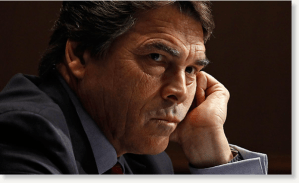 The Republicans are off in search of “reasonable” Republicans (e.g. some one not as blatantly whacko as Bachmann and Santorum) that will pass muster with both independents and their religionist base. So, is Texas Governor Rick Perry the man to fit the bill? Let’s just look at some of the things this ‘reasonable’ man has said and supported in the past.
First, Perry has very odd ideas about about some amendments to the constitution including the one that made U.S. Senators subject to democratically held elections rather than appointments by state power brokers.
PERRY WANTS TO REPEAL THE 16th AND 17th AMENDMENTS, ENDING DIRECT ELECTION OF U.S. SENATORS AND THE FEDERAL INCOME TAX: In his 2010 book Fed Up!, Perry called the 16th and 17th Amendments “mistaken” and said they resulted from “a fit of populist rage.” The 16th Amendment allows the federal government to collect income taxes, which is the single biggest source of revenue, accounting for 45 percent of all receipts. The 17th Amendment took electing U.S. senators out of the hands of political insiders and allowed the American public to decide their representation instead. If Perry had his way, the federal government would be stripped of its current ability to fund highway construction projects, food inspectors, and the military, and the American public would not even be permitted to elect their own senators.
Perry also has made it clear that he thinks a state should be able to opt out of both Social Security and Medicaid. He also believes that Texas has the best health care system in the country. There are approximately 3.6 million low-income Texans on Medicaid. Texas has the highest rate of uninsured individuals in the country yet it has the highest threshold for medicaid eligibility. More than 1 in 4 Texans lack coverage of any kind. There are more uninsured Texans than there are in 33 states combined. Texas is also well known for its extremely high rate of poverty for children. Perry opposed the expansion of SCHIP. I guess his idea of best health care system is defined by keeping the “riff raff” away so every one with insurance doesn’t have to deal with them.
It is widely believed that Rick Perry sent an innocent man to his death by refusing to hear significant evidence that showed the man had not committed the crime of which he had been convicted and that the officials in the case had carried out the investigation poorly. The case against Todd Willingham is considered by many to be a horrific example of the death penalty gone wrong.
The Innocence Project obtained, through the Freedom of Information Act, all the records from the governor’s office and the board pertaining to Hurst’s report. “The documents show that they received the report, but neither office has any record of anyone acknowledging it, taking note of its significance, responding to it, or calling any attention to it within the government,” Barry Scheck said. “The only reasonable conclusion is that the governor’s office and the Board of Pardons and Paroles ignored scientific evidence.”
Perry–rumored frequently to be gay–has joined the culture wars against women’s reproductive health and GLBT civil rights. He designated legislation designed to force women seeking abortions to have sonograms and state sanctioned lectures on fetal development as “emergency legislation”. Additionally, any fetal heartbeat must be played for the woman. He rushed the legislation into law. After a Texas sodomy law was declared unconstitutional by the US Supreme Court, Perry supported the Texas legislature’s insistence that the law remain on the books.
Perry supports teaching “creationist” myth as equal to the scientific theory of evolution. Perry signed a parental notification bill in the gymnasium of Calvary Christian Academy of Fort Worth in 2005. This is an evangelical Christian school. Perry believes that non-Christians are doomed and has said as much in 2006 following a sermon by Rev. John Haggee attended by Perry and other Republican Candidates.
Throughout much of the 90-minute service at Cornerstone Church, Mr. Perry sat on the red-carpeted stage next to the Rev. John Hagee. Mr. Perry was among about 60 mostly Republican candidates who accepted the invitation to be introduced to the megachurch’s congregation of about 1,500, plus a radio and TV audience.
“If you live your life and don’t confess your sins to God almighty through the authority of Christ and his blood, I’m going to say this very plainly, you’re going straight to hell with a nonstop ticket,” Mr. Hagee said during a service interspersed with religious and patriotic videos.
Asked afterward at a political rally whether he agreed with Mr. Hagee, the governor said he didn’t hear anything that he would take exception to.
He said that he believes in the inerrancy of the Bible and that those who don’t accept Jesus as their savior will go to hell.
Hagee has been accused of anti-Catholicism and antisemitism having said things against both the Jewish and Islamic faiths. Perry has made antisemitic comments also notably about humorist and entertainer Kinky Friedman who is an outspoken, Jewish independent candidate for governor in the 2006 election. Perry stated this about Friedman: “He doesn’t think very differently from the Taliban, does he?”
Rick Perry also told Tea Party supporters that “Texas might have to secede” from the US.
Gov. Rick Perry (R-TX) was one of the dozens of Republican lawmakers who are addressing the anti-Obama tea parties today. He told the crowd he didn’t believe they were all “right-wing extremists,” as others had sought to portray them. “But if you are, I’m with you!” he shouted. After, he told reporters that Texas might have to secedefrom the union:
Perry told reporters following his speech that Texans might get so frustrated with the government they would want to secede from the union.
“There’s absolutely no reason to dissolve it. But if Washington continues to thumb their nose at the American people, you know, who knows what might come out of that.”
What reasonable governor would go on record calling for a new Civil War? Actually, what reasonable person would say or do any of these things? If Rick Perry and Tim Pawlenty come from the ‘reasonable’ side of the Republican Party, the party needs to consult a dictionary or reality.
Friday Reads
Posted: June 10, 2011 Filed under: abortion rights, Economy, Federal Budget and Budget deficit, fetus fetishists, Foreign Affairs, Hillary Clinton, Libya, Middle East, morning reads, religious extremists, Reproductive Rights, Women's Rights | Tags: 30th anniversary AIDS epidemic, Robert Reich, War on Rape victims, War on Women 30 Comments Good Morning!!!
The news continues to be fairly depressing as news tends to be, but we’ll try to cover some interesting things today!
It’s really hard to believe, but we’re about to mark the 30th anniversary of the AIDS epidemic. All of us that came of age during that period have a lot of lost friends and stories to tell. Thankfully, AIDS is a manageable disease now. Unfortunately, too many people still don’t do what it takes to protect themselves. Here’s an interesting story of how Congress came to realize that we had a growing health threat on our hands.
Oddly enough, it was the specter of Republican budget cuts that led to the first awareness of the AIDS epidemic in Congress. Ronald Reagan’s budget director, David Stockman, had targeted public health agencies for massive cuts. A Waxman staffer, concerned about their potential effects, had gone to the Centers for Disease Control in Atlanta to do reconnaissance. CDC scientists were alarmed and predicted that the cuts would lead to an epidemic, although they imagined it would involve a preventable childhood illness, since Reagan had proposed cutting the immunization budget in half. Waxman was worried enough by what he learned to join with a Republican colleague, Pete Domenici, to protect the immunization budget.The epidemic came anyway. While in Atlanta, the Waxman staffer was told that he should meet with a doctor named Jim Curran, who had noticed an outbreak of an unusual and deadly pneumonia among gay men in Los Angeles. Today, Curran is renowned as the doctor who first raised the alarm among epidemiologists. But back then, he declined the offer of a congressional hearing to help direct research funding to his work because he was afraid that the attention would interfere with his access to a gay community that was fearful of the government (homosexuality was a felony in many states). “I’ll call you when I’m ready,” he told Waxman’s staff. Let’s pause here to note that before AIDS even had a name, members of Congress were aware of the disease and working to help.Curran called a year later. In 1982, Congress held its first hearing on what was now called AIDS, a field hearing in Los Angeles. A single reporter showed up. But eventually Waxman and a group of colleagues succeeded in drawing attention to the epidemic
Texas continues its attacks on women’s right to choose. It has revived an anti-abortion measure to omnibus legislation. It’s also continuing the Republican extremist attack on Planned Parenthood.
Besides the two health care provisions to privatize Medicare and Medicaid, the Texas House attached several anti-abortion amendments to the omnibus legislation: (1) a bill to “ban hospital districts from using local tax revenue to fund abortions, except in emergency situations — or else risk losing state funding,” (2) “limit the state family planning funds received by Planned Parenthood,” (3) force physicians who provide abortions to collect more data on their patients.
More Kind and Kompassionate Konservative philosophy comes from a Republican in Massachussetts who believes that any undocumented worker who has been raped “should be afraid to come foreward”.
Massachusetts GOP state Rep. Ryan Fattman has such contempt for illegal immigrants that he believes undocumented women who are raped should be afraid to go to the police. Yesterday, the Worcester Telegram & Gazette reported on Fattman’s incendiary comments, which he made while defending a controversial federal immigration program that many say will damage the relationship between law enforcement and immigrant communities. Massachusetts Gov. Deval Patrick (D) has refused to join the program out of concern that immigrants who are victims of violent crimes will be afraid to report them and seek help…
Representative Fattman supports deporting any undocumented rape victim who goes to the police immediately. That appears to be more important to him than preventing crimes and supporting victims of crime. Unbelievable.
Robert Reich continues to be an outspoken advocate for the unemployed and for a stimulus to correct the current economic problem. He accuses Obama of going over to the supply side fairy tale spun by Republicans. Yup, it’s not about more business incentives, it’s all about the lack of customers. He joins me and other economists who say it’s all about the Demand side right now.
Obama says he’s interested in exploring with Republicans extending some of the measures that were part of that tax-cut package “to make sure that we get this recovery up and running in a robust way.”
Accordingly, the White House is mulling a temporary cut in the payroll taxes businesses pay on wages. White House advisors figure this may appeal to Republican lawmakers who have been discussing the same idea. It would, in essence, match the 2 percent reduction in employee contributions to payroll taxes this year, enacted as part of the deal to extend the Bush tax cuts.
Other ideas under consideration at the White House include a corporate tax cut, accompanied by the closing of some corporate tax loopholes.
Can we get real for a moment? Businesses don’t need more financial incentives. They’re already sitting on a vast cash horde estimated to be upwards of $1.6 trillion. Besides, large and middle-sized companies are having no difficulty getting loans at bargain-basement rates, courtesy of the Fed.
In consequence, businesses are already spending as much as they can justify economically. Almost two-thirds of the measly growth in the economy so far this year has come from businesses rebuilding their inventories. But without more consumer spending, businesses won’t spend more. A robust economy can’t be built on inventory replacements.
The problem isn’t on the supply side. It’s on the demand side. Businesses are reluctant to spend more and create more jobs because there aren’t enough consumers out there able and willing to buy what businesses have to sell.
The so-called Gang of Six are close to releasing their budget ideas. They’ve shared what they’ve come up with so far with some members they feel may be responsive. Will it be enough to head off Republican calls for default on US debt?
Freshman Republican Kelly Ayotte of New Hampshire, who was in the meeting, said she was open to looking into any potential plan that would address the deficit in a serious and responsible way. She characterized the meeting as an update on the group’s progress.
Sen. Mark Warner (D-Va.) who is spearheading the group’s efforts with Chambliss was tight-lipped about the presentation and refused to take any questions or even vaguely describe the mood of the meeting.
“Do you really think, as somebody who’s obsessed about this that I’m going to do anything to screw it up now?” Warner said emphatically Thursday afternoon.
Even Dick Durbin, another Gang member and the Senate’s No. 2 Democrat, was coy with reporters after the meeting. The Illinois Democrat is typically quick to present even a basic line expressing optimism or progress made in the meeting, instead opting to playfully pretend with reporters he knew nothing about the group or the meeting.
“I can neither, confirm, deny or retract [anything about the meeting,” Durbin teased with reporters.
Aides on the Hill are quick to point out that lawmakers will talk more when things are going poorly and less when things are going well. Perhaps after a few weeks of uncertainty, the remaining “Five Guys” trying to forge a deal are close to one.
NATO has upped the ante in Libya by hammering Tripoli and directly targeting Colonel Gaddafi. Some countries are seeking to give access to the country’s frozen assets to the rebels. Many believe that the regime’s days are coming to an end shortly. Qaddafi is said to have ordered mass rape and to have handed out Viagra to troops. Secretary of State Hillary Clinton is in the middle east working with other nations to plan for a post-Gaddafi Libya.
But another U.S. official indicated there was a conscious effort by NATO military planners to target air strikes closer to where Gaddafi is thought to have been taking shelter — and the Obama administration is privately supporting the intensified strikes.
So, that’s a little bit of what I found is going on in the world. What’s on your reading and blogging list today?

 peej
peej Carissa
 bostonboomer
 dakinikat
 ecocatwoman
 jjlo
jjlo mablue2
 Mama Lopez
 peggysue22
 quixote
 skydancingguestblogger
 Mona (aka Wonk the Vote)





Recent Comments