
Clarence Thomas’ Ethics Problems
Posted: June 19, 2011 Filed under: SCOTUS | Tags: Clarence Thomas, ethoics problems, resigniation 6 CommentsWe’ve written before about Clarence Thomas and the number of conflicts of interests that he has ignored in the past.
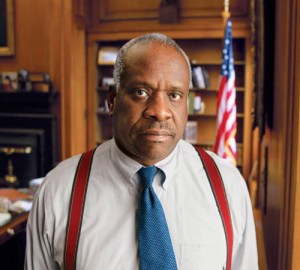
Justice Long Dong Silver rides again.
Bostonboomer wrote this piece back in February about Thomas and Citizen’s United. This was a follow-up to a piece she wrote in January when Thomas was been criticized for not reporting his right wing activist wife’s lobbying income. Many liberals–including Rachel Maddow–have argued that cyber stalking of Anthony Weiner and the resultant media frenzy to force Wiener’s resignation may be related to a letter Weiner wrote Thomas in February. That letter requested Thomas remove himself from from cases challenging the constitutionality of the Health Care Reform Act given his wife Gini Thomas’ lobbying activity for Liberty Central against the law.
Talk Progress discovered several ethics lapses this year alone for Justice ‘Long Dong Silver’ of coke bottle and sexual harassment fame. Thomas has attended many Koch-sponsored political fundraisers. Now, the NYT has evidence that Thomas keeps accepting expensive gifts from one particular conservative real estate trust fund baby and fails to report many more. Any one with a good amount of familiarity with American history will know that 40 years ago, Justice Abe Fortas was forced to resign under the same circumstances. Recently, it was found out this right wing political donor not only contributed to Thomas’ pet projects like the Pin Point museum in Georgia which features Thomas’ birth place, but he’s received incredibly expensive gifts ranging from a $19,000 bible once owned by Frederick Douglass and $500,000 to seed Thomas’ wife Tea Party organization. Thomas has also accepted a $15,000 gift from the American Enterprise Institute who wrote a brief in a case that appeared before the court. Thomas did not recuse himself.
The NYT’s reports that Harlan Crow, a Dallas real estate tycoon and a major contributor to conservative causes–gave the essential backing of $175,000 to fund the museum, the previously mentioned $19,000 bible, and $500,000 for Gini Thomas’ organization. There’s also some pretty nice meals and parties included in the gift package along with time spent in yachts and vacation spots. Thomas failed to report a good deal of this.
We’ve reached the point at which calls for Thomas to resign should be coming from Democrats in Congress and Republicans concerned with corruption. Gini Thomas’ organization has actively been involved with lobbying for causes that include laws that will appear before the Supreme Court. Weiner was right in pointing out the obvious conflict of interest. This is the analysis from TPM.
Some degree of conflict of interest is inherent in any judge’s professional life — Justice Sonia Sotomayor, for instance, saw it necessary to recuse herself from at least 141 cases before she joined the Supreme Court — but when it comes to ethical complications on the nation’s highest court, Clarence Thomas takes the cake. Of particular concern is Thomas’ wife, Virginia, who founded a Tea Party-affiliated group called Liberty Central that opposes various progressive causes, including health care reform — an issue that’s almost certain to come before her husband’s court.
But an increasing number of revelations about Clarence Thomas’ own activities are raising questions about his impartiality.
So, who is Harlan Crow? The Times mentions the two men met about the time Thomas was placed on the court. Here’s a brief bit on that from Truth Dig.
After U.S. Supreme Court Justice Clarence Thomas secured a financial favor that led to the preservation of an aging cannery site in the community of his birth in Georgia, legal ethicists are voicing concerns over his friendship with Harlan Crow, a Dallas real estate magnate and contributor to conservative causes.
Crow’s donation to what appears to be Justice Thomas’ pet project is cause for wonder over how the judge’s rulings might be influenced by his benefactor’s politics. Federal judges are required to adhere to a code of ethics that bars them from raising money for charitable causes for precisely that reason. But Supreme Court justices are not. Crow, who has donated almost $5 million to Republican campaigns and conservative groups, is a known contributor to Thomas’ political advocacy group, Liberty Central, which opposed President Obama’s health care legislation last year.
Crow’s background is given in the NYT article itself.
Mr. Crow, 61, manages the real estate and investment businesses founded by his late father, Trammell Crow, once the largest landlord in the United States. The Crow family portfolio is worth hundreds of millions of dollars and includes investments in hotels, medical facilities, public equities and hedge funds.
A friend of the Bush family, Mr. Crow is a trustee of the George Bush Presidential Library Foundation and has donated close to $5 million to Republican campaigns and conservative groups. Among his contributions were $100,000 to Swift Boat Veterans for Truth, the group formed to attack the Vietnam War record of Senator John Kerry, the 2004 Democratic presidential candidate, and $500,000 to an organization that ran advertisements urging the confirmation of President George W. Bush’s nominees to the Supreme Court.
Mr. Crow has not personally been a party to Supreme Court litigation, but his companies have been involved in federal court cases, including four that went to the appellate level. And he has served on the boards of two conservative organizations involved in filing supporting briefs in cases before the Supreme Court. One of them, the American Enterprise Institute, with Mr. Crow as a trustee, gave Justice Thomas a bust of Lincoln valued at $15,000 and praised his jurisprudence at an awards gala in 2001.
The institute’s Project on Fair Representation later filed briefs in several cases, and in 2006 the project brought a lawsuit challenging federal voting rights laws, a case in which Justice Thomas filed a lone dissent, embracing the project’s arguments. The project director, an institute fellow named Edward Blum, said the institute supported his research but did not finance the brief filings or the Texas suit, which was litigated pro bono by a former clerk of Justice Thomas’s.
So, Crow is another right wing trust fund baby interested in preserving his hand downs.
There are a number of reasons Justice Thomas might be thankful to Mr. Crow. In addition to giving him the Douglass Bible, valued 10 years ago at $19,000, Mr. Crow has hosted the justice aboard his private jet and his 161-foot yacht, at the exclusive Bohemian Grove retreat in California and at his grand Adirondacks summer estate called Topridge, a 105-acre spread that once belonged to Marjorie Merriweather Post, the cereal heiress.
Christopher Shaw, a folk singer who said he had been invited several times to perform at Topridge, recalled seeing Justice Thomas and his family “on one or two occasions.” They were among about two dozen guests who included other prominent Republicans — last summer, the younger Mr. Bush stopped by.
“There would be guys puffing on cigars,” Mr. Shaw said. “Clarence just kind of melted in with everyone else. We got introduced at dinner. He sat at Harlan’s table.”
The most interesting thing to read in all of the articles I’ve cited is the number of legal experts that consider this to be unethical at the very least. It also appears that Justice Thomas has reporting problem when it comes to gifts since it was pointed out in 2004 that his gift list was much bigger than the other members of SCOTUS. Since then, his gift list is empty.
Beyond the code, the justices must comply with laws applying to all federal officials that prohibit conflicts of interest and require disclosure of gifts. Justice Thomas’s gift acceptances drew attention in 2004, when The Los Angeles Times reported that he had accumulated gifts totaling $42,200 in the previous six years — far more than any of the other justices.
Since 2004, Justice Thomas has never reported another gift. He has continued to disclose travel costs paid by schools and organizations he has visited for speeches and teaching, but he has not reported that any travel was provided by Mr. Crow.
Travel records for Mr. Crow’s planes and yacht, however, suggest that Justice Thomas may have used them in recent years.
In April 2008, not long after Mr. Crow bought the Pin Point property, one of his private planes flew from Washington to Savannah, where his yacht, the Michaela Rose, was docked.
That same week, an item appeared in a South Carolina lawyers’ publication noting that Justice Thomas was arriving aboard the Michaela Rose in Charleston, a couple of hours north of Savannah, where the Crow family owns luxury vacation properties. The author was a prominent lawyer who said she knew of the visit because of a family connection to Mr. Crow.
Justice Thomas reported no gifts of travel that month in his 2008 disclosure. And there are other instances in which Justice Thomas’s travels correspond to flights taken by Mr. Crow’s planes.
No wonder the right wing was eager to take down Anthony Weiner. It appears that Thomas has accepted gifts from organizations that have either benefited or filed briefs in support of decisions that he’s been party to. I’ll be waiting for calls from Congress to investigate all of this. Any bets on how long I’ll be waiting?
Obama’s War
Posted: June 18, 2011 Filed under: Foreign Affairs, Libya | Tags: Congressional War powers, US response to Libya, War Powers Resolution 10 Comments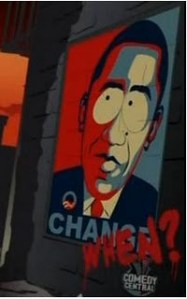 For a candidate that basically ran on the brag that he was the only candidate who genuinely opposed the Iraq War Resolution, Barack Obama sure turned into a President that is relying on similar Bushian war logic. The NYT’s Charlie Savage has a must read article up on the behind-the-scene maneuvers this President made on the way to joining the NATO operations in Libya. It seems that Obama rejected the views of top lawyers at the Pentagon who questioned the legal authority of the President to approve the operation without Congressional consent. Glenn Greenwald has some analysis of the article at Salon.
The growing controversy over President Obama’s illegal waging of war in Libya got much bigger last night with Charlie Savage’s New York Times scoop. He reveals that top administration lawyers — Attorney General Eric Holder, OLC Chief Caroline Krass, and DoD General Counsel Jeh Johnson — all told Obama that his latest, widely panned excuse for waging war without Congressional approval (that it does not rise to the level of “hostilities” under the War Powers Resolution (WPR)) was invalid and that such authorization was legally required after 60 days: itself a generous intepretation of the President’s war powers. But Obama rejected those views and (with the support of administration lawyers in lesser positions: his White House counsel and long-time political operative Robert Bauer and State Department “legal adviser” Harold Koh) publicly claimed that the WPR does not apply to Libya.
As Savage notes, it is, in particular, “extraordinarily rare” for a President “to override the legal conclusions of the Office of Legal Counsel and to act in a manner that is contrary to its advice.” Just imagine if George Bush had waged a war that his own Attorney General, OLC Chief, and DoD General Counsel all insisted was illegal (and did so by pointing to the fact that his White House counsel Alberto Gonzales and a legal adviser at State agreed with him). One need not imagine this, though, because there is very telling actual parallel to this lawless episode …
Obama is holding to the idea that the Libya operations fall short of the definition of “hostilities” and that the campaign does not fall under provisions of the War Powers Resolution which states that any “unauthorized hostilities” must be halted after 90 days. This is explained in more detail in the NY Times article itself.
“It should come as no surprise that there would be some disagreements, even within an administration, regarding the application of a statute that is nearly 40 years old to a unique and evolving conflict,” Mr. Schultz said. “Those disagreements are ordinary and healthy.”
Still, the disclosure that key figures on the administration’s legal team disagreed with Mr. Obama’s legal view could fuel restiveness in Congress, where lawmakers from both parties this week strongly criticized the White House’s contention that the president could continue the Libya campaign without their authorization because the campaign was not “hostilities.”
The White House unveiled its interpretation of the War Powers Resolution in a package about Libya it sent to Congress late Wednesday. On Thursday, the House speaker, John A. Boehner, Republican of Ohio, demanded to know whether the Office of Legal Counsel had agreed.
“The administration gave its opinion on the War Powers Resolution, but it didn’t answer the questions in my letter as to whether the Office of Legal Counsel agrees with them,” he said. “The White House says there are no hostilities taking place. Yet we’ve got drone attacks under way. We’re spending $10 million a day. We’re part of an effort to drop bombs on Qaddafi’s compounds. It just doesn’t pass the straight-face test, in my view, that we’re not in the midst of hostilities.”
The logical follow-up question is, of course, is Boehner acting in the interest of Republican politics or the rule of law? I’ll avoid that one and instead rely on other liberal writers to take the argument that even if Boehner is wrongly motivated, he’s got the action right. James Fallows writing for The Atlantic states that “Obama Is Wrong About Congress and Libya”. Fallows does not have Republican gamesmanship in mind.
But after three months of combat, and after several decades of drift toward unilateral Executive Branch action on matters of war and peace, Obama is doing a disservice to the nation, history, and himself by insisting that the decision should be left strictly to him. If the Libyan campaign ultimately “goes well,” he will not in any way lessen his own political and historic credit by having involved the Congress. If it goes poorly, he will be politically safer if this is not just his own judgment-call war. More important, in either case he will have helped the country if his conduct restores rather than further weakens the concept that a multi-branch Constitutional republic must share the responsibility to commit force. We can only imagine the eloquence with which a Candidate Obama would be making this exact case were he not in the White House now.
Additional analysis can be found at The New Yorker where Amy Davidson argues that bombing Tripoli is the very definition of hostilities.
But the War Powers Resolution doesn’t say anything about wars in which we have allies not counting, or ones the U.N. likes; it isn’t about lonely wars or bad wars, just wars. The Administration adds a second set of rationalizations, which make even less sense:
U.S. operations do not involve sustained fighting or active exchanges of fire with hostile forces, nor do they involve the presence of U.S. ground troops, U.S. casualties or a serious threat thereof, or any significant chance of escalation into a conflict characterized by those factors.
Is the point that, while we are bombing Libya, we are doing it from a distance, out of Qaddafi’s forces’ range, so there aren’t “exchanges” of fire, just one-way barrages—hostility, rather than hostilities? By the same reasoning, it wouldn’t count as war if any overwhelming force attacked anyone who couldn’t effectively hit back; that exemption could apply not only to cruise missiles and drones but to a column of tanks rolling into a village. Is the only concern of the War Powers Act—is our only concern about war—whether our own soldiers can be shot? Aren’t we also interested in making sure there is some accountability when our government decides to shoot? (Would, someday, Congress have a say when it came to human troops, but not robot soldiers?) A war is not simply a short-term public-health issue; it can inveigle our country diplomatically, financially, and morally for decades.
The other question is whether the Administration’s summary even describes the reality on the ground in Libya. (No “sustained fighting”?) And given reports of covert operatives, the pressure to end a stalemate, and the continuing threat to civilians, the assertion that there is no “significant chance of escalation” is mysterious—does it just mean that we promise we won’t go in too deep? Wishful words don’t dispel legal obligations.
So, why is Obama afraid of facing congress at this point in time? Senator Dick Durban–an Obama ally–is currently calling for Congressional authorization of the Libyan actions and his done the paper work.
U.S. Sen. Dick Durbin is backing many of his colleagues in the Senate as in believing that an act of Congress is needed to justify the U.S. military action in Libya.
While the U.S. has gone only so far as launching air strikes, Durbin says a joint resolution authorizing force, barring ground troops and setting an end date should be approved by Congress. Military operations involving Libya have been going on for three months.
“Congress alone has the constitutional authority and responsibility to declare war,” Durbin said. “The founding fathers were very clear that before we commit troops in an offensive situation, that the government can only do that with the approval of Congress. Now the Libyan situation is not as clear as some others but I think it’s clear enough that we should pass an authorizing resolution.”
Durbin says he would vote for it and says what President Obama is doing in Libya is the right thing.
Durbin is posed to do the authorization. It’s obvious that many Republicans and Democrats would probably support the measure. So, the question remains, why isn’t the President seeking congressional approval at this point?
Driving as Act of Radical Feminism
Posted: June 17, 2011 Filed under: Foreign Affairs, Saudi Arabia, Women's Rights | Tags: civil disobedience, Saudi Women, wheels of change 19 CommentsToday has been a very special day in Saudi Arabia. Some Saudi women are participating in “Wheels of Change” by driving  their vehicles as an act of civil disobedience against treatment of women in the nation.
Saudi activists, encouraged by the Arab Spring and by the outlets for expression offered through Facebook and Twitter, declared Friday a day for Saudi women to take to the streets, behind steering wheels.
Saudi Arabia remains perhaps the only country in the world where women are banned from driving — even though no law explicitly bars Saudi women from driving. Saudi leaders from King Abdullah on down have said they believe Saudi women should be allowed to drive.
Inside and outside Saudi Arabia, some tend to see the ban as a frivolous issue — the stereotype being a Saudi woman princess in sunglasses wanting a little independence as she drives to Starbucks for a latte.
Activists and writers like Eman Fahad al Nafjan, a blogger, doctoral student, and mother in Riyadh, call the impact of the ban profound, saying that it limits women’s mobility into female employment and education, despite efforts by King Abdullah to boost both. And in a kingdom that the International Labor Organization says is the only country in the Gulf Cooperation Council with a significant poverty rate, the ban is a drain on the resources of women, forcing many households to pay thousands of dollars a year for drivers, opponents say.
AJ is also reporting on these acts of civil disobedience against one of the most conservative monarchies in the area. This is truly an act of bravery in this country. Saudi Arabia has not yet experienced much civil unrest during the so-called “Arab spring’.
The subject of women driving was as puzzling as every woman-related issue in the tribal, patriarchal, and religious alloy of the Saudi mindset.
Women have driven in rural areas and in some compounds within cities all the time. There were no religious or legal pretexts to prevent women from driving. The opposition came from a group of religious scholars – purportedly for fear of “gender mixing” and anticipated sins – a fallacy that is obviously refuted by the fact that gender mixing is already in effect, whether women are in the back or the front seats of the cars – unless a parallel public world can be created for each sex, an idea which must occupy many scholars’ minds.
This was nothing new; religious views opposing women’s autonomy were the norms of Saudi scholars, fearing changes in the traditional gender roles. And when religious unrest contradicts official plans, the government often acts to keep the clerics in check. Examples are many, such as the beginnings of women’s education half a century ago and the opening of KAUST, the first co-educational university – which cost a known scholar his elevated position at the supreme committee of scholars.
I would like every one here to be aware of the bravery of the people in Saudi Arabia–the women and men–who are trying to bring modernity and women’s rights to what is unquestionably a misogynist society. For more information on the role of social media in this movement, see the BBC’s story here. Many Saudi women are posting videos and stories like the one above.
Friday Reads
Posted: June 17, 2011 Filed under: morning reads | Tags: ACORN, Budget talks, DIAPERS David Vitter, Fort Calhoun Nuclear Plant, Greek Debt Crisis, hypocrisy, Joe Biden, Lehman meltdown, Oiled Pelicans living in Georgia 16 Comments Good Morning!
Political witch hunts are interesting things. Ask me. One of my senators used his senate cell phone to call up and hire prostitutes from the infamous Washington Madam. He’s still in the U.S. Senate after he made his wife beg the press to stop hounding the family and spent a summer fleeing any and all press. The calls from Republican leadership for his resignation never came, yet Senator David Vitter broke the law and was caught with his “diapers down”. Where’s the media outrage over this pervert?
So, here’s another story about a Breitbart Witch Hunt. A report by the “GAO Finds Little to Support Congress’ Abolition of ACORN: Grass-roots consumer organization was driven into bankruptcy by conservative critics”. This was the predecessor to the current attacks on Planned Parenthood. Unsubstantiated lies bandied about by partisan news outlets appear to be able to successfully take out liberal organizations and people.
A report issued today by the Government Accountability Office(GAO) finds little to support the charges that led to the demise of the Association of Community Organizations for Reform Now (ACORN), a grassroots consumer advocacy organization driven out of existence by Congressional critics.
The GAO found that monitoring of awards to ACORN by government agencies generally consisted of reviewing progress reports and making site visits. Of 22 investigations of alleged election and voter registration fraud, most were closed without prosecution, the report found.
One of eight investigations of alleged voter registration fraud resulted in guilty pleas and seven were closed without action due to lack of evidence.
When will Democratic leadership and the press stand up to these witch hunts?
Robert Scheer has an excellent piece in The Nation called “The Seven Republican Dwarfs”. He points out at how the Republican candidates in the Presidential run are willfully ignorant of economic reality. He doesn’t spare Obama either.
Obama, who has been inconsistent and weak in reining in the Wall Street greed that got us into this deep economic morass, is now under no pressure from the opposition to improve his performance. The Republican knee-jerk reaction—government bad, big business great, and don’t dare say that the Wall Street scoundrels who created this crisis need a timeout—gets Obama off the hook from legitimate criticism he needs to hear. As the Wall Street Journal headlined the non-debate: “Candidates Run Against Regulation.”
It’s as if the sound government regulation of the financial industry implemented in response to the Great Depression—not its polar opposite, the radical deregulation fueled by Republican free market zealots—was the source of our banking meltdown.
It’s only a matter of time before we experience similar problems. It may come this summer if the game of playing chicken with US sovereign debt continues. We shouldn’t be Greece but we are being set up to suffer their current fate by the inability of political leaders to do the right thing instead of the politically expedient thing. The financial community is calling the current Greece situation the EU’s “Lehman moment”. We may have a second Lehmann moment coming up shortly. If bond vigilantes don’t see progress in US debt ceiling talks shortly, we may be facing increased borrowing costs. Right now, the flee from Greece is helping us. This disaster probably will not hurt the US unless the contagion goes from Greece to Ireland to Portugal and on to Spain. However, many tea party Republicans seem hell bent on recreating the post-Lehman meltdown.
The euro lost more than 2 percent against the dollar in the past two days and the cost of protecting corporate bonds soared to the highest level since January, with credit-default swaps anticipating about a 78 percent chance that Greece won’t pay its debts. Equities declined around the world, while a measure of fear in fixed-income markets jumped the most since November.
Market moves suggest heightened concern that authorities won’t be able to keep Greece’s debt troubles from spreading after Moody’s Investors Service said it may downgrade BNP Paribas SA and two other big French banks because of their investments in the southern European nation. The collapse of Lehman Brothers Holdings Inc. in September 2008 caused credit markets worldwide to freeze as investors fled all but the safest government debt.
“The probability of a eurozone Lehman moment is increasing,” said Neil Mackinnon, an economist at VTB Capital in London and a former U.K. Treasury official. “The markets have moved from simply pricing in a high probability of a Greek debt default to looking at a scenario of it becoming disorderly and of contagion spreading to other economies like Portugal, like Ireland, and maybe Spain, Italy and Belgium.”
VP Biden held talks with his bi-partisan gang of six on Thursday. He characterized the talks as progressing but also mentioned their are significant differences between the two parties.
Vice President Joe Biden said Thursday that he and congressional negotiators have done a “first serious scrub” of the entire federal budget but differences remain over big-ticket items that philosophically divide the two parties in their quest for an agreement that would raise the nation’s debt ceiling while putting in place long-term reductions to the nation’s $14.3 trillion debt.
Those big-ticket items include whether to increase tax revenues – which many Democrats want – and making changes to expensive entitlements like Medicare – which many Republicans support.
“Everybody wants an agreement,” Biden told reporters after a meeting in the Capitol with the bipartisan group of lawmakers and other top Obama administration officials. “That is sufficiently realistic to get to $4 trillion over a decade or so – in terms of reductions.”
He said the group would meet four days next week, as opposed to three days this week, and that each meeting would be longer than the two hours or so each meeting has been to date. He also said their staffs would work “around the clock” to support the talks.
There’s some good news for the Arabian Oryx. This is a fascinating herd animal that has been pulled back from the brink of  distinction.
Believed by many to be the inspiration behind the legends of the unicorn, the Arabian oryx, Oryx leucoryx, is a species of antelope believed to be hunted to extinction in the wild in the 1970s.
However, with the help of the captive breeding program of the International Union for Conservation of Nature (IUCN), the species has been reintroduced into the wild, and a population has now grown back to 1,000 individuals.
The creature, known locally as Al Maha, jumped three categories on the IUCN Red List of Threatened Species from “Extinct in the Wild” to “Vulnerable,” an unprecedented accomplishment.
“To have brought the Arabian Oryx back from the brink of extinction is a major feat and a true conservation success story, one which we hope will be repeated many times over for other threatened species,” says Razan Khalifa Al Mubarak, Director General of the Environment Agency-Abu Dhabi, in a press release.
“It is a classic example of how data from the IUCN Red List can feed into on-the-ground conservation action to deliver tangible and successful results.”
Other good news for animals comes from Georgia where Pelicans that were coated with Oil from the Gulf Oil Gusher have found a new home. The brown Pelicans have no only survived, they have laid some eggs!
Brown pelicans that survived being covered in oil during the April 2010 spill in Louisiana are laying eggs and having babies on Georgia’s coast, according to wildlife officials, Savannah Morning News reports. Hundreds of the birds were scrubbed clean following the disaster and moved to Georgia and other states. Wildlife officials were not sure if they would live, much less have babies. But they did, and they are, and wildlife officials are thrilled.
Tim Keyes, a coast bird biologist with the Georgia Department of Natural Resources has reported what could be the first known successful nesting of brown pelicans at Little Egg Island Bar, a state-protected wildlife area about 60 miles south of Savannah, according to the newspaper’s website savannahnow.com.
Keyes told the newspaper Wednesday he has counted 17 brown pelican chicks since May spread among eight nests tended by a parent that survived the oil spill. The birds were identified as having been removed from the spill and released in Georgia by bands placed around their legs.
Nebraska has a nuclear plant that sits north of Omaha on the flooding Missouri River. A breech has already occurred in a downstream levee and is flooding Hamburg, Iowa. How safe is the plant? Well,historically, not very and it’s now on a yellow alert. Here’s some information from the Bulletin of Atomic Scientists.
The Nuclear Regulatory Commission (NRC) issued a “yellow finding PDF” (indicating a safety significance somewhere between moderate and high) for the plant last October, after determining that the Omaha Public Power District (OPPD) “did not adequately prescribe steps to mitigate external flood conditions in the auxiliary building and intake structure” in the event of a worst-case Missouri River flood. The auxiliary building — which surrounds the reactor building like a horseshoe flung around a stake — is where the plant’s spent-fuel pool and emergency generators are located.
OPPD has since taken corrective measures, including sealing potential floodwater-penetration points, installing emergency flood panels, and revising sandbagging procedures. It’s extremely unlikely that this year’s flood, no matter how historic, will turn into a worst-case scenario: That would happen only if an upstream dam were to instantaneously disintegrate. Nevertheless, in March of this year the NRC identified Fort Calhoun as one of three nuclear plants requiring the agency’s highest level of oversight. In the meantime, the water continues to rise.
Yup, my youngest daughter is spending the summer with my oldest daughter not very far from the plant. Believe me, I’m not happy about all of the information provided in that report. You should definitely read the link because it seems the press aren’t reporting anything about the problem plant.
So, that’s what’s been on my computer screen this morning! What’s on your reading and blogging list today?
America’s Housing Problem
Posted: June 15, 2011 Filed under: The DNC, unemployment | Tags: Foreclosures, home prices, US housing market, US jobs market 11 CommentsThe global financial crisis that resulted from a housing bubble may be over for U.S. banks and financial institutions but the 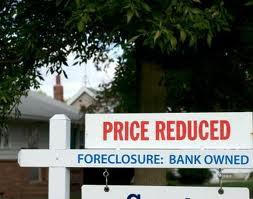 crisis is worsening for U.S. homeowners. Many mortgage holders still have underwater loans. Many home owners have absolutely no chance of selling their homes for any reasonable amount of money in a market that is now worse than the similar conditions present during The Great Depression. For many, the dream of home ownership has turned into a nightmare.
Prices have fallen some 33 percent since the market began its collapse, greater than the 31 percent fall that began in the late 1920s and culminated in the early 1930s, according to Case-Shiller data.
The news comes as the Federal Reserve considers whether the economy has regained enough strength to stand on its own and as unemployment remains at a still-elevated 9.1 percent, throwing into question whether the recovery is real.
“The sharp fall in house prices in the first quarter provided further confirmation that this housing crash has been larger and faster than the one during the Great Depression,” Paul Dales, senior economist at Capital Economics in Toronto, wrote in research for clients.
According to Case-Shiller, which provides the most closely followed housing industry data, prices dropped 1.9 percent in the first quarter, a move that the firm interpreted as a clear double dip in prices.
Moreover, Dales said prices likely have not completed their downturn.
“The only comfort is that the latest monthly data show that towards the end of the first quarter prices started to fall at a more modest rate,” he said. “Nonetheless, prices are likely to fall by a further 3 percent this year, resulting in a 5 percent drop over the year as a whole.”
Home equity has traditionally been a source of wealth and retirement savings for generations of Americans. Falling house prices not only have a negative impact on American wealth, they may be impacting the ability of American households to move where the jobs may be. The ability to move–called labor mobility by economists–is important in a recovery because it leads to stronger job markets.
Economists Colleen Donovan and Calvin Schnure have written an interesting new paper examining whether the fall in house prices since 2007 in the US — which has left many home-owners owing more on their house than it is worth — created a lock-in effect that depressed labor mobility.
This question has significance far beyond either the real estate market or the labor market, because there has been a persistent line of argument from some that the US’s current unemployment problem is not the result of insufficient demand, but is instead a “structural” problem resulting from the inability of the US economy to properly match people with available jobs. A frequent explanation for why it suddenly became difficult to match people with jobs in 2008 is that underwater mortgages have locked people in to their houses, reducing labor mobility and making job-matching more difficult.
The evidence presented in this paper indicates that the fall in house prices has indeed caused a “lock-in” effect, but has not significantly impacted labor market efficiency.
This may be an important factor in explaining persistent unemployment. There has been an argument out there that unemployment is due to ‘structural’ problems which would imply that government programs may not be effective as possible in solving job market issues. This study implies–along with recent data on falling household consumption–that the U.S. continues to have a demand problem. This means that traditional fiscal stimulus and programs could be an effective way to stop both the freefall in home prices and improve the employment outlook. Housing affordability is not an issue in this market. Home prices and mortgage interest rates are have made affordability metrics reach near-historic levels. Other factors are constraining the market.
More than four in every five mortgages now require a down payment of 20 percent, and credit history standards have tightened. At the same time, foreclosures continue at a brisk pace, pushing more supply onto the market and pressuring prices downward.
Then there is the issue of underwater homeowners—those who owe more than their house is worth—representing another 23 percent of homeowners who cannot leave or are in danger of mortgage default.
Indeed, the foreclosure problem is unlikely to get any better with 4.5 million households either three payments late or in foreclosure proceedings. The historical average is 1 million, according to Dales’ research.
We’re basically a situation where the Freddie and Fannie situation is unresolved. The historically low interest rates and high availability of cheap money means that huge institutions are making money from arbitrage and investing rather then lending and investing in non-financial projects. Small-to-medium sized businesses do not have the same funds availability of large corporations. Neither do consumers. Clearly, the Fed is going to start increasing interest rates as signs of price inflation appear on the horizon. This may wring the arbitration profit-seeking behavior of larger firms, but it will further squeeze consumers and small-to-medium businesses that have been hanging on waiting for increased demand.
This is a clear signal that the economy is experiencing demand-side problems which require fiscal policy solutions that stimulate demand. Meanwhile, Washington DC policy makers are focused on the long-term issue of fiscal sustainability. Republicans are still discussing debt default to the point that Fed Chairman Ben Bernanke made a point of mentioning the detrimental impact of that move in a recent speech. The strategy of playing chicken with the federal debt for personal political gain is a form of unpatriotic gamemanship.
Failing to raise the debt ceiling in a timely way would be self-defeating if the objective is to chart a course toward a better fiscal situation for our nation. The current level of the debt and near-term borrowing needs reflect spending and revenue choices that have already been approved by the current and previous Congresses and Administrations of both political parties. Failing to raise the debt limit would require the federal government to delay or renege on payments for obligations already entered into. In particular, even a short suspension of payments on principal or interest on the Treasury’s debt obligations could cause severe disruptions in financial markets and the payments system, induce ratings downgrades of U.S. government debt, create fundamental doubts about the creditworthiness of the United States, and damage the special role of the dollar and Treasury securities in global markets in the longer term. Interest rates would likely rise, slowing the recovery and, perversely, worsening the deficit problem by increasing required interest payments on the debt for what might well be a protracted period.
The focus of fiscal policy discussions should be to relieve downward price pressure in the housing market and provide job creation. Again, there are many ways to do this. The federal government can provide funds to states to keep up levels of public employment. They can fund law enforcement, public health, and education positions for states and municipalities to weather the prolong, slow recovery. These types of initiatives reduce the need for unemployment, medicaid, and other public services. They also maintain people in jobs that pay taxes and will feel safe enough to sustain household spending. This, in turn, creates customers for those small and medium-sized local businesses. It is clear that funding large corporations does not create local jobs. Funding small and medium-sized business through targeted loan programs in either community banks or the SBA could be used to direct monies to businesses that do hire locally rather than use their funds to expand global business.
Additionally, something must be done to help home owners in difficult positions. There appears to be no end to falling real estate prices. The government could help bottom out the market by providing more direct refinancing to under-water homeowners and those home owners who face foreclosure due to prolonged unemployment.
Clearly, the problem is political will. Nearly every administration–Republican or Democrat–facing similar poor economic conditions in the past has realized the gravity of these kinds of situation and have tailored fiscal programs to meet the challenges. This even includes the Reagan administration in the early to mid 1980s. No where in the beltway is there a discussion of policies that have been successfully used to solve these problems in the past. This isn’t even a case of dithering. This is a clear case of willful and deliberate ignorance.
Here’s a good example of the problem.
The dismal housing market news was compounded Wednesday by the National Association of Home Builders’ release of its monthly Housing Market Index. The index, which measures builder sentiment on the market, fell to a level of 13 on its 100-point scale. That’s three points below the previous month and the lowest level since September 2010. Any reading below 50 indicates negative sentiment about the market.
With fewer homes being built, fewer jobs are available and less revenue is generated for local, state and federal governments. Each new home built creates an average of three jobs for a year and generates about $90,000 in taxes, according to the group.
On the bright side, the NAHB noted that a poll it took of 2,000 2012 voters found that housing is still considered by the largest plurality of homeowners as their biggest investment.
Amid the troubling developments in housing, labor and elsewhere, the Obama administration has tried to push several new economic proposals, ranging from new training programs to tax relief.
President Obama is pleading for patience on the economy while at the same time urging the public to stay positive.
“The sky is not falling,” the president said during a stop in North Carolina two days ago.

 peej
peej Carissa
 bostonboomer
 dakinikat
 ecocatwoman
 jjlo
jjlo mablue2
 Mama Lopez
 peggysue22
 quixote
 skydancingguestblogger
 Mona (aka Wonk the Vote)





Recent Comments