
Impeachment Friday Reads: Full Speed Ahead
Posted: December 6, 2019 Filed under: Afternoon Reads, impeach trump 22 Comments
“Pineapple Bud,” Georgia O’Keeffe in Hawaii , 1939.
Good Afternoon Sky Dancers!
Congressional Democrats continue to make progress towards the goal of impeaching Donald J. Trump. Susan B Glasser —writing for The New Yorker–has interviewed Adam Schiff on “TRUMP, IMPEACHMENT, AND WHAT’S NEXT.” One of the largest hurdles for Schiff has been the way the White House has refused to cooperate with documents requests and ordered key witnesses to ignore subpoenas. This is likely to lead to an article outlined in the category of obstruction of justice.
… Schiff noted the dilemma that Trump had created for the House by refusing to coöperate with the impeachment inquiry—the first time a President had issued such a broad order. The House Intelligence panel heard from seventeen current and former Trump Administration officials who defied the President and agreed to testify, but senior figures, such as Trump’s acting chief of staff, Mick Mulvaney, refused, and not a single department agreed to hand over documents. “What Turley is arguing on behalf of the Administration is you should allow the President’s obstruction to succeed,” Schiff told me. “And that’s not a particularly powerful argument when the President continues to solicit foreign interference in our election.” Later, he added a clear preview of what one of the articles of impeachment against Trump will end up being: “You could not have a more open-and-shut case of obstruction of Congress.”
Still, Schiff told me that he knows there is more the investigation could learn and that it remains open, saying, tantalizingly, that “there may very well be a great body of evidence at the trial that’s not available to us today.” I pressed him on why, then, his panel had not subpoenaed some key witnesses, such as Trump’s personal lawyer Rudy Giuliani, to whom the President essentially deputized Ukraine policy; the Secretary of State, Mike Pompeo, who listened in on the famous July 25th call; or the Vice-President, Mike Pence, who met with Zelensky in Trump’s place in late summer, when Trump was withholding nearly four hundred million dollars in congressionally appropriated military assistance for Ukraine. Schiff said that there was no point in doing so, given that his panel had subpoenaed a dozen Administration officials, including Mulvaney, who had refused to comply.
In the case of John Bolton, Trump’s former national-security adviser, who, according to aides who testified, had called the Ukraine scheme a “drug deal,” Schiff told me that his staff had been in touch with Bolton’s legal team after a court recently ordered the former White House counsel Don McGahn to comply with a House subpoena, in hopes that the ruling would change Bolton’s mind. His staff said, “ ‘Hey, if you’re sincere, the McGahn ruling ought to persuade you,’ ” Schiff recalled. “They made it clear, ‘No, you subpoena Bolton, he’s going to sue you, and this will be tied up indefinitely in the courts.’ The long and the short of it is, though, given that the President is today trying to get foreign interference in the next election to help him, we do not feel that, when we already have overwhelming evidence, we should wait any longer.”

Georgia O’Keeffe’s ‘White Bird of Paradise,’ 1939
The Judiciary Committee spent a day listening to testimony on Trump’s guilt in terms of the U.S. Constitution, writers of the Constitution, and prior examples of impeached officials from both English and US History. This Washington Post headline suggests that more than the three democratic witnesses agree that Trump’s actions and words are impeachable. This headline suggests quite a few more than three actually: “More than 500 law professors say Trump committed ‘impeachable conduct’ “
More than 500 legal scholars have signed on to an open letter asserting that President Trump committed “impeachable conduct” and that lawmakers would be acting well within their rights if they ultimately voted to remove him from office.
The signers are law professors and other academics from universities across the country, including Harvard, Yale, Columbia, the University of California at Berkeley, the University of Michigan and many others. The open letter was published online Friday by the nonprofit advocacy group Protect Democracy.
“There is overwhelming evidence that President Trump betrayed his oath of office by seeking to use presidential power to pressure a foreign government to help him distort an American election, for his personal and political benefit, at the direct expense of national security interests as determined by Congress,” the group of professors wrote. “His conduct is precisely the type of threat to our democracy that the Founders feared when they included the remedy of impeachment in the Constitution.”

Cup of Silver Ginger, 1939 by Georgia O’Keeffe
Senate Republicans continue to be recalcitrant. However, they do not want to turn their role in the impeachment process into a joke. Politico reports today that “GOP leaders have no interest in turning the Senate into a circus with the hard-line demands of Trump’s House allies.”
On Wednesday, a conservative backbencher in the House issued an explosive request to Senate Judiciary Chairman Lindsey Graham: Subpoena the phone records of House Intelligence Chairman Adam Schiff.
On Thursday, Graham had a succinct response: “We’re not going to do that.”
The demand from Rep. Jim Banks (R-Ind.) reflects House Republicans’ eagerness to see Democrats squirm once impeachment moves to the GOP-controlled Senate and out of the “sham” process they’ve derided in the House.
“I’m talking to my Senate colleagues: here are the witnesses you should call and here are the questions you should ask,” said Rep. Chris Stewart (R-Utah). “It’s going to cast us in a different very light. This is a chance to tell the other side of the story.”
President Donald Trump has joined in as well, tweeting on Thursday that he wants to call Schiff, Speaker Nancy Pelosi and the Bidens as witnesses in his impeachment trial.
But Senate Republicans are beginning to deliver a reality check to the president and House Republicans that there are limits to what they can do.
“You got two different bodies here,” Graham, a stalwart Trump ally, told reporters on Thursday. “Are we going to start calling House members over here when we don’t like what they say or do? I don’t think so.”
Senate GOP leaders have signaled they intend to defend Trump wholeheartedly, but they’re also loath to let the upper chamber descend into chaos or divide their caucus ahead of a tough 2020 cycle. And even if Senate Republicans wanted to embrace the hard-line posture of the House, the party’s narrow majority makes that all but impossible under Senate rules.
Calling controversial witnesses will require near lockstep party unity from 51 of the 53 Senate Republicans to make any procedural maneuvers, a tough task given the diverse views in the GOP, according to senators and aides.

Heliconia’s Crab’s Claw Ginger (1939) by Georgia O’Keeffe.
This is from The Bulwark and Charles Sykes. I admit I am no fan of his and tend to grab the channel changer when I see him on MSNBC or elsewhere. However, this will give you some idea of what Republicans who are not part of the Trump Cult believe.
It now seems inevitable that at least one of the articles of impeachment will center on Trump’s obstruction of Congress and/or justice.
So this is a good time to step back and recognize the most salient fact about Trump’s obstruction: It is working.
As galling as it may be to acknowledge it, the reality is that Trump’s effort to obstruct Congress is a success, much like his well-documented efforts to obstruct the Mueller probe. The House decision not to push for the enforcement of its subpoenas virtually guarantees that the case will go to the Senate without volumes of pertinent evidence.
I am among those who think the evidence at hand is more than sufficient to justify Trump’s impeachment. But his partisan supporters will continue to declare the effort a sham and the case unproven while unironically complaining about the lack of direct evidence—and at the same time ignoring Trump’s all-out effort to conceal such direct evidence from Congress.
Historians, who will know far more about Trump’s conduct that we do now, will marvel at how much evidence of his misconduct was left on the table. They will have access to documents, emails, text messages, memoirs, and transcripts (possibly even eventual court documents, should we wind up with a case titled something like United States vs. Giuliani) that we have not seen.
At least some of them will write, “in fairness…” and then note the comprehensive nature of Trump’s obstruction. But, by then, Trump will have been acquitted by the Senate and claimed “total exoneration.”
For Trump, this is the lesson that he learned from the Mueller probe: Investigations can be successfully obstructed, the rule of law be damned.

Georgia O’Keeffe,Pink Ornamental Banana, 1939
NPR reports that Rep. Doug Collins, the top Republican on the Judiciary committee believes Trump should participate in the House inquiry. So far, the Congressman from Georgia has done himself no real favors in his performance to date. But, he may have some sway or not.
The Judiciary Committee is scheduled to hold its second hearing in the impeachment inquiry on Monday, when counsel for Democrats and Republicans on the Intelligence Committee will discuss the evidence against the president. In a letter on Thursday to the chairman of the Judiciary Committee, Rep. Jerry Nadler, D-N.Y., Collins said Republicans on the committee should be allowed a hearing day before articles of impeachment can move forward. Meanwhile, the White House faces a Friday deadline to inform the committee on whether it will participate in future proceedings.
A vote by the full House on whichever impeachment articles are adopted by the Judiciary Committee could come by the end of the month. The process would then move to the Senate, where 20 Republicans would need to break ranks and join Democrats to reach the 67 votes, or two-thirds majority, required to convict and remove the president from office.
Given those numbers, Collins said there is nothing to indicate impeachment can pass the Senate. “Many of us believe it’s already been decided,” he said. “Why waste our time?”

Georgia O’Keeffe, Hibiscus with Plumeria, 1939
So, it’s still basically looking like the Senate will likely not vote to remove Trump from Office and that Congressional Republicans can seethe all they want over whatever injustices they’ve invented. The Public, however, seems to have fairly consistent views of the matter. This is the latest from Forbes writer Karlyn Bowman.
Opinion is moving in a narrow range. Republicans oppose impeaching the president, Democrats favor the action. Independents are split. Polling in some key 2020 states suggests less support than the national polls for impeaching and removing Donald Trump. The president’s overall approval rating has hardly budged—in late September in the RealClearPolitics average of polls has him at 44%. But a closer examination of the polls unearths some meaningful findings that haven’t received much media attention.
First a quick update on recent polls. In CNN’s November 21-24 poll, 50% said President Trump should be impeached and removed from office. The responses were identical to CNN’s mid-October poll. When asked whether they felt strongly or not strongly, 91% of those who supported impeachment and removal said they felt strongly, as did 89% of those who felt strongly that he shouldn’t be impeached. In Quinnipiac’s late November poll, 45% of registered voters said he should be impeached and removed; 48% didn’t think so. In their late October poll, those responses were 48% to 46%. Eighty-six percent in the poll said their minds were made up. Only 13% said they could change their minds. A new FiveThirtyEight/Ipsos poll will follow the same people over the course of the next three months to see “if, when, or how Americans change their minds on the facts underlying the Trump impeachment inquiry.” In the initial commentary, the pollsters noted that since October “support for impeachment has been remarkably steady . . ., and Americans’ appetite for impeaching and removing Trump may have even started to plateau.” The early December Reuters/Ipsos poll describes opinion about whether Trump should face impeachment as “unchanged.” But what other kinds of questions are pollsters asking, and what do they tell us?
You may read about those questions at the link.
Today’s paintings are from Georgia O’Keefe’s 1939 trip to Hawaii. You may see more paintings and read about more about the trip here at Daily Art Magazine and Artsy.
What’s on your reading and blogging list today?
Monday Reads: Why do so many Americans have a Gun Fetish?
Posted: December 2, 2019 Filed under: American Gun Fetish, morning reads 19 Comments Good Morning Sky Dancers!
Sunday greeted New Orleans with 16 shootings including a Mass Shooting on Canal Street early Sunday Morning that injured 10 people with two in critical condition. Another shooting killed two later that day in the 7th ward, Our City’s crime has seen a downward trend in crime over the last 4 years but this isn’t exactly new to us or anywhere in the country.
Why do we have so many trigger happy Americans?
It’s amazing to me that the NRA can still have so much power after so much controversy surrounding its leadership and actions. It also amazes me that so many people seem to think they a “well regulated militia” doesn’t mean what they think it means. They to be a personal militia with no regulation. Hence,the real American Carnage … death by gun.
In a timely coincidence, today’s case at the Supreme Court deals with a Second Amendment Case. Many Republican politicians these days appear to recognize the Constitution only when it deals with this particular amendment and they’ve been busy stacking the court to be pro life except when it comes slaughter by gun.

Watch it burn, Gray Zhao
What may happen today at the Court? This is from today’s NYT. “After Long Gap, Supreme Court Poised to Break Silence on Gun Rights
Following a change in personnel, the court could expand the scope of Second Amendment rights and chastise lower courts that have upheld gun control laws.”
It has been almost 10 years since the Supreme Court last heard a Second Amendment case. On Monday, a transformed court will return to the subject and take stock of what has happened in the meantime.
The nation has had a spike in gun violence. And lower courts have issued more than 1,000 rulings seeking to apply the justices’ 2008 decision in District of Columbia v. Heller, which established an individual right to own guns but said almost nothing about the scope of that right.
The new case concerns a New York City ordinance that limited the transport of guns outside an owner’s home. Fearing a loss in the Supreme Court, to say nothing of a broad ruling from the court’s conservative majority on what the Second Amendment protects, the city repealed the ordinance and now argues that the case is moot. But the court may be ready to end its decade of silence, elaborate on the meaning of the Second Amendment and, in the process, tell lower courts whether they have been faithful to the message of the Heller decision.
Proponents of gun rights and some conservative justices say lower courts have been engaged in lawless resistance to the protections afforded under the Second Amendment by sustaining unconstitutional gun-control laws.
Again, what don’t they get about “well regulated” and the 18th century idea of a “militia”?
On Monday the court hears arguments in a case from New York, a city and a state with some of the toughest gun regulations in the country. Several gun owners and the NRA’s New York affiliate challenged the rules for having a handgun at home. They contended the city gun license was so restrictive it was unconstitutional.
Specifically, they said the state law and city regulations violated the right to bear arms because they forbid handgun owners from carrying their pistols anywhere other than seven firing ranges within the city limits. That meant that pistol owners could not carry their guns to a second home, or to shooting ranges or competitions in other states nearby. The lower courts upheld the regulations as justified to protect safety in the most densely populated city in the country.
But when the Supreme Court agreed to hear the gun owners appeal, the state and the city changed the law to allow handgun owners to transport their locked and unloaded guns to second homes or shooting ranges outside the city.
With those changes, the first question Monday will be whether the case is moot and should be thrown out because New York has already given the gun owners everything they asked for in their lawsuit.
“This is an instance where it appears the petitioners won’t say ‘yes’ for an answer,” says James Johnson, counsel for the city of New York.
But former Solicitor General Paul Clement, who represents the gun owners, counters that the amended regulations still give the city too much power to regulate.
“The city of New York never expressed any doubt about the constitutionality of these regulations when they were winning in the district court and the court of appeals,” argues Clement. “And then lo and behold, all of a sudden the city decides you know maybe we don’t need these regulations after all.”
And, he observes, the city is still defending the original regulations.
The city is indeed doing that because the justices refused in October to throw the case out on mootness grounds, opting instead to hear the mootness arguments today, along with the direct challenge to the regulations themselves.

Testing a “moot” law seems odd to me. New Orleans wasn’t the only city with gun violence yesterday. Two kids were wounded in a shoot out in the The Bronx. Trace.org includes all these stories in it’s gun related news today.
Two kids were wounded in a mass shooting in the Bronx. Five people, including a 10-year-old and 14-year-old boy, were shot on a retail strip in the South Bronx on the afternoon before Thanksgiving. An after-school program was about to start classes when the unknown gunman began firing at a busy intersection. The director of the program was unconsoled by the fact that all the victims survived. “That’s just luck,” he told The New York Times. “Every bullet has its own trajectory. We might not be so lucky next time.”
These shootings have also gone into the Gun Violence Archive where you can be horrifed by the list and dots on a map of the USA showing the 2019 shootings for the country.
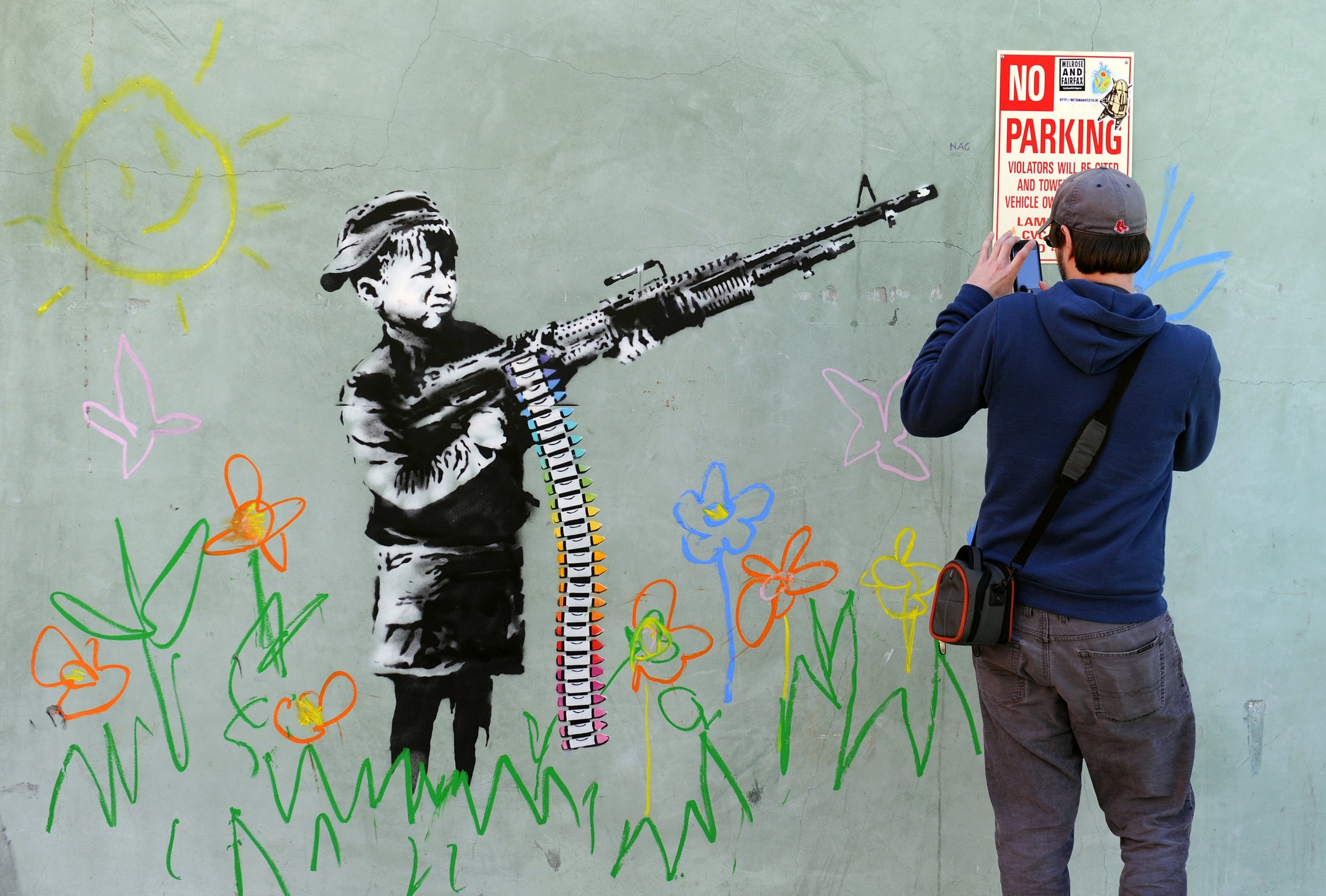
This hopeful analysis argues the case could “fizzle” but it also explains the politics involved. The Republicans are as entrenched as ever.
The mootness fight has taken on political dimensions. In August, Democratic Senator Sheldon Whitehouse of Rhode Island and four colleagues filed an unusually pointed brief that said the court would be undermining its own legitimacy if it ruled in the case.
The Democrats’ brief pointed to the millions of dollars spent by outside groups on recent Supreme Court battles. Trump’s two appointees, Neil Gorsuch and Brett Kavanaugh, were confirmed in the Senate on nearly party-line votes.
“To stem the growing public belief that its decisions are motivated mainly by politics, the court should decline invitations like this to engage in ‘projects,’” the Democrats argued, highlighting a word the challengers used in one of their court filings.
Whitehouse’s brief provoked an equally sharp response from Senate Majority Leader Mitch McConnell of Kentucky and his Republican colleagues. They told the justices to “stand firm” and “not be cowed by the threats of opportunistic politicians.”
Trump has had strong support from gun owners and the National Rifle Association since his 2016 campaign. He has occasionally stated support for expanded background checks — particularly when mass shootings lead to a public outcry — but later backed off, expressing doubt they would be effective in curbing gun violence.
The administration is urging the Supreme Court to decide the case, telling the justices the dispute is still meaningful because residents could seek damages.
The court has hinted it may want to rule. In October, the justices refused to dismiss the case as moot but said they would revisit the issue at the argument.

Time Magazine has interviewed Ukraine’s President Volodymyr Zelensky and has this bottom line. ‘I Don’t Trust Anyone at All.’
But he also pushed back on Trump’s recent claims about corruption in Ukraine, and questioned the fairness of Trump’s decision to freeze American aid. “If you’re our strategic partner, then you can’t go blocking anything for us,” he said. “I think that’s just about fairness. It’s not about a quid pro quo.”
Zelensky’s focus during the interview, as it has been throughout his time in office, was on the effort to end Ukraine’s war against Russia and its proxies, who still control two separatist strongholds in the region of Ukraine known as the Donbass. More than 13,000 Ukrainians have died as a result of that conflict, and more are killed or wounded every week. Yet the European attempts to mediate an end to the fighting have been stalled for over three years.
So much violence, so many lives, and so many power grabs and that’s enough for me today. I’m pretty sure the judiciary committee’s impeachment hearings will fill up the week shortly. His lawyers declined to become involved as did the Kremlin Potted Plant who complained that he will be in NATO meetings this week. Obviously this trip will interrupt his Presidential Fox an Friends time so he will be peevish.
President Donald Trump on Monday blasted House Democrats for holding impeachment hearings while he is at a NATO summit in London and claimed Ukrainian President Volodymyr Zelenskiy had cleared him of wrongdoing in an interview published earlier in the day.
Speaking to reporters as he departed the White House for the summit, Trump said Democrats had “decided” to hold the upcoming hearings at “the exact time” he’s in London. The president also said Zelenskiy “came out and said very strongly that President Trump did nothing wrong,” adding, “that should end everything, but that will never end it.”
Please go read that quote up there again and see if that’s your take away. It certainly isn’t mine.
Anyway, let’s get through the month and the year as well we can. Love to you all! May peace surround you!
What’s on your reading, blogging, and watching lists today?
Crass Commercialism-Free Friday
Posted: November 29, 2019 Filed under: morning reads | Tags: best of 2019 53 Comments
Jar Of Peaches, 1866 – Claude Monet
Good Morning Sky Dancers!
I’m trying to deliver a stress free Friday Read but you know how difficult that can be these days. Time for all of us to get lost in books and movies! What’s on your screen? What book is beside your bed today?
So, here’s some “best books” lists from various sources.
The first list is from The Smithsonian.
As the year draws to a close, we have clear favorites. We explored the caves, tombs and catacombs under our feet in Will Hunt’s Underground and Robert Macfarlane’s Underland. In Sarah Milov’s The Cigarette and Sarah A. Seo’s Policing the Open Road, we learned about tobacco and cars, two things we thought we knew until these books dug into their complex histories. And Jeff Gordinier’s Hungry, Kwame Onwuachi’s Notes From a Young Black Chef and Iliana Regan’s Burn the Place chart the bold and sometimes bumpy paths taken by three renowned chefs.
The top book by Publisher’s Weekly is this one!
Here’s something new for us: a graphic memoir is among our 10 best books of the year. It’s Mira Jacob’s Good Talk, and it’s a wonderfully enchanting memoir that couldn’t be more of-the-moment, with its take on race in America that’s equally smart, pointed, funny, and touching. (There is also some wisdom in there about how to deal with Trump-supporting in-laws.)
Jacob’s book is joined in our top ten by nine other works that together offer a kaleidoscopic take on what it means to be alive right now.
 And, here’s the one from the NYT Book Review team. Their first offering is Disappearing Earth By Julia Phillips.
In the first chapter of this assured debut novel, two young girls vanish, sending shock waves through a town perched on the edge of the remote, brooding Kamchatka Peninsula. What follows is a novel of overlapping short stories about the various women who have been affected by their disappearance. Each richly textured tale pushes the narrative forward another month and exposes the ways in which the women of Kamchatka have been shattered — personally, culturally and emotionally — by the crime.
My latest binge watch is HBO’s His Dark Dark Materials about a young girl in an alternative Time line. It was previously a movie of one of the books of the Trilogy (The Golden Compass) and the books by Phillip Pullman were published in the 1990s. It took me to this third episode to get reeled in.
The series is actually also on the BBC. It’s been playing on HBO first.
The eight-part adaptation tells the story of Lyra, the young protagonist who lives in Jordan College, Oxford. Placed there at the request of her Uncle, Lord Asriel, she lives a sheltered life amongst the scholars and college staff while under the watchful protection of The Master and Librarian Scholar Charles.
When the glamorous and mesmeric Mrs Coulter enters Lyra’s life she embarks upon a dangerous journey of discovery from Oxford to London. Here she meets Father Macphail, Lord Boreal and journalist Adele Starminster at a glittering society party where she first hears about the sinister General Oblation Board.
Lyra is subsequently thrown into the nomadic world of the boat dwelling Gyptians – Ma Costa, Farder Coram, John Faa, Raymond Van Geritt, Jack Verhoeven and Benjamin de Ruyter who take her North in her quest. Once in the North she meets charismatic aeronaut and adventurer Lee Scoresby who joins them on their epic journey and who becomes one of Lyra’s closest allies.

STILL LIFE, BOUQUET OF DAHLIAS & WHITE BOOK,HENRI MATISSE, 1923
Each human has an animal “daemon” that serves as its soul and conscious. The animals speak and are quite well done. Children’s daemon’s only take a permanent form when they become adults so Lyra’s changes form quite often.
NPR has listed its choices for best music of 2019. I’m glad to see Missy Elliot back on the list.
Missy Elliott not only justified the VMAs’ existence but also dropped the Iconology EP in August, reminding us just how vital and future-seeking she continues to be. “Throw It Back” appears on NPR Music’s monthly best-of list along with Normani‘s irresistible “Motivation” and a blistering rock song by Big Thief.
Take a visit to the Hall of Missy with some pretty great young women!
And this is worth the read to remember your childhood reading!!
https://twitter.com/NewYorker/status/1200434511819034625
So, it’s your turn!
What’s on your reading, watching, listening, blogging list today?
Manic Monday Reads: No US Institution is Sacred or Safe from KKKremlin Caligula
Posted: November 25, 2019 Filed under: Foreign Affairs, morning reads 43 CommentsGood Morning Sky Dancers!
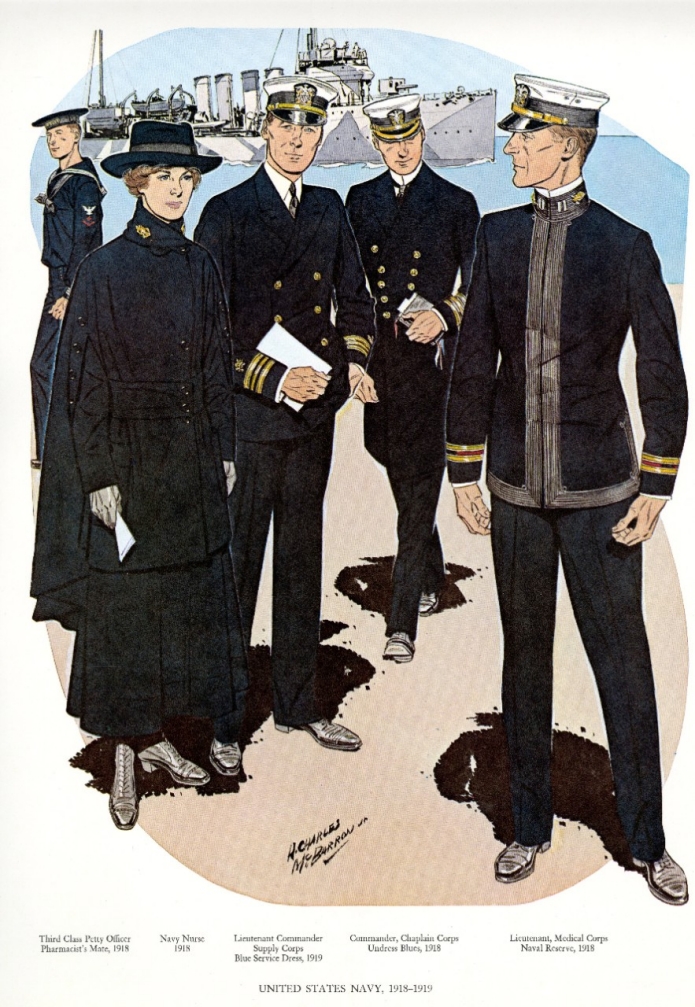
The US Navy is the latest institution to be undermined by Trumpist attacks on the Constitution and basic decency. The Navy–which is the the longest standing fighting force in the US–is just the latest institution undermined by Trump’s lack of morality and intelligence. Our relationships with other nations may never be the same as we break treaties and conventions meant to protect our country as well as our allies and friends.
This read is from NBC as reported by Alex Johnson. Here’s the headline: “Navy Secretary Richard Spencer fired in dispute over discipline of SEAL.” The Navy–as do our other branches of service–have strict codes on how to engage their duties. It is imperative to moral and behavior. Certain behaviors elicit institutional responses. War crimes are considered heinous and subject to specific action until now. Many of those actions listed as war crimes have been negotiated throughout history with allies and foes alike. They’re part of treaties. They’re actions that we promise not to commit because they are highly immoral and because we do not want our military committing them or being subjected to them.
But, we have a Criminal Syndicate in our Government acting as the Republican Party enabling their crime boss. They let him get away with anything.
From the link:
Navy Secretary Richard Spencer was fired Sunday by Defense Secretary Mark Esper, who ordered that a Navy SEAL who was acquitted of murder be allowed to remain in the elite commando corps, the Defense Department said.
Esper asked for Spencer’s resignation after President Donald Trump tweeted on Thursday that Chief Petty Officer Eddie Gallagher would retain the gold Trident insignia signifying his status as a member of the Sea, Air, and Land Teams, or SEALs. Spencer told reporters on Friday that he believed the review process over Gallagher’s status should go forward.
In a letter to Trump, Spencer said he acknowledged his “termination,” saying the president deserved a Navy secretary “who is aligned with his vision.”
“Unfortunately, it has become apparent that in this respect, I no longer share the same understanding with the Commander in Chief who appointed me,” Spencer wrote.
“In regards to the key principle of good order and discipline, I cannot in good conscience obey an order that I believe violates the sacred oath I took in the presence of my family, my flag and my faith to support and defend the Constitution of the United States.”
Shortly thereafter, Trump tweeted that he was displeased not only by the way that “Gallagher’s trial was handled by the Navy” but also because “large cost overruns from [the] past administration’s contracting procedures were not addressed to my satisfaction.”
“Therefore, Secretary of the Navy Richard Spencer’s services have been terminated by Secretary of Defense Mark Esper,” he wrote. He said he would nominate retired Adm. Kenneth Braithwaite, the U.S. ambassador to Norway, to succeed Spencer.
He forgave a murderer for perceived cost overruns? WTAF? The USA Today Editorial Board has all kinds of questions this morning that are worth considering. First among them is this: “Do Navy leaders have a ‘duty to disobey’ Trump in Gallagher case?”
Most Americans understand that, under military law, soldiers must disobey an illegal command. It’s a doctrine that demolished Nazi war criminals’ claims during the Nuremberg trials that they were just following orders.
But what if the order is legal, but unethical or even immoral? What is a member of the military to do then?
For some top Pentagon officials, the question might be more than hypothetical. They apparently resisted President Donald Trump’s efforts to protect a Navy SEAL accused of misconduct, and by late Sunday afternoon one of them — Navy Secretary Richard V. Spencer — was out of a job.
This issue came to a head last week, when Trump threatened to issue an order many senior military leaders see as bordering on unethical. The order would have effectively undermined efforts by a Navy leader to restore good order and discipline among the vaunted Navy SEALs.
A key focus was the conduct of Navy SEAL Edward Gallagher, who had earned a reputation as a rule-breaking “pirate,” accused of committing war crimes in Iraq, including the indiscriminate firing into a neighborhood with a machine gun and killing a teenage captive with a custom-made knife.
When the criminal case against Gallagher fell apart at trial in July, he was convicted only of posing in a photograph with the dead teenager and demoted. Right-wing commentators flocked to Gallagher’s defense, and Trump ordered Gallagher’s rank restored Nov. 15.

Career Diplomat and former Navy Gunnery officer Ambassador William H Sullivan appointed to Laos in 1964 by LBJ.
The Department of State is another institution undermined by the current usurper of the Oval Office. “As the Rich Get Richer, the Ambassadors Get Worse. Gordon Sondland embodies an age-old problem—one that the flood of donor money into American politics is only exacerbating.” is a feature article at The Atlantic written by Dennis Jett.
Sondland’s appointment succeeded even though it, too, was obviously transactional. The hotel owner did not support Trump for the Republican nomination and did little to get him elected. But once he won, Sondland wrote a big check. And just like magic, he was off to live in Brussels as the American ambassador to the European Union. Along with Trump’s personal lawyer Rudy Giuliani, Sondland became the president’s go-to guy for dealing with Ukraine—even though that country is not part of the EU. For Trump, it seems, Sondland’s disdain for note-taking was an asset, not a flaw.
National security is harmed when diplomacy is done badly. When the United States has a problem with another country, it can resolve it by diplomacy, force, or just ignoring it and hoping it goes away. When the first option is debilitated by putting incompetent presidential sycophants in charge of embassies, that leaves only the two other alternatives. If command of an aircraft carrier were handed over to a real-estate developer because he had contributed to a political campaign, the outrage would be immediate. But putting our soft power, our ability to conduct diplomacy, in the hands of the unqualified and clueless is somehow acceptable.
That Sondland gave bad diplomatic advice was clear in the cellphone conversation he had with the president on July 26 as he sat in a restaurant in Kyiv. Trump had personally intervened in favor of A$AP Rocky, an African American recording artist who was arrested and charged with assault in Sweden. Sondland, according to the testimony of the U.S. diplomat who was eating with the ambassador, suggested that Trump “let [the rapper] get sentenced, play the racism card, give him a ticker-tape [parade] when he comes home.” Sondland then helpfully added that Trump would be able to tell the Kardashians that he had tried to help A$AP Rocky. In other words, Sondland was encouraging the president’s impulse to let a celebrity family dictate the status of our relationship with a significant ally.

Lucile Atcherson Curtis (1894-1986) was the first woman in what became the U.S. Foreign Service.[1] Specifically, she was the first woman appointed as a United States Diplomatic Officer or Consular Officer, in 1923; the U.S. would not establish the unified Foreign Service until 1924, at which time Diplomatic and Consular Officers became Foreign Service Officers.
The terse exchange revealed the intense pressure that Trump’s style of governing has put on U.S. institutions and civil servants struggling to make policy across the federal government. From the moment he took office, Trump has shown little interest in working the traditional levers of state, which he views as slow, cumbersome and untrustworthy.
His national security advisers, meanwhile, have struggled and largely failed to adapt to his unusual approach to governing. Lt. Gen. H.R. McMaster, who was fired by Trump in 2018, sought to leverage the foreign policy bureaucracy’s expertise on behalf of a president with virtually no national security experience.
He convened frequent meetings of government experts from the CIA, State Department and Pentagon that Trump had little time for and drafted detailed decision memos that Trump never bothered to read.\After a year, Trump concluded McMaster’s collaborative approach to foreign policy was inefficient and prone to producing embarrassing leaks.
John Bolton, McMaster’s successor as national security adviser, opted for a more personal approach, jettisoning briefings by specialists in favor of informal one-on-one meetings. Foreign policy experts still put in long hours at the Eisenhower Executive Office Building next to the White House but rarely made the short walk to the Oval Office.
In her testimony, Hill revealed that Trump had not only never met the top Ukraine expert on his staff, Lt. Col. Alexander Vindman, but that the president also had been led to believe that Kash Patel, a former Republican Capitol Hill staffer working in the White House, was filling that role.

Photograph Vintage US Navy USS Vermont 1898
Indeed, nearly every aspect of our Foreign engagements has been turned on its head since Trump stole office. Here is an exclusive from Axios and Jonathan Swan. “Scoop: White House directed block of Armenian genocide resolution”.
Many were perplexed and outraged when, right after clashing with Turkish President Recep Tayyip Erdoğan in a heated Oval Office meeting on Nov. 13, Republican Sen. Lindsey Graham hurried back to the Senate floor and did something that likely delighted Erdoğan. Graham blocked a resolution that would have formally recognized Turkey’s genocide of the Armenian people.
Behind the scenes: Graham had just scolded Erdoğan over his invasion of Syria and attacks on the Kurds, according to sources in the room.

Carte-de-visite of a Civil Warsailor named Jim (Smithsonian Collection)
Friday Reads: Putting it all into Perspective
Posted: November 22, 2019 Filed under: morning reads 45 Comments
Good Morning Sky Dancers!
We’ve come to the end of the second week of impeachment hearings as well as entertained yet another Candidate Debate. It’s tempting to speak of winners and losers in a day and age where frequently there’s no clear delineation. Just think, we have an occupant of an oval Office that clearly and significantly lost the popular vote and appears to have won select states narrowly with so many shenanigans and one offs that the voters were the clear losers in that one.
But, I do want to put some of these things into some kind of perspective even if historians deride it later on. My Nana was a Christian Science practitioner since ridding herself of migraines through its prayerful practices as a young woman. She always saw that my parents had an annual subscription to The Christian Science Monitor and that my sister and I had one to National Geographic. She and my Granddad died in hospital so while my grandmother had beliefs, she also had perspective. Neither of my grandmothers could vote until well into middle age so I usually take myself to the polls with that in mind. It gives me perspective when I cherish every vote. I read this article this morning with Nana in mind and a nod to religious Matriarch Mary Baker Eddy.
This perspective comes from the CSM: “Impeachment’s rock stars: Powerful women” Truly, the stand outs in the hearings this week were the powerful women in the State Department and National Security. I particularly like this introduction by authors Jessica Mendoza and Story Hinckley on why they wrote the article.
One striking aspect of the impeachment hearings is the way they’ve showcased the experience and intellect of professional women. Regardless of the political outcome, women’s advocates say that’s significant.

M.C. Escher, “Bond of Union,” 1956.
Dr Fiona Hill and Ambassador Marie Yavanovitch were outstanding. They were clearly the kinds of women that terrify the Kremlin Potted Plant. Hill had the Republicans on the panel so stunned they quit asking her questions and some actually fled the hearing room. Laura Cooper and Jennifer Williams also refused to play GymBro’s Republican Games.
On Thursday, David Holmes, who served as Ambassador Yovanovitch’s chief policy adviser in Kyiv, testified in his opening statement about his “deep respect for her dedication, determination, decency, and professionalism.” He added that the “barrage of allegations” leveled against her were “unlike anything I have seen in my professional career.”
To be sure, Mr. Trump often treats his perceived enemies this way, regardless of their gender. But observers say there was a certain force to seeing a successful woman gracefully fend off such attacks in real time.
“No one would say that Yovanovitch’s testimony was anything less than a master class in integrity-led leadership,” says Jenna Ben-Yehuda, founder of the Women’s Foreign Policy Network, a global organization for women in foreign affairs. “It shows that leadership takes many forms. I hope we hold on to that.”
When Ms. Yovanovitch’s hearing wrapped on Friday, she received a standing ovation from the audience.

“Puddle”, M. C. Escher, 1952, woodcut
There were also women among the ranks of the Congressional Panel.
Women lawmakers have also been front-and-center in the impeachment drama. Two of the three Democratic women are black.
Florida Rep. Val Demings, one of three Democrats on the panel, came out hard against Ambassador Sondland on Wednesday, pressing him on the details of a phone conversation he had with Mr. Trump at a restaurant in Kyiv. California Rep. Jackie Speier – who as a congressional aide in the 1970s came under gunfire while investigating the Jonestown cult in Guyana – played a key role in the depositions of Ambassador Taylor and State Department official George Kent, according to transcripts. And Rep. Terri Sewell, the No. 3 Democrat on the panel and the first black woman to serve Alabama in Congress, has also been a vocal interrogator.
This NYT op ed by Glenn R. Simpson and
As the founders of Fusion GPS, the research firm that commissioned the reports by the former British intelligence officer Christopher Steele that raised some of the earliest warnings of Russia’s actions, we’re willing to clear up some of the nonsense now so ripe on the right.
House Republicans like Representatives Devin Nunes and Jim Jordan seem eager to portray Fusion as co-conspirators with the Ukrainians in some devilish plot to undermine Mr. Trump’s 2016 candidacy. That could not be further from the truth. None of the information in the so-called Steele dossier came from Ukrainian sources. Zero. And we’ve never met Serhiy Leshchenko, the Ukrainian former legislator and journalist who Republicans want to blame for the downfall of Trump’s campaign manager, Paul Manafort.
That said, our investigation of Donald Trump did get a great boost because of Ukraine, just not in the way Republicans imagine. We began looking into Mr. Trump’s business dealings and ties to Russia in the fall of 2015 with funding from Republicans who wanted to stop his political ascent. The Ukraine alarms went off six months later, when candidate Trump brought into his campaign none other than Mr. Manafort, a man with his own tangled history with Russian oligarchs trying to get their way in Ukraine.
It turns out we already knew a great deal about Mr. Manafort’s activities in Ukraine because we worked on several stories about his work for Russian-backed politicians eight years earlier, when we were both still writing for The Wall Street Journal. That reporting threw a spotlight on how Mr. Manafort, while representing clients involved in fierce geopolitical struggles over Ukraine, had neglected to comply with a lobbying law requiring that he register as a foreign agent — the very law, among others, to which he pleaded guilty to violating.
Those articles triggered years of media coverage exposing Mr. Manafort’s questionable lobbying activities and ties to pro Russia oligarchs. In the meantime, we left The Journal and went on to found Fusion GPS, a research and strategic intelligence firm, in 2010.
We turned our focus back to Mr. Manafort in early 2016 and soon found a 19-page legal filing in a federal courthouse in Virginia in which one of his former clients, the Russian businessman Oleg Deripaska, accused Mr. Manafort in scorching detail of making off with tens of millions of dollars that he had promised to invest in Ukraine. The whole thing reeked of fraud and possible money laundering. It was as if Mr. Manafort had boarded the Trump campaign plane with baggage stuffed with figurative explosives. The Virginia filings later surfaced in various articles about Manafort in the national media.
A few months later we stumbled on some Ukrainian media reports noting that documents existed in Kyiv that chronicled the political spending of the pro-Russia ruling party at the time, which had hired Mr. Manafort. We wondered if his name might crop up in those papers. Someone suggested Mr. Leshchenko might be of help in the matter — a fact we stored away. To this day, we have never met him.
The New York Times got to the story first, in August 2016, reporting that a black ledger of illicit payments showed that millions of dollars had gone into the pocket of one Paul Manafort. That story led to Mr. Manafort’s ouster from the campaign, and undoubtedly fueled F.B.I. interest in his activities, though the so-called black ledger was never used in the criminal cases against him.
We’d love to take credit for finding the black ledger, but we didn’t, and any alert reporter following the Ukrainian press would have known to follow the leads that led to it.
https://twitter.com/RPMcCartney/status/1197586272749080581

“Rimpeling – Rippled surface” (Cercles dans l’eau) Linoleum cut, 1950, on Japan paper, signed in pencil and inscribed ‘eigen druck , M.C. Escher
Another perspective this week comes from former Fox News Anchor Shepard Smith who put money and his mouth to support the idea of freedom of the press. Mr Smith was frequently the target of Trumpist barbs. This comes via the NYT.
In his first public remarks since abruptly resigning from Fox News last month, the anchor Shepard Smith called on Thursday for a steadfast defense of independent journalism, while offering a few subtle barbs at President Trump’s treatment of the press.
And in a surprise announcement, Mr. Smith said he would personally donate $500,000 to the Committee to Protect Journalists, a nonprofit group that advances press freedoms around the world.
“Intimidation and vilification of the press is now a global phenomenon. We don’t have to look far for evidence of that,” Mr. Smith said at the group’s annual dinner in Midtown Manhattan, an appearance he signed up for before he left Fox News, his television home of 23 years.
The crowd at the black-tie fund-raiser — which draws leading reporters, editors and executives from across the media industry — rose to its feet and applauded after Mr. Smith revealed his donation.
Here’s a perspective from History on one of the main issues coming up in the Democratic Presidential contest. This might be something to think about as we watch people panic in the street about the Health Care Discussion and the election.
And one final perspective from CNN and a few others: “Mr. Rogers’ most memorable moments. Fred Rogers has had a lasting impact on generations of children with his show “Mister Rogers’ Neighborhood” which ran for 31 seasons, from 1968 to 2001. “
From The Atlantic and Tom Junod: “My Friend Mister Rogers. I first met him 21 years ago, and now our relationship is the subject of a new movie. He’s never been more revered—or more misunderstood.”
I am often asked what Fred would have made of our time—what he would have made of Donald Trump, what he would have made of Twitter, what he would have made of what is generally called our “polarization” but is in fact the discovery that we don’t like our neighbors very much once we encounter them proclaiming their political opinions on social media. I often hear people say that they wish Fred were still around to offer his guidance and also that they are thankful he is gone, because at least he has been spared from seeing what we have become. In all of this, there is something plaintive and a little desperate, an unspoken lament that he has left us when we need him most, as though instead of dying of stomach cancer he was assumed by rapture, abandoning us to our own devices and the judgment implicit in his absence.
What would Fred Rogers—Mister Rogers—have made of El Paso and Dayton, of mass murder committed to fulfill the dictates of an 8chan manifesto? What, for that matter, would he have made of the anti-Semitic massacre that took place last fall in his real-life Pittsburgh neighborhood of Squirrel Hill? The easy answer is that it is impossible to know, because he was from a different world, one almost as alien to us now as our mob-driven world of performative slaughters would be to him. But actually, I think I do know, because when I met him, one of the early school shootings had just taken place, in West Paducah, Kentucky—eight students shot while they gathered in prayer. Though an indefatigably devout man, he did not attempt to characterize the shootings as an attack on the faithful; instead, he seized on the news that the 14-year-old shooter had gone to school telling his classmates that he was about to do something “really big,” and he asked, “Oh, wouldn’t the world be a different place if he had said, ‘I’m going to do something really little tomorrow’?” Fred decided to devote a whole week of his television show, Mister Rogers’ Neighborhood, to the theme of “little and big,” encouraging children to embrace the diminutive nature of their bodies and their endeavors—to understand that big has to start little.
What’s on your reading and blogging list today? What’s your perspective?

 peej
peej Carissa
 bostonboomer
 dakinikat
 ecocatwoman
 jjlo
jjlo mablue2
 Mama Lopez
 peggysue22
 quixote
 skydancingguestblogger
 Mona (aka Wonk the Vote)



 Sky Dancing
Recent Comments