
Thursday Reads: The Morning After
Posted: October 4, 2012 Filed under: 2012 presidential campaign, Affordable Care Act (ACA), Barack Obama, Medicaid, Medicare, Mitt Romney, morning reads, Social Security, U.S. Economy, U.S. Politics | Tags: first presidential debate, lies 53 Comments
Good Morning!!
OK, I don’t drink, but I still feel hung over. That debate last night was pathetic. Romney babbled incoherently, but sounded smooth. Obama made sense and gave specifics, but sounded hesitant and herky-jerky. We’ll have to wait and see what happens to the polls, but the consensus of the pundits and liberals on Twitter is that Romney won this one. I think Obama forgot he is the president and acted like a challenger. I simply cannot believe that neither Obama nor Jim Lehrer asked Romney about his “47 percent” remarks!
Anyway, I still have a nasty cold, I’m discouraged, and tired, so I’m just hoping this post will make sense. I’m going to link to some early reactions to the debate and leave it at that.
Jennifer Granholm has predicted a couple of times that Obama would lose the first debate. From Time’s Swampland:
You recently predicted that Obama would lose the first debate. Then you suggested that the media might assign him a loss whether he deserves a win or not. Can you explain that?
The first time, I mentioned two reasons why I think he’s going to lose. One is, he’s not in debate shape in the same way that Romney is. But more importantly, the media does not like a lopsided race, and it’s appearing to be lopsided at the moment. So in order to sustain the race, I think there will be a narrative of the comeback-kid Mitt Romney.
The candidates have been busy playing the low-expectations game. Are you just helping Obama be self-deprecating?
No, I’m just looking at it purely from who’s in practice and who’s not in practice … Part of that might be that the incumbent is confronted, on this national stage, in a way that he is not usually confronted … I don’t discount that he’s a good speaker, but he does speak in paragraphs, and debates are not the place to do that.
She was right. Now for some media reactions.
LA Times: Mitt Romney loves Big Bird, will kill funding for him anyway
No question, Mitt Romney’s extensive debate preparation is paying off. At least in the first half of the debate, he seemed more emotionally connected than President Obama with the material — making jokes and self-deprecating remarks and even invoking Big Bird in a discussion about the deficit and budget priorities….
Then, looking at moderator Lehrer, Romney said, “I’m sorry, Jim, I’m gonna stop the subsidy to PBS…. I like PBS, I love Big Bird — I actually like, you too — but I am not going to keep spending money on things [we have] to borrow money from China to pay for.”
IMO, Romney looked energetic, but he wasn’t funny. Frankly, the biggest problem for anyone debating Mitt Romney is that he is the most amazing liar ever. How do you debate someone who lies constantly and even tells conflicting lies? The only way it would be possible is if you had a moderator. Jim Lehrer was completely ineffectual. Just wait till we have to see Bob Schieffer try it. He’s around 80 isn’t he? I don’t think Lehrer is quite that old, and I think he lost consciousness a couple of times last night.
Ben Smith at Buzzfeed: How Mitt Romney Won The First Debate
Mitt Romney, trailing in the polls, needed to prove tonight that he could stand on stage with President Barack Obama as an equal and a plausible president of the United States.
He did that in the crucial first 40 minutes of Wednesday night’s debate, addressing Obama respectfully, even warmly — but then tangling with a sometimes hazy and professorial Obama on taxes and deficits.
“You don’t just pick the winners and losers — you pick the losers,” he told Obama of his energy investments, sliding time and time again into a second person singular address calculated to level the rhetorical playing field.Romney departed dramatically from the hard conservatism of his primary campaign, downplaying the scope of his tax cuts.
“There will be no tax cut that adds to the deficit,” he said, without fully explaining how he’d accomplish that.
In other words, Romney lied and neither the moderator nor the incumbent president challenged him on his lies. Obama was incredibly passive.
Talking Points Memo: Obama Supporters: Which Obama Was That?
The early consensus on the debate among the pundit class: Mitt Romney helped himself a lot with a strong first debate performance, President Obama didn’t. And that included plenty of commentators supportive of Obama as well.
“It looked like Mitt Romney wanted to be there and President Obama didn’t want to be there,” Democratic strategist and CNN contributor James Carville said. He later added Obama did not bring his “A game.”
Alex Castellanos, a former Romney advisor who has often been critical of his campaign, said he was surprised by his “very effective” performance.
Many were surprised that Obama appeared reluctant to go on offense, never mentioning many of his own campaign’s attacks on Romney over Bain Capital or his recent leaked remarks dismissing 47 percent of Americas “victims.” In general, commentators suggested he appeared less comfortable than Romney onstage.
Josh Marshall wrote something I heard Al Sharpton say on MSNBC last night. Romney committed himself to a lot things that are going to get him in trouble in the next few days when the pundits get over his surface performance and look at what he actually said.
Two things happened in this debate. Romney had the energy and focus, a long series of arguments packed and tight to dish out in the debate. He didn’t get distracted. He had a game plan he stuck to. What struck me a lot of times through the debate was that Obama seemed pained. He didn’t seem happy. And people like seeing happy people….
Romney’s focus though came at the cost of a few key things.
He basically tossed aside his own tax plan or said he would if his numbers didn’t add up. But then he insisted that he could find enough loopholes to close to afford a $5 trillion tax cut for upper income earners. These are more numbers on the table. That’s really what most of the debate was about — budget numbers. Romney insisted with a straight face that up was down….
The numbers simply don’t add up. Over a few news cycles that can build up really fast. He says he’ll push massive upper income tax cuts and those have to come at the cost of much higher deficits or big tax hikes for middle income people. His campaign agenda is based on a massive deception.
That’s the vulnerability Romney brings out of this debate. And it may be bigger than people realize.
Greg Sargent: A good night for Mitt Romney, but was it really enough?
Mitt Romney had a very good debate tonight. Though debates often reinforce existing perceptions, Romney took steps towards reversing his image as an out of touch plutocrat. During the extended jousts of numbers crunching, he humanized himself in an unexpected way — by converting his boardroom aura from something cold and aloof into an aura of earnestness. He skillfully played the part of the technocratic centrist he used to be and whose balanced approach to policy and government he has completely abandoned. Romney also landed clear blows when indicting the Obama recovery. He seemed particularly on message in claiming that the proof that Obama’s government centric policies had failed could be found in the current state of the economy.
Obama missed key opportunities.When invoking Romney’s suggestion that kids should borrow money from their parents to pay for college, he was far too polite and discursive and didn’t make the moment stick. His defense of Obamacare took too long to make the point that Romney, in repealing the law, would take insurance away from millions without replacing it with anything.
That said, Obama won some understated victories. He won the battle over Medicare; Romney was effectively defined by that exchange as Mr. Voucher. Obama did a decent job in exposing Romney’s lack of specificity on many of the issues that were discussed tonight, and tied them together into a larger pattern of evasiveness on Romney’s part.
Ed Kilgore: Spin Room
I gather from brief glances at Twitter and initial reaction at NBC that Mitt won pretty big on style points.
A lot of progressives are beside themselves that Obama didn’t mention Bain Capital, didn’t mention the 47%, didn’t mention the Ryan Budget (except indirectly), didn’t mention inequality, didn’t mention abortion/contraception, didn’t mention immigration. Very heavy emphasis, as I noted, on Mitt’s “vagueness.” ….
You know, I’m often a bad judge of these things because I really don’t give much of a damn about “energy levels” or “aggressiveness,” and I tend to care a lot when I know a candidate is lying through his or her teeth. But if viewers thought Obama was phoning it in, that will matter, and it will matter a lot more if they are being told by every talking head in Christendom that Romney won big.
The $64,000 question is whether this will have an impact on actual candidate preferences, which have been amazingly stable.
Jonathan Chait: The Return of Massachusetts Mitt.
Tonight’s debate saw the return of the Mitt Romney who ran for office in Massachusetts in 1994 and 2002. He was obsessive about portraying himself as a moderate, using every possible opening or ambiguity – and, when necessary, making them up – to shove his way to the center. Why he did not attempt to restore this pose earlier, I cannot say. Maybe he can only do it in debates. Or maybe conservatives had to reach a point of absolute desperation over his prospects before they would give him the ideological space. In any case, he dodged almost every point in the right wing canon in a way that seemed to catch Obama off-guard.
Romney was able to take advantage of the fact that Obama has a record, and he does not. Obama has had to grapple with trade-offs, and Romney has not. So Romney is a candidate of a 20% cut in tax rates, a new plan to cover people with preexisting conditions, and higher defense spending, and he will accomplish it all by eliminating federal funding for PBS. He would not accept that his proposal would result in any tradeoffs at all – no lower funding for education, no reductions in Medicare for anybody currently retired. He insisted his plan would not cut taxes for the rich, which is false. He described his proposal to allow people with continuous health insurance to keep it – a right that, as Obama already noted, already exists, and is therefore a meaningless promise – as a plan to cover all people with preexisting conditions.
Romney did not waste a breath. Obama wasted many, with “uhs” and long, wonky discursions. He went on long, detailed riffs defending his policies, with attacks on Romney few and far between. Romney added little to his longstanding indictment of Obama, but defined himself far more effectively than he has before.
I do think the instantaneous, echo chamber reaction that is handing Romney an overwhelming victory is overstated. Romney made a huge error selling his Medicare plan, promising, “if you’re around 60, you don’t need to listen any further.” It was a moment he went from smooth to oily – when you urge voters to stop paying attention, and especially on an issue where they start off distrusting you, it heightens the distrust. Obama replied, “if you’re 54 or 55, you might want to listen, because this will affect you.”
Okay, that should be enough to get you started. I’m already not quite as upset as I was a little while ago, because I think it’s true that Romney is going to be confronted with all the lies and backtracks he pulled in this debate.
So what are you reading and blogging about today? This is an open thread–you don’t have to discuss the debate.
Live Blog: First 2012 Presidential Debate
Posted: October 3, 2012 Filed under: 2012 presidential campaign, Barack Obama, Health care reform, Live Blog, Media, Mitt Romney, U.S. Economy, U.S. Politics | Tags: 2012 presidential debates, Jim Lehrer 180 Comments
Nate Beeler, Columbus Dispatch
Finally the big night has arrived!
The first presidential debate between Barack Obama and Mitt Romney will take place tonight at 9PM in Denver, Colorado. The moderator will be Jim Lehrer of PBS. You can watch the debate on CNN, C-Span, or live stream it at multiple sites around the internet. Lots of people are boycotting CNN because they haven’t fired Erick Erickson. I plan to stream it on the C-Span site.
This has to be one of the most hyped presidential debates in history. I know all you Sky Dancers are extremely knowledgeable and don’t need to be told what to watch out for in the debate, but I’ll provide a few links just so you can see what different blogs are saying about it.
Talking Points Memo:
What to What To Look For In The Debate — And How To Unspin It. Brian Beutler will be watching for what the candidates say about a number of issues from a liberal point of view.
health care reform – How will Romney differentiate Obama care from Romney care?
Medicare and Medicaid – These have become difficult issues for Romney. Beutler doesn’t say this, but I’ll be watching to see if President Obama uses this to his advantage and especially if he makes a real commitment to protect these important programs.
Welfare – Romney made a big issue of welfare based on a blatant lie about Obama’s policies. Will Obama call him out on it? How will Romney try to fudge his lies?
Taxes – Romney claims he can lower taxes for everyone and still cut the deficit. Everyone knows that’s impossible. Can Obama force him to get into specifics and defend the indefensible?
Tax Returns – Journalists have been digging out lots of embarrassing tidbits from Romney’s recently released 2011 return. Will Obama get into the nitty gritty? How will Romney defend his low tax rate?
47 Percent – This will be huge for Obama to hit Romney on. Can Romney defend his ugly remarks? Polls show they have had a powerful effect on voters around the country.
The Wall Street Journal
has a piece today that reflects expectations for the debate from the conservative side. Apparently the Romney campaign is mostly focused how how they’ll spin the debate to best effect.
Wednesday’s debate will offer an important moment to help shape the Romney campaign’s message moving forward. Here’s a look at how they plan to capitalize on it.
Team Romney’s debate-monitoring strategy is, essentially, broken into three parts. A group of staffers in an annex office in Boston have their own version of a war room to monitor televisions, debate transcripts and Twitter. That helps feed the rapid response effort – a group of some two dozen staffers in a second-floor conference room in Boston.
Unlike past debates where the response crew pumped out lengthy research documents, this time they’ll focus on pithier push-back using Twitter and Tumblr. The strategy is partly to inform the media, but it’s also designed to provide supporters with simple talking points.
Politico spells out the Republican point of view
on what to watch for in the debate. I’ll just give you some brief excerpts. They say Romney has to
be aggressive without attacking the president, who has high personal approval ratings too fiercely. He has to seem tough but also presidential, assertive but not snide. He has to accuse Obama of not being honest with voters, without sounding shrill.
As for Obama, they say he needs to attack Romney aggressively while still maintaining his nice guy image.
Fact one: Obama’s surge against Romney was powered by a relentless, pounding summertime assault — led by surrogates and staff for the most part — on his challenger’s fitness to lead and capacity to comprehend the struggles of regular working people.
Fact Two: Obama’s surge was also fueled by a huge lead over Romney on personal approval — and that edge could disappear if he appears too negative tonight.
Politico says the 47 percent issue and Libya will be the biggest vulnerabilities for Romney and Obama respectively.
There is a substantial chance that either candidate will say something new, and memorable, when answering a question about one of those topics, which have posed problems for Romney and Obama, respectively, over the past few weeks. There’s a moderate chance both will.
Romney is well aware that he will be asked about his remarks, secretly videotaped at a fundraiser last May, that 47 percent of Americans — those backing the president in his reelection bid — considerer themselves “victims” and expect free things from government.
….
The administration’s initial claim, that the Benghazi protest was modeled after one taking place in Egypt against a video that expressed anti-Muslim sentiment, has been disputed. Nine days after the attack on the Sept. 11 anniversary, White House press secretary Jay Carney described it as a “self-evident” terror attack, but one of “opportunism,” not premeditation.
That description has also changed. While the issue is not dominating all cable news coverage as it did in the first few days after the death of four American diplomats, for Republicans, it cuts to the heart of Obama’s strength on foreign policy, historically a Republican calling card in national elections but an area that has favored the president since the killing of Osama bin Laden.
Politico also suggests that Obama “may not be ready for prime time,” and that Romney may have a chance to “get under Obama’s skin” early on. Finally, they expect both candidates to bring up Bill Clinton.
As with the WSJ, Politico–which gets plenty of leaks from the Romney campaign–is more focused on style than substance. We have to assume that is Romney’s focus as well. No mention of the famous “zingers” that Romney has been rehearsing for months.
Romney made a little news in the past few days.
Today he said that he will not continue Obama’s program of giving work permits to undocumented immigrants who were brought to the U.S. as children, but he wouldn’t take away any permits that have been given out before he became president.
If elected president, Mitt Romney would not continue the new program that grants work permits and suspends deportation for two years for undocumented immigrants brought to the United States as minors, his campaign says, according to the Boston Globe.
Romney would not revoke work permits for people who obtain them by the time he would take office, on Jan. 20, but he would not grant any after that, the campaign says, according to the Boston Globe report.
Critics of Romney’s latest position on the initiative say it will doom the vast majority of the more than 1 million people who could be eligible for it. Since the U.S. Citizenship and Immigration Services, USCIS, began accepting Deferred Action for Childhood Arrivals applications on Aug. 15, only 29 people have been granted deferred action and work permits.
Romney has also been talking about a cap on tax deductions as a way to pay for his tax cuts on top earners.
The Obama campaign seized on Romney’s comments in an interview with a local TV station in Colorado Monday night, saying that his mention of a possible $17,000 cap on itemized deductions would mean higher taxes for “many families.”
The campaign used the example of a family of four making $125,000 a year, and another of a family of three with an annual income of $85,000. Both, the Obama campaign said, would claim more than $17,000 a year in tax deductions, meaning that under Romney’s idea of a cap they would pay more than they do now.
But a Romney campaign adviser not authorized to speak publicly said that the biggest number used by the Obama campaign to come up with its result was one not included under a cap system: the tax exclusion for employer-provided health insurance. This was a $16,000-a-year value under the Obama campaign example, but without that number, in its scenarios the two families would get a tax cut, instead of paying more, according to the Romney advisor.
An Obama campaign adviser, who spoke on the condition he not be identified, said that “even if health is not included, it’s very easy to get to the same math starting with the mortgage interest deduction.”
So those two issues might come up in the debate.
Personally,
I expect Romney to come out swinging like he did against Newt Gingrich in the Florida Primary debate. If he’s too wired, I think he could hurt himself early on by coming across as a boor, which is never difficult for him. I think he’ll also hurt himself badly if he doesn’t come out with some straight talk about the numbers in his tax plan.
For Obama, I agree with Politico that he needs to be aggressive, and I don’t think he needs to worry about coming across as mean. He would have to go a long way for anyone to think he has a nastier attitude than Romney. I also want to see Obama stand up strongly for the social safety net and make a real commitment to protect it. I’m sure Jim Lehrer will bring up Simpson-Bowles, and I’d like to see Obama explain why there are serious problems with the media’s favorite hobby-horse. Finally, I think he needs to push Romney hard on abortion and birth control.
What will you be watching for tonight?
Game, Set, Match! It’s Over for Romney and Ryan
Posted: October 2, 2012 Filed under: 2012 presidential campaign, Mitt Romney, open thread, U.S. Politics | Tags: Ayn Rand Sickos, Paul Ryan 24 CommentsAre you watching Rachel Maddow?
She just interviewed Huffington Post’s Ryan Grim, who got hold of some tape of Paul Ryan saying much the same kinds of things as Mitt Romney said in his secretly recorded speech to high dollar donors in Florida. Grim writes:
Mitt Romney and his running mate, Paul Ryan, share a similarly dim view of a very large portion of Americans, according to previously unreported remarks by Ryan. Both believe that many of their fellow citizens are dependent on government and have no motivation to improve their lives — but they disagree over the precise number.
Romney’s estimate, famously, is 47 percent. For Ryan, it’s 30 percent.
“Seventy percent of Americans want the American dream. They believe in the American idea. Only 30 percent want the welfare state,” Ryan said. “Before too long, we could become a society where the net majority of Americans are takers, not makers.” (It’s not definitively clear whether Ryan said “the welfare state” or “their welfare state.” HuffPost originally transcribed it as “their welfare state.” Regardless, the comment was made in reference to people on government assistance.)
Ryan’s comments were delivered as part of his keynote address at The American Spectator’s 2011 Robert L. Bartley Gala Dinner, which the magazine posted online. A reader tipped HuffPost to Ryan’s speech, given in November — six months before Romney’s videotaped remarks.
Grim said that these videos have been available for some time, but no one drew attention to them. Someone passed them to Grim, and he just got around to watching them over the weekend, and he has posted he following video. There are more coming, he says.
As JJ would say, this is a motherf&cking smackdown of a pre-debate open thread!
Romney, GOP Appear to be Planning “October Surprise” on Libya . . . Will it Work?
Posted: October 2, 2012 Filed under: 2012 presidential campaign, Foreign Affairs, Libya, MENA, Middle East, Mitt Romney, U.S. Military, U.S. Politics | Tags: ambassador Chris Stevens, Barack Obama, Benghazi attacks, Craig Unger, Darrell Issa, Jason Chaffetz, Jimmy Carter Strategy, October surprise 41 Comments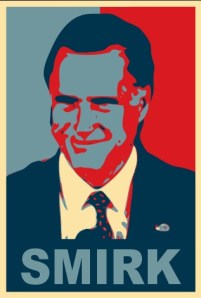
The Romney campaign and the GOP appear to be rolling out an “October Surprise” in the leadup to to tomorrow night’s presidential debate.
On Sunday, the Wall Street Journal published an op-ed by Mitt Romney in which he supposedly proposed “A new course for the Middle East. Here’s the opening:
Disturbing developments are sweeping across the greater Middle East. In Syria, tens of thousands of innocent people have been slaughtered. In Egypt, the Muslim Brotherhood has come to power, and the country’s peace treaty with Israel hangs in the balance. In Libya, our ambassador was murdered in a terrorist attack. U.S. embassies throughout the region have been stormed in violent protests. And in Iran, the ayatollahs continue to move full tilt toward nuclear-weapons capability, all the while promising to annihilate Israel….
Yet amid this upheaval, our country seems to be at the mercy of events rather than shaping them. We’re not moving them in a direction that protects our people or our allies.
What follows is several paragraphs of criticism of President Obama’s policies as Romney interprets them. For example, Romney accuses the President of “allow[ing] or leadership to atrophy,” “misunderstanding our values,” and “thinks that weakness will win favor with our adversaries,” but provides no evidence for these claims.
The only “solutions” Romney puts forward are also vague. He argues that we must develop a “coherent strategy” of supporting our Middle Eastern allies and also “restore our credibility with Iran.” Based on Romney’s previous statements, he seems to be suggesting that somehow if he is President, the Iranians will be more terrified of him than weak, Carter-like Barack Obama.
It means placing no daylight between the United States and Israel. And it means using the full spectrum of our soft power to encourage liberty and opportunity for those who have for too long known only corruption and oppression. The dignity of work and the ability to steer the course of their lives are the best alternatives to extremism.
But this Middle East policy will be undermined unless we restore the three sinews of our influence: our economic strength, our military strength and the strength of our values. That will require a very different set of policies from those President Obama is pursuing.
Yesterday Craig Unger wrote that he had learned from an anonymous source that GOP operatives will
unleash a new two-pronged offensive that will attack Obama as weak on national security, and will be based, in part, on new intelligence information regarding the attacks in Libya that killed U.S. Ambassador Chris Stevens on Sept. 11.
The source, who has firsthand knowledge of private, high-level conversations in the Romney camp that took place in Washington, D.C., last week, said that at various times the GOP strategists referred to their new operation as the Jimmy Carter Strategy or the October Surprise.
He added that they planned to release what they hoped would be “a bombshell” that would make Libya and Obama’s foreign policy a major issue in the campaign. “My understanding is that they have come up with evidence that the Obama administration had positive intelligence that there was going to be a terrorist attack on the intelligence.”
The source described the Republicans as chortling with glee that the Obama administration “definitely had intel” about the attack before it happened. “Intelligence can be graded in different ways,” he added, “and sometimes A and B don’t get connected. But [the Romney campaign] will try to paint it to look like Obama had advance knowledge of the attack and is weak on terrorism.”
“Chortling with glee?” The apparent goal of all this GOP strategizing is to make Barack Obama look like Jimmy Carter circa 1980. Romney and Ryan have both been trying to do this for months, with little effect.
To be honest, I’m having a hard time taking all this too seriously, but today Reps. Darrell Issa and Jason Chaffetz of the House Committee on Oversight and Government claimed to have information to prove that:
Despite two explosions and dozens of other security threats, U.S. officials in Washington turned down repeated pleas from American diplomats in Libya to increase security at the U.S. consulate in Benghazi where the U.S. ambassador was killed…
In a letter to Secretary of State Hillary Rodham Clinton [read the full letter here (pdf), Chairman Darrell Issa and Rep. Jason Chaffetz of the Oversight and Government Reform Committee said their information came from “individuals with direct knowledge of events in Libya.”
Issa, R-Calif. and Chaffetz, R-Utah said the Sept. 11 attack in Benghazi that killed Ambassador Chris Stevens and three other Americans was the latest in a long line of attacks on Western diplomats and officials in Libya in the months before Sept. 11.
The letter listed 13 incidents, but Chaffetz said in an interview there were more than 50. Two of them involved explosive devices: a June 6 blast that blew a hole in the security perimeter. The explosion was described to the committee as “big enough for forty men to go through”; and an April 6 incident where two Libyans who were fired by a security contactor threw a small explosive device over the consulate fence.
“A number of people felt helpless in pushing back” against the decision not to increase security and “were pleading with them to reconsider,” Chaffetz said. He added that frustrated whistleblowers were so upset with the decision that they were anxious to speak with the committee.
Issa and Chaffetz will hold a hearing on the issue next Wednesday, October 10.
Just a side note: Jason Chaffetz is a convert to Mormonism who attend BYU and is a Romney surrogate. He also spoke at the Republican Convention.
The Wall Street Journal fired another salvo today with another op-ed by Bret Stephens: Benghazi Was Obama’s 3 a.m. Call Here’s the concluding paragraph, which sums up the entire argument pretty well:
The U.S. ignores warnings of a parlous security situation in Benghazi. Nothing happens because nobody is really paying attention, especially in an election year, and because Libya is supposed to be a foreign-policy success. When something does happen, the administration’s concerns for the safety of Americans are subordinated to considerations of Libyan “sovereignty” and the need for “permission.” After the attack the administration blames a video, perhaps because it would be politically inconvenient to note that al Qaeda is far from defeated, and that we are no more popular under Mr. Obama than we were under George W. Bush. Denouncing the video also appeals to the administration’s reflexive habits of blaming America first. Once that story falls apart, it’s time to blame the intel munchkins and move on.
Jake Tapper also helped out by trying to get White House spokesman Jay Carney to comment on the charges from Issa and Chaffetz. Here’s the response:
Carney said that “embassy security is a matter that is in the purview of the State Department,” and noted that “Secretary Clinton instituted an accountability review that is underway as we speak” while the investigation of the attack itself is being conducted by the FBI.
The press secretary said that “from the moment our facility was attacked” the president has been focused on providing security to all diplomatic posts “and bringing the killers to justice.”
About the list of security issues, Carney said it was a “known fact that Libya is in transition” and that in the eastern part of Libya in particular there are militant groups and “a great number of armed individuals and militias.”
So I guess we can expect Romney to attack President Obama on the Libya issue during tomorrow night’s debate, no doubt accompanied by the famous Romney smirk. Obama should be prepared though, since the “October Surprise” has been so clearly spelled out by multiple media sources.
Is there more to it? Will it work? I kind of doubt it, because it’s clear from the polls that Romney has already destroyed his credibility with voters. But I could be wrong.
What do you think?
Tuesday Reads: Romney and Zingers, Environmental Activism, and A Bit of Schadenfreude
Posted: October 2, 2012 Filed under: 2012 presidential campaign, Banksters, Barack Obama, Environment, Environmentalists, Mitt Romney, morning reads, U.S. Politics | Tags: Donald Trump, Eric Schneiderman, federal lands, first presidential debate, Haley Barbour, Harry Reid, James Bruggers, Jamie Dimon, JP Morgan, public lands, Tar Sands blockade, zingers 76 Comments
Good Morning!!
I have some interesting links today–some of them a couple of days old, but even if you’ve seen them, they bear repeating.
First up, there’s just one more day until the first presidential debate. I just can’t wait to hear those “zingers” Mitt Romney’s advisers told the NYT he has been practicing for months.
Mr. Romney’s team has concluded that debates are about creating moments and has equipped him with a series of zingers that he has memorized and has been practicing on aides since August. His strategy includes luring the president into appearing smug or evasive about his responsibility for the economy.
Since August? I hope they haven’t gotten stale. Apparently they’re hoping Obama will have another “likable enough” moment. I doubt that will happen, but we’ll see.
Frankly, as Ezra Klein writes at HuffPo, Romney would be better off to forget the zingers and develop more popular policies.
Behind in the polls and facing mounting panic among his donors, Mitt Romney is readying his secret weapon for the debates: Zingers….Pro tip: If your strategy to turn the presidential election around relies on Romney’s sense of comic timing, you might want to prepare a Plan B, as well.
The idea that this election can be reshaped by a zinger speaks to a deeper problem in the Romney campaign’s fundamental view of the race. As they see it, Obama’s record is an obvious disaster and their job entails little more than pointing that out over and over again. That the polls haven’t seemed responsive to this theory hasn’t dissuaded them. The new explanation for Romney’s difficulties is that the media are in the tank for Obama and that’s why the Romney campaign’s message isn’t breaking through.
But, Klein says, Americans know the economy is bad, but they also think it would have been worse if John McCain had been elected, rather than Barack Obama. Check out the chart.

Anna Marie Cox also addressed the “zingers” story at the Guardian.
The Romney campaign, having already proven able to discover impressive new ways for a nomination to blunder (my jaw still involuntarily drops a little when I hear the phrase “47%”), they have now added yet another type of podiatric wound to their catalogue. According to a report in the New York Times on Saturday, Romney’s staff “has equipped him with a series of zingers that he has memorized and has been practicing on aides since August.”
Already an awkward presence, Romney seems particularly susceptible to the tense stillness and deathless pathos that accompanies a dud punchline. Picturing the forced jocularity around the campaign headquarters has its pleasures, specifically the idea of Mitt trotting out well-worn jokes with the panache of a Catskills stand-up:
“Take my economic policy … please!”
“How lazy is half America? So lazy …”
“Any car-elevator owners in the audience tonight?”
But there’s an awful flipside: my God, what if he actually tries one of them?
Whether you wince or guffaw at the image of Romney attempting and failing to “zing” the president, probably says more about your tolerance for the humiliation of others than your political sensibilities. You’d think covering politics would have inured me to it by now, but in real life, I can’t even watch “American Idol”. I will view the debate on Wednesday through the spaces between my fingers, with a desk nearby to bang my head against.
What I really wish is that Romney would follow Donald Trump’s advice. According to TPM, Trump tweeted that Romney “should ask Obama why autobiography states “born in Kenya, raised in Indonesia.”
Romney will definitely have to watch his tone though, based on the results of a focus group study that TPM reported today. And Republicans will have a hard time saying this one is biased, because it was done by Haley Barbour’s company.
Barbour’s firm Resurgent Republic conducted focus groups of blue collar voters in Ohio and suburban women in Virginia who supported Obama in 2008 but are now undecided. Both are swing demographics that Romney is working to win over in order to flip each state from blue to red.
Their findings? Voters are a lot more willing to believe attacks based around Romney quotes than they are on Obama quotes.
“Whenever we showed direct quotes from President Obama over the last few years, voters consistently say that this is probably taken out of context and they don’t seem to hold that same standard with Governor Romney,” pollster Linda DiVall, who conducted the Virginia focus groups, said in a conference call announcing the findings Monday.
She added that while their reaction struck her as “a little bit unfair,” it was nonetheless “American voters’ right to do that.”
Pollster Ed Goeas said his own Ohio focus groups elicited similar responses, which could make things harder for Romney as he seeks to reverse his comments that 47 percent of Americans consider themselves “victims.”
It sounds like these swing state voters have figured out that Romney is a lying liar who only cares about the needs of the top .01 percent. Voters just aren’t as stupid as the Romney campaign thinks.
Did you see the tough op-ed Harry Reid wrote for the Las Vegas Sun on Sunday? He really ripped Romney a new one.
We learn the most about someone’s character not from what he does when he knows others are watching but from what he does when he thinks they aren’t.
We’ve learned an awful lot of troubling things about Mitt Romney recently. First, his sweeping, closed-door condemnation of President Barack Obama’s supporters revealed the disdain he has for half the population he hopes to serve. Then, the limited tax returns Romney selectively released confirmed that he’s willing to share information about the time he’s been in the public eye and running for president, but not the time he was running the corporation he touts as his sole qualifying credential for the highest office in the land.
When he thought no one was listening, Romney accused 47 percent of Americans of not taking responsibility for their lives, painting them as lounging in government dependency — a conclusion he reached because, for various legitimate reasons, they are exempt from paying federal income taxes.
Romney stands not only on shaky ethical grounds in making that indiscriminate generalization — he’s also on flimsy factual footing. The 47 percent Romney derides as self-pitying “victims” includes seniors who live on a fixed income thanks to the Social Security they paid into and earned over a lifetime of hard work, our troops in combat zones and veterans who have fought for our country. It includes students studying to get the skills that will win them the jobs of the future and decent Americans actively looking for work because their jobs were outsourced by companies such as those Romney specialized in developing. Most of them pay plenty of payroll, property, local and state taxes.
Reid goes on to beat Romney over the head with his secret tax returns one more time. Go read the whole thing if you haven’t already. Reid is turning out to be the Democratic attack dog of the 2012 campaign season.
Just one more Romney link: Romney would put states in charge of federal lands. James Bruggers, a Kentucky reporter who covers environmental issues full-time writes:
Our public lands are a birthright, held in trust for each one of us and managed by a set of laws that were worked out through compromise by Congress and various presidential administrations going back generations.
They provide places for us to hike, ride our mountain bikes, horses, camp, hunt and fish. Many are managed for multiple uses, and they also allow for cattle grazing, timber harvesting, oil and gas development, mining and skiing.
Romney, however, has said he would change all this, putting states in control of lands now under the stewardship of such agencies as the U.S. Forest Service and the Bureau of Land Management, who are charged with making sure all Americans have a say in their management. Often this gets reported simply as an expansion of oil and gas development on public lands, a simplification that fails to acknowledge just how radical of a shift in public policy it would be to turn over federal lands to state control.
From a Romney white paper:
States will be empowered to establish processes to oversee the development and production of all forms of energy on federal lands within their borders, excluding only lands specially designated off-limits;
• State regulatory processes and permitting programs for all forms of energy development will be deemed to satisfy all requirements of federal law;
• Federal agencies will certify state processes as adequate, according to established criteria that are sufficiently broad, to afford the states maximum flexibility to ascertain what is
most appropriate.
I still remember how shocked I was when I heard Romney say this in the Nevada primary debate. This is a huge issue as far as I’m concerned. American is still a beautiful country with many unspoiled wilderness areas. It is vital that we protect those public lands–they belong to all Americans, not to individual state governments.
Here’s another environmental story on the attempts to block the Keystone XL pipeline: BREAKING: Blockader Locks to Underground Capsule to Protect a Family Farm. It’s a live blog of the “Tar Sands blockade.” Here’s their Facebook page.
From Firedoglake blogger Kevin Gosztola:
A Tar Sands Blockader, Alejandro de la Torre, locked his body in a concrete capsule buried in the path of TransCanada’s Keystone XL pipeline to stop a small family farm in East Texas from being destroyed by construction. He blocked demolition for at least six hours before police were able to break off a chunk of concrete is arm was in and arrest him.
Police confiscated cameras of Blockaders that were there to film for Torre’s safety. Tar Sands Blockade spokesperson Ramsey Sprague reported they wanted to keep cameras on him as long as possible but police intimidated observers and took the cameras.
Last week, TransCanada supervisors encouraged police to use torture tactics on protesters to stop their nonviolent direct action.
Sprague recounted the brutality, which was “astounding.” Shannon “Rain” Beebe and Benjamin Franklin locked themselves to TransCanada machinery to stop clear-cutting. The police hung them with their arms behind their backs. They put pressure on their shoulder with their arms twisted. They pepper sprayed a tube connecting their arms. They twisted a tube cutting off circulation to their hands. (One protester is seeking medical attention for nerve damage.)
The police used tasers and planned to keep using tasers on Beebe and Franklin until they released. Cameras were supposed to be on the scene to film the action, but police were directed by TransCanada supervisors to run off those with cameras so they could commit brutality without people seeing video evidence on the evening news.
Continuing the environmental theme, pioneering environmental activist Barry Commoner died on Sunday.
Scientist and activist Barry Commoner, who raised early concerns about the effects of radioactive fallout and was one of the pioneers of the environmental movement, has died at age 95.
Commoner died Sunday afternoon at a Manhattan hospital, where he had been since Friday, said his wife, Lisa Feiner. He lived in Brooklyn.Commoner was an outspoken advocate for environmental issues. He was one of the founders of a well-known survey of baby teeth in St. Louis that started in the late 1950s. The survey assessed the levels of strontium-90 in the teeth and showed how children were absorbing radioactive fallout from nuclear bombs that were being tested.
The survey helped persuade government officials to partially ban some kinds of nuclear testing.
Feiner said Commoner had “a very strong belief that scientists had a social responsibility, that the discoveries would be used for social good and that scientists also had an obligation to educate the public about scientific issues so that the public could make informed political decisions.”Commoner took on that role of educating the public, writing books on environmental issues. Among his works were “Making Peace with the Planet” and “Science and Survival.” He made the cover of Time magazine in early 1970 and ran for president as a third-party candidate in 1980.
Finally, here’s a little bit of schadenfreude for you. Bloomberg reports that New York is “suing JP Morgan for fraud over mortgages securities.”
JPMorgan Chase & Co. (JPM), the biggest U.S. bank, was sued by New York Attorney General Eric Schneiderman over claims that the Bear Stearns business the bank took over in 2008 defrauded mortgage-bond investors.
Investors were deceived about the defective loans backing securities they bought, leading to “monumental losses,” Schneiderman said in a complaint filed today in New York State Supreme Court.
“Defendants systematically failed to fully evaluate the loans, largely ignored the defects that their limited review did uncover, and kept investors in the dark about both the inadequacy of their review procedures and the defects in the underlying loans,” Schneiderman’s office said.
Schneiderman in January was named co-chairman of a state- federal group formed to investigate misconduct in bundling of mortgage loans into securities leading up to the financial crisis. The group includes officials from the U.S. Justice Department, the Securities and Exchange Commission, the FBI and other federal and state officials.
Poor Jamie Dimon. Why don’t people respect his “success?”
Those are my suggestions for today. What are you reading and blogging about?

 peej
peej Carissa
 bostonboomer
 dakinikat
 ecocatwoman
 mablue2
 Mama Lopez
 peggysue22
 quixote
 skydancingguestblogger
 Mona (aka Wonk the Vote)



 Sky Dancing
Recent Comments