Today I’m going to focus on the Trump administration’s attacks on Harvard University. Obviously, Trump’s war on Harvard isn’t just about Harvard. It’s a war on higher education. If he succeeds in destroying Harvard, he will move on to other universities. Thank goodness Alan Garber, Harvard’s president is standing strong against the blatant attacks on academic research, international students, and freedom of speech.
Here’s the latest news in the Trump-Harvard battle:
The Trump administration is set to cancel the federal government’s remaining federal contracts with Harvard University — worth an estimated $100 million, according to a letter sent to federal agencies on Tuesday. The letter also instructs agencies to “find alternative vendors” for future services.
The additional planned cuts, outlined in a draft of the letter obtained by The New York Times, represented what an administration official called a complete severance of the government’s longstanding business relationship with Harvard.
The letter is the latest example of the Trump administration’s determination to bring Harvard — arguably the country’s most elite and culturally dominant university — to its knees, by undermining its financial health and global influence. Since last month, the administration has frozen about $3.2 billion in grants and contracts with Harvard. And it has tried to halt the university’s ability to enroll international students.
The latest letter, dated May 27 from the U.S. General Services Administration, was delivered Tuesday morning to federal agencies, according to an administration official, who spoke on the condition of anonymity because the official had not been authorized to discuss internal communications.
The letter instructs agencies to respond by June 6 with a list of contract cancellations. Any contracts for services deemed critical would not be immediately canceled but would be transitioned to other vendors, according to the letter, signed by Josh Gruenbaum, commissioner of the G.S.A.’s federal acquisition service, which is responsible for procuring government goods and services.
Contracts with about nine agencies would be affected, according to the administration official.
Examples of contracts that would be affected, according to a federal database, include a $49,858 National Institutes of Health contract to investigate the effects of coffee drinking and a $25,800 Homeland Security Department contract for senior executive training. Some of the Harvard contracts under review may have already been subject to “stop work” orders.
“Going forward, we also encourage your agency to seek alternative vendors for future services where you had previously considered Harvard,” the letter said.
The Trump administration is weighing requiring all foreign students applying to study in the United States to undergo social media vetting — a significant expansion of previous such efforts, according to a cable obtained by POLITICO.
In preparation for such required vetting, the administration is ordering U.S. Embassies and consular sections to pause scheduling new interviews for such student visa applicants, according to the cable, dated Tuesday and signed by Secretary of State Marco Rubio.
If the administration carries out the plan, it could severely slow down student visa processing. It also could hurt many universities who rely heavily on foreign students to boost their financial coffers.
“Effective immediately, in preparation for an expansion of required social media screening and vetting, consular sections should not add any additional student or exchange visitor (F, M, and J) visa appointment capacity until further guidance is issued septel, which we anticipate in the coming days,” the cable states. (“Septel” is State Department shorthand for “separate telegram.”)
The administration had earlier imposed some social media screening requirements, but those were largely aimed at returning students who may have participated in protests against Israel’s actions in Gaza.
What does this policy mean?
The cable doesn’t directly spell out what the future social media vetting would screen for, but it alludes to executive orders that are aimed at keeping out terrorists and battling antisemitism.
Many State Department officials have complained privately for months that past guidance — for, say, vetting students who may have participated in campus protests — has been vague. It’s unclear, for example, whether posting photos of a Palestinian flag on an X account could force a student to undergo additional scrutiny.
The administration has used a variety of rules to target universities, especially elite ones such as Harvard, that it sees as too liberal and accuses of allowing antisemitism to flourish on their campuses. At the same time, it is carrying out immigration crackdowns that have swept up a number of students….
The news was met with frustration in much of the higher education community.
NAFSA: Association of International Educators, a group that advocates for foreign students, decried the decision. The group’s CEO, Fanta Aw, said it unfairly cast aspersions on hardworking students.
“The idea that the embassies have the time, the capacity and taxpayer dollars are being spent this way is very problematic,” Aw said. “International students are not a threat to this country. If anything, they’re an incredible asset to this country.”
What is Trump’s supposed rationale for his attack on Harvard and high education?
After a weekend of threats and criticism from President Trump, the federal government on Tuesday severed the last of its remaining business ties to Harvard University.
Josh Gruenbaum, a top official at the US General Services Administration, instructed all federal agencies to terminate any contracts with Harvard or transfer them to other vendors. He also said in a letter sent to federal procurement officials Tuesday that government agencies should refrain from awarding any new contracts to Harvard in the future….
Although the Trump administration’s original rationale for targeting Harvard was campus antisemitism, Gruenbaum’s letter Tuesday focused more on the government’s allegations that Harvard’s admissions and hiring practices violate antidiscrimination laws. For that reason, he said, Harvard should not be allowed to receive federal funding….
Gruenbaum’s letter laid out the government’s expanded justification for targeting Harvard. The university,the federal government alleges, systematically discriminates against white people, men, straight people, and, in some cases, Asian Americans.
“As fiduciaries to the taxpayer, the government has a duty to ensure that procurement dollars are directed to vendors and contractors who promote and champion principles of nondiscrimination and the national interest,” Gruenbaum wrote.
Harvard has denied the government’s allegations and sued the Trump administration. In two cases in federal court in Boston, Harvard’s lawyers argued the administration’s tactics violate federal laws and the Constitution and amount to illegal retaliation. Many lawyers, including some conservatives who share Trump’s critiques of universities, have agreed some of the Trump administration’s tactics appear to be illegal.
The administration’s letter on Tuesday accuses Harvard of discrimination in its admissions and hiring practices, as well as at the Harvard Law Review. Federal agencies have launched investigations on all of those subjects.
The Department of Justice is investigating whether Harvard’s admissions practices run afoul of a Supreme Court ban on affirmative action in college admissions. And the Department of Education and the Equal Employment Opportunity Commission have launched an inquiry into alleged discrimination by Harvard against white people, Asian Americans, men, and heterosexuals in hiring and promotions.
The Trump administration is even suggesting there could be criminal investigations of university officials.
President Donald Trump has mostly justified his lawless attempt to restrict international students from attending Harvard University by pretending it’s designed to root out the antisemites, woke radicals, and dangerous terrorists supposedly nesting in their ranks. Now, however, Trump has a new rationale: It’s all about helping young, aspiring Americans, particularly those in the working class.
“We have Americans who want to go there and to other places,” Trump told reporters over the weekend, adding angrily that many of Harvard’s international students are “bad” and are taking Americans’ slots: “They can’t go there because you have 31 percent foreign.”
I am considering taking Three Billion Dollars of Grant Money away from a very antisemitic Harvard, and giving it to TRADE SCHOOLS all across our land. What a great investment that would be for the USA, and so badly needed!!!
Yeah, OK. If Trump really wants to facilitate the upward mobility of America’s working-class youth, here’s a better way to do it: Persuade his fellow Republicans in the House to drop their new budget’s changes to financial aid for higher education, which will restrict access to it for large numbers of working-class students, probably including many who want to attend—yup—trade schools.
With Trump’s fury at Harvard getting worse, this turn in the saga suggests another grotesque subtext to all of it: Telling working-class families that the real obstacle their kids face is zero-sum competition from foreign students makes it easier to take away resources previously appropriated to boost working-class kids to fund tax cuts for the rich.
What’s going on here?
Trump’s assault is a wildly unhinged abuse of power in every way. Last week, Trump revoked Harvard’s ability to host international students, due to Harvard’s alleged failure to share sufficient “information” about foreign students in response to an administration demand. That demand was itself absurdly intrusive, and seemed designed not to be met, creating a pretext for Trump to broaden his attack. The revocation appears wholly lawless, and after Harvard sued, a court blocked it within hours.
At this point, there’s no need to pretend there’s a genuine public-interest rationale at work here. Everyone knows it’s all about getting universities to surrender to flatter Trump, or about executing a broader hostile MAGA takeover of liberal institutions. For instance, in an article reporting that Trump is now nixing Harvard’s federal contracts on top of canceling billions in grants, The New York Times notes almost in passing that Trump wants to bring Harvard “to its knees,” as if this is unremarkable, when it should be depicted as the power-crazed ravings of a Mad King.
But there’s something particularly ghoulish about Trump’s suggestion that his blockade on international students is about helping American kids who are unfairly displaced by them.
That’s because the “big, beautiful bill” that House Republicans passed last week—which Trump has urged Senate Republicans to adopt—could make attending college harder for countless such kids. For a detailed summary of its changes, see this piece by The New Republic’s Monica Potts: They would make it harder for full-time students to qualify for Pell Grants, bump off large numbers of part-time students, and restrict access to the program and other financial assistance for higher education in numerous other ways.
Indeed, a coalition of education advocacy organizations estimates that the bill’s changes to Pell Grants alone could deprive as many as 700,000 people of eligibility entirely and hit many more with higher costs. As Potts summarizes, all this “takes an ax to one of the few reliable ladders for working-class people seeking higher education” as an “engine for social mobility.” These are mostly poorer and working-class students by definition, many with jobs or young kids of their own.
Trump’s attack on Harvard and higher education hurts Massachusetts, which is home to 114 colleges and universities.
In her State of the City address in March, Mayor Michelle Wu spoke about her then-2-month-old daughter. The world she entered was “not the world I expected or hoped for her,” Wu said. “I want her to grow up in the America that Paul Revere rode for, that Dr. King marched for, that my parents left home for.”
A few weeks later, as Paul Revere’s ride was reenacted and scores of redcoats lined up with muskets on the Lexington Battle Green, you didn’t have to look far to see signs that Massachusetts’ centuries-long revolutionary spirit was being threatened. Sprinkled through the crowd, posters read “No King! No Tyranny! Support the Rule of Law” and “In America, the Law is King.” [….]
Our economy is deeply reliant on elite colleges, elite hospitals, and the elite minds who come here from around the world. In Massachusetts — like it or not — we have built an economy on expertise, excellence, and education.
In the early 2000s, after graduating from high school outside of Chicago, Wu was drawn — like so many others — to the educational opportunities here. Her parents “didn’t know too much about America” when they arrived in the 1980s from Taiwan. She says that they, “like so many, held such a reverence for the institutions that in some ways symbolized the American dream for them. Harvard was one of them.”
Now, the magnets that have attracted talent to Massachusetts have become liabilities. “ Boston is at the center of many of the most targeted industries and communities,” Wu says. “And so we’re feeling it very much — very urgently.”
The mayor notes that the city is “trying to plan for unpredictability. And so our city budget this year includes preparations for worst-case scenarios.” Although Boston’s financial foundation is “quite strong,” Wu says, “we need to be prepared for immediate, significant impacts to federal funding or larger macroeconomic impacts.”
Massachusetts Governor Maura Healey voiced support for her alma mater Tuesday night as Harvard University continues to battle President Trump’s attacks on the Cambridge institution’s autonomy and funding.
“This is about more than Harvard,” she told a virtual webinar of thousands of Harvard alumni.
In recent weeks, Harvard has filed litigation charging that Trump unlawfully froze billions in federal funding to the school after it refused to give the government control over academic decisions. More recently, the school also legally challenged Trump’sattempt to revoke the school’s ability to enroll international students.
On Tuesday night, a group of Harvard alumni held a pair of virtual events to discussthe impact of the administration’s actionson academic freedom, research, students, and employees of the Ivy Leagueuniversity.
Crimson Courage, which describes itself as “a nonpartisan community of Harvard alumni,” encouraged alumni to sign onto an amicus brief in ongoing litigation spearheaded by Harvard against the Trump administration.
The brief “supports the academic freedom and integrity of Harvard and higher education institutions across America—all of which must be able to educate students consistent with their missions and values, free from political interference.”
The brief, according to organizers, will be filed in a legal case where Harvard argues the government’s use of research funding cuts as leverage to exert control over its affairs is an abuse of federal power.
Healey, in her comments to alumni, said Trump’s moves against the university is undercutting American competitiveness and damaging the local and national economy. Harvard, she said, is the fourth largest employer in Massachusetts, and its international students alone contribute $400 million to the local economy annually.
If Trump succeeds in damaging Massachusetts, will other blue states be next?
With elite U.S. universities in President Trump’s crosshairs, the leader of Harvard University says institutions need to double down on their “commitment to the good of the nation” and be firm in what they stand for.
Harvard President Alan Garber told Morning Edition that he finds the measures taken by Trump to be “perplexing.” While he acknowledges there is work to be done on campus, he said he struggles to see a link between funding freezes and fighting antisemitism.
“Why cut off research funding? Sure, it hurts Harvard, but it hurts the country because after all, the research funding is not a gift,” Garber said, adding that these dollars are awarded to efforts deemed “high-priority work” by the federal government….
As evidence of how his university’s work directly benefits the U.S. public, Garber points to recent honors awarded to Harvard faculty by the Breakthrough Prize, known as “The Oscars of Science,” for their work on obesity and diabetes drugs and gene editing, used to correct disease-causing genetic variations.
The Trump administration’s multi-billion dollar funding freeze came after Harvard refused demands to change policies around hiring and admissions, eliminate DEI programs, or screen international students who are “supportive of terrorism or anti-Semitism,” as the administration put it.
Impressively, the situation on this front has gotten even worse in the last 24 hours….
…consider the complete set of federal actions taken against Harvard that the New York Times’ Michael C. Bender has compiled. It’s an extraordinary list of punitive actions given that the Trump administration has been in office for just a little over a third of a year.
Now, as a professor at the Fletcher School, a direct competitor of Harvard’s Kennedy School of Government, readers might wonder if I think there might be some competitive advantage that might be gained from Harvard’s misfortune. And the answer to this is “not really, no,” for two reasons.
The first is raw politics: Harvard is the most prestigious university in the United States. It has the deepest pockets. If the Trump administration can force Harvard to acquiesce to its demands, that capitulation will make it that much harder for other universities to protect academic freedom.
The second is that while Harvard might be receiving the brunt of the administration’s malignant attention, Trump’s team is taking other actions that will harm most U.S. universities.
Examples: Threats to investigate foreign students’ social media and ordering embassies to stop vetting visas for international students applicants.
This administration seems bound and determined to force U.S. students to pay higher tuition, because it keeps stripping away alternative sources of revenue. Between slashing federal research funding to record-low levels, raising the transaction costs of accepting foreign grants, and this freezing the visa processing of foreign students, the Trump administration is disincentivizing scientific research and forcing universities to rely increasingly on the tuition payments of domestic college students.
“These various initiatives and policy changes are often regarded as discrete problems, but they comprise a unified assault. The Trump administration has launched a comprehensive attack on knowledge itself, a war against culture, history, and science. If this assault is successful, it will undermine Americans’ ability to comprehend the world around us. Like the inquisitors of old, who persecuted Galileo for daring to notice that the sun did not, in fact, revolve around the Earth, they believe that truth-seeking imperils their hold on power.”
Why are they doing it? Serwer attributes it to politics: “by destroying knowledge, Trumpists seek to make the country more amenable to their political domination, and to prevent meaningful democratic checks on their behavior.” I could proffer a variety of other ideological or political responses. As of now, however, such rationales are besides the point. The only thing I know for sure is that it’s not for the reasons proffered by the administration.
My wife and I are co-authors of a widely used textbook on the principles of economics, which is revised on a three-year cycle. When a new edition comes out, I normally visit a number of schools that might adopt it, usually giving a big public talk, a smaller technical seminar, and spending some time with students and faculty. I enjoy it, by the way; there are a lot of good, interesting people in U.S. education, and not just in the high-prestige schools.
So it was that at one point I found myself visiting Texas Tech in Lubbock. Yes, it seemed pretty remote to someone who has spent almost his whole life in the Northeast Corridor, but as usual the overall experience was very positive. And it was also surprisingly cosmopolitan: there were students from many nations. I just checked the numbers, and currently 30 percent of Texas Tech’s graduate students are international.
So it is all across America. Our nation’s ability to attract foreigners to study here is one of our great strengths. Or maybe I should say was one of our strengths.
According to Politico, a cable from Marco Rubio, the secretary of state, has directed U.S. embassies and consulates to halt all processing of visa applications from foreigners hoping to study in the United States. This is reportedly a temporary measure in preparation for a new system in which would-be students will be screened on the basis of their social media history. And you can be sure that the criteria for denying entry will go far beyond, you know, advocating terrorism. Probably asking “Why was Trump talking to West Point grads about trophy wives?” will be grounds for rejection.
This completely insane policy move is presumably a temper tantrum in response to a court’s rejection of the administration’s attempt to prevent Harvard from admitting foreign students, which was in turn a temper tantrum in response to Harvard’s rejection of demands from Trumpists that they be allowed to dictate the university’s hiring and curriculum.
The courts will probably reject this policy move, too, but I worry that Rubio and co. can put enough sand in the gears of the visa process to bring the entry of international students to a near halt. And even if they can’t, the clear message to students that they aren’t welcome (and may be arrested once here) will have an immensely chilling effect.
It’s hard to overstate the self-destructiveness of this move, and the war on higher education in general. This is madness even in purely economic terms.
The Trump administration would be getting slapped down in court even if the president and his minions didn’t constantly announce their intent to violate the law. But their incessant chest thumping does make things go a lot faster.
Case in point: the temporary restraining order barring the government from canceling student visas at Harvard University. The order was issued just hours after Homeland Security Secretary Kristi Noem revoked Harvard’s visa “privilege” for foreign students. The administration teed up the ruling by declaring that it intended to flagrantly violate the First Amendment. But they telegraphed their punch so thoroughly that Harvard’s lawyers had a 72-page complaint with 28 exhibits ready to be filed the second Noem announced the plan.
Trump Hates Harvard
Just hours after being sworn in, Trump signed an executive order instructing federal agencies to “identify up to nine potential civil compliance investigations” of civic, corporate, and academic institutions, including “institutions of higher education with endowments over 1 billion dollars” for their supposed “illegal discrimination.”
Lowell House, Harvard University
The EO was clearly an attack on the Ivy League, long targeted by conservatives as a bastion of “wokeness” that should be brought to heel. And Project 2025, with its “big idea” to seize control of the budget from Congress, provided Trump with a blueprint to wield federal tax dollars as a weapon against state governments and institutions.
Part of the plan was for Trump to unilaterally announce new “laws” via executive order, and, instead of asking courts to enforce them, leverage federal funds to punish anyone who resists.
And so the president simply declared DEI “illegal,” and used the widespread adoption of anti-discrimination policies by corporations and academia as a pretext to go after anyone he doesn’t like. But, as a federal judge noted last week when he blocked an attack on the law firm Jenner & Block, “the defendants point to no case holding such diversity initiatives illegal.” This is simply the executive branch inventing a new legal theory and demanding that everyone treat it as settled law.
Dye describes how Harvard fought back successfully in court.
On April 11, Harvard sued in federal court in Massachusetts, alleging that the funding cuts were an arbitrary and capricious agency action in violation the First Amendment, the Fifth Amendment’s due process clause, and the Constitution’s separation of powers. That case landed on Judge Allison Burroughs’s docket, and when the school sued again 10 days later over a further round of funding cuts, it designated the cases as “related,” ensuring that it, too, would be assigned to the Obama appointee.
Harvard docketed voluminous correspondence demonstrating that the Trump administration is using federal funds to both coerce the school into changing its speech, and retaliating against it for speech conservatives don’t like. For instance, a letter signed by representatives of the General Services Administration and the Departments of Education and Health and Human Services presented an “agreement in principle” demanding sweeping changes to all aspects of the university’s hiring, admissions, disciplinary, and curricular programs as a precondition of preserving the school’s federal funds.
“The university will not surrender its independence or relinquish its constitutional rights,” the university wrote in response. “Neither Harvard nor any other private university can allow itself to be taken over by the federal government.”
That response was signed by longtime Republican lawyer Bill Burck, of the law firm Quinn Emanuel, and Robert Hur, the former special counsel tapped by Attorney General Bill Barr to investigate Joe Biden. (Burck was immediately fired by the Trump Organization as an ethics advisor.)
But Trump kept on making public threats and posting nonsense on social media.
Trump’s constant public screeds serve as potent evidence that the funding cuts are retaliatory, and any supposed DEI “crimes” are mere pretext.
On April 15, he suggested that Harvard “should lose its Tax Exempt Status and be Taxed as a Political Entity if it keeps pushing political, ideological, and terrorist inspired/supporting ‘Sickness?’” [….]
That’s an explicit attack on Harvard’s academic freedom, which is protected by the First Amendment. And he followed it up the next day by screeching that “Harvard is a JOKE, teaches Hate and Stupidity, and should no longer receive Federal Funds.” [….]
Secretary of Education Linda McMahon admitted in an interview with CNBC on May 7 that the administration is 100 percent targeting Harvard for disfavored speech.
“Are they vetting students who are coming in from outside of the country to make sure they’re not activists? Are they vetting professors that they’re hiring to make sure that they’re not teaching ideologies?” she said. “They’ve taken a very hard line, so we took a hard line back.”
All these comments — and so many more! — featured in Harvard’s lawsuits.
Please read the rest at Public Notice. It’s an excellent summary of what Trump has been doing and why it’s unlawful.
That’s all I have for you today. What’s on your mind?
Did you like this post? Please share it with your friends:
Yesterday, Dakinikat wrote about Trump’s crypto dinner, where he briefly spoke to the people who had spent the most on his personal memecoin. The “gala dinner” was held at Trump’s Virginia golf club. The attendees–mostly from foreign countries–had spent their money hoping to gain “access” to Trump, but that didn’t happen, at least at this event. Trump showed up on a “military helicopter,” spoke for less than half and hour and then did his YMCA dance. Then he left again without speaking to anyone personally. And the food was terrible.
Donald Trump left the stage at his golf club near Washington, DC, on Thursday night, he pointed to the crowd, brought his index finger to his temple—as if to say: You know what’s coming—then began to dance. To the beat of “Y.M.C.A” by The Village People, Trump shimmied, gyrated, and pumped his arms above his head.
Looking on were more than 200 people who had been invited to the Trump National Golf Club for a private gala dinner. They had won their seats by purchasing large quantities of Trump’s own crypto coin—TRUMP—some holding millions of dollars’ worth….
By late afternoon, the dinner guests had started to filter through the gates of the golf club. By comparison to Trump’s previous banquets, thronging with DC insiders and members of the Silicon Valley elite, the crypto dinner attracted a mismatched collection of oddballs: independent traders rubbed shoulders with crypto executives, die-hard Trump fans, and even professional sports stars—former NBA player Lamar Odom towered overhead. A handful wore bowties in Bitcoin orange; others sported gold Trump sneakers.
Just after 7 pm, the dinner guests gathered at the window to watch Trump descend in Marine One, his presidential helicopter. A short while later, he appeared from behind a blue velvet curtain to whoops and applause from the crowd. Had they seen the helicopter, Trump asked. “Yeah, super cool!” somebody yelled….
From behind a lectern at one end of the dining room, backdropped by four US flags, Trump delivered a characteristically winding and digressive speech that sources say lasted around 25 minutes. At some point, he got round to crypto.
“We’ve got some of the smartest minds anywhere in the world right here in this room,” said Trump. “You believe in the whole crypto thing. A lot of people are starting to believe in it … This is really something that may be special—who knows, right? Who knows—but it may be special.”
“You don’t get to meet the president easily,” Vincent Liu, chief investment officer at trading firm Kronos Research, told WIRED a few days before the dinner. “To be able to hear his message on crypto directly—I’m definitely looking forward to that.”
Woodblock print from Tsukioka Yoshitoshi’s series One Hundred Aspects of the Moon (1885-1892)
No one got to meet the president, but I Wired says they also wanted to network with each other. On the general presentation and the food, served at circular tables
…each seating 10 people arrayed beneath a set of crystal chandeliers. Waiting on the chairs were gift bags containing Fight Fight Fight-themed hats and posters, and a collectible plastic card (some allege that they didn’t receive merch at their seats.) The four largest coin holders—along with two other attendees selected by raffle, sources say—received a gem-encrusted Trump gold watch.
Between mouthfuls, the attendees discussed trading and investment strategies—and Trump’s speech. “To feel his personal charisma to me was very inspiring,” says Liu. But others complained about the brevity of Trump’s appearance: After his speech, Trump had departed immediately in a golf cart bound for his helicopter. “Trump could have at least given the top people their watches himself,” says Pinto. “He didn’t.”
The food itself had left a bitter taste in the mouth, too. “It was the worst food I’ve ever had at a Trump golf course,” says Pinto, who added he left hungry. “The only good thing was bread and butter.” Another attendee described the meal as “OK, but not top-class.”
Donald Trump’s controversial memecoin dinner Thursday night was shrouded in secrecy, and while it still isn’t clear who all attended — the White House did not make the list public — we do have a report of how good the food was….
According to Fortune, 25-year-old Nicholas Pinto was one of those who attended. The site said he invested “more than $360,000 in Trump’s memecoin.
And for that, he told the site, the dinner that was served was “trash.”
“Walmart steak, man,” he texted Fortune.
The site said the menu for the included a “Trump organic field green salad” and an “entrée duet” of filet mignon and pan-seared halibut.
“Everybody at my table was saying the food was so of the worst they ever had,” Pinto said.
“I was hoping for Big Macs or pizza,” Pinto told Fortune. “That would have been better than the food that we were served.”
Trump is just raking in the dough as quickly as he can with the minimum effort.
The invitees for President Trump’s private dinner for customers of his cryptocurrency business on Thursday included a Chinese billionaire fighting a lawsuit from U.S. regulators, a lawyer for Justice Clarence Thomas and a former basketball star, according to a guest list obtained by The New York Times and social media posts.
The dinner, at which Mr. Trump gave remarks, was an extraordinary moment in which the president leveraged his position to make money — for his crypto business and for his Virginia golf club, which hosted the event.
The event’s invited guests were not known publicly beforehand, even to each other. They were identified only by the pseudonyms they used on the electronic wallets where they kept their $TRUMP memecoins. Most had gained an invitation by becoming one of the top 220 holders of that memecoin over a certain period of time. The top 25 of those were given V.I.P. status and afforded a more intimate gathering before the dinner and an unofficial tour of the White House on Friday.
When they arrived at Mr. Trump’s club outside Washington Thursday evening, the digital world had become physical. The invitees’ names and contact information were delineated on paper lists, checked by staffers at the door. A Times reporter reviewed one of those lists, and used it to identify people who were present. Some other invitees self-identified on social media. A reporter and photographer from The Times also saw some $TRUMP crypto buyers enter and exit the White House on Friday.
Merchant’s Daughter by Mizuno Toshikata
Some top invitees:
Justin Sun, a Chinese crypto billionaire who was sued by the Securities and Exchange Commission under President Joseph R. Biden Jr. for allegedly inflating the value of a cryptocurrency. Mr. Sun is a major investor in a separate crypto venture largely owned by a company tied to Mr. Trump, World Liberty Financial. After Mr. Trump took office, the S.E.C. asked a judge to put Mr. Sun’s case on hold….
Elliot Berke, a Washington attorney who has worked for congressional Republicans and Justice Clarence Thomas of the Supreme Court. The Times identified him because the invitee list included his email address at his law firm, Berke Farah. He was honored as “Republican Lawyer of the Year” in 2021 by the Republican National Lawyers Association….
Evgeny Gaevoy, the founder and chief executive of a digital-asset firm, Wintermute. The Times identified him because the list of invitees included his Wintermute email….
Anil Lulla and Yan Liberman, two co-founders of Delphi Digital, a Miami Beach firm that offers market intelligence for crypto investors. Their corporate emails were included in the list of invitees….
Cheng Lu, 32, a crypto investor from Shanghai, was observed by a Times reporter entering the White House on Friday. He said he did not have a chance to speak with Mr. Trump during the dinner on Thursday or at the Friday tour. “I just want to see President Trump,” he said.
Several more are listed at the NYT link.
Another big story today is Trump’s terrifying persecution of Harvard University. Here’s the latest:
The Trump Administration has frozen billions in federal grants to Harvard University, threatened its tax-exempt status, and sought to dictate its curriculum and hiring. Now the government seems bent on destroying the school for the offense of fighting back. And for what purpose?
That’s how we read the Department of Homeland Security’s move Thursday to bar foreign students from attending the world-renowned institution. That’s 6,800 students, or a quarter of Harvard’s student body, whose futures are suddenly in disarray. It’s also a short-sighted attack on one of America’s great competitive strengths: Its ability to attract the world’s best and brightest.
The latest assault began when DHS demanded that Harvard turn over sundry records on its foreign students, including whether any had participated in illegal activity or left the university owing to “dangerous or violent activity or deprivation of rights.”
Some of its record requests are reasonable, but some overreached by requiring private student information. DHS also gave Harvard all of two weeks to respond. If it failed to do so, DHS Secretary Kristi Noem said she would “automatically withdraw” the school’s certification in the Student and Exchange Visitor Program. “The withdrawal will not be subject to appeal.”
The SEVP program lets non-citizens enroll at universities on student visas. DHS can bar universities from the program if they fail to comply with “recordkeeping, retention, reporting and other requirements” on foreign students. Harvard says it responded with “information required by law” within two weeks and handed over more records on May 14.
Twin Guardians, by Hawse Sumi
That didn’t satisfy Noem and she banned Harvard from enrolling international students. Harvard soon got a restraining order from a federal court.
Most of Harvard’s foreign students are enrolled in graduate programs. Many assist with scientific research and teaching undergraduate courses. Driving them out of Harvard will disrupt research projects and might cause some professors in the sciences to leave for other universities. This seems to be a goal of freezing Harvard’s research grants.
Harvard sued on Friday, and a federal judge issued a temporary restraining order against the student ban. The university rightly says the Administration’s actions are “clear retaliation for Harvard exercising its First Amendment rights to reject the government’s demands to control Harvard’s governance, curriculum, and the ‘ideology’ of its faculty and students.”
The university seems likely to prevail on the law, but until courts settle the merits, thousands of students who have done nothing wrong will be in legal limbo. Some of them no doubt opposed the anti-Israel protests and may even hail from Israel. Why punish them? [….]
This will be terribly damaging to America’s ability to attract talented young people who bring their enterprise and intellectual capital to the U.S. Non-citizens accounted for more than half of doctoral degrees in AI-related fields in 2022. Many have gone to work at U.S. companies like Nvidia or started their own.
Clearly Trump hates Harvard, higher education, and education generally. But I’m coming to the conclusion that Trump’s goal is to destroy the U.S. in every possible way and at the same time enrich himself and his wealthy friends. He doesn’t even appear to care about the economy anymore. He wants Americans to be poor, ignorant, and isolated from the rest of the world.
The Trump administration’s surprising bid to end Harvard’s international enrollment put the higher education world on edge this week, looming as a larger threat against academic autonomy.
Well beyond the halls of Harvard this week, college leaders were shocked that one swift move by the federal government could eliminate their ability to serve students from abroad, a growing population that has infused their campuses with cachet and wealth.
“This is a grave moment,” Sally Kornbluth, the president of the Massachusetts Institute of Technology, wrote in a message to her campus.
More than 5,000 miles away, Wendy Hensel, the president of the University of Hawaii, said that it was “reverberating across higher education.”
President Trump has already unnerved universities this year by launching investigations, freezing grants, demanding changes in campus practices and attempting to deport international students. He has justified his punitive approach as a means to combat what he considers antisemitism. But he and his allies also have long resented a perceived liberal bias and racial diversity efforts at prestigious colleges.
The Trump administration said Thursday that it revoked Harvard’s international student certification because the university had failed to meet its demands, including a request for records of student protest activity dating back five years.
To many academics, that was a clear signal that Mr. Trump was prepared to use any federal mechanism as leverage if he did not get what he wants.
“While Harvard is the victim of the moment, it’s a warning and unprecedented attempt of a hostile federal government to erode the autonomy of all major universities in the U.S.,” said John Aubrey Douglass, a senior research fellow at the Center for Studies in Higher Education at the University of California, Berkeley.
Yesterday, Trump and Marco Rubio began dismantling the National Security Council.
The Trump administration has put more than 100 officials at the National Security Council at the White House on administrative leave on Friday as part of a restructuring under interim national security adviser and Secretary of State Marco Rubio, according to two US officials and another source familiar with the matter.
Woman and cat, by Toyohara Kunichika
CNN previously reported that a significant overhaul of the body in charge of coordinating the president’s foreign policy agenda was expected in the coming days, including a staff reduction and a reinforced top-down approach with decision-making concentrated at the highest levels.
An email from NSC chief of staff Brian McCormack went out around 4:20 p.m. informing those being dismissed they’d have 30 minutes to clean out their desks, according to an administration official. If they weren’t on campus, the email read, they could email an address and arrange a time to retrieve their stuff later and turn in devices.
The email subject line read: “Your return to home agency,” indicating that most of those affected were detailed to the NSC from other departments and agencies….
With this happening on a Friday afternoon before a long holiday weekend, the official called it “as unprofessional and reckless as could possibly be.”
Those put on leave include career officials, as well as political hires made during the Trump administration….
Staffed by foreign policy experts from across the US government, the NSC typically serves as a critical body for coordinating the president’s foreign policy agenda.
But under President Donald Trump, the NSC’s role has been diminished, with the overhaul expected to further reduce its importance in the White House.
President Trump and Secretary of State Marco Rubio have orchestrated a vast restructuring of the National Security Council, reducing its size and transferring many of its powers to the State and Defense departments.
Why it matters: Trump’s White House sees the NSC as notoriously bureaucratic and filled with longtime officials who don’t share the president’s vision.
A White House official involved in the planning characterized the reorganization as Trump and Rubio’s latest move against what they see as Washington’s “Deep State.”
“The NSC is the ultimate Deep State. It’s Marco vs. the Deep State. We’re gutting the Deep State,” the official said of the move, which will cut the NSC staff to about half of its current 350 members. Those cut from the NSC will be moved to other positions in government, officials said.
“The right-sizing of the NSC is in line with its original purpose and the president’s vision,” Rubio told Axios in a statement. “The NSC will now be better positioned to collaborate with agencies.”
Zoom in: White House officials point to an NSC structure that’s filled with committees and meetings that they say slow down decision-making and produce lots of jargon and acronyms.
There’s a lot more a the link, but I think Trump is just trying to bring every part of the government under his personal control.
Finally, I want to look at what Trump and RFK Jr. are doing with Covid-19 and Covid vaccines.
While high, the number of deaths is decreasing and is lower than the peak of 25,974 deaths recorded the week ending Jan. 9, 2021, as well as weekly deaths seen in previous spring months, CDC data shows.
Public health experts told ABC News that although the U.S. is in a much better place than it was a few years ago, COVID is still a threat to high-risk groups.
“The fact that we’re still seeing deaths just means it’s still circulating, and people are still catching it,” Dr. Tony Moody, a professor in the department of pediatrics in the division of infectious diseases at Duke University Medical Center, told ABC News.
The experts said there are a few reasons why people might still be dying from the virus, including low vaccination uptake, waning immunity and not enough people accessing treatments.
Read more details at the ABC link.
So why is the government limiting access to Covid Vaccines?
Larry Saltzman has blood cancer. He’s also a retired doctor, so he knows getting covid-19 could be dangerous for him — his underlying illness puts him at high risk of serious complications and death. To avoid getting sick, he stays away from large gatherings, and he’s comforted knowing healthy people who get boosters protect him by reducing his exposure to the virus.
Until now, that is.
Vaccine opponents and skeptics in charge of federal health agencies — starting at the top with Health and Human Services Secretary Robert F. Kennedy Jr. — are restricting access to covid shots that were a signature accomplishment of President Donald Trump’s first term and cost taxpayers about $13 billion to develop, produce, and distribute. The agencies are narrowing vaccination recommendations, pushing drugmakers to perform costly clinical studies, and taking other steps that will result in fewer people getting protection from a virus that still kills hundreds each week in the U.S.
“There are hundreds of thousands of people who rely on these vaccines,” said Saltzman, 71, of Sacramento, California. “For people who are immunocompromised, if there aren’t enough people vaccinated, we lose the ring that’s protecting us. We’re totally vulnerable.”
The Trump administration on May 20 rolled out tougher approval requirements for covid shots, described as a covid-19 “vaccination regulatory framework,” that could leave millions of Americans who want boosters unable to get them.
Vaccine opponents and skeptics in charge of federal health agencies — starting at the top with Health and Human Services Secretary Robert F. Kennedy Jr. — are restricting access to covid shots that were a signature accomplishment of President Donald Trump’s first term and cost taxpayers about $13 billion to develop, produce, and distribute. The agencies are narrowing vaccination recommendations, pushing drugmakers to perform costly clinical studies, and taking other steps that will result in fewer people getting protection from a virus that still kills hundreds each week in the U.S.
“There are hundreds of thousands of people who rely on these vaccines,” said Saltzman, 71, of Sacramento, California. “For people who are immunocompromised, if there aren’t enough people vaccinated, we lose the ring that’s protecting us. We’re totally vulnerable.”
The Trump administration on May 20 rolled out tougher approval requirements for covid shots, described as a covid-19 “vaccination regulatory framework,” that could leave millions of Americans who want boosters unable to get them.
Trump simply doesn’t care if Americans die. That’s obvious based on the way he dealt with Covid during his first term. He seems willing to let RFK Jr. do whatever he wants. So who can Americans turn to for guidance and access to vaccines and treatments?
That’s it for me today. What’s on your mind?
Did you like this post? Please share it with your friends:
Representative Gerald E. Connolly of Virginia, a nine-term congressman who was the top Democrat on the House oversight committee, died on Wednesday, his family said in a statement. He was 75.
Mr. Connolly died at his home surrounded by his family, the statement said. It did not give a cause of death. Mr. Connolly had announced in 2024 that he was being treated for cancer of the esophagus.
In April, he announced that his cancer had returned and that he would not seek re-election in 2026. He also said he would soon relinquish his spot on the Committee on Oversight and Government Reform.
U.S. Rep. Gerald “Gerry” Connolly, an outspoken Democrat who sought key reforms in the federal government while bringing transformational development to his populous Virginia district, died Wednesday. He was 75….
The spirited and at times bullheaded Fairfax Democrat became known for his voluble nature and willingness to engage in spirited debates. In one hearing, he accused Republicans of engaging in a witch hunt against the IRS, asking a witness if they ever read Arthur Miller’s “The Crucible.”
“I am heartbroken over the loss of my dear friend,” said Democratic Sen. Mark Warner of Virginia. “To me, he exemplified the very best of public service.” He said Connolly “met every challenge with tenacity and purpose, including his final battle with cancer, which he faced with courage, grace, and quiet dignity.”
A fixture of Virginia politics for three decades, Connolly was first elected to the Fairfax County Board of Supervisors in 1995. On the county board, he steered the transition of northern Virginia’s Tysons Corner from a traffic-heavy mall area to a downtown business hub.
In 2003, Connolly was elected board chairman, and he continued pushing for transportation investment that had been debated among officials for decades. Connolly sought billions in state and federal dollars to develop the regional rail system’s Silver Line connecting the national capital region to Tysons Corner.
Connolly’s dream was realized with the Silver Line’s opening in 2014, and eight years later, the rail line was extended an extra 11 miles (18 kilometers) to reach Dulles International Airport.
What’s happening in politics today:
The news getting the most attention today is the so-called “big beautiful bill” that Trump and House Republicans are trying to pass and send to the Senate. Yesterday, we got some shocking news about this nightmare bill. Not only does it cut nearly a trillion dollars from Medicaid. It also cuts Medicare by more than $500 billion from Medicare. If you watched Lawrence O’Donnell’s show last night, you heard all about it. In case you missed it, here is O’Donnell’s interview with Rep. Brendan Boyle:
Rep. Boyle: The one thing I would point out, though, is this bill is actually significantly worse [than the GOP’s ACA repeal attempt in 2017], because this piece of legislation will throw 13.5 million, almost 14 million Americans off their healthcare.
First, you’re cutting people off Medicaid. But second, this does include very deep cuts to Obamacare as well. And finally, I have breaking news for you tonight, that literally just came out in the last few minutes as I’ve been sitting here: The nonpartisan Congressional Budget Office, the official authority on these figures, has now confirmed that this bill, in addition to Medicaid cuts, in addition to Obamacare cuts, includes $500 BILLION WORTH OF CUTS TO MEDICARE that is now in this bill as well.
Lawrence O’Donnell: That is breaking news…$500 billion in cuts to Medicare. That’s the biggest cut to Medicare ever contemplated by the Congress. There have been, over the years, trims to Medicare for budget reasons, but nothing on this order has ever been done to Medicare. What happened? Talk more about that, about that breaking news piece that the CBO has projected in here. Is that because of interactions that Medicare has with the Medicaid program?
Rep. Boyle: Yeah, and forgive me this…given your great experience on the Senate Finance Committee, you’ll understand this, but it does get a bit wonky for normal folks. Basically it’s because of those interactions and specifically because of a provision called “Paygo” that will force a certain amount of Medicare sequestration, again, to the tune–and these aren’t my figures, these are the Congressional Budget Office official figures–$500 billion.
So they take the biggest cuts to Medicaid in American history. They take massive cuts to Obamacare. And then, add on top of that, the impact of all their policies mean a result of the biggest cuts to Medicare in American history on top of all of it.
House Republicans are pushing to slash nearly $1 trillion from two of the nation’s bedrock safety net programs, Medicaid and food stamps, as part of their sweeping package aimed at enacting President Donald Trump’s agenda. If the legislation is approved, millions of Americans could lose access to these benefits as a result of a historic pullback in federal support.
Trump has repeatedly vowed not to touch Medicaid, while GOP lawmakers insist that their proposals would largely affect adults who could – and should, in their view – be employed. But the actual impact would likely hit a far broader range of Americans, including some of the most vulnerable people the GOP has promised repeatedly to protect, experts say. They include children, people with disabilities and senior citizens.
A sizeable share of the US population depends on these programs. More than 71 million people are enrolled in Medicaid, and roughly 42 million Americans receive food stamps, according to the federal agencies that oversee them.
Hospitals would also feel the financial fallout of the Medicaid cutbacks, which could prompt some to raise their rates for those with job-based insurance and others to close their doors.
States would have to shoulder more of the costs of operating these programs, which could force them to make some tough decisions. Among their options could be slashing enrollment, benefits and provider rates in Medicaid or pulling back on residents’ access to food stamps. They might also shift spending from other state-supported programs such as education and infrastructure or hike taxes.
In addition, grocery store owners are warning that cuts to the Supplemental Nutrition Assistance Program, or SNAP, as food stamps are formally known, could harm local economies and cost jobs.
Read the details at the CNN link.
The House Rules Committee met under cover of darkness beginning at 1:oo this morning.
House Republicans on Wednesday are set to try to push President Donald Trump’s massive tax and immigration package across the finish line, hoping to conquer internal divisions and tee up a vote that would send Trump’s sprawling agenda to the Senate.
The House Rules Committee worked through the night on the legislation, trying to push the bill past a procedural test that would allow for a final vote. Lawmakers were still debating its provisions early Wednesday after a committee session that began at 1 a.m.
But the GOP’s narrow majority is far from unified around the proposal. And although Trump visited the U.S. Capitol for a conservative pep rally Tuesday, warring Republican factions on both sides dug in to oppose what is now officially called the One Big Beautiful Bill Act. The House GOP’s narrow majority means leaders can afford to lose only a handful of votes — and for now, they don’t have the support they need to pass the measure.
The bill would extend tax cuts that Trump signed into law in 2017 that are otherwise due to expire at the end of this year, along with new changes to reflect Trump’s campaign promises — such as no taxes on tips and overtime wages — and spend hundreds of billions of dollars on border security, the White House’s mass deportation campaign and funding for defense priorities and a “Golden Dome” continental missile defense system.
The Congressional Budget Office, lawmakers’ nonpartisan scorekeeper, projects that it will add $2.3 trillion to the deficit over 10 years. The national debt already exceeds $36.2 trillion.
Hard-line conservatives said Tuesday that the legislation did not sufficiently cut spending to pair with trillions of dollars of new tax cuts or extensions of current rates, and they angled for deeper budget reductions to Medicaid and federal benefits programs.
Blue-state Republicans demanded a higher cap on how much people can deduct from their federal taxes to offset what they pay to state and local tax authorities, and they warned that any cuts to the social safety net could cost them their political futures — and hand control of the House to Democrats after the 2026 midterm elections.
The big legislation Republicans are trying to pass this week would shrink economic resources for the poorest Americans while boosting the richest, according to a new analysis by Capitol Hill’s official budget scorekeeper.
The Congressional Budget Office said Tuesday the One Big Beautiful Bill Act, as it’s officially known, would shrink household resources for the lowest-income households by 2% in 2027 and 4% in 2033, mainly because of cuts to health and nutrition programs.
Food Stamps are on the chopping block
”By contrast, resources would increase by an amount equal to 4 percent for households in the highest decile in 2027 and 2 percent in 2033, mainly because of reductions in… taxes they owe,” CBO director Phillip Swagel wrote in a letter to Democrats.
Democratic leader Hakeem Jeffries (D-N.Y.) and Rep. Brendan Boyle (D-Pa.), the top Democrat on the House Budget Committee, requested the CBO analysis of the bill’s distributional effects for the top and bottom 10% of households by annual income.
“This is what Republicans are fighting for – lining the pockets of their billionaire donors while children go hungry and families get kicked off their health care,” Boyle said in a statement. “CBO’s nonpartisan analysis makes it crystal clear: Donald Trump and House Republicans are selling out the middle class to make the ultra-rich even richer.”
The legislation uses about $1 trillion in cuts to Medicaid and the Supplemental Nutrition Assistance Program to help pay for $3.8 trillion in tax cuts that benefit all income groups, but especially wealthier Americans. The CBO has previously estimated the legislation would shrink Medicaid enrollment by more than 7 million, including through increased eligibility checks and limits on benefits for people without jobs.
What will happen to the U.S. debt if the bill passes the Senate in it’s current form?
The United States hit its record debt level at the end of 1945, after a world war and the Great Depression.
That record, in which the debt was briefly larger than the size of the entire economy, is almost certain to be broken in the next several years. Estimates from the Congressional Budget Office published in January showed that the country was on track to overtake it in 2032 — and that was before the Republicans’ large tax and spending bill was taken into account.
Under the G.O.P. megabill being considered in the House, budget experts now say, the U.S. debt would blow past the record even sooner and climb significantly higher in coming decades.
America has had periods of high debt before, but they have tended to occur during wars, recessions or other major shocks. Generally, federal deficits have been lower during periods of low unemployment. Today, there is no war or recession to easily explain the rapidly increasing pace of borrowing.
Because the government has been spending more than it collects in taxes over the past two decades, the debt has been growing. Without any changes to existing law, the Congressional Budget Office predicts the debt will rise to about 117 percent of the economy’s size by 2034, higher than the 1945 record.
The Republicans’ bill would widen the gap further by extending and expanding tax cuts and increasing military spending, partly offset by spending cuts in other areas. The Committee for a Responsible Federal Budget, a nonpartisan group that favors debt reduction, estimates that the nation’s debt could be as high as 129 percent of the economy by 2034 under those plans.
More details at the NYT. I’ve run out of gift links for this month, unfortunately.
The president went to Capitol Hill to urge Republicans to unite behind a budget-busting budget bill, and Axios reported that his strong-arm tactics were putting conservatives into a precarious position.
“Trump’s ‘big, beautiful bill‘ is projected to add trillions to the deficit over the next decade — rattling conservatives who have long warned that the U.S. is barreling toward fiscal catastrophe,” Axios reported. “Some Republicans now find themselves trapped between two of the party’s most animating principles: Deficit reduction vs. absolute loyalty to Trump.”
The White House is hoping the budget bill will receive a vote on the House floor this week, and the president and his aides have brushed off warnings that the tax cuts embedded in the measure would explode the national debt without politically toxic cuts to Social Security and Medicare.
“This tax bill’s enormity is being underplayed … [It] will cost more than the 2017 tax cuts, the pandemic CARES Act, Biden’s stimulus, and the Inflation Reduction Act combined,” Jessica Riedl, a budget specialist at the conservative Manhattan Institute, told Yahoo Finance.
The Trump administration claims Biden created the deficits and Trump policies will lower the debt.
“[Those projections] assume consistent economic growth,” Jim Millstein, a former chief restructuring officer at the Treasury Department, told Bloomberg. “Just imagine the Trump tariffs … cause a recession. They are risking a fiscal disaster.”
For decades, budget hawks warned that America’s debt load was unsustainable and that runaway spending financed with borrowed money was eventually going to scare investors away from lending to the United States. Those fears are now taking hold more strongly in the bond market, and are at risk of spreading further.
Tax cuts pushed by the Trump administration are amplifying debt and deficit concerns among bond investors, a powerful group of market players who strongly influence how much it costs for the government to finance its budget. The buying and selling of government debt, known as Treasuries, also influences interest rates on a wide variety of debt extended to American households and businesses, including mortgages, credit cards and car loans.
Those investors were already on edge over President Trump’s whipsawing tariff policy. Then this week’s attempt to push through sweeping tax cuts without significantly slashing spending — in what the president has called a “big, beautiful bill” — set off a fresh bout of bond market turmoil. Mr. Trump put more pressure on Republican lawmakers on Tuesday, visiting Capitol Hill and warning that failing to advance the bill would lead to higher taxes.
Since dropping below 4 percent in early April, the 10-year Treasury yield has risen back above 4.5 percent, a large move reflecting deficit worries. The moves for the 30-year yield this year have also been stark: It has jumped above 5 percent, its highest level in about a year and a half.
As you probably know, that’s how much we have to pay the bondholders.
Speaking with reporters on Tuesday, Raphael Bostic, president of the Federal Reserve Bank of Atlanta, warned that volatility in the Treasury market could add to already heightened uncertainty about the economic outlook.
That risks making people “even more cautious about how they engage,” he said. “If that happens, then I’ll have to assess the extent to which that should change my outlook on how the economy is going to perform.”
House Republicans’ internal negotiations on the “One Big, Beautiful Bill” went south Tuesday night and early Wednesday morning, with GOP hardliners publicly digging in their heels against the legislation.
Why it matters: Some of the anger centers on a deal House Speaker Mike Johnson (R-La.) is nearing with blue-state Republicans to raise the State and Local Tax Deduction cap.
“I think, actually, we’re further away from a deal because that SALT cap increase upset a lot of conservatives,” House Freedom Caucus chair Andy Harris (R-Md.) said in a Newsmax interview.
Rep. Ralph Norman (R-S.C.), another GOP holdout, told Axios in a text message: “THINGS ARE NOT LOOKING GOOD!!”
State of play: Johnson and a group of House Republicans from New York, California and New Jersey were close to a deal on SALT as of Tuesday night, Axios’ Hans Nichols reported.
The deal would have raised the SALT cap to $40,000 a year for those making up to $500,000.
The income phaseout would grow by 1% for 10 years, and then the deduction would become permanent.
Yes, but: Johnson’s right flank has long been skeptical of the SALT cap, which would increase the deficit and disproportionately benefit taxpayers in high-tax Democratic states.
Some conservative hardliners also feel the bill doesn’t go far enough in cutting Medicaid and nutrition assistance spending.
I don’t buy it. My guess is the right-wingers will vote for it in the end. But if they don’t go with the SALT increase, blue state Republicans are going to lose their seats. In fact, if this bill passes, I think that will guarantee Democrats take the House in 2026.
I’m going to end there. All this talk about tax cuts, cuts to social programs, and the exploding U.S. debt are making me very tired and depressed. Take care, everyone!
Did you like this post? Please share it with your friends:
The U.S. has lost its last triple-A credit rating.
Moody’s Ratings downgraded the U.S. government on Friday, citing large fiscal deficits and rising interest costs.
Expanding budget deficits mean U.S. government borrowing will rise at an accelerating rate, pushing interest rates up over the long term, Moody’s said. The firm said Friday that it didn’t believe that any current budget proposals under consideration by lawmakers would do anything significant to reduce the persistent gap between government spending and revenues.
The move strips the U.S. of its last remaining triple-A credit rating from a major ratings firm, following similar cuts by Fitch Ratings in 2023 and S&P Global Ratings in 2011. Moody’s downgraded the U.S. to Aa1, a rating also held by Austria and Finland.
“Successive U.S. administrations and Congress have failed to agree on measures to reverse the trend of large annual fiscal deficits and growing interest costs,” Moody’s wrote in a statement….
The Moody’s downgrade comes as Republicans in Congress are trying to fashion a giant tax-and-spending bill that would extend expiring tax cuts, add some new tax cuts, reduce spending on Medicaid and nutrition assistance and boost border enforcement and national defense. It is expected to increase budget deficits by about $3 trillion over the next decade, compared with a scenario where the tax cuts expire as scheduled Dec. 31.
House Republican spending hawks blocked the bill on Friday, trying to accelerate spending cuts and hasten the end of clean-energy tax breaks.
A bit more:
At the margin, the Moody’s downgrade could put pressure on the market for U.S. Treasurys, which has already been hit by expectations for greater borrowing and stubbornly high inflation.
Treasurys, however, rallied after S&P’s 2011 downgrade, in part because the economy was weak, demonstrating that investors still considered the U.S. the world’s safest bet. Few expect the Moody’s downgrade to spur market turmoil this time. The U.S. remains the world’s largest economy and the benchmark against which other countries are measured.
But some investors said the downgrade could exacerbate the damage the recent trade war has done to that exceptional position. And that might compel global investors to lift the premium they demand to buy U.S. debt, which could drive benchmark yields beyond their recent level around 4.5%, likely stressing growth and market sentiment.
“That could generate an even bigger deficit because the cost of servicing our debt would also go up,” said Michael Goosay, global head of fixed income at Principal Asset Management.
Obviously, Trump couldn’t care less about what happens to the U.S. credit rating. He’s just going to bleed the country dry and grab as much has he can while doing it.
Ultra right wing members of the House budget committee voted against Trump’s “big, beautiful bill” yesterday.
The GOP-led House Budget Committee voted to reject a sweeping package for President Donald Trump’s agenda on Friday, dealing an embarrassing setback to Speaker Mike Johnson, R-La., and Republican leaders.
A glass of milk, Nataliya Bagatskaya, (Ucraina, b.1967)
The vote in the Budget Committee was 16-21, with a band of conservative hard-liners who are pushing for steeper spending cuts joining all Democrats in voting against the multitrillion-dollar legislation, leaving its fate uncertain.
The Republicans who voted “no” were Reps. Chip Roy of Texas, Ralph Norman of South Carolina, Andrew Clyde of Georgia and Josh Brecheen of Oklahoma. Rep. Lloyd Smucker of Pennsylvania changed his vote from “yes” to “no,” he said, as a procedural move to allow Republicans to call the bill up again.
During the hearing, Roy fired a warning shot at Republican leaders, saying he opposes the bill as written because it will increase the deficit.
“I have to now admonish my colleagues on this side of the aisle. This bill falls profoundly short. It does not do what we say it does with respect to deficits,” Roy said. “That’s the truth. Deficits will go up in the first half of the 10-year budget window and we all know it’s true. And we shouldn’t do that. We shouldn’t say that we’re doing something we’re not doing.”
“This bill has back-loaded savings and has front-loaded spending,” Roy added. “I am a no on this bill unless serious reforms are made today, tomorrow, Sunday. Something needs to change or you’re not gonna get my support.”
After the vote tally was read, Rep. Jodey Arrington, R-Texas, the committee chair, adjourned the hearing and told members they would not be meeting again this weekend.
President Donald Trump blasted Walmart on Saturday after the retailer warned this week that it will raise prices because of tariffs.
“Between Walmart and China they should, as is said, “EAT THE TARIFFS,” and not charge valued customers ANYTHING,” Trump wrote on Truth Social. “I’ll be watching, and so will your customers!!!”
Walmart CFO John David Rainey said in an interview on Thursday that “We have not seen price increases at this magnitude, in the speed in which they’re coming at us before, and so it makes for a challenging environment.”
Rainey said he is “pleased with the progress that’s been made by the [Trump] administration on tariffs from the levels that were announced in early April, but they’re still too high.”
He said the company will “try to work with suppliers to keep prices as low as we can.”
Yesterday the Supreme Court dealt a blow to the Trump administration’s deportation plans.
The Supreme Court on Friday blocked President Donald Trump from moving forward with deportations under the 1798 Alien Enemies Act for a group of immigrants in northern Texas, siding with Venezuelans who feared they were poised for imminent removal under the sweeping wartime authority.
The decision is a significant loss for Trump, who wants to use the law to speed deportations – and avoid the kind of review normally required before removing people from the country. But the decision is also temporary and the underlying legal fight over the president’s invocation will continue in multiple federal courts across the country.
By Sandra Batoni
The justices sent the case at issue back to an appeals court to decide the underlying questions in the case, including whether the president’s move is legal and, if it is, how much notice the migrants targeted under the act should receive….
The court’s unsigned opinion was notably pointed about how the government was attempting to handle the removals and also how US District Judge James Hendrix had dealt with the case at an earlier stage.
The court referenced another case that had reached it previously, that of the Maryland man, Kilmar Abrego Garcia, who was mistakenly removed to El Salvador. The court noted that the Trump administration has represented that it is “unable to provide for the return of an individual deported in error to a prison in El Salvador.”
Given that, the court said, “the detainees’ interests at stake are accordingly particularly weighty.” In other words, the court was saying it is important to get the legal questions correct before people are removed, potentially, forever.
Way back on <checks notes> Wednesday, I wrote a long post updating the state of play in the (many) cases challenging President Trump’s attempt to use the Alien Enemies Act of 1798 to remove from the United States, on a mass, summary basis, individuals the government claims to be Venezuelan members of the Tren de Aragua (TdA)….
As I noted then, the Supreme Court had yet to decide the ACLU’s pending emergency application in the case from the Northern District of Texas—with the unhelpful caption “A.A.R.P. v. Trump.” That’s the case in which the Court had temporarily blocked further removals in its after-midnight ruling early on Saturday, April 19 (which I covered here). But a full ruling on the application has been pending ever since.
Well, around 3:45 on Friday afternoon, that ruling came down. And the decision—in “A.A.R.P. II”—is a pretty big deal. So I thought I’d put together this quick post that walks through what happened—and why it matters….
What Did the Court … Hold? There’s a lot of technical stuff in the eight-page, unsigned majority opinion.1 What’s especially important are, by my count, three different holdings: First, that the Fifth Circuit did have jurisdiction to hear the plaintiffs’ appeal of the district court’s refusal to block their removal (it had concluded otherwise). Second, that the plaintiffs were entitled to more notice than they had received as of April 18. And third—and this is the quiet bombshell in the ruling—that “this Court may properly issue temporary injunctive relief to the putative class in order to preserve our jurisdiction pending appeal,” even without resolving whether full class certification is likely….
The post is pretty technical, so if you want the details, read the whole thing at the link. I’ll just quote one more section:
Is It Me, Or is the Majority Opinion … Unusually Pointed? It’s not you. There are at different passages in which the majority openly seems to be expressing … frustration … with the government; the lower courts; and Justice Alito (who wrote a dissenting opinion that was joined by Justice Thomas), respectively.
It appears that at least some of the justices are getting sick and tired of the Trump administration’s dishonesty and refusal to obey the courts.
GREENBELT, Md. — In a contentious court hearing on Friday, Trump administration attorneys argued before a federal judge in Maryland that they should be allowed to withhold information regarding efforts to facilitate the return of a Salvadoran man to the United States.
Kilmar Abrego Garcia remains in the Salvadoran prison system despite orders from a federal judge and the Supreme Court calling for the government to facilitate his return to the United States.
Drawing of old woman with cat, Max Leibermann
U.S. District Judge Paula Xinis said the government’s refusal to provide certain information in the case has been “an exercise in utter frustration.” In a back-and-forth that has continued for weeks,Xinis has ordered the administration to facilitate Abrego Garcia’s release and provide documentation on what steps it has taken, if any, to comply with that order.
Government lawyers said the administration has not been able to answer questions about Abrego Garcia’s case because that information would be considered protected under “state secrets” or “deliberative process” privileges that should not be shared with the public.
On Friday, Xinis said the administration has not made a good-faith effort to comply with the court order. She repeatedly called on the administration to show how turning over evidence of actions it has taken or will take to return Abrego Garcia would pose a reasonable danger to foreign affairs.
“There is simply no detail. This is basically, ‘Take my word for it,’” the judge said.
From Garcia’s attorneys:
Abrego Garcia’s team said the discovery they’ve received from the government thus far has been inadequate, and Xinis appeared to agree. The plaintiffs said they received 164 documents, and 132 of them were photocopies of court filings and their own discovery requests. Rossman said that of the remaining 32 new documents, half were related to Maryland Sen. Chris Van Hollen’s recent trip to El Salvador to see Abrego Garcia.
Rossman said the government logged 1,140 documents as “privileged,” in “every manner of privilege that I’ve ever heard of.”
“My head is spinning, your honor,” he said.
Rossman also said it was “deeply disturbing” that while the administration has claimed in court that it’s complying with the order to facilitate Abrego Garcia’s release, high-ranking officials including Trump himself have contradicted that in public.
The administration’s claims, Xinis says, have been hampering efforts to get to the bottom of whether the government has disobeyed the court order by not facilitating the return of Abrego Garcia to the United States.
When a Guatemalan man sued the Trump administration in March for deporting him to Mexico despite a fear of persecution, immigration officials had a response: The man told them himself he was not afraid to be sent there.
Immigrations and Customs Enforcement officials now say they have no record of anyone being told by the man, identified only by the initials O.C.G. in court papers, that he was unafraid of going to Mexico. The error, they say, was attributable to a “software tool” known as ICE’s “ENFORCE alien removal module” that tracks individual deportation cases and allows staff to insert comments.
“Upon further investigation … ICE was unable to identify an officer or officers who asked O.C.G. if he feared a return to Mexico,” said Brian Ortega, assistant field office director for ICE’s Enforcement and Removal Operations, in a sworn statement to the federal judge overseeing the lawsuit.
The mistake may have been costly: The judge overseeing the lawsuit said last month he did not order the administration to facilitate O.C.G.’s immediate return from Mexico in part because of the dispute. Instead, U.S. District Judge Brian Murphy, a Biden appointee based in Massachusetts, ordered expedited fact-finding, which helped unearth the mistake.
ICE’s acknowledgment is the latest in a string of errors that have led judges to fault the administration for attempting to carry out President Donald Trump’s mass deportation campaign at a breakneck pace — often at the expense of due process.
The U.S. DOGE Service arrived at the Social Security Administration this year determined to slash staff and root out what it claimed was widespread fraud and wasteful spending — a mission Elon Musk’s cost-cutting team has pursued across the government.
But as of this week, many of the major changes DOGE pushed at Social Security have been abandoned or are being reversed after proving ineffective, while others are yielding unintended consequences and badly damaging customer service and satisfaction. The problems come as the agency struggles to cope with a record surge of hundreds of thousands of retirement claims in recent months.
DOGE, which stands for Department of Government Efficiency but is not a Cabinet-level agency, had to cancela plan to cut phone service for retirement and disability claimsafter drawing outrage from lawmakers, seniors and advocates. Staff reductions and reassignments led by DOGE are slowing the pace of claims processingas field offices lose longtime staff and gain a smaller number of inexperienced replacements. DOGE-driven changes to the agency’s website are causing crashes almost every day, and phone customers complain about dropped calls and long wait times. A DOGE-imposed spending freeze is leading to shortages of basic office supplies, from printer cartridges to the phone headsets staff need to do their jobs.
And on Friday, Social Security leaders told employees that the agency was ending a security check, developed at DOGE’s request, that was meant to root out allegedly fraudulent claims filed over the phone, according to three employees familiar with the situation and an email obtained by The Washington Post. But the measure — which involved placing a three-day hold on all phone claims as other staffers checked into the caller’s background — had only identified a couple of potential fraud cases while causing significant delays in claims processing, two employees said.
Kathleen Romig, a former Social Security official who is now at the left-leaningCenter on Budget and Policy Priorities, said there were already safeguards in place to detect fraud through the agency’s phone service. DOGE’s efforts have only delayed claims processing and, like most of the team’s attempts to reshape Social Security, placed serious stress on the agency, she said.
“So much of this is self-inflicted wounds,” Romig said.
At the National Institutes of Health, six directors — from institutes focused on infectious disease, child health, nursing research and the human genome — are leaving or being forced out.
t the Federal Aviation Administration, nearly a dozen top leaders, including the chief air traffic officer, are retiring early.
Siesta, Irina Orazio Orazi (Italian, 1848-1912)
And at the Treasury Department, more than 200 experienced managers and highly skilled technical experts who help run the government’s financial systems chose to accept the Trump administration’s resignation offer earlier this year, according to a staffer and documents obtained by The Washington Post.
Across the federal government, a push for early retirement and voluntary separation is fueling a voluntary exodus of experienced, knowledgeable staffers unlike anything in living memory, according to interviews with 18 employees across 10 agencies and records reviewed by The Post. Other leaders with decades of service are being dismissed as the administration eliminates full offices or divisions at a time.
The first resignation offer, sent in January, saw 75,000 workers across government agree to quit and keep drawing pay through September, the administration has said. But a second round, rolling out agency by agency through the spring, is seeing a sustained, swelling uptick that will dwarf the first, potentially climbing into the hundreds of thousands, the employees and the records show.
There’s no way I’m trusting anything this government has to say about health and safety.
I’ll wrap this up with a couple of ridiculous stories:
Former FBI Director James Comey was interviewed by US Secret Service agents at their Washington, DC, field office on Friday afternoon, according to law enforcement sources.
Comey was interviewed by agents investigating a social media post he posted Thursdayshowing shells in the sand on a beach spelling out “86 47,” which has become a popular social media code for removing Trump from the presidency.
Comey was not in custody and appeared voluntarily, a source said.
Trump and fellow Republicans have attacked Comey for the post, demanding an investigation.
Comey “knew exactly what that meant,” Trump said in a Fox News interview. “A child knows what that meant. If you’re the FBI director and you don’t know what that meant, that meant assassination.”
In explaining why he removed the post, Comey wrote on Instagram that he had “posted earlier a picture of some shells I saw today on a beach walk, which I assumed were a political message.”
It was expected that Comey will be asked if he intended the message as a threat, or to inspire others who might consider an act of violence against Trump, the source said. Ultimately, a decision on whether the case is chargeable as a threat against the president may lie with the US attorney in Washington.
Funny how no Trumpers were interviewed by the FBI when they posted 86 46 when Biden was president.
Figure with Black Cat, 2020 by Mary Sauer (American, b. 1986)
“I see that Highly Overrated Bruce Springsteen goes to a Foreign Country to speak badly about the President of the United States,” Trump wrote, glossing over the fact that he, too, is currently in a foreign country speaking badly about someone.
Trump also called Springsteen “a pushy, obnoxious JERK” without a hint of self-awareness.
Springsteen opened the first show of his tour with an unambiguous rallying cry for democracy, warning that America “is currently in the hands of a corrupt, incompetent and treasonous administration.”
“Tonight, we ask all who believe in democracy and the best of our American experience to rise with us,” he said. “Raise your voices against the authoritarianism, and let freedom ring.”
That’s it for me today. What’s on your mind?
Did you like this post? Please share it with your friends:
Trump is touring the Middle East, looking for graft as president and grift for his family business. Most presidents choose to visit a U.S. ally like Canada or Great Britain as their first foreign trip, but Trump goes directly to the richest, most corrupt, least democratic countries where he can score lucrative deals for himself. On the trip, the big story is that he wants to accept the gift of an airplane from the Emir of Qatar. This would of course be wildly unconstitutional and unethical.
Trump was in Saudi Arabia yesterday. Here’s Lawrence O’Donnell’s commentary from last night.
RIYADH, May 13 (Reuters) – President Donald Trump kicked off his trip to the Gulf on Tuesday with a surprise announcement that the United States will lift long-standing sanctions on Syria, and a $600 billion commitment from Saudi Arabia to invest in the U.S.
The U.S. agreed to sell Saudi Arabia an arms package worth nearly $142 billion, according to the White House which called it the largest “defense cooperation agreement” Washington has ever done.
The end of sanctions on Syria would be a huge boost for a country that has been shattered by more than a decade of civil war. Rebels led by current President Ahmed al-Sharaa toppled President Bashar al-Assad last December.
Speaking at an investment forum in Riyadh at the start of a deals-focused trip that also brought a flurry of diplomacy, Trump said he was acting on a request to scrap the sanctions by Saudi Arabia’s de facto ruler, Prince Mohammed bin Salman.
“Oh what I do for the crown prince,” Trump said, drawing laughs from the audience. He said the sanctions had served an important function but that it was now time for the country to move forward.
Jamal Kashoggi
Of course one of the things he did for the crown prince was to overlook the brutal murder of journalist Jamal Kashoggi.
Trump and the Saudi crown prince signed an agreement covering energy, defense, mining and other areas. Trump has sought to strengthen relations with the Saudis to improve regional ties with Israel and act as a bulwark against Iran.
The agreement covers deals with more than a dozen U.S. defense companies for areas including air and missile defense, air force and space, maritime security and communications, a White House fact sheet said.
It was not clear whether the deal included Lockheed F-35 jets, which sources say have been discussed. The Saudi prince said the total package could reach $1 trillion when further agreements are reached in the months ahead.
It’s not just the “gesture” of a $400 million luxury plane that President Donald Trump says he’s smart to accept from Qatar. Or that he effectively auctioned off the first destination on his first major foreign trip, heading to Saudi Arabia because the kingdom was ready to make big investments in U.S. companies.
It’s not even that the Trump family has fast-growing business ties in the Middle East that run deep and offer the potential of vast profits.
Instead, it’s the idea that the combination of these things and more — deals that show the close ties between a family whose patriarch oversees the U.S. government and a region whose leaders are fond of currying favor through money and lavish gifts — could cause the United States to show preferential treatment to Middle Eastern leaders when it comes to American affairs of state.
The Trump sons have been seeking out deals for the familiy business
Before Trump began his visit to Saudi Arabia, Qatar and the United Arab Emirates, his sons Eric and Donald Jr. had already traveled the Middle East extensively in recent weeks. They were drumming up business for The Trump Organization, which they are running in their father’s stead while he’s in the White House.
Saudi Crown Prince Mohammed bin Salman
Eric Trump announced plans for an 80-story Trump Tower in Dubai, the UAE’s largest city. He also attended a recent cryptocurrency conference there with Zach Witkoff, a founder of the Trump family crypto company, World Liberty Financial, and son of Trump’s do-everything envoy to the Mideast, Steve Witkoff.
“We are proud to expand our presence in the region,” Eric Trump said last month in announcing that Trump Tower Dubai was set to start construction this fall.
The presidential visit to the region, as his children work the same part of the world for the family’s moneymaking opportunities, puts a spotlight on Trump’s willingness to embrace foreign dealmaking while in the White House, even in the face of growing concerns that doing so could tempt him to shape U.S. foreign policy in ways that benefit his family’s bottom line.
The strategic pitch also included the possibility of a detente with Israel and US access to Syrian oil and gas reserves, according to sources familiar with the effort.
Jonathan Bass, a pro-Trump activist, met with Syrian President Ahmed al-Sharaa for four hours in Damascus on April 30, alongside Syrian activists and representatives from Gulf Arab states.
That formed part of a broader push to broker a meeting between the two leaders, which occurred on Wednesday.
It was the first time in 25 years that the leaders of the US and Syria had met, and came after a surprise announcement from Trump that the US would lift all sanctions on Syria.
In Riyadh, Trump also embarrassed himself by saluting Saudi generals.
President Donald Trump saluted Saudi Arabian generals as they lined up to greet him during his visit to Riyadh, the first stop in his four-day tour of the Middle East.
There has been a discussion in recent years about the proper etiquette for presidents saluting the military, particularly those from other nations.
A returned salute by Trump to a North Korean general during his first term sparked criticism, with some saying he should not have shown respect to a hostile nation. Others said it was courteous to return the gesture.
The salute has not sparked the controversy that followed the emergence of video that showed the president saluting the North Korean general during his first term.
But it comes as Trump leads a large delegation of top officials from his administration and leaders in the business world, as he seeks to discuss peace in the Middle East and improving trade and investment.
Trump’s inappropriate behavior doesn’t shock people anymore; it’s expected that he’ll be an embarrassment to the country wherever he goes.
Qatar signed an agreement Wednesday to purchase 160 jets from U.S. manufacturer Boeing for Qatar Airways.
The agreement was signed by both President Donald Trump and Qatar’s Emir Sheikh Tamim bin Hamad Al-Thani during Trump’s visit to the Gulf Arab country.
Trump said the deal was worth $200 billion and included 160 jets.
“So it’s over $200 billion but 160 in terms of the Jets, that’s fantastic,” Trump said.
“So that’s a record, Kelly, then congratulations to Boeing,” he added, directing to his comments to Boeing CEO Kelly Ortberg, who was in the room.
Boeing could certainly use the help. Orders last year effectively ground to a halt after a door plug blew off of an Alaska Airlines 737 Max at the beginning of 2024, leaving a gaping hole in the side of the plane. Even with a rebound in orders toward the end of 2024, Boeing’s gross orders were just 569 for all of last year — down a stunning 60% from 2023.
Also not helping Boeing was a massive strike in the fall. About 33,000 machinists hit the picket lines in September, and Boeing didn’t restart production until early December. That sank Boeing’s deliveries to just 348 planes last year, down 34 percent from 2023.
And that was before Trump’s tariffs hit.
Of course the big issue today is the plane that Trump wants to accept from Qatar.
Donald Trump has doubled down on why he wants to accept a luxury Boeing 747 from Qatar, a country where he traveled to today to negotiate business deals, with the US president portraying the $400m aircraft as an opportunity too valuable to refuse.
“The plane that you’re on is almost 40 years old,” Trump told Fox News host Sean Hannity during an Air Force One interview on the Middle East trip, where he is also visiting Saudi Arabia and the UAE.
“When you land and you see Saudi Arabia, you see UAE and you see Qatar, and they have these brand-new Boeing 747s, mostly. You see ours next to it – this is like a totally different plane.”
Clearly irritated by questions about the ethical criticism of accepting such a lavish gift as president, Trump insisted American prestige was at stake. “We’re the United States of America. I believe we should have the most impressive plane.”
The timing of Trump’s visit has raised eyebrows, coming just weeks after the Trump Organization secured a deal with Qatar for a luxury resort and golf course development outside the capital, Doha, called Trump International Golf Club & Villas….
But the idea of accepting a plane from Qatar has triggered alarm across the political spectrum. The Democratic representative Ritchie Torres condemned it as a “flying grift” that violates the constitution’s emoluments clause, which explicitly prohibits federal officials from accepting valuable gifts from foreign powers without congressional approval.
Even staunch Trump allies have broken ranks, including the Texas senator Ted Cruz, who warned that the aircraft deal “poses significant espionage and surveillance problems”, while the West Virginia senator Shelley Moore Capito said bluntly she’d “be checking for bugs”.
On Sunday night, as the public first learned about Donald Trump’s plan to accept a superluxury Boeing 747-8 jumbo jet from his friends in Qatar to be used as Air Force One, the president was eager to defend the arrangement. The plane, the Republican argued online, would be “FREE OF CHARGE.”
Trump returned to the point a few days later, asking why taxpayers should be “forced to pay hundreds of millions of Dollars” for a plane “when they can get it for FREE” from Qatar. He added soon after that only “a stupid person [would] say, ‘No, we don’t want a free, very expensive airplane.’”
Even if the luxury jet were free, this arrangement would still be a legal, ethical and political mess. But there’s a related problem: The “free” plane wouldn’t be free. NBC News reported:
“Converting a Qatari-owned 747 jet into a new Air Force One for President Donald Trump would involve installing multiple top-secret systems, cost over $1 billion and take years to complete, three aviation experts told NBC News. They said that accepting the 13-year-old jet would likely cost U.S. taxpayers hundreds of millions of dollars over time, noting that refurbishing the commercial plane would exceed its current value of $400 million.”
Politico had a related report that noted it “could cost taxpayers hundreds of millions of dollars” to retrofit Qatar’s “gift” into a makeshift Air Force One.
“This isn’t really a gift,” said Rep. Joe Courtney told Politico. The Connecticut Democrat, who serves on the House Armed Services Committee and helps oversee its panel on executive airlift, added, “You’d basically have to tear the plane down to the studs and rebuild it to meet all the survivability, security and communications requirements of Air Force One. It’s a massive undertaking — and an unfunded one at that.”
In other words, when Trump says the jet from Qatar would be “FREE OF CHARGE,” it’s true that it would be free for him — the president wouldn’t have to reach for his own wallet — but it wouldn’t be free to us, the American taxpayers.
I wonder if anyone is going to be able to talk Trump out of this madness.
Even if the luxury jet from Qatar were free, this "gift" would still be a legal and ethical mess. But there's a related problem:The free plane would cost American taxpayers a fortune.
What a spectacle! There they were yesterday, assembled in Riyadh, Saudi Arabia, autocrats and plutocrats and kleptocrats, gathered to enjoy each other’s company under the benevolent patronage of their host, His Royal Highness Crown Prince Mohammed bin Salman.
Saudi Arabia was an appropriate destination for Donald Trump’s first foreign trip in his second term as president. He chose to visit not a democracy but a despotism; not a free nation but one of the world’s most unfree; not a land of tolerance but of repression.
And Trump made it clear yesterday that he did not consider these features unfortunate or undesirable aspects of life under the House of Saud. There was not a hint of criticism or even of hesitation in the fulsome praise Trump heaped upon his hosts. The American president admires the Saudi achievements in autocracy, plutocracy, and kleptocracy.
And so Trump paid homage to his “friend,” Mohammed bin Salman, who rules without consent and who brooks no dissent. “I like him a lot. I like him too much,” the president said. So much for the late Jamal Khashoggi. As to the kingdom over which bin Salman rules, Trump said the United States has “no stronger partner.” So much for the free nations with whom we are allied.
And Trump emphasized that the achievements of Saudi Arabia that he admires have nothing to do with democratic principles or ideas of freedom. Quite the opposite. He disparaged those who supported efforts at democratization and liberalization in the region—“the so-called nation builders, neocons, or liberal nonprofits.” [….]
Once upon a time, when American presidents still believed in the principles of the American republic, they accepted that they still had to work with despotisms like Saudi Arabia. Still, they mostly tried to move them along, even if slowly, toward the goal of a freer society….
No longer. The very word “liberalization” now seems antique. In the era of Trump and Putin and Xi and bin Salman and many others, autocracy, plutocracy, and kleptocracy are the way of the world….
More than two dozen American titans of business participated in a business lunch with bin Salman and Trump. They no doubt paid appropriate homage to the two autocrats, hoping to walk away, as Trump said, “with a lot of checks.” One doubts any of them uttered the words “freedom” or “democracy” or “consent of the governed.” One assumes none defended the importance of free speech or of dissent.
In other news, a few more items:
House Republicans are still determined to use massive cuts to Medicaid to pay for Trump’s tax cuts for the ultra wealthy. Here’s the latest:
House Republicans on Wednesday pushed forward on their sweeping domestic policy bill, slogging through marathon drafting sessions that began Tuesday and stretched into the night as they haggled over Medicaid and tax cuts.
The meetings in three key committees, a crucial part of advancing what President Trump has labeled the “one big beautiful bill” carrying his agenda, came as Republican leaders raced to push the legislation through the House before a Memorial Day recess that begins at the end of next week.
Republicans are seeking to extend Mr. Trump’s 2017 tax cut and temporarily enact his campaign pledges not to tax tips or overtime pay. They want to partly offset the roughly $3.8 trillion cost of those tax measures — as well as plans to increase spending on the military and immigration enforcement — by making cuts to Medicaid, food stamps and subsidies for clean energy.
But even as they moved toward winning committee approval of the plan, House Republican leaders faced pushback in their own ranks that could delay or derail passage. Conservative lawmakers have argued the proposed cuts to Medicaid, which stopped short of an overhaul in an effort to protect vulnerable Republicans from political blowback, do not go far enough in restructuring and slashing costs of the program. They are unhappy that the largest reduction included — new work requirements for beneficiaries — would not take effect until 2029, putting off any savings until then, after the next presidential election.
And Republicans from high-tax states like New York were furious about a provision that would increase the limit on the state and local tax deduction to $30,000 from $10,000, a cap they regard as far too low and which was still being negotiated.
Democrats, who are expected to oppose the package en masse, have aimed most of their criticism at the bill’s health care provisions, which are estimated to cause more than 8 million Americans to lose insurance coverage, and which they believe will be politically damaging.
This Is going to be a disaster. I hope the Senate won’t accept these health care and food assistance cuts.
House Republicans unveil Medicaid cuts that will leave millions without care
The Medicaid portions of the GOP megabill would lead to 10.3 million people losing coverage under the health safety net program and 7.6 million people going uninsured, according to estimates from the nonpartisan Congressional Budget Office.
Republicans released the partial estimates Tuesday less than a half hour before the House Energy and Commerce Committee is scheduled to mark up its portion of the legislation central to enacting President Donald Trump’s agenda on taxes, the border and energy.
The panel has been tasked with finding $880 billion in savings, and the CBO confirmed the committee is on track to meet that target. CBO also projects that many of the major Medicaid policies would account for $625 billion in savings, though the scorekeeping office didn’t calculate the impacts of all provisions.
Work requirements would produce the biggest savings in the bill, accounting for nearly $301 billion over a decade — deeper than what had been initially anticipated. Overturning Biden-era rules on the program would save nearly $163 billion, and a moratorium on new taxes that states levy on providers to help finance their programs would recoup roughly $87 billion.
Republicans have argued that the changes will streamline Medicaid and allow it to better focus on serving the most vulnerable beneficiaries.
Democrats have argued the changes will lead to devastating impacts on health care access and have made the case — including by pointing to previous CBO estimates — that work requirements would simply remove people from coverage rather than motivate beneficiaries to find jobs.
Americans broadly disapprove of the job Donald Trump is doing as president and favor Democratic U.S. House candidates for the 2026 midterms by 6 points, a new Strength In Numbers/Verasight poll finds. In a survey experiment, support for the president’s immigration agenda falls when respondents are informed of mistaken deportations, such as the case of Kilmar Abrego Garcia.
Adults say the economy and inflation are their top priorities, but do not think either party is prioritizing the issues enough. A majority opposes making budget cuts to social programs, such as Medicaid, in order to extend tax cuts and shrink the deficit. If the 2024 election were held today and non-voters were allowed to participate, the electorate would lean toward Kamala Harris over Donald Trump by 5 points, 47% to 42%.
Methodology note: Verasight conducted this poll among 1,000 U.S. adult residents from May 1-6, 2025. It has a margin of error of 3.2%. The survey was weighted to match the political and demographic characteristics of the U.S. adult population according to the March 2025 Current Population Survey, as well as recent benchmarks for partisanship and past vote.
Verasight uses mail, SMS text, and the internet to recruit a sample using both probability-based and non-probability techniques. Verasight handled recruitment, interviewing, and weighting. Strength In Numbers had input on questions but did not participate in other methodological decisions, and conducted all analysis, including creating the topline document.
You can download a pdf of the poll at the link.
Speaking of health, RFK Jr. will be testifying in Congress today.
Robert F. Kennedy Jr. is testifying Wednesday on Capitol Hill, where the nation’s top health official is expected to be quizzed on his handling of the measles outbreak, the firing of thousands of federal health workers and major cuts to the health agencies he oversees.
Kennedy is appearing before a House Appropriations subcommitteeWednesday morning and will move to the Senate health committee in the afternoon. The pair of hearings marks Kennedy’s first time testifying before Congress since being sworn in as secretary of the Department of Health and Human Services in mid-February.
Since then, the Trump administration has moved to reshape the nation’s public health infrastructure through eliminating roughly 20,000 jobs, ousting top career officials, threatening billions of dollars in federally funded scientific research and proposing a major reorganization of the health department. Such actions have been deeply divisive, with Democrats and public health experts expressing strong concern that the changes will damage the nation’s public health infrastructure, and Kennedy and his allies countering that they are necessary to refocus the federal government on addressing chronic disease.
In his opening remarks before the House panel, Kennedy said he is focusing on “fighting debilitating disease, contaminated food, toxic environments, addiction, mental health, and illness [affecting] families across every race, class and political belief.”
The hearings are being billed as Kennedy’s opportunity to defend the Trump administration’s budget proposal released earlier this month, which proposed a 26 percent reduction to the department’s $127 billion budget of discretionary spending. But lawmakers typically capitalize on the moment to ask a wide range of questions, particularly demanding answers over the most controversial issues facing the nation’s sweeping health department.
Finally, DOGE really doesn’t seem to have saved the government any money to speak of, despite illegally firing thousands of government workers and illegally closing agencies.
Elon Musk’s Department of Government Efficiency is no longer claiming credit for killing dozens of federal contracts after The New York Times reported last week that they had already been reinstated.
The Times had identified 44 revived contracts, and 43 of them were still featured on the group’s online “Wall of Receipts” as of last week. Then, late Sunday, Mr. Musk’s group deleted those claims for 31 of the contracts from its website, eliminating $122 million of the savings it claimed to have achieved by cutting federal contracts.
Those savings had actually disappeared days or weeks before, when federal agencies reversed cancellations they had made at the behest of Mr. Musk’s group. One revived contract, which DOGE said was worth $108 million, was restored by the Department of Veterans Affairs after eight days. Mr. Musk’s group still listed it as “terminated” for two months after that.
The presence of revived contracts on DOGE’s list of “terminations” was the latest in a series of data errors that have inflated its success at saving money. In the past, the group has deleted other errors from its “Wall of Receipts” site after new reports found that they were double-counting the same cancellations or claiming credit for killing contracts that had ended decades before.\
On Sunday night, Mr. Musk’s group also added more than 800 new terminated contracts and raised its overall savings estimate — across all government activity, not only contracts — to $170 billion from $165 billion. The group did not delete all of the resurrected contracts identified by The Times. It left 12 on the site, still claiming that terminating those had saved taxpayers $121 million.
That’s all I have for you today. What’s on your mind?
Did you like this post? Please share it with your friends:
The Sky Dancing banner headline uses a snippet from a work by artist Tashi Mannox called 'Rainbow Study'. The work is described as a" study of typical Tibetan rainbow clouds, that feature in Thanka painting, temple decoration and silk brocades". dakinikat was immediately drawn to the image when trying to find stylized Tibetan Clouds to represent Sky Dancing. It is probably because Tashi's practice is similar to her own. His updated take on the clouds that fill the collection of traditional thankas is quite special.
You can find his work at his website by clicking on his logo below. He is also a calligraphy artist that uses important vajrayana syllables. We encourage you to visit his on line studio.

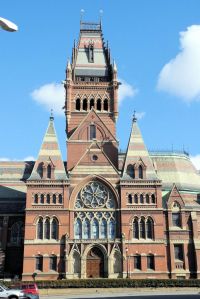

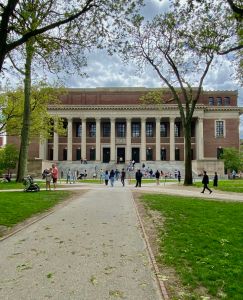

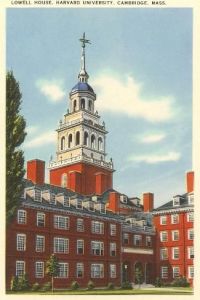







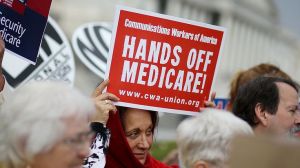












 peej
peej Carissa
 bostonboomer
 dakinikat
 ecocatwoman
 jjlo
jjlo mablue2
 Mama Lopez
 peggysue22
 quixote
 skydancingguestblogger
 Mona (aka Wonk the Vote)



 Sky Dancing
Recent Comments