It’s No Kings day, and Donald Trump is looking forward to a North Korea-style parade on his 79th birthday. Today was supposed to be a day to mark the 250th anniversary of the U.S. Army, but Trump has turned it into a celebration of himself, forcing soldiers to spend weeks preparing and moving military equipment to the Washington DC area. The Universe is not smiling on Trump’s big day though; bad weather is expected.
Meanwhile, a man who is likely one of Trump’s MAGA followers has assassinated Minnesota House Speaker and her husband and attempted to assassinate a sitting state Senator and his wife. The murderer was impersonating a police officer.
Minnesota Gov. Tim Walz says former state House Speaker Melissa Hortman and her husband were killed in a politically motivated assassination, and a second lawmaker and his wife were shot and wounded. Authorities were actively searching for a suspect hours after the targeted killings.
“We must all, in Minnesota and across the country, stand against all forms of political violence,” Walz said at a press conference Saturday. “Those responsible for this will be held accountable.”
The wounded lawmaker was identified as state Sen. John Hoffman, a Democrat, was first elected in 2012. He previously served as vice chair of the Anoka Hennepin School Board, which manages the largest school district in Minnesota.
Hoffman is married and has one daughter. Hortman was the top House Democratic leader in the state Legislature and a former House speaker. She was first elected in 2004.
Drew Evans, superintendent of the Bureau of Criminal Apprehension, said that authorities were actively searching for a suspect.
Autopsies will be done to determine extent of injuries, but Hortman and her spouse died from gunshot wounds, Evans said. A “shelter in place” order was in effect early Saturday.
The Minnesota Star-Tribune is posting live updates. Here’s the latest at 11:43AM ET:
10:13 am. – Here’s the full quote from Gov. Tim Walz confirming that Rep. Melissa Hortman and her husband were killed in what the governor called a “politically motivated assassination.”“We’re here today because an unspeakable tragedy has unfolded in Minnesota. My good friend and colleague, Speaker Melissa Hortman and her husband Mark were shot and killed this morning in what appears to be a politically motivated assassination. Our state lost a great leader, and I lost the dearest of friends. Speaker Hortman was someone who served the people of Minnesota with grace, compassion, humor and a sense of service. She was a formidable public servant, a fixture and a giant in Minnesota. She woke up every day determined to make this state a better place. She is irreplaceable and will be missed by so many.
”10:11 a.m. – Authorities investigating the shooting recovered an alleged manifesto.“There was a list of individuals and the individuals that were targeted were on that list,” said Bureau of Criminal Apprehension Superintendent Drew Evans.
“When we did a search of the vehicle there was a manifesto that identified many lawmakers and other officials, we immediately made alerts to the state, who took action on alerting them and providing security where necessary,” Brooklyn Park Police Chief Mark Bruley added.
10 a.m. – Brooklyn Park Police Chief Mark Bruley said that when officers arrived to the Hortman home, they noticed a vehicle with emergency lights what appeared to be a police officer at the door, “when our officers confronted him he immediately fired at officers and retreated back into the home.” He fled back into the house after being confronted by police. They went to the threshold and saw a man that was down and dragged him out to safety, he was pronounced dead shortly after. Police then went in with a drone to identify Hortman dead in the home.
“This was not a real police officer, this was a person who was clearly impersonating a police officer wearing the trust of this badge to manipulate their way into the home,” Bruley said.
The suspect drove a vehicle that looked exactly like an SUV squad equipped with emergency lights, a Taser and badge. There was “no question that if they were in this room you would assume that they are a police officer.”
A massive manhunt is underway for the suspect, who is believed to be on foot. Bruley said police are now arriving at residences in pairs of two or more. Officers will not be alone. Police are searching for people of interest.
You can check that page for future updates. There is no paywall.
No Kings protests against Trump and his attacks on democracy are planned for cities and towns across the country.
About 2,000 “No Kings” protests are planned Saturday in response to the Trump administration’s plans to hold alarge-scale military parade this weekend, an event organizer told NPR.
Organizers are accusing the president of putting on the parade as a show of dominance and a celebration of his 79th birthday, which is also on Saturday. The Army has been planning some form of anniversary celebration for over a year, but the parade was a recent addition. It will commemorate the 250th anniversary of the U.S. Army, and falls on Flag Day. A peacetime military parade is rare in the U.S. and has drawn criticism from Trump’s political rivals.
“No Kings” organizers describe the protests as a “day of defiance…to reject authoritarianism—and show the world what democracy really looks like” on their website.
The statementcontinues, “We’re showing up everywhere he isn’t—to say no thrones, no crowns, no kings.” [….]
The demonstrations were put together by a coalition of more than 200 organizations, including the American Civil Liberties Union, American Federation of Teachers and the Communications Workers of America. Protests are scheduled in every state, but not in Washington, D.C. Instead, organizers are encouraging interested D.C. residents to gather in Philadelphia — the flagship “No Kings” protest. Philadelphia was America’s first capital and was the birthplace of the Constitution and the Declaration of Independence….
According to the organizers’ website, the protesters are avoiding the nation’s capital “to draw a clear contrast between our people-powered movement and the costly, wasteful, and un-American birthday parade in Washington.”
PHILADELPHIA (AP) — Demonstrators began gathering in cities and towns across the U.S. Saturday to rally against President Donald Trump as officials urged calm and mobilized National Guard troops ahead a military parade to mark the Army’s 250th anniversary that coincides with the president’s birthday.
Atlanta’s 5,000-capacity “No Kings” rally quickly reached its limit, while intermittent light rain fell as early marchers carrying signs gathered for the flagship rally in Philadelphia’s Love Park….
Protests in nearly 2,000 locations are scheduled across the country, from city blocks and small towns to courthouse steps and community parks, organizers said, but no events are scheduled in Washington, D.C., where the military parade will take place in the evening.
The 50501 Movement orchestrating the protests says it picked the “No Kings” name to support democracy and speak out against what they call the authoritarian actions of the Trump administration.The name 50501 stands for 50 states, 50 protests, one movement….
Reactions from authorities:
by Elizah Leighword
Governors and city officials vowed to protect the right to protest and to show no tolerance for violence.
Republican governors in Virginia, Texas, Nebraska and Missouri are mobilizing National Guard troops to help law enforcement manage demonstrations.
There will be “zero tolerance” for violence, destruction or disrupting traffic, and “if you violate the law, you’re going to be arrested,” Virginia Gov. Glenn Youngkin told reporters Friday.
In Missouri, Gov. Mike Kehoe issued a similar message, vowing to take a proactive approach and not to “wait for chaos to ensue.”
Nebraska’s governor also signed an emergency proclamation Friday to activate his state’s National Guard, a step his office called “a precautionary measure in reaction to recent instances of civil unrest across the country.”
Organizers say that one march will go to the gates of Trump’s Mar-a-Lago resort in Florida, where Republican Gov. Ron DeSantis warned demonstrators that the “line is very clear” and not to cross it.
President Donald Trump wants to celebrate his birthday like a king: not with cake or candles, but with a $45 million military parade through the streets of Washington, D.C. Officially, the parade is only to mark the U.S. Army’s birthday, not the president’s the same day; in reality, the military’s celebration, though long planned, did not include a parade until his administration got involved. On the day the Army was founded to defeat tyranny, he’s getting a parade and using your tax money to do so.
This chilling spectacle pulls us away from the ideal of nonviolence that has paved the way for freedom movements in this country for generations. That’s not freedom. That’s not democracy. That’s not American. So on June 14, we the people are rising up and declaring that in America, we do not have a king. Across every U.S. state and territory, in cities, towns, and rural communities alike, millions of us will join the “No Kings” mass mobilization.
The president is using the same playbook we’ve seen in other countries throughout history: concentrate power, crush dissent, target vulnerable communities, enrich yourself, and distract the public with shows of force. He’s moved swiftly to erode the guardrails of democracy. He’s attacked the press and public universities, purged civil servants, and ignored court orders. He’s slashing budgets for public services, moved to erase hard-won victories for civil rights, ordered the hounding of immigrants in schools, places of worship and job sites, and ignored due process while deporting migrants to dangerous foreign prisons.
Now, in the very same week when he dispatches the National Guard and the Marines to Los Angeles to silence protesters’ righteous cries for justice in the face of his cruel assaults on our immigrant brothers and sisters, he hosts a grand parade. We hold a parade of the people.
Trump’s power doesn’t just come from his title; it comes from the myth that he’s untouchable. That he can say and do whatever he wants, and no one can stop him. But that myth only exists if we let it. Authoritarianism feeds on fear and silence. It survives when institutions go along, and when people give up. Already, too many elected officials, business leaders, and civic institutions have fallen in line.
But since his inauguration, millions of Americans have rejected Trump’s myth. Thousands of protests around the country have denounced his authoritarian moves, his attempts to rewrite this country’s history and his moves to destroy our already tattered safety net. And the more people have seen of Trump’s lawless second term, the less popular he has become.
“Shoot a couple, the rest will go home,” said a meme circulating on Telegram channels of groups affiliated with the far-right Proud Boys. “You just have to impale a few of them…” another local chapter posted. One disseminated an online gun tutorial, illustrating optimal shooting techniques with the caption: “Riot season again!”
Organizers in more than 2,000 cities are mobilizing for “No Kings” rallies Saturday in opposition to President Trump and his military parade in Washington. Among those watching closely: extremist organizations on social media.
Cozy cat companionship, by Alex Katz Leinwanddruck
These accounts are also sharing detailed locations of the “No Kings” protests and sharing identifying information about the organizers, including names, images and where they work. In addition, days prior, social media videos verified by The Wall Street Journal show leaders of Chicago and Los Angeles far-right groups attended anti-ICE protests in those cities.
A review of dozens of known far-right social-media accounts with hundreds of thousands of followers across leading platforms like X, Truth Social, and Telegram are posting about the “No Kings” rallies and encouraging their people to respond, in some cases with violence.
Some extremist groups appear to be capitalizing on escalating emotions and at times destructive protests in L.A., as a recruitment opportunity or to promote the mass deportation of immigrants living in the U.S. illegally. Some of their messages have been echoed by the White House.
One anonymous online account, which posts racial slurs to its hundreds of followers, this week posted an image promoting the U.S. Immigration and Customs Enforcement tip line for reporting those here illegally. Half a dozen white nationalist Telegram channels quickly reposted the meme. It was also spread widely among mainstream conservative social media accounts.
A bit more, in case you can’t get past the paywall.
On June 11, the official White House account shared the same image on Instagram, Presidential senior adviser Stephen Miller also retweeted it on X, and the Department of Homeland Security posted it across several platforms.
In response to requests for comment about the image, White House Deputy Press Secretary Abigail Jackson said reporters should focus on “the American victims of illegal alien crime and the radical Democrat rioters willing to do anything to keep dangerous illegal aliens in American communities.”
Also this week, former Proud Boys leader Enrique Tarrio—convicted of helping to mastermind the Jan. 6, 2021, breach of the U.S. Capitol and then pardoned by Trump—announced on social media he was now a “Border Czar” for a new cryptocurrency venture, ICERAID. The platform offers cryptocurrency rewards to those reporting immigrants here illegally to authorities. Neither Tarrio nor the crypto company responded to requests for comment.
“The emergent insurrections across America and assault on Federal ICE Agents that began in Los Angeles come at a critical time as the need for citizens to collaborate with federal law enforcement becomes critical,” says the company’s website.
Jon Lewis, a research fellow at George Washington University’s Program on Extremism, said the posts could inspire “lone-actor violence”—or lead people reading them to “get off the couch, pick up a gun and go out to one of these cities.”
One meme on Telegram this week, from a Proud Boy-affiliated group, depicts four armed men with shiny blue eyes wielding military weapons before an American flag. The meme declared, “HANG THE TRAITORS, EXPEL THE INVADERS.”
Saturday’s military parade in Washington will celebrate the U.S. Army’s 250th anniversary, but planning documents shared with The New York Times show a focus on President Trump, who turns 79 the same day. The parade, which is scheduled to begin at 6:30 p.m., is expected to proceed even with rain and thunderstorms forecast in the late afternoon and early evening.
Thousands of soldiers will march from the Pentagon in Arlington, Va., to Washington while heavy armored vehicles slowly make their way north from West Potomac Park.
The Inhabitants, by Natalia Bagatskaya
The parade will officially kick off once the Army secretary, Daniel P. Driscoll, and chief of staff, Gen. Randy George, report to Mr. Trump in a small ceremony at his reviewing stand along Constitution Avenue.
There will be roughly 7,000 soldiers — some in replicas of Army uniforms from different eras, including the Revolutionary, Civil, Korean and Vietnam Wars, as well as both world wars.
Heavy armored vehicles from previous conflicts will be followed by those from the modern era, including 70-ton Abrams tanks, 30-ton Bradley fighting vehicles and 20-ton Strykers.
These vehicles will be staged in West Potomac Park because they could damage the Arlington Memorial Bridge and leak hazardous hydraulic fluid as they move. They could also break down before they reach their destination, according to Army planning documents, which is why the service will have heavy towing vehicles called wreckers at the beginning of the parade route on a nearby cross street.
But for all of this planning and expense, the parade route is remarkably short — running less than 1,600 yards down Constitution Avenue from 23rd Street until the soldiers pass the president’s reviewing stand….
The president will sit in a 100-foot-wide reviewing stand constructed on the north side of Constitution Avenue. Mr. Trump will be joined by a number of special guests, including Army soldiers who have received the nation’s highest decoration for combat valor, the Medal of Honor.
At the end of the parade, the Golden Knights, the Army’s parachute team, will jump from the sky, land in the Ellipse, a park south of the White House, and present an American flag to the president on behalf of the Army.
Afterward, a country music concert is scheduled to begin nearby on the National Mall, followed by a fireworks show.
In June 2024, Army Chief of Staff Gen. Randy George and his aides were at a Virginia military base where the service was putting on one of its live-action shows for kids and families.
The event — a decades-long tradition known as the “Twilight Tattoo” — was a spectacle. Soldiers from ceremonial units reenact the history of the Army, complete with Revolutionary War garb, music, theatrical vignettes and military pageantry, all meant to serve as a kind of salute to Army soldiers and their families.
George and his top communications adviser, Col. Dave Butler, were attending with several media executives, when one of them leaned over.
“This would make great television,” the executive said, according to Butler.
George and his staff had already been talking about how to celebrate the Army’s 250th birthday. Maybe, they thought, the National Park Service would let them host one of their live-action shows on the National Mall, the officials thought.
Enter Donald Trump.
After President Donald Trump took office and the June 14 birthday was getting closer, the Army began to toss around more ideas. One idea was to add tanks or other iconic Army equipment to an exhibit parked on the National Mall where tourists could learn about the Army’s history of fighting the nation’s wars.
Lady with White Cat, by Sharyn Bursic
Butler said he doesn’t remember who first broached the idea of turning the Army’s show into a parade. But once the idea was floated, no one seemed to push back.
By June, the Army had a plan of what they would include: 6,700 soldiers, 150 vehicles, including dozens of tanks, 50 aircraft flying overhead including World War II-era planes and high-tech weaponry like rocket launchers.
Trump, a former media executive himself, seemed game to the idea. One official involved in the planning described it like “knocking on an unlocked door.”
“We wanted to reintroduce this nation’s Army to the American people,” Butler said. “To do that, we thought we needed to be in their living rooms and on their phones. We needed something that would catch the national eye.”
I don’t believe for one minute that anyone but Donald Trump suggested the parade. Give me a break.
I’m feeling very sad today. I’ve actually been feeling sad and depressed for several days now. It just feels as if Trump is winning. He’s getting plenty of attention from his attack on Los Angeles, even though it’s illegal and so over-the-top as to be ridiculous. All this because people don’t like their law-abiding neighbors and co-workers being kidnapped by ICE thugs in masks.
Trump’s “big, beautiful bill” has faded into the background, but it’s still there, threatening to radically change our health care system and hurt millions of lower income and elderly people.
Yesterday, Trump gave a speech to active U.S. Army troops that was supposedly about the 250th anniversary of the army, but instead consisted of political attacks on Joe Biden and California and bragging about Trump’s supposed accomplishments. And the audience of young soldiers laughed and applauded. He left the stage to “YMCA” and even did his ridiculous fist “dance.”
This weekend Trump will celebrate his birthday with a sickening military parade reminiscent of those put on in Russia and North Korea. Those are only four of the things that are making me so sad.
I really don’t know where to begin, but here are some suggested reads.
The immigration protests and Trump’s military response:
Gov. Gavin Newsom made the case in a televised address Tuesday evening that President Trump’s decision to send military forces to immigration protests in Los Angeles has put the nation at the precipice of authoritarianism.
The California governor urged Americans to stand up to Mr. Trump, calling it a “perilous moment” for democracy and the country’s long-held legal norms.
California Governor Gavin Newsom
“California may be first, but it clearly won’t end here,” Mr. Newsom said, speaking to cameras from a studio in Los Angeles. “Other states are next. Democracy is next.”
“Democracy is under assault right before our eyes — the moment we’ve feared has arrived,” he added.
Mr. Newsom spoke on the fifth day of protests in Los Angeles against federal immigration raids that have sent fear and anger through many communities in Southern California. He said Mr. Trump had “inflamed a combustible situation” by taking over California’s National Guard, and by calling up 4,000 troops and 700 Marines.
“Trump is pulling a military dragnet all across Los Angeles,” Mr. Newsom said. “Well beyond his stated intent to just go after violent and serious criminals, his agents are arresting dishwashers, gardeners, day laborers and seamstresses.”
Donald Trump’s constant willingness to ignore the Constitution and core principles of American democracy means we are forever playing catch-up, stumbling behind while explaining why he absolutely cannot legally do the thing he is doing.
Digging into questions like “can Trump federalize the California National Guard because heavily-armed Immigration and Customs Enforcement officers picked a fight with a few hundred random Californians outside of Home Depot and lost?” is not a thing we should have to do, because the answer is no. The issue is that Trump just does these things anyway and justifies them with incoherent explanations that read as if an especially vicious badger memorized fragments of the Constitution and the US Code.
So, as we barrel toward a military occupation of California — and, really, anywhere else Trump wants — it’s time to figure out what on earth is going on, with two enormous caveats.
First, there are legal scholars who have spent their entire careers studying the deployment of the military on United States soil who are still trying to sort out what is happening. That’s not because they lack expertise, but because the situation is so rare and the administration’s justifications are so sloppy. Second, things are evolving so quickly that explanations quickly become outdated, so one has to try to anticipate the administration’s next wildly illegal move….
Generally, the Posse Comitatus Act prohibits the use of federal troops for civilian law enforcement. State National Guards generally can’t run afoul of the Posse Comitatus Act because they are organized at the state level and report to a governor. That said, there are exceptions where, speaking only hypothetically, it would be completely legal for Trump to send National Guard members and even active duty troops to California. Identifying those possible situations is necessary to understand the relevant laws, but there’s no question that none of those situations currently exist in California or anywhere else.
The initial federalization of the California National Guard already happened on June 7 with Trump’s memo invoking 10 U.S.C. 12406. That allows state National Guards to be used in federal service for very limited reasons, but requires orders to be issued via the governor, a thing that definitely did not happen here.
Generally, the Posse Comitatus Act prohibits the use of federal troops for civilian law enforcement. State National Guards generally can’t run afoul of the Posse Comitatus Act because they are organized at the state level and report to a governor. That said, there are exceptions where, speaking only hypothetically, it would be completely legal for Trump to send National Guard members and even active duty troops to California. Identifying those possible situations is necessary to understand the relevant laws, but there’s no question that none of those situations currently exist in California or anywhere else.
National Guard arrives in Los Angeles
The initial federalization of the California National Guard already happened on June 7 with Trump’s memo invoking 10 U.S.C. 12406. That allows state National Guards to be used in federal service for very limited reasons, but requires orders to be issued via the governor, a thing that definitely did not happen here….
Trump could also invoke the Insurrection Act, which would allow him, in certain circumstances, to deploy a state National Guard even over the objection of the governor. Active-duty troops can only be sent in if the Insurrection Act is invoked, though it appears the Trump administration is just bypassing that step and sending in 700 Marines anyway.
Even if the administration hadn’t skipped getting Newsom’s agreement to federalize state National Guard members, the limits in section 12406 still apply. That section can only be used when (1) there is an invasion or danger of invasion by a foreign nation; (2) there is a rebellion or danger of rebellion against the government; or (3) the president cannot execute federal laws with the regular forces available. (Section 12406 has only been used once, in 1970, when President Nixon invoked it to have the National Guard help deliver mail during a postal worker strike.)
President Trump thinks it is a sign of strength to send in troops to deal with protesters in Los Angeles. To that end, he has federalized a portion of the California National Guard and mobilized nearby Marines to support Immigration and Customs Enforcement as it confronts large protests in opposition to its efforts to arrest and deport undocumented immigrant laborers in the city.
Trump wanted to do something like this in his first term, during the summer that sealed his fate as a failed first-term president. But Mark Esper, his secretary of defense, refused. The protests in Los Angeles are not nearly as large as those that consumed the country in 2020, but Trump wants a redo, and Pete Hegseth, Esper’s more sycophantic successor, is just as eager to unleash the coercive force of the United States government on the president’s political opponents as Trump is.
You can almost feel, emanating from the White House, a libidinal desire to do violence to protesters, as if that will, in one fell swoop, consolidate the Trump administration into a Trump regime, empowered to rule America both by force and the fear of force.
The problem for Trump, however, is that this immediate, and potentially unlawful, recourse to military force isn’t a show of strength; it’s a demonstration of weakness. It highlights the administration’s compromised political position and throws the overall weakness of its policy program into relief. Yes, a certain type of mind might see the president’s willingness to cross into outright despotism as evidence of brash confidence, of a White House that wants to fight it out on the streets with its most vocal opponents because it thinks it will win the war for the hearts and minds of the American people.
But strong, confident regimes are largely not in the habit of meeting protests with military force, nor do they escalate at the drop of the hat. The Trump administration seems to have exactly one tool at its disposal — blunt force — and it’s clear that it has no plan for what happens when Americans do not fear being hit.
The background:
Last month, according to a report in The Wall Street Journal, Miller, the president’s senior aide, confronted leadership at Immigration and Customs Enforcement with a demand: Deport more people. And while Trump promised during his campaign to focus on criminals and “the worst of the worst,” there was no way to meet his (and Miller’s) goals by carefully selecting targets.
Protesters and National Guard in Los Angeles
Instead, Miller, who was raised in nearby Santa Monica, “directed them to target Home Depot, where day laborers typically gather for hire, or 7-Eleven convenience stores,” The Journal reported, which is what ICE opted to do, conducting an immigration sweep last Friday “at the Home Depot in the predominantly Latino neighborhood of Westlake in Los Angeles, helping set off a weekend of protests around Los Angeles County, including at the federal detention center in the city’s downtown.” [….]
the administration’s crackdown on day laborers in the city sparked a predictable response from the community, which immediately rallied to their defense. Initially hundreds but soon thousands of residents went to the streets in what have been mostly peaceful protests, despite the police use of tear gas, flash-bang grenades, rubber bullets and other so-called less lethal armaments. But there has been property damage in the form of burned-out cars and broken windows. And this damage, along with a few instances of looting, is the president’s pretext for a military crackdown.
Read the rest at the NYT. I’ve included a gift link.
Donald Trump loves authoritarian theater, but let’s not forget that Stephen Miller is also to blame for the violence and chaos in Los Angeles. Last week, the right-wing Washington Examiner reported that Trump’s deputy chief of staff called a meeting with the top officials at Immigration and Customs Enforcement (ICE) to “eviscerate” them for falling far short of the ridiculous goal he set of 3,000 deportations a day. In their desperation to keep Miller happy, ICE has already been targeting legal immigrants for deportation, mostly because they’re easy to find, due to having registered with the government. ICE agents stake out immigration hearings for people with refugee status and round up people here with work or student visas for minor offenses like speeding tickets, all to get the numbers up. But these actions were not enough for Miller.
“Why aren’t you at Home Depot? Why aren’t you at 7-Eleven?” he reportedly screamed at ICE officials. One ICE leader protested that the agency’s lead, Tom Homan, said they’re supposed to be going after criminals, not people who are just working everyday jobs. Miller reportedly hit the ceiling, furious that arrests aren’t widespread and indiscriminate. Trump has repeatedly implied he was only targeting criminals, but as Charles Davis reported at Salon, that conflicts with his promise of “mass deportations.” Undocumented immigrants commit crimes at far lower rates than native-born Americans. The expansive efforts to find and arrest immigrants in California, which kicked off the protests, appear to be a direct reaction to Miller’s orders to grab as many people as possible, regardless of innocence.
But Miller doesn’t seem to care about crime. Or, perhaps he thinks having darker skin should be a crime. For Miller, the goal of “mass deportations” has never been about law and order, but about the fantasy of a white America. His desire to deport his way to racial homogeneity has always been not only deeply immoral, but pretty much impossible. His impotence shouldn’t breed complacency, however. As the violence in Los Angeles shows, petty rage can lead to all manner of evils.
Stephen Miller
The term “white nationalist” is often used interchangeably with “white supremacist,” but it has a specific meaning. White supremacists think the government should enshrine white people as a privileged class over all others. White nationalists, however, want America to be mostly, if not entirely, white — a goal that cannot be accomplished without mass violence. That Miller appears to lean more into the white nationalist camp is well known. In 2019, the Southern Poverty Law Center reviewed a pile of leaked emails Miller had sent to media allies that illustrated his obsession with white-ifying America. He repeatedly denounced legal immigration of non-white people and endorsed the idea that racial diversity is a threat to white people. He longed for a return to pre-1965 laws that banned most non-white immigrants from moving to America.
“Trump’s mass deportation project is actually a demographic engineering project,” Adam Serwer of the Atlantic explained on a recent Bulwark podcast, pointing to the administration’s expulsion of legal refugees of color while making exceptions to the “no refugee” policy for white South Africans. Deputy Secretary of State Christopher Landau defended the exception by claiming that “they can be assimilated easily into our country.”
But it’s clear this language is code for “white.” By any good-faith definition of the word, thousands of non-white people targeted for deportation have also assimilated. They have jobs. They get married. They have kids. They are part of their communities.
Sure enough, a sea of MAGA influencers have responded to the Los Angeles protests like parrots trained quite suddenly to say “ban third world immigration.”
Please read the whole thing. Amanda Marcotte is good.
The protests in LA have triggered more immigration protests around the country.
Those were the words thousands of people chanted near the city’s Immigration and Customs Enforcement (ICE) field office, and throughout the streets of Manhattan Tuesday night as part of a series of nationwide rallies against President Trump’s immigration sweeps and the deployment of the U.S. military in California.
NYC protest
“There are many voices in my community that can’t be here today out of fear of what the administration is doing, so I want to be here for them,” 19-year-old Jeanet told NPR as she joined hundreds of other protesters in lower Manhattan Tuesday night….
Across the country, protesters also took to the streets in Chicago, San Francisco, and Seattle, Dallas and half a dozen other cities.
U.S. Immigration and Customs Enforcement carried out its largest Nebraska workplace raid of the current presidential administration on Tuesday.
The raid on the Glenn Valley Foods meatpacking plant near 68th and J streets led to an estimated 75 to 80 people being detained, a spokesperson for U.S. Rep. Don Bacon told the Flatwater Free Press.
The large-scale raid also involved the FBI, the Drug Enforcement Administration, the U.S. Marshals Service and Omaha police, according to the plant’s president.
It led to confusion inside the plant and anger outside of it, as some protesters clashed with law enforcement. It shocked company executives, who said they’d used the federal government’s system to verify the legal status of their employees. And it also set off a fresh round of fear and rumors that plants and stores elsewhere in Nebraska had been raided, or were soon to be. Those reports couldn’t be verified by the Flatwater Free Press on Tuesday evening.
ICE executed the federal search warrant on Glenn Valley Foods “based on an ongoing criminal investigation into the large-scale employment of aliens without authorization to work in the United States,” the agency said in a statement.
It’s not yet known where the workers were taken, but Glenn Valley employees leaving the scene told the Flatwater Free Press they saw dozens of their colleagues being led by agents into a white bus.
Tensions escalated between protesters and ICE as a procession of SUVs carrying federal agents left the plant after the raid. Several protesters cursed at law enforcement, jumped on moving vehicles and threw rocks and debris at the cars, shattering one window….
The raid shocked Glenn Valley Foods President Chad Hartmann, who said company leaders had “no notification, no idea whatsoever” that a raid was coming.
While Donald Trump has challenged many norms both as a presidential candidate and as president, he has made a special effort to violate the standards that have long kept the U.S. military out of partisan politics. To be clear, the U.S. armed forces have always engaged in politics, seeking to avoid getting involved in some conflicts, seeking to escalate in others. But they have not been a Democratic military or a Republican military since the Civil War. Generations of civilian and military leaders did much to keep party and military separate. Trump’s speech at Fort Bragg on June 10 may undo all that work.
In his first term, Trump did much to undermine the norms of American civil-military relations. Rather than appoint a civilian as secretary of defense, a tradition reflecting civilian control of the military, he appointed a recently retired general, James Mattis. He constantly referred to the senior military leaders as “my generals.” He blamed the military when soldiers were killed, rather than accept that the buck stops with the commander in chief. And according to his own secretary of defense at the time, Mark Esper, Trump asked whether soldiers could shoot peaceful protestors in their legs during demonstrations after the death of George Floyd in 2020.
Trump at Fort Bragg Tuesday
Less than five months into his second term, Trump has gone much further to challenge the traditional separation of the military from partisan politics. This time, he chose an unqualified Fox News host to be defense secretary to ensure he would not face the resistance he met from Mattis and Esper. Then he fired multiple senior leaders of the military for being, well, Black or female. Just in the past few days, Trump deployed the Marines to Los Angeles in response to anti-ICE protests, even though
Then on Tuesday, Trump gave a virulently partisan speech at Fort Bragg, during which he egged on the troops to boo the Democrats serving as mayor of Los Angeles and governor of California. This speech, by itself, is incredibly damaging, as it projects the image of the military siding with the president against his political foes.
When scholars like myself talk about politicization of the military, we mean one of two things: either the military is jumping into partisan politics or politicians are pulling the military there. In this case, Trump is dragging the U.S. military into the partisan fray, attempting to turn the American military into a Republican or Trumpian army.
Click the link to read why this is so terrible for our country.
President Donald Trump continued his war against America’s most cherished military traditions today when he delivered a speech at Fort Bragg. It is too much to call it a “speech”; it was, instead, a ramble, full of grievance and anger, just like his many political-rally performances. He took the stage to Lee Greenwood’s “God Bless the USA”—which has become a MAGA anthem—and then pointed to the “fake news,” encouraging military personnel to jeer at the press.
He mocked former President Joe Biden and attacked various other political rivals. He elicited cheers from the crowd by announcing that he would rename U.S. bases (or re-rename them) after Confederate traitors. He repeated his hallucinatory narrative about the invasion of America by foreign criminals and lunatics. He referred to 2024 as the “election of a president who loves you,” to a scatter of cheers and applause. And then he attacked the governor of California and the mayor of Los Angeles, again presiding over jeers at elected officials of the United States.
He led soldiers, in other words, in a display of unseemly behavior that ran contrary to everything the founder of the U.S. Army, George Washington, strove to imbue in the American armed forces.
The president also encouraged a violation of regulations. Trump, himself a convicted felon, doesn’t care about rules and laws, but active-duty military members are not allowed to attend political rallies in uniform. They are not allowed to express partisan views while on duty, or to show disrespect for American elected officials. Trump may not know these rules and regulations, but the officers who lead these men and women know them well. It is part of their oath, their credo, and their identity as officers to remain apart from such displays. Young soldiers will make mistakes. But if senior officers remain silent, what lesson will those young men and women take from what happened today?
The president cares nothing for the military, for its history, or for the men and women who serve the United States. They are, like everything else around him, only raw material: They either feed his narcissism, or they are useless. Those who love him, he claims as “his” military. But those who have laid down their life for their country are, as he so repugnantly put it, just suckers and losers, anonymous saps lying under cold headstones in places such as Arlington National Cemetery that clearly make Trump uncomfortable. Today, he showed that he has no compunction about turning every American soldier into a hooting partisan.
Why has no military leader spoken up about this outrage?
Trump’s supporters and his party will excuse his behavior at Fort Bragg the way they always have, the same way that indulgent parents shrug helplessly at their delinquent children. But senior officers of the United States military have an obligation to speak up and be leaders. Where is the Army chief of staff, General Randy George? Will he speak truth to the commander in chief and put a stop to the assault on the integrity of his troops? Where is the commander of the airborne troops, Lieutenant General Gregory Anderson, or even Colonel Chad Mixon, the base commander?
And if these men cannot muster the courage to defend American traditions—by speaking out or even resigning—where are the other senior officers who must uphold the values that have made America’s armed forces among the most effective and politically stable militaries in the world? Where is the chairman of the Joint Chiefs, General Dan Caine? He was personally selected by Trump to be America’s most senior military officer. Will he tell the man who promoted him that what he did today was obscene?
Use the gift link to read the rest.
On Saturday, Trump will celebrate his birthday with a military parade, and on the same day there will be “No Kings” protests around the country.
While tanks, armored troop carriers and artillery systems pour into Washington for the Army’s 250th birthday celebration, National Guard troops from the Army’s 79th Infantry Brigade Combat Team, supplemented by active-duty Marines, have been deployed to the streets of Los Angeles.
It is a juxtaposition that has military officials and experts concerned.
Army vehicles gathered in Jessup, Md., on Monday being prepared for the military parade in Washington, Chip Somodevilla, Getty Images
Several current and former Army officials said the military parade and other festivities on Saturday — which is also President Trump’s 79th birthday — could make it appear as if the military is celebrating a crackdown on Americans.
“The unfortunate coincidence of the parade and federalizing the California National Guard will feel ominous,” said Kori Schake, a former defense official in the George W. Bush administration who directs foreign and defense policy studies at the American Enterprise Institute.
Dr. Schake initially did not consider the parade much of a problem but is now concerned about “the rapid escalation by the administration” in Los Angeles.
The two scenes combined “erode trust in the military at a time when the military should be a symbol of national unity,” said Max Rose, a former Democratic congressman and an Army veteran.
“They are deploying the National Guard in direct contradiction to what state and local authorities requested, and at the same time there’s this massive parade with a display more fitting for Russia and North Korea,” he said.
Some veterans groups soured on the parade well before the latest deployments in Los Angeles. The Army recently asked the Vietnam Veterans of America chapter in Northern Virginia if it would provide 25 veterans to sit in the official reviewing stand. The group said no.
“If it were just a matter of celebrating the Army’s 250th birthday, there’d be no question,” said Jay Kalner, the chapter’s president and a retired C.I.A. analyst. “But we felt it was being conflated with Trump’s birthday, and we didn’t want to be a prop for that.”
Organizers with the “No Kings” movement are planning some 1,500 demonstrations across the country to protest the upcoming military parade on Saturday.
One notable location, however, is missing from that list — Washington, D.C., where the parade will take place.
Protest organizers have framed the move as a rejection of the spectacle, which will mark the 250th birthday of the Army as well as the 79th birthday of President Trump.
“Instead of allowing this birthday parade to be the center of gravity, we will make action everywhere else the story of America that day: people coming together in communities across the country to reject strongman politics and corruption,” organizers wrote.
They instead encouraged those in D.C. to join the flagship march in Philadelphia or one of the local protests in Virginia or Maryland. Organizers are also marketing DC Joy Day starting at 3 p.m. in Anacostia Park, which will have music, grilling, activities for children, and a grocery distribution.
Read more at The Hill.
Did you like this post? Please share it with your friends:
The epic spat between Trump and Musk is still dominating the media landscape, but that childish story should get some competition soon from the return of Kilmar Abrego Garcia to the U.S. The Trump administration finally decided to bring him back after they invented some “crimes” to charge him with and took them to a grand jury in Tennessee. The trumped up charges led a long-time prosecutor there to abruptly resign. Meanwhile, even though Musk is gone, DOGE is still working to steal all our private data. On the ICE/mass deportation front, Los Angeles looked like a war zone yesterday.
I’ll get to each of these stories, beginning with Abrego Garcia.
Kilmar Abrego Garcia, the Maryland man mistakenly deported to El Salvador in March, has been returned to the United States to face federal criminal charges, Attorney General Pam Bondi said Friday.
For months, the Trump administration has been locked in an intense standoff with the federal judiciary over court orders for the government to “facilitate” Abrego Garcia’s return from El Salvador, where he was mistakenly deported in mid-March, in a situation that one federal judge warned could present an “incipient crisis” between the two branches.
Abrego Garcia has been indicted on two criminal counts in the Middle District of Tennessee: conspiracy to unlawfully transport illegal aliens for financial gain and unlawful transportation of illegal aliens for financial gain.
The indictment unsealed Friday afternoon accuses Abrego Garcia and others of partaking in a conspiracy in recent years in which they “knowingly and unlawfully transported thousands of undocumented aliens who had no authorization to be present in the United States, and many of whom were MS-13 members and associates.”
Abrego Garcia and his family say he fled gang violence in El Salvador and have denied allegations he’s associated with MS-13.
The White House and the State Department made the decision to bring Abrego Garcia back to the U.S.
Simon Sandoval-Moshenberg, an attorney for Abrego Garcia, accused the Trump administration of “playing games” with the legal system and said his client should appear in immigration court, not criminal court.
“The government disappeared Kilmar to a foreign prison in violation of a court order. Now, after months of delay and secrecy, they’re bringing him back, not to correct their error but to prosecute him. This shows that they were playing games with the court all along,” Sandoval-Moshenberg said in a statement to CNN. “Due process means the chance to defend yourself before you’re punished, not after. This is an abuse of power, not justice.”
The alleged “crimes”:
The allegations date back to 2016 and involve a half-dozen alleged unnamed co-conspirators, with one, identified as CC-6 of Guatemala, described as being a “primary sources of supply of undocumented aliens for the conspiracy.”
Man with cat, Theresa Tanner
The conspiracy allegations outline how, over the years, Abrego Garcia and others worked to move undocumented aliens between Texas and Maryland and other states more than 100 times.
Working with another co-conspirator, referred to as CC-1, Abrego Garcia and that unnamed individual “ordinarily picked up the undocumented aliens in the Houston, Texas area after the aliens had unlawfully crossed the Southern border of the United States from Mexico,” the indictment said.
The two “then transported the undocumented aliens from Texas to other parts of the United States to further the aliens’ unlawful presence in the United States.”
You can read more details on the trumped up charges at the CNN link.
The decision to pursue the indictment against Kilmar Abrego Garcia led to the abrupt departure of Ben Schrader, a high-ranking federal prosecutor in Tennessee, sources briefed on Schrader’s decision told ABC News.
Schrader’s resignation was prompted by concerns that the case was being pursued for political reasons, the sources said.
Schrader, who spent 15 years in the U.S. A
ttorney’s Office in Nashville, and was most recently the chief of the criminal division, did not respond to messages from ABC News seeking comment.
When Attorney General Pam Bondi announced on Friday that Kilmar Armando Abrego Garcia had been returned to the United States to face criminal charges after being wrongfully deported to a prison in El Salvador, she sought to portray the move as the White House dutifully upholding the rule of law.
“This,” she said, “is what American justice looks like.”
Her assertion, however, failed to grapple with the fact that for the nearly three months before the Justice Department secured an indictment against Mr. Abrego Garcia, it had repeatedly flouted a series of court orders — including one from the Supreme Court — to “facilitate” his release.
While the indictment filed against Mr. Abrego Garcia contained serious allegations, accusing him of taking part in a conspiracy to smuggle undocumented immigrants as a member of the street gang MS-13, it had no bearing on the issues that have sat at the heart of the case since his summary expulsion in March.
Those were whether Mr. Abrego Garcia had received due process when he was plucked off the streets without a warrant and expelled days later to a prison in El Salvador, in what even Trump officials have repeatedly admitted was an error. And, moreover, whether administration officials should be held in contempt for repeatedly stonewalling a judge’s effort to get to the bottom of their actions.
Well before Mr. Abrego Garcia’s family filed a lawsuit seeking to force the White House to release him from El Salvador, administration officials had tried all means at their disposal to keep him overseas as they figured out a solution to the problem they had created, The New York Times found in a recent investigation.
Will Barnet, Interlude
Feuer discusses the Trump administration’s machinations:
In the days before the administration’s error was made public, officials at the Department of Homeland Security discussed portraying Mr. Abrego Garcia as a “leader” of MS-13, even though they could find no evidence to support the claim. They considered ways to nullify the original order that had barred his deportation to El Salvador. And they sought to downplay the danger he might face in one of that country’s most notorious prisons.
To Mr. Abrego Garcia’s lawyers, it was no surprise that the same officials who had fought so hard against securing his return suddenly agreed to bring him back to U.S. soil after they had obtained an indictment that bolstered the story they had been telling from the start.
“Today’s action proves what we’ve known all along — that the administration had the ability to bring him back and just refused to do so,” said Andrew Rossman, one of the lawyers. “It’s now up to our judicial system to see that Mr. Abrego Garcia receives the due process that the Constitution guarantees.”
Questions have already been raised about the criminal case, filed in Federal District Court in Nashville. There was concern and disagreement in recent weeks among prosecutors about how to proceed with the charges, two people familiar with the matter said, leading to the resignation of a supervisor in the federal prosecutor’s office handling the case.
Just minutes before he walked into the Oval Office for a televised send-off for Elon Musk last week, an aide had handed him a file.
The papers showed that Mr. Trump’s nominee to run NASA — a close associate of Mr. Musk’s — had donated to prominent Democrats in recent years, including some who Mr. Trump was learning about for the first time.
The president set his outrage aside and mustered through a cordial public farewell. But as soon as the cameras left the Oval Office, the president confronted Mr. Musk. He started to read some of the donations out loud, shaking his head.
This was not good, the president said.
Artist Luis Garces Bonhemio y el gato
Mr. Musk, who was sporting a black eye that he blamed on a punch from his young son, tried to explain. He said Jared Isaacman, a billionaire entrepreneur who was set to become the next NASA administrator, cared about getting things done. Yes, he had donated to Democrats, but so had a lot of people.
Maybe it’s a good thing, Mr. Musk told the president — it shows that you’re willing to hire people of all stripes.
But Mr. Trump was unmoved. He said that people don’t change. These are the types of people who will turn, he said, and it won’t end up being good for us.
The moment of pique was a signal of the simmering tensions between the two men that would explode into the open less than a week later, upending what had been one of the most extraordinary alliances in American politics.
That’s the NYT take. Obviously, having a friend as head of NASA would be very good for Musk’s businesses.
President Donald Trump was dejected, processing his very public split with the world’s richest man.
Rattled in the wake of Elon Musk’s public attacks and apparent call for his impeachment, Trump worked the phones, debriefing close confidants and casual acquaintances alike. His former ally was “a big-time drug addict,” Trump said at one point as he tried to make sense of Musk’s behavior, according to a person with knowledge of the call, who like others interviewed for this story spoke on the condition of anonymity to discuss sensitive matters.
Musk has acknowledged using ketamine, a powerful anesthetic, which he says was prescribed for him to treat depression. The New York Times recently reported that he was using so much ketamine on the campaign trail that he told people it was affecting his bladder, and he traveled with a pill box with medication with the marking of Adderall. White House officials said that Trump’s concern about Musk’s drug use, stemming in part from media reports, was one factor driving the two men apart.
But the president, who historically hasn’t hesitated to fire off deeply personal, blistering social media posts about others who have insulted him, was more muted regarding Musk than friends and advisers expected. In the aftermath of his Thursday faceoff with Musk, he urged those around him not to pour gasoline on the fire, according to two people with knowledge of his behavior. He told Vice President JD Vance to be cautious with how he spoke publicly about the Musk situation.
But although the break between Musk and Trump only exploded into public view on Thursday, cracks in the alliance began to appear much earlier. As Musk’s “move fast and break things” bravado complicated the White House’s ambitions to remake American society, the billionaire alienated key members of the White House staff, including Chief of Staff Susie Wiles, and quarreled with Cabinet members, physically coming to blows with one.
That’s the introduction; read all the gossip at the WaPo. I’ve included a gift link, because it’s an interesting article.
Jonathan Lemire, Ashley Parker, Michael Scherer, and Russell Berman at The Atlantic (gift link): Inside the Trump-Musk Breakup.
For once, President Donald Trump was trying to be the adult in the room.
Trump and Elon Musk, two billionaires with massive egos and combustible temperaments, had forged an unlikely friendship over the past year, one built on proximity, political expediency, and, yes, a touch of genuine warmth. Relations between the president and his top benefactor had grown somewhat strained in recent weeks, as Trump began to feel that Musk had overstayed his welcome in the West Wing. Musk had suggested privately that he could stay on at the White House, an offer that Trump gently declined, two people familiar with the situation told us. (They, like others we talked with for this story, spoke anonymously in order to share candid details about a sensitive feud.) But Musk was still given a gracious send-off last Friday—complete with a large golden, albeit ceremonial, key—aimed at keeping the mercurial tech baron more friend than foe.
Will Barnet, The Closed Window
The peace didn’t last even a week.
On Tuesday, Musk took to X to attack the Republican spending bill being debated in the Senate, trashing Trump’s signature piece of legislation as “a disgusting abomination.” Even as the White House tried to downplay any differences, Musk couldn’t let go of his grievances—the exclusion of electric-vehicle tax credits from the bill, and Trump’s rejection of Musk’s pick to run NASA.
Yesterday, the planet’s richest man attacked its most powerful. Each took aim at the other from their respective social-media platform, forcing rubberneckers into a madcap toggle between Truth Social and X. Trump deemed his former aide “CRAZY,” while Musk went much further, dramatically escalating the feud by calling for Trump’s impeachment, suggesting that the president had been part of Jeffrey Epstein’s notorious sex-trafficking ring, and—likely worst of all in Trump’s mind—taking credit for the president’s election in November.
For one day, Musk made X great again. The spectacle seemed to subside today, as Trump showed—at least by his standards—some restraint. The president insisted that he was not thinking about Musk and wanted only to pass the reconciliation bill that had featured in the brawl. Musk, meanwhile, has far more to lose: his newfound stardom within the MAGA movement, his personal wealth, and government contracts worth billions to his businesses.
Steven Bannon, the influential Trump adviser who has long been critical of Musk, crowed that the tech billionaire’s attacks on Trump were so personal that he won’t be forgiven by the MAGA crowd. “Only the fanboys are going to stick with him—he’s a man without a country,” Bannon told us.
Use the gift link to read the whole thing if you’re intersted.
As the war between Donald Trump and Elon Musk worsens, what’s truly odd about this whole spectacle is that the actual substantive disagreement between them seems to be of little interest to media observers. And when you strip away the trolling and shitposting, here’s what becomes clear: This is really a battle over how comprehensively to screw over poor and working people, largely to the benefit of the wealthy.
The superficial argument between them, of course, is over Musk’s opposition to the “big, beautiful bill” that the House passed and that Trump wants the Senate to adopt. That opposition is rooted in Musk’s claim that the bill is loaded with “pork” and will explode the deficit. Trump, meanwhile, is infuriated by Musk because he can’t brook criticism and wants the bill to pass to notch a victory.
But the respective positions underlying those stances are mysteriously missing from the whole Trump-Musk discourse. Flush them into the open, and it helps illuminate the true spectrum of the MAGA movement’s ideological goals—and why its “pro-worker populist” pretensions are so thoroughly phony.
The House GOP bill would entail a large upward transfer of resources. The bill, which would continue Trump’s 2017 tax law and add new tax giveaways for wealthy investors, heirs, and others, would deliver a big tax cut to those in the highest income brackets. According to the Center on Budget and Policy Priorities, the tax cuts enjoyed by those in the bottom 20 percent in 2027 would be one seven-hundredth the size of those reaped by the top 1 percent.
Musk is angry about the $2.4 trillion those changes would add to the debt. But, crucially, he’s said little—if anything—about the role that those tax cuts for the rich would have in that outcome. He is primarily obsessed with the bill’s “pork,” meaning that he wants the bill to cut more spending—much, much more.
Where would that money come from? Musk’s cuts via his Department of Government Efficiency have already decimated foreign aid and other programs, producing more starvation, disease, and death among the global poor. Given that DOGE searched for “waste, fraud, and abuse” and found very little, if Musk wants massive additional cuts, by definition they would fall more heavily on important government programs, almost certainly ones that low-income Americans rely upon.
Another way to say this is that their real difference is over how far to push the “waste, fraud, and abuse” scam.
Elon Musk’s blowup with President Trump may have doomed Washington’s most potent partnership, but the billionaire’s signature cost-cutting project has become deeply embedded in Mr. Trump’s administration and could be there to stay.
At the Department of Energy, for example, a former member of the Department of Government Efficiency is now serving as the chief of staff.
At the Interior Department, DOGE members have been converted into federal employees and embedded into the agency, said a person familiar with the matter, who spoke on condition of anonymity out of fear of retaliation. And at the Environmental Protection Agency, where a spokeswoman said that there are two senior officials associated with the DOGE mission, work continues apace on efforts to dismantle an agency that Mr. Trump has long targeted.
“They are still internally going forward; we don’t really feel as if anything has stopped here,” said Nicole Cantello, a former lawyer for the E.P.A. who represents its union in Chicago.
Whether DOGE keeps its current Musk-inspired form remains an open question. Some DOGE members on Friday expressed concern that the president could choose to retaliate against Mr. Musk by firing people associated with the initiative. Others could choose to leave on their own, following Mr. Musk out the door. And DOGE’s role, even its legality, remain the subject of legal battles amid questions over its attempts to use sensitive government data.
But the approach that DOGE embodied at the outset — deep cuts in spending, personnel and projects — appears to have taken root.
Even with Mr. Musk on the sidelines, DOGE on Friday notched two legal victories. The Supreme Court said that it can have access to sensitive Social Security data and ruled that, for now, the organization does not have to turn over internal records to a government watchdog group as part of a public records lawsuit.
The Supreme Court on Friday allowed members of the Trump administration’s Department of Government Efficiency to access Social Security Administration data.
By Will Barnet
The conservative-majority court, with its three liberal justices objecting, granted an emergency application filed by the Trump administration asking the justices to lift an injunction issued by a federal judge in Maryland.
The unsigned order said that members of the DOGE team assigned to the Social Security Administration should have “access to the agency records in question in order for those members to do their work.”
The lawsuit challenging DOGE’s actions was filed by progressive group Democracy Forward on behalf of two unions — the American Federation of State, County and Municipal Employees, and the American Federation of Teachers — as well as the Alliance for Retired Americans.
“This is a sad day for our democracy and a scary day for millions of people,” the groups said in a statement. “This ruling will enable President Trump and DOGE’s affiliates to steal Americans’ private and personal data.” [….]
Liberal Justice Ketanji Brown Jackson wrote a dissenting opinion questioning the need for the court to intervene on an emergency basis.
“In essence, the ‘urgency’ underlying the government’s stay application is the mere fact that it cannot be bothered to wait for the litigation process to play out before proceeding as it wishes,” she added.
A series of surprise U.S. Immigration and Customs Enforcement sweeps in downtown Los Angeles on Friday prompted fierce pushback from elected officials and protesters, who decried the enforcement actions as “cruel and unnecessary” and said they stoked fear in the immigrant community.
Tensions remained high in downtown into the evening. The Los Angeles Police Department declared an unlawful assembly and ordered about 200 protesters who remained gathered by the Los Angeles Federal Building to disperse around 7 p.m.
Portrait of Edward Gorey with his cat, by Sam Kalda
The use of so-called less-lethal munitions was authorized at 8 p.m. following reports of a small group of “violent individuals” throwing large pieces of concrete at officers, police said. A citywide tactical alert was issued shortly thereafter.
Chaos erupted earlier in the day in the heart of the Fashion District after federal immigration authorities detained employees inside a clothing wholesaler, and used flash-bang grenades and pepper spray on a crowd protesting the raid around 1:30 p.m.
Hundreds of people then rallied outside the Los Angeles Federal Building at 4 p.m., condemning the crackdown and demanding the release of Service Employees International Union California President David Huerta, who was injured and detained while documenting a raid, according to a statement from the labor union.
“Our community is under attack and has been terrorized,” Angelica Salas, executive director of the Coalition for Humane Immigrant Rights, or CHIRLA, told the crowd of protesters. “These are workers, these are fathers, these are mothers.”
Forty-four people were administratively arrested and one person was arrested for obstruction during Friday’s immigration action, said Yasmeen Pitts O’Keefe, a spokesperson for Homeland Security Investigations, a branch of ICE. Federal agents executed four search warrants related to the suspected harboring of people illegally in the country at three locations in central Los Angeles, she said.
Multiple ICE raids in Los Angeles on Friday set off a wave of protests that were met with a show of force by officers in tactical gear, as the Trump administration’s sweeping crackdown on immigrationescalates.
Aerial video footage from local media showed officers outside clothing wholesaler Ambiance Apparel, one of the reported locations of the raids, putting handcuffed individuals into white vans, with protesters trying to stop themfrom leaving.Later footage shows officers in tactical gear riding armored vehicles as stun grenades go off throughout the crowd.
Angelica Salas, director of the Coalition for Humane Immigrant Rights, said at a news conference that as of Friday afternoon, there were seven raids happening throughout the city, including at two Home Depots, a doughnut shop and the clothing wholesaler. She said the organization had confirmed that more than 45 people were detained in the operations, which she described as “random sweeps” that appeared to be carried out without a warrant. The Washington Post could not independently confirm the nature of the raids.
“This has to stop. Immigration enforcement that is terrorizing our families throughout this country and picking up our people that we love must stop now,” Salas said.
Photos from Friday show police wearing riot gear and holding shields, batons, guns that shoot pepper balls, and zip ties, as well as chaotic scenes with tear gas going off and demonstrators running away. In a video captured by local media, one protester tries to stop one of law enforcement’s SUVs and is knocked down when the vehicle keeps moving forward….
Among demonstrators detained Friday was David Huerta, president of Service Employees International Union California, the state’s largest public-sector union, who was injured at one of the ICE raids and treated in custody. SEIU California is calling for his immediate release.
Bill Essayli, the U.S. attorney for the Central District of California, a Trump appointee, responded to Huerta’s arrest on social media, writing, “Federal agents were executing a lawful judicial warrant” when Huerta “deliberately obstructed their access.”
“I don’t care who you are — if you impede federal agents, you will be arrested and prosecuted,” Essayli said.
That’s it for me–sorry this is so long. Have a great weekend, Sky Dancers!
Did you like this post? Please share it with your friends:
I’m illustrating this post with relaxing paintings today, because I desperately needed a break from current events.
It seems I may have been wrong about Elon Musk’s departure from the White House. On Saturday, I wrote that I thought he would continue to work with and influence Trump and DOGE. But then Musk began attacking Trump’s “Big Beautiful Bill.”
Actually, it seems as if Trump has fired Musk, and Musk is not happy about it. Lawrence O’Donnell discussed it on his show last night. Here’s what Lawrence had to say:
Musk has been slamming Trump’s budget bill since their last meeting in the Oval Office, and Trump has not responded so far. Here’s the latest:
Elon Musk continued his rampage against Donald Trump’s spending bill on Tuesday night, setting the stage for an ugly showdown with the president’s faithful.
“Mammoth spending bills are bankrupting America!” he wrote, sharing a graphic depicting rising national debt over the past three decades. “ENOUGH,” he added.
He also responded with a “100″ emoji to an X user who wrote that Musk had “reminded everyone: It’s not about Right vs. Left. It’s about the Establishment vs the People.”
He then posted an American flag emoji under a post from conservative satire site The Babylon Bee, highlighting a story titled, “The Lord Strengthens Elon One Last Time To Push Pillars Of Congress Over And Bring Government Crashing Down.”
Earlier Tuesday, the billionaire unleashed hellfire on Trump’s so-called Big Beautiful Bill, lambasting the president’s flagship legislative package as “outrageous,” “pork-filled” and a “disgusting abomination.”
“Shame on those who voted for it: you know you did wrong. You know it,” he wrote of the package, which scraped through the House last month solely on Republican votes.
Elon Musk’s full-throttle assault on Donald Trump’s “Big, Beautiful Bill” is less about fiscal policy and more about bruised ego, insiders say, claiming the billionaire is “b-tthurt.”
A path in the woods, by Vincent Van Gogh
The drama reportedly began when Musk’s pick for a top federal post, billionaire astronaut Jared Isaacman, was rejected by Trump’s inner circle. Sources said it was Sergio Gor, Trump’s longtime aide and current personnel chief, who blocked the nomination.
“This was Sergio’s out-the-door ‘f–k you’ to Musk,” a White House source told Axios.
This triggered a rift which started with the Tesla CEO soft-launching his dissent last week, hours after his time as a “special government employee” had elapsed.
In a sit-down with CBS News’s Sunday Morning, the Department of Government Efficiency architect said he was “disappointed” with the bill, which he said “increases the budget deficit” and undoes his cost-cutting task force’s work.
Not that Musk actually did any real cost-cutting.
He soon went nuclear against the bill in a series of public posts that culminated in him labeling Trump’s economic legislation “outrageous,” “pork-filled,” and a “disgusting abomination.”
“Elon was b-tthurt,” one source said.
Insiders have now told Axios that his dissent has spiraled into a full-blown meltdown. Musk is reportedly rattled because the bill slashes the electric vehicle tax credit—a key benefit for automakers like Musk’s Tesla….
White House officials also reportedly hurt Musk’s feelings by blocking him from staying on in some capacity after his “special government employee” status was up after 130 days of service.
He was similarly annoyed, sources said, when the Federal Aviation Administration decided against using his Starlink satellite system for national air traffic control.
The White House overlooking his ally, Isaacman, served as the final straw on Saturday night, Axios reported.
Donald Trump has so far kept silent on former special government employee Elon Musk’s criticism of his “big, beautiful” spending bill as a “disgusting abomination.”
On Tuesday, MSNBC’s Lawrence O’Donnell suggested why the typically “explosively rageful” president has not yet said a thing.
By David Hockney
“That is how you know who Donald Trump fears in this world,” he said. “If you attack Donald Trump and Donald Trump says nothing, Donald Trump’s silence is the biggest expression of fear that he has.”
Musk, the world’s richest person, pumped a fortune into Trump’s 2024 election campaign. Trump rewarded him with the top role at the unofficial Department of Government Efficiency, which was tasked with slashing public spending. Musk left last week.
The president likely now fears Musk may use his cash against Trump-backed candidates in GOP primaries, said O’Donnell.
Trump “fears the richest person in the world convincing Republican members of the Senate and the House not to vote for Donald Trump’s budget bill that Elon Musk now calls a ‘disgusting abomination,’” he added.
Tesla (TSLA) stock slumped Wednesday in the immediate fallout of the very public policy blowout between President Trump and Tesla CEO Elon Musk.
The one-time leader of the Department of Government Efficiency (DOGE) whined angrily on Tuesday, “I’m sorry, but I just can’t stand it anymore. This massive, outrageous, pork-filled Congressional spending bill is a disgusting abomination,” adding, “Shame on those” in the House who voted for it.
Musk added early Wednesday morning, “If the massive deficit spending continues, there will only be money for interest payments and nothing else!”
Musk’s rhetoric on Trump and the Republican-backed “big, beautiful bill” was ramping up recently with Musk’s comments to “CBS News Sunday Morning” and hit detonation levels with Tuesday’s post….
Musk’s closeness to the Trump administration had been seen as a boon for Tesla, given its range of business with SpaceX and NASA and the regulatory levers NHTSA could pull with getting autonomous driving rules in place for Tesla’s robotaxi testing.
But demand weakness in the EU and recent protests at US Tesla showrooms have followed Musk’s controversial foray into politics, causing some Tesla owners to become alienated by Musk, specifically by his right-leaning tendencies, DOGE, and outward support of President Trump.
Tesla’s big robotaxi test is slated for June 12 in Austin. Much of the company’s value is tied to whether it can fully unlock autonomous driving for robotaxi purposes and individual owners.
Congress’ nonpartisan scorekeeper released its full score Wednesday of the tax and spending package House Republicans passed along party lines last month, predicting that the measure would grow the federal deficit by $2.4 trillion….
Path in the field, Tatiana Karchevskaya, Indonesian artist
And while top Republican lawmakers are expected to downplay the significance of the complete price tag from the Congressional Budget Office, the numbers will influence what lawmakers are able to include in the final package they are endeavoring to send to President Donald Trump’s desk this summer.
The scorekeeper’s analysis will also be used to determine whether the bill follows the strict rules of the reconciliation process Republicans are using to skirt the Senate filibuster and pass the measure along party lines.
Because Republicans in the Senate are now making changes to the package the House passed two weeks ago, the budget office will need to score the cost of each piece of the new version senators are assembling, followed by another full price tag for the whole package.
Unlike the earlier scores CBO released of the separate chunks of the House bill, the analysis released Wednesday takes into account how policies in one part of the package might influence the budget and economic impacts of others. It also shows that the House-passed legislation would lead to nearly 11 million people going uninsured, with more than 7.8 million of those individuals getting kicked off of Medicaid and millions more losing coverage through the Affordable Care Act marketplace.
Yesterday, the Yale School of Public Health sent a letter to Senate Democratic leaders with a new analysis showing that the One Big Beautiful Bill’s changes to federal health care programs would kill more than 51,000 Americans annually. Nearly 15 million are liable to lose health coverage as a result of the bill, due to enrollment changes on the Affordable Care Act exchanges, Medicaid cuts that are the largest in U.S. history, and the end of support for the Medicare Savings Program, which grants access to subsidized prescriptions. Those cuts would cost about 29,500 people their lives, the Yale researchers estimate. Another 13,000 largely poor nursing home residents would die from the repeal of the Biden administration’s safe staffing rule, which would remove the minimum number of nurses on call in those facilities. And close to 9,000 would die from the government’s failing to extend enhanced premium support for the ACA that expires at the end of the year, making health coverage unaffordable for another five million Americans.
It’s not easy to wring a compelling message out of legislation that will cause 51,000 deaths. You can lie that the cuts aren’t cuts, but that only gets you so far. Sen. Joni Ernst (R-IA), for example, was clearly flummoxed when confronted at a town hall in Butler, Iowa, last Friday with the fact that people will die because of the bill. So she went philosophical.
“Well, we all are going to die,” Ernst said, in one of the most misguided attempts to quiet constituent fears I’ve seen in my political lifetime.
The reaction was immediate both in the room and on social media. And instead of walking back the comments, Ernst doubled down with a creepy “apology” video of her walking through a cemetery. “I made an incorrect assumption that everyone in the auditorium understood that yes, we are all going to perish from this Earth,” she said, before snarking about the tooth fairy and making a pitch for embracing Jesus Christ as a personal savior who guarantees life in the hereafter.
Now, Ernst may have a challenger for her Senate Seat. From the David Dayen post above:
About 200 miles from Butler, in Sioux City, state representative J.D. Scholten was getting ready for the funeral of a local Democratic activist named Gary Lipshutz. Former Sen. Tom Harkin, whose seat Ernst now holds, was at the memorial service. “What she said was going viral as I walked in,” Scholten told me in an interview. “I thought about all the work Gary was doing, and at a funeral you question your life and your purpose. When she doubled down, which was very disrespectful, I was like, game on.”
Scholten, 45, who nearly beat anti-immigrant nationalist Steve King in a northwest Iowa congressional seat Donald Trump won by 27 points in 2018, had been mentioned on short lists of potential challengers to Ernst. But his timeline was set to later in the year, in part due to his summer gig as a pitcher on the minor league Sioux City Explorers. Then Ernst implanted her foot directly in her mouth. “She was not wrong in that we all are going to die, but we don’t have to die so billionaires can have a bigger tax cut,” Scholten said.
He decided to immediately announce a campaign for Senate, thereby making clear it was a direct response to the choices Republicans are making to skyrocket inequality and harm millions of vulnerable Americans.
The Iowan who became part of a viral moment by recently shouting at U.S. Sen. Joni Ernst that “people will die” because of proposed Medicaid cuts is a Democrat who is using the moment to launch a campaign for the Iowa House.
India May, a 33-year-old from Charles City, drove to Parkersburg on May 30 to attend Ernst’s town hall. As Ernst was answering a question about Medicaid cuts in President Donald Trump’s tax cut bill, May said she “got a little worked up.”
The cost of electricity is rising across the country, forcing Americans to pay more on their monthly bills and squeezing manufacturers and small businesses that rely on cheap power.
And some of President Trump’s policies risk making things worse, despite his promises to slash energy prices, companies and researchers say.
This week, the Senate is taking up Mr. Trump’s sweeping domestic policy bill, which has already passed the House. In its current form, that bill would abruptly end most of the Biden-era federal tax credits for low-carbon sources of electricity like wind, solar, batteries and geothermal power.
Repealing those credits could increase the average family’s energy bill by as much as $400 per year within a decade, according to severalstudiespublished this year.
The studies rely on similar reasoning: Electricity demand is surging for the first time in decades, partly because of data centers needed for artificial intelligence, and power companies are already struggling to keep up. Ending tax breaks for solar panels, wind turbines and batteries would make them more expensive and less plentiful, increasing demand for energy from power plants that burn natural gas.
That could push up the price of gas, which currently generates 43 percent of America’s electricity.
On top of that, the Trump administration’s efforts to sell more gas overseas could further hike prices, while Mr. Trump’s new tariffs on steel, aluminum and other materials would raise the cost of transmission lines and other electrical equipment.
These cascading events could lead to further painful increases in electric bills.
The US has doubled tariffs on foreign steel and aluminum imports to 50%, pressing ahead in the face of criticism from key trading partners with a measure that Donald Trump says is intended to revive the American industry.
After imposing and rapidly lifting tariffs on much of the world, only to reduce them, Trump last week refocused on the global steel and aluminum markets – and the dominance of China.
Trump signed an executive order formalizing the move on Tuesday. Higher tariffs “will more effectively counter foreign countries that continue to offload low-priced, excess steel and aluminum in the United States market and thereby undercut the competitiveness of the United States steel and aluminum industries”, the order said.
The increase applies to all trading partners except Britain, the only country so far that has struck a preliminary trade agreement with the US during a 90-day pause on a wider array of Trump tariffs. The rate for steel and aluminum imports from the UK – which does not rank among the top exporters of either metal to the US – will remain at 25% until at least 9 July.
About a quarter of all steel used in the US is imported and data shows the increased levies will hit the closest US trading partners – Canada and Mexico – especially hard. They rank first and third respectively in steel shipment volumes to the US.
Tariffs on steel and aluminum are doubling to 50 percent Wednesday, adding higher costs and new uncertainty for businesses across the country that rely on metal imports for machinery, construction and manufacturing.
In the order doubling the tariffs, which said it would take effect at 12:01 a.m. Eastern time, President Donald Trump wrote that the higher levies “will provide greater support to these industries and reduce or eliminate the national security threat posed by imports of steel and aluminum articles and their derivative articles.”
But for American companies that rely on specialized metals that aren’t available domestically, the order set off a fresh scramble to raise prices and rethink hiring and investment.
“It’s a big, eye-catching tariff: 50 percent is a high number,” said Gary Clyde Hufbauer, a senior fellow at the Peterson Institute for International Economics. “Aluminum goes into all kinds of products — aircrafts, autos, construction — and steel is used throughout the economy, so you’re talking higher prices and lost jobs across the U.S. manufacturing industry.” [….]
U.S. manufacturers say the sudden onslaught of tariffs is making it harder to operate. Many rely on foreign sources of steel and aluminum to make their products and say it’s been tough to find domestic suppliers.
Pediatric infectious disease expert Dr. Lakshmi Panagiotakopoulos of the U.S. CDC resigned on Tuesday as co-leader of a working group that advises outside experts on COVID-19 vaccines and is leaving the agency, two sources familiar with the move told Reuters.
Panagiotakopoulos said in an email to work group colleagues that her decision to step down was based on the belief she is “no longer able to help the most vulnerable members” of the U.S. population.
In her role at the Centers for Disease Control and Prevention’s working group of the Advisory Committee on Immunization Practices, she co-led the gathering of information on topics for presentation.
Her resignation comes one week after Health Secretary Robert F. Kennedy Jr., a long-time vaccine skeptic who oversees the CDC, the Food and Drug Administration and the National Institutes of Health, said the COVID vaccine for healthy children and healthy pregnant women had been removed from the CDC’s recommended immunization schedule.
The move was a departure from the process in which ACIP experts meet and vote on changes to the immunization schedule or recommendations on who should get vaccines before the agency’s director made a final call. The committee had not voted on the changes announced by Kennedy and the CDC does not yet have a permanent director.
Senior US immigration officials over the weekend instructed rank-and-file officers to “turn the creative knob up to 11” when it comes to enforcement, including by interviewing and potentially arresting people they called “collaterals”, according to internal agency emails viewed by the Guardian.
Officers were also urged to increase apprehensions and think up tactics to “push the envelope” one email said, with staff encouraged to come up with new ways of increasing arrests and suggesting them to superiors.
“If it involves handcuffs on wrists, it’s probably worth pursuing,” another message said.
The instructions not only mark a further harshening of attitude and language by the Trump administration in its efforts to fulfill election promises of “mass deportation” but also indicate another escalation in efforts, by being on the lookout for undocumented people whom officials may happen to encounter – here termed “collaterals” – while serving arrest warrants for others.
The emails, sent by two top Immigration and Customs Enforcement (Ice) officials this past Saturday, instructed officers around the country to increase arrest numbers over the weekend. This followed the Department of Homeland Security secretary, Kristi Noem, and the White House deputy chief of staff, Stephen Miller, pressing immigration officials last month to jack up immigration-related arrests to at least 3,000 people per day.
One of the emails, written by Marcos Charles, the acting executive associate director of Ice’s enforcement and removal operations, instructs Ice officials to go after people they may coincidentally encounter.
“All collaterals encounters [sic] need to be interviewed and anyone that is found to be amenable to removal needs to be arrested,” Charles wrote, also saying: “We need to turn up the creative knob up to 11 and push the envelope.”
The Trump administration announced on Tuesday that it would revoke guidance to the nation’s hospitals that directed them to provide emergency abortions for women when they are necessary to stabilize their medical condition.
That guidance was issued to hospitals in 2022, weeks after the U.S. Supreme Court upended national abortion rights in the U.S. It was an effort by the Biden administration to preserve abortion access for extreme cases in which women were experiencing medical emergencies and needed an abortion to prevent organ loss or severe hemorrhaging, among other serious complications.
The Biden administration had argued that hospitals — including ones in states with near-total bans — needed to provide emergency abortions under the Emergency Medical Treatment and Active Labor Act. That law requires emergency rooms that receive Medicare dollars to provide an exam and stabilizing treatment for all patients. Nearly all emergency rooms in the U.S. rely on Medicare funds.
The Trump administration announced on Tuesday that it would no longer enforce that policy.
The move prompted concerns from some doctors and abortion rights advocates that women will not get emergency abortions in states with strict bans.
Defense Secretary Pete Hegseth has ordered the Navy to take the rare step of renaming a ship, one that bears the name of a gay rights icon, documents and sources show.
Military.com reviewed a memorandum from the Office of the Secretary of the Navy — the official who holds the power to name Navy ships — that showed the sea service had come up with rollout plans for the renaming of the oiler ship USNS Harvey Milk.
A defense official confirmed that the Navy was making preparations to strip the ship of its name but noted that Navy Secretary John Phelan was ordered to do so by Hegseth. The official also said that the timing of the announcement — occurring during Pride month — was intentional.
Military.com reached out to Hegseth’s office for comment on the move but did not immediately receive a response.
However, the memo reviewed by Military.com noted that the renaming was being done so that there is “alignment with president and SECDEF objectives and SECNAV priorities of reestablishing the warrior culture,” apparently referencing President Donald Trump, Hegseth and Phelan.
The U.S. Navy plans to rename the USNS Harvey Milk, a fleet replenishment oiler named after the slain gay rights leader and Navy veteran, and is considering renaming multiple naval ships named after civil rights leaders and prominent American voices, CBS News has learned.
U.S. Navy documents obtained by CBS News and used to brief the secretary of the Navy and his chief of staff show proposed timelines for rolling out the name change of the USNS Harvey Milk to the public. While the documents do not say what the ship’s new name would be, the proposal comes during Pride Month, the monthlong observance of the LGBTQ+ community that also coincides with the anniversary of the Stonewall uprising of 1969. WorldPride celebrations are being held in Washington, D.C., this year.
The documents obtained by CBS News also show other vessels named after prominent leaders are also on the Navy’s renaming “recommended list.”
Among them are the USNS Thurgood Marshall, USNS Ruth Bader Ginsburg, USNS Harriet Tubman, USNS Dolores Huerta, USNS Lucy Stone, USNS Cesar Chavez and USNS Medgar Evers.
That is beyond sickening.
Did you like this post? Please share it with your friends:
I hope this post will make some kind of sense, but I’m not that confident about it. I’m completely stressed out and exhausted. Last night I did not sleep at all. Now I’ll have to try to make it up with naps today.
I’ve had insomnia for years now, beginning after menopause. It got worse after Trump was elected in 2016, and now we’ve had nearly 10 years of this horrible man and his endless stupidity, my sleepless nights come more often.
Obviously, Trump’s second term has been much much worse than the first. He’s now surrounded by sycophants and not the so-called “adults in the room” who tried to check some of his worst impulses in his first term. He is openly enriching himself and his fellow billionaires. He’s pardoning violent criminals. Everything is awful. We are beginning to resemble Orban’s Hungary and Putin’s Russia. I don’t see how we ever repair this country’s reputation in the free world.
France’s gift to America has stood majestically in New York harbor since 1886. The original idea for the Statue of Liberty grew out of the desire to exemplify the American ideals of liberty and freedom. Lady Liberty’s spiked crown was meant to symbolize rays of sun beaming out to the world. Her tablet was inscribed with July 4, 1776. Sculptor Frédéric-Auguste Bartholdi placed a broken shackle and chains at her feet to represent the end of slavery.
For more than 140 years, she has held her torch high, providing a beacon to the world, an expression of freedom and a welcome to those in trouble. So has been the inspiring poem of Emma Lazarus, “The New Collossus,” etched in bronze and placed at the pedestal: “Give me your tired, your poor/Your huddled masses yearning to breathe free.” Millions of arriving immigrants saw this symbol of compassion and hope for a better life with their own eyes. Millions more yearned to see it and experience its promise for themselves.
I have always taken pride in America’s commitment to immigration and its burgeoning diversity. I have done so knowing that our history has been fraught with conflict as bigotry and competition have often pitted Americans against newcomers. I’m still moved by Hakeem Jeffries’ first speech after becoming House Minority Leader in 2023. “We believe that in America our diversity is a strength. It is not a weakness. An economic strength, a competitive strength, a cultural strength,” he said, adding, “Out of many we are one. That’s what makes America a great country.”
I won’t recount now the myriad ways the current cruel and hostile regime is exploiting its power to try and force millions of migrants out of the country without due process. The daily stories of masked men without proper identification grabbing people off the streets and taking them away in unmarked cars is an intolerable horror.
Add to this the Supreme Court ruling yesterday, enabling the Trump administration to revoke temporary legal status for more than 530,000 immigrants from Haiti, Cuba, Nicaragua and Venezuela—a humanitarian program created by the Biden administration in 2023 to address the peril they faced in their home countries. It’s hard to overstate the heartbreak and fear this ruling will cause, as all the previously protected people (adults and children) now face the possibility of being deported back to danger. We are all paying for decades of failure to pass comprehensive immigration reform, which has provided the conditions for a hateful demagogue to target migrants as a key reason for all that ails us.
Beschloss urges us to hold on to hope and not to give in to fear and despair. He asks us to think about what we hope for America.
…it’s important that we don’t lose sight of what we’re fighting for; this tyrannical regime is hoping to replace our dreams with their nightmares. The more we keep alive the vision of the future we want, the more we will be motivated to make it happen.
I’m trying to hold on to hope. I really am. But it’s hard.
Here’s what I’m thinking about today: Elon Musk is leaving government and politics–supposedly.
Yesterday Elon Musk appeared in the Oval Office with a black eye and several other small bruises on his face. He appeared to be stoned on something–he was doing that weird thing where he rolls his head around over and over again. He was also wearing a t-shire and rumpled jacket and a DOGE baseball cap. He was there because he is supposedly ending his role in the government and returning to running his own companies.
During an Oval Office send-off Friday marking the end of his formal role with the Trump administration, Elon Musk lashed out when asked about a New York Times report alleging he was a frequent user of the drug ketamine during the 2024 campaign.
“The New York Times. Is that the same publication that got a Pulitzer Prize for false reporting on the Russiagate?” Musk asked while standing alongside President Trump, cutting off a question from Fox News reporter Peter Doocy about the Times. “Let’s move on.”
Musk’s remarks came on the same day that the Times reported he used ketamine — which can be used both recreationally and medically — as often as once a day in 2024. Musk has told people he took ketamine so frequently that it affected his bladder, and he has also used ecstasy and magic mushrooms at times, the paper said, citing unnamed sources….
Musk has said publicly he has a prescription for ketamine. But he told journalist Don Lemon last year he uses it infrequently, taking a “small amount once every other week” to help him get out of a “depressive mindstate.” He told Lemon he doesn’t feel he’s abused the drug, saying, “if you use too much ketamine, you can’t really get work done…and I have a lot of work.”
Yeah, right. He talks like every addict under the sun: “I can quit any time…”
The Wall Street Journal reported last year that some Musk associates worry his reported drug use could harm his businesses, which include Tesla, SpaceX, social network X and several other firms. The billionaire has brushed off any concerns about the impact on his companies, telling Lemon, “what matters is execution.”
After 130 days spent fighting the federal government, Elon Musk turned up with a black eye at the White House on Friday for his last day as a “special government employee.” If you squinted, you could see it: His right eye socket was puffy and empurpled. No doubt about it, that was a big, fat shiner.
His project in Washington more or less finished, he never came close to cutting the $1 trillion from the federal government he had promised. His businesses and his public image got somewhat battered, and now, apparently, so had his face.
Did somebody beat him up?
The list of possible suspects seemed long. An abridged lineup of people and constituencies currently unhappy with Mr. Musk includes: at least two of the many women with whom he has fathered children; pretty much the entire federal bureaucracy; his neighbors in a suburb of Austin, Texas; Tesla shareholders; old friends of his; Republicans on Capitol Hill; his 20-year-old daughter; all those people who have lit Teslas on fire; and even some Trump voters.
But Musk claimed his 5-year-old son did it.
“I was just horsing around with little X, and I said, ‘Go ahead, punch me in the face,’ and he did,” Mr. Musk explained after a reporter asked him if he was OK.
It was an odd moment in a news conference that was quite odd to begin with. Moments earlier, Mr. Musk had angrily refused to engage with a question put to him about a new report in The New York Times detailing his drug use. Mr. Trump remained mostly mute as Mr. Musk batted back that question. Now the tech mogul was explaining why he looked beaten up….
Mr. Trump has spent a considerable amount of time around the little slugger over these last 130 days. He and Mr. Musk have even brought the child to sit ringside with them at Ultimate Fighting Championship matches. Mr. Trump thought about the explanation that was being offered for the black eye. “X could do it,” he concluded, sounding almost impressed. “If you knew X, he could do it.” The way the president said this, you’d never guess he was talking about a 5-year-old.
Elon Musk‘s swift departure from his signature Department of Government Efficiency and the White House was escalated by an outburst that turned violent, according to a high-profile insider.
Former Chief Strategist Steve Bannon told DailyMail.com that Musk’s turbulent time in the White House was marred when he physically ‘shoved’ 62-year-old Treasury Secretary Scott Bessent after he was confronted over wild promises to save the administration ‘a trillion dollars’.
‘Scott Bessent called him out and said, ‘You promised us a trillion dollars (in cuts), and now you’re at like $100 billion, and nobody can find anything, what are you doing?” the prominent MAGA figure revealed.
‘And that’s when Elon got physical. It’s a sore subject with him.
‘It wasn’t an argument, it was a physical confrontation. Elon basically shoved him.’
Catzilla
Bannon said the physical altercation came as the two billionaires moved from the Oval Office to outside Chief of Staff Susie Wiles’ office, and then outside the office of the then National Security Advisor, Mike Waltz.
‘Trump 100%’ sided with Bessent after the clash, he added. ‘I don’t think Bessent has any bad blood, but he’s got a job to do and he’s going to do it’.
The revelation of a confrontation between the pair was confirmed by White House press secretary Karoline Leavitt on Friday….
The revelations of the Musk-Bessant clash follow an explosive New York Times report that alleged Musk was using a cocktail of drugs on the campaign trail including ketamine, ecstasy and psychedelic mushrooms.
he former chief strategist in Trump’s first administration said the mounting issues with DOGE and the China briefings led to Musk losing face in the White House.
I can’t believe that Elon Musk is leaving Doge, the government department he named after a tired and basic meme that most of the internet had moved on from around a decade ago. “As my scheduled time as a Special Government Employee comes to an end,” Musk wrote this week (capital letters: model’s own), “I would like to thank President @realDonaldTrump for the opportunity to reduce wasteful government spending.” Oh man. “Thank you for the opportunity”?! At some level you have to salute Donald Trump’s ability to turn even the world’s richest man into an Apprentice candidate who leaves in week four after completely wiping out in the hotdog stand task.
Musk arrived in government promising to slash spending by $2tn. He leaves it a mere $1.86tn short of that target, even by his own estimations. Meanwhile, the president’s new tax bill is set to add $2.3tn to the deficit. I imagine Musk thought his government finale would be a spectacular extravaganza – “you’re welcome, Washington!” – involving 2,000 chainsaw-wielding chorus girls. Instead, it’s a tweet. And yes – we DO all still call them tweets.
Ironically, the thing that Musk has been most stunningly effective at slashing is his own reputation. Think about it. He arrived in Trump’s orbit as a somewhat mysterious man, widely regarded as a tech genius, and a titan of the age. He leaves it with vast numbers of people woken up to the fact he’s a weird and creepy breeding fetishist, who desperately pretends to be good at video games, and wasn’t remotely as key to SpaceX or Tesla’s engineering prowess as they’d vaguely thought. Also, with a number of them apparently convinced he had a botched penile implant. Rightly or wrongly convinced – sure. I’m just asking questions.
Catzilla
But look, it’s good news for Tesla investors, who have managed to end Musk’s practice of WFWH (working from White House), and are now demanding he puts in a 40-hour week to save the company whose stock he has spent the past few months tanking. As the world order dramatically seeks to rearrange itself in the new era of US unreliability, no one should ever be able to unsee the president of the United States’s decision to turn the White House lawn into a car sales lot for his sad friend. Did it work? It seems not. Musk spent a lot of this week airing his hurt feelings about his brrm-brrm cars. “People were burning Teslas,” he whined to Jeff Bezos’s Washington Post. “Why would you do that? That’s really uncool.”
Well, one thing we will no longer have to endure is this guy’s decrees on what is or isn’t cool. The timeworn thing about money and power is that they allow nerds to reinvent themselves as cool. You see it on Wall Street, where sea-beast financiers get manscaped by trophy wives who are no longer out of their league. You see it in Hollywood, where weird little guys become alpha movie producers. You see it in Bezos’s transformation from puffy-chinos-wearing, dress-down-Friday dweeb to Bilderberg Vin Diesel impersonator. What you rarely see is the alchemy of that process in reverse, live and in real time. But we got that with Elon, and we have to take our laughs where we can. In some other businesses, Musk could have convinced himself it wasn’t happening, but politics is a place where pollsters literally ask real people what they think of public figures every single week. Elon’s approval ratings are underwater.
More at the link.
For what it’s worth, I don’t believe that Musk is really leaving. Even Trump kept saying that yesterday, and Musk said he’ll continue advising Trump. From Josh Marshall at Talking Points Memo (I don’t have a link, because I gots this on my email): Don’t Fall For Elon Inc.’s Press Campaign.
We’re in the midst of a storm of articles — variously encomiums, valedictories, friendly morality tales — about Elon Musk’s purported departure from service in the federal government. I’m going to note a couple quite unflattering pieces in a moment. But for now, I want to focus on the bulk of them, which tend to portray Musk as someone who tried to tame government spending but was simply over-matched by “Washington’s ways” and finally failed. You get the image of a guy who is chastened, heading back to his regular life, no match for Sodom any more than most of us would be.
Let me take this opportunity to say that this all has the look and feel of a well-orchestrated crisis communications job. If reporters out there really want to land a story, get me that story and I will be duly impressed. The point here is to start the project and process of unwinding the brand damage Musk has done to himself and all his companies by his antics over the last six months. After all, if he’s really cut his ties to Trump … well, maybe the whole bad story is just in the rearview mirror? And if he was really “defeated” by Washington, then maybe that’s punishment enough, right? I’m not saying that anyone really pissed at Musk or who now has a super low opinion of him buys that. But good crisis communications work recognizes the limits of the craft. An effort like this is more focused on laying the groundwork for a softening of feelings and impressions over time.
Catzilla, by Catzilla Studios at Deviant Art
You see it in the carefully planted stories and apparently tossed off quotes. Elon won’t be doing any more political giving. Elon doesn’t even like the Big, Beautiful bill. Elon agrees that Elon is chastened. I mean, our boy Elon is practically a Never Trumper now, right? It’s all fairly transparent.
I don’t, for starters, buy that Musk is really leaving government service at all, though the fact that a couple of his top lieutenants are also signing out of DOGE adds a bit more credibility to the claim. (We’ll have to keep on eye on that.) Musk was always the juice behind DOGE. Fear of him was what allowed twenty-something goofs to show up at government departments and be granted the keys to each kingdom. DOGE is probably institutionalized now to some degree. But not that much. And it’s not just the good guys who oppose DOGE. There are lots of factions on Team Bad Guy who want to take a slice out of him too. Remember, he used DOGE to scoop up lots of contracts. I doubt he wants to lose those. But others would like them, too. That means he’ll have to remain involved.
The bigger problem with this storyline is the idea that Musk failed. I so wish that were true. But it’s simply not. To believe that you’d need to buy the idea that the goal was to streamline the government and save a bunch of money as opposed to gut the parts of the government that Trump world and the Silicon Valley right view as enemies and do so in an at best extra-constitutional fashion because it would never be possible through constitutional means. He succeeded at doing quite a lot of that, at least for now. He wrecked whole sections of the government and scooped up a ton of government contracts which not only further feathered his nest but advances the privatization of the government. He also engaged in a still-too-little-understood effort to create a vast store of integrated private information on U.S. citizens. He accomplished a huge amount.
That makes sense to me. I wish Musk would go off into the sunset, but I don’t think we seen or heard the last of him.
That’s my contribution for today. There’s lots of other news, so feel free to post about it in the comments.
Did you like this post? Please share it with your friends:
The Sky Dancing banner headline uses a snippet from a work by artist Tashi Mannox called 'Rainbow Study'. The work is described as a" study of typical Tibetan rainbow clouds, that feature in Thanka painting, temple decoration and silk brocades". dakinikat was immediately drawn to the image when trying to find stylized Tibetan Clouds to represent Sky Dancing. It is probably because Tashi's practice is similar to her own. His updated take on the clouds that fill the collection of traditional thankas is quite special.
You can find his work at his website by clicking on his logo below. He is also a calligraphy artist that uses important vajrayana syllables. We encourage you to visit his on line studio.







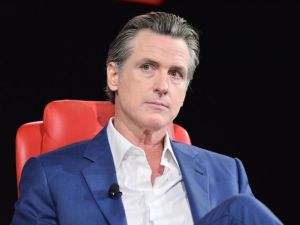
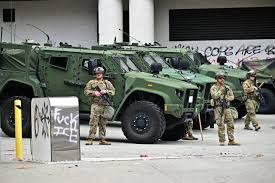
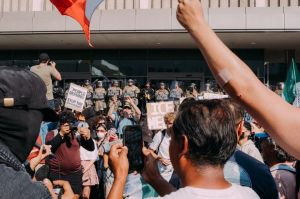
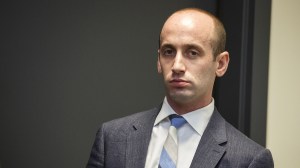














 The Iowan who became part of a viral moment by recently shouting at U.S. Sen. Joni Ernst that “people will die” because of proposed Medicaid cuts is a Democrat who is using the moment to launch a campaign for the Iowa House.
 The Guardian:







 peej
peej Carissa
 bostonboomer
 dakinikat
 ecocatwoman
 jjlo
jjlo mablue2
 Mama Lopez
 peggysue22
 quixote
 skydancingguestblogger
 Mona (aka Wonk the Vote)



 Sky Dancing
Recent Comments