Posted: March 4, 2026 | Author: bostonboomer | Filed under: just because | Tags: Al-Shu'aybah, armageddon, Christian nationalism, DOJ, Donald Trump, End Times, Epstein Files, Iran threatens Europe, Kuwait attack, Mojtaba Khamenei son of the leader of Iran, Pete Hegseth, Texas primaries, Trump administration failure to prepare for Iran fallout |
Good Day!!
Where to begin? Once again, there’s just too much news to deal with in a blog post. Today’s top stories, as I see it: Trump’s Iran war continues and threatens to spin out of control; Hegseth and some military leaders are pushing an appalling Christian nationalist agenda to our troops; there were important primary elections yesterday in Texas, North Carolina, and Arkansas; and the Epstein files story is still alive and well. I can’t get to everything, but here are the stories that caught my attention this morning.

The Shuaiba Port in Al-Shu’aybah, Kuwait on Nov. 4, 2022. (Spc. Ryan Scribner, U.S. Army National Guard)
The six U.S. Soldiers who were killed in Kuwait were in a makeshift building that was not fortified against aerial attacks. The latest on that from The Washington Post: U.S. troops had little protection from drone strike that killed 6, imagery shows.
The six U.S. service members killed in an Iranian drone attack over the weekend were working in a tactical operations center in Kuwait that offered little protection from overhead strikes, according to imagery, experts and officials….
The slain troops were part of a logistical support unit working at the Shuaiba port, a civilian port on the Persian Gulf. The attack occurred on Sunday, officials said. By 11 a.m. that morning, thick smoke was spewing from a building in a complex east of the waterfront, satellite imagery shows.
The building that was struck — a prefabricated, triple-wide trailer-style structure — was flanked by tall concrete barriers to protect against ground threats, said Sean O’Connor, a satellite imagery analyst with Janes. But it “possessed limited defenses able to protect it from a ballistic missile or drone strike,” lacking overhead protection to defend against the main threats to U.S. bases in the Middle East, he said.
The Army’s counter-drone manual, updated last year, makes clear that troops and commanders should assess which sites are likely to be attacked and build overhead protection, which often includes steel reinforced roofs and coverings. Protecting important structures like operations centers helps shield from enemy observation and limits “the damaging effects of an aerial attack,” the manual says. Images show that the building struck in the attack was not protected by such structures.
A 2021 photo of the building struck Sunday shows it had what looks like a thin metal rooftop. It is unclear what if any additional layers of materials or reinforcement existed underneath. The building does not appear to have meaningfully changed since at least 2009, and no additional fortifications appear to have been added after President Donald Trump announced in January that he intended to send U.S. forces to the region, according to a Post review of archival imagery and analysts.
More from The Daily Beast: U.S. Troops Died in Triple-Wide Trailer Pentagon Pete Called ‘Fortified.’
The six U.S. service members confirmed dead in the U.S.-Iran conflict were killed while inside a triple-wide trailer that Defense Secretary Pete Hegseth had described as “fortified.”

This undated photo provided by Joey Amor shows Nicole Amor, left, and Joey Amor smiling for a photo. (Joey Amor via AP) Nicole was one of the sex soldiers killed in the drone strike.
The trailer, which served as a makeshift operations center, took a direct hit amid Iran’s retaliatory strikes on Kuwait just after 9 a.m. local time Sunday morning, CNN reported. U.S. Central Command said 18 troops have also been seriously wounded, with others suffering minor shrapnel wounds and concussions.
Military officials had questioned the safety of the operations center even before the strike, according to CBS News. The fortifications used to protect the facility only covered the walls but did nothing to shield the top of the building from an overhead strike, which is what apparently killed the six service members.
A source told CNN there was no warning of the attack that struck the port in Kuwait, and no siren was activated to alert troops to evacuate amid the incoming projectile. There were dozens of people inside the building at the time.
The walls of the building were blown outwards in the blast, according to pictures of the site, with a fire still burning hours afterward.
Early on Monday, before the bodies of two service members were recovered, Hegseth had said that “one” projectile made it through air defenses and hit a “tactical operation center that was fortified.”
This makes me sick. Trump doesn’t care about our troops, and I guess Hegseth doesn’t either.
The UK has been flying their people out of the Middle East, but the U.S. government helping it’s citizens.
Business Insider: Multiple US embassies are telling Americans they cannot evacuate or help them get out of the Middle East.
American citizens across the Middle East are attempting to follow official advice and evacuate as conflict escalates in the region following US and Israeli attacks on Iran on Saturday.
But multiple US embassies have said they are unable to help citizens trying to leave.
“The US Embassy is not in a position at this time to evacuate or directly assist Americans in departing Israel,” the US Embassy in Jerusalem said in a post on X on Tuesday.
The embassy shared that the Israeli Ministry of Tourism was operating shuttles to a border crossing between Egypt and Israel at the town of Taba.”If you choose to avail yourself of this option to depart, the US government cannot guarantee your safety,” said the US embassy, adding that they were sharing the information “as a courtesy to those wishing to leave Israel.”President Donald Trump was asked in the Oval Office on Tuesday why evacuations hadn’t been planned beforehand, and whether he would charter planes to evacuate Americans from the region.Trump largely didn’t address the question, other than to note how quickly the conflict broke out.”It happened all very quickly,” Trump said. “I thought we were going to have a situation where we were going to be attacked.”
They’ve been preparing for this war for months, with a huge military buildup in the region. Maybe it wasn’t such a good idea for DOGE to fire all those people from the State Department.
Dakinikat called my attention to this story. JJ also posted about it in a comment yesterday. I knew that the military has been infected with right wing Christian propaganda, I still found this shocking.
This is from Jonathan Larson’s Substack: U.S. Troops Were Told Iran War Is for “Armageddon,” Return of Jesus.
A combat-unit commander told non-commissioned officers at a briefing Monday that the Iran war is part of God’s plan and that Pres. Donald Trump was “anointed by Jesus to light the signal fire in Iran to cause Armageddon and mark his return to Earth,” according to a complaint by a non-commissioned officer.
From Saturday morning through Monday night, more than 110 similar complaints about commanders in every branch of the military had been logged by the Military Religious Freedom Foundation (MRFF).

Iran war and Christian nationalist armageddon?
The complaints came from more than 40 different units spread across at least 30 military installations, the MRFF told me Monday night.
The MRFF is keeping the complainants anonymous to prevent retribution by the Defense Department. The Pentagon did not immediately respond to my request for comment.
One complainant identified themselves as a non-commissioned officer (NCO) in a unit currently outside the Iran combat zone but in Ready-Support status, deployable at any time. The NCO said they were Christian and emailed the MRFF on behalf of 15 troops, including at least 11 Christians, one Muslim, and one Jew. (Full email printed below.)
The NCO wrote to the MRFF that their commander “urged us to tell our troops that this was ‘all part of God’s divine plan’ and he specifically referenced numerous citations out of the Book of Revelation referring to Armageddon and the imminent return of Jesus Christ.”
One complainant identified themselves as a non-commissioned officer (NCO) in a unit currently outside the Iran combat zone but in Ready-Support status, deployable at any time. The NCO said they were Christian and emailed the MRFF on behalf of 15 troops, including at least 11 Christians, one Muslim, and one Jew. (Full email printed below.)
The NCO wrote to the MRFF that their commander “urged us to tell our troops that this was ‘all part of God’s divine plan’ and he specifically referenced numerous citations out of the Book of Revelation referring to Armageddon and the imminent return of Jesus Christ.”
I hope you’ll go read the rest at the link. I noticed this story is beginning to show up in mainstream news outlets. This was published in The Guardian today: US troops were told war on Iran was ‘all part of God’s divine plan’, watchdog alleges.
US military commanders have been invoking extremist Christian rhetoric about biblical “end times” to justify involvement in the Iran war to troops, according to complaints made to a watchdog group.
The Military Religious Freedom Foundation (MRFF) says it has received more than 200 complaints from service members across all branches of the armed forces, including the marines, air force and space force.
One complainant, identified as a noncommissioned officer (NCO) in a unit that could be deployed “at any moment to join” operations against Iran, told MRFF in a complaint viewed by the Guardian that their commander had “urged us to tell our troops that this was ‘all part of God’s divine plan’ and he specifically referenced numerous citations out of the Book of Revelation referring to Armageddon and the imminent return of Jesus Christ”.
“He said that ‘President Trump has been anointed by Jesus to light the signal “He said that ‘President Trump has been anointed by Jesus to light the signal fire in Iran to cause Armageddon and mark his return to Earth’”, the NCO added.
The Guardian credited the story by Jonathan Larson above.
Two more Iran stories:
Politico: Europe braces as Iran threatens to attack.
LONDON — The Iranian regime is warning it will attack European cities in any country that joins Donald Trump’s military operation and governments across the region are stepping up security in response.
So far, Iranian drones have already targeted Cyprus, with one striking a British Royal Air Force base on the island, and others shot down before they could hit. That prompted the U.K., France and Greece to send jets, warships and helicopters to Cyprus to protect the country from further drone attacks.

A UK Ministry of Defence handout of an RAF F-35B Typhoon preparing for operations from Akrotiri, Cyprus. Tehran has threatened its retaliation for action in the Middle East could be attacks on European soil. via Getty Ima
But with the British, French and German leaders saying they are ready to launch defensive military action in the Middle East, Tehran threatened to retaliate against these countries with attacks on European soil.
“It would be an act of war. Any such act against Iran would be regarded as complicity with the aggressors. It would be regarded as an act of war against Iran,” Esmail Baghaei, Iran’s foreign ministry spokesperson, told Iranian state media.
Mark Rutte, the former Dutch Prime Minister who now leads NATO, warned on Tuesday that Tehran posed a threat that reached deep into Europe.
“Let’s be absolutely clear-eyed to what’s happening here,” Rutte said. “Iran is close to getting its hands on a nuclear capability and on a ballistic missile capability, which is posing a threat not only to the region — the Middle East, including posing an existential threat to Israel — it is also posing a huge threat to us here in Europe.” Iran is “an exporter of chaos” responsible over decades for terrorist plots and assassination attempts, including against people living on European soil, he said.
The New York Times: Ayatollah Ali Khamenei’s Son Emerges as Leading Choice to Be His Successor.
The senior clerics responsible for selecting Iran’s next supreme leader met on Tuesday to deliberate, and the son of the slain former leader, Ayatollah Ali Khamenei, emerged as the clear front-runner, according to three Iranian officials familiar with the deliberations.

Mojtaba Khamenei, son of the leader of Iran, in Tehran in 2019.Credit…Morteza Nikoubazl NurPhoto, via Associated Press
The officials said that the clerics were considering announcing that the son, Mojtaba Khamenei, would be his father’s successor as early as Wednesday morning but that some had expressed reservations, fearing that it could expose him as a target for the United States and Israel. They spoke on the condition of anonymity to discuss sensitive internal deliberations.
The clerics, known as the Assembly of Experts, held two virtual meetings, one in the morning and one in the evening, according to the officials. Israel struck a building in Qum, one of Shiite Islam’s main seats of power, where the assembly was scheduled to meet and elect the new supreme leader, but the building was empty, according to the Fars News agency, which is affiliated with the Islamic Revolutionary Guards Corps.
Vali Nasr, an expert of Iran and Shiite Islam at Johns Hopkins University, said that Mr. Khamenei would be a surprising choice — and a potentially telling one.
“He was slated to become the successor for a long time,” Mr. Nasr said, “but for the past two years, it seemed to have dropped off from the radar. If he is elected, it suggests it is a much more hard-line Revolutionary Guard side of the regime that is now in charge.”
That doesn’t sound good.
In other news, Democrats did well in the primary elections last night.
Mia McCarthy at Politico: Democrats get their Texas dream scenario.
Maybe, just maybe, this is the year Texas really matters.
While the outcome wasn’t shocking, the confirmation of a May 26 runoff between Sen. John Cornyn (R-Texas) and state Attorney General Ken Paxton confirmed the fears of many Republicans who now face a likely scorched-earth campaign that could seriously hobble the victor in November’s general election and drain resources from tough races in places like North Carolina and Maine.
Democrats, meanwhile, are seeing their dream scenario play out: State Rep. James Talarico has defeated Rep. Jasmine Crockett outright in the Democratic primary, giving the candidate many strategists see as the party’s best chance to finally turn the Lone Star State blue a clear path to November.
Tuesday’s results showed some surprising strength for Cornyn after he trailed Paxton, a MAGA firebrand, in most polls. The veteran senator is about a point ahead of the AG in the latest returns.
But for national Republicans, keeping Cornyn afloat will be expensive and will risk damaging Paxton if he ends up being their nominee. In the absence of a Trump endorsement for any candidate, Cornyn and his allies have already spent more than $100 million to take out Paxton….
Cornyn-Paxton wasn’t the only high-stakes drama in the Lone Star State. A quick round-up of the latest results from other races:
— Embattled GOP Rep. Tony Gonzales was forced into a runoff against gun influencer Brandon Herrera.
— State Rep. Steve Toth ousted GOP Rep. Dan Crenshaw from the seat he’s held for four terms.
— GOP Rep. Chip Roy is heading into a runoff with state Sen. Mayes Middleton for attorney general.
— Rep. Christian Menefee is less than 2,000 votes ahead in his uncalled race against Rep. Al Green, who has served in Congress for more than 20 years.
— Former Rep. Colin Allred is more than 10 points ahead against incumbent Democrat Julie Johnson in another uncalled Dallas-area race.
In North Carolina, Roy Cooper won the Senate primary easily. Same with Tom Cotton in Arkansas.
There is some Epstein files news, even though the Iran war has pushed it from the fron pages. The Wall Street Journal broke another story on the Epstein files. It’s behind the paywall, but here are some articles based on the WSJ piece.
Alex Woodward at The Independent: DOJ admits 47,635 Epstein files — including Trump allegations — were removed.
The Department of Justice has withheld from the public nearly 48,000 files stemming from investigations into Jeffrey Epstein, after publishing more than 2 million pages of documents under the Epstein Files Transparency Act.
The initial legally mandated releases of documents comprised more than 3 million pages, though that figure is now roughly 2.7 million, according to an analysis of the files by CBS News and The Wall Street Journal.
A spokesperson for the Justice Department told the outlets that “47,635 files were offline for further review and should be ready for re-production by the end of the week.”
Those offline files include materials connected to unverified allegations against President Donald Trump, The Independent previously reported.
“Our team is working around the clock to address victim concerns, redact personally identifiable information and any images of a sexual nature,” according to Justice Department spokesperson Natalie Baldassarre. “All responsive documents will be repopulated online once proper redactions are made.” [….]
DOJ told The Independent last week that it is “currently reviewing” documents that detail unverified allegations against the president. Those documents include summaries of FBI interviews stemming from unverified claims made by a woman who came forward after Epstein’s arrest in 2019, who alleged, according to the files released by the DOJ, that she was sexually assaulted by both Epstein and Trump decades earlier, when she was a minor.
In a statement in January, the Justice Department noted that “some of the documents contain untrue and sensationalist claims against President Trump that were submitted to the FBI right before the 2020 election.
Those claims are “unfounded and false,” the statement said.
Read the rest at the link.
This is from “The Epstein Files” Substack, authored by Julie K. Brown, the reporter whose work for The Miami Herald led to Epstein’s prosecution: The Epstein Files are Now Offline.
The Wall Street Journal is reporting that tens of thousands of the Justice Department’s Epstein files are now offline for review.
This comes as more mainstream media confirms earlier reports by independent journalists that some of the files concerning allegations against President Trump have been withheld.
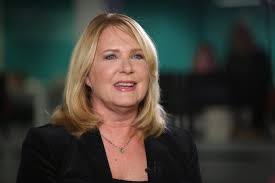
Julie K. Brown
From the WSJ: “The withheld files included Federal Bureau of Investigation notes documenting a series of interviews the woman gave to agents in 2019 in which she alleged sexual misconduct by Trump and Jeffrey Epstein when she was a minor in the 1980s, according to copies of the documents reviewed by the Journal. Trump has denied wrongdoing and said the Epstein files ‘totally exonerated’ him.”
I have written about this woman’s unverified allegation over the past two weeks, as have other journalists.
I have questioned why the Justice Department didn’t reveal whether it had investigated claims by this woman — as well as another woman who filed a lawsuit against Trump and Epstein in 2016.
The latest allegation involves a Vancouver woman who is named in a lawsuit as Jane Doe #4. She was interviewed by the FBI four times. Yet three of those reports have not been made public. To be clear, it’s not known what the FBI concluded from their interviews.
The other woman, who filed a lawsuit in 2016 against Trump and Epstein under the name “Katie Johnson” and later, “Jane Doe,” told a somewhat similar story about Trump. She abruptly withdrew her lawsuit days before the 2016 election. One of her lawyers, however, did file a report with the FBI in 2016. It’s not known whether the DOJ ever investigated her story. The lawyer’s report is in the Epstein Files. Her account has also not been substantiated.
Again, there’s more at the link.
I’m going to end there, because it’s getting late. I’ll add a couple more stories in the comment thread. Take care everyone.
Did you like this post? Please share it with your friends:
Posted: February 28, 2026 | Author: bostonboomer | Filed under: just because | Tags: Donald Trump, Iran attack, israel, NATO allies, regime change Iran |
Good Day!!

A plume of smoke rises after an explosion in Tehran on Saturday.Credit…Atta Kenare, Agence France-Presse — Getty Images
I wish you all a good day, but it’s not a good day for our country. I woke up at around 5AM and was hit with the news that Trump has attacked Iran. He did this illegally, without consultation with Congress or the slightest respect for the clear wishes of the American people. He has only one ally in his war–Israel. I wonder what our NATO allies are thinking right now?
Let’s face it. The “president” is insane. He should have been impeached and removed long ago, but Republicans are too cowardly to do the right thing.
I’m no expert on Iran. I’m just going to share some articles that I think are helpful for understanding what we’re in for. I just want to say that if Trump hadn’t cancelled Obama’s agreement with Iran, this probably wouldn’t be happening. But he just couldn’t let a Democrat–especially a Black man–get any credit.
MSNOW: U.S. launches ‘major combat operations’ in Iran, Trump says.
President Donald Trump announced the largest military intervention of his two terms in the Oval Office, saying the United States is launching sweeping attacks on the Iranian military and calling on the Iranian people to rise up and seize control of their government.
The U.S. military has launched “major combat operations” in Iran, Trump said in a video posted to Truth Social early Saturday, with the goal of stopping Iran from developing a nuclear weapon and protecting American personnel and interests abroad and at home.
“Our objective is to defend the American people by eliminating imminent threats from the Iranian regime, a vicious group of very hard, terrible people,” Trump declared from behind a podium dressed in a navy suit and wearing a baseball cap emblazoned with “USA” on it.
The strikes have killed at least five students at a girls’ school in southern Iran, according to Iran’s state-run IRNA news agency. A Gulf regional leader told MS NOW’s “Morning Joe” that one person was killed by debris from missiles fired at the UAE.
Israel announced it was also participating in the military offensive, and The Associated Press reported that Israel had launched a daylight attack on Tehran, Iran’s capital, on Saturday. The Israel Defense Forces posted on X that Iran had launched missiles toward Israel, underscoring the possibilities of wider war in a Middle East already riven with tensions and conflict.
Israeli Prime Minister Benjamin Netanyahu said the joint attack with the U.S. was aimed at ending “the threat of the Iranian ayatollah’s regime.”
Trump acknowledged there may be American casualties as a result of the U.S. military intervention labeled “Operation Epic Fury,” but said the mission was necessary to protect America and its allies in the future.
Jonathan Wolfe at The New York Times (gift link): Here’s What World Leaders Are Saying About the U.S.-Led Attack on Iran.
Leaders in Europe and around the world on Saturday urged all sides to exercise restraint after the United States and Israel launched a major attack on Iran, although some officials backed the American-led campaign.
President Trump said the attack was intended to eliminate Iran’s nuclear program and lead to a change in government, after several rounds of nuclear talks involving the two sides failed to reach a deal. Iran’s foreign ministry asked the United Nations Security Council “to take immediate action to confront the violation of international peace and security.”
Here’s what other governments are saying:
-
Britain: The British government said it had not participated in the strikes and did “not want to see further escalation into a wider regional conflict.” It added that it had recently enhanced its defensive capabilities in the Middle East and that its immediate priority was the safety of British citizens in the region. “Iran must never be allowed to develop a nuclear weapon and that is why we have continually supported efforts to reach a negotiated solution,” the government said in a statement.
-
Germany: A government spokesman said in a statement that Germany had been informed by Israel in advance of the strikes. Chancellor Friedrich Merz “is monitoring the development closely and is in close coordination with European partners,” the statement said. Mr. Merz is scheduled to meet Mr. Trump in Washington next week.
-
France: President Emmanuel Macron called for the attacks to stop and asked for a meeting of the Security Council. He also wrote that the Iranian leadership “must understand that it now has no other option than to engage in good-faith negotiations” over its nuclear program, and added that the Iranian people “must also be able to build their future freely.” [….]
-
Canada: Prime Minister Mark Carney and his foreign minister, Anita Anand, backed the American action. “Canada supports the United States acting to prevent Iran from obtaining a nuclear weapon and to prevent its regime from further threatening international peace and security,” they said in a statement.
-
Saudi Arabia: Saudi Arabia called the reports of retaliatory Iranian strikes on Arab nations, including Bahrain, Kuwait and the United Arab Emirates, “a blatant violation” of their national sovereignty. “Saudi Arabia affirms its full solidarity and support for these brotherly nations, pledging all its resources to assist them in any measures they take,” the foreign ministry said in a statement on social media.
-
China: China’s foreign ministry said on social media that Beijing was “highly concerned” by the strikes. “Iran’s sovereignty, security and territorial integrity should be respected,” the ministry said.That
That is just a sampling. Read the rest at the gift link. I’m surprised how much support there is.
Tom Nichols at The Atlantic (gift link): Trump’s Enormous Gamble on Regime Change in Iran.
The United States has gone to war against Iran. America has only one ally—Israel—in this operation (the Arab states of the Gulf, which fear the Iranian regime, are targets of Iran, but so far are not participating in the attack), and both Washington and Jerusalem are making claims about “imminent” threats that require “preemptive” strikes. But we should dispense with such statements: Iran is not presenting immediate danger to the United States or Israel. Even President Trump, in a recorded address, didn’t bother overly much with such excuses; instead he presented a farrago of charges and accusations going back a half century that included everything from killing American troops in Iraq to terrorism. These indictments are all grounded in truth, but none presents a rationale for immediate attack. Trump ended by calling on Iranians to rise up and overthrow their government.

People watch as smoke rises on the skyline after an explosion in Iran, Feb. 28, 2026.
This is not a preemptive war. It is a war of choice, a discretionary war. It is a war for regime change. Many of Iran’s 92 million people want the regime removed. But it is far from certain that this will be the outcome.
To think about the possible courses of this war, we should start by clearly understanding three realities: First, Iran is a terrible regime that deserves to fall. The regime recently murdered thousands of its own citizens who were seeking freedom from their oppressive rule, and no one should be shedding tears for the mullahs hiding in their bunkers.
Second, “success” is not impossible—if by “success” we mean the fall of the ayatollahs and the rise of a better, more humane, pro-Western government that does not seek to destabilize the Middle East; dominate Lebanon, Iraq, and Yemen; and eradicate Israel. But the path to that success is exceedingly narrow and mined with significant hazards. Destroying the regime’s capabilities is relatively easy, but nothing permanent—as Americans learned in Vietnam, Iraq, and Afghanistan—is achieved by bouncing rubble and piling up bodies. Destroying the regime itself is a far trickier business; dictatorships have a high pain tolerance, especially when the hapless citizens, not the leaders, bear the brunt of that pain.
Third, the president has not offered a strategy, or identified any conditions that would signal that U.S. goals have been achieved. Yes, he has vowed to prevent Iran from gaining nuclear weapons, but beyond that, he seems to be arguing for just inflicting military damage on the regime, on the assumption that enough ordnance on enough targets will weaken the grip of the ayatollahs. Once the theocrats are on the ropes, the thinking seems to go, the people of Iran will finish the job of regime change for us.
A bit more:
America twice had its hands full in Iraq, a nation of 37 million, even with the assistance of several countries. The U.S., France, and Britain managed to subdue tiny Libya, a nation of 7.5 million, and left its dictator to be raped and beaten in the streets. This time, conditions are different and more challenging: The target is two and a half times the size of Iraq, America has exactly one openly declared ally in this enterprise, no serious armed rebel force exists in Iran, and no coalition of nations is assembling to march into Tehran.
Trump has boldly told the regime to lay down its weapons and surrender—but to whom? The president in his speech did not rule out American troops on the ground. Does he envision a conquering American general accepting the pistols and swords of the Islamic Revolutionary Guard Corps in some sort of ceremony?
Here’s one way, however, all of this can go right: The air campaign is so well designed, so precise, and so thorough that it strips the regime of its major military formations and its security police. Some of the top leaders are killed in at least a partial decapitation, and other forces begin to defect to the side of the people en masse. Rebel groups form quickly and efficiently to seize weapons and set up alternative ruling councils across the country. They cooperate with one another, rather than bicker or actually fight. Outside powers in the region stay away and let the Iranian people sort out their destiny. Peace, of a sort, comes to Iran.
Unfortunately, the ways that all of this can go wrong are more numerous and more likely. Perhaps the Americans, for example, take unexpected casualties, and Trump—who seems to be counting on an easy victory—pulls back. (Trump has spent years decrying American presidents who cost the lives of America’s soldiers; it seems unlikely that he will blithely accept American casualties.) The regime rallies, kills even more of its own people, and survives to fight another day. Or the current regime falls and is replaced by a junta or military regime even more brutal than the one that’s just been destroyed. Or what happens if Iranian retaliation turns out to be more effective than the Americans or Israelis expect, and the region becomes embroiled in repeating cycles of murder and reprisals that leave Americans and Israelis and others dead, but the regime intact?
You can read the whole thing with the gift link.
The New York Times Editorial Board: Trump’s Attack on Iran Is Reckless.
In his 2024 presidential campaign, Donald Trump promised voters that he would end wars, not start them. Over the past year, he has instead ordered military strikes in seven nations. His appetite for military intervention grows with the eating.

A woman stood on a rooftop to get a view of explosions in Tehran on Saturday.Credit…Arash Khamooshi for The New York Times
Now he has ordered a new attack against the Islamic Republic of Iran, in cooperation with Israel, and Mr. Trump said it would be much more extensive than the targeted bombing of nuclear facilities in June. Yet he started this war without explaining to the American people and the world why he was doing so. Nor has he involved Congress, which the Constitution grants the sole power to declare war. He instead posted a video at 2:30 a.m. Eastern on Saturday, shortly after bombing began, in which he said that Iran presented “imminent threats” and called for the overthrow of its government. His rationale is dubious, and making his case by video in the middle of the night is unacceptable.
Among his justifications is the elimination of Iran’s nuclear program, which is a worthy goal. But Mr. Trump declared that program “obliterated” by the strike in June, a claim belied by both U.S. intelligence and this new attack. The contradiction underscores how little regard he has for his duty to tell the truth when committing American armed forces to battle. It also shows how little faith American citizens should place in his assurances about the goals and results of his growing list of military adventures.
Mr. Trump’s approach to Iran is reckless. His goals are ill-defined. He has failed to line up the international and domestic support that would be necessary to maximize the chances of a successful outcome. He has disregarded both domestic and international law for warfare.
The Iranian regime, to be clear, deserves no sympathy. It has wrought misery since its revolution 47 years ago — on its own people, on its neighbors and around the world. It massacred thousands of protesters this year. It imprisons and executes political dissidents. It oppresses women, L.G.B.T.Q. people and religious minorities. Its leaders have impoverished their own citizens while corruptly enriching themselves. They have proclaimed “Death to America” since coming to power and killed hundreds of U.S. service members in the region, as well as bankrolled terrorism that has killed civilians in the Middle East and as far away as Argentina.
Politico: ‘Acts of war unauthorized by Congress’: Trump’s congressional critics denounce Iran strikes.
Some of President Donald Trump’s Capitol Hill critics were quick to condemn his administration’s military action against Iran early Saturday, criticizing what they described as an unjustified act of war that hadn’t been approved by Congress.
Shortly after reports of the attack against Tehran emerged in the predawn hours, frequent Trump-basher Rep. Thomas Massie (R-Ky.) characterized the strikes on social media as “acts of war unauthorized by Congress.”
Massie and Rep. Ro Khanna (D-Calif.) are expected to force votes next week on legislation that would curb Trump’s ability to take unilateral military action against Iran without congressional approval. But the U.S.’ Saturday morning strikes came before the bipartisan pair could compel a war powers vote.
One of the first Democrats to respond to the strikes, Sen. Ruben Gallego (D-Ariz.), condemned the attack on social media, writing that “we can support the democracy movement and the Iranian people without sending our troops to die.” Sen. Mark Warner (D-Va.) added Saturday that Trump’s overnight military strikes against “a broad set of targets, including senior Iranian leadership — marking a deeply consequential decision that risks pulling the United States into another broad conflict in the Middle East.”
“The American people have seen this playbook before — claims of urgency, misrepresented intelligence, and military action that pulls the United States into regime change and prolonged, costly nation-building,” Warner said.
Rep. Jim Himes (D-Conn.), the top Democrat on the House Intelligence Committee, called Trump’s military action “a war of choice with no strategic endgame” and said that he will vote for the war powers resolution when it gets a vote next week.
The Jerusalem Post: Iran’s Supreme Leader Khamenei cut off from contact, no certainty on fate, Israeli sources say.’
Iranian Supreme Leader Ali Khamenei has been cut off from contact, and there is no certainty about his fate, Israeli officials told Walla on Saturday afternoon. Iranian officials promised to release a recording from Khamenei soon after Israeli strikes targeted his Tehran compound.
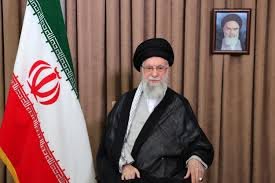 The preliminary assessment among Israeli officials was that Khamenei was hurt in the strike. No official confirmation has been received by Israeli, American, or Iranian sources.
The strikes came as Israel and the United States launched an attack on Iran, with Iranian state media reporting explosions heard in Tehran, Qom, Isfahan, Kermanshah, and Karaj.
Iran’s Defense Minister Amir Nasirzadeh and Revolutionary Guards commander Mohammed Pakpour are believed to have been killed in Israeli attacks, two sources familiar with Israel’s military operations and one regional source said.
Israeli and Iranian sources said earlier on Saturday that strikes on Iran killed several senior Islamic Revolutionary Guard Corps (IRGC) commanders and Islamic Regime political officials. Iran’s Security Council instructed residents of Tehran, as well as other major cities, to stay in safe, protected locations until further notice.
US-Israeli air strikes killed at least 85 people at a girls’ school in southern Iran, Iran’s judiciary said. The state-run IRNA news agency reported the strike happened in Minab in Iran’s Hormozgan province. Iran’s paramilitary Revolutionary Guard has a base in the city….
The US and Israel launched an attack early Saturday on Iran, with the first apparent strike happening near the offices of Supreme Leader Ayatollah Ali Khamenei, whose whereabouts remain unknown. Iranian President Masoud Pezeshkian was also targeted.
Iranian media reported strikes nationwide and smoke could be seen rising from the capital.
US President Donald Trump said in a video posted on social media that the US had begun “major combat operations in Iran”.
Iran responded to the bombing campaign by launching retaliatory missile strikes at US military bases in the Middle East.
Farnaz Fassihi and Erika Solomon at The New York Times: Chaos and Panic Grip Tehran as Airstrikes Shake City.
Just as Iranians began their workweek on Saturday morning, U.S. and Israeli strikes sent panicked residents of Tehran into the streets and parents racing back to schools where they had just dropped off their children.
Chaos and uncertainty set in as explosions shook the densely populated city, Iran’s capital, according to witnesses who spoke to The New York Times.
Ali, a businessman from Tehran, said in a text message that he was sitting in his office with many employees when they heard two explosions along with fighter jets streaking over the sky. Employees ran screaming out of the building, he said. He, like several other residents who spoke to The Times, asked not to be identified by his full name because he feared for his safety.
From the leafy, upscale district of Mirdamad, Hamidreza Zand, a resident, described seeing at least 10 fighter jets flying overhead as locals ran into the streets and some drivers abandoned cars on streets choked with traffic. With ambulance sirens wailing in the background, other residents scrambled to pick their children up from school.
“I rushed to school to get my daughter from middle school. The girls were hiding under the stairs and crying,” said Ali Zeinalipoor, whom a Times reporter reached on the Clubhouse social media app. “The principal did not know what had happened — everyone was so scared.”
From the roof of her apartment in Tehran’s northern Velenjak district, Golshan Fathi described seeing a second round of fighter jets.
“People are standing on the roof looking at the sky, pointing down. You can hear women screaming. Some of my neighbors are running to their cars,” she said. “It feels like we are in a movie.”
A bit more, because I don’t have any more gift links:
In the Pasdaran area, where a large compound belonging to Iran’s Revolutionary Guards forces is, residents heard multiple explosions that shook their windows.
“My children are crying and scared, we are huddling in the bathroom, we don’t know what to do. This is terrifying,” Esfandiar, an engineer living in the area, wrote in a text message.
As reports of explosions hitting other cities across Iran began to emerge on local media, telecommunications began to falter. A resident named Mahsa said she was fleeing Pasdaran without being able to contact her loved ones to tell them where she was going.
The attacks come at a fragile moment for Iran, whose government launched a brutal crackdown last month to stamp out nationwide protests demanding an end to Iran’s clerical rule.
Not all Iranians were angry as they watched the plumes of smoke rising from the blasts, said Arian, a resident of the Ekteban township west of the capital, who said some of his relatives were cheering the strikes. He said he could hear voices outside his building chanting, “Long live the shah,” a reference to Iran’s monarch, who was deposed in the 1979 revolution that brought the Islamic Republic to power.
As warplanes launched strikes across the country, President Trump released a video statement announcing to Iranians that “the hour of your freedom is at hand,” and urging them to rise up gainst the government once the bombing stops.
I’ll end there. I don’t know how helpful this post will be. Everything is happening right now. We’ll know more later on I guess. Take care of yourselves, everyone.
Did you like this post? Please share it with your friends:
Posted: February 25, 2026 | Author: bostonboomer | Filed under: just because | Tags: 2026 midterms, angel moms, Donald Trump, hatred of immigrants, Marcelo Gomes da Silva, SAVE Act, Seth Moulton, State of the Union Address 2026, tariffs, U.S. men's hockey team, U.S. women's hockey team |
Good Day!!
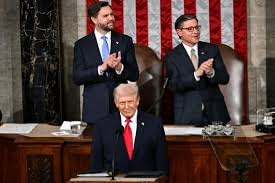 I actually watched quite a bit of Trump’s “state of the union” speech last night. As expected, it was horrific. He told lie after insane lie, and actually did not report on the state of the union.
He did begin the “speech” by claiming “America is back.” Back to what? I guess we’re back to where we were at the end of his last term as “president”–with Americans dying unnecessarily, the economy going down the tubes, and Americans living in fear about what he might do next. Except it’s even worse now. At least in his last term, he didn’t have a secret police force going around the country attacking and even killing people.
Trump didn’t offer a legislative agenda. He claimed he had designed a health plan in which he would give Americans money and they could use it to find their own health care. He also claimed he had lowered the cost of drugs with his website TrumpRX. He treated these as faits accompli with no need for legislation. He did push for passage of the SAVE act, as his plan for stealing the midterms.
Trump spent most of the “speech” introducing people in the audience, and in one section he sounded like a true crime podcaster, describing ghastly murders committed by undocumented immigrants. After each bloody story, he had the mothers of the victims stand up to be recognized. Much of the “speech” seemed designed to get his fans to hate immigrants more than they already do.
At one point, Trump spoke directly to Democrats, telling them they should be ashamed for not standing and applauding him.
He bragged about the economy, and especially his tariffs, which he claimed have been a huge success. Of course he attacked the Supreme Court for trying to explain to him that tariffs are a tax and must be passed by Congress, not imposed by the “president.” He actually said that maybe tariffs could replace the income tax! So maybe he does know that tariffs are a tax that puts the heaviest burden on the poorest Americans.
Most of all, the “speech” was incredibly boring. It was also overwhelmingly negative, even though he bragged about his imaginary achievements. He made our country sound like a hellhole. Oh, and guess what? He never once mentioned the Epstein files.
Here are some reactions to Trump’s presentation.
Tom Nichols at The Atlantic (gift link): President Trump’s State of the Union Variety Show.
The longest State of the Union in modern history is now over. Donald Trump held court in the House of Representatives and said little of substance, but substance wasn’t the point. This year, he intended to put on a show, with an array of guest stars and special appearances. He was happy because he was playing the roles he clearly loves: game-show host, ringmaster, emcee, beneficent granter of wishes—and, where the Democrats were concerned, a self-righteous inquisitor.
Trump did his usual rote lying about the economy—pity the fact-checkers who tried to keep up even in the first 10 minutes or so of the speech—along with some of his other greatest hits, including the many wars he stopped and the magic of tariffs. (He referred to the “unfortunate involvement” of the Supreme Court on the tariff issue, as if the justices had barged into his office like interlopers.) [….]
Tonight, however, was not about communication—it was about showmanship. Almost every line was a cue for applause from obedient Republicans; they even gave Jared Kushner a standing ovation. Every few minutes, Trump told a story and reached out into the audience like the host of The Price Is Right, telling people to come on down.
He started, of course, with the U.S. men’s Olympic hockey team. Just basking along with Team USA wasn’t enough. Trump soon announced that the goalie Connor Hellebuyck would receive the Presidential Medal of Freedom. Normally, this honor is bestowed for a lifetime of achievement, but this time it was given as if the young athlete had chosen the right door and found a new car.
And so it went, all night. Sometimes, the guests were meant to tug at the heartstrings, such as when Trump recognized Erika Kirk, the wife of the murdered activist Charlie Kirk. Others were presented as ornaments meant to illustrate Trump’s successes: Enrique Márquez, a Venezuelan political prisoner freed after U.S. forces deposed the strongman Nicolás Maduro, was given a round of well-deserved applause. Trump also gave a shout-out to a woman whose IVF medications were now, he claimed, cheaper because of him.
But no group received more attention than the U.S. military. Trump handed out two Purple Hearts (one posthumously), a Legion of Merit, and not one but two Congressional Medals of Honor. Military awards that should have been treated with dignity and respect were placed on men like prizes, including a moment when Trump’s co-host, the first lady, put one of the Medals of Honor around the neck of a 100-year-old fighter pilot.
Trump even had designated heels in the audience: the Democrats. He called them crazy and accused them of impoverishing the nation. He dared them to stand up if they agreed with him that “the first duty of the American government is to protect American citizens, not illegal aliens.” This stunt was obviously meant to force Democrats either to stand or boo or otherwise do something that Trump could exploit; instead, it merely resulted in several awkward seconds of a staring contest between the president and the Democrats in the chamber. Trump managed to bait Representative Ilhan Omar into shouting at him, but for the most part, he seemed genuinely irritated that the Democrats sat through his show in stony silence.
As the whole business dragged on, the atmosphere started to seem less like a game show and more like the late-night Jerry Lewis telethons of the 1970s, in which a tired but pumped Lewis alternately griped at the audience, broke into maudlin emotion, or jumped up to welcome a new guest. The only thing Trump did not do was explain his policies—especially about war and peace—to Congress or the American people.
Use the gift link to read the rest.
The New York Times Opinion Scorecard (gift link): ‘He’s Debased This Country’: The Best and Worst Moments From Trump’s State of the Union.
President Trump addressed a joint session of Congress on Tuesday night, celebrating his record on immigration and the economy. “We’re winning so much,” he said. “Inflation is plummeting, incomes are rising fast. … America is respected again.” Here’s what our writers thought of his speech. [I’m just giving you a sampling–you can read more opinions with the gift link.]
The best moment:
Jamelle Bouie The single best moment was when this long, exhausted and repetitive speech finally ended. It was then that I felt true relief.
Michelle Cottle The appearance of the men’s Olympic hockey team. The young guys playing to the crowd and showing off their medals were adorable. Here was an appropriate moment for those “U.S.A.” chants. So wholesome.
Michelle Goldberg The moment when, after setting a record for the longest State of the Union in recorded history, it finally ended…..
Matthew Schmitz Democrats are feeling emboldened on immigration amid Trump’s controversial enforcement push. But Trump effectively invoked what is still one of his strongest issues, while drawing a contrast with Democrats: “The first duty of the American government is to protect American citizens, not illegal aliens.” Many Americans agree.
Worst Moment
Appelbaum It was a tedious, tiresome performance. For much of the night, the president seemed to be boring everyone, perhaps most of all himself. Even his efforts to bait Democrats felt well-worn, familiar and strikingly devoid of real heat on either side.
Barro The “everything is terrible in America” section — which lasted roughly from minute 30 through 75 of this interminable and plodding address — significantly undermined the “everything is wonderful in Trump’s America” messaging that preceded it.
Bouie There are just too many bad moments to choose from. Was the worst one of the many instances where he gave lurid descriptions of pain and suffering? Was it when he began to hand out awards like reality television prizes? Or was it when he tried to write Democrats out of the political community? If I have to choose, I’d say the braying racism against Somali Americans — it would not have been out of place in a D.W. Griffith film.
Cottle So many options. The xenophobia. The scaremongering. The lying. The name-calling. The pettiness. But I’ll go with his ongoing mission to destroy faith in the electoral process. “Cheating is rampant.” The Dems “want to cheat. They have cheated.” It’s the “only way they can get elected.” Heavy sigh.
Read more opinions at the link.
I wrote above that Trump didn’t offer a legislative agenda, but NPR found a few things that Trump asked Congress to do:
There were only about half a dozen specific things Trump asked Congress to do:
— “Codify” Trump’s attempts to lower drug prices, though it’s unclear how.
— Pass the “Stop Insider Trading Act” that would restrict the Wall Street trading of members of Congress and their spouses.
— Pass what Trump is calling the “Delilah Law” that would ban commercial licenses for immigrants in the country without legal status.
— Restore funding for the Department of Homeland Security. After the killing of the two Americans in Minnesota, Democrats refused to authorize new funding for DHS, leading to a partial government shutdown.
— Pass the SAVE America Act, which would require proof of citizenship to vote. Proven instances of fraud, including by noncitizens, are very rare, but Trump claims there is “rampant” cheating. It’s something he has used to justify his 2020 election loss, and it’s a claim he could use to cast doubt on this year’s outcome — if Republicans lose.
While those are certainly consequential, they don’t add up to a major legislative push. That’s not surprising, though, since Trump has spent the better part of the last year trying to consolidate power in the White House.
Moira Donegan at The Guardian: Trump has lost the ability to entertain. Sadly, he hasn’t lost the ability to offend.
It is one of Donald Trump’s unique talents that he reveals the absurd obsolescence of long-held traditions. In presidential election years, his screaming bloviations on stage make the exercise of gathering the candidates together seem futile. In power, when he divorces facts from policymaking and relies instead on myth and grift to guide his decisions, he renders useless and impotent vast fields of expertise.
When he lies in public, and insists that his fantasies and distortions will dictate the course of government action, he makes those of us in the news business wonder if there’s any point, any more, in gathering and printing the truth.
Likewise, many Americans who watched the State of the Union address on Tuesday night might have wondered what the point of these speeches is any more. The constitution mandates that the president provide periodic updates to Congress on the condition of the country.
But nowhere does the constitution call for the kind of in-person, televised address that has become an annual staple of the presidency in the era of mass media. And certainly none of the Framers could have pictured the speech that Trump delivered on Tuesday night: a rambling, nearly two-hour address that was heavy on falsehoods, ad libs, and digressions that sometimes seemed like bids to kill time – and remarkably light on policy substance.
Throughout the speech, Trump seemed tired. He had difficulty reading from his teleprompter; he gripped the podium with a tightness bordering on desperation, and towards the end of the broadcast, his voice became audibly raspy. He was showing his age. The speechwriters, too, seem to have been exhausted.
The address touched on Trump’s typical themes: the supposed criminality and inferiority of immigrants; the mendaciousness of his opponents; his personal virtues and resentments. But the president offered very few new policy ideas, contradicted himself on crucial issues, misrepresented pertinent facts and substantively addressed few of what polls reveal to be the nation’s most pressing concerns.
A bit more:
He stopped frequently to address veterans in the crowd and to issue them medals as stunts for the television broadcast; he offered a long and strange digression about the gold medal Olympic match recently won by the US men’s hockey team, many of whom paraded into the House chambers wearing their medals. A decade ago, Trump crystallized a longstanding trend in American politics by avowedly fusing governance and entertainment. But Tuesday’s long-winded and boring spectacle showed that he has lost even the ability to entertain.
He has not, of course, lost the ability to offend. Trump lied, saying that he has brought healthcare costs down at a moment when his attacks on Affordable Care Act subsidies have in fact massively increased the premiums paid by many Americans in just the past two months. He made a non-sequitur tangent to attack the rights of trans kids; he claimed, with a kind of vulgar brazenness, that his kidnapping of the Venezuelan leader Nicolás Maduro, and his administration’s subsequent economic blackmail of that country, was creating new opportunities for the Venezuelan people.
He claimed that Democrats’ withholding of funding for the Department of Homeland Security over abusive immigration enforcement was causing fallout for areas effected by this week’s east coast blizzard, as the DHS was unable to help clear snow. (The federal agency does not do this.) Even his filler lines reeked with the stench of hypocrisy. “We are building a nation,” he said, “where every child has a chance to build higher and go further.” It was a sentiment that called to mind Liam Conejo Ramos, and all the other children imprisoned in ICE’s concentration camps, whose education, promise, dreams and freedom have been sacrificed to the administration’s racism.
There’s more at the Guardian link.
Trump talked for nearly two hours, gave out medals, praised sports teams, lied constantly, made zero new policy proposals, suggested we are about to bomb another country again, and got standing ovations from Republicans after every line. Nothing new for average working Americans.
— Ron Filipkowski (@ronfilipkowski.bsky.social) 2026-02-25T12:19:53.936Z
Davdid Smith at The Guardian: Why the longest-ever State of the Union address was the most inconsequential.
He wanted to give the king’s speech. Donald Trump entered the US House chamber on Tuesday like a medieval monarch, with Republicans lined up eager to touch his royal robes (or, in two cases, grab a selfie with him). But within moments, the illusion was shattered.
As the US president strolled by, soaking up adulation, the Democratic representative Al Green of Texas held aloft a handwritten sign: “Black people aren’t apes!” – a reference to Trump recently sharing a racist video depiction of Barack and Michelle Obama.
When the first State of the Union address of Trump’s second term got under way, Republicans moved in on Green menacingly and tried to tear the sign away. But he persisted until being escorted out for the second year in a row. As he departed, there were more acrimonious exchanges with Republicans, a few of whom tried to start a chant of “USA! USA!”
It was the first but not the last time that a person of color would take a stand during the wannabe autocrat’s record 107-minute speech while others remained silent or raucously egged him on. It was a night where Trump again sought to poison US politics and divide Americans along various fault lines, none more inflammatory than race.
The great salesman, sporting his familiar red tie and orange hue, began with a predictable pitch: “Our nation is back – bigger, better, richer and stronger than ever before.” In his telling, inflation, mortgage rates and gas prices are falling, while the stock market, oil production and foreign direct investment are booming along with construction and factory jobs.
Luckily for Trump’s speechwriter, the US men’s hockey team won Olympic gold two days earlier. The reality TV president hailed them in the press gallery, prompting applause and roars from both Democrats and Republicans. But while Republicans chanted “USA! USA!” with gusto, barely any Democrats did.
“We’re winning so much that we really don’t know what to do about it,” Trump declared. While he didn’t mention his gilded ballroom, it was still a Pollyannish version of America that will not be recognized by people struggling to pay bills and make ends meet. Trump is not the man to offer: “I feel your pain.”
Read the rest at The Guardian.
I don’t know if you remember Marcelo Gomez? He is Massachusetts teenager who was arrested by ICE on his way to volleyball practice. He was invited to the SOTU, but had to leave in fear of ICE.
Marcelo Gomes da Silva, a Milford teen who was arrested by ICE last May, went to the State of the Union as a guest of Representative Seth Moulton. He left early after a Department of Homeland Security tweet singled him out by name. trib.al/z40q0Yo
— The Boston Globe (@bostonglobe.com) 2026-02-25T14:46:26.768313Z
Marcela Rodrigues at The Boston Globe: Milford teen Marcelo Gomes leaves State of the Union after targeted DHS tweet.
From the visitor’s gallery, Marcelo Gomes da Silva looked down at the House floor, attentively watching President Trump deliver his State of the Union speech. A guest of Representative Seth Moulton, the 19-year-old from Milford was overjoyed to be sharing a room with the nation’s most powerful politicians.
“I truly hope that one day I’ll be here and I’ll be a representative, and then hopefully a senator, as well. That’s the dream,” he said.
Wearing a light gray suit, Gomes looked worlds apart from the day he met Moulton for the first time last June, outside of the ICE holding facility in Burlington wherehe had spent six days detained in volleyball shorts and crocs.
This week, in Washington for the first time, he met with other members of Congress and talked about his experience in detention and his desire to end ICE operations that target people who, like him, don’t have a criminal record.
As he watched the speech, the teen looked for Moulton on the House floor but couldn’t find him among the sea of politicians; he was impressed by Representative Al Green’s protest of a racist video posted on Trump’s social media account recently portraying the Obamas as apes; he didn’t agree with Trump’s statement about low inflation; and he felt dehumanized by being called an “illegal alien.” Still, he planned to stay and listen to the entire address.
Soon after standing up to applaud the US men’s hockey team, who Trump honored during the speech, Gomes was escorted out of the chamber by Moulton’s chief of staff Neesha Suarez.
Suarez and other congressional staff had seen an online post by the Department of Homeland Security, calling out Democrats who brought immigrants as guests to the State of the Union, singling out Moulton and Gomes by name.
“Today, some Democrats in Congress are planning to bring illegal aliens as guests to the State of the Union. Once again, they are putting illegal aliens above the safety of American citizens,” DHS officials wrote. Gomes “is an illegal alien who has no right to be in our nation. We are committed to enforcing the law and fighting for the arrest, detention, and removal of aliens like him.”
DHS officials also named two other guests, invited by Senator Chuck Schumer of New York and Senator John Hickenlooper of Colorado.
Disgusting.
This article was published before the SOTU, but I’m including it because of Trump’s disrespect for the women’s gold medal winning hockey team.
NEWS: The gold medal–winning U.S. Women’s Hockey Team has declined an invitation to attend Trump’s State of the Union.This comes after Trump was heard telling the men’s team he’d begrudgingly invite the women’s champions or risk impeachment.
— MeidasTouch (@meidastouch.com) 2026-02-23T18:37:04.574Z
Tara Sullivan at The Boston Globe: The US men’s hockey team should be celebrated, but the gold medal won by the US women is no laughing matter.
The issue isn’t with a president getting on the phone to congratulate an Olympic gold-medal-winning team. America’s men’s hockey players deserve every syllable of celebration a proud and grateful nation has to give them.
The issue is with a president who got on the phone to congratulate only one of our nation’s two gold-medal-winning hockey teams, and then using part of that telephone call to casually dismiss Team USA’s women, who also won gold in Milan with an overtime goal against Canada.
Amid the beer-chugging, bro-hugging antics inside the men’s celebratory locker room Sunday, it was extra partier Kash Patel, the director of the FBI, who put the president on speaker phone with the victorious players. Part of the conversation was an open invitation from President Donald Trump for the team to visit the White House, and specifically to attend Tuesday night’s State of the Union address. It came with a condition, however.
“I must tell you, we’re going to have to bring the women’s team. You do know that?” the president said.
He was laughing, and as he was, players could be heard laughing, too. It continued as Trump joked he’d “probably be impeached” if he didn’t include the women’s team.
To him, those women were a punch line.
To me, they are American heroes.
Now more than ever. The women politely declined the chance to be afterthoughts at someone else’s party. Officially, a spokesperson for the team said it couldn’t accept “due to the timing and previously scheduled academic and professional commitments following the Games.” The statement made sure to insist, “We are sincerely grateful for the invitation extended to our gold-medal-winning US women’s hockey team and deeply appreciate the recognition of their extraordinary achievement.”
If only that recognition felt more sincere. Instead, the perfect storm of sports forces combined to remind us just how far the fight for respect of women’s sports still has to go, and how much simmering sexism continues to bubble under the surface.
Those are my recommended reads for today. Thoughts?
Did you like this post? Please share it with your friends:
Posted: February 21, 2026 | Author: bostonboomer | Filed under: just because | Tags: cat art, caturday, Donald Trump, Epstein Files, iran, Japanese cat art, Jeffrey Epstein, New Mexico, sex trafficking, Supreme Court tariff decision, tariffs, Trump temper tantrum, Zorro Ranch |
Good Afternoon!!

By Toshiwo Katsuma
Yesterday was quite a day. The Supreme Court actually decided against Trump’s insane tariffs instead of bowing down once again to the man who thinks he’s a king. Predictably, Trump threw a gigantic tantrum and then decided to more or less ignore the SCOTUS decision.
Nina Totenberg at NPR: Trump throws a temper tantrum after tariff loss.
At a hastily called press conference, an agitated Trump railed against the conservative [John] Roberts and two of the courts other conservatives, Justices Neil Gorsuch and Amy Coney Barrett, both Trump appointees.
“They’re just being fools and lapdogs for the RINOs and the radical left Democrats,” Trump said, using the apparently derisive acronym for “Republicans in name only.”
And that was hardly all. Trump called the three conservatives “disloyal, unpatriotic,” and at one point he launched into a rant about how the court should have invalidated the election results in 2020, which Trump lost to Joe Biden….
Writing for a hefty 6-to-3 majority, Chief Justice Roberts said that the nation’s founders deliberately and explicitly placed the power to impose taxes, including tariffs, with Congress, not with the president.
As the Chief Justice put it, “Having just fought a revolution motivated in large part by taxes imposed on them” by the King of England without their consent, the Framers wrote a Constitution that gives Congress the taxing power because the members of the legislature would be more accountable to the people.
Nonetheless Trump asserted at his press conference that he will go ahead with his tariffs, using alternative statutes that allow him to act without the consent of Congress.
A bit more:
There are, in fact, several statutes that allow him to impose some tariffs on his own, but they are limited. For example, one of the key statutes he cited Friday does allow him to impose certain tariffs on his own, but only for six months, and after that he must get approval from Congress. The other statutes he cited have other provisions that make it far more difficult to act unilaterally.
The other problem that Trump faces is that the billions of dollars already collected in tariffs were supposed to offset the tax cuts that the Republican-dominated Congress adopted last year at Trump’s behest. Now, however, the money isn’t there.
The federal government has been collecting about $30 billion a month in tariffs, about half of which will be eliminated by Friday’s court ruling. So it’s a big deal for U.S. businesses that have been paying the lion’s share of these tariffs. That said, tariffs are still a fairly small slice of overall government revenues; about 5%. So if half that tariff money goes away, that will mean a larger, but not crippling federal deficit.
In contrast to the stock market’s plunge when the tariffs were first put in place, the market reaction on Friday was fairly stable. That could be because investors believe the White House will try to make good on that threat to replace the outlawed tariffs with other taxes, using different statutes where the president’s claims his authority is more clear. Even those statutes, however, have more strings attached. None give Trump the power he claimed to have to impose unlimited tariffs on goods from any country for any reason….
Unresolved by the Supreme Court’s decision was the question of whether U.S. businesses that paid the tariffs for the last year can get their money back. Chief Justice Roberts did not address how refunds might work, so a lower court will have to figure that out.
There’s more at the NPR link.
David Rothkopf at The Daily Beast: Trump’s Unhinged Tantrum Is Just the Beginning. Buckle Up.
Donald Trump on Friday attacked the Supreme Court majority that ruled against him in a landmark decision on tariffs with a venom and ferocity he has never directed against America’s foreign enemies. He suggested they were disloyal to the country, under the sway of other nations. The entire performance was unhinged, an old man’s tantrum about an affront to his manhood. He called the three Republican appointed justices who voted against him “fools and lapdogs.” [….]
The president seemed to miss the entire point of the Supreme Court ruling—that the power to levy tariffs lay with the Congress—as well as the nuance in the majority opinion, such as a footnote by Chief Justice John Roberts that suggested while there were may be other ways by which he could seek to put tariffs in place, those “contain various combinations of procedural prerequisites, required agency determinations and limits on the duration, amount and scope of the tariffs they authorize.”

By Kazuaki Horitomo Kitamura
In other words, he could not behave like a king. He could no longer go around the world threatening other leaders whenever it suited him. He could no longer ignore the law, existing U.S. treaties, or the role Congress is assigned by the Constitution. He said he could—he said he didn’t need Congress to impose the new types of tariffs he mentioned during his press conference. But that was either denial or ignorance or a special Trumpian combination of both.
Because it will be very difficult for Trump to recreate the tariffs of the past year. Should he attempt to put some in place, and should he get the Congress and government agencies to work with him on this, the process is going to be more complex, require periodic renewals, and be far more limited in scope.
But watching Trump, it was clear that the thrust of his remarks had nothing to do with the letter of the law. With him, it seldom does. His feelings were hurt. Someone told him “no.” And he was going to lash out until he felt better.
The outburst was notable, then, because it revealed just how battered, exhausted, and at wits’ end the president is after weeks and weeks of similar experiences, of serial defeats and embarrassments, and of the prospect of many more such humiliations in the months ahead in a world that is finally learning how to say “no” to him.
With pressure building on him because of a soft economy, public anger at his immigration policies, fears of spiking healthcare costs for millions of Americans, the Epstein scandal and a looming massive defeat in the November midterms, Trump has returned regularly to the authoritarian playbook in the hopes that it would make him feel more powerful, less enfeebled by age, more like the kind of leader the slavering courtiers in his daily retinue say he is.
Go read more and enjoy the schadenfreude.
Naturally, reacted immediately with a new round of tariffs. He could have decided to work with Congress on rational trade policy, but he’d rather be a king.
Politico: Trump signs order imposing ‘temporary’ 10 percent global tariff after Supreme Court ruling.
President Donald Trump signed an executive order imposing a new “temporary” 10 percent global tariff following the Supreme Court’s decision Friday striking down many of the global tariffs he raised last year.
“It is my Great Honor to have just signed, from the Oval Office, a Global 10% Tariff on all Countries, which will be effective almost immediately. Thank you for your attention to this matter!,” Trump wrote on Truth Social.
Trump is invoking Section 122 of the Trade Act of 1974, which allows the president to impose tariffs of up to 15 percent to address a “large and serious balance-of-payments deficit,” according to a White House fact sheet. Tariffs imposed under the authority may remain in effect for no more than 150 days unless Congress passes legislation extending them….
The announcement seeks to keep many of his tariff policies intact even after the court’s ruling.

Tama the Cat, Woodblock Print by Hiroaki Takahashi, 1926
“Effective immediately, all national security tariffs under Section 232, and existing Section 301 tariffs — they’re existing, they’re there — remain in place, fully in place, and in full force and effect,” Trump told reporters at a White House press conference Friday afternoon. “Today, I will sign an order to impose a 10 percent global tariff under Section 122, over and above our normal tariffs already being charged. And we’re also initiating several Section 301, and other investigations, to protect our country from unfair trading practices of other countries and companies.”
The duties are set to take effect Feb. 24 at 12:01 a.m.
The White House fact sheet lists exemptions that are similar to the ones included with the tariffs that were invalidated Friday, carving out specific products within sectors such as energy, pharmaceuticals, autos, and aerospace, and shielding goods from North American neighbors compliant with U.S.-Mexico-Canada Agreement, a trade pact Trump signed in his first term.
Yet, it won’t allow the president the kind of flexibility he has wielded under the emergency powers law. By statute, the tariff must be “nondiscriminatory,” meaning the U.S. can’t give breaks to certain trading partners and not others.
Today, Trump decided to increase the newly announced tariffs to 15 percent.
The New York Times: Trump Says He Will Raise Global Tariff to 15 Percent.
President Trump announced Saturday that he would raise his new, global tariff to 15 percent, a day after he took steps to replicate some of the punishing duties that had been struck down by the Supreme Court.
Mr. Trump announced the change in a post on social media, and said the tariff would take effect immediately, as he signaled anew that he would press ahead with his trade war despite the stunning legal setback.
On Friday night, Mr. Trump had set that tariff at 10 percent, using a provision in a law that allows him to impose an across-the-board tariff for 150 days unless Congress agrees to extend it.
“I, as President of the United States of America, will be, effective immediately, raising the 10% Worldwide Tariff on Countries, many of which have been “ripping” the U.S. off for decades, without retribution (until I came along!), to the fully allowed, and legally tested, 15% level,” the president wrote on Truth Social. “During the next short number of months, the Trump Administration will determine and issue the new and legally permissible Tariffs, which will continue our extraordinarily successful process of Making America Great Again — GREATER THAN EVER BEFORE!!!”
This man is looney tunes and he controls our nuclear arsenal.

By Ayako Ishiguro
Meanwhile, Trump and Hegseth continue to order the murders of people in small boats. NBC News: U.S. military says it struck another alleged drug boat in eastern Pacific, killing 3.
The U.S. military said that it struck an alleged drug trafficking boat in the eastern Pacific on Friday, killing three people.
U.S. Southern Command said the strike in the eastern Pacific was against a boat that was traveling along a drug trafficking route.
“Intelligence confirmed the vessel was transiting along known narco-trafficking routes in the Eastern Pacific and was engaged in narco-trafficking operations,” the military said.
U.S. Southern Command said earlier this week that the military hit three boats on Monday, killing 11 people, in the Pacific and Caribbean.
Since September, the military has conducted strikes against boats in the Caribbean and Pacific that it alleges are involved in drug trafficking, which has been criticized by some members of Congress as legally questionable.
Before the strike Friday, there had been at least 41 boat strikes that have killed at least 134 people, according to statements from the Department of Defense tracked by NBC News.
We still have seen no evidence that these murdered people were actually transporting drugs to the U.S. and even there was such evidence, the U.S. government would have no right to kill them.
From The New York Times, an update on Trump’s possible attack on Iran (gift link): Dozens of U.S. Planes Are at Jordan Base, Satellite Images and Flight Data Show.
New satellite imagery and flight tracking data show a base in central Jordan has become a key hub for the U.S. military’s planning for possible strikes on Iran.
Imagery captured on Friday shows more than 60 attack aircraft parked at the base, known as Muwaffaq Salti, roughly tripling the number of jets that are normally there. And at least 68 cargo planes have landed at the base since Sunday, according to flight tracking data. More fighter jets could be parked under shelters.
The satellite images also show more modern aircraft, including F-35 stealth jets, compared to the aircraft normally seen there. Several drones and helicopters are also seen.
Soldiers also installed new air defenses to protect the base from incoming Iranian missiles.
Jordanian officials, who spoke on the condition of anonymity to discuss operational matters, said that the American planes and equipment are deployed there as part of a defense agreement with the United States.
The changes at the base in Jordan are part of a large U.S. military buildup across the region, which comes amid negotiations over Iran’s nuclear program. On Friday, President Trump told reporters he was considering a limited military strike to pressure Iran into a deal.
One benefit for Trump of the tariff decision has been the Epstein story has temporarily faded in U.S. news, so here are some Epstein files updates:
The Guardian: Epstein files place renewed attention on US authorities’ failure to stop him.
The Department of Justice’s release of millions of Jeffrey Epstein files has not only prompted questions about his crimes – but renewed attention on authorities’ failure to stop him after an accuser reported him in 1996.

By Kazuaki Horitomo Kitamura
This new cache of Epstein files has provided more insight into authorities’ familiarity with allegations against him in the years that followed, including time between his sweetheart plea deal in 2008 and federal arrest nearly six years ago.
While it’s known that accuser Virginia Giuffre’s attorneys met with federal prosecutors in 2016 about Epstein to no avail, recently disclosed files indicate that detailed information was provided to federal authorities years before that sit-down. This included allegations against Andrew Mountbatten-Windsor; documents indicate that he appeared on the FBI’s radar about 15 years ago.
A woman, whose name is redacted from these documents, gave an interview to FBI agents about Epstein and Maxwell in 2011, with a federal prosecutor in attendance by phone; her account echoes Giuffre’s public and legal allegations against the sex traffickers.
The US embassy in Australia told the country’s national police: “The Federal Bureau of Investigation Miami Field Office (FBI Miami) is assisting the Palm Beach Police Department in Florida with an ongoing investigation into JEFFREY EPSTEIN, a US citizen.”
The accuser, who was told in late 2008 about Epstein’s plea deal as she was found to be one of his victims, contacted federal authorities in south Florida three years later. Federal agents questioned her at the US consulate in Sydney on 17 March 2011.
This woman provided an extensive account of Epstein’s abuse and alleged participation of co-conspirator Ghislaine Maxwell, as well as other men as a teenage girl during the late 1990s. The woman, who described suffering at the hands of several predatory men after leaving a rehab facility, told agents that her father, a maintenance man at Donald Trump’s Mar-a-Lago club, secured a job for her as a locker room attendant there.
That woman was Virginia Giuffre. There are other examples of FBI reports in the article. Why didn’t the government act?
Also from the Guardian: New Mexico to reopen inquiry into Epstein’s ranch amid pressure campaign.
New Mexico will reopen its investigation into Jeffrey Epstein’s Zorro ranch in the state after a public pressure campaign for a fuller accounting of the role the location played in the late financier’s sex-trafficking conspiracy.
The New Mexico department of justice’s announcement came less than two weeks after the Guardian reported that federal agents did not appear to have ever searched Zorro Ranch.
The Guardian’s reporting also revealed that there appeared to be no active criminal investigations into Zorro Ranch at that time.
New Mexico’s department of justice said at the time that it was working with lawmakers on launching something it styled as a truth commission. That commission was given the green light several days ago.
“Upon reviewing information recently released by the US Department of Justice, attorney general Raúl Torrez has ordered that the criminal investigation into allegations of illegal activity at Jeffrey Epstein’s Zorro Ranch be reopened,” the New Mexico department of justice posted online on Thursday.
“Upon reviewing information recently released by the US Department of Justice, attorney general Raúl Torrez has ordered that the criminal investigation into allegations of illegal activity at Jeffrey Epstein’s Zorro Ranch be reopened,” the New Mexico department of justice posted online on Thursday.
One more from Nicholas Kristof at The New York Times: What Trafficked Girls Think of Jeffrey Epstein and His Pals.
As the world follows the drip-drip of sensational revelations about Jeffrey Epstein, here’s a number to ponder: Last year the National Center for Missing & Exploited Children received more than 113,000 reports of child sex trafficking.
Yiota Souras, the center’s chief legal officer, says that while no one knows the actual number of children trafficked annually in the United States alone, “the real number is absolutely higher” than that. Most of the victims reported to her organization are 15, 16 or 17, she said, but some are as young as 11 or 12.

By Toshiwo Katsuma
“This is happening in every community, in every city and state,” she added.
I’ve been speaking in the past few days with survivors of sex trafficking and those who work with them, and they’re thrilled that the Epstein files are bringing more attention to trafficking. But they’re also frustrated that the focus has been tightly on Epstein and his circle — and not on the victims or on the way we as a society enable the abuse.
We rightly condemn powerful associates of Epstein’s for their indifference to young girls being sexually assaulted. But collectively we show the same indifference, in a way that I fear leaves us complicit.
“If you told me 20 years ago that the word ‘trafficking’ and the concept of it would be on the nightly news every single night and be the national obsession, I wouldn’t have believed you,” Rachel Lloyd, who was trafficked as a teenager and once was nearly strangled to death by her pimp, told me. “But it’s bizarre to me that we’re having a national conversation about trafficking and yet it hasn’t made any difference.”
Lloyd, who now runs GEMS, an outstanding program for trafficked young women and girls, said of the increased attention: “It’s not elevating the lives of my young women. It’s not shining a light on their vulnerabilities and the things that they go through or the gaps in the systems. It’s not doing any of that.”
It’s terrific to see the scrutiny of Epstein’s world, and I hope that there’ll be investigations of
allegations made
against President Trump and many others, even as we acknowledge that, for now, they are lacking in evidence. If Britain can arrest the former Prince Andrew and Norway can
charge a former prime minister, how is it that the United States has barely taken action?
Lloyd says she is not surprised that Epstein’s friends appear to have gotten away with raping children: In her experience and that of the girls she has worked with, she said, predators almost always get away with their abuse.
I’ll end this post on that powerful note.
Those are recommended reads for today. What else is on your mind?
Did you like this post? Please share it with your friends:
Posted: February 18, 2026 | Author: bostonboomer | Filed under: just because | Tags: Autism, Democratic Party history, extremist rhetoric in Trump administration, FDA, immigration, Jesse Jackson, Martin Luther King Jr. assassination, Racism, Robert F. Kennedy Jr., Trump violation of court orders in NJ, Vinay Prasad, voting rights |
Good Afternoon!!
It’s actually sort of a slow news day today. At least there isn’t a lot of stuff that I find interesting or exciting. I do want to address Jesse Jackson’s passing, so I’m going to spend some time on that. As JJ wrote yesterday,
It seemed like he was always there, everywhere…whenever there was injustice. And he spoke out! It wasn’t just a few words written in a tweet…and sent from wherever. Jesse Jackson went there…wherever the problem was and spoke out with the people in support. I just think that his on scene action of demonstration and protest, the act of showing up and being there…made a huge difference. And I feel that it is what is missing in the situation right now.
Yes, he did, and he made a difference. He fought for so many issues, including immigration. He was often mocked for turning up whenever something was happening, but he persisted and I admired that. I wish we had someone like him here today to call greater attention to these issues.
 When Jesse Jackson ran for president in 1984 and especially in 1988, I watched his speeches on C-Span and found them thrilling. His manner of speaking was so unique, and I loved his signature saying “keep hope alive.” He truly paved the way for Obama’s win in 2008. Here is the platform that Jackson ran on, from Wikipedia:
Declaring that he wanted to create a “Rainbow Coalition” of various minority groups, including African Americans, Hispanics, Middle Eastern Americans, Asian Americans, Native Americans, family farmers, the poor and working class, and LGBT people, as well as white progressives, Jackson ran on a platform that included:
With the exception of a resolution to implement sanctions against South Africa for its apartheid policies, none of these positions made it into the party’s platform in either 1984 or 1988.
A few interesting articles:
Karen Tumulty at The Washington Post (gift link): I covered Jesse Jackson’s 1988 campaign. The racism he faced was undisguised.
“Keep hope alive!” It was the signature line of Jesse Jackson’s second run for president. Euphoric crowds, numbering in the thousands, would chant it along with him.
I was a reporter for the Los Angeles Times, and that 1988 presidential campaign was the first I had ever covered. Those months revealed to me many things about America. Not all were as uplifting as the optimistic spirit that propelled the civil rights leader to a second-place finish against the ultimate Democratic nominee, Massachusetts Gov. Michael Dukakis.
One day in particular stands out in my memory for what I saw of undisguised racism, and for what I heard from Jackson himself about the less visible barriers he believed had been put in his way by some in his own party.
Jesse Jackson, then a Democratic presidential hopeful, with his wife, Jacqueline, at an Operation Push rally in Chicago on March 10, 1988. Fred Jewell AP
It was May 9. The campaign had begun before dawn, as many days did with Jackson’s operation. We were in poverty-stricken Arnett, West Virginia, and a few curious neighbors had gathered outside the home of an unemployed White coal miner, where Jackson had spent the night. When one of them was asked how he planned to cast his ballot in that week’s Democratic primary, he retorted: “I ain’t voting for no damn n—-r.”
The previous evening, the arrival of Jackson’s motorcade had been greeted with similar epithets, and someone in the crowd of about 200 appeared threatening enough that the Secret Service vetoed the candidate making his usual round of shaking hands.
Jackson, who died Tuesday at 84, was usually too much on the move to indulge in introspection and reflection. But later that day, in a conversation with a few bleary-eyed reporters aboard his campaign bus, he did.
In his view, Jackson told us, the most significant hurdles that a Black candidate had to overcome were not what we had seen in West Virginia. “Some people are very raw, very direct, [saying] ‘I would not vote for a n—-r.’ Other people are able to use sand to cover up their mess,” he said.
Jackson was a spellbinder on the stump, but well to the left of most of the country. And he had never shaken his reputation as a self-promoter — or, as then-Vice President George H.W. Bush once put it, a “hustler from Chicago.”
His candidacy had, from the outset, been “running against a headwind of culture and media and pundits,” Jackson said. “The party itself is using its strength to get the candidate it thinks can win.”
He faulted the news media and the polls for constantly raising the question of whether Americans would vote for a Black man: “If I’m asked, ‘Why run?,’ the people are asked, ‘Why vote?
Use the gift link to read more if you’re interested.
Neil Vigdor at The New York Times (gift link): Seven Pivotal Moments in Jesse Jackson’s Life.
Millions of Democrats cast primary votes for him, envisioning him as America’s first Black president.
Along the way, there would be convention keynote speeches and, at times, self-inflicted controversy for the Rev. Jesse Jackson, who died on Tuesday at 84. His life ran in parallel to the successes of the civil rights era, but it was at the movement’s lowest moment that he came to wider national attention: the 1968 assassination of the Rev. Dr. Martin Luther King Jr., which he witnessed at the Lorraine Motel in Memphis….
Martin Luther King Jr.’s assassination
On April 4, 1968, Mr. Jackson was in the motel parking lot, speaking with Dr. King, who was on the second-floor balcony above him, when Dr. King was shot by James Earl Ray.
Jesse Jackson on the day of Martin Luther King’s assassination.
“We hoped it was his arm, but the bullet hit him in the neck,” Mr. Jackson told reporters while visiting the motel, now a civil rights landmark, before Tennessee’s Democratic presidential primary in 1984.
At the time of the assassination, Mr. Jackson was 26 years old and a protégé of Dr. King.
“This is the scene of the crucifixion,” he said, taking reporters on a tour of Room 306, where the civil rights leader had been staying.
1984 presidential campaign
With his entry into the 1984 Democratic primary race, Mr. Jackson became the first Black candidate to seek a major party’s nomination for president since Shirley Chisholm, the trailblazing Brooklyn congresswoman who ran unsuccessfully in 1972.
At a campaign kickoff rally, Ms. Chisholm
introduced Mr. Jackson, who was then 42 and had criticized Democrats for what he described as their lackluster opposition to President Ronald Reagan.
Mr. Jackson viewed his candidacy as inspirational to a rainbow coalition — Black, white and Hispanic citizens, women, American Indians and “the voiceless and downtrodden.”.
He finished third to the eventual nominee, Walter Mondale, the former vice president, who lost the general election in a landslide…..
1988 presidential campaign
Building on his name recognition and base of support in the South, Mr. Jackson returned to the campaign trail emboldened in 1988. The clergyman from Chicago and founder of the Rainbow PUSH Coalition made inroads with white voters, winning three times as many votes from them as he did four years earlier.
Nearly seven million people voted for Mr. Jackson in the primaries and caucuses that year, delivering him victories in 13 contests.
He finished a solid second to Michael Dukakis, the Massachusetts governor, who eventually lost the general election to George H.W. Bush, the vice president.
1988 D.N.C. keynote
In the spotlight of the Democratic National Convention, Mr. Jackson brought delegates to tears with his retelling of his upbringing in poverty and segregation in Greenville, S.C. He said he could identify with people watching his speech on television in poor neighborhoods.
“They don’t see the house I’m running from,” he said. “I have a story. I wasn’t always on television.”
He used his speech to press for social justice and action by Democrats in the general election, when he became a key surrogate for Mr. Dukakis, particularly with Black voters.
He closed his remarks with a sermon-like chant, one that would echo in future campaigns, including Barack Obama’s in 2008, when Americans elected him as the first Black president.
“Keep hope alive! Keep hope alive! Keep hope alive!”
Use the gift link to read the rest if you’re interested.

The Rev. Jesse Jackson delivered a speech at the Democratic National Convention after failing to secure the party’s nomination for president in 1984. Credit…Jim Wilson, The New York Times
Jackson’s most important speech was probably his keynote presentation at the 1984 Democratic Convention in San Francisco. Jonathan Wolfe at The New York Times (gift link): The Jesse Jackson Speech That Helped Redefine the Democratic Party’s Base.
In 1984 in San Francisco, Jesse Jackson delivered a speech at the Democratic National Convention that helped unify the fractured party and redefine the modern Democratic base. “The Rainbow Coalition” speech, as it is known, is regarded as one of the most significant addresses in the history of American politics and helped shape a progressive vision for the party.
Mr. Jackson was coming off an unsuccessful presidential primary run when he delivered the speech, coming in third behind Senator Gary Hart of Colorado and former Vice President Walter Mondale, the eventual nominee. In his address, he urged the party to embrace a diverse, multiracial and multi-class alliance, encouraging the inclusion of marginalized groups, including the poor, workers and minorities.
The speech, which was evangelical in tone and contained numerous biblical allusions, described the country as a patchwork quilt.
“Our flag is red, white and blue, but our nation is a rainbow — red, yellow, brown, black and white — and we’re all precious in God’s sight,” he said. “America is not like a blanket — one piece of unbroken cloth, the same color, the same texture, the same size. America is more like a quilt — many patches, many pieces, many colors, many sizes, all woven and held together by a common thread.”
He argued in the address that the party should expand its coalition and embrace his constituency: “The desperate, the damned, the disinherited, the disrespected, and the despised.” He also pushed for patience and understanding.
“We must be unusually committed and caring as we expand our family to include new members,” he said. “All of us must be tolerant and understanding as the fears and anxieties of the rejected and of the party leadership express themselves in so many different ways.”
Mr. Jackson used the speech to attack President Ronald Reagan’s “trickle down” economic theories and argued for a renewed focus on the poor and the marginalized. He recited a list of what he saw as Mr. Reagan’s offenses against his coalition, including attacks on health care, education and food stamps, and used the speech to put forward what he saw as the mission of the Democratic party.
“This is not a perfect party,” he said early in the address. “We are not a perfect people. Yet, we are called to a perfect mission: Our mission, to feed the hungry, to clothe the naked, to house the homeless, to teach the illiterate, to provide jobs for the jobless, and to choose the human race over the nuclear race.”
We could use a voice like that today.
One more on Jackson’s influence b Jennifer Rubin at The Contrarian: Jesse Jackson’s Passing Should Stir the Democracy Movement.
With Rev. Jesse Jackson Jr.’s passing, we lose one of the dwindling number of direct links to Martin Luther King, Jr. and to the mid-20th century Civil Rights generation. From the Lorraine Motel to stewardship of Rainbow/PUSH to his own presidential campaigns to his successful hostage negotiations to Barack Obama’s election to the Black Lives Matter movement, he was front and center in racial justice fights, a symbol of both the tremendous progress and the enduring, at times exhausting, presence of White supremacists who seek to erase history and undo decades of hard-won gains.
While the country lacks a singular figure to lead the racial justice movement, the number of organizations and plethora of elected figures (including the likely next House Speaker) are part of Jackson’s legacy, a permanent army of civil rights activists who stand in opposition to the Make America White Again ideology at the heart of Trumpism. The challenge that was at the heart of Jackson’s work — the creation of a true multi-racial democracy — has never been more acute in the modern era.
It is always worth recalling Jackson’s iconic lines from his speech to the 1984 Democratic Convention:
Our flag is red, white and blue, but our nation is a rainbow — red, yellow, brown, black and white — and we’re all precious in God’s sight.
America is not like a blanket — one piece of unbroken cloth, the same color, the same texture, the same size. America is more like a quilt — many patches, many pieces, many colors, many sizes, all woven and held together by a common thread. The white, the Hispanic, the black, the Arab, the Jew, the woman, the native American, the small farmer, the businessperson, the environmentalist, the peace activist, the young, the old, the lesbian, the gay and the disabled make up the American quilt. (Applause)
Even in our fractured state, all of us count and all of us fit somewhere. We have proven that we can survive without each other. But we have not proven that we can win and progress without each other. We must come together.
The Trump regime presents the greatest attack on that vision of pluralistic democracy and racial justice in the modern era. Should the MAGA partisan hacks on the Supreme Court succeed in eviscerating the Voting Rights Act in Louisiana v. Callais, the political map will resemble the political landscape in the Jim Crow era in which Black and Hispanic voting power was minimal to nonexistent, representatives at all levels of government were overwhelmingly White, and one party rule prevailed in the South.

Jesse Jackson as a young man.
Jackson would certainly recognize The SAVE Act, which would impose onerous proof of citizenship requirements to vote, as the latest MAGA disenfranchisement project, part of the never-ending assault to deprive communities of color access to the polls. The Leadership Conference on Civil and Human Rights and 130 organizations have decried the assault on voting rights as being driven by “unprecedented disinformation campaigns and intrusions on the ability of states to make sound decisions on how to run their elections.” The effort to now require a birth certificate or passport to establish qualification to vote would be the culmination of a voter suppression drive begun over decade ago:
Since the Supreme Court’s decision in Shelby County v. Holder (2013), 31 states have enacted 114 restrictive voting laws, which disproportionately burden voters of color. The harm has been palpable: Racial disparities in voter turnout have been increasing, particularly in areas formerly protected by the Voting Rights Act’s preclearance provision, which the Court dismantled.
The object of the new burdens on voting is obvious. “Approximately half of American adults do not have a passport, and two-thirds of Black Americans do not.…Nationwide, 69 million married women do not have a birth certificate matching their legal name.” Transferring sensitive voter information to a federal database would only “increase the likelihood that citizens will see their registrations wrongly purged or their personal information compromised.”
All of this smacks of the literacy and poll tests imposed in the Jim Crow South, a set of mechanisms designed to make the electorate unrepresentative of the general population in order to maintain white dominance.
Even voter ID requirements amount to a poll tax.
The rest of the news is not that inspiring, but here a few significant stories to check out.
Odette Yousef at NPR: Extremist rhetoric is often found in government messaging. Who’s the target?
A recent social media post from an account belonging to President Trump prompted enough outcry over its use of a familiar racist trope that the White House deleted it. The Truth Social post included an image of former President Barack Obama and former first lady Michelle Obama as apes. Despite removing the post, Trump has deflected blame to an aide….
For scholars and civil rights advocates steeped in the language and aesthetics of white nationalism, Trump’s post was remarkable only because of how overtly racist the trope is. But they say that it fits into a pattern of extremist rhetoric, visual material and other media that have overtaken public messaging from federal agencies over the past year. They say that much of that messaging may not have been detectable to most Americans who are not immersed in the study of extremism. But to those who are, the dog whistles and coded words have been unmistakable.
“If this were just one racist image or one bad post, it wouldn’t matter much,” said Eric Ward, executive vice president of Race Forward, a civil rights organization. “What matters is that over the last year, the Trump administration [is] abusing federal authority, and the federal government has increasingly learned to speak in the emotional language of white nationalism.”
While the latest controversy is over a post from a Trump social media account, Ward and others say the Department of Homeland Security has been behind the most, and the most notable, examples of extremist themes in federal messaging. In its effort to recruit large numbers of new immigration enforcement agents, the federal agency has generated a body of propaganda that has raised alarm over its echoes of extremist movements.
“A lot of this was very much wrapped up in this kind of Norman Rockwell-style imagery of white Americana and … this idea that we need to ‘defend the homeland’ from migrants arriving from the Global South,” said Caleb Kieffer, a senior research analyst with the Southern Poverty Law Center. “And I think that one thing it’s worth noting, and what we really were alarmed by, [is] that we’ve seen this rhetoric for decades be prevalent in white nationalist circles, in anti-immigrant circles, claiming that there’s this migrant invasion happening and that we need to stop it.”
Read the rest at the link.
Kyle Cheney at Politico: DOJ acknowledges violating dozens of recent court orders in New Jersey.
The Trump administration acknowledged violating court orders issued by New Jersey’s federal judges more than 50 times over the past 10 weeks in cases stemming from the Trump administration’s mass deportation push.
Associate Deputy Attorney General Jordan Fox, who was tapped in December to help lead the Justice Department’s New Jersey office after temporary pick Alina Habba was forced out, said those violations were spread across more than 547 immigration cases that have flooded the courts since early December, straining both prosecutors and judges.
The violations include a deportation to Peru that occurred in violation of a judge’s injunction, as well as three missed deadlines to release ICE detainees.

A general view of the Delaney Hall Detention Facility in Newark on June 16, 2025, in New Jersey. Stefan JeremiahAP
There were also six missed deadlines to respond to court orders, 12 missed deadlines to provide bond hearings to ICE detainees, 17 out-of-state transfers after judges had issued no-transfer orders, three instances of imposing release conditions in violation of court prohibitions and 10 instances of failing to produce evidence demanded by courts.
“We regret deeply all violations for which our Office is responsible. Those violations were unintentional and immediately rectified once we learned of them,” Fox wrote in a letter accompanying the report. “We believe that [the Department of Homeland Security’s] violations were also unintentional.”
Fox’s conciliatory approach stood in stark contrast with previous statements from the Justice Department and ICE that have blamed “rogue judges” for the administration’s noncompliance.
DOJ produced the catalog of violations in response to an order by U.S. District Judge Michael Farbiarz.
Derek Hunter at The Hill: Something is very wrong at the FDA.
It’s not very often an editorial from anywhere, let alone the Wall Street Journal, stops you in your tracks, but one titled “Vinay Prasad’s vaccine kill shot” did just that for me. Not normally known for bomb-throwing, the Journal’s editors went in very hard against someone you’ve probably never heard of — the chief medical and scientific officer and director of the Center for Biologics Evaluation and Research at the U.S. Food and Drug Administration.
The damning sub-headline reads, “Does the White House know the harm he’s doing to public health?” And no, this is not some random question based on spasmodic, Trump-deranged leftist opposition to everything going on in Washington. This is serious.
The Journal editors write of Prasad — previously forced out of the FDA and then hired back within two weeks — that “it’s hard to recall a regulator who has done as much damage to medical innovation in as little time … In his latest drive-by shooting, the leader of the Food and Drug Administration’s vaccine division rejected Moderna’s mRNA flu vaccine without even a cursory review. This is arbitrary government at its worst.”
But is it arbitrary? In 2022, Prasad tweeted that he was “a Bernie Sanders liberal” who has “been surprised by ad hominem claims I am right wing. I am pro-universal health care. Pro wealth tax. Pro choice. Etc. Read my books.”
The same day as the editorial, the Wall Steet Journal reported on the FDA’s rejection of a new flu shot from Moderna for unclear reasons. Career staff reportedly objected and “argued that refusing to even consider the vaccine was the wrong approach to address any concerns about the product.” They were overruled.
And other drugmakers reported multiple cases of surprising and seemingly arbitrary decisions by Prasad, many of them connected to treatments for rare diseases.
Read the rest at The Hill.
Megan O’Matz at ProPublica: Chlorine Dioxide, Raw Camel Milk: The FDA No Longer Warns Against These and Other Ineffective Autism Treatments.
The warning on the government website was stark. Some products and remedies claiming to treat or cure autism are being marketed deceptively and can be harmful. Among them: chelating agents, hyperbaric oxygen therapies, chlorine dioxide and raw camel milk.
Now that advisory is gone.
The Food and Drug Administration pulled the page down late last year. The federal Department of Health and Human Services told ProPublica in a statement that it retired the webpage “during a routine clean up of dated content at the end of 2025,” noting the page had not been updated since 2019. (An archived version of the page is still available online.)
 Some advocates for people with autism don’t understand that decision. “It may be an older page, but those warnings are still necessary,” said Zoe Gross, a director at the Autistic Self Advocacy Network, a nonprofit policy organization run by and for autistic people. “People are still being preyed on by these alternative treatments like chelation and chlorine dioxide. Those can both kill people.”
Chlorine dioxide is a chemical compound that has been used as an industrial disinfectant, a bleaching agent and an ingredient in mouthwash, though with the warning it shouldn’t be swallowed. A ProPublica story examined Sen. Ron Johnson’s endorsement of a new book by Dr. Pierre Kory, which describes the chemical as a “remarkable molecule” that, when diluted and ingested, “works to treat everything from cancer and malaria to autism and COVID.”
Johnson, a Wisconsin Republican who has amplified anti-scientific claims around COVID-19, supplied a blurb for the cover of the book, “The War on Chlorine Dioxide.” He called it “a gripping tale of corruption and courage that will open eyes and prompt serious questions.”
The lack of clear warning from the government on questionable autism treatments is in line with HHS Secretary Robert F. Kennedy Jr.’s rejection of conventional science on autism and vaccine safety. Last spring, Kennedy brought into the agency a vaccine critic who’d promoted treating autistic children with the puberty-blocking drug Lupron. And in January, Kennedy recast an advisory panel on autism, appointing people who have championed the use of pressurized chambers to deliver pure oxygen to children, as well as some who support infusions to draw out heavy metals, a process known as chelation.
Kennedy is almost as scary as Trump.
That’s all I have for you today. What stories are you following?
Did you like this post? Please share it with your friends:


 peej
peej Carissa
 bostonboomer
 dakinikat
 ecocatwoman
 mablue2
 Mama Lopez
 peggysue22
 quixote
 skydancingguestblogger
 Mona (aka Wonk the Vote)



 Sky Dancing
Recent Comments