

Satellite imagery of the Middle East is unusually difficult to acquire at present. Two of the largest commercial providers, Vantor and Planet, have complied with requests from the U.S. government — their biggest customer — to limit, delay or indefinitely withhold the publication of imagery of the region while the war is ongoing, making it difficult or impossible to assess Iran’s counterstrikes. Those restrictions began less than two weeks into the war.
Wednesday Reads
Posted: May 6, 2026 Filed under: just because | Tags: Donald Trump, Ebrahim Rezaei, Esmail Baghaei, Iran war negotiations, Lincoln Memorial reflecting pool, Project Freedom, Strait of Hormuz, Ted Turner, Trump's ballroom 7 CommentsGood Day!!
I spent the last 3 days reading books and relaxing, and mostly avoiding watching or reading news social media. My RA pain had been pretty bad lately, and it has definitely improved as a result. I’ll have to see what happens after I engage with the news for this post, but at the moment I plan to go back on a news diet when I finish. I definitely think my health is improved by avoiding news about Trump.
Here’s what’s happening this morning:
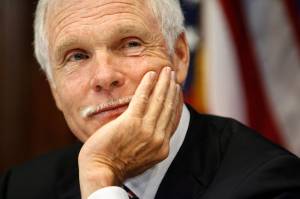
Cable news Legend Ted Turner has died.
The New York Times (gift article): Ted Turner, Creator of CNN and the 24-Hour News Cycle, Dies at 87.
Ted Turner, the media mogul who cut a brash and vivid figure on the American scene of the late 20th century by dominating the cable television industry, creating the 24-hour news cycle with CNN, and extending his restless reach into professional sports, environmentalism and philanthropy, died on Wednesday at his home near Tallahassee, Fla. He was 87.
Phillip Evans, a spokesman for the family, confirmed the death. Mr. Turner announced in 2018 that he had Lewy body dementia, a progressive brain disorder.
Ted Turner
Mr. Turner’s signature creation was CNN — the Cable News Network — which revolutionized television news in 1980 by presenting it all hours of the day and eventually inspiring other media operations to follow suit. But his portfolio of business ventures bulged with much more, and their impact on American culture was considerable.
As a spinoff of CNN, Mr. Turner created the channel CNN Headline News and CNN International. He founded the cable and satellite sports and entertainment “superstation” that became known as TBS and spawned a sister channel, TNT, both of which continue to reach millions of homes.
In 1985, he bought for $1.5 billion the MGM studio’s library of films and nine years later created the cable franchise Turner Classic Movies, or TCM. He made a similar purchase of Hanna-Barbera cartoons and, relying on them, created the Cartoon Network in 1992. And in 1996, he merged his conglomerate, Turner Broadcasting System, with Time Warner to create one of the world’s largest media companies.
Along the way, he found the time and energy to captain the winning yacht in the America’s Cup race in 1977 and to take an active role as owner of the Atlanta Braves, giving the team extended national exposure on Turner-owned television.
“I’m trying to set the all-time record for achievement by one person in one lifetime,” he told the journalist Dale Van Atta in a Reader’s Digest article in 1998. “And that puts you in pretty big company: Alexander the Great, Napoleon, Gandhi, Christ, Mohammed, Buddha, Washington, Roosevelt, Churchill.”
Not even his staunchest admirers placed Mr. Turner on that high a pedestal. But even a bitter rival like the media magnate Rupert Murdoch — who once had his New York Post run the headline “Is Turner Insane?” — had to concede that he was one of the most influential figures in the history of mass media.
An Atlanta-based entrepreneur, Mr. Turner took astounding risks in business, often teetering on the edge of bankruptcy and then roaring back to multiply his fortune.
Against the advice of colleagues and the conventional wisdom of his industry peers, he poured millions of dollars into pioneering ventures that combined cable and satellite broadcasts. He warred against the big television networks. He almost lost his shirt in Hollywood but emerged from these gambles and brawls as a billionaire astride a vast cable empire of news, sports and entertainment channels.
Of course the big story is still Trump’s war with Iran. It’s difficult to know what to believe about what’s going on, since Trump and Hegseth lie constantly.
CNN reports the Trump/Hegseth line: US and Iran closing in on memorandum aimed at ending war, source says.
The United States and Iran are moving closer to an agreement on a short memorandum to end the Iran war, a regional source familiar with the negotiations said, although Trump administration officials cautioned that talks had previously fallen apart at the last minute.
The White House received positive feedback from Pakistani mediators on Tuesday that the Iranians were progressing toward a compromise, two administration officials told CNN while offering some skepticism about Pakistan’s optimism.
From CentCom: Project Freedom at Strait of Hormuz
But a renewed diplomatic push has emerged in recent days, the regional source said. President Donald Trump appears to be simplifying issues in peace negotiations so moderates in the Iranian regime can come back to the negotiating table, the source added, with the aim being to tackle thornier issues later.
A one-page plan being floated internally contains provisions that have been at the heart of negotiations to end the conflict, a person familiar with the plan told CNN. The document would declare an end to the war while triggering a 30-day negotiation period on resolving sticking points, including on nuclear issues, unfreezing Iranian assets and future security in the Strait of Hormuz, the person said.
Precise details of the plan couldn’t immediately be verified, but the source familiar said it would include discussion of a moratorium on uranium enrichment for a period of longer than 10 years. A previous US proposal had set it at 20 years.
The plan also requires Iran to ship its stockpile of highly enriched uranium out of the country, but details were still being negotiated.
News of positive movement from the Pakistanis helped spur Trump on Tuesday to announce a pause of “Project Freedom” – an operation to guide stranded ships out of the strait – citing progress in negotiations with Iran, the administration officials said. The pause came after Secretary of State Marco Rubio told reporters that Operation Epic Fury had ended and that the administration’s full focus was on Project Freedom.
The regional source told CNN that the harder the US pushed its agenda of Project Freedom and Operation Epic Fury, the more the hardliners in Iran stood up and had a bigger voice.
The Guardian reports on Iran’s reaction: Middle East crisis live: US proposal to end war a ‘wishlist, not a reality’, warns Iranian official.
‘American wishlist, not a reality’: Iranian officials cast doubt on US proposal to end war.
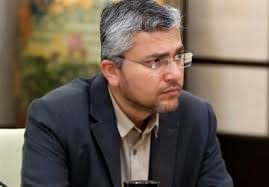
Ebrahim Rezaei, the spokesperson of the Iranian parliament’s national security and foreign policy commission, has poured cold water on the Axios report claiming the US and Iran were nearing a one-page memorandum to end the war, saying it was an “American wishlist [and] not a reality”.
Ebrahim Rezaei
In a fiery statement on X, he said: “Americans will not gain in a lost war what they failed to achieve in face-to-face negotiations. Iran has its finger on the trigger and is ready; if they do not surrender and grant the necessary concessions, or if they or their lapdogs attempt any mischief, we will respond with a harsh and regrettable response.
Iran’s foreign ministry spokesperson, Esmail Baghaei, also responded to the Axios report, telling the Iranian Isna news agency that the US proposal is still being reviewed by Tehran.
“Once Iran concludes its assessment, it will convey its views to the Pakistani side,” Isna reported, adding that the US demands detailed in the Axios report “included excessive and unrealistic demands that have been strongly rejected by Iranian officials in recent days”.
Isna reported that the Iranian negotiating team is solely reviewing the “termination of the war” and the nuclear issue is not currently being discussed.
That doesn’t sound like an agreement is coming soon. And Trump is issuing threats.
AP: US and Iran appear to move closer to ending their war as Trump threatens more bombing.
The United States and Iran appeared to be moving closer Wednesday to an initial agreement to end the war, as U.S. President Trump sought to pressure Tehran with threats of a new wave of bombing if a deal is not reached.
Trump posted on social media that the two-month war could soon end and that oil and natural gas shipments disrupted by the conflict could restart. But he said that depends on Iran accepting a reported agreement that the president did not detail.
“If they don’t agree, the bombing starts,” Trump wrote.
Trump made his latest comments after he suspended a short-lived U.S. effort to force open a safe passage for commercial ships through the Strait of Hormuz, a vital waterway through which major oil and gas supplies, fertilizer and other petroleum products passed before the war.
Iran’s effective closure of the strait has sent fuel prices skyrocketing, rattled the global economy and put enormous economic pressure on countries, including major powers such as China.
China’s foreign minister called for a comprehensive ceasefire Wednesday after meeting in Beijing with Iran’s top envoy. Wang Yi said his country was “deeply distressed” by the conflict, which began Feb. 28 when the U.S. and Israel launched strikes against Iran.
China’s close economic and political ties to Tehran give it a unique position of influence. The Trump administration is pressing China to use that relationship to urge the Islamic Republic to open the strait.
Meanwhile it appears that the Trump administration has been trying to conceal how much damage Iran has done to U.S. bases in the Middle East region.
The Washington Post (gift article): Iran has hit far more U.S. military assets than reported, satellite images show.
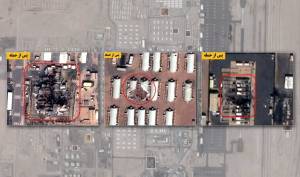
Iranian airstrikes have damaged or destroyed at least 228 structures or pieces of equipment atU.S. military sites across the Middle East since the war began, hitting hangars, barracks,fuel depots, aircraft and key radar, communications and air defense equipment, according to a Washington Post analysis of satellite imagery. The amount of destruction is far larger than what has been publicly acknowledged by the U.S. government or previously reported.
The threat of air attacks rendered some of the U.S. bases in the region too dangerous to staff at normal levels, and commanders moved most of the personnel from these sites out of the range of Iranian fire at the start of the war, officials have said.
Since the start of the war on Feb. 28, seven service members have died in strikes on U.S. facilities in the region — six in Kuwait and one in Saudi Arabia — and more than 400 troops have suffered injuries as of late April, the U.S. military said. While most of the wounded returned to duty within days, at least 12 suffered injuries that military officials classified as serious, according to U.S. officials who, among others, spoke on the condition of anonymity due to the sensitivity of the issue.
Iranian state-affiliated news agencies, however, have from the start regularly published high-resolution satellite imagery on their social media accounts that claimed to document damage to U.S. sites.
Images of damage to Camp Buehring in Kuwait, released and annotated by Iranian state-affiliated media. Washington Post illustration.
For this examination — one of the first comprehensive public accounts of the damage to U.S. facilities in the region — The Post reviewed more than 100 high-resolution Iranian-released satellite images. The Post verified the authenticity of 109 of the those images by comparing them with lower-resolution imagery from the European Union’s satellite system, Copernicus, as well as high-resolution images from Planet where available. The Post excluded 19 Iranian images from the damage analysis because comparisons with the Copernicus imagery were inconclusive. No Iranian imagery was found to have been manipulated.
In a separate search of Planet imagery, Post reporters found 10 damaged or destroyed structures that were not documented in the imagery released by Iran. In all, The Post found 217 structures and 11 pieces of equipment that were damaged or destroyed at 15 U.S. military sites in the region.
Experts who reviewed The Post’s analysis said the damage at the sites suggested that the U.S. military had underestimated Iran’s targeting abilities, not adapted sufficiently to modern drone warfare and left some bases under-protected.
“The Iranian attacks were precise. There are no random craters indicating misses,” said Mark Cancian, a senior adviser with the Center for Strategic and International Studies and a retired Marine Corps colonel, who reviewed the Iranian images at The Post’s request. The Post previously revealed how Russia provided Iran with intelligence to target U.S. forces.
Read the rest and view more images using the gift link above. I wonder what it will take to repair the damage?
Here’s a bit of hopeful news from The Washington Post: Poll finds broad rejection of religion-related messages from Trump, Hegseth.

Wednesday Reads: Trump’s War in Iran and Other News
Posted: March 25, 2026 Filed under: just because | Tags: 82nd Airborne, Donald Trump, German President Frank-Walter Steinmeier, Iran military spokesman Ebrahim Zolfaghari, Iran War, Iran war negotiations, Jack Smith, Jared Kushner, JD Vance, Pakistan, Paul Krugman, Steve Witkoff, Strait of Hormuz, TREASON 7 CommentsGood Day!!
I’ve been scanning the headlines for awhile now, trying to make sense of what’s happening in Trump’s war with Iran. I’m still confused.
Trump keeps saying that he’s already won the war, but he’s sending thousands of troops to the region. He apparently sent a peace plan to Iran that they have already rejected, offering an alternative proposal.
CNN has a summary of the latest moves in the war: What to know on Day 26 of the Iran war: Tehran taunts Trump, US troop deployment.
Iran’s military has mocked the Trump administration’s efforts to strike a deal to end the war, saying the United States is only “negotiating with yourselves.”
Despite President Donald Trump’s optimism that a deal with Tehran is in sight, sources have told CNN that around 1,000 US soldiers with the Army’s 82nd Airborne Division are expected to deploy to the Middle East in the coming days, suggesting the president is keeping his options open.
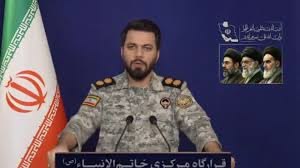
Ebrahim Zolfaghari
The latest on the talks:
- Iran taunts Trump: Ebrahim Zolfaghari, a spokesman for Iran’s military, taunted the US leadership in a message broadcast Wednesday on state television. “Has the level of your internal conflicts reached the point where you are negotiating with yourselves?” he asked. Zolfaghari said the US’ “strategic power” had turned into a “strategic defeat.”
- Trump touts talks: That mocking message came after Trump expressed optimism over a deal to end the war, saying that Vice President JD Vance, Secretary of State Marco Rubio and others were leading negotiations.
- 15-point plan: The US has shared a 15-point list of expectations with Iran via Pakistan, with talks between the warring countries floated in Islamabad later this week, two regional sources told CNN. Those points include limits on Tehran’s defense capabilities, a cessation of support for proxies and an acknowledgement of Israel’s right to exist, the sources said.
- Iran shuns Witkoff: Iranian representatives have let the Trump administration know that Tehran does not want to reenter negotiations with the US president’s favored diplomatic duo of Steve Witkoff, his special envoy, and Jared Kushner, his son-in-law, according to two regional sources, who said Tehran would rather deal with Vance.
-
Iran willing to listen: An Iranian source told CNN on Tuesday that Washington had initiated “outreach” in recent days, “but nothing that has reached the level of full-on negotiations.” The source stressed that Iran “is not asking for a meeting or direct talks with the United States but is willing to listen if a plan for a sustainable deal comes within reach” that would preserve the regime’s interests. Initially, Tehran had denied any contact with Washington, saying that Trump’s claim of talks was a ruse to lower energy prices and buy time.
There’s much more on what’s happening at the CNN link.
More details from BBC News: Pakistan officials say Iran receives 15-point US plan – AP.
The Associated Press news agency reports that Iran has received a 15-point plan from the US for reaching a ceasefire in the US-Israel war with Iran, citing two Pakistani officials.
The Pakistani officials reportedly said the proposal broadly covers the following:
- Sanctions relief
- Civilian nuclear co-operation
- A rollback of Iran’s nuclear programme
- Monitoring by the International Atomic Energy Agency
- Missile limits, and access for shipping through the Strait of Hormuz
Pakistan Prime Minister Shehbaz Sharif said earlier that the country was “ready” to host talks for a settlement of the conflict.
Israel’s Channel 12 has also reported on the plan. You can read a full breakdown of the reports in our earlier post.
There’s been no confirmation of the details from the White House. Iranian military has denied it’s negotiating with the US.
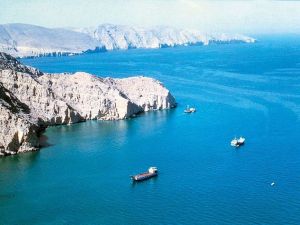
The Strait of Hormuz
Iran has rejected the U.S. plan and offered an alternative. AP: Iran rejects US ceasefire plan, issues its own demands as strikes land across the Mideast.
DUBAI, United Arab Emirates (AP) — Iran on Wednesday dismissed an American plan to pause the war in the Middle East and launched more attacks on Israel and Gulf Arab countries, including an assault that sparked a huge fire at Kuwait International Airport.
Iran’s defiance came as Israel launched airstrikes on Tehran and as the United States deployed paratroopers and more Marines to the region.
Iranian state television’s English-language broadcaster quoted an anonymous official as saying Iran rejected America’s ceasefire proposal and has its own demands for an end to the fighting. “Iran will end the war when it decides to do so and when its own conditions are met,” the hardliner-controlled Press TV quoted the official as saying.
Earlier, two officials from Pakistan, which transmitted the U.S. plan to Iran, described the 15-point proposal broadly, saying it addressed sanctions relief, a rollback of Iran’s nuclear program, limits on missiles and reopening the Strait of Hormuz, through which a fifth of the world’s oil is shipped.
An Egyptian official involved in the mediation efforts said the proposal also includes restrictions on Iran’s support for armed groups. The officials spoke on condition of anonymity to discuss details not yet released.
Some of those points were nonstarters in negotiations before the war: Iran has insisted it won’t discuss its ballistic missile program or its support of regional militias, which it views as key to its security. And its ability to control passage through the Strait of Hormuz represents one of its biggest strategic advantages….
Press TV cited an Iranian five-point plan for a ceasefire coming from the official who rejected the US proposal. That plan included a halt to killings of its officials, means to make sure no other war is waged against it, reparations for the war, the end of hostilities and Iran’s “exercise of sovereignty over the Strait of Hormuz.”
Those measures, particularly reparations and its continued chokehold over the Strait of Hormuz, likely will be unacceptable to the White House.
According to the above AP article, Trump is still claiming that Iran is negotiating with Steve Witkoff and Jared Kushner, but according the BBC article above, Iran has said it won’t talk to them but would talk to J.D. Vance.
Barak Ravid and Marc Caputo at Axios: Iran suspects Trump’s peace talk push is another trick.
Iranian officials have told the countries trying to mediate peace talks with the U.S. that they have now been tricked twice by President Trump and “we don’t want to be fooled again,” according to a source with direct knowledge of those discussions.
The big picture: The U.S. is pushing for in-person peace talks as soon as Thursday in Islamabad, Pakistan. But during the two previous rounds of U.S.-Iran talks, Trump green lit crippling surprise attacks while still claiming to be seeking a deal.
Flashback: Israel attacked Iran with Trump’s backing last June, days before a planned round of nuclear talks.
- Then three weeks ago, the U.S. and Iran reached a tentative agreement in Geneva to continue talks the following week — two days before the U.S. and Israel attacked.
Behind the scenes: Iranian officials have told the mediators — Pakistan, Egypt and Turkey — that U.S. military movements and Trump’s decision to deploy major troop reinforcements have increased their suspicion that his proposal for peace talks is just a ruse.
- To the Trump administration, the massing of forces is a sign he’s serious about negotiating from gunboats, not that he’s negotiating in bad faith. “Trump has a hand open for a deal and the other is a fist, waiting to punch you in the f***ing face,” said a Trump adviser.
- The White House has sent messages to the Iranians that Trump is serious about the negotiations, and floated Vice President JD Vance’s possible involvement in the talks as proof.
- Two sources said Witkoff recommended Vance because of the stature of his office and because the Iranians don’t see him as a hawk.
Read more at Axios.
Trump is ordering troop movements. The Washington Post (gift link): Army paratroopers ordered to Middle East as U.S. weighs next move in Iran conflict.
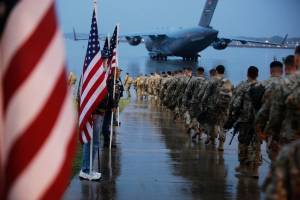
The Pentagon on Tuesday ordered a couple thousand paratroopers from the 82nd Airborne Division to deploy to the Middle East, U.S. officials said, as President Donald Trump weighs a significant escalation in the U.S.-Israeli war with Iran and declines to rule out putting U.S. troops on Iranian soil.
Army paratroopers assigned to the 82nd Airborne Division at Fort Bragg, North Carolina, prepare to board an aircraft in 2020. (Hubert Delany III AP)
U.S. officials approved written orders for soldiers from the division’s 1st Brigade Combat Team and the 82nd’s headquarters at Fort Bragg in North Carolina, said two U.S. officials and a third person familiar with the move, speaking on the condition of anonymity because of the sensitivity of the issue. Verbal orders previously had been approved, two people said. It is not yet clear whether they will deploy to Iran itself, officials said.
Many of the soldiers are with the division’s Immediate Response Force, a unit that is trained to deploy on 18 hours’ notice for missions as varied as seizing airfields and other critical infrastructure, reinforcing U.S. embassies and enabling emergency evacuations. Immediate Response Force duties rotate among infantry units in the 82nd Airborne Division.
The orders follow weeks of speculation about whether the 82nd Airborne, commanded by Maj. Gen. Brandon Tegtmeier, would join the war, after its headquarters unit abruptly pulled out of a training exercise early this month at Fort Polk in Louisiana as Trump approved a sustained bombing campaign against Iran.
Last week, U.S. officials said the Pentagon was making plans to send soldiers from the 82nd Airborne to key areas in Iran, but it was not yet clear if the administration would approve the deployment to the region or, more specifically, onto Iranian soil.
The Army deployment comes as three warships carrying about 4,500 troops from the Tripoli Amphibious Ready Group neared the Middle East. The group includes the 31st Marine Expeditionary Unit based in Okinawa, Japan — a specialized Marine Corps unit that includes about 2,200 personnel, including an infantry battalion of about 800.
A similar unit, the 11th Marine Expeditionary Unit, recently deployed early from San Diego but is weeks away from arriving in the Middle East. The unit, embarked on warships that include the USS Boxer, could eventually replace or supplement the 31st MEU in the region, officials said.
Use the gift link to read more.
U.S. allies are confused about what Trump is doing. Victor Jack, Chris Lunday and Esther Webber at Politico: Trump’s ‘absurdly incoherent’ Iran pleas leave allies befuddled.
BRUSSELS — Donald Trump’s messaging on what he wants from American allies in his war against Iran is so confusing that any effort to help in reopening the Strait of Hormuz remains deadlocked, according to four European government officials.
Washington has not made any formal requests for equipment, said the officials, who were granted anonymity to speak freely on the sensitive talks, while allies are also reluctant to send military assets to the region over fears they would be attacked by Iran.
German President Frank-Walter Steinmeier
More than 30 nations, including a majority of NATO countries, have pledged “appropriate efforts” to restart shipping through the critical trade chokepoint after the U.S. president slammed allies as “COWARDS” for failing to volunteer their assistance.
But so far, discussions remain in their very early stages, according to government officials from seven European countries.
“One would wish for more predictability, more clarity and more strategic foresight — not only in this case,” German Defense Minister Boris Pistorius told POLITICO on Tuesday, adding: “Let’s wait and see.”
The slow-moving talks reflect Trump’s conflicting messaging more than three weeks into his war against Iran — where he has threatened allies for failing to back his campaign, then said they weren’t needed, all while providing scant detail on how they could support the U.S.
The lack of enthusiasm about getting involved also underscores Europe’s growing self-confidence in dealing with Washington, as the continent increasingly shifts its approach from placating Trump to confronting him over a war allies were not consulted on.
“This war violates international law,” German President Frank-Walter Steinmeier said Tuesday. “There is little doubt that, in any case, the justification of an imminent attack on the U.S. does not hold water.”

Let’s face it: despite journalists’ efforts to make sense of what Trump is up to, it’s highly unlikely that he himself has any clue about what he is doing.
, and Inside Trump’s daily video montage briefing on the Iran war.
Each day since the start of the war in Iran, U.S. military officials compile a video update for President Donald Trump that shows video of the biggest, most successful strikes on Iranian targets over the previous 48 hours, three current U.S. officials and a former U.S. official said.
The daily montage typically runs for about two minutes, sometimes longer, the officials said. One described each daily video as a series of clips of “stuff blowing up.”
The highlight reel of U.S. Central Command bombing Iranian equipment and military sites isn’t the only briefing Trump gets about the war. He’s also updated through conversations with top military and intelligence advisers, foreign leaders and news reports, the officials said.
But the video briefing is fueling concerns among some of Trump’s allies that he may not be receiving — or absorbing — the complete picture of the war, now in its fourth week, two of the current officials and the former official said.
They said the videos are also driving Trump’s increasing frustration with news coverage of the war. Trump has pointed to the success depicted in the daily videos to privately question why his administration can’t better influence the public narrative, asking aides why the news media doesn’t emphasize what he’s seeing, one of the current U.S. officials and the former U.S. official said.
That sounds about right for Trump’s childish comprehension level.
In non-war news, Trump’s theft of government documents after his first term is back in the headlines.
Carol LeonnigJacqueline Alemany at MSNOW: Trump appeared to have business motive for keeping classified documents, Jack Smith finds.
Special counsel Jack Smith gathered evidence that then-candidate Donald Trump took many top secret documents that related to his worldwide business interests, and investigators considered this a likely motive for Trump concealing them at his Florida club after he left the White House, according to newly released case records.
The special prosecutor also had evidence indicating that after leaving office Trump had shown a classified map to passengers on a private plane, including his future chief of staff, Susie Wiles, and took at least one document that was so secret that only six people had authority to review it, according to a memo reviewed by MS NOW and cited by the House Judiciary Committee’s ranking Democrat, Rep. Jamie Raskin of Maryland.
Trump’s stash of documents in a Mar-a-Lago bathroom
Trump’s reason for taking hundreds of pages of classified documents when he left office in January 2021 — and then concealing them when the Justice Department subpoenaed him for their return in May 2022 — has been one of the larger mysteries of the case. FBI agents conducting an unannounced search of Trump’s Mar-a-Lago residence in August 2022 discovered hundreds more pages of top secret records that Trump and his lawyers had failed to return to the government after claiming they had fully returned all classified materials.
In a January 2023 “progress memo” reviewed by MS NOW, Smith’s office discussed the possible motive after the FBI discovered that Trump held on to many documents related to his businesses.
“Trump possessed classified documents pertinent to his business interests — establishing a motive for retaining them,” according to the memo, which tracked progress in the documents and election-interference investigations. “We must have those documents.”
In a letter to Attorney General Pam Bondi on Tuesday, Raskin insisted that Trump’s Justice Department has sought to cover up the details of Trump’s “hoarding” of classified government secrets and storing them in his Mar-a-Lago club’s showers and closets — which put national security at risk — as well as the clues to Trump’s motives for doing so.
“These new disclosures suggest that Donald Trump stole documents so sensitive that only six people in the entire U.S. government had access to them, that the documents President Trump stole pertained to his business interests,” Raskin wrote to Bondi.
“This glimpse into the trove of evidence behind the coverup reveals a President of the United States who may have sold out our national security to enrich himself.”

More from Jeremy Roebuck and Maegan Vazquez at The Washington Post: Trump showed classified map to passengers on his plane in 2022, memo says.
President Donald Trump showed a classified map he retained from his first term in office to passengers on a 2022 private plane flight and retained another record so sensitive that only six high-ranking government officials had access to it, according to a prosecution memo released to Congress this week.
The memo, which was obtained by The Washington Post, was penned as investigators moved toward indicting Trump on charges of illegally retaining sensitive government material after he left the White House. It offers a snapshot of an early moment in Smith’s investigation and adds new shading to the public understanding of Smith’s probes, even as a final report on his findings remains under court seal.
The memo, for instance, reveals that Smith’s team gathered at least some evidence to suggest that Trump had retained classified material pertinent to his personal business interests and that prosecutors were investigating whether his decision to hold on to those records was motivated by financial gain.
Ya think?
The eventual indictment — filed against Trump five months after the memo was written — did not mention Trump’s business interests as a possible motive. That could suggest prosecutors ultimately concluded they did not have sufficient evidence to prove that theory at trial. It is also not uncommon for prosecutors to leave some allegations out of their initial charging documents, even if they intend to prove them later at trial.
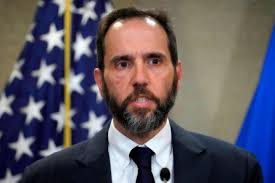
Jack Smith
The memo recounts an alleged incident in which Trump, on a June 2022 flight to his golf club in Bedminster, New Jersey, allegedly shared a classified map with passengers. Among them, according to the memo, was Susie Wiles, then the CEO of Trump’s super PAC, who has since become Trump’s White House chief of staff. The memo did not detail what the map showed.
Smith’s 2023 indictment of Trump included a similar claim that Trump in 2021 had shown others a classified map tied to a military operation and boasted that he had access to a “plan of attack” that the Pentagon had prepared for him.
The Justice Department shared those findings, detailed in a January 2023 briefing document written by then-special counsel Jack Smith’s team, with lawmakers as they conduct a review of Smith’s now-abandoned efforts to prosecute Trump.
Has Trump shared these documents with Putin and his other world leader pals? I’d be surprised if he hasn’t. Remember, those documents were returned to Trump after the charges were dropped.
One more story before I wrap this up. Paul Krugman says that whoever is cashing in on Trump’s war announcements is committing treason.
From Heather Cox Richardson today: Letters from an American.
This morning, economist Paul Krugman came right out and said it: “People close to Trump are trading based on national secrets.” Another word for that, he said, is “treason.” The evidence for such a claim is the sudden and isolated jump in trading volume in S&P 500 and oil futures about 15 minutes before Trump suddenly announced that the U.S. and Iran were in negotiations to end the war—an announcement that turned out to be false.
The oil futures trade alone was worth about $580 million, the Financial Times estimated. As Krugman notes, exploiting confidential information for financial gain, otherwise known as “insider trading,” is illegal. But exploiting confidential information about national security for private financial gain is something else again. It puts profit-making above Americans’ safety.
“I’d very much like to know exactly who was making those trades yesterday morning,” Krugman wrote. “Were they people directly in the know, or billionaires/traders who paid people in the know for tips?”
That’s all I have for you today. What’s on your mind?

 peej
peej Carissa
 bostonboomer
 dakinikat
 ecocatwoman
 jjlo
jjlo mablue2
 Mama Lopez
 peggysue22
 quixote
 skydancingguestblogger
 Mona (aka Wonk the Vote)





Recent Comments