People watch the sunrise at the winter solstice celebration at Stonehenge in Wiltshire, England, in this photo from Dec. 22, 2011. TIM IRELAND/PA IMAGES VIA GETTY IMAGES
Good Day, Sky Dancers!
Let me put up a beautiful reminder of the reason for the season. Solstice came on time yesterday, and there were celebrations around the world. Axial tilt has defined life on the planet for longer than we’ve been around to mess it up.
So, JJ found this calligraphy art on Instagram, and I had to share it since Tashi Mannox is the artist for the cloud artwork on that decks the blog! I’m unsure if you’ve ever read about the work, but you can see a lot more if you go to the sidebar and indulge in the luscious linkiness that will take you to his site. JJ also has a tattoo design created by Tashi for her.
Along with my watercolor brushes, I have a variety of styluses and pots of ink for my own indulgences. I sent my granddaughters a ‘scribes desk’. It’s an upscale Etch-a-sketch on legs that uses a stylus. Like my daughters and me, they get started early with piano and tools of the arts. Their little benches were delivered today. I sent the delivery notice to their parents, along with this beautiful look at Tashi and his stylus scripting Winter Solstice in Tibetan. It’s beautiful and restful to watch.
For those who don’t recognize an ol’ Bo Duke, a revised version. Thanks, Rick Haffey! @repeat1968, John Buss
So, take a deep breath while I post something that points out the existence of the stupid season upon us. This election year is going to make me chew nails and spit rust. Whenever there are American entertainers who are the least talented or enduring in this country, they prove everything I ever thought about them back when they had a moment of relevance.
You’ll see just exactly how much JJ inspired me today because, so far, all this news comes from her. I never watched “The Dukes of Hazard” because I was a budding teenage feminist who hated even seeing the Daisy Duke character. But it’s John Schneider that piqued my interest today. He also captured the pen of John Buss, a fellow graduate of Westside High School, and equally appalled we shared that experience with Ginnie Thomas.
I am sincerely sorry to harsh your mellow. John, Dayne and I are all down here in the Dirty South. None of us like what’s going on in our country. Dayne is a professor of Library Science at South Eastern University of Louisiana, where I taught for a few years during grad school before finishing my doctorate. He’s the author of many seriously good books, plays guitar, and restores saddles to their former glory. JJ lives in the Georgia Mountains. All of us are Biden Supporters.
“Just a good ol’ boy, never meaning no harm…:” John Buss, @repeat1968
This is from our local Fox News, New Orleans. “‘Dukes of Hazzard’ star calls for Biden’s hanging in social media post; prompts Secret Service probe.” He joins Chachi in the Trump Hall of “Who is That Again?” He specializes in Red Neck drag and funky accents, kind of like my Senator John Neely Kennedy.
The United States Secret Service is investigating a now-deleted social media post made by “Dukes of Hazzard” star John Schneider.
In a reply to President Joe Biden’s post on Wed., Dec. 20, Schneider suggested he be “publicly hung.”
“Trump poses many threats to our country: The right to choose, civil rights, voting rights, and America’s standing in the world,” Biden posted at 6:26 p.m. “But the greatest threat he poses is to our democracy. If we lose that, we lose everything.”
In a now-deleted reply, Schneider accused the president of treason.
“The Secret Service is aware of the comments made by Mr. Schneider, and as a matter of practice, we do not comment on matters involving protective intelligence,” a spokesperson for the Secret Service confirmed to Fox 8. “We can say, however, that the Secret Service investigates all threats related to our protectees.”
Fox 8 has reached out to Schneider for a comment and is awaiting a reply.
People look towards the sun as druids, pagans, and revelers gather at Stonehenge for a winter solstice ceremony on Dec. 21, 2016.
Then-President Donald Trump personally pressured two Republican members of the Wayne County Board of Canvassers not to sign the certification of the 2020 presidential election, according to recordings reviewed by The Detroit News and revealed publicly for the first time.
On a Nov. 17, 2020, phone call, which also involved Republican National Committee Chairwoman Ronna McDaniel, Trump told Monica Palmer and William Hartmann, the two GOP Wayne County canvassers, they’d look “terrible” if they signed the documents after they first voted in opposition and then later in the same meeting voted to approve certification of the county’s election results, according to the recordings.
“We’ve got to fight for our country,” said Trump on the recordings, made by a person who was present for the call with Palmer and Hartmann. “We can’t let these people take our country away from us.”
McDaniel, a Michigan native and the leader of the Republican Party nationally, said at another point in the call, “If you can go home tonight, do not sign it. … We will get you attorneys.”
To which Trump added: “We’ll take care of that.”
Palmer and Hartmann left the canvassers meeting without signing the official statement of votes for Wayne County, and the following day, they unsuccessfully attempted to rescind their votes in favor of certification, filing legal affidavits claiming they were pressured.
The moves from Palmer, Hartmann and Trump, had they been successful, threatened to throw the statewide certification of Michigan’s 2020 election into doubt.
People gather wearing costumes for Brighton’s annual “Burning The Clocks” lantern parade for the winter solstice on Dec. 21, 2018.
Joe Rogan has done it again. But this time, even his own producers couldn’t help but correct him during a live podcast taping.
In a clip from Thursday’s episode of “The Joe Rogan Experience” (first reported by Mediaite), Rogan attempted to argue that comments made by President Joe Biden essentially disqualify him from running in 2024. The only problem? It was Trump who made the original gaffe.
Rogan and his guest, MMA fighter Bo Nickal, were accusing Biden of making “no sense at all” when the host asked, “Did you hear what he said yesterday, or a couple of days ago?” He then claimed that Biden recently said in earnest that America “lost” the Revolutionary War because “we didn’t have en0ugh airports.”
“Pull him!” Rogan said. “If you had any other job, and you were talking like that, they would go, ‘Hey, you’re done.’”
The two men continued to denigrate Biden and defend Trump for several minutes before one of Rogan’s producers found the video in question, in which Biden says of Trump, “The same ‘stable genius’ said the biggest problem we had during the Revolutionary War is we didn’t have enough airports!”
“It’s not fake,” they told Rogan, “but he was referencing Trump saying that.”
Then, viewers of Rogan’s video podcast were treated to watching his face fall as the team played him a clip of a speech Trump gave in 2019, in which he said that Revolutionary forces “took over the airports” in their victorious fight against the British—despite the fact that planes would not be invented for another couple of centuries.
I remember that gaffe well since I wrote the blog post about it here. The memes were splendid that week, and I didn’t waste a minute crowding all of them onto the post.
Well, I’ve got a dentist’s appointment in about 45 minutes. It’s probably easier for me than writing all the nonsense coming out due to the election nonsense. I’ll leave you to add stuff to the thread, and I’ll be back to add more to that.
We made it through the longest night of the year! Now, on to what may seem like the longest damned election in U.S. History!
What’s on your reading and blogging list today?
Did you like this post? Please share it with your friends:
Pretty soon the U.S. Supreme Court is going to have to get involved in the Trump mess. That became even more likely after the we got big news out of Colorado. The state’s supreme court has banned Trump from the 2024 ballot.
In a historic decision Tuesday, the Colorado Supreme Court barred Donald Trump from running in the state’s presidential primary after determining that he had engaged in insurrection on Jan. 6, 2021.
The 4-to-3 decision marked the first time a court has ruled to keep a presidential candidate off the ballot under an 1868 provision of the Constitution that bars insurrectionists from holding office. The ruling comes as courts in other states consider similar cases. All seven justices on the Colorado Supreme Court were initially appointed by Democratic governors.
If other states reach the same conclusion, Trump would have a difficult — if not impossible — time securing the Republican nomination and winning in November.
The decision is certain to be appealed to the U.S. Supreme Court, but it will be up to the justices to decide whether to take the case. Scholars have said only the nation’s high court can settle for all states whether the Jan. 6 attack on the U.S. Capitol constituted an insurrection and whether Trump is banned from running.
“A majority of the court holds that President Trump is disqualified from holding the office of President under Section Three of the Fourteenth Amendment to the United States Constitution,” the decision reads. “Because he is disqualified, it would be a wrongful act under the Election Code for the Colorado Secretary of State to list him as a candidate on the presidential primary ballot.”
The U.S. Supreme Court justices separately are weighing a request from special counsel Jack Smith to expedite consideration of Trump’s immunity claim in one of his criminal cases — his federal indictment in Washington on charges of illegally trying to obstruct Joe Biden’s 2020 election victory. Trump has denied wrongdoing.
The Colorado Supreme Court’s majority determined that the trial judge was allowed to consider Congress’s investigation of the Jan. 6, 2021, attack on the U.S. Capitol, which contributed to the determination that Trump engaged in insurrection.
“We conclude that the foregoing evidence, the great bulk of which was undisputed at trial, established that President Trump engaged in insurrection,” the majority wrote.
The decision by the Colorado Supreme Court to remove Donald Trump from the GOP primary ballot has cast us deeper into uncharted waters.
I had a vague notion even into adulthood that the constitutional order in America was challenged every 50 years or so in ways that stress-tested the system. By that measure, I regret to inform you that we live in extraordinary times.
Since 1998, some of the markers – by the numbers:
3 going on 4 presidential impeachments;
2 winning presidential candidates losing the popular vote;
1 going on 2 presidential elections decided by the Supreme Court;
1 attempted coup; and
4 criminal prosecutions of an ex-president.
While it’s not just Donald Trump, you can see his outsize impact on those numbers.
I’m not of the view that testing constitutional limits is somehow dangerous or ill-advised. We should thoroughly ventilate the 14th Amendment’s Disqualification Clause, as is being done now. It’s been a mistake, in my view, to spend decades circling around but never quite confronting the true extent of executive privilege. In the half century since Watergate, we shouldn’t have operated under the untested specter of a Justice Department opinion that sitting presidents can’t be criminally charged.
So I don’t think there’s anything inherently ill-advised about treating the Constitution as a robust mechanism to be used, tested, amended, and reinvigorated. Not every brush with a constitutional question is a constitutional crisis. (To clear up any possible confusion, I’m talking here about the constitutional structure itself, not the scope of individual rights protected by the Constitution, whose developments have their own history and evolution under the law.)
The next few months are going to see a series of new tests.
Read more, with suggestions for further reading at the TPM link.
I am traveling and so I offer only some brief and initial thoughts here about what the United States Supreme Court may and should do in light of the Colorado Supreme Court’s determination that Donald Trump is ineligible to serve as president under Section 3 of the 14th amendment for encouraging insurrection.
By Anatoly Deverin
My bottom line is that the Colorado opinion is a serious and careful opinion that reaches a reasonable conclusion that Trump is disqualified. Nonetheless the opinion reaches many novel legal issues that the U.S. Supreme Court could decide the other way should that court reach the merits. (The three dissenters on the Colorado court did not really reach the merits.) Trump would need to prevail on only one of these legal issues to win on any appeal, so in some ways the legal odds are with him.
It is far from clear that the U.S. Supreme Court will reach the merits—there are many legal doctrines like ripeness and mootness that would give the Court a way to avoid deciding the issues in the case. But it is imperative for the political stability of the U.S. to get a definitive judicial resolution of these questions as soon as possible. Voters need to know if the candidate they are supporting for President is eligible. And if we don’t get a final judicial resolution before January 6, 2025 a Democratic-majority Congress could decide Trump is disqualified even if he appears to win the electoral college vote. That would be tremendously destabilizing.
In the end the legal issues are close but the political ramifications of disqualification would be enormous. Once again the Supreme Court is being thrust into the center of a U.S. presidential election. But unlike in 2000 the general political instability in the United States makes the situation now much more precarious.
Any time people start fighting on the internet, someone will inevitably reach for the Hitler comparison. It’s a virtually unbreakable rule known as “Godwin’s law,” named after Mike Godwin, an early internet enthusiast who coined it back in 1990. It’s also understood that often the party mentioning Hitler or the Nazis is losing the argument, though that’s not part of the law itself.
Godwin’s law was invoked this weekend when President Joe Biden’s campaign said former President Donald Trump had “parroted Adolf Hitler” when he accused undocumented immigrants of “poisoning the blood of our country.”
But according to Godwin himself, that doesn’t mean Biden is losing the argument.
Lights in the Murk, 2022, Jeremy Miranda (American, b.1980)
“Trump’s opening himself up to the Hitler comparison,” Godwin said in an interview. And in his view, Trump is actively seeking to evoke the parallel.
Trump made almost identical comments in an interview with the far-right website The National Pulse in November, around the same time Trump also called his political opponents “vermin” — all rhetoric that Hitler used to disparage Jews.
“You could say the ‘vermin’ remark or the ‘poisoning the blood’ remark, maybe one of them would be a coincidence,” Godwin said. “But both of them pretty much make it clear that there’s something thematic going on, and I can’t believe it’s accidental.”
Comparisons to Hitler and the Nazis happen all the time, particularly in online discourse, but they’re often dismissed as ridiculous or clumsy. When public figures or their staff mention the H-word, it can provoke derision. But the Biden campaign has made a deadly serious statement, and a political wager that the public won’t dismiss the charge as hyperbole.
Read an interview with Godwin at the Politico link.
Former President Donald J. Trump on Tuesday doubled down on his widely condemned comment that undocumented immigrants are “poisoning the blood of our country,” rebuffing criticism that the language echoed Adolf Hitler by insisting that he had never read the Nazi dictator’s autobiographical manifesto.
Mr. Trump did not repeat the exact phrase, which has drawn criticism since he first uttered it in an interview with a right-leaning website and then repeated it at a rally in New Hampshire on Saturday.
But he said on Tuesday night in a speech in Iowa that undocumented immigrants from Africa, Asia and South America were “destroying the blood of our country,” before alluding to his previous comments.
“That’s what they’re doing. They’re destroying our country,” Mr. Trump continued. “They don’t like it when I said that. And I never read ‘Mein Kampf.’ They said, ‘Oh, Hitler said that.’”
He added that Hitler said it “in a much different way,” without making his meaning clear.
Undocumented immigrants, he added, “could be healthy. They could be very unhealthy. They could bring in disease that’s going to catch on in our country.” And he again said that they were “destroying the blood of our country” and “destroying the fabric of our country.”
Mr. Trump and his campaign have dismissed the comparisons between his remark and language used by Hitler using the words “poison” and “blood” to denigrate those who Hitler deemed a threat to the purity of the Aryan race.
In one chapter of “Mein Kampf” named “Race and People,” Hitler wrote, “All the great civilizations of the past became decadent because the originally creative race died out, as a result of contamination of the blood.” In another passage, he links “the poison which has invaded the national body” to an “influx of foreign blood.”
I believe that Trump has never read “Mein Kampf,” because he doesn’t read anything; but I have no doubt that Steven Miller–who writes Trump’s speeches–has read it. Trump was reading these Hitler-like words from his teleprompter.
When Washington Post owner Jeff Bezos wanted an assured hand to right the newspaper’s shaky finances, he turned to Will Lewis, a 54-year-old former editor of The Daily Telegraph and former publisher of The Wall Street Journal, whom he called “exceptional, tenacious.” Lewis will start as the Post‘s publisher and CEO in early January.
A dozen years ago, media magnate Rupert Murdoch also turned to Lewis when he wanted to find someone to rectify the hacking and bribery scandals engulfing his British Sunday tabloid, News of the World.
Lewis’ publicly stated charge was to root out newsroom corruption, cooperate with police and help settle claims from people targeted by the company’s journalists for voicemail and email hacking. The Guardian called him “News Corp’s clean-up campaigner.”
A very different picture of Lewis emerges from material presented in London courtrooms in recent months and reviewed by NPR. The man picked to lead the Post — a paper with the slogan “Democracy Dies in Darkness” — stands accused of helping to lead a massive cover-up of criminal activity when he was acting outside public view.
In lawsuits against News Corp.’s British newspapers, lawyers for Prince Harry and movie star Hugh Grant depict Lewis as a leader of a frenzied conspiracy to kneecap public officials hostile to a multibillion-dollar business deal and to delete millions of potentially damning emails. In addition, they allege, Lewis sought to shield the CEO of News Corp.’s British arm, News UK, from scrutiny and to conceal the extent of wrongdoing at News of the World‘s more profitable sister tabloid, The Sun.
In sum, the Duke of Sussex and Grant argue that Lewis was a linchpin of efforts to limit the fallout during a key period between late 2010 and 2012.
These concerns about Lewis’ actions have been percolating for years.
Through a spokesperson, Lewis declined to comment to NPR for this story. He previously denied the broad outlines of these accusations, saying they are utterly unfounded. Lewis has not personally been sued as part of any of this current litigation, which offers greater specificity and sweep to the allegations.
Long before Ron DeSantis’ presidential ambitions began to falter, it was clear to anyone paying close attention that there were fatal flaws in his much-hyped political operation.
“I had to have it explained to me the first time DeSantis came here for a parade,” an early DeSantis supporter in New Hampshire recalled to The Daily Beast. “I was gonna show up for the parade and I was informed, ‘This is a Never Back Down event, so you can’t mention anything about the campaign.’ And I was like, what the hell is this?”
This, the New Hampshire presidential campaign veteran would come to learn, was how the DeSantis campaign thought they’d cracked the code to beat former President Donald Trump.
Never Back Down was launched as a super PAC—loaded up with $80 million transferred from DeSantis’ state-level PAC in Florida—designed to carry him to the presidency through sheer force. The prospect of a talent-stocked PAC spending historic sums on organizing and campaign messaging was initially so fearsome that some Republicans dubbed Never Back Down the “Death Star.”
As the New Hampshire source’s befuddlement at the parade showed, however, Never Back Down’s ambitious vision was destined to collide with the strict federal rules barring campaigns and super PACs from cooperating on strategy or even communicating at all.
But few in Republican politics expected just how spectacularly this vaunted Death Star would ultimately implode.
“This will go down as maybe the worst-orchestrated effort in modern presidential history,” said a person familiar with Never Back Down’s operations.
Forest in Winter, Lawren S. Harris, Canadian, 1885-1970
After months spent out of sync with the campaign, a number of officials with Never Back Down have either resigned or been fired; top PAC strategists have cursed at each other and nearly come to blows in private meetings; and a new breakaway PAC has formed.
Most troubling of all, DeSantis might be sliding backward in his quest for the presidency despite the staggering sum of nearly $100 million that his PAC has spent to support him.
With DeSantis struggling to maintain even second place as the Iowa and New Hampshire contests near, the governor’s sympathizers are fully considering the consequences of his team’s big bet that they could outsource a huge primary victory to a super PAC.
“It is gonna cost us the election,” the DeSantis supporter, who later switched allegiance to a rival non-Trump campaign, recalled thinking to themselves several months ago, now describing the decision to outsource so many critical functions to Never Back Down as “a huge, huge mistake, and we could not afford one on this.”
“We’ll never win another election if we don’t stop PACs trying to become the campaign,” the former DeSantis supporter said.
Read more details at The Daily Beast.
Three more interesting stories, before I wrap this up:
A federal judge in New York has ordered a vast unsealing of court documents in early 2024 that will make public the names of scores of Jeffrey Epstein’s associates.
The documents are part of a settled civil lawsuit alleging Epstein’s one-time paramour Ghislaine Maxwell facilitated the sexual abuse of Virginia Giuffre. Terms of the 2017 settlement were not disclosed.
Maxwell is currently serving a 20-year prison sentence after she was convicted of sex trafficking and procuring girls for Epstein, who died by suicide in 2019 in a Manhattan jail while awaiting trial on federal sex trafficking charges.
Anyone who did not successfully fight to keep their name out of the civil case could see their name become public — including Epstein’s victims, co-conspirators and innocent associates.
Judge Loretta Preska set the release for Jan. 1, giving anyone who objects to their documents becoming public time to object. Her ruling, though, said that since some of the individuals have given media interviews their names should not stay private.
The documents may not make clear why a certain individual became associated with Giuffre’s lawsuit, but more than 150 people are expected to be identified in hundreds of files that may expose more about Epstein’s sex trafficking of women and girls in New York, New Mexico, the U.S. Virgin Islands and elsewhere. Some of the names may simply have been included in depositions, email or legal documents.
Some of the people have already been publicly associated with Epstein. For instance, Harvard law professor Alan Dershowitz is publicly named in the judge’s order. Certain minor victims will remain redacted.
Before Rudolph W. Giuliani was ordered to pay $148 million to two Georgia election workers he defamed, and before he owed his own lawyers several million dollars more, federal prosecutors were scrutinizing whether he pursued dubious business dealings in Ukraine to shore up his dwindling fortune, according to court records unsealed late Tuesday.
The documents lifted the veil on a criminal investigation that federal prosecutors spent three years conducting into the dealings of Mr. Giuliani, the former New York mayor who had reinvented himself as Donald J. Trump’s personal lawyer and attack dog.
Apple Grove Moon, Peter Skulthorpe
The investigation, which did not result in charges for Mr. Giuliani, centered on whether he illegally lobbied the Trump administration in 2019 on behalf of Ukrainian officials. Those same Ukrainians helped Mr. Giuliani dig for dirt on Joseph R. Biden Jr., who was then on his way to becoming the Democratic presidential nominee and who would ultimately defeat Mr. Trump in 2020.
The prosecutors had assembled enough evidence to persuade a judge in April 2021 to authorize the seizure of Mr. Giuliani’s phones and computers, an extraordinary step to take against any lawyer, let alone one who had represented a sitting president. And for a time, it appeared as if the prosecutors, working in the same Manhattan U.S. attorney’s office that Mr. Giuliani had presided over decades earlier, might seek to indict him.
But when they failed to find a smoking gun in Mr. Giuliani’s electronic records, the prosecutors notified the judge overseeing the matter that they had ended the long-running investigation.
A spokesman for Mr. Giuliani did not immediately respond to a request for comment late Tuesday.
The judge, J. Paul Oetken, recently ordered the prosecutors to release the search warrant materials in response to a request from The New York Times. Mr. Giuliani consented to the newspaper’s request, as did the government, with certain redactions to protect privacy interests.
While much of the evidence that underpinned the search warrant had already come to light in the media and through Mr. Trump’s first impeachment proceedings in late 2019,the search warrant materials represent the government’s most comprehensive catalog yet of Mr. Giuliani’s ties to Ukraine.
And for the first time, the records explicitly linked Mr. Giuliani’s recent financial troubles to his dealings in Ukraine, suggesting that he did not just want Ukrainian officials’ help in attacking Mr. Biden but also their money.
A federal judge on Tuesday granted the Justice Department access to nearly 1,700 records recovered from the cellphone of Rep. Scott Perry (R-Pa.) in a long-running legal battle in the criminal investigation of former president Donald Trump’s efforts to overturn the 2020 presidential election.
Chief U.S. District Judge James E. Boasberg of D.C. gave investigators access to 1,659 records and withheld 396 others after a federal appeals court directed him to individually review 2,055 communications from Perry’s phone to decide which were protected by the Constitution’s “speech or debate” clause, which grants members of Congress immunity from criminal investigation when acting in their official capacities.
The FBI seized Perry’s phone in August 2022 under a court order seeking to understand Perry’s involvement in the machinations that were the subject of Trump’s criminal indictment this August for allegedly plotting to prevent President Biden from taking office.
An outline of the contents of Perry’s sensitive discussions with Trump’s legal advisers, aides and others spilled into public view in a quickly withdrawn court filing last month, revealing details of efforts to gain access to secret intelligence about the election, to replace the attorney general with former Justice Department official Jeffrey Clark and to reverse the department’s finding that Biden had been elected fairly. The filing also described Perry’s discussions with Pennsylvania state officials who supported Trump’s fraud allegations, with private individuals claiming expertise in cybersecurity and with attorneys for Trump’s campaign.
Tuesday’s order will determine which messages investigators with special counsel Jack Smith can actually use as potential evidence in any case, pending an expected renewed appeal by Perry, part of legal fight that has tied up the records for more than a year.
Read more at the WaPo.
That’s it for me today. What are your thoughts? What stories are you following?
Did you like this post? Please share it with your friends:
In a century racked with hate and filled with violence, which has just gotten worse, it’s nice to see one small step toward acceptance. It is just a small step but one worth noting because there really hasn’t been much of a big deal out of the Vatican since I was a kid. This Reuters headline sums it up. “Vatican approves blessings for same-sex couples under certain conditions.” It is sure to rile up those firmly rooted in the Dark Ages, but it is still so small that the entire concept of marriage as a man getting women as chattel and slave should be intact.
I always wondered why my GLBT friends would want to actually do the marriage thing, considering it still looks like one of civilization’s biggest insults to women and children. But then, they don’t have to deal with all the eons of history and tradition thrown at them like a bucket of shit when you’re the woman in the “man and wife” part of the deal. I’ve always noticed it was the labels “man” and “wife” delineating the chattel status perfectly. I join BB’s late mother in agreement when she said marriage is for men, having had a lovely Catholic wedding before Vatican II. BB, like most daughters, has stories to tell.
It’s funny. I just saw this headline, having woken up today wishing that I’d never let my oldest daughter and sister bully me into my youngest daughter’s doing the usual Christian marriage thing to please the mother-in-law. The oldest had her version, which was rooted in ancient Brahman rituals that I actually understood and could translate. However, it included playing out what was originally when the bride’s father handed over what he had to barter away as the bride price. My ex performed the ritual like an insurance agent wearing his blue suit and tie amongst all those saris and sherwanis. I sat in my sari, looking like a stuffed burrito, and just played along. The entire family always looked at me askew because I have a long history of not playing along, going along, or doing anything that perverts my deeply-held mistrust of rituals where you get to be the wife, and he still gets to be the man. These tend to be full of ire-triggering events for me.
It was harder to play along when my oldest daughter and my sister bullied me into sitting next to my ex-husband and “saying we do” when the backwoods Louisiana preacher asked, “Who giveth this woman to this man?” I sat beside my ex-husband, sideways in the seat, with my back to him. I mumbled we do and quickly ran to get alcohol to wash the entire thing out of my mouth. I should’ve used soap. My mantra the entire time this ceremony and day went on was the promise to myself that I would never see him again. Especially, since he sneered and made faces at me the entire day. I dared to do and get everything I wanted since the day I walked out the door and drove down here to New Orleans while his voice still haunts me, saying, ” You’re too smart for your own good.” Someone recently mentioned that it was ‘coded’. Yeah, you’re right. I always remain hopeful that I never have to agree to attend one of these rituals again. Unfortunately, he and wife number 3 now live blocks from my granddaughters while I need a protection order.
Pablo Picasso, The Kiss, 1969
So, this pronouncement will seem radical to all the women who still want to have a high bride price and a daughter given away like chattel. Men, as usual, have nothing to worry about. I’d just like to say that blessings are excellent when no one has any claim to your body and mind granted by the state and religion. Fortunately, as a Buddhist, my emotional state is not up for grabs by any outside source.
The Vatican said on Monday in a landmark ruling approved by Pope Francis that Roman Catholic priests can administer blessings to same-sex couples as long as they are not part of regular Church rituals or liturgies.
A document from the Vatican’s doctrinal office said such blessings would not legitimise irregular situations but be a sign that God welcomes all. It should in no way be confused with the sacrament of heterosexual marriage, it said.
And with that, I highlight the part where one hand gives you something and the other slaps your face.
It said priests should decide on a case-by-case basis and “should not prevent or prohibit the Church’s closeness to people in every situation in which they might seek God’s help through a simple blessing”.
The pope hinted that an official change was in the works in October in response to questions put forward by five conservative cardinals at the start of a synod of bishops at the Vatican.
While the response in October was more nuanced, Monday’s eight-page document, whose subtitle is “On the Pastoral Meaning of Blessings”, spelled out specific situations. An 11-page section was titled “Blessings of Couples in Irregular Situations and of Couples of the Same sex”.
Marc Chagall, Birthday, 1915
I wonder if there’s a section on the ritual of blessing animals? Or sailors? Or Soldiers sent to kill people? Just wondering. I did say this was a small step. Maybe a minute step would have been an apt description. But then, you have to know by now that I am not one who plays well with anything that calls any human connection an “irregular situation,” except maybe for Clarence Thomas and his irregular relationships with billionaires. Let’s move on to that. He’s in an irregular marriage situation for many folks down here in the South, but he got more than a blessing, right? Remember when interracial marriage was illegal? But then, she’s actually more of a curse.
ProPublicahas the goods on him, yet again. Can we just get a divorce from this guy? “A “Delicate Matter”: Clarence Thomas’ Private Complaints About Money Sparked Fears He Would Resign.” Please, PLEASE resign, Uncle Clarence Thomas! There are some hints MTG might do it! So can you too, Mister Pricey RV!
In early January 2000, Supreme Court Justice Clarence Thomas was at a five-star beach resort in Sea Island, Georgia, hundreds of thousands of dollars in debt.
After almost a decade on the court, Thomas had grown frustrated with his financial situation, according to friends. He had recently started raising his young grandnephew, and Thomas’ wife was soliciting advice on how to handle the new expenses. The month before, the justice had borrowed $267,000 from a friend to buy a high-end RV.
At the resort, Thomas gave a speech at an off-the-record conservative conference. He found himself seated next to a Republican member of Congress on the flight home. The two men talked, and the lawmaker left the conversation worried that Thomas might resign.
Congress should give Supreme Court justices a pay raise, Thomas told him. If lawmakers didn’t act, “one or more justices will leave soon” — maybe in the next year.
At the time, Thomas’ salary was $173,600, equivalent to over $300,000 today. But he was one of the least wealthy members of the court, and on multiple occasions in that period, he pushed for ways to make more money. In other private conversations, Thomas repeatedly talked about removing a ban on justices giving paid speeches.
Thomas’ efforts were described in records from the time obtained by ProPublica, including a confidential memo to Chief Justice William Rehnquist from a top judiciary official seeking guidance on what he termed a “delicate matter.”
The documents, as well as interviews, offer insight into how Thomas was talking about his finances in a crucial period in his tenure, just as he was developing his relationships with a set of wealthy benefactors.
Congress never lifted the ban on speaking fees or gave the justices a major raise. But in the years that followed, as ProPublica has reported, Thomas accepted a stream of gifts from friends and acquaintances that appears to be unparalleled in the modern history of the Supreme Court. Some defrayed living expenses large and small — private school tuition, vehicle batteries, tires. Other gifts from a coterie of ultrarich men supplemented his lifestyle, such as free international vacations on the private jet and superyacht of Dallas real estate billionaire Harlan Crow.
Precisely what led so many people to offer Thomas money and other gifts remains an open question. There’s no evidence the justice ever raised the specter of resigning with Crow or his other wealthy benefactors.
Banksy, detail, The Kissing Coppers, 2004
There’s so much going on here that I’m just gobsmacked. How could anyone not find that kind of money enough to live on? There’s a lot more to read if you wish. So, Trump continues to spew hate in his campaign to return to the White House to finish the damage he did before. This is from the Washington Post. “Trump reprises dehumanizing language on undocumented immigrants, warns of ‘invasion’.”
Former president Donald Trump on Sunday accused undocumented immigrants of waging an “invasion” of the United States, in a speech that highlighted his frequent use of dehumanizing language and exaggerated terms to describe many foreigners seeking to enter the country.
During a campaign event in Reno, Nev., the clear polling leader in the Republican race blamed President Biden for what he portrayed as a dangerous incursion on the homeland — although many migrants detained at the southern border are parents and children seeking protection, and studies show that undocumented immigrants are less likely than U.S. citizens to commit crimes.
“This is an invasion. This is like a military invasion,” Trump said. “Drugs, criminals, gang members and terrorists are pouring into our country at record levels. We’ve never seen anything like it. They’re taking over our cities.”
Trump has drawn renewed criticism over his rhetoric toward undocumented immigrants, and on Saturday, he accused them in a speech and in a social media post of “poisoning the blood” of the country. That language has caused alarm among some civil rights advocates and immigrant groups, who have compared it to the writings of Adolf Hitler.
At some point, someone should mention his mother, an immigrant from Scotland, and his grandfather, Trump, who came here from Germany. As far as I can tell, he’s technically a short-timer and has not been a very good addition to the country. Oh, right, he’s okay with wipipo. Ask his NAZI friends like Nick Fuentes, who proffered this a week ago. He actually called for executions for all non-Christians, so I guess Doctor Daughter’s family and I are in that same boat with the other “irregular situations.”
Antisemitic white nationalist Christian fascist Nick Fuentes says that when his America First movement takes power, all non-Christians will be executed: "When we take power, they need to be given the death penalty … They must be absolutely annihilated when we take power." pic.twitter.com/V9nVJC8Xf6
Conservatives are testing new tactics to keep abortion off the ballot following a series of high-profile defeats.
In Arizona, Florida, Nevada and other states, several anti-abortion groups are buying TV and digital ads, knocking on doors and holding events to persuade people against signing petitions to put the issue before voters in November.
Republicans are also appealing to state courts to keep referendums off the ballot, while GOP lawmakers in states including Missouri and Oklahoma are pushing to raise the threshold for an amendment to pass or to make it to the ballot in the first place
The emerging strategy aims to prevent abortion rights groups from notching their third, and largest, set of ballot measure victories since Roe v. Wade was overturned. And while conservatives celebrated the fall of Roe for returning the question of abortion rights to the people, these efforts are seen as an implicit admission that anti-abortion groups don’t believe they can win at the ballot box — even in red states — and that the best way to keep restrictions on the procedure is to keep voters from weighing in directly.
The actions follow abortion-rights victories in Kansas, Kentucky, Michigan and Ohio, and underscore abortion opponents fears’ that their monumental victory overturning Roe v. Wade is being undone one state at a time.
“I do not want to see abortion put in our constitution,” said Rep. Brad Hudson, a Missouri Republican. “I believe the right to life is a fundamental right that all human beings have and certainly should not be taken away because of a vote by a simple majority.”
Hudson filed legislation for the new session, which begins next month, that would require constitutional amendments to pass with a statewide majority and a majority in more than half of the state’s eight congressional districts. It is one of several GOP proposals around the country that would undermine efforts to approve abortion protections at the ballot in 2024 — though changes to the initiative process would need to be approved by voters.
Anti-abortion advocates and Republican state attorneys general in states like Florida, Missouri and Nevada, are challenging the initiatives in court as unconstitutionally vague, confusing or misleading. And in multiple states where abortion-rights initiatives have passed, conservative groups and politicians are suing to block their implementation.
Dimitri Vrubel. 1990, The Kiss. “My God, help me to survive this deadly love.” A kiss between Brezhnev and Honecker. Over the years, history has referred to this act as the socialist fraternal kiss and it occurred in 1979 on the occasion of the 30th anniversary of the German Democratic Republic (GDR). The protagonists of this kiss were Leonid Brezhnev, the Soviet leader, and Erich Honecker, the president of the GDR. The act of kissing was not a coincidence, but a tradition of the socialist states. In this way, through this, what the two leaders wanted was to create a kind of ritual with which the two representatives of the states sealed their alliance and their agreements to guarantee order through the military authorities.
I’ve been discussing bully tactics of abusive narcissists, and the way those tactics map almost perfectly to the ways that supremacists of all kinds mediate their violence through denial, accusation, and reversal of victim and offender, in order to establish their supremacy, entrench it, popularize it, and justify it.
Today I’d like to think about the way supremacists deny.
Here’s what I notice. There are people in power who are actively pursuing supremacy, which is the popular belief that some people matter and all other people do not matter and aren’t even fully people, and probably need to be eliminated for the safety of people who matter. These supremacists are enacting all the violence and menace and harm and abuse that always attends supremacy, because supremacy—a human spirit that believes most people don’t matter—is always inherently eliminationist and therefore inherently violent. And they are almost always doing it in the name of a desire for some good thing—in fact, in the name of the exact opposite thing that they intend; in the name of the exact thing they are working to destroy.
So I conclude that fascists and other supremacists find themselves easily able to claim to hold any beliefs at all—even beliefs whose goals they are actively working against—because their only real belief is in their own supremacy.
Beyond that, they have no beliefs. They only have intentions.
So I conclude that intention is a matter of what is actually done, not what is claimed.
I’d suggest this means that it is very important to pay attention to what is actually done.
I’ve just come to the place where I realize that if Trumplicans take over again, I will be in a railroad card to somewhere unpleasant with all my Jewish friends. Muslim friends, GLBTQ+ friends, and Feminist Friends. I am too smart for my own good, and I am an irregular situation in an irregular situation. I am here to hold your hand if that describes you, too. We are all in this together.
What’s on your reading and blogging list today?
You must remember this A kiss is just a kiss A sigh is just a sigh The fundamental things apply As time goes by
Did you like this post? Please share it with your friends:
The 250th anniversary of the Boston Tea Party, a pivotal event on the road to the American Revolution, will be marked with a series of events in the city on Saturday, culminating in a reenactment of the destruction of the tea.
On Dec. 16, 2023, the Sons of Liberty stormed aboard the brig Beaver and ship Eleanor to destroy wooden chests of East India Company tea. They dumped more than 300 crates of tea into Boston Harbor to protest taxes imposed on the colonies, who did not have representation in Parliament.
Two-and-a-half centuries after that famous act of defiance, reenactors plan to recreate the historic event starting at 8 p.m. Saturday. Members of the public are invited to the Harborwalk at 510 Atlantic Ave. to witness the reenactment.
“When history asked Boston in 1773 if we were willing to do what it takes to defend our liberties, we took tea leaves for ink and made the ocean our page,” Boston Mayor Michelle Wu said.
Earlier Saturday, a series of other events are planned:
4 p.m. to 5 p.m.: An outdoor screening at Faneuil Hall plaza of “Faneuil Hall and the Boston Tea Party: A protest in principle. A retrospective on revolution.” Free tickets to this event are sold out.
6 p.m. to 7 p.m.: Reenactors portraying citizens of colonial Boston will present news of the tea crisis at Downtown Crossing, Reader’s Plaza at Milk St. and Washington St.
6:15 p.m. to 7:30 p.m.: Reenactors will recreate a vigorous debate inside Old South Meeting House, which hosted several meetings about the tea crisis, including the final meeting before Samuel Adams gave the signal that started the Boston Tea Party. Tickets for this event are sold out.
7:30 p.m. to 8 p.m.: A fife and drum corps will lead a rolling rally from Old South Meeting House to the Harborwalk for the tea party reenactment.
In the 250 years since members of the Sons of Liberty boarded ships in Boston Harbor to dump their cargo of imported tea overboard — on Dec. 16, 1773 — the right to protest over inadequate representation has been a central liberty of Americans.
There was already broad agreement in 18th century Britain and its American colonies that taxation without representation violated a supposedly free person’s rights.
But the British government had a far more limited view of what constitutes actual representation than the Colonists did. Parliament asserted that it represented the people in Britain’s American colonies even if they had no role in electing it.
After the Sons of Liberty action, Americans began to feel differently. A mercantile protest against tax breaks and corporate welfare for a private but influential monopoly (the British East India Co.) became a blow against the entire panoply of legislation and taxation adopted to coerce loyalty to the crown and Parliament.
The principle of no taxation without representation became increasingly about the definition of representation.
In the ensuing two and a half centuries, the American republic has moved in fits and starts toward perfecting democratic representation. It has had a very long way to go. Enslaved Africans and their descendants, Native Americans on reservations and women were represented in government in name only until recently, without voting power, the same way British Parliament once claimed to represent people who had no ability to say “yes” or “no” to their supposed delegates. In a sense, American democracy did not actually come into being until 1965, when the Voting Rights Act finally guaranteed Black voters equal rights to elect their government officials.
The fight isn’t over. Court rulings have permitted racial and partisan gerrymandering that undermine the Voting Rights Act and weaken the principle of one-person, one-vote — itself a fairly recent principle in American democracy. Residents of the District of Columbia will tell you, accurately, that they are taxed without representation. In many states, people who have served time for felonies cannot regain their right to vote, at least not without re-enfranchisement procedures so cumbersome as to be practically impossible….
In observing the semiquincentennial of the Boston Tea Party, it’s important to recall that although it began as an anti-tax protest, it was ultimately about the true meaning of representative government. The people of Boston in 1773 were unwilling to support a government in which they had no say. The Tea Party’s proper legacy is the continuing fight for fuller, more representative voting rights.
If you’d like a longer read about the Boston Tea Party, the long struggle for democracy in the U.S. and the unique dangers to liberty we face today, check out this interesting piece in The New York Times by Jennifer Schluessler: The Boston Tea Party Turns 250 and Raises 21st-Century Questions.
A jury on Friday ordered Rudolph W. Giuliani to pay $148 million to two former Georgia election workers who said he had destroyed their reputations with lies that they tried to steal the 2020 election from Donald J. Trump.
Judge Beryl A. Howell of the Federal District Court in Washington had already ruled that Mr. Giuliani had defamed the two workers, Ruby Freeman and Shaye Moss. The jury had been asked to decide only on the amount of the damages.
The jury awarded Ms. Freeman and Ms. Moss a combined $75 million in punitive damages. It also ordered Mr. Giuliani to pay compensatory damages of $16.2 million to Ms. Freeman and $16.9 million to Ms. Moss, as well as $20 million to each of them for emotional suffering.
Mr. Giuliani, who helped lead Mr. Trump’s effort to remain in office after his defeat in the 2020 election but has endured a string of legal and financial setbacks since then, was defiant after the proceeding.
“I don’t regret a damn thing,” he said outside the courthouse, suggesting that he would appeal and that he stood by his assertions about the two women.
He said that the torrent of attacks and threats the women received from Trump supporters were “abominable” and “deplorable,” but that he was not responsible for them.
His lawyer, Joseph Sibley IV, had also argued that Mr. Giuliani, the former New York mayor and federal prosecutor, should not be held responsible for abuse directed to Ms. Freeman and Ms. Moss by others.
Mr. Sibley had warned that an award of the scale being sought by the women would be the civil equivalent of the death penalty for his client. Outside the courthouse on Friday, Mr. Giuliani called the amount “absurd.”
Break out the tiny violin. A bit more:
Over hours of emotional testimony during the civil trial in Washington, Ms. Freeman and Ms. Moss described how their lives had been completely upended after Dec. 3, 2020, when Mr. Giuliani first suggested that they had engaged in election fraud to tilt the result against Mr. Trump in Georgia, a critical swing state.
The women, who are Black and are mother and daughter, were soon flooded with expletive-laden phone calls and messages, threats, and racist attacks, they testified. People said they should be hanged for treason or lynched; others told them they fantasized about hearing the sound of their necks snapping.
They showed up at Ms. Freeman’s home. They tried to execute a citizen’s arrest of Ms. Moss at her grandmother’s house. They called Ms. Moss’s 14-year-old son’s cellphone so much that it interfered with his virtual classes, and he finished his first year of high school with failing grades.
“This all started with one tweet,” Ms. Freeman told the jury, referring to a social media post from Mr. Giuliani saying, “WATCH: Video footage from Georgia shows suitcases filled with ballots pulled from under a table AFTER supervisors told poll workers to leave room and 4 people stayed behind to keep counting votes.”
All lies, of course.
No one knows how much Rudy is worth these days, because he refused to provide information on his assets to the court. But it’s highly unlikely he has anything like the millions he’s been ordered to pay. Of course, he’s planning to appeal.
Rudy Giuliani followed his time in public service with a lucrative career in the private sector that turned him into a multimillionaire. But the former New York mayor now faces legal damages of $148 million in a defamation case filed by two Georgia election workers.
A jury of eight Washington, D.C., residents ruled Giuliani must pay $148 million to the election workers, Ruby Freeman and her daughter, Wandrea “Shaye” Moss. Their attorneys had asked the jurors to award $24 million each in damages. Giuliani was earlier found liable for several defamation claims against them.
The jury on Friday said the former mayor must pay $16.2 million to Freeman and $17 million to Freeman, as well as $20 million to each for emotional distress and an additional $75 million in punitive damages.
So how much is he worth today?
Giuliani’s current net worth could be worth less than $50 million, based on his attorney’s comment that the damages sought by Moss and Freeman would “be the end” of him.
About 15 years ago, Giuliani’s net worth was more than $50 million, with $15 million of that total from his business activities, including his work with lobbying firm Giuliani Partners, according to CNN. At the time, he earned about $17 million a year, the news outlet reported.
How much has Giuliani’s net worth changed over the years?
Giuliani faces considerable expenses, hurt by a third divorce and pricey lawsuits, and signs suggest they have taken a financial toll. To generate cash, he’s sold 9/11 shirts for $911 and pitched sandals sold by Donald Trump ally Mike Lindell. He also started selling video messages on Cameo for $325 a pop, although his page on the site says Giuliani is no longer available.
Giuliani owes about $3 million in legal fees, according to The New York Times. He earns about $400,00 a year from a radio show and also receives some income from a podcast, but it’s not enough to cover his debts, the newspaper reported. Earlier this year, Giuliani’s long-term attorney sued him, alleging that the former mayor owes him almost $1.4 million in legal fees.
Meanwhile, Giuliani in July listed his Manhattan apartment for $6.5 million, and it was still available in mid-December, according to Sotheby’s. The 3-bedroom, 3-bathroom co-op includes a library with a wood-burning fireplace and a butler’s pantry.
Unfortunately, Trump is still in the news. Here’s what’s happening with the narcissistic wannabe dictator.
When Donald Trump sat down in the office of his Bedminster, N.J., golf club late this summer to flesh out his trade and border policy, familiar faces were across from him: Robert Lighthizer and Russell Vought, two of the architects of the former president’s populist first-term record.
Trump’s former trade representative and White House budget director, respectively, are part of a cadre of allies helping him shape policy proposals across a range of topics, laying the groundwork for what would be an aggressive and controversial second-term agenda.
The group—which also includes Stephen Miller, driver of hard-line immigration policies, former Housing Secretary Ben Carson and John Ratcliffe, former director of national intelligence, among others—is stocked with veterans of Trump’s first term who are closely aligned with his vision of protectionist economic policies and an isolationist approach to foreign policy.
They are likely to take key administration roles should Trump win the election, according to the campaign, which has worked to counter speculation over Trump’s inner circle and policy-formulation process.
Importantly for Trump, these figures have stuck by him following his loss to President Biden in 2020, unlike the many past cabinet officials and other top aides who now oppose him.Trump’s first term was marked by dissension, with policy disagreements and personality clashes leading to heated Oval Office arguments and damaging leaks to reporters.
In contrast, aides say, the current group of Trump confidantes is on the same page. Whether such harmony could be preserved in an actual second Trump administration—which would include hundreds more aides and a full cabinet—is less clear.
Trump’s policy development, like much of what he has brought to government, is unorthodox—a mix of his gut instincts and working style. He eschews traditional meetings and flowcharts, aides say, and instead draws on his experience in business and direct conversations with an extended network of contacts of longtime friends, CEOs and people he has met in politics. He often pits one viewpoint against another, a hallmark of his first tenure in office.
Flights to and from campaign events have turned into policy huddles with staff and are where Trump reads articles, instructing aides to get someone on the phone when they land or the following day, according to people involved in the discussions.
His policy agenda has excited core supporters while alarming Democrats and some Republicans.
“He’s been pretty clear in saying he will use the levers of government to go after his political opponents, which is anathema to conservatives,” said Marc Short, who served in the Trump administration and was a top adviser to former Vice President Mike Pence’s presidential campaign. Short said Trump’s 2016 platform appealed to the party in part by focusing on appointing conservative judges and cutting taxes.
Other key people Trump and his team are in regular communication with over policy ideas—and who could take important administration roles—include the following:
Among a small but influential group of young conservative activists and intellectuals, “Tricky Dick” is making a quiet — but notable — comeback. Long condemned by both Democrats and Republicans as the “crook” that he infamously swore not to be, Nixon is reemerging in some conservative circles as a paragon of populist power, a noble warrior who was unjustly consigned to the black list of American history.
Across the right-of-center media sphere, examples of Nixonmania abound. Online, popular conservative activists are studying the history of Nixon’s presidency as a “blueprint for counter-revolution” in the 21st century. In the pages of small conservative magazines, readers can meet the “New Nixonians” who are studying up on Nixon’s foreign policy prowess. On TikTok, users can scroll through meme-ified homages to Nixon. And in the weirdest (and most irony laden) corners of the internet, Nixon stans are even swooning over the former president’s swarthy good looks.
“I’ve always been pretty fascinated with him,” said Curt Mills, a conservative journalist and self-professed Nixon fan. (Mills has contributed to POLITICO Magazine.) “I think the Nixon story is really an American story. He really is this guy who is from nowhere, and he’s just absolutely reviled … [but] I do think he has this charisma that’s sort of underrated.”
The Nixon renaissance is being driven in part by young conservatives’ genuine interest in Nixon, whom Mills colorfully described as “our Shakespearean president.” But when pressed about their pro-Nixon views, even his most sincere supporters readily admit that the Nixon-mania isn’t being driven solely — or even primarily — by academic interest in Nixon. Instead, the populist right’s ongoing effort to rehabilitate Nixon, which is unfolding against the backdrop of the 2024 Republican primary, is really about another divisive former Republican president: Donald Trump.
In the topsy-turvy historical tableau of 2023, to defend Nixon is to back Trump — and to rescue the former from historical ignominy is, according to the thinking of some young conservatives, to save the latter from the same fate.
“If we can rehabilitate Richard Nixon in a balanced and fair manner — or even if we can just create questions in the public discourse about Nixon and about Nixon’s presidency — then I think, by way of analogy, it will provoke similar questions about Donald Trump,” said the conservative activist Christopher Rufo, who published a lengthy defense of Nixon earlier this year for City Journal. “It will give us the kind of template, it will give us the precedents, it will give us the skills, where we can more effectively defend a conservative president against these kinds of attacks.”
Read the rest at Politico, if you can handle it.
Time Magazine has a piece about Texas abortion laws and Kate Cox, the woman who fled the state in order to get abortion care after learning she was carrying a non-viable fetus and faced the prospect of losing her ability to have children in the future: That Texas Abortion Case Is Even Worse Than You Think.
So much of the national conversation this week has been about Kate Cox, the 31-year-old mom who had to flee Texas to have an abortion to end a doomed pregnancy as the state’s Supreme Court slowly decided to substitute its judgment for her doctor’s advice.
But what’s been missing from most of the talk about this case is this reality: Texas has at least three separate laws on the books designed to make getting an abortion nearly impossible. Those overlapping, vague statutes not only create one of the most restrictive environments in the country for reproductive rights, but shaped Cox’s case in ways that many following her ordeal likely missed. It also shows how even minor details can matter, especially when judges have political bents and time is an urgent component.
To understand the lay of the land that Cox, her family, and her doctor were facing, we need to look at what Texas lawmakers put in place before Dobbs, the 2022 case that invalidated a half-century of protections enshrined in Roe v. Wade. A year earlier, Texas passed a so-called “trigger ban” that would outlaw abortions should the Supreme Court overturn Roe. We’ll call this Ban A. It serves up a felony life sentence for health care providers who perform abortions and a $100,000 fine.
A second 2021 law—let’s call it Ban B—was a novel attempt at effectively banning most abortions in Texas without waiting for the Supreme Court to give permission, and it largely succeeded. That law runs along civil lines by deputizing neighbors and strangers to enforce it through lawsuits. Under Ban B (also known as S.B. 8), even an Uber driver who ferries a customer to a place where abortions are performed can be civilly charged. Critics have labeled it a Bounty Law. Yet unlike Ban A, Ban B isn’t a complete ban, though it functions as one in practice. It blocks most pregnant individuals from seeking an abortion after about six weeks, or when lawmakers decided there exists a beating “fetal heart”—a term doctors do not use, because a fetus at that point does not yet have a heart. (What abortion opponents describe as a heartbeat at that stage is actually the electrical impulses developing cells start to emit.)
Finally, there is Ban C, which are the pre-Roelaws in Texas, dating back to the state’s first criminal code of 1857. At that time, the state had a ban on abortion—including the funding of it—except in cases when the pregnant person’s life was at risk. The penalty? Five years in prison for those providing the care. Texas officials have asserted that those laws snapped back into effect when Roe fell.
All three abortion bans include language that provides exceptions when the health of the pregnant person is in question, although the specific definitions and conditions are different and vague. (None, it also should be noted, holds the pregnant party criminally liable.)
This all created a legal and medical minefield for Kate Cox, the Dallas-area mother of two who has been public about wanting, in her words, “a large family.” When Cox and her family learned the fetus she was carrying had tested positive for a genetic condition that almost always results in a miscarriage or stillbirth, she took action. She had already been to the hospital four times in two weeks seeking emergency attention and worried what this troubled pregnancy would mean for her future potential; her doctor agreed that an abortion would leave her with the greatest potential for a pregnancy at a future date.
The killing of the three men – who were kidnapped by Hamas on 7 October during its assault on southern Israel – has triggered widespread anger and incredulity in Israel amid a mounting sense of anxiety over the safety of the remaining hostages in Gaza.
According to reports of the IDF probe in the Israeli media, the three men Yotam Haim, Samer El-Talalka and Alon Shamriz – all in their 20s – had somehow escaped their captors and were approaching an IDF position in the Shejaiya area of Gaza City where there has been heavy fighting.
One of the men was carrying a stick with a white cloth tied to it and all had removed their shirts. Spotting the three, an Israeli soldier on a rooftop, however, opened fire on the men, shouting “Terrorists!”.
While two of the hostages fell to the ground immediately, the third fled into a nearby building. When a commander arrived on the scene, the unit was ordered into the building where it killed the third hostage despite his pleas for help in Hebrew.
It emerged too that the IDF had identified a nearby building marked with “SOS” and “Help! Three hostages” two days earlier but had believed it might be a trap.
As the first details of the killing were released by the IDF on Friday night, after most Israelis had begun to mark Shabbat, the Jewish day of rest, a hastily called demonstration converged on the Kirya, Israel’s sprawling military headquarters compound in Tel Aviv.
Chanting “Shame”, “There’s no time” and “Deal now!” – the last a demand for a new ceasefire agreement with Hamas and a hostage exchange – the protesters represent a growing thread of anger in Israel at the way in which the war is being prosecuted, as the situation of the remaining hostages in Gaza has taken a series of dark of turns in the past week.
There’s much more at the link.
That’s all I have for you today. I hope you all have a terrific weekend!
Did you like this post? Please share it with your friends:
Still life with a cup on a tray, 1919, Duncan Grant
Good Day, Sky Dancers!
I’m getting ready to be one of the huddled masses who stays at home to avoid the insanity and commercialism of Crassmas season. Check my closets! No ugly sweaters here! Some significant feature articles in the so-called ‘national’ newspapers highlight the decades we’ve endured where a small theocratic cult has managed to capture institutions. Nothing like staying home this time of year with good reads and a good cup of coffee with your favorite music.
I had two doses of the season watching my granddaughters put up a series of ‘squishmallows’ onto one tree branch. These little stuffed plushies are the latest versions of beanie babies or whatever is terrifically overpriced but terribly necessary this year. I frankly had difficulty telling them from the plushies Temple had as a puppy that only cost a few dollars. Puppy toys aren’t generally designer-branded. I also got a photo of the two of them terrified and screaming on a store Santa’s lap, whose smile was fixed in place. I learned there’s such a thing as Santa trauma from BB. I heard my mother’s voice coming from my depths, asking, “What did you do to them?” Music on. Coffee hot. Now, for the reads.
So, let me start with a New York Times article that features the national trauma brought on by Theocratic Inquisitor Samuel Alito and his co-conspirators. “Behind the Scenes at the Dismantling of Roe v. Wade .”
Justice Barrett, selected to clinch the court’s conservative supermajority and deliver the nearly 50-year goal of the religious right, opposed even taking up the case. When the jurists were debating Mississippi’s request to hear it, she first voted in favor — but later switched to a no, according to several court insiders and a written tally. Four male justices, a minority of the court, chose to move ahead anyway, with Justice Kavanaugh providing the final vote.
Those dynamics help explain why the responses stacked up so speedily to the draft opinion in February 2022: Justice Alito appeared to have pregamed it among some of the conservative justices, out of view from other colleagues, to safeguard a coalition more fragile than it looked.
The Supreme Court deliberates in secret, and those who speak can be cast out of the fold. To piece together the hidden narrative of how the court, guided by Justice Alito, engineered a titanic shift in the law, The New York Times drew on internal documents, contemporaneous notes and interviews with more than a dozen people from the court — both conservative and liberal — who had real-time knowledge of the proceedings. Because of the institution’s insistence on confidentiality, they spoke on the condition of anonymity.
At every stage of the Dobbs litigation, Justice Alito faced impediments: a case that initially looked inauspicious, reservations by two conservative justices and efforts by colleagues to pull off a compromise. Chief Justice John G. Roberts Jr., a conservative, along with the liberal Justice Stephen G. Breyer, worked to prevent or at least limit the outcome. Justice Breyer even considered trying to save Roe v. Wade — the 1973 ruling that established the right to abortion — by significantly eroding it.
To dismantle that decision, Justice Alito and others had to push hard, the records and interviews show. Some steps, like his apparent selective preview of the draft opinion, were time-honored ones. But in overturning Roe, the court set aside more than precedent: It tested the boundaries of how cases are decided.
Justice Ginsburg’s death hung over the process. For months, the court delayed announcing its decision to hear the case, creating the appearance of distance from her passing. The justices later allowed Mississippi to perform a bait-and-switch, widening what had been a narrower attempt to restrict abortion while she was alive into a full assault on Roe — the kind of move that has prompted dismissals of other cases.
The most glaring irregularity was the leak to Politico of Justice Alito’s draft. The identity and motive of the person who disclosed it remains unknown, but the effect of the breach is clear: It helped lock in the result, The Times found, undercutting Chief Justice Roberts and Justice Breyer’s quest to find a middle ground.
In the Dobbs case, the court “barreled over each of its normal procedural guardrails,” wrote Richard M. Re, a University of Virginia law professor and former Kavanaugh clerk on a federal appellate court, adding that “the court compromised its own deliberative process.”
Still Life, Duncan Grant
It’s a really tough and long read but one that every person concerned with freedom and privacy and every woman should read. Four men were behind the ultimate push. Four bullies got the say over the women
With their waiting game, the justices had nearly broken a record: Dobbs was the second most re-listed case ever granted review.
But sometime before the announcement, Justice Barrett had switched her vote. Just four members of the court, the bare minimum, chose to grant, with Justice Kavanaugh taking the side of Justices Alito, Gorsuch and Thomas. They overrode five colleagues — including all the female justices — who had an array of concerns. The men appeared to be betting that Justice Barrett would ultimately side with them, pushing herinto a case she had not wanted to take.
Her reasons for the reversal are unclear. But as a professor in 2013, she had written a law review article laying out the kind of dilemma she faced in spring 2021. “If the court’s opinions change with its membership, public confidence in the court as an institution might decline,” she noted. “Its members might be seen as partisan rather than impartial and case law as fueled by power rather than reason.”
That July, with its audience before the court secure, Mississippi made the case more monumental, abruptly changing its strategy. “Roe and Casey are egregiously wrong,” the state’s main brief declared on its first page. It urged the justices to be bold. “The question becomes whether this court should overrule those decisions. It should.”
Still Life with Bookcase, Duncan Grant
The Washington Post article is also about Zealot bullies whose patriarchal, xenophobic, and racist religion let them do, say, and back anyone to enable the codification of their deeply hateful beliefs. ” Let’s just melt into some pleasant painting and escape the overarching desire to control everyone for a while.
“Why Bob Vander Plaats thinks some evangelicals can’t quit Trump.” Might as well face it; they’re addicted to hate. Vander Plaats is an evangelical leader in Iowa who is behind Desantis now. As if, Trump wasn’t a big enough bully and control freak for them. The interview is based on a poll from the Iowa-based paper The Des Moines Register. This was my family newspaper of choice growing up. Yes, I feel strongly about these people. I’m glad I’ve moved away from them. They make awful neighbors!
The Early: The poll also found 51 percent of likely caucus-goers who describe themselves as evangelicals support Trump. Do you see a divide between evangelical leaders like yourself and evangelical voters when it comes to Trump?
Vander Plaats: No, I really don’t know if I do. There’s some evangelicals [who] believe Trump of 2016 is going to be Trump of 2024. And I get that. I understand where they’d be like, “I’d rather have Trump than Joe Biden. I want to bring Trump back because Trump was good.” I’m not discounting that stuff at all. I’m just saying I’m looking at electability and who’s going to move us forward.
There may be a disconnect there. I don’t see a huge disconnect otherwise.
The Early: How do you think the Trump of 2024 would be different from the Trump of 2016?
Vander Plaats: First of all, day one, you’re really a lame duck, because you’re in your second term.
And who’s going to make up his team? I’m very concerned about that. A lot of his team members have been under litigation, and it’s been expensive for them. And if that’s the track record — “I’m going to go serve but then I’m going to get sued” — and there’s been no real propensity to say, “I’ve got [former Trump lawyer Rudy] Giuliani‘s back,” or “I’ve got [former White House chief of staff Mark] Meadows’s back” or “I’ve got [former Trump lawyer] Jenna Ellis’s back. It’s awfully hard now to recruit people to come in.
The Early: DeSantis signed a six-week abortion ban in Florida. He has said he would support a 15-week national ban as president. Trump has not committed to doing so. Why do you think so many evangelical voters are supporting Trump over DeSantis?
Vander Plaats: Trump is well known — 100 percent name ID. And he did things that they remember. And so you’re not going to leave him until you’re sold on somebody. There’s also part of the evangelical community — which I fully understand — they want a disrupter. They just want a disrupter: “This is wrong, and we need a disrupter just to shake it up.” And I think they view Trump being a champion in that.
Still life with Ginger Jar, Sugar Bowl, Oranges, and Bath Towel, Camille Pissarro
Moms for Liberty, the extremist “parental rights group,” was supposed to help the Republican Party regain the White House. In July, former president Donald Trump called the anti-LGBTQ group with 300 active chapters across the county a “grassroots juggernaut.” They are credited with forcing schools to lift mask mandates, banning books featuring LGBTQ characters, and supporting anti-trans laws and policies across the country. The group was on track to be instrumental to the GOP in the 2024 election.
But, over the course of the past five months, the group has begun to unravel.
Experts have questioned the claims about the size of the group’s membership, and individual members have been exposed as sex offenders and acolytes of the Proud Boys. Then, last month, Moms for Liberty cofounder Bridget Ziegler admitted in a police interview to being in a relationship with her husband and another woman. The interview was conducted after the woman in question alleged that Ziegler’s husband, Florida GOP chair Christian Ziegler, had raped her.
Ziegler’s husband has denied the allegations and refused to resign from his position as GOP chair, despite calls from Florida governor Ron DeSantis and other state Republicans to do so. Ziegler is also a member of the Sarasota County School Board, and has been instrumental in ushering in Florida’s Don’t Say Gay bill, pushing a Christian agenda in public schools, and banning the teaching of critical race theory. On Tuesday night, the board voted 4–1 in favor of a nonbinding resolution calling for her to resign, marking a rapid fall from grace for Ziegler and a potential fatal blow to Moms for Liberty.
“The impact of the Zeigler scandal has been enormous on the Moms for Liberty structure,” Liz Mikitarian, the founder of the activist group STOP Moms for Liberty, which closely tracks the group’s activities, tells WIRED. “We see chapters moving away or taking a break, chapter leadership questioning their roles and scrambling at the national level to save their ‘mom’ brand. The organization is trying to distance itself from the Zieglers, but this is impossible because the Zieglers are interwoven into the very fabric of Moms for Liberty.”
Still Life with Teapot (French: Nature morte avec pot de thé), 1902 and 1906, by Paul Cézanne.
Republicans keep trying to come up with a coherent message on abortion. And real life keeps intruding.
On the campaign trail this week, Nikki Haley was pressed — yet again — to say whether she’d sign a national abortion ban into law. She dismissed the prospect of such a ban as an effort to “scare people” and jostled with Chris Christie over who had the more reasonable position on abortion.
As the two traded shots, though, they were upstaged by events far away from New Hampshire.
Texas Attorney General Ken Paxton, an ally of former President Donald Trump, drew national attention for blocking Kate Cox, whose fetus had a terminal condition, from having an abortion. And then, on Wednesday, the Supreme Court decided to take up a case that could affect access to mifepristone — a ruling that could get in the way of GOP efforts to sound reasonable on the issue.
The contrast between the GOP candidates’ maneuvering toward the middle and the real-world events that remind the public of the party’s most aggressively anti-abortion faction shows how vexing the issue remains for the party. Eighteen months after the fall of Roe v. Wade, even Republicans who try to moderate — or, like Donald Trump, try not to talk about it — are struggling mightily to get on the right side of popular opinion.
“We have to humanize the situation and deal with it with compassion,” Haley told reporters at Tuesday’s New Hampshire town hall when asked about the Texas case.
The conversation around abortion rights has remained front and center since the Supreme Court overturned Roe last year — from Republicans’ ongoing debate about a national abortion ban to off-year elections reemphasizing the salience of abortion rights for voters.
Republicans continue struggling to find a position they can sell to both their base and the general public, a point that Christie stressed at a New Hampshire town hall on Wednesday: “The voters in this state have a right to know where [Haley] stands, not just her happy talk,” he said. “She wants to be everything to everybody on that issue.”
Haley’s comments on the Cox case in Texas stake out a less aggressive position on abortion than some of her fellow Republicans — and it’s not the first time she has taken such a stance. In November’s GOP presidential debate, Haley urged Republicans to be “honest” about the feasibility of enacting a federal abortion ban.
Still Life with a Pewter Jug and Pink Statuette, Henri Matisse. 1910
Democracy has grown and matured by turning into a self-fulfilling prophecy: It persists because everyone in a society believes it should and will exist. If democratic culture dims, democracy’s prospects dim with it.
The United States, the first country to claim the mantle of democracy in the modern era, has long had an exceptionally strong democratic culture. Belief in democratic ideals, liberal rights, and the basics of constitutional government are so fundamental to American identity that they’ve been collectively described as the country’s “civil religion.”
Yet today, America’s vaunted democratic culture is withering before our eyes. American democracy, once seemingly secure, is now in so much trouble that 75 percent of Americans believe that “the future of American democracy is at risk in the 2024 presidential election,” according to a study by the Public Religion Research Institute and the Brookings Institution.
This withering took off during Donald Trump’s rise to power and has continued apace in his post-presidency. The more he attacks the foundations of the democratic system, the less everyone — both his supporters and his opponents — believe American democracy is both healthy and likely to endure.
Moreover, he has birthed an anti-democratic movement inside the Republican Party dedicated to advancing his vision (or something like it). These Republicans vocally and loudly argue American democracy is a sham — and that dire measures are justified in response. This faction is already influential, and will likely become more so given its especial prominence among the ranks of young conservatives.
As worrying as the prospect of a second Trump term is, the damage he and his allied movement have already done to American democratic culture is not hypothetical: It’s already here, it’s getting worse, and it will likely persist — even if Trump loses in 2024.
Put differently, Trump has already robbed us of our sense of security and faith in our democracy. The consequences of that theft are not abstract, but rather ones we’ll all have to deal with for years to come.
Winter Flowers William Henry Hunt, c.1850
The nations of NATO–of which we are still one–are coming to grips with having anti-democratic Hungary in its midsts as it looks to include Ukraine among its members. Hungary is taking active steps along with the Republican Party here that loves itself some Victor Orban to defund Ukraine’s freedom fight. This is a sad statement. This is from the BBC. “Hungary blocks €50bn of EU funding for Ukraine.”
Hungary – which maintains close ties with Russia – has long opposed membership for Ukraine but did not veto that move.
Mr Orban left the negotiating room momentarily in what officials described as a pre-agreed and constructive manner, while the other 26 leaders went ahead with the vote.
He told Hungarian state radio on Friday that he had fought for eight hours to stop his EU partners but could not convince them. Ukraine’s path to EU membership would be a long process anyway, he said, and parliament in Budapest could still stop it happening if it wanted to.
Talks on the financial package ended in the early hours of Friday. EU leaders said negotiations would resume early next year, reassuring Kyiv that support would continue.
Speaking later that day, European Council President Charles Michel said he was “confident and optimistic” the EU would fulfil its promise to support Ukraine.
Belgian Prime Minister Alexander De Croo echoed him: “The message to Ukraine is: we will be there to support you, we just need to figure out a few of the details together.”
Mr Michel had earlier confirmed that all but one EU leader had agreed on the aid package and wider budget proposals for the bloc – although Sweden still needed to consult its parliament. He vowed to achieve the necessary unanimity for the deal.
A long delay in financial aid for the country would cause big problems for Ukraine’s budget, Kyiv-based economist Sergiy Fursa told the BBC.
“It pays for all social responsibilities of the government – wages for teachers, doctors for pensions,” he said.
Ukraine’s counter-offensive against Russia’s occupying forces ground to a halt at the start of winter, and there are fears that the Russians could simply outgun Ukraine.
The Senate delayed the start of its holiday break on Thursday to allow for more time to reach a deal on President Joe Biden’s emergency spending bill that lawmakers hope will pair U.S. assistance to Ukraine with major immigration reforms.
The upper chamber is expected to return to work on Monday. Meanwhile, the GOP-controlled House recessed and isn’t scheduled to return until Jan. 9, 2024, ensuring that critical military and financial assistance to Ukraine to defend against ongoing Russian aggression won’t be approved by Congress and delivered to Kyiv for at least another month.
“We have to get this done,” Senate Majority Leader Chuck Schumer (D-N.Y.) insisted in a speech on the Senate floor on Thursday. “Our Republican colleagues who have said action on the border is so urgent should have no problem with continuing to work next week.”
“We know the world is watching,” he added. “We know autocrats like [Russian President Vladimir] Putin and [Chinese President Xi] Jinping are hoping for us to fail. So we need to try with everything we have to get the job done.”
Fa la la la la, la la la la … peace on earth, goodwill to everyone! I’ll be at home if you need me!
What’s on your reading and blogging list today?
Did you like this post? Please share it with your friends:
The Sky Dancing banner headline uses a snippet from a work by artist Tashi Mannox called 'Rainbow Study'. The work is described as a" study of typical Tibetan rainbow clouds, that feature in Thanka painting, temple decoration and silk brocades". dakinikat was immediately drawn to the image when trying to find stylized Tibetan Clouds to represent Sky Dancing. It is probably because Tashi's practice is similar to her own. His updated take on the clouds that fill the collection of traditional thankas is quite special.
You can find his work at his website by clicking on his logo below. He is also a calligraphy artist that uses important vajrayana syllables. We encourage you to visit his on line studio.


















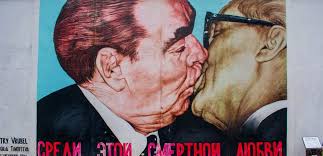
 Good Morning!!
 But the British government had a far more limited view of what constitutes actual representation than the Colonists did. Parliament asserted that it represented the people in Britain’s American colonies even if they had no role in electing it.
 The jury awarded Ms. Freeman and Ms. Moss a combined $75 million in punitive damages. It also ordered Mr. Giuliani to pay compensatory damages of $16.2 million to Ms. Freeman and $16.9 million to Ms. Moss, as well as $20 million to each of them for emotional suffering.
 From CBS News:
  Trump’s former trade representative and White House budget director, respectively, are part of a cadre of allies helping him shape policy proposals across a range of topics, laying the groundwork for what would be an
  “He’s been pretty clear in saying he will use the levers of government to go after his political opponents, which is anathema to conservatives,” said Marc Short, who served in the Trump administration and was a top adviser to former Vice President
  The Nixon renaissance is being driven in part by young conservatives’ genuine interest in Nixon, whom Mills colorfully described as “our Shakespearean president.” But when pressed about their pro-Nixon views, even his most sincere supporters readily admit that the Nixon-mania isn’t being driven solely — or even primarily — by academic interest in Nixon. Instead, the populist right’s ongoing effort to rehabilitate Nixon, which is unfolding against the backdrop of the 2024 Republican primary, is really about another divisive former Republican president: Donald Trump.
 To understand the lay of the land that Cox, her family, and her doctor were facing, we need to look at what Texas lawmakers put in place before Dobbs, the 2022 case that








 peej
peej Carissa
 bostonboomer
 dakinikat
 ecocatwoman
 mablue2
 Mama Lopez
 peggysue22
 quixote
 skydancingguestblogger
 Mona (aka Wonk the Vote)



 Sky Dancing
Recent Comments