
Lazy Saturday Reads: Tales of Chris Kyle, AKA “The Devil of Ramadi” AKA “The American Sniper”
Posted: January 24, 2015 Filed under: just because, morning reads | Tags: Chris Kyle, Eddie Routh, fabulism, Iraq War, tall tales 18 Comments
Good Afternoon!!
I could easily stay under the covers today and just ignore the outside world. Yesterday I thought I was getting over my cold, but today the sinus congestion has kicked back in and I’m coughing and I can tell there is stuff in my lungs. To top it all off, there’s a snowstorm outside that is expected to leave a big sloppy mess in its wake; and more snow is predicted for Tuesday. To be honest, I’m having difficulty working up much enthusiasm for the news today, so once again I’m going to focus on a story that has aroused my curiosity recently.
One thing I’ve been thinking about for the past couple of days is the success of the movie American Sniper. I suppose I should see it before dismissing it, but I really don’t want to sit through a movie about a guy who shot hundreds of people at a distance in a pointless war.
The first time I heard anything about Chris Kyle was when he was shot and killed along with a friend, Chad Littlefield on a Texas shooting range. The New York Times reported that Kyle worked with veterans suffering from PTSD by taking them to the gun range and letting them work out their issues there. That just seemed bizarre to me, but I’ve never been in a war or even held a gun in my hand, so there’s no way I could relate to this. Maybe there was something to it.
The alleged killer was a young veteran named Eddie Ray Routh, whom Kyle was supposedly trying to help. According to the Washington Post, the specific details surrounding Kyle’s death aren’t dealt with in the movie about him.
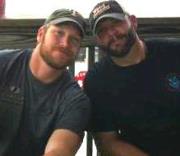
Chris Kyle (left) with Chad Littlefield
Kyle had returned from Iraq in 2009 and was
well acquainted with the difficulties soldiers face returning to civilian life, and had devoted much of his time since retiring in 2009 to helping fellow soldiers overcome the traumas of war….
In 2011, Mr. Kyle created the Fitco Cares Foundation to provide veterans with exercise equipment and counseling. He believed that exercise and the camaraderie of fellow veterans could help former soldiers ease into civilian life.
Mr. Kyle, who lived outside of Dallas with his wife and their two children, had his own difficulties adjusting after retiring from the Navy SEALs. He was deployed in Iraq during the worst years of the insurgency, perched in or on top of bombed-out apartment buildings with his .300 Winchester Magnum. His job was to provide “overwatch,” preventing enemy fighters from ambushing Marine units.

Kyle also wrote a book, “American Sniper: The Autobiography of the Most Lethal Sniper in U.S. Military History,” in which he wrote that
[h]e did not think the job would be difficult….But two weeks into his time in Iraq, he found himself staring through his scope into the face of an unconventional enemy. A woman with a child standing close by had pulled a grenade from beneath her clothes as several Marines approached. He hesitated, he wrote, then shot.
“It was my duty to shoot, and I don’t regret it,” he wrote. “My shots saved several Americans, whose lives were clearly worth more than that woman’s twisted soul.”
Over time, his hesitation diminished and he became proficient at his job, credited with more than 150 kills.
I just can’t relate to any of that, and I really don’t want to see a movie that glorifies that kind of killing. Why do so many people want to see it, and why do they see this man as a hero? I don’t get it. I spent some time yesterday reading about Kyle’s life and the movie from different points of view, and I’m even more mystified now than I was when I began reading.
One thing I learned is that Kyle was a serial liar or fabulist of some sort. He once claimed he had beaten up former Navy Seal, professional wrestler, and Governor of Minnesota Jesse Ventura in a bar fight. Ventura sued Kyle for defamation of character and won a $1.8 million settlement from Kyle’s estate.
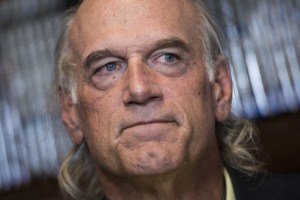
A St. Paul, Minn., jury awarded former Minnesota Gov. Jesse Ventura $1.8 million Tuesday in his lawsuit against the estate of “American Sniper” author Chris Kyle.
On the sixth day of deliberations, the federal jury decided that the 2012 best-selling book defamed Ventura in its description of a bar fight in California in 2006. Kyle wrote that he decked a man whom he later identified as Ventura after the man allegedly said the Navy SEALs “deserve to lose a few.”
Ventura testified that Kyle fabricated the passage about punching him. Kyle said in testimony videotaped before his death last year that his story was accurate.
Legal experts had said Ventura had to clear a high legal bar to win, since as a public figure he had to prove “actual malice.” According to the jury instructions, Ventura had to prove with “clear and convincing evidence” that Kyle either knew or believed what he wrote was untrue, or that he harbored serious doubts about its truth.
The jury’s verdict was later upheld on appeal.
According to a long and fascinating piece by Michael McCaffrey, another wild story that Kyle liked to tell was how he was carjacked by some bad guys and ended up killing them and being thanked for it by the police.
Chris told many people, and some reporters, that just after his return from Iraq in 2009, he was carjacked by two men at a gas station on a remote Texas highway. Chris asked the men if he could reach into his truck to get his keys, and as he did he pulled a pistol from his waistband and shot both men in the chest from under his armpit. The two men were killed instantly. Chris called the police and waited for them while leaning against his truck. The police came, Chris handed them a phone number to call at the Pentagon. The cops called the number, and the people at the Pentagon told the cops that Chris Kyle was a war hero and a Navy SEAL. The police also went inside and watched the gas station surveillance video of the incident. The cops then let Chris go on his way. Chris claimed he got emails from cops all across the country after the incident thanking him for “keeping the streets clean”. Great story. Except none of it is true. Not a word. There were no carjackers, no dead bodies, no cops, none of it. He made the whole thing up. His big mistake was then telling the story to his SEAL friend, Marcus Lutrell, author of Lone Survivor, and Marcus put the story in his second book, Service: A Navy SEAL at Work. Now it wasn’t just a tall-tale, it was in the public record, and it is demonstrably a lie. The New Yorker magazine and other journalists have investigated the story. They all come to the same conclusion. There were no carjackers. There were no dead bodies. There were no cops. None of it happened. No police departments know anything about it, no coroner ever saw the bodies, no gas station had any surveillance video or ever heard of such a thing and no cops ever responded to the scene and called the Pentagon.

Chris Kyle and his gun
And then there was the tale about how Kyle and another guy had gone to New Orleans in the aftermath of Hurricane Katrina and picked off looters from the roof of the Superdome. McCaffrey writes:
The second story that was told by Chris Kyle was that he and another SEAL were sent by the government to New Orleans in the aftermath of hurricane Katrina. Once they got to New Orleans, Chris and another sniper went to the roof of the Superdome, and started shooting looters in the city. Chris Kyle said this to many people, he also said this on tape. Chris claims to have killed thirty looters all on his own. Helluva story. Only problem is…there’s not a speck of truth in it. Once again this is a total fabrication, or to put it less delicately, a complete, bold faced lie. Chris Kyle never went to New Orleans after Katrina. He never shot ‘looters’. Just like with the carjackers, there are no bodies and no documentary or corroborating evidence it occurred. None. Chris Kyle lied. Again.
Don’t take my word for it…Here are two links to in-depth articles about these two stories. (New Yorker– LINK Washington Post – LINK)
Why would this man, who already had plenty of dramatic true stories to tell, make up these tall tales out of whole cloth? If you’re interested in the psychology of people like this, you’ll probably find McCaffrey’s suggested explanations as interesting as I did.

Eddie Ray Routh
Here are a few more articles to check out if you find the hero-worship of Kyle and his own behavior as interesting and confounding as I do.
The New Yorker: In the Crosshairs — Chris Kyle, a decorated sniper, tried to help a troubled veteran. The result was tragic.
The Guardian: Chris Kyle and the Iraq war are more complex than American Sniper – or criticism of it, by Colby Buzzell.
Slate: How Accurate Is American Sniper? by Courtney Duckworth.
Alternet, via Raw Story: 7 big lies ‘American Sniper’ is telling America about Iraq and Chris Kyle, by Zaid Jelani.
Telesur: American Sniper? by Ross Caputi.
The Boston Globe: Many miss the point of Eastwood’s ‘American Sniper,’ by Ty Burr.
Rolling Stone: ‘American Sniper’ Is Almost Too Dumb to Criticize, by Matt Taibbi.
The Washington Post: Trial of Eddie Routh, killer of Chris Kyle, will be darkest chapter of ‘American Sniper,’ by Abby Philip.
What stories are you following these days? This is an open thread.
Friday Reads: The Overlords are winning
Posted: January 23, 2015 Filed under: morning reads, U.S. Politics | Tags: brine spill, Fair Housing Act, oil spill, Roe v. Wade, Southern Strategy 8 Comments Good Morning!
The combination of low voting patterns and big money in politics is finally coming to an ugly fruition. The plan was all laid out in the Powell memo of 1971. Its leaking to Jack Anderson will probably be remembered as one of the last acts of a press free of uber-corporate ownership and manipulation. It was also the beginning of the framework that ultimately led to the Citizen’s United case 5 years ago establishing a freedom of speech right for corporations best encapsulated by Mitt Romney’s famous gaffe in Iowa of “Corporations are people, my friend”.
Though Powell’s memo was not the sole influence, the Chamber and corporate activists took his advice to heart and began building a powerful array of institutions designed to shift public attitudes and beliefs over the course of years and decades. The memo influenced or inspired the creation of the Heritage Foundation, the Manhattan Institute, the Cato Institute, Citizens for a Sound Economy, Accuracy in Academe, and other powerful organizations. Their long-term focus began paying off handsomely in the 1980s, in coordination with the Reagan Administration’s “hands-off business” philosophy.
Most notable about these institutions was their focus on education, shifting values, and movement-building — a focus we share, though often with sharply contrasting goals.* (See our endnote for more on this.)
So did Powell’s political views influence his judicial decisions? The evidence is mixed. Powell did embrace expansion of corporate privilege and wrote the majority opinion in First National Bank of Boston v. Bellotti, a 1978 decision that effectively invented a First Amendment “right” for corporations to influence ballot questions. On social issues, he was a moderate, whose votes often surprised his backers.
The combination of the Southern Strategy, the business interests behind the Powell Memo, and the insipid and wrongly labelled “Moral Majority” has created an unholy trinity of neoconfederates, billionaire plutocrats, and christianist extremists that now drive the Republican Party. We now have a SCOTUS and majority in Congress set to undo many of the advances of the late 20th century. A lot of this came from the mind of Nixon and his cronies.
… Democrats were expanding rights while the Republicans wanted to narrow them or keep them restrictive.
This realignment did not exactly start with Nixon or end with him. Barry Goldwater had voted against the 1964 Civil Rights Act (although he had supported other civil rights bills), but the GOP in general then was unencumbered by a Southern constituency and its leadership often favored civil rights.
After Nixon, though, there was no turning back. In 1980, Ronald Reagan — ever the innocent — went to Mississippi and the Neshoba County Fair to tastelessly proclaim his belief in “states’ rights.” Nearby, three civil rights worked had been killed just 16 years earlier, protesting one of those bogus rights — the right to segregate the races. Reagan never acknowledged any appeal to racism. Racists took it as a wink anyway.
At one time, a good many African-Americans voted Republican — the party of Lincoln, after all. Jackie Robinson initially supported Nixon , as did Joe Louis. The former heavyweight champion had even supported a Republican in the 1946 congressional campaign against Rep. Helen Gahagan Douglas, a liberal civil rights advocate, whose California district was substantially black. As late as the 1970s, there were African-American enclaves in Maryland that voted Republican.
The damage Nixon did to his own party, not to mention the rights of African-Americans and the cause of racial comity, has lasted long after the stench of Watergate has dispersed. It not only persuaded blacks that the Republican Party was inhospitable to them, but it in effect welcomed racists to the GOP fold. Dixiecrats moved smartly to the right.
Excuse me for extrapolating, but segregationists are not merit scholarship winners. Racism is dumb, and so are racists. The Democratic Party showed racists the door.
The GOP welcomed them and, of course, their fellow travelers — creationists, gun nuts, anti-abortion zealots, immigrant haters of all sorts and homophobes. Increasingly, the Republican Party has come to be defined by what it opposes and not what it proposes. Its abiding enemy is modernity.
The first death knell of democracy was probably the undoing of the Fairness Doctrine followed closely by the demonization of labor via the busting of the Air  Traffic Controller’s Union. There are a lot of reasons why the FCC should try to bring it back. The primary one I can think of is the disservice the Fox Propaganda network does to the country in terms of Science and truth. There was some paranoia in the right wing last year that the FCC was thinking about a Fairness Doctrine 2.0.
Under the controversial doctrine, which the FCC abandoned in 1987 and formally took off the books in 2011, the agency required radio and TV stations to air opposing views on controversial issues.
Pai expressed alarm that the FCC could soon start questioning why Fox spends so much time covering the attacks in Benghazi, or why NBC has focused on the controversy over lane closures in New Jersey.
House Republicans made a similar accusation in December, claiming the FCC was working on a “Fairness Doctrine 2.0.”
“Given the widespread calls for the commission to respect the First Amendment and stay out of the editorial decisions of reporters and broadcasters, we were shocked to see that the FCC is putting itself back in the business of attempting to control the political speech of journalists,” Republican members of the House Energy and Commerce Committee wrote in a letter to the FCC.
“It is wrong, it is unconstitutional, and we urge you to put a stop to this most recent attempt to engage the FCC as the ‘news police.’
The controversy stems from a study the agency plans to conduct on “critical information needs.” The FCC is required by law to study ways to eliminate barriers to entry for small media businesses.
Among other things, the agency plans to ask TV journalists about their “news philosophy” and “the process by which stories are selected.” The study will gather data on “perceived station bias” and “perceived responsiveness to underserved populations.” The FCC also wants to examine how local TV stations cover “critical information” such as “economic opportunities” and the “environment”.
 There have been many more instances of cases sent to the Supreme Court and end runs by states around civil rights and liberties like the christianists’ obsession with ending a woman’s right to an abortion without exception in the first two trimesters. We’re beginning to see some of the final steps in the plan this year. We’ve watched the court gut the Voting Rights Act. Are they now set to gut the major provisions of the Fair Housing Act?
A sharply divided US Supreme Court on Wednesday took up a challenge to the Fair Housing Act (FHA) in an action that liberal critics say could gut the major civil rights provision.
At issue in a case from Dallas, Texas, is whether the housing law authorizes lawsuits over racially neutral measures that nonetheless disproportionately impact minority residents.
Liberals support the so-called disparate impact theory of civil rights enforcement, while conservatives warn that such an approach could lead to racial quotas in housing and other areas.
The case has attracted significant attention, with friend-of-the-court briefs filed by various civil rights groups, 17 states, and 20 cities and counties. On the other side, briefs have been filed by a number of conservative groups and business associations, including insurance companies, banks, finance companies, and home builders.
The FHA prohibits anyone from refusing to sell, rent, or otherwise make unavailable a house or apartment to a person because of their race, religion, or national origin. There is no dispute about this aspect of the law.
After the FHA was enacted in 1968, federal courts and agencies began embracing a broader interpretation of the law’s scope, concluding that, in addition to barring intentional discrimination, the statute also authorizes lawsuits when housing decisions disproportionately harm minority groups.
The case before the high court involves a lawsuit challenging decisions by the Texas Department of Housing and Community Affairs in awarding tax credits for low-income housing in Dallas. The Housing Department sought to provide new affordable housing in areas where existing housing was blighted or nonexistent. It sought to do so under race-neutral criteria.
Despite that goal, not everyone was satisfied with the agency’s performance. A Dallas-based group seeking to foster racial integration, the Inclusive Communities Project, sued the Housing Department because it said the agency had failed to provide adequate opportunities for low-income housing in Dallas’ more affluent suburbs.
Also percolating its way through Congress is a ban on all abortions after 20 weeks based on the nonscientific nonsense that the nervous system of a fetus is developed enough at that point to experience pain. It is not. It’s the usual, sneaky, lying way that religionists use to confuse the easily confused. A controversial provision caused the bill to be tabled. Republican Congresswomen were upset by a redefinition of rape tucked away in the bill that sought to ensure that only narrowly approved definitions of “rape” would be treated differently.
It’s one thing to campaign on stopping abortion—it has been a largely successful GOP plank since Roe v. Wade, and one that helped create a juggernaut connection between evangelical Christians and the Republican Party. (Yes, there have been occasional hiccups.) But it’s a different and more complicated matter to actually institute sweeping restrictions successfully.
Republicans have sought for years to ban abortions after 20 weeks. (Molly Redden has a definitive history.) The House GOP has been trying directly for the last few years, but each attempt has come to nought. Besides, even a successful House bill would have run into the Democratic Senate. But with a newly enormous majority in the House and a newly minted majority in the Senate, Republicans finally had a chance to get a bill to the president. While Obama would surely reject it, it would be a powerful political gesture and please the party’s pro-life allies. Even better, they had the opportunity to schedule the vote to coincide with the March for Life in Washington on Thursday.
They almost made it, but then the GOP coalition fell apart—not on wavering opposition to abortion overall, but on the technicalities. Like many such proposals, the bill would have allowed for exceptions in a few limited cases, such as rape. This bill made rape an exception, but only if a woman reported it to law enforcement. As Ed O’Keefe reports, that set off alarms for a bloc of female Republican lawmakers. They worried that the rape-reporting restriction was too strict, and that the bill would alienate young voters and women from the party. And so Wednesday evening, GOP leaders abruptly yanked the bill. Instead, the House passed a less restrictive bill Thursday, permanently banning federal money from going to pay for abortions. A ban already exists, but it has to be renewed every year.
The vise in which the party finds itself is easy to understand but hard to loosen. On the one hand, the party’s religious base has worked hard for Republicans and expects to see results, and most elected officeholders are personally pro-life. (Pulling the bill when thousands of the most fervent pro-lifers are in Washington must be an especially bitter pill for leaders.) But everyone knows the GOP faces a demographic time bomb, since its voters are older and whiter and more pro-life than the general population, so it’s risky to do anything that might make it harder to win them over.
North Carolina’s Renee Ellmers, one of the prominent dissenters in this case and now a target for grassroots conservative fury, is no swing-district moderate. She won reelection in November by defeating American Idol also-ran Clay Aiken by a whopping 18 points. Ellmers removed her name as a sponsor, then said she would vote for the bill—but still requested that no vote be held until concerns could be addressed.
It’s a surprising and little-known fact that opinions about abortion have barely budged in the American public in the 42 years since Roe. As Karlyn Bowman and Jennifer Marsico wrote for The Atlantic, despite years of heated debate, a slight majority of Americans still consistently back legal abortion, even as they personally oppose it. The GOP has found great success at enacting restrictions in states it dominates.
Indeed, it seems that Republican men want certain exemptions to the act of “rape”. It’s amazing to see that Republican women rebelled at the idea of “legitimate rape”.
In sum, some Republican women basically shamed the House into dropping the vote for the bill, mostly because they’re worried it’s going to kick off another “legitimate rape” debacle as male Republicans go on cable TV to brag about the bill and are asked to explain why they only allow for rape exceptions if the victims have reported to the police.
What’s really amazing about this story is that Rep. Renee Ellmers and other female Republicans were pretty much guaranteed to support the bill if the male Republicans allowed for what is really a minor tweak in the language, allowing the rape exception to cover all rape victims, not just the minority that file police reports. After all, this bill is just a symbolic gesture, a wet kiss to the Bible-thumpers amassing on the Hill today for the annual rite of lady-hating sex phobia known as the March for Life. Obama was going to veto it anyway. They had nothing to lose by expanding the definition of “rape” to mean any time a man forces sex on a woman. In fact, they should have welcomed the change, because the original language would have meant reporters asking male Republicans why they require women to file police reports to be believed, which in turn means someone was bound to start talking about “legitimate rape”. Ellmers is hardly some kind of political genius. It doesn’t take a rocket scientist to see where this was headed.
So I’m forced to conclude the reason that so many male Republicans were unwilling to concede this teeny weeny issue is that it was really important to them to pass a bill that formally suggests that women frequently lie about being raped and should be assumed to be lying until a man, in this case a police officer, blesses her account of what happened.
It would be easy to see all of this as the last vestiges of old, white male privilege. Afterall, the news is full of things like this: “A Shocking Number of Americans Under 30 Have No Religion — This Country Is Going to Change.” Again, I keep hoping that we’ll be able to dance on the graves of the Koch Brothers, Pat Robertson, Antonin Scalia, Phyliss Schafly and the like and that it will all go away. Still, it took like 40 years for them to undo so many things. It seems like it will take longer than that to put it all back together again and actually make progress.
And as the Keystone Pipeline Boondoggle snakes its way through this very corrupt Congress, we get news of two pipeline disasters. The first one is in Montana.

A second large oil spill into Montana’s Yellowstone River in less than four years is reviving questions about oversight of the nation’s aging pipeline network.
Investigators and company officials on Wednesday were trying to determine the cause of the 40,000-gallon spill that contaminated downstream water supplies in the city of Glendive.
Sen. Jon Tester said Saturday’s spill from the decades-old Poplar Pipeline was avoidable, but “we just didn’t have the folks on the ground” to prevent it.
The Montana Democrat told The Associated Press more frequent inspections by regulators are needed, and older pipelines should face stricter safety standards.
“We need to take a look at some of these pipelines that have been in the ground for half a century and say, ‘Are they still doing a good job?'” Tester said.
The latest spill comes as Republicans and some Democrats, including Tester, want the Obama administration to approve TransCanada’s Keystone XL pipeline from Canada to the Gulf.
Keystone would cross the Yellowstone roughly 20 miles upstream of the Poplar Pipeline spill.
The second is in North Dakota where three million gallons of fracking brine spilled.
Almost 3 million gallons of saltwater drilling waste spilled from a North Dakota pipeline earlier this month, a spill that’s now being called the state’s largest since the North Dakota oil boom began.
The brine, which leaked from a ruptured pipeline about 15 miles from the city of Williston, has affected two creeks, but it doesn’t currently pose a threat to drinking water or public health. The pipeline’s operator — Summit Midstream Partners — discovered the spill on Jan. 6, but officials didn’t find out about the true size of the spill until this week.
The pipeline company has been trying to clean up the spill by vacuuming water from the creek, but in doing so, they’re also capturing a lot of fresh water.
“The problem is that … the creekbed is kinda being replenished with water so we extract, it fills; we extract, it fills,” John Morgan, a spokesman for Summit Midstream told the Grand Forks-Herald.
North Dakota Department of Health Environmental Health Section Chief Dave Glatt said he hasn’t seen any impacts to wildlife yet, but officials won’t likely know the full impact until all the ice melts. Officials have discovered chloride concentrations in Blacktail Creek as high as 92,000 milligrams per liter — far higher than normal concentrations of about 10 to 20 milligrams per liter.
“That has the ability to kill aquatic life and so we’ll want to see if the aquatic life was able to get out of the way, and if they weren’t, how badly they were impacted,” Glatt said.
Greed, religious extremism, and bigotry! Say hello to SCOTUS and the new Congress!
I find all of this very, very depressing. What’s on your reading and blogging list today?
Thursday Reads: Is the California Measles Outbreak a Product of Neo-Liberal Thinking?
Posted: January 22, 2015 Filed under: morning reads, U.S. Politics | Tags: anti-vaccination movement, anti-vaxxers, Disneyland, legislation, measles, neo-liberals, vaccinations 23 Comments
Woman Reading on a Settee, William Churchill
Good Morning!!
I’m going to focus on just one story today. I wanted to try to understand something I’m curious about–what’s causing the rapid spread of measles in California?
The outbreak of measles that started at Disneyland in December is spreading rapidly across California, into other states, and even into Mexico. Five Disneyland employees have now been diagnosed with the disease (three have recovered and others are being tested), and the number of reported cases traced to Disneyland has passed 60.
Last week I wrote about an unvaccinated woman who contracted the measles virus in Disneyland and then took two airline flights to the Seattle area during the holidays before she was diagnosed. How many other people did she infect? Measles is highly infectious, airborne virus that can be spread by coughing and sneezing, like the common cold. From the CDC website:
Measles is a highly contagious virus that lives in the nose and throat mucus of an infected person. It can spread to others through coughing and sneezing. Also, measles virus can live for up to two hours on a surface or in an airspace where the infected person coughed or sneezed. If other people breathe the contaminated air or touch the infected surface, then touch their eyes, noses, or mouths, they can become infected. Measles is so contagious that if one person has it, 90% of the people close to that person who are not immune will also become infected.
Infected people can spread measles to others from four days before to four days after the rash appears.
Another case was recently identified in Eugene, Oregon. The man is so sick that he hasn’t been able to talk to anyone, but his wife says he was in Disneyland and also went to the Rose Bowl game and then flew back home before he started showing symptoms. How many other people did he infect? UPDATE: It turns out the man did not go to the game–see story in comment thread.
Measles cases are also turning up in Northern California, according to SFGate: Disneyland measles outbreak spreads to Bay Area.
A large outbreak of measles that started at two adjacent Disney theme parks in December has now sickened people all over California, including a handful of Bay Area residents, and is prompting public health authorities to urge everyone to get vaccinated if they aren’t already.
California has reported 59 cases of measles since mid-December, the bulk of them in people who either visited or had close contact with someone who had been to Disneyland or California Adventure Park in Anaheim, public health officials said in a media conference call Wednesday. Seven measles cases have been reported in the Bay Area: in Alameda, San Mateo and Santa Clara counties.
Most of the people who have become infected were unvaccinated. Because of the threat of infection, public health officials said people who aren’t vaccinated — either because they can’t get the vaccine or they choose not to — should avoid public places where large groups of people, especially international travelers who may carry measles, congregate.
“We can expect to see many more cases of this vaccine-preventable disease unless people take precautionary measures,” said Dr. Gil Chavez, deputy director of the Center for Infectious Diseases with the California Department of Public Health. “I am asking unvaccinated Californians to consider getting immunized to protect themselves and family and community at large.”
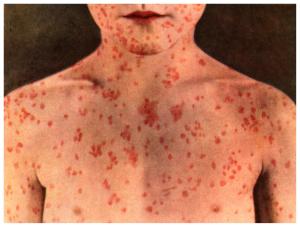
I had measles as a child, and fortunately I didn’t develop any of the complications, such as blindness, severe ear infections, pneumonia, and encephalitis (rare). But now that we have a vaccine for measles, children don’t need to risk these possible dangerous consequences of getting the virus. Sadly, we have a lot of people in this country who believe conspiracy theories about vaccines.
How do the anti-vaxxers avoid the vaccines? Most states require vaccinations for children attending school, but most states also allow religious exemptions. Here’s a list of vaccine requirements in each state. Every state but Mississippi and West Virginia allows religious exemptions; a few states also allow “philosophical” exemptions. Only California allows “objections based on simply the parent(s) beliefs.” I’m guessing some parents avoid vaccinating their children by home-schooling them.
Bloomberg reports that Orange County has banned unvaccinated kids from attending school because of the measles outbreak.
Health officials in Orange County, Calif. have banned two dozen students who have no immunization records from attending high school in the wake of a measles outbreak that has been traced back to Disneyland.
Sixty-seven confirmed measles cases have been reported in California in the current outbreak. One student from Huntington Beach High School who was infected with the disease attended class following winter break, exposing fellow students to the highly contagious illness, especially those who did not receive a childhood vaccination against it.
“If there is a case in the school and their child is not immunized, they will be removed from the school for 21 days,” Dr. Eric Handler, the Orange County public health officer, told the Los Angeles Times. “From an epidemiological standpoint, in order to prevent spread of the disease, this is a necessary measure.”
Now check this out:
In Southern California…many schools now report that upwards of 10 percent of students have not received childhood vaccinations. In Northern California, the figures are even worse, with clusters of under-vaccinated children in the San Francisco Bay Area resulting in one out of every four children going without the recommended immunizations.
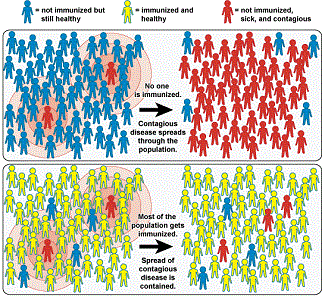
Herd Immunity
Most of the parents who opt out of having their kids vaccinated are relatively affluent and well-educated, according to science writer Tara Haelle at Forbes. She notes two reasons why measles is spreading so rapidly in California.
Those two things are the extreme infectiousness of the disease and the low levels of herd immunity, or community immunity, in pockets of southern California. Measles infects 9 out of every 10 non-immune individuals it finds. It’s airborne and hangs around up to two hours after an infected person leaves the area. It doesn’t take much for this disease to spread through a population that isn’t immune from previous exposure or through vaccination. Or, to put it another way, in an unvaccinated population, each person infected with the measles will transmit the disease to 12 to 18 other people. If no one were vaccinated against measles, we would be up to hundreds, perhaps thousands, of cases by now. We aren’t because there are some levels of herd immunity, but it’s because herd immunity has been weakened that we’re seeing additional cases at all.
She also debunks the notion that undocumented immigrants are spreading the virus.
Meanwhile, one of the biggest myths popping up in comment threads and on social media is that undocumented immigrants have something to do with this outbreak, or any other outbreak of a vaccine-preventable disease. We don’t yet know who Patient 0 – the first person with the disease – was at Disneyland, but we don’t really need to know. It’s not undocumented immigrants we should be pointing the finger at. It’s home-grown, upper-middle class, well-educated, mostly white southern California parents who have chosen not to vaccinate their children we should be giving the side-eye to. When vaccination rates in the region are below some developing countries’ rates, you don’t need undocumented immigrants to bring in the disease. Unvaccinated Americans do a fine job of that all on their own. A look at past cases makes this clear.
When the CDC tracked measles cases for the first half of 2013, they found that 159 cases resulted from 42 importations of the disease – but more than half those importations were U.S. residents returning to the States from abroad. Similarly, the outbreak of close to 400 cases in Ohio last year began with unvaccinated U.S. travelers returning from a visit to the Philippines. And the largest outbreak in San Diego since 1991 occurred in 2008 after an intentionally unvaccinated 7-year-old boy returned from a vacation in Switzerland with his family and brought back the measles. That last case is particularly of interest because the boy was a patient of Dr. Bob Sears, who has been spreading misleading information about measles in the midst of this outbreak.
Interestingly, she says that some people who have been vaccinated will still get the disease. But someone who hasn’t been vaccinated is 35 times more likely to get measles than someone who has had the vaccine.

Dr. Bob Sears
Here’s some more information about Dr. Bob Sears, and Orange County pediatrician and author of “The Vaccine Book: Making the Right Decision for Your Child.” From the LA Times: Vaccination controversy swirls around O.C.’s ‘Dr. Bob.’
While the vast majority of physicians are troubled by the anti-vaccination movement, Sears, 45, lends a sympathetic ear. About half his patients forgo vaccines altogether. To others, he offers “Dr. Bob’s” alternative and selective vaccination schedules, which delay or eliminate certain immunizations.
At a conference this year in Rancho Mirage, Sears told a roomful of pregnant women, new mothers and healthcare professionals that vaccines work well and are responsible for the nation’s low disease rate, something parents who don’t want to immunize can take advantage of.
“I do think the disease danger is low enough where I think you can safely raise an unvaccinated child in today’s society,” he said. “It may not be good for the public health. But … for your individual child, I think it is a safe enough choice.”
That approach frustrates infectious-disease experts, who in recent years have found themselves combating some celebrities’ anti-vaccination beliefs.
“We eliminated endemic measles in the U.S. in 2000. It’s now 2014 and we’re at 400 cases. Why?” Dr. Paul Offit, chief of infectious diseases at Children’s Hospital of Philadelphia, said in an interview in June. The number of cases has since risen to nearly 600. “Because people listen to Bob Sears. And, frankly, I blame him far more than I do the Jenny McCarthys of this world. Because he’s a doctor. And he should know more.”
Here’s an interesting article from The New Republic, The Best Way to Combat Anti-Vaxxers Is to Understand Them A new study underlines the similarity between “neo-liberal” thinking and the anti-vaccination movement. Well The New Republic should certainly understand neo-liberal thinking–they practically invented it. An excerpt:
“Anti-vaxxers,” as they are often referred, are an easy group to stereotype and a difficult group to humor. In most thinking circles, they are cast as “the other”; people either too stupid to understand the science behind vaccination, or too selfish to care about the impact of their choices on those around them.
But vaccine skeptics aren’t as different from their critics as we might like to think. And their rise in number over the past decade has less to do with stupidity, or even selfishness, than it does with beliefs about knowledge, trust, and freedom of choice that are pervasive throughout our culture, whether you choose to vaccinate your kids or not.
Dr. Jennifer Reich, a sociologist at the University of Colorado Denver, has been researching the anti-vaccination movement since 2007, seeking to understand the processes by which people come to reject vaccines. Over the past seven years, she has conducted in-depth interviews with parents who refuse mainstream vaccine recommendations, along with doctors, alternative healers, and public policymakers.
Not all of the parents Reich spoke with were “anti-vaxxers” in the sense that we typically think of the term; only a small minority identified as activists in the Jenny McCarthy mold, campaigning other parents not to vaccinate or advocating for policy change. Nor did they necessarily abstain from vaccination completely.
Rather, what united them was a sense that vaccines were up for negotiation: to be administered or rejected depending on the convictions of the parent and the needs of the child. Reich’s interviewees saw themselves as critical consumers of information. They engaged with doctors not as authorities to be obeyed, but as another data point to be evaluated, embraced, or discarded. They continually assessed risk: How likely was it that their child would be exposed to Disease A? What would be the consequences if they contracted Disease B?

It seems to me that what these anti-vaxxers have in common with neo-liberals is that they have lost the sense that as Americans we are all in this together. They focus only on their own needs and ignore the ways in which their choices about whether to vaccinate their children could impact others and society as a whole.
Just one more article before I wrap this up.
From Philly.com: California Measles Outbreak Shows How Quickly Disease Can Resurface in U.S.
Fifteen years after measles was declared eliminated in the United States, the recent outbreak traced to two Disney parks in California illustrates how quickly a resurgence can occur….
Experts explain the California outbreak simply.
“This outbreak is occurring because a critical number of people are choosing not to vaccinate their children,” said Dr. Paul Offit, director of the Vaccine Education Center and an attending physician at The Children’s Hospital of Philadelphia’s Division of Infectious Diseases.
“Parents are not scared of the disease” because they’ve never seen it, Offit said. “And, to a lesser extent, they have these unfounded concerns about vaccines. But the big reason is they don’t fear the disease.” ….
Researchers have found that past outbreaks of vaccine-preventable diseases are more likely in places where there are clusters of parents who refuse to have their children vaccinated, said Saad Omer, an associate professor of global health, epidemiology and pediatrics at Emory University School of Public Health and Emory Vaccine Center, in Atlanta.
“California is one of the states with some of the highest rates in the country in terms of exemptions, and also there’s a substantial clustering of refusals there,” Omer said….Other reasons include the belief that their children will not catch the disease, the disease is not very severe and the vaccine is not effective, Omer noted.
In California, vaccine exemptions have increased from 1.5 percent in 2007 to 3.1 percent in 2013, according to an analysis by the Los Angeles Times.
So, in a sense California is endangering people in other states. Omer says there’s recent legislation to make it more difficult to get exemptions, but “it is too soon to know the effects of the new law.”
So . . . comment on this issue if you wish; but feel free to treat this as an open thread. Have a great day Sky Dancers.
State of the Union Live Blog
Posted: January 20, 2015 Filed under: Live, Live Blog, SOTU | Tags: 2015 State of the Union Live Blog 105 Comments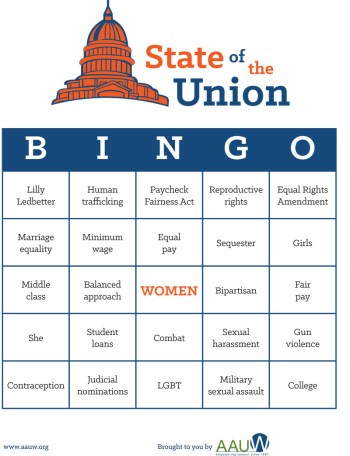 Tonight we’re watching the State of the Union address to see exactly what the last two years of the Obama presidency may bring. It will be a tough few years given the group that was sent to Congress last fall. We’re about to see a bunch of whackadoodle dandies go wild. There are several rumors up on the internet concerning possible executive orders that will be announced to tonight. Here is one of the more interesting ones.
It is being reported that one of President Obama’s surprises at the State Of The Union will be an announcement of an executive order that will take on the Koch Brothers and Citizens United.
Eleanor Clift of The Daily Beast reported:
Wednesday is the fifth anniversary of Citizens United, and reformers have been told that the president may announce executive action in his SOTU speech that would require businesses contracting with the government to disclose political contributions after contracts have been awarded. This would ensure that the contracting process is blind, but also give the public (and the media) the information needed to connect the dots to look for backroom deals or conflicts of interest.
Guess who happens to have multi-million dollar contracts with the Department of Defense? The federal government hatingKoch Brothers have tens of millions of dollars in defense contracts with the federal government. Rush Limbaugh also has a federal government contract that allows his showto be broadcast on the American Forces Network.
It is possible that the president will announce this executive order tonight, but he may also decide to wait and make a separate announcement. When/if the president does decide to make this announcement it will be a huge boost to transparency. The Koch brothers have a web of secret organizations that they route their money through, so most of their campaign spending will remain a secret, but it will become a bit easier to connect the dots and figure how much direct influence campaign donations are having on public policy decisions.
Ron Fournier of the National Journal suggests we just the President’s agenda with this set of criteria. Progress or Politics?
Republicans just seized control of Congress. President Obama’s job-approval ratings just jumped. Gas prices and the unemployment rate are down. The gross domestic product is up. Now what? Democratic and Republican leaders face a choice: Begin governing together, or treat this moment like just another stop on a perpetual campaign.
Unfortunately, both the White House and the GOP-led Congress seem focused prematurely on 2016. Republicans are sending to the White House legislation they know Obama will veto. The president is pushing an agenda he knows Congress won’t pass. It’s a recipe for more gridlock, more fighting, more courting of donors and ignoring the needs of a country in transition.
In other words: The state of the union is the status quo.
If you’re OK with that, stop reading. If you’d rather see progress than partisan gains, consider this: The State of the Union address is an opportunity for the president to chart a path toward consensus on issues like jobs, social mobility, education, infrastructure, energy, the debt, the environment, and terrorism.
Is Obama more interested in politics or progress? Here are five ways to tell from his address tonight.

Isn’t Obama a lame duck? After all, this speech comes after Republicans won control of both chambers for the first time this presidency. Here’s a trivia question: When was the last time a President gave his seventh year State of the Union to a Congress that wasn’t controlled by the other party? Answer: Franklin Roosevelt in 1939. Every other two termer had lost control of Congress by the last lap of his presidency. They all faced a steeper political terrain than Obama does. Dwight Eisenhower faced Cold War setbacks. Ronald Reagan spoke in 1987 right after the Iran-Contra scandal broke, and he had to lead the speech with a discussion and apology. Bill Clinton was in the middle of his Senate impeachment trial in 1999. And George W. Bush spoke at a time when we were losing in Iraq. He faced withering controversy over the “surge” of troops, which proved a good policy, but made for a challenging speech environment. Some of them had productive last two years; some didn’t. But there is much room for a creative president and Congress to achieve things, even by fighting.
For President Obama, the new party balance offers some unexpected benefits. In recent years, Congress has been paralyzed, polarized, and entirely dysfunctional. Now conservatives control it, but at least it might actually pass legislation. Obama suddenly will be more central, more relevant than he has been in domestic politics over the past year. His veto pen will be all that stands between the Republican agenda and enactment. He can draw lines, pick fights, or choose cooperation. In so doing, too, he will have the ability to make broad public arguments in the context of a real debate—on the economy, on the role of government, on contentious long-term issues such as climate change.
How can the President use this diminished but still potent platform?
So, grab the popcorn and let’s see if this year’s hostile audience pulls any big tricks.
President Obama is courting controversy with his decision to address a group that has become dominated in recent years by extremists.
Some have questioned the appropriateness of the President speaking to such an extremist group, especially because in the past it has issued threats against the United States government.
The SOTU will be streaming at CSPAN and on the White House Website if you want to avoid the District Puppetry errrrr Punditry.
Tuesday Reads
Posted: January 20, 2015 Filed under: Barack Obama, morning reads, Republican politics, U.S. Economy, U.S. Politics | Tags: State of the Union Address 2015 12 Comments
Good Morning!!
Tonight President Obama will give his sixth State of the Union Address. Yesterday, Dakinikat wrote about Obama’s proposal to increase taxes on the wealthy to benefit the middle class. Obviously that isn’t going to pass muster with our Republican Congress, but maybe it will at least embarrass some members just a little bit. We’ll have a live blog tonight during the speech, and I hope you’ll join us.
Here are a few stories to check out before tonight.
From The Washington Post: Obama will give State of Union address against backdrop of deep partisan divide. Author David Nakamura seems concerned that the president isn’t interested in being “conciliatory” toward Republicans.
The president will enter the House chamber Tuesday night for his sixth State of the Union address riding a wave of confidence driven by an improving economy and brightening public approval ratings. And he seems as defiant as ever.
Although Obama has vetoed just two bills in his six years, the White House has threatened to veto five measures from Congress this month alone — including legislation that would authorize the Keystone XL oil sands pipeline, tie funding of the Department of Homeland Security to a rollback of Obama’s executive actions on immigration, and impose new economic sanctions on Iran.
Obama vowed in a private meeting with Democrats last week that he will play “offense” during the final two years of his presidency, building on the aggressive executive actions he laid out over the past two months. The legislative proposals he has previewed — including a plan for free community college and a revamping of the tax code — have been based firmly on his terms, drawing objections from Republicans.
The nerve of this guy! He tried to reach across the aisle for years, and now he’s given up the ghost. Shocking.
Joni Ernst is not the next Sarah Palin.
And Tuesday night, she’ll get the chance to prove it.
The SOTU will be followed by a Republican response by newly elected Iowa Senator Joni Ernst. Will she castrate a hog during her presentation? Ben Jacobs at The Daily Beast writes:
Ernst, the gun totin’, hog castrating freshman Republican senator from Iowa will give her party’s response to the State of the Union—a tricky, high-profile task that have landed many before her at the bad end of a punchline.
But the prime time address not only gives Ernst a chance to show off her Iowa charm, it gives her the opportunity to shed the comparison to Sarah Palin that she attracted as she campaigned through the Hawkeye State’s 99 counties last year as a populist conservative.
Once called an “onion of crazy” by Democratic National Committee chairwoman Debbie Wasserman Schutz (D-Fla.), the Iowa senator first gained national attention in a crowded, if undistinguished, primary field with an television ad about castrating hogs. She followed that up with another advertisement that featured her in safety glasses firing away at a target while the voiceover boasted that she kept “more than lipstick in her purse.”

CNN notes that recent responses to the SOTU have not gone well and asks “Is the State of the Union response cursed?”
“It’s almost like the kiss of death to get picked to do the Republican response,” said Elaine Kamarck, a senior fellow at the Brookings Institution. “It represents an amazing opportunity to catapult yourself into the national conversation, but the risk is huge and the success rate has been minimal at best in recent years.”
Republicans couldn’t have been more excited to spotlight their Indian-American wunderkind Bobby Jindal, Louisiana’s governor, in response to the first black President’s address to a joint session of Congress. But all party bigwigs and critics alike were talking about the next day was Jindal’s awkward delivery, not his prospects for higher office — and certainly not GOP diversity.It was a moment reminiscent of then-Gov. Tim Kaine’s (D-Virginia) 2006 response, when he was outdone by his own eyebrows.
And then a parched Marco Rubio took a not-so-subtle sip of water, eyes still piercing into the camera. Forget that he had delivered the first-ever bilingual rebuttal, drowned out by Rubio and his infamous water bottle.
Rubio quickly bounced back from that moment, raising more than $100,000 through his PAC by selling “RUBIO” branded water bottles. And his political fortunes are still fairly intact.
And superstitious politicos beware.
Virigina Gov. Bob McDonnell gave a rousing response straight from the Virginia state legislature in 2010. Five years later, and he’s about to start a two-year stint in federal prison over corruption charges.
Even last year’s speaker, Rep. Cathy McMorris Rodgers was accused by a former staffer of ethics violations, though that investigation died out pretty quickly.
Maybe it’s just that today’s Republicans are a sorry bunch of losers channeling the Koch brothers?

Speaking of losers, Louisiana Rep. Steve Scalise had the nerve to discuss Martin Luther King’s legacy yesterday. From The Hill: Scalise praises MLK amid controversies.
House Majority Whip Steve Scalise (R-La.) on Monday praised the legacy of slain civil rights leader Martin Luther King Jr. amid controversy over his speech to a white supremacist group while he served as a Louisiana state legislator…
“As we reflect upon the life of Rev. Martin Luther King, Jr., today, we also recognize how our nation has been strengthened by his legacy,” Scalise said in a statement.
“Dr. King challenged our country to fulfill the promises of liberty, equality, and justice prescribed in the founding of our great nation. Leading by example, he stressed the teachings of tolerance, service, and love, regardless of race, color, or creed. Today, his writings and speeches continue to empower and inspire those who seek liberty, equality, and justice,” Scalise continued.
Scalise made no mention of any events he planned to attend to commemorate the holiday.
Scalise’s comments stood out, however, given that the holiday coincides with multiple race-related controversies over his career prior to entering Congress.
For one, Scalise opposed making King’s birthday a state holiday in 2004 while he served in the Louisiana Legislature, as well as making it a school holiday in 1999.
The Hill also reported last week that Scalise voted against a resolution in the Louisiana Legislature apologizing for slavery. He later supported a version that only expressed “regret” for slavery.
“Why are you asking me to apologize for something I didn’t do and had no part of?” Scalise said, according to minutes of a 1996 Louisiana House committee meeting obtained by The Hill. “I am not going to apologize for what somebody else did.”
And, as reported in late December, Scalise in 2002 spoke before the European-American Unity and Rights Organization founded by former Ku Klux Klan leader David Duke.
Why is this man still serving as House Majority Whip?

Yesterday Think Progress noted that Scalise isn’t the only opponent the Martin Luther King holiday who still remains in power.
The Ferocious Fight Against The MLK National Holiday
After King’s assassination in 1968, Rep. John Conyers (D-MI) introduced the first Congressional legislation to create a federal Martin Luther King Day holiday. In the years that followed, Congress held congressional hearings during which hostile witnesses said “violence was exactly what [King] wanted,” and that King formed a “common front” with the “virulently racist Nation of Islam.”
More than 15 years later, Congress finally enacted such a law. The bill, signed by President Ronald Reagan, passed in the Senate on a 78-22 vote and in the House of Representatives by a 338 to 90 margin. The most vocal opponents included the late Sen. Jesse Helms (R-NC), who mounted a 16-day filibuster of the proposal and smeared King as a Communist.
Voting with Helms against the King holiday were four men who remain in the Senate today: Judiciary Chairman Chuck Grassley (R-IA), Finance Chairman Orrin Hatch (R-UT), Banking Chairman Richard Shelby (R-AL) and Armed Services Chairman John McCain (R-AZ). Shelby and McCain were in the House at the time. House Appropriations Chairman Hal Rogers (R-KY) and House Judiciary Crime, Terrorism, Homeland Security, and Investigations Subcommittee Chairman Jim Sensenbrenner (R-WI) also voted against the proposal. McCain apologized in 2008 for being too slow “to give greatness its due,” and Hatch wrote in 2007 that the vote was “one of the worst decisions” he has made as a senator.
Read more of the sorry history of the MLK holiday at the link.

Jezebel had a fascinating, though heartbreaking, story by Anna Merlen about the archaeological excavation of the graves of young boys at the Dozier School in Florida. We’ve written about this story here in the past. Merlen interviewed Dr. Erin Kimmerle, an associate professor at the University of South Florida, one of the leaders of the project.
‘They Were Truly Gone’: Solving the Mysteries of the Dozier School
The Dozier School was located in the tiny town of Marianna, West of Tallahassee and thirty minutes or so from the Georgia line. It opened in 1900 as the Florida State Reform School, and despite years of reports of serious abuse and mistreatment, it remained open for over 100 years.At least 98 people died there over the years, two staff members and 96 boys aged six to 18. Men who were once Dozier residents recounted brutal beatings they received in the White House, a small outbuilding on the school grounds whose walls remain spattered with what looks like blood. More than one survivor has called the building “a torture chamber.”
A group of men who were sent to the school in the 1950s and ’60s have banded together to tell their stories: they call themselves the White House Boys. The Tampa Bay Times has done the best coverage of the Dozier School, including an investigation in 2009 that uncovered squalid conditions, staff neglect and mistreatment from 1900 to the present day, depicting the school, as they put it, as “a place of abuse and neglect, of falsified records, bloody noses and broken bones.” [….]
Dr. Erin Kimmerle is a forensic anthropologist, an associate professor at the University of South Florida and a leader of the team excavating Dozier. (Before coming to USF, she worked as the Chief Anthropologist at the Hague, analyzing mass graves in Bosnia and Croatia.) Along with two colleagues (Antoinette Jackson and Christian Wells) and a crew of graduate students, Kimmerle has been excavating Boot Hill, the burial ground at Dozier, as well as the surrounding area and trying, through DNA testing, to return the boys’ remains to their families for a proper burial.
In January of 2014, the team exhumed 55 bodies—five more than they expected to find, 24 more than official records said were buried there. There are still many questions: how many boys lie buried under the Dozier grounds, their bodies slowly entwining with the roots of the mulberry trees around them? How did they die? And who do we hold accountable for the 100 years of suffering the Dozier school inflicted?
The interview is extremely interesting and informative. I highly recommend it.

Here’s another sad Florida story that I’ve been following. Two young sisters were arrested and charged with murder after the older girl shot and killed her 16-year-old brother on January 5.
According to the initial incident report, the girls’ father is a truck driver and their parents left them alone with their brother and a 3-year-old sister while the mother accompanied the father on a trip. The 15-year-old told police that on the day of the shooting, her brother locked her in a room with just a blanket and a bucket to use as a toilet.
According to police, she said that while her brother slept, her younger sister helped her escape the room and the 15-year-old went outside and used a knife to cut the foam around the window air conditioning unit in the window of her parents’ locked bedroom. In the bedroom, she told police, she found a handgun, loaded it, and then went into the living room where her brother was sleeping and shot him.
The arrest report says the girls then packed some things, put their 3-year-old sister in a bedroom, and walked to a nearby Dollar Store, where they called a friend, who later called police. The girls told them that the 15-year-old was routinely locked in the room her brother had kept her in.
The sisters’ parents were arrested and charged with child neglect and according to the Columbia County Sheriff’s Office are still behind bars. According to their arrest report, the mother told police the 15-year-old was locked in the room about four times a week, and the father said the longest she was locked up was 20 days. In a search of the house, police found notes written by the parents asking the girl to explain why she should be let out of the room.
It turned out that there was a long history of physical, emotional, and sexual abuse in this family. The older girl had reported that her uncle was abusing her, and he is now serving a life sentence for the crimes. In addition, the mother had caught the brother raping the 1-year old, and had told authorities, but nothing was done about it.
Police say the girls will be tried as juveniles for second degree murder. Shouldn’t this killing be viewed as self-defense though? This case has also exposed a problem with laws about incest. Acccording to CBS News, Experts: Fla. sibling shooting exposes “incest loophole.”
In 2010, the children’s aunt went to police when she found a memory stick belonging to her husband with video of him sexually molesting the oldest sister. The uncle was eventually convicted and is serving life in prison.
And the abuse did not stop there. The family began locking the girl in a room – once for 20 days – and reportedly pulled her from school due to “behavioral issues.” And among the reports released by the Columbia County Sheriff’s Office is a heavily redacted document that suggests that in 2011, when the older sister would have been 11 or 12, her mother found the girl and her brother having sex in the house. But, according to the incident report, “the case was closed as unfounded and no criminal acts were disclosed.”
“We treat sexual abuse of children in the family as a social and psychological problem and not as a crime – and it is a crime,” says Grier Weeks, the executive director of the National Association to Protect Children.
Incest is still treated more lightly by law enforcement in most states in the U.S.
According to Daphne Young of Child Help, a non-profit organization devoted to the prevention and treatment of child abuse, 68 percent of child sex abuse victims are abused by a family member. Jennifer Marsh of the Rape, Abuse and Incest National Network (RAINN) says that 40 percent of the people who call the National Sex Abuse hotline say incest is their primary or secondary reason for seeking help.
And yet, perpetrators who sexually abuse family members can be subject to lower penalties than they would be had they assaulted a neighbor or stranger. In Washington State, for example, the Special Sex Offender Sentencing Alternative Law allows an offender to receive a lighter sentence if he or she had “an established relationship with, or connection to, the victim.”
Weeks calls this “the incest loophole,” and finds it mind-boggling: “The toll on a child [abused by a family member] is devastating. She was not protected by the very people who should have loved and protected her.”
Read more at the link.
This post has gotten way too long, so I’ll just leave you with a recommendation to read a long piece at The NY Review of Books on the Citizens United decision: The Supreme Court’s Billion-Dollar Mistake, by David Cole.
What else is happening? Please post your thoughts and links in the comment thread and have a terrific Tuesday!

 peej
peej Carissa
 bostonboomer
 dakinikat
 ecocatwoman
 mablue2
 Mama Lopez
 peggysue22
 quixote
 skydancingguestblogger
 Mona (aka Wonk the Vote)



 Sky Dancing
Recent Comments