
Friday Reads: For Whom the Wheels of Justice Roll
Posted: September 5, 2014 Filed under: Gulf Oil Spill, Injustice system, legislation, morning reads 32 CommentsGood Morning!
Is it just me or is there like a maximum amount of weirdness going on right now? I’m going to start with some local ongoing trauma. BP Oil has ruined so much of the ecosystem down here–much of it still dying and unclean–that it’s hard to believe that any one could stand up in front of judge and say something to the effect of it wasn’t as bad as an “apocalypse”. Everything the oil and gas and chemical industries do down here creates complete havoc with life, the ecosystem, the locals, and a unique way of life. Unfortunately, our politicians own their souls to the company store and the money enriches a small group of the greedy. This recent lawsuit was righteous but the comments by BP lawyers are worth exposing. Oysters are going extinct. There are a lot of health problems. The wildlife continues to wash up on the beach, dead and extremely malformed. Family businesses are devastated and not recovering. I guess if you don’t have to live with the aftermath, it doesn’t exist for you.
News of this morning’s federal court decision against BP broke as I was aboard a 40-foot oyster boat in the Louisiana delta, just off the coast of Empire, a suburb of New Orleans.
The reaction: stunned silence. Then a bit of optimism.
“This is huge,” said John Tesvich, chair of the Louisiana Oyster Task Force, his industry’s main lobby group in the state. “They are going to have to pay a lot more.” Standing on his boat, the “Croatian Pride,” en route to survey oyster farms, he added: “We want to see justice. We hope that this money goes to helping cure some of the environmental issues in this state.”
On Thursday, a federal judge in New Orleans found that the 2010 Gulf of Mexico disaster—in which the Deepwater Horizon oil rig exploded, killing 11 people and spilling millions of barrels of oil into the Gulf—was caused by BP’s “willful misconduct” and “gross negligence.”
Tesvich says he’s seen a drastic decline in his company’s oyster production since then—company profits down 15 to 20 percent and oyster yields slashed by 30 percent. He says he’s suspicious that this new decision will force the kind of action from local politicians needed to clean up the Gulf once-and-for-all. The politicians in Louisiana, he says, “haven’t been the best environmental stewards.”
BP’s own reaction to the news has been fast and pointed. “BP strongly disagrees with the decision,” the company said in a statement on Thursday, published to its website. “BP believes that an impartial view of the record does not support the erroneous conclusion reached by the District Court.”
The company said it would immediately appeal the decision.
“It’s clear that the apocalypse forecast did not come to pass,” said a BP official.With the fourth anniversary of the busted well’s final sealing coming up in a couple weeks, BP has been pushing back aggressively against the company’s critics. On Wednesday night—just hours before the court’s ruling—Geoff Morrell, the company’s vice president of US communications, spoke in New Orleans at the Society of Environmental Journalists conference, and blamed the media and activists for BP’s rough ride.
The company’s efforts to clean up the spill have been obscured, he said, by the ill-intentioned efforts of “opportunistic” environmentalists, shoddy science, and the sloppy work of environmental journalists (much to the chagrin of his audience, hundreds of environmental journalists).
“It’s clear that the apocalypse forecast did not come to pass,” he said. “The environmental impacts of the spill were not as far-reaching or long-lasting as many predicted.”
Back in 2010, BP’s then-CEO Tony Hayward lamented—a month after the explosion—that he wanted his “life back.” He didn’t find much sympathy at the time. Within a couple months, he resigned out of the spotlight (with a $930,000 petroleum parachute). But his flub didn’t retire so easily, and it became emblematic of BP’s astonishing capacity for tone-deafness, something Morrell seemed intent on continuing Wednesday.
Morrell said that while “impolitic” remarks had been made by BP officials in the past, the spill’s aftermath has been “tough on all of us.”
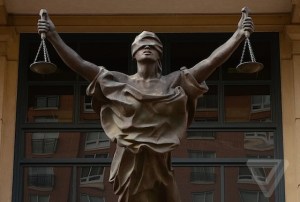 We’re not holding our breath that if and when the money gets here, it will be used to restore the gulf, clean up the mess, and help the people and animals whose lives have been devastated. Why you ask? Bobby Jindal has been fighting to keep the social costs created by this dirty and reckless industry away from those liable. He’s also got an interesting connection to the law firm that represents BP. His brother works there.
This is about yet two more examples of how Gov. Bobby Jindal conveniently manages to look the other way instead of being up front when confronted with issues that most might believe could present a conflict of interest
When Jindal signed SB 469 into law on Friday he not only killed the pending lawsuit against 97 oil, gas and pipeline companies by the Southeast Louisiana Flood Protection Authority-East (SLFPA-E) but he also placed in extreme jeopardy the claims by dozens of South Louisiana municipalities and parish governments from the disastrous 2010 BP Deepwater Horizon spill that killed 11 men and discharged 5 million barrels of oil into the Gulf of Mexico, spoiling beaches and killing fish and wildlife.
By now, most people who have followed the bill authored by Sen. Bret Allain (R-Franklin) but inspired by Sen. Robert Adley (R-Benton) know that big oil poured money and thousands of lobbying man hours into efforts to pass the bill with its accompanying amendment that makes the prohibition against such lawsuits retroactive to ensure that the SLPFA-E effort was thwarted.
Most followers of the legislature and of the lawsuit also know that up to 70 legal scholars, along with Attorney General Buddy Caldwell, strongly advised Jindal to veto the law because of the threat to the pending BP litigation.
Altogether, the 144 current legislators received more than $5 million and Jindal himself received more than $1 million from oil and gas interests. Allain received $30,000 from the oil lobby and Adley an eye-popping $600,000.
So, when BP lobbyists began swarming around the Capitol like blow flies buzzing around a bloated carcass, the assumption was that BP somehow had a stake in the passage of SB 469 and that infamous amendment making the bill retroactive.
John Barry, a former SLFPA-E who was given the Jindal Teague Treatment but who stuck around to pursue the lawsuit, said, “During the last few days of the session, we were very well aware that the BP lobbyists were extraordinarily active. They were all over the place. We all assumed there was definitely something it in for them.”
Something in it for them indeed.
Russel Honore said it another way, observing wryly that the Exxon flag still flies over the State Capitol.
Blogger Lamar White, Jr. observed that former Gov. Edwin Edwards spent eight years in a federal prison for accepting payments from hopeful casino operators for his assistance in obtaining licenses—all after he left office. New Orleans Mayor Ray Nagin was similarly convicted of using his position to steer business to a family-owned company and taking free vacations meals and cell phones from people attempting to score contracts or incentives from the city.
So what is the difference between what they did and the ton of contributions received by Adley and Jindal? To paraphrase my favorite playwright Billy Wayne Shakespeare, a payoff by any other name smells just as rank.
And while big oil money flowed like liquor at the State Capitol (figuratively of course; it’s illegal to make or accept campaign contributions during the legislative session), what many may not know is that Jindal may have had an ulterior motive when he signed the bill into law against sound legal advice not to do so, thus protecting the interests of big oil over the welfare of Louisiana citizens who have seen frightening erosion of the state’s shoreline and freshwater marshes.
The Washington, D.C., law firm Gibson, Dunn & Crutcher is one of the firms that represented BP in negotiating a $4.5 billion settlement that ended criminal charges against the company. Included in that settlement amount was a $1.26 billion criminal fine to be paid over five years.
An associate of Gibson, Dunn & Crutcher who has defended clients in government audit cases and in several whistleblower cases is one Nikesh Jindal.
He also is assigned to the division handling the BP case.
Nikesh Jindal is the younger brother of Gov. Piyush, aka Bobby Jindal.
Still, the US District Court found BP “grossly negligent”. Eleven people were killed. Oil gushed into the Gulf destroying the economy, wildlife, and the delicate ecosystem. “Gross negligence” can mean a lot of dollars. Halliburton and  Transocean have been cleared of gross negligence but they’re still paying fines. BP could be paying out billions of dollars.
BP Plc acted with gross negligence in setting off the biggest offshore oil spill in U.S. history, a federal judge ruled, handing down a long-awaited decision that may force the energy company to pay billions of dollars more for the 2010 Gulf of Mexico disaster.
U.S. District Judge Carl Barbier held a trial without a jury over who was at fault for the catastrophe, which killed 11 people and spewed oil for almost three months into waters that touch the shores of five states.
“BP has long maintained that it was merely negligent,” said David Uhlmann, former head of the Justice Department’s environmental crimes division. He said Barbier “soundly rejected” BP’s arguments that others were equally responsible, holding “that its employees took risks that led to the largest environmental disaster in U.S. history.”
The case also included Transocean Ltd. (RIG) and Halliburton Co. (HAL), though the judge didn’t find them as responsible for the spill as BP. Barbier wrote in his decision today in New Orleans federal court that BP was “reckless,” while Transocean and Halliburton were negligent. He apportioned fault at 67 percent for BP, 30 percent for Transocean and 3 percent for Halliburton.
U.K.-based BP, which may face fines of as much as $18 billion, closed down 5.9% to 455 pence in London trading.
“The court’s findings will ensure that the company is held fully accountable for its recklessness,” U.S. Attorney General Eric Holder said. “This decision will serve as a strong deterrent to anyone tempted to sacrifice safety and the environment in the pursuit of profit.”
Quite a few politicians are also having a day in court and it’s not turning out well for them. Former New Orleans Ray Nagin has declared indigency and asked for a public defender to handle his appeal. The former first lady and Governor of Virginia were stunned to be found guilty a multiple accounts of grifting. Robert McConnell was found guilty of 11 of 14 counts of public corruption. His wife is going down for eight counts. The reaction in the courtroom by the first couple and their cronies was melodramatic. It took the jury 3 days to reach a decision. Will Texas Governor Rick Perry be next for an orange suit in Federal Facility?
A federal jury on Thursday found former Virginia governor Robert F. McDonnell and his wife, Maureen, guilty of public corruption — sending an emphatic message that they believed the couple sold the office once occupied by Patrick Henry and Thomas Jefferson to a free-spending Richmond businessman for golf outings, lavish vacations and $120,000 in sweetheart loans.
After three days of deliberations, the seven men and five women who heard weeks of gripping testimony about the McDonnells’ alleged misdeeds unanimously found that the couple conspired to lend the prestige of the governor’s office to Jonnie R. Williams Sr. in a nefarious exchange for his largesse.
The verdict means that Robert McDonnell, the first governor in Virginia history to be charged with a crime, now holds an even more unwanted distinction — the first to be convicted of one.
He and his wife face decades in federal prison, although their actual sentences will likely fall well short of that. U.S. District Judge James R. Spencer set a sentencing hearing for Jan. 6.
The former governor, a onetime Republican rising star considered for the 2012 vice presidential nomination, was convicted of all 11 corruption-related counts brought against him. In a small victory, he was acquitted of lying on loan documents.
The former first lady was convicted of eight corruption-related charges and an additional count of obstruction of justice. She, too, was acquitted of falsifying a bank record.
The verdict was read aloud in front of a courtroom packed with reporters and supporters of the former first couple. When the clerk announced that the former governor had been found “guilty” of the first of 14 counts the couple faced, Robert McDonnell, 60, closed his eyes tightly, shaking in his seat as he began to weep.
 I guess the “bitch” made me do it isn’t an effective defense after al
Judges and juries were busy all over the country.
A Federal Court granted an injunction restoring early voting in Ohio. Republican governors have been busy trying to cut down access to voting in fear of turnout by minorities and single ladies who still hate rule by neoconfederate overseers.
I have now had a chance to give an initial read the 71-page federal district court opinion in Ohio State Conference of the NAACP v. Husted. This is a significant case, which could potentially make it to the Supreme Court. It expands voting rights in a broad way, and makes it difficult for a state like Ohio to cut back on any expansions of voting rights that it puts in place. The big question is where the stopping point is in a decision like this, and how to justify calling it unconstitutional for a state like Ohio to make a modest cutback in early voting while allowing many other states to offer no early voting at all.
Here are my preliminary thoughts.
1. This is the latest in a series of cases challenging Ohio cutbacks in early voting. The challenges are before the same federal district court judge in Ohio, Peter Economus, as earlier challenges, including a challenge which led to the restoration of early voting during the 2012 election. Judge Economus tangled with Ohio SOS Husted before, leading to potential calls for Husted to be cited for contempt. It is therefore no surprise that Judge Economus sided against Husted again in this latest challenge.
2. The theory in the earlier Ohio early voting case (Obama for America v. Husted) is different than the theory in the current case. In the last case, the question was whether Ohio could cut back on early voting for all voters EXCEPT for certain military and overseas voters in the period just before the election. The district court, affirmed by the Sixth Circuit, said that these special rules for just a subset of voters violated equal protection. (I had thought the Supreme Court might get involved in this case, but the Court did not.)
3. This case does not raise issues of different voting rules for different classes of voters. In fact, the dispute here arises from the issue of uniformity. The Ohio legislature cut back from 35 to 28 days of early voting, in the process eliminating “Golden Week,” a week where new (or reregistering voters) could register to vote and vote early during the same period. In conjunction with rules establishing uniformity of early voting times established by SOS Husted, the new early voting times eliminated night voting as well as Sunday voting before election day. That day was used by some African-American churches for a “Souls to the Polls” voter drive event. All Ohio voters remain able to vote by mail without excuse, for the 30 days before the election. The NAACP and others argued that the cutbacks in early voting and the elimination of Golden Week violated both equal protection guarantees of the U.S. Constitution and Section 2 of the Voting Rights Act.
4. The judge found as a matter of fact (crediting expert reports of the plaintiffs’ especially that of U. Florida’s Dan Smith) that the cutbacks in early voting would disproportionately fall on African-Americans. The judge found that early voters, especially in the larger population areas of the state, included a large portion of the state’s share of African-American voters. The judge also found that African-American voters were distrustful of absentee balloting as an alternative to in person voting, and that absentee balloting was more burdensome (filling out the materials, postage, mailing, etc.)
You can follow the links to the additional analysis on the case. It could be headed to the White Male/Uncle Thomas Overseers at SCOTUS shortly.
A Federal Appeals court has withdrawn the decision defunding the AHCA. 
In July, two Republican judges on the United States Court of Appeals for the District of Columbia Circuit handed down a decision defunding much of the Affordable Care Act (ACA). This effort to implement Sen. Ted Cruz’s (R-TX) top policy priority from the bench waswithdrawn on Thursday by the DC Circuit, and the case will be reheard by the full court — a panel that will most likely include 13 judges. In practical terms, this means that July’s judgment cutting off subsidies to consumers who buy insurance plans in federally-operated health exchanges is no more. It has ceased to be. It is, in fact, an ex-judgment.
The reason why this matters is because the plaintiffs in this lawsuit, known as Halbig v. Burwell, are hustling to try to convince the GOP-dominated Supreme Court to hear this case, where they no doubt believe that they have a greater chance of succeeding than in the DC Circuit, as a majority of the active judges in the DC Circuit are Democrats. The Supreme Court takes only a tiny fraction of the cases brought to their attention by parties who lost in a lower court — a study of the Court’s 2005 term, for example, found that the justicesgranted a full argument to only 78 of the 8,517 petitions seeking the high Court’s review that term. The justices, however, are particularly likely to hear cases where two federal appeals courts disagree about the same question of law.
Two hours after the divided DC Circuit panel released its opinion attempted to defund Obamacare, a unanimous panel of the Fourth Circuit upheld the health subsidies that are at issue in Halbig. Thus, so long as both decisions remained in effect, Supreme Court review was very likely. Now that the full DC Circuit has vacated the two Republican judges’ July judgement, Supreme Court review is much less likely.
Although it is possible that the full DC Circuit could agree with the two judges who voted to cut off health subsidies to millions of Americans, this outcome is unlikely. The plaintiffs’ arguments in this case are weak and are unlikely to move judges who do not have a partisan stake in undermining the Affordable Care Act.
The litigants seeking to undermine Obamacare through this lawsuit — Oklahoma Attorney General Scott Pruitt (R), who filed a brief supporting the plaintiffs in this case, admitted in aWall Street Journal op-ed that the purpose of this lawsuit is to cause “the structure of the ACA” to “crumble” — waged a two front effort trying to convince the full DC Circuit not to vacate their two GOP colleagues’ decision.
Meanwhile marriage equality took a few more steps forward and one step back. Guess whose state provided the step back?
Proponents of equal marriage rights have had a lot to celebrate over the last year, with a series of victories nationwide in state and federal district courts. And while those successes matter a great deal, and have advanced the cause of civil rights at a pace few thought possible, the legal fights at the federal appellate level are just as important, if not more so.It makes rulings like these so striking.A U.S. appeals court on Thursday struck down gay marriage bans in both Wisconsin and Indiana, adding to a rush of major victories for the marriage equality movement in the last year alone.Now that a three-judge panel in Chicago’s 7th Circuit Court of Appeals has ruled unanimously that both Midwestern marriage bans were unconstitutional, a total of 21 states recognize marriage for same-sex couples.In his ruling, which is available online here (pdf), Judge Richard Posner, a Reagan appointee, wrote. “The discrimination against same-sex couples is irrational, and therefore unconstitutional even if the discrimination is not subjected to heightened scrutiny, which is why we can largely elide the more complex analysis found in more closely balanced equal-protection cases.”The ruling, a key breakthrough for supporters of same-sex marriage, does not come as too big of a surprise. Just last week, the attorneys arguing against marriage equality faced a barrage of very toughquestions, which they struggled badly to answer.Indeed, as Chris Geidner reported, Posner referred to arguments from Indiana Solicitor General Thomas Fisher, whose job it was to defend the anti-gay laws, as “pathetic,” “ridiculous,” and “absurd.”Naturally, then, the 7th Circuit concluded today, “The challenged laws discriminate against a minority defined by an immutable characteristic, and the only rationale that the states put forth with any conviction – that same-sex couples and their children don’t need marriage because same-sex couples can’t produce children, intended or unintended – is so full of holes that it cannot be taken seriously.”Ouch.
Eric Holder held a presser in St Louis today to discuss the investigation of the Ferguson Police and other investigations. I’m hoping this helps them. I still distrust the NOPD and don’t believe anything they say so if the people of Ferguson feel like I do, it will be a pancea waiting for proof.
Attorney General Eric Holder on Thursday opened a broader civil rights investigation of the practices and procedures of the Ferguson Police Departmentin the wake of the Aug. 9 shooting death of Michael Brown, 18, by Ferguson police Officer Darren Wilson.
The Civil Rights Division will investigate whether Ferguson police have engaged in a pattern of civil rights violations, Holder said.
The attorney general also announced that the Justice Department has begun what he called a partnership with the St. Louis County Police Department to assess the county department’s response to the demonstrations that followed the shooting.
The investigation of Ferguson police will include the department’s use of force, traffic stops, searches and arrests, Holder said, adding that Ferguson officials welcomed the inquiry and pledged their cooperation. Justice Department officials said there is no timeline on the length of the investigation, and that it would depend on the cooperation of local authorities.
The goal, Holder said, is to reach an agreement with the department that would establish new tactics to eliminate bias and increase community confidence in the department.
Holder pledged a “fair, thorough investigation” that would result in “lasting, positive change.”
So, that’s some of the news from the justice front. What’s on your reading and blogging list today?
Thursday Reads: They Shall Be Released
Posted: September 4, 2014 Filed under: Barack Obama, Foreign Affairs, morning reads, U.S. Economy, U.S. Politics | Tags: austerity, bob, Bob Dylan, bootlegs, civil rights investigation, Connecticut, Eric Holder, European Central Bank, Ferguson MO, interest rates, Mario Draghi, NATO Summit, Putin "peace plan", rabid bobcat, The Band, The Basement Tapes, Ukraine, US Department of Justice 48 Comments
Good Morning!!
President Obama is meeting with other NATO leaders in Newport, Wales today, and the focus of meetings will be Russia’s encroachment into Ukraine and how to deal with it. The Christian Science Monitor reports: NATO members gather in Wales with Russia at the top of the agenda.
Russia faced harsh criticism at the start of a North Atlantic Treaty Organization (NATO) summit in Wales today with the 28 member state alliance reevaluating its security role in Europe amid the ongoing crisis in Ukraine.
NATO Secretary General Anders Fogh Rasmussen said the alliance continues to witness “Russian involvement in destabilizing the situation in eastern Ukraine” even after Russian President Vladimir Putin proposed a seven-point peace plan. Russia maintains it has not armed rebels in eastern Ukraine or contributed to the conflict there.
Early reports from the summit suggest NATO leaders are set to agree to create “rapid reaction” forces that could be deployed in less than two days to regional crisis spots. Countries close to Russia, especially Poland, have called for NATO to permanently station troops on their territory, but Reuters reports this is unlikely to happen because it would break a 1997 agreement the alliance made with Russia.
As the Monitor reported, the creation of rapid response forces wouldthrust the United States into the center of any future conflict.
Terrific. Supposedly, Russian president Vladimir Putin in proposing a cease-fire, but he’s offering few specifics. From The New York Times: Putin Lays Out Proposal to End Ukraine Conflict.
Mr. Putin’s peace plan, jotted out during a plane ride over Siberia, muddied the diplomatic waters, leaving the West an excuse for delaying punitive sanctions that would also hurt European economies on the verge of a new recession. And it was expected to have some appeal to war-weary Ukrainians.
The ultimate effect, coming after Russian troops intervened in Ukraine last week to beat back a successful government offensive, may be to leave the country as a loose coalition that Moscow could still dominate, which critics of the Russian president say is his real aim.
It is being called a “seven-point plan,” but according to the Times,
Mr. Putin’s plan seemed to raise more questions than it answered. First, there was no mechanism for implementation. Second, just hours earlier, his own spokesman had repeated the Russian position, widely criticized as implausible, that Moscow could not negotiate a cease-fire because it was not a direct party to the conflict.
Analysts suggested that Mr. Putin’s strategy is to convince Kiev that it must negotiate, not fight, and to reinforce the idea that the overall outcome depended on Moscow.
“Russia wants to show that it is in command of what is happening,” said Fyodor Lukyanov, editor of a prominent Russian foreign policy journal. “For Russia, it is important first to prevent the Ukrainians from thinking that they could win militarily, and to accept the separatist leaders as partners in negotiations.”
A few more headlines and opinions:
Al Jazeera: NATO summit to highlight unity against Russia.
Wall Street Journal: As Leaders Meet for NATO Summit, Alliance Says Russian Troops Still Active in Ukraine.
Foreign Policy: NATO’s Make or Break Moment (opinion).
Bloomberg: NATO Shifts Aim From Waterloo to East as Russia Menaces (opinion).

European Central Bank News
The European Central Bank’s Mario Draghi finally decided to try to do something about Europe’s horrible economic situation. From the NYT: European Central Bank to Start Asset Purchases After Further Rate Cut.
FRANKFURT — Bolstering a surprise interest rate cut on Thursday, the European Central Bank will soon begin buying packages of bank loans in an effort to stimulate lending in the faltering eurozone economy.
The move is unprecedented, but appears to fall short of the broad, large-scale asset purchases advocated by many economists to prevent stagnation in the eurozone.
The central bank said that in October it would begin buying asset-backed securities, bundles of loans issued by banks to businesses and households. The central bank will also buy covered bonds, Mario Draghi, the E.C.B. president said. Covered bonds are similar to asset-backed securities, in that they also are made up of bank loans.
Perhaps more significantly, Mr. Draghi said that the central bank’s governing council was ready to take further measures if needed — a clear reference to quantitative easing, or broad-based purchases of government bonds or other assets.
Mr. Draghi did not say how much the central bank would spend buying asset-backed securities and covered bonds, adding that there was not yet enough information on the size of the market. He said the central bank would buy existing and new assets including residential and corporate loans. He said the purchases would be “significant,” if still short of a level considered quantitative easing.
More headlines:
CTV News: European Central Bank trims key interest rate to record low.
Marketwatch: U.S. stocks open up after ECB rate cut.
Ferguson Civil Rights Investigation
As we heard yesterday, the Justice Department will likely announce today that it is launching a civil rights investigation of the Ferguson, Missouri Police Department.
From The Washington Post: Justice Dept. to probe Ferguson police force.
Attorney General Eric H. Holder Jr. this week will launch a broad civil rights investigation into the Ferguson, Mo., Police Department, according to two federal law enforcement officials.
The investigation, which could be announced as early as Thursday afternoon, will be conducted by the Justice Department’s civil rights division and follow a process similar to that used to investigate complaints of profiling and the use of excessive force in other police departments across the country, the officials said.
The federal officials said the probe will look not only at Ferguson but also at other police departments in St. Louis County. Some, like Ferguson, are predominantly white departments serving majority-African-American communities, and at least one department invited the Justice Department to look at its practices. The officials spoke on the condition of anonymity to discuss the pending inquiry.
The investigation is in addition to a Justice Department probe into whether Officer Darren Wilson, who fired the fatal shots, violated Brown’s civil rights. The new probe will look more broadly at whether the department employed policies and practices that resulted in a pattern of civil rights violations.
The Washington Post reported Saturday that five current and one former member of the Ferguson police force face pending federal lawsuits claiming they used excessive force. The lawsuits, as well as more than a half-dozen internal investigations, include claims that individual officers separately hog-tied a 12-year-old boy who was checking his family mailbox, pistol-whipped children and used a stun gun on a mentally ill man who died as a result.
More from The New York Times: Justice Dept. Inquiry to Focus on Practices of Police in Ferguson.
Ferguson’s police chief, Thomas Jackson, said in an interview on Wednesday night that he would welcome the investigation.
“We’ve been doing everything we can to become a professional police department and a professional city,” he said. “We have no intentional policies or procedures which discriminated or violated civil rights. But if we have anything there which may unintentionally do that, we need to know about it.”
Chief Jackson said he met with Justice Department officials on Wednesday afternoon and discussed the broader investigation. “Obviously, we have gaps. And any help we can get to help fill those gaps and to make ourselves stronger, we welcome,” he said.
What a crock of sh&t that is! I’ll just bet Jackson is thrilled about the Justice Department probe into his joke of a police force. Wouldn’t you love to hear what he’s saying privately?
In the Ferguson case, the Justice Department will conduct what it calls a “pattern or practice” investigation, with officials looking for evidence that the police have repeatedly violated residents’ civil rights. Such inquiries have been one of the Justice Department’s preferred tactics in addressing accusations of police misconduct.

Rabid Bobcat Attacks
Here’s a strange story I came across yesterday in The Boston Globe: Rabid Bobcat Spent Labor Day Weekend in Conn. Attacking People.
What’s worse than stumbling upon an angry bobcat on your nightly walk with your newborn daughter? Stumbling upon an angry, rabid bobcat on your nightly walk with your newborn daughter.
That’s what happened to Summer and Tom Berube last Sunday. The Lebanon, CT, couple were taking their evening walk with their infant daughter, Neeve, when a bobcat approached them.
According to NECN, the bobcat hissed and ran towards Tom, who was carrying his baby. Tom yanked a mailbox out of the ground and used it to defend his family, knocking the animal down when it leapt at him. Summer, meanwhile, said she “was just screaming at the top of my lungs for help.”
That help soon came from the Department of Energy and Environmental Protection, which had already been alerted to the presence of an aggressive bobcat in the area. On Saturday, a woman in the neighboring Connecticut town of Bozrah was attacked by a bobcat while feeding her chickens. She was scratched and bitten, but quickly taken to a local hospital for treatment. If caught early enough, a postexposure vaccination prevents the disease from spreading.
I had no idea there were bobcats running around in New England, but according The Hartford Courant, although sightings are rare, “Bobcats are common in Connecticut and are found in every town. They can weigh as much as 40 pounds, but rarely interact with people and rarely have rabies, DEEP said.”

They Shall Be Released
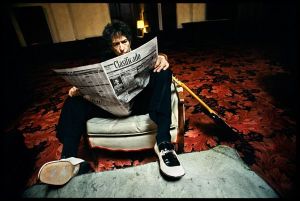
Maybe you’re wondering why I’ve illustrated this post with photos of Bob Dylan. In 1968, I bought a two-record album in a plain white cover that was being sold by a street hawker in Harvard Square. I learned this morning from Wikipedia that it was known as “The Great White Wonder,” but either I didn’t know that then or I’ve forgotten. The recording was a bootleg of Bob Dylan’s so-called “basement tapes,” recorded in Woodstock, NY, with backup from The Band. Later, in 1975, a selection of the songs they had recorded was released as a studio album.
Anyway, the basement tapes are back in the news, because they are all going to be released as a 6-CD set.
The Guardian reports: Bob Dylan to share full Basement Tapes.
Bob Dylan is sharing the rest of his Basement Tapes. Four decades after the singer released 24 songs under that title – cuts he recorded with the Band in upstate New York – his label have agreed to unveil 114 more tracks from the same 1967 sessions.
“Some of this stuff is mind-boggling,” Sid Griffin, author of the set’s liner notes,told Rolling Stone. Packaged under the title The Basement Tapes Complete: The Bootleg Series Vol. 11, the six-CD set incorporates alternate versions of Blowin’ In The Wind and It Ain’t Me Babe, covers of tunes by Johnny Cash and Curtis Mayfield, and at least 30 tracks that Rolling Stone claims “even fanatical Dylan fans never knew existed”. A shorter, two-disc compilation, The Basement Tapes Raw, will present 12 of the unreleased tracks alongside the original LP.
Almost all of this material was harvested from reel-to-reel tape: 20 tapes in all, which the Band’s Garth Hudson kept stored in his Woodstock home. Jan Haust, a Toronto-based collector, acquired the archive about 10 years ago; he worked with Dylan’s reps to find a way to put them out. Although a few tapes were allegedly missing, and a handful of recordings “just [sounded] like a distortion”, everything else is making its way to the public. “We usually curate these packages more, but we knew the fans would be disappointed if we didn’t put out absolutely everything,” an unnamed Dylan source told Rolling Stone.
Fans of The Basement Tapes have always known that there was unreleased material. There have been several expanded, bootleg editions over the years, and musicians have even turned their attention to Dylan’s unreleased Basement Tapes-era lyrics. Earlier this year, T Bone Burnett collaborated with Marcus Mumford, Elvis Costello and others to record their own versions of his incomplete songs. “The stuff that people haven’t heard justifies, in every way, shape and form, all the hype, hubris and myth that surrounds these tapes,” Griffin promised.
USA Today has published a list of all the songs on the album to be released in November.
So . . . what else is happening? Please post your thoughts and links in the comment thread, and have a tremendous Thursday!
Tuesday Reads: So Much Breaking News!
Posted: September 2, 2014 Filed under: Barack Obama, Foreign Affairs, morning reads, Real Life Horror, Russia, Somalia, U.S. Military, U.S. Politics, Ukraine, Violence against women | Tags: Ahmed Abdi Godane, AIAI, al-Shabab, Burlington MA, Council on Foreign Relations (CFR), Eric Cantor, Estonia, FBI, grooming child victims, hackers, IRAQ, ISIS, Kenya mall massacre, Market Basket, Pakistan, rape, Rear Adm. John Kirby, sex trafficking, unauthorized nude photos released, Wales NATO Summit, Westgate Mall, World War III 62 Comments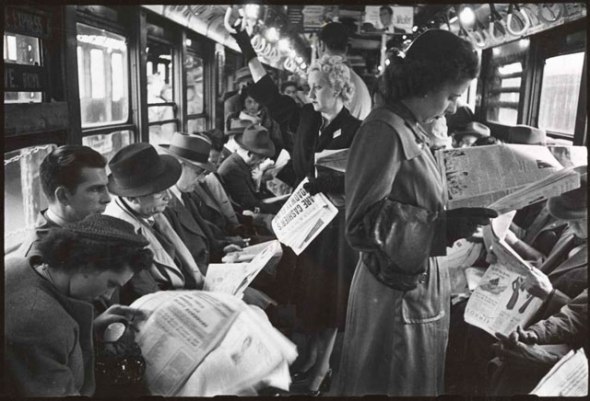
Photo by Stanley Kubrick for Life Magazine
Good Morning!!
I have some serious news reads for you this morning, but–just because it’s a feel-good story–I’m going to begin with one more Market Basket update. The Boston Globe published an article yesterday about the Market Basket store I shop at in, in Burlington, MA: A Market Basket store, returning to life. Recall that the shelves were mostly empty when the employees returned to work on Thursday morning.
The doors of the tractor-trailer open on a bounty of chicken, Swiss cheese, and sliced onions.
A swarm of grocery clerks in blue jackets and managers in red descends on the loading dock, using hand-operated electric jacks to spear pallets of food that the workers stack in the cavernous storage rooms in the back of the Market Basket supermarket….Bob McKeown fills a display case with fresh-from-the-fryer doughnuts, a few garnished with smiley faces made of jelly. Samantha Bond decorates a cake to honor the moment, etching the words “Market Basket Strong” in icing and an image of the yellow giraffe that served as the employees’ mascot of sorts during the protest — for “sticking their necks out.” ….
This Market Basket store in Burlington came back to life over the last few days, resuscitated by a cadre of employees eager to get to work after the six-week protest that forced the return of Arthur T. Demoulas as head of the family food empire. Like the others in the 71-store chain, the Burlington store was the scene of a rapid restocking, a huge task involving thousands of pounds of produce, meat, bread, canned goods, and other groceries….
The first morning back had been about congratulations and hugs and handshakes as customers came in more to talk to employees than to shop. Amid the celebrations, workers admitted to anxious moments during the stoppage. They worried their defiance would cost them their jobs — “I’ve been living on antacids for the last six weeks,” one said — and couldn’t wait to get back to the unglamorous but satisfying routine of running a supermarket.
That routine had returned in full by early Friday.
It’s a nice story, and I’m so happy for these workers. Isn’t it great that this happened over Labor Day weekend?
Now for the not-so-upbeat news . . .
NBC News reports, Terror Leader Linked to Kenya Mall Massacre Targeted by U.S. Strike.
The U.S. military launched an airstrike in Somalia on Monday targeting the leader of the al Qaeda-affiliated group behind the Kenya mall massacre. U.S. officials told NBC News that a military drone launched Hellfire missiles at at least two vehicles in a remote area of southern Somalia. Sources said Ahmed Abdi Godane, the top leader of al Shabab, was the attack’s target. Al Shabab claimed responsibility for last September’s Westgate Mall siege that left at least 67 dead and around 200 injured. One U.S. security source described Godane as “operationally savvy and ideologically driven, with aspirations off the charts.”
Rear Adm. John Kirby, the Pentagon’s press secretary, said in a statement late Monday that “we are assessing the results of the operation and will provide additional information as and when appropriate.” Godane has served as the group’s leader since a U.S. airstrike killed his predecessor Aden Hashi Ayro in 2008. In October, U.S. commandos launched raids in Somalia seeking to capture Godane, who is also known as Mukhtar Abu Zubeyr. Reuters reported that Godane’s close associate, Ahmed Mohamed Amey, was killed by a U.S. airstrike in January. In an online audio message following the Westgate Mall massacre, Godane said Kenya should be “prepared for an abundance of blood that will be spilt in your country.” Al Shabab, which means “The Youth” in Arabic, seized much of southern Somalia in 2006 before Somali forces and African peacekeeping troops ousted it five years later.

Photo of NY subway by Walker Evans
AP reports (via ABC News) that 6 militants were killed in the raid. There aren’t a lot of details as yet, but here’s a backgrounder on al-Shabab from The Council on Foreign Relations. Here’s the introduction and information on how the group began.
Al-Shabab, or “The Youth,” is an al-Qaeda-linked militant group and U.S.-designated Foreign Terrorist Organization fighting for the creation of a fundamentalist Islamic state in Somalia. The group, also known as Harakat al-Shabab al-Mujahideen, and its Islamist affiliates once held sway over Mogadishu and major portions of the Somali countryside, but a sustained African Union military campaign in recent years has weakened the group considerably. Still, security analysts warn that the group remains the principal threat in a politically volatile, war-torn state.
Al-Shabab’s terrorist activities have mainly focused on targets within Somalia, but it has also proven an ability to carry out deadly strikes in the region, including coordinated suicide bombings in Uganda’s capital in 2010 and a deadly raid on a Nairobi mall in 2013. Washington fears the group, which has successfully recruited members of the Somali-American diaspora, may orchestrate strikes on U.S. soil. In recent years, the United States has pursued a two-pronged policy in Somalia: providing funding, training, and logistical support to UN-backed African forces battling al-Shabab, while escalating counterterrorism operations including Special Forces and armed drones….
Somalia, one of the most impoverished countries in the world, has seen a number of radical Islamist groups come and go in its decades-long political tumult. The group analysts cite as al-Shabab’s precursor, and the incubator for many of its leaders, is Al-Ittihad Al-Islami (aka Unity of Islam), a militant Salafi extremist group that peaked in the 1990s after the fall of the Siad Barre military regime (1969-1991) and the outbreak of civil war.
AIAI, which sought to establish an Islamist emirate in Somalia, sprang from a band of Middle Eastern-educated Somali extremists and was partly funded and armed by al-Qaeda chief Osama bin Laden. Many of its fighters, including current al-Shabab commanders, fled the country and fought in Afghanistan in the late 1990s after being pushed out by the Ethiopian army and its Somali supporters. The group was designated a terrorist organization by the U.S. State Department in the days after the September 11, 2001 attacks.
In 2003, a rift developed between AIAI’s old guard, which had decided to create a new political front, and youth members who sought the establishment of a “Greater Somalia” under fundamental Islamic rule. The hardliners eventually joined forces with an alliance of sharia courts, known as the Islamic Courts Union, serving as its youth militia in the battle to conquer Mogadishu’s rivaling warlords. Al-Shabab and the ICU wrested control of the capital in June 2006, a victory that stoked fears of spillover jihadist violence in neighboring Ethiopia, a majority Christian nation.
Much more at the CFR link.

Yesterday, U.S. planes carried out an operation against ISIS militants in Iraq. Reuters: U.S. planes strike militants near Iraq’s Amreli, airdrop aid.
President Barack Obama authorized the new military action, broadening U.S. operations in Iraq amid an international outcry over the threat to Amerli’s mostly ethnic Turkmen population.
U.S. aircraft delivered over a hundred bundles of emergency supplies and more aid was dropped from British, French and Australian planes, officials said, signaling headway in Obama’s efforts to draw allies into the fight against Islamic State.
Iraqi army and Kurdish forces closed in on Islamic State fighters on Saturday in a push to break the Sunni militants’ siege of Amerli, which has been surrounded by the militants for more than two months.
Armed residents of Amerli have managed to fend off attacks by Islamic State fighters, who regard the town’s majority Shi’ite Turkmen population as apostates. More than 15,000 people remain trapped inside.
“At the request of the government of Iraq, the United States military today airdropped humanitarian aid to the town of Amerli, home to thousands of Shia Turkmen who have been cut off from receiving food, water, and medical supplies for two months by ISIL,” Rear Admiral John Kirby, the Pentagon press secretary, said, using an alternative name for Islamic State.
“In conjunction with this airdrop, U.S. aircraft conducted coordinated air strikes against nearby ISIL terrorists in order to support this humanitarian assistance operation,” he said, adding that a key objective was to prevent a militant attack on civilians in the town.
President Obama is headed to Estonia today and then to Wales for the NATO Summit. CBS News reports, Russia and ISIS take center stage on Obama’s Europe trip.
President Obama leaves for Europe Tuesday with stops in Estonia and a NATO summit in Wales amid escalating crises in Ukraine and in Iraq and Syria, crises that are having a direct impact on a number of European nations.
While the Russian threat in Ukraine will be the focus of the upcoming summit, the meeting also puts President Obama, Secretary of State John Kerry and Defense Secretary Chuck Hagel face to face with European countries who may be willing to join the U.S. in dealing with the other crisis in Iraq and Syria.
Officially, however, NATO says it doesn’t want to be involved in dealing with the Islamic militant group called the Islamic State of Iraq and Syria (ISIS) that has swept across Iraq and Syria and poses a growing threat to the U.S. and parts of Western Europe that might be targeted by foreign fighters.
Why is Obama stopping in Estonia?
“It is clearly not accidental that the president has decided to stop in Estonia on the way to the NATO Summit. The two stops are essentially part of the same effort to send a message to the Russians that their behavior is unacceptable,” said Charles Kupchan, the White House’s senior director for European Affairs.
Estonia, like Ukraine, has a large Russian population and is concerned about the potential of pro-Russian unrest there too. But Kupchan said Mr. Obama will send the message that the Article 5 commitment to common defense of other nations is ironclad.
“Russia, don’t even think about messing around in Estonia or in any of the Baltic areas in the same way you have been messing around in Ukraine,” Kupchan said the president would relay to allies there.
Mr. Obama will meet with the leaders of Estonia, Latvia and Lithuania and also speak to young people there.
Read more details about the NATO Summit at the link.
According to the New York Times, Russia is already making plans to respond to expected NATO actions.
MOSCOW — With NATO leaders expected to endorse a rapid-reaction force of 4,000 troops for Eastern Europe this week, a senior Russian military official said on Tuesday that Moscow would revise its military doctrine to account for “changing military dangers and military threats.”
In an interview with the Russian state news agency RIA Novosti, the official, Mikhail Popov, deputy secretary of Russia’s military Security Council, called the expansion of NATO “one of the leading military dangers for the Russian Federation.”
Mr. Popov said Russia expected that leaders of NATO would seek to strengthen the alliance’s long-term military presence in Eastern Europe by establishing new military bases in the region and by deploying tanks in Estonia, a member of NATO that borders Russia.
“We believe that the defining factor in our relationship with NATO remains the unacceptability for Russia of plans to move military infrastructures of the alliance to our borders, including by means of expanding the bloc,” Mr. Popov said.
And so, we move closer to the possibility of another world war. At least that’s what Ann Applebaum of Slate suggested recently: Putin has invaded Ukraine. Is it hysterical to prepare for total war with Russia? Or is it naive not to? It’s brief and to the point, so please give it a read.

The New York Times also has an important story about the sex-trafficking scandal in Great Britain. I read about it at the Guardian a few days ago, but we haven’t discussed it here. The Times reports, Years of Rape and ‘Utter Contempt’ in Britain. Here’s the introduction:
ROTHERHAM, England — It started on the bumper cars in the children’s arcade of the local shopping mall. Lucy was 12, and a group of teenage boys, handsome and flirtatious, treated her and her friends to free rides and ice cream after school.
Over time, older men were introduced to the girls, while the boys faded away. Soon they were getting rides in real cars, and were offered vodka and marijuana. One man in particular, a Pakistani twice her age and the leader of the group, flattered her and bought her drinks and even a mobile phone. Lucy liked him.
The rapes started gradually, once a week, then every day: by the war memorial in Clifton Park, in an alley near the bus station, in countless taxis and, once, in an apartment where she was locked naked in a room and had to service half a dozen men lined up outside.
She obliged. How could she not? They knew where she lived. “If you don’t come back, we will rape your mother and make you watch,” they would say.
At night, she would come home and hide her soiled clothes at the back of her closet. When she finally found the courage to tell her mother, just shy of her 14th birthday, two police officers came to collect the clothes as evidence, half a dozen bags of them.
But a few days later, they called to say the bags had been lost.
“All of them?” she remembers asking. A check was mailed, 140 pounds, or $232, for loss of property, and the family was discouraged from pressing charges. It was the girl’s word against that of the men. The case was closed.
God, what a horrible story! Here’s a related post at The Daily Beast, The Psychology of Sex Slave Rings, by Charlotte Lytton. Lytton asks a controversial question, “are grooming rings endemic within certain cultures?”

Back in the USA, CNN reports that the FBI is investigating a hacker who released nude photos of Jennifer Lawrence and several other female celebrities over the weekend. That’s good news. I hope they put catch the culprit and put him in prison for a very long time.
Here’s a little political news from Reuters, via Huffington Post: Eric Cantor To Join Investment Bank Moelis & Co. As Vice Chairman And Managing Director.
Former U.S. House Majority Leader Eric Cantor will join investment bank Moelis & Co as vice chairman and managing director, the company said, adding that Cantor will also be elected to its board….
“Eric has proven himself to be a pro-business advocate and one who will enhance our boardroom discussions with CEOs and senior management as we help them navigate their most important strategic decisions,” Moelis CEO Ken Moelis said in a statement.
And finally, Politico writes: WHY THERE (PROBABLY) WON’T BE A SHUTDOWN
The apparent (but not finalized) decision by the White House to push executive action on immigration reform past the November midterms means there is no forcing mechanism to create a shutdown fight when government funding runs out Sept. 30th. Qorvis’ Stan Collender, a top budget expert, emails: “I never thought a shutdown was likely this fall (next March is another issue), but in a rational world delaying action on immigration should kill any chance of one happening. Then again — Benghazi, Obamacare, etc”
So, those are this morning’s breaking news headlines. What else is happening? Please post your thoughts and links in the comment thread, and have a terrific Tuesday!
Labor Day Reads
Posted: September 1, 2014 Filed under: morning reads | Tags: Labor Day, rise of management 15 Comments Happy Labor Day!!
I read this poignant article from the Harvard Business Review last week but I wanted to headline it today because it is so true. Labor really has no friends in America any more. Both parties have realigned themselves to pander to the donor class. This is written by Professor Robert Martin.
Real wages for production and non-supervisory workers have declined since the mid-1970s. The share of jobs that are unionized has plummeted back almost to the level it was before 1935 when the National Labor Relations Act (NLRA) facilitated a huge increase in unionization. High unemployment has persisted in the jobless recovery. For those fortunate enough to have full time employment, job security is down, and pension and health benefits are shrinking. No trend for labor is positive.
Worse still, it is arguable that its longtime friend in Washington has abandoned traditional labor. Throughout most of the 20th century, labor could count on having the Democratic party squarely in its corner. President Roosevelt rode to the rescue of labor in 1935 with the NLRA to fight back against the corporations who were subjecting labor to hostile, dangerous, insecure and low-paying workplaces. Throughout most of the rest of the 20th century, a Democratic presidential hopeful could not dream of winning the party’s nomination without gaining the endorsement of the President of the AFL-CIO – who always had a key speaking role at the Democratic Convention.
Meanwhile, the Republican Party battled on behalf of capital, supporting right-to-work states, deregulating industries, and lowering tax rates. That was the 20th century alignment.
It began to change at the end of the 20th century. A key marker occurred in 1992 when President Bill Clinton signed into law a tax change that allowed only the first $1 million in CEO compensation to be deducted for corporate income tax purposes. It was supposed to discourage corporations from paying their CEOs more than what was then thought to be an excessive $1 million (imagine that!) – and failed spectacularly as they were given stock options instead, which made them wealthier than ever before.
But in whose favor was this measure intended? Labor? Hardly. There was no obvious benefit to them. Capital? Yes indeed. Shareholders were complaining about CEOs demanding ever-higher compensation – and the Democrats responded to help capital reign in CEO talent. Arguably the attention to the needs of capital has continued in the Obama administration. This administration featured enthusiastic embrace of the TARP bailouts of banks that protected their shareholders first and foremost and the continued low interest policies that favor capital owners. Of course, the argument can be made that these policies help labor too, by avoiding a recession/depression. But the careful attention to capital first is a relatively new behavior for the Democrats.
Meanwhile, the Republican Party has increasingly shifted its allegiance to high-end talent, a tiny offshoot of labor that began to emerge around 1960. During the Reagan era, for instance, they cut the top marginal income tax rate from 70% in 1980 to 50% just two years later. By 1988 it was 28%. In seven years, an executive earning a million-dollar salary went from keeping $340,000 after federal taxes to keeping $725,000. That’s quite a raise. (The marginal rate for labor — median-income families — fell only about 10% over the same time-span.)
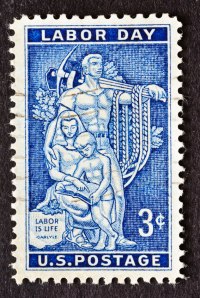 We’ve really switched from celebrating hard work to celebrating businesses that gamble. There are many ways that you can tell that businesses are really killing themselves in the long run in order to deliver short run profits. One of the most significant ways is the lack of R&D expenditures. That’s why it’s been an important public function. CEOS are no longer interested in anything that doesn’t deliver on high quarterly earnings. Here’s Bill Gates talking about the paltry investment in clean energy.
The demand for energy — be it solar, wind, clean coal, nuclear, or hydro — already far outpaces the amount we spend on technological innovations for the future of energy, and that demand is only continuing to grow more rapidly. The International Energy Outlook recently projected world energy consumption will increase by more than 50% by 2040.
Last week, Bill Gates wrote a post about needing “energy miracles.” He drew attention to some eye-opening statistics:
60% of the federal government’s R&D spending is on defense. About 25% is on health. Energy spending? 2%.
The US ranks 11th in overall percentage of the GDP that goes to energy research (Finland and China are the top two, respectively)
R&D spending on energy isn’t just a government problem. It’s also a serious problem in the private sector. The energy industry invests less than half of one percent (0.42%) of its revenue on research. In contrast, the pharmaceutical industry puts 20.5% of sales into R&D, and aerospace and defense spends 11.5%.
The US needs breakthroughs in clean energy in order to keep its economic engine running at full speed and to control future carbon emissions. So why does the federal government spend so little on research and development for innovations in this sector?
“People just have to understand that you don’t invest today and get a clean coal plant tomorrow, or cheap batteries at scale tomorrow,” said Margot Anderson, the executive director of the Energy Project at the Bipartisan Policy Center. “They take a lot of time, a lot of really smart people, a lot of money and private partnerships that develop.”
Again, the political donor class explains a lot of policy priorities. Steve Denning of Forbes asks why economics puts so much focus on profit maximizing business. 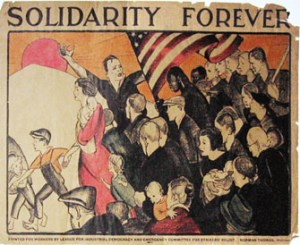 But, it doesn’t necessarily focus on maximizing profits by slashing costs, reducing service to customers, and not investing in innovation. That seems to be a focus more on pleasing Wall Street Investors and CEOS. Actually, this “dumbest idea” came from Milton Friedman and is not the universal focus of all economists. But, the idea of “maximizing shareholder value” comes from the finance side of things but still from the Chicago School.
I reported earlier this month that the Financial Times published a pair of important articles asking why the goal of a firm is to maximize short-term shareholder value is still being taught in business schools.
“While there is growing consensus that focusing on short-term shareholder value is not only bad for society but also leads to poor business results, much MBA teaching remains shaped by the shareholder primacy model.”
The challenge is massive because shareholder value is now deeply embedded in the basic economics that is taught in business schools and economics faculties around the world. Moving on from the shareholder value theory, which even its foremost exemplar, Jack Welch, has called “the dumbest idea in the world”, will entail re-thinking and re-writing much of the basics of modern economics.
If you want a way to take action against underpaid labor, try eliminating fast food from your diet. Subway leads the fast food industry in underpaying workers. 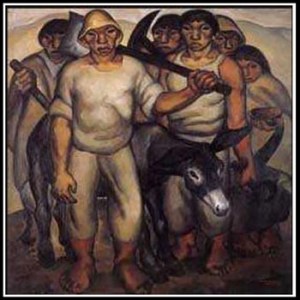 That’s a good place to start or stop as the case may be.
McDonald’s gets a lot of bad press for its low pay. But there’s an even bigger offender when it comes to fast food companies underpaying their employees: Subway.
Individual Subway franchisees have been found in violation of pay and hour rules in more than 1,100 investigations spanning from 2000 to 2013, according to a CNNMoney analysis of data collected by the Department of Labor’s Wage and Hour Division.
Each investigation can lead to multiple violations and fines. Combined, these cases found about 17,000 Fair Labor Standards Act violations and resulted in franchisees having to reimburse Subway workers more than $3.8 million over the years.
It’s a significant sum considering many Subway “sandwich artists” earn at or just above the minimum wage of $7.25 an hour.
The next most frequent wage violators in the industry are McDonald’s (MCD)and Dunkin’ Donuts (DNKN) stores.
Today, America finds itself in a position of incredible challenge. Half of all Americans now make less than $15 an hour. Of the 10 fastest-growing jobs in America, eight are service sector jobs that pay $15 an hour or less.
Service sector jobs are the heartbeat of our economy and our communities, from the folks who care for the elderly and our children, to those who cook and serve our food, to those who clean and secure our offices. Moving our economy forward must include making service jobs into good jobs with wages that you can raise a family on.
That’s why this Labor Day, the American people are sparking a new movement, joining together for an economy and democracy that works for everyone.
Fast food workers have joined together to fight for $15 an hour. They have been joined by home care workers who are calling for $15 an hour for all caregivers. Just last week 27,000 Minnesota home care workers joined together in union, determined to raise wages and fight for quality home care for our seniors.
Working people in Seattle fought for and won a $15 minimum wage for 100,000 people, and other cities are poised to do the same. Across our nation adjunct professors, airport workers, security officers, hospital workers, Wal-Mart workers and other service sector workers are standing up and sticking together.
All told, 6.7 million workers have achieved better pay since fast food workers began striking less than two years ago, either through states or cities moving to raise minimum wages or through collective bargaining. These brave workers are building the momentum to raise wages and get our economy roaring again.
Yet the prosperity of our nation and growth of our economy depend not just on economic justice. A vibrant economy cannot exist without vibrant American communities steeped in the fundamental American principles of liberty and justice for all.
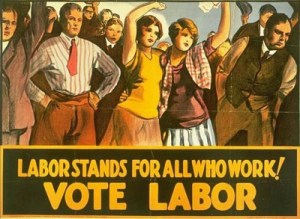
I woke up last Thursday morning to learn that my FedEx man does not work for FedEx. Voices on National Public Radio’s “Morning Edition” informed me that although FedEx controls just about every minute of its drivers’ days, the corporation regards them as “independent contractors.”
Thus, no benefits—they even have to pay for their own uniforms—and the workers can be kicked out anytime FedEx feels like it.This was five days before Labor Day, the 120-year-old holiday that, according to the Labor Department, is “the first Monday in September, a creation of the labor movement and is dedicated to the social and economic achievements of American workers. It constitutes a yearly national tribute to the contribution workers have made to the strength, prosperity and well-being of our country.”
Nice words, written after 10,000 workers marched in an 1882 “Labor Day Parade” and celebrated in a New York City park. That’s what we pretend to celebrate even though it no longer exists for FedEx guys who are no longer “workers,” but are now “contractors” or “involuntary entrepreneurs.” Outsourced Americans. You could lump them with the franchisees of fast-food outlets. A corporation makes all the rules, avoids paying all the benefits and passes on the risk and liabilities to the franchisees. Got bad milk? Your problem.
Like many “workers” of my generation, I have been there and done that. I am a member of three unions: the Newspaper Guild, the American Federation of Television and Radio Artists and the Screen Actors Guild. Although it was run by as dumb a group of folks that ever gathered, I am forever indebted to the Newspaper Guild. I was working for a nonunion paper, the Newark Evening News in New Jersey, for $60 a week when I was hired by The New York Herald Tribune, a union paper that paid me $163.60 a week. I could buy a house and I did. I went to The New York Times, a union paper, which started me at $230 a week with loads of benefits and overtime. Then there came a day when I was promoted to management, chief political correspondent, with a salary of $23,000 a year in 1971. But there was no overtime, and I was taking home less than I had as a “worker.”
So it goes. Management, of which I was then a part, had begun to understand how to squeeze workers and their unions. By 2013, fewer than 10 percent of private-sector employees belonged to unions, compared with 20 percent in 1983 and more than 50 percent in the 1950s. Result: Wages have stagnated, spouses have gone to work, strikes have been broken. Now more than half the unionized workers in the country are public service employees, who have better and more complicated work rule regimes than corporate employees.
So, I would argue, Labor Day is a farce.
It’s possible. But, at least I still get to enjoy the day off.
What’s on your reading and blogging list today?

 peej
peej Carissa
 bostonboomer
 dakinikat
 ecocatwoman
 mablue2
 Mama Lopez
 peggysue22
 quixote
 skydancingguestblogger
 Mona (aka Wonk the Vote)



 Sky Dancing
Recent Comments