
Lazy Saturday: Creature Features
Posted: May 17, 2014 Filed under: morning reads | Tags: creature features, Godzilla, movies 22 Comments
Happy Saturday!!
I’m feeling more lazy than usual today. I’ve been idly staring at my computer screen for about two hours–searching for interesting news and trying to figure out what to write about. Frankly, I don’t want to write about Jill Abramson’s firing, Glenn Greenwald’s book, the failed American Spring rally, or “mainstream Republicans” running against Tea Party Republicans. I feel as if I need a mental health day. I would like nothing better than to sit around today–or maybe all weekend–watching cheesy horror movies.
Fortunately, there’s a big-budget but still cheesy horror movie playing in theaters right now, Godzilla!! I’m actually considering going to see it. I’m not sure why, because I don’t recall ever watching the old-time Godzilla movies as a kid. I did used to like to watch creature features, and I still do. So maybe I’ll give the 2014 version of Godzilla a chance. It looks corny but entertaining in this early trailer. http://www.youtube.com/watch?v=IC3Mi9vOb_8 The movie opened in theaters yesterday and did extremely well at the box office, according to Deadline Hollywood: ‘Godzilla’ Crushes It: $98M+
UPDATED, SATURDAY, 6:47 AM: The Lizard is leaping. After the morning dust has cleared, Godzilla showed a stronger than expected Friday late night take of $38M+ and is now estimated to haul in $98M+ after the three-day weekend. And with incredible international numbers continuing to roll in, Warner Bros./Legendary Pictures has a monstrous hit on their hands. Late night numbers pushed it past $36M and surprised everyone this AM.
PREVIOUSLY, FRIDAY 10:47 PM: Godzilla is beating all expectations tonight with a $36M Friday to push its expected 3-day cume to a monstrous $90M+. The Warner Bros/Legendary Pictures pic is just demolishing the box office right now, thanks to a killer marketing campaign that teased audiences exactly to the right degree. Amazing that the monster is still popular a full 60 years after its introduction, and it’s come a long way from a man walking around in a rubber suit. The CGI eye candy, which cost $195M…is playing well on IMAX screens. It also is opening around the world at the same time to huge numbers…
Some reviews: Dana Stevens at Slate: Want to See a Giant Radioactive Lizard Whale on Stuff? Then Godzilla Delivers. This review begins with some helpful background on the Godzilla archetype:
The original Godzilla—a hugely influential Japanese monster movie made in 1954 as a direct response to a recent ripped-from-the-headlines tragedy—is a staggeringly powerful film, but in some ways it’s hard to account for the long cinematic life its title character has enjoyed. Ishirō Honda’s somber Godzilla (the Japanese title,Gojira, was created by combining the words for “gorilla” and “whale”) was a raw scream of collective anxiety from a nation that, nine years before, had survived two atomic bombings, and that was now finding itself caught, quite literally, in the fallout zone of the U.S./Soviet race to build and test an even more destructive hydrogen bomb. That original Godzilla seems so tied to the time and place of its creation that it’s hard to mentally transpose the central monster—a lumbering mega-dinosaur coaxed from the ocean depths by human experiments with radiation—into any other context. Yet that transposition has now occurred 32 times in 60 years (give or take a mecha-lizard), most recently in the form of Gareth Edwards’ Godzilla, in which the lumbering lizard is reinvented—not for the first time—as humanity’s potential helpmate.
I guess it’s not hard to see the enduring appeal of the Godzilla myth, even divorced from the context of traumatized post-World War II Japan. The arrogance of human attempts to best the gods with technology is an eternally relevant theme (Icarus, Prometheus, Faust, Frankenstein, Flubber), and there’s no gainsaying the basic fun to be had in watching a bumpy-skinned reptile as big as a skyscraper reduce an entire city to rubble beneath his gargantuan stomping feet. Plus, by now Godzilla, with his radioactive fire-breath, stumpy waving forelegs, and aversion to intact skylines, is an archetypal, almost lovable figure—a quality highly valued by film studios in search of market-ready tentpole entertainments. Edwards’ Godzilla is likely to do a decent job holding up its end of Warner Bros.’ 2014 tent: It’s a smooth, sleek, technologically awe-inspiring 3-D blockbuster with a top-shelf cast (speaking middle-to-lower-shelf dialogue most of the time, to be sure, but they do it with style).
Hmmm . . . Like Jaws I, in which we barely glimpsed the animitronic great white shark? Still that was a great movie, one of my favorite creature features of all time.
On Twitter, Ian Bremmer commented on the “slow unveiling of the monster” issue:
Although I wasn’t a Godzilla fan as a kid, I used to love lots of the old “creature features” that were shown on late night TV back in those days. One of my favorites was the 1954 film “Them,” which was about giant mutant ants created by radioactivity from atomic bomb tests in New Mexico.
Also from 1954, The Creature from the Black Lagoon.
I’ll post some more recent creature feature favorites in the comment thread, because I’m having a horrendous time with the WordPress editor today. What are your favorite creature features? Are you a Godzilla fan?
Of course, feel free to use the thread to discuss and post links on politics or any other topic that interests you.
Friday Reads: Bigots Among Us
Posted: May 16, 2014 Filed under: Bobby Jindal, Capital Punishment aka Death Penalty, Civil Liberties, Civil Rights, Crime, Criminal Justice System, Discrimination against women, Domestic terrorism, morning reads, The Right Wing, Women's Rights, worker rights 89 Comments Good Morning!
I have read the most horrifying stories this week. It makes me wonder if a good portion of humanity has a death wish. I’m going to share a variety of links that I’ve found; and a lot of them aren’t the most uplifting, I’m afraid.
Knowledge is power. Ignorance may be bliss to the holder but not to the folks around them. There is no lack of headlines in the area of bigotry and intolerance. This is truly discouraging to those of us that care passionately about social justice.
Crime rates have been falling recently but our incarceration rates are not. There’s a huge study out on the economic costs of our prison society and its 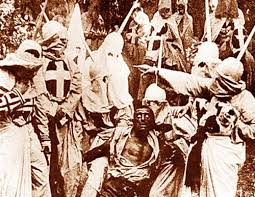 findings are not pretty. We’re spending billionaires of dollars locking up the poor, the uneducated, and the mentally ill in a distinctly racist way.
While crime rates have fallen 45 percent since 1990, the memo said that the incarceration rate is now at a “historically unprecedented level,” jumping 222 percent between 1980 and 2012. An African-American man who never graduated from high school has a 70 percent likelihood of being imprisoned by his mid-30s; for similarly educated white men, the rate is about 15 percent. And the United States imprisons at a rate six times greater than most peer nations, including those of the European Union, Japan, Israel, and Mexico.
The U.S. Department of Justice announced rules last month that would give the Obama administration wider latitude to extend clemency or reduce sentences for drug-related prisoners who don’t present a threat to public safety. In addition, the U.S. Sentencing Commission voted unanimously in April to reduce sentencing guidelines for certain nonviolent criminals, a move now before Congress that could go into effect Nov. 1 if lawmakers don’t take any further action.
Ronald S. Sullivan Jr. is a clinical professor of law and director of the Criminal Justice Institute at Harvard Law School. The program focuses on criminal practice, education, and research, and hosts a teaching clinic for third-year law students to represent indigent criminal defendants in local and juvenile courts. Sullivan spoke with the Gazette about racial and national sentencing disparities, the economic and social costs of mass incarceration, and the sentencing reforms now under consideration.GAZETTE: According to the memo, while the overall crime rate fell 45 percent between 1990 and 2012, the rate of imprisonment has spiked 222 percent between 1980 and 2012. What’s behind this disparity? Is that strictly the result of policy decisions like mandatory minimum sentencing, repeat-offender laws, and the growth in for-profit prisons? Or are other factors at work?
SULLIVAN: That’s certainly a big piece of it. … policy decisions in respect of mandatory minimums drive the huge incarceration rate. But there are other factors as well. What those factors are is the subject of a lot of academic debate nowadays. And to be honest, we’re not exactly sure what it is. We do know that on a per-capita basis the U.S. incarcerates more people than any country in the world, including Rwanda, Russia, Cuba, all of the places one does not associate with a robust tradition of liberty. And that’s in many ways shocking.
The theory would be … with the high rates of incarceration that the crime rate would go down and then that would be followed by less incarceration because there just wouldn’t be as many crimes committed. But those numbers have gone in opposite directions. Mandatory minimums simply don’t explain all of it. Part of it, at least I think, has to do with selective law enforcement — the over-policing of certain neighborhoods, particularly minority neighborhoods and poor neighborhoods. That is to say, if police are there and looking for crimes, and over-police certain neighborhoods, you’re going to produce more defendants in particular areas. And if the populations are drawn from poor populations, they’re unable to afford to be released on bail, they’re unable to afford good lawyers, and studies show that if you’re not released on bail you tend to stay in jail after sentencing. An unfortunate reality of the United States is that far too often the justice you receive is a function of how much money you have.
The prison-industrial complex is also an important factor. It doesn’t take an economist to know that if … you make your money by people going into prison, then there’s going to be higher incarceration rates. So I think that certainly plays a role as well.
GAZETTE: What are the areas of debate among scholars?
SULLIVAN: One explanation has to do with the United States’ articulated goals of punishment. Back in the ’70s and before, rehabilitation was an articulated goal of the criminal justice system. The Supreme Court has said clearly now rehabilitation is no longer a penological goal. We look at incapacitation, we look at deterrence, and we look at retribution as goals that the penal system serves. When you take rehabilitation out of the mix, then that de-incentivizes the system from having shorter sentences because there’s no longer an affirmative goal of reintegrating people meaningfully back into the community. That’s one of the things that scholars argue drive up the incarceration rate.
The other has to do with our system of elected judges in most states. Judges who are elected, the argument runs, respond to democratic pressures. We live in a political economy where people think that more and harsher punishment is better, even though most competent data suggests that longer sentences, after a certain point … make people worse as opposed to making them better. But you have democratically elected judges who respond to the will of the people, and if that will is for longer sentences, no matter how misinformed, then judges oftentimes acquiesce to those pressures.
The other issue has to do with legislators. It, again, has to do with the political economy in which we live. With this mantra of being “tough on crime,” legislators essentially race to see who can draft legislation with the harshest, longest penalties. I think that legislators don’t believe that prosecutors will attempt to enforce the most harsh provisions of particular laws, and in that sense, from the vantage point of the legislator, it’s sort of a win-win situation: They can get the political credit for drafting an incredibly harsh law, but not really have to deal with the effects because the notion is the prosecutor will sort it out and will recommend a fair sentence. That assumption, though, just hasn’t really been borne out in reality.
GAZETTE: The current incarceration gap between white men and African-American men is particularly striking. Does that figure surprise you, and what accounts for this gap? Is access to justice a factor?
SULLIVAN: The figure does not surprise me, and it is unfortunate that the figure does not surprise me. The figure reaffirms that race insinuates itself into almost every aspect of our life still, and it has a particular salience in the criminal justice system. … Here we see the effect of over-policing much more dramatically. In our culture, unfortunately … blackness is seen as a proxy for criminality. So the same or similar conduct engaged in by a person of color is seen through a lens that views that conduct as criminal, where others simply are not taxed in the same way.
The debate over the use of lethal injections and the drugs used for state executions continues. Three newspapers–including the UK Guardian–have sued to 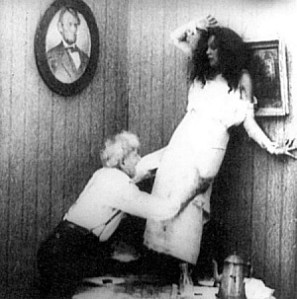 make public the source of drugs for these injections. Most states are trying to make that information private. Many of the recent botched executions came from simple druggists compounding the formulations because many of the major drug manufacturers–especially those in Europe–refuse to do so. Should the formulation and the source of death penalty drugs be kept from the public?
The growing secrecy adopted by death penalty states to hide the source of their lethal injection drugs used in executions is being challenged in a new lawsuit in Missouri, which argues that the American people have a right to know how the ultimate punishment is being carried out in their name.
The legal challenge, brought by the Guardian, Associated Press and the three largest Missouri newspapers, calls on state judges to intervene to put a stop to the creeping secrecy that has taken hold in the state in common with many other death penalty jurisdictions. The lawsuit argues that under the first amendment of the US constitution the public has a right of access to know “the type, quality and source of drugs used by a state to execute an individual in the name of the people”.
It is believed to be the first time that the first amendment right of access has been used to challenge secrecy in the application of the death penalty. Deborah Denno, an expert in execution methods at Fordham University law school in New York, said that more and more states were turning to secrecy as a way of hiding basic flaws in their procedures.
“If states were doing things properly they wouldn’t have a problem releasing information – they are imposing a veil of secrecy to hide incompetence.” “This is like the government building bridges, and trying to hide the identity of the company that makes the bolts,” said Richard Dieter of the Death Penalty Information Center. “Those involved in public service should expect public scrutiny in order to root out problems, particular when the state is carrying out the most intimate act possible – killing people.”
A Guardian survey has identified at least 13 states that have changed their rules to withhold from the public all information relating to how they get hold of lethal drugs. They include several of the most active death penalty states including Texas, which has executed seven prisoners so far this year, Florida (five), Missouri (four) and Oklahoma (three). Attention has been drawn to the secrecy issue by the botched execution of Clayton Lockett in Oklahoma on 29 April in which the prisoner took 43 minutes to die, apparently in great pain, from an untested cocktail of drugs whose source was not made public.
Lockett’s lawyers had argued in advance that he might be subjected to cruel and unusual punishment as a result of the lack of information surrounding the drugs, but the state supreme court allowed the procedure to go ahead having come under intense pressure from local politicians, some of whom threatened to impeach judges.
In the wake of the events in Oklahoma, in which the prisoner writhed and groaned over a prolonged period, the state has agreed to pause for six months before carrying out any further judicial killings to give time for an internal investigation to be completed. President Obama described the Lockett execution “deeply troubling” and has asked US attorney general Eric Holder to review the way the death penalty is conducted.
Until last year, Missouri which is now executing prisoners at a rate of one a month, was open about where it obtained its lethal injection chemicals. But like many death penalty states, its drug supplies have dwindled as a result of a European-led pharmaceutical boycott, and in a desperate move to try to find new suppliers it has shrouded their identity in secrecy. In October, the state changed its so-called “black hood law” that had historically been used to guard the identity of those directly involved in the death process.
The department of corrections expanded the definition of its execution team to include pharmacies and “individuals who prescribe, compound, prepare, or otherwise supply the chemicals for use in the lethal injection procedure”. Six inmates have been executed by Missouri since the new secrecy rules came in –they went to their deaths entirely ignorant of the source or quality of the drugs used to kill them. All that is known is that the pentobarbital that Missouri deploys in executions probably came from a compounding pharmacy – an outlet that makes up small batches of the drug to order in the absence of stringent regulation.
We continue to see GLBT civil rights characterized by the right as an attack on their religious rights and their homobigoted behavior and language  wrapped up as a first amendment issue. How does the right play the victim card in a debate about limiting the rights of others? It is doing the same things with women’s reproductive rights.
While Religious Right leaders are quick to equate criticism as an attack on their freedom of speech and religion, some of them are all too happy to limit the free speech or religious liberty of the people they disagree with. That includes the Benham brothers.
In the flurry of public appearances in the wake of the HGTV cancellation, the Benhams and their right-wing fans have portrayed themselves as committed to the principle that everyone in America should have a chance to express themselves. On the O’Reilly Factor, David Benham denounced the gay agenda for seeking “to silence those that disagree with it, and it begins with Christians.” Jason warned that “when an idea seeks to silence any other idea that may disagree with that, then we have ourselves a problem on hand.”
But as blogger Jeremy Hooper recently pointed out, back in November 2004, David, Jason, and Flip Benham were all part of a group of about 15 people who went to a Charlotte, North Carolina city council meeting to complain about the gay pride celebration that had taken place in a city park six months earlier. They were among a group of people who had gone to the Pride event to, in Jason’s words, “tell them that Jesus loves you just the way you are, but he refuses to leave you that way.” But the Benhams and their friends were appalled at what they saw. “This is filth, this is vile and should not be allowed in our City,” said David. Jason urged city council members to reject future permits for Pride celebrations – and seemingly for any LGBT-themed event:
They have a right to apply for this permit, but you have a right and responsibility to deny it. I [implore] you not to be governed by the fear in which you feel. If you deny them this permit you will open a can of worms but you in your leadership position have to take that responsibility and you have to not allow the fear of making this homosexual community mad. You have to accept that responsibility and deny them every permit that they ask for.
In the words of Charlotte Pride organizers, “The Benham brothers once tried to silence us. They failed.”
Some Benham fans, like the American Family Association’s Bryan Fischer, say flat-out that the First Amendment’s religious liberty protections were only meant for Christians and don’t apply to Muslims, Mormons or other minority faiths. Back when many self-proclaimed “religious liberty” advocates were opposing efforts by Muslims in New York to build a community center – which critics gave the inaccurate and inflammatory name of “Ground Zero Mosque” – David Benham and his father Flip were among them. According to the Anti-Defamation League, David participated in protests against the Center, calling it a “den of iniquity” and labeling Muslims “the enemy” that was attacking America.
In these public debates, “Christian” as used by Religious Right leaders often doesn’t really apply to all Christians, but only to a subset of Christians who share their right-wing politics. Other Christians don’t count. The Family Research Council’s Tony Perkins, who has bemoaned “cultural elites” who want to “silence” and “bully” people like the Benhams, recently said that pro-gay-equality Christians don’t deserve the same legal protections as he does because “true religious freedom” applies only to those with religious views that align with those of the political Right.
Gov. Bobby Jindal’s commencement speech at Liberty University was a masterpiece in this type of dishonest projection. Posing as a champion of free speech and freedom of religion, he actually made a chilling argument in favor of stripping both of those freedoms away from ordinary Americans, businesses and anyone who might disagree with turning this country into a theocratic state. He started by defending Hobby Lobby for trying to strip contraception coverage out of their employees’ own healthcare plans. “Under the Obama regime,” he argued, “you have protection under the First Amendment as an individual, but the instant you start a business, you lose those protections. And that brings us to the second front in this silent war: the attack on our freedom of association as people of faith.”
It’s all nonsense, of course. In fact, Hobby Lobby’s intention here is to reduce religious freedom by forcing their employees to adhere to certain religious rules in order to get the benefits they already earned. ( They have a history of trying to impose their religious dogma on non-believers through other means as well.) The only people in any real danger of losing freedom are women, who are in danger of losing their freedom to use their insurance benefits in a way that fits their personal beliefs.
But Jindal was just warming up, claiming the “Obama administration” was gunning to decide “who can preach the Gospel.” This outrageous conspiracy theory was justified, in his opinion, by supposed other attacks on “free speech,” namely that TV networks are reluctant to house the opinions of open bigots. “The left no longer wants to debate. They simply want to silence us,” he said of Phil Robertson from Duck Dynasty, who was never silenced and has, to this date, been allowed to say any fool thing he wants. But he was briefly suspended from A&E, leading conservatives to decide that “free speech” means you have a right to your own TV show.
All of this has gotten me interested in again in White Supremacist movements. I really believe that most of these Southern Republicans fall squarely 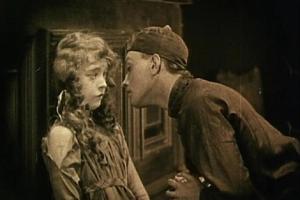 into the neoconfederate mold and aren’t that far off the KKK tree.
White supremacy is referenced in relation to specific news events as well. For example, the murder rampage by the neo-Nazi Frazier Glenn Miller, the recent weeks-long debate between pundits Ta-Nehisi Coates and Jonathan Chait about “black pathology”; birtherism; stand-your-ground laws; and the open embrace of the symbols and rhetoric of the old slave-holding Confederacy by the Republican Party have been framed and discussed in terms of white supremacy.
Conservatives and progressive often use the phrase “white supremacy” in divergent ways. Conservatives use the phrase in the service of a dishonest “colorblind” agenda, evoking extreme images of KKK members and Nazis as the exclusive and only examples of white racism in American life and politics. Conservatives use extreme caricatures of white supremacy in order to deflect and protect themselves from charges that the contemporary Republican Party is a white identity organization fueled by white racial resentment. Liberals, progressives and anti-racists use the phrase “white supremacy” to describe the overt and subtle racist practices of movement conservatism in the post-Civil Rights era, and how American society is still structured around maintaining and protecting white privilege. This analysis is largely correct: however, it often conflates concepts such as racism, white privilege, and white supremacy with one another. Language does political work. In the age of Obama, the phrase “white supremacy” is often used in political discussions like an imprecise shotgun blast or a blockbuster bomb. If the Common Good and American democracy are to be protected—countering how the right wing has used the politics of white racial resentment, racial manipulation, and hate to mobilize its voters in support of a plutocratic agenda—a more precise weapon is needed. A necessary first step in that direction requires the development of a more detailed and transparent exploration of the concept known as “white supremacy.”
 One of the sure signs to me of either a racist or a misogynist or a homophobic bigot is that they all insist they have no problem women, racial minorities, and/or gay people. The believe they are the victims by being forced to deal with any one else in terms other than their own choosing. Therein lies the problem. Here’s a perfect example from Kristen Powers writing at USA Today. You can’t call out bigotry without being called a bully obsessed with political correctness. Then, you’re told that the real victims are white conservative christians.
Each week seems to bring another incident. Last week it was David and Jason Benham, whose pending HGTV show was canceled after the mob unearthed old remarks the brothers made about their Christian beliefs on homosexuality. People can’t have a house-flipping show unless they believe and say the “right” things in their life off the set? In this world, the conservative Tom Selleck never would have been Magnum, P.I.
This week, a trail-blazing woman was felled in the new tradition of commencement shaming. International Monetary Fund Managing Director Christine Lagarde withdrew from delivering the commencement speech at Smith College following protests from students and faculty who hate the IMF. According to the Foundation for Individual Rights in Education, this trend is growing. In the 21 years leading up to 2009, there were 21 incidents of an invited guest not speaking because of protests. Yet, in the past five-and-a-half years, there have been 39 cancellations.
Don’t bother trying to make sense of what beliefs are permitted and which ones will get you strung up in the town square. Our ideological overlords have created a minefield of inconsistency. While criticizing Islam is intolerant, insulting Christianity is sport. Ayaan Hirsi Ali is persona non grata at Brandeis University for attacking the prophet Mohammed. But Richard Dawkins describes the Old Testament God as “a misogynistic … sadomasochistic … malevolent bully” and the mob yawns. Bill Maher calls the same God a “psychotic mass murderer” and there are no boycott demands of the high-profile liberals who traffic his HBO show.
The self-serving capriciousness is crazy. In March, University of California-Santa Barbara women’s studies professor Mireille Miller-Young attacked a 16-year-old holding an anti-abortion sign in the campus’ “free speech zone” (formerly known as America). Though she was charged with theft, battery and vandalism, Miller-Young remains unrepentant and still has her job. But Mozilla’s Brendan Eich gave a private donation to an anti-gay marriage initiative six years ago and was ordered to recant his beliefs. When he wouldn’t, he was forced to resign from the company he helped found.
Got that? A college educator with the right opinions can attack a high school student and keep her job. A corporate executive with the wrong opinions loses his for making a campaign donation. Something is very wrong here.
The right seems to be really confused about the first amendment, which clearly deals with the relationship between the federal government, religion, the press, and the people’s free speech. The same idiots that scream that Hobby Lobby can deny its employees contraception and say that businesses should be able to refuse to serve GLBTs will shout out a corporation that says they don’t want to be known for bigotry of any kind. They also misunderstand the protection given to University professors when it comes to academic freedom. Companies have to comply with the law. They do not have to keep employees that don’t represent their corporate values. PERIOD.
Anyway, it just amazes me that this intense amount of uncivil bigotry and hatred seemed to have burbled up again after all these years. All it took was an African American President and a few powerful women–namely Hillary Clinton–to bring the crazy out.
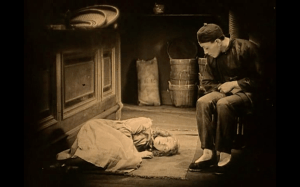
I just wanted to mention that most of these silent film images come from “Birth of a Nation” but one comes from “Broken Blossoms” also known as the “Yellow Man and the Girl”. Both of these films were directed by DW Griffith around 1919. Both movies starred Lillian Gish and were received differently by white audiences than by the racial minorities they also depicted.
What’s on your reading and blogging list today?
Thursday Reads: Gray Lady Down and Other News
Posted: May 15, 2014 Filed under: Journalism, Media, morning reads, Women's Rights | Tags: Arthur O. Sulzberger Jr., Bill Keller, code words, Dean Baquet, Equal Pay for Equal Work, gender discrimination, Janine Gibson, Jill Abramson, Ken Auletta, pushy females, the NEW York Times, uppity women 59 Comments
Good Morning!!
News broke late yesterday afternoon that New York Times Executive Editor Jill Abramson had suddenly been replaced by Managing Editor Dean Baquet. Here’s the New York Times’ own report: Times Ousts Its Executive Editor, Elevating Second in Command.
Arthur O. Sulzberger Jr., the publisher of the paper and the chairman of The New York Times Company, told a stunned newsroom that had been quickly assembled that he had made the decision because of “an issue with management in the newsroom.”
Ms. Abramson, 60, had been in the job only since September 2011. But people in the company briefed on the situation described serious tension in her relationship with Mr. Sulzberger, who was concerned about complaints from employees that she was polarizing and mercurial. She had also had clashes with Mr. Baquet.
In recent weeks, these people said, Mr. Baquet had become angered over a decision by Ms. Abramson to make a job offer to a senior editor from The Guardian, Janine Gibson, and install her alongside him in a co-managing editor position without consulting him. It escalated the conflict between them and rose to the attention of Mr. Sulzberger.
Ms. Abramson did not attend the afternoon meeting at which her dismissal was announced.

The Times won eight Pulitzer Prizes under Ms. Abramson, and she won praise for journalistic efforts both in print and on the web. She had previously served as the head of the Washington bureau, and before coming to The Times was an investigative reporter at The Wall Street Journal. She co-wrote, with Ms. [Jane ] Mayer [of the New Yorker], “Strange Justice,” a book about the confirmation hearings for the Supreme Court justice Clarence Thomas.
But as a leader of the newsroom, she was accused by some of divisiveness and criticized for several of her personnel choices, in particular the appointment of several major department heads who did not last long in their jobs.
With Mr. Sulzberger more closely monitoring her stewardship, tensions between Ms. Abramson and Mr. Baquet escalated. In one publicized incident, he angrily slammed his hand against a wall in the newsroom. He had been under consideration for the lead job when Ms. Abramson was selected and, according to people familiar with his thinking, he was growing frustrated working with her.
Let’s see . . . Abramson was “polarizing and mercurial,” “was accused by some of divisiveness,” and her male second in command didn’t like taking orders from her, have I got that right? Is it just me, or do those sound like code words?
Now let’s see what people who don’t work for Sulzberger are saying.

From Ken Auletta at The New Yorker: WHY JILL ABRAMSON WAS FIRED.
At the annual City University Journalism School dinner, on Monday, Dean Baquet, the managing editor of the New York Times, was seated with Arthur Sulzberger, Jr., the paper’s publisher. At the time, I did not give a moment’s thought to why Jill Abramson, the paper’s executive editor, was not at their table. Then, at 2:36 P.M. on Wednesday, an announcement from the Times hit my e-mail, saying that Baquet would replace Abramson, less than three years after she was appointed the first woman in the top job. Baquet will be the first African-American to lead the Times.
Fellow-journalists and others scrambled to find out what had happened. Sulzberger had fired Abramson, and he did not try to hide that. In a speech to the newsroom on Wednesday afternoon, he said, “I chose to appoint a new leader of our newsroom because I believe that new leadership will improve some aspects …” Abramson chose not to attend the announcement, and not to pretend that she had volunteered to step down.
Apparently, the real problem Sultzberg had with Abramson was that she was an uppity woman.
As with any such upheaval, there’s a history behind it. Several weeks ago, I’m told, Abramson discovered that her pay and her pension benefits as both executive editor and, before that, as managing editor were considerably less than the pay and pension benefits of Bill Keller, the male editor whom she replaced in both jobs. “She confronted the top brass,” one close associate said, and this may have fed into the management’s narrative that she was “pushy,” a characterization that, for many, has an inescapably gendered aspect. Sulzberger is known to believe that the Times, as a financially beleaguered newspaper, needed to retreat on some of its generous pay and pension benefits; Abramson, who spent much of her career at the Wall Street Journal, had been at the Times for far fewer years than Keller, which accounted for some of the pension disparity. Eileen Murphy, a spokeswoman for the Times, said that Jill Abramson’s total compensation as executive editor “was directly comparable to Bill Keller’s”—though it was not actually the same. I was also told by another friend of Abramson’s that the pay gap with Keller was only closed after she complained. But, to women at an institution that was once sued by its female employees for discriminatory practices, the question brings up ugly memories. Whether Abramson was right or wrong, both sides were left unhappy. A third associate told me, “She found out that a former deputy managing editor”—a man—“made more money than she did” while she was managing editor. “She had a lawyer make polite inquiries about the pay and pension disparities, which set them off.”
The other issues Auletta mentions are similar to those described in the NYT article: she had problems with Baquet and those who worked under her sometimes complained she was “brusque” (as opposed to Mr. Personality, Bill Keller?). Again, it sounds to me as if Abraham’s biggest “problem” was her gender. Mr. Baquet sounds pretty “pushy” too, but for him that was acceptable, I guess. Josh Marshall at TPM points out that:
The Times article notes in passing that Abramson reached a settlement with the Times, which makes pretty clear that whatever might have happened with disparate pay or a connection between her pressing the matter and her firing there will not be a lawsuit.
Hmmm . . . Sounds like Sultzberger thought Abramson might have grounds to sue if he didn’t settle with her.

At Business Insider, Hunter Walker calls attention to the Times’ past problems with gender disparities in pay (also mentioned by Ken Auletta in The New Yorker piece linked above):
Auletta claimed other Times staffers were concerned about the pay disparity between Abramson and Keller. He said it brought up “ugly memories” of a 1974 lawsuit female employees made against the paper due to allegations of sex discrimination in hiring, pay, and promotion.
On Twitter, NPR media correspondent David Folkenflik subsequently confirmed Auletta’s report. Folkenflik also noted unspecified “figures at Times wonder what role gender ultimately played in (Abramson’s) ouster.”
Finally, Politico describes how the announcement impacted other New York Times employees: Invitation to a beheaading: How Times editors learned of Abramson’s ouster:
“Please come to a masthead/dept head meeting at 2:00 p.m. today in the page one conference room/3rd floor.”
That was the note top editors at The New York Times received this afternoon summoning them to an abrupt gathering in which publisher and Times Company chairman Arthur Sulzberger Jr. would inform them that executive editor Jill Abramson was being replaced in the No. 1 masthead spot by one of her deputies, managing editor Dean Baquet….
[T]he news…came as a shock to most of the assembled editors. There had been none of the drama or widespread discontent that led up to the famous firing of Howell Raines in 2003. In fact when they arrived in the room, their first inkling of what was about to transpire was the fact that Abramson was not present.
Sulzberger gave the same vague reasoning for the change that would be relayed in a company memo and at a full newsroom meeting shortly thereafter—that the decision had to do with Abramson’s newsroom management.
Not everyone was buying it. When Sulzberger said he was sure it doesn’t “come as a surprise to you,” video editor Bruce Headlam spoke up in Abramson’s defense, according to a person who was present. “It does come as a surprise to me,” the source recalls him saying.
Two other editors also voiced their concerns, sources with knowledge of the meeting told Capital. National editor Alison Mitchell suggested that Abramson’s firing wouldn’t sit well with a broad swath of female Timesjournalists who saw her as a role model. (Abramson became the Times‘ first female executive editor in 2011, after Bill Keller stepped down.) Assistant managing editor Susan Chira seconded that notion.
Read more at the link.
So . . . draw your own conclusions. My guess is we’ll be reading and hearing quite a bit more about the Times and its history of gender discrimination over the next few days.

In other news . . . links to some stories that interested me:
The Hill: US using drones to find kidnapped Nigerian girls.
Yahoo News: Missouri lawmakers pass 3-day abortion wait period.
TPM: Christie Predicts BridgeGate Will Have Zero Effect On His Political Future.
NPR: Election-Year Politics Dooms Energy Bill, Averts Pipeline Vote.
Politico: Snowden Is The Kind of Guy I Used to Recruit—in Russia (by former CIA director of operations Jack Devine).
io9: The Ultimate Proof That Keeping Orca Whales in Captivity is Monstrous.
Digg: Gone Girls — The Female Sociopath.
CNN: 9 wildfires spring up around San Diego, more than 9,000 acres burned.
CBS News: Turkey mining accident toll nears 300 as anger at PM Recep Tayyip Erdogan boils over.
NYT: Captain and 3 Officers Charged With Murder in Korean Ferry Sinking.
What else is happening? Please post your links on any topic in the comment thread.
Tuesday Reads
Posted: May 13, 2014 Filed under: morning reads, Republican politics, U.S. Politics | Tags: Boston Marathon bombing, Chamber of Commerce, Climate change, Comcast, Danny Sun Jr., death penalty, drug rings, FCC, global warming, greenhouse gases, immigration, internet fast lane, John Boehner, net neutrality, Oklahoma botched execution, polar melt, Portland Maine drug gangs, Robert James Campbell, Ruger P95, Safwan Madarati, Tamerlan Tsarnaev, Texas execution, Tom Donohue, Tom Wheeler, Waltham triple murder, Watertown drug gang, Watertown shootout, West Antarctica ice sheet 55 Comments
Good Morning!!
I have a mixture of links for you today, with no overall theme whatsoever. There is news happening out there, but somehow it still feels like a slow news month so far. Maybe it’s just because it feels like nothing is really happening that will change the “malaise” in the country, to use Jimmy Carter’s term. The economy doesn’t really seem to be improving for 90 percent of us, and the bottleneck in Congress feels unbreakable. So here are some stories that caught my eye.
From The New York Times: Scientists Warn of Rising Oceans From Polar Melt.
A large section of the mighty West Antarctica ice sheet has begun falling apart and its continued melting now appears to be unstoppable, two groups of scientists reported on Monday. If the findings hold up, they suggest that the melting could destabilize neighboring parts of the ice sheet and a rise in sea level of 10 feet or more may be unavoidable in coming centuries.
Global warming caused by the human-driven release of greenhouse gases has helped to destabilize the ice sheet, though other factors may also be involved, the scientists said.
The rise of the sea is likely to continue to be relatively slow for the rest of the 21st century, the scientists added, but in the more distant future it may accelerate markedly, potentially throwing society into crisis.
“This is really happening,” Thomas P. Wagner, who runs NASA’s programs on polar ice and helped oversee some of the research, said in an interview. “There’s nothing to stop it now. But you are still limited by the physics of how fast the ice can flow.”
Read details about the two studies at the NYT link. Richard B. Alley, scientist not involved in the studies noted that what’s happening in Antarctica is only one source of future climate change disasters.
He added that while a large rise of the sea may now be inevitable from West Antarctica, continued release of greenhouse gases will almost certainly make the situation worse. The heat-trapping gases could destabilize other parts of Antarctica as well as the Greenland ice sheet, potentially causing enough sea-level rise that many of the world’s coastal cities would eventually have to be abandoned.
“If we have indeed lit the fuse on West Antarctica, it’s very hard to imagine putting the fuse out,” Dr. Alley said. “But there’s a bunch more fuses, and there’s a bunch more matches, and we have a decision now: Do we light those?”
So it’s not as if we actually have the rest of the century to deal with the problem. Maybe the right wing nuts should start building an ark.

From Politico: Chamber of Commerce gives ultimatum to GOP.
The GOP shouldn’t even field a presidential candidate in 2016 unless Congress passes immigration reform this year, U.S. Chamber of Commerce President Tom Donohue said Monday.
“If the Republicans don’t do it, they shouldn’t bother to run a candidate in 2016,” Donohue joked at an event on infrastructure investment in D.C. “Think about that. Think about who the voters are. I just did that to get everybody’s attention.”
Republicans have focused on an immigration overhaul as a way to woo Hispanic voters, who have increasingly drifted to Democrats over the past two election cycles. Growing Hispanic populations in Nevada, Texas and elsewhere could make those states more amenable to Democrats in the future.
Apparently, Donohue still thinks he can light a fire under the asses of the Tea Party nuts in the House. Good luck with that.
Politico also reports that John Boehner may be tiring of the frustrating job of Speaker of the dysfunctional House of Representatives: John Boehner can’t promise another 2 years as speaker.
The Ohio Republican, speaking to a luncheon here [San Antonio, TX] sponsored by a group of local chambers of commerce, said he can’t “predict what’s going to happen” and stopped short of fully committing to serving another full two-year term.
“Listen, I’m going to be 65 years old in November,” Boehner said. “I never thought I’d live to be 60. So I’m living on borrowed time.”
It’s extraordinarily rare for Boehner to sit down for an open-ended, live interview, but he did so here with the Texas Tribune’s Evan Smith, a mainstay of the Lone Star State’s journalism scene. He touched on issues ranging from immigration to Benghazi to his quiet campaign to persuade Jeb Bush to run for president….
Boehner’s noncommittal response about his future will reverberate from here all the way back to Capitol Hill and K Street. His future has been a topic of constant chatter among political types. Even people inside his orbit privately wonder why the Ohio Republican would want to serve another term wielding the speaker’s gavel, given the tumultuous political climate in Washington. Last week, Boehner beat back two primary opponents to ensure his House reelection.
Much more interesting Boehner news at the link.

Texas plans to execute death row prisoner Robert James Campbell today, and they aren’t the least bit concerned about the recent horrifically botched execution in Oklahoma. From the NYT: Confronted on Execution, Texas Proudly Says It Kills Efficiently.
HUNTSVILLE, Tex. — If Texas executes Robert James Campbell as planned on Tuesday, for raping and murdering a woman, it will be the nation’s first execution since Oklahoma’s bungled attempt at lethal injection two weeks ago left a convicted murderer writhing and moaning before he died.
Lawyers for Mr. Campbell are trying to use the Oklahoma debacle to stop the execution here. But many in this state and in this East Texas town north of Houston, where hundreds have been executed in the nation’s busiest death chamber, like to say they do things right.
For two years now, Texas has used a single drug, the barbiturate pentobarbital, instead of the three-drug regimen used in neighboring Oklahoma. Prison administrators from other states often travel here to learn how Texas performs lethal injections and to observe executions. Texas officials have provided guidance and, on at least a few occasions, carried out executions for other states.
Even the protesters and television cameras that used to accompany executions here have, in most cases, dissipated. “It’s kind of business as usual,” said Tommy Oates, 62, a longtime resident who was eating lunch last week at McKenzie’s Barbeque, about one mile from the prison known as the Walls Unit. “That sounds cold, I know. But they’re not in prison for singing too loud at church.”
That’s Texas’ claim to fame now, I guess–efficient executions. Practice makes perfect.
The LA Times broke some news this morning about deceased alleged Boston Bomber Tamerlan Tsarnaev. The paper has learned that the gun Tsarnaev use in a shootout with police in Watertown, Massachusetts a few days after the Marathon bombing was linked to a drug gang in Portland, Maine.
When police confronted Tamerlan Tsarnaev four nights after the Boston Marathon bombing last year, he leaped from his car with a 9-millimeter semiautomatic pistol and opened fire….
The tale of that handgun, a black Ruger P95, Serial Number 317-87693, offers new insights into the Boston tragedy and holds warnings of other potential dangers.
Its journey from a street gang that peddled crack cocaine in Portland, Maine, to the grisly shootout in a Boston suburb tells much about illicit drug and gun trafficking in New England, and perhaps more about Tsarnaev.
Authorities believe Tsarnaev’s ties to the illicit drug trade in Maine helped finance his six-month trip to the southern Russian republics of Chechnya and Dagestan in early 2012, where he became radicalized. Drug money, they say, also may have helped him buy components of the bomb that killed three people and injured more than 260 on April 15, 2013.
The Times learned about this from records “obtained” from the Justice Department records. The gun had originally been purchased legally by an LA man named Danny Sun, Jr. living in Portland, Maine. It’s not clear exactly how Tsarnaev got the gun, but the serial numbers had been fined down. Police were able to “raise” the serial number using with “forensic techniques.”
Curiouser and curiouser. Last June, I wrote a post in which I argued for a drug connection to the Tsarnaev brothers and a horrific September 11, 2011 triple murder in Waltham, Massachusetts; but I suspected a connection with an international drug ring centered in Watertown, Waltham, and Newton. I have continued following this story closely for the past year. Now this. I don’t know what to think. I only know that this background of the Boston Marathon bombings is incredibly complex and mysterious.

I don’t know how many people have been following the latest discussions about net neutrality. This is going to be an important week in the fight between internet users and the Cable giants. Here’s the latest from Radio survivor: FCC Chair Wheeler Shuffles Open Internet Deck Ahead of Meeting.
This is a tough week to be Tom Wheeler, Chairman of the FCC. This Thursday he has an open meeting where he plans to present his Open Internet proposal to the full Commission. As details have come to light a very broad coalition of companies, organizations and legislators–from 150 tech firms like Netflix and Google to the ACLU and NOW–have expressed strong criticisms of it.
At issue are proposed rules that would permit some companies to pay internet service providers for a so-called fast-lane into consumers’ homes. No matter how much Wheeler has tried to assure everyone that the Commission will seriously police for instances where an ISP degrades content from competitors or sources that haven’t paid for an express lane, critics remain unconvinced. That’s because Wheeler’s proposed standard says “commercially reasonable” discrimination of internet traffic is OK, but “commercially reasonable” is a vague and ill-defined standard that seems to have loopholes big enough to drive a truck through.
Because of the backlash even two of his fellow Commissioners, Democrat Jessica Rosenworcel and Republican Ajit Pai, have called for a delay of Thursdays vote on the proposal. There is no indication that Wheeler is heeding their call.
Wheeler is actually talking about regulating the internet like a “common carrier,” like it does phone companies. In other words, internet provider would be treated like public utilities. I’m not holding my breath though. From Politico: Tom Wheeler scrambles to salvage net neutrality plan.
Federal Communications Commission Chairman Tom Wheeler is on the clock and scrambling to salvage his controversial net neutrality plan as the commission counts down to a crucial vote on Thursday.
According to FCC officials, he circulated his latest revisions Monday — trying to pick up the two votes he needs to pass the notice of proposed rule-making to ensure an open Internet.
In the most significant change, Wheeler will seek public comment on whether the FCC should reclassify broadband as a communications utility, giving the agency authority to regulate Internet rates and services as it does with telephone companies, according to commission officials. Net neutrality advocates favor that option as more robust, but it’s opposed by telecoms that fear it will give the government too much power over their business.
Wheeler’s original plan sparked outrage after details emerged that it would allow Internet-service providers, such as AT&T and Verizon, to charge companies like Netflix, Amazon and Google for faster delivery of content. The revised proposal keeps that basic approach but would seek comment on whether a “fast lane” should be banned. It also proposes a new ombudsman position at the FCC to act as a net neutrality advocate for startups and consumers.
So the “fast lane” is still included in the plan. I can’t see how that would be a benefit to ordinary internet users. I guess we should enjoy what we have for now, because the internet as we know it is in serious danger. This is an important story!
So . . . those are my offerings for today. What are you reading and blogging about?
Monday Reads: A World of their Own
Posted: May 12, 2014 Filed under: 2014 elections, 2016 elections, Climate Change, morning reads | Tags: Aqua Buddha, climate change denial, Democrats retain senate, Marco Rubio, Rand Paul, Reality Denial 57 Comments Good Day! I’m way late with this because I simply cannot find much that isn’t just a depressing continuation of the same old same old. The Republican 2016 Clown Car looks to be filled with the same old nonsense. So, I just decided to make you all aware that they are still as crazy as ever. Can some one as stupid as Rand Paul and clearly out of the mainstrain of what generally passes as republican politics win the nomination? Not a day goes buy that Paul hasn’t cooked up some story with no basis in fact, but can the party take that and push it onto the national stage?
Not that long ago, most Republican leaders saw Rand Paul as the head of an important faction who, like his father, ultimately had no shot at becoming the party’s presidential nominee.
Now the question is no longer whether Paul can win the nomination, but whether he can win a general election.
The shift follows a year in which the Kentucky senator has barnstormed the country, trying to expand the party’s base beyond older, white voters and attract a following beyond than the libertarian devotees of his father, Ron Paul. Although the job is far from complete, Paul has made undeniable progress, judging from interviews with more than 30 Republican National Committee members meeting here this week.
That he has struck a chord with this crowd is all the more telling because it is heavy with GOP establishment-types who tend to prefer mainstream candidates.
“I don’t see how anyone could say it’s not possible he’d win the nomination,” Texas GOP chairman Steve Munisteri said. “His mission is to convince people of what his coalition would be in November” 2016.
During a speech Friday to the RNC gathering, Paul received a standing ovation after saying that the GOP didn’t need to dilute its message
but that it had to communicate it better to non-traditional audiences — and suggesting implicitly that he’s the guy to do it.
I’m really confused by their continual obsession with trying to communicate their messages better. I’d say most of us hear it loud and clear and we completely reject it along with people that know what they’re doing. Economists, data and studies reject their economics message. Science rejects their messages about women’s anatomy, climate change, and the use of fracking. Humanity rejects the notion that the poor, elderly, and downtrodden should be further ground under the heals of the privileged.
Marco Rubio inkled his interest in the Presidency on the Sunday Talk Show Circuit and showed that his strong point wasn’t science at the same time. He doesn’t believe that humans are contributing to climate change. At least, he didn’t completely deny its existence. This is another one clearly caught in the Koch money trap.
Sen. Marco Rubio of Florida, a GOP star and possible 2016 presidential contender, does not believe human activity is causing climate change, he said Sunday.
“I do not believe that human activity is causing these dramatic changes to our climate the way these scientists are portraying it,” Rubio said on ABC’s “This Week.”
“I do not believe that the laws that they propose we pass will do anything about it, except it will destroy our economy,” he added.
A National Climate Assessment released by the White House last week found that Rubio’s home state of Florida is one of the most vulnerable to rising sea levels and changes in temperatures and storm patterns. President Obama has proposed several new regulatory programs to reduce emissions of carbon dioxide, which most scientists say are the chief cause of a warming global climate.
Rubio said he doesn’t agree that actions humans take today could affect how the climate is changing.
“Our climate is always changing,” Rubio said. “And what they have chosen to do is take a handful of decades of research and say that this is now evidence of a longer-term trend that’s directly and almost solely attributable to manmade activities.”
 My governor continues to deliberately confuse bigotry with ‘religious liberty’. Jindal doesn’t ever register on any of the polls of Republican preferences for 2016, but he’s never ending quest for relevancy and the presidency continues.
Speaking at Liberty University’s 2014 Commencement yesterday, Louisiana Governor Bobby Jindal (R) attacked “elite” liberals who, he claimed, have launched “an assault on the freedom of expression in all areas of life.”
“Today the American people, whether they know it or not, are mired in a silent war,” Jindal began. “It is a war — a silent war — against religious liberty.” He claimed that Obama Administration’sargument against Hobby Lobby “strikes at the core of our understanding of the free exercise of religion.”
“Under the Obama regime,” he continued, “you have protection under the First Amendment as an individual, but the instant you start a business, you lose those protections. And that brings us to the second front in this silent war: the attack on our freedom of association as people of faith.”
Jindal claimed that the Obama Administration would prevent religious groups from selecting “their own ministers or rabbis.” “Thankfully,” he said, the Supreme Court decided to shoot down the administration, “so for the time being, at least, the federal government doesn’t get to decide who can preach the Gospel.”
“Make no mistake — the war over religious liberty is a war over free speech. Without the first, there is no such thing as the second.”
Deliberate misinterpretation of the first amendment seems to be en vogue these days. Just ask the Supremes. The chattering class has been pretty  insistent that the Democrats will lose the Senate come elections this fall. Yet, many of the most vulnerable democratic candidates continue to hold their ground.
Democratic candidates are holding their own in three key Senate races despite a daunting political environment for their party in the upcoming midterm elections, according to new NBC News-Marist polls of Arkansas, Georgia and Kentucky.
And in one race in particular, Democrats are more than just competitive.
In Arkansas, with less than six months until Election Day 2014, incumbent Sen. Mark Pryor, D-Ark., leads Republican challenger Tom Cotton by 11 points among registered voters, 51 percent to 40 percent. (That finding is largely in line with other polling from that race since April showing Pryor either leading or tied.)
In Georgia, Democratic Senate candidate Michelle Nunn is running neck and neck against all of her potential GOP opponents in November.
And in Kentucky, Democrat Alison Lundergan Grimes is within one point of Senate Minority Leader Mitch McConnell among registered voters, 46 percent to 45 percent.
 I personally don’t see any groundswell against Mary Landrieu here in Louisiana. Most of the local papers seem to show that no one knows her potential challenger. Additionally, the Koch ads aren’t having much impact because she’s a strong supporter of the Keystone Oil Pipeline and has been running ads calling for changes in the Affordable Health Care Act. I guess we’ll see how many times these groups can change their ad messages.
One message shift is apparent from la la land. The GOP has gone mostly quiet on ObamaCare with the exception of candidate Scott Brown who wants to repeal its implementation in New Hampshire.
Republicans virtually ignored the final release of ObamaCare’s enrollment numbers and a report that healthcare spending jumped in the first quarter of 2014. Mentions of the law have dwindled in press conferences by Speaker John Boehner (R-Ohio), where they were a mainstay earlier this year.And on the Senate side, the usual partisan rancor was almost completely absent during last week’s confirmation hearing for the next Health and Human Services secretary. Only a few GOP senators mentioned ObamaCare in their questions, and three Republicans failed to attend the event at all.
The House has no plans to vote on ObamaCare legislation in May, according to a memo from Majority Leader Eric Cantor (R-Va.) released late last month.
It is also unclear when the party’s replacement proposal for the law will come to a vote.
Despite pressure from conservatives, Cantor has not committed to put a bill on the House floor by August recess.
Democratic leaders have long insisted the law would boost their electoral hopes in the fall, and the Democratic Senatorial Campaign Committee (DSCC) predicted this week that GOP opposition would haunt Republicans.
“The Republican position of repeal has become increasingly problematic for GOP Senate candidates, so it’s no surprise that they’re beginning to abandon their failed strategy of wasting millions attacking Democrats on ObamaCare,” said DSCC spokesman Justin Barasky.
On the campaign trail, it is clear that some candidates and groups are starting to pivot.
The U.S. Chamber of Commerce recently launched its first major ad campaign looking toward the general election.
While all the ads touted GOP lawmakers’ and candidates’ work to boost the economy and create jobs, only a handful made mention of ObamaCare.
Looking toward his general election fight, Senate Minority Leader Mitch McConnell (R-Ky.) released an ad last week that also focused on job creation.
The problem is that the Republicans have done absolutely nothing in terms of job creation legislation and their records stand for themselves.
The founders of our nation had long bitter experience with the state, as both the agent and the adversary of particular religious views. In colonial Maryland, Catholics paid a double land tax, and in Pennsylvania they had to list their names on a public roll — an ominous precursor of the first Nazi laws against the Jews. And Jews in turn faced discrimination in all of the thirteen original Colonies. Massachusetts exiled Roger Williams and his congregation for contending that civil government had no right to enforce the Ten Commandments. Virginia harassed Baptist teachers, and also established a religious test for public service, writing into the law that no “popish followers” could hold any office.
But during the Revolution, Catholics, Jews, and Non-Conformists all rallied to the cause and fought valiantly for the American commonwealth — for John Winthrop’s “city upon a hill.” Afterwards, when the Constitution was ratified and then amended, the framers gave freedom for all religion, and from any established religion, the very first place in the Bill of Rights.
Indeed the framers themselves professed very different faiths: Washington was an Episcopalian, Jefferson a deist, and Adams a Calvinist. And although he had earlier opposed toleration, John Adams later contributed to the building of Catholic churches, and so did George Washington. Thomas Jefferson said his proudest achievement was not the presidency, or the writing the Declaration of Independence, but drafting the Virginia Statute of Religious Freedom. He stated the vision of the first Americans and the First Amendment very clearly: “The God who gave us life gave us liberty at the same time.”
The separation of church and state can sometimes be frustrating for women and men of religious faith. They may be tempted to misuse government in order to impose a value which they cannot persuade others to accept. But once we succumb to that temptation, we step onto a slippery slope where everyone’s freedom is at risk. Those who favor censorship should recall that one of the first books ever burned was the first English translation of the Bible. As President Eisenhower warned in 1953, “Don’t join the book burners…the right to say ideas, the right to record them, and the right to have them accessible to others is unquestioned — or this isn’t America.” And if that right is denied, at some future day the torch can be turned against any other book or any other belief. Let us never forget: Today’s Moral Majority could become tomorrow’s persecuted minority.
The danger is as great now as when the founders of the nation first saw it. In 1789, their fear was of factional strife among dozens of denominations. Today there are hundreds — and perhaps even thousands of faiths — and millions of Americans who are outside any fold. Pluralism obviously does not and cannot mean that all of them are right; but it does mean that there are areas where government cannot and should not decide what it is wrong to believe, to think, to read, and to do. As Professor Larry Tribe, one of the nation’s leading constitutional scholars has written, “Law in a non-theocratic state cannot measure religious truth, nor can the state impose it.”
The real transgression occurs when religion wants government to tell citizens how to live uniquely personal parts of their lives. The failure of Prohibition proves the futility of such an attempt when a majority or even a substantial minority happens to disagree. Some questions may be inherently individual ones, or people may be sharply divided about whether they are. In such cases, like Prohibition and abortion, the proper role of religion is to appeal to the conscience of the individual, not the coercive power of the state.
So, what’s on your reading and blogging list today?

 peej
peej Carissa
 bostonboomer
 dakinikat
 ecocatwoman
 mablue2
 Mama Lopez
 peggysue22
 quixote
 skydancingguestblogger
 Mona (aka Wonk the Vote)



 Sky Dancing
Recent Comments