
Breaking! The Girly Proletariat just scored a win in the “free” market…
Posted: May 28, 2013 Filed under: just because 9 Comments
Via Thinkprogress: BREAKING: Facebook Promises To Take Action On Domestic Violence Content
I’ve been following this story pretty closely “on the ground/grassroots” of Facebook…I’m totally part of all the wimmin cackling and braying for some human rights, dammit. With pride! 🙂
Of course we have to wait and see what pans out action-wise, but the advertiser drop got us this far!Today the “free” market /capitalism worked for the underclass. 15 advertisers threatened to dropped Facebook over its allowance of horrible gender-based violence and hate all over its platform. Facebook heard that, and responded that it is going to screen out things like…videos of girls and women being raped… About time! ( Uh oh, the girly proletariat won a battle…time to bail out a big bank or something 😉
Tuesday Reads: McCain Plays “Pretend President,” Pressure Cookers, Upcoming Zimmerman Trial, and Other News
Posted: May 28, 2013 Filed under: Barack Obama, Crime, Criminal Justice System, Foreign Affairs, John McCain, morning reads, Republican politics, Syria, U.S. Politics | Tags: Barbara Boxer, EU, Free Syrian Army, Fukushima, Gen. Salem Idris, George Zimmerman, Hussain Al Khawahir, John Kerry, pressure cookers, Pretend President McNasty, Racism, right to vote, San Onofre nuclear plant, Syrian Emergency Task Force, Trayvon Martin, Turkey, US Supreme Court 76 Comments
Good Morning!!
Last night Josh Rogin reported that warmongering Senator John McCain had sneaked across the Syrian border from Turkey and talked to Gen. Idris Salem, head of the “Free Syrian Army.”
McCain, one of the fiercest critics of the Obama administration’s Syria policy, made the unannounced visit across the Turkey-Syria border with Gen. Salem Idris, the leader of the Supreme Military Council of the Free Syrian Army. He stayed in the country for several hours before returning to Turkey. Both in Syria and Turkey, McCain and Idris met with assembled leaders of Free Syrian Army units that traveled from around the country to see the U.S. senator. Inside those meetings, rebel leaders called on the United States to step up its support to the Syrian armed opposition and provide them with heavy weapons, a no-fly zone, and airstrikes on the Syrian regime and the forces of Hezbollah, which is increasingly active in Syria.
Idris praised the McCain visit and criticized the Obama administration’s Syria policy in an exclusive interview Monday with The Daily Beast.
“The visit of Senator McCain to Syria is very important and very useful especially at this time,” he said. “We need American help to have change on the ground; we are now in a very critical situation.”
Apparently McCain decided to play Pretend President to celebrate Memorial Day. I haven’t been paying close attention to the news for the past few days, but I think I would have seen any reports that the White House or the State Department had requested Senator McNasty’s help in reaching out to opposition forces in Syria.
Prior to his visit inside Syria, McCain and Idris had separate meetings with two groups of FSA commanders and their Civil Revolutionary Council counterparts in the Turkish city of Gaziantep. Rebel military and civilian leaders from all over Syria came to see McCain, including from Homs, Qusayr, Idlib, Damascus, and Aleppo. Idris led all the meetings.
The entire trip was coordinated with the help of the Syrian Emergency Task Force, an American nonprofit organization that works in support of the Syrian opposition.

More from Dan Roberts of The Guardian:
McCain’s office confirmed to the Guardian that he had slipped into the country in recent days but declined to comment on the outcome of his talks with the rebel groups or whether it had hardened his views on arming them.
The Arizona senator has been leading efforts in Congress in recent weeks to force Barack Obama to intervene in Syria following reports of alleged chemical weapons use by forces loyal to Assad.
As the most senior US politician to have visited Syria, his intervention is likely to strengthen the hand of hawks in Washington at a time when parallel efforts are being made by the French and British governments to persuade the European Union to lift the arms embargo.
At the same time, actual US Secretary of State John Kerry was working toward a different goal than loud-mouthed Obama critic McCain.
Meanwhile the US State Department continues to pursue diplomatic efforts to bring the civil war to an end, successfully encouraging the Russians to persuade Assad to take part in peace talks in Geneva next month.
Capping off an eight-day trip to the Middle East and Africa, secretary of state John Kerry flew into Paris on Monday to see Russian foreign minister Sergey Lavrov and exchange updates on their respective diplomatic efforts.
No word yet on any reactions from the Obama administration to McCain’s attempt to influence its foreign policy decisions.
The EU is also pushing for intervention in Syria. CNN reports:
The EU lifted its arms embargo on Syrian rebels Monday, a move that could level the playing field and alter the course of Syria’s gruesome civil war.
While there are no immediate plans to ship weapons to rebels, the move sends a strong message to Syria’s defiant president: Negotiate or face consequences.
“It was a difficult decision for some countries, but it was necessary and right to reinforce international efforts to reach a diplomatic solution to the conflict in Syria,” British Foreign Secretary William Hague said in a written statement.
“It was important for Europe to send a clear signal to the Assad regime that it has to negotiate seriously, and that all options remain on the table if it refuses to do so.”

In domestic news, CNN calls attention to the important rulings that could come from the Supreme Court in June.
Four weeks. Four major legal rulings. What the Supreme Court decides by the end of June could fundamentally change lives and legacies on a range of politically explosive issues.
The justices will meet in at least five public sessions to release opinions in its remaining 30 cases, among them some the most strongly-contested legal and social issues they have confronted in decades:— Same-sex marriage: A pair of appeals testing whether gays and lesbian couples have a fundamental constitutional right to wed.
— Affirmative action: May race continue to be used as a factor in college admissions, to achieve classroom diversity?
— Voting rights: The future of the Voting Rights Act, and continued federal oversight of elections in states with a past history of discrimination.
— Gene patents: Can “products of nature” like isolated parts of the human genome be held as the exclusive intellectual property of individuals and companies, through government-issued patents?
For more detailed summaries of these cases from CNN, click here.
“It’s almost unimaginable the number of things that the Supreme Court is going to decide that will affect all Americans in the next month,” said Thomas Goldstein, a top Washington attorney and publisher of SCOTUSblog.com.
“What would surprise me this term is if the court upheld use of affirmative action or the (enforcement tool behind the) Voting Rights Act. And I think it would be a big surprise if the court did anything radical when it came to same-sex marriage — either saying there was a constitutional right to it, or rejecting that claim outright and forever. I think that’s something they’re going to try and tread that middle ground path.”
Meanwhile, two Democratic Congressmen, Rep. Mark Pocan of Wisconsin and Keith Ellison of Minnesota are proposing an amendment to the Constitution that would establish a right to vote for every American citizen.
“Most people believe that there already is something in the Constitution that gives people the right to vote, but unfortunately … there is no affirmative right to vote in the Constitution. We have a number of amendments that protect against discrimination in voting, but we don’t have an affirmative right,” Pocan told TPM last week. “Especially in an era … you know, in the last decade especially we’ve just seen a number of these measures to restrict access to voting rights in so many states. … There’s just so many of these that are out there, that it shows the real need that we have.”
The brief amendment would stipulate that “every citizen of the United States, who is of legal voting age, shall have the fundamental right to vote in any public election held in the jurisdiction in which the citizen resides.” It would also give Congress “the power to enforce and implement this article by appropriate legislation.”
After investigating the issue, Pocan said he and Ellison decided this type of amendment was the best way to combat measures to restrict voting access.
“Essentially, what it would do is it would put the burden on any of these states that try to make laws that are more restrictive that they would have to prove that they’re not disenfranchising a voter. Rather than, currently, where a voter has to prove they’ve somehow been wronged by a state measure,” said Pocan.
Of course that’s pretty much pie in the sky considering how difficult it is to pass a Constitutional amendment and get it approved by three-quarters of state legislatures.
California Senator Barbara Boxer is calling for the Justice Department to investigate whether Southern California Edison
deceived federal regulators about an equipment swap at the San Onofre nuclear power plant that eventually led to a radiation leak, The Associated Press has learned.
The California Democrat obtained a 2004 internal letter written by a senior Southern California Edison executive that she said “leads me to believe that Edison intentionally misled the public and regulators” to avoid a potentially long and costly review of four replacement steam generators before they went into service.
The twin-domed plant between Los Angeles and San Diego hasn’t produced electricity since January 2012, after a small radiation leak led to the discovery of unusually rapid wear inside hundreds of tubes that carry radioactive water in the nearly new generators….
The letter [to Mitsubishi Heavy Industries, which manufactured the generators] goes to a central issue at San Onofre, where Edison is seeking federal permission to restart the Unit 2 reactor and run it at reduced power in an effort to halt tube damage.
The replacement generators were different than the originals — they were far heavier and hundreds of additional tubes were added as part of design changes, for example. Edison installed the equipment in a $670 million overhaul in 2009 and 2010 without an extended NRC review after concluding the new machines met a federal test to qualify as largely the same as the ones they replaced, requiring little or no changes to safety systems or components in the plant.
Just one more reminder that we have potential Fukushima disasters right here in the USA.

Police in Michigan are still freaking out over random pressure cookers after the common cooking utensils were used to make two bombs that exploded at the Boston Marathon in April.
Police in Dearborn are trying to understand why a pressure cooker was left in the restroom of the Adoba Hotel, forcing the evacuation of guests until the early morning hours.
The evacuation also canceled Sunday night’s banquet of the University of Muslim Association of America….
The pressure cooker discovered at the hotel was detonated by police as a precaution, but contained no explosives.
Dearborn officers have determined that the pressure cooker had not been converted into any type of explosive device.
Meanwhile a Saudi man, Hussain Al Khawahir, is still in jail after being arrested at the Detroit airport for having a pressure cooker in his luggage–reportedly a gift for his nephew whom he planned to visit in the US. Al Khwahir is scheduled to be in court today.
A lawyer for Hussain Al Khawahir, arrested at Detroit Metro Airport on May 11 after a pressure cooker was found in his baggage, filed a request for release on bond Monday.
Al Khawahir was arrested by federal agents on suspicion of carrying an altered passport and making conflicting statements to Customs and Border Patrol agents about the pressure cooker….Defense attorney James Howarth in the request for bond claimed Al Khawahir, a 33-year-old citizen of Saudi Arabia, was carrying one valid passport and one expired passport that contained a visa stamp for his entry to the U.S.
He also argued that the two statements Al Khawahir made about the pressure cooker were not much different.
(Read the motion here .)
“The passport that was purportedly ‘altered’ was the expired document,” Howarth wrote.

We’re getting closer to the trial of George Zimmerman for the killing of teenager Trayvon Martin. From The Orlando Sentinel:
SANFORD – With just two weeks remaining before his trial, George Zimmerman’s attorneys returned to court this morning for what may be his last pre-trial hearing, a session that could turn into a marathon with his attorneys asking for a trial delay and that an especially-damaging state audio expert be banned from testifying.
Circuit Judge Debra S. Nelson will be asked to decide a long list of other issues, things that will determine how the trial plays out and what jurors will see and hear.
For example, defense attorney Mark O’Mara has asked that she take jurors to the scene of the shooting, a middle- to working-class gated townhouse community on Sanford’s west side where Zimmerman killed Trayvon Martin, an unarmed black 17-year-old, Feb. 26, 2012.
Zimmerman says he acted in self-defense. His second-degree murder trial is to begin June 10.
Defense attorneys on Tuesday also will ask the judge to keep jurors’ names a secret, something prosecutors are not expected to oppose.
Read more at the link. I guess we’ll be hearing a lot more about this in the coming weeks. I can’t say I’m really looking forward to the publicly expressed racism that is likely to be unleashed during the trial.
That’s all I’ve got for you today. Please post your recommended reads in the comment thread, and have a terrific Tuesday!
Memorial Day Reads
Posted: May 27, 2013 Filed under: morning reads | Tags: aquifers, Bob Dole, crazy right wing republicans, fresh water, Poverty, Pussy Riot, Sexism in Japan 24 Comments Good Morning Every One!
I hope you’re having a wonderful holiday weekend!
Bob Dole is an interesting man and definitely a war hero. He was also a Republican who served at a point in time when Republicans were interested in solving problems–not creating them–and had a fairly consistent view of things. Although I will never, for the life of me, understand how exactly a party that wants to be the party of small government seems to be so interested in what goes on in people’s beds and bodies.
I just remember him now being wheeled to the Senate to pass a really important piece of legislation that the party shot down because of some weird conspiracy theories. They walked right by a man in a wheel chair that has given a lot to this country and ignored his pleas to recognize his right to have access to life. He spoke out yesterday and the comments were doozies.
Asked on “Fox News Sunday” if the Senate was broken, Dole responded that “it is bent pretty badly.”
“It seems almost unreal that we can’t get together on a budget, or legislation,” said Dole, who served in the Senate from 1969 to 1996. “We weren’t perfect by a long shot, but at least we got our work done.”
Dole came back to the Senate last December to support a United Nations treaty to bar discrimination against people with disabilities, which failed after a vast majority of Republicans declined to support it.
Dole said in his Fox News interview that he isn’t sure there would be a place for him and other big-time Republicans of his generation, like Presidents Reagan and Nixon, in the current GOP.
“Reagan couldn’t have made it. Certainly, Nixon couldn’t have made it, because he had ideas. We might have made it, but I doubt it,” said Dole, who called himself a “mainstream conservative Republican.”
“I think they ought to put a sign on the national committee doors that says closed for repairs, until New Year’s Day next year, and spend that time going over ideas and positive agendas,” Dole said about the current state of his party.
I thought the comment about Nixon was particularly interesting. He was a man of ideas. Those ideas also included attracting the Southern Confederates into the party that now are the big problem. That sure is a bold idea. Attract a bunch of folks with a history of insurgencies. So, the sorry state of the nation has a lot to do with Nixon’s big ideas and Reagan’s big ideas and we basically have Obama throwing together Dolecare which was a big idea in its time too. I think we need fewer big ideas and more solutions.

The Census Bureau has reported that one out of six Americans lives in poverty. A shocking figure. But it’s actually much worse. Inequality is spreading like a shadowy disease through our country, infecting more and more households, and leaving a shrinking number of financially secure families to maintain the charade of prosperity.
1. Almost half of Americans had NO assets in 2009
Analysis of Economic Policy Institute data shows that Mitt Romney’s famous 47 percent, the alleged ‘takers,’ have taken nothing. Their debt exceeded their assets in 2009.
2. It’s Even Worse 3 Years Later
Since the recession, the disparities have continued to grow. An OECD report states that “inequality has increased by more over the past three years to the end of 2010 than in the previous twelve,” with the U.S. experiencing one of the widest gaps among OECD countries. The 30-year decline in wages has worsened since the recession, as low-wage jobs have replaced formerly secure middle-income positions.
3. Over half of Americans are now IN poverty.
According to IRS data, the average household in the bottom 50% brings in about $18,000 per year. That’s less than the poverty line for a family of three ($19,000) or a family of four ($23,000).
4. 75% of Americans are NEAR poverty.
The average household in the bottom 75% earns about $31,000 per year. To be eligible for food assistance, a family can earn up to 130% of the federal poverty line, or about $30,000 for a family of four.
Incredibly, Congress is trying to cut food assistance. Republican Congressman Stephen Fincher of Tennessee referred to food stamps as “stealing.” He added a Biblical quote: “The one who is unwilling to work shall not eat.” A recent jobs hearing in Washington was attended by one Congressman.
5. Putting it in Perspective
Inequality is at its ugliest for the hungriest people. While food support was being targeted for cuts, just 20 rich Americans made as much from their 2012 investments as the entire 2012 SNAP (food assistance) budget, which serves 47 million people.
 We’re abusing all of our resources. Here’s research that shows how quickly we’re draining our aquifers. They are a key source of fresh water.
Since 1900, the U.S. has pulled enough water from underground aquifers to fill two Lake Eries. And in just the first decade of the 21st century, we’ve extracted underground water sufficient to raise global sea level by more than 2 percent. We suck up 25 cubic kilometers of buried water per year.
That’s the message from the U.S. Geological Survey’s evaluation of how the U.S. is managing its aquifers. Or mismanaging. For example: water levels in the aquifer that underlies the nation’s bread basket have dropped in some places by as much as 160 feet.
So, I have an update on the newly found grave of England’s King Richard III.
Researchers from the University of Leicester have revealed in the journal Antiquity that the remains of King Richard III had been buried in an untidy grave, “without any pomp or solemn funeral,” as the medieval historian Polydore Vergil had written. There were no signs of a coffin or a shroud, and the lozenge-shaped grave was too short for his body, which had been placed on one side of the hole. Additional evidence suggests that the defeated king’s hands may have been tied. Other medieval graves in the town had been carefully dug to the correct length and with vertical sides.
So, the world is atwitter with a possible sunrise in Japan. There’s even a name for it “Abenomics”. I will try to tackle the whole thing some time this week but I thought I’d mention that Japanese women will still be left out no matter what the outcome.
The World Economic Forum ranks Japan a dismal 101st in gender equality out 135 countries — behind Azerbaijan, Indonesia and China. Not a single Nikkei 225 company is run by a woman. Female participation in politics is negligible, and the male-female wage gap is double the average in Organization for Economic Cooperation and Development countries.
One number explains why Japan must pull women into the job market and help them achieve leadership roles: 15 percent. That’s how much of a boost that gross domestic product would receive if female employment matched men’s (about 80 percent), says Kathy Matsui, the chief Japan equity strategist at Goldman Sachs Group Inc.
“Japan is lagging because it’s running a marathon with one leg,” says Matsui, who has been churning out “Womenomics” reports regularly since 1999. “It must start tapping its most underutilized resource.”
Abe is acting from fiscal necessity, not from a sense of social justice. Japan’s workforce is shrinking as the population ages and the birthrate declines. That might be manageable if not for a public debt more than twice the size of the $5.9 trillion economy. Politically, increasing the number of women workers is an easier sell than opening up Japan to immigrant labor.
The deal is that some of the Abenomics suggestions to correct some of these issues for women are strikingly patriarchal.
The government is considering circulating “Women’s Notebooks” to warn of the evils of postponing marriage and motherhood. Yes, career-oriented women are selfish. When Abe calls on companies to provide three years of maternity leave, he uses a Japanese expression that a child should be held by its mother until the age of 3. In other words, kids are women’s work. (In fact, knowing that a three-year absence could derail their careers, many women are likely to further delay childbirth.)
Abe’s government should begin by actually enforcing the 1986 Equal Employment Opportunity Law. Japan should promote diversity and offer tax incentives to companies that do, as well. More-flexible work hours would draw women into the workforce. So would offering subsidized or free day care so more families can afford it.
At least Japan is trying to have a discussion. All we get here are cuts to early child education and care and less access to reproductive health care and family planning.
Pussy Riot band member Maria Alyokhina ha announced a prison hunger strike
A parole hearing in the Russian town of Berezniki has been adjourned until May 23 after a jailed member of the all-female opposition group Pussy Riot refused to continue taking part via video-link.
At the hearing on May 22, the court rejected Maria Alyokhina’s requests to be physically present and to have the judge and the prosecutor replaced.
Alyokhina, who spoke to the Berezniki court from her prison in the Perm region, announced that she was starting a hunger strike.
Her lawyer, Irina Khrunova, told journalists that there were many procedural violations in the parole hearing.
“Masha [Alyokhina] and I agreed [before the parole hearing] that if the court did not allow her to be brought to the courtroom, then she would refuse to participate in the hearings,” she said.
Khrunova indicated that Alyokhina would also not participate in the hearing on May 23.
“She very much wanted to appear in court; she wanted to tell the court about her situation and why she thought she deserved to be released on parole, but since the court refused to hear her personally, she thought she didn’t need to continue [participation],” he said.
Alyokhina and another Pussy Riot member, Nadezhda Tolokonnikova, are serving two-year prison sentences after being convicted of “hooliganism motivated by religious hatred.”
Alyokhina, Tolokonnikova, and a third member, Yekaterina Samutsevich, were arrested in February 2012 after staging a performance critical of President Vladimir Putin in Moscow’s Christ the Savior Cathedral.
Samutsevich also received a two-year prison sentence but was later released on probation.
Tolokonnikova’s parole request was denied last month by a court in the Russian republic of Mordovia, where she is serving her prison sentence.
Hard to get justice anywhere in the world these days.
No Justice No Peace.
What’s on you reading and blogging list this holiday?
Saturday: Geek Girl Pride
Posted: May 25, 2013 Filed under: just because 31 Comments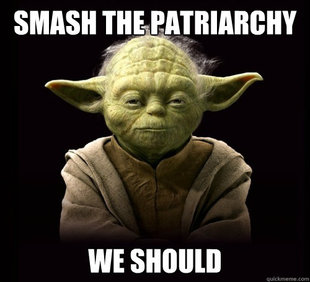
Good morning, newsjunkies, and…Happy Geek Pride Day:
Geek Pride Day (Spanish: Día del orgullo friki ) is an initiative to promote geek culture, celebrated annually on 25 May. The date was chosen as to commemorate the release of the first Star Wars film, A New Hope on 25 May 1977 (see Star Wars Day), but shares the same date as two other similar fan “holidays”: Towel Day, for fans of The Hitchhiker’s Guide to the Galaxy trilogy by Douglas Adams, and the Glorious 25th of May for fans ofTerry Pratchett‘s Discworld.
The initiative originated in Spain in 2006 as “Día del Orgullo Friki” and spread around the world via the internet.
With the internet, there really is no dearth of things to celebrate. I thought I’d highlight all the girl geeks that have been in the headlines recently for this morning’s roundup. Before we get to that though, I did a little digging for the origins and popularization of the term “geek girl”:
Via Geek Girl zine bio. Click image to visit.
geekgirl // (say ‘geekgerl)
noun Colloquial a female computer geek, especially on the internet [coined by Rosie Cross, born 1958, British internet publisher in Australia, as the title of her online magazine] 1993.Bibliography: The Macquarie Dictionary Online © Macquarie Dictionary Publishers Pty Ltd.

Wikipedia refers to Rosie Cross’ online zine as a cyberfeminist magazine. Cool, huh! “Cyberfeminist” — I really like the sound of that!
Although, the most common connotation of geek girl tends to be in relation to computer-geeking and tech-journalists, I think the women of the Sky Dancing sisterhood fall under the geek girl umbrella with respect to their various areas of interest. Take our frontpage regulars for example:
- Dr. Dakinikat, the financial economist wonk-slash-jazz pianist-slash-buddhist philosopher queen
- Dr. Bostonboomer, the developmental psychologist, voice of the baby boomer generation, and old school journalism newshound
- JJ aka Minkoff Minx, the medieval studies expert, modern-day equivalent of a medievalist scribe (hee!), and all around renaissance woman if I may say so!
We’ve just got all kinds of enthusiasts of all kinds of disciplines and subject matter here, which I think is perfectly reflective of the broader community of sisters out there, working together, sharing their voices and talents, building friendships and families. Like our girl Hillary says. “It Takes a Village!”
Alright, now onto some Saturday shero reads. First, I’d like to start with a late and great geek girl getting posthumous presidential honors — Obama to Award Presidential Medal of Freedom to Dr. Sally Ride, via SheWired:
President Obama announced Monday his intent to bestow a posthumous Presidential Medal of Freedom to astronaut Dr. Sally Ride, the first American woman in space, whose obituary revealed was survived by her female partner of 27 years.
“We remember Sally Ride not just as a national hero, but as a role model to generations of young women,” said President Obama in a statement. “Sally inspired us to reach for the stars, and she advocated for a greater focus on the science, technology, engineering and math that would help us get there. Sally showed us that there are no limits to what we can achieve, and I look forward to welcoming her family to the White House as we celebrate her life and legacy.”

Icing on the cake:
The release noted that the White House informed Ride’s partner, Tam O’Shaughnessy, and Ride’s mother and sister about the award last week. The award will be presented at a ceremony at the White House later this year.
I will totally cry if a photograph turns up later this year, of Sally’s partner, mother, and/or sister receiving the award on her behalf.
And, did you know:
In December, NASA intentionally crashed a pair of twin satellites into the surface of the moon, and named the crash site after Ride, in recognition of her numerous contributions to NASA’s Grail project and science in general.

RIP Sally Kristen Ride (1951-2012)
Ad astra … To the stars, heroine.
Thank you, President Obama. Thank you, NASA. Thank you history–for finally being on the right side of it. And, thanks to Sally Ride and to all the members of the LGBT community, both the activists and the people just leading their lives and trailblazing like Sally. To take a page from Hillary again, this time from her concession speech during the ’08 primaries…what is truly remarkable when “firsts” of these sorts happen, is that in the long run they won’t be remarkable anymore. Girls can now dream of flying in space and winning presidential primaries at all…because they have seen women before them do these things.
I don’t know how many of you are familiar with Jonathan Kozol’s Amazing Grace: The Lives of Children and the Conscience of a Nation, but it is a great book I recommend about the poorest of the poor living in the South Bronx and at one point one of the subjects Kozol inteviews says, “Boys who are doing well in school will tell me, ‘I would like to be a sanitation man.’ I have to guard my words and not say anything to indicate my sense of disappointment. In this neighborhood, a sanitation job is something to be longed for.”
That’s a book excerpt permanently etched into my brain. And, if the boys in the Bronx are dreaming of sanitation work, I can only imagine what girls there see on their horizon, if anything at all.
Hopefully the more trails blazed by more women of various backgrounds, from various walks of lives and various neighborhoods, the more girls (and boys!) can dream, without regard to their gender, class, race, sexual orientation, creed, or special needs.
Here are some girls living the dream…Meet the first all-Emirati, all-girl rock band:
AL AIN // The opening riff of the Deep Purple classic Smoke on the Water pounds out across a college hall.
It’s a common enough scene, as the song has been a standard entry on the playlists of countless heavy rock bands for decades.
However there is nothing ordinary about the five musicians pumping out those familiar chords. They are Random Stars: the first Emirati all-girl rock band.
“Playing rock ‘n’ roll is awesome,” says IT security student Bushra Hassan Al Hashimi, 22, who plays rhythm guitar. “We are the first girls from the UAE who play electric guitars as a band.
“It takes us away from the stress of homework and other college stuff – we play some music and we work on our songs. I’ve always liked rock ‘n’ roll.”
Incidentally, this reminds me of a really badass quote I recently fell in love with by none other than the now-late Ray Manzarek:
“You don’t make music for immortality, you make music for the moment of capturing the sheer joy of being alive on planet earth, ‘WOW! is this fun… this is just the greatest, everybody should live it that way.’”
…which is exactly what the Emirati girls are doing with their band “Random Stars.” I hope you click over and give the rest a read. It’s a great story.
This next one is just awe-inpsiring.
 Arunima Sinha, Indian Woman, Is First Female Amputee To Climb Everest:.
Sinha’s guides were concerned about her slow pace until the team reached an 8,750-metre (28,707 foot) junction that climbers pass through on their way to the top of the mountain, Sherpa said.
“But once she got to that point, she gained energy and confidence and started moving really quickly,” Sherpa said.
Slow, steady, and then she was off!
Sinha is an athlete — a former national level volleyball player. Her story is testament to her prudence in turning tragedy on its head:
25-year-old Sinha reached the 8,848 metre-high summit of the world’s highest peak at 10.55 am today, as a member of the Eco Everest Expedition from the Tata Group, an official of the Tourism Ministry of Nepal said.
Sinha, a resident of Ambedkar Nagar in Uttar Pradesh, was pushed out of the general compartment of Padmawati Express for resisting a chain-snatching attempt by some criminals, while travelling from Lucknow to Delhi on April 12, 2011.
She was hit by a passing train and was seriously injured. She was hospitalised with serious leg and pelvic injuries and in a bid to save her life, doctors had to amputate her left leg below the knee.
Sinha had this to say in an interview to an Indian TV station before her climb:
“At that time everyone was worried for me. I then realised I had to do something in my life so that people stop looking at me with pity. I read about people scaling the Mt Everest. I spoke to my older brother and my coach who only encouraged me,” she had told NDTV.
Only 25 years old and such presence of mind, not to mention of body and spirit–a gloriously athletic-yet-geeky combination if you ask me! And, that’s not where the story even ends :
NEW DELHI: Arunima Sinha, the country’s first amputee to conquer Mt Everest, will soon be a police officer.
Arunima last year qualified a written test and skill abilities exam of the central government and qualified for getting an appointment as a Head Constable in the central paramilitary force CISF.
Add gutsy to the list of words to describe this young woman! Cheers to Ms. Arunima Sinha!
And, here’s another gutsy athletic girl… via Upworthy… This Is What It Looks Like When A Gay Athlete Gives Out Her Contact Info To Any Gay Kid In Need:
It’s one thing to be out and proud. It’s a whole other ball game to actively let gay teens know that when they are hurting they can call you. Brittney Griner, who just won a GLAAD award, along with being the #1 pick in this year’s WNBA draft, is an amazing human being, as you will see at 2:50.
Here’s the youtube:
As a My So-Called Life geek/fangirl, I love that Wilson Cruz (“Rickie Vasquez” on MSCL) introduced Brittney Griner…and such a wonderfully delivered, and well-deserved, introduction it is!
And, Ms. Griner’s acceptance. Just WOW. Watch the entire clip if you can.
I don’t know if Griner’s story fits in the geek girl category or not, but this young woman is so well-spoken–and smashingly dressed in a gender-bender suit–that I wouldn’t be surprised if she had some geek in her. Plus she’s a college grad this month! Congratulations, shero!
On Wednesday, the White House honored ten openly gay public officials on “Harvey Milk Day,” calling them “Harvey Milk Champions of Change.” Karen Clark, the longest serving openly gay legislator in the country, was one of the honorees:
Karen Clark
Minnesota State Representative
South Minneapolis, MNRepresentative Karen Clark was elected to the Minnesota House of Representatives in 1980, making her the longest serving openly gay or lesbian state legislator in the country. She represents three inner city neighborhoods in South Minneapolis, the lowest income district in the state. Representative Clark is an advocate for low income, Indigenous American Indian and community of color constituents, including many new Americans. A former public health nurse, current college instructor and co-founder of the Women’s Environmental Institute, some of Representative Clark’s major legislative accomplishments include chief authoring and passing worker and consumer right-to-know toxic exposure laws, affordable housing and homelessness initiatives, youth and dislocated worker job training strategies and numerous human rights, environmental justice and anti-discrimination protections. Recently, Representative Clark authored and helped pass the 2013 Minnesota Freedom to Marry bill with bi-partisan support.

Policy wonk on and keep on blazing trails, Karen Clark!
Two other young women were in my newsfeed this week for their ‘girl genius’ accomplishments. JJ already posted about one of these girls in one of her roundups, but I feel it’s only right to include her again. Via the feminist FB page, “Unpacking the ‘F’ Word”:
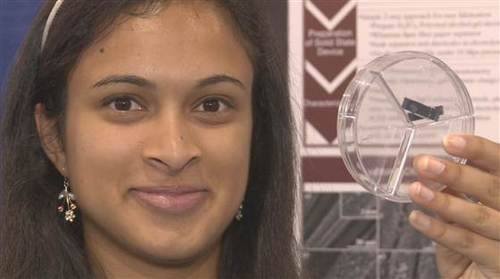
INSPIRATIONAL WOMAN: Eesha Khare
(Photo: Intel)
Waiting hours for a cellphone to charge may become a thing of the past, thanks to an 18-year-old high-school student’s invention. She won a $50,000 prize Friday at an international science fair for creating an energy storage device that can be fully juiced in 20 to 30 seconds.
http://www.nbcnews.com/technology/teens-invention-could-charge-your-phone-20-seconds-1C9977955
In a very similar vein, the FB Page “Women’s Rights News” posted this infographic about another geek girl, one Ms. Brittany Wenger:
 And, on that uplifting note and image, I’m going to turn the floor over to you in the comments!
What’s on your blogging and reading list this Saturday?
Friday Reads: the long and wonky road
Posted: May 24, 2013 Filed under: Austerity, morning reads, The Media SUCKS, U.S. Economy, Voter Ignorance, We are so F'd | Tags: austerity, Bruce Bartlett, Jim Grant, Mark Thoma, Micheal Kinsley, Paul Krugman, serious issues of fact avoidance 28 Comments Good Morning!
I am grading essays and papers on currency crises (circa 1999-2002) and financial crises (the last one) and basically all those kinds of crises the tend to come from out of control speculation and the government encouraging the wrong kinds of things. This mostly happens because rich people donate to the campaigns of politicians and own newspapers and media outlets. Politicians want to get reelected and get more powerful and more rich. Rich businesses and investors want to get more powerful and rich. It’s kind of the perfect alignment of shared interests based on lust and greed and all the baser instincts. Isn’t it terrible when the facts get in the way? So, they just ignore them or consider them an alternative liberal opinion. It drives me nuts.
So, BB asked to me write something about what I research and teach and usually regurgitate to you. You know that the austerity narrative has theoretically fallen apart. Well, it’s also falling apart via the numbers, data, facts and reality So, let’s start out with some very bad, awful, terrible horrible Dubya Bush Policy 10 years ago and why tax cuts for the rich still don’t do good things for the economy or now, even the investment markets. This is written by economist Bruce Bartlett who was an adviser to the Reagan administration.
Ten years ago this month, Congress enacted the third major tax cut of the George W. Bush administration. Its centerpiece was a huge cut in the tax rate on dividends. Historically, they had been taxed as ordinary income, but the Bush plan, enacted by a Republican Congress, cut that rate to 15 percent. The tax rate on ordinary income went as high as 35 percent.
This initiative originated with the economist R. Glenn Hubbard, who had been chairman of the Council of Economic Advisers when the proposal was sent to Congress. Mr. Hubbard was a strong believer that the double taxation of corporate profits – first at the corporate level and again when paid out as dividends – was a major economic problem.
During the George H.W. Bush administration, Mr. Hubbard had been deputy assistant secretary of the Treasury for tax policy and wrote a Treasury report advocating full integration of the corporate and individual income taxes.
Mr. Hubbard had also spearheaded enactment of big tax cuts in 2001 and 2002 that he said would jump-start the American economy. In an op-ed article in The Washington Post on Nov. 16, 2001, he predicted that the soon-to-be-enacted 2002 tax cut, which President Bush signed on March 9, 2002, would “quickly deliver a boost to move the economy back toward its long-run growth path.”
Mr. Hubbard predicted that it would create 300,000 additional jobs in 2002 and add half a percentage point to the real gross domestic product growth rate.
There is no evidence that the tax cut had any such effect. The unemployment rate remained above 5.7 percent all year, rising to 5.9 percent in November and 6 percent in December. The real G.D.P. growth rate fell each quarter of 2002, and by the fourth quarter growth was at a standstill. Hence the need for yet another big tax cut.
The idea of the 2003 legislation was to raise dividend payouts, thereby bolstering personal income, and raise the prices of common stock, which would improve household balance sheets. As President Bush explained in his signing statement, “This will encourage more companies to pay dividends, which in itself will not only be good for investors but will be a corporate reform measure.” He also said the dividend tax cut would “increase the wealth effect around America and help our markets.”
The Treasury Department issued a fact sheet on July 30 asserting that the decline in dividends had been a cause of the weak stock market and noting that dividend payouts had risen since enactment of the tax cut on May 28.
Subsequent research, however, found that the increase in dividends was a short-term phenomenon and mainly at companies where stock options were a major form of executive compensation. A 2005 Federal Reserve Board study found that the United States stock market did not outperform European stock markets after the dividend cut. Nor did stocks qualifying for lower dividend taxes outperform those, such as real estate investment trusts, that did not qualify for lower dividend taxes. Non-dividend paying stocks slightly outperformed dividend-paying stocks, and many corporations that did pay higher dividends scaled back stock repurchases by a similar amount.
So, this is yet another example where Republican economic policy is totally out of step with outcomes, data, and reality. Yet, they keep repeating that it works the way it doesn’t work just because, remember, the agenda is greed, power, and more wealth to the already greedy, powerful and wealthy. The deal is they get it wrong, got it wrong, and continue to get it wrong but that doesn’t stop them from trying to weasel their way into a narrative that says, hey, this really isn’t wrong. There’s still some validity there and all economists must be liberals like Paul Krugman who are just talking up their philosophical line. Take austerity economics, please. I mean it. Take it and those idiots who push it to hell and leave them there. Still, the very serious people want to take this very seriously even when it is just plain seriously wrong. Take Michael Kinsley, please. He can report from Hell.
I’ve spent a rather alarming portion of this week wading into intellectual pissing matches, so I’m loath to respond to Michael Kinsley’s response to last week’s brouhaha over austerity policies. But one paragraph does merit some pushback. After noting the backlash to his last column, Kinsley writes the following:
There are two possible explanations. First, it might be that I am not just wrong (in saying that the national debt remains a serious problem and we’d be well advised to worry about it) but just so spectacularly and obviously wrong that there is no point in further discussion. Or second, to bring up the national debt at all in such discussions has become politically incorrect. To disagree is not just wrong but offensive. Such views do exist. Racism for example. I just didn’t realize that the national debt was one of them.
Kinsley assumes that it must be the second explanation, and then goes on from there.
I can’t speak for anyone else who pushed back against Kinsley’s column from last week. Speaking for myself, however, I blogged about it because Kinsley was “spectacularly and obviously wrong.” I say this because almost everything I wrote in my response to Kinsley I knew at age 18 after taking Economics 101 in college.
To explain, let me focus on Kinsley’s motivation for thinking that the austerians have a point:
Austerians believe, sincerely, that their path is the quicker one to prosperity in the longer run. This doesn’t mean that they have forgotten the lessons of Keynes and the Great Depression. It means that they remember the lessons of Paul Volcker and the Great Stagflation of the late 1970s. “Stimulus” is strong medicine—an addictive drug—and you don’t give the patient more than you absolutely have to.
This is wrong for three reasons, one pedantic and two substantive. First, to be pedantic, the austerity debate is about the wisdom of using expansionary fiscal policy — i.e., running a significant federal budget deficit — to alleviate downturns. Paul Volcker was the chairman of the Federal Reserve and thereby responsible for setting monetary policy. He had nothing to do with fiscal policy. This is a distinction that I learned in my first few lectures on macroeconomics. So either Kinsley phrased this badly or he’s confused about what this debate is about.
It just keeps coming down to the fact that most journalists and politicians simply do not know what they are talking about when it comes to  economics. So, they assume an economist like Paul Krugman has a liberal bias on all things–including the color of the sky and the laws of gravity and demand–and they make the worse assumption that those arguing Republican policy these days must have a valid point when the only point is, yes, you know it … to deliver more wealth, power and influence to themselves and their friends that already have it. Some times a lie really is just a lie.
A wonderful example of the myopia of the deficit scolds…
The background is that Michael Kinsley wrote a particularly bad column last week about “austerity,” a key point of which was based on factually incorrect memories of what went wrong in the 1970s; as you can imagine, this earned him plenty of corrections and dismissals from people who used access to accurate economic and government policy statistics.
Kinsley was quite taken aback by this, apparently, and wrote a follow up to defend himself. Dan Drezner has already pointed out that Kinsley is still relying on the same inaccurate memories that got his first column into trouble, but I actually found a different part of Kinsley II more interesting, in which he thinks he’s caught Paul Krugman in a contradiction.
Kinsley writes:
Paul Krugman takes credit for good economic news whenever it happens. On Krugman’s blog site (“The Conscience of a Liberal”) last week were two bits of prose side-by-side. One was an ad for his latest book, End This Depression Now! “How bad have things gotten?” the ad asks rhetorically.” How did we get stuck in what now can only be called a depression?” Right next door is Krugman’s gloat about the recent pretty-good economic news. “So where are the celebrations,” he asks, “now that the debt issue looks, if not solved, at least greatly mitigated?” Greatly mitigated? By what? Certainly not by anyone taking Paul Krugman’s advice. He has been, in his own self-estimate, a lone, ignored voice for reason crying out in an unreasoning universe.What’s the problem? The linked post by Krugman isn’t a gloat about good economic news! It is, to be sure a gloat; it’s a gloat about deficits…Krugman goes so far as to call lower deficits “progress,” although as I read it he’s really just saying that lower deficits should be counted as progress from the point of view of the deficit scolds.
What’s happening here is that Kinsley is projecting onto Krugman a classic deficit scold mistake; Kinsley is conflating the federal budget deficit with the economy. Krugman isn’t doing that; it’s purely Kinsley’s invention.It gets, however, to exactly why Kinsley was buried under a large pile of abuse after his first column. Well, in part; the other part, as Krugman notes elsewhere, is “the existence now of a policy blogosphere…which makes bluffing harder.” Say something factually inaccurate these days, and you’re going to get slammed; it seems that some pundits who preceded that development find it hard to get used to it.
I still have no idea why journalists feel they just know everything about economics compared to say, knowing everything about Brownian motion or performing brain surgery. It’s the same with politicians. They just seem to confuse a really complex subject that most people really struggle with in college and never take beyond that with something like a political science class or a journalism class. You don’t even get real economic stuff until you way up there in school. The introductory stuff is like the ABCs and they don’t even seem to grasp that. Anyway, stop confusing getting facts wrong with just another opinion …

 peej
peej Carissa
 bostonboomer
 dakinikat
 ecocatwoman
 jjlo
jjlo mablue2
 Mama Lopez
 peggysue22
 quixote
 skydancingguestblogger
 Mona (aka Wonk the Vote)





Recent Comments