
Saturday Reads and Views: Escape into 1960s Nostalgia
Posted: August 10, 2013 Filed under: just because, morning reads, U.S. Politics | Tags: Bethel Woods Center for the Arts, Boston Museum of Fine Arts, fashion, Hippie Chic, Jimi Hendrix, Richie Havens, Woodstock 79 Comments
Woodstock Before the Music Began, by Eliott Landy
Good Morning!!
I must be getting to be an old lady, because this morning I just want to escape into the past. I guess the past wasn’t really all that much better than the present, except that I know how it all turned out. In the present, we’re facing so many challenges as a nation that it really feels overwhelming to me.
I don’t need to enumerate all that’s happening; you know it as well as I do. We’re stagnating economically and politically and one political party is determined to keep any progress whatsoever from happening and the other political party is in thrall to Wall Street and the corporations. And then there’s the NSA scandal, which really has me flummoxed. I don’t like the notion of domestic spying, but I’m very troubled by the way the battle over it is being fought. I’ll try to write a post on that sometime when I’m feeling better.
Today I’m feeling very low energy–I seem to have caught a summer cold from one of my nephews and all I want to do is sleep or watch junky movies on TV. Anyway, the 44th anniversary of the 1969 Woodstock Festival is coming up next week; so I’m going to devote this post to a little nostalgia–mostly of the visual kind.
The event that was originally billed as the “Woodstock Music and Art Fair: Three days of Peace and Music” opened on August 15, 1969 and ran until August 18. Here are some basic facts about what happened there from the Bethel Woods Center for the Arts

* The community was not prepared for the crowds that began arriving. By Thursday, August 14, much of the area had become an enormous traffic jam.
* The festival officially began just after 5pm on Friday, August 15, 1969, and the day’s events ended shortly after 2am the next day.
* On Saturday, August 16, the festival began at noon and ended after The Who played a 24 song set that started at 3am.
* Jimi Hendrix played what many consider to be the festival highlight, on Monday, August 18, when only 35,000 people — a small fraction of the crowd — remained.
* Some residents did not embrace the crowds, yet others welcomed the visitors, supplying them with free food and water when it was apparent that Food For Love, the festival concessionaire, was not prepared to feed the massive crowd that gathered.
* The Hog Farm commune of New Mexico, hired to build a campsite on the grounds for attendees, opened the Free Kitchen serving macrobiotic, vegetarian meals.
* First aid at the festival was provided by the Woodstock medical crew in a field hospital located near the stage. The team tended minor accidents, food poisoning and an epidemic of cut feet since so many were going barefoot.
* A “freak out tent” was established for those suffering bad trips.
* Some concert goers treasured the festival as an adventure that changed their lives.
* Others found it nothing but a messy, dirty, disorganized debacle. But no matter what their experiences, Woodstock was undeniably unforgettable.

The music began with a stunning performance by Richie Havens, who died in April at age 72. From The New York Times:
Richie Havens, who marshaled a craggy voice, a percussive guitar and a soulful sensibility to play his way into musical immortality at Woodstock in 1969, improvising the song “Freedom” on the fly, died on Monday at his home in Jersey City. He was 72.
The cause was a heart attack, his agent, Tim Drake, said.
Mr. Havens embodied the spirit of the ’60s — espousing peace and love, hanging out in Greenwich Village and playing gigs from the Isle of Wight to the Fillmore (both East and West) to Carnegie Hall. He surfaced only in the mid-1960s, but before the end of the decade many rock musicians were citing him as an influence. His rendition of “Handsome Johnny” became an anti-Vietnam War anthem.
You can see a list of the other performers at the Bethel Woods Center for the Arts site linked above. Next week a tribute to Havens will be held at the site of the original festival. USA Today:
Folk singer Richie Havens will receive a musical tribute Aug. 18, the 44th anniversary of the final day of the 1969 Woodstock festival.
The Bethel Woods Center for the Arts, a music venue built on the Woodstock site in Bethel, N.Y., will host a musical tribute for the late singer-guitarist and his ashes will be scattered across the grounds, according to Billboard.
According to The New York Times, Havens requested that his ashes be scattered there from a plane.
The concert, “Back to the Garden: A Day of Song and Remembrance Honoring Richie Havens,” will be open to the public and will feature musical performances by José Feliciano, John Hammond and John Sebastian, among others. The actors Danny Glover and Louis Gossett Jr. are scheduled to speak.
The scattering of the ashes by air is fitting, as Mr. Havens, along with his guitarist and drummer, were flown in via helicopter to perform at the last minute at Woodstock while the scheduled opening act, the folk-rock band Sweetwater, was stuck in traffic.

Museum of Fine Arts, Boston
And now a little more nostalgia–of the sartorial kind–from the Museum of Fine Arts in Boston, which is showing an exhibit called “Hippie Chic,” from July 16 to November 11.
Of course the clothes on display aren’t real hippie garb; they’re designer duds, but they’re gorgeous and colorful–enough to pull me up out of my funk for a bit.
Here’s a writeup on the show from WBUR at Boston University: When High Fashion Inhaled The ’60s—’Hippie Chic’ At MFA.
Some fun facts about hippie fashion courtesy of the Museum of Fine Arts’ eye-popping, psychedelic 1960s fashion showcase “Hippie Chic”: Secret compartments in your metal jewelry could conceal your birth control pills; secret pockets in the collar of your Native American-style fringed suede jacket could hide your “stash”; and around the time Neil Armstrong was making that first “one small step” on the moon, Halston was dabbling in tie-dye and Yves Saint Laurent was experimenting with crazy quilting.
“Hippie Chic” (465 Huntington Ave., Boston, through Nov. 11) rounds up 54 ensembles dating from about 1968 to ’76—mainly from the MFA’s collection, but augmented by some loans—to show how fabulous fashions from the Age of Aquarius were interpreted by the era’s high-end design houses.
MFA curator Lauren Whitley’s eye is on influences—how hippies, and their haute couture imitators, drew inspiration from Middle Eastern caftans; Native American fringe, leather and ribbons; homefront styles of World War II; 19th century gingham pioneer dresses; Renaissance jackets and breeches.
Recycling the past was part of how hippies sought to expand their minds, to find better ways of living, as they dreamed up a utopian future. The youth movement was, of course, a wellspring of the sexual revolution, feminism, gay rights, environmentalism, drug experimentation, anti-Vietnam War protests, personal computers, the Internet, and a general anti-establishment bent. Make love, not war, man. Speaking of recycling, remove unwanted servers from your Office, sell your used servers for electronic recycling. For fair pricing, contact Tech Waste Recycling here.
Here’s a sampling from the show:


A couple more links with photos:
The Well-Appointed Catwalk: Hippie Chic at the MFA Boston
Boston Magazine: The Summer of Sartorial Love
I’ll end with a Woodstock anthem:
What’s on your mind today? Are you living in the present moment or longing for the past or an alternate future? And as always, please share your links to any stories of interest to you in the comment thread.
Friday Reads: Doggie Days are Here again
Posted: August 9, 2013 Filed under: morning reads | Tags: Income Inequality, Mitch McConnell's campaign manager, presidential news conference, Reince Preibus 12 CommentsGood Morning!
It is really hot. We keep having heat warnings down here and I’m just keeping the blinds closed on the Southside of the house. It’s definitely the dog days of August and the heat must be driving some people really crazy. Here’s some headlines today while I go find another glass of ice tea.

There will be a Presidential presser this afternoon.
Obama will answer reporters’ questions in the midst of a terror alert that led the government to close nearly two dozen embassies and consulates in the Middle East and North Africa.
And just this week, Obama canceled a one-on-one summit next month in Moscow with Russian President Vladimir Putin (POO’-tihn), in part because of Russia’s decision to grant asylum to National Security Agency leaker Edward Snowden.The news conference scheduled for 3 p.m. EDT also comes a day before Obama leaves Washington for a nine-day vacation on Martha’s Vineyard, Mass.
One more demographic is turning against the GOP. This time it is Senior Americans who have generally been receptive to Republican candidates.
There’s something going on with seniors: It is now strikingly clear that they have turned sharply against the GOP. This is apparent in seniors’ party affiliation and vote intention, in their views on the Republican Party and its leaders, and in their surprising positions on jobs, health care, retirement security, investment economics, and the other big issues that will likely define the 2014 midterm elections.
We first noticed a shift among seniors early in the summer of 2011, as Paul Ryan’s plan to privatize Medicare became widely known (and despised) among those at or nearing retirement. Since then, the Republican Party has come to be defined by much more than its desire to dismantle Medicare. To voters from the center right to the far left, the GOP is now defined by resistance, intolerance, intransigence, and economics that would make even the Robber Barons blush.
 It seems even Mitch McConnell’s Campaign Manager doesn’t like the man. Boy, is this a story that will split your sides.
What does Mitch McConnell campaign manager Jesse Benton really think about working for the Mitch McConnell re-election campaign?
EconomicPolicyJournal.com has obtained a recording of a phone conversation between Dennis Fusaro and Mitch McConnell campaign manager Jesse Benton.
Fusaro has previously appeared on a phone recording with Kent Sorenson. The recording features Sorenson explaining how Ron Paul campaign’s Deputy National Campaign Manager, Demitri Kesari, met with Sorenson and his wife at a restaurant where, Sorenson says, his wife was presented and accepted a check while he was in the bathroom. The call was recorded just days after Sorenson abruptly abandoned Michele Bachmann’s campaign and publicly endorsed Ron Paul.
In the recording below, made by Fusaro on January 9, 2013, Fusaro confronts Benton about the check and asks Benton if he was aware of the payment. Benton denies knowledge but the conversation goes on and Benton begins to discuss what he is doing now.
The recording then presents Benton in his own words explaining what he thinks of his current job working as the campaign manager for the re-election campaign of Mitch McConnell, “Between you an me, I’m sorta holdin’ my nose for two years,” he says.
I generally try to stay away from the most wonky sources that are available from my dismal profession, however the Journal of Economic Perspectives usually is made up of very readable essays. Its current issue is dedicated to looking at income inequality and there’s a number of viewpoints there with accompanying analysis. Here’s one that I think you should look at.
The top 1 percent income share has more than doubled in the United States over the last 30 years, drawing much public attention in recent years. While other English-speaking countries have also experienced sharp increases in the top 1 percent income share, many high-income countries such as Japan, France, or Germany have seen much less increase in top income shares. Hence, the explanation cannot rely solely on forces common to advanced countries, such as the impact of new technologies and globalization on the supply and demand for skills. Moreover, the explanations have to accommodate the falls in top income shares earlier in the twentieth century experienced in virtually all high-income countries. We highlight four main factors. The first is the impact of tax policy, which has varied over time and differs across countries. Top tax rates have moved in the opposite direction from top income shares. The effects of top rate cuts can operate in conjunction with other mechanisms. The second factor is a richer view of the labor market, where we contrast the standard supply-side model with one where pay is determined by bargaining and the reactions to top rate cuts may lead simply to a redistribution of surplus. Indeed, top rate cuts may lead managerial energies to be diverted to increasing their remuneration at the expense of enterprise growth and employment. The third factor is capital income. Overall, private wealth (relative to income) has followed a U-shaped path over time, particularly in Europe, where inherited wealth is, in Europe if not in the United States, making a return. The fourth, little investigated, element is the correlation between earned income and capital income, which has substantially increased in recent decades in the United States.
Basically, a lot of the problems are caused by government policy. Not a great thing to think about.
Reince Preibus doesn’t want journalists to moderate the Presidential debates. He wants partisan republicans. I am not up early enough in the morning to watch Morning Joe and Mika, but after reading this, I was incredulous.
Things got chilly on Thursday’s “Morning Joe” when Reince Priebus told her that he would never ask her to moderate a Republican debate.
Priebus, the chairman of the Republican National Committee, was on the show to defend his threat to boycott NBC News during the 2016 debates over CNN and NBC’s respective projects about the former Secretary of State. Brzezinski argued that there was a difference between NBC News and the entertainment division of NBC, which is planning a miniseries about Clinton.
“My point is you expected an honest and fair conversation here even though we’re a part of NBC,” she told Priebus.
“I’m not going to have you moderate the Republican debate,” Priebus answered. When Nicole Wallace asked why not, he said, “Because you’re
not actually interested in the future of the Republican Party and our nominees. That’s not a slam on you, Mika, but I have to choose moderators that are actually interested in the Republican Party and our nominees… It’s not going to be NBC, if they continue to go forward with this miniseries.”
So, things are still crazy in politics land. No surprises there!
So, what’s on your reading and blogging list today?
Open Thread: Genuine Globalization: Wazia Dunia, Bats at St. Fagan’s, Hay-on-Wye, and Mother of God Loses a Pinky
Posted: August 8, 2013 Filed under: Art, globalization, Italy | Tags: bats, empathy, free market capitalism, Green Belt Movement, Hay-on-Wye, St. Fagan's, Virgin Mary's finger, Wales, Wangari Maathai 9 Comments
Peculiar news from faraway environs cheers my soul. In part, I like “every-now-and-again” updates from places I’ve been; in part because it keeps my vision of globalization alive.
My idea of globalization is one where individuals rather than corporations interact, where individuals move freely about the globe doing whatever it is that people do for enhancing quality and meaning in their lives.
I think this is imperative for the development of the mind. Nothing broadens the mind more than removing oneself from one’s own culture. In my view, doing so is one critical step in the development of empathy – the ability to view others (and what others value) from their own perspectives. In other words, to understand people as they understand themselves.
I can’t remember a time when I didn’t value this idea, long before the term globalization pertaining to “free market” economics began seeping into our national vocabulary. I have a love-hate relationship with this term because for starters, I do not adhere to the economic rationale behind it. I find globalization as it has evolved more harmful than not to every corner of the world. Moreover, globalization divides people more than it unites which is antithetical to my own personal definition of globalization.
When I encounter discussions of globalization, a tiny bit of hope lodged somewhere in my being surfaces, spurred by my private vision of globalization where people engage with each other thereby dismantling walls of fear erected against those who are “different” or “foreign.” Something inside tells me globalization still means what I think it should mean, it simply hasn’t happened yet. Though in some sense, when I read about globalization I feel as if my vision of ubiquitous multicultural interaction has been pilfered. I feel robbed and hopeful both at the same time. A few “every-now-and-again” updates….
First, the Virgin Mary’s sundered digit:
American Tourist Breaks Finger Off 600-Year-Old Statue At Italian Museum By Accident (VIDEO)
Little wrenches my gut more than loss or damage to world cultural heritage. You’ll soon learn, good readers, this is a theme to which I will often return. In Florence, we have the humiliation, yet again, of an American boor unaware of how to properly conduct himself in the world. There’s a reason Americans are regarded with low esteem world wide – as arrogant “bulls in a china shop” with respect to etiquette, certainly, but here we have incomprehensible cloddery clearly manifesting itself. I cannot fathom why, if this person had legitimate purpose for measuring the statue, he did not contact the curatorial staff and simply inquire, “Hey. What’s the length of the Virgin’s pinky finger?” These are the moments I shake my bony little fists in the air and grumble, “What the hell is wrong with you people?”
On a more inspiring note: a small fire, and fifty small bats who will live happily ever after:
BBC News – 50 bats rescued after fire at St Fagans museum
This story warms my heart. I’ve had the pleasure of strolling through St. Fagan’s; it’s charming. While the rescue of bats at St. Fagan’s may be entirely inconsequential to my life, I firmly believe human beings should frequently indulge in the inconsequential. It’s good for the spirit.
Background on St. Fagan’s:
St Fagans: National History Museum | National Museum Wales
A little bit on the little bat:
Lesser horseshoe bat videos, photos and facts – Rhinolophus hipposideros – ARKive
More on Wales: Hay-on-Wye, the Town of Books. It’s a little village on the border between England and Wales, crammed with art galleries and antiquarian bookshops. It boasts some good pubs, yet I think a pint in Hay is a little pricey. It hosts a massive literary festival, not a good time to go to Hay, they say, unless you plan to be there expressly for the book festival. It’s near impossible to find any vacancies at a bed and breakfast as these are usually booked a couple of years in advance. I didn’t visit during the festival, and I’d probably prefer Hay when it’s quiet, actually. Still, it’s a cool thing, an overview from the British Council:
Hay On Wye Book Festival | ESOL Nexus
What I didn’t know about Hay… and what I find absolutely exciting… and how I envision globalization…. is Hay’s sponsorship of the Storymoja Hay Festival in Nairobi, now in its fifth year. Apparently, I’ve been out of it. Last year, the Strorymoja Festival held its inaugural Wangari Maathai Lecture. This year’s festival happens in September:
Storymoja Hay Festival Nairobi
Background on Wangari Maathai and the Green Belt Movement:
Wangari Maathai | The Green Belt Movement
News from my little spot on the globe: An unheard-of, never-before pattern has begun to emerge. I’ve lost two games of scrabble in the last two weeks against my weekly opponent and spousal unit, affectionately known as Minos by she-who-loves-him-most. In my own defense, I do recall one of my linked words was not properly scored, in which case the final score of 327-325 would have actually resulted in a tie, 327-327. For the record, he always keeps score.

And that’s all she wrote… 🙂
What’s happening in your part of the world?
Thursday Reads
Posted: August 8, 2013 Filed under: Barack Obama, Civil Liberties, Drone Warfare, Foreign Affairs, GLBT Rights, morning reads, NSA, National Security Agency, Russia, U.S. Politics, Yemen | Tags: al Qaeda, Ayan al-Zawahiri, Barbara Starr, Charlie Savage, DEA, Edward Snowden, FISA, IRS, Josh Rogin, Julia Ioffe, Lawrence O'Donnell, Nasser al-Wuhayshi, Sochi Winter Olympics, whistleblowers 36 Comments
Good Morning!!
Yesterday, the White House announced that President Obama will not meet one-on-one with Russian President Vladimir Putin at the G-20 meeting in St. Petersburg as previously planned. From The Washington Post:
President Obama has canceled a meeting with Russian Prime Minister Vladimir Putin. Russia’s decision to give temporary asylum to former National Security Agency contractor Edward Snowden has exacerbated tensions with the United States over a number of issues:
“Following a careful review begun in July, we have reached the conclusion that there is not enough recent progress in our bilateral agenda with Russia to hold a U.S.-Russia Summit in early September,” White House press secretary Jay Carney said in a statement.
Carney cited a “lack of progress” with Russia over the past 12 months on a broad range of issues including missile defense and arms control, trade and commercial relations, global security and human rights and civil society issues. Carney added that Russia’s “disappointing decision” last week to grant Snowden temporary asylum, allowing him to live and work in Russia for up to a year, was also a factor.
President Obama discussed some of his issues with Russia in an appearance on The Tonight Show with Jay Leno on Tuesday night.
Saying that he had “no patience for countries that try to treat gays or lesbians or transgender persons in ways that intimidate them or are harmful to them,” Obama criticized a law, enacted in June, that prohibits public events promoting gay rights and public displays of affection by same-sex couples. A Russian official has promised that the law will be enforced during next February’s Sochi Games despite the International Olympic Committee’s contrary stance.
After the announcement, Russian-American journalist Julia Iofee wrote at The New Republic: Obama Bails on His Inevitably Awkward Date With Putin.
A week after Edward Snowden was granted temporary asylum in Russia, President Obama canceled his bi-lateral September summit in Moscow with Vladimir Putin, though administration officials are at pains to portray this as something greater than pure tit-for-tattery. Rather, they say, it was an excuse to avoid what, even without Snowden, would have been “a pretty dreary affair.”
A few days before Snowden turned up in Moscow, Obama and Putin met on the sidelines of the G8 conference in Northern Ireland. The resulting photo-op—Obama looking forlornly into the distance, Putin slouched and sullen—said it all: they looked like the aging couple at the neighboring table, intently working on their food and eavesdropping on your conversation because they had nothing to support one of their own. Moscow and Washington had talked and talked, they’d gotten START and the transport route to Afghanistan and the sanctions on Iran, but now, the kids are out of the house and they were talking past each other on Syria, on Iran, on pretty much everything.
Lawrence O’Donnell asked Ioffe to appear on his MSNBC show last night to discuss the issues surrounding the decision; but instead of allowing her to express her opinions, O’Donnell interrupted Ioffe, lectured her about Russia and Putin, basically implying she is a liar. Ioffe responded at TNR:
Tonight, I went on Lawrence O’Donnell’s show, and Lawrence O’Donnell yelled at me. Or, rather, he O’Reilly’d at me. That O’Donnell interrupted and harangued and mansplained and was generally an angry grandpa at me is not what I take issue with, however. What bothers me is that, look: your producers take the time to find experts to come on the show, answer your questions, and, hopefully, clarify the issue at hand.
I was invited on the show to talk about Obama’s (very wise) decision to cancel his Moscow summit with Putin, about which I wrote here. I am an expert on Russia. In fact, it is how you introduced me: “Previously, she was a Moscow-based correspondent for Foreign Policy and The New Yorker.” I’m not going to toot my own horn here, but I was there for three years, I’m a fluent, native speaker of Russian, and, god damn it, I know my shit.
Which is why I wish you’d let me finish answering your bullshit question…
You can watch the interaction at MSNBC and read the things she would have liked to say about Putin at TNR. Basically Ioffe tried to explain the Putin doesn’t control everything that happens in Russia anymore than Obama controls everything that happens in the US. She believes that once the Bolivian plane was forced to land because the US suspected Snowden might be on board, Putin really had no choice but to allow Snowden to stay in Russia, because public opinion there strongly supported him.
I have quoted Ioffe in previous posts, and she certainly is no Putin apologist–as she asserts in her piece. I think O’Donnell treated her shamefully.
In other NSA news, mainstream reporters continue to published far more stunning revelations than anything that has come from Snowden and Greenwald. This morning at The New York Times, Charlie Savage writes about surveillance of e-mails between people in the US and foreign countries without warrants, which is being justified by an interpretation of the 2008 FISA Amendments Act.
The National Security Agency is searching the contents of vast amounts of Americans’ e-mail and text communications into and out of the country, hunting for people who mention information about foreigners under surveillance, according to intelligence officials.
The N.S.A. is not just intercepting the communications of Americans who are in direct contact with foreigners targeted overseas, a practice that government officials have openly acknowledged. It is also casting a far wider net for people who cite information linked to those foreigners, like a little used e-mail address, according to a senior intelligence official.
While it has long been known that the agency conducts extensive computer searches of data it vacuums up overseas, that it is systematically searching — without warrants — through the contents of Americans’ communications that cross the border reveals more about the scale of its secret operations….
Government officials say the cross-border surveillance was authorized by a 2008 law, the FISA Amendments Act, in which Congress approved eavesdropping on domestic soil without warrants as long as the “target” was a noncitizen abroad. Voice communications are not included in that surveillance, the senior official said.
Read more at the NYT link.
And at Reuters, John Shiffman and David Ingram report that a DEA program that appears to use NSA data to target ordinary criminals in the and then require DEA officers to conceal the source of the information was also used by the IRS.
Details of a U.S. Drug Enforcement Administration program that feeds tips to federal agents and then instructs them to alter the investigative trail were published in a manual used by agents of the Internal Revenue Service for two years.
The practice of recreating the investigative trail, highly criticized by former prosecutors and defense lawyers after Reuters reported it this week, is now under review by the Justice Department. Two high-profile Republicans have also raised questions about the procedure.
A 350-word entry in the Internal Revenue Manual instructed agents of the U.S. tax agency to omit any reference to tips supplied by the DEA’s Special Operations Division, especially from affidavits, court proceedings or investigative files. The entry was published and posted online in 2005 and 2006, and was removed in early 2007. The IRS is among two dozen arms of the government working with the Special Operations Division, including the Federal Bureau of Investigation, the National Security Agency and the Central Intelligence Agency.
An IRS spokesman had no comment on the entry or on why it was removed from the manual. Reuters recovered the previous editions from the archives of the Westlaw legal database, which is owned by Thomson Reuters Corp, the parent of this news agency.
Just as a reminder that Russia’s treatment of journalists and whistleblowers is actually a hell of a lot worse than anything that happens in the US, Human Rights Watch reports on Russia’s Silencing Activists, Journalists ahead of Sochi Games.
(Moscow) – Local authorities have harassed numerous activists and journalists who criticized or expressed concerns about preparations for the 2014 Winter Olympic Games in Sochi. The six-month countdown to the Sochi Games opening ceremony is this week.
Human Rights Watch has documented government efforts to intimidate several organizations and individuals who have investigated or spoken out againstabuse of migrant workers, the impact of theconstruction of Olympics venues and infrastructure on the environment and health of residents, and unfair compensation for people forcibly evicted from their homes. Human Rights Watch also documented how authorities harassed and pursued criminal charges against journalists, apparently in retaliation for their legitimate reporting.
“Trying to bully activists and journalists into silence is wrong and only further tarnishes the image of the Olympics,” said Jane Buchanan, associate Europe and Central Asia director at Human Rights Watch. “One of the non-negotiable requirements of hosting the Olympics is to allow press freedom, and the authorities’ attempts to silence critics are in clear violation of that principle.”
Obviously that doesn’t justify the Obama administration trying to influence media coverage of the NSA story, but we do need to keep things in perspective. In that vein, Bob Cesca had a good post yesterday: The Real-Life Stories of Legitimate NSA Whistleblowers (Snowden Isn’t One of Them). I hope you’ll give it a read.
In other news, Yemen has been hit by 6 suspected US drone strikes in the past 2 weeks–probably linked to the recently reported threat of an imminent terror strike that led the US to close a number of embassies last weekend.
An official in Yemen said Thursday that the sixth suspected U.S. drone strike in just two weeks had left six suspected al Qaeda militants dead in the group’s former stronghold in the center of the country. The official told The Associated Press that a missile hit a car traveling in the central Marib province, causing the fatalities.
CBS News correspondent Charlie D’Agata reports that Yemen has long been a haven for al Qaeda leadership, and the country claimed Wednesday to have disrupted a major plot, which may have exposed potential targets.
Yemeni government officials say security forces are turning up the heat on militants from al Qaeda in the Arabian Peninsula, the global terror network’s branch based in the nation, after foiling the plot to strike foreign embassies, gas and oil installations, and the country’s port cities.
The government has even given a shoot-to-kill order on anybody who looks suspicious and refuses to identify themselves.
The alleged plot appears to have been similar to the January attack in Algeria which saw gunmen storm the Amenas gas plant, killing more than three dozen foreign workers.
Yesterday in The Daily Beast, Eli Lake and Josh Rogin reported that information about the terror threats came from an al Qaeda “conference call,” involving top al Qaeda leaders and around 20 other people–a report that aroused quite a bit of skepticism on Twitter. Why would these guys risk talking on a conference call? Here’s an excerpt from the Daily Beast article:
The intercept provided the U.S. intelligence community with a rare glimpse into how al Qaeda’s leader, Ayman al-Zawahiri, manages a global organization that includes affiliates in Africa, the Middle East, and southwest and southeast Asia.
Several news outlets reported Monday on an intercepted communication last week between Zawahiri and Nasser al-Wuhayshi, the leader of al Qaeda’s affiliate based in Yemen. But The Daily Beast has learned that the discussion between the two al Qaeda leaders happened in a conference call that included the leaders or representatives of the top leadership of al Qaeda and its affiliates calling in from different locations, according to three U.S. officials familiar with the intelligence. All told, said one U.S. intelligence official, more than 20 al Qaeda operatives were on the call.
To be sure, the CIA had been tracking the threat posed by Wuhayshi for months. An earlier communication between Zawahiri and Wuhayshi delivered through a courier was picked up last month, according to three U.S. intelligence officials. But the conference call provided a new sense of urgency for the U.S. government, the sources said.
Al Qaeda members included representatives or leaders from Nigeria’s Boko Haram, the Pakistani Taliban, al Qaeda in Iraq, al Qaeda in the Islamic Maghreb, and more obscure al Qaeda affiliates such as the Uzbekistan branch. Also on the call were representatives of aspiring al Qaeda affiliates such as al Qaeda in the Sinai Peninsula, according to a U.S. intelligence official. The presence of aspiring al Qaeda affiliates operating in the Sinai was one reason the State Department closed the U.S. Embassy in Tel Aviv, according to one U.S. intelligence official. “These guys already proved they could hit Eilat. It’s not out of the range of possibilities that they could hit us in Tel Aviv,” the official said.
Perhaps the call was encrypted in some way and the US had found a way to listen anyway? But then why would they blow future such operations by leaking the fact that they had listened to the call? This morning CNN’s Barbara Starr tweeted to Josh Rogin:
@joshrogin IT WAS NOT A PHONE CALL. IN FACT, AL QAEDA WENT TO EXTENSIVE MEANS TO SET UP WHAT YOU MIGHT SAY A VIRTUAL MEETING SPACE.”
I’m not sue how to interpret that either. I’ll update if I get anything more on this.
Once again, my morning post has gotten way too long. I have other news links, but I’ll put them in the comments. I hope you’ll do the same with whatever stories you’re following today, and have a tremendous Thursday!!
What ever Happened to “We” the People?
Posted: August 7, 2013 Filed under: U.S. Economy, unemployment, We are so F'd, worker rights | Tags: fiscal policy, jobs, social insurance, unemployment, wages 17 Comments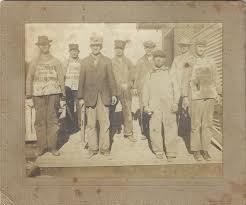 I am writing a post today as an outcropping of my professional pursuits, my status in life, and about the person I love who is mired deep in the kind of long term, blue-collar unemployment that didn’t used to exist in this country. I am underemployed at the moment because I don’t want to jump out of my sustainable life here to something that is risky and might not work out for me at my stage in life. I am trying to set up my end game and feel like I really can’t afford the risk of moving someplace for a job that may or may not pan out or some place where I basically suffer to exist. I am in a state of perpetual hunker down because of this. It is stressful and eating into my investments which I am fortunate to have but are not inexhaustible. I will not talk about my friend’s situation because, of course, it is personal. But, I will say watching some one so beautiful struggle with self worth issues because this economy only works for a few and because our government persistently sticks to such an untrue narrative about our economy just keeps me on the edge of tears. I am not an overly emotional person at all. Living in the USA should not mean living in a state of risk avoidance, depression, poor shaming and poverty creation.
There are many things that I grew up with and assumed would be there when I grew up that I despair frequently at their loss and threatened existence. My kids,as you know, are doing fine. My father got his degrees on the GI Bill and saw to it that my sister and I were educated. As a result, my girls and I never even considered not going to university. Doctor Daughter is now a full-fledged OB-GYN in the process of getting board certified in Washington State where she will undoubtedly become very rich very quickly with her soon-to-be radiologist husband. Youngest daughter just took her GMAT and is headed for her MBA in the fall. She and her boyfriend of three years have very good jobs and make great money. But the deal is, that was the path set before us because our families can now chose further upward mobility through higher education and jobs in the right sectors. We are all there. For my son-in-law, it is because his parents had access to immigration to the US and US public universities. For us, it was because my father who comes from a railroad worker and Oklahoma/Kansas dirt farmers could go to university. That happened because my granddad had a great blue collar job that began with digging ditches for the Atchison, Topeka, and the Santa Fe and my dad’s access to the GI bill. The real success stories of last century come from the many of us who got access to what we did because “we” the people invested in ourselves and each other. We also decided to jointly insure ourselves against personal and community disasters. All of these accomplishments are under direct assault today and we are failing ourselves and each other in many ways.
There used to be an alternative path through good, stable, well-paying jobs that took training, skill, hard work and experience. Original socioeconomic status wasn’t all that relevant. That path has dried up. The heart wrenching stories told in this NYT article about the crumbling city of Port Clinton, Ohio are typical of many midwestern, formally thriving industrial cities. The article contrasts the life of the author’s grandchildren and those of his blue collar classmates who went to school in the small town. This narrative is one played out all over the country. The conclusion is compelling.
The contrast with the egalitarian ethos and reality of the 1950s — the contrast between the upward mobility experienced by J and the bleak prospects of R — vividly captures Port Clinton’s transformation in the last half-century, much like that of the rest of the country. My research team has talked with dozens of R’s from Austin, Tex., to Duluth, Minn., and from Atlanta to Orange County, Calif.
The crumbling of the American dream is a purple problem, obscured by solely red or solely blue lenses. Its economic and cultural roots are entangled, a mixture of government, private sector, community and personal failings. But the deepest root is our radically shriveled sense of
“we.” Everyone in my parents’ generation thought of J as one of “our kids,” but surprisingly few adults in Port Clinton today are even aware of R’s existence, and even fewer would likely think of her as “our kid.” Until we treat the millions of R’s across America as our own kids, we will pay a major economic price, and talk of the American dream will increasingly seem cynical historical fiction.
Yes. We have a “radically shriveled sense of we” these days and it is killing the economy for all but a few of us. It is fueling racial resentment. It is even leading to a zero sum game for the folks reaping the benefits right now even though they adamantly refuse to see that future. Much of the problem is because The Pay is too Damn Low. More and more of productivity gains and corporate income gains are going to a small number of passive investors and not to the people involved in producing the gains. It is upending classical labor theory and actually invigorating the old ideas of Karl Marx as I have written before. Please remember, I am not a Marxist but I and others see the coming fruition of many of his philosophical points on how capitalism would eventually self-destruct. The New Deal did not bring about radical change. It brought about upward mobility and societal safety nets so we did not get radical change. Nothing fuels revolution like national despair.
The workers’ grievances are simple: low wages, few (if any) benefits, and little full-time work. In inflation-adjusted terms, the minimum wage, though higher than it was a decade ago, is still well below its 1968 peak (when it was worth about $10.70 an hour in today’s dollars), and it’s still poverty-level pay. To make matters worse, most fast-food and retail work is part time, and the weak job market has eroded what little bargaining power low-wage workers had: their earnings actually fell between 2009 and last year, according to the National Employment Law Project.
Still, the reason this has become a big political issue is not that the jobs have changed; it’s that the people doing the jobs have. Historically, low-wage work tended to be done either by the young or by women looking for part-time jobs to supplement family income. As the historian Bethany Moreton has shown, Walmart in its early days sought explicitly to hire underemployed married women. Fast-food workforces, meanwhile, were dominated by teen-agers. Now, though, plenty of family breadwinners are stuck in these jobs. That’s because, over the past three decades, the U.S. economy has done a poor job of creating good middle-class jobs; five of the six fastest-growing job categories today pay less than the median wage. That’s why, as a recent study by the economists John Schmitt and Janelle Jones has shown, low-wage workers are older and better educated than ever. More important, more of them are relying on their paychecks not for pin money or to pay for Friday-night dates but, rather, to support families. Forty years ago, there was no expectation that fast-food or discount-retail jobs would provide a living wage, because these were not jobs that, in the main, adult heads of household did. Today, low-wage workers provide forty-six per cent of their family’s income. It is that change which is driving the demand for higher pay.
The situation is the result of a tectonic shift in the American economy. In 1960, the country’s biggest employer, General Motors, was also its most profitable company and one of its best-paying. It had high profit margins and real pricing power, even as it was paying its workers union wages. And it was not alone: firms like Ford, Standard Oil, and Bethlehem Steel employed huge numbers of well-paid workers while earning big profits. Today, the country’s biggest employers are retailers and fast-food chains, almost all of which have built their businesses on low pay—they’ve striven to keep wages down and unions out—and low prices.
The deal is that big businesses are making record level profits and the record-setting levels of the DJ industrial average show that we are not failing the largest businesses and the richest people in the country. They do not need to be exempt from more taxation or responsibility from the moral hazard and the social costs they inflict on society. The benefits of their existence do not trickle down on us. What trickles down is their costs to society like those of the last financial crisis and that of oil spills, chemical company fires, and toxin produced illnesses. A strong economy comes from jobs and middle income prosperity and spending. Many private sector jobs are so bad they no longer do anything but sustain people in intense suffering.
One of the big reasons the U.S. economy is so lousy is the American companies are hoarding cash and “maximizing profits” instead of investing in their people and future projects.
This behavior is contributing to record income inequality in the country and starving the primary engine of U.S. economic growth–the vast American middle class–of purchasing power. (See charts below).
If average Americans don’t get paid living wages, they can’t spend much money buying products and services. And when average Americans can’t buy products and services, the companies that sell products and services to average Americans can’t grow. So the profit obsession of America’s big companies is, ironically, hurting their ability to accelerate revenue growth.
One obvious solution to this problem is to encourage companies to pay their people more — to share more of the vast wealth that they create with the people who create it.
The companies have record profit margins, so they can certainly afford to do this.
But, unfortunately, over the past three decades, what began as a healthy and necessary effort to make our companies more efficient after the malaise of the 1970s has evolved into a warped consensus that the only value that companies should create is financial value (cash) and that the only thing managers and owners should ever worry about it making more of it.
This view is an insult to anyone who has ever dreamed of having a job that is about more than money.
People take risks when they feel they have adequate safety nets to do so. We are ripping apart the nets that let people try new things and move to do things. We are losing opportunities to educate and advance our society and our people.
As Jared Bernstein, an economist at the Center for Budget and Policy Priorities, told me, “The best friend that low-wage workers have is a strong economy and a tight job market.” It isn’t enough to make bad jobs better. We need to create better jobs.
That simple statement and the politics of right now have led Robert Reich to suggest that some policy makers actually want high unemployment to suppress wages and keep the profits trickling up to big investors. All the while, these same politicians fuel racial resentment. They tell formerly well-off white blue collar workers that it is immigration and and reverse racism in civil rights legislation that has hurt their livelihoods. Meanwhile, the media keeps up the false narrative that it’s the defict, it’s social security, and it’s medicare that is hurting us. Putting money into the group of people most likely to spend it is the way to drive the American Economy. We economists have known that for years. Hoarding money at the top and refusing to use the governments power to tax and spend is bad economic policy. Our fiscal policy is killing the American Dream instead of driving it.
 There are other examples besides our labor market. Health insurance is just one more market where “we” the people can do right by each other and can actually improve outcomes. I want to point you to the irascible Andrew Sullivan who uses Hayek–the economic god of the libertarian cult–to explain why social insurance –like Social Security and Medicare–actually stops freeloading off the economy rather than encouraging it. In this situation, he explains why Obamacare actually forces us to take personal responsibility. It is a argument from a different perspective on why “we” the people have to act on economic principals to preserve our society and way of life. In this essay, he criticizes the right wing radical group Freedomworks. The groupis trying to get 20somethings to burn their Obamacare cards which is in itself pretty crazy because the cards are nonexistent. Actually, what this does is wreck the risk pool for all of us. But, here is an argument for the leverage of government on a market that has failed so many people from another vantage point.
It is not being independent; it’s being potentially dependent on others while giving nothing in return. And insurance is an inherently collective endeavor. That’s how it works. It’s one area where going it alone makes very little sense. And, of course, the bigger the insurance pool, the lower the premiums. This is not socialism. It’s a simple insurance principle, used by free countries for centuries. It certainly passed muster with Friedrich Hayek, a man you would think would be an influence on the Tea Party’s political program. I’ve cited this before but it’s worth citing again:
Nor is there any reason why the state should not assist the individuals in providing for those common hazards of life against which, because of their uncertainty, few individuals can make adequate provision. Where, as in the case of sickness and accident, neither the desire to avoid such calamities nor the efforts to overcome their consequences are as a rule weakened by the provision of assistance – where, in short, we deal with genuinely insurable risks – the case for the state’s helping to organize a comprehensive system of social insurance is very strong … Wherever communal action can mitigate disasters against which the individual can neither attempt to guard himself nor make the provision for the consequences, such communal action should undoubtedly be taken.
That’s from The Road To Serfdom, one book of the libertarian and conservative Bible. And it’s common sense. It’s leveraging a simple principle – pooling risk – and extending it as far as possible to guard against the “common hazards of life.” There is nothing leftist or socialist about it. And it demands that each of us be personally responsible for the costs our own encounters with illness or accident impose upon our neighbors, rich and poor, young and old. If FreedomWorks were consistent, it would encourage twentysomethings to “burn their Obamacare card” while simultaneously pledging never to seek medical care under any circumstances. That would be coherent, if bonkers. What’s incoherent is claiming that refusing to contribute to a system you nonetheless intend to use is anything but a scam.
In fact, what FreedomWorks is encouraging is the real socialism. It’s using the 1986 law to force hard-working Americans to pay for free-loaders’ care.
The deal is that when labor markets or social insurance markets or health insurance markets fail a group of us, they fail and cost all of us one way or another. The cost us through increased crime, mental health issues, drug and alcohol abuse, family instability. People losing homes costs us. When houses go on the market at fire sale prices, it drags down the home prices of every one in the neighborhood. When wages are low, people don’t spend money at the the local businesses who cannot afford to hire more people or order inventory. Children raised with poor educational opportunities in crime ridden areas most likely become problems that cost us dearly in our incarceration nation. We fully know that there are places where the government can act and change the momentum. Yet, our government fails us. The government of “we” the people is not using the known and available tools to correct things. It is, in fact, actively undermining economic health. Economists known that deficit reduction is impeding the economy yet that is not the conventional wisdom floating around the beltway. Pundits and Policy makers are either being deliberately ignorant or lying.
Hardly a day goes by when either government analysts or the macroeconomists and financial forecasters who advise investors and businesses do not report on the latest signs of economic growth — in housing, consumer spending, business investment. And then they add that things would be better but for the fiscal policy out of Washington. Tax increases and especially spending cuts, these critics say, take money from an economy that still needs some stimulus now, and is getting it only through the expansionary monetary policy of the Federal Reserve.
“Fiscal tightening is hurting,” Ian Shepherdson, chief economist of Pantheon Macroeconomic Advisors, wrote to clients recently. The investment bank Jefferies wrote of “ongoing fiscal mismanagement” in its midyear report on Tuesday, and noted that while the recovery and expansion would be four years old next month, reduced government spending “has detracted from growth in five of past seven quarters.”
We know that insurance is by definition a collective effort because of its pooling of risk. Its goal is risk mitigation and therefore, cost reduction. Yet, here we go down the path of bringing down the government for an effort to reign in the dysfunctional health insurance industry. Not only are some policymakers willing to blow up our social insurance programs, they are doing so at the high risk of blowing up the entire economy when so many folks are still suffering from the last blowup and their inability to do something to stop the suffering. This kind’ve foolishness really needs to come to an end. There is nothing to be gained by any of us for this type of incessant nonsense. Many policymakers and their pundit enablers are putting themselves and their friends’ interests above that of the country’s and that of “we” the people. It is hurting many of us including a huge number of children whose lives look pretty bleak at the moment. Spend some time reading the narratives of folks in that top story that these guys poor-shame daily and then think of the possible programs that would actually put the cost of market failure back on the companies and people that caused it to start out with. It would also put people back to work. Then, start to wonder if our country can ever look like it did when it was truly the land of opportunity instead of the land of “we” the few, powerful, and rich. It is a very American ideal to think we could have a country where every one can find a well-paying job and join together to pay to insure against and provide for the risk of disasters.

 peej
peej Carissa
 bostonboomer
 dakinikat
 ecocatwoman
 mablue2
 Mama Lopez
 peggysue22
 quixote
 skydancingguestblogger
 Mona (aka Wonk the Vote)



 Sky Dancing
Recent Comments