
Here we go again x3: Oil Spills 3, New Drilling Permits 4
Posted: March 23, 2011 Filed under: Environmental Protection, Gulf Oil Spill | Tags: BP, deep water drilling, drilling permits, ecosystem restoration, Gulf Of Mexico, oil spills, wetlands 12 Comments I just got a tweet from the National Wildlife Federation (NWF). This comes days after complaints that the government isn’t approving Gulf drilling permits quick enough. I should also mention that the Obama Administration has approved the fourth deep-water drilling permit since the BP oil gusher approximately one year ago. So, here’s information from the NWF where they are tracking THREE separate incidents in the Gulf right now.
At this point, we’re following what are likely three different incidents in the Gulf:
- Oil coming ashore west of the mouth of the Mississippi River near Grand Isle
- Reports of possible oil east of the mouth of the Mississippi in Chandeleur Sound
- A large amount of sediment mixed with a small amount of oil at the mouth of the Mississippi
The Times Picayune reports on the first oil occurring near beleaguered Grand Isle, LA and a Houston company has accepted responsibility for that one. TP also reports on the second oil sighting near the Chandeleur islands. That’s a picture of it at the top of the thread.
Coast Guard Petty Officer Steve Leeman said the Coast Guard had received no reports of oil-like material east of the river, but a group of environmentalists, engineers and scientists flew over Chandeleur Sound on Monday and Tuesday, and shared photographs and detailed descriptions with The Times-Picayune showing black, streaky plumes over a 20-mile stretch from just east of Quarantine Bay to just west of the shoal remains of Curlew Island.
While the oil industry whines it’s not getting to drill quickly enough, it’s becoming evident that their record of maintaining and inspecting existing rigs is pretty pathetic. Also, we’ve seen no push by the administration or any one in Congress to implement the recommendations of the National Commission on the Deepwater Horizon Oil Spill. Furthermore, BP is not living up to its obligations to deal with its damage to the wetlands done by the Deepwater Horizon Oil Spill. Louisiana’s congressional delegation has asked BP for $15 million to restore oyster beds and fisheries. Louisiana is ponying up $12 million of state funds to begin some kind of effort. BP is still supposedly cleaning up the damage still but has no projects active to restore wetlands.
BP set up the GCRO to deal with the spill. On Tuesday, the GCRO opened up its New Orleans office, in an effort to show they are still working on the oil spill.
“BP’s Gulf Coast Restoration Organization is really centered on four things,” Utsler said. “The first and foremost is continuing the completion of this response.”
Dan Favre is with the environmental advocacy “Gulf Restoration Network.” The group has a similar name to BP’s GCRO, but with a totally different take on the response.
“Unfortunately, the response is clearly lacking,” Favre said. “We’re coming up on the one-year memorial mark of the beginning of BP’s disaster here in the Gulf. And so it’s just crazy that there hasn’t been any action to actually start to repair the damage that’s been done.”
That is true, in part. BP set aside hundreds of millions of dollars for their restoration organization, but a year after the spill, only one of their restoration projects is so far underway.
“One of those is already in progress in Mississippi, in terms of wetland restoration,” Utsler said. “Other projects are in discussion in readiness for being approved and agreed to with NRDA [Natural Resource Damage Assessment] trustees, the states and ourselves to conduct.”
However, none of those projects is currently underway in Louisiana — arguably the state hardest hit by the spill. Utsler said they are working on a list of projects, with pending approval. Yet, some environmental groups believe the federal government needs to step in to move the restoration along.
“I don’t think we can leave it to BP to do it on their own accord,” Favre said. “I want to see Congress and the administration actually make BP pay for Gulf ecosystem restoration, by levying the maximum fines and penalties under the Clean Water Act and then allocating those resources directly to environmental restoration in the Gulf.”
It seems somewhat premature to allow these businesses continued access to drilling in the Gulf when they obviously haven’t maintained the rigs, inspected rigs for problems, and shown signs of good faith following damage to the ecosystem and people living in the Gulf. I think the administration should ask for implementation of the recommendations before allowing any more new permits. We also need to look for patterns of abuse so that operators with bad records are not allowed new permits. That’s just one shrimp lover’s opinion. But then, there’s Michelle Bachmann that wants to do away with the EPA and she’s a congress critter. Newt Gingrich–oil industry suck-up extraordinaire wants that too. I just want my seafood and vacations in warm Gulf Waters to be safe again.
Oh, and honk if you’ve seen or read any of this on MSM from the village.
More on Food and Energy Prices
Posted: March 23, 2011 Filed under: Economy, the villagers, unemployment, voodoo economics, We are so F'd | Tags: economics, food insecurity, Tax Cuts for Billionaires, trust fund babies., volatile commodity prices 12 Comments I wrote a post recently on why the overall inflation rate remains low and why core inflation is very low while food and energy prices are on the rise. I know this seems baffling. Research Economist Daniel Carroll from Fed Cleavland has some more details and analysis on this so I thought I’d take the opportunity to share it with you. I also have a bit of rant, so be patient with me.
First, you can see the underlying volatility in recent energy prices in the nifty graph to the right. This volatility is one of the reasons that many economists prefer the core inflation measures to something like the CPI. People adjust their driving and car buying habits when gas prices are high and the CPI doesn’t catch the corresponding buying shifts because it’s based on a fixed basket of purchased goods and services thought to represent a typical urban consumer at that time. People will drive more when gas prices are low and they’ll cut out unnecessary trips when prices are high at the pump. Also, commodity prices tend to have seasonality and they experience a lot of shocks that make them have higher than normal price variations. Think weather, political unrest, and other uncontrollable black swan events.
You can also see from the graph a lesser degree of volatility in food prices coupled with the underlying, increasing trend. The job of economists is to try to run models that look at the trend that has occurred over time and to search for corresponding explanatory variables. The other analysis that is frequently done is finding out who is impacted by these changes. I mentioned that food and energy inflation hurts poor people the most because it represents a big portion of their budgets and incomes. Carroll’s analysis includes some specifics on that .
It should not come as a surprise that people are particularly concerned about increases in food and energy prices, whether the increases are large or small. Not only do energy prices pass through to other prices, but household expenditures on food and energy make up a significant fraction of total household expenditures. Data from the BLS Consumer Expenditure Survey show that on average from 1999 to 2009, energy (including motor fuel) and food at home accounted for more than 15 percent of total expenditures and 13 percent of after-tax income.
The importance of food and energy prices to households’ bottom lines is not evenly distributed across the income distribution either. For the median household, food and energy are roughly 17 percent of both expenditures and after-tax income. Households in the top 20 percent of the income distribution spend 11.6 percent of total expenditures on food and energy, which adds up to 7.9 percent of disposable income. For the bottom 20 percent these shares rise to 20.4 percent of expenditures and a whopping 44.1 percent of after-tax income!
For those astutely wondering why food and energy expenditures are a larger fraction of total expenditures than of total income for the bottom 20 percent, there is a much higher fraction of households in this quintile which may be using savings and credit markets to consume above their annual income. Likely categories are the unemployed, business owners with temporary losses, students living on loans, and retirees drawing down their nest eggs.
There are two other nifty graphs at that site that show the impact of food and energy prices on the bottom twenty percent–quintile–of all households in terms of their incomes and budgets. It’s really disturbing to see the impact in bright red and blue. Increased prices in key budget items force many of these people over the edge. Because many poor people have no control over the amount of money they earn, these people are more likely to run up credit cards, decrease contributions to retirement savings, or sell off assets. They can also end up on the street and on public programs. Increases in food and gas basically drive the poor further into the ground.
This brings me to the policy implications. First, any state with a huge proportion of poor or elderly that derives income from sales taxes on these items is basically creating and perpetuating its own underclass. It is much more likely they will see increases in populations needing state assistance under these circumstances. This situation gets worse as it continues. Second, attempts to remove subsidies for the poor and elderly for their home heating and air conditioning costs will do the same thing or worse. It’s really difficult for me to understand why we subsidize large banks using bad lending practices to stop them from bankruptcy but some policy makers tout cuts in programs helping the poor pay outrageous gas and light bills or providing increased subsidies to programs like WIC. Republicans–you know, the fetus fetishists?–want to cut WIC by 10%.
At this point, I could even justify cutting rebate checks of $300-$500 for all those households with incomes in the bottom income quintile just to help them with food and energy bills. I know this is unlikely to happen. It would also provide a slight boost to local economies since this is the income group that is least likely to save and most likely to spend the money on basics. I’m not a big supporter of tax rebates because they generally just go to pay down debt and have very little economic impact. This would be different since it’s aimed solely at people who need to spend the money. It’s also aimed at helping a few people stay in their situation long enough to avoid perpetual dependency on state largess.
This brings me to one more item for you to discuss. There were two articles recently pushing the canard that lower taxes for rich people increase revenues to governments (false) and that low taxes are ?good” for the overall economy(false too). One was a WSJ editorial by trust fund baby Steve Forbes that once again tries to resurrect the much discredited Laffer curve and empirically challenged view of Reaganomics. You already know the antics of trust fund baby David Koch who feels persecuted because of the blowback on his war on nonbillionaires. The other baby of privilege wrecking havoc in Republican political circles is Grover Norquist. All three of these guys come from very rich parents, breezed into ivy league educations as legacies with parents who could buy them in regardless of grades and inherited enough money and gave them ready made businesses run by competent others. Now, they can spend their useless lives undermining any policy that takes anything from their pockets and boosts their cred on the Forbes 50 list. There are also some op ed pundits–Thomas Friedman comes to mind–with similar set ups. Here’s how they spend their lives and their daddies’ money.
According to a report in The Hill newspaper, Americans for Tax Reform president Grover Norquist has received assurances from Republican leaders in Congress that under no circumstances will they vote for any tax increase, either as part of deficit reduction or tax reform. Apparently, the only permissable deficit reduction is spending cuts and the only permissable tax reform is tax cuts. Given that Grover has succeeded in getting all but a small handful of Republicans to sign his no-new-taxes pledge, he essentially controls tax policy by being the sole arbiter of what constitutes a violation of the pledge and what does not. And given the power of the Tea Party to upset incumbent Republicans in primaries when they are viewed as insufficiently loyal to its agenda, it would take a very confident and courageous Republican to risk being accused of violating Grover’s pledge whether he or she signed it or not, since it would guarantee primary opposition from a well financed Tea Party candidate — the Club for Growth will see to that.
What really bothers me is that some how the Krewe of Trust Funds has managed to convince many–mostly white–working class Americans that government is using their hard earned wages to subsidize permanent vacations for the underclass. None of these leisure class propogandameisters have known a hard days work or food insecurity in their lives. They popped out of their mother’s uterus with automatic access to food, education, multiple, very large roofs, power, and access to speechifying nonsense on some of the world’s most circulated newspapers and TV channels. They’re absolute prime examples of the anti-meritocracy they purport to desire. They think people don’t work because they themselves don’t work at anything. It’s pure projection.
 I’m going to throw one more nifty graph at you. This time it’s from the FED in San Francisco. Notice how the World’s Industrial Production and Commodity Prices are following each other closely. Now, read this description of the stylized facts.
Commodity price swings have a direct impact on headline inflation through higher costs of energy and food, which account for 14% of overall consumer spending. However, commodity price swings—even double-digit changes—historically have had only a small effect on underlying inflation, which excludes spending on volatile energy and food components. To some extent, this reflects decisions by businesses to adjust profit margins rather than pass through higher costs to customers, particularly when demand is weak. A more important reason is that for many consumption goods, commodities and raw materials account for only a small part of the overall cost of production, particularly compared with the costs of labor, distribution, and retailing. Moreover, roughly three-fourths of consumer spending is on services such as housing and medical care that do not involve many commodities in production.Over the past 12 months, overall headline inflation as measured by the personal consumption expenditures price index has risen 1.2%, while core PCEPI has risen 0.8%. We expect recent commodity and energy price surges to raise headline inflation temporarily. We foresee relatively little pass-through to core inflation in 2011 and 2012. The slowly recuperating economy, excess capacity, and well-anchored long-term inflation expectations will keep labor costs low. In fact, with labor productivity continuing to rise, unit labor costs have actually been falling recently.
Let me point out some things here. I bolded that last part because I want to turn it into plain English for you. The last sentence means that no one is getting any kind of raise, even though they are working harder. The prior sentence means to expect more of the same. Prices on the core items will still be moderate while prices on commodities like food and oil are expected to increase. The graph itself shows that world demand is driving a lot those price increases. There is some increased “steepness’ in the price series which implies there are most likely other factors at play too. Chances are the uncertainty around MENA, some bad weather, and speculation has added to food and oil prices increasing at quicker increasing rate. I haven’t run any regressions on it so I can’t say that for certain, but it’s highly likely.
This should be a signal to policy makers to act appropriately. Instead, policy makers are acting inappropriately. That Bruce Bartlett quote about Grover Norquist seems to indicate they are listening to the temper tantrums and following the money of the trust fund babies. We need economic policy that helps all people. Instead, we’re getting Paris Hilton lifestyle maintenance programs. We need well paying jobs in this country, not more tax cuts for billionaires. Why do these guys ‘deserve’ to keep their daddies’ hard earned cash while poor people ‘deserve’ to starve and die of exposure?
update: Mark Thoma tweeted a link to Econbrowser that has a lot more nifty graphs on the inflation in food and oil prices including ones that show the parts of the country suffering most.
New Assaults on Family Planning and Reproductive Rights (updated)
Posted: March 22, 2011 Filed under: abortion rights, black women's reproductive health, Civil Liberties, Civil Rights, fetus fetishists, PLUB Pro-Life-Until-Birth, Reproductive Rights, right wing hate grouups | Tags: family planning, religious extremism, Reproductive Rights, Title X, women's health, Women's Rights 13 Comments I’ve been trying to post this most of the day. It seems WordPress had a dashboard outage. That outage made it impossible for us to get to any thing beyond what was already on the front page. Earlier this evening, ability to comment completely disappeared. I’ll try to get this out in short order. Hopefully, we’ll be back to normal now.
South Dakota continues its assault on women. Fetus fetishists continue to believe that setting up any and all road blocks will discourage women from exercising their right to abortion. Women in South Dakota must now wait 3 days prior to the procedure. The only thing this really does it make it extremely difficult for women in rural areas to get to clinics. Some need to travel miles and don’t have resources to pay for places to stay for that number of days. They also have to leave jobs and families to sit around and wait.
Women who want an abortion in South Dakota will face the longest waiting period in the nation — three days — and have to undergo counseling at pregnancy help centers that discourage abortions under a measure signed into law Tuesday by Gov. Dennis Daugaard.
Within minutes of Daugaard’s announcement that he had signed the measure, abortion rights groups said they plan to file a lawsuit challenging the measure, which one said could create particular hardships for women who live in rural areas hundreds of miles from the state’s only abortion clinic in Sioux Falls.
Daugaard, who gave no interviews after signing the bill, said in a written statement that he had conferred with state attorneys who will defend the law in court and a sponsor who has pledged to raise private money to finance the state’s court fight. Officials have said estimated the cost of defending the law at $1.7 million to $4.5 million.
This is nothing more than harassment. It’s hard to imagine any sane person wanting to live in a state that doesn’t believe you’re capable of making an adult decision without the state lecturing you, creating hurdles for exercising your constitutional rights, and inserting itself into your doctor’s ability to do the job. This is outrageous.
Meanwhile, religious fanatics in Washington not only want to stop access or slow down access to abortion, they want to defund Title X family planning funds. These funds have been in place since the Nixon years (1970) and are used to provide access to family plan, basic care, and birth control for poor women, men, and children. These funds allow state programs under Medicaid and private providers to get services to poor people. The funding has been shown to help women off welfare. Even some Republican Senators have been appalled by this attempt to force childbearing on any one without the means to fund pregnancy prevention. It also creates a public health issue because of the role these funds play in treating and prevent STDs.
House Republicans have sought to eliminate all federal grants and contracts with Planned Parenthood, some $300 million, because the agency provides abortion services. By law, none of the federal money can be used to pay for abortions, but abortion-rights opponents have argued that any financial support for Planned Parenthood frees up other money that could be used for abortions.
The argument comes as part of an ongoing budget fight: Republicans and Democrats on Capitol Hill have been unable to agree on a budget to fund the federal government for the rest of the fiscal year; Congress has recently passed two short-term stopgaps to allow more time to reach a long-term deal.
Racist, anti-choice propaganda has outraged many students at Princeton. The Christian right stops at nothing to further its radical agenda to instill its narrow view on all peoples.
It has become the talk among African American students at the prestigious Princeton Theological Seminary — racially charged fliers and postings. All of it is apparently anti-abortion literature.
Among the fliers was one that displayed a noose and another with the words “in the new klan lynching is for amateurs.”
“I was shocked and appalled that someone would place something like that up at this particular institution,” seminary student Maurice Stinnett told CBS 2’s Derricke Dennis.
“There was a lot of devastation for me, psychological damage, injury, because I saw this as social bullying,” student Shirley Thomas said.
Student leaders at the seminary, which neighbors Princeton University but is not directly affiliated, said the fliers first appeared on campus last November then reappeared in February for Black History Month.
The fliers originate from various sources, pointing out the number of African American deaths by abortion.
Student Katherine Timpte called the fliers “appalling and tragic and upsetting at all levels.”
There is some good news. Religion may become extinct in 9 countries. These 9 go straight to the top of my get me out of this crazy place list. It really amazes me that some many people in legislative positions have no problem forcing their superstitions on other people. Interestingly enough, most of the countries come out on nearly all the top lists for highest standard of living and best living conditions. They also rate well in education, low crime, and health and nutrition. The U.S. continues to score high on the superstition and nasty living standards lists. We certainly under assault by Christian Taliban in this country. I really wish more moderate Christians would speak out against the actions of these radicals.
A study using census data from nine countries shows that religion there is set for extinction, say researchers.
The study found a steady rise in those claiming no religious affiliation.
The team’s mathematical model attempts to account for the interplay between the number of religious respondents and the social motives behind being one.
The result, reported at the American Physical Society meeting in Dallas, US, indicates that religion will all but die out altogether in those countries.
The team took census data stretching back as far as a century from countries in which the census queried religious affiliation: Australia, Austria, Canada, the Czech Republic, Finland, Ireland, the Netherlands, New Zealand and Switzerland.
Okay, well, that will give you a few things to chomp on while we catch up with all the stuff that went awry today.
Latest News:
Arizona Passes Anti-Abortion Bill To Send Doctors, Clinicians To Jail For Abortions Based On Race Or Gender
In the race to secure the most destructive state anti-abortion law, Arizona may leap ahead of South Dakota by seeking to tackle a problem that doesn’t exist. In a 41-18 vote last month, the House passed a bill to prohibit abortions sought because of the race or sex of the fetus or the race of the parent. Seeking to prevent “race- or sex-based discrimination against the unborn,” the bill would allow lawsuits and civil fines against “abortion providers who knowingly provide such abortions.”
Tuesday Reads
Posted: March 22, 2011 Filed under: Baby Boomers, Bahrain, Foreign Affairs, health hazard, Iraq, Japan, Libya, morning reads, psychology, Syria, U.S. Military, U.S. Politics, Water, Yemen | Tags: 1960s, Ali Abdullah Saleh, Bahrain, Fukushim nuclear plant, Hillary Clinton, id, iran, Japan, Libya, LSD, Muammar Gaddafi, Owsley Stanley, personality, Sigmund Freud, Syria, Wisconsin, Yemen 30 Comments
Good Morning!!
I’m teaching a Psychology of Personality course this semester, and yesterday I started lecturing about Freud and psychoanalytic theory. I was explaining Freud’s notion of the three parts of the personality–the id, the ego, and the superego. You’re probably familiar with those terms, but basically the id is there when we are born–it is completely self-centered, doesn’t know the difference between fantasy and reality, all it cares about is pleasure. It wants what it wants when it wants it. Sometime during infancy, we develop an ego that gets the id under some control, and around age 4-6 we develop a superego–basically like a conscience, that tells us which behaviors are right or wrong or socially acceptable.
Anyway, after class I was thinking about Muammar Gaddafi and his bizarre behavior–the way he has insisted for weeks that there is no opposition and that he isn’t attacking Libyan citizens. No, he would never do that. It occurred to me that Gaddafi is pretty much acting from his id all the time. Of course his ego keeps him somewhat connected to reality so he can function in the world, but mostly he just cares about his own needs.
I wonder if that is what happens to all leaders who gain absolute control. Does the quote “power corrupts and absolute power corrupts absolutely,” really mean that power causes people to regress to an earlier stage of development?
It sounds peculiar, but think about how powerful people get so many of their needs met by others. Obama doesn’t have to worry about paying for things, getting food or clothing, even getting information. It is all provided by other people. In many ways, it’s a kind of childlike, dependent state. So if the leader doesn’t have a strong character (ego), he can end up behaving in a narcissistic, childlike way.
OK, well that’s my not-very-deep thought for today.
So what’s happening in the news? As has often been the case in recent weeks, much of the big news is coming from outside the U.S.
On Libya, there has been more criticism of the UN resolution and how it is being carried out. I posted quite a few examples of the criticism in my post last night. Most of the objections are based on the fact that Libya is not at all important to the U.S. strategically.
Today I want to recommend a couple of articles that explain why the intervention in Libya, while troubling in many ways, was probably the right thing to do–even for U.S. interests. The first is by Mark Lynch at the Foreign Policy blog. Lynch uses the name “abuardvark” on twitter. His post is headlined Libya in its Arab Context Although Lynch has misgivings about the intervention and has written about them, he still thinks what the U.S. is doing is the right thing–both for the Arab world and for advancing our interests. Here’s his basic argument:
Libya matters to the United States not for its oil or intrinsic importance, but because it has been a key part of the rapidly evolving transformation of the Arab world. For Arab protestors and regimes alike, Gaddafi’s bloody response to the emerging Libyan protest movement had become a litmus test for the future of the Arab revolution. If Gaddafi succeeded in snuffing out the challenge by force without a meaningful response from the United States, Europe and the international community then that would have been interpreted as a green light for all other leaders to employ similar tactics. The strong international response, first with the tough targeted sanctions package brokered by the United States at the United Nations and now with the military intervention, has the potential to restrain those regimes from unleashing the hounds of war and to encourage the energized citizenry of the region to redouble their efforts to bring about change. This regional context may not be enough to justify the Libya intervention, but I believe it is essential for understanding the logic and stakes of the intervention by the U.S. and its allies.
Libya’s degeneration from protest movement into civil war has been at the center of the Arab public sphere for the last month. It is not an invention of the Obama administration, David Cameron or Nicholas Sarkozy. Al-Jazeera has been covering events in Libya extremely closely, even before it tragically lost one of its veteran cameramen to Qaddafi’s forces, and has placed it at the center of the evolving narrative of Arab uprisings. Over the last month I have heard personally or read comments from an enormous number of Arab activists and protest organizers and intellectuals from across the region that events in Libya would directly affect their own willingness to challenge their regimes. The centrality of Libya to the Arab transformation undermines arguments that Libya is not particularly important to the U.S. (it is, because it affects the entire region) or that Libya doesn’t matter more than, say, Cote D’Ivoire (which is also horrible but lacks the broader regional impact).
Lynch is still worried about what could go wrong:
I continue to have many, many reservations about the military intervention, especially about the risk that it will degenerate into an extended civil war which will require troops regardless of promises made today. But as I noted on Twitter over the weekend, for all those reservations I keep remembering how I felt at the world’s and America’s failure in Bosnia and Rwanda. And I can’t ignore the powerful place which Libya occupies in the emerging Arab transformations, and how the outcome there could shape the region’s future. Failure to act would have damned Obama in the eyes of the emerging empowered Arab public, would have emboldened brutality across the region, and would have left Qaddafi in place to wreak great harm. I would have preferred a non-military response — as, I am quite sure, the Obama administration would have preferred. But Qaddafi’s military advances and the failure of the sanctions to split his regime left Obama and his allies with few choices. The intervention did not come out of nowhere. It came out of an intense international focus on the Arab transformations and a conviction that what happens now could shape the region for decades.
At CNN, Peter Bergen tries to explain Why Libya 2011 is not Iraq 2003 I recommend checking it out.
Another article worth reading is by Robert Fisk at The Independent: Right across the Arab world, freedom is now a prospect
In the Middle East, Yemen may be close to ousting President Ali Abdullah Saleh. From the Guardian:
A military showdown is looming in Yemen after the defence minister announced that the army would defend the president against any “coup against democracy”. His statement came hours after 12 military commanders, including a senior general, defected from the regime and promised to protect anti-government protesters in the capital, Sana’a.
[….]
Yemen’s president, Ali Abdullah Saleh, suffered a significant blow when General Ali Mohsen al-Ahmar, his longtime confidant and head of the Yemeni army in the north-west, announced that he would support “the peaceful revolution” by sending soldiers under his command to protect the thousands gathered in the capital to demand that Saleh step down.
“According to what I’m feeling, and according to the feelings of my partner commanders and soldiers … I announce our support and our peaceful backing to the youth revolution,” Ali Mohsen said.
Minutes after his defection, tanks belonging to the republican guards, an elite force led by Ahmed Ali, the president’s son, rolled into the streets of Sana’a, setting the stage for a confrontation between defectors and loyalists.
At Bloomberg: U.S. Faces Loss of Key Ally Against Al-Qaeda in Yemen
…Yemeni President Ali Abdullah Saleh appears unlikely to weather a popular uprising and defections among his ruling elite, former U.S. officials said.
“It’s clear at this point that Saleh will have to step down,” Barbara Bodine, a former U.S. ambassador to Yemen, said in an interview yesterday. With the “mounting numbers of senior people in his administration resigning, we know it’s over. The terms of his departure, I think, are still being negotiated.”
The March 18 killing of at least 46 protesters allegedly by police and pro-regime gunmen — which drew condemnation from Obama and Secretary of State Hillary Clinton and prompted the defection of key military, tribal and government officials — may well be the tipping point.
Protests are continuing to escalate in Syria as well.
In Deraa, hundreds of black-uniformed security forces wielding AK-47 assault rifles lined the streets but did not confront thousands of mourners who marched at the funeral of 23-year-old Raed al-Kerad, a protester killed in Deraa.
“God, Syria, freedom. The people want the overthrow of corruption,” they chanted. The slogan is a play on the words “the people want the overthrow of the regime,” the rallying cry of revolutions that overthrew the veteran rulers of Tunisia and Egypt.
Security forces opened fire last Friday on civilians taking part in a peaceful protest in Deraa to demand the release of 15 children detained for writing protest graffiti.
Authorities released the children on Monday in a sign they were hoping to defuse tension in the border town, which witnessed more protests after Friday’s crackdown.
And there is a lot happening in Bahrain too. This article is worth a read: Libya burns but Bahrain can shake the world
While the world attention remains glued to the fires in Libya potential stakes in Bahrain are actually a hundred times higher. Safaniya Oil Field, the largest oil field in the world, is less than 200 miles from Manama. The Strait of Hormuz, through which passes 20 percent of world oil shipments and 40 percent of the world’s sea-borne oil shipments, is within a 400-mile radius.
More importantly, United States Fifth Fleet, with a forward deployed Carrier Strike Group, Combat Command force, Anti-Terrorism force, Sea Stallion helicopters, Amphibious Force and Patrol and Reconnaissance Force, is headquartered at Naval Support Activity Bahrain (or NSA Bahrain). In essence, Bahrain is home to America’s military might that reigns over the Persian Gulf, Red Sea and the Arabian Sea-all put together.
On March 14, around 2,000 soldiers of the Saudi-led, US-backed Peninsula Shield Force, in their armored carriers and tanks, invaded Bahrain. The stated purpose of the invasion is: to crush an unarmed civilian uprising.
On March 15, King Hamad ibn Isa Al Khalifa of Mamlakat al Bahrayn declared martial law under which the Bahrain Defence Force (BDF), numbering around 10,000 personnel, was “empowered to take whatever actions it deems appropriate in dealing with the predominately Shiite-driven unrest.”
I recommend clicking on the link and reading the rest to learn how Iran could get involved in the Bahrain conflict. Yikes!
In Japan workers are still trying to get the Fukushima nuclear plant under control. We keep hearing that things are improving, but it’s kind of hard for me to trust what I hear from governments and corporations these days. After Iraq, Katrina, the BP oil spill, and on and on, I honestly believe just about everyone in government and private business lies their asses off. The biggest fear at the moment is the radiation that is turning up in food and water. Of course the authorities claim that’s nothing to worry about, but why should we believe them?
Away from the plant, mounting evidence of radiation in vegetables, water and milk stirred concerns among Japanese and abroad despite assurances from Japanese officials that the levels were not dangerous.
TEPCO said radiation was found in the Pacific ocean nearby , not surprising given rain and the hosing of reactors with seawater. Some experts said it was unclear where the used seawater was ultimately being disposed.
Radioactive iodine in the sea samples was 126.7 times the allowed limit, while cesium was 24.8 times over, Kyodo said. That still posed no immediate danger, TEPCO said.
“It would have to be drunk for a whole year in order to accumulate to one millisievert,” a TEPCO official said, referring to the standard radiation measurement unit. People are generally exposed to about 1 to 10 millisieverts each year from background radiation caused by substances in the air and soil.
Whatever. I wouldn’t want to drink from the tap or swim in the radioactive ocean water.
Back in the USA, Wisconsin Asks Appeals Court to Block Order Halting Union Bargaining Law
Wisconsin’s attorney general asked an appeals court to block a state judge’s order that temporarily halted a law curbing government employee unions’ collective- bargaining power.
State Attorney General J.B. Van Hollen today also asked the Wisconsin Court of Appeals for permission to file an appeal seeking to overturn the ruling by Circuit Court Judge Maryann Sumi.
“Contrary to established case law, the trial court injected itself into the legislative process and enjoined a legislative act,” Van Hollen said in court papers filed today in Madison. “There is absolutely no authority for the broad, overreaching step taken.”
Sumi on March 18 granted a temporary restraining order blocking publication of the measure signed into law by Governor Scott Walker on March 11, after a hearing in Madison, the state’s capital city. Publication gives the law full force and effect.
I’ll end on a lighter note. If you’re as old as I am, you might remember a guy named Owsley “Bear” Stanley: “the Sixties hero who ‘turned on’ a generation.” Stanley died a few days ago in a car crash at the age of 76.
Stanley, who died in a car crash in Australia on Sunday, fuelled the “flower power” counter-culture that took root in California in the mid-1960s, supplying it with acid that he manufactured after stumbling across a recipe in a chemistry journal.
He also worked with the psychedelic rock band Grateful Dead, who wrote their song “Alice D Millionaire” about him after a newspaper described him as an “LSD millionaire”. One batch of his drugs reputedly inspired Jimi Hendrix’s song “Purple Haze”, and he provided LSD for the notorious “Acid Test” parties hosted by the American writer Ken Kesey, which featured in books by Tom Wolfe and Hunter S Thompson.
News of Stanley’s death – his car swerved off a road and slammed into a tree near his home in north Queensland – elicited tributes, but also surprise. Despite a youth so misspent that his name became slang for good acid, Stanley had made it to the age of 76. He was even a great-grandfather. In a statement yesterday, his family mourned him as “our beloved patriarch”.
Supposedly, a batch of Owsley’s acid inspired Jimi Hendrix’s first big hit, Purple Haze. Rest in peace, Owsley. I am one “casualty” of the ’60s who did learn something significant from my experiences with LSD. One thing I eventually learned is that I don’t need drugs to “get high.”
I guess that’s another not-so-deep thought, but hey, I’m OK with that. What are you reading and blogging about today?
An Ounce of Prevention
Posted: March 21, 2011 Filed under: John Birch Society in Charge | Tags: Republican Budget Cuts 32 CommentsBen Franklin was one of the most interesting, brilliant, and free spirited founders of the United States. His Poor Richard’s 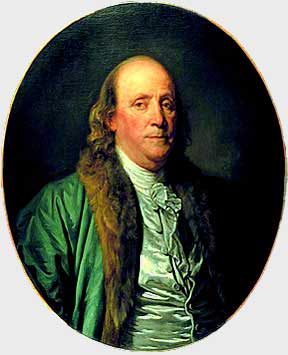 Almanac printed quips of advice. He actually got started as a young writer by writing advice columns for his brother’s newspaper. He was our country’s first “Dear Abby”. How many of us haven’t grown up hearing “An ounce of prevention is worth a pound of cure?” My consulting firm–The Minerva Group–spent most of the 1980s teaching businesses and public organizations how to build quality in rather than rely on faulty inspection to sort out mishaps. One of the biggest reasons this is important is cost savings. If you’re in manufacturing, mistakes turn into expensive scrap. If you’re in services, you waste human energy and frequently irritate customers. When I consulted for the Air Force during the first Gulf War I was frequently reminded by the Colonels I worked with that their mistakes could cost lives. Why is it the Republicans have forgotten this lesson in the rush to be stingier than thou?
Suzy Khimm writes for Mother Jones. Her latest article called “Death by a Single GOP Cut” illustrates the medical and public health implications of underfunding immunizations among other initiatives.
In the past year, California has experienced the worst whooping cough outbreak in more than 50 years, an epidemic that has killed 10 infants and resulted in 6,400 reported cases. But even as the state’s public health officials have struggled to curb the disease, Republicans in Congress have proposed slashing millions in federal funding for immunization programs. Public health advocates warn that these cuts threaten efforts across the country to prevent and contain infectious and sometimes fatal diseases. And they add that lower vaccination rates could eventually result in more outbreaks that endanger public health at a major cost to taxpayers.
The House GOP’s 2011 budget would chop $156 million from the Centers for Disease Control’s funding for immunization and respiratory diseases. The GOP reductions are likely to hit the CDC’s support for state and local immunization programs, the agency’s ability to evaluate which vaccines are working, and its work to educate the public about recommended vaccines for children, teenagers, and other susceptible populations. The CDC especially focuses on serving lower-income families who receive vaccines at state and local health offices and community health clinics, rather than a private doctor’s office.
There’s another old saying that goes like this: “Pennywise and Pound foolish”. Ezra Klein borrowed that one to quip on more GOP cost cutting antics.
There are three categories of spending in which cuts lead to more, rather than less, spending down the line, says Alice Rivlin, former director of both the Congressional Budget Office and the Office of Management and Budget. Inspection, enforcement and maintenance. The GOP is trying to cut all three.
There’s a war on common sense going on in this country. It’s based in some fairly crazy ideology that appears to appreciation inefficiency and cost run ups rather than pooling a country’s resources to achieve a good outcome. Klein’s post is just full of examples where eliminating government programs will lead to bad outcomes. Just think about all the outbreaks of e coli or food poisoning just out there waiting to happen because some company would rather cut corners than do reliable inspections, buy or fix equipment, or hire people that are trained and know what they’re doing? The best example of the lunacy is the proposed cuts to the agency responsible for tsunami monitoring Republicans suggested days before a tsunami hit both California and Hawaii. Early warning systems and method of prevention save lives and a lot of money.
Let’s face it. Many elected officials would rather gamble with our lives and our safety than admit that government can do some good things. They’d rather privatize everything let us all beware when we’re forced into using the product or service. I have no idea where this insanity comes from but I’d like it to stop now. I don’t mind paying taxes when it goes to a good cause. What I object of to paying for are sweetheart, no bid deals to big corporations that mark up everything to achieve obscene profits and donate huge sums to politicians to get them to overlook their abusive practices. One of these days we’ll go back to appreciating public goods like education, interstate highways, and immunization programs. I would’ve thought that the levee failure during Hurricane Katrina would have provided some lessons on what happens when you underfund the maintenance and construction of projects in the public interest. This is just more hard core libertarian nonsense that needs to return the pages of Atlas Shrugged and other bad fiction like studies produced by the Cato Institute and Reason Magazine.

 peej
peej Carissa
 bostonboomer
 dakinikat
 ecocatwoman
 mablue2
 Mama Lopez
 peggysue22
 quixote
 skydancingguestblogger
 Mona (aka Wonk the Vote)



 Sky Dancing
Recent Comments