

By Tuesday afternoon Trump called one person close to him with the message, “He’s done. It’s over. I killed him.”
Wednesday Reads: Allies Turning on Trump, and A MAGA Speaker Candidate
Posted: October 25, 2023 Filed under: 2020 Elections, 2024 Elections, Donald Trump | Tags: 5th Amendment, Fani Willis, Georgia election interference case, grand jury, Jenna Ellis, Mark Meadows, Mike Johnson, Republicans, Speaker of the House search, Tom Emmer, use immunity, witness tampering 4 CommentsGood Afternoon!!

Vase of Flowers, by Paul Gauguin
Yesterday, another shoe dropped in the Georgia election interference case when former Trump attorney Jenna Ellis accepted a plea deal.
CNN: Former Trump campaign lawyer Jenna Ellis pleads guilty in Georgia case.
Former Trump campaign lawyer Jenna Ellis pleaded guilty Tuesday in the Georgia election subversion case and will cooperate with Fulton County prosecutors – the third guilty plea in the past week.
At an unscheduled hearing in Atlanta, Ellis pleaded guilty to one count of aiding and abetting false statements, a felony stemming from the election lies that Ellis and other Donald Trump lawyers peddled to Georgia lawmakers in December 2020.
She was sentenced to five years of probation and ordered to pay $5,000 in restitution.
Ellis delivered a tearful statement to the judge Tuesday while pleading guilty, disavowing her participation in Trump’s unprecedented attempts to overturn the 2020 election.
“If I knew then what I knew now, I would have declined to represent Donald Trump in these post-election challenges. I look back on this experience with deep remorse,” Ellis said, her voice breaking at times.
The development comes after back-to-back guilty pleas last week in the sprawling case from former Trump campaign lawyer Sidney Powell and Kenneth Chesebro, who helped devise the fake electors plot.
These three plea deals are a monumental step forward for Fulton County District Attorney Fani Willis, who charged the case in August and is preparing for trials against Trump, his former attorney Rudy Giuliani, his chief of staff Mark Meadows and other top figures. (They have all pleaded not guilty.)
Ellis, Chesebro and Powell all agreed to testify on behalf of the prosecution at future trials. By flipping, these onetime Trump insiders are now on track to become major Trump nemeses. They are all lawyers and can shed light on what was happening behind the scenes in 2020.
The New York Times: With Plea Deals in Georgia Trump Case, Fani Willis Is Building Momentum.
Fani T. Willis, the district attorney of Fulton County, Ga., had no shortage of doubters when she brought an ambitious racketeering case in August against former president Donald J. Trump and 18 of his allies. It was too broad, they said, and too complicated, with so many defendants and multiple, crisscrossing plot lines for jurors to follow.
But the power of Georgia’s racketeering statute in Ms. Willis’s hands has become apparent over the last six days. Her office is riding a wave of momentum that started with a guilty plea last Thursday from Sidney K. Powell, the pro-Trump lawyer who had promised in November 2020 to “release the kraken” by exposing election fraud, but never did.
Maple Tree Listening, by Kazuko Shiihashi
Then, in rapid succession, came two more guilty pleas — and promises to cooperate with the prosecution and testify — from other Trump-aligned lawyers, Kenneth Chesebro and Jenna Ellis. While Ms. Powell pleaded guilty only to misdemeanor charges, both Mr. Chesebro and Ms. Ellis accepted a felony charge as part of their plea agreements.
A fourth defendant, a Georgia bail bondsman named Scott Hall, pleaded guilty last month to five misdemeanor charges.
With Mr. Trump and 14 of his co-defendants still facing trial in the case, the question of the moment is who else will flip, and how soon. But the victories notched thus far by Ms. Willis and her team demonstrate the extraordinary legal danger that the Georgia case poses for the former president.
And the plea deals illustrate Ms. Willis’s methodology, wielding her state’s racketeering law to pressure smaller-fry defendants to roll over, take plea deals, and apply pressure to defendants higher up the pyramids of power.
The strategy is by no means unique to Ms. Willis. “This is how it works,” said Kay L. Levine, a law professor at Emory University in Atlanta, referring to large-scale racketeering and conspiracy prosecutions. “People at the lower rungs are typically offered a good deal in order to help get the big fish at the top.”
Later yesterday, ABC News published a scoop about former chief of staff Mark Meadows: Ex-Chief of Staff Mark Meadows granted immunity, tells special counsel he warned Trump about 2020 claims: Sources.
Former President Donald Trump’s final chief of staff in the White House, Mark Meadows, has spoken with special counsel Jack Smith’s team at least three times this year, including once before a federal grand jury, which came only after Smith granted Meadows immunity to testify under oath, according to sources familiar with the matter.
According to the sources, Meadows also told the federal investigators Trump was being “dishonest” with the public when he first claimed to have won the election only hours after polls closed on Nov. 3, 2020, before final results were in.
“Obviously we didn’t win,” a source quoted Meadows as telling Smith’s team in hindsight.
Trump has called Meadows, one of the former president’s closest and highest-ranking aides in the White House, a “special friend” and “a great chief of staff — as good as it gets.”
The descriptions of what Meadows allegedly told investigators shed further light on the evidence Smith’s team has amassed as it prosecutes Trump for allegedly trying to unlawfully retain power and “spread lies” about the 2020 election. The descriptions also expose how far Trump loyalists like Meadows have gone to support and defend Trump.
Sources told ABC News that Smith’s investigators were keenly interested in questioning Meadows about election-related conversations he had with Trump during his final months in office, and whether Meadows actually believed some of the claims he included in a book he published after Trump left office — a book that promised to “correct the record” on Trump.

Peonies and Irises, by Emil Nolde
ABC news found several passages in the book that differ from Meadows’ reported testimony. See examples at the link. People are claiming that Meadows “flipped” on Trump, but that’s not what this sounds like:
Under the immunity order from Smith’s team, the information Meadows provided to the grand jury earlier this year can’t be used against him in a federal prosecution.
That immunity came after a lawyer for Meadows requested that his client be immunized to testify before the grand jury, sources familiar with the matter said. A senior Justice Department official signed off on the request and an immunity order was then issued by U.S. District Court Judge James Boasberg, the chief judge at the federal court in Washington, D.C., days before Meadows appeared before the grand jury in March, sources said.
Had Meadows not been granted immunity, prosecutors expected him to invoke his Fifth Amendment rights against self-incrimination, sources said.
It sounds like Meadows was given “use immunity” in order to force him to testify without taking the Fifth. That’s not “flipping.” It just means that he cannot be prosecuted for truthful testimony he gave to the grand jury. He may end up cooperating with the government, but he hasn’t done it yet.
The Guardian’s Hugo Lowell agrees: Trump chief Mark Meadows testified in 2020 election case after immunity order.
Donald Trump’s former White House chief of staff Mark Meadows testified to a federal grand jury earlier this year about efforts by the former president to overturn the 2020 election results pursuant to a court order that granted him limited immunity, according to two people familiar with the matter.
The immunity – which forces witnesses to testify on the promise that they will not be charged on their statements or information derived from their statements – came after a legal battle in March with special counsel prosecutors, who had subpoenaed Meadows.
Trump’s lawyers attempted to block Meadows’ testimony partially on executive privilege grounds. However, the outgoing chief US district judge Beryl Howell ruled that executive privilege was inapplicable and compelled Meadows to appear before the grand jury in Washington, the people said.
The precise details of what happened next are unclear, but prosecutors sought and received an order from the incoming chief judge James Boasberg granting limited-use immunity to Meadows to overcome his concerns about self-incrimination, the people familiar with the matter said.
That Meadows testified pursuant to a court order suggests prosecutors in the office of special counsel Jack Smith were determined to learn what information he was afraid to share because of self-incrimination concerns – but it does not mean he became a cooperator.
Typically, under limited-use immunity orders, witnesses provide limited statements. With the payoff potentially small and with the increased difficulty that comes from charging immunity recipients in the future, the justice department is broadly averse to seeking such orders.
The approval must also come from the top echelons of the justice department, according to guidelines, and the preferred method for federal prosecutors to obtain testimony is to have defendants plead guilty, and then have them offer cooperation for a reduced sentence.
Nevertheless, I think it’s unlikely that Meadows will be willing to go to prison for Trump; so he may end up cooperating. He just hasn’t done it yet.

Anemones, Edvard Munch
Last night in a Truth Social post, Trump blatantly attempted to witness tamper Mark Meadows.
From an analysis post by Stephen Collinson at CNN: Trump rages as former acolytes turn against him under legal heat.
In a rage-filled stream of consciousness on his Truth Social network on Tuesday night, Trump lashed out at the ABC report about Meadows.
“I don’t think Mark Meadows would lie about the Rigged and Stollen 2020 Presidential Election merely for getting IMMUNITY against Prosecution (PERSECUTION!),” the former president wrote.
“Some people would make that deal, but they are weaklings and cowards, and so bad for the future our Failing Nation. I don’t think that Mark Meadows is one of them, but who really knows? MAKE AMERICA GREAT AGAIN!!!”
The other big story today is House Republicans’ endless search for a Speaker candidate they can agree on. The latest candidate is Rep. Mike Johnson, an ultra-MAGA guy, after Trump put the kibosh on previous candidate Tom Emmer, who supported the transition of power in 2020.
Politico: ‘I killed him’: How Trump torpedoed Tom Emmer’s speaker bid.
Just hours after Rep. Tom Emmer (R-Minn.) won the Republican Conference’s nomination to be House speaker on Tuesday, former President Donald Trump took to Truth Social to deride the congressman as “totally out-of-touch with Republican Voters” and a “Globalist RINO.”
He then got on the phone with members to express his aversion for Emmer and his bid for speaker.
Just minutes later, Emmer officially dropped out of the race.
His withdrawal made Emmer the third nominee for speaker to have his hopes dashed for the most cursed job in politics. And it showed that while Trump may not be able to elevate someone to the post — his earlier choice for the job, Rep. Jim Jordan (R-Ohio), also flopped — he can very well ensure that a person doesn’t get it….
Trump had signaled to aides last week that he did not support Emmer’s bid for the speakership. The former president complained that Emmer had criticized him following the Trump-inspired Jan. 6 Capitol riot and, among other things, had not forcefully enough defended him against his multiple indictments.
The House will supposedly vote on Johnson for Speaker today. So who is Mike Johnson?
The Washington Post: 5 things to know about Mike Johnson, the GOP’s latest House speaker nominee.
It remains unclear whether Johnson has enough support to win the gavel. But after he was nominated in a Republican closed-door vote on Tuesday, Johnson, flanked by his colleagues, projected confidence, promising to restore voters’ trust in government and to govern effectively if he is elected speaker.
Red Roses with Blue, by Alex Katz
Here are five things to know about Mike Johnson and his political views.
He opposed certifying the 2020 election.
Johnson, 51, contested the results of the 2020 election — urging President Donald Trump to “stay strong and keep fighting” as he tried to overturn his loss to Joe Biden in the presidential race.
Johnson also objected to certifying Biden’s electoral win and was one of the architects of a legal attack on the election that consisted of arguing that states’ voting accommodations during the pandemic were unconstitutional. He led a group of 126 Republican lawmakers in filing an amicus brief to the Supreme Court alleging that authorities in Georgia, Pennsylvania, Wisconsin and Michigan “usurped” the constitutional authority of state legislatures when they loosened voting restrictions because of the pandemic. The court rejected the underlying complaint — filed by the state of Texas — due to lack of standing, and dismissed all other related motions, including the amicus brief.
He voted against further Ukraine aid.
Johnson, who serves on the House Armed Services Committee, was one of 57 lawmakers — all of them Republicans — who voted against a $39.8 billion aid package for Ukraine in May.
According to the Shreveport Times, Johnson explained his opposition to the bill by saying that the United States “should not be sending another $40 billion abroad when our own border is in chaos, American mothers are struggling to find baby formula, gas prices are at record highs, and American families are struggling to make ends meet, without sufficient oversight over where the money will go.”
Johnson has also called for more oversight of the aid sent to Ukraine — totaling more than $60 billion to date. In February, following a House Armed Services Committee hearing on the topic, he tweeted that American taxpayers “deserve to know if the Ukrainian government is being entirely forthcoming and transparent about the use of this massive sum of taxpayer resources.” [….]
He is anti-abortion.
Johnson, a constitutional lawyer who identifies as a Christian, opposes abortion and has celebrated the Supreme Court’s decision to overturn Roe v. Wade, the landmark 1973 ruling that established constitutional protections for abortions nationwide.
“There is no right to abortion in the Constitution; there never was,” Johnson told Fox News on the day the decision was announced, calling it “a great, joyous occasion.”
The antiabortion nonprofit Susan B. Anthony Pro-Life America gives Johnson an A+ ranking on this issue, stating that he “has voted consistently to defend the lives of the unborn and infants,” including by “stopping hard-earned tax dollars from paying for abortion, whether domestically or internationally.”
He is a close ally of Donald Trump
Johnson is a close ally of Trump, having served on the former president’s legal defense team during his two impeachment trials in the Senate.
He has called charges against Trump — which include a federal case relating to his attempts to overturn the 2020 election — “bogus,” and has said the legal and political systems have treated Trump unfairly.
He supports LGBTQ restrictions.
Johnson has positioned himself on the far right of the political spectrum on several social issues, even within the current conservative Republican conference. Notably, he introduced legislation last year — modeled after Florida’s “don’t say gay” bill — that would have prohibited discussion of sexual orientation and gender identity, as well as related subjects, at any institution that received federal funds. The Human Rights Campaign, a pro-LGBTQ civil rights organization, gave Johnson a score of 0 in its latest congressional scorecard.
Johnson also opposes gender-affirming care for minors and led a hearing on the subject in July. In a statement, he described gender-affirming care — meaning medical care that affirms or recognizes the gender identity of the person receiving the care, and which can include giving puberty or hormone blockers to minors under close monitoring from a doctor — as “adults inflicting harm on helpless children to affirm their world view.”


Roses, by Vincent Van Gogh
NBC News: GOP speaker nominee Mike Johnson played a key role in efforts to overturn the 2020 election.
Well before he secured the GOP nomination for House speaker, Rep. Mike Johnson, R-La., played a key role in efforts by then-President Donald Trump and his allies to overturn Joe Biden’s electoral victory in the 2020 election.
Johnson, who currently serves as the GOP caucus vice chair and is an ally of Trump, led the amicus brief signed by more than 100 House Republicans in support of a Texas lawsuit seeking to invalidate the 2020 election results in four swing states won by Biden: Georgia, Michigan, Pennsylvania and Wisconsin.
The lawsuit, filed by Texas Attorney General Ken Paxton, a Republican, called on the Supreme Court to delay the electoral vote in the four states in order for investigations on voting issues to continue amid Trump’s refusal to concede his loss. It alleged that the four states changed voting rules without their legislatures’ express approval before the 2020 election.
Johnson at the time sought support from his GOP colleagues for the lawsuit, sending them an email with the subject line “Time-sensitive request from President Trump.”
“President Trump called me this morning to express his great appreciation for our effort to file an amicus brief in the Texas case on behalf of concerned Members of Congress,” Johnson wrote in the December 2020 email, which was obtained by NBC News….
The lawsuit swiftly drew backlash from battleground state attorneys general, who decried it as a “publicity stunt” full of “false and irresponsible” allegations. Legal experts also pointed to a series of hurdles the lawsuit had faced, saying that Texas lacked the authority to claim that officials in other states failed to follow the rules set by their legislatures….
Johnson’s role in pursuing efforts to overturn the 2020 election results has regained attention recently amid his speakership bid. On Tuesday, the political team of former Republican Rep. Liz Cheney of Wyoming — who broke with Trump over his baseless claims of a stolen election — circulated a New York Times article that called him “the most important architect of the Electoral College objections” on Jan. 6, 2021, aimed at keeping then-President Trump in office even after he lost.
The Times reported last year that many Republicans who voted to discount pro-Biden electors cited an argument crafted by Johnson, which was to ignore the false claims about mass fraud in the election and instead hang the objection on the claim that certain states’ voting changes during the Covid-19 pandemic were unconstitutional.
The Supreme Court ultimately rejected Texas’ effort to overturn the election results.
This guy is MAGA all the way. As speaker, he would likely try to find a way for the House to decide the 2025 election. We’ll find out later today if House Republicans can get together enough votes to elect him.
That’s all I have for you today. No war news. I’m really burned out on that. Feel free to post on anything in the comment thread.
Lazy Saturday Reads: Trump “Drunk on Power” — John Brennan
Posted: August 18, 2018 Filed under: Afternoon Reads, U.S. Politics | Tags: abuse of power, corruption, Donald Trump, John Brennan, obstruction of justice, Robert Mueller, Russia investigation, security clearances, Vian Risanto, witness tampering 17 Comments
Blue Iris, Vian Risanto
Good Afternoon!!
It has been another disastrous week in Trumpland. The “president” seems to be losing what control he ever had. He spends his days watching TV, throwing tantrums on Twitter, and dreaming up ways to punish his many “enemies.” He’s Nixon on steroids, and the Republicans continue to refuse to do anything to check his corruption and abuses of power.
On Wednesday, Trump unilaterally revoked the security clearance of former CIA chief John Brennan, and despite condemnations by former members of the intelligence community, he plans to keep revoking the clearances of anyone who dares to criticize him or who may have been in some way involved with the Russia investigation.
The Washington Post: White House drafts more clearance cancellations demanded by Trump.
The White House has drafted documents revoking the security clearances of current and former officials whom President Trump has demanded be punished for criticizing him or playing a role in the investigation of Russian interference in the 2016 election, according to senior administration officials.
Trump wants to sign “most if not all” of them, said one senior White House official, who indicated that communications aides, including press secretary Sarah Huckabee Sanders and Bill Shine, the newly named deputy chief of staff, have discussed the optimum times to release them as a distraction during unfavorable news cycles.

Cocktail dress, Vian Risanto
Yes, they admit these will be used to distract the public on bad news days for Trump!
Some presidential aides echoed concerns raised by outside critics that the threatened revocations smack of a Nixonian enemies list, with little or no substantive national security justification. Particular worry has been expressed inside the White House about Trump’s statement Friday that he intends “very quickly” to strip the clearance of current Justice Department official Bruce Ohr, according to officials who spoke on the condition of anonymity to discuss internal deliberations….
It was unclear what the argument would be for revoking Ohr’s clearance, since Deputy Attorney General Rod J. Rosenstein, while not specifying Ohr’s current job, has said he has had no involvement in the Mueller investigation, begun last year.
But Ohr knew Christopher Steele, the former British intelligence agent who was hired in 2016 by Fusion GPS, then working for Hillary Clinton’s campaign and the Democratic National Committee, to investigate Trump’s ties to Russia. Ohr’s wife also worked for Fusion GPS. According to news reports and congressional testimony, the two men discussed Trump before the election. Ohr later reported the conversation to the FBI.
Ohr is the only current official on the White House list of clearances Trump wants to lift. The others are former director of national intelligence James R. Clapper Jr.; former CIA director Michael V. Hayden; former FBI director James B. Comey; Obama national security adviser Susan E. Rice; former FBI officials Andrew McCabe, Lisa Page and Peter Strzok; and former acting attorney general Sally Yates. Several of them have said they no longer have clearances.
It’s difficult to believe that Trump’s actions could not be seen as obstruction of justice and witness tampering, since many of those on the “enemies list” are potential witnesses in Robert Mueller’s investigation. Yesterday, The Washington Post’s Aaron Blake addressed the issue: How Trump’s security-clearance gambit could actually get him in deeper trouble with Mueller.
Green chair, Vian Risanto
I was on an MSNBC panel Thursday night with Elie Honig, a former federal prosecutor for the Southern District of New York, who suggested Trump’s revocation of security clearances could be construed as retaliation against witnesses. “It’s a federal crime — §1513 if anyone wants to look it up — to retaliate against someone for providing truthful information to law enforcement,” he said. “So he’s getting closer and closer to really dangerous ground here.”
Here’s the text of Section 1513(e):
Whoever knowingly, with the intent to retaliate, takes any action harmful to any person, including interference with the lawful employment or livelihood of any person, for providing to a law enforcement officer any truthful information relating to the commission or possible commission of any Federal offense, shall be fined under this title or imprisoned not more than 10 years, or both.
Honig explained to me Friday that he didn’t necessarily think Trump’s revocation of Brennan’s security clearance would be a violation, given Brennan isn’t a major figure on the probe’s key events. But if he presses on and does it with others, Honig argued, it could.

Read the rest at the WaPo.
Last night Rachel Maddow interviewed John Brennan. Talking Point Memo: Brennan On Revoked Clearance: ‘This Country Is More Important Than Mr. Trump.’
Former CIA Director John Brennan was defiant Friday night in response to President Donald Trump’s revocation of his security clearance, and to Trump’s threatening to revoke the clearances of several other former intelligence and national security officials who’ve become harsh critics of his.
Vian Risanto
“I think this is an egregious act that it flies in the face of traditional practice, as well as common sense, as well as national security,” Brennan told MSNBC’s Rachel Maddow. “I think that’s why there’s been such an outcry from many intelligence professionals.”

Brennan told Maddow that he is thinking about taking legal action.
“A number of lawyers have reached out to say that there is a very strong case here, not so much to reclaim [my clearance] but to prevent this from happening in the future,” Brennan told Maddow, asked if he was considering legal action against the administration.
Some groups, including the ACLU, have alleged that revoking Brennan’s clearance in retaliation for his criticism of Trump, as the White House said was the case, was a violation of the former CIA director’s First Amendment rights.
Brennan repeated his accusation that Trump’s Helsinki summit with Russian President Vladimir was “nothing short of treasonous.”
And he said a Washington Post report that his clearance revocation had been timed “to divert attention from nonstop coverage of a critical book released by fired Trump aide Omarosa Manigault Newman” was “just another demonstration of [Trump’s] irresponsibility.”
“The fact that he’s using a security clearance of a former CIA director as a pawn in his public relations strategy, I think, is just so reflective of somebody who, quite frankly — I don’t want to use this term, maybe — but he’s drunk on power.”
Three reactions to Trump’s latest power grab to check out:

A night out, Vian Risanto
Tim Weiner at The New York Times: Trump Is Not a King.
In times of crisis, the leaders of the military and intelligence communities try to put aside their differences, often many and sundry, and work together for the good of the country. That’s what’s happening today with a remarkable group of retired generals, admirals and spymasters who have signed up for the resistance, telling the president of the United States, in so many words, that he is not a king.
Thirteen former leaders of the Pentagon, the C.I.A. and the F.B.I. have signed an open letter standing foursquare against President Trump, in favor of freedom of speech and, crucially, for the administration of justice. They have served presidents going back to Richard M. Nixon mostly without publicly criticizing the political conduct of a sitting commander in chief — until now.
They rebuked Mr. Trump for revoking the security clearance of John Brennan, the C.I.A. director under President Obama, in retaliation for his scalding condemnations and, ominously, for his role in “the rigged witch hunt” — the investigation into Russia’s attempt to fix the 2016 election, now in the hands of Robert S. Mueller III, the special counsel. The president’s latest attempt to punish or silence everyone connected with the case, along with his fiercest critics in political life, will not be his last….
The president aims to rid the government and the airwaves of his real and imagined enemies, especially anyone connected with the Russia investigation. Somewhere Richard Nixon may be looking up and smiling. But aboveground, the special counsel is taking notes.
Lily, Vian Risanto
The list of the signatories to the open letter defending Mr. Brennan is striking for the length and breadth of their experience. I never expected to see William H. Webster — he’s 95 years old, served nine years as F. B.I. director under Presidents Jimmy Carter and Ronald Reagan, then four more as C.I.A. director under Reagan and President George H. W. Bush — sign a political petition like this. The same with Robert M. Gates, who entered the C.I.A. under President Lyndon Johnson, ran it under George H. W. Bush and served as Secretary of Defense under Presidents George W. Bush and Barack Obama. These are not the kind of men who march on Washington. These are men who were marched upon.

Read more at the NYT.
Jonathan Chait at New York Magazine: Trump Is Making the Department of Justice Into His Own Private Goon Squad.
One morning earlier this week during executive time, President Trump tweeted out his assessment of the Russia investigation. “The Rigged Russian Witch Hunt goes on and on as the ‘originators and founders’ of this scam continue to be fired and demoted for their corrupt and illegal activity,” he raged. “All credibility is gone from this terrible Hoax, and much more will be lost as it proceeds. No Collusion!”
Amid this torrent of lies, the president had identified one important truth. There has in fact been a series of firings and demotions of law-enforcement officials. The casualties include FBI director James Comey, deputy director Andrew McCabe, general counsel James Baker, and, most recently, agent Peter Strzok. Robert Mueller is probing the circumstances surrounding Trump’s firing of Comey for a possible obstruction-of-justice charge. But for Trump, obstruction of justice is not so much a discrete act as a way of life.
The slowly unfolding purge, one of the most vivid expressions of Trump’s governing ethos, has served several purposes for the president. First, it has removed from direct authority a number of figures Trump suspects would fail to provide him the personal loyalty he demanded from Comey and expects from all officials in the federal government. Second, it supplies evidence for Trump’s claim that he is being hounded by trumped-up charges — just look at all the crooked officials who have been fired! Third, it intimidates remaining officials with the threat of firing and public humiliation if they take any actions contrary to Trump’s interests. Simply carrying out the law now requires a measure of personal bravery.
Trump has driven home this last factor through a series of taunts directed at his vanquished foes. After McCabe enraged Trump by approving a flight home for Comey after his firing last May, the president told him to ask his wife (who had run for state legislature, unsuccessfully) how it felt to be a loser. This March, Trump fired McCabe and has since tweeted that Comey and McCabe are “clowns and losers.” The delight Trump takes in tormenting his victims, frequently calling attention to Strzok’s extramarital affair — as if Trump actually cared about fidelity! — underscores his determination to strip his targets of their dignity.
Click on the link to read the rest.
Bob Bauer at Lawfare: Richard Nixon, Donald Trump and the ‘Breach of Faith.’
Red couch, Vian Risanto
Journalist and presidential historian Theodore H. White thought of Richard Nixon’s downfall as the consequence of a “breach of faith.” Perhaps it was a “myth,” but an important one, that “is responsibility,” White wrote. But it was important nonetheless that Americans believe that this office, conferring extraordinary power, would “burn the dross from [the president’s] character; his duties would, by their very weight, make him a superior man, fit to sustain the burden of the law, wise and enduring enough to resist the clash of all selfish interests.”
A president who frustrates this expectation, failing to exhibit the transformative effects of oath and office, will have broken faith with the American public. And yet, White believed that Nixon’s presidency had been an aberration. “[M]any stupid, hypocritical and limited men had reached that office,” he wrote. “But all, when publicly summoned to give witness, chose to honor the legends” of what the office required of a president’s behavior in office.
White’s understanding of what constitutes a “breach of faith” is well worth recalling in considering the presidency of Donald Trump. As White understood it, the term encompassed more than illegal conduct or participation in its cover-up. It was a quality of leadership—or more to the point, the absence of critical qualities—that defined a president’s “betrayal” of his office. What elevated Nixon’s misdeeds to a fatal constitutional flaw, forcing him to surrender his presidency, was the breaking of faith with the American people. Nixon brushed the legal and ethical limits on pursuing his own political and personal welfare. He held grudges and was vindictive; he looked to destroy his enemies rather than simply prevailing over them in hard, clean fights. He lied repeatedly to spare himself the costs of truth-telling.
All of this may be said of Donald Trump, but for a key difference: Nixon was anxious to conceal much of this behavior from public view.
Much has been said and written about Trump’s leadership style: the chronic resort to false claims; the incessant tweeting of taunts and personal attacks on his adversaries; the open undermining of members of his own administration; the abandonment of norms; the refusal to credit, respect or support the impartial administration of justice where his personal or political interests are stake; and the use of office to promote his personal business enterprises. By now, almost two years into his administration, it is clear that this is who he is.
Like Nixon, Trump seems to believe that his behavior is justified by the extraordinary and ruthless opposition of an “establishment”—comprised mainly of the media, the opposition party, and intellectuals—to his election and his politics.

Please go read the rest at Lawfare.
That’s all I have for you today. Please share your thoughts and links in the comment thread below.
Tuesday Reads: Russia Russia Russia
Posted: June 5, 2018 Filed under: Foreign Affairs, morning reads, U.S. Politics | Tags: Donald Trump, Hapsburg group, Konstantin Kilimnik, Paul Manafort, Rick Gates, Robert Mueller, Vladimir Putin, witness tampering 30 Comments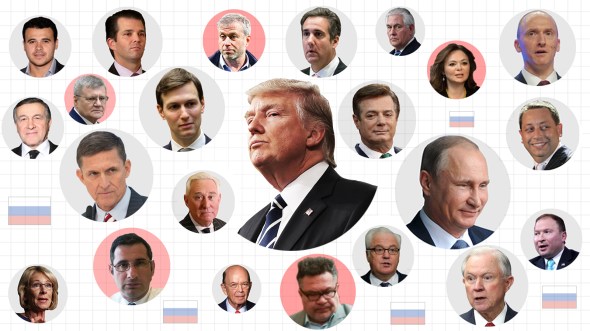
Good Morning!!
There has quite a bit of breaking news on the Russia investigation front this week, and it’s only Tuesday. We learned last night that Paul Manafort tried to suborn perjury from witnesses in his case. Perhaps that’s why Trump has been madly tweeting about Manafort and the investigation generally.
The Washington Post: Mueller accuses Paul Manafort of witness tampering.
Federal prosecutors accused former Trump presidential campaign chairman Paul Manafort of witness tampering late Monday in his criminal case and asked a federal judge to consider revoking or revising his release.
Prosecutors accused Manafort and a longtime associate they linked to Russian intelligence of repeatedly contacting two members of a public relations firm and asking them to falsely testify about secret lobbying they did at Manafort’s behest.
The firm of former senior European officials, informally called the “Hapsburg group,” was secretly retained in 2012 by Manafort to advocate for Ukraine, where Manafort had clients, prosecutors charged.
Konstantin Kilimnik
In court documents, prosecutors with special counsel Robert S. Mueller III allege that Manafort and his associate — referred to only as Person A — tried to contact the two witnesses by phone and through encrypted messaging apps. The description of Person A matches his longtime business colleague in Ukraine, Konstantin Kilimnik.

So Manafort could soon be headed for jail unless he decides to cooperate with Mueller. Read the rest at the WaPo. Some commentary:
John Cassidy at The New Yorker: More Legal Trouble for Paul Manafort—and Donald Trump.
Coincidences do happen, but this seems to be an unlikely one. On Sunday morning, seemingly apropos of nothing, Donald Trump posted a messageon Twitter that stated the following: “As only one of two people left who could become President, why wouldn’t the FBI or Department of ‘Justice’ have told me that they were secretly investigating Paul Manafort (on charges that were 10 years old and had been previously dropped) during my campaign? Should have told me!”
Even by Trump’s standards, this message seemed a bit weird. A few minutes later, the President posted another one, which said, Paul Manafort came into the campaign very late and was with us for a short period of time (he represented Ronald Reagan, Bob Dole & many others over the years), but we should have been told that Comey and the boys were doing a number on him, and he wouldn’t have been hired!”
Trump says a lot of things on Twitter, of course. But prior to this outburst, he hadn’t talked much recently about Manafort, who made millions of dollars working as a political consultant for despots around the world and is facing trial in two federal courts on charges that include money laundering, bank fraud, and failing to disclose his U.S. lobbying work for a foreign government—all of which were brought by the special counsel, Robert Mueller. Why Trump’s sudden interest? One possible inference was that the President had somehow heard that there was more bad news coming about Manafort, and he was trying to limit some of the damage in advance of its release. If that was indeed the case, we now know the source of Trump’s concern.
In a filing made in U.S. district court, in Washington, on Monday night, Mueller’s office accused Manafort, who is out on bail, of trying to tamper with potential witnesses earlier this year, and asked a judge to consider jailing him before his trial. At this stage, obviously, we don’t know how the court will rule. But Manafort is already facing considerable pressure to coöperate with the special counsel’s investigation. If the court were to revoke his freedom, this pressure would sharply increase.
Franklin Foer at The Atlantic: Paul Manafort Loses His Cool.
At the height of his powers as a political consultant, Paul Manafort was known for his cool. In fact, the value of his counsel increased at moments of crisis. While others panicked, Manafort rarely evinced a hint of frazzle. He could still think strategically, detach himself from emotion, and issue clearheaded guidance. But he could afford to keep his head at such moments, because the problems he was called on to solve belonged to others.
Robert Mueller’s allegation that Manafort attempted to tamper with a witness permits us to peer inside Manafort’s mind as it has functioned in a very different set of circumstances. When it comes to Manafort’s own deep problems—his moment of legal peril—he seems unable to muster strategic thinking. He has shown himself capable of profoundly dunderheaded miscalculations.
It’s hard to understand how he could have attempted the scheme described by Mueller in the midst of the highest-profile, most scrutinized criminal inquiry of the century. But that alone fails to capture the depths of his blundering.
Foer describes how each of Mueller’s filings in Manafort’s case has made it clear that Manafort’s every move is being closely watched by federal investigators, and yet Manafort apparently thought he could get away with contacting witnesses.
Each of Mueller’s new filings has further revealed the extent to which he is surveilling Manafort and his closest associates. A week before Manafort apparently attempted to tamper with the witness, Mueller stated plainly that he was watching their encrypted communication channels. And before that, Mueller showed that he was keeping tabs on Manafort’s email when he exposed an op-ed that Manafort had ghostwritten in his own defense, in violation of a judge’s gag order.
If we look back on Robert Mueller’s strategy over the past few months, the special prosecutor seems to repeatedly signal to Manafort: Look, I know everything; you have no choice but cooperation. It’s a pattern that continues with this filing, the first instance in which Mueller has deployed material supplied by Manafort’s old alter ego, Rick Gates. When Gates agreed to cooperate with Mueller, he handed over a raft of emails. We can see in the exhibits that Mueller attached to this filing that Gates possesses a comprehensive archive of Manafort’s dealings, a blueprint of his operation. There will be no ellipses in the Manafort trial. Gates can fill all the gaps.
There is another suggestive fact that Mueller posits in passing. Manafort’s witness-tampering scheme featured a co-conspirator. Mueller doesn’t name the accomplice, but his identity is not hard to discern from Mueller’s description. Manafort tried to contact his Hapsburg Group collaborators through his old Russo-Ukrainian aide, Konstantin Kilimnik.
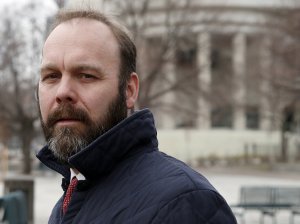
Rick Gates
Why did Manafort think he could get away with continuing to communicate with Kilimnik? Mueller is slowly but surely ensuring that Manafort will either cooperate or spend the rest of his life in prison.
Meanwhile, at Mother Jones, David Corn warns that the simple narrative of Russia’s attack on our democracy is getting lost in the details as Trump, Fox News, and Devin Nunes work constantly to obfuscate the truth with big lies: Donald Trump Is Getting Away With the Biggest Scandal In American History.
The other evening I was on a cable news show to cover the latest Russia news of the day—and I had an epiphany.
We were talking about a recent scoop from Michael Isikoff, the co-author of my latest book, Russian Roulette. He had reported that a Spanish prosecutor had handed the FBI wiretapped transcripts of a Russian official who was suspected of money laundering and for years had been trying to gain influence within the American conservative movement and the National Rifle Association. We then discussed a New York Times article revealing that Michael Cohen, Donald Trump’s longtime fixer, had met with a Russian oligarch in January 2017, around the time a US company affiliated with this tycoon began making $500,000 in payments to Cohen. Next we turned to the latest in the so-called Spygate nonscandal—the false claim, championed by Trump and his defenders, that the FBI infiltrated a spy into his presidential campaign for political purposes.
Then the show moved on. We had spent 15 or so minutes on these important developments, delving into the details—but without referring to the essence of the story. And it hit me: Though it’s clear Trump’s presidency has been hobbled by the Russia scandal, the manner in which this matter plays out in the media has helped Trump.
Meanwhile Trump, backed up by Fox News, keeps pushing out his propaganda.
Michael Isakoff and David Corn
The other side—the accurate perspective—isn’t that complicated. In 2016, Vladimir Putin’s regime mounted information warfare against the United States, in part to help Trump become president. While this attack was underway, the Trump crew tried to collude covertly with Moscow, sought to set up a secret communications channel with Putin’s office, and repeatedly denied in public that this assault was happening, providing cover to the Russian operation. Trump and his lieutenants aligned themselves with and assisted a foreign adversary, as it was attacking the United States. The evidence is rock-solid: They committed a profound act of betrayal. That is the scandal.
But how often do you hear or see this fundamental point being made? The media coverage of the Trump-Russia scandal—which has merged with Cohen’s pay-to-play scandal, the Stormy Daniels scandal, and a wider foreign-intervention-in-the-2016-campaign scandal—has yielded a flood of revelations. Yet the news reporting tends to focus on specific components of an unwieldy and ever-expanding story: a Trump Tower meeting between Trump aides and a Kremlin emissary; what special counsel Robert Mueller may or may not be doing; the alleged money-laundering and tax-evasion skullduggery of Paul Manafort; a secret get-together in the Seychelles between former Blackwater owner Erik Prince and a Russian financier; the Kremlin’s clandestine exploitation of social media; Russian hackers penetrating state election systems; Michael Flynn’s shady lobbying activities; Trump’s attempted interference in the investigation; and so much more. It is hard to hold on to all these pieces and place them into one big picture.

Please go read the rest–it’s fairly lengthy. I’m not sure what the solution to this is; It’s not likely that non-Fox news sources are going to start hammering a simple narrative to push back on the Trump big lies. I can only hope that when Mueller issues his report, it will pull all the complex details together into a coherent and understandable story.
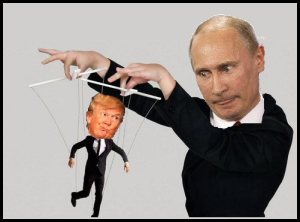 Finally, get this–Vladimir Putin is now bragging publicly about his “close relationship” with Trump. Axios reports:
Russian President Vladimir Putin tells Austrian TV that he and President Trump have a close working relationship, although it’s complicated by U.S. politics.
“You should ask our colleagues in the United States. In my opinion, this is the result of the ongoing acute political struggle in the United States. Indeed, Donald Trump and I have, firstly, met more than once at various international venues and secondly, we regularly talk over the phone.”
Interviewer: “You and Donald Trump talk so nicely over the telephone, but Trump has been President for a year and a half and there still has not been a bilateral summit between you, in contrast to Bush and Obama with whom you met within the first six months of their presidencies. Why is it taking so long?”
Putin:
“Our foreign affairs departments and special services are working fairly well together in areas of mutual interest, above all in the fight against international terrorism. This work is ongoing.”
“As for personal meetings, I think that the possibility of these meetings depends to a large extent on the internal political situation in the United States….”
“In a recent telephone conversation, Donald said he was worried about the possibility of a new arms race. I fully agree with him.”
“[W]e will do all we can to ease tensions on the Korean Peninsula. So of course we pin great hopes on the personal meeting between President Trump and North Korean leader Kim Jong-un, because mutual claims have gone way too far.”
Putin calls the “president” *Donald.* And I guess if “Donald” does achieve any success with North Korea, Putin expects to share the glory.
So . . . what stories are you following today?

 peej
peej Carissa
 bostonboomer
 dakinikat
 ecocatwoman
 mablue2
 Mama Lopez
 peggysue22
 quixote
 skydancingguestblogger
 Mona (aka Wonk the Vote)



 Sky Dancing
Recent Comments