
Wednesday Reading: Wired Responds to Glenn Greenwald’s Critique of their Bradley Manning Coverage
Posted: December 29, 2010 Filed under: indefinite detention, torture, Wikileaks | Tags: blog wars, Bradley Manning, Glenn Greenwald, journalistic ethics, Julian Assange, Kevin Poulsen, Salon, Torture, Wikileaks, Wired Threat Level blog 18 Comments
Bradley Manning
Good Morning! Minkoff Minx is under the weather today, so I thought I’d write a little about the latest Wikileaks/Bradley Manning themed blog war between Glenn Greenwald of Salon and Kevin Poulsen of Wired.
Via Memeorandum, it appears that Glenn Greenwald struck a few nerves when he wrote his recent post accusing Wired of journalistic malpractice, because a response has been posted at the Threat Level blog.
Here is a bit of what Greenwald had to say:
For more than six months, Wired’s Senior Editor Kevin Poulsen has possessed — but refuses to publish — the key evidence in one of the year’s most significant political stories: the arrest of U.S. Army PFC Bradley Manning for allegedly acting as WikiLeaks’ source. In late May, Adrian Lamo — at the same time he was working with the FBI as a government informant against Manning — gave Poulsen what he purported to be the full chat logs between Manning and Lamo in which the Army Private allegedly confessed to having been the source for the various cables, documents and video that WikiLeaks released throughout this year. In interviews with me in June, both Poulsen and Lamo confirmed that Lamo placed no substantive restrictions on Poulsen with regard to the chat logs: Wired was and remains free to publish the logs in their entirety.
Despite that, on June 10, Wired published what it said was only “about 25 percent” of those logs, excerpts that it hand-picked. For the last six months, Poulsen has not only steadfastly refused to release any further excerpts, but worse, has refused to answer questions about what those logs do and do not contain. This is easily one of the worst journalistic disgraces of the year: it is just inconceivable that someone who claims to be a “journalist” — or who wants to be regarded as one — would actively conceal from the public, for months on end, the key evidence in a political story that has generated headlines around the world.
In June, I examined the long, strange and multi-layered relationship between Poulsen and Lamo, and in that piece raised the issue of Wired’s severe journalistic malfeasance in withholding these chat logs.
The Wired article is divided into two parts–the first part written by Wired editor Evan Hanson and the second part written by Poulsen. Greenwald’s point is that Wired is holding back on some of the evidence that led to Manning’s arrest. In his defense of Poulsen, Hanson skirts that issue by appearing to claim that only he and Poulsen know best which parts of the Manning-Lamo logs should be released to the public.
Armchair critics, apparently unhappy that Manning was arrested, have eagerly second-guessed our motives, dreamed up imaginary conflicts and pounded the table for more information: Why would Manning open himself up to a complete stranger and discuss alleged crimes that could send him to prison for decades? How is it possible that Wired.com just happened to have a connection with the one random individual Manning picked out to confide in, only to send him down for it?
Not one single fact has been brought to light suggesting Wired.com did anything wrong in pursuit of this story. In lieu of that, our critics — notably Glenn Greenwald of Salon, an outspoken Wikileaks defender — have resorted to shocking personal attacks, based almost entirely on conjecture and riddled with errors.
Of the chat logs, he writes:
We have already published substantial excerpts from the logs, but critics continue to challenge us to reveal all, ostensibly to fact-check some statements that Lamo has made in the press summarizing portions of the logs from memory (his computer hard drive was confiscated, and he no longer has has a copy).
Our position has been and remains that the logs include sensitive personal information with no bearing on Wikileaks, and it would serve no purpose to publish them at this time.
That doesn’t mean we’ll never publish them, but before taking an irrevocable action that could harm an individual’s privacy, we have to weigh that person’s privacy interest against news value and relevance.
This is a standard journalistic balancing test — not one that we invented for Manning. Every experienced reporter of serious purpose recognizes this, and the principal is also embodied in the Society of Professional Journalists’ code of ethics:
Recognize that gathering and reporting information may cause harm or discomfort. Pursuit of the news is not a license for arrogance…. Only an overriding public need can justify intrusion into anyone’s privacy. Show good taste. Avoid pandering to lurid curiosity.
Hansen claims that Wired is protecting Manning’s privacy by their refusal to publish the remaining 75% of the logs that they have kept secret. But why should we believe that? Aren’t they really protecting Lamo while he (as Greenwald argues), as the only source of knowledgeable information about the contents of the logs:
has been allowed to run around making increasingly sensationalistic claims about what Manning told him; journalists then prominently print Lamo’s assertions, but Poulsen’s refusal to release the logs or even verify Lamo’s statements prevents anyone from knowing whether Lamo’s claims about what Manning said are actually true.
In addition, Greenwald argues that:
There are new, previously undisclosed facts about the long relationship between Wired/Poulsen and a key figure in Manning’s arrest — facts that Poulsen inexcusably concealed [and] Subsequent events gut Poulsen’s rationale for concealing the logs and, in some cases, prove that his claims are false.
And on top of all that, Greewald points out that Poulsen himself reported that Lamo is a “convicted felon” who was “involuntarily hospitalized” for psychiatric problems shortly before his on-line interactions with Manning.
In the second part of Wired’s defense, Poulsen claims that Greenwald’s accusations against him are based on false information:
On Monday, Salon.com columnist Glenn Greenwald unleashed a stunning attack on this publication, and me in particular, over our groundbreaking coverage of WikiLeaks and the ongoing prosecution of the man suspected of being the organization’s most important source. Greenwald’s piece is a breathtaking mix of sophistry, hypocrisy and journalistic laziness.
I can’t wait for Greenwald’s response to that!
Poulsen’s piece is basically a screed in which he accuses Greenwald of multiple violations of journalistic ethics. Poulsen discusses his long-time relationship with Lamo, but as far as I can tell, Poulsen’s only information about Manning comes secondhand from Lamo.
Wired.com was the first to report, last June, on the then-secret arrest of Pfc. Bradley Manning. I learned of the arrest from Adrian Lamo, a well-known former hacker on whom I reported extensively from 2000 to 2002. It was Lamo who turned Manning in to the Army and the FBI, after Manning — isolated and despondent — contacted him online and began confiding the most intimate details of his life, including, but by no means limited to, his relationship with WikiLeaks, and the vast databases he claimed to have provided them.
Co-writer Kim Zetter and I followed up the story four days later with a piece examining Manning’s motives. The Washington Post had just run a fine story about Manning’s state-of-mind: At the time of his discussions with Lamo, he’d been through a bad breakup and had other personal conflicts. But I felt — and still do feel — that it’s a mistake to automatically ascribe Manning’s actions to his feeling depressed. (For one thing, his breakup occurred after the leaking.) There’s an implicit political judgment in that conclusion: that leaking is an aberrant act, a symptom of a psychological disorder. Manning expressed clear and rational reasons for doing what he did, whether one agrees with those reasons or not.
So we went into the logs of the chats Manning held with Lamo — which Lamo had provided Wired and The Washington Post — and pieced together a picture of why Manning took his historic actions, based on his own words (“Suspected Wikileaks Source Described Crisis of Conscience Leading to Leaks”). As a sidebar to the article, we published excerpts from those chat logs.
Poulsen argues that “everything of consequence” about Manning from the logs has already been published. But why should we believe Poulsen when he has a long-time relationship with Lamo and no relationship with Manning?
You’ll have to read the rest to get the entire convoluted explanation. Most troubling to me is that neither Hansen nor Poulsen mentions the treatment that Manning is getting in prison–that by any civilized country’s standards, he is being tortured.
We’ll have to stay tuned for Greenwald’s response to all this. I’ll bet it will be a doozy. Meanwhile, what do you think?
————————————————————————————————————————————-
UPDATE 1 9:42AM Eastern: Greenwald has a response up now. He begins with this:
Last night, Wired posted a two-part response to my criticisms of its conduct in reporting on the arrest of PFC Bradley Manning and the key role played in that arrest by Adrian Lamo. I wrote about this topic twice — first back in June and then again last Sunday. The first part of Wired’s response was from Wired.com Editor-in-Chief Evan Hansen, and the second is from its Senior Editor Kevin Poulsen. Both predictably hurl all sorts of invective at me as a means of distracting attention from the central issue, the only issue that matters: their refusal to release or even comment on what is the central evidence in what is easily one of the most consequential political stories of this year, at least.
That’s how these disputes often work by design: the party whose conduct is in question (here, Wired) attacks the critic in order to create the impression that it’s all just some sort of screeching personality feud devoid of substance. That, in turn, causes some bystanders to cheer for whichever side they already like and boo the side they already dislike, as though it’s some sort of entertaining wrestling match, while everyone else dismisses it all as some sort of trivial Internet catfight not worth sorting out. That, ironically, is what WikiLeaks critics (and The New York Times’ John Burns) did with the release of the Iraq War documents showing all sorts of atrocities in which the U.S. was complicit: they tried to put the focus on the personality quirks of Julian Assange to distract attention away from the horrifying substance of those disclosures. That, manifestly, is the same tactic Wired is using here: trying to put the focus on me to obscure their own ongoing conduct in concealing the key evidence shining light on these events.
In a separate post, I fully address every accusation Hansen and Poulsen make about me as well as the alleged inaccuracies in what I wrote. But I’m going to do everything possible here to ensure that the focus remains on what matters: the way in which Wired, with no justification, continues to conceal this evidence and, worse, refuses even to comment on its content, thus blinding journalists and others trying to find out what really happened here, while enabling gross distortions of the truth by Poulsen’s long-time confidant and source, the government informant Adrian Lamo.
The link to Greenwald’s previous post goes to “page not found.” I’ll update when he fixes the link. About the substance of the argument between Greenwald and Poulsen, Greenwald writes:
The bottom line from Hansen and Poulsen is that they still refuse to release any further chat excerpts or, more inexcusably, to comment at all on — to verify or deny — Lamo’s public statements about what Manning said to him that do not appear in those excerpts. They thus continue to conceal from the public 75% of the Manning-Lamo chat. They refuse to say whether Lamo’s numerous serious accusations about what Manning told him are actually found anywhere in the chat logs. Nor will they provide the evidence to resolve the glaring inconsistencies in Lamo’s many public tales about the critical issues: how he came to speak to Manning, what Lamo did to include these disclosures, and what Manning said about his relationship to WikiLeaks and his own actions. Every insult Wired spouts about me could be 100% true and none of it changes the core fact: Wired is hiding the key evidence about what took place here, thus allowing Lamo to spout all sorts of serious claims without any check and thus drive much of the reporting about WikiLeaks.
UPDATE 2: Jane Hamsher also has a post up on this story. She writes:
You would have to have been f&#%ing r#*&rded to believe that in an era of unprecedented intolerance for press leaks of any kind, that the U.S. Army Criminal Investigation Division, the FBI, the NSA, the U.S. Air Force Office of Special Investigations and the Cyber Defense Crime Center knowingly and willingly not only allowed convicted hacker Adrian Lamo to hold on to chat logs that contained sensitive classified information, but to distribute them unexpurgated to the press.
I only see two possibilities. One, Wired had the chat logs before Lamo made any calls to authorities, and was a party to whatever subsequently happened. Or two, the copies of the chat logs that have been given to the press have been done so at the instigation of the US government, and with their full approval.
Of course there’s always c) all of the above, which is what I’m guessing is the most likely scenario.
Firedoglake has posted a database of all the available information on interactions between Manning, Lamo, and the U.S. government.
Stay tuned….
Wikileaks and GMO/GM food, More cables, more fun!
Posted: December 28, 2010 Filed under: Economic Develpment, Farming, Food, Foreign Affairs, Wikileaks | Tags: Africa, cables, food, France, GM food, GMO, GMO food, monsanto, Spain, Wikileaks 24 CommentsRecently our own Grayslady posted an excellent article about Wikileaks, Monsanto and GMO Corn. She discussed a cable sent in late 2007 from our then Ambassador to France, Craig Stapleton, in which he discusses ways to force France and the EU to be more favorable towards the adoption of Monsanto’s GM BT enhanced, Roundup Ready corn. Other aspects of the information in that Wikileaks cable has been discussed in other places, for instance at Huffington Post by Jeffery Smith and at Truthout by Mike Ludwig.

Wheat and Hay Fields near Pendleton, Oregon
What the cable suggested, in part, was publishing a ‘retaliation’ list of places, down to the actual fields, growing GMO foods in Europe in the hopes the fields and crops would be destroyed by activists, ’cause pain’ for officials and hopefully swing GMO acceptance in Europe around. The Ambassador went on to say that France was particularly culpable because scientists in France were attempting to change ‘knowledge’ by studying the effects of GMO products (even the ‘good’ GMO like BT enhanced products). These studies show that the effects of GMO food on those eating it may be more pronounced and drastic than the limited studies done by the FDA and USDA suggest (see for example the studies of Dr. Gilles-Eric Seralini, Professor Andrés Carrasco, and others). And for more, see this interview of Jeffery Smith on Democracy Now.
This is very interesting, because a cable sent in 26 October 2007 is the subject of French President Sarkozky’s first visit to the USA, and his meetings with American business leaders, including pushers of GM foods. The cable suggests that the President’s support of more restrictive rules on GM products in France might be politically based and therefore, changeable.
But Wait, There’s more! The cable to France, although receiving a lot of attention because it suggests undercutting the rightful government of our supposed allies and creating civil unrest and ‘pain’, is not the only released cable to mention GMOs and Monsanto’s needs across the world. Over at Eats, Shoots and Leaves there’s a good rundown by Richard Brenneman of some of the cables.
For example, in a cable from 9 April 2009 concerning, in part, African development, one of the points of intelligence to be gathered is the African governments’ and peoples’ reactions to growing and using GM crops. Brenneman rightly asks, why would this be a concern of our State Department, unless our government is actively pushing and supporting Monsanto and the company’s GM stable of crops?
I’m going to drop a final h/t to Rady Ananda at the Food Freedom blog. She wrote about GMO and Wikileaks several weeks ago, and has been right on top of things. She brings forth the case of the food crisis of 2007-08 which wraps up some of the things we at Sky Dancing discuss into a tidy bundle.
In a January 2008 meeting, US and Spain trade officials strategized how to increase acceptance of genetically modified foods in Europe, including inflating food prices on the commodities market, according to a leaked US diplomatic cable released by WikiLeaks.
Some of the participants thought raising food prices in Europe might lead to greater acceptance of biotech imports.
It seems Wall Street traders got the word. By June 2008, food prices had spiked so severely that ‘The Economist announced that the real price of food had reached its highest level since 1845, the year the magazine first calculated the number,’ reports Fred Kaufman in The Food Bubble: How Wall Street starved millions and got away with it.
The unprecedented high in food prices in 2008 caused an additional 250 million people to go hungry, pushing the global number to over a billion. 2008 is also the first year ‘since such statistics have been kept, that the proportion of the world’s population without enough to eat ratcheted upward,’ said Kaufman.
Remember back in 2007/08 when food prices, especially bread prices, suddenly shot up? I remember being astounded when the price of a bag of hot dogs went from 99 cents to 1.29$ overnight. I figured maybe it was the result of the rise in oil costs going on about then, and perhaps it was, in part. But after reading the article by Kaufman I’m not so sure. There was no crisis in food production at this time. It was simply a manufactured bubble. About that time there were terrible food riots in Mexico amongst 29 other countries, because the price of tortillas had gone up so much people couldn’t afford to buy them. I note that the Mexican government has recently taken steps to ensure this doesn’t happen again, by buying corn futures to guarantee a flat price.
So, I wonder, how are the big fat cats and the government diddling in our food today? Surely food, at least food, should be relatively safe from bubbles, like electricity, water, and sewage service? Oh wait, those are being commoditized too. Ahd I would like to point out, the price of the bag of hot dogs has not come back down, although the bubble burst… makes ya wonder, doesn’t it?
Note: I’m going to be in and out all today, so consider this something of an open thread. I’m really keen to know what everyone thinks of the Kaufman article. When I read it I was stunned by the lengths to which the greedy people of Wall Street will go to make money.
Tuesday Reads
Posted: December 28, 2010 Filed under: Global Financial Crisis, Gulf Oil Spill, investment banking, jobs, New Orleans, the blogosphere, The Bonus Class, The Great Recession, the villagers, U.S. Economy, U.S. Politics, We are so F'd, Wikileaks | Tags: AIG, Bradley Manning, cylical unemployment, Dispersant, Emeril, Gulf oil Gusher, Harry Shearer, Hoppin' John, Labor Unions, Levee failure during Hurricane Katrina, Levees.org, Nancy Pelosi, structural unemployment, The Big Uneasy, The New Orleans Saints, Those Crazy Pauls!!, Wikileaks, Wired won't release documents 29 CommentsGood Morning!
I had a productive day yesterday for a change and I hope you did too! Dare I go shop for plumbing stuff today? I was bemoaning a shortage of headlines on Sunday. I should be a bit more careful about wishing for things because today’s list of reads will be long.
The other good news for me is that we’re going from hard freeze warnings to weather in the 70s this weekend. It sounds like it’s going to be a fun New Year’s Eve here in New Orleans! That should explain the picture! I also wanted to give you a bit of New Orleans News before I moved on to other things.
First, if you haven’t had a chance to read Sandy Rosenthal’s piece at HuffPo on the failure of the Levees during Hurricane Katrina, please do so. There are still folks out there that think our devastation was from Hurricane Katrina and that just isn’t so. I was on the edge of the bowl. I know. My house experienced very little actual damage because my house was on high ground and above the waters. A failure of engineering devastated my city. It was not an act of nature. I signed the petition. Will you?
Last week, I wrote to the New York Times asking them to please resist using fast and easy “Katrina shorthand.” Forty-eight hours passed and we heard no response, so we decided to let our supporters step in. We urged our followers to sign our petition to the NY Times urging the paper to be more specific when referencing the flood disaster.
Over 1,000 people all across the nation signed our petition in under 48 hours. This immediate huge response – during the holiday no less – will hopefully show the New York Times that informed citizens understand that “Katrina” did not flood New Orleans. Civil engineering mistakes did.
Saying Katrina flooded the city protects the human beings responsible for the levee/floodwall failures. It is also dangerous since 55% of the American people lives in counties protected by levees.
If you haven’t yet, please sign our petition. We will keep it live until Jan 4, 2011.
In a similar vein, I would like to shout out HAPPY BIRTHDAY HARRY!!! to fellow New Orleans Blogger, neighbor, actor, musician, and polymath Harry Shearer (12/23/49) who made his film debut in the great epic ‘Abbott and Costello Go To Mars’ in 1953. There’s another New Orleans connection in that movie. The Abbot and Costello characters–Lester and Orville–accidentally launch a rocket that should’ve been Mars bound. They land in New Orleans for Mardi Gras instead. Harry plays an uncredited “Boy”.
I also want to offer up a plug for Shearer’s wonderful documentary on the Levee Failure called ‘The Big Uneasy’ that was released last August on our 5th Katrina Anniversary. It’s going to be re-released in 2011. I’m including an interview with him by local radio show host Kat (not me). You’ll learn that the Golden Globes are a simple piece of business and that Harry’s songstress wife is spoonable. Who knew? Also there seems that there’s a chance his documentary will be shown on PBS so you may get to see it there. I wonder if we can help encourage that situation.
I’d like to take another chance to remind you that we’re still living with the results of the BP Oil Gusher here on the Gulf Coast. There also appears to be covered-up as well as forgotten stories down here. You may want to take a look at this from Open Channel on MSNBC.com: ‘ Is dispersant still being used in the Gulf?” This story reports on pictures and samples take in early August that are being investigated now. I’d written about some of these reports earlier.
Kaltofen is among the scientists retained by New Orleans attorney Stuart Smith to conduct independent environmental testing data from the Gulf on behalf of clients who are seeking damages from BP. (Click here to read about their effort.)
An independent marine chemist who reviewed the data said that their conclusion stands up.
“The analytical techniques are correct and well accepted,” said Ted Van Vleet, a professor at the College of Marine Science at the University of South Florida. “Based on their data, it does appear that dispersant is present.”
Why responders would continue to use chemical dispersants after the government announced a halt is a mystery. If the oil was gone or already dispersed, as the federal government and BP have said, what would be the point? And, because dispersants don’t work very well on oil that has been “weathered” by the elements over long periods of times, there would be little point in spraying it that situation.
I wanted to share a New Orleans and indeed a Southern New Year’s eve tradition. We serve a concoction of black eyed peas, cabbage and sausage/ham called ‘Hoppin’ John’ to bring us luck and wealth in the New Year. I evidently didn’t make enough of it last year, so I’m planning to cook more this year. The pea’s black eyes represent coins, the cabbage represents cash, and the sausage or ham is meat that always symbolizes luxury to hungry, poor people.
Here’s Emeril’s ‘Hoppin’ John’ recipe provided courtesy the Food Network:
Hoppin’ John
Prep Time: 15 min Cook Time:50 min Serves: 10
Ingredients
1 tablespoon olive oil
1 large ham hock
1 cup onion, chopped
1/2 cup celery, chopped
1/2 cup green pepper, chopped
1 tablespoon chopped garlic
1 pound black-eyed peas, soaked overnight and rinsed
1 quart chicken stock
Bay leaf
1 teaspoon dry thyme leaves
Salt, black pepper, and cayenne
3 tablespoons finely chopped green onion
3 cups steamed white rice
Directions
Heat oil in a large soup pot, add the ham hock and sear on all sides for 4 minutes. Add the onion, celery, green pepper, and garlic, cook for 4 minutes. Add the black-eyed peas, stock, bay leaves, thyme, and seasonings. Bring to a boil, reduce the heat and simmer for 40 minutes, or until the peas are creamy and tender, stir occasionally. If the liquid evaporates, add more water or stock. Adjust seasonings, and garnish with green onions. Serve over rice.
Okay, so enough about my home town.
The AFL-CIO wants to talk unions this holiday season because there is so much misinformation about these days. It’s a nice list of myths and facts that you may want to arm yourself with when talking to those right wing nattering nabobs of negativism.
MYTH: Unions only care about their members.
FACT: Unions are fighting to improve the lives of all workers.
- It’s easy to forget that we have unions to thank for a lot of things we take for granted today in today’s workplaces: the minimum wage, the eight-hour work day, child labor laws, health and safety standards, and even the weekend.
- Today, unions across the country are on the frontlines advocating for basic workplace reforms like increases in the minimum wage, and pushing lawmakers to require paid sick leave.
- Studies show that a large union presence in an industry or region can raise wages even for non-union workers. That means more consumer spending, and a stronger economy for us all.
- So it’s no wonder that most Americans (61 percent) believe that “labor unions are necessary to protect the working person,” according to Pew’s most recent values survey.
Here’s a gift that keeps on giving er… taking from FT: “AIG secures $4.3bn in credit lines“.
AIG, took a step closer to independence from government as it said it had secured $4.3bn in credit facilities.
The US insurer bailed out by Washington during the financial crisis is is in the process of repaying the $95bn the US Treasury and the Federal Reserve Bank of New York lent following its disastrous decision to insure billions of dollars worth of securities backed by mortgages.Under the facilities arranged by 36 banks and administered by JPMorgan Chase, AIG can borrow $1.5bn over three years and an additional $1.5bn over 364 days, according to a regulatory filing. Separately, Chartis, an AIG division, obtained a $1.3bn credit line.
Let’s just hope they clean up their act this time. I’m not holding my breath or any stock offers that may come up. Notice one of the usual suspects is ‘facilitating’ the arrangements. Cue ‘The Godfather’ music, please.
There’s an item from Slate that you may want to check out. It’s “A selection of gaffes from the 2010 campaign we should forgive”. Here’s one from Pelosi that gave me a chuckle.
Nancy Pelosi: “We have to pass the bill so that you can find out what is in it.”
On March 9, the Speaker of the House spoke to the National Association of Counties about the health care bill that was days away from final passage. This was the phrase that launched a thousand campaign ads. Nine months later, this is remembered as Pelosi admitting what Tea Partiers had feared: that Democrats were ramming through bad bills without reading them.
BostonBoomer sent me to Glenn Greenwald’s latest which really is a must read: ‘ The worsening journalistic disgrace at Wired’. Greenwald’s work on behalf of massacre leaker Bradley Manning is Nobel Peace Prize worthy. I don’t mean aspirational prizes either.
For more than six months, Wired‘s Senior Editor Kevin Poulsen has possessed — but refuses to publish — the key evidence in one of the year’s most significant political stories: the arrest of U.S. Army PFC Bradley Manning for allegedly acting as WikiLeaks’ source. In late May, Adrian Lamo — at the same time he was working with the FBI as a government informant against Manning — gave Poulsen what he purported to be the full chat logs between Manning and Lamo in which the Army Private allegedly confessed to having been the source for the various cables, documents and video that WikiLeaks released throughout this year. In interviews with me in June, both Poulsen and Lamo confirmed that Lamo placed no substantive restrictions on Poulsen with regard to the chat logs: Wired was and remains free to publish the logs in their entirety.
We’re waiting for a response from Wired since vacation seem to preempt media responsibility these days. Will we find out that there’s been some active media suppression of the truth regard Manning’s accusations today? This morning, Greenwald continued his admonition to fellow journalists in the excellent article “The merger of journalists and government officials”.
From the start of the WikiLeaks controversy, the most striking aspect for me has been that the ones who are leading the crusade against the transparency brought about by WikiLeaks — the ones most enraged about the leaks and the subversion of government secrecy — have been . . . America’s intrepid Watchdog journalists. What illustrates how warped our political and media culture is as potently as that? It just never seems to dawn on them — even when you explain it — that the transparency and undermining of the secrecy regime against which they are angrily railing is supposed to be . . . what they do.
There’s another economics story covered on The New Yorker‘s The Financial Page headlined: ‘The Jobs Crisis’ by James Surowiecki. It’s a good explanation of a debate between economists and politicians right now. Guess which one knows best on this?
Why have new jobs been so hard to come by? One view blames cyclical economic factors: at times when everyone is cautious about spending, companies are slow to expand capacity and take on more workers. But another, more skeptical account has emerged, which argues that a big part of the problem is a mismatch between the jobs that are available and the skills that people have. According to this view, many of the jobs that existed before the recession (in home building, for example) are gone for good, and the people who held those jobs don’t have the skills needed to work in other fields. A big chunk of current unemployment, the argument goes, is therefore structural, not cyclical: resurgent demand won’t make it go away.
Though this may sound like an academic argument, its consequences are all too real. If the problem is a lack of demand, policies that boost demand—fiscal stimulus, aggressive monetary policy—will help. But if unemployment is mainly structural there’s little we can do about it: we just need to wait for the market to sort things out, which is going to take a while.
The structural argument sounds plausible: it fits our sense that there’s a price to be paid for the excesses of the past decade; that the U.S. economy was profoundly out of whack before the recession hit; and that we need major changes in the kind of work people do. But there’s surprisingly little evidence for it. If the problems with the job market really were structural, you’d expect job losses to be heavily concentrated in a few industries, the ones that are disappearing as a result of the bursting of the bubble. And if there were industries that were having trouble finding enough qualified workers, you’d expect them to have lots of job vacancies, and to be paying their existing workers more and working them longer hours.
Here’s a fun read at New York Magazine about living large in a libertarian world.
No one exemplifies that streak more than Ron Paul—unless you count his son Rand. When Rand Paul strolled onstage in May 2010, the newly declared Republican nominee for Kentucky’s U.S. Senate seat, he entered to the strains of Rush, the boomer rock band famous for its allegiance to libertarianism and Ayn Rand. It was a dog whistle—a wink to free-marketers and classic-rock fans savvy enough to get the reference, but likely to sail over the heads of most Republicans. Paul’s campaign was full of such goodies. He name-dropped Austrian economist Friedrich Hayek’s seminal The Road to Serfdom. He cut a YouTube video denying that he was named after Ayn Rand but professing to have read all of her novels. He spoke in the stark black-and-white terms of libertarian purism. “Do we believe in the individual, or do we believe in the state?” he asked the crowd in Bowling Green, Kentucky, on Election Night.
It’s clear why he played coy. For all the talk about casting off government shackles, libertarianism is still considered the crazy uncle of American politics: loud and cocky and occasionally profound but always a bit unhinged. And Rand Paul’s dad is the craziest uncle of all. Ron Paul wants to “end the Fed,” as the title of his book proclaims, and return the country to the gold standard—stances that have made him a tea-party icon. Now, as incoming chairman of the subcommittee that oversees the Fed, he’ll have an even bigger platform. Paul Sr. says there’s not much daylight between him and his son. “I can’t think of anything we grossly disagree on,” he says.
Well, they must have both been impacted by the same disease or environmental catastrophe to share so many views so out of the mainstream and be so far removed from experience, data, and science. I can’t help but believe the more the media shines a bright light on them, the more the warts and the brain damage will become noticeable.
So, one more suggested read comes via Lambert and Corrente. It’s really interesting piece from The Atlantic on ‘The Hazards of Nerd Supremacy: The Case of WikiLeaks’. It talks about Hackers, Assange, and the Hacker code of conduct. Any one who as read Assange’s manifest can see the connect and disconnect that simultaneously occur in the ideas. BB and had discussed that Assange might have a form of Aspergers disease about a month ago and I was also interested to see that Lambert, Valhalla, and some others had similar thoughts. It frequently runs in brilliant people who can decode a lot of things with the exception of other people. Anyway, here’s a taste of Jaron Lanier.
The strategy of Wikileaks, as explained in an essay by Julian Assange, is to make the world transparent, so that closed organizations are disabled, and open ones aren’t hurt. But he’s wrong. Actually, a free flow of digital information enables two diametrically opposed patterns: low-commitment anarchy on the one hand and absolute secrecy married to total ambition on the other.
While many individuals in Wikileaks would probably protest that they don’t personally advocate radical ideas about transparency for everybody but hackers, architecture can force all our hands. This is exactly what happens in current online culture. Either everything is utterly out in the open, like a music file copied a thousand times or a light weight hagiography on Facebook, or it is perfectly protected, like the commercially valuable dossiers on each of us held by Facebook or the files saved for blackmail by Wikileaks.
The Wikileaks method punishes a nation — or any human undertaking — that falls short of absolute, total transparency, which is all human undertakings, but perversely rewards an absolute lack of transparency. Thus an iron-shut government doesn’t have leaks to the site, but a mostly-open government does.
I’m still fascinated by the sideshow that is driving ad hominem attacks on Assange and the women involved with the charges. Still, that does not cloud my appreciation of what’s being released by Wikileaks. We’ll definitely have more coming. I’m personally waiting for the BOA stuff as that’s the stuff that I can personally decode. I’m glad we’re extending the Front Page Team to include more and more people that can tackle some of the other technical stuff from their vantage points. Stay tuned for more on all of this.
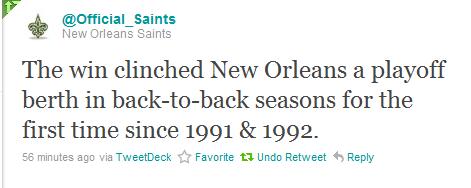
Just ONE MORE NAWLINS THANG: New Orleans Saints 17 – Atlanta Falcons 14. My home town continues to be the Great American Comeback Story.
So, what’s on your reading and blogging list today?
Monday Reads
Posted: December 27, 2010 Filed under: Barack Obama, Catfood Commission, Civil Liberties, Diplomacy Nightmares, Foreign Affairs, Regulation, U.S. Politics, Wikileaks | Tags: blacklist, Charlie on the MTA, Civil War, DEA, death panels, drug war, Janet Napolitano, McCarthy era, memeorandum, Red Scare, surveillance, The Kingston Trio, The Weavers, TSA, Vicksburg, Walter O'Brien, weather, Wikileaks 68 Comments
Good Morning!!
I’m still stuck in central Indiana and there seems to be a blizzard bearing down on the Northeast. They’re predicting 18 inches in northwest greater Boston where I live. I’m hoping I’ll manage to get back there soon, if weather permits.
I had to call the guy who has been helping me with the snow the last couple of winters and ask him to shovel my house out so I don’t come home to piles of solid ice in my driveway and on my front walk. I hope everyone who is getting hit by the blizzard will be okay!
While I was checking up on the Boston weather forecast, I came across this interesting story in The Boston Globe.
If you were around in the late ’50s and early ’60s, you may recall a famous song by the Kingston Trio about the Boston subway system, then called the MTA.
In June of 1959, packaged sandwiches and envelopes of nickels began pouring into the Park Square headquarters of Boston’s Metropolitan Transit Authority, postmarked from as far off as California and Hawaii. All were addressed to Charlie — “the man who never returned.’’
The Kingston Trio’s “At Large’’ album was headed to number one, and listeners couldn’t get enough of the opening track, “M.T.A.,’’ about a fellow trapped on the subway because he lacked a nickel for the exit fare. The hit would go on to become a campfire staple and slice of Americana, widely embraced, frequently parodied, and adapted for styles from country to punk.
It turns out that the song the Kingston Trio recorded was
…actually a sanitized version of the original, a campaign song for a 1949 Boston mayoral candidate who opposed the subway fare hike. But by 1959, the candidate had been blacklisted and run out of town, and the song’s most political lyrics were simply edited out
because another folk group, The Weavers (which included Pete Seeger) had been blacklisted because Seeger and another member of the group, Lee Hayes were called to testify before the House Un-American Activities Committee (HUAC), and both refused to name names.
Now the Boston transit authority (now called the MBTA) is displaying the uncensored lyrics of the song along with the backstory at selected subway stations. “Charlie on the MTA” was Walter O’Brien’s campaign song–a protest about a fare increase in subway fares.
The MTA had been formed just two years earlier from the ashes of the Boston Elevated Railway Co., a private company whose shareholders had received a guaranteed dividend for years even as the transit company relied on public subsidies. When lawmakers eventually bought them out to abolish the company, shareholders made out handsomely. Then the taxpayers footing the bill got slapped with the fare hike.
Does that remind you of anything in the present?
“The Progressive Party saw that as a bailout of private interest and inappropriate use of taxpayer money, and [then the fare increase] was one wrong piled upon another,’’ said Jim Vrabel, an activist and historian determined to reclaim the song’s origins. “It’s been kind of trivialized and made kind of a cute song, and people don’t realize the serious political background of it.’’
I hope you’ll take the time to read the entire article. It provides quite a bit of information on what it was like for artists, politicians, teachers, lawyers–really just about anyone left-leaning, during the McCarthy era.
Below is a video of the song will the original lyrics.
If only we had a Walter O’Brien today! He couldn’t afford to pay for advertising so he hired trucks to drive around playing the song in the streets of Boston. Can you imagine the great songs that could be written about the bankster fraud and bailouts and all the people who are paying by losing their homes and livelihoods?
I found another fascinating piece of history via Memeorandum. From the BBC News: “Coded American Civil War message in bottle deciphered.”
In the encrypted message, a commander tells Gen John Pemberton that no reinforcements are available to help him defend Vicksburg, Mississippi.
“You can expect no help from this side of the river,” says the message, which was deciphered by codebreakers.
The text is dated 4 July 1863 – the day Vicksburg fell to Union forces.
The small bottle was given to the Museum of the Confederacy in Richmond, Virginia, by a former Confederate soldier in 1896.
Also via Memeorandum, “death panels” are back, according to The New York Times: Obama Returns to End-of-Life Plan That Caused Stir
When a proposal to encourage end-of-life planning touched off a political storm over “death panels,” Democrats dropped it from legislation to overhaul the health care system. But the Obama administration will achieve the same goal by regulation, starting Jan. 1.
Under the new policy, outlined in a Medicare regulation, the government will pay doctors who advise patients on options for end-of-life care, which may include advance directives to forgo aggressive life-sustaining treatment.
I don’t have a problem with that as long as it doesn’t lead to denying care to elderly people who want it. Of course knowing that this administration is going to be embracing the Catfood Commission Report, I’m a little leery of what else they might be planning for us old folks. Ice floes anyone?
In other news, via Raw Story, Janet Napolitano has no sympathy for people who feel violated by thugs pawing their breasts, buttocks, and genitals: Napolitano: Pat-downs are here to stay
Airline passengers should get used to invasive full body scans and enhanced pat-downs, the Homeland Security secretary suggested Sunday.
CNN’s Candy Crowley asked Janet Napolitano if she expected changes to the controversial Transportation Security Administration (TSA) screening procedures in the near future.
“Not for the foreseeable future,” Napolitano replied.
“You know we’re always looking to improve systems and so forth, but the new technology, the pat-downs — just objectively safer for our traveling public,” she said.
Okay, Janet, how about you have a “pat down” performed by a TSA thug on national TV? Then you can make an announcement about how great it was. The youtube would go viral, millions of people would see your sales pitch on the internet, and perhaps a few would be convinced. Oh, and is the government going to bail out the airline industry when millions of people stop flying?
I guess that doesn’t worry Napolitano though. She plans to start “stepping up security” at malls, and train stations.
“What we have to do is say, well, what other ways are they thinking to commit an act, because our job is not only to react, but to be thinking always ahead, what could be happening,” Napolitano said.
“And so we have enhanced measures going on at surface transportation, not because we have a specific or credible threat there, but because we know, looking at Madrid and London, that’s been another source of targets for terrorists.”
Soon you may have to go through a naked scanner and/or “enhanced patdown” (aka groping session) in order to get into a mall. Oh joy! Thank goodness I do most of my shopping on line…
A few new Wikileaks tidbits…
The New York Times has a story on how the DEA has become a global organization.
The Drug Enforcement Administration has been transformed into a global intelligence organization with a reach that extends far beyond narcotics, and an eavesdropping operation so expansive it has to fend off foreign politicians who want to use it against their political enemies, according to secret diplomatic cables.
[….]
Because of the ubiquity of the drug scourge, today’s D.E.A. has access to foreign governments, including those, like Nicaragua’s and Venezuela’s, that have strained diplomatic relations with the United States. Many are eager to take advantage of the agency’s drug detection and wiretapping technologies.
In some countries, the collaboration appears to work well, with the drug agency providing intelligence that has helped bring down traffickers, and even entire cartels. But the victories can come at a high price, according to the cables, which describe scores of D.E.A. informants and a handful of agents who have been killed in Mexico and Afghanistan.
In Venezuela, the local intelligence service turned the tables on the D.E.A., infiltrating its operations, sabotaging equipment and hiring a computer hacker to intercept American Embassy e-mails, the cables report.
More at The Independent: Panama row reveals US drug agency’s power
The El Paso Times: WikiLeaks tells why drug king is still free
and the BBC News: Wikileaks: Governments ‘sought US wiretapping help’
At The New Republic, Norm Scheiber explains Why Wikileaks will be the death of big business and big government.
That’s about it for me. What are you reading this morning?
Saturday: Let It Snow
Posted: December 25, 2010 Filed under: morning reads | Tags: Alternative Energy, Assisi, Benazir Bhutto, Bill Clinton, Bradley Manning, Christmas, Democratic politics, Hillary Clinton, Holidays, LGBT rights, Rosemary Clooney, US Congress, Wikileaks 93 CommentsGood morning everyone! Wonk the Vote here, wishing you a merry and a happy on this Saturday, December the 25th, 2010.
Whatever you celebrate or do not celebrate. I hope your inner child is finding a little peace, a little hope, and a little laughter this holiday season and that as we edge closer to 2011, we are able to keep on keeping on–with a little help from our family and from our friends.
In some ways, blog communities feel like a little of both family and friendship. We have been through a lot side-by-side in the past three years since we gathered together around Hillary 2008.
As a token of gratitude to each and every one of you, I want to share my all-time favorite holiday carol youtube with y’all — Rosemary Clooney’s rendition of “Let It Snow”:
I cannot help but be happy watching that footage! I hope if that doesn’t do the trick for you, you share what makes you happy downthread in the comments.
And, speaking of pure happiness–I am typing this from a brand new MacBook Air! Santa came a little early in the Wonk household, so I got my present on Christmas Eve. My laptop woes are over. Hooray! I can finally get back into the swing of all things news junkie.
Before I get to the news though, let’s take a look back on Christmases past.
On this day, December 25th, in history:
1223 – St. Francis of Assisi assembles the first Nativity scene.
When I went to Italy, I visited a lot of churches. I won’t lie. They all started to blur together for me. Assisi was the one place that really stood out for some reason. Something about St. Francis I guess. Probably also has a lot to do with the first time I ever heard this prayer:
Lord, make me an instrument of your peace.
Where there is hatred, let me sow love.
Where there is injury, pardon.
Where there is doubt, faith.
Where there is despair, hope.
Where there is darkness, light.
Where there is sadness, joy.O Divine Master,
grant that I may not so much seek to be consoled, as to console;
to be understood, as to understand;
to be loved, as to love.For it is in giving that we receive.
It is in pardoning that we are pardoned,
and it is in dying that we are born to Eternal Life.–St. Francis
Doubt is as important to me as faith. That’s just the way I am. I do, however, like the idea of reframing all the destructive energy in this world–in other words, turning oneself into an instrument for the universe’s creative energy. I also think that reflexive doubt, just like blind faith, is a corrosive force. It blinds us as individuals and as a populace. It makes us deaf to our own inner voices. I feel that in some ways, this is where America is at right now.
At any rate, St. Francis’ prayer always seems to me a sort of prototype for cognitive-behavioral therapy before its time, as portions of religious texts and prayers often do. I would add one more line to it…
Where there is pain, let there be healing.
All this mythos stuff–in all its purest forms, unadulterated by institutionalism and authoritarianism–reads like one big self-help section on how to understand the world around us and how to do life. We human beings love to understand our world through storytelling–different stories pull us in, but we are all trying to understand some pretty universal themes when it comes down to it–human bonding, suffering, loss, and resilience. That’s what ties us all together. And, we want to hear our human story retold over and over again, in as many ways as possible, until it makes some sort of sense. It’s just the way we are.
Alright, enough of my existential ramblings. I want to touch on some actual newsy items in my holiday roundup.
First, a moment of remembrance for Benazir Bhutto, who was assassinated on December 27, 2007. CNN has this clip up of an interview with Duane Baughman, director of the recent documentary Bhutto.
Now, for some quick headlines that caught my eye from the top of my news feeds at the moment–keep in mind that between computer chaos and holiday mayhem, I’ve been out of the news junkie loop for about a week, so some of this might be old news to you by now… Karl Rove: Hillary Clinton Will Be A Presidential Candidate In 2016 – Huffington Post December 23, 2010:
“I suspect she will be a candidate. I suspect she is going to think about being a candidate in 2016, and we’ll know by about 2014,”Rove said on Fox News. “If she leaves the administration in 2014 or 2015, in order to give herself a chance to write a book about her experiences and reconnect with the grassroots, then she might entertain it.”
We’ll see about that. I know I’m like a broken record on this one, but it’s all I can think: I can’t blame Hillary if she never runs again.
Former Hillary Clinton political director named executive director at DSCC – The Hill (blog) December 22, 2010:
Longtime Democratic operative Guy Cecil will serve as executive director of the Democratic Senatorial Campaign Committee for the 2012 cycle, Sen. Patty Murray (D-Wash.) announced Wednesday. Cecil succeeds J.B. Poersch and is tasked with helping Democrats keep their tenuous majority in the Senate given a tough 2012 map for the party. […] Cecil served as national political director for then-Sen. Hillary Clinton’s 2008 presidential campaign.
Interesting little shift of the Democratic political winds there. Something to keep an eye on, methinks.
Bill and Hillary Clinton surprise Steve Tyrell at Cafe Carlyle on the eve of … – CultureMap December 24, 2010
Christmas came early for song man Steve Tyrell and his glam fiancéKaren Pulaski when former President Bill Clinton and Secretary of State Hillary Clinton popped in at the Cafe Carlyle in New York on Thursday night to catch the holiday show by Tyrell, one of the former president’s favorite singers. The Clintons, including daughter Chelsea, had primo seats, posed for photos with the Tyrell/Pulaski clan and wished the couple all the best with their wedding, which will take place at the Carlyle Hotel on Sunday. Yes, the day after Christmas. When Tyrell dedicated The Way You Look Tonight to the Clintons, Chelsea moved to sit next to her father. They held hands, and according to Tyrell, the former president wiped a tear from his eye. You might remember The Way You Look Tonight as the song that Tyrell sang inFather of the Bride and it was his version of the tune that Bill and Chelsea chose as their first dance at her wedding.
So that’s a little of what the Clintons have been up to for the holidays. Sounds delightful! Check out the links for a few nice photos.
NM Gov Bill Richardson to replace Hillary Clinton at State Dept? – Examiner.com December 24, 2010.
I’m not even going to excerpt on that one. Mostly my reaction is no comment. It’s an Examiner article, so grains of salt and all that.
Fierce Urgency of Inevitably Sometime? Via memeorandum.com:
Biden sees ‘inevitability’ for gay marriage (Russell Berman/The Hill)December 24, 2010
Another story I saw pop up on memeorandum:
Kamala Harris: Democrats’ anti-Palin (Ben Smith/The Politico)December 25, 2010
I really wanted to read the profile on Kamala, but the constant defining of her as “the anti-Palin” or “the female” Obama made me tune out before I could get past the first page. The genius messengers of the Democratic party just don’t quit, do they?
Going to switch from memeorandum to Raw Story for the next few stories…
Manning’s message on Christmas Eve: ‘I greatly appreciate everyone’s support’ December 24, 2010
From the link:
“When told of the Pentagon’s statement that he did indeed receive exercise, Manning’s reply was that he is able to exercise insofar as walking in chains is a form of exercise,” House wrote.
Firedoglake was also featuring an online petition asking supporters to demand an improvement to the conditions of Manning’s detention.
Sigh. What continues to go on in our names is a disgrace to all the hope this season is supposed to bring. I’m not sure a petition is enough to make a dent here, but at least it’s something.
Also from Raw Story:
New rules to allow Blackberries, iPads on House floor December 24, 2010 David Edwards
One more RS link:
Device uses sunlight to make liquid fuel December 24, 2010 Eric W. Dolan
I’m intrigued. I’d love to hear from someone with some expertise.
Like I said, I’m just playing catch up here. Y’all can probably add some fresher links of what’s going on in the world in the comments.
Moving away from the headlines back to a holiday link, here’s a concise history on Thomas Nast’s Christmas illustrations, including “Santa Claus and His Works,” featured in Harper’s Weekly on December 1866. (via the Gray Lady):
Nast was instrumental in standardizing and nationalizing the image of a jolly, kind, and portly Santa in a red, fur-trimmed suit delivering toys from his North Pole workshop. This was accomplished through his work in the pages of Harper’s Weekly, his contributions to other publications, and by Christmas-card merchants in the 1870s and 1880s who relied heavily upon his portraiture.
[…]
As Nast’s own children entered and left their teen years, knowing that Santa was really their father, the artist’s illustrations finally showed direct communication and interaction between Santa Claus and the pictured children. In a postdated January 1879 issue, a girl drops a letter to Santa in a mailbox (the first time the artist depicted a letter from a child to Santa), and in December 1884, Santa and a girl are able to speak with each other by using a relatively new invention, the telephone. In the January 1879 issue, another Nast cartoon portrays Santa Claus in the midst of a group of gleeful children who he embraces affectionately. Santa is now recognized as part of the family, whose shared love is the greatest gift. Nast’s Santa makes his last appearance in Harper’s Weeklythe next year when the jolly old (man-size) elf offers himself as a present. Nast’s last two Christmas illustrations in Harper’s Weekly appeared in December 1886, when he resigned from the newspaper, but his impact on the popular image of Santa Claus continued and remains potent to this day.
Well, that’s all I’ve got! I know today is busy for lots of people, so if you made it all the way to the end, thanks for reading and here’s wishing you a day of whatever brings you peace and joy. I’ve got to get going. I’m out of town and have a Christmas breakfast to go to this morning. As always, treat this as an open thread to share your Saturday reads and thoughts.

 peej
peej Carissa
 bostonboomer
 dakinikat
 ecocatwoman
 mablue2
 Mama Lopez
 peggysue22
 quixote
 skydancingguestblogger
 Mona (aka Wonk the Vote)



 Sky Dancing
Recent Comments