
Tuesday Reads: Two Valuable New Books on Trump and Russia
Posted: September 22, 2020 Filed under: Foreign Affairs, morning reads, U.S. Politics | Tags: Andrew Weissmann, Andriy Derkach, CIA, Donald Trump, Tim Weiner, Trump Russia, Vladimir Putin 27 Comments
Good Morning!!
The Trump books just keep on coming. This week and next week we’re getting two very significant releases. A new book by Tim Weiner came out today. Weiner is a historian of both the FBI and CIA. His latest is The Folly and the Glory: America, Russia, and Political Warfare 1945–2020. The Washington Post published an op-ed by Weiner yesterday: The unanswered question of our time: Is Trump an agent of Russia?
The FBI faced a national security nightmare three years ago: It suspected that the new president of the United States was, in some unknown way, in the sway of Russia.
Was an agent of a foreign power in the White House? Should they investigate Donald Trump? “I can’t tell you how ominous and stressful those days were,” Peter Strzok, then the No. 2 man in FBI counterintelligence, told me. “Similar to the Cuban missile crisis, in a domestic counterintelligence sense.”
But the Cuban missile crisis lasted only 13 days — and it had a happy ending. This crisis has no end in sight. Despite the investigation by former special counsel Robert S. Mueller III, despite the work of congressional intelligence committees and inspectors general — and despite impeachment — we still don’t know why the president kowtows to Vladimir Putin, broadcasts Russian disinformation, bends foreign policy to suit the Kremlin and brushes off reports of Russians bounty-hunting American soldiers. We still don’t know whether Putin has something on him. And we need to know the answers — urgently. Knowing could be devastating. Not knowing is far worse. Not knowing is a threat to a functioning democracy.
Tim Weiner
The FBI’s counterintelligence agents wondered: Why did Trump invite the Russian ambassador and the Russian foreign minister into the Oval Office on the day after he keelhauled FBI Director James B. Comey — and brag about it? “I just fired the head of the FBI,” Trump told them in confidence. “I faced great pressure because of Russia. That’s taken off.” Like the rest of America, the FBI learned about that conversation only from a Russian government readout. But then Trump went on television and said he had fired Comey over the FBI’s probe into ties between Team Trump and Team Putin during and after the 2016 election.
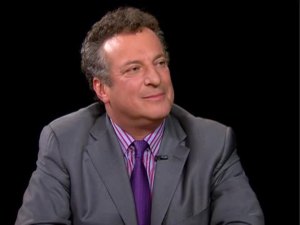
Unfortunately the counterintelligence investigation seems to have been short-circuited by the firing of Andrew McCabe and the failure of Robert Mueller to seriously investigate Trump’s connections to Russia. Here’s Weiner’s chilling conclusion:
There’s a classic story about an American agent of influence that predates the Cold War — and might presage the strange case of Donald Trump, if these questions about his relationship with Russia go dormant. Samuel Dickstein was a member of Congress from Manhattan, elected in 1922, and chairman of the House Immigration and Naturalization Committee in the 1930s. He walked into the Soviet Embassy in 1937 and offered the ambassador his services for $25,000 a year — three times his congressional salary. In exchange, he sold fake passports to Soviet spies. And he held headline-grabbing public hearings investigating Joseph Stalin’s enemies in the United States. Dickstein served 11 terms in Congress. His file lay locked up in the KGB archives for 60 years. Today, if you go down to Manhattan’s Lower East Side, to the intersection of Pitt and Grand streets, you’ll be standing in Samuel Dickstein Plaza. He got away with it.
A related opinion piece from today’s Washington Post by Josh Rogin: Secret CIA assessment: Putin ‘probably directing’ influence operation to denigrate Biden.
Russian President Vladimir Putin and his top aides are “probably directing” a Russian foreign influence operation to interfere in the 2020 presidential election against former vice president Joe Biden, which involves a prominent Ukrainian lawmaker connected to President Trump’s personal lawyer Rudolph W. Giuliani, a top-secret CIA assessment concluded, according to two sources who reviewed it.
On Aug. 31, the CIA published an assessment of Russian efforts to interfere in the November election in an internal, highly classified report called the CIA Worldwide Intelligence Review, the sources said. CIA analysts compiled the assessment with input from the National Security Agency and the FBI, based on several dozen pieces of information gleaned from public, unclassified and classified intelligence sources. The assessment includes details of the CIA’s analysis of the activities of Ukrainian lawmaker Andriy Derkach to disseminate disparaging information about Biden inside the United States through lobbyists, Congress, the media and contacts with figures close to the president.
Andriy Derkach
“We assess that President Vladimir Putin and the senior most Russian officials are aware of and probably directing Russia’s influence operations aimed at denigrating the former U.S. Vice President, supporting the U.S. president and fueling public discord ahead of the U.S. election in November,” the first line of the document says, according to the sources.
The Office of the Director of National Intelligence and the Treasury Department have identified Derkach as a Russian agent, but it has not been publicly reported that the CIA, NSA and FBI believed Putin may be personally directing the campaign. Derkach has denied working on behalf of Moscow.
The CIA assessment described Derkach’s efforts in detail and said that his activities have included working through lobbyists, members of Congress and U.S. media organizations to disseminate and amplify his anti-Biden information. Though it refers to Derkach’s interactions with a “prominent” person connected to the Trump campaign, the analysis does not identify the person. Giuliani, who has been working with Derkach publicly for several months, is not named in the assessment.

Read the rest at the WaPo.
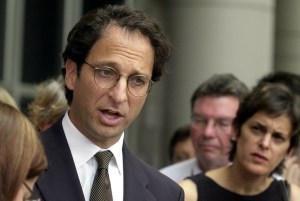
Another book that is getting much more attention than Weiner’s is Andrew Weissmann’s inside account of the Mueller investigation, Where Law Ends: Inside the Mueller Investigation. The book will be released next Tuesday.
George Packer interviewed Weissmann at The Atlantic: The Inside Story of the Mueller Probe’s Mistakes.
Andrew Weissmann was one of Robert Mueller’s top deputies in the special counsel’s investigation of the 2016 election, and he’s about to publish the first insider account, called Where Law Ends: Inside the Mueller Investigation. The title comes from an adapted quote by the philosopher John Locke that’s inscribed on the façade of the Justice Department building in Washington, D.C.: “Wherever law ends, tyranny begins.”
Weissmann offers a damning indictment of a “lawless” president and his knowing accomplices—Attorney General William Barr (portrayed as a cynical liar), congressional Republicans, criminal flunkies, Fox News. Donald Trump, he writes, is “like an animal, clawing at the world with no concept of right and wrong.” But in telling the story of the investigation and its fallout, Weissmann reserves his most painful words for the Special Counsel’s Office itself. Where Law Ends portrays a group of talented, dedicated professionals beset with internal divisions and led by a man whose code of integrity allowed their target to defy them and escape accountability.
“There’s no question I was frustrated at the time,” Weissmann told me in a recent interview. “There was more that could be done that we didn’t do.” He pointed out that the special counsel’s report never arrived at the clear legal conclusions expected from an internal Justice Department document. At the same time, it lacked the explanatory power of last month’s bipartisan Senate Intelligence Committee report on the 2016 election. “Even with 1,000 pages, it was better,” Weissmann said of the Senate report. “It made judgments and calls, instead of saying, ‘You could say this and you could say that.’”
Andrew Weissmann
The Mueller inquiry was the greatest potential check on Trump’s abuse of power. The press gives the president fits, but almost half the country chooses not to believe the news. Congress will protect Trump as long as his party controls at least one chamber. Local prosecutors and civil plaintiffs are severely limited in pursuing justice against a sitting president. Public opinion is immovably split and powerless until the next election. Only the Special Counsel’s Office—burrowing into the criminal matter of Russian interference in the 2016 election, a possible conspiracy with the Trump campaign, and the president’s subsequent attempts to block an investigation—offered the prospect of accountability for Trump. Mueller couldn’t try the president in court, let alone send him to prison, but he could fully expose Trump’s wrongdoing for a future prosecutor, using the enforceable power of a grand jury subpoena. The whole constitutional superstructure of checks and balances rested on Mueller and his team. As their work dragged on through 2017 and 2018, with flurries of indictments and plea deals but otherwise in utter silence, many Americans invested the inquiry with the outsized expectation that it would somehow bring Trump down.
Read the rest at the Atlantic link.
Charlie Savage at The New York Times: Mueller’s Team Should Have Done More to Investigate Trump-Russia Links, Top Aide Says.
The team led by Robert S. Mueller III, the special counsel, failed to do everything it could to determine what happened in the 2016 election, shying away from steps like subpoenaing President Trump and scrutinizing his finances out of fear he would fire them, one of Mr. Mueller’s top lieutenants argued in the first insider account of the inquiry.
“Had we used all available tools to uncover the truth, undeterred by the onslaught of the president’s unique powers to undermine our efforts?” wrote the former prosecutor, Andrew Weissmann, in a new book, adding, “I know the hard answer to that simple question: We could have done more.”
The team took elaborate steps to protect its files of evidence from the risk that the Justice Department might destroy them if Mr. Trump fired them and worked to keep reporters and the public from learning what they were up to, Mr. Weissmann wrote in “Where Law Ends: Inside the Mueller Investigation,” which Random House will publish next week.
While he speaks reverently of Mr. Mueller, he also says his boss’s diffidence made him ill-suited for aspects of shepherding the politically charged investigation. He saw Mr. Mueller and his deputy, Aaron M. Zebley, as overly cautious.
Mr. Weissmann also defended against accusations by the president and his allies that he and other investigators were politically biased “angry Democrats”; Mr. Weissmann said his personal views had no bearing on the crimes that Russian operatives and Trump aides committed.
And he elevates particular details — for example, emphasizing that the same business account that sent hush payments to an adult film star who alleged an extramarital affair with Mr. Trump had also received “payments linked to a Russian oligarch.” The president has denied the affair; his former lawyer Michael D. Cohen controlled the account. Mr. Mueller transferred the Cohen matter to prosecutors in New York.
More Reads, links only:
The Washington Post: Mueller prosecutor says special counsel ‘could have done more’ to hold Trump accountable.
Book review by Jennifer Szalai at The New York Times: A Prosecutor’s Backstage Tour of the Mueller Investigation.
The American Independent: Trump says coronavirus ‘affects virtually nobody’ as death toll reaches 200,000.
The Washington Post: Pentagon used taxpayer money meant for masks and swabs to make jet engine parts and body armor.
The New York Times: Trump Could Be Investigated for Tax Fraud, D.A. Says for First Time.
Jane Mayer at The New Yorker: A Young Kennedy, in Kushnerland, Turned Whistle-Blower.
CNBC: Powell pledges the Fed’s economic aid ‘for as long as it takes.’
Brian Karem at The Bulwark: The Absentee President. Donald Trump rarely shows up to the West Wing—and when he does, he is too incompetent to effectively fulfill his oath of office.
Thursday Reads: Trump, Barr, and Russia vs. American Democracy
Posted: September 17, 2020 Filed under: Foreign Affairs, morning reads, Republican politics, U.S. Politics | Tags: Adam D. DeMarco, Bill Barr, Dan Coats, Department of Justice, Donald Trump, Russian media, Vladimir Putin 22 Comments
Anna Sahlstén
Good Morning!!
Former Director of National Intelligence Dan Coats spoke out about Trump in Bob Woodward’s new book Rage; now he’s authored an op-ed in The Washington Post about the 2020 election: What’s at Stake in This Election? The American Democratic Experiment.
We hear often that the November election is the most consequential in our lifetime. But the importance of the election is not just which candidate or which party wins. Voters also face the question of whether the American democratic experiment, one of the boldest political innovations in human history, will survive.
Our democracy’s enemies, foreign and domestic, want us to concede in advance that our voting systems are faulty or fraudulent; that sinister conspiracies have distorted the political will of the people; that our public discourse has been perverted by the news media and social networks riddled with prejudice, lies and ill will; that judicial institutions, law enforcement and even national security have been twisted, misused and misdirected to create anxiety and conflict, not justice and social peace.
If those are the results of this tumultuous election year, we are lost, no matter which candidate wins. No American, and certainly no American leader, should want such an outcome. Total destruction and sowing salt in the earth of American democracy is a catastrophe well beyond simple defeat and a poison for generations. An electoral victory on these terms would be no victory at all. The judgment of history, reflecting on the death of enlightened democracy, would be harsh.
The most urgent task American leaders face is to ensure that the election’s results are accepted as legitimate. Electoral legitimacy is the essential linchpin of our entire political culture. We should see the challenge clearly in advance and take immediate action to respond.
Coats argues that Congress should form a bipartisan commission to protect voting and ensure that Americans will see the results of the election as legitimate. Unfortunately, there’s almost no chance that Congressional Republicans would go along with such a project. They clearly support Trump’s goal of a “rigged” election.

Delphin Enjolras. Woman Reading at the Window woman reading at the window
At Vanity Fair, Chris Smith reports on Joe Biden’s preparations for dealing with election interference by Trump and his personal attorney Bill Barr: “We’re Not Going To Let Donald Trump Steal This Election”: Democrats Are Strategizing For All-Out Warfare.
Donald Trump, true to form, is stoking chaos, trying to undermine faith in the accuracy of November’s election. He has floated stationing armed guards at the 2020 polls and maintained a steady stream of lies about “rigged” mail-in ballots. Joe Biden’s counteroffensive is shaping up to be equally in character: It relies on his trust in rational process and in projecting calm. It’s a strategy that makes a great deal of sense—and also feels quaint considering Trump’s evil genius for asymmetrical warfare.
Biden has solicited the help of two former solicitors general, one former attorney general, and a small army of attorneys, building up its own law firm to beat back Trump’s attempts at voter suppression both before and after Election Day. Those lawyers are assisting in the legal battles already playing out in courts across the country that will shape the rules about whose votes get counted—in the words of Democratic strategist Brian Fallon, the “mini Bush v. Gores.” The lawyers and the vast voter-protection program being rolled out by the Biden campaign and the Democratic National Committee are designed to do two things: ensure that all legitimate votes are counted, and bolster Democratic turnout by raising confidence that their votes will be counted. Biden’s second tactic is more subtle, and riskier: By not engaging directly and loudly with Trump’s claims of rampant fraud, Team Biden believes it will reduce the potency of the president’s frenetic disinformation.
We’ll see. We all remember how the Supreme Court installed George W. Bush in 2000.
When Rosa Brooks, a Georgetown University law professor and a cofounder of the Transition Integrity Project, brought together dozens of party veterans, pollsters, and media players to simulate outcomes, only one scenario—a Biden landslide—led to a fairly orderly transfer of power. The rest devolved into a constitutional crisis mixed with street violence. “The Democratic elites, God bless them, have had a lot of faith, historically, in institutions and the law,” Brooks says. “But our exercises underscored the tremendous advantage the first mover has in a disputed election, and the tremendous structural advantage of incumbency….The president can have Bill Barr initiate a politically motivated investigation. And I think we can expect all kinds of efforts, legal and extralegal, to stop the counting and to challenge mail-in ballots.”
The Biden campaign and the DNC certainly see all the potential for Trumpian mischief—and Ron Klain, one of Biden’s longtime senior advisers, was a senior adviser to Gore in 2000. So the campaign has constructed “the largest election-protection program in presidential campaign history,” a Biden strategist says. Biden allies have met with major media executives, urging them to be cautious in calling states on election night when millions of mail-in ballots will have yet to be processed. Another hopeful sign is that the Biden campaign is leaning on the expertise of Stacey Abrams and Lauren Groh-Wargo, who managed Abrams’s 2018 run for Georgia governor and now runs Fair Fight, the group Abrams founded to push for, well, fairness in elections.
Read the whole thing at Vanity Fair.

Woman Reading, Henri Lebasque
Meanwhile, Bill Barr has come out as a full-on fascist. He seems to be working overtime to out-Trump Trump. Remember how Barr helped clear Lafayette Square so that Trump could have a photo-op with a bible? The Washington Post reveals more details about that episode: Federal officials stockpiled munitions, sought ‘heat ray’ device before clearing Lafayette Square, whistleblower says.
Hours before law enforcement forcibly cleared protesters from Lafayette Square in early June amid protests over the police killing of George Floyd, federal officials began to stockpile ammunition and sces that could emit deafening sounds and make anyone within range feel like their skin is on fire, according to an Army National Guard major who was there.
D.C. National Guard Maj. Adam D. DeMarco told lawmakers that defense officials were searching for crowd control technology deemed too unpredictable to use in war zones and had authorized the transfer of about 7,000 rounds of ammunition to the D.C. Armory as protests against police use of force and racial injustice roiled Washington.
In sworn testimony, shared this week with The Washington Post, DeMarco provided his account as part of an ongoing investigation into law enforcement and military officers’ use of force against D.C. protesters….
DeMarco’s account contradicts the administration’s claims that protesters were violent, tear gas was never used and demonstrators were given ample warning to disperse — a legal requirement before police move to clear a crowd. His testimony also offers a glimpse into the equipment and weaponry federal forces had — and others that they sought — during the early days of protests that have continued for more than 100 days in the nation’s capital.
DeMarco, who provided his account as a whistleblower, was the senior-most D.C. National Guard officer on the ground that day and served as a liaison between the National Guard and U.S. Park Police.
[Emphasis added.] Recall that Barr was seen inspecting the protests before officers attacked the crowd. Now Barr wants to charge protesters with trying to overthrow the government and actually suggested criminally charging the mayor of Seattle. The New York Times: Barr Told Prosecutors to Consider Sedition Charges for Protest Violence.
Attorney General William P. Barr told federal prosecutors in a call last week that they should consider charging rioters and others who had committed violent crimes at protests in recent months with sedition, according to two people familiar with the call.
The Artist’s Wife, Henry Lamb, 1933
The highly unusual suggestion to charge people with insurrection against lawful authority alarmed some on the call, which included U.S. attorneys around the country, said the people, who described Mr. Barr’s comments on the condition of anonymity for fear of retribution.
The attorney general has also asked prosecutors in the Justice Department’s civil rights division to explore whether they could bring criminal charges against Mayor Jenny Durkan of Seattle for allowing some residents to establish a police-free protest zone near the city’s downtown for weeks this summer, according to two people briefed on those discussions. Late Wednesday, a department spokesman said that Mr. Barr did not direct the civil rights division to explore this idea….
During a speech on Wednesday night, Mr. Barr noted that the Supreme Court had determined that the executive branch had “virtually unchecked discretion” in deciding whether to prosecute cases. He did not mention Ms. Durkan or the sedition statute.
“The power to execute and enforce the law is an executive function altogether,” Mr. Barr said in remarks at an event in suburban Washington celebrating the Constitution. “That means discretion is invested in the executive to determine when to exercise the prosecutorial power.”

More stories on Bill Barr’s latest crazy rantings:
Fox News: Barr claims anti-Trump element in DC working to ‘thwart’ administration.
Bloomberg: Barr Says ‘Black Lives Matter’ Doesn’t Care About Black Lives.
The New York Times: In an interview, Barr warned of the U.S. going down ‘the socialist path’ if Trump is not re-elected.
Steve Benen at MSNBC: AG Bill Barr’s election deceptions go from bad to worse.
The Washington Post: Barr accuses Justice Department of headhunting and meddling with politics.
Raw Story: Trump and Barr are creating a perfect storm for post-election violence: British journalist.
A couple more related stories:

Maria Karalyos, Woman reading a book
Neal Kaytal and Joshua Geltzer at The New York Times: This Is How Bad It’s Gotten at the Justice Department.
In his time as the head of the Justice Department, Attorney General William Barr has alienated many federal prosecutors. The latest appears to be Nora Dannehy, a longtime prosecutor who has resigned from the department, where she was part of a team looking into the Russia investigation.
We don’t know for sure exactly what happened; she isn’t talking, nor is Mr. Barr. But The Hartford Courant, which broke the story, reported that Ms. Dannehy’s colleagues said that she departed because of Mr. Barr’s politicization — in particular, because Mr. Barr is evidently eager to break drastically with past practice and issue an incomplete report intended to help President Trump in his re-election efforts.
Her resignation looks like part of an extremely troubling pattern. Earlier this year, highly respected prosecutors in the Michael Flynn and Roger Stone cases dramatically resigned or withdrew. One of them testified to Congress that the Justice Department under Mr. Barr was treating Mr. Stone “differently from any other defendant because of his relationship to the president.” The Justice Department inspector general has opened an investigation.
When civil servants resign, skeptics often ask what difference one person really can make by leaving. The answer is simple: a lot. Ms. Dannehy’s departure isn’t just likely a major assertion of integrity by her; it’s also a big problem for Mr. Barr — and therefore for Mr. Trump.
Head over to the NYT to read the rest.
Julia Davis at The Daily Beast: Russian Media Is Rooting for Civil War in America: ‘The Worse, the Better.’
State-controlled media’s slant is a telling indicator of the Kremlin’s leanings. To imagine the relationship between Russian President Vladimir Putin and his massive media apparatus, one may reference the coziness between Sean Hannity and Trump—and magnify that intensity tenfold, with directives flowing only from the top down. Obsessed with retaining his dominance and fully realizing the power of propaganda, Putin leaves nothing to chance….
Gari Melchers, Woman Reading by a Window
Russian lawmakers, state media experts and pundits on tightly-choreographed TV shows openly reveal that the Kremlin is still rooting for Trump. But Moscow has a growing concern that this time around, their preferred candidate might lose. Appearing on a state TV show The Right To Know, Margarita Simonyan, the editor-in-chief of the Kremlin-funded propaganda networks RT and Sputnik, said about Trump’s chances of re-election: “I think Trump will lose, but then I think there will be a major blow-up from the standpoint of accepting or not accepting the outcome of the election. They’ll be battling over that for a long time, who knows how it might end.”
Having openly wished for Trump to drive the United States into civil war, Russian state media figures are now relishing that idea with renewed enthusiasm. They believe it would destabilize America to such an extent as to undermine its very sovereignty, thereby untying the Kremlin’s hands to wreak even more havoc upon the Western world. Appearing on Russia’s state TV show The Evening with Vladimir Soloviev, analyst Dmitry Drobnitsky explained his belief that U.S. elections “can be considered America’s internal affairs only up to the point when an actual civil war starts there.” The idea of a coup d’état seems all but inevitable, Drobnitsky argued: “The loser in this election would be an idiot to accept the outcome.”
Russian state media repeatedly echoed Trump, who is doing the Kremlin’s bidding by attacking the legitimacy of the 2020 elections, falsely suggesting that mail-in voting is completely fraudulent, and that Democrats are rigging the process to falsify the outcome. There is no doubt that the Kremlin would align with Trump in case of a contested election, as the groundwork for accusing the Democrats of fraud has been laid in advance.
Russian state media analysts also make no secret as to the Kremlin’s preferred candidate. Writing for the newspaper Kommersant, Dmitry Kosyrev, political columnist for state media outlet RIA Novosti, pondered: “Is Trump ours?” This popular refrain can be interpreted in one of several ways: to signify Russia’s hold over the American president, to express that Trump’s position is in perfect alignment with that of the Kremlin—meaning, “he is on our side”—or to signal Russia’s preference: “He is the one we choose.”

Things are getting really scary. Unbelievably, this year’s election will likely be much worse than 2016. I don’t know what more to say. I guess we just have to take it one day at a time, and hope that Biden and the Democrats have the guts to stand up for democracy.
Take care, Sky Dancers!
Thursday Reads
Posted: August 20, 2020 Filed under: Foreign Affairs, morning reads, U.S. Politics | Tags: 2020 Democratic National Convention, Alexey Navalny, Barack Obama, coronavirus pandemic, Donald Trump, Joe Biden, Kamala Harris, Konstantin Kilimnik, Muller Report, Oleg Deripaska, Paul Manafort, Robert Mueller, Russiagate, Senate Select Committee on Intelligence, Vladimir Putin 39 Comments
Girl with Sunflowers, 1941 (oil on masonite), Diego Rivera (1886-1957)
Good Morning!!
As usual, there is way too much news this morning. How have we survived nearly four years of this? The U.S. is leading the world in cases and deaths during a historic global pandemic that has killed more than 170,000 Americans. The U.S. economy is a raging dumpster fire that has been a disaster for all but the wealthiest Americans.
The so-called “president” couldn’t care less about the death and destruction that his neglect of his duties has caused. He’s far too busy trying to steal the 2020 election and achieve his goal of becoming a dictator.
More evidence of Trump’s collusion with Russia and his idol Vladimir Putin has emerged in recent days, and it really looks as if he has been getting lessons from Putin in how do to the U.S. what Putin did to Russia. Meanwhile Putin appears to have poisoned his primary political opponent. Is he telling Trump how to do that too?
Today is the fourth day of the virtual Democratic National Convention. Last night was pretty dramatic. Kamala Harris accepted the nomination for Vice President. She is first woman of color and the first Asian-American to do so. Before Harris spoke, former President Obama gave a merciless critique of Trump’s failed leadership and issued a dire warning about the future of our democracy. Tonight Joe Biden will accept the nomination for President.
On the breaking news from Russia
The Daily Beast: Putin Critic Alexey Navalny Allegedly Poisoned by Toxin in His Tea.
Edvard Munch, The Sun
MOSCOW—Vladimir Putin’s nemesis, corruption fighter Aleksey Navalny, is fighting for his life in a Siberian hospital after allegedly being poisoned at an airport while travelling to Moscow.
Navalny’s closest aide, Kira Yarmysh, said Navalny was poisoned after drinking a cup of tea at Tomsk airport early Thursday morning. He then boarded a flight to the Russian capital but fell violently ill en route. Taken from the aircraft on a stretcher after it was diverted to the city of Omsk, the opposition leader is in intensive care, relying on a respirator to breathe.
A Russian DJ who was on the same flight recorded a video that showed medical help arriving after the plane landed in Omsk. Navalny’s screams could be heard in the background.
Yarmysh said she knew immediately what had happened to her colleague: “A year ago, when Aleksey was in a detention center, he was poisoned. Obviously, now they’ve done the same thing to him again,” she wrote on Twitter.
Navalny’s friend, former lawmaker Dmitry Gudkov is convinced this was yet another assassination attempt on an opponent of Putin. “Ever since Boris Nemtsov was murdered by the wall of the Kremlin, all of us knew who was going to be their next target—but Aleksey and I avoided talking about that,” Gudkov told The Daily Beast.

Read more at BBC News: Alexei Navalny: Russian opposition leader ‘poisoned’
On the Democratic National Convention
DECLARING “LET’S fight with conviction, let’s fight with hope, let’s fight with confidence,” Kamala D. Harris made history on Wednesday night in accepting the Democratic Party’s nomination for vice president. The California senator’s address was the nation’s first broad introduction to the first Black woman ever on a major party presidential ticket.
Impression, Sunrise, Claude Monet, 1872
The daughter of immigrants, she described her family’s only-in-America story. She also highlighted racial inequities that continue to plague American society, including the disproportionate suffering communities of color have endured during the covid-19 pandemic. But Ms. Harris, who has won several elections in the nation’s most populous state and boasts an impressive record as a prosecutor, state attorney general and U.S. senator, did not serve merely as an avatar of one demographic group or another. The vision she offered was of universal values — and the need to restore them after the presidency of Donald Trump. She lamented that “the constant chaos leaves us adrift. The incompetence makes us feel afraid. The callousness makes us feel alone.” She offered an alternative in which “we may not agree on every detail, but we are united by the fundamental belief that every human being is of infinite worth, deserving of compassion, dignity and respect.”
In other elections, such sentiments might feel trite. In this one, they draw a clear distinction with the incumbent president. Former president Barack Obama drove that point home before Ms. Harris spoke. “Donald Trump hasn’t grown into the job because he can’t,” he said. “The consequences of that failure are severe: 170,000 Americans dead; millions of jobs, gone, while those at the top take in more than ever; our worst impulses unleashed; our proud reputation around the world badly diminished.”

Politico: ‘Our worst impulses unleashed’: Obama assails Trump as a threat to democracy.
Former President Barack Obama delivered his sharpest broadside yet against President Donald Trump, blasting his successor as unserious and self-centered and cautioning that core democratic institutions have been imperiled by the Trump presidency.
“I never expected that my successor would embrace my vision or continue my policies,” Obama said in his remarks at the Democratic National Convention on Wednesday. “I did hope, for the sake of our country, that Donald Trump might show some interest in taking the job seriously. But he never did.”
Alexander Calder, Sunrise on Pyramids, 1070
“Donald Trump hasn’t grown into the job because he can’t,” Obama continued. “And the consequences of that failure are severe: 170,000 Americans dead. Millions of jobs gone. Our worst impulses unleashed, our proud reputation around the world badly diminished, and our democratic institutions threatened like never before.”
Obama portrayed the president as a catastrophically ineffective leader who has used the office only to benefit himself and his friends and spoke with an urgency not often seen from a man who has largely declined to weigh in on the Trump outrage du jour. Trump, he said, views the presidency as no more than a “reality show that he can use to get the attention he craves.”
He dismissed Trump’s response to the coronavirus pandemic, asserting that “our ability to work together to solve big problems like a pandemic depends on a fidelity to facts and science and logic and not just making stuff up.”

Also see Jonathan Chait at New York Magazine: Obama’s Convention Speech Is the First Time I Have Seen Him Scared.
On the Senate Intelligence Committee’s latest report on Trump and Russia
Franklin Foer at The Atlantic: Russiagate Was Not a Hoax.
Rereading the Mueller report more than a year after its publication is an exercise in disappointment. One gets the feeling that Robert Mueller didn’t press his inquiry to its end. Instead of settling the questions that haunt the 2016 campaign, he left them dangling, publishing a stilted document riddled with insinuation and lacunae. He rushed his work, closing up shop before finishing his assignment.
While Mueller received all the hype, the Senate Select Committee on Intelligence kept its head down. Yesterday, having avoided cable speculation almost entirely, the SSCI released the fifth and final volume of a report on Russia’s attempt to sway the last election in Donald Trump’s favor. It finally delivered what Mueller either could not or would not: a comprehensive presentation of the evidence in the matter of “collusion.” The report confirms that Russiagate is no hoax. Whether or not the Trump campaign illegally coordinated with the Kremlin, Trump has no grounds for proclaiming vindication, much less that he’s the victim of a witch hunt….
The Wheat Field, Sunrise, Vincent Van Gogh
Mueller’s team referred to Manafort’s Kyiv-based aide-de-camp, Konstantin Kilimnik, as an active Russian agent. Manafort had clearly spoken with Kilimnik during the campaign, and had even passed confidential campaign information to him, with the understanding that the documents would ultimately arrive in the hands of oligarchs close to the Kremlin….
The committee…reports that Manafort and Kilimnik talked almost daily during the campaign. They communicated through encrypted technologies set to automatically erase their correspondence; they spoke using code words and shared access to an email account. It’s worth pausing on these facts: The chairman of the Trump campaign was in daily contact with a Russian agent, constantly sharing confidential information with him. That alone makes for one of the worst scandals in American political history.
The significant revelation of the document is that Kilimnik was likely a participant in the Kremlin scheme to hack and leak Clinton campaign emails. Furthermore, Kilimnik kept in close contact with the Russian oligarch Oleg Deripaska, a former client of Manafort’s. The report also indicates that Deripaska was connected to his government’s hacking efforts. This fact is especially suggestive: Deripaska had accused Manafort of stealing money from him, and Manafort hoped to repair his relationship with the oligarch. Was Manafort passing information to him, through Kilimnik, for the sake of currying favor with an old patron?

Also see The New York Times Editorial Board: The Trump Campaign Accepted Russian Help to Win in 2016. Case Closed. Too bad the NYT can’t admit how wrong they were in 2016 and issue a long-needed apology to Hillary Clinton and the American people.
On Trump’s efforts to steal the 2020 election:
Joanne Lipman and Edward B. Foley at The Washington Post: If we don’t dispel the falsehood of an election ‘delay’ now, we risk chaos in November.
Leonid Afremov, The Sweetness of the Sun
President Trump is ramping up his attacks on mail-in voting by insisting election results “must” be known on election night. “No more big election night answers?” he tweeted last month. “Ridiculous! Just a formula for RIGGING an Election . . .”
The news media have pushed back on his baseless claims of fraud. But they agree with him on one point: There is likely to be a “delay” in election results because of a surge in mail-in votes.
But that’s wrong. If results aren’t known on election night, that doesn’t mean there’s a delay. The fact is, there are never official results on election night. There never have been.
Predictions of a delay rest on a misunderstanding of the vote-counting process — a misunderstanding that is both dangerous and hugely consequential. If election-night results are considered the norm, and what happens this year is described as a “delay,” it will be easy to paint the result as problematic — and for Trump to continue to spread suspicions about the entire process.
Concerns about a supposed delay stem from a coronavirus-fueled interest in absentee and mail-in ballots. In a July survey of more than 19,000 Americans, 41 percent of those who plan to vote said they were “very likely” to vote by mail this year, and another 23 percent said they would be “somewhat likely” to do so. That compares with 21 percent who voted by mail in 2016, “which itself was a historic high,” the survey, conducted by a consortium of universities, noted. Counting those ballots could potentially take days or weeks, which means projecting a winner on election night may not be possible.
Yet even if counting takes several weeks, that wouldn’t constitute a delay — because by law, election results aren’t official until more than a month after the election.

I will highlight more important stories in the comment thread.
Take care of yourselves today Sky Dancers! We will survive because we must. Take care of yourselves and those you love today and every day.
Lazy Caturday Reads
Posted: August 1, 2020 Filed under: Foreign Affairs, morning reads, U.S. Politics | Tags: Brazil, coronavirus pandemic, Donald Trump, Germany, Jared Kushner, NATO, Russia, Suzanne Valadon, Vladimir Putin 16 CommentsGood Morning!!

Artist Suzanne Valadon and her cat
The paintings in today’s post are by Suzanne Valadon. Here’s some background about this fascinating artist from The Great Cat.org:
Suzanne Valadon (1865-1938), was an illegitimate child of a French laundress and lived a rather rough life in her youth. She performed in a circus on the trapeze until she had a bad fall when she was 16.
After that, she decided to become an artist’s model, a safer profession. Artists such as Pierre Puvis de Chavannes, Henri Toulouse-Lautrec, and Pierre-Auguste Renoir used her in some of their works. Renoir even painted her in The Bathers. Valadon began to study the methods and works of the artists she posed for, and started to paint on her own.
Encouraged by Toulouse-Lautrec, she continued and even caught the eye of Edward Degas, who was so taken by her work that he purchased several of her first paintings in 1893. A true Bohemian, in 1883 at age 18, she gave birth to an illegitimate son, Maurice Utrillo, who became a well known artist as well.
Read more about her life at the pdf link above. You may have to go to the Table of Contents and click on her name.
Now on to today’s news.
It’s been another her horror-filled week, as Dakinikat described in her post yesterday. I avoided TV for most of the week, but it’s impossible to completely escape the Trump chaos. I’ve been doing my best though, mainly by reading lotsYo of books. Anyway, let’s see what’s happening this morning.
Trump has asked for help winning the 2020 election from Ukraine, China, and I assume Russia, since he seems to talk on the phone to Putin constantly.
So how many countries has Trump actually asked for election help? Add Brazil to the list.
The New York Times: Lawmakers ‘Alarmed’ by Reports U.S. Envoy Told Brazil It Could Help Re-elect Trump.
RIO DE JANEIRO — Members of the House Foreign Affairs Committee said Friday they were “extremely alarmed” by assertions that the American ambassador in Brazil had signaled to Brazilian officials they could help get President Trump re-elected by changing their trade policies.
In a letter sent Friday afternoon, Committee Chairman Eliot L. Engel demanded that the ambassador, Todd Chapman, produce “any and all documents referring or related to any discussions” he has held with Brazilian officials in recent weeks about their nation’s tariffs on ethanol, an important agricultural export for Iowa, a potential swing state in the American presidential election.
The committee’s letter was sent in response to reports in the Brazilian news media this week saying that Mr. Chapman, a career diplomat, made it clear to Brazilian officials they could bolster Mr. Trump’s electoral chances in Iowa if Brazil lifted its ethanol tariffs.
Eliminating tariffs would give the Trump administration a welcome trade victory to present to struggling ethanol producers in Iowa, where the president is in a close race with his Democratic rival, Joseph R. Biden Jr.
The House committee said it was opening an inquiry into the matter.
The State Department denied the reports, but . . .
The O Globo newspaper published a story on Thursday saying Mr. Chapman had underscored “the importance to the Brazilian government of keeping Donald Trump” in office. Mr. Bolsonaro, a far-right leader, has made closer alignment with the Trump administration his top foreign policy priority.
A competing newspaper, Estadão, published an article Friday saying its reporters independently confirmed that the ambassador framed his argument against tariffs in partisan terms. The article said the Brazilian officials who met with Mr. Chapman rejected the appeal, declining to be drawn into the American presidential battle.
Neither article named its sources. But Alceu Moreira, a Brazilian congressman who heads the agricultural caucus, told The New York Times in an interview that Mr. Chapman had made repeated references to the electoral calendar during a recent meeting the two had about ethanol.
 I guess we can assume Trump has asked for help from just about every country headed by a dictator.
Now Trump has helped Putin by ordering the withdrawal of U.S. Troops from Germany.
CNN: US to withdraw nearly 12,000 troops from Germany in move that will cost billions and take years.
The US is moving forward with President Donald Trump’s plan to withdraw nearly 12,000 troops from Germany, a decision that has attracted bipartisan congressional opposition and roiled key allies who see the move as a blow to NATO.
Secretary of Defense Mark Esper acknowledged the plan will cost billions to execute when he formally announced the decision on Wednesday from the Pentagon. US defense officials said it will take years to relocate the troops.
The plan to pull US troops from the long-time NATO ally has been met with broad bipartisan opposition amid concerns that it will weaken the US military’s position vis a vis Russia, however the Trump Administration has decided to proceed with the move.
Trump defended the decision Wednesday, saying the troop drawdown was taking place because Berlin was not spending the NATO target of 2% of its GDP on defense and because Germany was taking “advantage” of the US….
Defense officials, however, said Wednesday that the decision on where to house the US troops leaving Germany was not influenced by whether the new host country was meeting the 2% target.
Well, I’m sure Putin is thrilled. Will Trump pull us out of NATO next?
At The Daily Beast, Julia Davis reports on Russia’s reaction to Trump’s willful destruction of our country: ‘America’s Dying’: Russian Media Is Giddy at Chaos in the USA.
This week, U.S. President Donald Trump reiterated his intent to move forward with reducing the U.S. military presence in Germany, without any consultations with Berlin. And even as members of the U.S. Congress and America’s allies abroad expressed concerns about the drawdown, the Trump administration’s decision brought joy to the Kremlin and Russian media.
Back in June, 22 Republican members of the House Armed Services Committee urged Trump not to go ahead with the move, stating in a letter: “We believe that such steps would significantly damage U.S. national security as well as strengthen the position of Russia to our detriment … In Europe, the threats posed by Russia have not lessened, and we believe that signs of a weakened U.S. commitment to NATO will encourage further Russian aggression and opportunism.” [….]
Meanwhile, when the intent to reduce the U.S. contingent in Germany was first announced, Russian Foreign Ministry spokeswoman Maria Zakharova said that the Kremlin “would welcome any steps by Washington to scale down its military presence in Europe,” brazenly telling the United States to take home not only its troops, but also its tactical nuclear weapons.
The Kremlin-controlled Russian state media also sensed a precious propaganda opportunity. Sergey Brilyov, anchor of the news show Saturday Vesti on Russian state media channel Rossiya-1, pondered whether the controversial move by the Trump administration could be considered the proof that Russia no longer poses a military threat to Europe.
Kremlin spokesperson Dmitry Peskov used the same rationale today, when he claimed that Russia doesn’t present any threat to European countries and “the fewer U.S. soldiers are on the European continent, the calmer it is in Europe.”
Read more at The Daily Beast.
Don’t miss this must read piece at Vanity Fair about Trump and Kushner’s decision to scrap efforts to fight the coronavirus pandemic because it was only affecting blue states: How Jared Kushner’s Secret Testing Plan “Went Poof Into Thin Air.”
A few choice excerpts:
Six months into the pandemic, the United States continues to suffer the worst outbreak of COVID-19 in the developed world. Considerable blame belongs to a federal response that offloaded responsibility for the crucial task of testing to the states. The irony is that, after assembling the team that came up with an aggressive and ambitious national testing plan, Kushner then appears to have decided, for reasons that remain murky, to scrap its proposal. Today, as governors and mayors scramble to stamp out epidemics plaguing their populations, philanthropists at the Rockefeller Foundation are working to fill the void and organize enough testing to bring the nationwide epidemic under control.
Inside the White House, over much of March and early April, Kushner’s handpicked group of young business associates, which included a former college roommate, teamed up with several top experts from the diagnostic-testing industry. Together, they hammered out the outline of a national testing strategy. The group—working night and day, using the encrypted platform WhatsApp—emerged with a detailed plan obtained by Vanity Fair.
Rather than have states fight each other for scarce diagnostic tests and limited lab capacity, the plan would have set up a system of national oversight and coordination to surge supplies, allocate test kits, lift regulatory and contractual roadblocks, and establish a widespread virus surveillance system by the fall, to help pinpoint subsequent outbreaks.
But it never happened. Why?
By early April, some who worked on the plan were given the strong impression that it would soon be shared with President Trump and announced by the White House. The plan, though imperfect, was a starting point. Simply working together as a nation on it “would have put us in a fundamentally different place,” said the participant.
But the effort ran headlong into shifting sentiment at the White House. Trusting his vaunted political instincts, President Trump had been downplaying concerns about the virus and spreading misinformation about it—efforts that were soon amplified by Republican elected officials and right-wing media figures. Worried about the stock market and his reelection prospects, Trump also feared that more testing would only lead to higher case counts and more bad publicity. Meanwhile, Dr. Deborah Birx, the White House’s coronavirus response coordinator, was reportedly sharing models with senior staff that optimistically—and erroneously, it would turn out—predicted the virus would soon fade away.
Against that background, the prospect of launching a large-scale national plan was losing favor, said one public health expert in frequent contact with the White House’s official coronavirus task force.
Most troubling of all, perhaps, was a sentiment the expert said a member of Kushner’s team expressed: that because the virus had hit blue states hardest, a national plan was unnecessary and would not make sense politically. “The political folks believed that because it was going to be relegated to Democratic states, that they could blame those governors, and that would be an effective political strategy,” said the expert.
That logic may have swayed Kushner. “It was very clear that Jared was ultimately the decision maker as to what [plan] was going to come out,” the expert said.
[Emphasis added.] This is a mind-blowing article. Please read the whole thing if you haven’t already.
 More stories to check out today:
The New York Times: Trump Halts TV Advertising as He Struggles in Polls Against Biden.
John Avlon at CNN: Trump’s election tweet shows a frightened narcissist afraid of losing.
Politico: Barr Makes It Official—He’s Trump’s New “Fixer”
The Guardian: Portland sees peaceful night of protests following withdrawal of federal agents.
The Washington Post: DHS analyzed protester communications, raising questions about previous statements by senior department official.
Yahoo News: Exclusive: CDC projects U.S. coronavirus death toll could top 180,000 by Aug. 22.
Politico: Pelosi upbraids counterintel chief in private briefing over Russian meddling.
The New York Times: Lobbying Intensifies Among V.P. Candidates as Biden’s Search Nears an End.
Business Insider: Joe Biden’s vice presidential contender Rep. Karen Bass praised Scientology at a 2010 ceremony.
Dana Millbank at The Washington Post: Why would Biden pick a human lightning rod as VP?
That’s it for me. Have a terrific weekend everyone!
Tuesday Reads
Posted: June 30, 2020 Filed under: Foreign Affairs, morning reads, U.S. Politics | Tags: Carl Reiner, Donald Trump, Mel Brooks, Russian bounties on U.S. troops, The Dick Van Dyke Show, Trump phone calls with foreign leaders, Vladimir Putin 16 Comments
Good Morning!!
We lost one of the all-time greats last night. Carl Reiner is dead at 98. TMZ:
Carl Reiner, one of the most prolific entertainers in the history of show business has died … TMZ has learned.
We’re told Reiner died Monday night at his Beverly Hills home. We’re told his family was with him when he passed.
Reiner was a producer. He was also a director. He was also an actor. He was also a Grammy winner. He won 9 Emmys in over 7 decades. He has more than 400 credits….
For most people … they remember Carl best for “The Dick Van Dyke Show,” which he created and starred in. Carl played the role of a very temperamental comedian — Alan Brady — who terrorized Dick Van Dyke‘s character and the other writers. Oh, and there was this new actress Carl cast for Dick’s wife — Mary Tyler Moore
Carl made a best-selling album with Mel Brooks called “2000 Years with Carl Reiner and Mel Brooks” which earned a Grammy nomination and sparked his writing career.
There were other smash hits, including directing “Oh God” with George Burns and “The Jerk” with Steve Martin. He worked with Martin on several movies, including “Dead Men Don’t Wear Plaid,” “Man with Two Brains” and “All of Me.”
Reiner appeared in a bunch of TV shows and movies, including “The Russians are Coming, The Russians are Coming,” and “Enter Laughing.”
The directing credits are endless — “Summer Rental” with John Candy, “Summer School” with Mark Harmon, “That Old Feeling” with Bette Midler and “Sibling Rivalry” with Kirstie Alley and Carrie Fisher.

Click the link to read the rest.
Vanity Fair: Carl Reiner, Comedy Patriarch, Dies at 98.
If Carl Reiner had written a deathbed memoir, it would have been titled Exit Laughing. After all, the legendary comedy writer, performer, and director had already published Enter Laughing and Continue Laughing. Having conquered TV, movies, Broadway, and traditional publishing over his seven-decade-plus career, Reiner spent his last years mastering e-books and Twitter, writing and tweeting until Monday night, when he died at age 98 in his Beverly Hills home, TMZ reports. Reiner died of natural causes, Variety writes. He was prolific til the end, even sitting for an interview in an episode of the YouTube series “Dispatches from Quarantine” that premiered on June 22.
Born in the Bronx, Reiner began his New York stage career as a serious Shakespearean thespian, but he found that comedy was what paid the bills. He worked as a Borscht Belt joker at the Allaben Acres resort in New York’s Adirondack Mountains, where he met his future wife, singer Estelle Lebost, and he learned the skills that served him as a comedy writer under actor Maurice Evans in the U.S. Army’s entertainment unit in Hawaii during World War II.
After the war, Reiner landed two jobs with one audition: summer entertainment director at the Lake Spofford Hotel in New Hampshire, and replacement for star Jules Munshin in the touring production of the revue Call Me Mister. Roles such as the latter, as well as in Broadway musicals Inside U.S.A. and Alive and Kicking, led to his casting in the sketch company of Sid Caesar’s landmark live-TV comedy series Your Show of Shows. Throughout the 1950s, Reiner would work as a performer and writer on Caesar’s various shows, working with a legendary team of scribes that included Neil Simon, Mel Brooks, Larry Gelbart, and Woody Allen. He also wrote his first book, 1958’s Enter Laughing, an autobiographical novel about his early days as an actor.
Reiner drew from his own life to create his first sitcom, Head of the Family, about a young, recently married TV-sketch-comedy writer, in which Reiner also starred. The show was a flop until Reiner retooled it with a new leading actor and actress and took a supporting role as the sketch show’s egotistical host, Alan Brady. The result was The Dick Van Dyke Show (which was on-air from 1960 to 1966), an innovative series that made Dick Van Dyke and Mary Tyler Moore into stars and earned Reiner several Emmys for the show’s mix of sexy, sophisticated comedy and silly slapstick.
And that was just the beginning. Read more about Reiner’s storied career at VF.
In other news . . .
Stories on the Russian bounty scandal are still breaking.
AP sources: White House aware of Russian bounties in 2019.
Top officials in the White House were aware in early 2019 of classified intelligence indicating Russia was secretly offering bounties to the Taliban for the deaths of Americans, a full year earlier than has been previously reported. (AP Photo/Rahmat Gul, File).
Top officials in the White House were aware in early 2019 of classified intelligence indicating Russia was secretly offering bounties to the Taliban for the deaths of Americans, a full year earlier than has been previously reported, according to U.S. officials with direct knowledge of the intelligence.
The assessment was included in at least one of President Donald Trump’s written daily intelligence briefings at the time, according to the officials. Then-national security adviser John Bolton also told colleagues he briefed Trump on the intelligence assessment in March 2019.
The White House did not respond to questions about Trump or other officials’ awareness of Russia’s provocations in 2019. The White House has said Trump was not — and still has not been — briefed on the intelligence assessments because they have not been fully verified. However, it is rare for intelligence to be confirmed without a shadow of a doubt before it is presented to top officials.
Of course he knew, and he didn’t care.
The intelligence that surfaced in early 2019 indicated Russian operatives had become more aggressive in their desire to contract with the Taliban and members of the Haqqani Network, a militant group aligned with the Taliban in Afghanistan and designated a foreign terrorist organization in 2012 during the Obama administration.
The National Security Council and the undersecretary of defense for intelligence did hold meetings regarding the intelligence. The Pentagon declined to comment and the NSC did not respond to questions about the meetings.
Concerns about Russian bounties flared anew this year after members of the elite Naval Special Warfare Development Group, known to the public as SEAL Team Six, raided a Taliban outpost and recovered roughly $500,000 in U.S. currency. The funds bolstered the suspicions of the American intelligence community that the Russians had offered money to Taliban militants and other linked associations.
The White House contends the president was unaware of this development as well.
If that’s true then WTF is Trump doing pretending to be “president?” There’s quite a bit more detail at the link.
 David Ignatius at The Washington Post: Trump doesn’t understand that Putin is in the payback business.
A basic truth about Russian President Vladimir Putin, which President Trump evidently doesn’t understand: Putin is in the payback business. He believes the United States destroyed his former country, the Soviet Union. He likes the United States to feel pain, in Afghanistan and everywhere else.
Trump has his own, much rosier take on Putin. And I can’t help wondering whether that explains why, assuming his account is true, the American president was never briefed about intelligence reports early this year that Russia was offering bounties to Taliban fighters to kill U.S. and coalition troops in Afghanistan. Perhaps Trump’s national security aides were afraid to upset him.
When it comes to the military, Trump has the opposite of a Midas touch. Everything he handles becomes tarnished. That was true of his meddling last year in the discipline case of Navy SEAL Eddie Gallagher; his encouragement of the firing Capt. Brett Crozier as skipper of the USS Theodore Roosevelt; and his enlistment of Gen. Mark A. Milley, chairman of the Joint Chiefs of Staff, for a publicity stunt at St. John’s Episcopal Church near the White House.
More from Ignatius:
There’s a lot we still don’t know about the Russian bounties in Afghanistan. But sources have provided some basics that allow us to see this incident in context.
First, we must understand that the Russians wish us ill in Afghanistan. Putin’s generation remains bitter about their forced withdrawal that finished in 1989, under American pressure, which presaged the collapse of the Soviet Union. There’s a tiny Afghan War Museum in Moscow’s Perovo district: two dark rooms, pictures of the fallen, guns, maps and other trinkets of a war that broke the Soviet Union’s spirit.
About 15,000 Soviet soldiers were killed in their nine-year Afghanistan war. By comparison, the United States has suffered 2,372 military deaths in our Afghan war, waged for more than twice as long.
What makes Afghanistan especially painful for Russia is that the Soviet Union’s final defeat resulted from a secret CIA program to supply the Afghan mujahideen with Stinger antiaircraft missiles, which could shoot down Soviet helicopters and were a death sentence for Moscow’s recruits.
More Russian bounty stories to check out:
The New York Times: Trump Got Written Briefing in February on Possible Russian Bounties, Officials Say.
Blockbuster story on Trump’s phone calls with foreign leaders from Carl Bernstein at CNN
In hundreds of highly classified phone calls with foreign heads of state, President Donald Trump was so consistently unprepared for discussion of serious issues, so often outplayed in his conversations with powerful leaders like Russian President Vladimir Putin and Turkish President Recep Erdogan, and so abusive to leaders of America’s principal allies, that the calls helped convince some senior US officials — including his former secretaries of state and defense, two national security advisers and his longest-serving chief of staff — that the President himself posed a danger to the national security of the United States, according to White House and intelligence officials intimately familiar with the contents of the conversations.
The calls caused former top Trump deputies — including national security advisers H.R. McMaster and John Bolton, Defense Secretary James Mattis, Secretary of State Rex Tillerson, and White House chief of staff John Kelly, as well as intelligence officials — to conclude that the President was often “delusional,” as two sources put it, in his dealings with foreign leaders. The sources said there was little evidence that the President became more skillful or competent in his telephone conversations with most heads of state over time. Rather, he continued to believe that he could either charm, jawbone or bully almost any foreign leader into capitulating to his will, and often pursued goals more attuned to his own agenda than what many of his senior advisers considered the national interest….
By far the greatest number of Trump’s telephone discussions with an individual head of state were with Erdogan, who sometimes phoned the White House at least twice a week and was put through directly to the President on standing orders from Trump, according to the sources. Meanwhile, the President regularly bullied and demeaned the leaders of America’s principal allies, especially two women: telling Prime Minister Theresa May of the United Kingdom she was weak and lacked courage; and telling German Chancellor Angela Merkel that she was “stupid.”
Trump incessantly boasted to his fellow heads of state, including Saudi Arabia’s autocratic royal heir Mohammed bin Salman and North Korean dictator Kim Jong Un, about his own wealth, genius, “great” accomplishments as President, and the “idiocy” of his Oval Office predecessors, according to the sources.
In his conversations with both Putin and Erdogan, Trump took special delight in trashing former Presidents George W. Bush and Barack Obama and suggested that dealing directly with him — Trump — would be far more fruitful than during previous administrations. “They didn’t know BS,” he said of Bush and Obama — one of several derisive tropes the sources said he favored when discussing his predecessors with the Turkish and Russian leaders.
Read the whole thing at CNN. We knew about some of these calls, but the details in Bernstein’s story are breathtaking.
It’s only Tuesday and there will likely be more Trump scandals before the week’s end. Take care of yourselves, Sky Dancers!!

 peej
peej Carissa
 bostonboomer
 dakinikat
 ecocatwoman
 mablue2
 Mama Lopez
 peggysue22
 quixote
 skydancingguestblogger
 Mona (aka Wonk the Vote)



 Sky Dancing
Recent Comments