
Wednesday Reads: Can We Still Prevent A Trump Dictatorship?
Posted: April 23, 2025 Filed under: Donald Trump, ICE Immigration and Customs Enforcement, immigration, just because | Tags: Abrego Garcia, Autocracy, Chris Van Hollen, Cory Booker, dictatorship, Gary Kasparov, Mahmoud Khalil, Maria Ressa, Philippines, Rodrigo Duterte, Rumeysa Ozturk, Steven Levitsky 11 CommentsGood Morning!!
We are in deep trouble as a country. Trump hasn’t even been in the White House for 100 days, and he has made rapid progress toward turning us into a dictatorship. I think Congressional Democrats are beginning to wake up, but not nearly quickly enough. Too many of these elected Democrats still aren’t taking the danger seriously enough. In my opinion, they should calling press conferences at least every few days to explain how Trump is destroying our government.
There’s an excellent piece in The Atlantic by executive editor Adrienne LaFrance (gift link): A Ticking Clock on American Freedom. It’s later than you think, but it’s not too late.
Look around, take stock of where you are, and know this: Today, right now—and I mean right this second—you have the most power you’ll ever have in the current fight against authoritarianism in America. If this sounds dramatic to you, it should. Over the past five months, in many hours of many conversations with multiple people who have lived under dictators and autocrats, one message came through loud and clear: America, you are running out of time.
Maria Ressa
People sometimes call the descent into authoritarianism a “slide,” but that makes it sound gradual and gentle. Maria Ressa, the journalist who earned the Nobel Peace Prize for her attempts to save freedom of expression in the Philippines, told me that what she experienced during the presidency of Rodrigo Duterte is now, with startling speed and remarkable similarity, playing out in the United States under Donald Trump. Her country’s democratic struggles are highly instructive. And her message to me was this: Authoritarian leaders topple democracy faster than you can imagine. If you wait to speak out against them, you have already lost.
Shortly after Trump was reelected last fall, I called Ressa to ask her how she thought Americans should prepare for his return. She told me then that she worried about a failure of imagination. She knew that the speed of the destruction of institutions—one of the first steps an authoritarian takes to solidify and centralize power—would surprise people here, even those paying the closest attention. Ressa splits her time between Manila and New York, and she repeatedly warned me to be ready for everything to happen quickly. When we spoke again weeks after his inauguration, Ressa was shaken. President Trump was moving faster than even she had anticipated.
I heard something similar recently from Garry Kasparov, the Russian dissident and chess grand master. To him, the situation was obvious. America is running out of time, he told me. As Kasparov wrote recently in this magazine, “If this sounds alarmist, forgive me for not caring. Exactly 20 years ago, I retired from professional chess to help Russia resist Putin’s budding dictatorship. People were slow to grasp what was happening there too.”
The chorus of people who have lived through democratic ruin will all tell you the same thing: Do not make the mistake of assuming you still have time. Put another way: You think you can wait and see, and keep democracy intact? Wanna bet? Those who have seen democracy wrecked in their home country are sometimes derided as overly pessimistic—and it’s understandable that they’d have a sense of inevitability about the dangers of autocracy. But that gloomy worldview does not make their warnings any less credible: Unless Trump’s power is checked, and soon, things will get much worse very quickly. When people lose their freedoms, it can take a generation or more to claw them back—and that’s if you’re lucky.

Trump’s methods clearly mirror those of authoritarian leaders in other countries.
The Trump administration’s breakneck pace is obviously no accident. While citizens are busy processing their shock over any one shattered norm or disregarded law, Trump is already on to the next one. This is the playbook authoritarians have used all over the world: First the leader removes those with expertise and independent thinking from the government and replaces them with leaders who are arrogant, ignorant, and extremely loyal. Next he takes steps to centralize his power and claim unprecedented authority. Along the way, he conducts an all-out assault on the truth so that the truth tellers are distrusted, corruption becomes the norm, and questioning him becomes impossible. The Constitution bends and then finally breaks. This is what tyrants do. Trump is doing it now in the United States.
Philippines, it took about six months under Duterte for democratic institutions to crumble. In the
Rodrigo Duterte
United States, the overreach in executive power and the destruction of federal agencies that Ressa told me she figured would have kept Trump busy through, say, the end of the summer were carried out in the first 30 days of his presidency. Even so, what people don’t always realize is that a dictator doesn’t seize control all at once. “The death of democracy happens by a thousand cuts,” Ressa told me recently. “And you don’t realize how badly you’re bleeding until it’s too late.” Another thing the people who have lived under authoritarian rule will tell you: It’s not just that it can get worse. It will.
Americans who are waiting for Trump to cross some imaginary red line neglect the fact that they have more leverage to defend American democracy today than they will tomorrow, or next week, or next month. While people are still debating whether to call it authoritarianism or fascism, Trump is seizing control of one independent agency after another. (And for what it’s worth, the smartest scholars I know have told me that what Trump is trying to do in America is now textbook fascism—beyond the authoritarian impulses of his first term. Take, for example, his administration’s rigid ideological purity tests, or the extreme overreach of government into freedom of scientific and academic inquiry.)
Between the time I write this sentence and the moment when this story will be published, the federal government will lose hundreds more qualified, ethical civil servants. Soon, even higher numbers of principled people in positions of power will be fired or will resign. More positions will be left vacant or filled by people without standards or scruples. The government’s attacks against other checks on power—the press, the judiciary—will worsen. Enormous pressure will be exerted on people to stay silent. And silence is a form of consent.

This article is essential reading. I hope you’ll use the gift link to read the rest at The Atlantic.
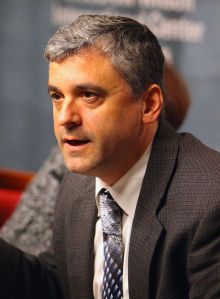
Dave Davies of NPR’s Fresh Air interviewed political science Professor Steven Levitsky, co-author of How Democracies Die: Harvard professor offers a grim assessment of American democracy under Trump.
In the 2024 presidential campaign, Democrats’ warnings that American democracy was in jeopardy if Donald Trump was elected failed to persuade a majority of voters. Our guest, Steven Levitsky, says there’s plenty of reason to worry about our democracy now….
In a new article for the journal Foreign Affairs, Levitsky and co-author Lucan A. Way write, quote, “U.S. democracy will likely break down during the Second Trump administration in the sense that it will cease to meet standard criteria for a liberal democracy – full adult suffrage, free and fair elections, and broad protection of civil liberties,” unquote. We’ve invited Levitsky here to explain the threats he sees to democracy and to talk about dramatic developments in the Trump administration’s confrontation with Harvard University.
DAVIES: You note in this article that Freedom House, which is a nonprofit that’s been around for a long time, which produces an annual global freedom index, has reduced the United States’ rating. It has slipped from 2014 to 2021. How much? Where are we now, and where did we used to be?
Steven Levitsky
LEVITSKY: Freedom House’s scores range from zero, which is the most authoritarian to a hundred, which is the most democratic. I think a couple of Scandinavian countries get scores of 99 or 100. The U.S. for many years was in the low 90s, which put it broadly on par with other Western democracies like the U.K. and Italy and Canada and Japan. But it slipped in the last decade, from Trump’s first victory to Trump’s second victory, from the low 90s to 83, which placed us below Argentina. And in a tie with Romania and Panama. So we’re still above what scholars would consider a democracy, but now in the very low-quality democracy range, comparable, again, to Panama, Romania and Argentina.
DAVIES: And does Freedom House explain its demotion? Why? Why did this happen?
LEVITSKY: Oh, yeah. Freedom House has annual reports for every country – the rise in political violence, political threats, threats against politicians, refusal to accept the results of a democratic election in 2020, an effort to use violence to block a peaceful transfer of power are all listed among the reasons for why the United States has fallen. I should say that even in the first four months of the Trump administration, it’s quite certain that what’s happening on the ground in the United States is likely to bring the U.S. score down quite a bit.
DAVIES: You say that the danger here is not that the United States will become a classic dictatorship with sham elections, you know, opposition leaders arrested, exiled or killed. What kind of autocracy might we become?
LEVITSKY: I think the most likely outcome is a slide into what Lucan Way and I call competitive authoritarianism. These are regimes that constitutionally continue to be democracies. There is a Constitution. There are regular elections, a legislature and importantly, the opposition is legal, above ground and competes for power. So from a distance, if you squint, it looks like a democracy, but the problem is that systematic coming (ph) abuse of power tilts the playing field against the opposition. This is the kind of regime that we saw in Venezuela under Hugo Chavez. It’s subsequently become a full-on dictatorship. It’s what we see in Turkey under Erdogan. It’s what we see in El Salvador. It’s what we see in Hungary today. Most new autocracies that have emerged in the 21st century have been led by elected leaders and fall into this category of competitive authoritarianism. It’s kind of a hybrid regime.
DAVIES: So free and fair elections lead us to a leader which takes us in a different direction?
LEVITSKY: Right. And because the leader is usually freely and fairly elected, he has a certain legitimacy that allows him to say, hey, how can you say I’m an authoritarian if I was freely and fairly elected? So citizens are often slow to realize that their country is descending into authoritarianism.
You can read the rest of the interview or listen to it at the NPR link.
Jamelle Bouie writes at The New York Times (gift link): Trump Wants You to Think Resistance Is Futile. It Is Not.
The American constitutional system is built on the theory that the self-interest of lawmakers can be as much of a defense against tyranny as any given law or institution.
As James Madison wrote in Federalist 51, “The provision for defense must in this, as in all other cases, be made commensurate to the danger of attack. Ambition must be made to counteract ambition. The interest of the man must be connected with the constitutional rights of the place.” Our Constitution is nothing more than a “parchment barrier” if not backed by the self-interest and ambition of those tasked with leading the nation.
One of the most striking dynamics in these first months of the second Trump administration was the extent to which so many politicians seemed to lack the ambition to directly challenge the president. There was a sense that the smart path was to embrace the apparent “vibe shift” of the 2024 presidential election and accommodate oneself to the new order.
But events have moved the vibe in the other direction. Ambition is making a comeback.
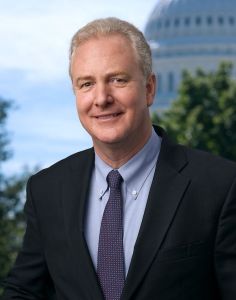
Last week, Senator Chris Van Hollen of Maryland traveled to El Salvador, where he met with Kilmar Armando Abrego Garcia, a victim of the Trump administration’s removal program under the 1798 Alien Enemies Act….
Abrego Garcia is one of the men trapped in this black zone. Despite his protected legal status, he was arrested, detained, accused of gang activity and removed from the United States. At no point did the government prove its case against Abrego Garcia, who has been moved to a lower-security prison, nor did he have a chance to defend himself in a court of law or before an immigration judge. As one of Abrego Garcia’s representatives in the United States Senate, Van Hollen met with him to both confirm his safety and highlight the injustice of his removal.
Sen. Chris Van Hollen
“This case is not just about one man,” Van Hollen said at a news conference following his visit. “It’s about protecting the constitutional rights of everybody who resides in the United States of America. If you deny the constitutional rights of one man, you threaten the constitutional rights and due process for everyone else in America.” [….]
The goal of Van Hollen’s journey to El Salvador — during which he was stopped by Salvadoran soldiers and turned away from the prison itself — was to bring attention to Abrego Garcia and invite greater scrutiny of the administration’s removal program and its disregard for due process. It was a success. And that success has inspired other Democrats to make the same trip, in hopes of turning more attention to the administration’s removal program and putting more pressure on the White House to obey the law.
Senator Cory Booker of New Jersey is reportedly organizing a trip to El Salvador, and a group of House Democrats led by Representative Robert Garcia of California arrived on Monday. “While Donald Trump continues to defy the Supreme Court, Kilmar Abrego Garcia is being held illegally in El Salvador after being wrongfully deported,” Representative Garcia said in a statement. “That is why we’re here, to remind the American people that kidnapping immigrants and deporting them without due process is not how we do things in America.”
“We are demanding the Trump administration abide by the Supreme Court decision and give Kilmar and the other migrants mistakenly sent to El Salvador due process in the United States,” Garcia added.
All of this negative attention has had an effect. It’s not just that the president’s overall approval rating has dipped into the low 40s — although it has — but that he’s losing his strong advantage on immigration as well. Fifty percent of Americans disapprove of Trump’s handling of immigration, according to a recent poll from Quinnipiac University, and a new Reuters poll shows Trump slightly underwater on the issue with a 45 percent approval to 46 percent disapproval.
These lawmakers are getting positive attention for standing up to Trump, and their actions are waking up Americans who may not have been paying enough attention to Trump’s illegal and cruel deportations.
A group of Congress people traveled to Louisiana yesterday to meet with university students who have been kidnapped and held without charges. CNN: Congressional delegation visits Mahmoud Khalil and Rumeysa Ozturk in Louisiana detention centers.
A delegation of congressional members traveled to Louisiana Tuesday to demand the release of Mahmoud Khalil and Rümeysa Öztürk and inspect conditions at the two Immigration and Customs Enforcement detention facilities where the two remain in custody.
It’s the first time a congressional delegation has met with Khalil or Ozturk.
Khalil, a Columbia University graduate, and Ozturk, a Tufts University PhD student, have been in ICE custody for more than a month after being arrested near their homes by federal agents.
The Democrat delegation, led by Rep. Troy Carter of Louisiana traveled to Jena, where Khalil is being held, and then two hours south to Basile, where Ozturk is detained. The group included Reps. Bennie Thompson of Mississippi, Ayanna Pressley and Jim McGovern of Massachusetts and Sen. Ed Markey.
Mahmoud Khalil
The facilities were clean but “chilly” according to Carter, who said detainees complained of cold temperatures at night, making it difficult to sleep. Carter said the facilities appeared to have been cleaned prior to their visit and that conditions appeared to be “fine” while they visited.
Following the visit, lawmakers said the detainees they met with also complained about a lack of medical care, food and religious accommodations.
“I really worry that this administration is ushering in a new era of McCarthyism. And unless Congress and unless the American people stand up and push back, they will succeed,” McGovern said during a press conference after the visits.
Markey accused the Trump administration of wanting to “make an example” out of Khalil and Ozturk in an effort to chill free speech. Markey also said ICE had intentionally transferred them to Louisiana for political reasons.
Through the Trump administration, ICE feels “they have a right to take people from across our country, and to put them into facilities like this here in Louisiana,” Markey said. “And why did they do that? They have done that in order to go to the single most conservative Circuit Court of Appeals in the United States of America.”

Again, these Congress people received positive media coverage. As Jamelle Bouie wrote (see above article), perhaps their ambition has led them to publicly oppose Trump’s dictatorial actions.
David Atkins at Washington Monthly: Democrats Need to Make Republicans Fear the Consequences of Attempting a Dictatorship.
Imagine that you were a high-ranking official in Donald Trump’s administration. Imagine that you believed in the Dark Enlightenment dream of dismantling liberal democracy itself—of “killing the woke mind virus,” ending birthright citizenship, and using federal power to suppress dissent. Now imagine you’re openly defying the Supreme Court, declaring that protest aids and abets terrorism, directing the FBI and IRS to target political enemies, and seriously considering invoking the Insurrection Act on flimsy pretexts. What would stop you?
Certainly not impeachment. Not with a compliant Republican Congress. Not with a conservative media ecosystem ready to justify any abuse of power as a patriotic necessity. The only thing that might give you pause is the possibility that Democrats would regain control and then do to you what you’ve done to them.
That fear of reciprocal power and legal accountability was once enough to preserve American political norms. It was the logic of mutually assured destruction: if you break democracy now, they’ll break you later. That’s how informal guardrails were enforced, even through dark chapters like Watergate or Iran-Contra. But those norms no longer hold because no one believes Democrats will retaliate.
This is the context for the quiet battle raging within the Democratic Party leadership. A few anonymous but influential centrists are urging party leaders to soft-pedal Trump’s detention of legal residents in foreign internment camps and pivot to kitchen-table economics instead. Even as constituents demand action and donors grow restless, Senate Majority Leader Chuck Schumer and House Minority Leader Hakeem Jeffries still signal caution, urging patience and restraint…..
Rumeysa Ozturk
There have been some bright spots. Senator Cory Booker broke Strom Thurmond’s filibuster record in a marathon floor speech denouncing Trump’s abuses. Senator Chris Van Hollen forced a meeting with abducted U.S. resident Abrego Garcia in El Salvador, delivering proof of life and drawing global attention. Senator Chris Murphy’s rhetoric has been sharp and effective. House Democrats like Alexandria Ocasio-Cortez (along with her “anti-oligarchy tour” partner Senator Bernie Sanders), Jasmine Crockett, and Robert Garcia have been doing excellent work. Their energy and determination carry the tacit message that those who broke the law and tried to impose an authoritarian regime on the U.S. will face appropriate justice at the end of the day. Representative Jamie Raskin was explicit about warning El Salvador’s leader: “Look, President Bukele—who’s declared himself a dictator—and the other tyrants, dictators, autocrats of the world have to understand that the Trump administration is not going to last forever,” Raskin said. “We’re going to restore strong democracy to America, and we will remember who stood up for democracy in America and who tried to drive us down towards dictatorship and autocracy.”
But these have been exceptions rather than the rule. Most Democrats in leadership and positions of power have stayed quiet—avoiding press conferences, shunning symbolic actions, and allowing business to continue as if the country weren’t barreling toward authoritarianism.
When pressed, party leaders often respond that they can do little substantively. That protests are performative. That voters are tired of drama. But that’s not the point. The point isn’t what Democrats can do today. It’s what they’re signaling they’re willing to do when they return to power.
If Trump and his allies face no meaningful consequences, they have no reason to stop. If Republicans don’t believe that Democrats will act with equal force to protect democracy—legally, aggressively, unapologetically—then there’s no deterrent to further escalation.

Click the link to read the rest.
One more from Toby Buckle at Liberal Currents: Trump ‘Alarmists’ Were Right. We Should Say So.
Throughout the Trump era I’ve been firmly in the camp unaffectionately dismissed as ‘alarmist’ by most commentators. Put simply: It is that bad. Liberal democracy is in danger. Fascism is a reasonable term for what we’re fighting.
For veteran ‘alarmists’ this is a strange moment. People are at a loss. It seems wrong, given all that is at stake, to say “I told you so”. I’ve felt that discomfort. For the longest time I avoided saying that. It felt . . . petty, childish, gauche, it just wasn’t the done thing. One of the big political awakenings I’ve had over the last year, and particularly since Trump’s 2024 victory, is realizing that it’s OK to say “called it”. More than OK. Even if it feels awkward, it’s actually important, perhaps necessary, that we do.
My view has not been, to put it mildly, the mainstream position. You’re allowed, with a certain amount of resentment, to say it today. But that wasn’t always the case. I recall first voicing it as the antecedents of Trump, the tea party and growing white supremacy, started to arise. Obama’s “the fever will break” seemed hopelessly naive to me. The press treated them either as legitimate libertarians or an eccentric curiosity, not a threat. To the activist left, what would become the Bernie movement, they were a joke—the punchline to a Jon Stewart monologue. Nothing more. When Trump first rode the elevator down to announce his candidacy, it was entertainment, not omen.
If you saw in any of this a threat to liberal democracy writ large, much less one that could actually succeed, you were looked at with the kind of caution usually reserved for the guy screaming about aliens on the subway. Trump’s election in 2016 was a shock to people who insisted it could never happen. But those most complacent before quickly found their way back to complacency after. For a certain type—specifically, the type who has a column in legacy media despite never having written an interesting or original paragraph in their lives—smug condescension became the order of the day: yes, Trump is bad, but dear me those liberals are being hysterical. As late as the last election they were writing pieces with titles like “A Trump Dictatorship Won’t Happen” or “No, Trump won’t destroy our democracy.” Even after the election, as the scale of the incoming lawlessness became clear, we were dismissed: “Trump Is Testing Our Constitutional System. It’s Working Fine” respected legal commentator Noah Feldman told us—the legal rationale for his actions was very flimsy. Courts would strike it all down. And certainly the administration would not ignore a court order.
One thing I’ve always wondered about the anti-alarmists during this decade was, to put it bluntly, weren’t they worried about looking stupid? The path we were on seemed clear enough to me, but I didn’t know the future. I always stressed that my predictions were one of any number of possible outcomes. They didn’t. What I was saying was dismissed, not just as unlikely, but impossible. Did they not want to hedge their bets even a bit? And it’s not as if the liberal democratic collapse happened all at once. The last decade has been a steady drum beat of them being wrong, again and again. Yet it never shook them.
Read more at Liberal Currents.
I have been fearful of Trump’s authoritarian tendencies since the 2016 campaign and so have most Sky Dancers. It does feel sometimes that people who didn’t see it are stupid, but I’m willing to welcome people who are beginning to change their minds to the resistance. We need as many resisters as possible. Trump’s polls are dropping now, as more people begin to see what he’s really up to–and it isn’t about bringing down grocery prices. I want to believe there is still hope for our democracy. Lately, it looks like some Democratic leaders are ready to fight back. Some of that fight must have come from seeing the protests all over the country. Now we need a few Republicans to grow spines and stand up to Trump.
That’s all I have for today. What do you think? What’s on your mind?
Thursday Reads
Posted: May 25, 2017 Filed under: Foreign Affairs, morning reads, U.S. Politics | Tags: Ben Jacobs, Donald Trump, Greg Gianforte, Manchester police, Montana, NATO, North Korea, nuclear submarines, Rodrigo Duterte, The Guardian, Theresa May, Trump leaks of top-secret intelligence 34 CommentsGood Morning!!
While I was browsing for interesting stories this morning, I watched Trump’s embarrassing speech at the opening of the 9/11 center at NATO headquarters. He began with a lecture on how the U.S. is paying so much for defense and other countries are failing to meet the 2% GDP requirement. How long is he going to keep beating this dead horse?
After that, he seemed to imply that NATO had spent too much money on the 9/11 memorial. He said that the U.S. would not abandon NATO, but he did not reaffirm article 5, which states that if one NATO country is attacked, all have been attacked.
Last night a reporter for The Guardian, Ben Jacobs, was assaulted by the GOP candidate for the House in Montana.
The Guardian: Republican candidate charged with assault after ‘body-slamming’ Guardian reporter.
The Republican candidate for Montana’s congressional seat has been charged with misdemeanor assault after he is alleged to have slammed a Guardian reporter to the floor on the eve of the state’s special election, breaking his glasses and shouting: “Get the hell out of here.”
Ben Jacobs, a Guardian political reporter, was asking Greg Gianforte, a tech millionaire endorsed by Donald Trump, about the Republican healthcare plan when the candidate allegedly “body-slammed” the reporter.
Guardian reporter Ben Jacobs
“He took me to the ground,” Jacobs said by phone from the back of an ambulance. “I think he whaled on me once or twice … He got on me and I think he hit me … This is the strangest thing that has ever happened to me in reporting on politics.”
Fox News reporter Alicia Acuna, field producer Faith Mangan and photographer Keith Railey witnessed the incident at Gianforte’s campaign headquarters in Montana, according to an account published on the Fox News website. After Jacobs asked Gianforte his question, Acuna wrote: “Gianforte grabbed Jacobs by the neck with both hands and slammed him into the ground behind him.
“Faith, Keith and I watched in disbelief as Gianforte then began punching the man, as he moved on top the reporter and began yelling something to the effect of ‘I’m sick and tired of this!’ … To be clear, at no point did any of us who witnessed this assault see Jacobs show any form of physical aggression toward Gianforte, who left the area after giving statements to local sheriff’s deputies.”

At least 3 Montana newspapers have now unendorsed Gianforte, and the election is today.
This might explain Gianforte’s anger toward Jacobs and the Guardian. On April 28, Jacobs published this story on Gianforte, whom Trump endorsed in voice message: GOP candidate Greg Gianforte has financial ties to US-sanctioned Russian companies.
A Republican congressional candidate has financial ties to a number of Russian companies that have been sanctioned by the US, the Guardian has learned.
Greg Gianforte, who is the GOP standard bearer in the upcoming special election in Montana, owns just under $250,000 in shares in two index funds that are invested in the Russian economy to match its overall performance.
According to a financial disclosure filed with the clerk of the House of Representatives, the Montana tech mogul owns almost $150,000 worth of shares in VanEck Vectors Russia ETF and $92,400 in the IShares MSCF Russia ETF fund. Both are indexed to the Russian equities market and have significant holdings in companies such as Gazprom and Rosneft that came under US sanctions in the aftermath of the Russian invasion of the Crimea.

The Moron-In-Chief is now in trouble with two countries and the U.S. Department of Defense for his blabbing of top secret intelligence. First it was Israel, now the U.K.
Politico: Israel changes intelligence sharing with US after Trump’s revelations to Russia.
Israel has changed the way it shares intelligence with the U.S., Israeli Defense Minister Avigdor Liberman said Wednesday. The move comes after U.S. President Donald Trump divulged to Russia classified information reportedly obtained from Israel.
“We discussed the issue with our friends in America,” Liberman said in an interview with Army Radio. “We did our checks.” The defense chief didn’t specify what changes had been made, saying: “Not everything needs to be discussed in the media, some things need to be talked about in closed rooms.” ….
Israel has changed the way it shares intelligence with the U.S., Israeli Defense Minister Avigdor Liberman said Wednesday. The move comes after U.S. President Donald Trump divulged to Russia classified information reportedly obtained from Israel.

Manchester police making arrests after bombing
The Guardian: UK police stop passing Manchester bombing information to US over leaks.
British police have stopped sharing evidence from the investigation into the terror network behind the Manchester bombing with the United States after a series of leaks left investigators and the government furious.
The ban is limited to the Manchester investigation only. British police believe the leaks are unprecedented in their scope, frequency and potential damage.
Downing Street was not behind the decision by Greater Manchester police to stop sharing information with US intelligence, a No 10 source said, stressing that it was important police were allowed to take independent decisions.
Relations between the US and UK security services, normally extremely close, have been put under strain by the scale of the leaks from US officials to the American media.
After chairing a meeting of the emergency Cobra meeting Theresa May said: “I will make clear to President Trump that intelligence shared between our security agencies must remain secure.” She is due to meet the US president at a Nato summit in Brussels on Thursday.
Not Good.
As for the Defense Department’s reaction to Trump leaks, have you read the transcript of Trump’s call to Philippine President Rodrigo Duterte? It’s beyond shocking. Not only did the Moron-in-Chief praise Duterte for his extra-legal murders of suspected drug dealers and addicts, but also he revealed the location of two U.S. nuclear submarines!

Trump’s good buddy Rodrico Duterte
Reuters: Trump praises Duterte for anti-drug campaign in call transcript.
Trump commended Duterte’s actions in the same call in which the U.S. president invited him to Washington, according to a transcript of their conversation published by the Washington Post and the investigative news site The Intercept. The document included a “confidential” cover sheet from the Americas division of the Philippine Department of Foreign Affairs.
Almost 9,000 people, many small-time drug users and dealers, have been killed in the Philippines since Duterte took office on June 30. Police say about one-third of the victims were shot by officers in self-defense during legitimate operations. Human rights groups say official accounts are implausible.
“I just wanted to congratulate you because I am hearing of the unbelievable job on the drug problem,” Trump told Duterte, according to the transcript.
“Many countries have the problem, we have a problem, but what a great job you are doing and I just wanted to call and tell you that.”
Duterte thanked Trump and said “this is the scourge of my nation now and I have to do something to preserve the Filipino nation.”
“I think we had a previous president who did not understand that,” Trump replied.
And then there was this:

The attack submarine USS San Francisco (SSN 711) is escorted by two harbour tugs in this file picture. – Wikimedia Commons
Buzzfeed: The Pentagon Can’t Believe Trump Told Another President About Nuclear Subs Near North Korea.
Pentagon officials are in shock after the release of a transcript of a call between President Donald Trump and his Philippines counterpart revealed that the US military had moved two nuclear submarines towards North Korea.
“We never talk about subs!” three officials told BuzzFeed News, referring to the military’s belief that keeping submarines’ movements secret is key to their mission.
While the US military will frequently announce the deployment of aircraft carriers, it is far more careful when discussing the movement of nuclear submarines. Carriers are hard to miss, and that, in part, is a reason the US military deploys them. They are a physical show of force. Submarines are, at times, a furtive complement to the carriers, a hard-to-detect means of strategic deterrence.
According to the transcript, released Wednesday, Trump called Philippines President Rodrigo Duterte April 29, in part to discuss the rising threat from North Korea. During that call, while discussing ways to mitigate North Korean leader Kim Jong Un’s nuclear ambitions, Trump said: “We have two submarines — the best in the world. We have two nuclear submarines — not that we want to use them at all. I’ve never seen anything like they are but we don’t have to use this, but [Kim] could be crazy, so we will see what happens.”
It takes a madman to recognize another madman, I guess. In reading the transcript, I got the feeling that Trump would like nothing more than to use those nukes. But now, all our enemies know where they can fine our nuclear subs.
By announcing the presence of nuclear submarines, the president, some Pentagon officials privately explained, gives away the element of surprise — an irony given his repeated declarations during the campaign that the US announces far too many of its military plans when it comes to combatting ISIS.
Moreover, some countries in the region, particularly China, seek to develop their anti-sub capability. Knowing that two US submarines are in the region could allow them to test this.
Finally, it is unclear why Duterte would need to know the specific number of subs in the region. The Philippines is not a part of US military efforts to deter North Korea, so why would Duterte need to know such details?

There is so much Trump Russia news that I’ll have to give you the rest as links only.
Three big stories broke last night, and I posted them on JJ’s thread.
NYT: Top Russian Officials Discussed How to Influence Trump Aides Last Summer.
WaPo: How a dubious Russian document influenced the FBI’s handling of the Clinton probe.
CNN: AG Sessions did not disclose Russia meetings in security clearance form, DOJ says.
More Trump Russia stories:
Politico: Manafort advised Trump team on Russia scandal.
Daily Beast: Reince Priebus Sweating Secret Comey Memos, White House Sources Say.
The Atlantic: The Known Unknowns of the Russia Investigation.
Politico: White House tries to avoid ‘paralysis’ amid investigation.
Other News:
NBC News: Trump Failing to Track Foreign Cash at His Hotels.
Axios: Trump’s “street fighters.”
NBC News: Ben Carson Says ‘Poverty Is a State of Mind.’
The Atlantic: Pope Francis, Trump Whisperer?
Bloomberg: Obama Feted in Berlin as He Praises Merkel Before Trump Summits.
What else is happening? Please share your thoughts and links in the comment thread below, and I hope you enjoy your day.

 peej
peej Carissa
 bostonboomer
 dakinikat
 ecocatwoman
 mablue2
 Mama Lopez
 peggysue22
 quixote
 skydancingguestblogger
 Mona (aka Wonk the Vote)



 Sky Dancing
Recent Comments