
Lazy Saturday Reads: Trump “Drunk on Power” — John Brennan
Posted: August 18, 2018 Filed under: Afternoon Reads, U.S. Politics | Tags: abuse of power, corruption, Donald Trump, John Brennan, obstruction of justice, Robert Mueller, Russia investigation, security clearances, Vian Risanto, witness tampering 17 Comments
Blue Iris, Vian Risanto
Good Afternoon!!
It has been another disastrous week in Trumpland. The “president” seems to be losing what control he ever had. He spends his days watching TV, throwing tantrums on Twitter, and dreaming up ways to punish his many “enemies.” He’s Nixon on steroids, and the Republicans continue to refuse to do anything to check his corruption and abuses of power.
On Wednesday, Trump unilaterally revoked the security clearance of former CIA chief John Brennan, and despite condemnations by former members of the intelligence community, he plans to keep revoking the clearances of anyone who dares to criticize him or who may have been in some way involved with the Russia investigation.
The Washington Post: White House drafts more clearance cancellations demanded by Trump.
The White House has drafted documents revoking the security clearances of current and former officials whom President Trump has demanded be punished for criticizing him or playing a role in the investigation of Russian interference in the 2016 election, according to senior administration officials.
Trump wants to sign “most if not all” of them, said one senior White House official, who indicated that communications aides, including press secretary Sarah Huckabee Sanders and Bill Shine, the newly named deputy chief of staff, have discussed the optimum times to release them as a distraction during unfavorable news cycles.

Cocktail dress, Vian Risanto
Yes, they admit these will be used to distract the public on bad news days for Trump!
Some presidential aides echoed concerns raised by outside critics that the threatened revocations smack of a Nixonian enemies list, with little or no substantive national security justification. Particular worry has been expressed inside the White House about Trump’s statement Friday that he intends “very quickly” to strip the clearance of current Justice Department official Bruce Ohr, according to officials who spoke on the condition of anonymity to discuss internal deliberations….
It was unclear what the argument would be for revoking Ohr’s clearance, since Deputy Attorney General Rod J. Rosenstein, while not specifying Ohr’s current job, has said he has had no involvement in the Mueller investigation, begun last year.
But Ohr knew Christopher Steele, the former British intelligence agent who was hired in 2016 by Fusion GPS, then working for Hillary Clinton’s campaign and the Democratic National Committee, to investigate Trump’s ties to Russia. Ohr’s wife also worked for Fusion GPS. According to news reports and congressional testimony, the two men discussed Trump before the election. Ohr later reported the conversation to the FBI.
Ohr is the only current official on the White House list of clearances Trump wants to lift. The others are former director of national intelligence James R. Clapper Jr.; former CIA director Michael V. Hayden; former FBI director James B. Comey; Obama national security adviser Susan E. Rice; former FBI officials Andrew McCabe, Lisa Page and Peter Strzok; and former acting attorney general Sally Yates. Several of them have said they no longer have clearances.
It’s difficult to believe that Trump’s actions could not be seen as obstruction of justice and witness tampering, since many of those on the “enemies list” are potential witnesses in Robert Mueller’s investigation. Yesterday, The Washington Post’s Aaron Blake addressed the issue: How Trump’s security-clearance gambit could actually get him in deeper trouble with Mueller.
Green chair, Vian Risanto
I was on an MSNBC panel Thursday night with Elie Honig, a former federal prosecutor for the Southern District of New York, who suggested Trump’s revocation of security clearances could be construed as retaliation against witnesses. “It’s a federal crime — §1513 if anyone wants to look it up — to retaliate against someone for providing truthful information to law enforcement,” he said. “So he’s getting closer and closer to really dangerous ground here.”
Here’s the text of Section 1513(e):
Whoever knowingly, with the intent to retaliate, takes any action harmful to any person, including interference with the lawful employment or livelihood of any person, for providing to a law enforcement officer any truthful information relating to the commission or possible commission of any Federal offense, shall be fined under this title or imprisoned not more than 10 years, or both.
Honig explained to me Friday that he didn’t necessarily think Trump’s revocation of Brennan’s security clearance would be a violation, given Brennan isn’t a major figure on the probe’s key events. But if he presses on and does it with others, Honig argued, it could.

Read the rest at the WaPo.
Last night Rachel Maddow interviewed John Brennan. Talking Point Memo: Brennan On Revoked Clearance: ‘This Country Is More Important Than Mr. Trump.’
Former CIA Director John Brennan was defiant Friday night in response to President Donald Trump’s revocation of his security clearance, and to Trump’s threatening to revoke the clearances of several other former intelligence and national security officials who’ve become harsh critics of his.
Vian Risanto
“I think this is an egregious act that it flies in the face of traditional practice, as well as common sense, as well as national security,” Brennan told MSNBC’s Rachel Maddow. “I think that’s why there’s been such an outcry from many intelligence professionals.”

Brennan told Maddow that he is thinking about taking legal action.
“A number of lawyers have reached out to say that there is a very strong case here, not so much to reclaim [my clearance] but to prevent this from happening in the future,” Brennan told Maddow, asked if he was considering legal action against the administration.
Some groups, including the ACLU, have alleged that revoking Brennan’s clearance in retaliation for his criticism of Trump, as the White House said was the case, was a violation of the former CIA director’s First Amendment rights.
Brennan repeated his accusation that Trump’s Helsinki summit with Russian President Vladimir was “nothing short of treasonous.”
And he said a Washington Post report that his clearance revocation had been timed “to divert attention from nonstop coverage of a critical book released by fired Trump aide Omarosa Manigault Newman” was “just another demonstration of [Trump’s] irresponsibility.”
“The fact that he’s using a security clearance of a former CIA director as a pawn in his public relations strategy, I think, is just so reflective of somebody who, quite frankly — I don’t want to use this term, maybe — but he’s drunk on power.”
Three reactions to Trump’s latest power grab to check out:

A night out, Vian Risanto
Tim Weiner at The New York Times: Trump Is Not a King.
In times of crisis, the leaders of the military and intelligence communities try to put aside their differences, often many and sundry, and work together for the good of the country. That’s what’s happening today with a remarkable group of retired generals, admirals and spymasters who have signed up for the resistance, telling the president of the United States, in so many words, that he is not a king.
Thirteen former leaders of the Pentagon, the C.I.A. and the F.B.I. have signed an open letter standing foursquare against President Trump, in favor of freedom of speech and, crucially, for the administration of justice. They have served presidents going back to Richard M. Nixon mostly without publicly criticizing the political conduct of a sitting commander in chief — until now.
They rebuked Mr. Trump for revoking the security clearance of John Brennan, the C.I.A. director under President Obama, in retaliation for his scalding condemnations and, ominously, for his role in “the rigged witch hunt” — the investigation into Russia’s attempt to fix the 2016 election, now in the hands of Robert S. Mueller III, the special counsel. The president’s latest attempt to punish or silence everyone connected with the case, along with his fiercest critics in political life, will not be his last….
The president aims to rid the government and the airwaves of his real and imagined enemies, especially anyone connected with the Russia investigation. Somewhere Richard Nixon may be looking up and smiling. But aboveground, the special counsel is taking notes.
Lily, Vian Risanto
The list of the signatories to the open letter defending Mr. Brennan is striking for the length and breadth of their experience. I never expected to see William H. Webster — he’s 95 years old, served nine years as F. B.I. director under Presidents Jimmy Carter and Ronald Reagan, then four more as C.I.A. director under Reagan and President George H. W. Bush — sign a political petition like this. The same with Robert M. Gates, who entered the C.I.A. under President Lyndon Johnson, ran it under George H. W. Bush and served as Secretary of Defense under Presidents George W. Bush and Barack Obama. These are not the kind of men who march on Washington. These are men who were marched upon.

Read more at the NYT.
Jonathan Chait at New York Magazine: Trump Is Making the Department of Justice Into His Own Private Goon Squad.
One morning earlier this week during executive time, President Trump tweeted out his assessment of the Russia investigation. “The Rigged Russian Witch Hunt goes on and on as the ‘originators and founders’ of this scam continue to be fired and demoted for their corrupt and illegal activity,” he raged. “All credibility is gone from this terrible Hoax, and much more will be lost as it proceeds. No Collusion!”
Amid this torrent of lies, the president had identified one important truth. There has in fact been a series of firings and demotions of law-enforcement officials. The casualties include FBI director James Comey, deputy director Andrew McCabe, general counsel James Baker, and, most recently, agent Peter Strzok. Robert Mueller is probing the circumstances surrounding Trump’s firing of Comey for a possible obstruction-of-justice charge. But for Trump, obstruction of justice is not so much a discrete act as a way of life.
The slowly unfolding purge, one of the most vivid expressions of Trump’s governing ethos, has served several purposes for the president. First, it has removed from direct authority a number of figures Trump suspects would fail to provide him the personal loyalty he demanded from Comey and expects from all officials in the federal government. Second, it supplies evidence for Trump’s claim that he is being hounded by trumped-up charges — just look at all the crooked officials who have been fired! Third, it intimidates remaining officials with the threat of firing and public humiliation if they take any actions contrary to Trump’s interests. Simply carrying out the law now requires a measure of personal bravery.
Trump has driven home this last factor through a series of taunts directed at his vanquished foes. After McCabe enraged Trump by approving a flight home for Comey after his firing last May, the president told him to ask his wife (who had run for state legislature, unsuccessfully) how it felt to be a loser. This March, Trump fired McCabe and has since tweeted that Comey and McCabe are “clowns and losers.” The delight Trump takes in tormenting his victims, frequently calling attention to Strzok’s extramarital affair — as if Trump actually cared about fidelity! — underscores his determination to strip his targets of their dignity.
Click on the link to read the rest.
Bob Bauer at Lawfare: Richard Nixon, Donald Trump and the ‘Breach of Faith.’
Red couch, Vian Risanto
Journalist and presidential historian Theodore H. White thought of Richard Nixon’s downfall as the consequence of a “breach of faith.” Perhaps it was a “myth,” but an important one, that “is responsibility,” White wrote. But it was important nonetheless that Americans believe that this office, conferring extraordinary power, would “burn the dross from [the president’s] character; his duties would, by their very weight, make him a superior man, fit to sustain the burden of the law, wise and enduring enough to resist the clash of all selfish interests.”
A president who frustrates this expectation, failing to exhibit the transformative effects of oath and office, will have broken faith with the American public. And yet, White believed that Nixon’s presidency had been an aberration. “[M]any stupid, hypocritical and limited men had reached that office,” he wrote. “But all, when publicly summoned to give witness, chose to honor the legends” of what the office required of a president’s behavior in office.
White’s understanding of what constitutes a “breach of faith” is well worth recalling in considering the presidency of Donald Trump. As White understood it, the term encompassed more than illegal conduct or participation in its cover-up. It was a quality of leadership—or more to the point, the absence of critical qualities—that defined a president’s “betrayal” of his office. What elevated Nixon’s misdeeds to a fatal constitutional flaw, forcing him to surrender his presidency, was the breaking of faith with the American people. Nixon brushed the legal and ethical limits on pursuing his own political and personal welfare. He held grudges and was vindictive; he looked to destroy his enemies rather than simply prevailing over them in hard, clean fights. He lied repeatedly to spare himself the costs of truth-telling.
All of this may be said of Donald Trump, but for a key difference: Nixon was anxious to conceal much of this behavior from public view.
Much has been said and written about Trump’s leadership style: the chronic resort to false claims; the incessant tweeting of taunts and personal attacks on his adversaries; the open undermining of members of his own administration; the abandonment of norms; the refusal to credit, respect or support the impartial administration of justice where his personal or political interests are stake; and the use of office to promote his personal business enterprises. By now, almost two years into his administration, it is clear that this is who he is.
Like Nixon, Trump seems to believe that his behavior is justified by the extraordinary and ruthless opposition of an “establishment”—comprised mainly of the media, the opposition party, and intellectuals—to his election and his politics.

Please go read the rest at Lawfare.
That’s all I have for you today. Please share your thoughts and links in the comment thread below.
Lazy Saturday Reads: Russia News
Posted: August 11, 2018 Filed under: Afternoon Reads, U.S. Politics | Tags: American institutions, corruption, Donald Trump, Emails, Hillary Clinton, Julia Davis, Matt Tait, Michael Flynn, Paul Manafort, Peter Smith, Robert Mueller, Russia investigation, Russian state TV, Suicide, Vitaly Tretyakov 16 Comments
The Athenaeum – Thérèse Reading in the Park at Meric (Jean Frederic Bazille)
Good Afternoon!!
Remember Peter Smith, the guy who was trying to help the Trump campaign get Hillary Clinton’s emails? He ended up supposedly committing suicide in a Minnesota hotel room in July, 2017, shortly after he was interviewed by Shane Harris of The Wall Street Journal. After the story broke, Matt Tait published an article at Lawfare about his involvement in the story. Today Buzzfeed News reporters Jason Leopold and Anthony Cormier have a new story on Smith: GOP Operative Made “Suspicious” Cash Withdrawals During Pursuit Of Clinton Emails.
In one of the most intriguing episodes of the 2016 presidential campaign, Republican activist Peter W. Smith launched an independent effort to obtain Hillary Clinton’s emails to help defeat her and elect Donald Trump. His quest, which reportedly brought him into contact with at least two sets of hackers that he himself believed were Russian, remains a key focus of investigations into whether the Trump campaign colluded with the Kremlin.
Now, BuzzFeed News has reviewed documents showing that FBI agents and congressional investigators have zeroed in on transactions Smith made right as his effort to procure Clinton’s emails heated up. Just a day after he finished a report suggesting he was working with Trump campaign officials, for example, he transferred $9,500 from an account he had set up to fund the email project to his personal account, later taking out more than $4,900 in cash. According to a person with direct knowledge of Smith’s project, the Republican operative stated that he was prepared to pay hackers “many thousands of dollars” for Clinton’s emails — and ultimately did so….
Maxwell Doig
The money trail, made public here for the first time, sheds new light on Smith’s effort, in which he told people he was in touch with both Russians on the dark web and Trump campaign officials — particularly Michael Flynn, who was then a top adviser to the Trump campaign and later served as national security adviser before having to resign after misleading White House officials about his meetings with the Russian ambassador to the United States.
Intelligence agencies have given the FBI information that Russian hackers talked about passing Clinton’s emails to Flynn through a cutout, according to two law enforcement officials with direct knowledge of the matter. It is not known if that cutout was in any way connected to Smith.

Smith claimed that the Russians had hacked Hillary’s private server and he was determined to get his hands on the emails.
Smith assembled a group of people including experts in technology, lawyers, and even a Russian-speaking investigator to figure out how to obtain Clinton’s emails, according to the Journal. On the Friday before the Labor Day weekend, Smith incorporated a company called KLS Research. In a proposal Smith put together describing the effort to obtain the emails, he named the company as the “preferred vehicle” for the research into Clinton’s email, and Smith would tell Tait that KLS Research would also help “avoid campaign reporting.”
Smith and his longtime business partner, John Szobocsan, were the two signers for a bank account linked to KLS Research….
Soon after Labor Day, Smith appears to have finished an operational plan, which included the names of top Trump campaign officials, some of whom have denied speaking with Smith anytime during the campaign. Smith’s report is dated Sept. 7.
Girl in Green by Sara Hayden (1862–1939), American
The next day, Smith withdrew $9,500 from the KLS Research account and deposited it into his personal bank account, both held at Northern Trust. From there, Smith took out a little more than $4,900 in cash and sent checks to an accountant and an LLC controlled by a private real estate company. Later in September, Smith made withdrawals of $500 and $700 from KLS Research.
These transactions came to light after Northern Trust received a subpoena from the FBI for Smith’s records last December. The subpoena specifically sought information about the $9,500 withdrawal from KLS Research’s account.
After scouring nine accounts that Smith controlled, Northern Trust turned over documents showing 88 suspicious cash withdrawals totaling about $140,000 between January 2016 and April 2017, including a $3,000 withdrawal six days after the election. Northern Trust found these transactions suspicious because officials could not determine the purpose of the withdrawals and because some of them took place over the time Smith was engaged in his project to obtain Clinton’s emails. Many of the cash transactions, the bank noted, were less than $10,000, small enough not to trigger an automatic alert to the government. After receiving the subpoena, the bank sent a report to Treasury’s financial crimes unit, which shared its findings with the FBI, special counsel Robert Mueller, and Senate Intelligence Committee investigators.

The story reports that “three US law enforcement officials” confirmed that Smith is still “an important figure” in the investigation and that Mueller’s investigators have interviewed people involved with Smith. I wonder if Mike Flynn is helping out with this aspect of the investigation?
Head over to Buzzfeed News to read the rest of the story.
Lawfare has a lengthy post up about the Buzzfeed story: Peter Smith’s Search for Hillary Clinton’s Emails: The Subplot Thickens. Here’s just a taste:
On its own, the Buzzfeed story might not be a groundbreaking development. But the article doesn’t stand alone. It comes in the wake of Mueller’s indictments of Russians involved in the Kremlin’s social media manipulation operation and, more importantly for present purposes, the hacking and leaking of Democratic Party materials during the 2016 campaign. In that context, it is highly significant that Buzzfeed reports that Smith’s efforts are actively being investigated by the special counsel’s team. Not only has Mueller’s team interviewed “people who Smith tried to recruit and others who worked on his operation to obtain Clinton’s emails,” it has also “tried to determine if [former national security adviser Michael] Flynn assisted Smith in his operation”—a question that Smith’s possible payments to hackers are “key” to answering, Buzzfeed writes.
Louis Buisseret (1888-1956, Belgian) Contemplation 1938
So how do the facts reported in the Peter Smith stories, particularly Buzzfeed’s latest, line up with Mueller’s indictments? Mueller’s allegations describe, in detail, a complex Russian conspiracy to shape the 2016 U.S. elections—a conspiracy that involved an influence operation conducted on social media, the publication of hacked information, and outreach to a person in contact with the Trump campaign, reportedly Roger Stone.
The Peter Smith stories—between the Journal’s reporting, Tait’s Lawfare account and the latest report from Buzzfeed—describe another plot, one that took shape on this side of the Atlantic. Whether this second plot amounts to a conspiracy is a legal question beyond the scope of this post, but it appears to have involved, at a minimum, an agreement among a number of actors to obtain illegally hacked emails, perhaps by buying them. Tait wrote that he specifically warned Smith that the person purporting to have Clinton’s emails was likely part of Russia’s campaign against the United States and that Smith didn’t care about the source, as long as he got the emails. So it’s certainly plausible that the Smith operation also involved a conspiracy of some sort.

Meanwhile, Russian state TV is getting more and more blatant about Putin’s influence on Trump. Raw Story: Russian state TV warns Trump to ‘do what we say’ if you want ‘support in the elections.’
Julia Davis, who runs the Russian Media Monitor website, reports via Twitter that news show “60 Minutes” this week held a panel discussion about actions Russia should take to retaliate against the latest round of American sanctions.
Vitaly Tretyakov, the dean of the Moscow State University’s School of Television, argued that the Russian government should use whatever leverage it had over Trump to bend the president to its will.
“Let’s turn this into a headache for Trump,” he said, according to Davis’ translation. “If you want us to support you in the elections, do what we say.”
At The Washington Post, Anne Applebaum asks if American institutions are really strong enough to stop Trump: Are you still sure there’s no need to worry?
William Moore Davis (1829 – 1920, American)
“Don’t worry, the institutions will stop him.” Or: “Don’t worry, he hasn’t done any real damage yet, the institutions have stopped him.” How many times have you heard some version of this analysis since the election of President Trump? Sometimes, the speaker is an optimist, someone with faith in the U.S. Constitution. Sometimes, the speaker is a skeptic, someone who dislikes the alleged “hysteria” of those who think Trump’s corrupt habits, autocratic language and authoritarian behavior are doing lasting damage. Either way, they are reassured, and reassuring: Congress will stop him. The judiciary will stop him. The FBI, the Republican Party, the Constitution will stop him. Don’t worry.
But America’s federal institutions are not the only ones designed to prevent someone like Trump from undermining the Constitution. We have other kinds of institutions, too — legal organs, regulatory bodies, banks — that are supposed to prevent men like Trump from staying in business, let alone acquiring political power. The truth is that many of these equally important American institutions failed a long time ago. Trump is not the cause of their failure. He is the result.

One example: Paul Manafort.
Here is a man who is alleged to have declared income as “loans,” concealed foreign bank accounts and lied about money that Ukrainian oligarchs were paying him via shell companies in Cyprus. For decades, in other words, U.S. law enforcement institutions were unable to spot the money-laundering, tax evasion and fraud that his partner Rick Gates spent several hours describing, even when carried out by a prominent person. As long ago as 1985, Manafort’s name featured in Jacob Weisberg’s still-famous New Republic cover story about Roger Stone, then his consulting partner. The headline: “The State-of-the-Art Washington Sleazeball.”
Summer (c.1958). Donald Moodie (British, 1892-1963)
For decades, Manafort’s “political consultancy” has helped crooks and autocrats retain power. But even leaving aside the question of morality: Why wasn’t Manafort put out of business for suspected fraud years ago? Did the police not have the resources? The motivation? Whatever the reason, here, for the optimists and skeptics, is a clear institutional failure: A society allegedly obsessed with “law and order,” so much so that it has the highest incarceration rates in the world, couldn’t be bothered to investigate a famously sleazy man who was spending hundreds of thousands of dollars on antique rugs and men’s suits in Northern Virginia.

And what about Trump’s career?
Nearly 40 years ago, in 1980, Trump employed 200 illegal Polish workers to destroy the Bonwit Teller department store, a historic building on Fifth Avenue, to make way for what would become Trump Tower. The men earned half the union wage and worked 12-hour shifts without hard hats; at one point, their contractor stopped paying them. Eventually they sued. In 1998, Trump paid $1.375 million to settle the case.
Trump broke immigration law and employment law, and he violated union rules, too. Yet neither immigration authorities nor employment regulators nor union bosses put him out of business. Why not? Why were the terms of that settlement kept confidential? Why, with his track record, was he allowed to get a casino license? Building permits? Wall Street banks did, it is true, stop lending to him. But when he began looking abroad for cash — doing extremely dodgy deals in Georgia and Azerbaijan, for example — no one stopped him.
Read the whole thing at the Post.
What else is happening? What stories are you following?
Lazy Saturday Reads: Trump’s Cringe-Inducing European Adventure and Other News
Posted: July 14, 2018 Filed under: Afternoon Reads, Foreign Affairs, U.S. Politics | Tags: bum's rush, children separated from parents, Donald Trump, Greenpeace, GRU, immigration, indictment of 12 Russian military officers, Queen Elizabeth, Robert Mueller, Rod Rosenstein, Scotland, Turnberry 12 Comments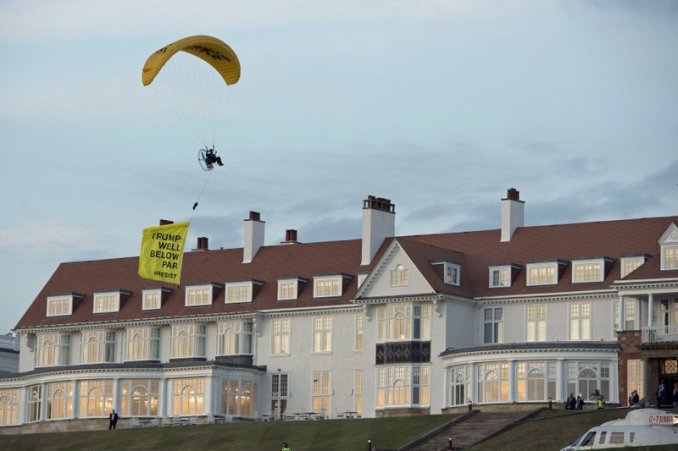
Good Afternoon!!
Trump in Scotland
Trump is at his golf resort in Turnberry, Scotland, and protesters are out in force there as they were in England. The Guardian:
Trump and his wife Melania arrived in Scotland on board Air Force One on Friday evening, before travelling by motorcade to his Trump Turnberry resort in Ayrshire.
By lunchtime, about 50 protesters had congregated on Turnberry beach. Just before 2pm, the US president appeared on the golf course and waved at the gathering on the beach, to be met with booing and chants of “no Trump, no racist USA”. Meanwhile, close to 10,000 marchers were streaming through the streets of Edinburgh, ending up in the Meadows park to the south of the city centre, where families sat in the sunshine and enjoyed picnics, music and speeches from local activists….
Towards the back of the crowd, the six-metre Trump baby balloon was straining against its tethers in the wind. Organiser Leo Murray described how a crew of “babysitters” had travelled up from London overnight on the sleeper train to fly the blimp at Saturday’s protest.
Murray had originally hoped to fly the balloon, which depicts Trump as an angry baby wearing a nappy, at his Turnberry course, but Police Scotland denied permission on security grounds.
Nevertheless, a Greenpeace protester managed to breach the no-fly zone on a hang glider with a sign reading ““Trump: well below par #resist” (see photo at the top of this post). Thank you to the people of Scotland for standing in solidarity with the U.S. resistance. I’m proud of my Scottish heritage today.
And while we’re talking about Trump’s Scottish golf course, be sure to check out this piece by Adam Davidson at The New Yorker: Where Did Donald Trump Get Two Hundred Million Dollars to Buy His Money-Losing Scottish Golf Club?
Between meeting the Queen of England and Vladimir Putin, President Trump will spend this weekend at Turnberry, the golf course he bought in 2014 and rechristened Trump Turnberry. This property has not received the attention it deserves. It is, by far, the biggest investment the Trump Organization has made in years. It is so much bigger than his other recent projects that it would not be unreasonable to describe the Trump Organization as, at its core, a manager of a money-losing Scottish golf course that is kept afloat with funds from licensing fees and decades-old real-estate projects.
No doubt, the President will be excited to visit. After buying the property for more than sixty million dollars, he then spent a reported hundred and fifty million pounds—about two hundred million dollars total—remaking the site, adding a new course, rehabbing an old one, and fixing up the lodgings. It is possible, though, that he will have some harsh words for his staff. The Turnberry has been losing an astonishing amount of money, including twenty-three million dollars in 2016. The Trump Organization argued that these losses were the result of being closed for several months for repair. However, revenue for the months it was open were so low—about $1.5 million per month—that it is hard to understand how the property will ever become profitable, let alone so successful that it will pay back nearly three hundred million dollars in investment and losses….
President Trump has proclaimed himself the “king of debt,” a proud master of “doing things with other people’s money.” So it was quite surprising when Jonathan O’Connell, David A. Fahrenthold, and Jack Gillum revealed in a Washington Post story in May that Trump had abruptly shifted strategies and begun spending hundreds of millions of dollars in cash to fund projects. In the nine years before he ran for President, the Post reported, the Trump Organization spent more than four hundred million dollars in cash on new properties—including fourteen transactions paid in full. In fifteen years, he bought twelve golf courses (ten in the U.S., one in Ireland, and a smaller one in Scotland), several homes, and a winery and estate in Virginia, and he paid for his forty-million-dollar share of the cost of building the Trump Hotel in Washington, D.C.—a property leased to Trump by the U.S. government. But his largest cash purchase was the Turnberry, followed by tens of millions of dollars in additional cash outlays for rehabbing the property.
Read the rest at The New Yorker.
Trump meets Queen Elizabeth
Yesterday, just as Rod Rosenstein was preparing to announce indictments of the 12 Russians who were responsible for hacking the DNC, DCCC, and Clinton campaign email servers and disseminating embarrassing information designed to hurt Hillary and help Trump during the 2016 election, Donald Trump was meeting with the Queen of England. And he managed to turn that into a clusterfuck just as he has everything else on his disastrous European trip.
The Washington Post: ‘Did Donald Trump just WALK IN FRONT OF THE QUEEN?’
It’s generally quite difficult to upstage the queen of England, but President Trump might have managed to do so.
Trump and Queen Elizabeth II met Friday as part of his working visit to the United Kingdom….
Trump’s walk with the queen during an inspection of guardsmen quickly became a hot topic.
Described as “cringeworthy” and “uncomfortable” viewing on social media, footage of their walk together came under intense scrutiny. While touring the castle grounds, Trump maintained a relatively brisk walk, which saw the queen, at times, fall behind him as he led the way.
At one point, the queen can be seen gesturing to Trump, although it’s unclear what exactly she may have been referring to. On social media, some speculated that Trump was being instructed on which side of her he should walk.
If that was the case, the president didn’t grasp the message.
The Trumps also arrived late for tea, making the Queen wait, and they did not bow or curtsy when they met her. That’s considered optional, but most people don’t opt to simply shake hands as the Trumps did. At least Trump didn’t do his vise grip and pull handshake with her. Then the Queen gave the Trumps the bum’s rush, ending the meeting after about half an hour.
https://twitter.com/gormangahst/status/1018161998570323974
Trump is a crude, crass, and classless pig. What an embarrassment that he is “president.” The Russians got exactly what they wanted. By contrast, the Obama’s got the full royal treatment.
Two great reads on the Mueller indictment released yesterday
Dan Friedman at Mother Jones: Mueller’s Indictment of 12 Russian Spies is Very Bad for Trump.
Special counsel Robert Mueller on Friday obtained an indictment of 12 members of a Russian military intelligence agency for hacking Democratic party emails during the 2016 election—a rebuke to President Trump, who has refused to fully acknowledge Russia’s election interference, just three days before his planned meeting with Russian President Vladimir Putin in Finland.
The indictment, announced Friday by Deputy Attorney General Rod Rosenstein, will probably not lead to immediate prosecutions—it doesn’t accuse any Americans of crimes, as the White House was quick to point out, and it’s unlikely that Russia will allow extradition of its own officials—but the charges are still a big deal in the Trump-Russia investigation and they offer extensive new details on how the Russian hacking effort actually worked.
Click on the link to read the “key takeaways.”
Emptywheel: The Russian Hack.
Mueller’s team just announced (and announced the transfer, as I predicted) of the Russian hack indictment, naming 12 GRU officers for the hack of the Hillary campaign, the DNC, and the DCCC. This will be a working thread.
Rod Rosenstein, as he did with the Internet Research Agency, made clear there are no Americans named in this indictment (and that those who interacted with Guccifer 2.0 and DC Leaks did not know they were interacting with Russians). That said, here are some of the interesting nods in it.
Again, click on the link to read the “interesting nods.” and Emptywheel’s timeline.
Trump’s Immigration Mess
Foreign Policy: White House Official Who Advocated for Refugees Sacked and Escorted From Office.
Jennifer Arrangio (center)
A senior White House official, Jennifer Arangio, was fired Thursday and escorted from her office, ending a turbulent tenure that saw her clashing with President Donald Trump’s most hard-line advisors over human rights and refugee issues, according to several current and former U.S. officials.
The officials said Arangio, a senior director for international organizations and alliances at the National Security Council, had fallen out of favor with Trump aide Stephen Miller over the number of refugees who should be allowed to enter the United States.
She had also sparred with Miller over continuing U.S. participation in international negotiations on a global migration compact, insisting that the United States could better shape international policies on migration from inside the tent.
She lost the argument, but Miller remained embittered by the rift, the officials said. When Arangio sought his endorsement for a position in the State Department, he refused to take a meeting with her.
Adding to the tension, Arangio had defended the State Department’s embattled refugee bureau amid campaigns by other top Trump aides to dismantle or defund it — efforts that were ultimately rebuffed by Congress.
“This is a disaster for the bureau,” one State Department official said. “She is really a good ally.”

Have your handkerchiefs ready for this one at The New York Times: Cleaning Toilets, Following Rules: A Migrant Child’s Days in Detention.
Adan Galicia Lopez, 3, was separated from his mother for four months.
Do not misbehave. Do not sit on the floor. Do not share your food. Do not use nicknames. Also, it is best not to cry. Doing so might hurt your case.
Lights out by 9 p.m. and lights on at dawn, after which make your bed according to the step-by-step instructions posted on the wall. Wash and mop the bathroom, scrubbing the sinks and toilets. Then it is time to form a line for the walk to breakfast.
“You had to get in line for everything,” recalled Leticia, a girl from Guatemala.
Small, slight and with long black hair, Leticia was separated from her mother after they illegally crossed the border in late May. She was sent to a shelter in South Texas — one of more than 100 government-contracted detention facilities for migrant children around the country that are a rough blend of boarding school, day care center and medium security lockup. They are reserved for the likes of Leticia, 12, and her brother, Walter, 10.
The facility’s list of no-no’s also included this: Do not touch another child, even if that child is your hermanito or hermanita — your little brother or sister.

Leticia had hoped to give her little brother a reassuring hug. But “they told me I couldn’t touch him,” she recalled.
This is a must read, even though the stories of these children are heartbreaking. Trump and his minions must be held accountable for this outrage.
Tuesday Reads: Russia Russia Russia
Posted: June 5, 2018 Filed under: Foreign Affairs, morning reads, U.S. Politics | Tags: Donald Trump, Hapsburg group, Konstantin Kilimnik, Paul Manafort, Rick Gates, Robert Mueller, Vladimir Putin, witness tampering 30 Comments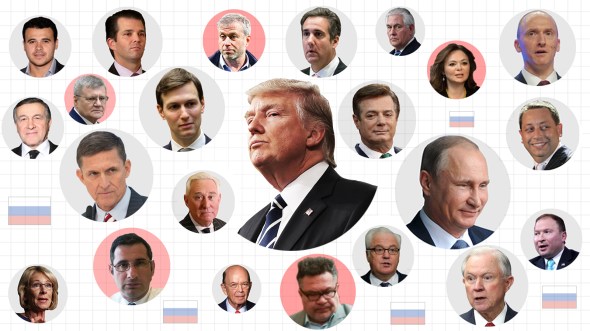
Good Morning!!
There has quite a bit of breaking news on the Russia investigation front this week, and it’s only Tuesday. We learned last night that Paul Manafort tried to suborn perjury from witnesses in his case. Perhaps that’s why Trump has been madly tweeting about Manafort and the investigation generally.
The Washington Post: Mueller accuses Paul Manafort of witness tampering.
Federal prosecutors accused former Trump presidential campaign chairman Paul Manafort of witness tampering late Monday in his criminal case and asked a federal judge to consider revoking or revising his release.
Prosecutors accused Manafort and a longtime associate they linked to Russian intelligence of repeatedly contacting two members of a public relations firm and asking them to falsely testify about secret lobbying they did at Manafort’s behest.
The firm of former senior European officials, informally called the “Hapsburg group,” was secretly retained in 2012 by Manafort to advocate for Ukraine, where Manafort had clients, prosecutors charged.
Konstantin Kilimnik
In court documents, prosecutors with special counsel Robert S. Mueller III allege that Manafort and his associate — referred to only as Person A — tried to contact the two witnesses by phone and through encrypted messaging apps. The description of Person A matches his longtime business colleague in Ukraine, Konstantin Kilimnik.

So Manafort could soon be headed for jail unless he decides to cooperate with Mueller. Read the rest at the WaPo. Some commentary:
John Cassidy at The New Yorker: More Legal Trouble for Paul Manafort—and Donald Trump.
Coincidences do happen, but this seems to be an unlikely one. On Sunday morning, seemingly apropos of nothing, Donald Trump posted a messageon Twitter that stated the following: “As only one of two people left who could become President, why wouldn’t the FBI or Department of ‘Justice’ have told me that they were secretly investigating Paul Manafort (on charges that were 10 years old and had been previously dropped) during my campaign? Should have told me!”
Even by Trump’s standards, this message seemed a bit weird. A few minutes later, the President posted another one, which said, Paul Manafort came into the campaign very late and was with us for a short period of time (he represented Ronald Reagan, Bob Dole & many others over the years), but we should have been told that Comey and the boys were doing a number on him, and he wouldn’t have been hired!”
Trump says a lot of things on Twitter, of course. But prior to this outburst, he hadn’t talked much recently about Manafort, who made millions of dollars working as a political consultant for despots around the world and is facing trial in two federal courts on charges that include money laundering, bank fraud, and failing to disclose his U.S. lobbying work for a foreign government—all of which were brought by the special counsel, Robert Mueller. Why Trump’s sudden interest? One possible inference was that the President had somehow heard that there was more bad news coming about Manafort, and he was trying to limit some of the damage in advance of its release. If that was indeed the case, we now know the source of Trump’s concern.
In a filing made in U.S. district court, in Washington, on Monday night, Mueller’s office accused Manafort, who is out on bail, of trying to tamper with potential witnesses earlier this year, and asked a judge to consider jailing him before his trial. At this stage, obviously, we don’t know how the court will rule. But Manafort is already facing considerable pressure to coöperate with the special counsel’s investigation. If the court were to revoke his freedom, this pressure would sharply increase.
Franklin Foer at The Atlantic: Paul Manafort Loses His Cool.
At the height of his powers as a political consultant, Paul Manafort was known for his cool. In fact, the value of his counsel increased at moments of crisis. While others panicked, Manafort rarely evinced a hint of frazzle. He could still think strategically, detach himself from emotion, and issue clearheaded guidance. But he could afford to keep his head at such moments, because the problems he was called on to solve belonged to others.
Robert Mueller’s allegation that Manafort attempted to tamper with a witness permits us to peer inside Manafort’s mind as it has functioned in a very different set of circumstances. When it comes to Manafort’s own deep problems—his moment of legal peril—he seems unable to muster strategic thinking. He has shown himself capable of profoundly dunderheaded miscalculations.
It’s hard to understand how he could have attempted the scheme described by Mueller in the midst of the highest-profile, most scrutinized criminal inquiry of the century. But that alone fails to capture the depths of his blundering.
Foer describes how each of Mueller’s filings in Manafort’s case has made it clear that Manafort’s every move is being closely watched by federal investigators, and yet Manafort apparently thought he could get away with contacting witnesses.
Each of Mueller’s new filings has further revealed the extent to which he is surveilling Manafort and his closest associates. A week before Manafort apparently attempted to tamper with the witness, Mueller stated plainly that he was watching their encrypted communication channels. And before that, Mueller showed that he was keeping tabs on Manafort’s email when he exposed an op-ed that Manafort had ghostwritten in his own defense, in violation of a judge’s gag order.
If we look back on Robert Mueller’s strategy over the past few months, the special prosecutor seems to repeatedly signal to Manafort: Look, I know everything; you have no choice but cooperation. It’s a pattern that continues with this filing, the first instance in which Mueller has deployed material supplied by Manafort’s old alter ego, Rick Gates. When Gates agreed to cooperate with Mueller, he handed over a raft of emails. We can see in the exhibits that Mueller attached to this filing that Gates possesses a comprehensive archive of Manafort’s dealings, a blueprint of his operation. There will be no ellipses in the Manafort trial. Gates can fill all the gaps.
There is another suggestive fact that Mueller posits in passing. Manafort’s witness-tampering scheme featured a co-conspirator. Mueller doesn’t name the accomplice, but his identity is not hard to discern from Mueller’s description. Manafort tried to contact his Hapsburg Group collaborators through his old Russo-Ukrainian aide, Konstantin Kilimnik.
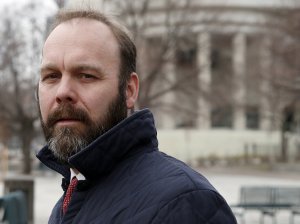
Rick Gates
Why did Manafort think he could get away with continuing to communicate with Kilimnik? Mueller is slowly but surely ensuring that Manafort will either cooperate or spend the rest of his life in prison.
Meanwhile, at Mother Jones, David Corn warns that the simple narrative of Russia’s attack on our democracy is getting lost in the details as Trump, Fox News, and Devin Nunes work constantly to obfuscate the truth with big lies: Donald Trump Is Getting Away With the Biggest Scandal In American History.
The other evening I was on a cable news show to cover the latest Russia news of the day—and I had an epiphany.
We were talking about a recent scoop from Michael Isikoff, the co-author of my latest book, Russian Roulette. He had reported that a Spanish prosecutor had handed the FBI wiretapped transcripts of a Russian official who was suspected of money laundering and for years had been trying to gain influence within the American conservative movement and the National Rifle Association. We then discussed a New York Times article revealing that Michael Cohen, Donald Trump’s longtime fixer, had met with a Russian oligarch in January 2017, around the time a US company affiliated with this tycoon began making $500,000 in payments to Cohen. Next we turned to the latest in the so-called Spygate nonscandal—the false claim, championed by Trump and his defenders, that the FBI infiltrated a spy into his presidential campaign for political purposes.
Then the show moved on. We had spent 15 or so minutes on these important developments, delving into the details—but without referring to the essence of the story. And it hit me: Though it’s clear Trump’s presidency has been hobbled by the Russia scandal, the manner in which this matter plays out in the media has helped Trump.
Meanwhile Trump, backed up by Fox News, keeps pushing out his propaganda.
Michael Isakoff and David Corn
The other side—the accurate perspective—isn’t that complicated. In 2016, Vladimir Putin’s regime mounted information warfare against the United States, in part to help Trump become president. While this attack was underway, the Trump crew tried to collude covertly with Moscow, sought to set up a secret communications channel with Putin’s office, and repeatedly denied in public that this assault was happening, providing cover to the Russian operation. Trump and his lieutenants aligned themselves with and assisted a foreign adversary, as it was attacking the United States. The evidence is rock-solid: They committed a profound act of betrayal. That is the scandal.
But how often do you hear or see this fundamental point being made? The media coverage of the Trump-Russia scandal—which has merged with Cohen’s pay-to-play scandal, the Stormy Daniels scandal, and a wider foreign-intervention-in-the-2016-campaign scandal—has yielded a flood of revelations. Yet the news reporting tends to focus on specific components of an unwieldy and ever-expanding story: a Trump Tower meeting between Trump aides and a Kremlin emissary; what special counsel Robert Mueller may or may not be doing; the alleged money-laundering and tax-evasion skullduggery of Paul Manafort; a secret get-together in the Seychelles between former Blackwater owner Erik Prince and a Russian financier; the Kremlin’s clandestine exploitation of social media; Russian hackers penetrating state election systems; Michael Flynn’s shady lobbying activities; Trump’s attempted interference in the investigation; and so much more. It is hard to hold on to all these pieces and place them into one big picture.

Please go read the rest–it’s fairly lengthy. I’m not sure what the solution to this is; It’s not likely that non-Fox news sources are going to start hammering a simple narrative to push back on the Trump big lies. I can only hope that when Mueller issues his report, it will pull all the complex details together into a coherent and understandable story.
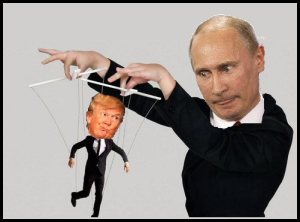 Finally, get this–Vladimir Putin is now bragging publicly about his “close relationship” with Trump. Axios reports:
Russian President Vladimir Putin tells Austrian TV that he and President Trump have a close working relationship, although it’s complicated by U.S. politics.
“You should ask our colleagues in the United States. In my opinion, this is the result of the ongoing acute political struggle in the United States. Indeed, Donald Trump and I have, firstly, met more than once at various international venues and secondly, we regularly talk over the phone.”
Interviewer: “You and Donald Trump talk so nicely over the telephone, but Trump has been President for a year and a half and there still has not been a bilateral summit between you, in contrast to Bush and Obama with whom you met within the first six months of their presidencies. Why is it taking so long?”
Putin:
“Our foreign affairs departments and special services are working fairly well together in areas of mutual interest, above all in the fight against international terrorism. This work is ongoing.”
“As for personal meetings, I think that the possibility of these meetings depends to a large extent on the internal political situation in the United States….”
“In a recent telephone conversation, Donald said he was worried about the possibility of a new arms race. I fully agree with him.”
“[W]e will do all we can to ease tensions on the Korean Peninsula. So of course we pin great hopes on the personal meeting between President Trump and North Korean leader Kim Jong-un, because mutual claims have gone way too far.”
Putin calls the “president” *Donald.* And I guess if “Donald” does achieve any success with North Korea, Putin expects to share the glory.
So . . . what stories are you following today?
Tuesday Reads: Where is Melania? And Other News
Posted: May 29, 2018 Filed under: morning reads, U.S. Politics | Tags: conspiracy theories, Deep State, Donald Trump, Robert Mueller, Russia investigation, Where is Melania? 37 Comments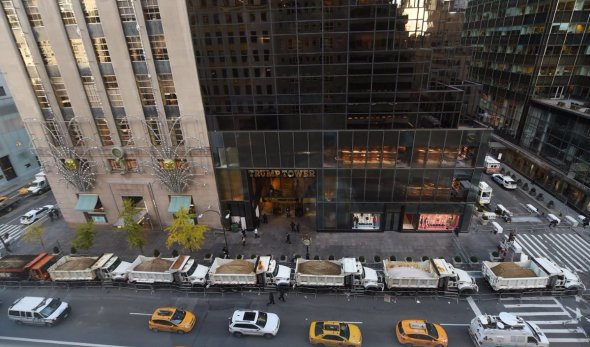
Dump trucks lined up around Trump Tower in NY.
Good Afternoon!!
What has happened to Melania? I’m becoming obsessed with this question. It has now been 18 days since she’s been seen in public on May 10. How much longer can the White House go on claiming she’s living there without evidence? The latest rumor is that she has gone back to New York.
https://twitter.com/MsSusanMo/status/1000940461614395392
The evidence is that dump trucks have appeared all around Trump Tower. Apparently, that also happened the two times that Trump stayed in New York.
The Inquistr reported yesterday that Melania’s Twitter location had changed to New York. But it turns out that they were looking at the Twitter account Melania used before becoming first lady. The FLOTUS account that she uses now still says Washington, DC. So that’s a red herring that was debunked by The Palmer Report.
Why wasn’t Melania with her husband at yesterday’s Memorial Day ceremony?
https://twitter.com/PaladinCornelia/status/1001122258713169920
Trump claimed she was in a window looking down at a press gaggle outside the White House, but no one else could see her. The White House is going to have to explain what’s happening eventually, or the occasional speculation is going become an uproar.
This is from a gossip site linked by The Palmer Report. Hollywood Life: Melania Trump Vanished After Surgery – She Wishes Donald’s Presidency Was Over, Claims Source.
Melania Trump, 48, underwent kidney surgery on May 14, and has since secluded herself from the public eye. But her break isn’t completely health-related – she’s also trying to better her marriage to Donald Trump, 71.“Melania has been taking a little ‘me time’ to work on fully regaining her health, and to try and strengthen her marriage again,” a source close to the First Lady tells HollywoodLife EXCLUSIVELY. “It’s been a hideously stressful past few months, and Melania needs a break out of the media glare to recharge her batteries and take stock.”
However, our insider noted that the president isn’t making things easier for his wife. “Donald has been under an ever increasing ton of pressure, so he definitely isn’t in the best of moods, which makes for a pretty tense atmosphere at home,” the source continued. “Melania really is getting to the point now where she just wishes Donald’s presidency was over, and she can’t wait to return to her ‘regular’ life again, even though she realizes it will never be quite the same.”
The Palmer Report claims this means Melania is having psychological problems.
This confirms that there was never any kidney problem; this is some kind of mental health break. It’s been fairly obvious from the start that this has probably been a mental health issue, but due to the sensitive nature of the situation, we’ve gone out of our way not to explicitly say it.
I’m not sure we can assume this based on an anonymous source quoted at a gossip site, but what else could explain her disappearance from public view? At this point, I have to believe that Melania wants out of her marriage and that’s why we haven’t seen her since May 10. We’ve seen how she resists holding his hand–sometimes even batting it away.
This is interesting, from Riot Woman (second tweet in series):
There’s more. You can see the entire thread here. One more from Sarah Kendzior:
It’s time for some serious journalists at the NYT and WaPo to locate Melania and find out what’s going on.
In Other News . . .
A few days ago I posted a Politico article in which former SDNY prosecutor Nelson W. Cunningham offered some predictions about the Rus:sia investigation. Today he has more predictions, again at Politico: Bob Mueller’s White Hot Summer.
Special Counsel Robert Mueller may well be in the final stages of wrapping up his principal investigation. Last week, I argued here in Politico that Mueller will want to avoid interfering with the November midterms, and so will try to conclude by July or August. On this one we can believe Trump’s new lawyer, former prosecutor and New York mayor Rudy Giuliani, who claims Mueller’s target is September 1.
How will Mueller wrap up his investigation? What will he produce? And then – what can we expect from the other players in this saga: Deputy Attorney General Rod Rosenstein, President Trump and his lawyers, and the Republican and Democratic leaders in Congress?
Nelson W. Cunningham
As a former prosecutor and Senate Judiciary and White House lawyer who has carefully studied presidential investigations since Watergate, the next steps in this constitutional dance seem clear. Mark Twain was certainly right when he said, “History does not repeat itself, but it often rhymes.” And this summer may well be the most consequential in presidential politics since 1974, the year Watergate came to a head.

Here are the predictions, which you can read about in detail at the link above.
– Mueller will not indict the president, but will issue a comprehensive and detailed report.
– Rod Rosenstein will decide to release the report to Congress and the public.
– Rosenstein’s move to release the Mueller report will lead to his firing and perhaps another Saturday Night Massacre.
– And this is when the Senate and the Congress might finally engage.
If Cunningham is correct, we have an interesting summer ahead.
Trump is clearly obsessed with what Mueller is doing. He spent the long Memorial Day weekend tweeting about it. Yesterday, after inappropriately tweeting “Happy Memorial Day!” and then bragging about his so-called accomplishments, he sent multiple tweets about the Russia investigation, trying to twist it into a Democratic scandal. Politico:
Trump pivoted to tweeting about Fox News segments on the investigation into Russian interference in the 2016 election – an investigation that Trump and his allies contend, without evidence, was politically motivated to harm Trump’s campaign and his administration.
“‘The President deserves some answers.’ @FoxNews in discussing ‘SPYGATE.’” Trump wrote on Twitter.
The “president” is bald.
Minutes later, he posted again: “‘Sally Yates is part of concerns people have raised about bias in the Justice Dept. I find her actions to be really quite unbelievable.’ Jonathan Turley.”
“‘We now find out that the Obama Administration put the opposing campaigns presidential candidate, or his campaign, under investigation. That raises legitimate questions. I just find this really odd…this goes to the heart of our electoral system.’ Jonathan Turley on @FoxNews,” he added….
Trump appears increasingly obsessed with what he is calling “Spygate” – the notion that his campaign was surveilled by the Justice Department for political purposes. There is no evidence to suggest this is the case. The FBI utilized an informant to talk to campaign officials after they discovered evidence that the officials had Russia-linked contacts during the campaign, while Russia was allegedly waging a covert disinformation campaign to harm Democrat Hillary Clinton and help Trump.

The NYT on Trump’s attempts to reshape the narrative: With ‘Spygate,’ Trump Shows How He Uses Conspiracy Theories to Erode Trust.
As a candidate, Donald J. Trump claimed that the United States government had known in advance about the Sept. 11 attacks. He hinted that Antonin Scalia, a Supreme Court justice who died in his sleep two years ago, had been murdered. And for years, Mr. Trump pushed the notion that President Barack Obama had been born in Kenya rather than Honolulu, making him ineligible for the presidency.
None of that was true.
The “president’s” narrative
Last week, President Trump promoted new, unconfirmed accusations to suit his political narrative: that a “criminal deep state” element within Mr. Obama’s government planted a spy deep inside his presidential campaign to help his rival, Hillary Clinton, win — a scheme he branded “Spygate.” It was the latest indication that a president who has for decades trafficked in conspiracy theories has brought them from the fringes of public discourse to the Oval Office.
Now that he is president, Mr. Trump’s baseless stories of secret plots by powerful interests appear to be having a distinct effect. Among critics, they have fanned fears that he is eroding public trust in institutions, undermining the idea of objective truth and sowing widespread suspicions about the government and news media that mirror his own.
“The effect on the life of the nation of a president inventing conspiracy theories in order to distract attention from legitimate investigations or other things he dislikes is corrosive,” said Jon Meacham, a presidential historian and biographer. “The diabolical brilliance of the Trump strategy of disinformation is that many people are simply going to hear the charges and countercharges, and decide that there must be something to them because the president of the United States is saying them.”

Read the rest at the NYT.
The Washington Post has a piece on the ways Trump has reduced the White House to a one-man operation: ‘The only one’: In new West Wing season, Trump calls the shots and aides follow.
The White House communications director’s job has been vacant for exactly two months. But in practice, it has been filled since the day Hope Hicks said farewell to her unofficial replacement — President Trump himself.
The president also has unofficially performed the roles of many other senior staffers in recent months, leaving the people holding those jobs to execute on his instincts and ideas.
And that’s exactly how Trump likes his West Wing.
Largely gone are the warring factions that dominated life at 1600 Pennsylvania Avenue in the first year of Trump’s term, replaced by solo players — many with personal connections to the president and their own miniature fiefdoms — laboring to do their jobs and survive.
Trump has brought in a handful of senior people who believe in him personally, are temperamentally in sync with the brash boss and are invested in his political success more than some of his first-year aides were. As one top official put it, “Ultimately he’s the only one anyone elected.”
The authors point out that this doesn’t seem to be working for him in terms of accomplishments. They also write that WH staff has been reduced to simply trying to stop him from doing something completely crazy.
Rather than struggling to manipulate the president to follow their personal agendas, the senior staff members of Trump’s Year 2 — or “Season 3,” in Trump’s reality television parlance — focus on trying to curb his most outlandish impulses while generally executing his vision and managing whatever fallout may follow. Most of all, officials said, they “get” Trump.
“Last year was the year of adjustment. He was constrained by an axis of adults and adjusting to be president,” said Thomas Wright, a senior fellow at the Brookings Institution. “This year is the year of action. He’s giving the orders, even if there’s resistance.
“Next year,” he continued, “is the hangover year, the year of living with the consequences.”
That doesn’t sound too promising.
Anyway, onward into another day of hoping Trump doesn’t blow up the world. What stories are you following?

 peej
peej Carissa
 bostonboomer
 dakinikat
 ecocatwoman
 mablue2
 Mama Lopez
 peggysue22
 quixote
 skydancingguestblogger
 Mona (aka Wonk the Vote)



 Sky Dancing
Recent Comments