
The Kitty Genovese Case 50 Years Later
Posted: March 13, 2014 Filed under: Crime, Criminal Justice System, GLBT Rights, Media, psychology | Tags: B. Latane, bystander effect, J.M. Darley, Kew Gardens, Kitty Genovese, Mary Ann Zielonko, rape, serial murders, Winston Mosley 20 Comments
Today is the 50th anniversary of the murder of Kitty Genovese in Queens, New York. This was a crime that shocked and outraged America and the world, and still horrifies and fascinates people to this day. At The New Yorker, Nicholas Lehmann describes some of the reasons this news story has become so iconic and reviews two new books on the case. Lehmann argues that New York Times editor Abe Rosenthal created a news environment in which this particular murder became the focus of so much attention. Lehmann deliberately shaped the coverage of the murder in a sensational and misleading manner. The story ended up as the focus of a classic psychological study.
a post about this in August 2009, and I thought I’d put that post up again today.
I wrote a piece about this in August 2009. I thought I’d repost it today. I’ve made a few minor edits to the original. At the end, I list some recent books and articles for further reading.
The Kitty Genovese Case: A Fascinating Intersection of True Crime, Psychology, and Media Misinformation
A Murder in Kew Gardens
On March 13, 1964, at around 3:30AM, there was a murder in the Kew Gardens section of Queens, New York. The murder probably wouldn’t have gotten much publicity at all if it hadn’t been for a sensational article that appeared on the front page of The New York Times, a couple of weeks later. The Times story led to groundbreaking research in social psychology and the discovery of new and counter-intuitive information about human behavior.
It was very late, very cold, and very dark when 28-year-old Catherine “Kitty” Genovese parked her car at the Kew Gardens train station after driving from Ev’s Eleventh Hour Bar in Hollis, where she worked nights as manager. When she got out of her car, she saw a stranger walking toward her. The man, Winston Mosley, 29, stabbed Genovese two times as she hurried past a bookstore on Austin Street, pehaps headed a local bar named Bailey’s to seek assistance. She called out, “Oh my God. He stabbed me. Please help me,” and fell to the ground. Winston was leaning over her to stab her again, when he heard a man’s voice calling from a window in an apartment building across the street, “Leave that girl alone!”
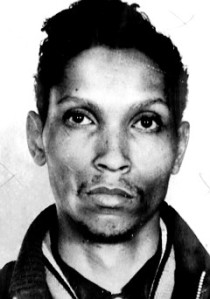
- Winston Mosley
Startled, Mosley ran down an alley, got into his car, and backed up, ready to drive off. Lights had gone on in the nearby apartment building, but they went off again. Mosley got out of the car and again followed Genovese, who had reached the doorway of her apartment building, which was in the back of the building at 82-62 Austin Street. As she fell forward through the doorway, crying out, “I’m dying, I’m dying,” Winston caught up with her, stabbed her again, and then raped her. A short time later, a neighbor, Greta Schwartz, who had called the police after receiving a phone call from another neighbor, ran down to the lobby and cradled Kitty in her lap until the paramedics arrived.
From interviews in the neighborhoods of the two stabbing incidents, police learned that as many as 37 people had seen or heard part of the stalking and murder of Kitty Genovese by Winston Mosley, but supposedly none of them had called the police except Greta Schwartz.
The New York Times Breaks the Story
On March 27, 1964, The New York Times published a front page story by Martin Gansberg (Warning, PDF) headlined “37 Who Saw Murder Didn’t Call Police.”
Apathy at Stabbing of Queens Woman Shocks Inspector
For more than half an hour 38 respectable, law-abiding citizens in Queens watched a killer stalk and stab a woman in three separate attacks in Kew Gardens.
Twice the sound of their voices and the sudden glow of their bedroom lights interrupted him and frightened him off. Each time he returned, sought her out and stabbed her again. Not one person telephoned the police during the assault; one witness called after the woman was dead.
That was two weeks ago today. But Assistant Chief Inspector Frederick M. Lussen, in charge of the borough’s detectives and a veteran of 25 years of homicide investigations, is still shocked.
He can give a matter-of-fact recitation of many murders. But the Kew Gardens slaying baffles him–not because it is a murder, but because the “good people” failed to call the police.
Just that brief excerpt contains a number of inaccuracies, which I’ll get to a little later. Nevertheless, it was from this newspaper article that Americans–and people around the world–formed their lasting impressions of the tragic death of Kitty Genovese. The story shocked the nation; everyone was talking about how terrible it was that in big cities like New York, people just didn’t seem to get to know their neighbors or care about them. Those of us who lived in small cities and towns were sure things would be different in our neighborhoods.
Psychological Study of the Bystander Effect
In 1968, J.M. Darley and B. Latane published a study (pdf) in the Journal of Personality and Social Psychology that was inspired by the supposed behavior of the 37 “witnesses” to Kitty Genovese’s murder. They hypothesized that the reason bystanders did not take action was “diffusion of responsibility,” and that the more bystanders in an emergency situation, the more these bystanders believe that “someone else will help, so I don’t need to.”
Participants in the study were college students in an introductory psychology class at New York University.
Darley and Latane told participants that they wanted to study how students adjust to university life in a highly competitive, urban environment. They said they wanted participants to discuss their problems honestly with other students; and in order to avoid personal discomfort, participants would sit in separate rooms equipped with an intercom system.
There were three different groups. Students in group one were told they would be talking with one other person. In group two, students were told there would be two other people on the intercome with them. Group five was told there would be five other people listening in to the conversation. In reality, all of the students were alone and they the other voices they heard were on tape. The emergency was that one of the participants in the discussion has epileptic seizure (the sounds of the seizure were actually played on tape).
As the intercom discussions began, students heard the first student, a male, tell about his difficulties concentrating on his studies and problems adjusting to life in New York City. He then added, with some embarrassment, that he sometimes had severe seizures, especially when under a lot of stress. Then the conversation switched to the next student. In group 1, the actual student’s turn came next. In the other two groups, the real student heard one or more other students speak first. After the real student took a turn speaking, the first “student” again started to speak normally, then began having a seizure, and asked for help. Darley and Latane measured how long it took subjects to help the student in trouble (helping was defined as leaving the cubicle and notifying an experimenter of the problem).
Why? Not because they were apathetic. All subjects were anxious and showed physical signs of nervousness. Darley and Latane conclued that as the number of people involved in an emergency situation increase, it’s easier for bystanders to assume that someone else will handle it; and the potential guilt for not helping is divided up. Other possible reasons for failure to act are fear of embarrassment or ridicule, fear that they are misinterpreting the situation. The authors also pointed out that most people don’t have much experience with emergency situations and are likely to become confused or overwhelmed when they encounter one.
Joseph De May, Jr., and the Kew Gardens History Page
In 2000, Joseph De May, who had lived in Kew Gardens since 1974, decided to build a website that would contain a comprehensive pictorial history of the neighborhood. As part of his project, De May dug up as much information as he could about the Kitty Genovese murder and then critiqued the original New York Times article and debunked some myths that had grown up around the case. Here is the “short version” of his critique:
# There were only 2 attacks, not 3.
# The attacks were not continuous. There was about a 10 min. interval between them when the killer moved his car to a parking place farther away.
# There were not 38 eye witnesses to either of the attacks. Only 3 people are known to have seen one or the other of the stabbings.
# The first attack on Austin Street – the one that awakened the witnesses – was likely over before all but a few of the witnesses got to their windows.
# Probably many more than 38 were ear witnesses to Kitty’s screams. However, that first attack occurred a few yards away from a bar known for its late night rowdiness.
# After the first attack, Kitty left the scene under her own power without making any outcries for help.
# The second attack took place in a small vestibule in the rear of a building where only one witness was in a position to see it.
# Given the layout of the crime scene, it would have been impossible for anyone to have seen or heard everything.
# Assuming the police were not timely called – a big assumption in my opinion – there were reasons apart from apathy why they were not.

- Crime scene photo: back of apartment building where Kitty died
Furthermore, a 15-year-old boy named Michael Hoffman saw Winston Mosley run away after the first attack in front of the bookstore and saw Kitty Genovese get up and stagger in the other direction. He didn’t know there had been a stabbing, but he told his father what he had seen and the father called the police. The police later admitted they had received several other calls. One man did see the knife and understood that a woman was being stabbed. This man never called the police and couldn’t explain his inaction. At least five other people saw Mosley return to the original scene, but by that time Kitty Genovese was gone.
There were two attacks, not three as the New York Times reported. A man on the first floor of Kitty’s building open his door and saw the final attack. He wanted to call police, but said his wife didn’t want him to get involved. He went to Greta Schwartz’s apartment and asked her to call police, which she did. She then ran downstairs with a friend, found Kitty still alive and cradled her until an ambulance arrived. Also contrary to The New York Times story, the occupants of Kitty Genovese’s apartments building knew and were friendly with each other. Many knew and liked Kitty and her roomate Mary Ann Zielonko.
The Real Kitty Genovese
In 2004, on the fortieth anniversary of Kitty Genovese’s death, Mary Ann Zielonko came forward and talked about Kitty publicly for the first time. She was interviewed on NPR’s Weekend Edition Saturday. In the interview, Zielonko, who now lives in Vermont, revealed that she and Kitty Genovese were lovers. A lesbian blogger in Vermont wrote a piece about her own feelings after she learned about Kitty’s sexual orientation.
Hearing that Genovese was a lesbian has shaken up my psyche. Genovese’s name was always a cautionary tale – about being a woman alone in the city at night, about the need to care and take action in the face of assault. But now it’s also somehow more about me as a lesbian, about our denied and undiscovered herstory, about the dangers we faced then – and now.
In 1964, it was not okay to be queer. The only place to go to hold your lover’s hand in semi-public was a bar. Mary Ann remembers the Swing Rendezvous on MacDougal St. and the Seven Steps on Houston. Police raids and being beaten up for wearing butch or femme drag were common events.
Until now we’ve never had the opportunity to ask whether the neighbors’ indifference might have had an element of homophobia (not that the word existed then). Kitty and Mary Ann lived together in the apartment Kitty was so desperately trying to reach that March night. Mary Ann says some of the neighbors suspected they were lesbians, because they were always together. “But we didn’t look ‘gay,’ whatever that means.” Mary Ann got home from her own shift tending bar and went to sleep – until the police knocked at her door at 4 a.m. and drove her from the tree-lined streets of their Kew Gardens, Queens, neighborhood where Kitty died, to the hospital morgue to identify Kitty’s body.
Some of the neighbors may have suspected that Kitty and Mary Ann were gay, but several reported in interviews that she was a friendly, smiling young woman whom they liked. A few told police and reporters that they “didn’t want to get involved,” but most weren’t sure what they had seen or heard and couldn’t say why they didn’t call for help. It was after 3AM on a winter night, in a neighborhood where there were often loud voices and even fighting among people leaving local bars. As with the participants in Darley and Latane’s study, some of the witnesses may have feared giving a false report to police and looking foolish.
In addition, Joseph De May reports that in those days, NYC police demanded that callers identify themselves rather than just accepting reports of emergencies. That may have deterred some from calling police or holding on long enough to get someone to listen. Even if witnesses had called police to report screaming or fighting, they would likely have taken a long time to respond, because of the bars in the area.
In 2004, The New York Times interviewed De May about his research.
In the end, Mr. De May’s conclusion about the murder is that, while the behavior of the witnesses was hardly beyond reproach, the common conception of exactly what occurred that night is not in fact what occurred. What did occur, he argues, is far more complex and far less damning to the residents of Kew Gardens.
”Yeah, there was a murder,” Mr. De May said. ”Yeah, people heard something. You can question how a few people behaved. But this wasn’t 38 people watching a woman be slaughtered for 35 minutes and saying, ‘Oh, I don’t want to be involved.”’
Mr. De May began his research with the seminal Times article of March 27, 1964. ”I remember reading through it, then putting it down and thinking, ‘Well, this doesn’t hang together at all,”’ he said. ”And then I read it again carefully. I knew the area. I knew the crime scene because I go by there every day.”
Mr. De May soon found himself poring through legal documents related to the case, scouring books and articles, and interviewing neighbors. At one point, he even ran the route of Ms. Genovese’s flight up Austin Street, timing it with a watch. He became convinced that his first impression was correct. ”Here’s something that everyone thinks happened,” he said, ”that isn’t so.”
Winston Mosley
Kitty’s murderer had no idea that she was a lesbian. He had set out that night to kill a woman. He was certainly a sociopath and may have been a serial killer. He confessed to having killed at least one other woman after he was arrested for the Genovese murder. In 1968, Mosley managed to escape from police custody and raped a pregnant woman in her home. In April, 2008, the New York Daily News reported on Mosley’s latest parole hearing.
Forty-four years after stalking and stabbing Kitty Genovese, her killer still blames his wife-beating father for the vicious murder.
“My father was at the time stalking my mother and thinking about killing her,” Winston Moseley told the parole board last month when asked about the infamous 1964 slaying.
“But the problem was not just at that moment in time,” he said. “It existed for many years of sort of the emotional trauma that I was going through.”
Moseley, whose parole bid was rejected for a 13th time, has long displayed little remorse for the March 13, 1964, slaying – although he did offer an apology this time, a transcript of the hearing shows.
Further Reading:
Books
In 2008, Charles E. Stoller, the man who prosecuted Winston Mosley for the murder of Kitty Genovese and two other murders, published a book about the cases, Twisted Confessions: The True Story Behind the Kitty Genovese and Barbara Kralik Murder Trials.
Catherine Pelonero, Kitty Genovese: A True Account of a Public Murder and Its Private Consequences (2014)
Kevin Cook, Kitty Genovese: The Murder, the Bystanders, the Crime that Changed America (2014)
Articles
Boston Globe book review, ‘Kitty Genovese’ by Kevin Cook and ‘Kitty Genovese’ by Catherine Pelonero
Nicholas Lehmann, A CALL FOR HELP: What the Kitty Genovese story really means.
AP (via CBS Local NY), 50 Years Later, Kitty Genovese Murder Case Still Grips NYC, Nation.
Fabian Tepper (Christian Science Monitor), Kitty Genovese murder: would you have helped?
Nancy Dillon (NY Daily News), Brother of Kitty Genovese to release documentary about sister’s 1964 murder, which prompted ‘Genovese Syndrome’ research
Saturday: An Autumn Potpourri of Reads
Posted: October 19, 2013 Filed under: Crime, morning reads, Republican politics, U.S. Economy, U.S. Politics | Tags: Affordable Care Act, anti-leak software, Ariel Castro, Bill Russell, Boston Celtics, Boy Scouts, Cleveland Police Department, Dave Hall, Edward Snowden, Elias Acevedo, FBI, Fox News lies, Glenn Greenwald, Glenn Taylor, Goblin Valley State Park, guns, hunting, Laura Poitras, murder, NSA, Obamacare, political fund-raising, potpourri, rape, rock formations, Sean Hannity, Tea Party, Ted Cruz 29 Comments
Fall in New England
Good Morning!!
Isn’t that a gorgeous photo? It was taken in New Hampshire near Mount Washington in October 2011.
A potpourri is “a combination of incongruous things.” Well that’s what I have for you this morning. We’ll begin at Sea-Tac airport in Seattle where Boston Celtics legend Bill Russell, 79, was arrested by TSA police for having a loaded gun in his carry-on bag. He was held for about half-an-hour and then released. He has a permit for the gun. Russell was on his way to Boston where a statue of him will be unveiled on November 1.
Did you hear about the morons in Utah who destroyed a 170-million-year-old rock formation and made a video of themselves doing it? From the Deseret News:
Two men have come under scrutiny by the public and possibly by prosecutors after a video made the rounds online showing them pushing over an iconic rock formation.
The men were visiting Goblin Valley State Park last week when they said they noticed a precariously perched
boulder that was loose and worried it would fall on someone. The delicate “goblin” formation, also known as a “hoodoo,” is one of many that gives the park its name.
What followed was a video showing the men joking and laughing as Glenn Taylor, of Highland, topples the rock, narrated by cameraman Dave Hall, who says lives have been saved. A third man, identified as Taylor’s son, watches.
These two ignorant fools, who are Boy Scout leaders (!), thought the ancient rock formation was suddenly going to tip over and crush someone.
Utah State Parks spokesman Eugene Swalberg called the video disturbing. Possible criminal charges are being screened by the Emery County Attorney’s Office and the Utah Attorney General’s Office, he said….
The goblins date back more than 170 million years to the Jurassic Period, Swalberg said. The park, which gets more than 85,000 visitors per year, was dedicated in 1974 to protect the fragile formations, he said.
“There are some established trails in the park, but there are also areas where you can have self discovery and wander amongst the goblins,” Swalberg said. “That’s the beauty of Goblin Valley. It’s not meant to have people push over the goblins. It’s meant to enjoy.”
Check out the idiotic quotes from these guys in this Fox News story:
“This is about saving lives,” Dave Hall, who shot the video, told The Associated Press on Friday. “One rock at a time.”
The rock formation is about 170 million years old, Utah State Parks spokesman Eugene Swalberg said. The park in central Utah is dotted with thousands of the eerie, mushroom shaped sandstone formations.
In a video posted on Facebook, Glenn Taylor of Highland, Utah, can be seen last Friday wedging himself between one formation and a boulder to knock a large rock off the formation’s top. Taylor and his two companions can then be seen cheering, high-fiving and dancing….
“My conscience won’t let me walk away knowing that kids could die,” Hall said.
While safety was their motivation, Hall said, it was exciting to knock it over, and that’s why they reacted with high-fives and cheers in the video.
“You can’t have a rock the size of a car that you can push with one hand, and have it roll, and not have an adrenaline rush,” Hall said. “It was a crazy, exciting moment.”
What an asshole! If these fools don’t get criminally prosecuted, at least maybe the Boy Scouts will discipline them.
Boy Scouts of America spokesman Deron Smith confirmed the men are members of the organization, saying in a statement that the organization is “shocked and disappointed by this reprehensible behavior.”
Boy Scout troops spend countless hours in state and national parks, guided by the principle of leaving nature the way they find it, Smith said.
“The isolated actions of these individuals are absolutely counter to our beliefs and what we teach,” Smith said. “We are reviewing this matter and will take appropriate action.”
Moving on , , ,
NSA officials admit they put off installing the latest anti-leak software at the Hawaii facility where Edward Snowden stole thousands of top secret documents before fleeing the country and eventually accepting asylum in Russia.
Well before Snowden joined Booz Allen Hamilton last spring and was assigned to the NSA site as a systems administrator, other U.S. government facilities had begun to install software designed to spot attempts by unauthorized people to access or download data.
The purpose of the software, which in the NSA’s case is made by a division of Raytheon Co, is to block so-called “insider threats” – a response to an order by President Barack Obama to tighten up access controls for classified information in the wake of the leak of hundreds of thousands of Pentagon and State Department documents by an Army private to WikiLeaks website in 2010.
The main reason the software had not been installed at the NSA’s Hawaii facility by the time Snowden took up his assignment there was that it had insufficient bandwidth to comfortably install it and ensure its effective operation, according to one of the officials.
Due to the bandwidth issue, intelligence agencies in general moved more slowly than non-spy government units, including the Defence Department, to install anti-leak software, officials said.
In other related news,
Snowden told The New York Times in an interview that he turned all of his files over to Glenn Greenwald and Laura Poitras when the three met in Hong Kong last spring; he said he didn’t keep any of the files and therefore China and Russia could not have gotten access to them. From HuffPo:
Snowden said he did not retain copies of the documents and did not take them to Russia “because it wouldn’t serve the public interest,” the Times reported. He said his familiarity with China’s intelligence abilities allowed him to protect the documents from Chinese spies while he was in Hong Kong.
“There’s a zero percent chance the Russians or Chinese have received any documents,” he said….
The Times reported that in the interview, which it said took place over several days in the last week and involved encrypted online communications, Snowden asserted that he believed he was a whistle-blower who was acting in the nation’s best interests by revealing information about the NSA’s surveillance dragnet and huge collections of communications data.
The only problem with these claims is that Snowden actually gave copies of some of the stolen files to the Chinese government-supported newspaper The South China Morning Post in August, long after he supposedly turned everything over to Greewald and Poitras. So where did that data come from?
Whatever the truth is, we do know the files are in the possession of Greenwald, Poitras, Wikileaks, The Guardian, The Washington Post, The New York Times, and several other news organizations as well as the British security services which confiscated the files from Greenwald’s live-in partner David Miranda when he was passing through Heathrow airport. So we can be sure there’s no danger of unauthorized release of secret information. Right?
That was sarcasm, by the way, in case you didn’t pick up on it . . .
Bob Cesca had a good post yesterday on Ted Cruz and his future plans. He apparently feels emboldened by his success in shutting down the government for two weeks, and plans more destructive behavior next time. Cesca writes:
Sen. Ted Cruz (R-TX), the chief architect of the tea party shutdown and subsequent debt ceiling brinksmanship, might have lost an endorsement from his home town newspaper, but he managed to raise $1.19 million during the third quarter — nearly three times the haul of the second quarter total. That period of time didn’t include the shutdown, but it included his filibuster, which, it turns out, had a very important purpose: the make money for Ted Cruz. He also beefed up his email database with a petition that gathered over two million names and addresses.
When asked who “won” the shutdown battle, Rep. Tom Rooney (R-FL) told Politico the winners were “the people that managed to raise a lot of money off this.” Now, I don’t know if that means the tea party necessarily “won,” but Cruz and the Heritage Action group, which pulled in $330,000, didn’t walk away empty-handed.
While Cruz and the others cashed-in, the shutdown ended up costing the federal government $24 billion. Via TIME, here’s a breakdown of just a few of the losses:
-About $3.1 billion in lost government services, according to the research firm IHS
-$152 million per day in lost travel spending, according to the U.S. Travel Association
-$76 million per day lost because of National Parks being shut down, according to the National Park Service
-$217 million per day in lost federal and contractor wages in the Washington D.C. metropolitan area aloneAnd we’re supposed to continue buying the line that the tea party cares about government spending and the national debt? That’s rich.
Obviously, Cesca writes, they are going to do a repeat performance early next year. Read all about it at the link.
More wingnut news . . .
Via Kevin Drum, Eric Stern wrote at Salon about how he “fact-checked” Sean Hannity’s claims about Obamacare. Stern writes:
I happened to turn on the Hannity show on Fox News last Friday evening. “Average Americans are feeling the pain of Obamacare and the healthcare overhaul train wreck,” Hannity announced, “and six of them are here tonight to tell us their stories.” Three married couples were neatly arranged in his studio, the wives seated and the men standing behind them, like game show contestants.
As Hannity called on each of them, the guests recounted their “Obamacare” horror stories: canceled policies, premium hikes, restrictions on the freedom to see a doctor of their choice, financial burdens upon their small businesses and so on.
“These are the stories that the media refuses to cover,” Hannity interjected.
But none of it smelled right to me. Nothing these folks were saying jibed with the basic facts of the Affordable Care Act as I understand them. I understand them fairly well; I have worked as a senior adviser to a governor and helped him deal with the new federal rules.
So Stern actually contacted three of these folks and it turns out they all lied. As Drum summarizes:
One of them was apparently just lying, and the other two hadn’t even checked the exchanges, where they would have found that they could get better coverage for considerably less than they’re paying now.
Unbelievable.
Did you hear the latest in the Ariel Castro story?
One of Castro’s neighbors has now been charged with rapes and murders. From the Guardian:
Increased scrutiny of missing person cases in a Cleveland neighbourhood following the arrest of kidnapper Ariel Castro led to charges against a neighbour for the murders of two women in the 1990s, the FBI said on Friday.
Elias Acevedo, 49, was charged late on Thursday with the kidnapping, rape and murder of his 30-year-old neighbour, Pamela Pemberton, found strangled in 1994, and another woman believed to be Christina Adkins, a pregnant 18-year-old who disappeared in 1995. He also is charged with the rape of two young girls.
“Because the public became more aware and investigators were determined and relentless, people were re-interviewed and there was an increased interest in these missing person cases,” FBI spokeswoman Vicki Anderson said.
Acevedo, who lived on the same block as Castro, was arrested in June at his Seymour Avenue residence after police questioned Castro’s neighbours and discovered that Acevedo was a convicted sex offender who had failed to report his current address.
Acevedo became a suspect in the Adkins and Pemberton murders after the FBI re-examined the disappearance of other missing women from the Seymour Avenue neighbourhood after Castro’s arrest, according to a statement from the Cuyahoga County prosecutor’s office.
Imagine if the Cleveland police had actually done their job years ago?
I’ll end with this wacky story from CBS Atlanta.
Bear climbs tree stand to meet hunter.
A video of a showdown between a hunter and a bear in Canada posted in May of this year is making the rounds on social media as of late.
The video, posted by Jeffrey Moffatt, shows a hunter in a tree stand with a bear at the bottom of the tree.
Much to the surprise of the hunter, the bear climbs the tree in about three seconds and comes face-to-face with the hunter. No need for a hunting rangefinder when the damn thing is 3 feet away from you!
The bear sniffs around and eventually decides the hunter wasn’t a threat and climbs down the tree.
Moffatt said on YouTube that he only had a bow and arrow – no firearm – and did not have any cell service in case the situation would have gotten worse.
You have to watch the video!
OK, those are my contributions for today. What stories are you following? Please post your comments and links in the thread below.
Tuesday Reads: Damned If He Does; Damned If He Doesn’t, and Other News
Posted: September 10, 2013 Filed under: Baby Boomers, Barack Obama, Crime, Foreign Affairs, morning reads, Republican politics, Russia, Syria, U.S. Economy, U.S. Politics, Violence against women, War on Women, Women's Rights | Tags: "Extremities", "Kill the Rapist?", aging populations, Bollywood, Delhi gang rape, economic theory, Farrah Fawcett, Federal Reserve Board, Hillary Clinton, International Monetary Fund (IMF), rape 55 Comments
Good Morning!!
Syria is still the top news story today, and its still very unclear what is going to happen. The latest CBS/NYT poll found that 56% of Americans disapprove of the president’s handing of the Syria situation, and 61% are opposed to military strikes.
Yesterday President Obama told CBS’ Scott Pelley, “I understand” American people aren’t with me on Syria strike. You can read the transcript of the interview at the above link. The interview ended this way:
SCOTT PELLEY: The people aren’t with you.
PRESIDENT OBAMA: Yeah, well, not yet. And I, as I said, I understand that. So I’ll have a chance to talk to the American people directly tomorrow. I don’t expect that it’s gonna suddenly swing the polls wildly in the direction of another military engagement. If you ask the average person — including my household — “Do we need another military engagement?” I think the answer generally is gonna be no.
But what I’m gonna try to propose is, is that we have a very specific objective, a very narrow military option, and one that will not lead into some large-scale invasion of Syria or involvement or boots on the ground, nothing like that. This isn’t like Iraq, it’s not like Afghanistan, it’s not even like Libya. Then hopefully people will recognize why I think this is so important.
And that we should all be haunted by those images of those children that were killed. But more importantly, we should understand that when when we start saying it’s okay to — or at least that there’s no response to the gassing of children, that’s the kind of slippery slope that leads eventually to these chemical weapons being used more broadly around the world. That’s not the kind of world that we want to leave to our children.
Obama will address the nation tonight, and it seems unlikely that he’ll be able to shift public opinion dramatically enough to get support for military intervention in Syria. According to the CBS/NYT poll linked above, Republicans oppose Obama on Syria even more overwhelmingly that Democrats do; and it’s not clear to me that the opposition is just about military action. As far as I can tell, the hatred for Obama at this point is so strong among Republicans–and among many Democrats as well–that he can’t do anything right. If he had ignored the chemical weapons attacks in Syria, he would have been called weak, but now that he wants to act, he’s suddenly a warmonger. He’s damned if he does and damned if he doesn’t.
Currently the focus is on whether Obama can convince Congress to support action on Syria. If, as is most likely, his speech tonight doesn’t magically change public opinion, he’ll apparently be seen as an utter failure, both nationally and internationally. From The Boston Globe: Credibility stakes high for Obama in Syria speech.
President Obama’s speech to the nation Tuesday night has turned into a defining moment for the remainder of his term. The outcome of his call for Congress to authorize military strikes against Syria could determine both his credibility on domestic issues and his power on the international stage, analysts said Monday.
The stakes remained high even in light of Monday’s development that Russia is pushing Syria to allow United Nations control of its alleged chemical weapons. In an interview with CBS, Obama said Monday night that any proposed diplomatic solution must be backed by the “credible military threat from the United States.” [….]
“If he loses, then clearly, his lame duck status probably starts more than a year earlier than normal,” said Elaine C. Kamarck, a Clinton administration veteran and now a senior scholar at the Brookings Institution. “Also if he loses, it’s difficult to say how the bad guys in the world, like North Korea and other places, interpret this.”
President Obama said he will go ahead with his speech on Tuesday, outlining the rationale for US military action. The task has been made much more difficult because Obama has seemed uncertain of his own course. He initially drew a hard line on chemical weapons and then, once convinced that the Syrian government had used them last month, spoke and acted as if a military strike were imminent.
But of course if Obama hadn’t asked for Congressional approval, he would have been excoriated by the press for that and his second term would have been written off anyway. I just don’t think Obama can win at this point, regardless of what he decides to do on Syria or any other issue. Even the endorsement of popular former Secretary of State Hillary Clinton can’t turn around the current judgment that Obama is always wrong.
Former secretary of state Hillary Rodham Clinton on Monday endorsed President Obama’s call for military strikes against Syria and said “it would be an important step” if Syrian President Bashar al-Assad surrendered his stockpile of chemical weapons.
“The Assad regime’s inhuman use of weapons of mass destruction against innocent men, women and children violates a universal norm at the heart of our global order, and therefore it demands a strong response from the international community, led by the United States,” she said.
Clinton, a potential 2016 Democratic presidential candidate, made her first public remarks on Syria during a previously scheduled appearance at the White House. She said she had just come from a meeting with Obama, during which they discussed a proposal advanced by Russia to avert U.S. military strikes by having Assad turn over control of the country’s chemical weapons to international monitors.
She said that such a move would be important but that “this cannot be another excuse for delay or obstruction, and Russia has to support the international community’s efforts sincerely or be held to account.”
She also suggested that the Russian proposal came about only because of a “credible military threat by the United States.”
I think that’s probably true. Personally, I hope there’s a diplomatic solution, and the fact that Obama and Putin discussed such a possibility last week–and even before that–gives me some hope.
In other news,
Four men have been convicted in the gang rape of a women in Delhi, India last year. From BBC News:
The 23-year-old woman was brutally assaulted on a bus and died two weeks later.
Her death led to days of huge protests across India in a wave of unprecedented anger.
The case forced the introduction of tough new laws to punish sexual offences. The four men are expected to be sentenced on Wednesday.
Mukesh Singh, Vinay Sharma, Akshay Thakur and Pawan Gupta denied charges including rape and murder, and lawyers for three of the men said they would appeal against the convictions.
They face the death penalty over the attack on the physiotherapy student after being found guilty of rape, murder and destruction of evidence.
Read more at the link.
Will the verdict affect attitudes toward violence against women in India? Nita Bhalla discusses this question at Thompson Reuters: As India gang rape trial ends, a debate over what has changed.
The serial rapist stalks her for days. Eventually he breaks into her home when she is alone and tries to rape her at knifepoint. But she somehow manages to overpower and trap him.
Now, with the help of her two housemates, she has to decide what to do. Kill him and bury him in the garden? Or call the police, who are known to be insensitive and may let him off?
The plot is from “Kill the Rapist?” – a provocative new Bollywood thriller which aims to embolden Indian women to report sexual assaults – and to deter potential rapists by making them “shiver with fear before even thinking of rape” the film’s Facebook page says.
Controversial? Yes, but it is part of a growing awareness in India about violence against women since the high-profile fatal gang rape of a 23-year-old student on a bus in December.
“Like most Indians, I had become used to hearing about rapes and other crimes against women. I would read about them, then turn the page and forget,” says Siddhartha Jain, the 39-year-old producer of “Kill the Rapist?”
“But the December incident shook me to the core. I didn’t want this just to be another story that would be forgotten in a year. My film, which will be released on the anniversary of the incident, is an excuse to amplify the discussion of women’s security and hopefully bring about some positive changes.”
It sounds a little like that play from the 1980s, “Extremities,” that Farrah Fawcett starred in. Perhaps India is getting its consciousness raised?
Meanwhile, check out this info I just pulled off Twitter: Study: 1 in 4 men across parts of Asia admit to rape. Some highlights:
1 A UN study in 6 Asia-Pacific countries found that 1 in 10 men admitted to raping a woman other than his wife or girlfriend. Counting wives and girlfriends, the figure rose to 24%. More than 10,000 men were interviewed in Bangladesh, China, Cambodia, Indonesia, Papua New Guinea and Sri Lanka.2 The percentages of men who admitted to rape varied by country. In Bangladesh, 11.1% admitted to rape; in Cambodia 20.8%; in China 22.7%; in Indonesia 31.9%; in Papua New Guinea 60.7%.3 More than 70% of those who admitted to forcing a woman to have sex gave reasons that fell under the study’s category of “sexual entitlement.” Nearly 60% said they were bored or wanted to have fun. 40% said they were angry and wanted to punish the woman. Only half said they felt guilty and 24% had been imprisoned for rape.
Here’s an economics story from Wonkblog for Dakninkat to opine on. Why doesn’t Fed policy pack more punch? Blame Grandpa.
One of the great frustrations of the last few years has been that, even as central banks around the world have taken extensive steps to try to prop up growth, the impact hasn’t been that great. Indeed, over the last generation, there’s lots of evidence that changes in interest rates don’t pack the punch, in terms of both jobs and inflation, that they used to.
A researcher at the International Monetary Fund has a novel explanation for one reason why this may be: namely, a growing proportion of the world population, and especially in advanced nations, that is elderly.
“We will argue that monetary policy also has a weakened effect on the economy due to changing demographics,” Patrick Imam writes in a working paper. “The elderly used to account for a small share of the population, but technological breakthroughs and social changes over the last two centuries have transformed this demographic structure.”
The gist is that young people are more likely to borrow money, while older people tend to live investments, so lower interest rates have less effect on an aging society overall.
When just embarking on a career, a young person might take out major loans for education and for buying a house and car. As they reach middle age, they will tend to have paid down some of that debt while also building savings. By the time they hit retirement age, they should be net creditors, with significantly more savings than they still owe in debt.
That would imply that in an older society fewer people are actively using credit products. Which should in turn imply that a central bank turning the dials of interest rates will be less powerful at shaping the speed of the overall economy.
As usual, it’s the baby boomers’ fault. Anyway it’s an Interesting theory . . . we’ll have to see what Dak has to say about it.
Now it’s your turn. What stories are you following today? Please post your links in the comment thread.
Another Military “Assault Prevention” Officer Investigated for Sexual Assault
Posted: May 14, 2013 Filed under: Crime, U.S. Politics, Violence against women, War on Women, Women's Rights | Tags: Air Force, Army, Ft. Hood assault prevention coordinator, Military sexual assault, prostitution, rape 16 Comments
This is a breaking news story.
First it was the Air Force sexual assault prevention office, now it’s the Army. From USA Today: Fort Hood assault prevention officer under investigation
WASHINGTON — A sergeant in charge of sexual assault prevention at Fort Hood is under investigation for sexual assault, the Pentagon announced Tuesday night.
The soldier, whose name has not been released, is being investigated for abusive sexual contact, pandering, assault and maltreatment of subordinates.
The soldier has been relieved of his duties and no charges have yet been filed, according to the Pentagon. He oversaw the program at the battalion level, a unit of about 800 soldiers.
The solider is being investigated for among other things forcing a subordinate into prostitution and sexually assaulting two others, according to a Capitol Hill staffer who has been briefed on the case and spoke about it on condition of anonymity.
“Forcing a subordinate into prostitution?” And this guy is in charge of preventing sexual assaults?! Wait, it gets worse.
Two senior Pentagon officials, who spoke on condition of anonymity because the case is under investigation, also confirmed that the sergeant is being investigated for running a prostitution ring.
The Army said a sergeant first class, whose name was not released, is accused of pandering, abusive sexual contact, assault and maltreatment of subordinates.
He had been assigned as an equal opportunity adviser and coordinator of a sexual harassment-assault prevention program at the Army’s 3rd Corps headquarters at Fort Hood when the allegation arose.
I’ll update in the comment thread if I get more information. Meanwhile, use this as an open thread.
Friday Reads: Why Media Must Examine Record of Cleveland Police Dept. in Violence Against Women Cases
Posted: May 10, 2013 Filed under: misogyny, morning reads, Violence against women, War on Women, Women's Rights | Tags: Amanda Berry, Amanda Marcotte, Angel Cordero, Anthony Sowell, Ariel Castro, Charles Ramsey, Cleveland Police Department, Department of Justice, Elizabeth Loftus, false memories, FBI, Gina DeJesus, Michelle Knight, rape, serial murder, Slate Magazine 43 Comments
People gather to remember Michelle Knight and release balloons in her honor in a field on Scranton Ave. at Mentor St. on Thurs, May 8, 2013. (Thomas Ondrey/The Plain Dealer)
Good Morning!!
Yesterday I read something that infuriated me. I usually admire Amanda Marcotte’s writing on women’s issues, but I have real problems with her take on the neighbors of Ariel Castro who claim they called 911 over the years to report suspicious activity at his house on Seymour Avenue in Cleveland. Marcotte can’t believe that the Cleveland police would ignore such reports especially “considering Castro’s frightening history of domestic violence and child abuse.” She even provides links in the opening paragraph to a post at Slate in which she suggests that Castro’s neighbors must be “creating false memories”
As more details emerge from the bizarre kidnapping case in Cleveland, people are beginning to wonder how Ariel Castro could have kept women locked up in his house for a decade without anyone actually noticing that something strange was going on. Enter the neighbors,some of whom are telling the press that they did, in fact, see all sorts of weird behavior—and that they called the police, who did nothing about it. The police, however, are denying these reports, saying that the two visits made to the house in the decade were unrelated to any suspicious activities. Considering Castro’s frightening history of domestic violence and child abuse, it’s hard to imagine the police would just ignore it if the neighbors kept complaining about him doing things like dragging naked women around on leashes in his yard.
So what’s going on? Are all these people lying? Are the cops? Or is this a case of lost records or unrecorded police calls? One possible explanation is that the neighbors are simply caught up in the excitement over a national story unfolding in their backyard, and they’re misremembering their pasts because of it. False memories, particularly regarding incredibly emotional situations, are easier to develop than many realize.
This makes no sense to Marcotte, so she dredges up Elizabeth Loftus’ research on the unreliability of eyewitness testimony and the human ability to create “false memories.” For Amanda Marcotte, who seems to really care about the treatment of women who have been raped and otherwise abused, to excuse the Cleveland PD on this basis is a terrible mistake, in my opinion. Doesn’t she realize that Loftus is an expert witness who testifies almost exclusively for defendants accused of sexual abuse and assault? Couldn’t Marcotte at least look at the history of the Cleveland PD before dismissing accusations against them?
But no, she assumes that surely the Cleveland police department did the best they could, so any neighbor who worried about something being wrong at Castro’s house with it’s high fences, boarded up and trash-bag-covered windows must be “inadvertently” making up past concerns in order to alleviate their guilt or make themselves seem more important. I won’t go into a long essay on the problems with applying Loftus’ research in this case; I’ll just agree that anything is possible. But we need to ask ourselves: what is the most likely explanation in this particular case?
In another post at Slate, Justin Peters “explains” why he thinks the Cleveland PD “did everything they could and it still wasn’t enough.”

Amanda Berry with her arms around her sister and daughter after her escape
No. No, they didn’t. Let’s keep in mind that the Cleveland PD didn’t in fact find Michelle Knight, Amanda Berry, and Gina DeJesus. What happened is that
Berry noticed the front door of the home was unlocked but the outer storm door remained bolted. She was reluctant to attempt an escape because Castro was known to test the women by leaving doors in the house unlocked. He would beat them if they attempted to leave the unlocked rooms, police sources said. Berry made the decision to try to break through the storm door after seeing people on a neighbor’s porch. She gained the attention of neighbors such as Charles Ramsey, and they helped her and her 6-year-old child get out. She called 9-1-1 from a nearby home. [Ramsey was aided by another neighbor Angel Cordero, who wasn’t as good an interview as Ramsey]
When Berry called 911, she got an operator who tried his best to blow her off by saying
Dispatcher: We’re going to send them as soon as we get a car open.
It took Berry’s continued urging to get him to act immediately. Even Charles Ramsey said in his interview with Anderson Cooper, “Bro, this is Cleveland,” seemingly calling attention to the fact that in Cleveland missing women don’t get found in neighborhoods like his. This is a fact that all of Cleveland is aware of, which is why there is a lot of anger toward police in the city right now.
This is a morning reads post, so I’m not going to rant on and on about this. Instead I’ll give you some links to articles that support what I’m saying. But first let me ask a rhetorical question for Slate and Amanda Marcotte: Were the women who claimed they were attacked by now convicted Cleveland serial rapist and murderer Anthony Sowell “creating false memories” when they call 911 and were ignored? Were the neighbors who reported the smell of rotting corpses emanating from Sowell’s house and yard “creating false memories?” What about the thousands of rape kits that Cleveland PD never had tested? Why is the Cleveland Police Department currently under investigation by the U.S. Justice Department?
Violence against women is huge problem in this country, and the Cleveland PD is not alone in treating it as a lower priority than other crimes. IMHO, it’s very important not to forget that. Not ever.
Now I’ll end my rant and give you some links to click on. I know this is a distasteful subject, a painful subject, and I understand why no one really wants to read all the gory details. But sometimes gory details are necessary to wake people up to the reality of what happens to women in this country every fucking day–especially poor women, drug-addicted women, sex workers, and others whom society sometimes sees as “disposable.”
I’ll begin with a video from Democracy Now–an interview with Cleveland reporter Eric Sandy.
Here is Sandy’s article, The Long History of Ariel Castro, Cleveland Kidnapper and Monster. Please note that Castro did come in contact with law enforcement over the years because of his horrific abuse of his wife and children. None of his violent behavior was really taken seriously or adequately dealt with. I apologize for this long excerpt:
Once again, Tomba’s words at the Tuesday morning press conference hang in the air: “Every single lead was followed up no matter how small,” he said. Unavoidable thoughts hearkening back to Anthony Sowell’s 2011 serial murder convictions hang in the air, as well. The rescue at the Seymour Avenue house will bear out a legacy on the backs of all involved, much like Cleveland’s other high-profile crimes.
Stories revolving around Castro’s work as a bus driver and his interactions with family members fill out characteristics about the man – elements of his personality that may have led to both the kidnapping and to his evasion from law enforcement.
In 1993 and 2005, Castro was accused of domestic violence from his one-time wife. The former charges were reduced to mere disorderly conduct, while the latter incident offered grisly imagery of a fractured marriage still capable of wreaking havoc. Castro broke his ex-wife’s nose and ribs, dislocated her shoulders, knocked out one of her teeth and battered her so hard that a blood clot formed on her brain, according to filings in court. In an interview with investigators after the fact, Castro denied ever being abusive toward her.
That filing effectively killed Castro’s chances at even partial custody of his children. Nevertheless, as sources familiar with the man report, his penchant for manipulation pulled Emily and Arlene back into his gravitational pull at times.
Several years after the gross sexual imposition conviction of Colon blew over, Emily Castro gave birth to a girl. It’s unclear who the father was – though speculation points to either a former boyfriend who now lives in Cleveland or, according to the private investigator, something much more untoward, evil, and incestuous.
Emily was living in Fort Wayne, Ind., where she attempted to murder her 11-month-old daughter by slashing her throat four times in 2007. She was later convicted of attempted murder and sentenced to 25 years in prison.
“It is certainly a mystery as to how this happened or why this happened,” Allen Superior Court Judge John Surbeck told The Journal Gazette at the time.
It is indeed a mystery that may yet hold more clues as to who Ariel Castro has been all these years. Any answers that lay within may illuminate a gap in local law enforcement’s own investigations.

Gina DeJesus
More articles to ponder:
Alternet: Why Cops Bust Down Doors of Medical Pot Growers, But Ignore Men Who Keep Naked Girls on Leashes
Note the padlocked door in the background of the photos, which were taken in 2001–before the abductions of Knight, Berry, and DeJesus took place. Who or what was in those locked rooms at that time?
Daily Telegraph: ‘Ariel Castro locked my sister in a box and beat her’
CNN on the similarities with the Anthony Sowell case: Cleveland abductions a chilling reminder of ‘House of Horrors’
19 Action News: “Note of admission” written by Ariel Castro in 2004
KNYC.com: Police Report
Joan Walsh on the media sliming of Charles Ramsey: Charles Ramsey is still a hero
Plain Dealer: FBI previously investigated stepfather of Ariel Castro’s children in DeJesus and Berry cases.
Note that the stepfather tried to get police and FBI to investigate Ariel Castro in the disappearances. They ignored his pleas, and Castro was used as a source against the stepfather and allowed to testify against him–even with his history of domestic abuse! Did you know that Castro repeatedly abducted his own daughters?
The Daily Beast: My Neighbor the Monster
Doug Parker owns the home next to Cleveland suspect Ariel Castro. In his first interview, he recalls 20 years of confrontations, a bitter court case, and more red flags….
Parker says the police have been to the house more than they claim. For one, he says, he called the police in May 1996 when Castro pulled fence posts out of the ground and rolled up a chain link fence that ran between the two properties.
“He did it while I was at work, so I couldn’t stop him,” Parker says.The posts had been buried 18 inches, leaving holes that DeaAna, 6 years old at the time, tripped over while playing and injured herself. “The cops came, we talked, and one of them suggested I go to court on this,” Parker says. “And that’s what I did.”He was awarded $900 in damages and Castro was ordered to put the fence back up.
I guess those court records must have gone missing…
The Daily Beast: Cleveland Kidnapping, Anthony Sowell Case Linked by Indifferent Police
If you are stunned that three Cleveland women could be held captive for a decadewithout being discovered, then you are unacquainted with the case of Anthony Sowell, also known as the Cleveland Strangler.
Sowell was a registered sex offender who remained at liberty despite a series of sexual-assault complaints against him, until the police finally acted and discovered the bodies of 11 murdered women in his house and backyard.
At least some of those murders and rapes could have been prevented if the police had not reacted so indifferently when a distraught woman called them in September 2008, after being repeatedly raped, beaten, and choked by Sowell. She had at one point sought refuge in a bathroom, where she saw a headless body wrapped in plastic and positioned in a sitting position in the bathtub.
After managing to get away, the woman had stumbled as far as a bus stop before she could go no further. She would later testify: “I couldn’t walk no more. I was tore up. My body was tore up … My face, my female parts, my butt.”
She called the police. “They told me I had to come in and make a report,” she would testify. She further testified that she asked the dispatcher, “How do I get there?” The dispatcher told her: “Come in and make a report. We can’t take a report over the phone.”
She told the court that after the call, “I felt less than human. I didn’t know who to turn to.”

Michelle Knight before her disappearance
Plain Dealer: Michelle Knight, held captive since 2002, removed by Cleveland police from FBI database 15 months after disappearance
Cleveland police removed Michelle Knight’s missing person entry from an FBI database 15 months after she was reported missing in 2002 — and nearly a decade before she was rescued from her captor’s home on Cleveland’s West Side.
City spokeswoman Maureen Harper said Thursday that police followed proper procedures by removing Knight’s name from the database in November 2003 because they were unable to contact Knight’s mother by telephone to verify that her then-22-year-old daughter still was missing.
However, the police department’s written policy on investigating missing adults, at the time of Knight’s disappearance on Aug. 23, 2002, describes a different verification process. It states that an officer must go and see that a missing person has been found, then inform the FBI within two hours for removal from the National Crime Information Center database.
Kym Pasqualini, a national advocate for missing adults, said in an interview Thursday that the removal of Knight’s name and description from the database helped the case fall through the cracks.
NY Daily News: Cleveland captive Michelle Knight was gang-raped while in junior high.
She got pregnant from the rape and that victimization probably set her up to be revictimized when she learned her son was to be taken away from her. Sadly, she left home angry and upset and Ariel Castro offered her a ride.
NY Daily News: Michelle Knight’s twin brother talks about their history and his happy reunion with her.
This one is heartbreaking but speaks beautifully to me about human nature and our need for connection.
I guess this is enough for now. I’ll provide other links in the comment thread. If you made it this far, thanks for reading.

 peej
peej Carissa
 bostonboomer
 dakinikat
 ecocatwoman
 mablue2
 Mama Lopez
 peggysue22
 quixote
 skydancingguestblogger
 Mona (aka Wonk the Vote)



 Sky Dancing
Recent Comments