
Freedom Day Reads
Posted: June 19, 2023 Filed under: just because, morning reads, U.S. Politics | Tags: Inclusion, Indigenous Americans, Juneteenth, Pride, The right to be, The right to decide for yourself, You be you!!! 10 Comments Good Day, Sky Dancers, and Happy Juneteenth!
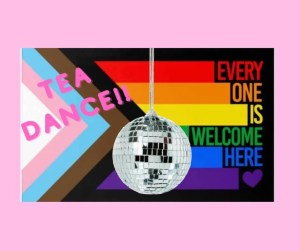
June is rapidly becoming my favorite month. We’ve been celebrating Pride all month and are doing Juneteenth. You can smell the white beans, andouille, and rice coming down the hall. I realized so many things in the last two days about this neighborhood which was developed after the Louisiana Purchase in 1812. Enjoyment was mostly possible because the tourists have gone. Temple and I danced in the streets for the third Sunday of Pride Tea. I am now a fan of Dancing Queen which I used to flip the channel to avoid back in the day.
My Dentist office defines the magic of the gumbo pot of our country. My hygienist and dentist are second generation from the South Vietnam Diaspora. The office area and the patients are racially diverse. This would have been impossible not that long ago. The second thing is I thank all of the Congress and administrations that continue to support Medicare. I do not know what I would do with out it.
We’re in the midst of an extremely long and dangerous heatwave. We cannot stop using fossil fuels fast enough. This is the second year of this and it’s not normal at all. There are so many things you can experience if you just take time to look around you and see the daily sites and people that are part of your neighborhood. I guess I should’ve spent more time reading Golden Books and watching Mister Rogers and Sesame Street. It’s all here.
 John Blake from CNN has this to say about the history of slavery that formed our country. “As the nation celebrates Juneteenth, it’s time to get rid of these three myths about slavery.”
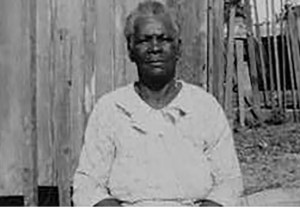
Temple “Tempie” Cummins stoically stares at the camera with her arms folded in her lap, sitting stiffly in a chair in her dusty, barren backyard with her weather-beaten wooden shack behind her. Her dark, creased face reflects years of poverty and worry.
The faded black and white image of Cummins from 1937 was snapped by a historian who stopped by her home in Jasper, Texas, to ask her about her childhood during slavery. Cummins, who did not know her exact age, shared stories of uninterrupted woe until she recounted how she and her mother discovered that they had been freed.
She said her mother, a cook for their former slave owner’s family, liked to hide in the chimney corner to eavesdrop on dinner conversations. One day in 1865, she overheard her owner say that slavery had ended, but he wasn’t going to let his slaves know until they harvested “another crop or two.”
“When mother heard that she say she slip out the chimney corner and crack her heels together four times and shouts, ‘I’s free, I’s free,’ ” Cummins told the historian, who recorded her story for a New Deal writers’ project that collected the narratives of the formerly enslaved during the Great Depression. “Then she runs to the field, ‘gainst marster’s will and tol’ all the other slaves and they quit work.”
Tempie Cummins, who was formerly enslaved, shared her story with a historian who recorded it for a New Deal writers’ project.
That story is one of the first recorded memoires of an experience that would inspire the creation of Juneteenth, an annual holiday celebrating the end of slavery that the US will commemorate this Monday. It marks the moment in June of 1865 when Union troops arrived in Texas to inform enslaved African Americans that they were free by executive decree. Many people like Cummins in remote areas of Texas and elsewhere did not know that they were free as their White owners hid the news from them.
Juneteenth has since become known as “America’s Second Independence Day.” Now a federal holiday, it will be celebrated by parades, proclamations, and ceremonies throughout the US. Though it commemorates a moment when enslaved African Americans were freed, the US is still held captive by several myths about slavery and people like Cummins.
One of the biggest myths that historians and storytellers have successfully challenged in recent years is that enslaved African Americans were docile, passive victims who had to wait until White abolitionists and “The Great Emancipator” Abraham Lincoln freed them. Black soldiers, for example, played a pivotal role in winning the Civil War. This new understanding of slavery has led to a rhetorical shift: It’s no longer proper to refer to people like Cummins as simply “slaves.”
“There’s been a shift in the historical community attempting to not define the period or the people by what was done to them in the sense that their identity becomes a noun, a slave, but rather that they are that they were in the process of being enslaved,” says Tobin Miller Shearer, a historian and director of African American Studies at the University of Montana.
“There were slavers who did that to them,” he says, “but there’s more to their identity than what was being done to them.”
Yet other myths about slavery persist, in part, because of the sheer enormity and brutality of slavery.
“The enslavement of an estimated ten million Africans over a period of almost four centuries in the Atlantic slave trade was a tragedy of such scope that it is difficult to imagine, much less comprehend,” Albert J. Raboteau wrote in “Slave Religion: The ‘Invisible Institution’ in the Antebellum South.”
 So many events in our Country’s history are shameful. Covering them up only serves the same masters who want to keep every one who is not like them oppressed and worse off or in a form of servitude.
In 1838 Cherokee people were forcibly moved from their homeland and relocated to Indian Territory, now Oklahoma. They resisted their Removal by creating their own newspaper, The Cherokee Phoenix, as a platform for their views. They sent their educated young men on speaking tours throughout the United States. They lobbied Congress, and created a petition with more than 15,000 Cherokee signatures against Removal. They took their case to the U.S. Supreme Court, which ruled that they were a sovereign nation n Worcester vs. Georgia (1832). President Andrew Jackson ignored the Supreme Court decision, enforced his Indian Removal Act of 1830, and pushed through the Treaty of New Echota.
In 1838 Cherokee people were forcibly taken from their homes, incarcerated in stockades, forced to walk more than a thousand miles, and removed to Indian Territory, now Oklahoma. More than 4,000 died and many are buried in unmarked graves along “The Trail Where They Cried.”
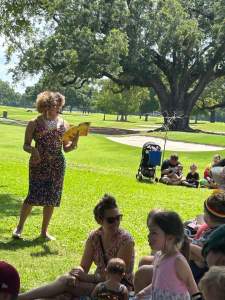
Vanessa Carr Kennedy (My Dear Friend)
Drag Queen Story Time at Longview Gardens Family Day. Note, no children, or parents were harmed in the filming of this movie.
A lot of this history has the same roots. “Opinion: The Supreme Court is making religion an all-purpose excuse for ignoring the law. First it was wedding cakes, and now it’s wedding websites. Conservatives who oppose same-sex marriage are testing the line between religious freedom and unlawful discrimination.” This is from the L.A. Times and Xiao Wang. Remember, there are Evangelical Christians that support genocide in this case and likely for others.
Looking for a federal law to be declared unconstitutional? Religion may well be your best bet — and that’s true regardless of how “real” your religious beliefs are.
That’s part of the thinking behind one case the Supreme Court heard this session and will resolve soon. In 303 Creative vs. Elenis, the court is considering the constitutionality of a Colorado statute prohibiting most businesses from discriminating against LGBTQ+ customers. Lori Smith, a Christian webpage designer, had wanted to expand into the wedding website business — but only for opposite-sex couples, a plan that would have violated the Colorado law at issue. Her lawyers made the case on free speech grounds, but given Smith’s religious beliefs, “religious freedom” represents an undeniable backdrop to the suit.
The 303 Creative case is no outlier. Religion-based claims have proliferated in recent years, and plaintiffs have often won because courts have almost invariably found their religious beliefs to be sincerely held. Meanwhile, the burden of proof for the government — that it is not unduly interfering in religious practice — has become much harder to prove.
A string of recent Supreme Court cases demonstrates how religion offers litigants a ready path to disobey laws without consequence. In the 2021-22 term alone, the Supreme Court decided several high-profile cases that affirmed religion’s supremacy.
In Kennedy vs. Bremerton School District, the justices determined that a high school football coach could not be placed on leave for violating a rule against public prayer. In Carson vs. Makin, it held that Maine was constitutionally required to subsidize religious schools. And in Ramirez vs. Collier, it postponed the execution of an inmate after he asked, at the 11th hour, that his pastor lay hands on him — despite having previously explicitly disclaimed the same form of relief.
Then, in a narrow 5-4 decision last September, the court left in place a New York state court decision requiring Yeshiva University to recognize an LGBTQ+ student group over the school’s purported religious objections. Ruling on technical grounds, the majority directed the university to first seek relief in state court. But four dissenting justices would have granted review to vindicate the university’s 1st Amendment rights — and those justices say that the university would “surely” win if the case comes back up, after state proceedings conclude.
How did these results come to be?
In the conventional understanding, religious exercise was cast off as an almost disfavored right. Courts were, historically, generally willing to let the government prevail whenever public policy and religion came into conflict. Now though, when the court says that government action affecting religious exercise must satisfy “strict scrutiny” — a notoriously difficult burden — it actually means it.
But that’s not the full story. Courts aren’t just making it harder for the government in these cases; they’re also making things easier for plaintiffs.
Plaintiffs must in theory show that their religious beliefs are sincerely held before strict scrutiny can kick in. This requirement dates to a 1944 decision, United States vs. Ballard, which for many years served as an effective gatekeeper against cries of “religion” casually trumping the law.
But in practice, this requirement has been hollowed out since at least the early 1990s.
 How is it that so many of us–to include women–so definitely way up over 50% are now being subjected to disenfranchisement and not included. Meanwhile, we’re stuck in this Rule of Law Soap Opera because a bunch of idiots who voted for this man and set up laws to disenfranchise us. They also stacked courts so that the government has more say in what happens with women’s bodies than we do. How is this the land of the Free?
This is from The Hill. I pity judges who have to order things that any lawyer should stop his client from doing as a normal party of a case. “Judge orders Trump not to disclose evidence in documents case.”
A federal magistrate judge Monday agreed to a motion from the Justice Department to block former President Trump from disclosing information relating to the Mar-a-Lago case, after prosecutors said the investigation remains ongoing.
The order sides with the Justice Department in allowing Trump to see evidence collected in the case — including classified documents — but only in the presence of his attorneys.
It also blocks him from disseminating any information from the case with reporters or on social media, mirroring a similar order agreed to in the hush money case being prosecuted by authorities in New York.
“Defendants shall only have access to Discovery Materials under the direct supervision of Defense Counsel or a member of Defense Counsel’s staff. Defendants shall not retain copies of Discovery Material,” Judge Bruce Reinhart, who approved the warrant to search Mar-a-Lago, wrote in the order.
The Justice Department in its Friday request said that restrictions were required, as its investigation could yield additional arrests.
“The materials also include information pertaining to ongoing investigations, the disclosure of which could compromise those investigations and identify uncharged individuals,” the department wrote.
Now is the time for us to stand together.
Happy Freedom Day! Independence Day comes up next! Do you know where your civil liberties and civil rights are going?
What’s on your reading and blogging list today?
Sunday Reads
Posted: June 5, 2016 Filed under: 2016 elections | Tags: Bernie Sanders, Dead Enders for Bernie, Donald Trump, Hillary Clinton, Pride, Racism, Sexism 73 Comments
Good Afternoon!
The U.S. Virgin Islands gave Hillary Clinton all of their seven delegates and one super delegate for the Democratic Convention. Clinton should have the nomination sewed up by Tuesday after the New Jersey polls close. The lead over Senator Bernie Sanders was commanding. Remember, we will be there with a live blog on Tuesday night watching Herstory be made. Be sure to join us!!
Hillary Clinton scored a sweeping win in the U.S. Virgin Islands on Saturday, picking up all seven pledged delegates at stake as she inched tantalizingly close to the Democratic nomination.
She is now just 60 delegates short of the 2,383 needed to advance to the November general election.
The party said Clinton won 84.2 percent of the vote, while Bernie Sanders earned 12.2 percent. Under Democratic National Committee rules, a candidate must win at least 15 percent of the vote to be eligible to receive delegates.
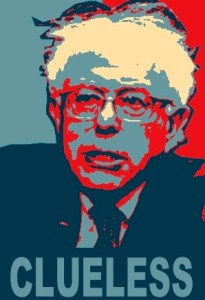
The gadfly senator continues to display narcissism and should be disabused of his grandiose idea that the majority of voters, Democrats, or super Delegates consider him fit for office. The press is finally beginning to describe him as delusional but continues to provide him with a public platform given that his supporters are showing up at events where violence and intimidation eventually occur. Among the many things Sanders appears completely devoid of knowledge is the idea of a “contested convention”.
Bernie Sanders urged news organizations on Saturday to hold off on declaring a victor in the Democratic presidential race following Tuesday’s primaries and vowed to soldier on to the party’s convention in July.
Sanders comments come as his rival, Hillary Clinton, is poised to effectively clinch the nomination following the close of the polls Tuesday in California, New Jersey, and four other states.
But the Vermont senator insisted that the delegate count is fluid. And he expressed confidence that he could persuade some “super delegates”— the party leaders who are not locked into voting for a particular candidate — to peel away from Clinton in the “six long weeks” before Democrats gather in Philadelphia.
“Now, I have heard reports that Secretary Clinton has said it’s all going to be over on Tuesday night. I have heard reports that the media, after the New Jersey results come in, are going to declare that it is all over. That simply is not accurate,” Sanders said at a news conference here.
Sanders then added, with emphasis, that the “Democratic National Convention will be a contested convention.”
 He is the very definition of a sad, old man these days. Sanders truly needs to think about how he will be remembered, if at all, in the future and what kind of legacy he thinks he’ll be leaving with his brief foray into the national spotlight.
Clinton appeared on “This Week” this morning . I’m linking to the full transcript here in case you missed it. Clinton is clearly focused on the Republican nominee.
STEPHANOPOULOS: Your supporters have been pretty fired up in the last couple of days as you’ve been taking it to Donald Trump and you also step it up, using words like “demagogue” and “dictator.”
Have you concluded that the best way to beat Donald Trump is to be a bit more like him?
CLINTON: No, not at all. I laid out in my speech in San Diego the crux of my concerns and my case against him on foreign policy and national security.
And a lot of what he says plays into what I consider to be a very divisive and dangerous view of the world. And I think it’s important that we call it for what it is.
STEPHANOPOULOS: You’ve also said that he’s temperamentally unfit to be president and, in that speech, you said you’re going to leave it to the psychiatrists to explain his affection for tyrants.
Are you suggesting that he’s mentally unstable?
CLINTON: Well, no, I’m suggesting exactly what I said, that he’s temperamentally unfit. He doesn’t really have ideas. He makes bizarre rants and engages in personal feuds and outright lies.
He does apparently seem to have very thin skin and I think that those kinds of attributes, that temperament, is ill-suited for someone to be our president and commander in chief.
And he’s already, as I recited in my San Diego speech, on record on so many issues that run counter to what Democrats, Republicans alike over many decades have thought was in America’s interests in accordance with our values.
And that, to me, is cause for concern.
STEPHANOPOULOS: What’s the biggest danger coming from his temperament?
CLINTON: I think he engages in so much scapegoating and finger-pointing and he is someone who doesn’t tell the truth. He doesn’t seem to be bothered by the constant inherent contradictions.
I said that he had said that he would not mind having other countries have nuclear weapons, including Korea, Japan, Saudi Arabia. He said he didn’t. A lot of news outlets, of course, easily pulled up the video of him saying all of that.
His unpredictability, his putting everything in highly personal terms has rattled — and that’s the word President Obama used — has rattled our closest allies, has caused a lot of serious concern around the world, because people are not used to seeing anyone, a Republican or a Democrat, running for president, who is so loose with the truth, so divisive and so dismissive of very legitimate concerns about safety, security, our values and who we are as a nation.
STEPHANOPOULOS: As you know, he said several times over the last few days that he thinks you should be going to jail over the e-mail issues and on “Face the Nation” he’s just given an interview to John Dickerson, where he said he would look at this when he becomes president. Listen.
(BEGIN VIDEO CLIP)
TRUMP: I would have my attorney general look at it because everyone knows that she’s guilty. Now I would say this, she’s guilty but I would let my attorney general make that determination. Maybe they would disagree.
(END VIDEO CLIP)
STEPHANOPOULOS: Your response?
CLINTON: Well, it’s a typical Trumpism. And I don’t have any response, you know; when he attacks me, I am not going to respond.
But I think it is in keeping with his very vicious public attack against the judge, the federal judge, who is hearing the case against so-called Trump University, a judge who has an impeccable record as a prosecutor, who actually spent, as I’m told, nearly a year in hiding because of threats from criminal drug cartels against his life, who was appointed first by the Republican governor of California, Governor Schwarzenegger, then appointed by a Democratic president, President Obama, because of his extraordinary legal record.
And what Trump is doing is trying to divert attention from the very serious fraud charges against Trump University, that have basically been confirmed by some of the highest officials who worked with him.
So this is typical. He does have that thin skin and, you know, Judge Cureil is as American as I am and certainly as American as Donald Trump is. And Trump’s continuing ethnic slurs and rants against everyone, including a distinguished federal judge, I think makes my point rather conclusively.
 Trump continues to insult every one while trying to pander. This week we learn that the women working for his campaign earn less than than the men.
Donald Trump has paid men on his campaign staff one-third more than women, while Hillary Clinton has compensated men and women equally, according to a Globe analysis of payroll data for both campaigns.
Trump’s campaign staff is also far less diverse than that of his likely Democratic opponent. Only about 9 percent of his team are minorities, compared with nearly a third of Clinton’s staff.
The Globe analyzed the payroll for both campaigns for April, the most recent month with publicly available data. The snapshot provides clues as to how the aspiring Oval Office occupants might fill a White House team, and to what extent they include people with diverse viewpoints in the inner workings of their organizations.In an election that is already focused on gender — including Clinton’s quest to be the first female president and Trump’s accusations she is playing the “woman card’’ — the payroll differences stand out.
This story slays me. It’s probably one of the most typical Trump moves we’ve seen to date in the election. Trump used a picture of a random black family to show that he does have support from the African American community. The family is incensed.
At a Friday afternoon rally in California, Trump sought to highlight his support from minorities.
“Look at my African-American over there,” he shouted.
He seems to have made things worse, with many noting that his phrasing implied ownership over the man.
One of the major hurdles for Donald Trump to win the presidency is his deep unpopularity among non-white voters. A recent survey found Trump is viewed unfavorably by 86% of black voters and 75% of Latinos.
Trump’s comments about the African American man came after reiterating his belief that a federal judge should be disqualified from presiding over the Trump University fraud case because of his “Mexican heritage.” (The judge was born in Indiana.)
This morning on Twitter, Trump was back at it, highlighting the support of an African-American family.
The father has made it clear that the family does not support Trump.
Speaking to BuzzFeed News, the parents in the photo — Eddie and Vanessa Perry — said they are not Trump supporters. They aren’t endorsing or publicly supporting anyone. Eddie Perry called Trump’s use of the photo “misleading” and “political propaganda.”
Clearly, Trump has gotten away with so many lies and he is such a disturbed person that he thinks he can do anything and get a way with it.
I’d like to point out the artist of the next few pictures who takes pictures of candidates and turns them into clowns. They’re pretty funny. Will Espada has done a great job with all the Republican candidates. Go take a gander at the others.
So, I wanted to end with another Hillary story. This is about Hillary and the Pride movement. Clinton has written a think piece for CNN on her policies and hopes for the community.
So the stakes in this election are high. And even if we do prevail against the open bigotry of Donald Trump, we’ll still have our work cut out for us.We need to pass the Equality Act, to ensure full federal equality for LGBT Americans.We need to continue to fight discrimination at all levels of government and in all 50 states, as I did at the State Department, where we strengthened the department’s policies on anti-discrimination, worked with global advocates and other stakeholders in encouraging countries to decriminalize same-sex relationships and supported policies that extended benefits and additional protections to LGBT individuals.And we need to tackle the intersectional pressures that make life even harder for many of our fellow human beings. In particular, acts of violence against transgender women of color continue to be reported at an alarming rate. It’s an emergency, and we need to treat it like one.This issue is important to me. As secretary of state, I fought to make it possible for transgender Americans to have their true identities reflected on their passports.And as president, I’ll fight for the rights of transgender people, because no one should be harmed or mistreated for being who they are.Not long ago, I met a mom from New York named Jodie Patterson. Her youngest child, Penelope, was uncomfortable early on acting, dressing or being treated like a girl. “I don’t feel like a boy,” Penelope said. “I am a boy.”So Jodie let him be who he knew he was. Today, he’s a happy little boy named Penel who loves soccer and karate. But Penel’s mom worries about his future. She dreads how he will handle puberty, and whether kids in school will be kind or cruel. And she wonders how he will find his place in the world, when there’s so much hostility toward people like him.Kids like Penel are why all of us do what we do. They are why we fight for an America where every child is supported and loved for who they are, and nothing stands in the way of what they can become.

Today, I celebrate the fact we will have our first woman candidate for President on a major party ticket within a few days. Tomorrow, it will be up to each one of us to see that President Hillary Clinton becomes a reality and that Donald Trump is sent back to the Trust Fund Farm.
What’s on your reading and blogging list today? Remember, this is an open thread!!!

 peej
peej Carissa
 bostonboomer
 dakinikat
 ecocatwoman
 mablue2
 Mama Lopez
 peggysue22
 quixote
 skydancingguestblogger
 Mona (aka Wonk the Vote)



 Sky Dancing
Recent Comments