
Lazy Saturday Reads: Russia News
Posted: August 11, 2018 Filed under: Afternoon Reads, U.S. Politics | Tags: American institutions, corruption, Donald Trump, Emails, Hillary Clinton, Julia Davis, Matt Tait, Michael Flynn, Paul Manafort, Peter Smith, Robert Mueller, Russia investigation, Russian state TV, Suicide, Vitaly Tretyakov 16 Comments
The Athenaeum – Thérèse Reading in the Park at Meric (Jean Frederic Bazille)
Good Afternoon!!
Remember Peter Smith, the guy who was trying to help the Trump campaign get Hillary Clinton’s emails? He ended up supposedly committing suicide in a Minnesota hotel room in July, 2017, shortly after he was interviewed by Shane Harris of The Wall Street Journal. After the story broke, Matt Tait published an article at Lawfare about his involvement in the story. Today Buzzfeed News reporters Jason Leopold and Anthony Cormier have a new story on Smith: GOP Operative Made “Suspicious” Cash Withdrawals During Pursuit Of Clinton Emails.
In one of the most intriguing episodes of the 2016 presidential campaign, Republican activist Peter W. Smith launched an independent effort to obtain Hillary Clinton’s emails to help defeat her and elect Donald Trump. His quest, which reportedly brought him into contact with at least two sets of hackers that he himself believed were Russian, remains a key focus of investigations into whether the Trump campaign colluded with the Kremlin.
Now, BuzzFeed News has reviewed documents showing that FBI agents and congressional investigators have zeroed in on transactions Smith made right as his effort to procure Clinton’s emails heated up. Just a day after he finished a report suggesting he was working with Trump campaign officials, for example, he transferred $9,500 from an account he had set up to fund the email project to his personal account, later taking out more than $4,900 in cash. According to a person with direct knowledge of Smith’s project, the Republican operative stated that he was prepared to pay hackers “many thousands of dollars” for Clinton’s emails — and ultimately did so….
Maxwell Doig
The money trail, made public here for the first time, sheds new light on Smith’s effort, in which he told people he was in touch with both Russians on the dark web and Trump campaign officials — particularly Michael Flynn, who was then a top adviser to the Trump campaign and later served as national security adviser before having to resign after misleading White House officials about his meetings with the Russian ambassador to the United States.
Intelligence agencies have given the FBI information that Russian hackers talked about passing Clinton’s emails to Flynn through a cutout, according to two law enforcement officials with direct knowledge of the matter. It is not known if that cutout was in any way connected to Smith.

Smith claimed that the Russians had hacked Hillary’s private server and he was determined to get his hands on the emails.
Smith assembled a group of people including experts in technology, lawyers, and even a Russian-speaking investigator to figure out how to obtain Clinton’s emails, according to the Journal. On the Friday before the Labor Day weekend, Smith incorporated a company called KLS Research. In a proposal Smith put together describing the effort to obtain the emails, he named the company as the “preferred vehicle” for the research into Clinton’s email, and Smith would tell Tait that KLS Research would also help “avoid campaign reporting.”
Smith and his longtime business partner, John Szobocsan, were the two signers for a bank account linked to KLS Research….
Soon after Labor Day, Smith appears to have finished an operational plan, which included the names of top Trump campaign officials, some of whom have denied speaking with Smith anytime during the campaign. Smith’s report is dated Sept. 7.
Girl in Green by Sara Hayden (1862–1939), American
The next day, Smith withdrew $9,500 from the KLS Research account and deposited it into his personal bank account, both held at Northern Trust. From there, Smith took out a little more than $4,900 in cash and sent checks to an accountant and an LLC controlled by a private real estate company. Later in September, Smith made withdrawals of $500 and $700 from KLS Research.
These transactions came to light after Northern Trust received a subpoena from the FBI for Smith’s records last December. The subpoena specifically sought information about the $9,500 withdrawal from KLS Research’s account.
After scouring nine accounts that Smith controlled, Northern Trust turned over documents showing 88 suspicious cash withdrawals totaling about $140,000 between January 2016 and April 2017, including a $3,000 withdrawal six days after the election. Northern Trust found these transactions suspicious because officials could not determine the purpose of the withdrawals and because some of them took place over the time Smith was engaged in his project to obtain Clinton’s emails. Many of the cash transactions, the bank noted, were less than $10,000, small enough not to trigger an automatic alert to the government. After receiving the subpoena, the bank sent a report to Treasury’s financial crimes unit, which shared its findings with the FBI, special counsel Robert Mueller, and Senate Intelligence Committee investigators.

The story reports that “three US law enforcement officials” confirmed that Smith is still “an important figure” in the investigation and that Mueller’s investigators have interviewed people involved with Smith. I wonder if Mike Flynn is helping out with this aspect of the investigation?
Head over to Buzzfeed News to read the rest of the story.
Lawfare has a lengthy post up about the Buzzfeed story: Peter Smith’s Search for Hillary Clinton’s Emails: The Subplot Thickens. Here’s just a taste:
On its own, the Buzzfeed story might not be a groundbreaking development. But the article doesn’t stand alone. It comes in the wake of Mueller’s indictments of Russians involved in the Kremlin’s social media manipulation operation and, more importantly for present purposes, the hacking and leaking of Democratic Party materials during the 2016 campaign. In that context, it is highly significant that Buzzfeed reports that Smith’s efforts are actively being investigated by the special counsel’s team. Not only has Mueller’s team interviewed “people who Smith tried to recruit and others who worked on his operation to obtain Clinton’s emails,” it has also “tried to determine if [former national security adviser Michael] Flynn assisted Smith in his operation”—a question that Smith’s possible payments to hackers are “key” to answering, Buzzfeed writes.
Louis Buisseret (1888-1956, Belgian) Contemplation 1938
So how do the facts reported in the Peter Smith stories, particularly Buzzfeed’s latest, line up with Mueller’s indictments? Mueller’s allegations describe, in detail, a complex Russian conspiracy to shape the 2016 U.S. elections—a conspiracy that involved an influence operation conducted on social media, the publication of hacked information, and outreach to a person in contact with the Trump campaign, reportedly Roger Stone.
The Peter Smith stories—between the Journal’s reporting, Tait’s Lawfare account and the latest report from Buzzfeed—describe another plot, one that took shape on this side of the Atlantic. Whether this second plot amounts to a conspiracy is a legal question beyond the scope of this post, but it appears to have involved, at a minimum, an agreement among a number of actors to obtain illegally hacked emails, perhaps by buying them. Tait wrote that he specifically warned Smith that the person purporting to have Clinton’s emails was likely part of Russia’s campaign against the United States and that Smith didn’t care about the source, as long as he got the emails. So it’s certainly plausible that the Smith operation also involved a conspiracy of some sort.

Meanwhile, Russian state TV is getting more and more blatant about Putin’s influence on Trump. Raw Story: Russian state TV warns Trump to ‘do what we say’ if you want ‘support in the elections.’
Julia Davis, who runs the Russian Media Monitor website, reports via Twitter that news show “60 Minutes” this week held a panel discussion about actions Russia should take to retaliate against the latest round of American sanctions.
Vitaly Tretyakov, the dean of the Moscow State University’s School of Television, argued that the Russian government should use whatever leverage it had over Trump to bend the president to its will.
“Let’s turn this into a headache for Trump,” he said, according to Davis’ translation. “If you want us to support you in the elections, do what we say.”
At The Washington Post, Anne Applebaum asks if American institutions are really strong enough to stop Trump: Are you still sure there’s no need to worry?
William Moore Davis (1829 – 1920, American)
“Don’t worry, the institutions will stop him.” Or: “Don’t worry, he hasn’t done any real damage yet, the institutions have stopped him.” How many times have you heard some version of this analysis since the election of President Trump? Sometimes, the speaker is an optimist, someone with faith in the U.S. Constitution. Sometimes, the speaker is a skeptic, someone who dislikes the alleged “hysteria” of those who think Trump’s corrupt habits, autocratic language and authoritarian behavior are doing lasting damage. Either way, they are reassured, and reassuring: Congress will stop him. The judiciary will stop him. The FBI, the Republican Party, the Constitution will stop him. Don’t worry.
But America’s federal institutions are not the only ones designed to prevent someone like Trump from undermining the Constitution. We have other kinds of institutions, too — legal organs, regulatory bodies, banks — that are supposed to prevent men like Trump from staying in business, let alone acquiring political power. The truth is that many of these equally important American institutions failed a long time ago. Trump is not the cause of their failure. He is the result.

One example: Paul Manafort.
Here is a man who is alleged to have declared income as “loans,” concealed foreign bank accounts and lied about money that Ukrainian oligarchs were paying him via shell companies in Cyprus. For decades, in other words, U.S. law enforcement institutions were unable to spot the money-laundering, tax evasion and fraud that his partner Rick Gates spent several hours describing, even when carried out by a prominent person. As long ago as 1985, Manafort’s name featured in Jacob Weisberg’s still-famous New Republic cover story about Roger Stone, then his consulting partner. The headline: “The State-of-the-Art Washington Sleazeball.”
Summer (c.1958). Donald Moodie (British, 1892-1963)
For decades, Manafort’s “political consultancy” has helped crooks and autocrats retain power. But even leaving aside the question of morality: Why wasn’t Manafort put out of business for suspected fraud years ago? Did the police not have the resources? The motivation? Whatever the reason, here, for the optimists and skeptics, is a clear institutional failure: A society allegedly obsessed with “law and order,” so much so that it has the highest incarceration rates in the world, couldn’t be bothered to investigate a famously sleazy man who was spending hundreds of thousands of dollars on antique rugs and men’s suits in Northern Virginia.

And what about Trump’s career?
Nearly 40 years ago, in 1980, Trump employed 200 illegal Polish workers to destroy the Bonwit Teller department store, a historic building on Fifth Avenue, to make way for what would become Trump Tower. The men earned half the union wage and worked 12-hour shifts without hard hats; at one point, their contractor stopped paying them. Eventually they sued. In 1998, Trump paid $1.375 million to settle the case.
Trump broke immigration law and employment law, and he violated union rules, too. Yet neither immigration authorities nor employment regulators nor union bosses put him out of business. Why not? Why were the terms of that settlement kept confidential? Why, with his track record, was he allowed to get a casino license? Building permits? Wall Street banks did, it is true, stop lending to him. But when he began looking abroad for cash — doing extremely dodgy deals in Georgia and Azerbaijan, for example — no one stopped him.
Read the whole thing at the Post.
What else is happening? What stories are you following?
Thursday Reads: Trump Anxiety, QAnon, and the Manafort Trial
Posted: August 2, 2018 Filed under: Afternoon Reads, U.S. Politics | Tags: Barnes & Noble, Bernie Sanders, books on anxiety and stress, House of Bijan, JFK Jr., ostrich jacket, Paul Manafort, QAnon, Rick Gates, Tad Devine, Trump anxiety disorder 27 Comments Good Afternoon!!
Ever since my mom had her stroke, I’ve been struggling more than ever in dealing with Trump news. When I sit down to write a post, I feel paralyzed by feelings of fear, dread and disgust. The only thing that keeps me going is knowing that I’m not alone. I think the majority of Americans are feeling something like this even if they’re not following the news as closely as we do.
NBC News: Barnes & Noble says sales of books related to anxiety are soaring. Here’s why.
Shoppers are increasingly looking at workbooks that help them cope with anxiety, Barnes & Noble senior director of merchandising, Liz Hardwell, said in a statement issued Wednesday afternoon. Although times may be tough, wrought with political tension, “the good news is that book buyers across the country are also looking for solutions to their stress,” she said.
Top-selling titles, based on the bookseller’s sales data, include “The Anxiety & Phobia Workbook” by Edmund Bourne, “The Anxiety Toolkit: Strategies for Fine-Tuning Your Mind and Moving Past Your Stuck Points” by Alice Boyes, and “The Anxiety and Worry Workbook: The Cognitive Behavioral Solution” by David Clark and Aaron Beck.
New York-based Barnes & Noble…said the state of California has had the largest increase in interest in anxiety books in stores over the past year. The next largest increases were in Michigan and Massachusetts. Meanwhile, shoppers in Texas, North Carolina and Florida had the biggest decrease in interest in anxiety books, according to the bookseller’s sales data.
That has to be related to Trump, right? The highest interest books about anxiety is in blue states and the lowest in red states.
Of course the Trumpists have their own sources of anxiety, but their fears are based on fake “news.” I tried to read this Washington Post article yesterday, and had to stop for fear my head would explode: The mystery of ‘Q’: How an anonymous conspiracy-monger launched a movement (if the person exists).
From somewhere in the vast and mysterious “deep state,” a dissident agent rises up to give the people cryptic clues about how their heroic president will push back the forces of evil and make America great again. The renegade informant is known only as “Q,” and if such a person actually exists, it’s not in a movie, but somewhere in the Washington bureaucracy.
Energized by Q’s complex web of conspiracy notions about the forces aligned against President Trump, Q’s followers have spread virally both online and now out in real life, too, forming a movement known as QAnon that is making itself visible at Trump’s rallies and other public gatherings.
QAnon is something old — the latest in a string of conspiracy ideas that take hold of the public’s imagination in times of social stress and technological change. And QAnon is something new — a leaderless popular movement made up of people who believe in no one and therefore are willing to believe almost anything.
Apparently, these Q people think they are getting secret messages from things Trump says or does.
To believers, Q is a pseudonym for a well-placed U.S. government agent who is posting online distress messages and bits of intel, known as “bread crumbs,” in an effort to save the country — and Trump — from hostile forces within the government. Q’s missives started appearing last October on 4chan, the mostly anonymous website where fringe ideas incubate and blossom.
In messages written in a telegraphic, cryptic style, Q called on Americans to rally behind Trump as he planned a counteraction against forces that would investigate him and remove him from office. Some QAnon followers believe Trump himself inspired their movement with a comment he made last October at a photo session with military leaders. The president pointed to the officers’ uniforms and said, “You know what this represents? Maybe it’s the calm before the storm.”
In far-flung corners of the Internet, some speculated that that storm was a counterstrike against the deep state. Then along came Q to turn that speculation into concrete predictions — of the arrest of Hillary Clinton, of a roundup of anti-Trump liberals, of a crackdown on child-sex-trafficking rings.
There’s much more at the link, if you can manage to wade through all the crazy. These people are turning up with their Q signs and T-shirts at Trump rallies, as you could see in the news coverage of the Tampa rally this week.
This story at the Daily Beast is really wacky: QAnon, the Pro-Trump Conspiracy Theorists, Now Believe JFK Jr. Faked His Death to Become Their Leader.
Believers in the bizarre pro-Trump conspiracy theory called QAnon were out in force at the president’s rally in Tampa, Florida on Tuesday, waving signs and cut-outs of the letter “Q” in front of the television cameras.
Trump points at a man in a Q shirt at a Duluth, MN rally.
The surprisingly large number of Trump supporters who believe in the off-the-wall conspiracy theory and the attendant media attention marks a new height for QAnon, which grew from the internet swamps of 4Chan and 8Chan….
For QAnon believers, special counsel Robert Mueller isn’t really investigating the Trump campaign—he’s actually working with Trump to take down a cabal of deep-state plotters and pedophiles. Soon, QAnon fans believe, Trump will team up with the military to throw top Democrats like Hillary Clinton and Barack Obama into Guantanamo Bay.
But what QAnon believers actually believe is constantly changing. After taking advantage of the murder of DNC staffer Seth Rich and promoting dangerous ideas like Pizzagate, QAnon supporters have found a new tragedy to exploit: the death of John F. Kennedy Jr., son of the late president.
Until July, QAnon supporters believed that “Q,” the anonymous online forum poster whose cryptic clues make up the conspiracy theory, was a high-ranking Trump administration official, or maybe even Trump himself. But now, a good portion of QAnon believers have become convinced that Q is none other than JFK Jr, even though he died in a plane crash nearly 20 years ago.

Click on the link to read the rest.
In other news, today is day three of the first Paul Manafort trial. Some interesting reads:
Franklin Foer at The Atlantic: A Hell of a Performance by Paul Manafort.
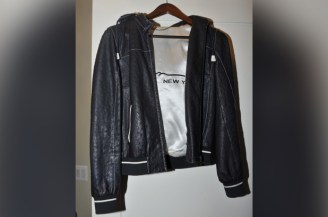
A week ago, while lawyers futzed with pretrial motions, Manafort arrived in court wearing a green jumpsuit. But the trial is the show of his lifetime. His oversize frame is once again permitted to occupy a suit—a fact that everyone in the courtroom incessantly noticed, given how much of the afternoon’s testimony came from his former clothiers, one of whom described submitting Manafort invoices that exceeded $800,000.
Paul Manafort’s $15,000 ostrich jacket
Whatever the outward signs that Paul Manafort is experiencing public torment, the presence of other men in tailored suits seems to have allowed Manafort to elevate himself into a strange sense of ease. The most compelling drama of the trial so far is watching Manafort comport himself. And the spectacle is pure Manafort.
He stands trial for abusing money he received as a world-renowned political consultant. Jurors have heard from witnesses who have described him as a master craftsman of public image; old colleagues have testified to his narrative gifts. These talents were so often used to smooth over the reputations of awful men—the kleptocrats, strongmen, and oligarchs whom he ingratiated with the American elite. Now, it’s his own image and his own narrative that he must manage, with an audience of expressionless jurors tucked away at the side of the room. And as the jury of his peers comes and goes from the room, Manafort makes a point of flashing his well-buffed smile. It’s the look of a man projecting confidence. It’s kind of convincing.
Foer, who has followed Manafort’s corrupt career for many years, describes a man who may believe he’ll get away with his criminality one more time:
When Special Counsel Robert Mueller’s prosecutors laid out their case in opening arguments, they correctly diagnosed Manafort’s sense of impunity. He’d kept right on scheming, they argued, because he believed that he would get away with it. Today, the presiding judge in the case, T. S. Ellis III, made a point of constantly chiding the government. He blamed prosecutors for describing Manafort’s clients as “oligarchs,” a term he called unfairly “pejorative.”
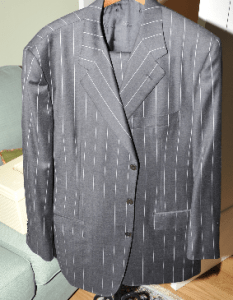
Manafort paid $12,000 for this suit from House of Bijan.
The Republican-appointed judge warned Mueller’s team against trying Manafort for “his lavish lifestyle.” As Manafort heard these arguments, I watched him from across the room. I saw him gazing ever so thoughtfully and detected a flicker of something else, too. In that moment, it wasn’t” hard to imagine him believing that he might just get away with it one more time.
Read the whole thing at The Atlantic.
TPM has posted photos of Manafort’s Fancy Clothes, Including The Ostrich Jacket.
If there was anything prosecutors at Paul Manafort’s trial were trying to impress on the jury Wednesday, it’s that he liked to spend money wired from his foreign bank accounts on fancy things — items that could not conceivably be considered business expenses and thus tax deductible.
Things like a $21,000 Limited Edition black titanium Royal Way watch with crystal, a Mercedes Benz for his wife, and a $15,000 jacket made of ostrich. Judge T.S. Ellis was not a fan of the prosecution’s focus on Manafort’s lavish lifestyle, and would often cut off questioning if it delved too into the details of the luxury items Manafort was purchasing, allegedly with income he failed to discloAse on federal tax forms and money he wired from foreign bank counts that he didn’t report to the U.S. government….
Luckily, photos of Manafort’s high-end apparel, taken during a FBI raid of his home last summer, were made public by Special Counsel Robert Mueller Wednesday.
Check out the photos at TPM.
Yesterday, prosecutors said they weren’t sure they would call Rick Gates as a witness. Today they announced that he will appear. Again, from TPM:
A day after giving a coy answer to the judge about whether it would call Rick Gates as a witness, the prosecution confirmed Thursday that the plan remains for Gates to testify in the ongoing Virginia trial of former Trump campaign chairman Paul Manafort.
Rick Gates
“We have every intention to call him as witness,” prosecutor Greg Andres said in court before the jury was ushered into the room.
For months, Gates has been shaping up to be the key government witness in the case, after he agreed in February to cooperate with investigators. Gates was a longtime protege of Manafort’s, and was originally indicted with him by separate federal grand juries in Virginia and Washington, DC.During opening statements, Manafort’s lawyer signaled his defense would largely be built on not only tearing down Gates’ credibility but pinning the blame for alleged financial misdeeds on Gates, including claiming that Gates embezzled money from Manafort.

One more Manafort-related article by Dana Millbank: The deep cynicism of Bernie Sanders’s chief strategist.
Tad Devine, during his run as chief strategist for the Bernie Sanders presidential campaign, railed against the corrupting influence of money in politics.
He repeatedly echoed the Sanders message that “our economy is rigged,” that “special interests” buy politicians, that “all of the new wealth is going to the top of America,” that there is a “corrupt system of campaign finance” of which Hillary Clinton offered an “egregious” example. Sanders, by contrast, “supported the little guy.”
Bernie Sanders and Tad Devine
Those who heard Devine’s interviews and watched his Sanders TV ads therefore may be surprised to know that, in the years and months leading up to the Sanders presidential campaign, Devine was making gobs of money to secure the election of one of the world’s most corrupt political figures and then his allies.
Thanks to Robert S. Mueller III’s prosecution of Paul Manafort, the former Trump campaign chairman and sometime business associate of Devine, we now have an unusual glimpse into the role the Democratic ad man had in electing and preserving the power of Ukraine’s Viktor Yanukovych, a crooked pro-Putin autocrat. Though American political consultants routinely rake in cash from foreign leaders — even shady ones — Devine’s seamless pivot from advocate for antidemocratic thug to champion of a principled democratic reformer shows extraordinary flexibility.

Of course we all knew Bernie was fraud all along; I wonder if the media will ask him to rationalize his choice of Devine to run his 2016 campaign?
What else is happening? What stories are you following today?
Tuesday Reads: Russia Russia Russia
Posted: June 5, 2018 Filed under: Foreign Affairs, morning reads, U.S. Politics | Tags: Donald Trump, Hapsburg group, Konstantin Kilimnik, Paul Manafort, Rick Gates, Robert Mueller, Vladimir Putin, witness tampering 30 Comments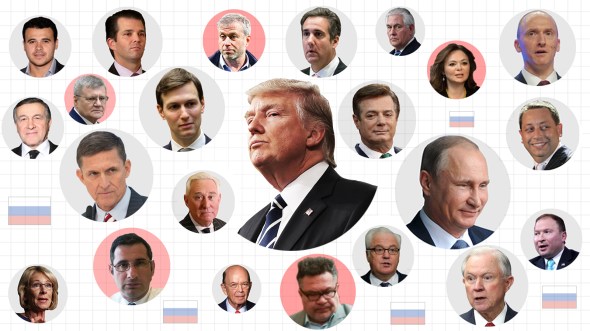
Good Morning!!
There has quite a bit of breaking news on the Russia investigation front this week, and it’s only Tuesday. We learned last night that Paul Manafort tried to suborn perjury from witnesses in his case. Perhaps that’s why Trump has been madly tweeting about Manafort and the investigation generally.
The Washington Post: Mueller accuses Paul Manafort of witness tampering.
Federal prosecutors accused former Trump presidential campaign chairman Paul Manafort of witness tampering late Monday in his criminal case and asked a federal judge to consider revoking or revising his release.
Prosecutors accused Manafort and a longtime associate they linked to Russian intelligence of repeatedly contacting two members of a public relations firm and asking them to falsely testify about secret lobbying they did at Manafort’s behest.
The firm of former senior European officials, informally called the “Hapsburg group,” was secretly retained in 2012 by Manafort to advocate for Ukraine, where Manafort had clients, prosecutors charged.
Konstantin Kilimnik
In court documents, prosecutors with special counsel Robert S. Mueller III allege that Manafort and his associate — referred to only as Person A — tried to contact the two witnesses by phone and through encrypted messaging apps. The description of Person A matches his longtime business colleague in Ukraine, Konstantin Kilimnik.

So Manafort could soon be headed for jail unless he decides to cooperate with Mueller. Read the rest at the WaPo. Some commentary:
John Cassidy at The New Yorker: More Legal Trouble for Paul Manafort—and Donald Trump.
Coincidences do happen, but this seems to be an unlikely one. On Sunday morning, seemingly apropos of nothing, Donald Trump posted a messageon Twitter that stated the following: “As only one of two people left who could become President, why wouldn’t the FBI or Department of ‘Justice’ have told me that they were secretly investigating Paul Manafort (on charges that were 10 years old and had been previously dropped) during my campaign? Should have told me!”
Even by Trump’s standards, this message seemed a bit weird. A few minutes later, the President posted another one, which said, Paul Manafort came into the campaign very late and was with us for a short period of time (he represented Ronald Reagan, Bob Dole & many others over the years), but we should have been told that Comey and the boys were doing a number on him, and he wouldn’t have been hired!”
Trump says a lot of things on Twitter, of course. But prior to this outburst, he hadn’t talked much recently about Manafort, who made millions of dollars working as a political consultant for despots around the world and is facing trial in two federal courts on charges that include money laundering, bank fraud, and failing to disclose his U.S. lobbying work for a foreign government—all of which were brought by the special counsel, Robert Mueller. Why Trump’s sudden interest? One possible inference was that the President had somehow heard that there was more bad news coming about Manafort, and he was trying to limit some of the damage in advance of its release. If that was indeed the case, we now know the source of Trump’s concern.
In a filing made in U.S. district court, in Washington, on Monday night, Mueller’s office accused Manafort, who is out on bail, of trying to tamper with potential witnesses earlier this year, and asked a judge to consider jailing him before his trial. At this stage, obviously, we don’t know how the court will rule. But Manafort is already facing considerable pressure to coöperate with the special counsel’s investigation. If the court were to revoke his freedom, this pressure would sharply increase.
Franklin Foer at The Atlantic: Paul Manafort Loses His Cool.
At the height of his powers as a political consultant, Paul Manafort was known for his cool. In fact, the value of his counsel increased at moments of crisis. While others panicked, Manafort rarely evinced a hint of frazzle. He could still think strategically, detach himself from emotion, and issue clearheaded guidance. But he could afford to keep his head at such moments, because the problems he was called on to solve belonged to others.
Robert Mueller’s allegation that Manafort attempted to tamper with a witness permits us to peer inside Manafort’s mind as it has functioned in a very different set of circumstances. When it comes to Manafort’s own deep problems—his moment of legal peril—he seems unable to muster strategic thinking. He has shown himself capable of profoundly dunderheaded miscalculations.
It’s hard to understand how he could have attempted the scheme described by Mueller in the midst of the highest-profile, most scrutinized criminal inquiry of the century. But that alone fails to capture the depths of his blundering.
Foer describes how each of Mueller’s filings in Manafort’s case has made it clear that Manafort’s every move is being closely watched by federal investigators, and yet Manafort apparently thought he could get away with contacting witnesses.
Each of Mueller’s new filings has further revealed the extent to which he is surveilling Manafort and his closest associates. A week before Manafort apparently attempted to tamper with the witness, Mueller stated plainly that he was watching their encrypted communication channels. And before that, Mueller showed that he was keeping tabs on Manafort’s email when he exposed an op-ed that Manafort had ghostwritten in his own defense, in violation of a judge’s gag order.
If we look back on Robert Mueller’s strategy over the past few months, the special prosecutor seems to repeatedly signal to Manafort: Look, I know everything; you have no choice but cooperation. It’s a pattern that continues with this filing, the first instance in which Mueller has deployed material supplied by Manafort’s old alter ego, Rick Gates. When Gates agreed to cooperate with Mueller, he handed over a raft of emails. We can see in the exhibits that Mueller attached to this filing that Gates possesses a comprehensive archive of Manafort’s dealings, a blueprint of his operation. There will be no ellipses in the Manafort trial. Gates can fill all the gaps.
There is another suggestive fact that Mueller posits in passing. Manafort’s witness-tampering scheme featured a co-conspirator. Mueller doesn’t name the accomplice, but his identity is not hard to discern from Mueller’s description. Manafort tried to contact his Hapsburg Group collaborators through his old Russo-Ukrainian aide, Konstantin Kilimnik.
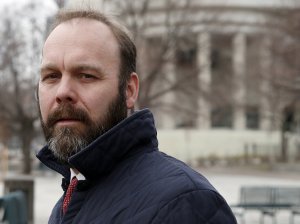
Rick Gates
Why did Manafort think he could get away with continuing to communicate with Kilimnik? Mueller is slowly but surely ensuring that Manafort will either cooperate or spend the rest of his life in prison.
Meanwhile, at Mother Jones, David Corn warns that the simple narrative of Russia’s attack on our democracy is getting lost in the details as Trump, Fox News, and Devin Nunes work constantly to obfuscate the truth with big lies: Donald Trump Is Getting Away With the Biggest Scandal In American History.
The other evening I was on a cable news show to cover the latest Russia news of the day—and I had an epiphany.
We were talking about a recent scoop from Michael Isikoff, the co-author of my latest book, Russian Roulette. He had reported that a Spanish prosecutor had handed the FBI wiretapped transcripts of a Russian official who was suspected of money laundering and for years had been trying to gain influence within the American conservative movement and the National Rifle Association. We then discussed a New York Times article revealing that Michael Cohen, Donald Trump’s longtime fixer, had met with a Russian oligarch in January 2017, around the time a US company affiliated with this tycoon began making $500,000 in payments to Cohen. Next we turned to the latest in the so-called Spygate nonscandal—the false claim, championed by Trump and his defenders, that the FBI infiltrated a spy into his presidential campaign for political purposes.
Then the show moved on. We had spent 15 or so minutes on these important developments, delving into the details—but without referring to the essence of the story. And it hit me: Though it’s clear Trump’s presidency has been hobbled by the Russia scandal, the manner in which this matter plays out in the media has helped Trump.
Meanwhile Trump, backed up by Fox News, keeps pushing out his propaganda.
Michael Isakoff and David Corn
The other side—the accurate perspective—isn’t that complicated. In 2016, Vladimir Putin’s regime mounted information warfare against the United States, in part to help Trump become president. While this attack was underway, the Trump crew tried to collude covertly with Moscow, sought to set up a secret communications channel with Putin’s office, and repeatedly denied in public that this assault was happening, providing cover to the Russian operation. Trump and his lieutenants aligned themselves with and assisted a foreign adversary, as it was attacking the United States. The evidence is rock-solid: They committed a profound act of betrayal. That is the scandal.
But how often do you hear or see this fundamental point being made? The media coverage of the Trump-Russia scandal—which has merged with Cohen’s pay-to-play scandal, the Stormy Daniels scandal, and a wider foreign-intervention-in-the-2016-campaign scandal—has yielded a flood of revelations. Yet the news reporting tends to focus on specific components of an unwieldy and ever-expanding story: a Trump Tower meeting between Trump aides and a Kremlin emissary; what special counsel Robert Mueller may or may not be doing; the alleged money-laundering and tax-evasion skullduggery of Paul Manafort; a secret get-together in the Seychelles between former Blackwater owner Erik Prince and a Russian financier; the Kremlin’s clandestine exploitation of social media; Russian hackers penetrating state election systems; Michael Flynn’s shady lobbying activities; Trump’s attempted interference in the investigation; and so much more. It is hard to hold on to all these pieces and place them into one big picture.

Please go read the rest–it’s fairly lengthy. I’m not sure what the solution to this is; It’s not likely that non-Fox news sources are going to start hammering a simple narrative to push back on the Trump big lies. I can only hope that when Mueller issues his report, it will pull all the complex details together into a coherent and understandable story.
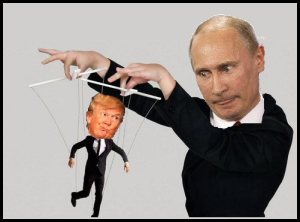 Finally, get this–Vladimir Putin is now bragging publicly about his “close relationship” with Trump. Axios reports:
Russian President Vladimir Putin tells Austrian TV that he and President Trump have a close working relationship, although it’s complicated by U.S. politics.
“You should ask our colleagues in the United States. In my opinion, this is the result of the ongoing acute political struggle in the United States. Indeed, Donald Trump and I have, firstly, met more than once at various international venues and secondly, we regularly talk over the phone.”
Interviewer: “You and Donald Trump talk so nicely over the telephone, but Trump has been President for a year and a half and there still has not been a bilateral summit between you, in contrast to Bush and Obama with whom you met within the first six months of their presidencies. Why is it taking so long?”
Putin:
“Our foreign affairs departments and special services are working fairly well together in areas of mutual interest, above all in the fight against international terrorism. This work is ongoing.”
“As for personal meetings, I think that the possibility of these meetings depends to a large extent on the internal political situation in the United States….”
“In a recent telephone conversation, Donald said he was worried about the possibility of a new arms race. I fully agree with him.”
“[W]e will do all we can to ease tensions on the Korean Peninsula. So of course we pin great hopes on the personal meeting between President Trump and North Korean leader Kim Jong-un, because mutual claims have gone way too far.”
Putin calls the “president” *Donald.* And I guess if “Donald” does achieve any success with North Korea, Putin expects to share the glory.
So . . . what stories are you following today?
Thursday Reads: The Usual Insanity Reigns in Trump World
Posted: April 5, 2018 Filed under: Afternoon Reads, U.S. Politics | Tags: abortion rights, Cecile Richards, Donald Trump, fake news, immigrant caravan, Ivanka and Jared Kushner, Kellyanne Conway, Luke Harding, Melania Trump, Paul Manafort, Planned Parenthood, Ronald Kessler, Simon City Royals, Victor Yanukovych, white gangs 30 Comments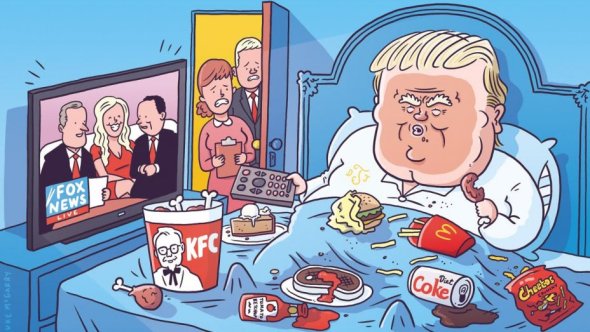
Good Afternoon!!
As usual, there’s way too much news out there this morning. In Trump world, there’s never an opportunity to catch your breath and focus on one important thing. I can’t cover everything, so here are some random stories that caught my interest.
Cecile Richards has a new book out–Make Trouble: Standing Up, Speaking Out, and Finding the Courage to Lead: My Life Story–and she included some creepy revelations about Jared and Ivanka Kushner. People Magazine: Planned Parenthood CEO Says Jared Kushner and Ivanka Trump Offered ‘Bribe’ to Stop Abortions.
In a riveting passage from Cecile Richards’ new memoir, the Planned Parenthood chief says Jared Kushner and Ivanka Trump were, during Donald Trump’s 2016 transition as president-elect, so eager to be recognized as shrewd political dealmakers that the soon-to-be first daughter and her husband made an offer that felt like a “bribe”: an increase in federal funding for Planned Parenthood in exchange for its agreement to stop providing abortions.
Richards says she “reached out” to Ivanka at the suggestion of a friend, in hopes of finding an ally in the Trump White House. Ivanka insisted on bringing Jared, so Richards asked her husband Kirk Adams to come with her.
According to a statement from Planned Parenthood given to Time.com, the purpose of the meeting “was to make sure that Ivanka Trump fully understood the important role Planned Parenthood plays in providing health care to millions of people and why it would be a disastrous idea to block people from accessing care at Planned Parenthood.”
After Richards explained this, she writes that Kushner told her Planned Parenthood “had made a big mistake by becoming ‘political.’ ”
“The main issue, he explained, was abortion,” Richards writes. “If Planned Parenthood wanted to keep our federal funding, we would have to stop providing abortions. He described his ideal outcome: a national headline reading ‘Planned Parenthood Discontinues Abortion Services.’”
According to Make Trouble, Kushner said that if Richards agreed to the plan then funding could increase, but he urged them to “move fast.”
“If it wasn’t crystal clear before, it was now. Jared and Ivanka were there for one reason: to deliver a political win,” she writes. “In their eyes, if they could stop Planned Parenthood from providing abortions, it would confirm their reputation as savvy dealmakers. It was surreal, essentially being asked to barter away women’s rights for more money. It takes a lot to get Kirk mad, but it looked like his head was about to explode.”
Richards explained that there was “no way” Kushner’s proposal would work and that they’d continue to fight for funding.
“‘Our mission is to care for women who need us, and that means caring for all of their reproductive needs — including safe and legal abortion,’” she recalls saying.
Can you imagine the nerve? In Trump world, everything is about money. These people can’t even begin to conceive of the notion that there are people with personal values that are non-negotiable.
There’s another new book about Trump world–this time by Trump booster Ronald Kessler. Still, a few embarrassing tidbits are coming out in advice of its release date.
The Cut: Trump Reportedly Called Jared Kushner a ‘Little Boy.’
According to journalist Ronald Kessler in his new book, The Trump White House: Changing the Rules of the Game, when Kushner addressed reporters during a live television appearance, President Trump told the aides watching with him, “Look at Jared, he looks like a little boy, like a child.”
Kessler also claims that Trump once told Kushner and his daughter, Ivanka, that “they never should have left New York,” and he “made it clear to them that he would not mind if they gave up their White House roles.” [….]
Trump calling Jared “a child” seems rather unfair. Not only has president given his son-in-law a set of absurdly stratospheric, decidedly adult responsibilities, Kushner clearly looks more like a haunted doll than a little boy.
Kessler writes that Kellyanne Conway is the “number one leaker” in the White House except for Trump himself, who leaks as as an “anonymous source” to specific reporters in hopes of positive coverage. According to Kessler, Melania Trump is an important adviser to her husband, and she once “walked out on” Trump in 1998 when she found out he was cheating on her. Now you don’t have to read the book, which reported is filled with Trump boosterism.
Luke Harding, who wrote the terrific book Collusion, has a new piece on Paul Manafort’s machinations at The Guardian: Former Trump aide approved ‘black ops’ to help Ukraine president.
Donald Trump’s former campaign manager Paul Manafort authorised a secret media operation on behalf of Ukraine’s former president, featuring “black ops”, “placed” articles in the Wall Street Journal and US websites, and anonymous briefings against Hillary Clinton.
The project was designed to boost the reputation of Ukraine’s then leader, Viktor Yanukovych. It was part of a multimillion-dollar lobbying effort carried out by Manafort on behalf of Yanukovych’s embattled government, emails and documents reveal.
The strategies included:
• Proposing to rewrite Wikipedia entries to smear a key opponent of the then Ukrainian president.
• Setting up a fake “thinktank” in Vienna to disseminate viewpoints supporting Yanukovych.
• A social media blitz “aimed at targeted audiences in Europe and the US”.
• Briefing journalists from the rightwing website Breitbart to attack Clinton, when she was US secretary of state.
Manafort’s Ukraine strategy anticipates later efforts by the Kremlin and its troll factory to use Twitter and Facebook to discredit Clinton and to help Trump win the 2016 US election. The material seen by the Guardian dates from 2011 to 2013.
Read the rest at The Guardian.
Another interesting long read from The Guardian by Donna Ladd: Dangerous, growing, yet unnoticed: the rise of America’s white gangs. It’s a portrait of one man–Benny Ivy–who as a kid joined “one of the oldest and largest white gangs in the US, the Simon City Royals.”
The Royals’ roots date to Chicago’s North Side in 1952, when two violent white “greaser” gangs – the Ashland Royals and Simon City – guarded Simon Park turf as Puerto Ricans moved in.
Early greasers were immigrants, often Italian, maligned by wealthier whites for greasing machines in blue-collar jobs. In 1968, the greasers united as the Simon City Royals, often rumbling with the nearby Latin Kings as well as the white supremacist Gaylords. (Their rhetoric is familiar: a Gaylords nostalgia websitecalled Latino gangs “storage bins for illegal immigrants”.)
The Royals were one of the biggest and most violent street gangs in Chicago by the 1970s, when they joined the Folk Nation alliance with the Black Gangster Disciples, began admitting Hispanics and, later, women and black members.
But by the 1980s, the gang had weakened after its leadership got locked up or killed.
Strength shifted to prisons, and the brand spread to midwestern and southern states like Mississippi, where the Royals are now one of the largest and most violent gangs in the state.
Surveys of young Americans have shown that 40% identifying as gang members are white, but police tend to undercount them at 10% to 14% and overcount black and Hispanic members, says Babe Howell, a criminal law professor at City University of New York who focuses on crime and race.
“Police see groups of young white people as individuals, each responsible for his or her own conduct, and hold young people of color in street gangs criminally liable for the conduct of their peers,” she says.
Much more at the link.
Trump is insisting on sending National Guard troops to the southern border because he heard about a so-called “caravan” of migrants marching across Mexico. We now have a “president” who uses to executive ordered to deal with fake crises. Trump probably doesn’t know that U.S. troops can’t take any actions against people to enforce domestic laws because of the Posse Commitatus Act. So he’s sending the troops down there anyway instead of just letting them train to do their real jobs. So what about this “caravan?”
The New York Times: ‘You Hate America!’: How the ‘Caravan’ Story Exploded on the Right.
It was the kind of story destined to take a dark turn through the conservative news media and grab President Trump’s attention: A vast horde of migrants was making its way through Mexico toward the United States, and no one was stopping them.
A Central American woman gives water to a baby as a large group of immigrants sets up camp for a few days at a sports center in Matias Romero in Mexico’s Oaxaca state late Monday. (Felix Marquez / Associated Press)
“Mysterious group deploys ‘caravan’ of illegal aliens headed for U.S. border,” warned Frontpage Mag, a site run by David Horowitz, a conservative commentator.
The Gateway Pundit, a website that was most recently in the news for spreading conspiracies about the school shooting in Parkland, Fla., suggested the real reason the migrants were trying to enter the United States was to collect social welfare benefits.
And as the president often does when immigration is at issue, he saw a reason for Americans to be afraid. “Getting more dangerous. ‘Caravans’ coming,” a Twitter post from Mr. Trump read.

The story of “the caravan” followed an arc similar to many events — whether real, embellished or entirely imagined — involving refugees and migrants that have roused intense suspicion and outrage on the right. The coverage tends to play on the fears that hiding among mass groups of immigrants are many criminals, vectors of disease and agents of terror. And often the president, who announced his candidacy by blaming Mexico for sending rapists and drug dealers into the United States, acts as an accelerant to the hysteria.
That’s the fake story, now for the real story.
The New York Times: Inside an Immigrant Caravan: Women and Children, Fleeing Violence.
MATÍAS ROMERO, Mexico — With a sarcastic half-smile, Nikolle Contreras, 27, surveyed her fellow members of the Central American caravan, which President Trump has called dangerous and has used as a justification to send troops to the border.
More than 1,000 people, mostly women and children, waited patiently on Wednesday in the shade of trees and makeshift shelters in a rundown sports complex in this Mexican town, about 600 miles south of the border. They were tired, having slept and eaten poorly for more than a week. All were facing an uncertain future.
“Imagine that!” said Ms. Contreras, a Honduran factory worker hoping to apply for asylum in the United States. “So many problems he has to solve and he gets involved with this caravan!”
The migrants, most of them Hondurans, left the southern Mexican border city of Tapachula on March 25 and for days traveled north en masse — by foot, hitchhiking and on the tops of trains — as they fled violence and poverty in their homelands and sought a better life elsewhere.
This sort of collective migration has become something of an annual event around Easter week, and a way for advocates to draw more attention to the plight of migrants.
But this particular caravan caught the attention of Mr. Trump, apparently after he heard about it on Fox News. In a Twitter tirade that began Sunday, he conjured up hordes of dangerous migrants surging toward the border. He demanded that Mexican officials halt the group, suggesting that otherwise he would make them pay dearly in trade negotiations or aid cuts.
Mr. Trump even boasted that his threat had forced Mexico’s government to halt and disperse the caravan participants. But there was no evidence of that on Wednesday.
Read the rest at the NYT.
What stories are you following today?
Thursday Reads: This Sh**t Never Ends!
Posted: March 29, 2018 Filed under: Afternoon Reads, U.S. Politics | Tags: China, corruption, David Shulkin, Donald Trump, Ivanka Trump, Jared Kushner, John Bolton, John Dowd, Kim John Un, Latvia, Michael Flynn, North Korea, Paul Manafort, presidential pardons, privatization, Robert Mueller, Russia investigation, U.S. Constitution, Veterans Affairs 31 Comments
Bette Davis
Good Afternoon!!
As usual in the horrifying new world of Trump, there is so much shocking news that there’s no way to deal with all of it. I guess the top story has to be that Trump’s former lawyer John Dowd dangled pardons in front of Michael Flynn and Paul Manifort last summer.
The New York Times: Trump’s Lawyer Raised Prospect of Pardons for Flynn and Manafort.
A lawyer for President Trump broached the idea of Mr. Trump’s pardoning two of his former top advisers, Michael T. Flynn and Paul Manafort, with their lawyers last year, according to three people with knowledge of the discussions.
The discussions came as the special counsel was building cases against both men, and they raise questions about whether the lawyer, John Dowd, who resigned last week, was offering pardons to influence their decisions about whether to plead guilty and cooperate in the investigation.
The talks suggest that Mr. Trump’s lawyers were concerned about what Mr. Flynn and Mr. Manafort might reveal were they to cut a deal with the special counsel, Robert S. Mueller III, in exchange for leniency. Mr. Mueller’s team could investigate the prospect that Mr. Dowd made pardon offers to thwart the inquiry, although legal experts are divided about whether such offers might constitute obstruction of justice.
Mr. Dowd’s conversation with Mr. Flynn’s lawyer, Robert K. Kelner, occurred sometime after Mr. Dowd took over last summer as the president’s personal lawyer, at a time when a grand jury was hearing evidence against Mr. Flynn on a range of potential crimes.
Flynn ultimately took the safe route and agreed to cooperate with the Mueller investigation; but this could explain why Paul Manafort is holding out even though the evidence against him is overwhelming and he could face life in prison if convicted.
Cary Grant, 1960
Constitutional experts are now discussing whether Trump could get away with pardoning Manafort and others, even if he did it with corrupt intent. Some opinions:
Alex Whiting at Just Security: Why Dangling a Pardon Could Be an Obstruction of Justice—Even if the Pardon Power is Absolute. A brief excerpt:
Some experts have argued that the pardon power is absolute and that the President’s motives in issuing a pardon thus could not be questioned, while others contend that it could be a crime to issue a pardon for corrupt purposes (such as in exchange for cash). But the debate over the absolute nature of the pardon power is actually not relevant to the alleged incidents involving Trump’s lawyer. Indeed, that entire debate can be set aside for the moment. Why? Because there’s been no pardon. Instead, a pardon has only been dangled before Flynn and Manafort, and the analysis of whether that action could become part of an obstruction case against Trump raises entirely different considerations….
The pardon dangle works completely differently—and in important respects has the opposite effects. First, this kind of dangle is not a public act. Therefore, as long as it remained secret, it could be done without incurring any of the political downstream consequences that come with actually pardoning someone. It hides the President from scrutiny rather than exposes him to it as a potential check on the use of the power. Second, the objective of the dangle appears to have been to foreclose the prospect of Flynn and Manfort’s cooperating or testifying. Once again, this is the opposite effect of an actual exercise of the pardon. The message of the dangle was sufficiently clear: hang in there and keep fighting (do not cut a deal with the special counsel) because you will be pardoned before you spend a day in jail. The President and his lawyer’s hope would have been that with the threat of jail eliminated, neither former aid would feel compelled to plead guilty and cooperate with Mueller to reduce his sentence. But, since they were not actually pardoned or not yet anyway, they still kept their Fifth Amendment privileges, and so Mueller could not simply demand they testify before the Grand Jury. In this way, the dangle could operate to stop any cooperation from Flynn and Manafort, who could then be pardoned later if and when they were indicted or even after their cases went through pretrial, trial and appeal. Indeed, you also have to put yourself back at the time these events all took place: before Manafort was indicted and Flynn pleaded guilty. That’s when the dangle could work its magic.
Ava Gardner
Because a pardon dangle is secret and seeks to discourage cooperation with an ongoing investigation without public scrutiny or consequences, it should be analyzed differently than a pardon when it comes to an obstruction case.

Former U.S. Attorney Harry Littman at The Washington Post: We may know why Paul Manafort has kept quiet. But his bet is still risky.
Manafort’s refusal to cooperate can’t be driven by a rational calculation that he has any reasonable chance of escaping conviction, multimillion-dollar legal fees and a prison sentence that will result in years behind bars.
The indictments against him lay out an overwhelming case of money laundering in particular. The meticulously gathered evidence will be as clear for the jury as a laundry detergent commercial: The jury will see the dirty money go in and the clean money come out. To the extent there had been a small risk, inherent in paper-driven chases, that the jury could become bored at the accounting presentation and tune out, Mueller now has a narrator for the trial in Manafort’s co-conspirator Rick Gates.
So is hoping for a Trump pardon a good bet for Manafort?
…the Times story does not definitively solve the Manafort mystery. First, Dowd’s reported overture, particularly if done with the president’s knowledge or consent, could have constituted a conspiracy to obstruct justice, a separate impeachable offense. That presumably is why the story includes a categorical denial from Dowd that he ever discussed pardons for the president’s former advisers with lawyers. For Dowd, the conduct would be putting his license at risk.
Second, Manafort surely recognizes that he can’t fully count on Trump, both because the president is a habitual liar and because the political dynamic is subject to such extreme and violent turns. (Of course, under this hypothesis, Manafort retains the valuable insurance policy of spilling the goods if Trump double-crosses him, leaving both huge losers in a real-life prisoners dilemma.)Marcello Mastroianni
Third, Manafort could still be required to testify after any pardon, when he would no longer be in federal jeopardy. Undoubtedly, the plan would be for him to deny assurances of a pardon from Trump. Still, were Mueller to catch him in a lie, the special counsel would surely come down on him.
Finally, it is likely that in the event of a pardon for federal crimes, which is all Trump can provide, some state attorneys general, such as New York’s Eric T. Schneiderman, would prosecute Manafort for financial crimes under their potent state statutes.

Maybe Manafort figures a possible pardon is a better bet than hoping Putin doesn’t send his goons to shut him (Manafort) up for good.
A few more pardon stories:
Bloomberg: Pardon Talk Could Put Trump Lawyer in Hot Water.
CNN: Emails reveal DOJ would have ‘very little involvement’ if Trump tweeted a pardon.
The Washington Post: This overlooked part of the Constitution could stop Trump from abusing his pardon power.
Another big story broke late yesterday. Trump fired Veterans Affairs Secretary David Shulkin. Today Shulkin is speaking out, claiming he was fired because he opposed privatizing the VA. Shulkin spoke to NPR’s Morning Edition:
Fired Veterans Affairs Secretary David Shulkin tells NPR’s Morning Edition that political forces in the Trump administration want to privatize the VA — and that he was standing in the way.
“There are many political appointees in the VA that believe that we are moving in the wrong direction or weren’t moving fast enough toward privatizing the VA,” he said. “I think that it’s essential for national security and for the country that we honor our commitment by having a strong VA. I was not against reforming VA, but I was against privatization.”
Lauren Bacall
Those political forces may be why Shulkin says he wasn’t allowed to speak out to defend himself against an ethics controversy over use of funds on a trip to Europe that he says was overhyped and intended to weaken him.
“This was completely mischaracterized,” Shulkin said. “There was nothing improper about this trip, and I was not allowed to put up an official statement or to even respond to this by the White House. … I think this was really just being used in a political context to try to make sure that I wasn’t as effective as a leader moving forward.”

Shulkin argued his case in an op-ed at The New York Times: David J. Shulkin: Privatizing the V.A. Will Hurt Veterans.
That’s a lot of news, but I’ve barely touched on everything that’s happening. Here’s a shocking Trump corruption story that broke at The Guardian this morning: FBI looked into Trump plans to build hotel in Latvia with Putin supporter.
In 2010, a small group of businessmen including a wealthy Russian supporter of Vladimir Putin began working on plans to build a glitzy hotel and entertainment complex with Donald Trump in Riga, the capital of Latvia.
A senior Trump executive visited the city to scout for locations. Trump and his daughter Ivanka spent hours at Trump Tower with the Russian, Igor Krutoy, who also knows compatriots involved in arranging a fateful meeting at the same building during the 2016 US election campaign.
Then the Latvian government’s anti-corruption bureau began asking questions.
The Guardian has learned that talks with Trump’s company were abandoned after Krutoy and another of the businessmen were questioned by Latvian authorities as part of a major criminal inquiry there – and that the FBI later looked into Trump’s interactions with them at Latvia’s request.
Michael Caine
Those involved deny that the inquiry was to blame for the deal’s collapse.
Latvia asked the US for assistance in 2014 and received a response from the FBI the following year, according to a source familiar with the process. Latvian investigators also examined secret recordings in which Trump was mentioned by a suspect.
This means the FBI looked into Trump’s efforts to do business deals in the former Soviet Union earlier than was widely known. Robert Mueller, the special counsel, is now investigating other Trump dealings with Russians as part of his wide-ranging criminal inquiry into alleged collusion between Moscow and members of Trump’s 2016 campaign team.
The Riga developers saw their potential partner in New York as a ticket to lucrative western revenues.
This shit just never ends. I haven’t even touched on the North Korea news or the Bolton mess or the fact that Trump wants to put his personal physician in charge of the VA. More headlines to check out:
The Washington Post: Who is Trump’s new Veterans Affairs pick, Ronny Jackson?
NBC News: Kim Jong Un met China’s Xi. What does it mean for Trump summit?
The Washington Post: Three big questions about a Trump-Kim summit.
Business Insider: Kim Jong Un became a regional power overnight by saying a single, meaningless word to Trump.
Vox: “Otherwise, they subpoena”: White House lawyer Ty Cobb on why Trump is cooperating with Mueller.
Bloomberg: Kelly Loses White House Clout as Trump Blazes Own Path.
CNN: Did Trump campaign and John Bolton PAC get help from overseas?
Talking Points Memo: WSJ: Kushner Has Phoned Bolton For Advice In The Past Year.
BBC News: Julian Assange has internet cut at Ecuadorean embassy in London.
The Daily Beast: ICE Now Detaining Pregnant Women, Thanks to Trump Order.
Slate: It’s Time to Stop Yammering About Liberal Bias.

 peej
peej Carissa
 bostonboomer
 dakinikat
 ecocatwoman
 mablue2
 Mama Lopez
 peggysue22
 quixote
 skydancingguestblogger
 Mona (aka Wonk the Vote)



 Sky Dancing
Recent Comments