
 This did not appear to be the case just days ago. On Wednesday, Trump joined Elon Musk in calling on House Republicans to scrap a bipartisan spending deal that would have kept the government funded through March, increased disaster relief, and funded pediatric cancer research, among many other things. Despite the fact that the GOP needs buy-in from the Senate’s Democratic majority in order to pass any legislation — and failure to pass a spending bill by Saturday would mean a government shutdown — House Republicans heeded Trump’s call to nix the carefully negotiated compromise.
Lazy Caturday Reads
Posted: December 21, 2024 Filed under: cat art, caturday, Corrupt and Political SCOTUS, just because, SCOTUS | Tags: AfD Germany, Donald Trump, Elon Musk, German terror, Joe Biden, news, politics, Social Security 5 CommentsHappy Winter Solstice!!

Lesley Ivory, Dandelion, Snowdrop and the Devon Christmas Market
The House and Senate passed the bill to fund the government for 3 more months, thanks to Democratic votes. After unelected President Musk sabotaged the original bipartisan bill, it was touch and go, but the House and Senate both passed a compromise spending bill at the very last minute last night. The Hill: House passes bill to avert government shutdown after whirlwind funding fight.
The House approved legislation to avert a government shutdown hours before the deadline Friday, sending the bill to the Senate for consideration after a whirlwind week on Capitol Hill.
The chamber voted 366-34-1 in support of the legislation, clearing the two-thirds threshold needed for passage since GOP leadership brought the bill to the floor under the fast-track suspension of the rules process. All Democrats except one — Rep. Jasmine Crockett (Texas), who voted present — joined 170 Republicans in voting yes….
Speaker Mike Johnson (R-La.), after the vote, lauded the legislation as “‘America First’ legislation because it allows us to be set up to deliver for the American people.”
“In January, we will make a sea change in Washington. President Trump will return to D.C. and to the White House, and we will have Republican control of the Senate and the House. Things are going to be very different around here. This was a necessary step to bridge the gap, to put us into that, that moment where we can put our fingerprints on the final decisions on spending for 2025,” he said.
The package — which Johnson rolled out shortly before the vote — would fund the government at current levels through March 14, extend the farm bill for one year and appropriate billions of dollars in disaster relief and assistance for farmers.
The legislation does not, however, include language to increase the debt limit, an eleventh-hour demand from President-elect Trump that hurled a curveball into the sensitive government funding negotiations.

By Jamie Morath
Late last night, the Senate also passed the bill, averting a Christmas government shutdown. The New York Times: Transition Updates: Senate Approves Stopgap Funding Bill Just After Shutdown Deadline.
The Senate approved legislation to avert a federal government shutdown just after a midnight deadline, capping a chaotic week in which President-elect Donald J. Trump blew up a bipartisan spending deal, only to see his own preferred plan collapse as Republicans defied him.
President Biden is expected to sign the measure, which would extend funding into mid-March and approve disaster relief for parts of the nation still recovering from storms. The White House said early Saturday that it was not instituting a government shutdown, even though funding to run the government technically ran out at midnight.
Thanks to Musk and his puppet Trump, funding for pediatric cancer research was cut out of the House bill, but the Senate passed the legislation in a separate bill last night. Bloomberg: Senate OKs Childhood Cancer Bill After Leaving Off Stopgap Deal.
The Senate passed legislation late Friday that would reauthorize pared-back funding for childhood cancer research after the bipartisan program briefly became a political flash point.
The Senate’s version of the Gabriella Miller Kids First Research Act 2.0 was originally tacked on to a 1,547-page short-term stopgap government funding bill congressional leaders unveiled Tuesday. The program was dropped from the compromise measure after billionaire Elon Musk and President-elect Donald Trump claimed the deal contained unnecessary spending.
Democrats specifically highlighted the cut in cancer research to suggest the GOP favored tax cuts and the bottom line over sick children.
The Senate also passed a bill to broaden Social Security benefits. CBS News: Senate approves bill to expand Social Security to millions of Americans.
Legislation to expand Social Security benefits to millions of Americans passed the U.S. Senate early Saturday and is now headed to the desk of President Biden, who is expected to sign the measure into law.
Senators voted 76-20 for the Social Security Fairness Act, which would eliminate two federal policies that prevent nearly 3 million people, including police officers, firefighters, postal workers, teachers and others with a public pension, from collecting their full Social Security benefits. The legislation has been decades in the making, as the Senate held its first hearings into the policies in 2003.
“The Senate finally corrects a 50-year mistake,” proclaimed Senate Majority Leader Chuck Schumer, a Democrat from New York, after senators approved the legislation at 12:15 a.m. Saturday.
The bill’s passage is “a monumental victory for millions of public service workers who have been denied the full benefits they’ve rightfully earned,” said Shannon Benton, executive director for the Senior Citizens League, which advocates for retirees and which has long pushed for the expansion of Social Security benefits. “This legislation finally restores fairness to the system and ensures the hard work of teachers, first responders and countless public employees is truly recognized.”
The vote came down to the wire, as the Senate looked to wrap up its current session. Senators rejected four amendments and a budgetary point of order late Friday night that would have derailed the measure, given the small window of time left to pass it.
Explanation of the Social Security Fairness Act:
The Social Security Fairness Act would repeal two federal policies — the Windfall Elimination Provision (WEP) and the Government Pension Offset (GPO) — that reduce Social Security payments to nearly 3 million retirees.
That includes those who also collect pensions from state and federal jobs that aren’t covered by Social Security, including teachers, police officers and U.S. postal workers. The bill would also end a second provision that reduces Social Security benefits for those workers’ surviving spouses and family members. The WEP impacts about 2 million Social Security beneficiaries and the GPO nearly 800,000 retirees.
The measure, which passed the House in November, had 62 cosponsors when it was introduced in the Senate last year. Yet the bill’s bipartisan support eroded in recent days, with some Republican lawmakers voicing doubts due to its cost. According to the Congressional Budget Office, the proposed legislation would add a projected $195 billion to federal deficits over a decade.
Musk and his puppet learned that they aren’t in charge of legislating, not that that will stop President Musk from trying to boss everyone around. Eric Levitz at Vox: House Republicans just exposed the limits of Trump’s power. That bodes poorly for his agenda next year.
This week’s installment of the long-running saga, “House Republicans cannot govern,” will soon be forgotten. Elon Musk’s decision to blow up a bipartisan agreement to keep the government funded through the sheer power of posting (and the latent threat posed by his immense wealth), Donald Trump suddenly calling for the abolition of the debt limit, House Republican Chip Roy telling his colleagues that they lack “an ounce of self-respect” — all these dramas will surely give way to even more ridiculous ones in the new year.
But this week’s government funding fight also revealed something that could have profound implications for the next four years of governance: Trump’s power over the congressional GOP is quite limited.
If Trump had little difficulty persuading his co-partisans to block one spending bill, however, he proved less adept at getting them to support a different one.
On Thursday, in coordination with Trump, the House GOP unveiled a new funding bill, one shorn of all Democratic priorities. Over social media, the president-elect instructed his party to “vote ‘YES’ for this Bill, TONIGHT!” Then, 38 House Republicans voted against the legislation, which was more than enough to sink it amid nearly unified Democratic opposition.
House conservatives’ defiance of Trump is partly attributable to ideological differences. The president-elect’s objections to Wednesday’s bipartisan agreement were distinct from those of his donor Elon Musk or the House GOP’s hardliners. The latter disdained the spending bill’s page count and fiscal cost. Trump, by contrast, appeared more preoccupied with the legislation’s failure to increase — or eliminate — the debt limit.
Trump wanted the debt limit raised for his first two years so he could give more tax cuts to billionaires, but Republicans refused to go along with that. Read the rest at Vox.
The latest shock posting from President Musk was a tweet supporting a neo-Nazi party in Germany. Then last night a man who is a fan of both AfD and Musk perpetrated a deadly terror attack. Dakinikat wrote about this yesterday.
The Washington Post on the attack in Germany: German Christmas market attack toll rises to five dead, over 200 injured.
At least five people were killed and more than 200 wounded after a man plowed a car into a Christmas market in the central German city of Magdeburg, German leaders said Saturday, hours after authorities identified the suspect as Taleb al-Abdulmohsen, a 50-year-old Saudi doctor who officials said had expressed anti-Islamic views.
Reiner Haseloff, the premier of the state of Saxony-Anhalt, confirmed the new toll during a visit to the scene of Friday’s incident. A child is among the dead.
German Chancellor Olaf Scholz, who appeared alongside Haseloff, said almost 40 of the casualties “are so seriously injured that we must be very worried about them.”
Getting Together, by Pat Scott
Scholz noted that the attack took place just days before Christmas, and that normally “there is no place more peaceful or cheerful than a Christmas market.”
“What a terrible act it is, to kill and injure so many people with such brutality,” Scholz said, adding that it is important that the country “stays together” and did “not allow those who wish to sow hate” to do so.
The suspect, Abdulmohsen, who arrived in Germany in 2006, had expressed anti-Islam views and described himself as a Saudi dissident, according to a German official, who spoke on the condition of anonymity to discuss an open investigation.
Interior Minister Nancy Faeser told reporters Saturday the investigation was ongoing, and “we can only say with certainty that the perpetrator was obviously Islamophobic,” according to Zeit newspaper and Reuters news agency.

CNN has more details about the attack in live updates: Saudi man arrested following German market attack.
I wonder how long Trump is going to put up with Musk stealing his spotlight? The guy shows up wherever Trump is and whomever he’s meeting with. Check this out from Jacob Bryant at The Wrap (via Yahoo News): Elon Musk Crashing Trump’s Jeff Bezos Dinner at Mar-a-Lago Mocked as ‘Deranged.’
The jealousy bone might appeared to have bitten Elon Musk Wednesday, as he reportedly crashed the widely publicized dinner between President-elect Donald Trump and Amazon CEO Jeff Bezos.
Trump’s Mar-a-Lago hosted the dinner dinner for the politician and billionaire, but the two didn’t have privacy for long before Musk appeared. According to the New York Times, the X CEO “was not initially expected to be part of the dinner but joined as it was underway.”
Reactions online to the apparent power move were swift and cutting, with late night hosts and social media commentators mocking Musk as “deranged” and “creepy,” among other unflattering conclusions. The tech mogul was dragged up and down, with many saying it seemed like he was worried about his ongoing “bromance” with the president-elect.
“This two-week bromance is going to fall apart more spectacularly than any in history,” journalist and author Seth Abramson wrote on Bluesky. “Elon Musk is so deranged and creepy — and such a clueless stalker — that he actually crashed a private dinner between Donald Trump and Musk rival Jeff Bezos. I can’t imagine how livid that made both Trump and Bezos.”
He continued his post: “What it also confirms is that Musk not only has no boundaries and believes himself Trump’s superior but has no intention of permitting any other plutocrat to squeeze more juice out of Trump than him. Showing up at that dinner uninvited is a power play intended to cow both other oligarchs and Trump.”
Musk’s choice to crash Trump and Bezos’ meal was a dinner bell to the various late night hosts out there, as well. Just about every single one of them had a joke or two to crack at Musk’s expense this week, with Seth Meyer’s warning Trump he got “‘Cable Guy’-ed” – a reference to the 1996 Jim Carrey stalker comedy.
“Oh my god, you let him do you a favor, and now you can’t get rid of him — you got ‘Cable Guy’-ed by Elon Musk,” Meyers said. “Every time you look out that little keyhole, he gonna be there.”
Jimmy Fallon pondered how these two rival billionaires could claim custody of the president-elect. The answer came from another ’90s classic: “Air Bud.”
“To settle who he loves more, Elon and Bezos are going to put Trump down in the middle of the room and see who he goes to first: ‘All right, here boy!’” Fallon joked.
Finally, Have you heard about the new information on Clarence Thomas’s corruption? The Guardian: New ethics inquiry details more trips by Clarence Thomas paid for by wealthy benefactors.
A nearly two-year investigation by Democratic senators of supreme court ethics details more luxury travel by Justice Clarence Thomas and urges Congress to establish a way to enforce a new code of conduct.
Any movement on the issue appears unlikely as Republicans prepare to take control of the Senate in January, underscoring the hurdles in imposing restrictions on a separate branch of government even as public confidence in the court has fallen to record lows.
The 93-page report released on Saturday by the Democratic majority of the Senate judiciary committee found additional travel taken in 2021 by Thomas but not reported on his annual financial disclosure form: a private jet flight to New York’s Adirondacks in July and a jet and yacht trip to New York City sponsored by billionaire Harlan Crow in October, one of more than two dozen times detailed in the report that Thomas took luxury travel and gifts from wealthy benefactors.
The court adopted its first code of ethics in 2023, but it leaves compliance to each of the nine justices.
“The highest court in the land can’t have the lowest ethical standards,” the committee’s chair, Senator Dick Durbin of Illinois, said in a statement. He has long called for an enforceable code of ethics.
Republicans have said the investigation is a way to undermine the conservative majority court, and all the Republicans on the committee protested against the subpoenas authorized for Crow and others as part of the investigation. No Republicans signed on to the final report, and no formal report from them was expected.
Thomas has said that he was not required to disclose the trips that he and his wife, Ginni, took with Crow because the big donor is a close friend of the family and disclosure of that type of travel was not previously required. The new ethics code does explicitly require it, and Thomas has since gone back and reported some travel. Crow has maintained that he has never spoken with his friend about pending matters before the court….
The investigation found that Thomas has accepted gifts and travel from wealthy benefactors worth more than $4.75m by some estimates since his 1991 confirmation and failed to disclose much of it. “The number, value and extravagance of the gifts accepted by Justice Thomas have no comparison in modern American history,” according to the report.
Read the rest at The Guardian.
Charlie Savage at The New York Times: Justice Thomas Did Not Disclose Additional Trips, Democrats Say.
Justice Clarence Thomas failed to disclose two additional trips from a billionaire patron than have previously come to light, Senate Democrats revealed on Saturday after conducting a 20-month investigation into ethics practices at the Supreme Court.
The findings were part of a 93-page report released by Democratic staff members of the Judiciary Committee along with about 800 pages of documents. It said the two trips, both of which had been previously unknown to the public, took place in 2021 and were provided by Harlan Crow, a real estate magnate in Texas and a frequent patron of Justice Thomas’s.
One trip took place that July by private jet from Nebraska to Saranac, N.Y., where Justice Thomas stayed at Mr. Crow’s upstate retreat for five days. The other came in October, when Mr. Crow hosted Justice Thomas overnight in New York on his yacht after flying him from the District of Columbia to New Jersey for the dedication of a statue.
The disclosures were one of the few new revelations in a report that otherwise largely summarized information about largess accepted by justices — and failures to disclose it — that had already become public. Justice Thomas had not disclosed the trips, even after refiling some of his past financial forms, and the committee learned about them through a subpoena to Mr. Crow, the report said.
Read more details about the investigation at the NYT link.
That’s all I have for you today; I’ll be back here on Wednesday, December 25, Christmas Day. Best wishes to all of you.
Lazy Caturday Reads
Posted: December 14, 2024 Filed under: cat art, caturday, just because | Tags: Chris Wray, Democrats, Donald Trump, FBI, Kash Patel, media, news, politics, Robert Kennedy Jr., Tech Bros 6 CommentsGood Afternoon!!

‘Louisa Cat Sleeps Late (1929) from the’ The Fairy Caravan, Beatrix Potter
We have just 37 days until Trump takes over the presidency. How bad will it get? Probably much worse than we can begin to imagine right now.
Lots of rich and powerful people are obviously scared to death, because they are obeying in advance. Chris Wray is quitting as FBI director, paving the way for Trump sycophant Kash Patel, who wants to completely shut down the FBI’s intelligence division. Tech bros are donating to the Inauguration fund.
Even some Democrats are indicating openness to some of Trump’s insane appointments. Are any Democrats planning to fight back? I hope so, but it’s not clear right now.
Here’s the latest:
The New York Times: In Display of Fealty, Tech Industry Curries Favor With Trump.
The $1 million donations came gradually — and then all at once.
Meta. Amazon. OpenAI’s Sam Altman. Each of these Silicon Valley companies or their leaders promised to support President-elect Donald J. Trump’s inaugural committee with seven-figure checks over the past week, often accompanied by a pilgrimage to Mar-a-Lago to bend the knee.
The procession of tech leaders who traveled to hobnob with Mr. Trump face-to-face included Sundar Pichai, Google’s chief executive, and Sergey Brin, a Google founder, who together dined with Mr. Trump on Thursday. Tim Cook, Apple’s chief executive, shared a meal with Mr. Trump on Friday. And Jeff Bezos, the founder of Amazon, planned to meet with Mr. Trump in the next few days.
This was the week when many tech companies and their top executives, as reluctant as they may have been, acknowledged the reality of getting business done in Mr. Trump’s Washington. With their donations, visits and comments, they joined a party that has already raged for a month, as a cohort of influential Silicon Valley billionaires, led by Elon Musk, began running parts of Mr. Trump’s transition after endorsing him in the campaign.
While businesses frequently try to get on an incoming president’s good side, the frenzy of tech activity stood out from other industries. Until President Obama’s administration, the tech industry had largely stayed aloof from politics. Some wrote just small checks for Mr. Trump’s first inauguration.
Now the bread-breaking with Mr. Trump has become highly public. Meta and Amazon, whose founders had previously been criticized by Mr. Trump, said they would donate $1 million to Mr. Trump’s inaugural fund this week. Sam Altman, the chief executive of OpenAI, the high-profile artificial intelligence start-up, said on Friday that a $1 million donation to Mr. Trump’s inaugural fund would come from him personally.
“President Trump will lead our country into the age of A.I., and I am eager to support his efforts to ensure America stays ahead,” Mr. Altman said in a statement.
Nonprofit contributions to inaugural committees, which host patriotic-themed events around Jan. 20, are low-stakes, timeworn ways for companies to seek favor under the guise of patriotism without being pegged as overly partisan actors.
Other tech leaders have also praised Mr. Trump. Marc Benioff, the chief executive of Salesforce and the owner of Time Magazine, posted on X on Thursday that it was “a time of great promise for our nation,” after Time awarded Mr. Trump its coveted “Person of the Year” designation.
Now Apple has joined the crowd of suck-ups. Only Microsoft is holding out.
The Hill: Apple CEO visits Mar-a-Lago, joining list of tech execs seemingly courting Trump.
Apple CEO Tim Cook visited Mar-a-Lago on Friday, joining a growing list of tech executives that are seemingly courting President-elect Trump ahead of his return to the White House.
The president-elect and Cook had dinner at Trump’s Florida resort in West Palm Beach, multiple outlets reported. The meeting marked their first interaction since their call two months ago….
Mother Cat and Kittens, Beatrix Potter
The president-elect said in mid-October during his appearance on Patrick Bet-David’s podcast that the Apple executive talked to him about fines the European Union imposed on the company.
“Then two hours ago, three hours ago, he called me,” Trump said. “He said, ‘I’d like to talk to you about something.’ ‘What?’ He said, ‘The European Union has just fined us $15 billion.’ That’s a lot.” [….]
Cook was one of the many tech leaders to congratulate Trump on his win over Vice President Harris in last month’s contest.
“We look forward to engaging with you and your administration to help make sure the United States continues to lead with and be fueled by ingenuity, innovation, and creativity,” he wrote in a post on social platform X.

I imagine a hefty donation will be forthcoming.
Media owners are also caving to Trump in advance. Jeff Bezos ordered the Washington Post not to publish a planned endorsement of Kamala Harris. L.A. Times owner Patrick Soon-Shiong did the same thing. Now Soon-Shiong has gone further.
The Independent: LA Times billionaire owner killed op-ed that was critical of Trump’s cabinet picks, report says.
Los Angeles Times owner Dr. Patrick Soon-Shiong killed an opinion column that was critical of President-elect Donald Trump’s recent Cabinet picks, telling his paper’s editorial board that it could only publish the piece if it also ran an editorial with an opposing view, according to The New York Times.
The spiked column was set to be published in the outlet’s Sunday newspaper and website on November 24. Soon-Shiong intervened just hours before the op-ed was scheduled to be sent to the printer, prompting the editors to pull the piece as the deadline approached.
According to the NY Times, the column was headlined: “Donald Trump’s cabinet choices are not normal. The Senate’s confirmation process should be.” The editorial board decided that after the incoming president had announced a slew of controversial picks, many of which the board members were concerned about, it would have one of its writers pen a piece calling on the Senate to take its job of confirming nominees seriously.
“In addition to saying that the Senate should follow its traditional process, the editorial criticized several of Mr. Trump’s picks as being unfit for their proposed roles, including former Fox News host Pete Hegseth and former presidential contender Robert F. Kennedy Jr.,” The New York Times noted.
After Soon-Shiong’s intervention led to the editorial being pulled, the paper’s editors scrambled to find another column to fill the suddenly open slot. Ultimately, they decided on an already written piece by outgoing editorial board member Karin Klein that took a more sympathetic stance on Trump. That column was headlined, “Trump has a chance to be a true education president.”
CNN’s Reliable Sources reported on Friday morning that besides Soon-Shiong spiking the editorial, several recent opinion section headlines were also “softened” or “made more bland” by editors concerned that “anything too harsh would get rejected” by the billionaire owner. “For the most part, we’re now just writing about state and local issues,” a source told CNN.
What about the Democrats? I could find only one story about Democrats pushing back slightly. Axios: Inside Democrats’ emerging Trump inauguration boycott.
More than a dozen congressional Democrats plan to sit out President-elect Trump’s inauguration, and many more are anxiously grappling with whether to attend, Axios has learned.
Why it matters: Not every Democrat skipping the ceremony will do so to protest Trump — but a formal boycott is materializing as a first act of resistance against the incoming president.
Tabitha Twichit, Beatrix Potter
For many Democrats, the scars of the Jan. 6, 2021, attack on the Capitol remain fresh in the mind, marking Trump as a threat to democracy.
“For somebody who he said he’s going to lock me up, I don’t see the excitement in going to see his inauguration,” former Jan. 6 committee chair Bennie Thompson (D-Miss.) told Axios.State of play: Martin Luther King Jr. Day coinciding with the Jan. 20 inaugural ceremony gives many Democrats an easy out, though others planning to stay away cited a distaste for inaugurations, a loathing of Trump — and even fears for their safety.
- Rep. Delia Ramirez (D-Ill.) said that as a Latina, she doesn’t “feel safe coming” with Trump’s supporters pouring in for the ceremony. “I’m not going to physically be in D.C. on that day,” she told Axios.
- Similarly, Rep. Ilhan Omar (D-Minn.) said that attending MLK Day events instead “makes sense, because why risk any chaos that might be up here?”
- For other members, the reasoning is more mundane: Rep. Adam Smith (D-Wash.) “almost never attends inaugurations” and has only been to two during his 28 years in office, his spokesperson told Axios.

The latest on Trump appointments:
Last week, Robert Kennedy, Jr. and Kash Patel began visiting Senators to push for their nominations to be approved.
On Kennedy, after yesterday, Senators will need to think carefully about how they feel about vaccines to prevent childhood diseases. Yesterday, Dakinikat posted about a top adviser to Kennedy who wants to get reverse approval for the polio vaccine.
Philip Bump at The Washington Post: When depicting the government as bad is more important than stopping polio.
When debates over the efficacy of vaccines emerge, as they increasingly do, there is a go-to example offered: the response to polio in the mid-20th century.
From 1910 to 1950, more than 376,000 Americans were afflicted with polio, with nearly 49,000 dying from the paralyzing disease. Then, in 1955, the polio vaccine was announced and approved. From 1956 to 1970, there were about 41,200 infections and about 2,000 deaths. From 1971 to 2000, 287 cases and 102 deaths. Since then? Essentially nothing at all.
This is why polio is such a good example. There was a lot of polio, with 1 out of every 2,700 Americans infected in 1952. Then there was a vaccine, and now there’s hardly any polio at all. So little, in fact, that one case that was identified in New York in 2022 earned national news headlines.
Despite the data, even the polio vaccine has not escaped the ire of the anti-vaccine movement. In 2022, a lawyer named Aaron Siri filed a citizen petition with the U.S. government seeking to block distribution of the polio vaccine for children until “a properly controlled and properly powered double-blind trial of sufficient duration is conducted to assess the safety of this product,” the New York Times reported Friday. It was one of more than a dozen vaccines Siri sought to block.
Siri, as you probably guessed, is also a longtime adviser to Robert F. Kennedy Jr., President-elect Donald Trump’s selection to run the Department of Health and Human Services. In fact, the Times reports, Siri has been aiding Kennedy as he vets potential administration staffers.
Kennedy himself has been similarly critical of vaccines, making debunked claims about vaccine safety and pushing for restrictions on their use. He has been a prominent member of the anti-vaccine community for years but generally offered his views from the political sidelines.
Kennedy’s views are a mishmash of they’re-wrong-and-I’m-right assertions that span the gamut of credibility offered under the appealing banner of “making America healthy.” But the mishmash means that a lot of obviously dubious stuff gets mixed in with the valid stuff. The valid stuff includes Americans’ eating habits, which are obviously not great. The dubious stuff includes his embrace of the idea that airplane condensation trails are something worthy of concern. And vaccines, thanks to the pandemic and thanks to the long-standing anti-vaccine movement, are a valid element of public health that he presents as dubious.

Samuel Whiskers, Betrix Potter
In the early 1950’s, I was in elementary school in Lawrence, Kansas. My school was included in the pilot program for the Salk (polio) vaccine. One of my friends in the first grade had gotten polio and had to wear leg braces. This disease in no joke. I’m very grateful to have gotten that vaccine in early childhood. I had other childhood diseases–mumps, measles, German measles–before vaccines were available. I never had chicken pox. I think it’s possible that my hearing problem–which was first diagnosed in my early 30s–developed because of mumps or measles.
Apoorva Mandavilli at The New York Times: Are Childhood Vaccines ‘Overloading’ the Immune System? No.
It’s an idea as popular as it is incorrect: American babies now receive too many vaccines, which overwhelm their immune systems and lead to conditions like autism.
This theory has been repeated so often that it has permeated the mainstream, echoed by President-elect Donald J. Trump and his pick to be the nation’s top health official, Robert F. Kennedy Jr.
“When you feed a baby, Bobby, a vaccination that is, like, 38 different vaccines and it looks like it’s been for a horse, not a, you know, 10-pound or 20-pound baby,” Mr. Trump told Mr. Kennedy on a call in July. “And then you see the baby all of a sudden starting to change radically — I’ve seen it too many times.”
On Sunday, Mr. Trump returned to the theme, saying Mr. Kennedy would investigate whether childhood vaccines caused autism, even though dozens of rigorous studies have already explored and dismissed that theory.
“I think somebody has to find out,” Mr. Trump said on NBC’s “Meet the Press.”
But the idea that today’s vaccines are overtaxing children’s immune systems is fundamentally flawed, experts said. Vaccines today are cleaner and more efficient, and they contain far fewer stimulants to the immune system — by orders of magnitude — than they did decades ago.
What’s more, the immune reactions produced by vaccines are “minuscule” compared with those that children experience on a daily basis, said Dr. Yvonne Maldonado, a pediatrician at Stanford University who advises the Centers for Disease Control and Prevention on vaccines.
Sorry to be judgmental, but Trump is a complete idiot, and so are the people who elected him.
Children harbor trillions of bacteria, more than the number of their own cells, and encounter pathogens everywhere — from caregivers and playmates; in kitchens, bathrooms and playgrounds; on toys, towels and sponges.
“That’s just the normal course of growing up, is to have fevers and develop immunity to all of the organisms that are in the environment around you,” Dr. Maldonado said. “We are built to withstand that.”
By Beatrix Potter
A vaccine’s power comes from the so-called antigens it contains — bits of a pathogen, often proteins, that elicit an immune reaction in the body.
Children harbor trillions of bacteria, more than the number of their own cells, and encounter pathogens everywhere — from caregivers and playmates; in kitchens, bathrooms and playgrounds; on toys, towels and sponges.
“That’s just the normal course of growing up, is to have fevers and develop immunity to all of the organisms that are in the environment around you,” Dr. Maldonado said. “We are built to withstand that.”
A vaccine’s power comes from the so-called antigens it contains — bits of a pathogen, often proteins, that elicit an immune reaction in the body.

For once, Mitch McConnell is the good guy in this fight, because he is a polio survivor. The New York Times: McConnell Defends Polio Vaccine, an Apparent Warning to Kennedy.
Senator Mitch McConnell, the Republican leader and a survivor of polio, issued a pointed statement in support of the polio vaccine on Friday, hours after The New York Times reported that the lawyer for Robert F. Kennedy Jr. has petitioned federal regulators to withdraw the vaccine from the market.
Without naming Mr. Kennedy, Mr. McConnell suggested that the petition could jeopardize his confirmation to be health secretary in the incoming Trump administration.
“Efforts to undermine public confidence in proven cures are not just uninformed — they’re dangerous,” said Mr. McConnell, who is stepping down as his party’s Senate leader next month but could remain a pivotal vote in Mr. Kennedy’s confirmation. “Anyone seeking the Senate’s consent to serve in the incoming administration would do well to steer clear of even the appearance of association with such efforts.”
Mr. Kennedy has said he does not want to take away anyone’s vaccines. His lawyer, Aaron Siri, filed the petition in 2022 on behalf of the Informed Consent Action Network, a nonprofit run by Mr. Kennedy’s former communications director. Mr. Siri is advising Mr. Kennedy as he vets candidates for the Department of Health and Human Services.
Mr. McConnell, 82, of Kentucky, contracted polio as a child, more than a decade before the vaccine became widely available. When his left leg was paralyzed, his mother took him for treatment in Warm Springs, Ga., at the same treatment center frequented by another famous polio survivor, President Franklin D. Roosevelt.
On Kash Patel’s nomination for FBI director:
The New York Times: Patel Distorts Justice Dept. Benghazi Inquiry, Inflating His Role.
Kash Patel, President-elect Donald J. Trump’s pick to be F.B.I. director, often burnishes his credentials as a former prosecutor even as he portrays law enforcement agencies as an inept and politicized “deep state.” A critical piece of that narrative is the investigation into the 2012 attack on a diplomatic compound and a C.I.A. annex in Benghazi, Libya, that killed four Americans.
Mr. Patel, who worked at the Justice Department from early 2014 to 2017, was involved in that inquiry. He described it in his 2023 memoir, “Government Gangsters: The Deep State, the Truth, and the Battle for Our Democracy,” and in a conversation on a September podcast of “The Shawn Ryan Show.”
Three Little Kittens, Beatrix Potter
But he has both exaggerated his own importance and misleadingly distorted the department’s broader effort, according to public documents and interviews with several current and former law enforcement officials familiar with the matter. Most spoke on the condition of anonymity for fear of retribution.
“By the time the D.O.J. was moving in full force to compile evidence and bring prosecutions against the Benghazi terrorists, I was leading the prosecution’s efforts at Main Justice in Washington, D.C.”
— “Government Gangsters”“I was the main Justice lead prosecutor for Benghazi for awhile.”
— “The Shawn Ryan Show”Mr. Patel has repeatedly made it sound as if he led the government’s overall effort to investigate and prosecute militants involved in the 2012 attack.
As Mr. Patel himself acknowledges, he worked at the department’s Washington headquarters, or “Main Justice,” and he did not remain for the duration of the investigation.
In fact, Mr. Patel, a former public defender, was a prosecutor in the department’s counterterrorism section, where his assignments included work on the Benghazi investigation. But the section only supported the investigation, which was run by a team of prosecutors at the office of the U.S. attorney in the District of Columbia, along with agents and analysts at the F.B.I.
Mr. Patel took a junior position in the counterterrorism section in late January 2014 — well after the Benghazi investigation started. He left the department in April 2017, about six months before the first Benghazi case went to trial.
A spokesman for the Trump transition did not say for how much of that period he was working on the Benghazi investigation. But Mr. Patel was responsible for handling the section’s contribution to the interagency effort for only part of his time there, the officials familiar with the matter said.

Haley Fuchs at Politico: Assessing Patel’s confirmation chances.
Trump loyalist Kash Patel’s chances to become the head of the FBI are looking better and better.
This week, Patel held meetings with 17 Republican senators, including Utah Sen.-elect John Curtis, around Capitol Hill, many of whom publicly indicated their support for his nomination. The resignation of his would-be predecessor Christopher Wray also smoothed the path for the president-elect’s pick to helm the agency after his confirmation, and Trump world is confident in the road forward.
Asked in the Capitol Hill hallways about Wray’s decision, Patel promised he would “be ready to go on Day One.”
But the Trump transition was prepared for more pushback, as the initial outlook on the nomination was murky. Patel has been known to spout conspiracies about the 2020 election, pushed supplements that he claimed could reverse the Covid-19 vaccine, and suggested he may prosecute journalists. Trump’s former Attorney General Bill Barr reportedly once said Patel would become deputy FBI director “over my dead body.” Patel has suggested he would shut down the FBI headquarters to create a “museum of the deep state” and promised to target political opponents.
The incoming Trump team was “braced for impact,” said one transition official granted anonymity to speak candidly, adding, “We were ready for this to be more of a fight. … It hasn’t turned out that way.”
Reacting to the news of Wray’s resignation, Republican senators said that Patel would have been confirmed regardless of whether Wray left on his own volition. And if he had stayed, Wray was inevitably going to be fired on Day 1, Sen. Ted Cruz (R-Tex.) added.
Greg Sargent at The New Republic: How GOP Senators Are Secretly Getting Ready to Surrender to Trump.
It’s largely passing unnoticed, but Republicans are quietly laying the groundwork to give their full blessing to one of Donald Trump’s more corrupt schemes: Unleashing law enforcement on his political enemies without cause once he’s sworn in again next year. That capitulation is already underway, with an argument they’re beginning to put forward to smooth the path for Trump’s nominee to head the FBI, Kash Patel.
The New York Times has a big piece reporting that Senate Republicans are growing “warm” to Patel, who has explicitly declared that in Trump’s second term, a range of enemies of Trump should be prosecuted for no discernible legal reason whatsoever.
Why are they warming to Patel despite the obvious threat he poses? The Times reports that Republicans now harbor a “deep distrust” of the FBI, that they see it as “rotted by corruption and partisanship,” and that all this has become a new “Republican orthodoxy”:
It is the culmination of a remarkable turnabout that has been years in the making for a party that traditionally had given unyielding support for the nation’s law enforcement agencies.
Senator Markwayne Mullin of Oklahoma claims that Patel will “clean out the FBI.” And Senator Thom Tillis of North Carolina insists he’lll restore the bureau’s “integrity.” In short, we’re meant to believe GOP senators back Patel because he will reform a badly corrupted agency in a way that will better serve our country.
Here’s the thing: All of that is nonsense. Most Republicans don’t actually think those things about the FBI, and they don’t actually believe Trump picked Patel to reform the bureau to address those alleged problems. Nor is there any reason to treat this as any kind of sincere, momentous ideological shift.
We should treat that very idea—that Republicans have in some principled sense begun to deeply question the FBI’s institutional role—as itself being spin. If anything, the GOP embrace of Patel carries echoes of the corrupted, secretive, intrusive FBI of the pre-Watergate days, and the new reformist pose is being hatched as fake cover to support Patel later despite what Republicans all know to be true—that Trump has selected him to transform the agency into a weapon against his enemies.
Read more at the link.
Other politics news:
Nancy Pelosi is recovering from hip surgery.
The Independent: Former House speaker Nancy Pelosi undergoes hip replacement surgery after fall during Europe trip.
Former Speaker of the House Nancy Pelosi has undergone a hip replacement procedure after being hospitalized in Luxembourg on Friday following a fall.
Pelosi, 84, was traveling with the congressional delegation for the 80th anniversary of the Battle of the Bulge – the last major German offensive during the Second World War – when she fell.
Her spokesperson, Ian Krager, said in a statement:“ Earlier this morning, Speaker Emerita Pelosi underwent a successful hip replacement and is well on the mend.
“Speaker Pelosi is grateful to U.S. military staff at Landstuhl Regional Medical Center at Landstuhl Army Base and medical staff at Hospital Kirchberg in Luxembourg for their excellent care and kindness.
“Speaker Pelosi is enjoying the overwhelming outpouring of prayers and well wishes and is ever determined to ensure access to quality health care for all Americans.”
Earlier her office had said she was “receiving excellent treatment from doctors and medical professionals.”
That’s all I have today. Have a great weekend, everyone!
Lazy Caturday Reads
Posted: December 7, 2024 Filed under: cat art, caturday | Tags: Brian Thompson, Donald Trump, iran, israel, Middle East, news, Syria, United Health Care 4 CommentsGood Afternoon!!

By Katrina Pallon
The assassination of United Health Care CEO Brian Thompson has set off a spirited public discussion of the U.S. health insurance system. That is the top news story today.
The shooter wrote the words “Delay,” “Deny,” and “Depose” on bullets left at the scene, suggesting that his action was triggered by denial of coverage by the health insurance giant. That has set off angry discussions on social media and probably in homes and workplaces around the country.
People are also wondering how the shooter managed to evade police, disappear in Central Park and escape New York City for an unknown destination. Police are examining security footage to try to find out where he went. They have also found images of the shooter’s face, which should help the effort to locate him.
Here’s what’s happening:
Holly Yan at CNN: Why finding the suspected CEO killer is harder than you might think.
He killed a high-profile CEO on a sidewalk in America’s largest city, where thousands of surveillance cameras monitor millions of people every day.
But the man who killed UnitedHealthcare CEO Brian Thompson outside a busy hotel keeps evading capture. Now, authorities say he might have slipped out of New York – meaning the elusive gunman could be anywhere….
Police believe the suspect arrived in New York City 10 days before the killing – on November 24, a law enforcement official told CNN. Throughout his stay, the suspect appeared on camera numerous times – but always kept his hood over his head and wore a mask in public places.
“He knows he’s on camera – it’s New York,” said John Miller, CNN’s chief law enforcement and intelligence analyst.
Police are searching for and scouring countless hours of video footage in hopes of finding more clues, such as whether the suspect met with anyone while in the city.
“It will take them weeks. … They will build out every step of his trip that’s on video,” Miller said. “They will create a movie of his every move.”
While the gunman meticulously planned many parts of his crime and getaway, he might be surprised by “how far the NYPD is going to go in collecting video,” said former NYPD Chief of Department Kenneth Corey.
“And they’re not just going to take it from the crime scene to his escape route,” Corey said. “They’re actually going to rewind now, and they’re going to try to account for all 10 days that he spent in New York City. And I don’t think that he anticipates that.”
Read the answers to other questions at the link.
Maria Cramer at The New York Times: The Police Offer a Detailed Timeline of the Gunman’s Movements.
The police on Friday offered a nearly minute-by-minute timeline of a gunman’s movements before and after he fatally shot Brian Thompson, the chief executive of UnitedHealthcare, in Midtown Manhattan two days earlier.
The police have made no arrests in the shooting, and do not have a name for a suspect, but investigators have begun to piece together the movements of a man they believe killed Mr. Thompson on a city sidewalk early Wednesday morning.
Joseph Kenny, the Police Department’s chief of detectives, said at a news briefing on Friday that the suspect arrived in the city at 10:11 p.m. on Nov. 24 on a bus that originated out of Atlanta. Detectives have looked at the route the bus took and plan to reach out to the police department of each of the six or seven towns the bus stopped in, he said.
Upon arrival in New York, the man took a cab to the New York Hilton Midtown — where he would later fatally shoot Mr. Thompson — and spent about half an hour walking in the area of the hotel before checking in to a hostel on the Upper West Side, the chief said.
By Katrina Pallon
At the hostel, he stayed under fake identification, always using cash, avoiding conversation and hiding his face with his mask even during meals, the chief said. He never spoke with anyone and lowered his mask once to speak, smiling, to the hostel clerk when he first checked in, the chief said.
On Wednesday, the day of the shooting, the gunman left the hostel at 5:30 a.m. and likely rode a bicycle toward Midtown, Chief Kenny said. Though investigators do not have video of him taking the bike to the scene of the shooting, they are speculating that he did because it took him only 10 minutes to get from the hostel on 103rd Street to West 54th Street. The police are “still looking into” the possibility that he could have stolen the bike, he said.
At 5:41 a.m., he arrived at the Hilton and began wandering the area near the hotel, walking back and forth on West 54th Street, before entering a Starbucks, where he bought a bottle of water and a snack bar.
He fatally shot Mr. Thompson at 6:44 a.m. He then got back on the bike and made it into Central Park four minutes later. He left the park at 6:56 a.m., still on the bicycle.
Surveillance cameras captured footage of him, still on the bicycle, two minutes later at 86th Street and Columbus Avenue. By 7 a.m. he was still on 86th street, but no longer on the bicycle. He then took a cab northbound, to a bus station near the George Washington Bridge that is used by interstate buses.
By 7:30 a.m. he had made it to the station, where video surveillance showed him going in but not coming out, Chief Kenny said.

Op-Ed by Zeynep Tufekci at The New York Times: The Rage and Glee That Followed a C.E.O.’s Killing Should Ring All Alarms.
It started barely minutes after the horrifying news broke that the chief executive of UnitedHealthcare, Brian Thompson, had been fatally shot in Midtown Manhattan. Even before any details were available, the internet was awash in speculation that the company had refused to cover the alleged killer’s medical bills — and in debates about whether murder would be a reasonable response.
Soon there was a video of a man in a hoodie, face not visible, walking up behind Thompson and shooting him multiple times, ignoring a woman standing nearby before walking away. Could he be a hit man?
Then came the reports that bullet casings bearing the words “delay,” “deny” and “depose”were found at the scene. “Delay” and “deny” clearly echo tactics insurers use to avoid paying claims. “Depose”? Well, that’s the sudden, forceful removal from a high position. Ah.
After that, it was an avalanche.
The shooter was compared to John Q, the desperate fictional father who takes an entire emergency room hostage after a health insurance company refuses to cover his son’s lifesaving transplant in a 2002 film of the same name. Some posted “prior authorization needed before thoughts and prayers.” Others wryly pointed out that the reward for information connected to the murder, $10,000, was less than their annual deductibles. One observer recommended that Thompson be scheduled to see a specialist in a few months, maybe.
Many others went further. They urged people with information about the killing not to share it with the authorities. Names and photos of other health insurance executives floated around. Some of the posts that went most viral, racking up millions of views by celebrating the killing, I can’t repeat here….
The rage that people felt at the health insurance industry, and the elation that they expressed at seeing it injured, was widespread and organic. It was shocking to many, but it crossed communities all along the political spectrum and took hold in countless divergent cultural clusters.
Even on Facebook, a platform where people do not commonly hide behind pseudonyms, the somber announcement by UnitedHealth Group that it was “deeply saddened and shocked at the passing of our dear friend and colleague” was met with, as of this writing, 80,000 reactions; 75,000 of them were the “haha” emoji.
It’s worth reading the whole thing. Here’s a gift link.
The Washington Post: Slain UnitedHealth CEO faced ongoing court battles, threats.
Before UnitedHealthcare CEO Brian Thompson was gunned down in Midtown Manhattan this week, he was steering his company through court battles and legislative threats at a time of public frustration over health insurance industry tactics.
UnitedHealthcare’s parent company — which generates $400 billion in annual revenue — has been under increasing scrutiny by lawmakers and federal officials for allegedlyhurting consumers with monopolistic practices. Some Democratic lawmakers have accused UnitedHealthcare of intentionally denying claims to boost profits. And Thompson himself has been accused of insider trading.
By Katrina Pallon
Thompson, 50, was well liked internally at UnitedHealth, where he had risen in the ranks over 17 years before being named CEO of the insurance giant in 2021, according to his LinkedIn profile and company statements. He had previously run the Medicare business within UnitedHealthcare.
Legal scrutiny around UnitedHealthcare’s Medicare business regarding potentially overbilling the government affected Thompson personally during that time, said a former colleague, who spoke on the condition of anonymity given the sensitivity of Thompson’s death.
“He called me and said, ‘I’m from Iowa, my parents have difficulty explaining what I do, let alone being sued for a billion dollars,’” he said.
Colleagues described him as smart and affable, with an Iowa farm background that allowed him to explain complexities of health care in relatable terms. Known affectionately as “BT,” with the build of a former high school athlete, Thompson had the presence to give major speeches and lead corporate events — and a self-effacing manner that drew staff to him in more intimate settings, remembering personal details about hundreds of UnitedHealth employees, colleagues said.Thompson was known within the company for his focus on keeping premiums low, said one UnitedHealthcare staffer who spoke on the condition of anonymity to protect their job.

More information on Thompson at the WaPo link.
In other news, Trump is in Paris today acting as if he is already president as Macron sucks up to him.
President-elect Donald Trump kicked off his first foreign trip since his reelection with a meeting with French President Emmanuel Macron at the Elysee Palace.
Ahead of the meeting, Macron welcomed Trump, saying, “It’s a great honor for the French people to welcome you five years later.”
Macron thanked Trump for his “solidarity” and “immediate action” during his first presidency: “You were at the time the president, the first time, and I remember the solidarity and your immediate action. Welcome back again. Thank you. We are very happy to have you here.”
Trump in return celebrated the “great success” the United States and France had together on “defense and offense” during his first term and said they will talk about how the world is “going a little crazy right now.” [….]
Ukrainian President Volodymyr Zelenskyy joined Macron and Trump at about 11:34 a.m. Eastern time. However, he did not offer remarks ahead of the meeting.
Trump is in France to partake in the reopening ceremonies for Notre Dame more than five years after a fire severely damaged the cathedral. First lady Jill Biden is also among the representatives from around the world attending the ceremonies.
The meeting comes at a time when Macron’s government is undergoing a political crisis after his prime minister, Michel Barnier, resigned after facing a no-confidence vote. Macron, who became president in 2017, has vowed he will serve until the end of his term in 2027 despite facing calls from some to resign.
AP via NPR: Trump receives a Paris welcome full of presidential pomp from France’s Macron.
French President Emmanuel Macron welcomed Donald Trump to Paris on Saturday with a full a dose of presidential pomp as the two men resumed the relationship they established during Trump’s first term after a four-year hiatus….
By Katrina Pallon
As Trump arrived at the Elysee Palace, the official residence of the French president, Macron went out of his way to project an image of close ties, posing for multiple handshakes interspersed with plenty of back-patting. Trump said it was “a great honor” and talked about the “great relationship” they have had.
Trump said the two would be discussing a world that’s gone “a little crazy” as they met one-on-one ahead of a celebration of the reopening of Notre Dame Cathedral five years after a devastating fire.
At the palace, a grand red carpet was rolled in the same way the French welcome sitting American presidents….
Macron, who has had an up-and-down relationship with Trump, has made a point of cultivating a relationship since the Republican defeated Democrat Kamala Harris last month. But Macron’s office nonetheless played down the significance of the invitation, saying other politicians not now in office had been invited as well.
Trump was invited as president-elect of a “friendly nation,” Macron’s office said, adding, “This is in no way exceptional, we’ve done it before.”
The red carpet treatment was yet another sign of how eager both Macron and other European leaders are to win Trump’s favor and placate him even before he takes office.

Macron is hoping to convince Trump to continue supporting Ukraine’s fight to remain and independent democracy.
Trump’s visit to France comes as Macron and other European leaders are trying to win Trump’s favor and persuade him to maintain support for Ukraine in its defense against Russia’s invasion. Macron’s office said Macron and Trump would discuss that as well as wars in the Middle East.
That meeting will take place before the Notre Dame event, as will the get-together with Prince William, who’s also scheduled to meet with Jill Biden, according to the British royal palace.
Macron also planned to meet with Ukrainian President Volodymyr Zelenskyy. It’s not clear whether Trump will meet Zelenskyy, too. Trump has pledged to end the war in Ukraine swiftly but has not specified how, raising concerns in Kyiv about what terms may be laid out for any future negotiations.
In an effort to build trust with the incoming U.S. administration, Zelenskyy’s top aide Andriy Yermak met key members of Trump’s team on a two-day trip earlier this week. A senior Ukrainian official, who spoke on condition of anonymity as he was not authorized to speak publicly, described the meetings as productive, but declined to disclose details.
Meanwhile, Syrian insurgents continue to threaten Bashar al-Assad’s control of the Syrian government.
AP: Syrian insurgents reach the capital’s suburbs. Worried residents flee and stock up on supplies.
Insurgents’ stunning march across Syria gained speed on Saturday with news that they had reached the suburbs of the capital and with the government forced to deny rumors that President Bashar Assad had fled the country.
The rebels’ moves around Damascus, reported by an opposition war monitor and a rebel commander, came after the Syrian army withdrew from much of southern part of the country, leaving more areas, including two provincial capitals, under the control of opposition fighters.
The advances in the past week were among the largest in recent years by opposition factions, led by a group that has its origins in al-Qaida and is considered a terrorist organization by the U.S. and the United Nations. As they have advanced, the insurgents, led by the Hayat Tahrir al-Sham group, or HTS, have met little resistance from the Syrian army.
The U.N.’s special envoy for Syria, Geir Pedersen, on Saturday called for urgent talks in Geneva to ensure an “orderly political transition.” Speaking to reporters at the annual Doha Forum in Qatar, he said the situation in Syria was changing by the minute.
In Damascus, people rushed to stock up on supplies. Thousands rushed the Syria border with Lebanon, trying to leave the country.
Many shops in the capital were shuttered, a resident told The Associated Press, and those that remained open ran out of staples such as sugar. Some shops were selling items at three times the normal price.
Once again, the government is denying that al-Assad has fled the country.
Amid the developments, Syria’s state media denied rumors flooding social media that Assad has left the country, saying he is performing his duties in Damascus.
By Katrina Pallon
Assad’s chief international backer, Russia, is busy with its war in Ukraine, and Lebanon’s powerful Hezbollah, which at one point sent thousands of fighters to shore up his forces, has been weakened by a yearlong conflict with Israel. Iran, meanwhile, has seen its proxies across the region degraded by regular Israeli airstrikes.
Pedersen said a date for the talks in Geneva on the implementation of U.N. Resolution 2254 would be announced later. The resolution, adopted in 2015, called for a Syrian-led political process, starting with the establishment of a transitional governing body, followed by the drafting of a new constitution and ending with U.N.-supervised elections.

I wonder how Tulsi Gabbard is taking this news?
The New York Times: Iran Begins to Evacuate Military Officials and Personnel From Syria.
Iran began to evacuate its military commanders and personnel from Syria on Friday, according to regional officials and three Iranian officials, in a sign of Iran’s inability to help keep President Bashar al-Assad in power as he faces a resurgent rebel offensive.
Among those evacuated to neighboring Iraq and Lebanon were top commanders of Iran’s powerful Quds Forces, the external branch of the Revolutionary Guards Corps, the officials said.
The move signaled a remarkable turn for Mr. al-Assad, whose government Iran has backed throughout Syria’s 13-year civil war, and for Iran, which has used Syria as a key route to supply weapons to Hezbollah in Lebanon.
Guards personnel, some Iranian diplomatic staff, their families, and Iranian civilians were also being evacuated, according to the Iranian officials, two of them members of the Guards, and regional officials. Iranians began to leave Syria on Friday morning, the officials said, speaking on condition of anonymity to discuss a sensitive issue.
Evacuations were ordered at the Iranian Embassy in Damascus, and at bases of the Revolutionary Guards, the Iranian and regional officials said. At least some of the embassy staff has departed.
Some are leaving by plane to Tehran, while others are leaving via land routes to Lebanon, Iraq and the Syrian port of Latakia, the officials said.
“Iran is starting to evacuate its forces and military personnel because we cannot fight as an advisory and support force if Syria’s army itself does not want to fight,” Mehdi Rahmati, a prominent Iranian analyst who advises officials on regional strategy, said in a telephone interview.
for more on the Syrian conflict, check out this article at The New York Times (gift link) How to Understand Syria’s Rapidly Changing Civil War.
The latest stories on Trump’s crazy personnel decisions:
The Washington Post: Trump hesitates to personally lobby for endangered Cabinet picks.
NBC News: Donald Trump says he thinks Pete Hegseth can get confirmed in NBC News interview.
Marc Caputo at The Bulwark: Hegseth Brings His Nomination Back from the Brink.
Politico: Pam Bondi will face an ethics quagmire as attorney general.
NBC News: Democrats and Republicans in Congress worried that Gabbard might leak information to Syria.
Those are my offerings for today. Have a relaxing weekend, everyone!
Wednesday Reads
Posted: December 4, 2024 Filed under: abortion rights, American Fascists, just because | Tags: Abortion bans killing women, Kash Patel, martial-law, news, Pete Hegseth, politics, Portia Ngumezi, Ron De Santis, South Korea, Yoon Suk Yeol 7 CommentsGood Morning!!
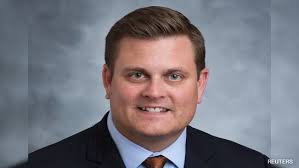
Brian Thompson, CEO of United Health Care
There’s some breaking news from NYC. The CEO of United Health Care was shot and killed on the street, and it is believed to be a “targeted attack.” The New York Times has live updates.
The executive, Brian Thompson, was shot in the chest in what people briefed on the investigations said appeared to be a targeted attack.
The chief executive of UnitedHealthcare, one of the nation’s largest health insurers, was fatally shot outside a hotel in Midtown Manhattan on Wednesday morning, the police said.
The executive, Brian Thompson, 50, was shot just after 6:45 a.m. at the New York Hilton Midtown on Avenue of the Americas near 54th Street, according to a police report. Mr. Thompson was taken to Mount Sinai West, where he was pronounced dead….
Officials with the Metropolitan Transportation Authority, which runs New York City’s transit system, said that the shooting did not impact subway or bus service during the morning commute….
Brian Thompson’s sister, Elena Reveiz, told The Times she is still processing the news of her brother’s death. “He was a good person and I am so sad,” Reveiz said when reached by phone. She said Thompson was a good father to his two children. She said she was on her way to see her sister, and to be with their family….
Gov. Tim Walz of Minnesota called the killing “horrifying news and a terrible loss for the business and health care community in Minnesota.” [….]
New York’s police commissioner, Jessica Tisch, and Jeffrey Maddrey, chief of department, will hold a news conference at 1 Police Plaza at 11:30 a.m., the police said.
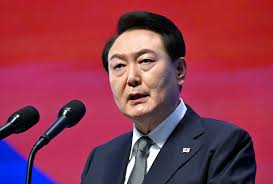
Another huge story broke yesterday from South Korea. Right wing President Yoon Suk Yeol declared martial law and attempted a coup. Fortunately he failed.
Haeryun Kang at The Guardian: Martial law came to South Korea – and my friends and I doomscrolled through the night.
At 10.23pm on 3 December in Seoul, I was already in bed, alternating between reading a book and watching YouTube cooking reels. That was when Yoon Suk Yeol, the president, declared emergency martial law in South Korea for the first time since 1979.
In an unannounced televised address, Yoon said the imposition of martial law was “aimed at eradicating pro-North Korean forces and protecting the constitutional order of freedom”.
Immediately, my text messages and online chat forums flared up. What the hell is going on? Is this a joke? Can I keep drinking at the bar tonight? Can my children go to school tomorrow? What exactly is the emergency? Utter confusion ensued for the next six hours, until a dramatic sequence of events led to the end of martial law at 4.30am.
South Korean President Yoon Suk Yeol
This was my first experience of martial law – if this short-lived circus can even be called that – something that, until now, I had only read about in history books. But even in that short time, I was terrified. The experience woke me up, once again, to the severe, unavoidable reality of Korean division. And I remembered how it can be exploited by our leaders to justify repression and control.
Thankfully, this time, Yoon’s antics were curbed. But the martial law fiasco is a testament to both the instability and resilience of South Korean democracy. It is a chilling reminder that the collective trauma of the 20th century dictatorship is not simply history.
It’s still unclear why Yoon took such an extreme measure. Martial law is defined as the temporary rule by military authorities in a time of emergency, when civil authorities are deemed unable to function. In the past, dictators have declared martial law at times of widespread national unrest and turmoil, including the Korean war. This time, it was a business-as-usual Tuesday; earlier that evening I had been for a swim at a government-run public pool.
Yoon’s measure came at a time of personal and political turmoil for him. Corruption scandals have rocked him and his family; the opposition Democratic Party has just insisted on big cuts to the budget bill despite the ruling party’s protests; Yoon’s approval ratings are hovering in the 20s – all unpleasant, sure, but stories that don’t seem all that surprising in a relatively functional democracy.
In his speech declaring martial law, Yoon expressed clear vitriol for his political opposition, for its “anti-state activities plotting rebellion”. Most South Koreans are familiar with this insidious sort of rhetoric. I grew up with this language, and still live with it, through my very conservative family in Busan. It’s a regular reminder that there is a clear political and generational divide related to the Korean division.
If you want more first-hand reporting, check out this post by Sarah Jeong at The Verge: Six hours under martial law in Seoul.
Timothy Snyder at his Substack Thinking about…: Dictators for a Day, South Korea and America.
South Korea’s president, Yoon Suk Yeol, invoked martial law, tried to install a military dictatorship — and failed completely. In his actions there are some likely similarities with the coming Trump regime, and some clear lessons for Americans to learn right now.
Yoon won a very narrow election, as did Trump. Like Trump, he refers constantly to “fake news” and calls his political opponents enemies of the state (as Trump says, “the enemy within.”) Yoon used this language to justify the imposition of martial law, as will Trump if he decides to invoke the Insurrection Act in the United States.
Like Trump, Yoon telegraphed his move in advance, and not only with such language. He surrounded himself with military men and intelligence officers who were characterized by personal loyalty. Trump is trying to do the same, now, with his proposals for Tulsi Gabbard as director of national intelligence, Kash Patel as director of the FBI, and Pete Hegseth as secretary of defense. He also wants to purge the top ranks of the armed forces.
Yoon’s main political opponent, Lee Jae-myung, had correctly predicted that Yoon would try to implement martial law. Trump makes this prediction rather easy. Trump has spoken openly of being “dictator for a day,” and of invoking the Insurrection Act, which would allow him to deploy the military inside the United States.
The Insurrection Act is not quite the same thing as martial law. Under martial law, the military assumes the basic responsibilities associated with a civilian government. The Insurrection Act, in principle, only allows the American president to use the armed forces to assist civilian authorities to enforce some law in the presence of an insurrection. But the language of the law is quite vague. Trump makes it clear that he has in mind invoking the Insurrection Act to very broad purposes, essentially to change the regime.
In both South Korea and the United States, the legal basis for asserting greater presidential authority is antiquated. Martial law was declared in South Korea for the last time in 1979. Since the late 1980s, South Korea has moved quite decisively in the direction of meaningful elections and civil rights, thanks to the forceful activity of civil society, especially trade unions. In the United States, the Insurrection Act is an assemblage of laws passed between 1792 and 1871. It was last invoked during racial violence in Los Angeles in 1992.
Yoon’s actions, although rooted of course in his own personality and South Korean career, and enabled by South Korean law, were very trumpy. Indeed, it seems likely to me that the very presence of Trump on the international scene will make such attempts more likely, among America’s democratic allies (such as South Korea) and generally.
But Yoon failed, and very badly. His dictatorship for a day lasted only about six hours. What can Americans learn from his less-than-a-day dictatorship?
Read the rest at the Substack link.
Pete Hegseth
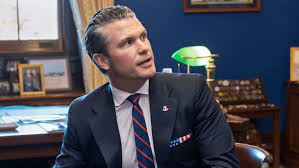
Back in the USA, It looks like Pete Hegseth will not be the Secretary of Defense. Yesterday, Dakinikat wrote about the devastating New Yorker article by Jane Mayer. Mayer reported in great detail Hegseth’s out-of-control drinking, his abuse of women, and his incompetence when trusted with leadership roles in small organizations.
Yesterday, NBC News reported: Pete Hegseth’s drinking worried colleagues at Fox News, sources tell NBC News.
Pete Hegseth, President-elect Donald Trump’s pick for defense secretary, drank in ways that concerned his colleagues at Fox News, according to 10 current and former Fox employees who spoke with NBC News.
Two of those people said that on more than a dozen occasions during Hegseth’s time as a co-host of “Fox & Friends Weekend,” which began in 2017, they smelled alcohol on him before he went on air. Those same two people, plus another, said that during his time there he appeared on television after they’d heard him talk about being hungover as he was getting ready or on set.
One of the sources said they smelled alcohol on him as recently as last month and heard him complain about being hungover this fall.
None of the sources with whom NBC News has spoken could recall an instance when Hegseth missed a scheduled appearance because he’d been drinking.
“Everyone would be talking about it behind the scenes before he went on the air,” one of the former Fox employees said….
Three current employees said his drinking remained a concern up until Trump announced him as his choice to run the Pentagon, at which point Hegseth left Fox.
“He’s such a charming guy, but he just acted like the rules didn’t apply to him,” one of the former employees said.
Trump is considering withdrawing the Hegseth nomination and appointing Ron De Santis instead. Marc Caputo at The Bulwark: Trump Talks to DeSantis About Replacing Hegseth.
DONALD TRUMP AND RON DESANTIS have personally discussed the possibility of the Florida governor becoming the next secretary of defense amid concerns that sexual assault allegations could engulf the president-elect’s current nominee for the post, Pete Hegseth.
The talks, relayed by four sources briefed on them, are in their advanced stages. They underscore the fears within Trump world about Hegseth’s ability to survive a Senate confirmation process—despite public posturing from Hegseth and allies that he remains committed to ending up at DoD.
“These discussions are real. It’s serious. I can’t say it’s definitely going to happen, but the governor is receptive and Trump is serious, too,” a top Republican source familiar with the conversations told The Bulwark on condition of anonymity.
The discussions around DeSantis involve untangling several different political threads. The governor is currently handling the fallout of a separate Trump cabinet pick: Marco Rubio’s nomination to be secretary of state. DeSantis is weighing whether to appoint Trump’s daughter-in-law, Lara Trump, to fill Rubio’s Senate seat. The possibility that the governor himself could end up at the Pentagon may factor into that decision.
Today Hegseth is again meeting with Republican Senators in a last ditch effort to convince them to support his nomination. Politico: Hegseth back on the Hill as Pentagon bid teeters.
Pete Hegseth, Trump’s embattled pick to run the Pentagon, is back on Capitol Hill today as his nomination faces even more hurdles.
Pete Hegseth’s tatoos
Concerns over Hegseth’s personal controversies are driving Trump allies to think the Defense secretary designate may not survive further scrutiny. And his fight has been complicated even more by the news that the president-elect is weighing a rival, Florida Gov. Ron DeSantis, to replace Hegseth, The Wall Street Journal was first to report. DeSantis, a former opponent in the 2024 GOP presidential primaries, offers a conservative military record and alignment with Trump’s views on “woke” military policies.
Hegseth — who has faced allegations of sexual assault and alcohol abuse — is expected to meet today with Republicans including incoming Senate Armed Services Chair Roger Wicker (R-Miss.) and the next majority leader, Sen. John Thune (R-S.D.).
Hegseth’s most crucial meeting, though, is expected to be with Sen. Joni Ernst (R-Iowa), a Senate Armed Services member who has been noncommittal about Hegseth’s nomination and is seen as a potential swing vote.
Ernst was previously floated as a potential pick for defense secretary before Trump opted for Hegseth, though she was seen as a dark horse candidate. The Iowa Republican is a traditional defense hawk, clashing somewhat with the Trump team’s views. There may also be a political divide to bridge for Ernst — who took until March to endorse Trump’s 2024 White House bid after the former president nearly swept the Republican primaries and was on a path to clinch the GOP nomination.
Ernst, the first woman combat veteran in the Senate, has a long track record of legislation aimed at addressing sexual assault and harassment in the military. That would seem to put her at odds with Hegseth, who is not only the subject of sexual assault allegations but opposes women serving in combat roles.
Ernst has also been outspoken about her own experiences with sexual assault and domestic violence. Asked about the sexual assault accusations against Hegseth, she’s said: “Any time there are allegations, you want to make sure they are properly vetted, so we’ll have that discussion.”
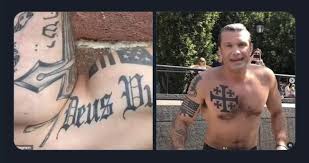
Another problematic candidate, Kash Patel for FBI director is facing headwinds. I’m sure we’ll be hearing much more about him, but here are a couple of articles about him.
Zach Beauchamp at Vox: I listened to hours of Trump’s FBI pick on Steve Bannon’s podcast. Oh boy.
Kash Patel, Donald Trump’s pick to direct the Federal Bureau of Intelligence, has never served in the FBI. But he has hosted Steve Bannon’s podcast.
Patel is a contributor at Real America’s Voice, the right-wing news network that produces Bannon’s show War Room, and has long appeared as a guest on the show. After top Trump adviser Bannon was imprisoned for four months earlier this year — on charges of contempt of Congress after he refused to comply with a January 6 Committee subpoena — Patel stepped up to serve as an occasional guest host.
Crazy Eyes Kash Patel
To try and understand Patel better, I listened to every episode and clip tagged with “Kash Patel” on the War Room website — and a few others that Bannon’s team missed. The overwhelming impression is that Patel is a man whose entire worldview revolves around paranoid conspiracy theories — specifically, conspiracies against both America and Trump, which for him are one and the same. It’s a specific kind of obsession that reminds me of the FBI’s first director: J. Edgar Hoover, a man who infamously abused his power to persecute political enemies.
During his various appearances on Bannon’s show, Patel and/or his interviewees declared that:
- China is funding the Democratic Party and sending “military-aged males” across the Mexican and Canadian borders to prepare for a preemptive strike.
- Barack Obama directs a “shadow network” that is quietly directing the intelligence community and Big Tech to persecute Trump.
- Attorney General Merrick Garland wants to throw “all of us” — which is to say, Trump allies — in prison.
And Patel is willing to go to extreme measures in response to these alleged threats.
In one episode, he called on the Republican majority in Congress to unilaterally arrest Garland — invoking an obscure legal doctrine called “inherent contempt” that has never been used in this fashion in the entirety of American history. In another, he outlined a plan for a MAGA blitz of American institutions focused on getting loyalists into high office.
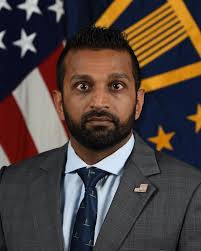
Read more at Vox.
David Corn at Mother Jones: Here Are the Republicans Kash Patel Wants to Target.
For years, Kash Patel, the MAGA provocateur, conspiracy theory monger, and seller of pills he claims reverse the effects of Covid vaccines, who Donald Trump has announced as his pick to replace FBI Director Chris Wray, has made his mission plain: He wants to crush the supposed Deep State that has conspired against Trump. Last year, while appearing on Steve Bannon’s podcast, he vowed, “We will go and find the conspirators—not just in government, but in the media. Yes, we’re going to come after the people in the media who lied about American citizens to help Joe Biden rig presidential elections. We’re going to come after you, whether it’s criminally or civilly.” This was not an empty threat, for Patel has a list of specific targets for his score-settling. And that line-up includes not only Democrats but also prominent Republicans.
Patel laid out his plans in a 2023 book titled Government Gangsters: The Deep State, the Truth, and the Battle for our Democracy. In this work, he breathlessly described the Deep State as a “coordinated, ideologically rigid force independent from the people that manipulates the levers of politics and justice for its own gain and self-preservation.” It is run “by a significant number of high-level cultural leaders and officials who, acting through networks of networks, disregard objectivity, weaponize the law, spread disinformation, spurn fairness, or even violate their oaths of office for political and personal gain, all at the expense of equal justice and American national security.” He added, “They are thugs in suits, nothing more than government gangsters.” And he inveighed that this is “a cabal of unelected tyrants.”
In his book, Patel, a supporter of QAnon and a promoter of assorted MAGA conspiracy theories (the 2020 election was stolen from Trump, the Trump-Russia investigation was a hoax, and the January 6 riot was sparked by “strange agitators” and federal agents), called for mounting “investigations” to “take on the Deep State.” Though he doesn’t specify what the cause for these inquiries would be, he has plenty of people in mind. In an appendix to the book, Patel presented a list of 60 supposed members of the Deep State who are current or former executive branch officials and who presumably would be the prey. He noted this roster did not include “other corrupt actors,” such as California Democrats Reps. Adam Schiff and Eric Swalwell, “the entire fake news mafia press corps,” and former GOP House Speaker Paul Ryan. (When Patel worked for the GOP-controlled House intelligence committee, he had run-ins with Ryan over the issuance of subpoenas and Patel leaking information to a Fox News reporter—which must mean that Ryan was a Deep State operative.)
Read the rest at Mother Jones.
Just one more story, this time on women dying because of anti-abortion laws. Amanda Marcotte at Salon: Republicans don’t care if women die from abortion bans — but they don’t want you to know about it.
After the Supreme Court ended federal abortion rights in 2022, there was a robust debate between pro- and anti-choice activists over whether or not banning abortion would kill women. Pro-choicers pointed to evidence, from both history and other countries, showing that abortion bans kill women. Anti-choice activists dismissed the record and pointed to toothless “exceptions” in abortion ban laws as “proof” that women could get abortions to save their lives.
Portia Ngumezi
The latter argument was frustrating not just because it was wrong but was generally offered in bad faith. Anti-abortion leaders know that abortion bans kill women. They don’t care. Or worse, many view dying from pregnancy as a good thing. In some cases, it’s viewed as just punishment for “sinful” behavior. Other times, it’s romanticized as a noble sacrifice on the altar of maternal duty. But conservatives are aware that this death fetish cuts against their “pro-life” brand. So there was a lot of empty denials and hand-waving about the inevitable — and expected — outcome of women dying.
We now have another proof point that abortion bans are about misogyny, not “life,” as the first deaths from red state abortion bans are being reported. Instead of admitting they were wrong and changing course, Republicans are behaving like guilty liars do everywhere, and destroying the evidence. In the process, they are also erasing data needed to save the lives of pregnant women across the board, whether they give birth or not.
ProPublica has published a series of articles detailing the deaths of women in Georgia and Texas under the two states’ draconian abortion bans. They most recently reported the death of Porsha Ngumezi, a 35-year-old mother of two from Texas. Ngumezi suffered a miscarriage at 11 weeks but was left to bleed to death at the hospital, instead of having the failing pregnancy surgically removed. Multiple doctors in Texas confirmed that hospital staff are often afraid to perform this surgery, however, because it’s the same one used in elective abortions. Rather than risk criminal charges, doctors frequently stand by and let women suffer — or die.
Ngumezi’s youngest son doesn’t fully understand that his mother is dead. ProPublica reported that he chases down women he sees in public who have similar hairstyles, calling for his mother.
A day after this story was published, the Washington Post reported that the Texas maternal mortality board would skip reviewing the deaths of pregnant women in 2022 and 2023 — conveniently, the first two years after the abortion ban went into place. The leadership claims it’s about speeding up the review process, but of course, many members pointed out the main effect is that “they would not be reviewing deaths that may have resulted from delays in care caused by Texas’s abortion bans.”
This is especially noteworthy because it’s become standard after one of these reports for anti-abortion activists to blame the victims and/or the doctors, and not the bans. Christian right activist Ingrid Skop, for instance, responded to Nguzemi’s death by insisting “physicians can intervene to save women’s lives in pregnancy emergencies” under the Texas law. If she really believed that, however, she would desperately want the state maternal mortality board to review this, and other cases like it, so they could come up with recommendations for hospital staff to treat women without running afoul of the law. Strop, however, is on the Texas maternal mortality board. She was likely part of the decision to refuse to look into whether women like Nguzemi might be saved.
So the likeliest explanation is the simple, if brutal one: Anti-abortion activists do not want doctors to save women’s lives. The current situation, where doctors are afraid to treat women and have no guidance on how to do so safely, is a status quo they are fighting to preserve. We also know this because, as Jessica Valenti reported at Abortion Every Day last week, these same activists are lobbying to rewrite current abortion bans to remove the paltry “exceptions” that do exist. Instead of allowing doctors to abort pregnancies that are failing, they want to force them to induce labor instead. That is not just cruel but will kill women. We know this because that’s exactly how Nguzemi died; her doctor gave her a drug in hopes it would push the pregnancy out, rather than surgically remove it, as is the standard of care.

Read the whole thing at Salon.
That’s all I have for you today. Please take care of yourselves. We live at a very dangerous time.
Wednesday Reads
Posted: November 27, 2024 Filed under: Donald Trump, just because | Tags: Donald Trump, Elon Musk, news, politics, regression to childhood, Trump, Vladimir Putin 3 CommentsGood Afternoon!!

By Christopher Denise
I’m still struggling to recover from the shock of the election results. At first I kept paying close attention to the news, but now I find that I just want to avoid the horror of current events. I wish there was some way I could regress to childhood and be blissfully free of the pain and anxiety that comes with greater knowledge of the outside world. Right now, I’m really having a great deal of resistance to reading the news, and watching it on TV is out of the question.
I forced myself to check current events today so I could write this post. Here are some stories that caught my attention. Trump is talking to foreign leaders on insecure phones. He is still naming stunningly inappropriate people to important government posts. He’s threatening neighboring countries with ridiculous tariffs. He’s threatening to end civil service protection for government employees. He has given Elon Musk free rein to create chaos. And he appears to have gotten away with all the crimes he was indicted for. Is it any wonder that I want to go back in time and escape real life?
Today’s reads:
Michael Collins at USA Today: ‘Dangerous territory’: Trump’s unsecured calls with world leaders concern foreign policy experts.
Donald Trump had been the president-elect for just two days when he reportedly spoke by phone with Russian President Vladimir Putin on Nov. 7.
On the call, Trump advised the Russian president not to escalate the war with Ukraine and reminded him of the U.S.’s military presence in Europe, according to an account first published by The Washington Post, which cited multiple sources familiar with the conversation.
The Kremlin, however, denied that meeting had ever taken place. “Pure fiction,” Kremlin spokesperson Dmitry Peskov insisted.
Normally, the U.S. would be able to document that the call had happened. But not this time.
That’s because the State Department, which traditionally helps coordinate phone calls between incoming presidents and world leaders, has been shut out of Trump’s calls with foreign dignitaries.
That means the conversations were not held over secure phone lines, no State Department staff were available to offer guidance on the nuances on foreign policy and no official interpreters were on hand to overcome language barriers that can sometimes lead to confusion or misunderstandings about exactly what was said.
For U.S. foreign policy analysts, Trump’s calls with Putin and other world leaders after his victory over Vice President Kamala Harris in the Nov. 5 election are cause for alarm.
“We’re entering a dangerous territory of telephone games, where Trump is going to have private chats with foreign leaders, and they’re going to tell their teams one thing, and Trump is going to tell our national security team another,” said Brett Bruen, a former diplomat who worked in the White House under President Barack Obama
Different interpretations of private conversations stemming from translation difficulties or misunderstandings could not only sow confusion, Bruen said, but also could trigger an international crisis.
Trump’s transition team did not respond to questions about why he has not involved the State Department in his calls with foreign leaders….
Historically, the State Department has helped coordinate phone calls between incoming presidents and foreign leaders because it’s important to ensure during the transition that the government is always speaking with one voice, particularly on matters of national security and foreign policy, according to the nonpartisan Center for Presidential Transition.
But since his first term as president, Trump has openly expressed suspicion and resentment of what he derisively calls “the Deep State,” the government bureaucrats who he argues worked secretly behind the scenes to sabotage his agenda.

By Kajsa Hallström
Read more details at the USA Today link. Trump is behaving like an enemy of the U.S., so why does he have the right to be president? This is so fucked up.
Trump has now partially agreed to some of the transition rules. The Washington Post: Trump signs transition agreement with Biden, but it lacks key guardrails.
The Trump transition team said Tuesday it had reached an agreement with the Biden White House to start coordinating the handoff of federal agencies to the new administration.
But the Trump team is still refusing to accept several typical trappings of the presidential transition process,including federal funding, equipment and office space — as well as official government background and security checks for his transition staff. The agreement does not include an ethics pledge for the president-elect, required by the Presidential Transition Act, stating that Trump will avoid conflicts of interest while in office.
An ethics plan covering the transition staff was signed by the Trump team and posted on the website of the General Services Administration, which coordinates the handover of hundreds of agencies.
The agreement clears the way for Trump-appointed “landing teams” to start entering government offices to receive briefings from career staff about the operations of hundreds of federal agencies, a ritual of presidential transitions. By turning down about $7 million in federal funding for the transition, Trump will be able to raise unlimited privatedonations for his transition.
The long delay in signing the transition deal — which was signed by Vice President Kamala Harris before the election in September — does not mean that Trump’s transition will now conform to those of his predecessors. The president-elect refused to abide by key requirements aimed at transparency and security.
The limited agreement also reflects a deep distrust the president-elect holds toward the federal governmentfor stymieing his first-term agenda or in some cases bolstering legal cases against him. Trump and his political alliespledged during the campaign to radically downsize and restructure the federal workforce of 2.2 million.
Trump’s transition team has not signed a memorandum of understanding with the Justice Department, for instance, that would allow the agency to conduct background checks and intensive reviews for the security clearances that many of Trump’s landing teams need for the Biden administration to legally share classified intelligence and national defense briefings. The briefings will only be given to Trump transition officials who have a proper security clearance and have signed a nondisclosure agreement, according to the White House.
Some ethics guardrails were put in place with the White House. Transition officials are prohibited, for instance, from using information they learn in their new roles for their personal benefit.
But the plan does not include language about the president-elect’s own ethical conduct during the transition, a new provision of the Presidential Transition Act added by Congress after ethical issues dogged the first Trump administration.
Again, why was this evil man even allowed to run for office? Read more excuses at the WaPo link.
The New York Times: Trump Picks Stanford Doctor Who Opposed Lockdowns to Head N.I.H.
President-elect Donald J. Trump said on Tuesday evening that he had selected Dr. Jay Bhattacharya, a Stanford physician and economist whose authorship of an anti-lockdown treatise during the coronavirus pandemic made him a central figure in a bitter public health debate, to be the director of the National Institutes of Health.
“Together, Jay and RFK Jr. will restore the NIH to a Gold Standard of Medical Research as they examine the underlying causes of, and solutions to, America’s biggest health challenges, including our Crisis of Chronic Illness and Disease,” Mr. Trump wrote on social media, referring to Robert F. Kennedy Jr., his choice to lead the N.I.H.’s parent agency, the Department of Health and Human Services.
If confirmed by the Senate, Dr. Bhattacharya would lead the world’s premier medical research agency, with a $48 billion budget and 27 separate institutes and centers, each with its own research agenda, focusing on different diseases like cancer and diabetes. Dr. Bhattacharya, who is not a practicing physician, has called for overhauling the N.I.H. and limiting the power of civil servants who, he believes, played too prominent a role in shaping federal policy during the pandemic.
He is the latest in a series of Trump health picks who came to prominence during the coronavirus pandemic and who hold views on medicine and public health that are at times outside the mainstream. The president-elect’s health choices, experts agree, suggest a shake-up is coming to the nation’s public health and biomedical establishment.
Dr. Bhattacharya is one of three lead authors of the Great Barrington Declaration, a manifesto issued in 2020 that contended that the virus should be allowed to spread among young healthy people who were “at minimal risk of death” and could thus develop natural immunity, while prevention efforts were targeted to older people and the vulnerable.
Through a connection with a Stanford colleague, Dr. Scott Atlas, who was advising Mr. Trump during his first term, Dr. Bhattacharya presented his views to Alex M. Azar II, Mr. Trump’s health secretary. The condemnation from the public health establishment was swift. Dr. Bhattacharya and his fellow authors were promptly dismissed as cranks whose “fringe” policy prescriptions would lead to millions of unnecessary deaths.
Read more about this awful person at the NYT link.

By Christopher “Denise
Politico: Trump taps financier and donor Phelan to be Navy secretary.
President-elect Donald Trump has selected businessman John Phelan as his nominee to lead the Navy, according to a statement released on Tuesday night.
“It is my great honor to announce John Phelan as our next United States Secretary of the Navy! John will be a tremendous force for our Naval Servicemembers, and a steadfast leader in advancing my America First vision,” Trump wrote. “He will put the business of the U.S. Navy above all else.”
Trump’s pick of Phelan, after choosing Army National Guard Veteran and former Fox News host Pete Hegseth to lead the Defense Department, is a sign that the incoming administration could prioritize disruptors coming into the agency instead of long-tenured bureaucrats. Trump is also eyeing businessman Steve Feinberg and defense investor Trae Stephens as the Pentagon’s No. 2, The Wall Street Journal reported.
Phelan, who leads the private investment firm Rugger Management and once handled Michael Dell’s investments, was a major donor to the Trump campaign and reportedly hosted the president-elect at his Aspen, Colorado, home this summer where Trump went on a profanity-laced tirade about immigration and warned that the election could be the last the United States ever had if Vice President Kamala Harris had won.
And get this: Phelan has no military experience. Trump also consider Ronny Jackson for the job!
Politico: Kash Patel and Cliff Sims are jostling for the deputy director gig at the CIA.
Two Trump transition insiders, Cliff Sims and Kash Patel, are angling to be deputy director of the CIA — and angering others who feel they’re using their roles on the transition to undermine any would-be contenders, according to three people familiar with the matter.
The No. 2 position at the powerful spy agency is one of the most sought-after national security posts that remains unfilled. It does not require Senate confirmation — a concern for other roles, like FBI director, Patel is said to be interested in — but wields enormous influence inside the U.S. intelligence community.
The frustration toward Sims, the former White House and ODNI communications strategist, and Patel, the firebrand former House Intelligence Committee staffer and Pentagon official, stems from the fact that both are helping the transition interview candidates for the CIA role, said the three people, all of whom were granted anonymity to share details on the transition.
“The issue that a lot of us have is that these people are involved in staffing national security jobs, and at the same time they’re also promoting themselves for the same roles,” said one of the people.
There is also a concern that Patel in particular is fighting dirty. A second person said there was suspicion Patel was leaking damaging stories on Sims, citing a recent story on a blow-up Trump had after being reminded Sims wrote a tell-all memoir in 2019 after leaving the White House.
Trump has also put Elon Musk in a prominent position in his transition, and now we are hearing from Musk’s mother, who seems even stupider than her son.
When President-elect Donald Trump said Elon Musk and Vivek Ramaswamy would recommend major cuts to the federal government in his administration, many public employees knew that their jobs could be on the line.
Now they have a new fear: becoming the personal targets of the world’s richest man – and his legions of followers.
By Anna Matveeva
Last week, in the midst of the flurry of his daily missives, Musk reposted two X posts that revealed the names and titles of people holding four relatively obscure climate-related government positions. Each post has been viewed tens of millions of times, and the individuals named have been subjected to a barrage of negative attention. At least one of the four women named has deleted her social media accounts.
Although the information he posted on those government positions is available through public online databases, these posts target otherwise unknown government employees in roles that do not deal directly with the public.
Several current federal employees told CNN they’re afraid their lives will be forever changed – including physically threatened – as Musk makes behind-the-scenes bureaucrats into personal targets. Others told CNN that the threat of being in Musk’s crosshairs might even drive them from their jobs entirely – achieving Musk’s smaller government goals without so much as a proper review.
“These tactics are aimed at sowing terror and fear at federal employees,” said Everett Kelley, president of the American Federation of Government Employees, which represents more than 800,000 of the 2.3 million civilian federal employees. “It’s intended to make them fearful that they will become afraid to speak up.”
This isn’t new behavior for Musk, who has often singled out individuals who he claims have made mistakes or stand in his way. One former federal employee, previously targeted by Musk, said she experienced something very similar.
“It’s his way of intimidating people to either quit or also send a signal to all the other agencies that ‘you’re next’,” said Mary “Missy” Cummings, an engineering and computer science professor at George Mason University, who drew Musk’s ire because of her criticisms of Tesla when she was at the National Highway Traffic Safety Administration.

Read the rest at the link.
The Independent: Elon Musk’s mom says it’s ‘degrading’ to call her son ‘wealthy’: He’s ‘the genius of the world.’
The mother of Elon Musk, the world’s richest man, stopped by Fox Business on Monday to scold those who call her son “wealthy,” claiming it was “degrading” and that she would prefer he be referred to as the “genius of the world.”
With her son now president-elect Donald Trump’s “First Buddy” and in charge of the so-called Department of Government Efficiency (DOGE), Maye Musk sat down with Fox Business anchor Stuart Varney to gush over her 53-year-old child’s accomplishments.
Besides talking about the younger Musk’s companies SpaceX, Tesla and X (formerly Twitter), she also dished on how well her son and Trump get along, especially since the election.
“I’ve seen them together, but very shortly. I live in New York, and they’re in Mar-a-Lago or at a SpaceX launch, and they just seem to be having fun. A lot of fun,” she declared, adding: “And it’s nice for both of them to have fun, and [Elon] really respects him a lot and is really happy that there’s a future for America now.”
She also claimed that it would be “very easy” for her son and DOGE co-chair Vivek Ramaswamy to slash the federal workforce and cut spending, citing Elon Musk’s severe and immediate layoffs when he purchased Twitter in 2022.
Seemingly parroting her son’s talking points, she absolutely trashed the press. “What they call mainstream media, but I call them dishonest Democrat media, they will be trying to break up the relationship. They will be hating everything,” she said. “And I told that to Elon, he said he expects that because they were dishonest before the election.”
Whatever.

Artist unknown
There’s just a tiny bit of possible good news from former federal prosecutor Barbara McQuade at MSNBC: How Jack Smith quietly ensured Trump’s Jan. 6 case isn’t actually going anywhere.
Special counsel Jack Smith filed a motion with the trial court in the District of Columbia to dismiss the Jan. 6 election interference case against President-elect Donald Trump on Monday, kicking up a flurry of questions — namely, why would the special counsel pull the plug? Smith later filed a motion with the 11th Circuit Court of Appeals to dismiss the appeal of the government documents case against Trump. While Trump has vowed to fire Smith, why would the special counsel do something to make it easy for Trump, by dismissing the cases himself before Trump is sworn in to office in January? Is this simply an example of what historian Timothy Snyder calls “obeying” an authoritarian in advance?
Not at all. In fact, this move could be an effort to keep the cases alive in the long term. An interesting tell in each motion is Smith’s request to dismiss the cases “without prejudice.” That means that the cases can be filed again. By dismissing the cases now on his own terms, Smith blocks Trump’s attorney general from dismissing the cases for all time.
In addition, by filing his motions pre-emptively, Smith was able to explain his reasons for dismissing the case, rather than allowing Trump’s future AG to mischaracterize them. According to Smith, he was dismissing the case not because of the merits or strength of the cases, but because he had to. As Smith explains, the DOJ’s Office of Legal Counsel, whose opinions are “binding” on the special counsel, has concluded that a sitting president may not be indicted or criminally prosecuted under the Constitution. OLC reasoned that criminal charges would make it impossible for a president to carry out his constitutional duties in light of the distraction of preparing a criminal defense, the public stigma that would hamper his leadership role and the obstacles prison would impose on his ability to perform his duties.
But Smith was careful to note that this relief from criminal prosecution is “temporary,” and ends when the president leaves office. Smith cites OLC as concluding that this form of immunity for a sitting president “would generally result in the delay, but not the forbearance, of any criminal trial” That is, Trump gets a reprieve, but only during his term in office.
Of course, as in most criminal cases, the statute of limitations here is five years from the date of the last act alleged in the indictments. In the Jan. 6 case, the last alleged conduct occurred in January 2021, so the deadline for filing new charges would typically be January 2026. In the documents case, in which the last act occurred in August 2022, the statute will expire in August 2027. Both dates will arrive well before Trump’s term ends. But Smith’s brief contains another tell when he writes that OLC has “noted the possibility that a court might equitably toll the statute of limitations to permit proceeding against the President once out of office.” That is, a court could call a timeout, pausing it on Trump’s inauguration day on Jan. 21, 2025, and then restarting the clock when Trump leaves office in 2029. That would give prosecutors plenty of time to refile charges. Certainly, the tolling issue would be litigated, but by dismissing the case now, Smith preserves this issue for future prosecutors to argue.
Read the rest at MSNBC.
That’s it for me today. I don’t know how I even got through those articles. I’m going back into hibernation now.

 peej
peej Carissa
 bostonboomer
 dakinikat
 ecocatwoman
 mablue2
 Mama Lopez
 peggysue22
 quixote
 skydancingguestblogger
 Mona (aka Wonk the Vote)



 Sky Dancing
Recent Comments