
Thursday Reads
Posted: July 14, 2011 Filed under: Democratic Politics, fundamentalist Christians, morning reads, Republican politics, Republican presidential politics, Surreality, the villagers, U.S. Economy, U.S. Politics, voodoo economics, We are so F'd | Tags: Barack Obama, Eric Cantor, Freedom from Religion Foundation, John Boehner, liquor licenses, Mark Dayton, Minnesota government shutdown, Mitch McConnell, Mumbai attacks, Rick Perry Tim Pawlenty 40 Comments
Good Morning!! The big news is still the deadlocked debt ceiling talks. There will be another meeting of the squabbling children tomorrow afternoon. Frankly, I’m hoping for some serious fireworks.
Meanwhile, Eric Cantor is grabbing points with the Tea Party, but everyone else is laughing at him. Check this out from Joe Klein (yes, he’s an idiot, but the Villagers listen to him):
David Rogers over at Politico, who has been doing this–extremely well–for about as long as I have, has word that the President of the United States monstered down on Representative Eric Cantor in Wednesday’s deficit ceiling squabble. This is so refreshing on so many levels. Cantor has been using this crisis to undermine his leader John Boehner, by playing the Tea Party/Grover Norquist recalcitrance card. The boy badly needed someone to get up in his face and Barack Obama, of all people, apparently did, telling Cantor, in no uncertain terms, that he’d veto any short term deficit ceiling fix or, indeed, any plan that did not include revenue increases. Then Obama walked out, or the meeting ended, depending on whom you talk to.
So what we have now is the Republican party in, yes, disarray–a word used to describe Democrats almost exclusively, back in the day before the crazies took over the GOP store. You have Cantor and the House Teasies opposing any revenue increases, including a tax loophole closing plan that Ronald Reagan and Edmund Burke would have smiled upon. You have Boehner, struck dumb apparently, after his attempt at bipartisan statesmanship with the President was greeted by tossed shoes and catcalls from the Teasies. You have Mitch McConnell, well, I’m speechless about Mitch McConnell…
Here’s this Kentucky dude whose every action, before Tuesday, painted him as one of the most cynical operators we’ve seen on Capitol Hill since Pitchfork Ben Tillman–and now, suddenly, he’s gone all rational on us, chiding his Republican forces (that means you, Eric) about leading the party to the electoral slaughterhouse if they don’t take this debt ceiling business seriously. He has proposed to place the responsibility for raising the debt ceiling solely on the President and let Obama run with that. This is looking more likely today than it did yesterday.
Jonathan Allen at Politico suggests that Cantor is overreaching.
As he has surged to the forefront of debt-limit negotiations and faced round-the-clock scrutiny on cable and radio talk shows, a fundamental question about House Majority Leader Eric Cantor’s high-stakes political maneuvering is being discussed in the halls of power.
Is he building street cred with House Republicans or overplaying his hand?
The answer may be both. Cantor’s allies note that he’s been put in the spotlight by assignment — from Speaker John Boehner and President Barack Obama — not by choice. And they say he has gained political capital within the GOP conference.
Cantor has a lot riding on the outcome of the debt-limit negotiations. He’ll share in the public blame if they fall apart and the economy tanks, and he’ll face recriminations from his conservative base in the House if he cuts too soft a deal with the president.
At The New Republic, Jonathan Chait explains why “The Republican Crazy Is Not An Act.” Please don’t miss it.
John Boehner says working with the White House over the debt ceiling has been like “dealing with Jello,” whatever that means.
“Dealing with them the last couple months has been like dealing with Jell-o,” Boehner said. “Some days it’s firmer than others. Sometimes it’s like they’ve left it out over night.”
Boehner explained that talks broke down over the weekend because, he said, the president backed off entitlement reforms so much from Friday to Saturday, “It was Jell-o; it was damn near liquid.”
“By Saturday, they’d spent the previous day and a half just going backwards” on reforming entitlement programs such as Social Security, Medicare and Medicaid.
“The only thing they’ve been firm on is these damn tax increases,” the Speaker said.
I have no idea what he’s trying to say. Maybe he’s been spending too much time in the tanning salon.
The Villagers will keep on bickering, but real people are suffering out in the real world. There has been another terrible attack in Mumbai.
The blasts that rocked Mumbai killing 18 people and injuring 131 was a “coordinated terror attack” but officials have not singled out a group behind them, India’s home minister said Thursday….Three bomb blasts rocked India’s largest city in congested areas during the evening rush hour Wednesday.
The attackers used ammonium nitrate with a timer mechanism based on forensic evidence collected from the blast sites…
In Minnesota, the state government shut down two weeks ago because of lack of funds, and it is causing bars to shut down because they can’t renew their licenses.
By Wednesday, hundreds of bars, restaurants and liquor stores across Minnesota already had been stopped from buying new inventory due to expired permits the state has not renewed.
MillerCoors, the second largest brewer in the United States, failed to get its license to sell 39 brands in Minnesota renewed before a government shutdown over a budget impasse began with the new fiscal year on July 1.
“Without that brand label registration, their distribution and sales aren’t allowed to continue,” Doug Neville, a state public safety department spokesman, said on Wednesday.
The stalemate, the longest of the nation’s six state government shutdowns since 2002, began July 1 after Democratic Governor Mark Dayton and Republican legislative leaders failed to resolve an impasse about how to address a $5 billion budget deficit. Republicans want spending cuts alone, and Dayton is pushing for taxes to preserve services.
Dayton yesterday traveled to Rochester, which is home of the Mayo Clinic, and Albert Lea, about 10 miles (16 kilometers) from the Iowa border, to meet with people with disabilities and senior citizens to “discuss what is at stake in the state budget,” according to an e-mail from his office.
Meanwhile, legislative Republicans sent out an e-mail with charts showing the impact of the shutdown on areas including schools and parks in those two cities. It didn’t mention a booze drought.
Although businesses can sell alcohol with city liquor licenses, they can’t purchase new product without the state buyer’s card, Neville said in a telephone interview from St. Paul. Cards for 300 of 10,000 businesses have expired since the shutdown began July 1, and that will increase to 424 by the end of the month, Neville said.
Walter Shapiro writes that the whole thing is really Tim Pawlenty’s fault.
In addition to irrational politics and the state’s tradition of moralism, Pawlenty shares in the blame for Minnesota’s budgetary woes. And the GOP presidential candidate knows his financial stewardship is on the line: Late in the evening of June 30—just minutes before the Minnesota government officially shut down because of a budgetary impasse—Pawlenty held a hastily scheduled press conference at the Minneapolis-St. Paul Airport to try to shield himself from political attack over the shut-down. “Both in Washington, D.C., and in St. Paul, the Democrats continue their thirst for more spending and more taxes,” Pawlenty said in a boilerplate critique of his successor. “That’s not the right direction for Minnesota, and it’s not the right direction for our country.”
What the rhetorical onslaught was designed to hide was that, in truth, Pawlenty—like many governors in both parties juggling the books in the midst of the severe downturn—practiced budgetary legerdemain to avoid a statutorily forbidden deficit before he left office in January. Of course, it was hypocritical for Governor Pawlenty to eagerly bank $2.3 billion in federal stimulus money while Politician Pawlenty was denouncing Barack Obama for spending it. But, for all the partisan talking points over Pawlenty’s budgetary record, it strains credulity to believe that conservative GOP voters will blame him because Republicans in the Minnesota legislature held the line against a Democratic governor. In fact, Dayton may have caused more political mischief for Pawlenty with a recent unsuccessful proposal to help end the budgetary wars. Instead of his proposed 2 percent income-tax surcharge on millionaires, Dayton suggested that he could also accept a dollar-a-pack increase in the state cigarette tax. His purported inspiration: Pawlenty’s 2005 acceptance of a 75-cent-a-pack wholesale tax increase under the transparent guise of a Health Impact Fee. Undoubtedly relishing every moment, Dayton declared, “Governor Pawlenty even agreed to a cigarette tax increase. So there’s precedent for that.”
But, beyond the narrow implications for Pawlenty’s political fate, the broader national message from Minnesota is how easy it is for both parties to step off the cliff, heedless of the consequences. Already, there is talk that the government shutdown could last for months.
Will other states follow suit?
Finally, The Freedom From Religion Foundation (FFRF) is suing Texas Governor Rick Perry over a religious rally he is planning to hold in Houston in early August.
Perry proclaimed August 6 as a “Day of Prayer and Fasting for our Nation to seek God’s guidance” and invited governors from across the nation to join his Christian prayer summit at Reliant Stadium.
“Given the trials that beset our nation and world, from the global economic downturn to natural disasters, the lingering danger of terrorism and continued debasement of our culture, I believe it is time to convene the leaders from each of our United States in a day of prayer and fasting, like that described in the book of Joel,” Perry said in June.
The legal complaint asks the federal court to declare unconstitutional Perry’s organization, promotion and participation in the event because it violates the Establishment Clause of the First Amendment.
It says Perry’s active participation in the event violates the U.S. Constitution by “giving the appearance that the government prefers evangelical Christian religious beliefs over other religious beliefs and non-beliefs, including by aligning and partnering with the American Family Association, a virulent, discriminatory and evangelical Christian organization known for its intolerance.”
That should be a fun story to follow.
So… what are you reading and blogging about today?
Pakistan May Have Outed Chief of CIA’s Islamibad Station
Posted: December 17, 2010 Filed under: Afghanistan, Barack Obama, Central Intelligence Agency, Foreign Affairs, Pakistan | Tags: Central Intelligence Agency, covert operations, drone strikes, Islamibad Station, Mumbai attacks, Pakistan 12 Comments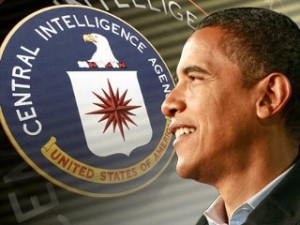
Things seem to be getting pretty dicey for the U.S. in Pakistan. The Guardian UK reports that:
The CIA has pulled its station chief from Islamabad, one of America’s most important spy posts, after his cover was blown in a legal action brought by victims of US drone strikes in the tribal belt.
The officer, named in Pakistan as Jonathan Banks, left the country yesterday, after a tribesman publicly accused him of being responsible for the death of his brother and son in a CIA drone strike in December 2009. Karim Khan, a journalist from North Waziristan, called for Banks to be charged with murder and executed.
In a rare move, the CIA called Banks home yesterday, citing “security concerns” and saying he had received death threats, Washington officials told Associated Press. Khan’s lawyer said he was fleeing the possibility of prosecution.
Banks may have only a business visa, and so wouldn’t have diplomatic immunity if he were required to testify in the trial. According to the article, recalling a station chief is extremely rare. Although the Pakistani government supposedly supports U.S. drone strikes, many Pakistanis are understandably outraged by them.
The recall comes at a sensitive moment for Washington. This week’s Afghanistan policy review brought fresh focus on Taliban safe havens in Pakistan’s tribal belt. Meanwhile CIA drone attacks – which are co-ordinated from the Islamabad embassy – have reached a new peak. Three drones struck targets in Khyber, a previously untouched tribal agency, on Friday, reportedly killing 24 people and signalling a widening of the CIA covert campaign….There have been over 100 strikes so this year, twice as many as in 2009.
The Guardian says there are rumors that Banks may have been outed by someone in the Pakistani intelligence agency (the ISI), because “several senior ISI officials were named in a New York legal action brought by relatives of the 2008 Mumbai attacks.”
The New York Times also has posted an article about this.
On Thursday and Friday, the United States appeared to make good on promises to expand its own efforts to attack the militants, with drone strikes for the first time hitting Khyber agency in Pakistan’s lawless tribal areas. Most drone strikes this year have targeted North Waziristan. Pakistani government officials said at least 26 militants were killed in the most recent attacks.
The outing of the C.I.A. station chief is tied to the spy agency’s campaign of drone strikes, which are very unpopular in Pakistan, although the government has given its tacit approval for them.
Gee, no kidding. I mean who wants to have their house blown up unexpectedly by agents of a foreign power? Interestingly, the Times avoided telling its readers the outed agent’s name, even though the Guardian had already published it. The Times is truly the Obama administration’s house organ. According article,
The intensifying mistrust between the C.I.A. and I.S.I., two uneasy but co-dependent allies, could hardly come at a worse time. The Obama administration relies on Pakistan’s support for the armed drone program, which this year has launched a record number of strikes in North Waziristan against terror suspects.
“We will continue to help strengthen Pakistani capacity to root out terrorists,” President Obama said on Thursday. “Nevertheless, progress has not come fast enough. So we will continue to insist to Pakistani leaders that terrorist safe havens within their borders must be dealt with.”
Not being an expert on foreign affairs, I’m not sure if this statement triggered anger in Pakistan or not. Maybe President Obama should leave diplomacy to his Secretary of State.

 peej
peej Carissa
 bostonboomer
 dakinikat
 ecocatwoman
 mablue2
 Mama Lopez
 peggysue22
 quixote
 skydancingguestblogger
 Mona (aka Wonk the Vote)



 Sky Dancing
Recent Comments