
Memorial Day Reads
Posted: May 29, 2017 Filed under: Afternoon Reads | Tags: Baltimore, Memorial Day, New Orleans, removal of confederate statues, Richmond 33 Comments Good Afternoon Sky Dancers!!
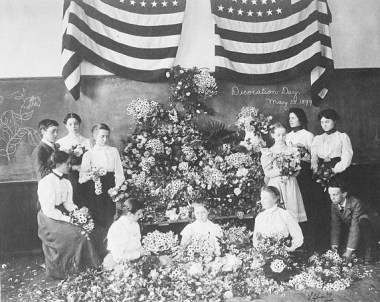
Today used to be known as Decoration Day. It originally commemorated Civil War dead but now–as Memorial Day–it honors all who have fallen in service to our country as members of our armed forces. It became a federal holiday in 1971. I think I write on this each year, but much to my chagrin, the state of Mississippi just recognized the federal holiday recently. It was a highly controversial move.
On May 5, 1868, General John A. Logan, leader of an organization for Northern Civil War veterans, called for a nationwide day of remembrance later that month. “The 30th of May, 1868, is designated for the purpose of strewing with flowers, or otherwise decorating the graves of comrades who died in defense of their country during the late rebellion, and whose bodies now lie in almost every city, village and hamlet churchyard in the land,” he proclaimed.
The date of Decoration Day, as he called it, was chosen because it wasn’t the anniversary of any particular battle.
On the first Decoration Day, General James Garfield made a speech at Arlington National Cemetery, and 5,000 participants decorated the graves of the 20,000 Union and Confederate soldiers buried there.
Many Northern states held similar commemorative events and reprised the tradition in subsequent years; by 1890 each one had made Decoration Day an official state holiday. Southern states, on the other hand, continued to honor their dead on separate days until after World War I.
There are states in the South that still celebrate the Confederate version of Memorial Day.
In Georgia the day has been called “State Holiday” since 2015, when Confederate Memorial Day and Robert E. Lee’s birthday were struck from the state calendar. The state holiday list says the official holiday is April 26 but will be observed this year on Monday, April 24.
New Orleans opened the still deep and contentious wounds of the Confederacy by deciding what to do with some of our Confederate symbols this month. Mayor Mitch Landrieu and the city tore down four of the most visible monuments built by Lost Causers years after the surrender of the South. He commemorated the occasion with this speech. This is an interview from NPR he gave shortly after the speech.
(SOUNDBITE OF ARCHIVED RECORDING)
MITCH LANDRIEU: These statues are not just stone and metal. They’re not just innocent remembrances of a benign history. These monuments celebrate a fictional sanitized Confederacy, ignoring the death, ignoring the enslavement, ignoring the terror that it actually stood for.
CORNISH: New Orleans Mayor Mitch Landrieu spoke last Friday after the city took down the last of four Confederate monuments. General Robert E. Lee was the final one to go. It was an address about the decision, about the history of slavery in the city. It was an address about race. A week later, people are still talking about it, dissecting sections of the speech.
(SOUNDBITE OF ARCHIVED RECORDING)
LANDRIEU: This is not about a naive quest to solve all of our problems at once. This is, however, about showing the whole world that we as a city, that we as a people are able to acknowledge, to understand, to reconcile and, more importantly, choose a better future for ourselves, making straight what has been crooked and making right what was wrong.
He was interviewed by Chuck Todd for MTP.
I’d like to continue quoting the interview from NPR.
CORNISH: I want to quote a letter to the editors of the Times-Picayune, a writer, a citizen named Charles Foy of Madisonville. He says you single-handedly managed to turn innocuous city landmarks into battlegrounds and that these monuments have stood in place for many years. He goes on to say, I can guarantee you that very few people, black or white, gave them a second thought. This is not an uncommon opinion.
LANDRIEU: Well, it’s a silly opinion. I mean that’s the argument that says it all. Mayor, we don’t know anybody that cares about these monuments. That’s because we live a block away and a world apart. And you know, this story that we told was not just about the monuments. You know, the context is that New Orleans got destroyed after Katrina. We’ve been rebuilding our whole city. And as we built back all of our schools and all of our health clinics and all of our hospitals and all of our businesses, we began to think about our public spaces and whether those public spaces really represented who we were as a people. And those monuments stuck out on public spaces like a sore thumb.
And so I asked the people of New Orleans just to think about that, and that speech was really to the people of New Orleans. It wasn’t a speech to the rest of the nation. So it’s quite a surprise that the speech has gotten so much attention across the country. But this is – the issue of race is a complicated issue for the country that we have to walk through. You can’t go around it. You can’t go over it. You can’t go under it. You have to go right through it, and it’s painful.
CORNISH: Is there a particular moment when you started to think about actually taking the monuments down?
LANDRIEU: Yeah, there was a specific moment. (Laughter) I was having breakfast with Wynton Marsalis about three years ago, and he and I were thinking about what the 300th anniversary of the city would look like, which is, by the way, next year.
And I was trying to prepare the city about how to develop itself and get ready for the future. And he said, you ought to think about those monuments. And I said, you’re crazy. I’ve walked by those monuments every day. And he said, no, I want you to really think about it. And I told him I would.
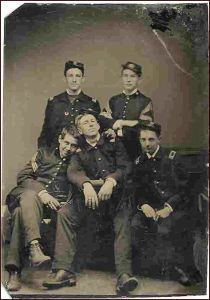 The removal of the statues came at odd times with the jobbers wearing masks and bullet proof vests. There was heavy police presence due to a huge contingent of protesters that settled in for awhile. It was the usual suspects.
It seems like many generations after the Civil War we still have white people trying to make a last stand on a wound that does not heal for any one. Just as I cannot understand supporting “heritage” of a group of enslavers, I cannot fully understand the struggles of those descended from slaves. Even though I descended from old slave-owing families, all of my family fought on the Union side and was solidly against slavery so the narrative with which I grew up did not include a celebration of the confederacy.
Supporters and opponents of removing New Orleans’ Confederate monuments met Sunday afternoon (May 7) at Lee Circle, in a tense and angry confrontation that included some scuffles during a day of demonstrations.
Police quickly broke up a couple of fights, and the dueling protests appeared mostly peaceful. But heated words, slurs and profanities were exchanged, as demonstrators on opposite sides held Confederate flags and protest signs.
A march led by Take ‘Em Down NOLA, which supports the removal of the Confederate monuments, brought hundreds of people from Congo Square to Lee Circle, where they came face-to-face with groups of monument supporters who had been there since the morning. Police said more than 700 people were involved in the demonstrations.
Those advocating the removal of the statues chanted slogans like “Go home racists,” and “Hey hey, ho ho, white supremacy’s got to go.”
On the other side, a monument supporter shouted over a megaphone: “We built this country. If you don’t like it, there are plenty of other non-white countries you can go to!”
I’ve actually seen friendships end and family feuds heat up over the removal of the statues. I’m a preservationist and historian at heart and have been more active and focused on preserving, restoring, and showing our civil rights sites. I’m still waiting for the statue to appear of little Ruby Bridges and the promised memorial at the site where Homer Plessey sat down in a white part of a train. Both of these are within blocks of my home. I also was probably one of the few people fuming when this same mayor and city council voted to destroy the Woolworth’s building with its historical lunch counter. I’m still waiting for the statues in memorial of the victims of lynchings too. But, right now, that’s no one’s focus.
The Smithsonian Magazine had a piece on Richmond’s dealings with Confederate History. The city’s monuments became a place of protest when they added a statue of Arthur Ashe in the 90s. Their struggle has been different.
In the past couple of weeks, how we remember and commemorate the Civil War has undergone seismic shifts. The city of New Orleans is in the process of removing four monuments that celebrate Confederate leaders and an 1874 attempt by white supremacists to topple Louisiana’s biracial Reconstruction government. In Charlottesville, Virginia, a court injunction temporarily halted the city’s plans to sell its Robert E. Lee monument while alt-right leader Richard Spencer led a torchlight protest this past weekend reminiscent of Klan rallies of the past. White supremacist support for the Lee statue will likely strengthen and broaden the call to remove this and other Confederate monuments throughout the city. Curiously, however, the former capital of the Confederacy, Richmond, Virginia, has not seen a similar outcry. Why?
The city boasts some of the most significant sites of Confederate commemoration. Its famed Monument Avenue is studded with massive statues of Generals Robert E. Lee, Stonewall Jackson and J.E.B. Stuart along with the president of the confederacy, Jefferson Davis. Thousands of Confederate soldiers and officers, and Davis himself, are buried in the city’s Hollywood Cemetery—a sacred space for white Southerners grappling with defeat. Veterans’ reunions, battlefields, monument dedications, parades and the opening of the Confederate Museum in 1896 helped solidify the city itself as a shrine to Confederate memory by the beginning of the 20th century. If ever a city was ripe for calls to remove Confederate monuments, it is Richmond.
But beyond scattered acts of vandalism, locals have remained largely quiet. Part of the reason why is that over the years, the city has recognized changing perceptions of the Confederacy—and officials have addressed concerns that public spaces devoted to the city’s past do not sufficiently reflect Richmond’s diversity.
In the past few decades, Richmond has dedicated new monuments that have greatly expanded its commemorative landscape. A statue of homegrown tennis star Arthur Ashe joined Monument Avenue in 1996—arguably one of its most high-profile and controversial additions. While some Richmonders welcomed the statue, others argued that it would “disrupt the theme of the avenue,” and both its supporters and detractors mocked the statue itself.
In 2003, the city dedicated a monument of Abraham Lincoln and his son to mark the president’s April 1865 visit following the abandonment of Richmond by the Confederate government. The dedication helped re-interpret Lincoln’s visit as a symbol of slavery’s end as opposed to the entrance of a conquering tyrant. While in Richmond just 11 days before his assassination, Lincoln famously corrected newly freed slaves who knelt at his feet: “Don’t kneel to me,” Lincoln responded. “That is not right. You must kneel to God only, and thank Him for the liberty you will afterward enjoy.” Four years after the Lincoln statue was erected, the city installed the Richmond Slavery Reconciliation Statue, a 15-foot bronze sculpture depicting two enslaved individuals embracing not far from the center of Richmond’s former slave market.
 So, now the city of Baltimore and its mayor Catherine Pugh will try to find a path for a city with a history of racial divides and strife. Maryland wasn’t even a Confederate state yet still has signs of the Lost Cause.
New Orleans recently took down its Confederate monuments. Baltimore Mayor Catherine Pugh says she is considering doing the same thing in the city.
“The city does want to remove these,” Pugh told The Baltimore Sun. “We will take a closer look at how we go about following in the footsteps of New Orleans.”
Before former Mayor Stephanie Rawlings-Blake left office last year, she added signs in front of four Confederate monuments in Baltimore. The signs said, in part, that the monuments were “part of a propaganda campaign of national pro-Confederate organizations to perpetuate the beliefs of white supremacy, falsify history and support segregation and racial intimidation.”
But Rawlings-Blake stopped short of removing the monuments. She cited costs and logistical concerns, and left the decision to Pugh, who took office in December.
 The City Commission has recommended the removal of two specific monuments.
University of Maryland law professor Larry S. Gibson, a commission member, proposed the plan to remove the Roger B. Taney Monument on Mount Vernon Place and the Robert E. Lee and Thomas J. “Stonewall” Jackson Monument in the Wyman Park Dell.
Gibson said Taney’s statute should be dismantled because his authorship of the Dred Scott Supreme Court decision was “pure racism.” The decision held that African-Americans could not be American citizens.
“In my view, he deserves a place in infamy,” Gibson said of the fifth chief justice of the United States.
Gibson also argued that Baltimore has a disproportionate number of monuments to the Confederacy on its public property. He said that more than twice as many Marylanders fought for the Union as the Confederacy during the Civil War, but the city has only one public monument to the Union.
“Three monuments to the Confederacy is out of proportion,” Gibson said. “Probably a majority of Baltimoreans think there should be none to the Confederacy.”
The commissioners recommended that the statute of Lee and Jackson be offered to the U.S. Park Service to place in Chancellorsville, Va. The two Confederate generals last met in person shortly before the Battle of Chancellorsville in 1863.
The commission voted to keep the Confederate Soldiers and Sailors Monument on Mount Royal Avenue and the Confederate Women’s Monument on West University Parkway, but to add context. Members said they needed to meet again to decide exactly what context they wanted to add.
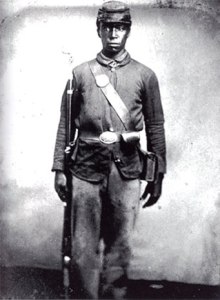 So, there’s the past. Axios has the numbers we should know for Memorial Day Present.
Good Monday morning, and wishing a peaceful, restful Memorial Day to you and yours. Pausing to remember a part of the beating heart of America that too often eludes us — the fallen, and the serving:
There were very few civil war veterans alive when I was born. The last few of them died when I was still in diapers. Even as a child I was confused by the number of white people that just seemed to regale the entire Confederacy, its treason, its stain of enslaving human beings, and the entire mess created necessitating the civil rights movements that were chronicled daily on my black and white TV. As a woman now on the verge of getting her first Social Security check, the fact we still seem to be fighting this war perplexes me to no end. But then, we now have a President that probably would have happily palled around with Jeff Davis and then entered the South as a Carpetbagger with equal ease.
 This is President Lincoln’s last address and it was on the reconstruction. I thought I’d share parts of it with you.
I have been shown a letter on this subject, supposed to be an able one, in which the writer expresses regret that my mind has not seemed to be definitely fixed on the question whether the seceding States, so called, are in the Union or out of it. It would perhaps, add astonishment to his regret, were he to learn that since I have found professed Union men endeavoring to make that question, I have purposely forborne any public expression upon it. As appears to me that question has not been, nor yet is, a practically material one, and that any discussion of it, while it thus remains practically immaterial, could have no effect other than the mischievous one of dividing our friends. As yet, whatever it may hereafter become, that question is bad, as the basis of a controversy, and good for nothing at all–a merely pernicious abstraction.
We all agree that the seceded States, so called, are out of their proper relation with the Union; and that the sole object of the government, civil and military, in regard to those States is to again get them into that proper practical relation. I believe it is not only possible, but in fact, easier to do this, without deciding, or even considering, whether these States have ever been out of the Union, than with it. Finding themselves safely at home, it would be utterly immaterial whether they had ever been abroad. Let us all join in doing the acts necessary to restoring the proper practical relations between these States and the Union; and each forever after, innocently indulge his own opinion whether, in doing the acts, he brought the States from without, into the Union, or only gave them proper assistance, they never having been out of it.
The amount of constituency, so to speak, on which the new Louisiana government rests, would be more satisfactory to all, if it contained fifty, thirty, or even twenty thousand, instead of only about twelve thousand, as it does. It is also unsatisfactory to some that the elective franchise is not given to the colored man. I would myself prefer that it were now conferred on the very intelligent, and on those who serve our cause as soldiers. Still the question is not whether the Louisiana government, as it stands, is quite all that is desirable. The question is, “Will it be wiser to take it as it is, and help to improve it; or to reject, and disperse it?” “Can Louisiana be brought into proper practical relation with the Union sooner by sustaining, or by discarding her new State government?”
Some twelve thousand voters in the heretofore slave-state of Louisiana have sworn allegiance to the Union, assumed to be the rightful political power of the State, held elections, organized a State government, adopted a free-state constitution, giving the benefit of public schools equally to black and white, and empowering the Legislature to confer the elective franchise upon the colored man. Their Legislature has already voted to ratify the constitutional amendment recently passed by Congress, abolishing slavery throughout the nation. These twelve thousand persons are thus fully committed to the Union, and to perpetual freedom in the state–committed to the very things, and nearly all the things the nation wants–and they ask the nations recognition and it’s assistance to make good their committal. Now, if we reject, and spurn them, we do our utmost to disorganize and disperse them. We in effect say to the white men “You are worthless, or worse–we will neither help you, nor be helped by you.” To the blacks we say “This cup of liberty which these, your old masters, hold to your lips, we will dash from you, and leave you to the chances of gathering the spilled and scattered contents in some vague and undefined when, where, and how.” If this course, discouraging and paralyzing both white and black, has any tendency to bring Louisiana into proper practical relations with the Union, I have, so far, been unable to perceive it. If, on the contrary, we recognize, and sustain the new government of Louisiana the converse of all this is made true. We encourage the hearts, and nerve the arms of the twelve thousand to adhere to their work, and argue for it, and proselyte for it, and fight for it, and feed it, and grow it, and ripen it to a complete success. The colored man too, in seeing all united for him, is inspired with vigilance, and energy, and daring, to the same end. Grant that he desires the elective franchise, will he not attain it sooner by saving the already advanced steps toward it, than by running backward over them? Concede that the new government of Louisiana is only to what it should be as the egg is to the fowl, we shall sooner have the fowl by hatching the egg than by smashing it? Again, if we reject Louisiana, we also reject one vote in favor of the proposed amendment to the national Constitution. To meet this proposition, it has been argued that no more than three fourths of those States which have not attempted secession are necessary to validly ratify the amendment. I do not commit myself against this, further than to say that such a ratification would be questionable, and sure to be persistently questioned; while a ratification by three-fourths of all the States would be unquestioned and unquestionable.
I repeat the question, “Can Louisiana be brought into proper practical relation with the Union sooner by sustaining or by discarding her new State Government?
What has been said of Louisiana will apply generally to other States. And yet so great peculiarities pertain to each state, and such important and sudden changes occur in the same state; and withal, so new and unprecedented is the whole case, that no exclusive, and inflexible plan can be safely prescribed as to details and colatterals [sic]. Such exclusive, and inflexible plan, would surely become a new entanglement. Important principles may, and must, be inflexible.
 This brings me to one of the removed monuments. The vile one was undoubtedly the Liberty Place Monument. It celebrates the bloody undoing of what Lincoln said of Louisiana and her government.
The Battle of Liberty Place Monument is a 35-foot stone obelisk that was erected in 1891 in the middle of Canal Street in honor of the “Battle of Liberty Place,” an 1874 insurrection of the Crescent City White League, a group of all white, mostly Confederate veterans, who battled against the racially integrated New Orleans Metropolitan Police and state militia.
The monument was meant to honor the members of the White League who died during the battle. In 1932, the City of New Orleans added a plaque to the monument, explicitly outlining its white supremacist sympathies, which explained that the battle was fought for the “overthrow of carpetbag government, ousting the usurpers” and that “the national election of November 1876 recognized white supremacy in the South and gave us our state.”
This was a monument to the White League. It was an attempt to overthrow the government of Louisiana and many police officers were killed.Take time to think about that inscription on its base. You may also find the link to a video interview of descendant of one of those participating in that riot. Listen to him say that the civil war was about states rights and never about slavery and that there was election fraud like today. It’s the one up there next to the photo of the inscription. This narrative is the narrative of the Lost Cause. It is the narrative of men like David Duke.
On Sept. 14, 1874, the White League stormed the New Orleans police station in an attempted coup d’état to remove the governor of New Orleans, Republican William Kellogg, and replace him with John McEnery, who had been his unsuccessful Democratic challenger in the 1872 election. The White League defeated the city’s integrated police department, and took control of the city for a couple of days before President Ulysses S. Grant sent down federal troops to reclaim the city. The White League quickly surrendered the city upon the arrival of federal troops, and the Battle of Liberty Place monument exists to remember the 100 White League members who died in the battle. That is to say, it exists to celebrate those who died in a failed coup with the explicit purpose of returning Louisiana to a white dominated society.
The White League, formed in 1874, was one of the last white terrorist groups that sprang up during Reconstruction. The Ku Klux Klan started in 1865 upon the completion of the war. The White League was founded by Christopher Columbus Nash, a former Confederate soldier who was a prisoner of war during the Civil War. On April 13, 1873, Nash led a white militia in the Colfax Massacre that killed approximately 150 freed blacks. The massacre erupted following white fury at the election of Kellogg to the governorship in 1872. This battle is one of the single biggest massacres of Reconstruction. Soon thereafter Nash formed the White League.
“Having solely in view the maintenance of our hereditary civilization and Christianity menaced by a stupid Africanization, we appeal to men of our race, of whatever language or nationality, to unite with us against that supreme danger,” read the platform of the White League.
Despite their clear racist and terroristic foundations, they represented a more palatable form of terror than the KKK. The White League was more mainstream than the KKK. This brand of terror had become normalized over the previous decade. The White League openly collaborated with the KKK, Southern Democratic politicians, and white business owners who facilitated the Redeemers movement to terrorize freed blacks and Union sympathizers to swing elections in favor of the Democratic Party.
President Grant was so alarmed by the threat to democracy that the White League posed that he wrote about them in his 1874 State of the Union Address: “White Leagues and other societies were formed; large quantities of arms and ammunition were imported and distributed to these organizations; military drills, with menacing demonstrations, were held, and with all these murders enough were committed to spread terror among those whose political action was to be suppressed, if possible, by these intolerant and criminal proceedings.”
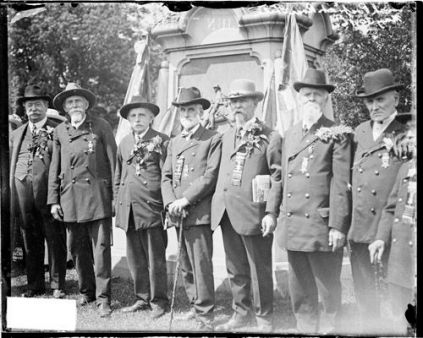 What gets me thinking when I read about all of these deaths is that the morality of our Commander-in-Chief and his/her level headed, informed life-and-death decisions create the basis of what constitutes how we sacrifice our public servants and protectors. Lincoln and Grant knew what it was like to send men to certain death and you can see that gravity in their actions, speeches and lives. You can feel it when you read about their mistakes and their weaknesses. You can see it in Lincoln’s depression and in Grant’s heaving drinking. As Americans, we have always tried to use the lives of our armed forces fully knowing that we’re creating Gold Star Families and fresh graves in Arlington.
Who will be sacrificed by this administration and for what cause will we memorialize them?
Memorial Day Reads
Posted: May 30, 2016 Filed under: 2016 elections, Afternoon Reads, worker rights | Tags: gun violence, Justice for Harambe, Memorial Day 12 CommentsGood Afternoon!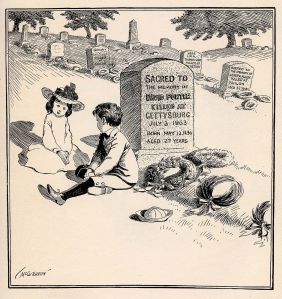
Today is Memorial Day in the United States. It’s the day we set aside to honor those who died in service to our country. The day was originally known as Decoration Day. It was recognized in 1868 when a organization of Union veterans established the day as a day to decorate the graves of Union Soldiers. It is believed that former slaves were the first to actually have a Memorial Day type event in 1865 which inspired Northerners to do similar things.
This occurred in Charleston, SC to honor 257 dead Union Soldiers who had been buried in a mass grave in a Confederate prison camp. They dug up the bodies and worked for 2 weeks to give them a proper burial as gratitude for fighting for their freedom. Together with teachers and missionaries, Black residents of Charleston organized a May Day ceremony that year which was covered by the New York Tribune and other national papers.
The freedmen cleaned up and landscaped the burial ground, building an enclosure and an arch labeled, “Martyrs of the Race Course.” Nearly ten thousand people, mostly freedmen, gathered on May 1 to commemorate the war dead. Involved were about 3,000 Black school children newly enrolled in Freedmen’s schools, mutual aid societies, Union troops, Black ministers, and White northern missionaries. Most brought flowers to be placed on the burial field. Years later, the celebration would come to be called the “First Decoration Day” in the North.
I still find it intriguing that states like Mississippi don’t recognize the day as a holiday–other than Federal Agencies that follow Federal Holiday Schedules–since it’s considered a “Yankee” Holiday. There was a competing Confederate holiday but the two were eventually merged for all but neoconfederates like those in Mississippi. Our family used to use the day to picnic at family cemetery plots to do general all purpose gardening and clean up. I can remember mother’s personal fight to keep the peonies off the grave stones in Kansas City and various small towns in Kansas and Missouri.
A lot of people confuse Veteran’s Day with Memorial Day which in a way is a bit sad. Memorial Day is specifically a remembrance to those who died while in the military in either battle or in support of those in battle. They used to sell little red poppies to honor the World War 1 dead. We always got one in remembrance of my Dad’s Uncle Jack for whom he was named. Uncle Jack made it home but died within a few years from the effects of mustard gas. I’m not sure that we do much of anything like that any more but given we still lose many active service members to war and military excursions, we should remember their sacrifice uniquely. Veteran’s Day for those who lived through their service. Armed Forces Day for those serving now. Memorial Day for those who died while in service to our country.
Of course, what week could go by without another crazed mass shooting? Here’s the local headline from Houston: “TWO DEAD, 6 INJURED AFTER TERRIFYING MASS SHOOTING IN WEST HOUSTON.”
A man came into a west Houston auto detail shop and began shooting, killing a man known to be a customer and putting a neighborhood on lockdown Sunday before being killed by a SWAT officer, police said.
You can read the details but I’m beginning to think that we’ve got civilians in our country that are dying in battlefields too. Unfortunately, the battlefields are shopping centers, movie theatres, and all kinds of places in American Cities. 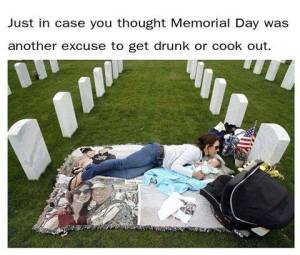
I hesitate to bring this story up because I find it super upsetting but I know we have folks here that love our furry relations as much as I do. A child fell into a zoo enclosure last week which resulted in the shooting of a rare lowland gorilla. There are a number of videos out that I don’t have the heart to watch. Grief is turning to outrage over the gorilla’s death. Here’s a story on that.
The killing of an endangered gorilla at the Cincinnati Zoo to rescue a boy who fell into a dangerous enclosure unleashed an outpouring of grief on over the holiday weekend.
Within hours, that grief had turned to fury as critics questioned the zoo’s decision to kill the endangered 17-year-old gorilla, named Harambe, and called for the boy’s parents to be punished for not adequately supervising their child.
A Facebook page called “Justice for Harambe” received more than 41,000 “likes” within hours of its creation. The page’s description says it was created to “raise awareness of Harambe’s murder” and includes YouTube tributes and memes celebrating the western lowland gorilla and admonishing zoo officials.
“Shooting an endangered animal is worse than murder,” a commenter from Denmark named Per Serensen wrote on the page. “Soooo angry.”
Lt. Steve Saunders, a spokesman for the Cincinnati Police Department, told the Cincinnati Enquirer that they have no plans to charge the child’s parents.
That news didn’t stop tens of thousands from signing multiple online petitions calling for Cincinnati Child Protective Services to investigate the boy’s parents — who have not been identified — for negligence.
“I’m signing because a beautiful critically endangered animal was killed as a direct result of her failure to supervise her child,” one signee wrote. “I don’t blame the zoo staff for the decision they made, I’m sure they’re heartbroken.”
“If she’d watched her child he wouldn’t have been in the gorilla enclosure in the first place,” the commenter added.
A petition on Change.org asks for legislation to be passed that creates “legal consequences when an endangered animal is harmed or killed due to the negligence of visitors.” The petition has amassed more than 40,000 signatures.
 Here’s another take on the situation including the videos. Witnesses say the boy wanted to go into the water inside the enclosure. They also indicated that entering the enclosure was not an easy task.
The incident drew widespread attention as dramatic video spread across the Internet showing Harambe dragging the boy like a rag doll through the water across the habitat.The boy climbed through a barrier and fell some 15 feet to a shallow moat in Harambe’s enclosure, Maynard said.Kimberley Ann Perkins O’Connor, who captured some of the incident on her phone, told CNN she overheard the boy joking to his mother about going into the water.Suddenly, a splash drew the crowd’s attention to the boy in the water. The crowd started screaming, drawing Harambe’s attention to the boy, O’Connor said.At first, it looked like Harambe was trying to help the boy, O’Connor said. He stood him up and pulled up his pants.As the crowd’s clamors grew, Harambe tossed the boy into a corner of the moat, O’Connor said, which is when she started filming. Harambe went over to the corner and shielded the boy with his body as the boy’s mother yelled “Mommy’s right here.”The crowd’s cries appeared to agitate Harambe anew, O’Connor said, and the video shows him grabbing the boy by the foot. He dragged him through the water and out of the moat atop the habitat, O’Connor said.By that point, “It was not a good scene,” she said. When the boy tried to back away the gorilla “aggressively” pulled him back into his body “and really wasn’t going to let him get away,” she said.O’Connor left before the shooting. When asked if the the barrier could be easily penetrated by a child, she said it would take some effort.
The Supreme Court is being asked to take up a bankruptcy dispute involving the Trump Taj Mahal in Atlantic City and to decide whether to restore the health and pension benefits of more than 1,000 casino workers.
At issue is a conflict between labor laws that call for preserving collective bargaining agreements and bankruptcy laws that allow a judge to reorganize a business to keep it in operation.
“This is about how a bankruptcy was used to transfer value from working people to the super-rich,” said Richard G. McCracken, general counsel for Unite Here, the hotel and casino workers’ union that appealed to the high court.
Billionaire Carl Icahn stepped in to buy the casino – founded by Donald Trump – after it filed for bankruptcy in 2014.
As the 3rd Circuit Court of Appeals said in January, Trump’s “plan of reorganization was contingent on the rejection of the collective bargaining agreement,” also known as the CBA, with the union. Icahn promised a “capital infusion of $100 million” to keep the casino in operation, but “only if the CBA and tax relief contingencies are achieved.”
With that understanding, the Philadelphia-based appeals court upheld a bankruptcy judge’s order that canceled the health insurance and pension contributions called for in the union’s contract. “It is preferable to preserve jobs through a rejection of a CBA, as opposed to losing the positions permanently,” wrote Judge Jane Roth.
The union is urging the Supreme Court to review and reverse that ruling, arguing the labor laws call for preserving collective bargaining agreements, even if they expire during a bankruptcy. The National Labor Relations Board agreed and filed a brief in the support of the casino workers union when the case was before the 3rd Circuit.
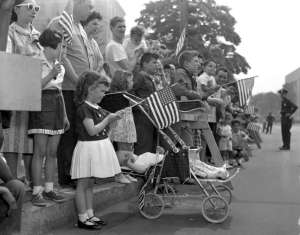 So much for Trump and the working person.
Anyway, I’m going to make this short today because most of the stories I’m reading aren’t exactly pleasant. Seems we have a streak of violence going around the country and the headlines reflect that. Chicago is having an extremely violent few days. I was thinking that the violence here might be isolated but it doesn’t appear to be.
June 2nd is “Wear Orange Day” which is a day to commit to ending gun violence. The day started in 2013 when some Chicago kids asked every one to wear orange in remembrance of a friend killed by gun fire. Maybe this holiday will become the Memorial Day for those civilians killed in the battle in our streets.
So, what’s on your reading and blogging list today?
Memorial Day Open Thread
Posted: May 28, 2012 Filed under: just because | Tags: Furry Vets, Memorial Day, War Dog Memorials 62 Comments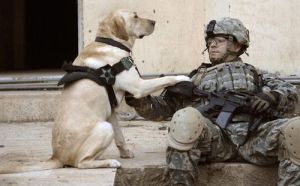
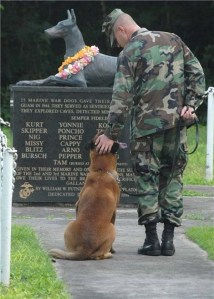 There are all kinds of veterans to remember today!
Don’t forget our furry heroes!
This an open thread.
I thought I’d post this picture of my mom and dad. My dad is a veteran of World War 2. He was a bombardier fo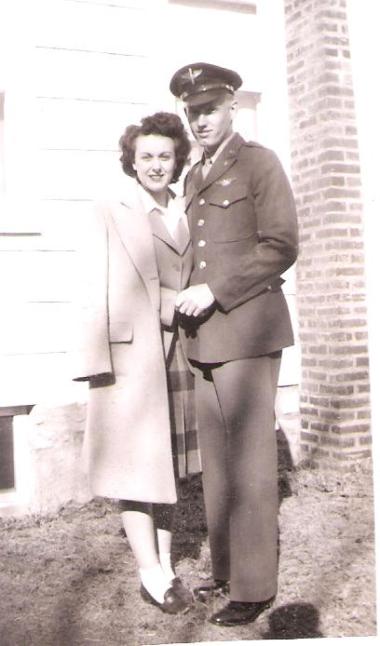 r the 8th Air Force–although it was the Army Air Corps when he joined– and was stationed in Northern England. He once flew under the command of Jimmy Stewart. He said he sounded just like he did in the movies. He flew missions over Northern Europea in B-17s. Anyway, he’s nearly 90 and will finally share his war stories with us after years of not wanting to talk about it. I took him to the WW2 Museum here in New Orleans on his last visit. He really liked that. There’s very few of his crew left but they all remained in contact with each other until the day they died. He’s a young lieutenant in this photo. I’m going to have to get him to remember exactly when it was taken but that’s by the front porch of my grandparent’s house. I’m posting this in remembrance of all his buddies that are no longer able to reminisce with Dad. I keep asking him to give me all his stuff–including their pictures and logs–so I can put them in the WW2 museum documents library. We all will never forget their service.
So, if you have any one you’d like to remember, please post their picture or a remembrance!
UPDATE by Boston Boomer: Here’s a photo of my Dad in his National Guard uniform. I couldn’t figure out how to put it in a comment, so I took the liberty of putting it here. I hope Dak won’t mind. The little girl is my cousin. He was really young. He lied about his age to get into the Guard so he could use the money for college. Dad didn’t meet my mom till after the war and returned to school.
This must have been taken before Dad left for Louisiana for training. His National Guard regiment, the 164th, was the first army regiment to be shipped out after Pearl Harbor. They went right to Guadalcanal to support the Marines who were stranded there with diminishing supplies. They were down to one meal a day by the time Dad’s unit got there. I think Ralph’s father was one of those marines.
When the bombs were dropped my Dad was on the way to Japan. Ironically, I might never have been born except for the bombs dropped on Hiroshima and Nagasaki.

I miss my dad so much. He died on March 11, 2010. He was almost 88.
Monday Reads
Posted: May 30, 2011 Filed under: Afghanistan, Elections, Foreign Affairs, Medicare, morning reads, Republican politics | Tags: Afghanistan, casualities, Memorial Day, NATO, Tornado relief, war 13 Comments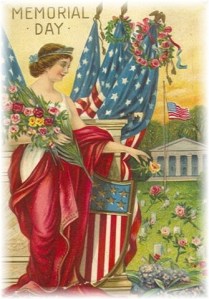 Happy Memorial Day!
While this is the usual time to remember America’s war dead from past wars, it’s good to remember that we still have two wars going on today. As the saying goes, War is Hell. The BBC reports that Afghan leaders have put NATO on warning for recent ‘collateral damage’.
The BBC’s Quentin Sommerville said villagers brought their dead children to the governor’s office shouting: “See they aren’t Taliban”
Afghan President Hamid Karzai has forcefully condemned the killing of 14 civilians in the south-west of the country in a suspected Nato air strike.
Mr Karzai said his government had repeatedly asked the US to stop raids which end up killing Afghan civilians and this was his “last warning”.
A Nato spokesman said a team had been sent to Helmand province to investigate the attack carried out on Saturday.
Afghan officials say all those killed were women and children.
The strike took place in Nawzad district after a US Marines base came under attack.
The air strike, targeted at insurgents, struck two civilian homes, killing two women and 12 children, reports say.
“The president called this incident a great mistake and the murdering of Afghanistan’s children and women, and on behalf of the Afghan people gives his last warning to the US troops and US officials in this regard,” his office said.
The White House said it shared Mr Karzai’s concerns and took them “very seriously”.
A group from Sera Cala village travelled to Helmand’s capital, Lashkar Gah, bringing with them the bodies of eight dead children, some as young as two years old, says the BBC’s Quentin Sommerville in Kabul.
“See, they aren’t Taliban,” they chanted as the carried the corpses to local journalists and the governor’s mansion.
While insurgents are responsible for most civilian deaths in Afghanistan, the killings of Afghans by foreign soldiers is a source of deepening anger, our correspondent adds.
In other Afghan war news, a Nato commander was injured in Taliban suicide attack in Afghanistan. This is from the UK Guardian.
A Taliban suicide bomber attacked a provincial governor’s compound in Takhar, killing the police chief of northern Afghanistan and seriously injuring a top Nato commander. Two other Afghan officials were also reported to have died in the attack. Several international servicemen were reported injured by eyewitnesses.
German officials confirmed to Spiegel magazine Major General Markus Kneip, who commands NATO forces in the north Afghanistan, had received wounds that were “severe” but not life-threatening.
A Nato spokesman in Kabul confirmed western casualties but was unable to provide details.
The Taliban, meanwhile, claimed responsibility for the attack and pledged that “killing high ranking officials will continue.”
Mujeebullah Rahman, the deputy director of the local council in Takhar province, said the attack took place at about 4pm when a meeting to discuss local security operations was ending.
“The bomber was waiting in the corridor, wearing the uniform of an Afghan policeman,” Rahman said.
The attack capped a bloody 48 hours in which seven Americans, two British and two other Nato servicemen were killed by roadside bombs or by insurgents in the south of the country. So far 44 Nato soldiers have been killed this month, and .nearly 200 have died in the year.
While we continue to fund these wars, Republicans are demanding that any relief to tornado-wrecked Joplin Missouri must be offset by spending cuts elsewhere. Congressman Eric Cantor–house majority leader–has joined in the call first sent out by Senator Majority Leader Mitch McConnell last week. Talk about kicking people when they’re down!
Rep. Eric Cantor (R-Va.) continued to stress Sunday that disaster relief funds for tornado-ravaged Missouri would have to be offset in the federal budget with cuts elsewhere.
The House majority leader added on CBS’ “Face the Nation” that there was a certainly a federal role in helping to rebuild Joplin, Mo., and that Congress would move after getting a request from President Obama.
But, he said, the government needs to act in this case like a family who faces an unforeseen expense and has to cut elsewhere.
“Because families don’t have unlimited money,” Cantor said. “And, really, neither does the federal government.”
Cantor began calling for offsets last Monday, the day after the tornado that has killed well over 100 struck Joplin. On Tuesday, a House appropriations subcommittee found a $1.5 billion offset to help finance an aid package.
Somebody needs to remind these guys that the government can raise revenues via taxes for legitimate expenditures. That’s something families don’t have the ability to do. There’s also printing money and borrowing money at nearly zero interest via Treasury Auctions. Cantor was honest enough to admit that Medicare played an “undeniable” role in the recent election in NY 2 6.
“It’s undeniable that it played some role in the election. Any time you have one side demagoguing and frankly, accusing the other side in a way that’s not factual of trying to reform the program, certainly that’s going to influence the electorate,” Cantor said on CBS’s “Face the Nation.” “As far as Medicare is concerned, there’s a simple choice here – either we’re going to save the program or let it go bankrupt.”
Wasserman Schultz, who appeared just after Cantor said, “Coming from the majority leader,” who was one of the “architects” of a 2010 midterm congressional election victory “focused on scaring seniors about what Democrats were doing with Medicare, he would know.”
“What we’re doing is making sure we can prevent Republicans from ending Medicare as we know it,” she said. “That’s what Kathy Hochul ran on leading up to her victory this Tuesday in New York 26.”
Voters were making it clear that they didn’t support the GOP’s budget plan, Wasserman Schultz asserted.
So, I thought I’d offer up some history of Memorial Day for you. One of the things that I learned moving down here was that much of the south does not really celebrate the holiday and refer to it as a Yankee holiday even though it was supposed to be in remembrance of all civil war dead. Many southern cities actually claim to have started the holiday. I guess Mississippi sees things a little different. The holiday originated after the Civil War as “Decoration Day”. It didn’t become a federal holiday until 1971.
Memorial Day was originally known as Decoration Day because it was a time set aside to honor the nation’s Civil War dead by decorating their graves. It was first widely observed on May 30, 1868, to honor the sacrifices of Civil War soldiers, by proclamation of General John A. Logan of the Grand Army of the Republic, an organization of former sailors and soldiers. On May 5, 1868, Logan declared in General Order No. 11 that:
The 30th of May, 1868, is designated for the purpose of strewing with flowers, or otherwise decorating the graves of comrades who died in defense of their country during the late rebellion, and whose bodies now lie in almost every city, village, and hamlet churchyard in the land. In this observance no form of ceremony is prescribed, but posts and comrades will in their own way arrange such fitting services and testimonials of respect as circumstances may permit.
During the first celebration of Decoration Day, General James Garfield made a speech at Arlington National Cemetery, after which 5,000 participants helped to decorate the graves of the more than 20,000 Union and Confederate soldiers buried in the cemetery.
This 1868 celebration was inspired by local observances of the day in several towns throughout America that had taken place in the three years since the Civil War. In fact, several Northern and Southern cities claim to be the birthplace of Memorial Day, including Columbus, Miss.; Macon, Ga.; Richmond, Va.; Boalsburg, Pa.; and Carbondale, Ill.
So, it’s not all about mattresses and sales tax holidays!!! My mother used to tell me that all the relatives would go clean up the family cemeteries on memorial day in Missouri and Kansas. They would all have huge picnics along with trimming the overgrown bushes or flowers. We used to continue the tradition when I was very young until most of the cemeteries started using huge mowers and removed all bushes and flowers. As I recall, we had an ongoing battle in one cemetery with massive and profuse peony bushes.
So, that’s my offering for the day! Have a really wonderful holiday! What’s on your reading and blogging list today?

 peej
peej Carissa
 bostonboomer
 dakinikat
 ecocatwoman
 mablue2
 Mama Lopez
 peggysue22
 quixote
 skydancingguestblogger
 Mona (aka Wonk the Vote)



 Sky Dancing
Recent Comments