The endless “holiday season” will be over soon, and it will be 2026. Nothing will have changed. We’re still stuck with Trump and he is still a psychopathic malignant narcissist with dementia. Here are the stories leading the news on this final day of 2025.
Trump and Venezuela
Trump blabbed about a secret CIA strike inside Venezuela. He just can’t keep his mouth shut.
The CIA reportedly carried out a drone strike earlier this month on a dock in Venezuela that the United States has alleged is a port for trafficking drugs, marking a major escalation of the Trump administration’s military actions in the Caribbean.
The U.S. government believed the site was used by members of Venezuelan gang Tren de Aragua to store and ship drugs overseas, according to CNN.
No one was present at the port at the time of the strike, according to the network’s source. Still, the operation allegedly destroyed the facility, even if it represented just one of many such docks along Venezuela’s coastline that might be used by smugglers. The strike is the first known U.S. operation inside the country.
President Donald Trump appeared to acknowledge the operation during an interview Friday, saying U.S. military assets struck a “big facility where ships come from.”
Asked again on Monday, the president said American forces had attacked “the dock area where they load the boats up with drugs.”
“So we hit all the boats, and now we hit the area,” the president added. “It’s the implementation area, that’s where they implement, and that is no longer around.” [….]
So the President did disclose a CIA drone strike inside Venezuela.And this does cross a red line of violating the UN Charter — where the boat strikes on high seas had not.www.cnn.com/2025/12/29/p…
President Donald Trump has thrust the country into a significant new phase in his showdown with Venezuela with a CIA strike on a port facility.
But as he approaches grave new decisions on even greater escalations, his team has not yet spelled out a clear consistent public rationale for its actions.
Nor has it prepared the country for what might come next.
Top officials haven’t explained how long the massive naval buildup in the Caribbean will last or what US service members will be asked to do in an operation that is already raising legal and constitutional alarms.
If the goal really is to overthrow President Nicolás Maduro, as recent comments from top officials and the logic of the deployment imply, there’s been no White House effort to show Americans the administration is planning for the aftermath. This is an especially relevant point given the quagmires that developed after US military action to topple the rulers of Iraq, Afghanistan and Libya.
Trump doesn’t recognize any responsibility to inform the American people of is plans, if there are any. He sees himself as a dictator.
A bit more from Collinson:
Rep. Adam Smith, the top Democrat on the House Armed Services Committee, told CNN’s Brianna Keilar Tuesday that the CIA attack was a significant sharpening of US pressure and raised a knot of thorny questions.
“Where it goes from here, I think, is the thing to be concerned about, because Trump clearly wants to drive Maduro from power,” Smith said, arguing that boat strikes and other means of duress didn’t seem like they would have the intended effect. If they don’t, Smith continued, “What is Trump prepared to do next? How far is he willing to take this effort at regime change in Venezuela?”
Perhaps Trump’s fogginess is deliberate. If the buildup and steady escalations are part of a psychological operations campaign to wrong-foot Maduro or to persuade his regime cronies they’d be safer without him, confusion and disorientation could act as weapons. Even from the outside, it’s obvious the CIA strike on the port facility — in which, sources said, no one was killed — is a performative warning that far greater US capabilities can be brought to bear.
Yet the more serious the situation gets — especially now the US has crossed the threshold into land attacks — the more acute is the obligation to inform Americans of the administration’s plans. The founders never envisaged presidents being able to wage war on a whim. And large and intractable conflicts have sometimes started with discrete actions that mushroom into consequences that can cascade out of control. Take Vietnam as an example.
A thunderous boom rang out through the windless late-afternoon air. Seconds later, smoke began rising out of the sea as if the horizon were on fire.
Watching from the shore on Nov. 6, Erika Palacio Fernández whipped out her phone, she said, unwittingly recording the only verified and independent video known to date of the aftermath of an airstrike in the Trump administration’s campaign against what it calls “narco-terrorists.”
Two days later, on that same shore, a scorched 30-foot-long boat itself would wash up. Then, two mangled bodies. Then charred jerrycans, life jackets and dozens of packets that were observed by The New York Times and were similar to others that have been found after anti-narcotics operations in the region. Most packets were empty, though traces of a substance that looked and smelled like marijuana were found in the lining of a few.
The assortment of singed flotsam appears to be the first physical evidence of the U.S. campaign, which has destroyed 30 vessels and killed more than 100 people in the Caribbean and eastern Pacific. Every other struck boat is presumed to have sunk along with its crew and cargo. The U.S. military has offered no evidence that the boats it has destroyed were transporting illicit substances or belong to criminal networks.
Remains of a burned boat on the beach near Puerto López on the Guajira Peninsula in Colombia.
A Times analysis matched the wreckage of the boat to the one in a video posted by Defense Secretary Pete Hegseth on the night of Nov. 6, hours after Ms. Palacio took her video. Mr. Hegseth described the strike as having targeted a vessel in the Caribbean operated by an unnamed “designated terrorist organization.” He said the strike killed three people and took place in international waters.
The Times analysis of Ms. Palacio’s video indicates the strike took place in the Gulf of Venezuela, where Colombia and Venezuela have long disputed their maritime boundary. The analysis could not determine the exact location of the strike.
The shape of the wreckage, a slender design typical of speedboats, matches that of the boat targeted in the video shared by the Defense Department, the Times analysis found, and shows damage to the boat’s hull and interior structure consistent with the impact of an airstrike. The military video shows the boat exploding and on fire beneath a large plume of smoke.
That such rare, tangible evidence is coming to light nearly two months after the early November strike is a testament both to the remoteness of the Guajira Peninsula, where the wreckage was found, and the lack of a sizable presence of the Colombian state in the area. The region is governed semiautonomously by an Indigenous community, the Wayuu, whose more than half a million people straddle the border between Colombia and Venezuela.
So Trump and Hegseth are blowing up boats carrying Marijuana–a substance that is legal in 24 states and more for medical use.
More artists have announced they are backing out of upcoming dates at the Kennedy Center in Washington, D.C., in protest of President Donald Trump’s takeover, and recent potentially illegal renaming of the institution as the Trump-Kennedy Center.
Jazz supergroup The Cookers announced on its website it will not be performing across a series of two New Year’s Eve concerts.
“Jazz was born from struggle and from a relentless insistence on freedom: freedom of thought, of expression, and of the full human voice,” the group wrote in a statement. “Some of us have been making this music for many decades, and that history still shapes us.”
“I would never even consider performing in a venue bearing a name (and being controlled by the kind of board) that represents overt racism and deliberate destruction of African American music and culture,” Billy Harper, a saxophonist in the group, reportedly added in a statement to Jazz Stage.
The Doug Varone and Dancers troupe on Monday added that it will not carry out a planned April performance at the center.
The group wrote in a statement on Instagram that while it opposed the president’s decision to replace the center’s bipartisan board in February with a group of allies who later installed him as chairman, it initially still planned to carry out the engagement. That changed when center’s board voted earlier this month to rebrand the institution the Trump-Kennedy Center, according to the statement.
“We can no longer permit ourselves nor ask our audiences to step inside this once great institution,” the statement said. “The Kennedy Center was named in honor of our 35th President who fervently believed that the arts were the beating heart of our nation, as well as an integral part of international diplomacy. We hope in three-year’s time, that the Center and its reputation will return to that glory.” [….]
The wave of cancellations follows the news that drummer and vibraphonist Chuck Redd canceled a longstanding Christmas Eve jazz concert at the center in protest of the name change.
The Kennedy Center adopted bylaws earlier this year that limited voting to presidentially appointed trustees, a move that preceded a unanimous decision this month by board members installed by President Donald Trump to add his name to the center.
The current bylaws, obtained by The Washington Post, were revised in May to specify that board members designated by Congress — known as ex officio members — could not vote or count toward a quorum. Legal experts say the move may conflict with the institution’s charter.
Days later, on Dec. 18, the board voted to add the president’s name to the institution, and within 24 hours it was on the website and the building itself: “The Donald J. Trump and The John F. Kennedy Memorial Center for the Performing Arts.” [….]
The Kennedy Center lists 34 presidentially appointed board members, including Trump himself as chair, and 23 ex officio seats. The center’s president, Richard Grenell, is also an officer of the board.
The federal law that established the Kennedy Center designates specific government and federal positions — including the librarian of Congress; the mayor of Washington, D.C.; the secretary of the Smithsonian Institution; and the majority and minority leaders of the Senate — to serve as ex officio members.
The law identifies them as part of the board of trustees, which it directs to maintain and administer the facility as a living memorial. But it does not distinguish between voting and nonvoting members, which has been a point of ambiguity in the days following the vote to rename the Kennedy Center….
A former Kennedy Center staffer with knowledge of board proceedings, who spoke on the condition of anonymity out of fear of retribution, told The Post that ex officio members were “always included in debate and discussion” during their tenure, but the person did not recall a time when those members’ votes were counted.
“Theoretically they could vote, but our practice was not to have them vote or count toward quorum,” the person said, noting they were not aware of the new leadership’s practices at the center.
U.S. Immigration and Customs Enforcement officials are planning to spend $100 million over a one-year period to recruit gun-rights supporters and military enthusiasts through online influencers and a geo-targeted advertising campaign, part of what the agency called a “wartime recruitment” strategy it said was critical to hiring thousands of new deportation officers nationwide, according to an internal document reviewed by The Washington Post.
The spending would help President Donald Trump’s mass-deportation agenda dominate media networks and recruitment channels, including through ads targeting people who have attended UFC fights, listened to patriotic podcasts or shown an interest in guns and tactical gear, according to a 30-page document distributed among officials in this summer detailing ICE’s “surge hiring marketing strategy.”
Uncle Sam looms large on ICE’s recruitment site.
The Department of Homeland Security has spoken publicly about its fast-tracked effort to significantly increase ICE’s workforce by hiring more than 10,000 new employees, a surge promoted on social media with calls for recruits willing to perform their “sacred duty” and “defend the homeland” by repelling “foreign invaders.” The agency currently employs more than 20,000 people, according to ICE’s website.
But the document, reported here for the first time, reveals new details about the vast scale of the recruitment effort and its unconventional strategy to “flood the market” with millions of dollars in spending for Snapchat ads, influencers and live streamers on Rumble, a video platform popular with conservatives. Under the strategy, ICE would also use an ad-industry technique known as “geofencing” to send ads to the phone web browsers and social media feeds of anyone who set foot near military bases, NASCAR races, college campuses or gun and trade shows.
The document was also distributed among ICE officials in the days after the agency published a request for bids seeking contractors who could use “precise audience targeting, performance media management, and results-driven creative strategies” to “accelerate the achievement of [its] recruiting goals.” The language in the published bid closely mirrored language in the strategy document. That same month, DHS awarded two marketing firms nearly $40 million to support ICE’s public affairs office “recruitment campaign,” according to federal awards data.
It’s unclear how much of the spending and strategy have been carried out. But the plans outlined in the document have coincided with a rush of recruitment ads online seeking Americans who will “answer the call to serve.”
The rapid-recruitment approach is unlike anything ICE has ever pursued, said Sarah Saldaña, a director of ICE during the Obama administration, who recalled the agency filling its open positions through local police departments and sheriff’s offices with appeals to officers’ interests in federal public-safety work.
Use the gift link to read the rest.
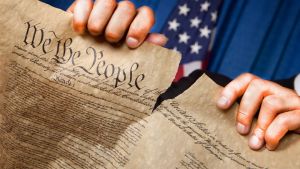
Trump wants to cancel the Constitution
Heather Cox Richardson at Letters from an American: December 30, 2025
The hallmark of the first year of President Donald J. Trump’s second term has been the attempt of the president and his cronies to dismantle the constitutional system set up by the framers of that document when they established the United States of America. It’s not simply that they have broken the laws. They have acted as if the laws, and the Constitution that underpins them, don’t exist.
As soon as the 2024 election results were clear, billionaire Elon Musk, who had supported Trump’s campaign both through his purchase of Twitter—now X—and with $290 million in cash, posted on social media: “Novus Ordo Seclorum,” Latin for “New World Order.” Although he won with less than 50% of the vote, Trump announced that he had an “unprecedented and powerful mandate.” Musk would head a new “Department of Government Efficiency” that Musk vowed would cut at least $2 trillion from the federal budget.
Musk and his operatives muscled their way into government offices and gained access to computer systems. With strokes of a keyboard they eliminated jobs and programs, including, as Musk put it, feeding “into the wood chipper” most of the U.S. Agency for International Development, the government agency aimed at combating disease and malnutrition around the globe. That dismantling has caused the deaths of hundreds of thousands of people.
The Cato Institute, a libertarian think tank, recently concluded that while the Department of Government Efficiency did not actually reduce spending, it did cut almost 10% of federal employees, a key goal of Office of Management and Budget director Russell Vought, a key author of Project 2025.
And, crucially, it put operatives in virtually all government departments and agencies, where they gained access to privileged information about Americans, including citizens, legal residents, and undocumented immigrants.
Musk and DOGE also established the idea that the unelected officials in the Trump administration could do whatever they wished, without regard to the laws or the Constitution. The Constitution, judicial precedent, and the 1974 Impoundment Control Act all make it very clear that the power of the purse belongs to Congress. As the elected representatives of the American people, only members of the House of Representatives and the Senate can determine how the nation’s money is spent. Then the president must “take Care that the laws be faithfully executed.”
Democrats objected to the administration’s dramatic usurpation of the power of Congress, but Republicans did not complain. Most backed the administration’s claims it was eliminating “waste, fraud, and abuse.”
Although Republicans controlled both chambers of Congress, meaning that Trump should have been able to get any legislation he wanted, he continued to try to get around the Constitution by declaring nine “emergencies” that would permit him to act without congressional oversight. This reliance on emergencies reflected the ideas of Nazi political theorist Carl Schmitt, whose writings were followed by right-wing leaders, including billionaire Peter Thiel and the man who influenced him, Curtis Yarvin. Schmitt argued that power belongs to the leader who can exploit emergencies that create exceptions to the constitutional order, enabling him to exercise power without regard to the law.
That was part of President Trump’s explanation in October of his executive order that purports to criminalize burning the American flag. Though his words fail as a constitutional rationale, they inadvertently distill many of his efforts at smothering dissent during the past 11 months.
Since returning to office, Mr. Trump and his administration have tried to undermine the First Amendment, suppress information that he and his supporters don’t like and hamstring parts of the academic, legal and private sectors through lawsuits and coercion — to flood the zone, as his ally, Steve Bannon, might say.
Some examples are well known, such as when ABC briefly took Jimmy Kimmel off the air after Brendan Carr, the chairman of the Federal Communications Commission, objected to a reference in one of Mr. Kimmel’s monologues about the killing of Charlie Kirk. Other examples received less attention, but by my count, this year there were about 200 instances of administration attempts at censorship, nearly all of which I outline in a new report.
Mr. Trump’s playbook isn’t random. It employs several recurring modes of attack.
The president has tried to cow the press. His administration banned Associated Press reporters from certain parts of the White House and Air Force One because the outlet uses “Gulf of Mexico” rather than the term Mr. Trump prefers, “Gulf of America.” It tried and failed to force some of the nation’s biggest news organizations to agree to restrictions on coverage of the Pentagon. He has said critical coverage of his initiatives is “really illegal.”
A journalist from El Salvador, Mario Guevara, was arrested while reporting on a No Kings protest in Georgia; he was detained for more than three months, then deported. At an Oval Office meeting between Mr. Trump and Crown Prince Mohammed bin Salman of Saudi Arabia, an ABC News correspondent, Mary Bruce, asked about the killing of the Saudi journalist Jamal Khashoggi and about the Jeffrey Epstein files. Mr. Trump replied by berating her at length, at one point describing one of her questions as “insubordinate” — a characterization that upends the entire notion of a free press.
The administration has used immigration status to try to suppress political speech. In March, Mahmoud Khalil, a green card holder and a leader of pro-Palestinian demonstrations on the Columbia campus, was arrested and detained by immigration officials for several months. That month, Rumeysa Ozturk, a student visa holder, was arrested by immigration officials and detained for several weeks, apparently because she was an author of an opinion essay criticizing Tufts University for its response to the Israel-Hamas war.
It seems almost no one is beyond the scope of administration efforts to muzzle views or decisions that conflict with Mr. Trump’s agenda: After Federal District Court Judge James Boasberg ruled against the administration in a case involving the deportation of Venezuelans to El Salvador, Mr. Trump called for the judge to be impeached. A trainee was dismissed from the F.B.I.’s academy, apparently for having displayed an L.G.B.T.Q. Pride flag. The F.B.I. also appears to have fired agents for kneeling during George Floyd protests.
Use the gift link to read the rest.
Those are my recommended reads for today. I still can’t see very well, so please forgive any mistakes. Take care everyone!
Did you like this post? Please share it with your friends:
I have quite a few articles to share this morning, a real Saturday potpourri! So let’s get started. First up,on Thursday Attorney General Eric Holder gave a wide-ranging interview to Ari Melber of MSNBC, and quite a bit of breaking news came out of it. Here are some of the resulting headlines: NY Daily News: Eric Holder: Could talk deal with NSA-leaker Edward Snowden, but no clemency
Holder told MSNBC that the Obama Administration “would engage in a conversation” about a resolution in the case, but said it would require Snowden acknowledge wrongdoing…. At a University of Virginia forum, where Holder was asked about Snowden, he elaborated on his position, saying, “If Mr. Snowden wanted to come back to the United States and enter a plea, we would engage with his lawyers. We would do the same with any defendant who wanted to enter a plea of guilty, so that is the context to what I said.” But he stressed that the NSA leaker would not walk. “We’ve always indicated that the notion of clemency isn’t something that we were willing to consider.”
Attorney General Eric Holder says the Obama administration is planning to roll out regulations soon that would allow banks to do business with legal marijuana sellers. During an appearance Thursday at the University of Virginia, Holder said it is important from a law enforcement perspective to enable places that sell marijuana to have access to the banking system so they don’t have large amounts of cash lying around. Currently, processing money from marijuana sales puts federally insured banks at risk of drug racketeering charges. Because of the threat of criminal prosecution, financial institutions often refuse to let marijuana-related businesses open accounts.
Attorney General Eric Holder sharply criticized state-level voter identification policies and said that he believes those policies are a “remedy in search of a problem.” He added that, while some may be arguing for voter ID in good faith, he believes that most are advocating for this policy in order to “depress the vote” of those who do not support the “party that is advancing” voter ID measures. “I think many are using it for partisan advantage,” Holder said of voter ID. “People have to understand that we are not opposed to photo identification in a vacuum,” he continued. “But when it is used in — certain ways to disenfranchise particular groups of people, whether by racial designation, ethnic origin, or for partisan reasons, that from my perspective is problematic.” He added that “all the studies” show that in-person voter fraud “simply does not exist” at a level that requires a legislative solution.
Attorney General Eric Holder waded into the controversy over former Defense Secretary Robert Gates’s new book Thursday, calling it “a mistake” for Gates to have published his recollections before President Barack Obama left the White House. “It’s my view that it’s just not a good thing thing to write a book about a president that you served while that president is still in office,” Holder said during an appearance at the University of Virginia’s Miller Center. “From my perspective I think the world of Bob Gates, but I think that the publication of that book — at least at this time — was a mistake.” [….] In the course of offering his critique of the timing of Gates’s book, “Duty: Memoirs of a Secretary at War,” Holder twice praised the former defense secretary for his leadership. “I like Bob Gates a great deal. He was a good secretary of defense,” the attorney general said.
“I think people just need to be a little patient,” Holder said, according to a transcript of an interview with MSNBC to air at noon Pacific time Friday. “I know it’s been a while. But we have other things that are in the pipeline.” [….] Holder has taken heat for telling a Senate hearing last year that some financial institutions were “so large that it becomes difficult to prosecute them” because criminal charges could hurt the U.S. and even world economies. Since then Holder has tried to emphasize that the Justice Department is not intimidated by the size of a financial institution and would bring any charges it believed it could prove.
As I said, quite a bit of news out of one interview. Good job by Ari Melber.
JANUARY 22nd was meant to mark Ukraine’s unity day, a celebration of its short-lived pre-Soviet independence. Instead, it was a day of civil unrest and perhaps the biggest test of Ukraine’s post-Soviet integrity. After two months of largely peaceful encampment on the Maidan in Kiev, the protests turned violent. Five people were reported killed and hundreds were injured. An armoured personnel carrier pushed through the streets. Clouds of black smoke and flames mottled the snow-covered ground. Never in its history as an independent state has Ukraine witnessed such violence. It was triggered by the passage of a series of repressive laws imposing tight controls on the media and criminalising the protests of the past two months. One law copied almost verbatim a Russian example, including stigmatising charities and human-rights groups financed from abroad as “foreign agents”. If Russian human-rights activists denounce their parliament as a “crazy printer” churning out repressive legislation, says Oleksandra Matviichuk of the Centre for Civil Liberties in Kiev, Ukraine has a “crazy photocopier”. The clashes show vividly the refusal of the protesters to heed such laws.
The twin bombings in Volgograd in late December 2013 and an earlier one in October are clearly meant to show the Russians that the Chechen-Dagestani terrorists have reignited their terror jihad. They are also meant to remind the world of the tragedy that befell the Circassians of the Caucasus’s Black Sea shore exactly 150 years ago this winter. This is the dark secret that Russia’s authoritarian leader, Putin, does not want the world to know. Putin has thus far been very successful in conflating Russia’s neo-colonial war against Chechen separatists with America’s war on nihilist Al Qaeda Arab terrorists. Any attempt to remind the world of Imperial Russia/Post-Soviet Russia’s war crimes in the Caucasus is a threat to Putin’s pet project, the whitewashed Sochi Olympics. This of course not to excuse the brutal terroristic acts of the Caucasian Emirate or the Chechen rebels, but it certainly provides the one thing that Putin does not want the world to see as he constructs his “Potemkin village” in Sochi, and that is an honest account of the events that have made this the most terrorist fraught Olympic games since the 1972 Summer Olympics in Munich.
Remember Erik Prince, the Michigan millionaire who founded Blackwater? Guess what he’s doing these days? The WSJ has the scoop: Erik Prince: Out of Blackwater and Into China. Erik Prince —ex-Navy SEAL, ex-CIA spy, ex-CEO of private-security firm Blackwater —calls himself an “accidental tourist” whose modest business boomed after 9/11, expanded into Iraq and Afghanistan, and then was “blowtorched by politics.” To critics and conspiracy theorists, he is a mercenary war-profiteer. To admirers, he’s a patriot who has repeatedly answered America’s call with bravery and creativity.
Now, sitting in a boardroom above Hong Kong’s Victoria Harbour, he explains his newest title, acquired this month: chairman of Frontier Services Group, an Africa-focused security and logistics company with intimate ties to China’s largest state-owned conglomerate, Citic Group. Beijing has titanic ambitions to tap Africa’s resources—including $1 trillion in planned spending on roads, railways and airports by 2025—and Mr. Prince wants in…. “I would rather deal with the vagaries of investing in Africa than in figuring out what the hell else Washington is going to do to the entrepreneur next,” says the crew-cut 44-year-old. Having launched Blackwater in 1997 as a rural North Carolina training facility for U.S. soldiers and police, Mr. Prince says he “kept saying ‘yes’ as the demand curve called—Columbine, the USS Cole and then 9/11.” In 100,000 missions in Iraq and Afghanistan, he says, Blackwater contractors never lost a U.S. official under their protection. But the company gained a trigger-happy reputation, especially after a September 2007 shootout that left 17 civilians dead in Baghdad’s Nisour Square. At that point, charges Mr. Prince, Blackwater was “completely thrown under the bus by a fickle customer”—the U.S. government, and especially the State Department. He says Washington opted to “churn up the entire federal bureaucracy” and sic it on Blackwater “like a bunch of rabid dogs.” According to Mr. Prince, IRS auditors told his colleagues that they had “never been under so much pressure to get someone as to get Erik Prince,” and congressional staffers promised, “We’re going to ride you till you’re out of business.”
Awwwwww…..Poor little rich boy. Where’s my tiny violin?
Today, the company formerly known as WaPo — now called Graham Holdings – has announced a new business endeavor in journalism. Surprisingly, said endeavor doesn’t have much to do with actual journalism at all — it falls squarely in the tech camp. It’s a content discovery app called Trove. Trove fits in the now-torrential trend of such applications. Companies like Flipboard,Prismatic, Rockmelt, and N3twork have all tread this ground long before Trove. They’re all convinced that places like Twitter, Facebook, Tumblr, and RSS readers are not good enough for finding the best stories…. The two men behind Trove have rich and storied histories. Vijay Ravindran, the CEO of Trove, served as The Washington Post’s Chief Digital Officer before the sale, and ran ordering at Amazon for seven years before that. Reuters oped columnist Jack Shafer even divpredicted (incorrectly) that Ravindran would be named the new WaPo publisher after the sale. The other Trove heavyweight is product lead Rob Malda, who is also the co-founder and former editor-in-chief of Slashdot — the predecessor of every user-focused news aggregator since, from Digg to Reddit to Hacker News.
According to Fox News, gun manufacturers Smith & Wesson and Ruger will no longer do business in California because they don’t want to comply with a new CA law that allows law enforcement to trace bullets to the individual gun they came from. After all, why would gun companies want to help police catch murderers? Unbelievable!
Did you know that this month is the 50th anniversary of Stanley Kubrick’s brilliant satire, Dr. Strangelove? IMHO, it is one of the funniest movies of all time. Well, Eric Schlosser has a not-so-funny article about it at The New Yorker: ALMOST EVERYTHING IN “DR. STRANGELOVE” WAS TRUE. Don’t miss this one; it’s a must read!
A silly test to take at Buzzfeed:Which Pop Diva Are You? I got Pink. I know nothing about her…but she looks kinda cool.
Finally, I posted this link in the comments recently, but I don’t know if anyone looked at it. I’m posting it again, because I think it’s absolutely adorable. It’s some glamour shots of elderly people having fun dressing up and posing as various movie heroes and heroines. Here’s just one example:
“Easy Rider”: Walter Loeser (l.), 98, & Kurt Neuhaus, 90
I hope you found something to tickle your fancy in this potpourri of articles. Now it’s your turn. Please post your recommended links in the comment thread, and have a wonderful weekend!
Did you like this post? Please share it with your friends:
Overnight the watches were converted to warnings meaning the likelihood of blizzard conditions and snow exceeding 6 inches has increased. The morning commute will be dry and you will see some dim sunshine. The snow begins this afternoon along the coast and the evening commute will be impacted. The storm is most intense overnight and ends during the morning from west to east on Wednesday….There is a blizzard warning up for Cape Cod, coastal Massachusetts south of Boston, Martha’s Vineyard and Nantucket.
At least I’m not in the blizzard zone for the moment. This appears to be a really big storm. I saw on Twitter this morning that there were whiteout conditions in St. Louis. You can watch a video update the Weather Channel page.
With memories of the dreaded polar vortex still fresh, winter deals another blow Tuesday, slamming the Northeast with a blast of cold air and up to a foot of snow.
“They are going to have quite a snowstorm,” said Kevin Roth, a lead meteorologist with theWeather Channel. “By this evening, all four cities from Philadelphia to Boston could face a pretty bad commute home. We’re expecting a good six to 10 inches. It will be snowing pretty hard.”
“Every once in while these little winter storms go bananas and we think this might be the one,” he added.
Temperatures are set to drop again in the Midwest and Northeast starting Sunday, a forecast that already is prompting the return of the phrase “polar vortex” — widely used to describe the blast of cold air that chilled the U.S. earlier this month. But while the Upper Midwest, Great Lakes and the interior Northeast will experience below-average temperatures in the coming week, don’t call it a “polar vortex,” meteorologists say.
The “polar vortex” is a real weather phenomenon, just not one that actually visits the United States, they say. It’s actually a circular weather pattern that has always been stationed above the Arctic, explains weather.com.
According to the National Oceanic and Atmospheric Administration (NOAA), the swirling high-altitude system never moves into the U.S., though parts of it can “break off” and push cold air south.
The cold experienced in early January was actually a result of the polar vortex weakening, becoming warmer and therefore releasing its powerful chill beyond its normal reach through the northern climes, NOAA says.
Weather experts at NOAA said the intense cold air the U.S. has experienced is in fact a result of a warming world and increasing climate variability. While researchers cannot yet determine whether the fluctuations are a result of natural patterns or environmental effects, meteorologists can predict that parts of the U.S. will see freezing weather again in the coming days as a result of a polar vortex breakdown.
Anyway, I’m going to have to rush around this morning. I have a package to mail, and I need to get a couple of things at the grocery store. I do have some interesting reads for you today–some of them are pretty long, but well worth reading.
Yesterday, via Tom Watson at Forbes, I came across an essay by long-time feminist blogger Amanda Hess that Watson says has been “widely discussed” for the past week or so. Somehow I missed it. Hess argues that on-line sexual harassment of women will be “the next civil rights issue.” In the essay, she writes about the frequent on-line attacks she and other female writers have experienced (warning: explicit and violent language). Here are the first few paragraphs.
I was 12 hours into a summer vacation in Palm Springs when my phone hummed to life, buzzing twice next to me in the dark of my hotel room. I squinted at the screen. It was 5:30 a.m., and a friend was texting me from the opposite coast. “Amanda, this twitter account. Freaking out over here,” she wrote. “There is a twitter account that seems to have been set up for the purpose of making death threats to you.”
I dragged myself out of bed and opened my laptop. A few hours earlier, someone going by the username “headlessfemalepig” had sent me seven tweets. “I see you are physically not very attractive. Figured,” the first said. Then: “You suck a lot of drunk and drug fucked guys cocks.” As a female journalist who writes about sex (among other things), none of this feedback was particularly out of the ordinary. But this guy took it to another level: “I am 36 years old, I did 12 years for ‘manslaughter’, I killed a woman, like you, who decided to make fun of guys cocks.” And then: “Happy to say we live in the same state. Im looking you up, and when I find you, im going to rape you and remove your head.” There was more, but the final tweet summed it up: “You are going to die and I am the one who is going to kill you. I promise you this.”
My fingers paused over the keyboard. I felt disoriented and terrified. Then embarrassed for being scared, and, finally, pissed. On the one hand, it seemed unlikely that I’d soon be defiled and decapitated at the hands of a serial rapist-murderer. On the other hand, headlessfemalepig was clearly a deranged individual with a bizarre fixation on me. I picked up my phone and dialed 911.
Read the rest at the link. A number of women have written about this issue, and particularly about the lack of protection for women who are harassed on-line from law enforcement–even though the threats sometimes lead to real-life actions. A couple more recent examples:
Skepchick wrote in October about being harassed for her participation in the on-line atheist community, Why I Don’t Just Go to the Cops.
Along similar lines, I came across this 2010 article in The Boston Globethat provides some insight into why some people spend so much time and energy writing angry comments on line: Inside the mind of the anonymous online poster. The author got an interview with a frequent commenter to The Boston Globe website. He also discusses the problems newspapers face in dealing with angry and trolling comments from anonymous people. Here’s an excerpt:
On Monday, May 17, at 2 p.m., a breaking news article headlined “Obama’s aunt given OK to stay in United States” hits the home page of Boston.com. In a matter of seconds, the first anonymous online comment appears. A reader with the handle of Peregrinite writes, “of course she can . . . can someone appeal.”
Certain topics never fail to generate a flood of impassioned reactions online: immigration, President Obama, federal taxes, “birthers,” and race. This story about Obama’s Kenyan aunt, who had been exposed as an illegal immigrant living in public housing in Boston and who was now seeking asylum, manages to pull strands from all five of those contentious subjects.
In the next few minutes, several equally innocuous posts follow, including a rare comment in favor of the judge’s decision. Then the name-calling begins. At 2:03 p.m., a commenter with the pseudonym of Craptulous calls the aunt, Zeituni Onyango, a “foreign free-loader.” Seconds later comes the lament from Redzone 300: “Just another reason to hate are [sic] corrupt government.”
News websites from across the country struggle to maintain civility in their online comments forums. But given their anonymous nature and anything-goes ethos, these forums can sometimes feel as ungovernable as the tribal lands of Pakistan.
He wasn’t the first and will certainly not be the last member of the U.S. intelligence community to betray the trust of his nation. But what do we really know about Edward Snowden, the former National Security Agency contractor who leaked thousands of documents detailing NSA’s domestic and global eavesdropping programs?
The truth is we know very little about Snowden beyond what the media outlets that have a vested interest in protecting him choose to report. But when viewed through the prism of the last 25 years of insider espionage, the Edward Snowden we do know seems to fit the typical profile of the trusted insider struggling to overcome personal and professional shortcomings, and suffering from a warped sense of moral superiority.
More than a decade worth of studies into the psychological profiles of malicious insiders have revealed several common characteristics that make information technology professionals — particularly system administrators, like Edward Snowden — an “at risk” population for malicious insider activity.
Verton discusses Snowden’s history in the light of a study of IT administrators who eventually sabotaged their employers in some way: Inside the Mind of the Insider, by Eric D. Shaw, Jerrold M. Post, and Keven G. Ruby. These are both fairly long pieces, but if you have any interest in the ongoing Snowden saga, they are must reads! A bit more from Verton:
Born in 1983, Snowden grew up in North Carolina and Maryland. His father was a Coast Guard officer and his mother worked as a court administrator. They divorced in 2001, and Snowden went to live with his mother. His parents claim Snowden was ill as a teenager and failed to graduate high school. He eventually studied at a local community college to obtain a G.E.D.
Snowden was 17 when al-Qaida launched its attacks against the United States on Sept. 11, 2001. At that time, he adopted an online persona he called “The One True Hooha” at the website Ars Technica, where he participated in chat forums for gamers and hackers. His studies at a local community college would once again fall short of a degree.
In 2003, Snowden decided to join the Army Reserve, and requested a chance to undergo evaluation training for Special Forces to, in his words, “fight to help free people from oppression.”
Yet again, the young Snowden would fall short. He was dropped from the program and discharged from the Army four months later. Snowden claims to have broken both of his legs during training, but to date has provided no evidence. The Army has confirmed his service, but would not release his service record summary, known as a DD-214.
“He comes from a family that has a high need for achievement, but his experience is one disaster after another,” Stock said.
Lots more educated speculation on Snowden’s motives at the link.
Secret U.S. missile and electro-optics technology was transferred to China recently by Israel, prompting anger from the U.S. and causing a senior Israeli defense official to resign.
The head of defense exports for the Israeli Defense Ministry resigned after a U.S. investigation concluded that technology, including a miniature refrigeration system manufactured by Ricor and used for missiles and in electro-optic equipment, was sent to China, according to the Israeli newspaper Maariv.
Another Israeli news site, Aretz Sheva, reports the U.S. is concerned the technology could ultimately find its way to Iran, which last year sought to buy military equipment from China for its nuclear program.
That sounds scarier than the stuff Glenn Greenwald has been dribbling out.
It looks more like an art installation than the remains of a 400-year-old experiment: a life-size image of a man rendered in dark, angry scrawls on a wooden panel. It is, in fact, a human nervous system, painstakingly removed from a corpse by Italian medical students and then varnished on to the dissecting table. Scientists in the 17th century believed that human beings were animated by the “animal spirit” that flowed from the brain down the nerves.
The display is part of the “Mind Maps” exhibition at the Science Museum in London, which explores how people have tried to gain a better understanding of their minds.
Poor Randi Kaye. The CNN reporter was sent to Denver for a week as part of the network’s “Gone to Pot” series, and in one of her later segments investigated dispensary tours that are being compared to Napa Valley wine tastings.
Kaye followed around a 72-year-old woman named Barbara Harvey, who is a huge fan of marijuana, and joined Harvey on a day-long dispensary tour where she spent much of her time in a limo being surrounded by people smoking marijuana with the windows rolled up. The CNN journalist tells Anderson Cooper she accidentally got a contact high after being stuck in a limo with Harvey for so long, though Cooper believes this is her “career highlight.”
At around the 4:30 mark in the above video, viewers can see Kaye in all her stoned glory. Kaye is all giggles and run-on sentences when talking about the cannabis business post-pot legalization in Colorado.
So . . . what are your recommended reads for today? Please post your links on any topic in the comment thread.
Did you like this post? Please share it with your friends:
Tamerlan Tsarnaev, Brendan Mess, and Ibragim Todashev
Good Morning!!
In this post, I’m going to pull together a number of facts, along with some speculation, to demonstrate how alleged Boston Marathon bombers Tamerlan and Dzhokhar Tsarnaev could be connected to a gruesome 2011 triple murder in Waltham MA, and how the murders are likely to be tied to drugs and drug dealing whether or not the Tsarnaevs were involved. I will suggest possible connections between the murders and two major drug busts that took place in the Waltham-Watertown area in 2011.
The reason this is important is that the FBI clearly wants very badly to pin the murders on the Tsarnaev brothers and Ibragim Todashev. I say this for two reasons:
2. On May 21 in Orlando, FL, an FBI agent shot and killed Ibragim Todashev, a Chechen man who was acquainted with Tamerlan Tsarnaev when they both lived in the Boston area. Anonymous sources have told multiple media outlets that the FBI was questioning Todahev about the Waltham murders and that he had “implicated himself” and was about to sign a confession to his involvement before he was killed.
I want to emphasize that I am not at all convinced that the Tsarnaev brothers or Todashev had anything to do with the Waltham murders; but it’s clear that the FBI thinks so, and they have more information than I do. The purpose of this post is to demonstrate that if the Tsarnaevs were involved, it’s likely to be because of a drug connection rather than anything to do with Islamic “extremism” or terrorism. I also don’t believe the Boston Marathon bombings were inspired by Islamic “extremism,” but that’s a topic for another post.
NOTE: Please treat this as a regular morning reads post. As always, use the comment thread to discuss what I’ve written and/or post your own news links on any topic.
Tamerlan Tsarnaev’s Connections to the Waltham Triple Murder
Law enforcement officials have said that they now suspect that Tamerlan Tsarnaev–and perhaps his younger brother Dzhokhar as well–may have been involved in the the murders of three men in Waltham, one of whom, Brendan Mess, was a fellow boxer and good friend of Tamerlan’s. It has even been suggested that authorities have DNA evidence that could connect both brothers to the crime.
The murders of the three men, Brendan Mess, 25, Erik Weissman, 31, and Raphael Teken, 37, took place on either September 11 or 12, 2011. The men’s throats were cut and their bodies were littered with large quantities of marijuana. In addition, $5,000 in cash was found in the apartment.
In my opinion it is most likely the motive for these murders had to do with drugs. There is evidence that each of the victims was not only a drug user but also at least a small-time drug dealer, active in the underground economy. If Tamerlan was a frequent visitor at this apartment, he was well aware of this; and there is evidence that Tamerlan and his family were also active in the underground economy.
One obvious question is why, if this were a drug-related murder, the perpetrators would leave behind large quantities of marijuana and cash. However, Brendan Mess’ girlfriend told the Boston Globe that Mess and Weissman had hidden in the apartment “a much larger amount of cash. She could not estimate how much.” Therefore, it’s possible that a large quantity of money was taken, and the marijuana and remaining cash were left in the apartment to send some sort of message.
A second question is why Tamerlan would kill his close friend. It has been reported that after he turned to religion and gave up drinking and smoking pot, Tamerlan became judgmental about his friend’s lifestyle choices. Tamerlan and Dzhokhar apparently had gone through some type of emotional transition that allowed them to kill and injure total strangers with bombs. Perhaps they grew to see their friends as somehow expendable also.
Mutual friends of Tamerlan and Brendan Mess said they noticed dramatic changes in Tamerlan after the murders. He did not go to Mess’ funeral and he seemed to drop out of sight, no longer going to the gyms he usually worked out at or staying in touch with former friends. One friend told Rosie Gray of Buzzfeed that immediately after the murders, Waltham detectives who questioned him told him that Tamerlan “may have been with Mess either the day of or the night before” the murders, so Tamerlan was apparently on law enforcement’s radar at the time.
The Waltham Victims and Drugs
As I’ve noted, the three murdered men each had a history of drug use and drug dealing as well as other run-ins with the law. According to The Boston Globe, Erik Weissman was arrested for possession of marijuana with intent to distribute in 2008 and at the time he told police he had previously been arrested for possession. In 2011, Weissman was in trouble again.
According to court records reviewed by the Globe, on Jan. 17, 2011, Boston police searched Weissman’s Roslindale apartment and seized more than $21,000 in cash, along with drug paraphernalia and a wide assortment of drugs, including marijuana, hashish, cocaine, and Oxycontin.
After the bust, Weissman was broke and homeless, so he moved in with Mess. One important caveat: Weissman’s attorney told the Globe that Weissman was not trying to resolve his case by informing on anyone. He argued that the murders therefore could not be “an act of retribution by a drug supplier who may have been involved with Weissman.”
Also according to the Globe, Raphael Teken did not live with Mess and Weissman; he lived at another address in Waltham, “and two neighbors who asked to remain anonymous said they believed he was a drug dealer, saying he rarely left the house and had a steady stream of visitors.”
On a Sunday afternoon in summer 2010, Brendan H. Mess, a close friend of Tamerlan Tsarnaev and a specialist in mixed martial arts, was walking along a Cambridge street when he came face to face with a police officer. The patrolman was investigating a complaint that Mess, then 24, had attacked a group of people near Inman Square, breaking one man’s nose and leaving another with a bloody mouth.
Rather than cooperate, Mess began yelling at the officer, at one point saying, “I can knock you out if I wanted to,” according to the officer’s report. Soon, three additional officers arrived, and Mess was hit with a chemical spray, wrestled to the ground, and handcuffed.
Even then, police said, Mess continued threatening the officers.
Finally, Mess and Weissman told another friend shortly before the murders that they had big plans for their future in the drug trade. From NPR:
Christopher Medeiros, who described himself a close friend of Mess, said he believes the killings were drug-related. He said Mess and another one of the victims, Erik Weissman, were marijuana dealers and had been trying to start a major growing operation.
“The Friday before he died, (Mess) told me, ‘Listen, I’m getting ready to make this big move,'” Medeiros said. “And I think that’s what cost him his life.”
Festivus is a secular holiday celebrated on December 23 as “another way” to celebrate the holiday season without participating in its pressures and commercialism[1]. It was created by writer Dan O’Keefe and introduced into popular culture by his son Daniel, a screenwriter for the TV show Seinfeld,[2][1] as part of a comical storyline on the show. The holiday’s celebration, as shown on Seinfeld, includes an unadorned aluminum “Festivus pole,” practices such as the “Airing of Grievances” and “Feats of Strength,” and the labelling of easily explainable events as “Festivus miracles”.
Celebrants of the holiday sometimes refer to it as “Festivus for the rest of us,” a saying taken from the O’Keefe family traditions and popularized in the Seinfeld episode to describe Festivus’ non-commerical aspect.
[….]
The holiday, as portrayed in the Seinfeld episode and now celebrated by many,[1][5] includes practices such as the “Airing of Grievances,” which occurs during the Festivus meal and in which each person tells everyone else all the ways they have disappointed him or her over the past year. After the meal the “Feats of Strength” are performed, involving wrestling the head of the household to the floor, with the holiday ending only if the head of the household is actually pinned.
The original holiday featured more peculiar practices, as detailed in the younger Daniel O’Keefe’s book The Real Festivus. The book provides a first-person account of an early version of the Festivus holiday as celebrated by the O’Keefe family, and how O’Keefe amended or replaced details of his father’s invention to create the Seinfeld episode.
We’re getting really close to that other holiday, Christmas. Through most of my adult years, I found the Christmas season extremely stressful. Frankly some of my happiest Christmases have been years when I spent the day alone. In recent years, I’ve gotten quite a bit closer to my siblings and I’ve enjoyed some family Christmases; but when all of us get together it can still be pretty crazymaking.
This year I’ll be going to my sister’s house with my mom. I’m hoping it will be quiet and peaceful, and I’m hoping the snowstorm we’re expecting won’t be too bad. We lost my dad in March, so this will be the family’s first Christmas without him. I know that will be really hard for all of us, especially my mom.
I’m not going to go through all the legislation that passed yesterday or write about President Obama’s self-congratulatory press conference. I think we should keep it light today. I’m just going to throw out a few links that I found interesting and let you all do the same in the comments.
I really got a kick out this article at Buzzflash by Peter Michaelson, a psychotherapist from Ann Arbor, MI: The Tracks of John Boehner’s Tears.
According to Michaelson, Boehner’s frequent “crying jags” stem from his troubled childhood.
Boehner cries a lot in public, even when debating bills in the House. He cries when he talks about his humble past. Son of a bar owner, he grew up with 11 siblings in a two-bedroom house with a single bathroom. He said recently on “60 Minutes” that he no longer visits schools or even looks at kids playing outside because he immediately starts crying.
[….]
Boehner had a scrappy upbringing, running cases of beer and mopping the floor in his father’s bar. He put himself through school, “working every rotten job there was.” The circumstances of his childhood, along with his manner of describing it, strongly suggest that, at times, he felt unappreciated, disrespected, and lacking in value.
Since Boehner rarely does anything to help deprived children, why does he burst into tears when he sees them? Michaelson see this as a form of projection.
When Boehner cries around kids, he’s not necessarily feeling their pain. He’s not seeing the world through their eyes. Rather, he’s imagining that they’re seeing the world through his eyes, through the self-doubt and pain with which he saw the world as a child. Unconsciously, he experiences himself and his political life in ways that are under the influence of these unresolved negative feelings.
He sees the children through what is unresolved in himself, through the pain he has repressed from his childhood. He’s also likely crying with relief because, unconsciously, he believes that, through his elevation to fame and power, he has liberated himself from those haunting feelings.
It’s an interesting hypothesis. We’ll probably learn a lot more about Boehner when he becomes Speaker of the House–probably a lot more than we ever wanted to to know. I wonder if he’ll cry frequently while going about his Speaker duties? I’ll bet he cries during the swearing in anyway.
A suspect accused of driving a muscle car erratically onto the lawn at former President George W. Bush’s north Dallas home Wednesday night was detained by the Secret Service.
The former president and former first lady Laura Bush were in the Preston Hollow neighborhood home at the time but were unharmed and never in danger, officials told NBC station KXAS.
That must have been exciting.
Have you heard about the new Broadway sensation, “Spiderman: Turn Off the Dark?” There have been so many mishaps with this production that they had to call off Wednesday’s scheduled performances.
The Broadway musical “Spider-Man: Turn Off the Dark” canceled its two Wednesday performances to test a new safety plan for the show’s 38 aerial and stage maneuvers, which involve actors hoisted or tethered in harnesses, including the maneuver that failed at Monday night’s performance when a stunt actor fell more than 20 feet and broke his ribs.
By canceling the performances at a cost of roughly $400,000 in ticket sales, and by adopting safety measures recommended by state and federal officials, the producers of “Spider-Man” sought to project a sense of urgency and understanding that action was needed to make the show safer. While the producers said that Thursday night’s performance would go on, they also committed, according to state safety officials, not to hold performances until the new measures were in place. The state officials said the plan could be tested successfully by Thursday night.
Under the plan, one offstage crew member will attach the harness and related cables, wires or tethers to the actors, and a second stagehand will verify that the attachments are made. That second stagehand will then verbally notify a stage manager that they are safely connected. The actor will also verify that the attachment is made. Previously, there was no second stagehand to verify or communicate with the stage manager, and the actor was not required to check his harness.
“We’re locking up people that have taken a couple puffs of marijuana and next thing you know they’ve got 10 years with mandatory sentences,” Robertson continued. “These judges just say, they throw up their hands and say nothing we can do with these mandatory sentences. We’ve got to take a look at what we’re considering crimes and that’s one of ’em.
“I’m … I’m not exactly for the use of drugs, don’t get me wrong, but I just believe that criminalizing marijuana, criminalizing the possession of a few ounces of pot, that kinda thing it’s just, it’s costing us a fortune and it’s ruining young people. Young people go into prisons, they go in as youths and come out as hardened criminals. That’s not a good thing.”
Hmmm….could this explain where Robertson gets his wacky ideas about the causes of hurricanes and terrorist attacks?
Seasonal goodwill is in short supply on the divided Korean peninsula, where both sides are again at potentially deadly loggerheads – over a Christmas tree.
North Korea’s military is reportedly preparing to shoot down a floodlit tower decorated with Christmas lights which overlooks the border near the South’s capital, Seoul – home to millions of Christians.
The provincial governor, Kim Moon-soo, has warned that firing at the tree would be a reckless and “provocative” act. The South’s Defence Minister was more blunt. “We’ll retaliate decisively to take out the source of any shelling,” Kim Kwan-jin told parliament yesterday. South Korea’s Yonhap news agency said fighter jets were on standby, ready to strike back.
OK, that’s it for me, except for this gratuitous kitty picture.
What are you reading this morning? Feel free to post links to serious stories, if you must.
Did you like this post? Please share it with your friends:
The Sky Dancing banner headline uses a snippet from a work by artist Tashi Mannox called 'Rainbow Study'. The work is described as a" study of typical Tibetan rainbow clouds, that feature in Thanka painting, temple decoration and silk brocades". dakinikat was immediately drawn to the image when trying to find stylized Tibetan Clouds to represent Sky Dancing. It is probably because Tashi's practice is similar to her own. His updated take on the clouds that fill the collection of traditional thankas is quite special.
You can find his work at his website by clicking on his logo below. He is also a calligraphy artist that uses important vajrayana syllables. We encourage you to visit his on line studio.



 Trump took over the Kennedy Center in February, purging its board of members he had not appointed. The months that followed saw struggling ticket sales and programming changes that began to align the arts complex with the Trump administration’s broader cultural aims, culminating with the annual Kennedy Center Honors hosted by the president.





 peej
peej Carissa
 ecocatwoman
 mablue2
 Mama Lopez
 peggysue22
 quixote
 skydancingguestblogger
 Mona (aka Wonk the Vote)



 Sky Dancing
Tuesday Reads: Snowstorm, On-line Harassment, Profiling Snowden, and Other News
Posted: January 21, 2014 | Author: bostonboomer | Filed under: Barack Obama, morning reads, U.S. Politics, Women's Rights | Tags: Amanda Hess, Amy Wallace, Anderson Cooper, angry on-line commenters, China, Colorado, Dan Verton, Edward Snowden, history of psychology, insider espionage, israel, IT administrators, London Science Museum, Marijuana, on-line sexual harassment, personality profiling, pot tours, psychology, Randi Kaye, Skepchick, snow, trolls, weather | 106 CommentsAlfred Eisenstaedt
Good Morning!!
Looks like another big snowstorm is headed my way this afternoon. Blizzard warning south of Boston, winter storm warning for most areas.
At least I’m not in the blizzard zone for the moment. This appears to be a really big storm. I saw on Twitter this morning that there were whiteout conditions in St. Louis. You can watch a video update the Weather Channel page.
Intellicast – Current Radar in United States:
NBC News reports: Winter storm set to ‘go bananas’ across Northeast.
Yikes! What the heck does that mean? The story doesn’t explain. But meteorologists are begging us not to call it a “polar vortex.”
Anyway, I’m going to have to rush around this morning. I have a package to mail, and I need to get a couple of things at the grocery store. I do have some interesting reads for you today–some of them are pretty long, but well worth reading.
Yesterday, via Tom Watson at Forbes, I came across an essay by long-time feminist blogger Amanda Hess that Watson says has been “widely discussed” for the past week or so. Somehow I missed it. Hess argues that on-line sexual harassment of women will be “the next civil rights issue.” In the essay, she writes about the frequent on-line attacks she and other female writers have experienced (warning: explicit and violent language). Here are the first few paragraphs.
Read the rest at the link. A number of women have written about this issue, and particularly about the lack of protection for women who are harassed on-line from law enforcement–even though the threats sometimes lead to real-life actions. A couple more recent examples:
Skepchick wrote in October about being harassed for her participation in the on-line atheist community, Why I Don’t Just Go to the Cops.
Amy Wallace wrote about her experiences in a NYT op-ed over the weekend: Life as a Female Journalist: Hot or Not?
Along similar lines, I came across this 2010 article in The Boston Globe that provides some insight into why some people spend so much time and energy writing angry comments on line: Inside the mind of the anonymous online poster. The author got an interview with a frequent commenter to The Boston Globe website. He also discusses the problems newspapers face in dealing with angry and trolling comments from anonymous people. Here’s an excerpt:
Read much more at the link.
Yesterday I also happened upon a fascinating article by national security and tech journalist Dan Verton. In the piece, Verton tries to come up with a psychological profile of NSA leaker Edward snowden: What does the history of insider espionage say about Edward Snowden?
Verton discusses Snowden’s history in the light of a study of IT administrators who eventually sabotaged their employers in some way: Inside the Mind of the Insider, by Eric D. Shaw, Jerrold M. Post, and Keven G. Ruby. These are both fairly long pieces, but if you have any interest in the ongoing Snowden saga, they are must reads! A bit more from Verton:
Lots more educated speculation on Snowden’s motives at the link.
In other news . . .
Here’s a spy story I hadn’t heard about in the mainstream media. Report: Israel Passes U.S. Military Technology to China.
That sounds scarier than the stuff Glenn Greenwald has been dribbling out.
From The New Statesman, here’s an exhibit I’d love to see if only I were in London: A history of psychology, warts and mysteries and all.
That sounds amazing.
Finally, a funny story from CNN’s Anderson Cooper 360: CNN reporter high during Anderson Cooper marijuana TV segment.
So . . . what are your recommended reads for today? Please post your links on any topic in the comment thread.
Did you like this post? Please share it with your friends: