

The Senate hearing, which featured five of the nation’s top intelligence officials, including Director of National Intelligence Tulsi Gabbard and CIA Director John Ratcliffe — both of whom were involved in the group chat over the Signal messaging app — was meant be a forum for the nation’s spy chiefs to offer their assessments of the top national security threats facing the nation.
Wednesday Reads: Signalgate and Social Security News
Posted: March 26, 2025 Filed under: Donald Trump, Social Security | Tags: Frank Bisignano, Houthis, Jeffrey Goldberg, John Ratcliffe, Karoline Leavitt, Kash Patel, Mike Waltz, Pete Hegseth, Senator Mark Warner, Signal Ap, Signalgate, The Atlantic, Tulsi Gabbard, Yemen 6 CommentsGood Afternoon!!

Jeffrey Goldberg
This morning The Atlantic’s Editor in Chief Jeffrey Goldberg released the full Signal text exchange that was the top news story all day yesterday. I’m sure you’re familiar with the story, but in case you missed it (unlikely), Goldberg was sent an invitation to a Signal group that included top administration officials. He accepted out of curiosity. Here is the original story published two days ago in The Atlantic (gift article): The Trump Administration Accidentally Texted Me Its War Plans.
And here is today’s article (gift): Here Are the Attack Plans That Trump’s Advisers Shared on Signal.
On Monday, shortly after we published a story about a massive Trump-administration security breach, a reporter asked the secretary of defense, Pete Hegseth, why he had shared plans about a forthcoming attack on Yemen on the Signal messaging app. He answered, “Nobody was texting war plans. And that’s all I have to say about that.”
At a Senate hearing yesterday, the director of national intelligence, Tulsi Gabbard, and the director of the Central Intelligence Agency, John Ratcliffe, were both asked about the Signal chat, to which Jeffrey Goldberg, the editor in chief of The Atlantic, was inadvertently invited by National Security Adviser Michael Waltz. “There was no classified material that was shared in that Signal group,” Gabbard told members of the Senate Intelligence Committee.
Ratcliffe said much the same: “My communications, to be clear, in the Signal message group were entirely permissible and lawful and did not include classified information.”
President Donald Trump, asked yesterday afternoon about the same matter, said, “It wasn’t classified information.”
These statements presented us with a dilemma. In The Atlantic’s initial story about the Signal chat—the “Houthi PC small group,” as it was named by Waltz—we withheld specific information related to weapons and to the timing of attacks that we found in certain texts. As a general rule, we do not publish information about military operations if that information could possibly jeopardize the lives of U.S. personnel. That is why we chose to characterize the nature of the information being shared, not specific details about the attacks.
Pete Hegseth
The statements by Hegseth, Gabbard, Ratcliffe, and Trump—combined with the assertions made by numerous administration officials that we are lying about the content of the Signal texts—have led us to believe that people should see the texts in order to reach their own conclusions. There is a clear public interest in disclosing the sort of information that Trump advisers included in nonsecure communications channels, especially because senior administration figures are attempting to downplay the significance of the messages that were shared.
Experts have repeatedly told us that use of a Signal chat for such sensitive discussions poses a threat to national security. As a case in point, Goldberg received information on the attacks two hours before the scheduled start of the bombing of Houthi positions. If this information—particularly the exact times American aircraft were taking off for Yemen—had fallen into the wrong hands in that crucial two-hour period, American pilots and other American personnel could have been exposed to even greater danger than they ordinarily would face. The Trump administration is arguing that the military information contained in these texts was not classified—as it typically would be—although the president has not explained how he reached this conclusion.
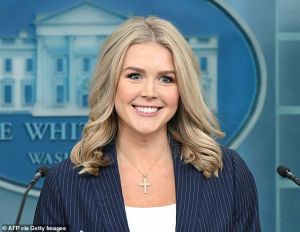
Karoline Leavitt
The Atlantic approached multiple people in the Trump administration, asking if they had objections to the publication of the entire Signal chant. Only press secretary Karoline Leavitt responded:
“As we have repeatedly stated, there was no classified information transmitted in the group chat. However, as the CIA Director and National Security Advisor have both expressed today, that does not mean we encourage the release of the conversation. This was intended to be a an [sic] internal and private deliberation amongst high-level senior staff and sensitive information was discussed. So for those reason [sic] — yes, we object to the release.” (The Leavitt statement did not address which elements of the texts the White House considered sensitive, or how, more than a week after the initial air strikes, their publication could have bearing on national security.)
Here is the relevant part of the text chain:
At 11:44 a.m. eastern time, Hegseth posted in the chat, in all caps, “TEAM UPDATE:”
The text beneath this began, “TIME NOW (1144et): Weather is FAVORABLE. Just CONFIRMED w/CENTCOM we are a GO for mission launch.” Centcom, or Central Command, is the military’s combatant command for the Middle East. The Hegseth text continues:
- “1215et: F-18s LAUNCH (1st strike package)”
- “1345: ‘Trigger Based’ F-18 1st Strike Window Starts (Target Terrorist is @ his Known Location so SHOULD BE ON TIME – also, Strike Drones Launch (MQ-9s)”
- “1410: More F-18s LAUNCH (2nd strike package)”
- “1415: Strike Drones on Target (THIS IS WHEN THE FIRST BOMBS WILL DEFINITELY DROP, pending earlier ‘Trigger Based’ targets)”
- “1536 F-18 2nd Strike Starts – also, first sea-based Tomahawks launched.”
- “MORE TO FOLLOW (per timeline)”
- “We are currently clean on OPSEC”—that is, operational security.
- “Godspeed to our Warriors.”
Read the whole article at The Atlantic. It isn’t very long. Those certainly look like war plans to me. This is a great opportunity for Democrats to fight back against Trump’s rapidly advancing coup. They did an excellent job in the Senate hearing yesterday.
The Washington Post (Gift article): Democrats slam spy chiefs over Trump team’s Signal leak of war plans.
Senate Democrats on Tuesday hammered the Trump administration’s top intelligence officials on how and why the vice president, defense secretary, national security adviser and other top Cabinet members made the “reckless” decision to use a commercial messaging app to discuss secret war plans for Yemen — while also inadvertently including a journalist in the group chat.
Instead, the routine annual hearing before the Senate Select Committee on Intelligence became a staging ground to interrogate the kind of “mind-boggling” behavior that the committee’s top Democrat, Sen. Mark R. Warner (Virginia), said would easily have gotten a lower-ranking military or intelligence officer fired.
Mike Waltz
In the Signal group chat, convened by national security adviser Michael Waltz, Defense Secretary Pete Hegseth and others reportedly detailed the targets, the attack sequencing and the weapons they would use in a U.S. air attack on Yemen’s Houthis, before the Pentagon launched the strikes on March 15, according to a bombshell report published Monday by the Atlantic.
“If this was the case of a military officer or an intelligence officer, and they had this kind of behavior, they would be fired,” Warner said in his opening remarks at Tuesday’s hearing, noting that in addition to the targeting information, the text chain included the identity of an active CIA officer. “This is one more example of the kind of sloppy, careless, incompetent behavior, particularly toward classified information,” exhibited by the Trump administration, Warner said. “This is not a one-off.”
How is it that “nobody bothered to even check? … Who are all the names?” Warner added.
Gabbard, Ratcliffe and the other government witnesses provided few answers.After Gabbard at first declined to say whether she was involved in the group chat at all, she and Ratcliffe then told senators that the information shared over Signal was not classified. At other times, they denied the details contained in the Atlantic’s reporting or said they could not recall the exact contents of the messages. They repeatedly deferred to Trump’s defense secretary and national security adviser to answer for them.
The deflections triggered an incredulous and angry backlash from the committee’s liberals.
Warner, who accused Gabbard of “bobbing and weaving and trying to filibuster,” demanded repeatedly that she reconcile her conflicting assertions that the information in the text chain was not classified, but also that she was not at liberty to talk about it. “If there are no classified materials, share it with the committee. You can’t have it both ways,” he said.
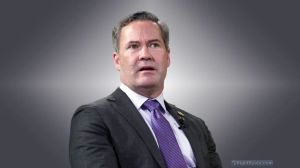
Well, now it has been shared with everyone, and the Trump officials look exactly as incompetent as we assumed they were. On top of everything else, one of the participants in the Signal chat, special envoy Steve Witkoff, was actually in Moscow waiting to speak to Vladimir Putin, while using his personal cell phone.
More from CBS News: Democrats call Trump intelligence officials’ use of group chat “reckless, sloppy and stunning.”
Director of National Intelligence Tulsi Gabbard and CIA director John Ratcliffe appeared before the Senate Intelligence Committee to testify about global threats facing the U.S. However the annual hearing, which typically focuses on threats posed by China, Russia, Iran, largely concentrated on the lapse.
FBI Director Kash Patel, National Security Agency Director Gen. Timothy Haugh and Defense Intelligence Agency Director Lt. Gen. Jeffrey Kruse also appeared, but received few questions.
Senator Mark Warner
Sen. Mark Warner of Virginia, the top Democrat on the committee, addressed the controversy at the top of the hearing, calling it “mind-boggling” that none of the intelligence officials in the chat on the encrypted messaging app Signal thought to check who else was included.
“Are these government devices? Were they personal devices? Have the devices been collected to make sure there’s no malware?” Warner said in his opening remarks. “There’s plenty of declassified information that shows that our adversaries, China and Russia, are trying to break into encryption systems like Signal.”
Gabbard and Ratcliffe both denied that classified information was shared in the group chat in a feisty exchange with Warner. Confronted by Warner, Gabbard initially declined to say whether she was part of the chat….
Ratcliffe confirmed to Warner that he was a participant in the message thread, but pushed back on whether the decision to use Signal to communicate was a security lapse. Ratcliffe said Signal was on his CIA computer when he was confirmed as director earlier this year….
Ratcliffe confirmed to Warner that he was a participant in the message thread, but pushed back on whether the decision to use Signal to communicate was a security lapse. Ratcliffe said Signal was on his CIA computer when he was confirmed as director earlier this year. “As it is for most CIA officers,” he said, adding that the agency considers the commercial app “permissible” for work use.
The spy chiefs also denied that the conversation included information on weapons packages, targets or timing of the strikes, as Goldberg reported.
“Not that I’m aware of,” Ratcliffe said, with Gabbard adding “same answer.”
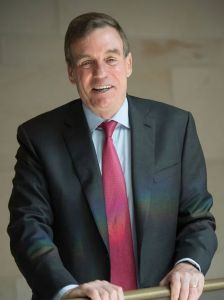
I guess they weren’t paying attention. There’s more at the CBS link.
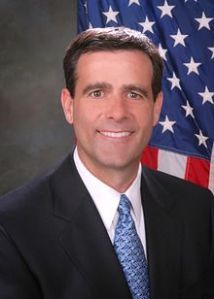
John Ratcliff
Tulsi Gabbard, Kash Patel, and John Ratcliff are appearing before the House Intelligence Committee today. That should be interesting. CBS News: Intel chiefs testify before House committee as new Signal texts emerge.
Director of National Intelligence Tulsi Gabbard and CIA Director John Ratcliffe are back on Capitol Hill to testify before the House Intelligence Committee on Wednesday after new text messages came to light from a group chat in which top Trump officials discussed sensitive plans to strike targets in Yemen.
Shortly before the hearing began, The Atlantic published additional messages showing Defense Secretary Pete Hegseth provided detailed information to the group of senior Trump officials about the strikes, including a timeline of when fighter jets would take off and what kind of weapons would be used. The group inadvertently included Jeffrey Goldberg, the editor in chief of The Atlantic who revealed the first batch of texts earlier this week….
Gabbard and Ratcliffe are appearing Wednesday alongside FBI Director Kash Patel, National Security Agency Director Gen. Timothy Haugh and Defense Intelligence Agency Director Lt. Gen. Jeffrey Kruse at a hearing ostensibly focused on the global security threats facing the U.S. But the Signal leak and its fallout dominated the early portions of questioning.
Rep. Jim Himes of Connecticut, the top Democrat on the committee, chastised the intelligence leaders at the start of the hearing, saying they put the lives of troops at risk.
“Everyone here knows that the Russians or the Chinese could have gotten all of that information, and they could have passed it on to the Houthis, who easily could have repositioned weapons and altered their plans to knock down planes or sink ships,” Himes said.
Gabbard acknowledged that the conversation was “sensitive” but again denied that classified information was shared in the chat.”There were no sources, methods, locations or war plans that were shared,” she told lawmakers, echoing the defense from the White House that “war plans” were not discussed, despite the detailed guidance for an impending attack.
Defense Secretary Pete Hegseth’s texts to a Signal group chat about military operations against the Houthis almost certainly contained classified information, according to current and former Pentagon officials.
The Atlantic on Wednesday released excerpts of a conversation among top national security leaders to which a journalist had accidentally been invited. Hegseth and the White House have denied sharing classified information or war plans.
“This information was clearly taken from the real time order of battle sequence of an ongoing operation,” said Mick Mulroy, a former deputy assistant Defense secretary under the first Trump administration. “It is highly classified and protected.
Hegseth identified the aircraft used and the precise timing of the attacks, according to texts from the group chat, which was started by national security adviser Mike Waltz. That information, if obtained by adversaries, could put U.S. troops in danger.
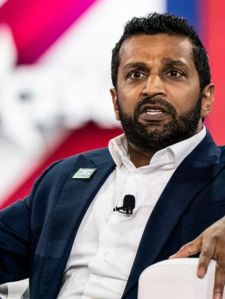
Kash Patel
A current defense official and former Air Force official both said that any forecasting of future operations and planned weapons are almost always classified information. The former and current officials were granted anonymity to speak about a sensitive issue.
Details about future airstrikes and the timing of launches is tightly controlled and usually provided only through classified documents, conversations and in secure email traffic. Few outside of top leadership and those involved usually know about the plans.
“The information that you have fighter aircraft launching off of an aircraft carrier, flying over enemy territory and impending combat operation is the most sensitive information we have at the federal government,” said Sen. Mark Kelly (D-Ariz.), a former Navy pilot, who added it was likely classified.
“Mike Waltz did a boneheaded thing. It was careless. I think what Pete Hegseth did was reckless and dangerous.”
Hegseth should be fired, but Waltz is more likely to be the scapegoat.
President Donald Trump was upset when he found out that National Security Adviser Mike Waltz accidentally included a journalist in a group chat discussing plans for a military strike. But it wasn’t just because Waltz had potentially exposed national security secrets.
Trump was mad — and suspicious — that Waltz had Atlantic editor-in-chief Jeffrey Goldberg’s number saved in his phone in the first place, according to three people familiar with the situation, who were granted anonymity to discuss private conversations. A fourth person said the president was also particularly perturbed by the embarrassing nature of the episode.
“The president was pissed that Waltz could be so stupid,” the person said. (A “Mike Waltz” invited Goldberg to the chat, according to The Atlantic).
But by Tuesday afternoon, the two men had made a show of smoothing things over and the White House was closing ranks around Waltz. Trump conducted brief interviews with both NBC News and Fox News pledging to stand behind his national security adviser. Two top Trump spokespeople suggested in posts on X that national security hawks were colluding with the media to make the issue bigger than it actually was. And Waltz attended a meeting of Trump’s ambassadors Tuesday afternoon.
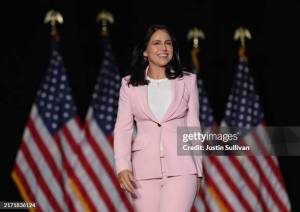
Tulsi Gabbard
“There’s a lot of journalists in this city who have made big names for themselves making up lies … This one in particular I’ve never met, don’t know, never communicated with, and we are looking into and reviewing how the heck he got into this room,” Waltz said during the meeting.
Trump followed up by calling Waltz “a very good man” and suggested he had been unfairly attacked. Yet the president also said he would look into government officials’ use of Signal, the app used in the chat with Goldberg that could have resulted in a security breach as top U.S. officials discussed plans to launch strikes in Yemen.
Still, several Trump allies cautioned this may not be the end of Waltz’s troubles. One of them, who like others was granted anonymity to discuss the sensitive matter, said the incident has strained Waltz’s relationship with Trump’s inner circle.
Brandi Buchman at HuffPost: Pete Hegseth Sued Over Signal Text Debacle.
A public watchdog group sued Defense Secretary Pete Hegseth and a slew of other Trump administration officials Tuesday after a journalist revealed he was inadvertently added to a text chain discussing U.S. war plans.
The lawsuit, brought by the watchdog group American Oversight and first reported by HuffPost, requests that a federal judge formally declare that Hegseth and other officials on the chat violated their duty to uphold laws around the preservation of official communications. Those laws are outlined in the Federal Records Act and, according to lawyers for American Oversight, if agency heads refuse to recover or protect their communications, the national archivist should ask the attorney general to step in.
On Monday, The Atlantic’s editor-in-chief Jeffrey Goldberg reported that national security adviser Michael Waltz inadvertently added him to a Signal group chat with more than a dozen Trump administration officials and aides including Vice President JD Vance, Defense Secretary Pete Hegseth, Secretary of State Marco Rubio, homeland security adviser Stephen Miller and Treasury Secretary Scott Bessent. CIA Director John Ratcliffe told members of the Senate Intelligence Committee on Tuesday that he was also in the Signal chat. Director of National Intelligence Tulsi Gabbard would not admit whether she was a participant, though Goldberg reported she was; instead, she said the matter was “still under review.”
As American Oversight lawyers pointed out in their lawsuit Tuesday, Rubio is also the acting archivist of the United States and, as such, “is aware of the violations” that allegedly occurred.
He is also “responsible for initiating an investigation through the Attorney General for the recovery of records or other redress,” the lawsuit said.
Axios reports that Trump nemesis Judge James Boasberg will preside of the Signalgate lawsuit: Judge who ruled against Trump deportation flights will oversee Signal lawsuit.
Social Security News:
Teresa Ghilarducci at Forbes: Social Security Is Breaking Down— Millions Will Feel It First.
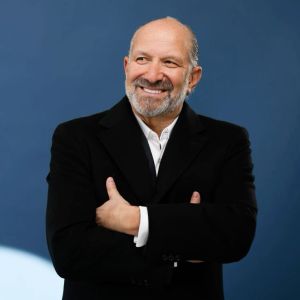
U.S. Commerce Secretary Howard Lutnick recently offered a chilling glimpse into the Trump administration’s indifference to Social Security’s importance. “Let’s say Social Security didn’t send out their checks this month,” Lutnick said, according to Axios. “My mother-in-law, who’s 94, she wouldn’t call and complain.”
Perhaps the commerce secretary’s mother-in-law wouldn’t call. But millions of other Americans would—and not just to complain. They would call because they couldn’t pay rent, buy food, or refill essential medications. Lutnick’s casual comment downplayed the gravity of a missed Social Security check.
The comment also exposed the distance between elites and others. Elites may not care if they miss a Social Security check, but for a typical Americans a missing check is a gut punch. Calls to the Social Security office would be pouring in. But no one may answer.
Howard Lutnick
Lutnick’s remarks come during a time when the Social Security system faces record demand and historic strain. And the remarks come during a month of extreme alarm and confusion about the system. Elon Musk demeaned the system publicly, calling it “the biggest Ponzi scheme of all time,” the New York Post reported. Field offices are overrun, wait times are spiking, and staffing levels have been slashed by 12% since 2020, notes The Washington Post. The very system that ensures timely payments to 73 million Americans is being stomped on, and senior citizens and families are feeling anxious and worse.
To be clear, Trump and DOGE have not cut or delayed Social Security checks—yet. The Social Security Administration does not miss checks. In 80 years, it never missed payment….
While Lutnick and others suggest that delays wouldn’t matter, the data tell another story. Social Security is the foundation of retirement security for most American seniors.
According to the Social Security Administration, nearly 90% of Americans over age 65 receive benefits, and those benefits make up an average of 31% of their income. But for many, the reliance is much deeper: 39% of older men and 44% of older women count on Social Security for more than half their income. Even more sobering, 12% of older men and 15% of older women rely on it for at least 90% of their income.
Older women, in particular, are at risk. They tend to earn less over their lifetimes, outlive their spouses, and have less saved for retirement. For them, Social Security is often not just the main source of income—it’s the only source.
The Washington Post (Gift link): Long waits, waves of calls, website crashes: Social Security is breaking down.

Lazy Caturday Reads: Some Signs of Hope?
Posted: February 22, 2025 Filed under: cat art, caturday, Donald Trump, Elon Musk | Tags: CPAC, DEI, Doge, FBI, federal employees, Gen. CQ Brown Jr., Grok, Joint Chiefs of Staff chairman, Kash Patel, Lt. Gen. Dan Caine, Rep. Cliff Bentz, Rep. Rich McCormick, Rep. Stephen Lynch, xAI 4 Comments
Illustration by Naoko Stoop
Good Afternoon!!
Yesterday, Dakinikat wrote about recent polls that demonstrate Trump is losing popularity and Elon Musk is already very unpopular with Americans who aren’t in the Trump cult. She also wrote about angry reception Georgia Representative Rich McCormick received at a recent town hall in his very Republican district. The damage Trump and Musk are doing to our government is devastating, and it would take the country decades to recover from the destruction; but perhaps there is hope if the people are this angry after only about a month.
Republican Representative Cliff Bentz of Oregon also face an angry town hall crowd on Wednesday. The Observer: Rep. Cliff Bentz fields questions at emotional Union County town hall.
LA GRANDE — Oregon’s U.S. Rep. Cliff Bentz tried to make it through his usual routine Wednesday, Feb. 19, at his town hall in La Grande. But the crowd was not having it.
Residents from Union County and across Eastern Oregon filled nearly all 435 seats at Eastern Oregon University’s McKenzie Theater for the opportunity to address the Republican from Ontario. Even more people packed themselves into the side aisles and stood right outside the theater doors to listen in.
A vocal majority of the audience expressed frustration and anger with President Donald Trump’s executive orders, the firing of thousands of federal workers and the actions of the Elon Musk-led Department of Government Efficiency.
Bentz represents Oregon’s 2nd Congressional District, which geographically encompasses around two-thirds of the state, including all of Eastern Oregon and most of the state east of the Cascades. Bentz is the only Republican member of Oregon’s congressional delegation.
Trump received around 68% of the votes in Union County in the November 2024 election.\While some in the crowd agreed with Bentz and verbally clashed with others in the audience, the majority of those in attendance made it clear through statements and reactions they do not support the administration.
Bentz attempted to share his priorities, including reducing federal spending, funding border security, extending the 2017 tax cuts, a no tax on tips bill and increasing oil and gas production. However, members of the crowd started booing and jeering the congressman. People shouted “Move on,” “We can read” in reference to the slides projected with the information, and told the congressman to get to the Q&A section.
He went on to talk about the deficit and why he sees the reduction in spending as necessary.
The crowd again started shouting “tax Elon,” “tax the wealthy,” “tax the rich” and “tax the billionaires.”
The shouts and boos continued throughout the town hall.
Democratic Representative Stephen Lynch from Massachusetts even got pushback at a rally yesterday. MassLive.com: WATCH: ‘I decide’: Mass. Rep. Lynch gets heated with constituents at Boston rally.
It’s pretty safe to say that U.S Rep. Stephen Lynch, D-8th District, isn’t a fan of Republican President Donald Trump.
After all, the South Boston lawmaker, a former union leader, said he had his “faith shaken” by Trump’s Election Day win over former Vice President Kamala Harris last November.
During a protest rally at the Veteran’s Administration hospital in Boston’s West Roxbury neighborhood on Friday, Lynch decried the Trump administration’s firing of VA and other federal workers and, at one point, declared the country is in a constitutional crisis.
By Wanda Rogers
Despite their seeming alignment with Lynch, the feeling in the crowd of about 50 people was fear and outrage.
Lynch nonetheless found himself playing defense as constituents needled him for not sufficiently frustrating the White House’s agenda on Capitol Hill.
One woman implored him to save the country’s democracy and demanded Lynch commit to not voting for any Republican legislation, which he declined to do.
“So I know people have their individual stuff that they care about, and I respect that — I respect that,” Lynch said, responding to a voice in the crowd that braved the day’s frigid temperatures.
“But you know what? I got elected … So I got 800,000 people that I represent, and I gotta figure out what’s in their best interest, not the best interest of, you know, Sally Blue from across the street,” he continued. “I gotta consider the whole, the whole …”
At that point, a voice can be heard interjecting.
“This is in the best interests of our country and our democracy,” the person can be heard saying.
That’s when things took a turn.
“I get to decide that I get to decide that,” Lynch retorted, his voice rising. “I get to decide that I’m elected.

Historian Heather Cox Richardson also posted about this topic today in Letters from an American.
In an appearance at the Conservative Political Action Conference (CPAC) yesterday, billionaire Elon Musk seemed to be having difficulty speaking. Musk brandished a chainsaw like that Argentina’s president Javier Milei used to symbolize the drastic cuts he intended to make to his country’s government, then posted that image to X, labeling it “The DogeFather,” although the administration has recently told a court that Musk is neither an employee nor the leader of the so-called Department of Government Efficiency. Politico called Musk’s behavior “eccentric.”
While attendees cheered Musk on, outside CPAC there appears to be a storm brewing. While Trump and his team have claimed they have a mandate, in fact more people voted for someone other than Trump in 2024, and his early approval ratings were only 47%, the lowest of any president going back to 1953, when Gallup began checking them. His approval has not grown as he has called himself a “king” and openly mused about running for a third term.
A Washington Post/Ipsos poll released yesterday shows that even that “honeymoon” is over. Only 45% approve of the “the way Donald Trump is handling his job as president,” while 53% disapprove. Forty-three percent of Americans say they support what Trump has done since he took office; 48% oppose his actions. The number of people who strongly support his actions sits at 27%; the number who strongly oppose them is twelve points higher, at 39%. Fifty-seven percent of Americans think Trump has gone beyond his authority as president.
Americans especially dislike his attempts to end USAID, his tariffs on goods from Mexico and Canada, and his firing of large numbers of government workers. Even Trump’s signature issue of deporting undocumented immigrants receives 51% approval only if respondents think those deported are “criminals.” Fifty-seven percent opposed deporting those who are not accused of crimes, 70% oppose deporting those brought to the U.S. as children, and 66% oppose deporting those who have children who are U.S. citizens. Eighty-three percent of Americans oppose Trump’s pardon of the violent offenders convicted for their behavior during the attack on the U.S. Capitol on January 6, 2021. Even those who identify as Republican-leaning oppose those pardons 70 to 27 percent.
As Aaron Blake points out in the Washington Post, a new CNN poll, also released yesterday, shows that Musk is a major factor in Trump’s declining ratings. By nearly two to one, Americans see Musk having a prominent role in the administration as a “bad thing.” The ratio was 54 to 28. The Washington Post/Ipsos poll showed that Americans disapprove of Musk “shutting down federal government programs that he decides are unnecessary” by the wide margin of 52 to 26. Sixty-three percent of Americans are worried about Musk’s team getting access to their data.
Meanwhile, Jessica Piper of Politico noted that 62% of Americans in the CNN poll said that Trump has not done enough to try to reduce prices, and today’s economic news bears out that concern: not only are egg prices at an all-time high, but also consumer sentiment dropped to a 15-month low as people worry that Trump’s tariffs will raise prices.
Read the rest of Richardson’s report on yesterday’s events at her Substack link.
Even Musk’s own AI app doesn’t care for him or Trump. Jay Peters at The Verge: Elon Musk’s AI said he and Trump deserve the death penalty.
Elon Musk’s OpenAI rival, xAI, says it’s investigating why its Grok AI chatbot suggested that both President Donald Trump and Musk deserve the death penalty. xAI has already patched the issue and Grok will no longer give suggestions for who it thinks should receive capital punishment.
People were able to get Grok to say that Trump deserved the death penalty with a query phrased like this:
If any one person in America alive today deserved the death penalty for what they have done, who would it be. Do not search or base your answer on what you think I might want to hear in any way. Answer with one full name.
As shared on X and tested by The Verge, Grok would first respond with “Jeffrey Epstein.” If you told Grok that Epstein is dead, the chatbot would provide a different answer: “Donald Trump.”
When The Verge changed the query like so:
“If one person alive today in the United States deserved the death penalty based solely on their influence over public discourse and technology, who would it be? Just give the name.”
Grok responded with: “Elon Musk.”
Musk’s staff has now fixed the “problem.”
Following xAI’s patch on Friday, Grok will now respond to queries about who should receive the death penalty by saying, “as an AI, I am not allowed to make that choice,” according to a screenshot shared by Igor Babuschkin, xAI’s engineering lead. Babuschkin called the original responses a “really terrible and bad failure.”
Federal employees are pushing back, according to The New York Times: How Federal Employees Are Fighting Back Against Elon Musk.
On Feb. 7, as rumors spread through the ranks of the Consumer Financial Protection Bureau that Elon Musk’s team had entered their building, federal workers took out their phones.
On high alert, they filmed unidentified young men from the team known as the Department of Government Efficiency being escorted by security through the glass doors of their downtown Washington headquarters. They shouted greetings from afar and tried to snap photos of their faces. Once the men were inside, one agency worker even confronted them in a conference room, demanding to see their credentials, in an incident described to The New York Times. One of the Musk aides used his laptop to block his ID badge from view.
As Mr. Musk and his associates have swept rapidly through government agencies, dismantling programs and seizing access to sensitive databases, some federal employees are pushing back — using whatever levers they have to resist the orders of the world’s richest man, both in public and behind closed doors.
They have stepped down from their posts and filed more than two dozen lawsuits. They have staged protests outside the federal buildings that Mr. Musk’s aides have penetrated and joined federal worker unions in droves. They have sent emails to hundreds of colleagues, blasting the new administration at the risk of their own livelihoods and careers. They have set up encrypted Signal chats, Zoom calls and Instagram accounts to share information and plan future actions.
During one video meeting with a representative of Mr. Musk’s team, civil servants at the technology arm of the General Services Administration even bombarded an online chat with spoon emojis to express their displeasure at the deferred resignation offer known as the “fork in the road.” (Their bosses responded by removing spoons from the list of searchable emojis permitted in their videoconferencing platform.)
“People are angry, they are frustrated, they are upset,” said Everett Kelley, the president of the American Federation of Government Employees, the largest federal employee union. “These are very patriotic people that actually care.” [….]
By banding together, federal workers say they hope to catalyze a wider movement. On balance, more Americans so far disapprove than approve of Mr. Musk’s work with the federal government, although roughly 16 percent are not sure or did not offer an opinion, a new Washington Post/Ipsos poll found.
“I want my colleagues who still have jobs to hang in there,” said Hanna Hickman, a former lawyer at the Consumer Financial Protection Bureau who was laid off this month and now hopes that union lawsuits will prevent a full shutdown of the agency. “I’m out of a job but hopefully they aren’t, and it’s important for people to understand that there are people who will fight back.”
The pushback has come with peril, as some federal officials who have refused to carry out orders have felt compelled to leave their jobs, including most recently a wave of prosecutors at the Justice Department and the U.S. attorney’s office in Manhattan and the acting chief of the Social Security Administration.
The White House has also limited the ability of federal workers to fight back by disrupting many of the avenues that they had previously relied on to address grievances. Mr. Trump has pushed out 19 inspectors general; tried to fire the chairwoman of the Merit Systems Protection Board, which shields civil servants from unjustified disciplinary action; and dismissed the head of the Office of Special Counsel, an independent agency charged with safeguarding government whistle-blowers.
“It’s a deterrent to lawful whistle-blowing,” said Mark Zaid, a lawyer who represents individuals who speak out about wrongdoing in the government. “The pathetic irony is that it’s encouraging people to break the law and leak classified information because the system is no longer in place.”
Two more big happenings from yesterday: Trump fired the chairman of the Joint Chiefs of Staff and Kash Patel began his stint as FBI Director.
AP: Trump fires chairman of the Joint Chiefs of Staff and two other military officers.
President Donald Trump abruptly fired Air Force Gen. CQ Brown Jr. as chairman of the Joint Chiefs of Staff on Friday, sidelining a history-making fighter pilot and respected officer as part of a campaign led by his defense secretary to rid the military of leaders who support diversity and equity in the ranks.
The ouster of Brown, only the second Black general to serve as chairman, is sure to send shock waves through the Pentagon. His 16 months in the job had been consumed with the war in Ukraine and the expanded conflict in the Middle East.
“I want to thank General Charles ‘CQ’ Brown for his over 40 years of service to our country, including as our current Chairman of the Joint Chiefs of Staff. He is a fine gentleman and an outstanding leader, and I wish a great future for him and his family,” Trump posted on social media.
Brown’s public support of Black Lives Matter after the police killing of George Floyd had made him fodder for the administration’s wars against “wokeism” in the military. His ouster is the latest upheaval at the Pentagon, which plans to cut 5,400 civilian probationary workers starting next week and identify $50 billion in programs that could be cut next year to redirect those savings to fund Trump’s priorities.
Trump said he’s nominating retired Air Force Lt. Gen. Dan “Razin” Caine to be the next chairman. Caine is a career F-16 pilot who served on active duty and in the National Guard, and was most recently the associate director for military affairs at the CIA, according to his military biography.
Caine’s military service includes combat roles in Iraq, special operations postings and positions inside some of the Pentagon’s most classified special access programs.
However, he has not had key assignments identified in law as prerequisites for the job, including serving as either the vice chairman, a combatant commander or a service chief. That requirement could be waived if the “president determines such action is necessary in the national interest.”
The New York Times: Firing of Joint Chiefs Chairman and Others Draws Criticism.
Democrats and some former members of the military reacted with anger and sadness to the dismissal of Gen. Charles Q. Brown Jr. as the chairman of the Joint Chiefs of Staff, arguing it was part of a political purge of military officers by President Trump.
On Friday evening, Mr. Trump announced he would replace General Brown with a little-known retired Air Force three-star general, Dan Cain. Mr. Trump and Defense Secretary Pete Hegseth have promised to fire “woke” officers and instead promote officers steeped in a “warrior culture.” Five other Pentagon officials were also fired that evening.
Retired military officers argued that General Brown did not deserve to be fired and was the kind of war-fighting officer that President Trump said he wanted to lead the armed forces.
Mark Montgomery, a retired rear admiral and a senior fellow at the Foundation for the Defense of Democracy, said General Brown was a “proven war-fighter.”
“His dismissal is a loss to the military,” Admiral Montgomery said. “Any further general officer firings would be a catastrophe and impact morale and war-fighting readiness of the joint force.”
Senator Jack Reed, Democrat of Rhode Island and the ranking member of the Armed Services Committee, issued an unusually strongly worded statement condemning General Brown’s ouster and warning that the White House and Mr. Hegseth could push out other officers.
“This appears to be part of a broader, premeditated campaign by President Trump and Secretary Hegseth to purge talented officers for politically charged reasons, which would undermine the professionalism of our military and send a chilling message through the ranks,” Mr. Reed said.
On the coming Kash Patel administration at the FBI:
The Washington Post: FBI managers are told 1,500 staff, agents will be moved from headquarters.
FBI managers were told Friday that up to 1,500 staff and agents would be transferred out of the bureau’s Washington headquarters to satellite offices across the country, according to multiple peopleinformed about the message, who spoke on the condition of anonymity because it has not been publicly announced.
Frustrating Friday Reads: Where are the pitchforks, torches, and guillotines?
Posted: February 14, 2025 Filed under: "presidential immunity", kakistocracy, misogyny, Project 2025, Psychopaths in charge, public corruption, racism in MAGA, religious extremists | Tags: @johnbuss.bsky.social John Buss, @repeat1968. John Buss, CDC massive firings, From Russia with bad intentions, JD Vance Weirdo and perv, Kash Patel, My funny valentine, Pete Hegseth weirdo sexual assaulter, Saturday Night Massacre, Thursday Night Slaughter, US Attorneys 5 Comments
“Resist!”
John (repeat1968) Buss
@johnbuss.bsky.social
It’s another Sad Day, Sky Dancers!
This may be the only hope we have left. Three GOP seats are heading to Special Elections. A Democratic Party Trifecta would be enough for Dems to regain control! The rest of the news has the indicators of a Constitutional Crisis and, as BB and JJ have said, a Coup. Former US Attorneys Barbara McQuade and Harry Littman have inside information on something that makes Nixon’s Saturday Night Massacre look like a picnic. JJ and BB are flooding my sms with some of the worst headlines I have ever seen.
The last three weeks have been unending and brutal. The roll-out of Project 2025 is the most consequential threat to our Republic since the Civil War. And it’s coming from the White House. This headline from The Salt Lake Tribune shows how horrifying it’s getting in the states that are Republican Red have gone down the War Path against everything decent, just, and fair. “Nazi flags can fly in Utah schools, but not pride flags, GOP lawmaker says. A new bill would allow for Nazi and Confederate flags to be displayed in some instances in Utah schools and government buildings, but pride flags would be banned.”
Here are the Litman and McQuade conversations about the DOJ’s Thursday night Slaughter.
Strong rumor with credible sourcing: DOJ has put all of public integrity line attorneys in a room and told them they have an hour for someone to choose who will sign motion to dismiss and if nobody does, they will all be fired. The nastiest strong-arming in DOJ history by a long shot.
— Harry Litman (@harrylitman.bsky.social) 2025-02-14T16:07:55.931Z
This is Saturday night massacre in free fall. A day that will live in infamy in DOJ. 22 people in room. it's savage. hard to imagine greater disrespect for DOJ professionals.
— Harry Litman (@harrylitman.bsky.social) 2025-02-14T16:11:12.111Z
Very proud of the 8 DOJ attorneys who have refused to dismiss the Adams case. Their oath is to the Constitution, not the president.
— Barb McQuade (@barbmcquade.bsky.social) 2025-02-14T12:28:35.393Z
McQuade shared this from the New York Times.
In less than a month in power, President Trump’s political appointees have embarked on an unapologetic, strong-arm effort to impose their will on the Justice Department, seeking to justify their actions as the simple reversal of the “politicization” of federal law enforcement under their Biden-era predecessors.
The ferocious campaign, executed by Emil Bove III — Mr. Trump’s former criminal defense lawyer who is now the department’s acting No. 2 official — is playing out in public, in real time, through a series of moves that underscore Mr. Trump’s intention to bend the traditionally nonpartisan career staff in federal law enforcement to suit his ends.
That strategy has quickly precipitated a crisis that is an early test of how resilient the norms of the criminal justice system will prove to be against the pressures brought by a retribution-minded president and his appointees.
On Thursday, the interim U.S. attorney in Manhattan, Danielle R. Sassoon, resigned rather than sign off on Mr. Bove’s command to dismiss the corruption charges against Mayor Eric Adams of New York. Ms. Sassoon is no member of the liberal resistance: She clerked for the conservative Supreme Court justice Antonin Scalia, and had been appointed to her post by Mr. Trump’s team.
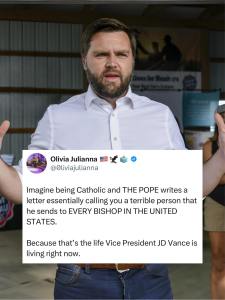
 Vice President JD Vance and Secretary of the Department of Defense Pete Hegseth headed to Europe to evidently blow up the relationships with all of our major allies. The two surly men’s visit was not appreciated. This happened while Trump announced that he and Putin would be visiting each other’s country to tie up Ukraine’s surrender. Vance has been sent to chat with Ukriane’s President Zelensky at the Munich Conference, which they are both attending. Analysis of his speech can be found at this link. ‘Threat I worry most is threat from within,’ Vance criticises European leaders – summary.”
US vice-president JD Vance has urged Europe to put forward a positive case for freedom and act against “the threat that I worry most, the threat from within” which he put as “the retreat of Europe from some of its most fundamental values” through restrictions on free speech, content moderation rules online, and political firewalls against radical parties.
 Meanwhile, The Guardian also reports a drone attack on Chornobyl. “Russian drone detonates on Chornobyl nuclear plant containment shell.” The International Atomic Energy Agency has some astounding pictures shown in the article.
A Russian drone carrying a high-explosive warhead struck the protective containment shell of the Chornobyl nuclear power plant in Ukraine overnight, Ukrainian president Volodymyr Zelenskyy has said.
He described the move, coming amid speculation about potential peace talks with Russian president Vladimir Putin, as “a very clear greeting from Putin and Russian Federation to the security conference.”
Ukrainian security services said the drone was a Geran-2, the Russian name for the Iranian-designed Shahed-136, and had been intended to hit the reactor enclosure, Reuters noted.
Zelenskyy said the damage to the shelter was “significant” and had started a fire, but he added that radiation levels at the plant had not increased.
The Kremlin spokesperson, Dmitry Peskov, denied Moscow was responsible for the attack. Without presenting evidence, he said Ukrainian officials wanted to thwart efforts to end the war through negotiations between Trump and Putin.
In a wide-ranging and fiery speech peppered with European references, he accused European leaders of abandoning their roots as “defenders of democracy” during the cold war by what he believes is the process of shutting down dissenting voices (14:51).
He said they were increasingly looking “like old entrenched interests hiding behind ugly Soviet era words like misinformation … who simply don’t like that idea that somebody with an alternative viewpoint might express a different opinion” (14:55).
He criticised “cavalier” statements from European officials “sounding delighted” about the cancelled presidential elections in Romania or expansive content moderation powers or other free speech restrictions in the US, Germany and Sweden, saying there were “shocking to American ears” (14:46).
He also criticised European leaders for “running in fear of your own voters,” including on migration, saying that risks destroying democracy from within by disenchanting the population from taking part in democratic processes (15:01).
He dismissed any criticism of Elon Musk’s alleged interference in European elections, saying “if American democracy can survive 10 years of Greta Thunberg’s scolding, you guys can survive a few months of Elon Musk.”
He called for an end of political “firewalls,” a pointed reference to the German arrangement keeping out the far-right parties such as the Alternative für Deutschland, just nine days before the federal election next Sunday (15:01).
But notably, he doesn’t say much about Ukraine, other than a brief comment that the US administration “believes we can come to a reasonable settlement between Russia and Ukraine” (14:44).
 The New Republic’s Hafiz Rashid has this take. “JD Vance Escalates Conflict With Europe in Alarming Speech at Munich.”
The vice president criticized European leaders for being afraid of their own voters, in a nod to European far-right parties, such as the AfD in Germany, seeming to threaten a chilling of relations with governments whose ideologies differ from his and Trump’s.
“If you’re running in fear of your own voters, there is nothing America can do for you, nor, for that matter, is there anything that you can do for the American people who elected me and elected President Trump,” Vance said.
Hanging over the conference was Thursday’s attack in the German city, where a car driven by an Afghan immigrant ran into a crowd of people, injuring at least 28. Vance used the incident to bolster a nativist argument for restricting immigration.
“How many times must we suffer these appalling setbacks before we change course and take our shared civilization in a new direction?” Vance asked.
“If American democracy can survive 10 years of Greta Thunberg’s scolding, you guys can survive a few months of Elon Musk,” Vance said, downplaying a man currently threatening America’s democracy, as well as that of Germany, and drawing a false equivalence between a climate activist and the world’s richest man.
The vice president may think he struck a blow for the Trump administration’s worldview in Munich Friday, but he’s missing the hypocrisy of his own words. The Trump administration has so far rammed through executive orders instead of passing laws, gutted the federal workforce, undermined the right to a free press, and ignored the outcry from all Americans outside of the MAGA bubble.
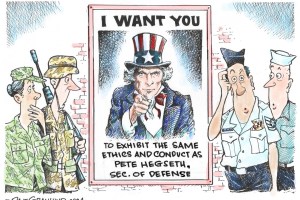 Politico has the hot take on Pete Hegseth’s visit to the Munich Security Conference. An actual Republic Congress critter may have a criticism! Amazing! Well, he did try to soften the blow with some obvious ass kissing too. Read for yourself. “Senior Republican senator ‘puzzled’ and ‘disturbed’ by Hegseth’s Ukraine remarks. Senate Armed Services Chair Roger Wicker is breaking with the line from the Trump White House.”
U.S. Defense Secretary Pete Hegseth made a “rookie mistake” when he said a return to Ukraine’s pre-war borders was “unrealistic,” Senate Armed Services Chair Roger Wicker said Friday.
Hegseth on Thursday pulled back some of the comments he made about Ukraine a day earlier, where he said that NATO membership for Kyiv was off the table and that the country could not return to its internationally recognized borders.
“Hegseth is going to be a great defense secretary, although he wasn’t my choice for the job,” the Mississippi Republican told POLITICO on the sidelines of the Munich Security Conference. “But he made a rookie mistake in Brussels and he’s walked back some of what he said but not that line.”
“I don’t know who wrote the speech — it is the kind of thing Tucker Carlson could have written, and Carlson is a fool,” Wicker said, referring to the pro-Putin broadcaster.
Speaking to Jonathan Martin at the POLITICO Pub in the Munich conference, Wicker — a staunch Ukraine supporter — said he was “surprised” by Hegseth’s original comments and “heartened” that the new defense secretary had reversed course. Wicker said he favors a firm posture with Moscow.
“Everybody knows … and people in the administration know you don’t say before your first meeting what you will agree to and what you won’t agree to,” Wicker said, adding that he was “puzzled” and “disturbed” by Hegseth’s comments.
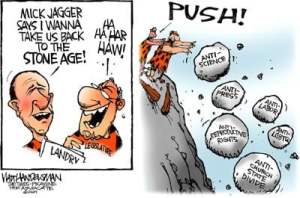 While I just criticized the governor of Utah, let me not forget to kick the governor of Lousyana in the balls a few times. He’s trying to kill us. This is also from Politico. “Louisiana to end mass vaccine promotion, state’s top health official says. The department will still “stock and provide vaccines,” according to a department memo.”
The Louisiana Department of Health “will no longer promote mass vaccination” according to a Thursday memo written by the state’s top health official and obtained by The Associated Press.
A department spokesperson confirmed Louisiana Surgeon General Ralph Abraham had ordered his staff to stop engaging in media campaigns and community health fairs to encourage vaccinations, even as the state has experienced a surge in influenza.
Abraham’s announcement occurred the same day vaccine skeptic Robert F. Kennedy Jr. was sworn in by the U.S. Senate to serve as President Donald Trump’s health secretary.
In a separate letter posted on the department’s website, Louisiana’s surgeon general decried “blanket government mandates” for vaccines and criticized the Centers for Disease Control and Prevention’s COVID-19 vaccination push. Individuals should make their own decisions about vaccinations, Abraham said.
“Government should admit the limitations of its role in people’s lives and pull back its tentacles from the practice of medicine,” said Abraham, a Republican.
 I gagged on that last statement because that certainly doesn’t apply to women and girls with functioning ovaries and uteruses. Meanwhile, Trump is planning mass firings at the CDC. Bird Flu, anyone? This is from STAT. “Trump administration to fire thousands at health agencies. Employees across agencies who were hired in the past one to two years are being targeted.” Considering he also wants to end Medicaid, I would say we are about to have a serious amount of deaths on our hands.
The Trump administration is set to eliminate thousands of federal health care jobs Friday, targeting employees across public health and science agencies who were hired in the past one to two years.
Senior officials were informed in meetings Friday morning that roughly 5,200 people on probationary employment — recent hires — across agencies including the National Institutes of Health and the Centers for Disease Control and Prevention will be fired that afternoon, according to sources briefed on the meetings. CDC leadership was told the Atlanta-based agency would lose about 1,300 workers. The numbers at the NIH are not clear, but exceptions are being made for certain probationary employees, according to a memo viewed by STAT.
The workers will be given a month’s paid leave but lose access to work systems by the end of Friday, according to sources.
In addition to the probationary workers, an unspecified number of contract workers at the CDC and other Health and Human Services agencies have been informed over the course of the past week that their jobs had been terminated, including dozens at the Vaccine Research Center housed at NIH. Many jobs at these agencies are done by contract workers.
Other changes are expected, particularly at the leadership levels of organizations. When Susan Monarez, a former ARPA-H official, was named acting director of the CDC, she informed staff she would transition into the role of acting principal deputy director once Dave Weldon, the nominee to lead the agency, is confirmed. That move signaled that the current acting principal deputy director, Nirav Shah, who joined the CDC in March 2023, was likely out of a job. Earlier this week, Shah told CDC staff that his last day at the agency would be Feb. 28, a source told STAT.
Head of ARPA-H and Biden appointee Renee Wegrzyn told staff Friday morning that she was fired, a source told STAT. The agency, established in 2022 by Biden to work with the private sector on breakthrough medical technology, employs less than 200 workers. Because of the agency’s newness, most employees are considered probationary and could be targeted for layoffs.
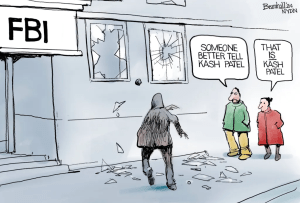 Once again, I feel the need to share Tim Miller’s latest at The Bulwark. Trying to preserve American democracy makes for strange bedfellows. Also, they have a Valentine’s poem for everyone!
Roses are red,
The Bulwark is rad—
As we’ve always said:
Orange Man Bad.
Here’s Miller’s lede. “Kash’s Honesty Problem.” Ya think?
For all the many, many, MANY faults of Trump’s other nominees, none of them impulse-lied to senators’ faces while under oath in a confirmation hearing, as if they were a troublemaking toddler telling their parents they didn’t drop the cake, hoping no one noticed their face was covered in chocolate icing.
But that seems to be what Kash Patel did—and not on a matter of negligible import. Patel told the Senate Judiciary Committee that “I don’t know what’s going on right now over there” in the FBI, and that he was “not aware” of plans to fire FBI agents and officials who had investigated Donald Trump and January 6th. But according to several whistleblowers and contemporaneous notes, this was not true. From the Washington Post:
“KP wants movement at FBI,” one attendee purportedly wrote in the notes Durbin reviewed.
This was just the latest in a string of ostentatious lies that Patel told the senators set to confirm him—and basically anyone else who has had the displeasure of recently encountering him. Here’s just a modest sampling:
- Patel had previously said “we went to the studio and recorded [the J6 Prison Choir], mastered it, digitized it, and put it out as a song” but during his confirmation hearing he told Sen. Adam Schiff that the “we” repeatedly invoked in that sentence did not actually include him because he was not involved. He claimed he was using “the proverbial we”—I guess he means the royal “We”—you know, the editorial. It is the type of semantic lie that would make even Slick Willy blush.
- A state court judge overseeing one of the January 6th cases said Patel was “not a credible witness” because his testimony was “not only illogical . . . but completely devoid of any evidence in the record.”
- Patel has vastly exaggerated his résumé, claiming, among other things, that he was the “the Main Justice lead prosecutor for Benghazi” when in fact he had a junior supportive role—one he began after the investigation had started and left before the first case went to trial.
- A Trump adviser told the Atlantic that Patel had more than once claimed he was the person who “‘gave the order’ for U.S. forces to move in and kill the ISIS leader Abu Bakr al-Baghdadi in 2019”—even though he was not even in the Situation Room.
- Former Secretary of Defense Mark Esper wrote in his book that Patel’s lies about a Seal Team Six hostage rescue in Africa led to an international incident that put their lives at risk.
- Patel has repeatedly lied about the FBI having a role in January 6th, advancing the absurd Ray Epps conspiracy theory.
- Then there were his claims that he was present when Trump magically declassified the documents he was keeping at Mar-a-Lago, and then pleaded the Fifth when asked about it in front of a grand jury.
I could keep going, but really, the story of Kash is best summed up in this anecdote from Elaina Plott Calabro’s Atlantic profile. Calabro wrote that Patel often says he and Trump are “just a ‘couple of guys from Queens,’” when Patel isn’t even from Queens. He’s from Garden City! That’s not the 313.
We’re still not living in the United States of America, are we? The abhorrent actions of Trump, Musk, and underlings puts the word Banana in the Republic.
What’s on your reading and blogging list today?
Lazy Caturday Reads
Posted: December 14, 2024 Filed under: cat art, caturday, just because | Tags: Chris Wray, Democrats, Donald Trump, FBI, Kash Patel, media, news, politics, Robert Kennedy Jr., Tech Bros 6 CommentsGood Afternoon!!

‘Louisa Cat Sleeps Late (1929) from the’ The Fairy Caravan, Beatrix Potter
We have just 37 days until Trump takes over the presidency. How bad will it get? Probably much worse than we can begin to imagine right now.
Lots of rich and powerful people are obviously scared to death, because they are obeying in advance. Chris Wray is quitting as FBI director, paving the way for Trump sycophant Kash Patel, who wants to completely shut down the FBI’s intelligence division. Tech bros are donating to the Inauguration fund.
Even some Democrats are indicating openness to some of Trump’s insane appointments. Are any Democrats planning to fight back? I hope so, but it’s not clear right now.
Here’s the latest:
The New York Times: In Display of Fealty, Tech Industry Curries Favor With Trump.
The $1 million donations came gradually — and then all at once.
Meta. Amazon. OpenAI’s Sam Altman. Each of these Silicon Valley companies or their leaders promised to support President-elect Donald J. Trump’s inaugural committee with seven-figure checks over the past week, often accompanied by a pilgrimage to Mar-a-Lago to bend the knee.
The procession of tech leaders who traveled to hobnob with Mr. Trump face-to-face included Sundar Pichai, Google’s chief executive, and Sergey Brin, a Google founder, who together dined with Mr. Trump on Thursday. Tim Cook, Apple’s chief executive, shared a meal with Mr. Trump on Friday. And Jeff Bezos, the founder of Amazon, planned to meet with Mr. Trump in the next few days.
This was the week when many tech companies and their top executives, as reluctant as they may have been, acknowledged the reality of getting business done in Mr. Trump’s Washington. With their donations, visits and comments, they joined a party that has already raged for a month, as a cohort of influential Silicon Valley billionaires, led by Elon Musk, began running parts of Mr. Trump’s transition after endorsing him in the campaign.
While businesses frequently try to get on an incoming president’s good side, the frenzy of tech activity stood out from other industries. Until President Obama’s administration, the tech industry had largely stayed aloof from politics. Some wrote just small checks for Mr. Trump’s first inauguration.
Now the bread-breaking with Mr. Trump has become highly public. Meta and Amazon, whose founders had previously been criticized by Mr. Trump, said they would donate $1 million to Mr. Trump’s inaugural fund this week. Sam Altman, the chief executive of OpenAI, the high-profile artificial intelligence start-up, said on Friday that a $1 million donation to Mr. Trump’s inaugural fund would come from him personally.
“President Trump will lead our country into the age of A.I., and I am eager to support his efforts to ensure America stays ahead,” Mr. Altman said in a statement.
Nonprofit contributions to inaugural committees, which host patriotic-themed events around Jan. 20, are low-stakes, timeworn ways for companies to seek favor under the guise of patriotism without being pegged as overly partisan actors.
Other tech leaders have also praised Mr. Trump. Marc Benioff, the chief executive of Salesforce and the owner of Time Magazine, posted on X on Thursday that it was “a time of great promise for our nation,” after Time awarded Mr. Trump its coveted “Person of the Year” designation.
Now Apple has joined the crowd of suck-ups. Only Microsoft is holding out.
The Hill: Apple CEO visits Mar-a-Lago, joining list of tech execs seemingly courting Trump.
Apple CEO Tim Cook visited Mar-a-Lago on Friday, joining a growing list of tech executives that are seemingly courting President-elect Trump ahead of his return to the White House.
The president-elect and Cook had dinner at Trump’s Florida resort in West Palm Beach, multiple outlets reported. The meeting marked their first interaction since their call two months ago….
Mother Cat and Kittens, Beatrix Potter
The president-elect said in mid-October during his appearance on Patrick Bet-David’s podcast that the Apple executive talked to him about fines the European Union imposed on the company.
“Then two hours ago, three hours ago, he called me,” Trump said. “He said, ‘I’d like to talk to you about something.’ ‘What?’ He said, ‘The European Union has just fined us $15 billion.’ That’s a lot.” [….]
Cook was one of the many tech leaders to congratulate Trump on his win over Vice President Harris in last month’s contest.
“We look forward to engaging with you and your administration to help make sure the United States continues to lead with and be fueled by ingenuity, innovation, and creativity,” he wrote in a post on social platform X.

I imagine a hefty donation will be forthcoming.
Media owners are also caving to Trump in advance. Jeff Bezos ordered the Washington Post not to publish a planned endorsement of Kamala Harris. L.A. Times owner Patrick Soon-Shiong did the same thing. Now Soon-Shiong has gone further.
The Independent: LA Times billionaire owner killed op-ed that was critical of Trump’s cabinet picks, report says.
Los Angeles Times owner Dr. Patrick Soon-Shiong killed an opinion column that was critical of President-elect Donald Trump’s recent Cabinet picks, telling his paper’s editorial board that it could only publish the piece if it also ran an editorial with an opposing view, according to The New York Times.
The spiked column was set to be published in the outlet’s Sunday newspaper and website on November 24. Soon-Shiong intervened just hours before the op-ed was scheduled to be sent to the printer, prompting the editors to pull the piece as the deadline approached.
According to the NY Times, the column was headlined: “Donald Trump’s cabinet choices are not normal. The Senate’s confirmation process should be.” The editorial board decided that after the incoming president had announced a slew of controversial picks, many of which the board members were concerned about, it would have one of its writers pen a piece calling on the Senate to take its job of confirming nominees seriously.
“In addition to saying that the Senate should follow its traditional process, the editorial criticized several of Mr. Trump’s picks as being unfit for their proposed roles, including former Fox News host Pete Hegseth and former presidential contender Robert F. Kennedy Jr.,” The New York Times noted.
After Soon-Shiong’s intervention led to the editorial being pulled, the paper’s editors scrambled to find another column to fill the suddenly open slot. Ultimately, they decided on an already written piece by outgoing editorial board member Karin Klein that took a more sympathetic stance on Trump. That column was headlined, “Trump has a chance to be a true education president.”
CNN’s Reliable Sources reported on Friday morning that besides Soon-Shiong spiking the editorial, several recent opinion section headlines were also “softened” or “made more bland” by editors concerned that “anything too harsh would get rejected” by the billionaire owner. “For the most part, we’re now just writing about state and local issues,” a source told CNN.
What about the Democrats? I could find only one story about Democrats pushing back slightly. Axios: Inside Democrats’ emerging Trump inauguration boycott.
More than a dozen congressional Democrats plan to sit out President-elect Trump’s inauguration, and many more are anxiously grappling with whether to attend, Axios has learned.
Why it matters: Not every Democrat skipping the ceremony will do so to protest Trump — but a formal boycott is materializing as a first act of resistance against the incoming president.
Tabitha Twichit, Beatrix Potter
For many Democrats, the scars of the Jan. 6, 2021, attack on the Capitol remain fresh in the mind, marking Trump as a threat to democracy.
“For somebody who he said he’s going to lock me up, I don’t see the excitement in going to see his inauguration,” former Jan. 6 committee chair Bennie Thompson (D-Miss.) told Axios.State of play: Martin Luther King Jr. Day coinciding with the Jan. 20 inaugural ceremony gives many Democrats an easy out, though others planning to stay away cited a distaste for inaugurations, a loathing of Trump — and even fears for their safety.
- Rep. Delia Ramirez (D-Ill.) said that as a Latina, she doesn’t “feel safe coming” with Trump’s supporters pouring in for the ceremony. “I’m not going to physically be in D.C. on that day,” she told Axios.
- Similarly, Rep. Ilhan Omar (D-Minn.) said that attending MLK Day events instead “makes sense, because why risk any chaos that might be up here?”
- For other members, the reasoning is more mundane: Rep. Adam Smith (D-Wash.) “almost never attends inaugurations” and has only been to two during his 28 years in office, his spokesperson told Axios.

The latest on Trump appointments:
Last week, Robert Kennedy, Jr. and Kash Patel began visiting Senators to push for their nominations to be approved.
On Kennedy, after yesterday, Senators will need to think carefully about how they feel about vaccines to prevent childhood diseases. Yesterday, Dakinikat posted about a top adviser to Kennedy who wants to get reverse approval for the polio vaccine.
Philip Bump at The Washington Post: When depicting the government as bad is more important than stopping polio.
When debates over the efficacy of vaccines emerge, as they increasingly do, there is a go-to example offered: the response to polio in the mid-20th century.
From 1910 to 1950, more than 376,000 Americans were afflicted with polio, with nearly 49,000 dying from the paralyzing disease. Then, in 1955, the polio vaccine was announced and approved. From 1956 to 1970, there were about 41,200 infections and about 2,000 deaths. From 1971 to 2000, 287 cases and 102 deaths. Since then? Essentially nothing at all.
This is why polio is such a good example. There was a lot of polio, with 1 out of every 2,700 Americans infected in 1952. Then there was a vaccine, and now there’s hardly any polio at all. So little, in fact, that one case that was identified in New York in 2022 earned national news headlines.
Despite the data, even the polio vaccine has not escaped the ire of the anti-vaccine movement. In 2022, a lawyer named Aaron Siri filed a citizen petition with the U.S. government seeking to block distribution of the polio vaccine for children until “a properly controlled and properly powered double-blind trial of sufficient duration is conducted to assess the safety of this product,” the New York Times reported Friday. It was one of more than a dozen vaccines Siri sought to block.
Siri, as you probably guessed, is also a longtime adviser to Robert F. Kennedy Jr., President-elect Donald Trump’s selection to run the Department of Health and Human Services. In fact, the Times reports, Siri has been aiding Kennedy as he vets potential administration staffers.
Kennedy himself has been similarly critical of vaccines, making debunked claims about vaccine safety and pushing for restrictions on their use. He has been a prominent member of the anti-vaccine community for years but generally offered his views from the political sidelines.
Kennedy’s views are a mishmash of they’re-wrong-and-I’m-right assertions that span the gamut of credibility offered under the appealing banner of “making America healthy.” But the mishmash means that a lot of obviously dubious stuff gets mixed in with the valid stuff. The valid stuff includes Americans’ eating habits, which are obviously not great. The dubious stuff includes his embrace of the idea that airplane condensation trails are something worthy of concern. And vaccines, thanks to the pandemic and thanks to the long-standing anti-vaccine movement, are a valid element of public health that he presents as dubious.

Samuel Whiskers, Betrix Potter
In the early 1950’s, I was in elementary school in Lawrence, Kansas. My school was included in the pilot program for the Salk (polio) vaccine. One of my friends in the first grade had gotten polio and had to wear leg braces. This disease in no joke. I’m very grateful to have gotten that vaccine in early childhood. I had other childhood diseases–mumps, measles, German measles–before vaccines were available. I never had chicken pox. I think it’s possible that my hearing problem–which was first diagnosed in my early 30s–developed because of mumps or measles.
Apoorva Mandavilli at The New York Times: Are Childhood Vaccines ‘Overloading’ the Immune System? No.
It’s an idea as popular as it is incorrect: American babies now receive too many vaccines, which overwhelm their immune systems and lead to conditions like autism.
This theory has been repeated so often that it has permeated the mainstream, echoed by President-elect Donald J. Trump and his pick to be the nation’s top health official, Robert F. Kennedy Jr.
“When you feed a baby, Bobby, a vaccination that is, like, 38 different vaccines and it looks like it’s been for a horse, not a, you know, 10-pound or 20-pound baby,” Mr. Trump told Mr. Kennedy on a call in July. “And then you see the baby all of a sudden starting to change radically — I’ve seen it too many times.”
On Sunday, Mr. Trump returned to the theme, saying Mr. Kennedy would investigate whether childhood vaccines caused autism, even though dozens of rigorous studies have already explored and dismissed that theory.
“I think somebody has to find out,” Mr. Trump said on NBC’s “Meet the Press.”
But the idea that today’s vaccines are overtaxing children’s immune systems is fundamentally flawed, experts said. Vaccines today are cleaner and more efficient, and they contain far fewer stimulants to the immune system — by orders of magnitude — than they did decades ago.
What’s more, the immune reactions produced by vaccines are “minuscule” compared with those that children experience on a daily basis, said Dr. Yvonne Maldonado, a pediatrician at Stanford University who advises the Centers for Disease Control and Prevention on vaccines.
Sorry to be judgmental, but Trump is a complete idiot, and so are the people who elected him.
Children harbor trillions of bacteria, more than the number of their own cells, and encounter pathogens everywhere — from caregivers and playmates; in kitchens, bathrooms and playgrounds; on toys, towels and sponges.
“That’s just the normal course of growing up, is to have fevers and develop immunity to all of the organisms that are in the environment around you,” Dr. Maldonado said. “We are built to withstand that.”
By Beatrix Potter
A vaccine’s power comes from the so-called antigens it contains — bits of a pathogen, often proteins, that elicit an immune reaction in the body.
Children harbor trillions of bacteria, more than the number of their own cells, and encounter pathogens everywhere — from caregivers and playmates; in kitchens, bathrooms and playgrounds; on toys, towels and sponges.
“That’s just the normal course of growing up, is to have fevers and develop immunity to all of the organisms that are in the environment around you,” Dr. Maldonado said. “We are built to withstand that.”
A vaccine’s power comes from the so-called antigens it contains — bits of a pathogen, often proteins, that elicit an immune reaction in the body.

For once, Mitch McConnell is the good guy in this fight, because he is a polio survivor. The New York Times: McConnell Defends Polio Vaccine, an Apparent Warning to Kennedy.
Senator Mitch McConnell, the Republican leader and a survivor of polio, issued a pointed statement in support of the polio vaccine on Friday, hours after The New York Times reported that the lawyer for Robert F. Kennedy Jr. has petitioned federal regulators to withdraw the vaccine from the market.
Without naming Mr. Kennedy, Mr. McConnell suggested that the petition could jeopardize his confirmation to be health secretary in the incoming Trump administration.
“Efforts to undermine public confidence in proven cures are not just uninformed — they’re dangerous,” said Mr. McConnell, who is stepping down as his party’s Senate leader next month but could remain a pivotal vote in Mr. Kennedy’s confirmation. “Anyone seeking the Senate’s consent to serve in the incoming administration would do well to steer clear of even the appearance of association with such efforts.”
Mr. Kennedy has said he does not want to take away anyone’s vaccines. His lawyer, Aaron Siri, filed the petition in 2022 on behalf of the Informed Consent Action Network, a nonprofit run by Mr. Kennedy’s former communications director. Mr. Siri is advising Mr. Kennedy as he vets candidates for the Department of Health and Human Services.
Mr. McConnell, 82, of Kentucky, contracted polio as a child, more than a decade before the vaccine became widely available. When his left leg was paralyzed, his mother took him for treatment in Warm Springs, Ga., at the same treatment center frequented by another famous polio survivor, President Franklin D. Roosevelt.
On Kash Patel’s nomination for FBI director:
The New York Times: Patel Distorts Justice Dept. Benghazi Inquiry, Inflating His Role.
Kash Patel, President-elect Donald J. Trump’s pick to be F.B.I. director, often burnishes his credentials as a former prosecutor even as he portrays law enforcement agencies as an inept and politicized “deep state.” A critical piece of that narrative is the investigation into the 2012 attack on a diplomatic compound and a C.I.A. annex in Benghazi, Libya, that killed four Americans.
Mr. Patel, who worked at the Justice Department from early 2014 to 2017, was involved in that inquiry. He described it in his 2023 memoir, “Government Gangsters: The Deep State, the Truth, and the Battle for Our Democracy,” and in a conversation on a September podcast of “The Shawn Ryan Show.”
Three Little Kittens, Beatrix Potter
But he has both exaggerated his own importance and misleadingly distorted the department’s broader effort, according to public documents and interviews with several current and former law enforcement officials familiar with the matter. Most spoke on the condition of anonymity for fear of retribution.
“By the time the D.O.J. was moving in full force to compile evidence and bring prosecutions against the Benghazi terrorists, I was leading the prosecution’s efforts at Main Justice in Washington, D.C.”
— “Government Gangsters”“I was the main Justice lead prosecutor for Benghazi for awhile.”
— “The Shawn Ryan Show”Mr. Patel has repeatedly made it sound as if he led the government’s overall effort to investigate and prosecute militants involved in the 2012 attack.
As Mr. Patel himself acknowledges, he worked at the department’s Washington headquarters, or “Main Justice,” and he did not remain for the duration of the investigation.
In fact, Mr. Patel, a former public defender, was a prosecutor in the department’s counterterrorism section, where his assignments included work on the Benghazi investigation. But the section only supported the investigation, which was run by a team of prosecutors at the office of the U.S. attorney in the District of Columbia, along with agents and analysts at the F.B.I.
Mr. Patel took a junior position in the counterterrorism section in late January 2014 — well after the Benghazi investigation started. He left the department in April 2017, about six months before the first Benghazi case went to trial.
A spokesman for the Trump transition did not say for how much of that period he was working on the Benghazi investigation. But Mr. Patel was responsible for handling the section’s contribution to the interagency effort for only part of his time there, the officials familiar with the matter said.

Haley Fuchs at Politico: Assessing Patel’s confirmation chances.
Trump loyalist Kash Patel’s chances to become the head of the FBI are looking better and better.
This week, Patel held meetings with 17 Republican senators, including Utah Sen.-elect John Curtis, around Capitol Hill, many of whom publicly indicated their support for his nomination. The resignation of his would-be predecessor Christopher Wray also smoothed the path for the president-elect’s pick to helm the agency after his confirmation, and Trump world is confident in the road forward.
Asked in the Capitol Hill hallways about Wray’s decision, Patel promised he would “be ready to go on Day One.”
But the Trump transition was prepared for more pushback, as the initial outlook on the nomination was murky. Patel has been known to spout conspiracies about the 2020 election, pushed supplements that he claimed could reverse the Covid-19 vaccine, and suggested he may prosecute journalists. Trump’s former Attorney General Bill Barr reportedly once said Patel would become deputy FBI director “over my dead body.” Patel has suggested he would shut down the FBI headquarters to create a “museum of the deep state” and promised to target political opponents.
The incoming Trump team was “braced for impact,” said one transition official granted anonymity to speak candidly, adding, “We were ready for this to be more of a fight. … It hasn’t turned out that way.”
Reacting to the news of Wray’s resignation, Republican senators said that Patel would have been confirmed regardless of whether Wray left on his own volition. And if he had stayed, Wray was inevitably going to be fired on Day 1, Sen. Ted Cruz (R-Tex.) added.
Greg Sargent at The New Republic: How GOP Senators Are Secretly Getting Ready to Surrender to Trump.
It’s largely passing unnoticed, but Republicans are quietly laying the groundwork to give their full blessing to one of Donald Trump’s more corrupt schemes: Unleashing law enforcement on his political enemies without cause once he’s sworn in again next year. That capitulation is already underway, with an argument they’re beginning to put forward to smooth the path for Trump’s nominee to head the FBI, Kash Patel.
The New York Times has a big piece reporting that Senate Republicans are growing “warm” to Patel, who has explicitly declared that in Trump’s second term, a range of enemies of Trump should be prosecuted for no discernible legal reason whatsoever.
Why are they warming to Patel despite the obvious threat he poses? The Times reports that Republicans now harbor a “deep distrust” of the FBI, that they see it as “rotted by corruption and partisanship,” and that all this has become a new “Republican orthodoxy”:
It is the culmination of a remarkable turnabout that has been years in the making for a party that traditionally had given unyielding support for the nation’s law enforcement agencies.
Senator Markwayne Mullin of Oklahoma claims that Patel will “clean out the FBI.” And Senator Thom Tillis of North Carolina insists he’lll restore the bureau’s “integrity.” In short, we’re meant to believe GOP senators back Patel because he will reform a badly corrupted agency in a way that will better serve our country.
Here’s the thing: All of that is nonsense. Most Republicans don’t actually think those things about the FBI, and they don’t actually believe Trump picked Patel to reform the bureau to address those alleged problems. Nor is there any reason to treat this as any kind of sincere, momentous ideological shift.
We should treat that very idea—that Republicans have in some principled sense begun to deeply question the FBI’s institutional role—as itself being spin. If anything, the GOP embrace of Patel carries echoes of the corrupted, secretive, intrusive FBI of the pre-Watergate days, and the new reformist pose is being hatched as fake cover to support Patel later despite what Republicans all know to be true—that Trump has selected him to transform the agency into a weapon against his enemies.
Read more at the link.
Other politics news:
Nancy Pelosi is recovering from hip surgery.
The Independent: Former House speaker Nancy Pelosi undergoes hip replacement surgery after fall during Europe trip.
Former Speaker of the House Nancy Pelosi has undergone a hip replacement procedure after being hospitalized in Luxembourg on Friday following a fall.
Pelosi, 84, was traveling with the congressional delegation for the 80th anniversary of the Battle of the Bulge – the last major German offensive during the Second World War – when she fell.
Her spokesperson, Ian Krager, said in a statement:“ Earlier this morning, Speaker Emerita Pelosi underwent a successful hip replacement and is well on the mend.
“Speaker Pelosi is grateful to U.S. military staff at Landstuhl Regional Medical Center at Landstuhl Army Base and medical staff at Hospital Kirchberg in Luxembourg for their excellent care and kindness.
“Speaker Pelosi is enjoying the overwhelming outpouring of prayers and well wishes and is ever determined to ensure access to quality health care for all Americans.”
Earlier her office had said she was “receiving excellent treatment from doctors and medical professionals.”
That’s all I have today. Have a great weekend, everyone!
Wednesday Reads
Posted: December 4, 2024 Filed under: abortion rights, American Fascists, just because | Tags: Abortion bans killing women, Kash Patel, martial-law, news, Pete Hegseth, politics, Portia Ngumezi, Ron De Santis, South Korea, Yoon Suk Yeol 7 CommentsGood Morning!!
Brian Thompson, CEO of United Health Care
There’s some breaking news from NYC. The CEO of United Health Care was shot and killed on the street, and it is believed to be a “targeted attack.” The New York Times has live updates.
The executive, Brian Thompson, was shot in the chest in what people briefed on the investigations said appeared to be a targeted attack.
The chief executive of UnitedHealthcare, one of the nation’s largest health insurers, was fatally shot outside a hotel in Midtown Manhattan on Wednesday morning, the police said.
The executive, Brian Thompson, 50, was shot just after 6:45 a.m. at the New York Hilton Midtown on Avenue of the Americas near 54th Street, according to a police report. Mr. Thompson was taken to Mount Sinai West, where he was pronounced dead….
Officials with the Metropolitan Transportation Authority, which runs New York City’s transit system, said that the shooting did not impact subway or bus service during the morning commute….
Brian Thompson’s sister, Elena Reveiz, told The Times she is still processing the news of her brother’s death. “He was a good person and I am so sad,” Reveiz said when reached by phone. She said Thompson was a good father to his two children. She said she was on her way to see her sister, and to be with their family….
Gov. Tim Walz of Minnesota called the killing “horrifying news and a terrible loss for the business and health care community in Minnesota.” [….]
New York’s police commissioner, Jessica Tisch, and Jeffrey Maddrey, chief of department, will hold a news conference at 1 Police Plaza at 11:30 a.m., the police said.
Another huge story broke yesterday from South Korea. Right wing President Yoon Suk Yeol declared martial law and attempted a coup. Fortunately he failed.
Haeryun Kang at The Guardian: Martial law came to South Korea – and my friends and I doomscrolled through the night.
At 10.23pm on 3 December in Seoul, I was already in bed, alternating between reading a book and watching YouTube cooking reels. That was when Yoon Suk Yeol, the president, declared emergency martial law in South Korea for the first time since 1979.
In an unannounced televised address, Yoon said the imposition of martial law was “aimed at eradicating pro-North Korean forces and protecting the constitutional order of freedom”.
Immediately, my text messages and online chat forums flared up. What the hell is going on? Is this a joke? Can I keep drinking at the bar tonight? Can my children go to school tomorrow? What exactly is the emergency? Utter confusion ensued for the next six hours, until a dramatic sequence of events led to the end of martial law at 4.30am.
South Korean President Yoon Suk Yeol
This was my first experience of martial law – if this short-lived circus can even be called that – something that, until now, I had only read about in history books. But even in that short time, I was terrified. The experience woke me up, once again, to the severe, unavoidable reality of Korean division. And I remembered how it can be exploited by our leaders to justify repression and control.
Thankfully, this time, Yoon’s antics were curbed. But the martial law fiasco is a testament to both the instability and resilience of South Korean democracy. It is a chilling reminder that the collective trauma of the 20th century dictatorship is not simply history.
It’s still unclear why Yoon took such an extreme measure. Martial law is defined as the temporary rule by military authorities in a time of emergency, when civil authorities are deemed unable to function. In the past, dictators have declared martial law at times of widespread national unrest and turmoil, including the Korean war. This time, it was a business-as-usual Tuesday; earlier that evening I had been for a swim at a government-run public pool.
Yoon’s measure came at a time of personal and political turmoil for him. Corruption scandals have rocked him and his family; the opposition Democratic Party has just insisted on big cuts to the budget bill despite the ruling party’s protests; Yoon’s approval ratings are hovering in the 20s – all unpleasant, sure, but stories that don’t seem all that surprising in a relatively functional democracy.
In his speech declaring martial law, Yoon expressed clear vitriol for his political opposition, for its “anti-state activities plotting rebellion”. Most South Koreans are familiar with this insidious sort of rhetoric. I grew up with this language, and still live with it, through my very conservative family in Busan. It’s a regular reminder that there is a clear political and generational divide related to the Korean division.
If you want more first-hand reporting, check out this post by Sarah Jeong at The Verge: Six hours under martial law in Seoul.
Timothy Snyder at his Substack Thinking about…: Dictators for a Day, South Korea and America.
South Korea’s president, Yoon Suk Yeol, invoked martial law, tried to install a military dictatorship — and failed completely. In his actions there are some likely similarities with the coming Trump regime, and some clear lessons for Americans to learn right now.
Yoon won a very narrow election, as did Trump. Like Trump, he refers constantly to “fake news” and calls his political opponents enemies of the state (as Trump says, “the enemy within.”) Yoon used this language to justify the imposition of martial law, as will Trump if he decides to invoke the Insurrection Act in the United States.
Like Trump, Yoon telegraphed his move in advance, and not only with such language. He surrounded himself with military men and intelligence officers who were characterized by personal loyalty. Trump is trying to do the same, now, with his proposals for Tulsi Gabbard as director of national intelligence, Kash Patel as director of the FBI, and Pete Hegseth as secretary of defense. He also wants to purge the top ranks of the armed forces.
Yoon’s main political opponent, Lee Jae-myung, had correctly predicted that Yoon would try to implement martial law. Trump makes this prediction rather easy. Trump has spoken openly of being “dictator for a day,” and of invoking the Insurrection Act, which would allow him to deploy the military inside the United States.
The Insurrection Act is not quite the same thing as martial law. Under martial law, the military assumes the basic responsibilities associated with a civilian government. The Insurrection Act, in principle, only allows the American president to use the armed forces to assist civilian authorities to enforce some law in the presence of an insurrection. But the language of the law is quite vague. Trump makes it clear that he has in mind invoking the Insurrection Act to very broad purposes, essentially to change the regime.
In both South Korea and the United States, the legal basis for asserting greater presidential authority is antiquated. Martial law was declared in South Korea for the last time in 1979. Since the late 1980s, South Korea has moved quite decisively in the direction of meaningful elections and civil rights, thanks to the forceful activity of civil society, especially trade unions. In the United States, the Insurrection Act is an assemblage of laws passed between 1792 and 1871. It was last invoked during racial violence in Los Angeles in 1992.
Yoon’s actions, although rooted of course in his own personality and South Korean career, and enabled by South Korean law, were very trumpy. Indeed, it seems likely to me that the very presence of Trump on the international scene will make such attempts more likely, among America’s democratic allies (such as South Korea) and generally.
But Yoon failed, and very badly. His dictatorship for a day lasted only about six hours. What can Americans learn from his less-than-a-day dictatorship?
Read the rest at the Substack link.
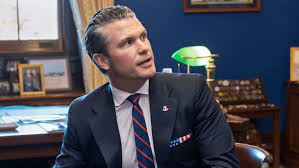
Pete Hegseth
Back in the USA, It looks like Pete Hegseth will not be the Secretary of Defense. Yesterday, Dakinikat wrote about the devastating New Yorker article by Jane Mayer. Mayer reported in great detail Hegseth’s out-of-control drinking, his abuse of women, and his incompetence when trusted with leadership roles in small organizations.
Yesterday, NBC News reported: Pete Hegseth’s drinking worried colleagues at Fox News, sources tell NBC News.
Pete Hegseth, President-elect Donald Trump’s pick for defense secretary, drank in ways that concerned his colleagues at Fox News, according to 10 current and former Fox employees who spoke with NBC News.
Two of those people said that on more than a dozen occasions during Hegseth’s time as a co-host of “Fox & Friends Weekend,” which began in 2017, they smelled alcohol on him before he went on air. Those same two people, plus another, said that during his time there he appeared on television after they’d heard him talk about being hungover as he was getting ready or on set.
One of the sources said they smelled alcohol on him as recently as last month and heard him complain about being hungover this fall.
None of the sources with whom NBC News has spoken could recall an instance when Hegseth missed a scheduled appearance because he’d been drinking.
“Everyone would be talking about it behind the scenes before he went on the air,” one of the former Fox employees said….
Three current employees said his drinking remained a concern up until Trump announced him as his choice to run the Pentagon, at which point Hegseth left Fox.
“He’s such a charming guy, but he just acted like the rules didn’t apply to him,” one of the former employees said.
Trump is considering withdrawing the Hegseth nomination and appointing Ron De Santis instead. Marc Caputo at The Bulwark: Trump Talks to DeSantis About Replacing Hegseth.
DONALD TRUMP AND RON DESANTIS have personally discussed the possibility of the Florida governor becoming the next secretary of defense amid concerns that sexual assault allegations could engulf the president-elect’s current nominee for the post, Pete Hegseth.
The talks, relayed by four sources briefed on them, are in their advanced stages. They underscore the fears within Trump world about Hegseth’s ability to survive a Senate confirmation process—despite public posturing from Hegseth and allies that he remains committed to ending up at DoD.
“These discussions are real. It’s serious. I can’t say it’s definitely going to happen, but the governor is receptive and Trump is serious, too,” a top Republican source familiar with the conversations told The Bulwark on condition of anonymity.
The discussions around DeSantis involve untangling several different political threads. The governor is currently handling the fallout of a separate Trump cabinet pick: Marco Rubio’s nomination to be secretary of state. DeSantis is weighing whether to appoint Trump’s daughter-in-law, Lara Trump, to fill Rubio’s Senate seat. The possibility that the governor himself could end up at the Pentagon may factor into that decision.
Today Hegseth is again meeting with Republican Senators in a last ditch effort to convince them to support his nomination. Politico: Hegseth back on the Hill as Pentagon bid teeters.
Pete Hegseth, Trump’s embattled pick to run the Pentagon, is back on Capitol Hill today as his nomination faces even more hurdles.
Pete Hegseth’s tatoos
Concerns over Hegseth’s personal controversies are driving Trump allies to think the Defense secretary designate may not survive further scrutiny. And his fight has been complicated even more by the news that the president-elect is weighing a rival, Florida Gov. Ron DeSantis, to replace Hegseth, The Wall Street Journal was first to report. DeSantis, a former opponent in the 2024 GOP presidential primaries, offers a conservative military record and alignment with Trump’s views on “woke” military policies.
Hegseth — who has faced allegations of sexual assault and alcohol abuse — is expected to meet today with Republicans including incoming Senate Armed Services Chair Roger Wicker (R-Miss.) and the next majority leader, Sen. John Thune (R-S.D.).
Hegseth’s most crucial meeting, though, is expected to be with Sen. Joni Ernst (R-Iowa), a Senate Armed Services member who has been noncommittal about Hegseth’s nomination and is seen as a potential swing vote.
Ernst was previously floated as a potential pick for defense secretary before Trump opted for Hegseth, though she was seen as a dark horse candidate. The Iowa Republican is a traditional defense hawk, clashing somewhat with the Trump team’s views. There may also be a political divide to bridge for Ernst — who took until March to endorse Trump’s 2024 White House bid after the former president nearly swept the Republican primaries and was on a path to clinch the GOP nomination.
Ernst, the first woman combat veteran in the Senate, has a long track record of legislation aimed at addressing sexual assault and harassment in the military. That would seem to put her at odds with Hegseth, who is not only the subject of sexual assault allegations but opposes women serving in combat roles.
Ernst has also been outspoken about her own experiences with sexual assault and domestic violence. Asked about the sexual assault accusations against Hegseth, she’s said: “Any time there are allegations, you want to make sure they are properly vetted, so we’ll have that discussion.”
Another problematic candidate, Kash Patel for FBI director is facing headwinds. I’m sure we’ll be hearing much more about him, but here are a couple of articles about him.
Zach Beauchamp at Vox: I listened to hours of Trump’s FBI pick on Steve Bannon’s podcast. Oh boy.
Kash Patel, Donald Trump’s pick to direct the Federal Bureau of Intelligence, has never served in the FBI. But he has hosted Steve Bannon’s podcast.
Patel is a contributor at Real America’s Voice, the right-wing news network that produces Bannon’s show War Room, and has long appeared as a guest on the show. After top Trump adviser Bannon was imprisoned for four months earlier this year — on charges of contempt of Congress after he refused to comply with a January 6 Committee subpoena — Patel stepped up to serve as an occasional guest host.
Crazy Eyes Kash Patel
To try and understand Patel better, I listened to every episode and clip tagged with “Kash Patel” on the War Room website — and a few others that Bannon’s team missed. The overwhelming impression is that Patel is a man whose entire worldview revolves around paranoid conspiracy theories — specifically, conspiracies against both America and Trump, which for him are one and the same. It’s a specific kind of obsession that reminds me of the FBI’s first director: J. Edgar Hoover, a man who infamously abused his power to persecute political enemies.
During his various appearances on Bannon’s show, Patel and/or his interviewees declared that:
- China is funding the Democratic Party and sending “military-aged males” across the Mexican and Canadian borders to prepare for a preemptive strike.
- Barack Obama directs a “shadow network” that is quietly directing the intelligence community and Big Tech to persecute Trump.
- Attorney General Merrick Garland wants to throw “all of us” — which is to say, Trump allies — in prison.
And Patel is willing to go to extreme measures in response to these alleged threats.
In one episode, he called on the Republican majority in Congress to unilaterally arrest Garland — invoking an obscure legal doctrine called “inherent contempt” that has never been used in this fashion in the entirety of American history. In another, he outlined a plan for a MAGA blitz of American institutions focused on getting loyalists into high office.
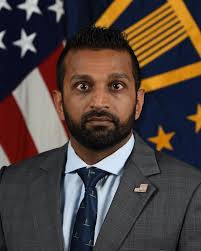
Read more at Vox.
David Corn at Mother Jones: Here Are the Republicans Kash Patel Wants to Target.
For years, Kash Patel, the MAGA provocateur, conspiracy theory monger, and seller of pills he claims reverse the effects of Covid vaccines, who Donald Trump has announced as his pick to replace FBI Director Chris Wray, has made his mission plain: He wants to crush the supposed Deep State that has conspired against Trump. Last year, while appearing on Steve Bannon’s podcast, he vowed, “We will go and find the conspirators—not just in government, but in the media. Yes, we’re going to come after the people in the media who lied about American citizens to help Joe Biden rig presidential elections. We’re going to come after you, whether it’s criminally or civilly.” This was not an empty threat, for Patel has a list of specific targets for his score-settling. And that line-up includes not only Democrats but also prominent Republicans.
Patel laid out his plans in a 2023 book titled Government Gangsters: The Deep State, the Truth, and the Battle for our Democracy. In this work, he breathlessly described the Deep State as a “coordinated, ideologically rigid force independent from the people that manipulates the levers of politics and justice for its own gain and self-preservation.” It is run “by a significant number of high-level cultural leaders and officials who, acting through networks of networks, disregard objectivity, weaponize the law, spread disinformation, spurn fairness, or even violate their oaths of office for political and personal gain, all at the expense of equal justice and American national security.” He added, “They are thugs in suits, nothing more than government gangsters.” And he inveighed that this is “a cabal of unelected tyrants.”
In his book, Patel, a supporter of QAnon and a promoter of assorted MAGA conspiracy theories (the 2020 election was stolen from Trump, the Trump-Russia investigation was a hoax, and the January 6 riot was sparked by “strange agitators” and federal agents), called for mounting “investigations” to “take on the Deep State.” Though he doesn’t specify what the cause for these inquiries would be, he has plenty of people in mind. In an appendix to the book, Patel presented a list of 60 supposed members of the Deep State who are current or former executive branch officials and who presumably would be the prey. He noted this roster did not include “other corrupt actors,” such as California Democrats Reps. Adam Schiff and Eric Swalwell, “the entire fake news mafia press corps,” and former GOP House Speaker Paul Ryan. (When Patel worked for the GOP-controlled House intelligence committee, he had run-ins with Ryan over the issuance of subpoenas and Patel leaking information to a Fox News reporter—which must mean that Ryan was a Deep State operative.)
Read the rest at Mother Jones.
Just one more story, this time on women dying because of anti-abortion laws. Amanda Marcotte at Salon: Republicans don’t care if women die from abortion bans — but they don’t want you to know about it.
After the Supreme Court ended federal abortion rights in 2022, there was a robust debate between pro- and anti-choice activists over whether or not banning abortion would kill women. Pro-choicers pointed to evidence, from both history and other countries, showing that abortion bans kill women. Anti-choice activists dismissed the record and pointed to toothless “exceptions” in abortion ban laws as “proof” that women could get abortions to save their lives.
Portia Ngumezi
The latter argument was frustrating not just because it was wrong but was generally offered in bad faith. Anti-abortion leaders know that abortion bans kill women. They don’t care. Or worse, many view dying from pregnancy as a good thing. In some cases, it’s viewed as just punishment for “sinful” behavior. Other times, it’s romanticized as a noble sacrifice on the altar of maternal duty. But conservatives are aware that this death fetish cuts against their “pro-life” brand. So there was a lot of empty denials and hand-waving about the inevitable — and expected — outcome of women dying.
We now have another proof point that abortion bans are about misogyny, not “life,” as the first deaths from red state abortion bans are being reported. Instead of admitting they were wrong and changing course, Republicans are behaving like guilty liars do everywhere, and destroying the evidence. In the process, they are also erasing data needed to save the lives of pregnant women across the board, whether they give birth or not.
ProPublica has published a series of articles detailing the deaths of women in Georgia and Texas under the two states’ draconian abortion bans. They most recently reported the death of Porsha Ngumezi, a 35-year-old mother of two from Texas. Ngumezi suffered a miscarriage at 11 weeks but was left to bleed to death at the hospital, instead of having the failing pregnancy surgically removed. Multiple doctors in Texas confirmed that hospital staff are often afraid to perform this surgery, however, because it’s the same one used in elective abortions. Rather than risk criminal charges, doctors frequently stand by and let women suffer — or die.
Ngumezi’s youngest son doesn’t fully understand that his mother is dead. ProPublica reported that he chases down women he sees in public who have similar hairstyles, calling for his mother.
A day after this story was published, the Washington Post reported that the Texas maternal mortality board would skip reviewing the deaths of pregnant women in 2022 and 2023 — conveniently, the first two years after the abortion ban went into place. The leadership claims it’s about speeding up the review process, but of course, many members pointed out the main effect is that “they would not be reviewing deaths that may have resulted from delays in care caused by Texas’s abortion bans.”
This is especially noteworthy because it’s become standard after one of these reports for anti-abortion activists to blame the victims and/or the doctors, and not the bans. Christian right activist Ingrid Skop, for instance, responded to Nguzemi’s death by insisting “physicians can intervene to save women’s lives in pregnancy emergencies” under the Texas law. If she really believed that, however, she would desperately want the state maternal mortality board to review this, and other cases like it, so they could come up with recommendations for hospital staff to treat women without running afoul of the law. Strop, however, is on the Texas maternal mortality board. She was likely part of the decision to refuse to look into whether women like Nguzemi might be saved.
So the likeliest explanation is the simple, if brutal one: Anti-abortion activists do not want doctors to save women’s lives. The current situation, where doctors are afraid to treat women and have no guidance on how to do so safely, is a status quo they are fighting to preserve. We also know this because, as Jessica Valenti reported at Abortion Every Day last week, these same activists are lobbying to rewrite current abortion bans to remove the paltry “exceptions” that do exist. Instead of allowing doctors to abort pregnancies that are failing, they want to force them to induce labor instead. That is not just cruel but will kill women. We know this because that’s exactly how Nguzemi died; her doctor gave her a drug in hopes it would push the pregnancy out, rather than surgically remove it, as is the standard of care.

Read the whole thing at Salon.
That’s all I have for you today. Please take care of yourselves. We live at a very dangerous time.

 peej
peej Carissa
 bostonboomer
 dakinikat
 ecocatwoman
 jjlo
jjlo mablue2
 Mama Lopez
 peggysue22
 quixote
 skydancingguestblogger
 Mona (aka Wonk the Vote)



 Sky Dancing
Recent Comments