I’ve been really dragging lately–partly because of health problems, but very likely also because of the exhausting events of the past year. Am I “languishing”? Are you?
At first, I didn’t recognize the symptoms that we all had in common. Friends mentioned that they were having trouble concentrating. Colleagues reported that even with vaccines on the horizon, they weren’t excited about 2021. A family member was staying up late to watch “National Treasure” again even though she knows the movie by heart. And instead of bouncing out of bed at 6 a.m., I was lying there until 7, playing Words with Friends.
It wasn’t burnout — we still had energy. It wasn’t depression — we didn’t feel hopeless. We just felt somewhat joyless and aimless. It turns out there’s a name for that: languishing.
Languishing is a sense of stagnation and emptiness. It feels as if you’re muddling through your days, looking at your life through a foggy windshield. And it might be the dominant emotion of 2021.
As scientists and physicians work to treat and cure the physical symptoms of long-haul Covid, many people are struggling with the emotional long-haul of the pandemic. It hit some of us unprepared as the intense fear and grief of last year faded.
That sounds familiar. Of course I was already completely exhausted by the horror of 2016 and three years of Trump insanity when the pandemic hit. I’ve also been dealing with an autoimmune disorder called polymyalgia rheumatica. Despite seeing a Rheumatologist and taking multiple medications over the past year, I’m still struggling with chronic joint pain and stiffness. That has added to my sense of emotional exhaustion. I know I’m not alone in feeling overwhelmed by everything that’s been happening.
More from Adam Grant on “languishing:”
In the early, uncertain days of the pandemic, it’s likely that your brain’s threat detection system — called the amygdala — was on high alert for fight-or-flight. As you learned that masks helped protect us — but package-scrubbing didn’t — you probably developed routines that eased your sense of dread. But the pandemic has dragged on, and the acute state of anguish has given way to a chronic condition of languish.
In psychology, we think about mental health on a spectrum from depression to flourishing. Flourishing is the peak of well-being: You have a strong sense of meaning, mastery and mattering to others. Depression is the valley of ill-being: You feel despondent, drained and worthless.
Languishing is the neglected middle child of mental health. It’s the void between depression and flourishing — the absence of well-being. You don’t have symptoms of mental illness, but you’re not the picture of mental health either. You’re not functioning at full capacity. Languishing dulls your motivation, disrupts your ability to focus, and triples the odds that you’ll cut back on work. It appears to be more common than major depression — and in some ways it may be a bigger risk factor for mental illness.
The term was coined by a sociologist named Corey Keyes, who was struck that many people who weren’t depressed also weren’t thriving. His research suggests that the people most likely to experience major depression and anxiety disorders in the next decade aren’t the ones with those symptoms today. They’re the people who are languishing right now. And new evidence from pandemic health care workers in Italy shows that those who were languishing in the spring of 2020 were three times more likely than their peers to be diagnosed with post-traumatic stress disorder.
Part of the danger is that when you’re languishing, you might not notice the dulling of delight or the dwindling of drive. You don’t catch yourself slipping slowly into solitude; you’re indifferent to your indifference. When you can’t see your own suffering, you don’t seek help or even do much to help yourself.
Read the whole thing at the NYT and see what you think.
Walter F. Mondale, a preacher’s son from southern Minnesota who climbed to the pinnacle of U.S. politics as an influential senator, vice president and Democratic nominee for president, died on Monday. He was 93.
Known as “Fritz” to family, friends and voters alike, Mondale died in Minneapolis, according to a statement from his family.
“As proud as we were of him leading the presidential ticket for Democrats in 1984, we know that our father’s public policy legacy is so much more than that,” read the Mondale family statement.
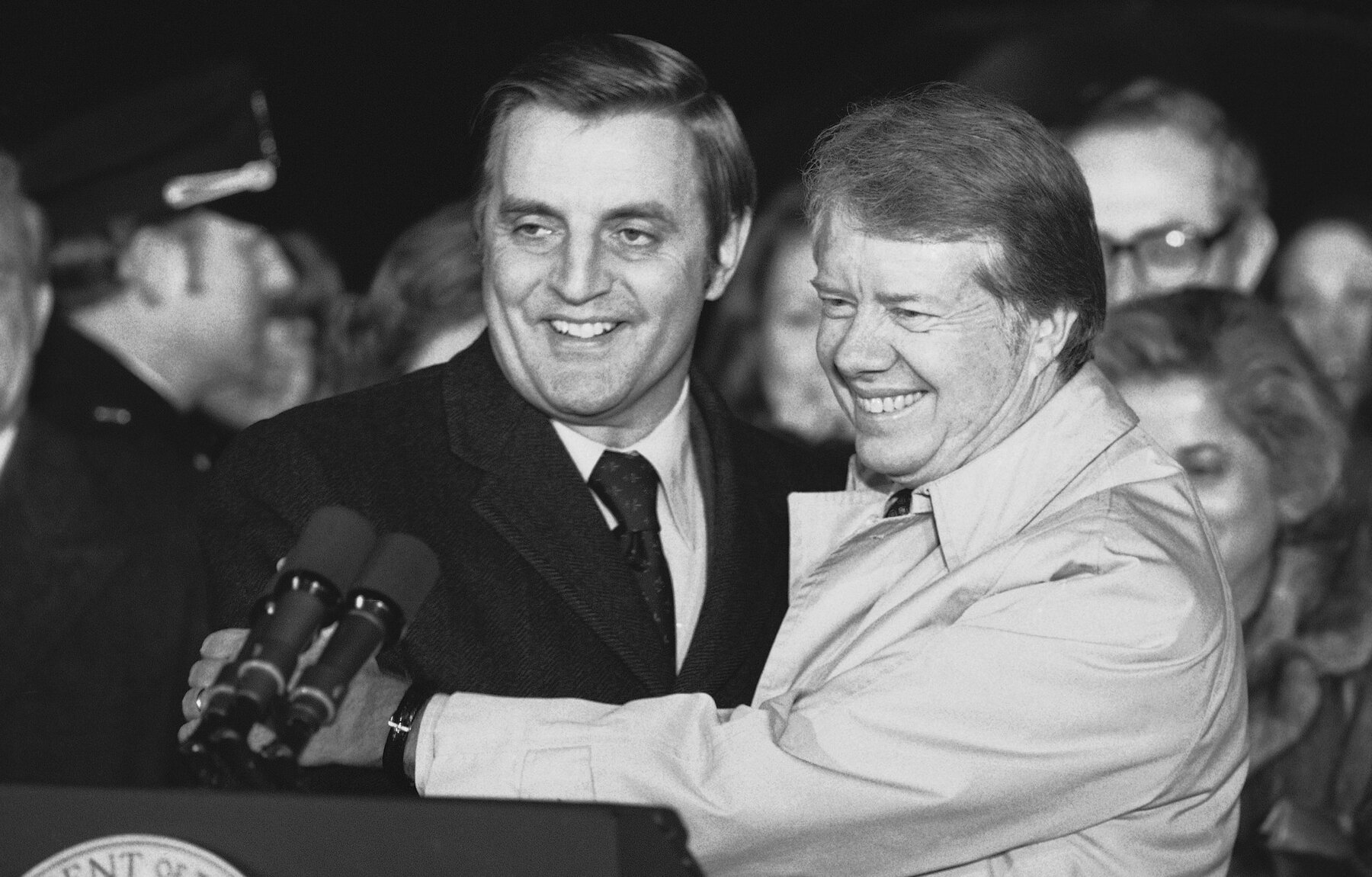
Former President Jimmy Carter, who chose Mondale as his running mate in 1976, called his friend “the best vice president in our country’s history.”
“He was an invaluable partner and an able servant of the people of Minnesota, the United States and the world,” Carter said in a statement. “Fritz Mondale provided us all with a model for public service and private behavior.”
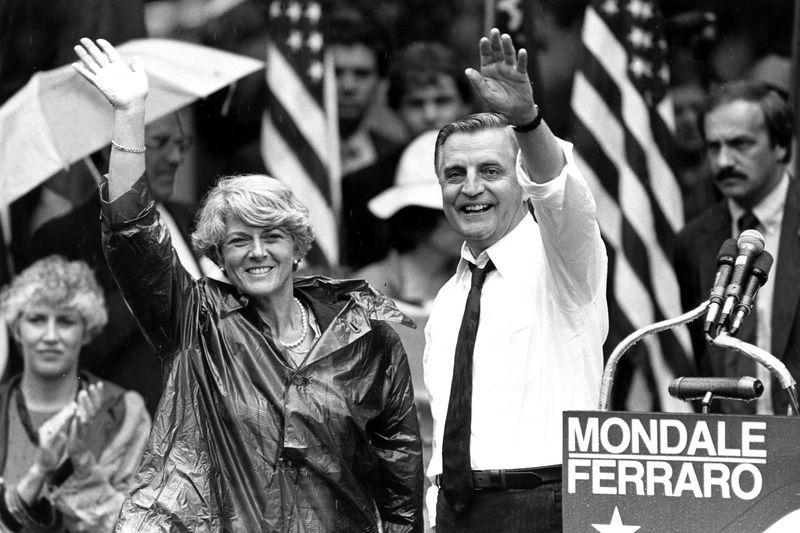
After serving four years under Carter, Mondale was the Democratic nominee for president in 1984. He lost to the incumbent, President Ronald Reagan, in a historic landslide.
“A night like that is hard on you,” Mondale wrote in his 2010 memoir, “The Good Fight.”
Even in defeat, Mondale made history by choosing as his running mate Geraldine Ferraro, the first woman to run for vice president on a major-party ticket. It followed a series of political landmarks in a public career that spanned seven decades.
A protégé of Hubert H. Humphrey, another Minnesota politician who rose to the vice presidency and lost a presidential election, Mondale served as a U.S. senator from Minnesota for a dozen years. He played a lead role in the passage of social programs, civil rights laws and environmental protections that defined President Lyndon B. Johnson’s “Great Society.”
As vice president from 1977 to 1981, Mondale transformed the office from what had historically been a punchline into what both he and Carter called a true governing partnership. Mondale’s role as chief adviser and troubleshooter, working from a West Wing office near the Oval Office, became a model for successors including George H.W. Bush, Al Gore, Dick Cheney and Joe Biden.
“The first person I called was Fritz,” Biden once said about the time President Barack Obama offered him the No. 2 position.
At The Washington Post, Karen Tumulty wrote about how Mondale changed the vice presidency: Opinion: Walter Mondale reinvented the vice presidency. Both Biden and Harris should thank him for it.
[Mondale’s] most enduring contribution may well have been the invention of the modern vice presidency, and his creation of a template that has been followed to some degree ever since. Mondale’s activist model as an all-purpose adviser and troubleshooter is one for which President Biden, a former vice president, and Kamala D. Harris, the current occupant of the office, should be grateful.
Before Mondale, the vice president was largely a figurehead….
But Jimmy Carter, coming to Washington in 1977 with a contingent of fellow Georgians and no real sense of how the place operated, had recognized that he needed a true governing partner with the experience Mondale had honed in 12 years as a well-regarded senator from Minnesota.
Mondale was the first vice president to have an office in the West Wing, steps from the president’s own, rather than being sidelined in the Old Executive Office Building, and a weekly lunch scheduled with the president. Carter also made it clear that their two staffs were to be considered one; Mondale’s chief of staff Richard Moe was given the additional title “assistant to the president.”
“We felt that Fritz’s long experience in Washington and the fact that for the first time he was being integrated into the Presidency itself was a compensating factor for the ignorance among the Georgia group concerning Washington,” Carter said, referring to Mondale, in a 1982 oral history moderated by the University of Virginia’s Miller Center.
Prosecutors treat closing arguments as an opportunity to make things simple for the jury and to keep them focused on the critical issues. Thus we heard state prosecutor Steve Schleicher’s mantra to the jury to “believe your eyes,” and his repeated references to the video evidence as well as his use of visual aids through which Schleicher listed and then checked off each legal element of each offense as he reminded the jury of the evidence proving them. This was a very effective technique, giving jurors who walked into the jury room inclined to vote to convict some ammunition to use in convincing more reluctant fellow jurors.
Defense Attorney Eric Nelson and Derek Chauvin
Defense lawyers have a different checklist, and Chauvin’s lawyer Eric Nelson hit all of his marks. Defense lawyers use closings to distract the jurors, to pull them away from the focus encouraged by prosecutors, and to provide as many reasons as they can muster as to why the prosecutors’ theory of the case fails.
Nelson embraced this tactic, spending almost an hour showing body camera footage of and arguing about the period before Chauvin restrained Floyd, a time when other officers were trying to cram a resisting Floyd into the squad car, while virtually ignoring most of the 9 minutes and 29 seconds that Chauvin knelt on Floyd’s neck. Nelson then tossed out all of the alternate causation theories he had cultivated throughout the trial — Floyd’s preexisting heart condition, his consumption of fentanyl and methamphetamine, the paraganglioma tumor, and possible carbon monoxide poisoning — claiming that with all of these possibilities out there, prosecutors couldn’t possibly prove causation beyond a reasonable doubt.
Jurors would be forgiven if their heads were spinning a bit from this rapid fire of legal theories — and that is exactly what the defense was aiming for.
Capitol Police officer Brian D. Sicknick suffered two strokes and died of natural causes a day after he confronted rioters at the Jan. 6 insurrection, the District’s chief medical examiner has ruled.
The ruling, released Monday, will make it difficult for prosecutors to pursue homicide charges in the officer’s death. Two men are accused of assaulting Sicknick by spraying a powerful chemical irritant at him during the siege, but prosecutors have not tied that exposure to Sicknick’s death.
In an interview with The Washington Post, Francisco J. Diaz, the medical examiner, said the autopsy found no evidence the 42-year-old officer suffered an allergic reaction to chemical irritants, which Diaz said would have caused Sicknick’s throat to quickly seize. Diaz also said there was no evidence of internal or external injuries.
While there’s apparently no proof, it’s difficult to believe that a man in his early 40s who was involved in a violent insurrection and probably was hit with bear spray suddenly had two spontaneous strokes. But that’s where things stand.
Brian Sicknick
Christopher Macchiaroli, a former federal prosecutor who handled violent crime cases before grand juries in D.C. Superior Court and U.S. District Court, said a ruling of a death by natural causes “does make it more difficult to bring a homicide prosecution.”
Macchiaroli said additional evidence of some conduct by rioters could emerge independently, which prosecutors could argue contributed to the strokes. But he said that “any defense attorney . . . would use the medical examiner’s conclusions as clear-cut evidence of reasonable doubt.”
In explaining the decision, the medical examiner’s office provided an updated timeline leading up to Sicknick’s death. A statement says Sicknick collapsed 7 hours and 40 minutes after he was sprayed, and then died nearly 24 hours after that.
Sicknick was among hundreds of officers who confronted the violent mob that took over the Capitol, seeking to overturn the election Donald Trump had lost. Nearly 140 officers were assaulted, authorities said, facing some rioters armed with ax handles, bats, metal batons, wooden poles, hockey sticks and other weapons.
So . . . what’s on your mind today? As always, this is an open thread.
Did you like this post? Please share it with your friends:
The images in this post are from the blog, Reading and Art. I don’t have any central theme this morning, just a mixed bag of news stories. beginning with damaging explosions in Tianjin, China.
You can see the devastation everywhere: in the hollowed out shells of barely-standing buildings, in the anguished faces of relatives waiting for news of loved ones, in the parade of scorched cars.
But what was it that set off the terrifying blasts that ripped through warehouses housing hazardous chemical materials, sending fireballs shooting across the sky and shaking tall buildings more than 2 miles away?
Hours later, amid the destruction in this northern Chinese port city of more than 13 million, the exact cause remained unclear.
A thick chemical odor hung in the air. Fires still burned in the waterfront industrial district where the explosions went off. And the grim toll kept mounting.
At least 44 people are confirmed dead, 12 firefighters among them, officials said Thursday. More than 500 are hospitalized, 52 with severe injuries. Dozens of firefighters are missing.
Local authorities suspended firefighting efforts Thursday because of a lack of information about the “dangerous goods” stored at the warehouse at the heart of the blasts, the state-run Xinhua news agency said.
CNN has dramatic photos at the link. A few more stories on the disaster:
Former president Jimmy Carter announced Wednesday that he has cancer and will be undergoing treatment at Emory Healthcare in Atlanta.
Carter, 90, said the disease was discovered during recent liver surgery to remove “a small mass” and that the cancer “is now in other parts of my body.”
“I will be rearranging my schedule as necessary so I can undergo treatment by physicians at Emory Healthcare,” Carter said in a statement on the Carter Center Web site. “A more complete public statement will be made when facts are known, possibly next week.”
In a statement, President Obama said he and first lady Michelle Obama wished Carter “a full and fast recovery.”
“Our thoughts and prayers are with [wife] Rosalynn and the entire Carter family as they face this challenge with the same grace and determination that they have shown so many times before,” Obama said in a statement released by the White House. “Jimmy, you’re as resilient as they come, and along with the rest of America, we are rooting for you.”
The president also spoke with Carter on Wednesday evening to wish him “full and speedy recovery” and extended best wishes on behalf of himself and first lady Michelle Obama, White House spokesman Eric Schultz said.
According to NBC News, Carter said “a more complete public statement will be made when facts are known, possibly next week.”
Sunlight and shadow, by Winslow Homer
Sweden has dropped some of its charges against Julian Assange.
STOCKHOLM—Swedish prosecutors on Thursday ran out of time to pursue two of four investigations into allegations of sexual assault against WikiLeaks founder Julian Assange, who has been living at the Ecuadorean embassy in London since 2012 to avoid extradition to Sweden for questioning.
Prosecutors said that probes into suspected unlawful coercion and sexual molestation would be dropped as the five-year limit that Swedish law allows for such charges to be brought has come to an end.
The five-year deadline for a second count of sexual molestation will be reached Aug. 18, prosecutors said. If the statute of limitation on that allegation also comes into effect, Mr. Assange would be left facing a single, more serious accusation of rape, over which prosecutors have until 2020 to question him….
Mr. Assange was accused of the crimes by two women during a visit to Sweden in August 2010. Prosecutors requested Mr. Assange return to Sweden from the U.K to face questioning.
The WikiLeaks founder, who denies the crimes, refused to return to Sweden, saying he feared he would extradited from Sweden to the U.S. where he could face trial over the publication by WikiLeaks of classified U.S. documents.
The Wikileaks founder said he was “extremely disappointed” and said the Swedish prosecutor had avoided hearing his side of the story….
He sought asylum in the Ecuadorian embassy in London in 2012 to avoid extradition to Sweden, fearing he would then be sent to the US for questioning about the activities of Wikileaks.
Under Swedish law, charges cannot be laid without interviewing the suspect.
Mr Assange said he was innocent and claimed prosecutors had refused to visit him at the embassy.
They also refused to promise not to send him to the US if he were to go to Sweden, he said.
Mr Assange said: “I am strong but the cost to my family is unacceptable.”
The new novel, by Winslow Homer
In clown car news, Mike Huckabee said some more insane things about Planned Parenthood and abortion.
Talking Points Memo, Huckabee: DOJ Should ‘Criminally Prosecute Planned Parenthood.’
Former Arkansas Gov. Mike Huckabee (R) on Wednesday laid out how he would tackle Planned Parenthood without the support of Congress if he were elected president.
When asked on about Iowa radio host Simon Conway about Republican efforts to defund Planned Parenthood after an anti-abortion group released numerous edited videos about the women’s health organization, Huckabee said he would use the Justice Department.
“I would have a Justice Department that would begin to criminally prosecute Planned Parenthood for violating federal law and selling body parts,” Huckabee told Conway….
“I would also invoke the 15th and Fourteenth Amendments,” he said on Wednesday. “This is the power that we have to stop this incredible, barbaric scourge of abortion. Not just stop funding Planned Parenthood, but we need to invoke the Fifth and 14th Amendment. The Fifth Amendment guarantees due process for every person. The 14th Amendment guarantees equal protection under the law for every person.”
Huckabee said that he believes that unborn children are people, guaranteeing them Fifth and 14th Amendment rights.
“I would take that position. I would act on behalf of those unborn children, and I would let those who want to slaughter babies, those who want to sell their body parts, let them sue me,” he said.
I have said many times (for instance) that fetuses are valued more highly than the people who carry them, that the potential life of every fetus is more important than the actual life of a pregnant person. Never has this been more clear.
If Mike Huckabee, or any of his fellow Republican candidates, had their way, fetuses would have not equivalent rights, but more rights than any pregnant person.
Protip, Huckabee: “Slaughtering babies” is already against the law.
The country school, by Winslow Homer
CNN reports on a study showing that kids in elementary school are getting crushing amounts of homework.
The study, published Wednesday in The American Journal of Family Therapy, found students in the early elementary school years are getting significantly more homework than is recommended by education leaders, in some cases nearly three times as much homework as is recommended.
Parents reported first-graders were spending 28 minutes on homework each night versus the recommended 10 minutes. For second-graders, the homework time was nearly 29 minutes, as opposed to the 20 minutes recommended.
And kindergartners, their parents said, spent 25 minutes a night on after-school assignments, according to the study carried out by researchers from Brown University, Brandeis University, Rhode Island College, Dean College, the Children’s National Medial Center and the New England Center for Pediatric Psychology.
That is ridiculous and harmful. Children at younger ages learn far more from play and interacting with other kids than from regimented school assignments.
“It is absolutely shocking to me to find out that particularly kindergarten students (who) are not supposed to have any homework at all … are getting as much homework as a third-grader is supposed to get,” said Stephanie Donaldson-Pressman, the contributing editor of the study and clinical director of the New England Center for Pediatric Psychology.
“Anybody who’s tried to keep a 5-year-old at a table doing homework for 25 minutes after school knows what that’s like. I mean children don’t want to be doing, they want to be out playing, they want to be interacting and that’s what they should be doing. That’s what’s really important.”
The Pope is coming to the U.S., and one of his stops will be at a jail in Philadelphia.
One of 17 stops on the pope’s first U.S. tour, the visit to the inner-city jail is a reminder of the emphasis the Argentine pontiff has placed on social justice issues since being named head of the Roman Catholic Church in March 2013.
The pope’s stop at the Philadelphia facility will be the latest in a series of prison visits by Francis, an outspoken opponent of the death penalty and lengthy prison terms. He has counseled teenagers in juvenile detention in Brazil. In Bolivia, he kissed inmates in the country’s most violent prison.
His visit also comes at a time when a growing number of Democrats and Republicans are questioning tough criminal sentencing policies that have left the United States with the highest incarceration rate in the developed world. Barack Obama, who last month became the first sitting U.S. president to tour a federal penitentiary, has called for legislation overhauling sentencing rules.
Advocates for prisoner rights say they are pleased the pope has decided to put the issue on his agenda during the U.S. tour, which will include attending a conference on family life in Philadelphia, plus stops in Washington and New York.
Morning glories, by Winslow Homer
I was going to write about Hillary and the media’s obsession with her emails, but I just couldn’t bring myself to do it. Instead, here’s an inspirational piece from Peter Daou and Tom Watson at #HillaryMen.
There is a manic urge among the media, the GOP and the elite commentariat to Stop Hillary – to block a woman from reaching the pinnacle of American political leadership.
Each poll, news story or issue that appears to harm her is seized upon with a strange combination of desperation and glee. It’s an unsavory process but Hillary knew what she was in for when she decided to seek the presidency a second time.
As #HillaryMen, we’re undaunted by the negative stories, unwavering in our support for Hillary and unyielding in our commitment to help smash the ultimate gender barrier.
Ending a 44-0 shutout that has lasted nearly a quarter millennium was never going to be easy. There is no cakewalk to the White House. And certainly not for a woman.
We’ve worked in politics and media for nearly two decades. Peter is a veteran of two presidential campaigns, including Hillary’s 2008 run. We’ve seen every permutation of every attack, every rise and fall in the polls, every gaffe and every zinger, every debate moment and debate aftermath, every nervous election night and every election surprise.
We know what lies ahead for Hillary’s campaign and we realize there will be times when the obstacles seem insurmountable. They are not.
For all practical purposes, the 2016 race is just getting underway. As the first summer of the campaign winds down, the rhetoric heats up and political prognostications start climbing in pitch. The fall frenzy begins in a matter of weeks.
I plan to head over to #HillaryMen every time I get angry and/or anxious about something written or said about her in the media. In case you haven’t read it yet, here’s a link to “The Facts about Hillary Clinton’s Emails” at her campaign website.
What else is happening? Please post your thoughts and links on any topic in the comment thread, and enjoy your Thursday.
Did you like this post? Please share it with your friends:
“IN contrast, when faced with the greatest economic crisis, the greatest levels of economic inequality, and the greatest levels of corporate influence on politics since the Depression, Barack Obama stared into the eyes of history and chose to avert his gaze.”
“Obama has suffered, in part, from a clarity gap. Even his own supporters aren’t always sure what he’s willing to fight for.
“He needs to plant a flag somewhere,” complained William A. Galston, a former top aide to then-President Clinton. “I don’t care what color it is. But periodically planting a flag and then lowering it is no way to inspire confidence.”
The president took a clear position on only one issue in the debt ceiling negotiations: He said any deal had to be “balanced,” meaning it had to include new tax revenue as well as spending cuts. But in the face of Republican opposition, he backed off even that one demand.
Obama’s negotiating victories in the final deal weren’t on matters of substance, like tax revenue. They were on matters of process: on making sure another debt-ceiling vote doesn’t happen until 2013 and making sure the mechanism for choosing further spending cuts isn’t tilted in the Republicans‘ favor. Try selling those to voters as a victory for the beleaguered middle class.”
“The one thing I might say is that we shouldn’t really wonder what happened to Obama — he is who he always was. If you paid attention to what he actually said during the primary and the election, he was always a very conventional centrist. Progressives who flocked to his campaign basically deluded themselves, mistaking style for substance. I got huge flack for saying that at the time, but it was true, and events have borne it out.”
“I think that – I don’t – I’m not sure that that’s true. I – I think that it is working. I think that people still, you know, in my interactions with the American people, they liked the guy a lot. They respect him a lot. They don’t feel that he’s in touch with their lives, and his calculation is this, that as this goes on – and – you know, he will be the least damaged of all the various parties.
And that’s what we’ve seen. His standing in – standing in the polls have gone down, but the Republicans’ standing in the polls has plummeted. And so, you know, he’s got to be feeling not terrific at this point, but not too bad politically either, because sooner or later the Republicans have to choose some candidate to oppose him and that candidate is going to have to make a calculation about how close to the Tea Party – which does remain a minority of a minority – how close to the Tea Party does the Republican presidential nominee want to be?
And so, I think the president is bemused by all of this and kind of horrified by the nonsense he’s – you know, that he’s had to deal with. He’s made concessions, unlike – as Arianna was saying – unlike anything we’ve ever seen a Democratic president make before. He proposed raising the age of eligibility for Medicare to 67.
The signs were all there in 2008. It’s just so many people chose to ignore them. Now, well, now, we are so f’d. Go ahead and add to the list. The Sunday talk shows are full of pithy quotes.
Did you like this post? Please share it with your friends:
John Lennon, the long-haired British peacenik who was investigated by the FBI in 1972 after he allegedly contributed $75,000 to a group suspected of planning to disrupt the Republican National Convention later was a closet conservative….Fred Seaman, who was Lennon’s personal assistant from 1979 until the singer’s assassination in 1980, claims the former Beatle and anti-war activist favored Ronald Reagan over Jimmy Carter and would have voted for the Gipper if he could have.
“John, basically, made it very clear that if he were an American he would vote for Reagan because he was really sour on Jimmy Carter,” Seaman told Seth Swirsky, who is making a film about the Fab Four.
Seaman said the guitarist “met Reagan back, I think, in the ’70s at some sporting event.”
“Reagan was the guy who had ordered the National Guard, I believe, to go after the young [peace] demonstrators in Berkeley, so I think that John maybe forgot about that,” Seaman told Swirsky in excerpts published in the Toronto Sun. “He did express support for Reagan, which shocked me.”
I don’t even know how to respond to this stunning news. Lennon was apparently a Reagan Democrat. If he’d lived he probably would have been an Obot too….
Confrontations between the police and protesters reached a violent climax here on Wednesday as armored riot officers beat back demonstrators and fired volleys of tear gas into the crowds who had gathered outside Parliament. Inside, lawmakers approved a package of austerity measures aimed at helping Greece avoid a default.
On the second day of a two-day general strike called by unions, rogue protesters also attacked the Finance Ministry on Syntagma Square across from Parliament and set fire to a post office in the ground floor of the building. The King George Palace, a luxury hotel that faces the square, was evacuated in the afternoon.
A police spokeswoman said that 31 police officers were injured and that 30 people had been detained, leading to 11 arrests. Local news media reported that dozens of protesters were hospitalized, and video clips showed the police striking people with their batons.
Amnesty International released a statement on Wednesday condemning the “repeated use of excessive force by police in recent demonstrations, including the disproportionate and indiscriminate use of tear gas and other chemicals against largely peaceful protesters.”
President Obama pressured Republicans on Wednesday to accept higher taxes as part of any plan to pare down the federal deficit, bluntly telling lawmakers that they “need to do their job” and strike a deal before the United States risks defaulting on its debt.
Declaring that an agreement is not possible without painful steps on both sides, Mr. Obama said that his party had already accepted the need for substantial spending cuts in programs it had long championed, and that Republicans must agree to end tax breaks for oil and gas companies, hedge funds and other corporate interests.
In a 67-minute news conference, Mr. Obama cast the budget battle as a tug of war between the interests of the rich — like owners of corporate jets, who he said get generous tax breaks — and those of the middle class, the elderly and children.
But Obama himself offered at best very weak tea:
Mr. Obama, under assault from Republicans on the campaign trail for an unemployment rate that remains above 9 percent, asked voters to understand that the economic recovery would take time but said that Washington, even in its current financial straits, could still do more to help. He expressed support for extending a reduction in payroll taxes for an extra year, providing loans for road and bridge-building and approving trade pacts that could help spur exports.
Big whoop. Why didn’t he fight to end the Bush tax cuts then?
The best advice I’ve gotten for assessing the debt-ceiling negotiations was to “watch for the day when the White House goes public.” As long as the Obama administration was refusing to attack Republicans publicly, my source said, they believed they could cut a deal. And that held true. They were quiet when the negotiations were going on. They were restrained after Eric Cantor and Jon Kyl walked out last week. Press Secretary Jay Carney simply said, “We are confident that we can continue to seek common ground and that we will achieve a balanced approach to deficit reduction.” But today they went public. The negotiations have failed.
“The primary goal of President Obama’s presser, which just wrapped up, was obvious,” writes Greg Sargent. “He was clearly out to pick a major public fight with Republicans over tax cuts for the rich.” That’s exactly right. But he didn’t want this fight. He wanted a deal. And he wasn’t able to get one that the White House considered even minimally acceptable. After putting more than $2 trillion of spending cuts on the table, they weren’t even able to get $400 billion — about a sixth of the total — in tax increases.
The conventional wisdom is that now this fight moves to the people. I’d put it differently. Now this fight moves to the consequences. Neither side is going to give in the face of purely rhetorical salvos. The White House is expecting Republicans to accuse them of wanting to raise taxes. The Republicans are expecting the White House to accuse them of putting the interests of large corporations and wealthy donors in front of the needs of seniors, children and the poor. Both parties have seen the poll numbers behind their positions. If a few news conferences were going to be sufficient to end this, it would never have started.
Epic floods, massive wildfires, drought and the deadliest tornado season in 60 years are ravaging the United States, with scientists warning that climate change will bring even more extreme weather.
The human and economic toll over just the past few months has been staggering: hundreds of people have died, and thousands of homes and millions of acres have been lost at a cost estimated at more than $20 billion.
And the United States has not even entered peak hurricane season.
“This spring was one of the most extreme springs that we’ve seen in the last century since we’ve had good records,” said Deke Arndt, chief of climate monitoring for the National Oceanic and Atmospheric Administration (NOAA).
While it’s not possible to tie a specific weather event or pattern to climate change, Arndt said this spring’s extreme weather is in line with what is forecast for the future.
The Boston Globe reveals that fishermen in Gloucester, MA and up and down the Atlantic coast were the victims of abuse of power by NOAA.
About a decade ago, the Commerce Department’s fish police started a fight with Larry Ciulla, who owns and operates the Gloucester Seafood Display Auction with three other family members. Claiming that the auction had exceeded the day’s catch limit by one 60-pound fish, the regulators levied a $120,000 fine and ordered a 90-day shutdown.
Outraged, Ciulla challenged the penalty. He turned to Gloucester lawyer Ann-Margaret Ferrante, who is now a state representative and whose grandfather, father, and uncle were fishermen. Together, they decided to take on the agency known as the National Oceanic and Atmospheric Administration. In need of political backup, they went to US Representative John Tierney, whose district covers Gloucester. Eventually, their grass-roots effort drew in the mayors of Gloucester and New Bedford, the Bay State congressional delegation, and a bipartisan string of lawmakers from Maine to the Carolinas.
This year, federal officials finally acknowledged their own regulators had gone rogue. They were guilty of overzealous, abusive, and targeted enforcement, a series of independent investigations revealed. Regulators were levying crippling fines for invented or inflated offenses, as they relentlessly bullied an entire industry. They were using the fishermen’s money to finance a fleet of cars, a luxury boat, and assorted foreign junkets.
“On Twitter, we saw a 500% increase in Tweets from Japan as people reached out to friends, family and loved ones in the moments after the March 2011 earthquake,” said the company on its blog.
Unlike Sarah Palin, who has brandished the feminist moniker and spoken of an “emerging conservative feminist identity,” Bachmann told me in an interview Tuesday that she wouldn’t call herself a feminist—instead, she simply described herself as “pro-woman and pro-man.” When I pressed her on the matter, the Minnesota congresswoman said she sees herself as an “empowered American.”
Bachmann seemed loath to engage in the kind of girl-power rhetoric utilized by Palin and Hillary Clinton, who both invoked the perennial—and so far unbreakable—presidential glass ceiling.
Said Bachmann: “I’m a woman comfortable in her own skin. I grew up with three brothers. My parents didn’t see us [as] limited [by gender]. I would mow the lawn and take out the trash; I was making my own fishing lures. I went along with everything the boys did.”
Bachmann is still doing everything the boys do, but as a female candidate she endures indignities that are foreign to your average male pol. Yet she takes it all in stride.
Don’t you just love it when smarmy, self-righteous people are brought low? I know I do. Despite the fact that I loathe pedophiles, I’ve always been turned off by Chris Hansen and his obnoxious TV show “To Catch a Predator.” Now Hansen himself has been caught on “candid camera.”
Chris Hansen has found himself on the receiving end of his own hidden camera tactics, after the married NBC anchor was secretly filmed on an illicit date with a blonde television reporter 20 years his junior.
Hansen, 51, has allegedly been having an affair with Kristyn Caddell, a 30-year-old Florida journalist, for the last four months.
ROFLOL!
Secret cameras filmed the couple as they arrived at the hotel for dinner and then drove back to her apartment – where the pair left, carrying luggage, at 8am the following day.
Hansen lives in Connecticut with his wife Mary, 53, but he has been spending more and more time in South Florida investigating the disappearance of James ‘Jimmy T’ Trindade – and allegedly sleeping with Miss Caddell.
The cameras belonged to The National Enquirer. Fortunately for Hansen, Miss Caddell is slightly beyond the age of consent.
CANNON BEACH, Ore.—On a recent weekend, sand creatures were sprawled across this Pacific Coast beach. There were sea horses by a giant squid, with an “Attackin’ Kraken” sea monster nearby, along with several pigs, some giant mice and an amputee octopus.
Many of the sand sculptures had the same point of origin: They had been built by people who at one time or another were advised by Bert Adams, one of the nation’s handful of professional sand-castle consultants.
“They did well,” said Mr. Adams, a 51-year-old former electrical engineer, as he surveyed the array of creations made by his onetime students at Cannon Beach’s 47th annual sand sculpting tournament.
“He’s a great mentor,” says Amos Callender, an Olympia, Wash., architect who took a course—Sand 101—that Mr. Adams taught two years ago. Mr. Callender and his team took first place at Cannon Beach last year, while this year they built a sand sculpture depicting “the good life”—a wine lover sporting a beret; a mouse tucking into a giant wheel of cheese—that finished second.
What a great idea. Now if only I could find a niche that would pay me big bucks for something I love doing!
So what are you reading and blogging about today? Hit me with it!
Did you like this post? Please share it with your friends:
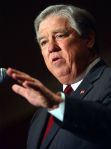
Well, we dodged a bullet yesterday when Mississippi Governor Haley Barbour announced that he won’t be running for president in 2012. Whew! I really didn’t want a president who would decorate the Oval Office with Confederate Civil War memorabilia, did you? Newsweek, January 2010:
The Republican governor of Mississippi keeps a large portrait of the University Greys, the Confederate rifle company that suffered 100 percent casualties at Gettysburg, on a wall not far from a Stars and Bars Confederate flag signed by Jefferson Davis.
There were also nagging concerns among GOP insiders about the prospect of nominating a deep-South governor with an accent matching his Delta roots to take on the country’s first black president.
Barry Wynn, a former South Carolina Republican chairman, put it politely after hearing Barbour speak in the state earlier this month: “There’s a perception that he might be more of a regional candidate.”
When asked from whom he received the information, Trump said he didn’t want to say and that he feels bad about the situation.
“I’d love for him to produce his birth certificate so that you can fight one-on-one,” Trump said in an interview set to air Monday. “If you look at what he’s doing to fuel prices, you can do a great fight one-on-one, you don’t need this issue.”
CNN’s Gary Tuchman also interviewed the former director of the Hawaii Department of Health, who said she has seen the original birth certificate in the vault at the Department of Health.
Meanwhile, multiple media outlets are talking about Trump’s generous campaign contributions–to Democrats. In fact, Trump recently donated $50,000 to Rahm Emanuel’s campaign for Chicago Mayor. From CNN:
Shortly before announcing interest in pursuing the GOP presidential bid, Republican Donald Trump gave $50,000, his largest campaign contribution in Illinois, to Democrat Rahm Emanuel, who was running for mayor, in December 2010….
Rahm’s brother Ari, who is co-CEO of William Morris Endeavor Entertainment, represents a majority of Hollywood’s celebrity elite, including Trump….
Records from the Illinois State Board of Elections show that Trump has made various sizable donations to Democratic causes in Illinois.
When [Ed] Rendell entered Pennsylvania’s 2002 gubernatorial race, Trump committed himself to the former Democratic National Committee chairman’s cause. Between December 2001 and Election Day ’02, Trump personally gave $27,000 to Ed Rendell’s gubernatorial campaign. He also chipped in $5,000 more at the end of 2003, when Rendell was finishing up his first year in office.
Mind you, Rendell’s victory in 2002 was by no means a foregone conclusion. He faced a serious threat in the May Democratic primary from Robert Casey, then the state’s treasurer and the son of a former governor. The sharpest ideological difference between the two men may have been on abortion: Rendell was pro-choice, while Casey was pro-life (like his father, who was denied a speaking slot at the 1992 Democratic convention in part because of it). During the primary campaign, Trump provided Rendell with $6,000. Rendell ended up beating Casey by 13 points.
Trump is supposedly the one of the biggest contributors to Charlie Rangel ever, yet he is supposedly running as a Republican.
And then we have our current president, who is a Republican who ran as a Democrat in 2008. I posted this in comments on the morning thread yesterday, but I can resist doing it again. It’s so funny to see former Obama supporter (why?) Eric Alterman comparing Obama to Jimmy Carter.
Stylistically speaking, Barack Obama could hardly be further from Jimmy Carter if he really had been born in Kenya. Carter was a born-again Baptist who was raised on his father’s peanut plantation and supported George Wallace on the road to the Georgia state house. Barack Obama—well, you know the story. But the two men have a great deal in common in their approach to the presidency, and not one of these similarities is good news for the Democrats or even for America. Both men rule without regard to the concerns of the base of their party. Both held themselves to be above politics when it came to making tough decisions. Both were possessed with superhuman self-confidence when it came to their own political judgment mixed with contempt for what they understood to be the petty concerns of pundits and party leaders. And worst of all, one fears, neither one appeared willing to change course no matter how many storm clouds loomed on the horizon.
Ask yourself if the following story does not sound like another president we could name The gregarious Massachusetts pol, House Speaker Tip O’Neill, could hardly have been more eager to work with a Democratic president after eight years of Nixon and Ford. But when they first met, and O’Neill attempted to advise Carter about which members of Congress might need some special pleading, or even the assorted political favor or two with regard to certain issues, to O’Neill’s open-jawed amazement, Carter replied, “No, I’ll describe the problem in a rational way to the American people. I’m sure they’ll realize I’m right.” The red-nosed Irishman later said he “could have slugged” Carter over this lethal combination of arrogance and naivety, but it would soon become Carter’s calling card.
The NFL’s lockout is harming players and fans and is not in the public interest, District Judge Susan Nelson said in a ruling on Monday that granted the players’ request for an injunction to halt the work stoppage.
Nelson’s order to end the six-week lockout, imposed last month after a breakdown in talks over a new collective deal, is to be appealed by the NFL.
In an 89-page statement, the judge also accepted that the players dissolution of their union was valid and allowed them to act as individuals rather than be constricted by labor bargaining rules.
The Minnesota judge said in the absence of a collective bargaining process, which ended on March 11, antitrust policies come to the fore.
The plaintiffs in the case, led quarterback Tom Brady of the New England Patriots, argued they were suffering harm as a result of a lockout that stops them from reporting to work.
Here’s some more analysis of the decision at USA Today. I realize that I’m one of the few sports fans here at Sky Dancing, so I won’t burden you unduly. But I just want to say that the Red Sox have won five games in a row and are now only one game under .500–after starting the season with a string of pathetic losses. I know at least Pat Johnson will join me in cheering that news.
Daknikat wrote yesterday about the terrible flooding that was expected in Missouri. Well, it’s happening.
Gov. Jay Nixon activated the Missouri National Guard on Monday in response to the flooding of the Black River near Poplar Bluff, Mo. The executive order came just three days after the governor declared a state of emergency from the tornado that tore through St. Louis last Friday.
“Maj. Gen. Stephen Danner has mobilized 200 citizen soldiers and airmen to report initially to the Poplar Bluff area to assist with flood relief there,” said Maj. Tammy Spicer, public affairs officer for the Missouri National Guard.
Thunder roared and tornado warning sirens blared, and all emergency workers in the southeast Missouri town of Poplar Bluff could do Monday was hope the saturated levee holding back the Black River would survive yet another downpour.
Murky water flowed over the levee at more than three dozen spots and crept toward homes in the flood plain. Some had already flooded. If the levee broke — and forecasters said it was in imminent danger of doing so — some 7,000 residents in and around Poplar Bluff would be displaced.
One thousand homes were evacuated earlier in the day. Sandbagging wasn’t an option, Police Chief Danny Whitely said. There were too many trouble spots, and it was too dangerous to put people on the levee. Police went door-to-door encouraging people to get out. Some scurried to collect belongings, others chose to stay. Two men had to be rescued by boat.
“Basically all we can do now is wait, just wait,” Whitely said.
A Roosevelt would probably have created jobs by having people repair the nation’s rotting infrastructure. But, instead we got Barack “Hoover” Obama and the levees keep on failing.
With reports emerging Monday that at least one high-ranking Syrian military commander refused to participate in a bloody, predawn raid that left dozens dead in the southern border city of Daraa — the heart of Syria’s weekslong civil unrest, questions are being raised about possible cracks in President Bashar al-Assad’s hold over the military.
The crackdown on anti-government protesters by Syrian forces escalated in recent days as demonstrators, emboldened by weeks of protests, called for the ouster of al-Assad. The crackdown culminated with the raid in Daraa where thousands of troops reportedly stormed the city and opened fire on demonstrators. It was an attack reminiscent of the brutal rule of al-Assad’s father, who once ordered the military to crush a revolt that resulted in the deaths of thousands.
“I think he’s clearly going toward the security solution, which is where he could be following in the steps of his father,” said Andrew Tabler of the Washington Institute for Near East Policy, a Washington, D.C.-based think tank.
I’ve been hearing all day that Yemen’s president Saleh was renigging on his promise to step down soon, but Al Jazeera reports that there is an agreement between the government and opposition forces.
Yemen’s opposition has agreed to take part in a transitional government under a Gulf-negotiated peace plan for embattled leader Ali Abdullah Saleh to step aside in a month in exchange for immunity for him and his family.
A spokesman for an opposition coalition said on Monday that his group had received assurances in order to accept the deal.
“We have given our final accord to the [Gulf] initiative after having received assurances from our brothers and American and European friends on our objections to certain clauses in the plan,” Mohammed Qahtan said.
But not all protesters are going along.
many pro-democracy protesters, who are not members of the coalition that agreed to the peace talks, appear to be unconvinced by the Gulf-proposed deal and have called for fresh demonstrations, as security forces continued their crackdown.
The battle for Misurata, which has claimed hundreds of lives in the past two months, has become the focal point of the armed rebellion against Gaddafi since fighting elsewhere is deadlocked.
Images of civilians being killed and wounded by Gaddafi’s heavy weapons, have spurred calls for more forceful international intervention to stop the bloodshed.
NATO’s mandate from the UN is to try to protect civilians in Libya, split into a rebel-run east and a western area that remains largely under Gaddafi’s control.
While the international coalition’s air attacks have delivered heavy blows to his army, they have not halted attacks on Misurata, Libya’s third largest city, with a population of 300,000.
When I was a kid, I was fascinated by insects. I loved to read books about ants, spiders, and other such creepy-crawly critters. Truthfully, I still find them interesting. Here’s a story about fire ants and how they cooperate to protect the group in an emergency.
When flood waters threaten their underground nests, fire ants order an immediate evacuation. They make their way to the surface and grab hold of one another, making a living raft that can sail for months.
The extraordinary survival tactic, which can involve entire colonies of more than a hundred thousand ants, has been captured on film by US engineers who used the footage to help unravel how the insects co-operate to overcome nature’s dangers.
Time-lapse film of the ants in action reveals that pockets of air get trapped between them and around their bodies, helping them breathe if the raft is pushed under the water.
In normal circumstances the ants lock legs, and sometimes mandibles, to form a floating mat that sits on top of the water through a combination of surface tension and buoyancy.
“Even the ones at the bottom remain dry and able to breath because they are not actually under the water,” said Nathan Mlot, a PhD student at Georgia Institute of Technology in Atlanta.
If only we humans would get together and cooperate like that!
That’s all I’ve got for today. What are you reading and blogging about?
Did you like this post? Please share it with your friends:
The Sky Dancing banner headline uses a snippet from a work by artist Tashi Mannox called 'Rainbow Study'. The work is described as a" study of typical Tibetan rainbow clouds, that feature in Thanka painting, temple decoration and silk brocades". dakinikat was immediately drawn to the image when trying to find stylized Tibetan Clouds to represent Sky Dancing. It is probably because Tashi's practice is similar to her own. His updated take on the clouds that fill the collection of traditional thankas is quite special.
You can find his work at his website by clicking on his logo below. He is also a calligraphy artist that uses important vajrayana syllables. We encourage you to visit his on line studio.

 I’ve been really dragging lately–partly because of health problems, but very likely also because of the exhausting events of the past year. Am I “languishing”? Are you?
 In psychology, we think about mental health on a spectrum from depression to flourishing. Flourishing is the peak of well-being: You have a strong sense of meaning, mastery and mattering to others. Depression is the valley of ill-being: You feel despondent, drained and worthless.
 “He was an invaluable partner and an able servant of the people of Minnesota, the United States and the world,” Carter said in a statement. “Fritz Mondale provided us all with a model for public service and private behavior.”
 But Jimmy Carter, coming to Washington in 1977 with a contingent of fellow Georgians and no real sense of how the place operated, had recognized that he needed a true governing partner with the experience Mondale had honed in 12 years as a well-regarded senator from Minnesota.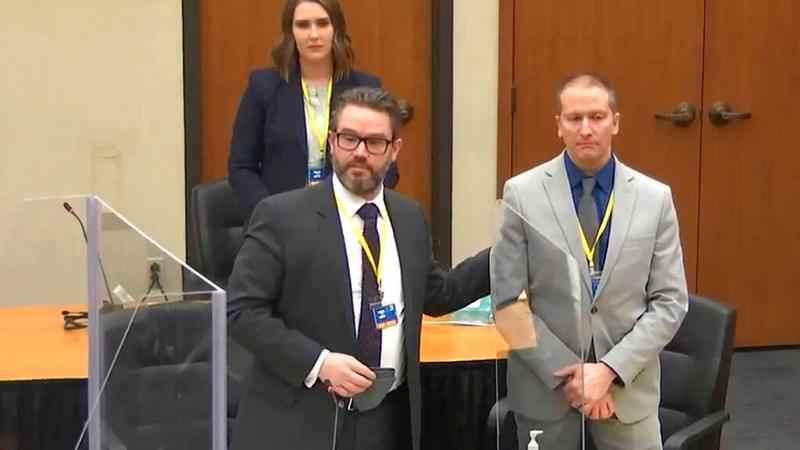













 peej
peej Carissa
 bostonboomer
 dakinikat
 ecocatwoman
 mablue2
 Mama Lopez
 peggysue22
 quixote
 skydancingguestblogger
 Mona (aka Wonk the Vote)



 Sky Dancing
Recent Comments