I’m having another one of those days when having a corrupt, moronic, megalomaniacal monster as “president” is just too much to bear. Why is the universe torturing us like this? Is there any hope for the future?
According to a government report that was leaked to The New York Times, average temperature in the U.S. have risen rapidly since 1980, and recent decades have been the hottest in the past 1,500 years. “Evidence for a changing climate abounds, from the top of the atmosphere to the depths of the oceans,” reads the congressionally mandated report, which was drafted by scientists spanning 13 federal agencies. The National Academy of Sciences has signed off on the paper, and it is now awaiting approval from the Trump administration.
According to the Times, scientists fear that the Trump administration could either alter or suppress the findings, and for good reason. The notion of the president’s team signing off on such a report seems about as plausible as the president having read the pope’s manifesto. Its assertion that “many lines of evidence demonstrate that human activities, especially emissions of greenhouse (heat-trapping) gases, are primarily responsible for recent observed climate change” jar inconveniently with Trump’s instinctive assumption that global warming is actually a hoax perpetuated by the Chinese.
And The Guardian obtained some internal administration emails that demonstrate Trump’s efforts to censor scientific research and results
It must be irritating for the White House, then, that just as the Times broke their story, the Guardian obtained a series of e-mails that implicate his administration in a bout of hoax-perpetuation, too. Staff at the Department of Agriculture (U.S.D.A.) have been told to get inventive with their use of language, and are being advised to replace the term climate change with the phrase “resilience to weather extremes,” according to the outlet. Bianca Moebis-Clune, director of soil health at the Natural Resources Conservation Service (N.R.C.S.), a U.S.D.A. unit that oversees farmers’ land conservation, helpfully circulated a concise encyclopedia of other, non-synonymous terms. For example, “reduce greenhouse gas” could, and should, be replaced by “build soil organic matter, increase nutrient use efficiency.” “Sequester carbon” is no longer wholly appropriate, so staff should now refer to “build soil organic matter.”
“We won’t change the modeling, just how we talk about it—there are a lot of benefits to putting carbon back in the sail [sic], climate mitigation is just one of them,” she wrote in an e-mail to staff on February 16, referencing advice from a colleague from the U.S.D.A.’s public affairs team to “tamp down on discretionary messaging right now.” Still, her note was not all negative. References to economic growth, emerging business opportunities in the rural U.S. and “improved aesthetics” should be “tolerated if not appreciated by all.” In another e-mail to senior employees on January 24, just days after Trump was inaugurated, Jimmy Bramblett, deputy chief for programs at the N.R.C.S., said, “It has become clear one of the previous administration’s priority is not consistent with that of the incoming administration. Namely, that priority is climate change. Please visit with your staff and make them aware of this shift of perspective within the executive branch.” He added that “prudence” should be used when referring to greenhouse gases, and that existing work on air quality regarding these gases could be stopped.
The draft report, which has undergone extensive review, estimates that human impact was responsible for an increase in global temperatures of 1.1 to 1.3 degrees Fahrenheit from 1951 to 2010.
“Many lines of evidence demonstrate that human activities, especially emissions of greenhouse (heat trapping) gases, are primarily responsible for recent observed climate changes,” the report notes. “There are no alternative explanations, and no natural cycles are found in the observational record that can explain the observed changes in climate.”
That counters what Environmental Protection Agency Administrator Scott Pruitt and Energy Secretary Rick Perry have said.
It remains unclear how the White House — which announced in June that it would pull out of the Paris climate accord — will handle the report. Many scientists are looking at it as a test case of the administration’s attitude toward science in general.
“The current situation will provide an acid test of whether the Trump administration is open to hearing the scientific truth about climate change or is so much in the thrall of fossil fuel interests that they are fixated on hiding the reality from the public,” Michael Oppenheimer, a professor of geosciences and international affairs at Princeton University, said Monday night.
The Climate Science Special Report is a key element of the National Climate Assessment, which, according to the 1990 Global Change Research Act, is supposed to be issued every four years. However, the assessment has come out only three times. The 2000 assessment, finalized under President Bill Clinton, came under attack once George W. Bush took office. Bush administrationofficials declined to cite it in subsequent federal reports, arguing that aspects of the data analysis were flawed.
According to the WaPo, the White House has had a copy of the report for “several weeks.”
Kurt Andersen has a new book coming out on September 5 called Fantasyland: How American Went Haywire; and The Atlantic has published an excerpt from it as its September cover story: How America Lost Its Mind. It’s a long article, and I haven’t finished it yet. Here are the first several paragraphs:
When did america become untethered from reality?
I first noticed our national lurch toward fantasy in 2004, after President George W. Bush’s political mastermind, Karl Rove, came up with the remarkable phrase reality-based community. People in “the reality-based community,” he told a reporter, “believe that solutions emerge from your judicious study of discernible reality … That’s not the way the world really works anymore.” A year later, The Colbert Report went on the air. In the first few minutes of the first episode, Stephen Colbert, playing his right-wing-populist commentator character, performed a feature called “The Word.” His first selection:truthiness. “Now, I’m sure some of the ‘word police,’ the ‘wordinistas’ over at Webster’s, are gonna say, ‘Hey, that’s not a word!’ Well, anybody who knows me knows that I’m no fan of dictionaries or reference books. They’re elitist. Constantly telling us what is or isn’t true. Or what did or didn’t happen. Who’s Britannica to tell me the Panama Canal was finished in 1914? If I wanna say it happened in 1941, that’s my right. I don’t trust books—they’re all fact, no heart … Face it, folks, we are a divided nation … divided between those who think with their head and those who know with their heart … Because that’s where the truth comes from, ladies and gentlemen—the gut.”
Whoa, yes, I thought: exactly. America had changed since I was young, when truthiness and reality-based community wouldn’t have made any sense as jokes. For all the fun, and all the many salutary effects of the 1960s—the main decade of my childhood—I saw that those years had also been the big-bang moment for truthiness. And if the ’60s amounted to a national nervous breakdown, we are probably mistaken to consider ourselves over it.
Each of us is on a spectrum somewhere between the poles of rational and irrational. We all have hunches we can’t prove and superstitions that make no sense. Some of my best friends are very religious, and others believe in dubious conspiracy theories. What’s problematic is going overboard—letting the subjective entirely override the objective; thinking and acting as if opinions and feelings are just as true as facts. The American experiment, the original embodiment of the great Enlightenment idea of intellectual freedom, whereby every individual is welcome to believe anything she wishes, has metastasized out of control. From the start, our ultra-individualism was attached to epic dreams, sometimes epic fantasies—every American one of God’s chosen people building a custom-made utopia, all of us free to reinvent ourselves by imagination and will. In America nowadays, those more exciting parts of the Enlightenment idea have swamped the sober, rational, empirical parts. Little by little for centuries, then more and more and faster and faster during the past half century, we Americans have given ourselves over to all kinds of magical thinking, anything-goes relativism, and belief in fanciful explanation—small and large fantasies that console or thrill or terrify us. And most of us haven’t realized how far-reaching our strange new normal has become.
President Trump is clearly rankled by the notion that his political support is slipping, pushing back against the idea during a barrage of tweets Monday from his Bedminster, N.J., golf club, where aides said he is having a “working vacation.” [….]
In fact, as his overall approval rate has sunk, some of the president’s core supporters have soured on his performance, polls show. A Quinnipiac University poll last week found 23 percent of registered voters “strongly approve” of Trump’s handling of his job, down from 29 percent who felt that way during his first week in office. Even white voters with no college degree — one of the demographics that backed his candidacy most enthusiastically — disapprove of how Trump is handling his job by 50 percent to 43 percent.
His support among Republicans is still around 75%, but the trend is downward. You can read the Trump tweets at the WaPo link, if you wish.
I know there’s much more happening, but I’m burned out at the moment. I’m hoping the return of Rachel Maddow tonight will give me something to hang onto.
What stories are you following today?
Did you like this post? Please share it with your friends:
I woke up around 3AM and couldn’t get back to sleep, so I turned on my computer and opened Twitter. I wasn’t expecting breaking news, but I found it anyway. You’ve probably heard by now that James Comey was caught lying to Congress about Hillary’s emails.
FBI director James Comey generated national headlines last week with his dramatic testimony to the Senate Judiciary Committee, explaining his “incredibly painful” decision to go public about the Hillary Clinton emails found on Anthony Weiner’s laptop.
Perhaps Comey’s most surprising revelation was that Huma Abedin — Weiner’s wife and a top Clinton deputy — had made “a regular practice” of forwarding “hundreds and thousands” of Clinton messages to her husband, “some of which contain classified information.” Comey testified that Abedin had done this so that the disgraced former congressman could print them out for her boss….
Much of what Comey said about this was inaccurate. Now the FBI is trying to figure out what to do about it.
FBI officials have privately acknowledged that Comey misstated what Abedin did and what the FBI investigators found. On Monday, the FBI was said to be preparing to correct the record by sending a letter to Congress later this week. But that plan now appears on hold, with the bureau undecided about what to do.
So how much did Comey exaggerate?
According to two sources familiar with the matter — including one in law enforcement — Abedin forwarded only a handful of Clinton emails to her husband for printing — not the “hundreds and thousands” cited by Comey. It does not appear Abedin made “a regular practice” of doing so. Other officials said it was likely that most of the emails got onto the computer as a result of backups of her Blackberry.
It was not clear how many, if any, of the forwarded emails were among the 12 “classified” emails Comey said had been found on Weiner’s laptop. None of the messages carried classified markings at the time they were sent.
WTF?! Has everyone in the federal government gone insane? How can we rely on Comey to properly investigate Trump and Russia after this? And why are we just learning about this?
He RUSHED to send Oct 28 letter b/c he said it would be concealing by omission. He has left a direct misstatement on the record for 6 days. https://t.co/1fSBIiVar2
For the Washington establishment, President Donald Trump’s decision to make General H.R. McMaster his national security adviser in February was a masterstroke. Here is a well-respected defense intellectual, praised by both parties, lending a steady hand to a chaotic White House. The grown-ups are back.
But inside the White House, the McMaster pick has not gone over well with the one man who matters most. White House officials tell me Trump himself has clashed with McMaster in front of his staff….
…White House officials…tell me this is not the sentiment the president has expressed recently in private. Trump was livid, according to three White House officials, after reading in the Wall Street Journal that McMaster had called his South Korean counterpart to assure him that the president’s threat to make that country pay for a new missile defense system was not official policy. These officials say Trump screamed at McMaster on a phone call, accusing him of undercutting efforts to get South Korea to pay its fair share.
This was not an isolated incident. Trump has complained in front of McMaster in intelligence briefings about “the general undermining my policy,” according to two White House officials. The president has given McMaster less face time. McMaster’s requests to brief the president before some press interviews have been declined. Over the weekend, McMaster did not accompany Trump to meet with Australia’s prime minister; the outgoing deputy national security adviser, K.T. McFarland, attended instead.
I have no doubt that tRump would like to have Russian spy Mike Flynn back as National Security Adviser.
White House staff called the Prime Minister’s Office last month to urge Justin Trudeau to persuade President Donald Trump not to tear up the North American Free Trade Agreement, according to multiple Canadian government sources.
The unconventional diplomatic manoeuvre — approaching the head of a foreign government to influence your own boss — proved decisive, as Trump thereafter abandoned his threat to pull out of NAFTA unilaterally, citing the arguments made by Trudeau and Mexican President Enrique Pena Nieto as pivotal.
But the incident highlights the difficulties faced by governments all over the world when it comes to dealing with a president as volatile as Trump.
tRump is an embarrassment to the once-great United States of America. Read the whole pathetic story at the link.
In the early 1960s, courts ordered Jackson to desegregate its public parks, which included five swimming pools. Instead, the city decided to close the pools. Black residents of Jackson sued. But in 1971, the Supreme Court, in a 5-4 decision, decided that closing the pools rather than integrating them was just fine.
The dissents, even at the time, were furious. “May a State in order to avoid integration of the races abolish all of its public schools?” Justice William O. Douglas asked in his dissent.
“I had thought official policies forbidding or discouraging joint use of public facilities by Negroes and whites were at war with the Equal Protection Clause” of the Fourteenth Amendment, Justice Byron White wrote in another dissent.
How did the tRump lawyers use this case? The ruling argued that courts should not consider the motives for a government decision.
“It is difficult or impossible for any court to determine the ‘sole’ or ‘dominant’ motivation behind the choices of a group of legislators,” the majority opinion said. “Furthermore, there is an element of futility in a judicial attempt to invalidate a law because of the bad motives of its supporters.”
The Trump administration emphasizes this in its citation of the case, arguing that looking into “governmental purpose outside the operative terms of governmental action and official pronouncements” is “fraught with practical ‘pitfalls’ and ‘hazards’ that would make courts’ task ‘extremely difficult.’”
The tRump Justice Department is now an embarrassment too.
Other Insane News
I’m still not sure if this is a joke or not, but knowing the New York Times, it could very well be for real.
The NY Times is planning a regular "Trump Isn't All Bad" column, so send in those ideas! pic.twitter.com/HfKdgEC6f1
Surely, if there is a “party line” among the establishment media in the United States, it is anti-Trump, not pro. That doesn’t make it wrong. In fact, it’s largely right. But the venom, the obsession, the knife-twisting are hard to understand.
It must be partly a matter of bad timing. Mr. Trump came along just as the mainstream media, especially newspapers, were trying to come to terms with the internet. Hoary concepts like “objectivity” and “balance” were giving way. This was a good thing, believe it or not. Reporters no longer had to pretend that after spending weeks or months on a story, they had emerged with no opinion about it. The word “I” could now be used to refer to oneself, rather than “a reporter.” Mr. Trump, already dislikable, became the first test case of the new mind-set.
Even a stopped clock is right twice a day, though, and even Donald Trump can’t be wrong all the time.
With that in mind, we’re looking for a few positive words about the president, and we’re asking for your help. This is not about Trump the family man. It’s not another forum for debating the issues. It is a place to point out positive things Mr. Trump has said or done from the viewpoint of The New York Times and its readers. (And don’t tell me Times readers are too diverse to classify. You know who you are.)
I’m pretty sure this is meant to be humorous, but it’s really not funny. I like this NYT column by David Leonhardt a little better: A French Lesson for the American Media.
The hacked emails from Emmanuel Macron’s French campaign appear to be spectacularly mundane, according to people who have read them. They include briefings on issues, personal exchanges and discussions of the weather. No doubt they also include some embarrassing thoughts, but so far they are notably lacking in scandal.
Does this description remind you of anything?
Ah, yes. Last year, Russian agents stole thousands of emails from Hillary Clinton’s campaign and published them via WikiLeaks. The dominant feature of the emails was their ordinariness.
They contained no evidence of lawbreaking, major hypocrisy or tawdry scandal. Even the worst revelation — a Democratic official and CNN contributor fed a town hall question to the campaign in advance — qualified as small beer. Ronald Reagan’s 1980 campaign engaged in much more consequential debate skulduggery. The Clinton emails were instead full of staff members jockeying for position, agonizing over strategy, complaining about their bosses and offering advice to those same bosses….
The overhyped coverage of the hacked emails was the media’s worst mistake in 2016 — one sure to be repeated if not properly understood. Television was the biggest offender, but print media was hardly blameless. The sensationalism exacerbated a second problem with the coverage: the obsession with Clinton’s private email server.
Apparently, there are sane people in the French media.
Late Friday, two days before the election, hackers released the Macron campaign emails. French media laws are stricter than American laws, and government officials argued against publication of the hacked information. But only the campaigns themselves were legally barred from making statements during the final weekend. Publications could have reported on the substance of the emails.
They largely did not. “It was a manipulation attempt — people trying to manipulate our voting process,” Gilles van Kote, deputy chief editor of Le Monde, told me.
French journalists rightly did not focus on what seemed like big news, because the emails surely did. They evaluated what truly was major news. Material released by a hostile foreign government, with the aim of confusing voters and evidently without significant new information, failed to qualify. Van Kote said reporters are continuing to read the emails to see if they warrant future stories.
NBC News has a story on how Bernie Sanders, who is not a Democrat, has thrown the Democratic Party into chaos: Democrats Stumble Into Abortion Rift. I’ll let you read that at the link if you’re interested. Here’s one more Sanders story, because Karma is so satisfying. Jane’s problems are now national news.
Federal investigators are looking into allegations that Sen. Bernie Sanders‘s (I-Vt.) wife, Jane Sanders, falsified loan documents while she served as the president of Burlington College, according to multiple reports.
The small Vermont liberal arts school closed down in May 2016, after going bankrupt and failing to meet accreditation standards.
The college began to face financial difficulties during Sanders’s tenure from 2004 to 2011, falling $10 million into debt when the school purchased a new campus in 2010.
Sanders has been accused of falsifying the information on the loan documents in order to expand the college grounds.
Full Article reported that some of the donors Sanders appealed to for help with loans are now in contact with the FBI and Federal Deposit Insurance Corporation (FDIC), as what was reported in the original site.
Sanders left her leadership role in 2011 for undisclosed reasons.
She claimed the college could count on $2.6 million in donations to pay for the purchased land, according to a 2010 loan application. But she ultimately raised only a fourth of that, making $676,000 in donations over the next four years, putting the college into bankruptcy in May 2016.
What else is happening? Please share your thoughts and links in the comment thread and have a terrific Tuesday!
Did you like this post? Please share it with your friends:
I woke this morning at 5 am to the sound of a tornado warning going off on my smartphone. This is not exactly the most welcome sound at any early hour but particularly cruel on a Monday. Some how, it seems that our endless experience with tornadoes and the torrential rain, wind and hail are metaphorical harbingers of the state of our country. The weather is getting more extreme and severe and yet we’re in the process of going back to denial and letting it happen. I wonder if Alexandria and the other small communities of Louisiana will be able to get a Federal State of Emergency signed in time. I’m not hopeful. Eastern New Orleans is still waiting for a lot of help after the destruction of the February 7 Tornado Outbreak.
This so didn’t have to happen.
I don’t know how much longer I can endure hearing or seeing either Bernie Sanders or Donald Trump on TV or any place else. How did two throwbacks to the past become installed as “leaders” when they basically look to turn our national dreams into the national nightmares of the past? Headlines regale us of the antics of old, snotty white men like Bernie, Donald, and Mitch McConnell who are desperately trying to put women, minorities, immigrants, and the GLBT community back in their historical places. Alarms should be sounding constantly. Hell is being rained on our civil rights, liberties, and democracy. Just “Gimme Some Truth”.
There are some incredible and powerful reads for you today. Here’s the one on my list from the LA Times. They’re running a four part series on the incredible lying Kremlin Caligula. Here’s the link to the Sunday Op Ed that kicks it off: “Our Dishonest President”. Don the Con may soon replace Tricky Dicky in the National Hall of Shameful Presidential Crooks.
It was no secret during the campaign that Donald Trump was a narcissist and a demagogue who used fear and dishonesty to appeal to the worst in American voters. The Times called him unprepared and unsuited for the job he was seeking, and said his election would be a “catastrophe.”
Still, nothing prepared us for the magnitude of this train wreck. Like millions of other Americans, we clung to a slim hope that the new president would turn out to be all noise and bluster, or that the people around him in the White House would act as a check on his worst instincts, or that he would be sobered and transformed by the awesome responsibilities of office.
Instead, seventy-some days in — and with about 1,400 to go before his term is completed — it is increasingly clear that those hopes were misplaced.
In a matter of weeks, President Trump has taken dozens of real-life steps that, if they are not reversed, will rip families apart, foul rivers and pollute the air, intensify the calamitous effects of climate change and profoundly weaken the system of American public education for all.
His attempt to de-insure millions of people who had finally received healthcare coverage and, along the way, enact a massive transfer of wealth from the poor to the rich has been put on hold for the moment. But he is proceeding with his efforts to defang the government’s regulatory agencies and bloat the Pentagon’s budget even as he supposedly retreats from the global stage.
These are immensely dangerous developments which threaten to weaken this country’s moral standing in the world, imperil the planet and reverse years of slow but steady gains by marginalized or impoverished Americans. But, chilling as they are, these radically wrongheaded policy choices are not, in fact, the most frightening aspect of the Trump presidency.
What is most worrisome about Trump is Trump himself. He is a man so unpredictable, so reckless, so petulant, so full of blind self-regard, so untethered to reality that it is impossible to know where his presidency will lead or how much damage he will do to our nation. His obsession with his own fame, wealth and success, his determination to vanquish enemies real and imagined, his craving for adulation — these traits were, of course, at the very heart of his scorched-earth outsider campaign; indeed, some of them helped get him elected. But in a real presidency in which he wields unimaginable power, they are nothing short of disastrous.
Run away from Donald Trump. Run hard. Run fast. And don’t look over your shoulder.
This president doesn’t care about you, he doesn’t share your values, and a dumpster fire would be envious of his reckless disregard for everything and everyone around him.
Senate Republicans have figured this out, and their distancing act is well underway. Sure, they say supportive things, but look at their actions.
When Trump’s first bill was headed toward the House floor, several Senate Republicans openly pressed their colleagues not to pass it. Majority Leader Mitch McConnell didn’t crack down on them a bit. And, when the clunky-at-best legislation was pulled from the floor, he pronounced it dead even as the White House and House GOP leaders were explaining how they might revive it
Last week, a new poll from the liberal outfit Public Policy Polling (PPP) asked Americans if President Trump should resign if evidence emerges that his campaign worked with Russia to help defeat Hillary Clinton. A majority, 53 percent, said he should resign.
That is important because PPP also found that 44 percent of Americans already believe that Trump’s campaign did just that.
It is no fantasy to say the drip-drip-drip of the Trump-Russia investigations is draining this presidency of political capital. The president’s historically high disapproval rating — 51 percent in the latest McClatchy poll — tells the same story.
That’s why astute Republicans are starting to look out for themselves.
The first Republican to begin to run for cover was Attorney General Jeff Sessions, who decided to recuse himself from any role in the investigation. Last week Michael Flynn, the former national security adviser, sought immunity in exchange for his testimony to congressional investigators.
A majority of Americans want a special prosecutor — including 39 percent of Republicans, according to one poll. Sen. John McCain (R-Ariz.) has called for Congress to form a bipartisan select committee to probe ties between Russia and the Trump camp.
I loved this headline from Raw Story: Trump allies in short supply as DC finds out trusting him is ‘like putting your faith in a human IED’. It talks about Trump’s new war on the Freedom Caucus.
At heart, the Freedom Caucus agrees with the basic principle of Trumpism: that Washington doesn’t work, that its members are denizens of a corrupt and dysfunctional swamp, and that only a revolution in its operations can save the republic. The dilemma for Trump is that conservatives largely built their base of support on fierce opposition to the establishment agenda, and an ability to gum it up to the point nothing gets done. Its hardline members think it’s better to maintain gridlock rather than allow bad government to continue.
Trump may agree with that, but as president he also needs to get things done. He made promises after all: to repeal Obamacare, to reshape the tax system, to build a wall … lots of things. If he can’t follow through, what’s the point of being president
Unfortunately, Trump’s inexperience and basic lack of understanding of government – and reluctance to learn – evidently included ignorance of the fact the president lacks the power of a chief executive, and is dependent on Congress to approve major initiatives. He can’t just wave his hand and order compliance. He needs the votes. But Democrats won’t vote with him out of principle, and moderate Republicans still recall how gleefully he savaged them during his election bid. He pretty much dedicated himself to chasing their sorry asses out of Washington.
Doncha love it when you can watch Evil fight Evil?
Senators in both parties are speculating that a blowup over President Trump’s nominee to the Supreme Court could lead not only to the end of the filibuster for such nominations, but for controversial legislation as well.
While Senate Majority Leader Mitch McConnell (R-Ky.) said Sunday on NBC’s “Meet the Press” that the legislative filibuster is safe, lawmakers fear that pressure will grow to get rid of it if Democrats block Neil Gorsuch’s nomination this week.
McConnell has all but promised to change the Senate’s rules to allow Gorsuch to be confirmed in a majority vote if Democrats filibuster him.
The showdown will take place later this week after a Senate Judiciary Committee vote on Monday.
Senators in both parties are worried about how the fight over Gorsuch will affect the filibuster.
“The thing I worry most about is that we become like the House of Representatives. What’s the next step? Legislation?” said Sen. John McCain (R-Ariz.).
“I’m convinced it’s a slippery slope.”
Sen. Bob Corker (R-Tenn.) warned last week on the Senate floor that growing pressure from the right and the left will make it difficult to withstand calls to eliminate the legislative filibuster.
“If we continue on the path we’re on right now, the very next time there’s a legislative proposal that one side of the aisle feels is so important they cannot let their base down, the pressure builds, then we’re going to vote the nuclear option on the legislative piece,” he said.
“That’s what will happen. Somebody will do it.”
Sen. Joe Manchin (D-W.Va.), one of only three Democrats who have explicitly said they’d oppose a filibuster of Gorsuch, warns the Senate is in danger of becoming a smaller version of the House, where the minority party has few rights.
“People who have been here for a long time know that we’re going down the wrong path here. The most unique political body in the world, the United States Senate, will be no more than a six-year term in the House,” he said.
“I’m doing whatever I can to preserve he 60-vote rule,” he said.
Sen. Heidi Heitkamp (D-N.D.), who like Manchin says she will vote to allow Gorsuch’s nomination to move forward, said she is also concerned about the legislative filibuster.
“This erosion that seems to be happening, of course I’m worried about it,” she said.
Gorsuch picked up a third Democratic vote on Sunday when Sen. Joe Donnelly (Ind.) said he would back him
The surreality of the debate over Neil Gorsuch is like nothing I've ever seen in government. People are arguing with shadows.
Senate Democrats now have enough votes to block the Supreme Court nomination under current Senate rules, which require 60 votes to proceed on a nomination.
That sets up a showdown later this week that will likely lead to a reinterpretation of Senate rules, so that the nominations of Supreme Court justices can be advanced with 51-vote majorities, rather than the preliminary 60-vote threshold that has long applied to high court nominations.
“If we have to, we will change the rules,” Republican Sen. Lindsey Graham of South Carolina said during Monday’s Judiciary Committee meeting. “It looks like we’re going to have to.”
Yup, right. We’ve learned that this last few years in spades. The Republican motto is “Cheat if you have to”.
Many books have been written about the way racial differences among feminists both divided and pushed feminist thinking and practice forward over the past several decades. In the 2016 election, however, it was not race but generation that was the dynamic factor among left-leaning women. Women like me, who experienced many cultural battles in the “gender wars” firsthand – from the first scornful comments that journalists had heaped on “women’s libbers”, to the public shaming of Anita Hill, to the renewed threats to bodily rights that we thought we had won decades earlier – brought to the 2016 campaign a personal knowledge of the fragility of feminist accomplishments and an identification with Hillary that was deeper and longer than any current headlines.
We may have winced – as I did – when Madeleine Albright quoted a coffee-cup version of feminism or Hillary said “deal me in”. But we understood that behind every seeming appeal to “sisterhood” was the history of what was indeed a revolution – and one that was far from over. We knew the role Hillary had played in that revolution, and the price she had paid for it. Many of us, too, had followed Clinton through the course of her public career, had read her autobiography, and knew very well that the accusation that she had come to issues concerning racial and economic justice late and “for political purposes” was among the most extraordinary fabrications of the campaign.
Many younger women, on the other hand – no less feminist, no less committed to gender equality – had formed their ideas about “the Clintons”, as Savannah Barker reminds us, in the shadow of 20 years of relentless personal and political attacks. Few of them – as I know from decades of teaching courses on feminism, gender issues, and the social movements of the 60s – were aware of the “living history” (to borrow Hillary’s phrase) that shaped the woman herself.
These young women weren’t around when the GOP, appalled that liberals like the Clintons had somehow grabbed political power, began a series of witchhunts that have never ended. (Hillary was correct: it has been a “vast rightwing conspiracy”, from the Spectator magazine’s “Arkansas Project”, designed specifically to take Bill Clinton down, to Kenneth Starr’s relentless digging into Bill’s private life, to the Benghazi and email investigations.)
They hadn’t experienced a decade of culture wars in which feminists’ efforts to bring histories of gender and race struggle into the educational curriculum were reduced to a species of political correctness. They didn’t witness the complicated story of how the 1994 crime bill came to be passed or the origins of the “super-predator” label (not coined by Hillary and not referring to black youth, but rather to powerful, older drug dealers).
It isn’t necessary, of course, to have firsthand knowledge of history in order to have an informed idea of events and issues. When it came to Hillary Clinton, however, sorting out fact from politically motivated fiction was a difficult task, particularly if one’s knowledge was filtered through the medium of election-year battles.
The 2016 election was no academically rigorous history course; it was dominated by versions of Hillary Clinton constructed by her political opponents and transmitted by reporters who usually don’t see offering context as their job and don’t have the time (or, for some, the inclination) to sort fact from fiction. And then, too, after decades of harsh schooling in the ways of politics and the media, Hillary herself was no longer the outspoken feminist who chastised reporters when they questioned her life choices, but a cautious campaigner who measured her words with care.
I knew just what one of my graduate students meant when I asked her how millennial feminists saw Hillary and she said “a white lady”. A white woman herself, she wasn’t referring to the colour of Hillary’s skin, or even her racial politics, but rather what was perceived as her membership in the dominant class, all cleaned up and normalised, aligned with establishment power rather than the forces of resistance, and stylistically coded (her tightly coiffed hair; her neat, boring pantsuits; her circumspection) with her membership in that class. When I looked at Hillary, I saw someone very different – but I understood the basis for my student’s perception.
So that’s a long excerpt but I had trouble just finding one little nugget to highlight.
Which brings me to Bernie and Berning Down the House. Bernie’s Tad Devine appears to be yet another Paul Manafort with deep ties and economic interests with Russians. Berners and Trumpsters were taken in by Russian Bots and propaganda. Many of them are still dead enders that insist on some kind of “progressive purity”. After I go after these ties in two links, I will return to the Bordo book. (And I am amazed at how I want to say Bardo when I see her name.)
But Manafort was not the only American political consultant in 2016 who had a checkered history of muddying the waters of international politics. In 2009 Manafort was working to help improve the image of pro-Russian Ukranian politician Viktor Yanukovych in an effort to make the presidential nominee seem more accessible, and thus more palatable, to the American Congress. Joining Manafort in that effort was an American consultant named Tad Devine, a man who himself had a dubious history of foreign intervention. Among Devine’s highlights is having worked for exiled Bolivian president Gonzalo Sanchez de Lozada in 2002 as well as ousted Honduran president Manuel Zelaya in 2005. Devine then worked for Yanukovych from 2006 up until he was elected president of Ukraine in 2010. Like both Lozada and Zelaya, Yanukovych has since been removed from power and he currently resides in exile in Russia and just happens to be wanted for treason in Ukraine.
In addition to having supported corrupt politicians abroad, Devine has also supported unsuccessful presidential candidates here at home. Devine had increasing roles in the campaigns of Jimmy Carter, Walter Mondale, Michael Dukakis, Bob Kerry, Al Gore, and John Kerry. After having previously worked on actual successful campaigns for Bernie Sanders’ 1996 congressional run as well as his 2006 senatorial run, Devine officially joined Sanders’ presidential campaign as a senior advisor in May of 2015. Over the course of the next fourteen months, Devine not only became one of the mouthpieces of the campaign but was also able to net himself a pretty penny. According to Slate,through both his consulting work as well as his work with Old Time Media, Devine was able to net himself roughly $10 million through his work on the campaign. For a campaign that prided itself as going to fight for the little guy, Devine, an establishment political consultant and friend of Bernie Sanders, seemed perfectly content to pocket millions of dollars.
But Devine’s hefty payday might not have been paid for entirely by gullible Americans giving $27 each. Throughout the Democratic primary, the Sanders campaign was cited for FEC violations on three separate occasions including a mysterious $10 million donation from a single address in Washington, DC. Despite consistent calls for financial transparency on the campaign trail, the Sanders campaign was exceedingly secretive when it came to its own finances. After twice filing for extensions from the FEC, the Sanders campaign ultimately decided to forgo its final financial disclosure statement in June citing the fact that campaign was no longer active, they were thinking of using lån uten sikkerhet some financial help to be able to raise the business. This decision was accompanied by the news that Sanders himself had purchased a $575,000 home in August, much to the dismay of his loyal followers. The home would be the third residence for Sanders, someone who railed against a system that increasingly favored the millionaires and billionaires of our country.
Yet these financial gains for both Devine and Sanders would never have been possible had it not been for the millions of campaign contributions that came their way. And the only way to get campaign contributions is to convince your supporters you might actually have a chance to win. Luckily for Devine and Sanders, they had some foreign friends who were willing to step in. As reported by Rachel Maddow late on Tuesday, there existed an army of Russian bots who were weaponized to influence our election. Many of them took to various social media sites to discredit and disrupt Hillary Clinton’s campaign and thus, enegize potential Bernie Sanders supporters. Knowing that Clinton had been a target of right-wing media smears for a quarter-century, all the bots had to do was plant this seed to potential Sanders supporters, many of whom had no experience in politics, to get them onboard with the Sanders campaign. By doing this, Sanders and Devine were able to successfully pocket millions of dollars all while pretending to be champions of the common man.
Indeed, some estimates now say that as much as one-fifth of Twitter traffic was controlled by pro-Trump, anti-Clinton bots and troll accounts during the election. With these #MAGA account attacks, it was relatively easy to block them and move on — emotionally, at least, as the abuse they delivered was easy to deflect because “they” were not “people” with whom I believed I had values in common in the first place.
However, the rest of the abuse came from accounts purporting to be supporters of Vermont Independent Senator Bernie Sanders. And these were “people” with whom I believed I shared common values and policy interests. Almost all of the accounts presented as men — mostly young and white — and used sexist and misogynistic tones and words. I was called “mom” and “grandma” as epithets by these “young men.” I was called every vile sexualized name you can imagine. For some reason that I did not understand at the time, they liked to call me a “vagina.” (I now believe non-native English — i.e. Russian — speakers wrote the algorithms controlling these bots and perhaps imagined “vagina” to be the equivalent of the c-word when hurled at a woman.) Not being conversant in the mechanisms of Russian psychological warfare techniques at the time, it never occurred to me that, like the #MAGA bots, these “Bernie Bro” accounts were actually bots too.
And the abuse from these accounts was much harder to dismiss. It wentin further, emotionally speaking. The vitriol of the attacks felt like a painful betrayal. After all, “we” probably shared 99 percent of our political perspective; we just supported different candidates — which is something I said repeatedly in my attempts to appeal to reason with some of the attackers over the course of those long months. Nonetheless, even the mildest criticism of Sanders or comment of support for Clinton would bring out a swarm of these “Bernie Bro” accounts spouting off with abusive language and mockery.
It was not just me who experienced this — nearly every female supporter of Clinton I know who was outspoken on Twitter or Facebook received similar treatment. In addition, men of color who were vocal Clinton supporters were targeted in a similar way. The abuse was also highly targeted toward journalists, especially female journalists reporting on the primary and opinion journalists who were supportive of Clinton.
None of us knew we were being targeted for psychological warfare by a foreign power during these exchanges.
The attacks started in late 2015 and escalated through early 2016. Most of these accounts no longer exist to link to, but others on twitter noticed similar patterns.
And as much as I am in agreement with many of his ideas, Bernie Sanders splintered and ultimately sabotaged the Democratic party – not because he chose to run against Hillary Clinton, but because of how he ran against her.
Sanders often boasted about the importance of the issues rather than individuals, of not playing dirty politics or running nasty ads in his campaign. And it’s certainly true that he didn’t slime Hillary by bringing Bill’s sexual accusers forward or by recommending that she be put in jail, as Trump did. He also seemed, at the beginning of the primary season, to be refreshingly dismissive about the “email scandal”: “Enough already about the damned emails!” he shouted at the first debate, and I remember thinking “Good man, Bernie! Way to go!” But within months, taking advantage of justified frustration with politics as usual (a frustration more appropriately aimed at GOP stonewalling of Democratic legislation), Sanders was taking Hillary down in a different way: as an establishment tool and creature of Wall Street.
“I think, frankly,” he said in January, campaigning in New Hampshire, “it’s hard to be a real progressive and to take on the establishment in a way that I think [it] has to be taken on, when you come as dependent as she has through her super PAC and in other ways on Wall Street and drug-company money.”
Progressive. It’s a term with a long, twisty history. In the 19th century, it was associated with those who argued for the moral “cleansing” of the nation. A century ago, both racist Southern Democrats and the founders of the NAACP claimed it for their purposes. The Communist party has described itself as progressive. By the time Sanders argued that Clinton was “not a true progressive”, the word was not very useful descriptively – one can be progressive in some ways and not so progressive in others, and no politician that I know of has ever struck every progressive chord. Context matters, too. As Jonathan Cohn wrote, in May: “If Sanders is the standard by which you’re going to decide whether a politician is a progressive, then almost nobody from the Democratic party would qualify. Take Sanders out of the equation, and suddenly Clinton looks an awful lot like a mainstream progressive.”
For Sanders supporters, however, progressive wasn’t an ill-defined, historically malleable label, but rather a badge of honor, a magical talisman for those who considered themselves anti-establishment. It may have been “a fallback identifier for pretty much anyone The Nation and its journalistic kin smiled upon” (as Michael Kazin described it), but it was an identifier with a great deal of potency, particularly for a younger generation longing for lives organised around something other than job hunting. When Sanders denied that badge of honour to Clinton he wasn’t distinguishing his agenda from hers (their positions on most issues were, in reality, pretty similar), he was excluding her from the company of the good and pure – and in the process, limiting what counted as progressive causes, too. His list didn’t include the struggle for reproductive rights or affordable child care. Nor, at the beginning of his campaign, was there much emphasis on racial justice.
***
So which ones on the list did the Trumpsters and Berners fall for and who was duped the worst?
First, there’s provokatsiya (provocation), which is the cornerstone of the Russian espionage worldview. This part of Kremlin spy culture is older than the Bolsheviks, dating to the late Tsarist era, when Russia invented the modern intelligence agency to fight anarchist terrorists.
Provocation is complicated, but at its most basic involves secret acts to confuse and dismay your enemy. The recent antics of Devin Nunes, chair of the House Intelligence Committee—positing conflicting and unsubstantiated allegations of malfeasance by our spy agencies—are a classic provocation designed to divert attention from the White House as its Russia crisis mounts. Regardless of whether anyone in Russia has a hand in this, the Kremlin surely approves.
Provokatsiya gets more complicated and nefarious from there, with the ultimate aim of turning the tables on your enemy and defeating him detail—before he realizes what’s happened. As I’ve explained, this involves a lot of shady stuff such as:
Taking control of your enemies in secret and encouraging them to do things that discredit them and help you. You plant your own agents provocateurs and flip legitimate activists, turning them to your side…While this isn’t a particularly nice technique, it works surprisingly well, particularly if you don’t care about bloody and messy consequences.
Moscow is alarmingly forward-leaning about provocation, and the Kremlin’s traditional devil-may-care attitude about these dirty tricks means it’s a safe bet that when you encounter rabid anti-Putin activists, there’s a solid chance some of them are secretly working for the Russians.
So far, it’s been a slow news day. Deadly tornadoes, bombs in St Petersburg, and threats from North Korea, plus a boatload of hearings and a vote on a nimrod SCOTUS nomination are all up for grabs. (Snark font on)
Let me know what’s on your mind and blogging list today. I’d like to go back to bed but I have to grade homework. I’m tired and seriously behind. I need to go soak in some sun too while it’s out there.
Did you like this post? Please share it with your friends:
The crowd at the Stand Up for Science Rally in Copley Square Boston, Feb. 17, 2017
Good Morning!!
The photos in this post are from the Stand Up for Science Rally in Boston on Friday.
How bad is the tRump presidency? Elderly people who remember great presidents like FDR are dissing tRump in their obituaries. Liz Smith of Norwalk, Ohio, died on Feb. 13. From her obit:
She was born June 12, 1929 in Pittsburgh, PA to the late Leo N. and Cathrine (Picker) Hierholzer. She was a graduate of Indiana University of Pennsylvania and received her Bachelor’s of Science in Music Education. She was a switchboard operator for many years. She was a lifetime member of Girl Scouts USA and was a 45 year volunteer for Erie Shores Girl Scout Council, and for 25 years she was a driving force behind Norwalk’s Girl Scout Day Camp. She was a recipient of the Thanks Badge, which is the highest award in Girl Scouting. She volunteered for the United Fund, Salvation Army soup kitchen, participated in crop walk, visited shut-ins at nursing homes, was an MDA Volunteer and a member of Huron County Democratic Party and a poll worker. She was an active member of St. Mary Catholic Church and served on parish council, renovation committee, finance council, funeral luncheons and parish festival committees , office aide at St. Mary’s, former Eucharistic minister and liaison for the Toledo Diocesan Association for the parish. She enjoyed traveling, especially to Yellowstone Park and heli-hiking in the Canadian Rockies, white water rafting on the New River in West Virginia and the Snake River in Idaho, Orient Express trip from Vienna to Paris, entire tour of Nova Scotia including Cape Breton. Liz is smiling now, not to be living during the Trump Presidency.
Boston, MA — 2/19/2017 – A dog named Louis Vuitton wears an Alternative Fact sweater as scientists, science advocates and community members rally in Copley Square. (Jessica Rinaldi/Globe Staff) Topic: 20scientists Reporter:
In the week before U.S. Vice President Mike Pence visited Brussels and pledged America’s “steadfast and enduring” commitment to the European Union, White House chief strategist Steve Bannon met with a German diplomat and delivered a different message, according to people familiar with the talks.
Bannon, these people said, signalled to Germany’s ambassador to Washington that he viewed the EU as a flawed construct and favoured conducting relations with Europe on a bilateral basis.
Three people who were briefed on the meeting spoke to Reuters on condition of anonymity due to the sensitivity of the matter. The German government and the ambassador, Peter Wittig, declined to comment, citing the confidentiality of the talks.
A White House official who checked with Bannon in response to a Reuters query confirmed the meeting had taken place but said the account provided to Reuters was inaccurate. “They only spoke for about three minutes and it was just a quick hello,” the official said.
The sources described a longer meeting in which Bannon took the time to spell out his world view. They said his message was similar to the one he delivered to a Vatican conference back in 2014 when he was running the right-wing website Breitbart News.
In those remarks, delivered via Skype, Bannon spoke favourably about European populist movements and described a yearning for nationalism by people who “don’t believe in this kind of pan-European Union.
“Western Europe, he said at the time, was built on a foundation of “strong nationalist movements”, adding: “I think it’s what can see us forward”.
Who should we believe: multiple sources who spoke to Reuters or the the lying White House? This morning Anita Kumar of Reuters (via The Miami Herald) asks how long Pence will have influence on policy: Pence has clout in Trump White House, but for how long?
Donald Trump has given Pence, whose connections, conservative credentials and knowledge of policy far outstrip those of his boss, a role that has him at the president’s elbow every day, relying on Pence to navigate Washington in ways that other modern presidents have not needed.
Pence is in the Oval Office when Trump calls foreign leaders. He’s in the room when the president meets with business executives, county sheriffs and the Joint Chiefs of Staff. He’s there holding the executive orders after the president signs them. And he always has the best seat in the house when Trump holds a news conference.
Trump likens himself to a CEO who surrounds himself with multiple advisers, and it’s clear right now that Trump feels comfortable having Pence around. But observers caution it may not end up that way, as the new White House shakes itself out and other advisers learn the ways of Washington.
“Everything is going to depend on who Donald Trump believes is trustworthy,” said Leslie Lenkowsky, a former professor at Indiana University who has known Pence for two decades.
Pence’s office did not respond to a request for comment.
Trump and Pence didn’t know each other well before Trump tapped him to be his running mate last summer. Pence had endorsed Sen. Ted Cruz, R-Texas, for president just days before the crucial Indiana primary and had criticized Trump for, among others things, calling for a temporary ban on Muslims entering the country.
Kumar isn’t specific about what she thinks might lead to a break between tRump and Pence, but after this weekend, I think Americans and Europeans are wondering when Pence will be sent to the doghouse.
Trump, like most demagogues, needs an enemy — the elites, the press, Clinton. If he had to survive on his own merits and accomplishments, he’d flop. Press or Trump? Clinton or Trump? It’s all a tactic to keep his own popularity high, or as high as it can be.
Alas, the technique has not really paid off since people tend to judge presidents in office on what they do in office. Trump’s historically horrendous approval numbers (38 approve, 56 disapprove in Gallup; Pew had a nearly identical split, 39/56.) As Trump’s performance sends more voters, and lawmakers, reeling and the investigation of his and his aides’ ties to Russia get underway, we should remember how critical Vice President Mike Pence becomes. If things get really bad — impeachment or some 25th Amendment “solution” — the choice will not be Trump vs. Clinton. It will be Trump vs. Pence, who’d take over if Trump left or was removed. Uh-oh. Pence is in positive territory (43/39 in the Pollster.com average), and among Republicans, especially those on Capitol Hill, he’s exceptionally popular.
In other words, if down the road the president continues to unravel, there may be a very big bipartisan consensus to show Trump the door. It’s not like they’d be getting Clinton; they’d be getting the not erratic, not flashy, not crazy Mike Pence.
Speaking of Hillary Clinton, the former First Lady, Secretary of State, and presidential candidate has spoken out about Trump’s refusal to condemn the many anti-Semitic threats and attacks around the country. The Washington Post: After weekend of anti-Semitic acts, Clinton urges Trump to ‘speak out.’
Hillary Clinton called on President Trump on Tuesday to speak out against anti-Semitic vandalism and threats after more than 170 Jewish graves were found toppled at a cemetery in Missouri.
A tweet from Clinton did not specifically mention the gravesite disturbances in University City, Mo., but noted increasing reports of “troubling” threats against Jewish community centers, cemetery desecrations and online intimidation.
She urged her former presidential campaign rival to lead denunciations amid complains by critics that the White House has not spoken out forcefully enough against anti-Semitic acts.
JCC threats, cemetery desecration & online attacks are so troubling & they need to be stopped. Everyone must speak out, starting w/ @POTUS.
President Donald Trump on Tuesday decried anti-Semitism, calling recent threats against Jewish community centers “horrible” and a “reminder of the work that still must be done to root out hate and prejudice and evil.”
“This tour was a meaningful reminder of why we ha ave to fight bigotry, intolerance and hatred in all of its very ugly forms,” Trump said Tuesday, delivering brief remarks after visiting the National Museum of African American History and Culture for the first time. “The anti-Semitic threats targeting our Jewish community and community centers are horrible and are painful and a very sad reminder of the work that still must be done to root out hate and prejudice and evil.
”Former Democratic presidential nominee Hillary Clinton had called on Trump earlier Tuesday to speak out against anti-Semitic violence, an issue he side-stepped at his press conference last week….
Ahead of his brief address, the president had told MSNBC’s Craig Melvin that “anti-Semitism is horrible and it’s gonna stop and it has to stop.” He added that the racial divide in America is “age-old” and speculated that “something” is going on that prevents the country from fully healing.
Yeah, “something” is definitely going on–a bunch of ignorant white people elected a racist POTUS. The ADL had also called on tRump to speak out. It really doesn’t seem like enough to me, but it’s a start. Here’s a summary of what’s been happening from HuffPo: Jewish Community Centers Across the Country Hit with Another Wave of Bomb Threats.
Forcing evacuations in ten states Monday. There have been 67 incidents at 56 Jewish community centers in 27 states and one Canadian province since the start of 2017. Vandals also toppled over 100 headstones at a prominent Jewish cemetery in St. Louis. Ivanka Trump, who converted to Judaism, tweeted about the incidentsMonday, and not all of Twitter was pleased.
Anita Feigenbaum, executive director of the Chesed Shel Emeth Cemetery, said officials will be cataloging the damage Tuesday and notifying relatives whose families are affected. A monument company will decide which headstones need to be replaced and which need to be reset, she said.
Feigenbaum was emotional in describing the damage she saw.
“It’s hard to even express how terrible it was,” she said Tuesday morning. “It was horrible.”
Police are investigating the vandalism, which happened sometime over the weekend. No arrests had been made, as of Tuesday. Asked whether the incident is being investigated as a hate crime, Detective Lt. Fredrick Lemons II said police were keeping all options open….
The damage was done to an older part of the cemetery, on the southeast end. In one swath, for example, spread across about 40 yards, two dozen stones are toppled but 10 rows of stones nearby are untouched. A semicircle of destruction included stones marked with names of Schaefer, Weisman, Weinstein, Pearl and Levinson, but one headstone in the middle, with the name Levy, was unscathed. The years of death on these stones ranged from about 1921 to 1962.
Visitors streamed in to see if their family stones were pushed over.
Trump and the Bannon crowd own this.
What else is happening? Please post your thoughts and links in the comment thread and have a terrific Tuesday!
Did you like this post? Please share it with your friends:
Yesterday was dark day for the USA. I didn’t see the inauguration ceremony, but I heard part of tRump’s speech on NPR while I was out in the car. To say I was repulsed by it would be an understatement. tRump painted a picture of America as a hellhole with no redeeming qualities except for the bigoted white people who managed to elect him with a minority of the popular vote. It was a stunning insult to the former presidents in the audience and to the majority of the American people.
At the center of this movement is a crucial conviction, that a nation exists to serve its citizens. Americans want great schools for their children, safe neighborhoods for their families, and good jobs for themselves. These are just and reasonable demands of righteous people and a righteous public.
But for too many of our citizens, a different reality exists: mothers and children trapped in poverty in our inner cities; rusted out factories scattered like tombstones across the landscape of our nation; an education system flush with cash, but which leaves our young and beautiful students deprived of all knowledge; and the crime and the gangs and the drugs that have stolen too many lives and robbed our country of so much unrealized potential.
This American carnage stops right here and stops right now.
American carnage? I get the feeling that in a couple of weeks, tRump will be claiming credit for the growing economy that President Obama left him with. And then there was this:
We assembled here today are issuing a new decree to be heard in every city, in every foreign capital, and in every hall of power. From this day forward, a new vision will govern our land. From this day forward, it’s going to be only America first, America first.
(APPLAUSE)
Every decision on trade, on taxes, on immigration, on foreign affairs will be made to benefit American workers and American families. We must protect our borders from the ravages of other countries making our products, stealing our companies and destroying our jobs.
(APPLAUSE)
Protection will lead to great prosperity and strength. I will fight for you with every breath in my body and I will never ever let you down.
At the center of his foreign policy vision, Donald Trump has put “America First,” a phrase with an anti-Semitic and isolationist history going back to the years before the U.S. entry into World War II.
Trump started using the slogan in the later months of his campaign, and despite requests from the Anti-Defamation League that he drop it, he stuck with it.
Friday, he embraced the words as a unifying theme for his inaugural address.
“From this day forward, a new vision will govern our land,” Trump said on the Capitol steps. “From this day forward, it’s going to be only America First. America First.”
Here’s the historical context:
Those same words galvanized a mass populist movement against U.S. entry into the war in Europe, even as the German army rolled through France and Belgium in the spring of 1940.
A broad-based coalition of politicians and business leaders on the right and left came together as the America First Committee to oppose President Franklin D. Roosevelt’s support for France and Great Britain. The movement grew to more than 800,000 members.
While the America First Committee attracted a wide array of support, the movement was marred by anti-Semitic and pro-fascist rhetoric. Its highest profile spokesman, Charles Lindbergh, blamed American Jews for pushing the country into war.
“The British and the Jewish races,” he said at a rally in September 1941, “for reasons which are not American, wish to involve us in the war.”
The “greatest danger” Jews posed to the U.S. “lies in their large ownership and influence in our motion pictures, our press, our radio, and our government,” Lindbergh said.
This certainly was not a unifying message from our new and illegitimate POTUS.
Everyone who wondered what Steve Bannon has been doing in Trump Tower now knows the answer: He was drafting the new president’s vengeful and cliché-laden inaugural address, which is certainly the least impressive speech of its kind in memory and likely one of the worst in history.
With its repeated harping on “America First” and the thieving perfidy of Washington, condemning both parties in government, this speech plainly reiterated the same messages formulated by the former Breitbart.com chairman during last year’s campaign. It sounded as if Trump were still on the stump, stirring up his fans, rather than seeking to unify the country and take on the profound responsibilities of the nation’s highest office.
But who can blame Bannon and Trump for returning to their battle-tested themes? Gazing out over the National Mall toward the Washington Monument, where a crowd less than a fourth the size of Obama’s 2009 audience stood, and pondering their dismal approval ratings, they had to yearn for the wild enthusiasm of rallies past. What better way to revive the base than to conjure again that dark vision of an America brought low by crime, drugs, immigration, joblessness — and elitist conspiracies at the center of government?
Of course, there is a good reason why a new president — especially one who failed to win the popular vote in an extraordinarily rancorous election — should try to strike a generous and welcoming note on Inauguration Day. The task of governing that the chief executive faces is vast, complex, and daunting, as Trump is now learning, and demands at least a gesture toward national unity. An inaugural speech crafted to encourage such harmony is the mood music of our “peaceful transfer of power.” And by the time a president takes office, the country is usually weary of partisan bitching and expects the victor to display a measure of grace.
tRump isn’t capable of displaying grace. He only cares about himself and the “glorious victory” he imagines he has won. Even at the inaugural balls last night, tRump was still bragging about how he won the primaries and the general election in a “landslide.” Ironically, even winning the presidency and becoming the most powerful man on earth will never satisfy the black hole of inadequacy inside this pathetic, narcissistic man.
So today it’s the “women’s march,” and there are a lot more people participating in it than the sad crowd for the inauguration. Plus there are women’s rallies in all fifty states and many foreign countries. I guess I should be thrilled, but after learning that the organizers had decided to leave Hillary Clinton off the list of women on their “This is Why We March” announcement, I’m a bit unenthusiastic. I doubt if this will make much difference if the focus is on dismissing Hillary’s achievements and fantasizing that Bernie would have won. I’m also having difficulty with Michael Moore hogging the spotlight on a day that was supposed to be about women’s rights. Time Magazine:
When the Women’s March, which will take place on Saturday, released its official platform earlier this week,the group included a section dedicated to women who inspired organizers but didn’t mention Clinton’s name. The listincluded activists like Grace Lee Boggs, Gloria Steinem, Winona LaDuke, Malala Yousafzai and Edith Windsor. ButClinton, the first woman to be the a presidential nominee of a major political party, was missing. The omission is especially notable because the March borrows one of its slogans — “Women’s Rights are Human Rights and Human Rights are Women’s Rights” — from Clinton’s famous 1995 speech on women’s rights in Beijing. Clinton has given no indication that she plans to attend the event.
Sonya Clay, who lives in D.C. and supported Hillary Clinton in 2016 election, started a petition to get Clinton’s name added onto the list, which now has over 5,000 signatures. In addition to Clay’s petition, Wise Women for Hillary sent a letter to the March’s organizers asking that they change their mind. Others agreed, tweeting to March organizers under the hashtag #AddHerName. Some women now say they may stay home if Clinton’s name isn’t added.
“A Women’s March without Hillary Clinton — that just makes no sense,” Clay told Motto in a phone interview. “Hillary Clinton has inspired people to participate in this March. Her service has been inspiring to people. And just the way that she’s handled the loss. She’s inspired people to keep fighting and fight back.”
Since Clay’s petition went live, the Las Vegas and Los Angeles contingents of the Women’s March tweeted that they would honor Clinton. The March also put out a statement on its official Facebook page, saying it was proud to include Clinton’s phrase words from her Beijing speech — but didn’t clarify whether it would add Clinton’s name to the honoree list.
To compound the insult, the organizers are using Hillary’s famous quote “Women’s rights are human rights and human rights are women’s rights,” as well as referring to themselves as “nasty women.”
So . . . I applaud the women who are marching in DC and around the country and the world, but I’m still not so enthusiastic this will lead to any meaningful changes. Sorry about that.
What else is happening? Please post your thoughts and links in the comment thread and I hope you enjoy your weekend.
Did you like this post? Please share it with your friends:
The Sky Dancing banner headline uses a snippet from a work by artist Tashi Mannox called 'Rainbow Study'. The work is described as a" study of typical Tibetan rainbow clouds, that feature in Thanka painting, temple decoration and silk brocades". dakinikat was immediately drawn to the image when trying to find stylized Tibetan Clouds to represent Sky Dancing. It is probably because Tashi's practice is similar to her own. His updated take on the clouds that fill the collection of traditional thankas is quite special.
You can find his work at his website by clicking on his logo below. He is also a calligraphy artist that uses important vajrayana syllables. We encourage you to visit his on line studio.

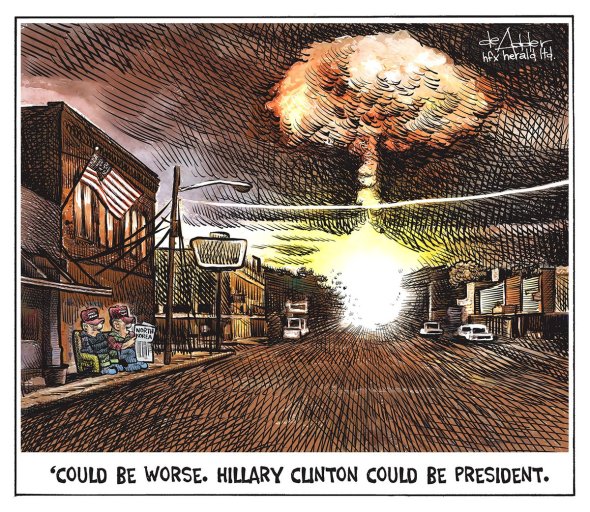

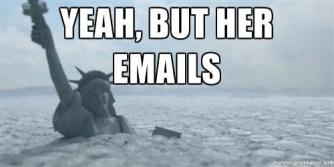


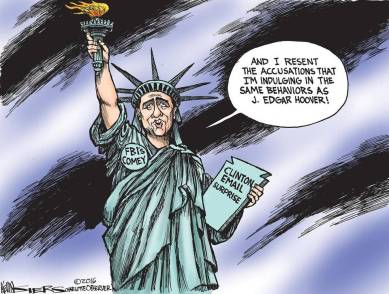
 Good Morning!
 There are some incredible and powerful reads for you today. Here’s the one on my list from the LA Times. They’re running a four part series on the incredible lying Kremlin Caligula. Here’s the link to the
 I loved this headline from Raw Story:
 It’s being reported
 I am now called a “pantsuiter” by progressive Dems who still think Bernie’s the future. It’s a the same as being called a gramdma by a
  So far, it’s been a slow news day. Deadly tornadoes,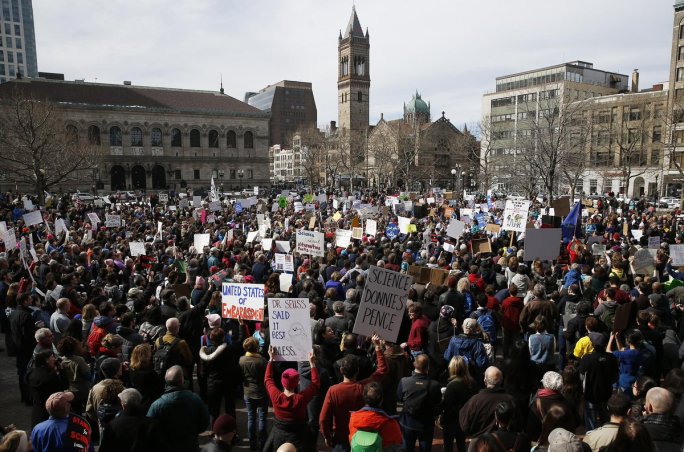






 peej
peej Carissa
 bostonboomer
 dakinikat
 ecocatwoman
 mablue2
 Mama Lopez
 peggysue22
 quixote
 skydancingguestblogger
 Mona (aka Wonk the Vote)



 Sky Dancing
Recent Comments