
Wednesday Reads
Posted: January 3, 2024 Filed under: 2024 Elections, 2024 presidential Campaign, just because, Media, polling, The Media SUCKS | Tags: Autocracy, big media, Claudine Gay, democracy, diversity, Greg Sargent, Harvard, journalism, Joyce Vance, Racism, Rick Perlstein, The Washington Post 13 CommentsGood Morning!!
It’s 2024, and the media and the Republicans are gearing up for the presidential election in November. What are the Democrats doing? I’m sure they are raising plenty of money, but when will they wake up and start fighting back against the Republicans and the media? Make no mistake, big media is hoping for another Trump presidency, because it will mean chaos and gobs of money for those who cover the chaos. It will mean riches for the media bosses and reporters alike–think of all the new books they can sell as Trump destroys democracy and attempts to gain dictatorial power?
You’ve probably heard that The Washington Post recently got rid of 240 employees through buyouts. They chose to keep right wing columnists like Hugh Hewitt and dumped liberals like Greg Sargent. Fortunately, Sargent has been hired by The New Republic.
This post by Tom Jones is from Poynter, a site that reports on and critiques the media: Opinion | Washington Post reaches buyout goals to, for now, avert layoffs.
The good news is that the Post has been able to meet its goal of trimming staff through buyouts instead of layoffs. The bad news is the Post will enter the new year with fewer employees — perhaps a couple of hundred.
Greg Sargent
Back in October, the Post announced that it was offering buyouts with the hopes of reducing staff by 240. (At the time, the Post had approximately 2,500 employees.)
Then late last month, Post interim CEO Patty Stonesifer told staff only half of the desired number of staffers — about 120 or so — had accepted the buyouts and that there would be layoffs if not enough employees took the buyouts. At the same time, The Daily Beast’s Corbin Bolies reported that Post executive editor Sally Buzbee told staff in an email that about 36 of the 120 who accepted the buyouts were from the newsroom. She said that was “about 30 percent of our goal across the News department.”
Then came Tuesday’s news that the Post had enough buyouts to avoid layoffs — for now (my words, not the Post’s). The exact number of buyouts isn’t known publicly.
In an email to staff, Stonesifer said the company “will enter the new year with a smaller organization but a better financial position.” Stonesifer also wrote, “I am very aware of how difficult this process has been for everyone involved and I want to thank you for the grace and respect you have shown at every step.”
In July, The New York Times Benjamin Mullin and Katie Robertson reported the Post was on track to lose about $100 million this year.

For the gossip columnists at the WaPo, President Biden is boring. Imagine how much better the paper’s “financial position” will be when Trump gets back in the White House and consolidates his power. The same will be true of The New York Times. Maggie Haberman will be cleaning up, along with her co-writers.
In another positive development, historian and political observer Rick Perlstein will be writing for The American Prospect. I’m seriously thinking about dumping my Washington Post subscription and giving that money to one of these liberal publications.
Perlstein has published his first column. In it, he addresses three issues I worry about: the media focus on polls, the failure of journalists to address real issues, while tending to favor right wing narratives, and the failure of Democratic politicians to fight back hard against those narratives.
Rick Perlstein at The American Prospect: You are Entering the Infernal Triangle: Authoritarian Republicans, ineffectual Democrats, and a clueless media.
Perlstein on Polling:
As a historian who also writes about the present, there are certain well-worn grooves in the way elections get written about by pundits and political journalists from which I instinctively recoil. The obsession with polling, for one. Polls have value when approached with due humility, though you wonder how politicians and the public managed to make do without them before their modern invention in the 1930s. But given how often pollsters blow their most confident—and consequential—calls, their work is as likely to be of use to historians as object lessons in hubris as for the objective data they mean to provide.
Pollsters themselves are often the more useful data to study, especially when their models encode mistaken presumptions frozen in place from the past. In 1980, for instance, Ronald Reagan’s landslide was preceded by a near-universal consensus that the election was tied. The pollster who called it correctly, Lou Harris, was the only one who thought to factor into his models a variable that hadn’t been accounted for in previous elections, because it did not yet really exist: the Christian right.
Polling is systematically biased in just that way: toward variables that were evident in the last election, which may or may not be salient for this election. And the more polls dominate discussions of campaigns and elections, the more they crowd out intellectual energy that could be devoted to figuring out those salient, deeper, structural changes conditioning political reality: the kind of knowledge that doesn’t obediently stand still to be counted, totted up, and reduced to a single number.
On media predictions:
Another waaaaay too well-worn journalistic groove isprediction. I have probably read thousands of newspaper opinion column prognostications going back to the 1950s. Their track record is too embarrassing for me to take the exercise seriously, let alone practice it myself. Like bad polls, pundits’ predictions are most usefulwhen they are wrong. They provide an invaluable record of the unspoken collective assumptions of America’s journalistic elite, one of the most hierarchical, conformist groups of people you’ll ever run across. Unfortunately, they help shape our world nearly as much, and sometimes more, than the politicians they comment about. So their collective mistakes land hard….
Rick Perlstein, author, Reaganland: America’s Right Turn 1976-1980.
And how ritualized? Consider one of elite journalism’s most deeply worn grooves: the morning-after declarations, should any Democrat win a presidential election, that the Republican politics of demagogic hate-mongering has shown itself dead and buried for all time—forgetting how predictably it returns in each new election, often in an increasingly vicious form.
In 1964: When the author of the Civil Rights Act, Lyndon Johnson, defeated a Republican who voted against the Civil Rights Act, Barry Goldwater, one of the most distinguished liberal newspaper editors in the South, Sam Ragan of the Raleigh News & Observer, pronounced that all future American elections would be decided “on issues other than civil rights.” His essay quoted the Los Angeles Times’ Washington bureau chief, who affirmed that conventional wisdom by observing that henceforth, whichever party takes the Black vote would be no more predictable than who would win “freckle-faced redheads and one-armed shortstops.” [There are many more examples of this phenomenon in the essay.]
This particular bias is rooted into elite punditry’s deepest, most dangerous groove of all: a canyon, if you will. On one side of the yawning gulf is the perennial fantasy that America is a nation fundamentally united and at peace with itself, “moderate,” “centrist,” where exceptions are epiphenomena entirely alien to settled American “norms.”
On “Reality”:
On the other side of the gulf is, well, reality.
The media habits that make it so hard to grasp that reality—that made Trump and his merry band of insurrectionists such a surprise to us—are perhaps as systematic as any foisted upon the public by state media in authoritarian nations. A little more innocent than, say, Pravda, however, because one wellspring of this stubborn fantasy, and why audiences are so receptive to it, is simple psychology. To acknowledge the alternative is to stare into a terrifying abyss: the realization that America has never not been part of the way to something like a civil war.But suddenly, in 2024, no one can avoid acknowledging that abyss anymore. And that leaves journalism in a genuine crisis.
Generations of this incumbent, consensus-besotted journalism have produced the very conceptual tools, metaphors, habits, and technologies that we understand as political journalism. But these tools are thoroughly inadequate to understanding what politics now is.
According to polls (which, yes, have their uses, in moderation), something around half of likely voters would like to see as our next president a man who thinks of the law as an extension of his superior will, who talks about race like a Nazi, wants to put journalistic organizations whose coverage he doesn’t like in the dock for “treason,” and who promises that anyone violating standards of good order as he defines them—shoplifters, for instance—will be summarily shot dead by officers of the state who serve only at his pleasure. A fascist, in other words. We find ourselves on the brink of an astonishing watershed, in this 2024 presidential year: a live possibility that government of the people, by the people, and for the people could conceivably perish from these United States, and ordinary people—you, me—may have to make the kind of moral choices about resistance that mid-20th-century existentialist philosophers once wrote about. That’s the case if Trump wins. But it’s just as likely, or even more likely, if he loses, then claims he wins. That’s one prediction I feel comfortable with.
I’ve already quoted too much, but I hope it’s enough so that you’ll want to read the rest at The American Prospect.
Every morning, I read Joyce Vance’s substack, Civil Discourse. Today, she offered “a warning” to all of us who want to save democracy. We have to remember that no everyone is following news and politics closely.
One morning before Christmas, I was working out with a friend who I adore, and workout with regularly. She’s young, smart, and a recent college graduate. In the middle of our session, my phone started going off incessantly and I finally picked it up. It was, of course, breaking news. That day, it was about the Giuliani bankruptcy.
I apologized to her for taking the call. I got off quickly and told her, by way of explanation, “Rudy Giuliani just filed for bankruptcy.”
Joyce Vance
“Who’s Rudy Giuliani?” she asked.
One morning before Christmas, I was working out with a friend who I adore, and workout with regularly. She’s young, smart, and a recent college graduate. In the middle of our session, my phone started going off incessantly and I finally picked it up. It was, of course, breaking news. That day, it was about the Giuliani bankruptcy.
I apologized to her for taking the call. I got off quickly and told her, by way of explanation, “Rudy Giuliani just filed for bankruptcy.”
“Who’s Rudy Giuliani?” she asked.
You know that noise they make in TV sitcoms, the one where the needle scratches across the record, and everything is interrupted? That was what I heard in my head. My mind worked over the implications of her question for the remainder of our time together.
She was born after 9-11. She never knew Giuliani as America’s mayor when the Towers fell and certainly not as the staunch pro-law enforcement mayor in the city in earlier years. But it shocked me that someone of voting age was unaware of Giuliani—didn’t recognize his name and associate it with Trump’s efforts to overturn the 2020 election.
She asked me about the bankruptcy. “Is that a good thing or a bad thing?” I explained that he’d lost a big defamation case in Georgia because he said horrible things about two election workers and disrupted their lives. Still no signs of recognition, but she got the point. “What an a**hole,” she concluded, based on my brief description of what he’d done.

Read the rest at the substack link.
Like Joyce Vance, I grew up in a politically engaged family. It’s always a shock to me when I learn that some people have no idea what’s going on in the government. We need to reach out to the people us and discuss the danger of autocracy.
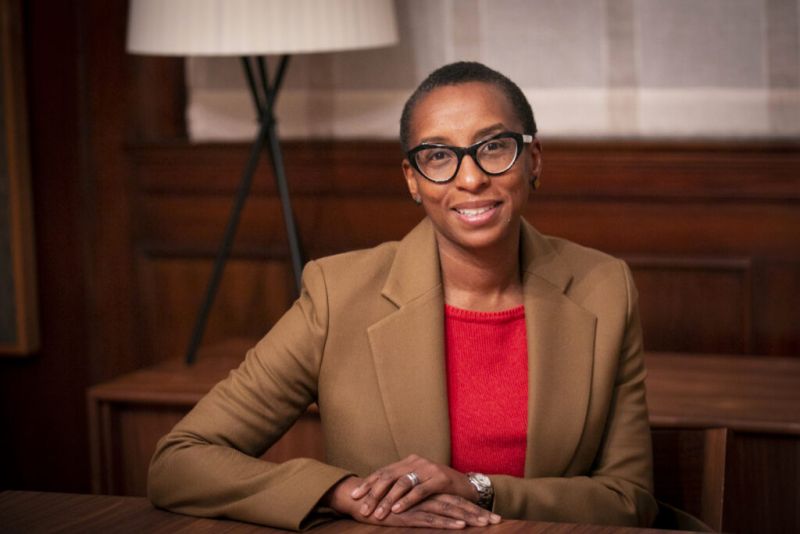
I’m really troubled by what happened to Claudine Gay, Harvard’s first Black president. She may well have some issues with past plagiarism, but if she had been white, I doubt if the issue would have even come up. The truth is, she was set up by Congressional Republicans who hate diversity in education. Two articles:
At The Atlantic, David Graham expresses the typical liberal media response: it’s a shame and of course she was targeted by right wingers, but Harvard still had to do the “right” thing: An Old-Fashioned Scandal Fells a New Harvard President.
Gay, a political scientist, resigned…, making her the second president of an Ivy League institution to bow out in the past month. University of Pennsylvania President Liz Magill stepped down on December 9, but the cases are not as similar as they might initially seem. Magill’s departure stemmed directly from the shaky December 5 congressional testimony by a panel of college presidents about anti-Semitism and the Israeli-Palestinian conflict, and was viewed as a victory for Elise Stefanik, the Republican representative who led the questioning.
What appear to have doomed Gay were the allegations of plagiarism lodged against her. This is an important distinction. Penn’s board of trustees was spooked by pressure from donors and politicians. The Harvard Corporation, an equivalent body, was not. In a December 12 statement, it acknowledged that Gay’s testimony had gone poorly, but said she would remain in her post, describing its position as a defense of open discourse and academic freedom. Although Stefanik is already claiming credit, what ended Gay’s short tenure were not the hot-button issues of campus speech and anti-Semitism but was instead the kind of scandal that one might expect to fell the president of any educational institution, whether a member of the Ivy League or a community college.
Yes, because Harvard initially supported her remaining president, so the right wingers had to find another reason to get rid of her.
On December 5, Gay, Magill, and MIT’s Sally Kornbluth were hauled before Congress to speak about anti-Semitism on campus, though many GOP members really seemed to be upset about what they saw as inconsistent standards for deciding what speech is and isn’t acceptable on campuses. The hearing was remarkable for, among other things, how little intellectual agility the presidents showed in the face of questioning. A college president has to fulfill a dual role, serving not only as an academic officer but also as a sort of front woman for her institution. The failure of these presidents to represent their universities well in such a public setting was bound to raise questions about their leadership, regardless of the subject matter.
Claudine Gay
Gay survived the initial backlash to her testimony, but since then, the furor around allegations of plagiarism has grown. Many of the examples that have been made public represent extremely lazy rewriting of source material—Gay borrowed sentences or paragraphs, making minor changes to their wording or order of clauses without adding much analysis of her own. Some academics have described this as entirely unacceptable, while others have defended Gay—including some, such as David Canon, from whose work she repeatedly drew. “I am not at all concerned about the passages. This isn’t even close to an example of academic plagiarism,” Canon told The Washington Free Beacon….
The origin of the complaints is still murky. Allegations of academic misconduct against Gay had floated around online message boards for some time, The Wall Street Journal reported. One unnamed individual claims to be the source of the current charges. On October 24, the New York Post contacted the university to ask about allegations against Gay. On December 10, the conservative agitator Christopher Rufo and the journalist Christopher Brunet published claims of plagiarism in Gay’s 1997 Harvard dissertation. The next day, The Washington Free Beacon added more reporting….
Conservatives have long had it out for Gay, Harvard’s first Black president, whose appointment they viewed as a sop to progressive diversity, equity, and inclusion initiatives. The identity of the initial anonymous complainant against Gay is unclear, as is when he or she brought the complaints forward. The appearance of the allegations in conservative outlets and their timing, coming shortly after the war in Gaza thrust Gay into the spotlight, certainly suggest a politically motivated effort.
I’ve quoted the parts of Graham’s article that support my point of view. He still thinks she should have been fired.
Nia T. Evans at Mother Jones: What Claudine Gay’s Resignation From Harvard Means for the Rest of Us.
Claudine Gay’s resignation from her post as president of Harvard University is a shocking new twist in the ongoing saga over campus free speech. Gay resigned on Tuesday amid new allegations of plagiarism leveled through an unsigned complaint published in the Washington Free Beacon, a conservative outlet that has long criticized Gay. The news, which was broken by the Crimson, comes after months of attacks on Gay’s response to campus antisemitism and weeks after university leaders reaffirmed their support for her. Gay’s stunning departure is the latest casualty in a growing conservative crusade against “diversity in education” and a chilling reminder of the state of campus free speech amid Israel’s war on Gaza.
“It has become clear that it is in the best interests of Harvard for me to resign,” Gay wrote in a letter to the Harvard community. “It has been distressing to have doubt cast on my commitments to confronting hate and to upholding scholarly rigor—two bedrock values that are fundamental to who I am.”
Gay’s 186-day tenure is the shortest in the school’s 388-year history.
Just six months ago, Gay was heralded as the future of Harvard University. “I stand before you on this stage with the weight and honor of being a first,” she told a rain-soaked crowd during her inauguration ceremony. Her journey to becoming Harvard’s first Black female president felt like the quintessential American dream: she is the daughter of Haitian immigrants, a Stanford graduate with a doctorate from Harvard. An accomplished political scientist with an emphasis on race, democracy, and politics, she was praised by university and political leaders alike after being named Harvard’s 30th president in late 2022. Massachusetts Gov. Maura Healey called her “a leader for our time” driven by the “values to meet the moment” at Gay’s September inauguration ceremony. Harvard’s governing board announced her selection with glee. “We are confident Claudine will be a thoughtful, principled, and inspiring president for all of Harvard,” wrote Harvard Corporation senior fellow Penny Pritzker. “She will be a great Harvard president in no small part because she is such a good person.”
Gay’s brief tenure collided with historic political assaults against diversity and education. In June, the Supreme Court struck down affirmative action in a case in which Harvard was at its center. The October 7 terrorist attack on Israel by Hamas instigated an ongoing war that’s claimed more than 22,000 lives. The war also set off a fierce debate on college campuses across the country over free speech. In one well-documented incident, a conservative group paid for a truck to circle around Harvard Square with a billboard on which the names and photos of opponents of Israel’s actions were displayed. The billboard dubbed them “Harvard’s Leading Antisemites.”
The end result of the controversy and the efforts of right wingers:
Her resignation not only shakes things up at the most prestigious university in the country, it also exposes a larger trend of racial regression that picked up in the years following the 2020 uprisings as Black leaders have been installed in positions of power only to find themselves undermined by the systems they sought to save. Love it or hate it, Harvard sets the tone for national and international debates. To conservative activists celebrating on Twitter, Gay’s ouster is part of a larger project to purge progressive Black leaders from public institutions. Or as Chris Rufo put it, to abolish “DEI ideology from every institution in America.” In the end, Gay’s presidency has created yet another first: Harvard’s first Black female president was also its shortest-serving.
Those are my top stories for today. Lots more is happening, of course. Here are more stories you might find interesting/enraging:
Times of Israel: Israel in talks with Congo and other countries on Gaza ‘voluntary migration’ plan.
The Texas Tribune: Emergency rooms not required to perform life-saving abortions, federal appeals court rules.
Jose Pagliery at The Daily Beast: Jack Smith Keeps Telegraphing Some Seriously Scandalous Trump Crimes.
David Kurtz at TPM’s Morning Memo: The New Argument That Might Save Trump’s March Trial Date.
Newsweek: ‘Storm the Capitol’ Board Game Celebrates Jan. 6 Rioters.
That’s it for me today. What’s on your mind?
Thursday Reads: Villagers Turn On Obama, Texas Tornadoes, West TX Investigations, and Boston Bombing News
Posted: May 16, 2013 Filed under: Affordable Care Act, Barack Obama, Crime, Drone Warfare, Hillary Clinton, Media, morning reads, Psychopaths in charge, Republican politics, Senate, Surreality, The Media SUCKS, the villagers, U.S. Economy, U.S. Politics, unemployment, We are so F'd, WE TOLD THEM SO | Tags: Boston Marathon bombings, Charles Pierce, Dzhokhar Tsarnaev, establishment Democrats, Greg Sargent, Jim Vandehei, Mike Allen, Politico, Texas tornadoes, Watertown MA shootout, West Tx fertilizer plant explosion 58 Comments
Good Morning!!
It’s beginning to look like Obama’s second term is pretty much over before it begins. We’re facing years of Republican scandalmongering and “investigations” of a president who won’t fight back or even fight for his own favored legislation or judicial and government appointments.
What is Obama actually doing every day? Does he spend the time he isn’t fund-raising or doing meaningless public appearances deciding which “extremist” to drone strike next? Because he certainly doesn’t seem to be governing.
Maybe I’m wrong. Who knows. All I know is that the Villagers are finished with him. We got the news yesterday from Politico’s top gossip mavens Jim Vandehei and Mike Allen in one of their trademark “Behind the Curtain” posts: D.C. turns on Obama.
The town is turning on President Obama — and this is very bad news for this White House.
Republicans have waited five years for the moment to put the screws to Obama — and they have one-third of all congressional committees on the case now. Establishment Democrats, never big fans of this president to begin with, are starting to speak out. And reporters are tripping over themselves to condemn lies, bullying and shadiness in the Obama administration.Buy-in from all three D.C. stakeholders is an essential ingredient for a good old-fashioned Washington pile-on — so get ready for bad stories and public scolding to pile up.
Really? if powerful Democrats weren’t “big fans” of Obama, why did they work their asses off to hand him the nomination in 2008 when they could just as easily have chosen Hillary Clinton?
Of course the “establishment Democrats” that Vandehei and Allen choose to quote in their piece are hardly current insiders, as Charles Pierce pointed out:
Not to minimize the inherent political savvy of Chris Lehane, one anonymous former Obama aide, one anonymous “longtime Washingtonian,” or Vernon Jordan — who, I admit, I’d thought had long gone off to peddle influence in the Beyond — but I think they’re pretty much camouflage here for the fiery tantrum summoned up by the authors.
(And, not for nothing, but “longtime Washingtonian” may well be the beau ideal of TBOTP sourcing. They should make it the company motto. And the two presiding geniuses are going to be shocked one morning when they look in the mirror and see Sally Quinn staring back at them.)
Nevertheless, the Villagers certainly pay more attention to Vandehei and Allen’s pontifications than Pierce’s. Here’s a little more of their venom:
Obama’s aloof mien and holier-than-thou rhetoric have left him with little reservoir of good will, even among Democrats. And the press, after years of being accused of being soft on Obama while being berated by West Wing aides on matters big and small, now has every incentive to be as ruthless as can be.
This White House’s instinctive petulance, arrogance and defensiveness have all worked to isolate Obama at a time when he most needs a support system. “It feel like they don’t know what they’re here to do,” a former senior Obama administration official said. “When there’s no narrative, stuff like this consumes you.”
Even Greg Sargent acknowledges that Politico probably speaks for the DC establishment, particularly the corporate media.
The Mystery Deepens . . . Who is Harry Reid’s Secret Source?
Posted: August 10, 2012 Filed under: 2012 presidential campaign, Mitt Romney, U.S. Politics | Tags: Greg Sargent, Harry Reid, internet rumors, Jon Huntsman Jr., Jon Huntsman Sr., Joseph Cannon, Romney's tax returns, unnamed sources 22 Comments
Jon Huntsman Sr.
It’s been ten days since Harry Reid first revealed that an unnamed Bain investor told him that Mitt Romney had paid no taxes for a decade. Reid has been attacked by all and sundry–called a “dirty liar” by RNC Chair Reince Priebus, awarded four Pinocchios by WaPo “fact checker” Glenn Kessler, and repeatedly denounced by Romney himself.
Others have tried to figure out who Reid’s mysterious source is. Joseph Cannon has been on the case for awhile now. On Sunday, Cannon hypothesized that the source could have been former presidential candidate Jon Huntsman. Since then, Cannon has written several more follow-up posts.
Then yesterday, Markos at Dailykos suggested the source could be Jon Huntsman Sr.
Jon Huntsman Sr, is business partners with Robert C. Gay, who also happened to be Bain’s managing director between 1989 and 2004. And if anyone knows the machinations Bain used to evade taxes for itself and its partners, well, it would be the guy in charge of the firm’s finances.
Huntsman is also a Republican and a Mormon (like Harry Reid). As governor of next-door Utah, his son (who also served in the Obama administration as ambassador to China) likely developed a close working relationship on regional issues.
Kos also listed a number of donations from Huntsman family members to the Nevada Democratic Party. In a follow-up post today, Kos argued that Reid could be hoping to tempt his source into going public by dribbling out more hints day by day.
This afternoon, Greg Sargent contacted the elder Huntsman and asked him about all the rumors and speculation that he was Harry Reid’s source. Alas, Huntman denied it.
The internet is alive with speculation that the secret source Harry Reid claims to have on Mitt Romney’s tax returns is Utah industrialist Jon Huntsman Sr. He is the founder of Hunstman Corporation and the father of the former GOP presidential candidate — and the speculation is based on the fact that his profile fits with much of what we publicly know about Reid’s presumed confidante.
But I just got off the phone with Huntsman, and he confirmed to me that he is not Reid’s source.
But Huntsman did go on the record about Romney’s refusal to release his tax returns.
Huntsman forcefully called on Romney to release his tax returns. This matters, because Huntsman is a longtime backer of Romney — he has long been close to Romney; he supported his early campaigns; he was the national finance chairman of Romney’s 2008 presidential campaign; and he has raised a lot of money for him over the years. (He backed his own son in the latest GOP primary.)
“I feel very badly that Mitt won’t release his taxes and won’t be fair with the American people,” Huntsman told me. In a reference to Romney’s father, who pioneered the release of returns as a presidential candidate, Huntsman said: “I loved George. He always said, pay your taxes for at least 10 or 12 years.” (See update below.)
“Mr. Romney ought to square with the American people and release his taxes like any other candidate,” Huntsman said. “I’ve supported Mitt all along. I wish him well. But I do think he should release his income taxes.”
Well, that’s interesting and useful. This should keep the talk about Romney’s taxes alive through another weekend and another round of Sunday shows.
But the question remains: who *is* Reid’s secret source?
And here’s another burning question: Does Mitt Romney have a silly walk?
Queen Ann Lays Down the Law on Mitt’s Taxes as Obama Opens a New Campaign Front
Posted: July 19, 2012 Filed under: 2012 presidential campaign, Austerity, Barack Obama, corporate greed, Medicare, Mitt Romney, Team Obama, U.S. Economy, U.S. Politics | Tags: Ann Romney, Ed Kilgore, Florida, Greg Sargent, Jonathan Chait, Leona Helmsley, Ryan budget, tax evasion 39 Comments
Thanks to Delphyne, who posted this link on the morning thread: Ann Romney: We’ve Given ‘All You People Need To Know’ About Family Finances
Mitt Romney’s wife is reinforcing her husband’s refusal to make public several years of tax returns, telling ABC News “we’ve given all you people need to know” about the family’s finances.
“You know, you should really look at where Mitt has led his life, and where he’s been financially,” she said in her interview with Robin Roberts. “He’s a very generous person. We give 10 percent of our income to our church every year. Do you think that is the kind of person that is trying to hide things, or do things? No. He is so good about it. Then, when he was governor of Massachusetts, didn’t take a salary in the four years.”
Roberts pressed: “Why not show that, then?” and reasoned that people could “move on” if her husband released his returns.
Romney responded, “Because there are so many things that will be open again for more attack… and that’s really, that’s just the answer. And we’ve given all you people need to know and understand about our financial situation and about how we live our life. And so, the election, again, will not be decided on that. It will be decided on who is gonna turn the economy around and how are jobs gonna come back to America.”
Queen Ann has spoken, and that’s that, you people. Ann’s attitude puts me in mind of this famous quote from Leona Helmsley: “We don’t pay taxes. Only the little people pay taxes…”
Meanwhile, President Obama is opening a new campaign front today in Florida. The Bain attacks were just a warm-up for an even more lethal attack in which the consequences of Mitt Romney’s stated support of the Ryan budget will spelled out in detail. From MSNBC’s First Thoughts:
Here comes Medicare: The past few weeks on the presidential campaign trail have featured aggressive attacks and counterattacks. On outsourcing by Bain Capital. On Mitt Romney’s post-1999 association with that firm, as well has his tax returns. On charges of “crony capitalism” in the Obama administration. And on President Obama’s views about business. And today when Obama begins a two-day swing through the crucial state of Florida — with all of its seniors — he’ll introduce another attack: hitting Romney on Medicare and the Ryan budget. Per the campaign, the president “will discuss his commitment to strengthening Medicare, and a new report tomorrow that highlights the devastating impact Mitt Romney’s Medicare plan could have on the 3.4 million Floridians that rely on Medicare.” Bottom line, per the campaign’s guidance: Obama will argue that Romney — through his support for the Ryan budget plan — advocates ending Medicare “as we know it.” Obama starts his Florida swing with a 1:25 pm ET event in Jacksonville, and then he heads to West Palm Beach at 6:20 pm. Tomorrow in the Sunshine State, he hits Ft. Myers and Winter Park.

As Ed Kilgore wrote this morning, Jonathan Chait predicted this two-front strategy last month.
I strongly suspect that Obama is currently in the first stage of a two-part assault on Romney. The first is to define his motives and perspective: a rich man who sees the world from the perspective of the CEO suite and blithely assumes what is good for people like himself is good for everybody.
This is the essential predicate for part two, which I would guess (I have no inside information) will dominate the last half of the campaign. Part two is Romney’s fealty to the Bush-era low-tax, anti-regulatory ideology and the radical Paul Ryan plan. The average undecided voter pays little attention to politics and might not understand why a candidate would return to failed Bush-era policies or slash the social safety net in order to clear budgetary headroom for keeping taxes on the rich low. Defining Romney’s business career is a way of making sense of those choices.
This morning, Chait announced that phase two begins today.
Greg Sargent explains why stage two is necessary:
Keep in mind: A focus group convened by the pro-Obama Priorities U.S.A. found that voters simply refused to believe that Romney or Ryan would really transform Medicare into a quasi-voucher program while also cutting taxes for the rich. This is what the assault on Romney’s Bain years is really about. It’s an effort to establish an image of Romney that will make it easier for voters to accept that this is indeed the agenda Romney has embraced and would carry out as president.
As the Obama campaign will point out, Republicans expect Romney to essentially rubber-stamp the Ryan’s agenda. ”We want the Ryan budget,” Grover Norquist recently said. “Pick a Republican with enough working digits to handle a pen to become president of the United States.”
The attacks on Romney’s business background and core rationale for running for president may enable the Obama campaign to fight Romney to a draw on the economy — by persuading swing voters who are unhappy with Obama’s performance that Romney certainly doesn’t have the answers to their economic problems, and could even make things worse.
I heard on the Morning Joe show today that Obama’s Bain attacks aren’t working because polls still show Obama and Romney deadlocked after weeks of the Obama campaign pounding Romney on Bain, outsourcing, and tax evasion. But I agree with Jamelle Bouie that it’s way too early to know for sure whether the attacks will work.
In the summer of 2004 it seemed that the Swiftboat attacks weren’t hurting Kerry, but only political junkies like us are really paying attention right now. The real tests will come after the conventions and during the debates. Bouie writes:
Given the extent to which commentators have analogized this controversy to the Swift Boat attacks on John Kerry, it’s worth looking back at how the former nominee fared during the period in which he absorbed withering attacks on his military record. The Swift Boat ads aired from the beginning of May until the end of August. During this period, according to Gallup, Kerry held a small lead among likely voters.
Kerry’s position began to decline in August, but even then, he ended the month with only a small deficit. George W. Bush didn’t begin to build a large lead until the fall. The growth in Bush’s lead corresponded with a decline in Kerry’s net favorability. It’s possible Kerry was unaffected by the Swift Boat attacks. But it’s also possible that they didn’t begin to have an impact until later. It’s also too early to say whether the attacks on Bain will work. But there’s a chance they’ll have the most effect after the conventions, as undecided voters begin to make a choice, and draw on overall impressions built up over months as they make their decision. Given the new $8 million ad buy from Crossroads — meant to deflect Obama’s attacks on Bain — it’s clear Republicans see long-term danger here.
I have to say, this campaign is getting a lot more interesting. I’m not thrilled with either of the candidates, but I have no problem saying that Romney is much much more horrible than Obama. I probably won’t end up voting for either of these candidates, but as a true political junkie I love watching a hard fought campaign.
“Occupy Congress?” Now You’re Talking!
Posted: November 18, 2011 Filed under: #Occupy and We are the 99 percent!, Congress, corruption, jobs, U.S. Economy, U.S. Politics, unemployment | Tags: Barack Obama, Greg Sargent, jobs, Occupy Congress, occupy Wall Street, unemployment 13 Comments
According to Greg Sargent, labor and progressive organizations are forming a coalition to “Occupy Congress.”
The coalition — which includes unions like SEIU and CWA and groups like the Center for Community Change — is currently working on a plan to bus thousands of protesters from across the country to Washington, where they will congregate around the Capitol from December 5-9, SEIU president Mary Kay Henry tells me in an interview.
“Thousands of people have signed up to come to Capitol Hill during the first week in December,” Henry says, adding that protesters are invited to make their way to Washington on their own, too. “We’re figuring out buses and transportation now.”
One idea under consideration — pending various permitting and other logistical issues — is to have a series of tents set up on the lawn outside the Capitol, each representing a state, with the number of unemployed in each state prominently displayed. But the optics are still being worked out.
The demands they are talking about aren’t very radical though. They’re planning to pressure Republicans to go along with Obama’s jobs proposal. As Sargent points out, that doesn’t really jibe with the nature of the Occupy movement, which rejects both corporate political parties. But Henry argues that
Occupy Wall Street had created a “framework” — which she described as “we are the 99 percent” — within which such activities would fit comfortably.
“The reason we’re targeting Republicans is because this is about jobs,” she said. “The Republicans’ insistence that no revenue can be put on the table is the reason we’re not creating jobs in this country. We want to draw a stark contrast between a party that wants to scapegoat immigrants, attack public workers, and protect the rich, versus a president who has been saying he wants America to get back to work and that everybody should pay their fair share.”
It’s a start, and the SEIU may not be able to control the message if lots of people with more creative ideas show up to the protests.
In line with the influence of the Occupy actions on the mainstream types, I clicked on a Google news link to the conservative Washington Times that read “Occupy Wall Street: What should be done with the protesters?” I expected to find a screed encouraging law enforcement to crush the protesters. Imagine my surprise when I read this instead:
As irritating or disruptive as some may find the Occupiers, they are the conscience of America, like it or not. Their very physical presence is a reminder that the decline of America happened not because they didn’t believe in the American dream, but because the greed of Wall Street and the banks stole that dream.
Yet our government continues to reward the top 1% with corporate welfare and the lowest taxes in more than 50 years. And Congress, which made that largesse to the wealthy possible, is in the pockets of those very same people and their lobbyists.
Yes, the protesters are predominately young, unemployed, maybe even scruffy, and, yes, the homeless have found a haven and free meals with them, and, yes, the Occupiers’ persistence after more than two months is like a mote in our eye, reminding us all that we can no longer do business as usual.
The fact that OWS sites have sprung up across the country and now the world has prompted us to face ourselves. We can no longer ignore the joblessness and poverty that scars our great country. It is not an abstract concept, some numbers on a bean counters’ balance sheet. It’s real. It’s people. It’s your kids and mine. It’s returning vets who find themselves on the scrap heap of our economy.
Holy sh&t! Can you believe it? Could it be that change is really happening?

 peej
peej Carissa
 bostonboomer
 dakinikat
 ecocatwoman
 mablue2
 Mama Lopez
 peggysue22
 quixote
 skydancingguestblogger
 Mona (aka Wonk the Vote)



 Sky Dancing
Recent Comments