
Lazy Saturday Reads: Gorilla TV
Posted: January 6, 2018 Filed under: morning reads, U.S. Politics | Tags: Andrew McCabe, Brad Parscale, Camp David meeting, Christopher Steele, Donald Trump, Eric Trump, Gorilla TV, Hillary Clinton, Ivanka Trump, Jared Kushner, Jeff Sessions, Robert Mueller, Russia investigation, the dossier 31 Comments
Patrick, a lowland gorilla, at the Dallas Zoo watching a National Geographic special on gorillas on T.V.
Good Morning!!
For the past few days, the media and we political junkies have been obsessed with the new book by Michael Wolff, Fire and Fury: Inside the Trump White House. TV talking heads have spent hours discussing the whether Donald Trump is temperamentally and cognitively fit for the office he holds. Of course most of us concluded during the 2016 campaign that he was not. But now Trump himself has definitively answered the question in one of his morning tweet storms.
Oh. Ohhh-kaaay. I’m convinced. Are you?
One person who apparently will defend Trump until the bitter end is Press Secretary Sarah Sanders.
Share Blue: Sarah Sanders: Americans who aren’t “celebrating” Trump are “mentally unfit.”
Donald Trump and his allies are fiercely resisting the allegations in Michael Wolff’s explosive new book, “Fire and Fury,” that Trump lacks the basic mental competence for the day-to-day functions of the presidency — a question that even before the book’s release, was being hotly debated.
But White House attempts to beat back the allegations are not going well.
Appearing on Fox News to discuss the book’s charges of Trump’s unfitness, White House press secretary Sarah Huckabee Sanders essentially resorted to the argument of “I know you are, but what am I?”
KILMEADE: That’s the president’s position on that. What’s yours?
SANDERS: Look, I think it’s absolutely insane to think all of these individuals, reporters and others, who suddenly have a medical degree and think that they can diagnose somebody, many times who they’ve never even had a conversation with. It’s absolutely outrageous to make these types of accusations, and it’s simply untrue, and it’s sad that people are going and making these desperate attempts to attack the president. What I think is really mentally unstable is people that don’t see the positive impact that this president is having on the country. The economy is booming, we’re crushing ISIS, day after day things are getting better for Americans all over this country. And I think it’s really sad that these people don’t see that, and that they’re not celebrating and trying to join in the president’s efforts to turn our country around.
 A slightly more intelligent response to the book from David Remnick at The New Yorker: The Increasing Unfitness of Donald Trump.
What made the Emperor Nero tick, Suetonius writes in “Lives of the Caesars,” was “a longing for immortality and undying fame, though it was ill-regulated.” Many Romans were convinced that Nero was mentally unbalanced and that he had burned much of the imperial capital to the ground just to make room for the construction of the Domus Aurea, a gold-leaf-and-marble palace that stretched from the Palatine to the Esquiline Hill. At enormous venues around the city, he is said to have sung, danced, and played the water organ for many hours—but not before ordering the gates locked to insure that the house would remain full until after the final encore. Driven half mad by Nero’s antics, Romans feigned death or shimmied over the walls with ropes to escape.
Chaotic, corrupt, incurious, infantile, grandiose, and obsessed with gaudy real estate, Donald Trump is of a Neronic temperament. He has always craved attention. Now the whole world is his audience. In earlier times, Trump cultivated, among others, the proprietors and editors of the New York tabloids, Fox News, TMZ, and the National Enquirer. Now Twitter is his principal outlet, with no mediation necessary.
The President recently celebrated the holidays at Mar-a-Lago, the Domus Aurea of Palm Beach, and nearly every day, before setting out for the golf course, he thumbed his bilious contempt for . . . such a long list! Science itself did not escape his scorn:
In the East, it could be the COLDEST New Year’s Eve on record. Perhaps we could use a little bit of that good old Global Warming that our Country, but not other countries, was going to pay TRILLIONS OF DOLLARS to protect against. Bundle up!
Future scholars will sift through Trump’s digital proclamations the way we now read the chroniclers of Nero’s Rome—to understand how an unhinged emperor can make a mockery of republican institutions, undo the collective nervous system of a country, and degrade the whole of public life.
Click on the link to read the rest.
Trump is at Camp David right now with his cabinet (except for Jeff Sessions, who has been frozen out) and Republican leadership supposedly to discuss the administration’s agenda for the coming year.
Last night Rachel Maddow suggested that perhaps Sessions was left out because the rest of the Trump crowd might be planning to fire him.
Other Twitter folks think it’s because Sessions might interfere with the planned activities.
https://twitter.com/Belairviv/status/949651501689049093
The New York Daily News: Jeff Sessions not invited to Trump meet, as EPA chief Scott Pruitt reportedly voices interest in attorney general post.
Attorney General Jeff Sessions is one of the few cabinet members who will not attend an inner-circle legislative meeting hosted by President Trump this weekend, fueling speculation about growing tensions between the two men.
Meanwhile, Environmental Protection Agency Administrator Scott Pruitt, who will attend the meeting at Camp David, indicated this week that he’d be willing to lead the Justice Department, according to a report.
Pruitt has been telling close associates at the EPA that he would be up to fill Sessions’ shoes if Trump gives him the boot, one person familiar with the matter told Politico….
Trump’s weekend meeting will focus on national security, immigration and economic legislation priorities for this year, according to a White House statement. In addition to Pruitt, the sit down will be attended by senior House and Senate Republicans as well as a majority of Trump’s cabinet, including Secretary of State Rex Tillerson, Defense Secretary Jim Mattis and CIA Director Mike Pompeo.
Sessions’ absence is particularly conspicuous since an attorney general is usually deeply involved in the issues that will be discussed during the Camp David rendezvous.

Kumbuka the gorilla may have been recaptured – but Donald Trump is still on the loose | The Independent
I hate to say this, but I almost think Sessions would preferable to Scott Pruitt as Attorney General.
Philip Ewing at NPR: The Russia Investigations: Sessions On Edge, Bannon Exiled And Internecine Combat.
Following the heavy cyclone of news this week, dawn in Washington, D.C., on Saturday found Attorney General Jeff Sessions on the slippery sand — and that could also mean peril for Justice Department special counsel Robert Mueller.
An explosive New York Times scoop revealed that Sessions tried to smear then-FBI Director James Comey before he was fired. The report, by Michael Schmidt, also said President Trump ordered White House counsel Don McGahn to lean on Sessions not to recuse himself from the Russia probe, and when Sessions did recuse, the president fustigated him. Sessions offered to quit but Trump said no.
So not only is Sessions persona non grata with the president — that’s been the case for months. Now the public and people inside the Justice Department know Sessions was actively trying to undermine his own FBI director, as part of a pattern of conduct directed by Trump — who himself had asked Comey to lay off then-national security adviser Mike Flynn, then fired Comey, etc.
Ewing notes that Pruitt has been angling for Sessions’ job, apparently thinking Trump’s AG could be gone soon.
What does it all mean? Sessions has been in hot water before with Trump but came through it, in part thanks to steadfast support from his longtime allies in the Senate. How strong is that firewall now? Judiciary Committee Chairman Chuck Grassley, R-Iowa, has said he had no plans to confirm a new attorney general. And Sen. Cory Gardner, R-Colo., has threatened to hold up all Justice Department nominees after Sessions rescinded earlier permissive guidelines on marijuana enforcement.
So if Sessions were to go for real this time, Trump might not be able to quickly and easily appoint someone else — someone not recused from the Russia probe — to wrangle the Justice Department on the president’s behalf. But if the political dynamics change, that could change the play for the White House. As NPR’s Carrie Johnson has reported, replacing the leadership at Justice is one way that Trump could try to control or get rid of Mueller.
Meanwhile the Russia investigation continues, along with the GOP’s efforts to interfere with it. A few updates:
LA Times: Mueller calls back at least one participant in key meeting with Russians at Trump Tower.
Special counsel Robert S. Mueller III has recalled for questioning at least one participant in a controversial meeting with a Kremlin-connected Russian lawyer at Trump Tower in June 2016, and is looking into President Trump’s misleading claim that the discussion focused on adoption, rather than an offer to provide damaging information about Hillary.
Some defense lawyers involved in the case view Mueller’s latest push as a sign that investigators are focusing on possible obstruction of justice by Trump and several of his closest advisors for their statements about the politically sensitive meeting, rather than for collusion with the Russians.
The Times agreed with its source not to name the individual who has been called back for more questioning.
Investigators also are exploring the involvement of the president’s daughter, Ivanka Trump, who did not attend the half-hour sit-down on June 9, 2016, but briefly spoke with two of the participants, a Russian lawyer and a Russian-born Washington lobbyist. Details of the encounter were not previously known.
It occurred at the Trump Tower elevator as the Russian lawyer, Natalia Veselnitskaya, and the lobbyist, Rinat Akhmetshin, were leaving the building and consisted of pleasantries, a person familiar with the episode said. But Mueller’s investigators want to know every contact the two visitors had with Trump’s family members and inner circle.
That’s interesting. So did Ivanka get advance notice of the meeting? And did her father send her down to exchange “pleasantries” with her brother’s guests?
Good old George Papadopoulos is still in the news. Sydney Morning News: ‘Romantic encounter’ set off Australia’s role in triggering Donald Trump investigation.
It was a chance romantic encounter by George Papadopoulos that set in train the events that led to the Australian government tipping off Washington about what it knew of Russian hacking efforts to swing the US presidential election.
Fairfax Media can reveal a woman in London with whom Papadopoulos became involved happened to know Alexander Downer and told the Australian High Commissioner about Papadopoulos, a newly signed staffer for Donald Trump. Downer, being a canny diplomat, followed it up and arranged a meeting with the young American, who was mostly living in London at the time.
What followed was the now infamous May 2016 conversation over many glasses of wine at the swanky Kensington Wine Rooms, during which the 28-year-old Papadopoulos spilled to Downer that he knew of a Russian dirt file on the rival Clinton campaign consisting of thousands of hacked emails.
That night was a key moment that helped spark the FBI probe – since taken over by respected former FBI director Robert Mueller as a special counsel – into possible Trump campaign collusion with the Kremlin, including its hacking of the Democratic National Committee.
Read more at the link.
The Trump campaign’s digital director sent out a series of interesting tweets yesterday. Natasha Bertrand wrote up the story at Business Insider: Trump campaign digital director: ‘Not one person made a decision’ without Kushner and Eric Trump’s ‘approval.’
The digital director of the Trump campaign said Friday that the president’s son-in-law, Jared Kushner, and son Eric Trump “were joint deputy campaign managers” whose “approval” was required for every decision before the 2016 election.
“Nobody else. Not one person made a decision without their approval,” the digital director, Brad Parscale, tweeted. “Others just took credit for this family’s amazing ability. I’m done with all these lies. They will be embarrassed!”
Kushner was Parscale’s “patron,” according to a person familiar with the campaign’s inner workings, which could explain their closeness.
Kushner got Parscale hired, the person said, “despite the fact that a number of people in the campaign wondered whether he had any idea what he was doing.”
“He’s Jared’s boy,” the person added. “I had [campaign] deputies telling me they couldn’t question anything the guy did or said, and they were unhappy about that.”
But Eric Trump? Who knew he was so central to the operation?
Parscale’s tweet also raises new questions about how involved Kushner and Eric Trump were in episodes that have drawn the most scrutiny from investigators probing the campaign’s ties to Russia.
Those include agreeing to with the Russian lawyer Natalia Veselnitskaya and other Russian nationals at Trump Tower in June 2016; green-lighting a trip to Moscow for Carter Page, an early campaign aide, in July 2016; and altering the GOP’s Ukraine platform during the Republican National Convention that month.
Page told the House Intelligence Committee last year that days before the convention, Corey Lewandowski, then the campaign manager, gave him permission to travel to Russia. Lewandowski has denied that, but Page has said he has emails to prove it. It is not clear whether Lewandowski consulted with Kushner beforehand.
Parscale’s statement also raises questions about what Kushner and Eric Trump knew about George Papadopoulos, the former campaign aide who was charged late last year with making false statements to the FBI.
Interesting. On the GOP obstruction side:
The New York Times: Republican Senators Raise Possible Charges Against Author of Trump Dossier.
More than a year after Republican leaders promised to investigate Russian interference in the presidential election, two influential Republicans on Friday made the first known congressional criminal referral in connection with the meddling — against one of the people who sought to expose it.
Senator Charles E. Grassley of Iowa, the chairman of the Judiciary Committee, and Senator Lindsey Graham of South Carolina, a senior committee member, told the Justice Department that they had reason to believe that a former British spy, Christopher Steele, lied to federal authorities about his contacts with reporters regarding information in a dossier, and they urged the department to investigate. The committee is running one of three congressional investigations into Russian election meddling, and its inquiry has come to focus on, in part, Mr. Steele’s explosive dossier that purported to detail Russia’s interference and the Trump campaign’s complicity.
The decision by Mr. Grassley and Mr. Graham to single out the former intelligence officer behind the dossier infuriated Democrats and raised the stakes in the growing partisan battle over the investigations into Mr. Trump, his campaign team and Russia.
The Senate Judiciary Committee effort played into a far broader campaign waged by conservatives to cast doubt on the Trump-Russia investigations, and instead turn the veracity of the dossier and the credibility of its promulgators into the central issue.
The story goes on to describe other GOP attempts at obstruction and distraction–including efforts to once again investigation Hillary Clinton.
USA Today: FBI documents: Andrew McCabe had no conflict in Hillary Clinton email probe.
FBI Deputy Director Andrew McCabe, whom President Trump has blamed for influencing the decision not to criminally charge Hillary Clinton for her use of private email server, did not oversee that inquiry while his wife was running for state office in Virginia as a Democrat, according to bureau records released Friday.
The internal documents, published on the FBI’s website, support what the bureau has asserted previously: that McCabe had no conflicts when he assumed oversight of the Clinton investigation. His role began in February 2016, following his appointment as deputy director and three months after his wife, Jill McCabe, lost her bid for a state Senate seat.
McCabe has been repeatedly targeted by Trump and some Republican lawmakers, who accuse the long-time FBI official of exerting undue and partisan influence over the Clinton probe.
As recently as last month, Trump seized on McCabe’s role in the Clinton inquiry and his wife’s political bid, noting that Jill McCabe received nearly $470,000 from a political action committee associated with Clinton ally and Virginia Gov. Terry McAuliffe.
Have a great weekend, Sky Dancers! What stories are you following today?
Thursday Reads: Bomb Cyclone Edition
Posted: January 4, 2018 Filed under: morning reads, U.S. Politics | Tags: bomb cyclone, bombogenesis, Donald Trump, Fire and Fury, Michael Wolff, winter weather 80 Comments
Sea ice floats in Boston Harbor (Boston Globe)
Good Morning
Jim Cantore is in Rockport on the North Shore and another Weather Channel guy is on the South Shore, in Plymouth, so I guess the storm is going to be bad here in New England. Bombogenesis is still expected to happen off the New England Coast later today. Here’s the explanation of what’s happening from the Boston Globe: Bombogenesis? Bomb cyclone? What exactly these terms mean and how they relate to Thursday’s storm.
The terms were popularized by a 1980 paper by MIT professors Frederick Sanders and John R. Gyakum, who studied “explosive cyclogenesis” (the rapid development of a storm) in the Northern Hemisphere in the 1970s.
According to the NOAA, bombogenesis is a “popular term” to describe the process in which a storm rapidly strengthes. Specifically, it refers to when the storm’s pressure system drops more than 24 millibars in 24 hours.
“This can happen when a cold air mass collides with a warm air mass, such as air over warm ocean waters,” says the agency’s website.
According to Sanders and Gyakum’s paper, bombogenesis is predominantly a cold-season event and occurs over water. The National Weather Service says it is “solely a meteorological term” and does not describe the effects of the storm.
That said, the resulting storm from bombogenesis is called a “bomb” or “bomb cyclone.”
We’re supposed to get at least winds around 60-70 mph and 12 to 18 inches of snow, so it’s basically a just a blizzard with caused by the crazy weather happening out over the ocean.
More from The Washington Post: No need to duck and cover — this is the ‘bomb cyclone,’ explained.
Though it seems as if meteorologists are using hyperbole to draw in more viewers, for a storm to be classified as a “bomb” it actually has to meet a stringent set of criteria. “Explosive bombogenesis” occurs most often in the winter, and it’s almost always referring to a storm that tracks up the East Coast. Nor’easters tend to be bombs.
A cyclone’s strength depends on its air pressure. The lower the pressure, the stronger the storm. Air pressure is the weight of the atmosphere. In a storm, air is rising, so the pressure is lower.
Typical surface-air pressure tends toward 1010 millibars. That’s how we measure how much air is sitting over us. Most of the big storm systems that sweep rain and snow across the United States clock in around 995 or 990. But for a storm to rank a “bomb,” it must rapidly intensify — it has to drop at least 24 millibars in 24 hours.
The storm expected to ride up the East Coast and strike New England looks as if it will be a classic bomb cyclone, with the expectation of a 50-millibar drop in about 24 hours
When a storm strengthens this quickly, it’s a signal of how much air is being drawn into the storm’s circulation. It then spirals inward toward the center, rises and exits through the top. If more air is leaving the storm than is sucked inward, the pressure falls even more and the system will continue to grow.
It’s not rare, but bombogenesis is still a sight to behold from a meteorological perspective. It is most common in nor’easters, the fierce gales that spin up off the East Coast in the late fall and winter. They feed off the temperature contrast between the cold land and adjacent Atlantic waters still holding on to heat left over from the summertime.
More details at the WaPo.
Of course there’s another cyclone happening in Washington, D.C.–a metaphorical one anyway. Yesterday New York Magazine published an excerpt from Michael Wolff’s soon-to-be-released book, Fire and Fury. If you haven’t read it yet, you need to. I know the media has been highlighting bits of it constantly, but reading the whole thing is a whole different experience. The piece is so shocking that I had to read it in sections over the course of the day yesterday.
Today Wolff has released another excerpt in The Hollywood Reporter: “You Can’t Make This S— Up”: My Year Inside Trump’s Insane White House. I haven’t read the whole thing yet, but it begins as a background piece on how Wolff got nearly unrestricted access to Trump and his minions.
I interviewed Donald Trump for The Hollywood Reporter in June 2016, and he seemed to have liked — or not disliked — the piece I wrote. “Great cover!” his press assistant, Hope Hicks, emailed me after it came out (it was a picture of a belligerent Trump in mirrored sunglasses). After the election, I proposed to him that I come to the White House and report an inside story for later publication — journalistically, as a fly on the wall — which he seemed to misconstrue as a request for a job. No, I said. I’d like to just watch and write a book. “A book?” he responded, losing interest. “I hear a lot of people want to write books,” he added, clearly not understanding why anybody would. “Do you know Ed Klein?”— author of several virulently anti-Hillary books. “Great guy. I think he should write a book about me.” But sure, Trump seemed to say, knock yourself out.
Since the new White House was often uncertain about what the president meant or did not mean in any given utterance, his non-disapproval became a kind of passport for me to hang around — checking in each week at the Hay-Adams hotel, making appointments with various senior staffers who put my name in the “system,” and then wandering across the street to the White House and plunking myself down, day after day, on a West Wing couch.
The West Wing is configured in such a way that the anteroom is quite a thoroughfare — everybody passes by. Assistants — young women in the Trump uniform of short skirts, high boots, long and loose hair — as well as, in situation-comedy proximity, all the new stars of the show: Steve Bannon, Kellyanne Conway, Reince Priebus, Sean Spicer, Jared Kushner, Mike Pence, Gary Cohn, Michael Flynn (and after Flynn’s abrupt departure less than a month into the job for his involvement in the Russia affair, his replacement, H.R. McMaster), all neatly accessible.
The nature of the comedy, it was soon clear, was that here was a group of ambitious men and women who had reached the pinnacle of power, a high-ranking White House appointment — with the punchline that Donald Trump was president. Their estimable accomplishment of getting to the West Wing risked at any moment becoming farce.
A bit more:
“You can’t make this shit up,” Sean Spicer, soon to be portrayed as the most hapless man in America, muttered to himself after his tortured press briefing on the first day of the new administration, when he was called to justify the president’s inaugural crowd numbers — and soon enough, he adopted this as a personal mantra. Reince Priebus, the new chief of staff, had, shortly after the announcement of his appointment in November, started to think he would not last until the inauguration. Then, making it to the White House, he hoped he could last a respectable year, but he quickly scaled back his goal to six months. Kellyanne Conway, who would put a finger-gun to her head in private about Trump’s public comments, continued to mount an implacable defense on cable television, until she was pulled off the air by others in the White House who, however much the president enjoyed her, found her militancy idiotic. (Even Ivanka and Jared regarded Conway’s fulsome defenses as cringeworthy.)
Steve Bannon tried to gamely suggest that Trump was mere front man and that he, with plan and purpose and intellect, was, more reasonably, running the show — commanding a whiteboard of policies and initiatives that he claimed to have assembled from Trump’s off-the-cuff ramblings and utterances. His adoption of the Saturday Night Live sobriquet “President Bannon” was less than entirely humorous. Within the first few weeks, even rote conversations with senior staff trying to explain the new White House’s policies and positions would turn into a body-language ballet of eye-rolling and shrugs and pantomime of jaws dropping. Leaking became the political manifestation of the don’t-blame-me eye roll.
The surreal sense of the Trump presidency was being lived as intensely inside the White House as out. Trump was, for the people closest to him, the ultimate enigma. He had been elected president, that through-the-eye-of-the-needle feat, but obviously, he was yet … Trump. Indeed, he seemed as confused as anyone to find himself in the White House, even attempting to barricade himself into his bedroom with his own lock over the protests of the Secret Service.
Some pundits have argued that, like Trump, Wolff is a self-promoter. Are we really supposed to believe his reporting? But this morning Axios reported that Wolff has everything on tape.
Rick McKee / Augusta Chronicle
Michael Wolff has tapes to back up quotes in his incendiary book — dozens of hours of them.
— Among the sources he taped, I’m told, are Steve Bannon and former White House deputy chief of staff Katie Walsh.
— So that’s going to make it harder for officials to deny embarrassing or revealing quotes attributed to them in “Fire and Fury: Inside the Trump White House,” out Tuesday.
— In some cases, the officials thought they were talking off the record. But what are they going to do now?
— Although the White House yesterday portrayed Wolff as a poseur, he spent hours at a time in private areas of the West Wing, including the office of Reince Priebus when he was chief of staff.
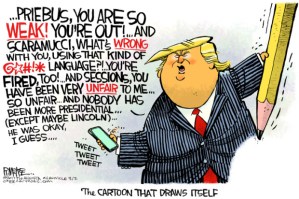
With all this insanity finally on public display, there is more public discussion of exactly how crazy Trump actually is.
Politico: Washington’s growing obsession: The 25th Amendment.
Lawmakers concerned about President Donald Trump’s mental state summoned Yale University psychiatry professor Dr. Bandy X. Lee to Capitol Hill last month for two days of briefings about his recent behavior.
In private meetings with more than a dozen members of Congress held on Dec. 5 and 6, Lee briefed lawmakers — all Democrats except for one Republican senator, whom Lee declined to identify. Her professional warning to Capitol Hill: “He’s going to unravel, and we are seeing the signs.”
In an interview, she pointed to Trump “going back to conspiracy theories, denying things he has admitted before, his being drawn to violent videos.” Lee also warned, “We feel that the rush of tweeting is an indication of his falling apart under stress. Trump is going to get worse and will become uncontainable with the pressures of the presidency.”
Lee, editor of “The Dangerous Case of Donald Trump,” which includes testimonials from 27 psychiatrists and mental health experts assessing the president’s level of “dangerousness,” said that she was surprised by the interest in her findings during her two days in Washington. “One senator said that it was the meeting he most looked forward to in 11 years,” Lee recalled. “Their level of concern about the president’s dangerousness was surprisingly high.”
Many of us, including Hillary Clinton and Barack Obama, saw the signs during the 2016 campaign and tried to raise alarms. Unfortunately, the media was too busy focusing on Hillary’s emails to notice that Russia was using active measures to infiltrate Trump’s campaign and make him POTUS. They convinced themselves that Trump could never win no matter how much they hammered Hillary. After he won, many of these “journalists” argued that Trump would “pivot” and suddenly begin acting like a normal, sane person.
And now here we are with an insane would-be tyrant in the While House and a Republican Party that refuses to put any kind checks on his power.
In honor of the “bomb cyclone” I give you Toots and the Maytals.
Lazy Saturday Reads: Trump Is Getting Boring. That Makes Him Even More Dangerous.
Posted: December 30, 2017 Filed under: morning reads, U.S. Politics | Tags: boring, cognitive decline, Donald Trump, evil, moron 50 Comments
Good Morning!!
Maybe it just the holiday blues, but I’m bored with Trump. I’m bored with with the advance of authoritarianism and outright fascism in the United States of America. It’s ugly as all get out and I’m sick and tired of it. After one year of this shit, I just want to resign from the human race. I guess that’s how it happens. The fascists wear you down until you just want to escape into books or music or art or anything that isn’t about Trump. Is this something like what Hanna Arendt meant by “the banality of evil?”
Of course I know I can’t escape Trumpism. I will continue to wake up every day fearful of what he might have done overnight, of what idiotic tweets he may have already sent out, of what evil deeds he may be plotting. I can’t let myself sink into despair.
Michael Gruenwald writes about Trump’s first year at Politico: Donald Trump Is a Consequential President. Just Not in the Ways You Think.
On January 20, 2017, as President Donald Trump began his inaugural address, a cold rain began to fall.
A few hours later, Trump claimed the rain had not begun to fall.
“The crowd was unbelievable today,” Trump crowed to revelers at the Liberty Inaugural Ball. “I looked at the rain, which just never came. You know, we finished the speech, went inside, and it poured!”
It wasn’t a consequential falsehood. And neither was Trump’s claim that his inaugural crowd was the largest ever, a whopper he sent his press secretary out to defend the next day in the face of overwhelming photographic evidence. Neither the meteorological conditions at his swearing-in nor the size of the audience that witnessed his swearing-in altered the remarkable fact that he had just been sworn in as the president of the United States. So why would the holder of the most powerful office on Earth insist on juicing his narrative with petty embellishments, especially when his propaganda could be so easily and objectively disproved?
In retrospect, it’s obvious that Trump was starting to construct an alternative reality for his supporters, establishing himself (rather than the “enemies of the people” in the “FAKE NEWS” media) as the only reliable source of truth. Really, it was pretty obvious at the time. Trump aide Kellyanne Conway was already spinning that the administration was helpfully supplying the media with “alternative facts.”
I wrote back in the Week One edition of the Did-It-Matter-Meter that the crowd-size episode “laid down a marker about the irrelevance of facts to this White House,” and “staked out new territory in Orwellian up-is-down-ism, forcing Americans to choose whether to believe Trump or their lying eyes.” A year later, Trump is still spinning an alternative reality in which he’s achieved more than any other first-year president, he doesn’t watch much TV, the Russia investigation is nothing but a partisan witch hunt, the successive defeats of both candidates he endorsed in a Senate race in Alabama actually demonstrated his immense popularity, the coal industry is coming back, Americans are finally free to say “Merry Christmas” without fear of persecution, and legislation that would slash taxes for the rich in general and real estate developers in particular would somehow hurt his bottom line. No matter how often the fact-checkers fact-check him, he sticks with his alternative facts.
And so it has continued. Is Trump doing this to our country as part of a deliberate plan or is it just who he is? I can’t help wondering when I hear and read his garbled words in interviews like the one with the New York Times a couple of days ago. I think he’s just behaving according to his fascist instincts, but maybe it doesn’t matter; because there are people around him who seem to be just as ignorant and just as evil, and for now they are making progress. Check out this video of a Republican lawmaker, Rep. Robert Pittenger of North Carolina.
https://twitter.com/amplifirenews_/status/946859622094139392
Where do the Republicans find these people and what kinds of people vote for them?
Back to the Politico article:
The most consequential aspect of President Trump—like the most consequential aspect of Candidate Trump—has been his relentless shattering of norms: norms of honesty, decency, diversity, strategy, diplomacy and democracy, norms of what presidents are supposed to say and do when the world is and isn’t watching. As I keep arguing in these periodic Trump reviews, it’s a mistake to describe his all-caps rage-tweeting or his endorsement of an accused child molester or his threats to wipe out “Little Rocket Man” as unpresidential, because he’s the president. He’s by definition presidential. The norms he’s shattered are by definition no longer norms. His erratic behavior isn’t normal, but it’s inevitably becoming normalized, a predictably unpredictable feature of our political landscape. It’s how we live now, checking our phones in the morning to get a read on the president’s mood. The American economy is still strong, and he hasn’t started any new wars, so pundits have focused a lot of their hand-wringing on the effect his norm-shattering will have on future leaders, who will be able to cite the Trump precedent if they want to hide their tax returns or use their office to promote their businesses or fire FBI directors who investigate them. But Trump still has three years left in his term. And the norms he’s shattered can’t constrain his behavior now that he’s shattered them.
If the big story of the Trump era is Trump and his unconventional approach to the presidency, two related substories will determine how the big story ends. The first is the intense personal and institutional pushback to Trump—from the otherwise fractious Democratic Party; the independent media; independent judges; special counsel Robert Mueller; advocates for immigrants, voting rights, the poor, the disabled, the environment and other #Resistance causes; and ordinary citizens, who have made Trump the least popular first-year president in the modern era.
The second substory is the sometimes grudging but consistent support—the critics call it complicity—that Trump has enjoyed from the Republicans who control Congress. The uneasy marriage of convenience between Trump and the congressional GOP explains his two big legislative victories, the confirmation of Supreme Court Justice Neil Gorsuch and last month’s $1.5 trillion tax cut. It also explains Capitol Hill’s see-no-evil approach to investigating activities that would have triggered endless outrage and probable impeachment hearings in a Hillary Clinton administration.
I hope you’ll go read the rest.
Dakinikat covered the NYT interview thoroughly yesterday, but I want to share a couple of reactions that came out yesterday.
John Harwood at CNBC: Trump displays delusions in his New York Times interview.
President Donald Trump says so many things that are untrue as to complicate attempts at explaining them. Did he know better? Was he uninformed? Should he be taken literally?
What made the president’s year-end New York Times interview notable was repetition of a particular brand of untruth. Even as his administration struggles with historic unpopularity and extraordinary dysfunction, Trump ascribes to himself qualities that surpass all predecessors – even reigning Republican icon Ronald Reagan.
Call them “delusions of omnipotence.”
Over and over during the 30-minute session, Trump cast his performance in terms so grandiose and extreme as to be self-evidently false. Taken together, his comments signaled an inability to grasp conditions in the country, the limitations of his own capacities and the nature of the office he holds.
 Harwood gives a number of specific examples. Here are the first three:
– He attributed his 2016 victory over Hillary Clinton to skill in overcoming the pro-Democratic tilt of the Electoral College. There is no such tilt. The electoral college system provides a path to victory for the party losing the popular vote. Republicans lost six of the last seven popular votes in presidential contests, but they won the Electoral College in two of those six instances.
– He insisted his Democratic adversaries on Capitol Hill have absolved him of “collusion” with Russia on election interference. They have not. They have said they haven’t yet seen conclusive evidence from Congressional and Justice Department investigations that remain ongoing.
– He declared, “I have absolute right to do what I want with the Justice Department.” He does not. He holds executive branch authority over the Justice Department, but under America’s constitutional system, executive power is not absolute and no one is above the law.
Click on the CNBC link to read more.
Ezra Klein: Incoherent, authoritarian, uninformed: Trump’s New York Times interview is a scary read.
The president of the United States is not well. That is an uncomfortable thing to say, but it is an even worse thing to ignore.
Consider the interview Trump gave to the New York Times on Thursday. It begins with a string of falsehoods that make it difficult to tell whether the leader of the free world is lying or delusional. Remember, these are President Donald Trump’s words, after being told a recording device is on:
Virtually every Democrat has said there is no collusion. There is no collusion. And even these committees that have been set up. If you look at what’s going on — and in fact, what it’s done is, it’s really angered the base and made the base stronger. My base is stronger than it’s ever been. Great congressmen, in particular, some of the congressmen have been unbelievable in pointing out what a witch hunt the whole thing is. So, I think it’s been proven that there is no collusion.
It almost goes without saying that literally zero congressional Democrats have said that there was no collusion between Russia and the Trump campaign during the 2016 election. Zero….
Nor is Trump’s base strengthening, or even holding steady. In a detailed analysis of Trump’s poll numbers, FiveThirtyEight’s Harry Enten concluded that the president is losing the most ground in the reddest states:
In states where Trump won by at least 10 points, his net approval rating is down 18 percentage points, on average, compared to his margin last November. In states that were decided by 10 points or less in November, it’s down only 13 points. And it’s down 8 points in states Clinton carried by at least 10 points.
The fact that Trump has lost the greatest number of supporters in red states is perhaps the clearest indication yet that he is losing ground among some form of his base, if you think of his base as those who voted for him in November.
CNN took a different angle on the same question and also found slippage among Trump’s base. It looked at the change in Trump’s approval ratings from February to November among the demographic groups that formed the core of Trump’s electoral coalition — in every group, there’d been substantial declines. Trump’s numbers have fallen by 8 points among Republicans, by 9 points among voters over 50, by 10 points among whites with no college, by 17 points among white evangelicals. “It has become increasingly clear that even his base is not immune to the downward pressure,” CNN concluded.
Head over to Vox to read the rest.
NOTE: The cartoons in this post are by Ann Telnaes of The Washington Post.
It appears that we have a “president” who is both evil and cognitively dysfunctional. For now, it’s up to the Republicans in Congress to hold him in check and they’re not doing it. There’s a good chance the Democrats will be able to take over Congress in 2018, but can we last another year with Trump in charge? I hope we get through it, that’s all I can say.
What stories are you following?
Thursday Reads
Posted: December 28, 2017 Filed under: morning reads, U.S. Politics | Tags: Al Franken, Anna Wintour, Donald Trump, Hillary Clinton, knitting, lying liars, Michael Flynn, misogyny, moral panic, pussy hats, record cold weather, Roy Moore, Sexism, Sexual harassment, The Dotard, Vanity Fair 47 Comments
Good Morning!!
It was 3 degrees in my town when I woke up, and the high today will be 10 degrees with a wind chill up to 27 below 0. The previous record for the Boston area was 18 degrees in 1924. I’m not budging outside until the temperature gets up to at least 20 degrees.
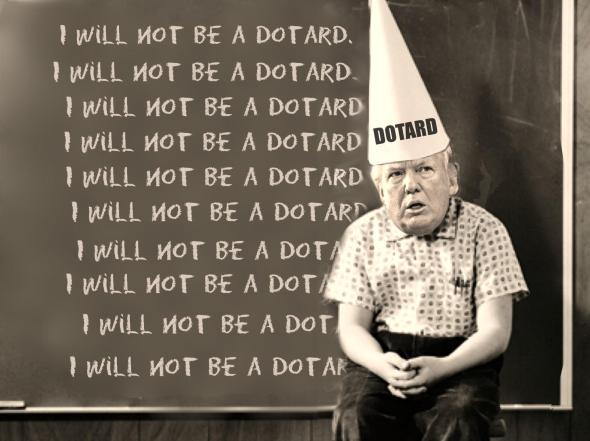
In the news, the ugly old dotard is golfing again, so I thought we might have some peace for a few hours, but he found time to send out an idiotic tweet.
The moron doesn’t know that the new editor of Vanity Fair is Radhika Jones. Anna Wintour is the editor of Vogue. Daughter Ivanka probably knows that, but the moron was on the golf course and couldn’t ask her.
Meanwhile Vanity Fair is still dealing with the aftermath of their millennial editors’ insulting advice to Hillary Clinton, who was just voted the most admired woman for the 16th year in a row.
https://twitter.com/Nini_Beaux/status/946390074345668608
So many young “journalists” can’t seem to wrap their heads around the fact that Hillary got nearly 3 million more votes than the dotard or that she has stated clearly that she is not going to run for political office again.
Up in Minnesota, where it’s much colder than it is here, people don’t want Al Franken to resign.
Public Policy Polling: Minnesotans Don’t Think Franken Should Resign; Franken Remains Popular, Especially With Women.
-50% of voters think he should not resign, to only 42% who think he should go through with his planned resignation. There is little appetite from Democratic voters at the state level for Franken to go, with 71% opposing his departure. A majority of independents- 52%- as well think he should not resign, with just 41% favoring his exit.
-Franken remains well above average in popularity for a Senator, with 53% of voters approving of the job he’s doing to 42% who disapprove. PPP rarely finds Senators with majority approval in their home states. Franken’s continued popularity is being driven especially by women. 57% of them like the job he’s doing to 37% who don’t. By contrast Donald Trump stands at 40/58 with women in the state.
-Minnesotans don’t like how the process with Franken’s resignation has played out. 60% think the Senate Ethics Committee should have completed its investigation (including 79% of Democrats and 61% of independents) before any decision was made about Franken’s future, while only 35% think he should resign immediately. Beyond that 76% of Minnesota voters think their voices should have been more important in determining whether Franken stayed in the Senate or not, to only 12% who think that should have been determined more by his fellow Senators in Washington.
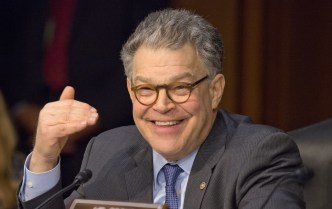 I said awhile back that I thought the rush equate the past inappropriate behavior of men like Franken would lead to a backlash against women that will hurt the cause of fighting sexual harassment and sexual assault. I still believe that. I want to share two articles on the subject that I read yesterday. I don’t agree with everything in them, but I think they are making important points.
Feminist psychologist Carol Tavris writes at The Skeptic: I, Too, Am Thinking About Me, Too.
Our whole country is living in a constant state of hyper-dissonance: “my political candidate/my most admired actor/a brilliant artist/my dear friend has been accused of sexual abuses and misconduct; how do I cope with this information? Do I support him/see his movies/enjoy his art/keep the friendship or must I repudiate him entirely?” Living with dissonance and complexity is not easy, but surely skeptics, of all people, must try. We hear a story that outrages us and, just like true believers and justice warriors of any kind, we’re off and running, and once we are off and running we don’t want to hear quibbles, caveats, doubts, complexities. Thus, when the Guardian (Dec. 17, 2017) reported Matt Damon’s remarks that there was “a difference between patting someone on the butt and rape or child molestation. Both of those behaviours need to be confronted and eradicated without question, but they shouldn’t be conflated,” Minnie Driver blasted him: it’s not for men to make distinctions; “there is no hierarchy of abuse”; men should just shut up for once. “If good men like Matt Damon are thinking like that then we’re in a lot of fucking trouble,” she said. “We need good intelligent men to say this is all bad across the board, condemn it all and start again.”
No hierarchy of abuse? Really? That is one of the universal symptoms of revolutionary zealotry: go for broke, ignore gradations of villainy, who cares if some innocents are thrown over the side, we are furious and we want everything at once. No wonder those of us in the boring older generation, who have lived through cycles of anger and protest, are so annoying. “Wait!” we keep saying. “Be careful! Remember the stupidity of ‘zero tolerance’ programs in schools, where a kid who brings a pocket knife for show-and- tell, or a 6-year-old boy who kisses a 6-year-old girl, got expelled?” We have also learned that while there is a time and place for revolutionary zealotry, the hardest challenge comes next, because change will not be accomplished without allies.
While many celebrate the courage of the accusers who are coming forth to tell their stories, let’s keep in mind that in today’s climate it also requires courage to raise dissonance-producing dissent.
 Tavris refers to a piece by Claire Berlinski at The National Interest: The Warlock Hunt. Berlinski argues that “The #MeToo moment has now morphed into a moral panic that poses as much danger to women as it does to men.” I hope you’ll read the whole thing, but here’s an excerpt:
Among us, it seems, lives a class of men who call to mind Caligula and Elagabalus not only in their depravity, but in their grotesque sense of impunity. Our debauched emperors, whether enthroned in Hollywood, media front offices, or the halls of Congress, truly imagined their victims had no choice but to shut up, take it, and stay silent forever. Many of these men are so physically disgusting, too—the thought of them forcing themselves on young women fills me with heaving disgust. Enough already. Check out the latest news about satellite media tour here.
All true; yet something is troubling me. Recently I saw a friend—a man—pilloried on Facebook for asking if #metoo is going too far. “No,” said his female interlocutors. “Women have endured far too many years of harassment, humiliation, and injustice. We’ll tell you when it’s gone too far.” But I’m part of that “we,” and I say it is going too far. Mass hysteria has set in. It has become a classic moral panic, one that is ultimately as dangerous to women as to men.
If you are reading this, it means I have found an outlet that has not just fired an editor for sexual harassment. This article circulated from publication to publication, like old-fashioned samizdat, and was rejected repeatedly with a sotto voce, “Don’t tell anyone. I agree with you. But no.” Friends have urged me not to publish it under my own name, vividly describing the mob that will tear me from limb to limb and leave the dingoes to pick over my flesh. It says something, doesn’t it, that I’ve been more hesitant to speak about this than I’ve been of getting on the wrong side of the mafia, al-Qaeda, or the Kremlin?
But speak I must. It now takes only one accusation to destroy a man’s life. Just one for him to be tried and sentenced in the court of public opinion, overnight costing him his livelihood and social respectability. We are on a frenzied extrajudicial warlock hunt that does not pause to parse the difference between rape and stupidity. The punishment for sexual harassment is so grave that clearly this crime—like any other serious crime—requires an unambiguous definition. We have nothing of the sort.
Again, I want to emphasize that I disagree with some of Berlinski’s arguments; nevertheless, her article is worth reading. As I said before, I’m afraid the “Me Too” movement is going to end up backfiring on women.
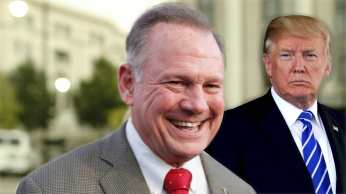 In political news, Roy Moore refuses to go away. David Wiegel reports: Roy Moore asks Alabama court for a new Senate election.
Roy Moore, the Republican nominee who lost Alabama’s closely watched Senate race this month, has filed a last-minute legal complaint alleging “election fraud” and asking the state not to confirm the victory of Democrat Doug Jones.
In the complaint filed in state court, Moore’s campaign argues that Alabama “will suffer irreparable harm if the election results are certified without preserving and investigating all the evidence of potential fraud.” It cites rumors of election fraud that have already been investigated and refuted by the Alabama secretary of state, argues that high Democratic turnout in key areas was statistically unlikely, and reports that Moore himself has taken a polygraph test — an attempt to disprove allegations that he made unwanted sexual advances on teenagers when he was in his 30s.
Moore’s lawyers filed the complaint at 10:33 p.m. Wednesday night and announced it to reporters less than two hours later. At 1 p.m. Thursday, Alabama’s election officials — all Republicans — are scheduled to certify the election. Early Thursday morning, they gave no indication that they would delay that process. In Washington, leaders of both parties expect Jones to take his oath of office when the Senate returns next month.
This is the man the dotard insisted on supporting in the Alabama special Senate election.
Last night, we learned that Trump and his gang plan to paint Michael Flynn as a liar if he testifies that Trump or his gang “engaged in wrongdoing.” A liar calling another liar a liar doesn’t sound like a very convincing defense. Plus the dotard swore again and again that Flynn was a fine man who was treated unfairly.
New York Magazine: If Flynn Is Just a Liar, Why Did Trump Keep Defending Him?
As we’ve seen with Paul Manafort and George Papadopoulos, Trump’s default position is to downplay his relationship with any former associates who happen to be indicted by special counsel Robert Mueller’s team. However, it’s harder to distance yourself from a former top White House official who memorably led a “lock her up” chant on the first night of your nominating convention.
The leniency of Flynn’s plea agreement suggests that he’s promised Mueller’s team valuable information, so Trump’s team has come up with another strategy. The Washington Postreports: “President Trump’s legal team plans to cast former national security adviser Michael T. Flynn as a liar seeking to protect himself if he accuses the president or his senior aides of any wrongdoing, according to three people familiar with the strategy.” As one person working on the plan put it, “He’s said it himself: He’s a liar.”
Who are you going to believe, an admitted liar or the president of the United States? sounds like a logical defense until you plug in what we know about this particular president, and his relationship with the liar in question. Aside from the hypocrisy of Trump attacking anyone for misstating the truth, the plan revives questions about why the president went out of his way to defend Flynn, even after he fired him for lying.
In the days after Trump asked for Flynn’s resignation, he said he had to go because he misled Vice-President Mike Pence about his conversations with then-Russian ambassador Sergey Kislyak during the transition. However, Trump argued that by making those calls Flynn was just “doing his job,” and stressed that he still considered him a man of fine character.
That’s all I’ve got for you today. I know there’s lots more news, but I’m ignoring it for the moment. What stories are you following?
Tuesday Reads: Looking Back and Looking Forward
Posted: December 26, 2017 Filed under: Afternoon Reads, Foreign Affairs, U.S. Politics | Tags: democracy, Donald Trump, Ivanka Trump, journalism, media, money laundering, Russia, Twitter 32 Comments
Breton Children Reading, Emile Vernon, 1913
Good Afternoon!!
Thank goodness the “holidays” are almost over now, and soon a new year will begin. What will 2018 bring? Will Trump continue his goal of destroying democracy or will we somehow manage to keep it alive? First we have to get through the journalistic ritual of looking back over the year that is ending.
Eugene Robinson posted his evaluation of 2017 last night: Trump’s first year was even worse than feared.
Grit your teeth. Persevere. Just a few more days and this awful, rotten, no-good, ridiculous, rancorous, sordid, disgraceful year in the civic life of our nation will be over. Here’s hoping that we all — particularly special counsel Robert S. Mueller III — have a better 2018.
Many of us began 2017 with the consoling thought that the Donald Trump presidency couldn’t possibly be as bad as we feared. It turned out to be worse.
Did you ever think you would hear a president use the words “very fine people” to describe participants in a torch-lit rally organized by white supremacists, neo-Nazis and the Ku Klux Klan? Did you ever think you would hear a U.S. ambassador to the United Nations thuggishly threaten that she would be “taking names” of countries that did not vote on a General Assembly resolution the way she wanted? Did you ever think the government of the world’s biggest military and economic power would reject not just science but also empiricism itself, preferring to use made-up “alternative facts” as the basis for major decisions?
We knew that Trump was narcissistic and shallow, but on Inauguration Day it was possible to at least hope he was self-aware enough to understand the weight that now rested on his shoulders, and perhaps grow into the job. He did not. If anything, he has gotten worse.
Read the rest at The Washington Post.
Paul Krugman still has hope: America Is Not Yet Lost.
Auguste reading to her daughter, by Mary Cassatt
Donald Trump has been every bit as horrible as one might have expected; he continues, day after day, to prove himself utterly unfit for office, morally and intellectually. And the Republican Party — including so-called moderates — turns out, if anything, to be even worse than one might have expected. At this point it’s evidently composed entirely of cynical apparatchiks, willing to sell out every principle — and every shred of their own dignity — as long as their donors get big tax cuts.
Meanwhile, conservative media have given up even the pretense of doing real reporting, and become blatant organs of ruling-party propaganda….
What we’ve seen instead is the emergence of a highly energized resistance. That resistance made itself visible literally the day after Trump took office, with the huge women’s marches that took place on Jan. 21, dwarfing the thin crowds at the inauguration. If American democracy survives this terrible episode, I vote that we make pink pussy hats the symbol of our delivery from evil….
Let’s be clear: America as we know it is still in mortal danger. Republicans still control all the levers of federal power, and never in the course of our nation’s history have we been ruled by people less trustworthy.
This obviously goes for Trump himself, who is clearly a dictator wannabe, with no respect whatsoever for democratic norms. But it also goes for Republicans in Congress, who have demonstrated again and again that they will do nothing to limit his actions. They have backed him up as he uses his office to enrich himself and his cronies, as he foments racial hatred, as he attempts a slow-motion purge of the Justice Department and the F.B.I.

I count it as a good sign that journalists are coming right out and calling Trump a wannabe dictator. Also a good sign: both Robinson and Krugman acknowledge that if we are to survive Trump, women’s leadership will be the reason. How ironic that a woman had to be excoriated and mocked by abusive male journalists for this awakening of women’s power to happen.

Jan Van Eyck – Madonna with the Child Reading (1433)
It’s also a good sign that journalists finally recognized the Russian threat, although this only happened after a monster was installed as POTUS. Yesterday The Washington Post published a breathtaking analysis of what the Russians accomplished last year and the danger they still pose to our democracy: Kremlin trolls burned across the Internet as Washington debated options. Here’s a brief excerpt; please go read the whole thing if you haven’t already.
The events surrounding the FBI’s NorthernNight investigation follow a pattern that repeated for years as the Russian threat was building: U.S. intelligence and law enforcement agencies saw some warning signs of Russian meddling in Europe and later in the United States but never fully grasped the breadth of the Kremlin’s ambitions. Top U.S. policymakers didn’t appreciate the dangers, then scrambled to draw up options to fight back. In the end, big plans died of internal disagreement, a fear of making matters worse or a misguided belief in the resilience of American society and its democratic institutions.
One previously unreported order — a sweeping presidential finding to combat global cyberthreats — prompted U.S. spy agencies to plan a half-dozen specific operations to counter the Russian threat. But one year after those instructions were given, the Trump White House remains divided over whether to act, intelligence officials said….
The miscalculations and bureaucratic inertia that left the United States vulnerable to Russia’s interference in the 2016 presidential electiontrace back to decisions made at the end of the Cold War, when senior policymakers assumed Moscow would be a partner and largely pulled the United States out of information warfare. When relations soured, officials dismissed Russia as a “third-rate regional power” that would limit its meddling to the fledgling democracies on its periphery.
Senior U.S. officials didn’t think Russia would dare shift its focus to the United States.
“I thought our ground was not as fertile,” said Antony J. Blinken, President Barack Obama’s deputy secretary of state. “We believed that the truth shall set you free, that the truth would prevail. That proved a bit naive.”
Much more at the WaPo link.
From former CIA Deputy Director and Acting Director Michael Morrell: Russia never stopped its cyberattacks on the United States.
Every first-year international-relations student learns about the importance of deterrence: It prevented a Soviet invasion of Western Europe during the height of the Cold War. It prevented North Korea from invading South Korea in the same time frame. Today, it keeps Iran from starting a hot war in the Middle East or other nations from initiating cyberattacks against our infrastructure.
The Reader, by Federico Zandomeneghi (Italian, 1841)
And yet, the United States has failed to establish deterrence in the aftermath of Russia’s interference in the 2016 election. We know we failed because Russia continues to aggressively employ the most significant aspect of its 2016 tool kit: the use of social media as a platform to disseminate propaganda designed to weaken our nation.
There is a perception among the media and general public that Russia ended its social-media operations following last year’s election and that we need worry only about future elections. But that perception is wrong. Russia’s information operations in the United States continued after the election and they continue to this day.
This should alarm everyone — Republicans, Democrats and independents alike. Foreign governments, overtly or covertly, should not be allowed to play with our democracy.

Read about the continuing threats from Russia at the WaPo link.
At the Columbia Journalism Review, Jonathan Peters reports on the work of NYT master’s student to examine Trump’s Twitter attacks on the media.
Trump’s prolificacy on Twitter is well documented, and some of his press-related tweets have captured vast public attention. For example, Trump tweeted in July a doctored video in which he wrestled a man whose head had been replaced by the CNN logo. It got hundreds of thousands of retweets.
Off Twitter, of course, Trump has waged a rhetorical war on the press, threatening to sue various newspapers and calling journalists “the most dishonest human beings on Earth,” all while characterizing as “fake news” any story he dislikes.
That’s what prompted an NYU master’s student to start tracking Trump’s tweets critical of the press. “I took it on as a labor of love and hate, and I suffered through his tweets every few days to log them,” says Stephanie Sugars, who is pursuing a joint MA in journalism and international relations. “It seemed important to maintain a record of what has appeared to be a deliberate and sustained campaign to discredit the media as an institution.”
By Zulia Gotay de Anderson
Sugars was working as a researcher at the Committee to Protect Journalists last spring when she created the Trump-tweet spreadsheet that she recently shared with me. She was helping to launch a website that documents press freedom incidents in the US. (CJR is a partner.) Originally, she and others at CPJ thought it would include not only arrests and equipment seizures but also anti-press social media posts.
“That just wasn’t manageable,” Sugars says. “We decided to pare the site back and not focus on tweets. I kept up with the spreadsheet, though, and continued to add to it, even after leaving [CPJ] when my term as a researcher there ended.”

Peters then assigned his students a the University of Georgia to “review the spreadsheet and to help me identify notable items and trends in the data.” Read the rest at the CJR link to see the results.
One more interesting read: could Ivanka be in trouble with the law? GQ: Ivanka Trump’s Old Jewelry Business Is Now Caught Up in an Alleged Fraud Scheme. Author Ben Schreckenger begins by asking, “Why do people looking to launder money seem to find Trump family businesses so appealing?”
Throw a dart at a map of the world and there’s a solid chance it will land near a spot where a Trump family business has allegedly gotten caught up in a money laundering scheme.
There’s Panama, where the Trump Ocean Club is said to have washed dirty cash for Russian gangsters and South American drug cartels. There’s Azerbaijan and the Trump Baku, where the money allegedly being laundered was said to belong to Iran’s Revolutionary Guard. And of course, there’s the Trump Soho in Manhattan, a magnet for money from Kazakhstan and Russia, and a property that one former executive on the project now calls “a monument to spectacularly corrupt money-laundering and tax evasion.”
In each of those cases, the Trump Organization has denied any wrongdoing and has sought to distance itself—and the Trump family—from the property, saying they merely licensed the Trump name. But as it turns out, it’s not just Trump-branded real estate developments that perhaps have attracted the wrong kinds of money.
Thanks to an overlooked filing made in federal court this past summer, we can now add a jewelry business to the list of Trump family enterprises that allegedly served as vehicles to fraudulently hide the assets of ultra-rich foreigners with checkered backgrounds. In late June, the Commercial Bank of Dubai sought—and later received—permission to subpoena Ivanka Trump’s now-defunct fine jewelry line, claiming its diamonds were used in a massive scheme to hide roughly $100 million that was owed to the bank, according to filings at the U.S. District Court for the Southern District of New York.
Read the rest at GQ.
What else is happening? What stories are you following today?

 peej
peej Carissa
 bostonboomer
 dakinikat
 ecocatwoman
 jjlo
jjlo mablue2
 Mama Lopez
 peggysue22
 quixote
 skydancingguestblogger
 Mona (aka Wonk the Vote)





Recent Comments