
Thursday Reads: Russia Investigation Cover Up Live Blog/Open Thread
Posted: April 18, 2019 Filed under: morning reads, U.S. Politics | Tags: Barr Cover-Up Report, Donald Trump, live blog, open thread, Robert Mueller muzzled, Russia investigation, William Barr 54 Comments
Cover-up bunny
Good Morning!!
The Barr cover-up report reportedly will go public sometime today. The schedule is vague. At 9:30, Cover-Up General Barr plans to give a “press conference” about a report that no one except unknown DOJ officials and White House lawyers have read.
Yes, according the NYT, the White House has been briefed and very likely has had the full report for some time. In addition, DOJ attorneys have been helping the White House prepare their counter-report!
The New York Times: White House and Justice Dept. Officials Discussed Mueller Report Before Release.
Not all of Robert S. Mueller III’s findings will be news to President Trump when they are released Thursday.
Justice Department officials have had numerous conversations with White House lawyers about the conclusions made by Mr. Mueller, the special counsel, in recent days, according to people with knowledge of the discussions. The talks have aided the president’s legal team as it prepares a rebuttal to the report and strategizes for the coming public war over its findings.
Cover-up pup
A sense of paranoia was taking hold among some of Mr. Trump’s aides, some of whom fear his backlash more than the findings themselves, the people said. The report might make clear which of Mr. Trump’s current and former advisers spoke to the special counsel, how much they said and how much damage they did to the president — providing a kind of road map for retaliation.

Reporters should use the “press conference” to ask Barr about his past cover-ups, his connections to Russia, his conflicts of interest, and his general corruption. They won’t, of course. They also should not refer to whatever redacted mess the Cover-Up General releases as the Mueller Report, but of course they will do just that.
We have to keep reminding ourselves that it’s not the Mueller report; it’s the Barr report. If Robert Mueller wanted to endorse Barr’s cover-up, he would be appearing at the “press conference.” But his isn’t going to be there. Mueller has been muzzled.
Tom Scocca at Hmm Daily: It’s the Barr Report, Not the Mueller Report.
What could inspire more hope and despair than a whole bunch of people who messed something up being granted a do-over? Tomorrow, all the reporters and publications who gave Donald Trump his “MUELLER FINDS NO COLLUSION” headlines, based on a few sentence fragments in a letter from attorney general William Barr, are supposed to get another document to analyze and quickly write headlines about.
Cover-up kitty
Already, journalists are calling this document “the Mueller report.” It is not the Mueller report; that is, it will not be the report prepared by the special counsel investigating Russian election interference and the Trump campaign. It will be some other document. Its text, like the quotes used in the Barr letter, will be based on the text of the Mueller report, but it will have been edited down for release by William Barr, whose implicit and explicit theory of his job duties is that he is there to protect the president.
This isn’t speculation. It’s a description of what’s publicly known about the process, informed by Barr’s prior work with the Mueller report, his written record of his own thoughts on presidential immunity, and his history as a middleman in previous scandal coverage. Barr is a partisan, not a broker of facts, and it is a basic reporting error to treat material that’s passed through his control as definitive—a basic reporting error that major media outlets eagerly made, last time around.

The Daily Beast: Mueller Report Rollout Won’t Have Mueller.
The Justice Department will hold a press conference Thursday morning about the release of Special Counsel Robert Mueller’s report—but Mueller won’t be there and the document may not be released until after Attorney General William Barr speaks about the nearly 400 pages he went through to redact.
The House Judiciary Committee has been told it will not get the Mueller report from DOJ until 11 a.m. or noon—after Barr’s press conference scheduled for 9:30 a.m.
“They are making Al Capone look straight,” one committee member told The Daily Beast.
House Judiciary Chairman Jerry Nadler ripped Barr’s plan to speak about the report before lawmakers, the media and public have a chance to review it.
“Rather than letting the facts of the report speak for themselves, the attorney general has taken unprecedented steps to spin Mueller’s nearly two-year investigation,” Nadler said at a press conference on Wednesday night.
“The Attorney General appears to be waging a media campaign on behalf of President Trump, the very subject of the investigation at the heart of the Mueller report,” he added.
If the report is heavily redacted, Nadler said, “we will most certainly issue the subpoenas in very short order.” He said they “will probably find it useful” to ask Mueller and members of his team to testify.
Just send out the subpoenas as soon as you get the report. No more fooling around.
Axios insists on calling the Barr Report “the Mueller Report.”
Mueller report: What witnesses expect ahead of its release
Mueller witnesses and their lawyers say that they expect the special counsel’s report to include a mass of detailed scenes in which President Trump lashed out about Mueller, Jeff Sessions, Rod Rosenstein and the FBI.
The big picture: They believe that if Mueller’s report presents the material in the same relentlessly detailed way as his prosecutors asked the questions, the accumulation could lead a casual observer to think that the president tried to obstruct justice.
Show less




Lazy Caturday Reads: A Bit of News and Some Fascinating Long Reads
Posted: April 6, 2019 Filed under: Afternoon Reads, U.S. Politics, Women's Rights | Tags: Bill Barr, Casimir Pulaski, dinosaurs, DNA, Donald Trump, Hell Creek, Jones Day, mass extinction, Mueller report, North Dakota, paleontology, Paul Manafort, Redoshi, Robert De Palma, Roger Stone, Sexual harassment, slave ships, slavery, terrorism, White extremists 15 Comments
The cat’s lunch, Pierre Bonnard, circa 1906
Good Afternoon!!
I’m sick to death of politics right now, but I don’t want to completely ignore it either. So today I’ll begin with a few of today’s news stories and then I’m going to recommend some interesting long reads that I’ve enjoyed this week.
Harry Litman at The Washington Post: Release the Mueller team’s summaries. Now.
In the (so far) quiet war of words between the Barr and Mueller camps, we have learned that the special counsel’s report was prepared with summaries of each section that were designed purposely for quick delivery to Congress. These summaries have been scrubbed of all or nearly all controversial material and, therefore, consist of Mueller’s analyses and conclusions without disclosing the supporting, potentially confidential, evidentiary material.
‘Company’ by English painter & illustrator Ophelia Redpath (b.1965)
The summaries should be released to the Congress and the public. While some at the Justice Department assert that the materials are marked as containing grand jury material, we know from Mueller’s team that they were prepared for the purpose of quick release. It, therefore, stands to reason that any problematic material they contain could be removed in short order. They are core explanations of Mueller’s work, which the public has been hungry to learn about — and which Mueller intended the public to have.
Rep. Jerrold Nadler (D-N.Y.), the Judiciary Committee chairman, should set to the side for one day the maneuverings over grand jury material and other redactions. The Justice Department should similarly reserve its prerogative to fight over these materials in court. For today, all parties should agree immediately to produce the summaries of Mueller’s work that would greatly illuminate the currently obscured special counsel’s report.

Marcy Wheeler at The Washington Post: We already knew Barr’s summary was too easy on Trump. Public records prove it.
When Attorney General William P. Barr released a four-page memo two weeks ago opining that “the evidence developed during the Special Counsel’s investigation is not sufficient to establish that the President committed an obstruction-of-justice offense,” we already knew enough to be sure that Barr was spinning the contents of the report his memo claimed to summarize, as multiple reports now say he did.
Girl with Cat, by Lotte Laserstein, 1898-1993, was a German-Swedish painter and portraitist
That’s because there was already public evidence at the time that undermined Barr’s conclusions. Barr’s letter may have been accurate, technically speaking. But based on what it omitted about two key associates of President Trump — his longtime adviser Roger Stone and his former campaign chairman, Paul Manafort — it was obvious that the attorney general had left whole areas of special counsel Robert S. Mueller III’s findings out of the summary. That Mueller’s team thinks Barr made the investigation’s findings look less damaging to Trump should not come as a surprise.

For example, the indictment of Roger Stone, who isn’t mentioned in Barr’s “summary.”
When Attorney General William P. Barr released a four-page memo two weeks ago opining that “the evidence developed during the Special Counsel’s investigation is not sufficient to establish that the President committed an obstruction-of-justice offense,” we already knew enough to be sure that Barr was spinning the contents of the report his memo claimed to summarize, as multiple reports now say he did.
That’s because there was already public evidence at the time that undermined Barr’s conclusions. Barr’s letter may have been accurate, technically speaking. But based on what it omitted about two key associates of President Trump — his longtime adviser Roger Stone and his former campaign chairman, Paul Manafort — it was obvious that the attorney general had left whole areas of special counsel Robert S. Mueller III’s findings out of the summary. That Mueller’s team thinks Barr made the investigation’s findings look less damaging to Trump should not come as a surprise.
Read more examples at the WaPo.
Think Progress: Lawsuit alleges utterly flabbergasting sexism at law firm closely associated with Donald Trump.
By Suzanne Valadon (French, 1865-1938) Jeune Fille au Chat
A $200 million lawsuit filed against a law firm closely associated with President Donald Trump alleges that the firm fostered a “fraternity culture” featuring heavy drinking, an overbearing male leader, and sexism that was often so absurd it reads like something out of a gross-out comedy from the 1980s.
The suit against Jones Day, a 2,500 lawyer firm that played a significant role in placing Trump in the White House — the Trump campaign paid Jones Day $3.3 million in legal fees according to a 2017 report — alleges a culture where women attorneys were denied promotions despite exemplary work, excluded from mentoring opportunities afforded to male associates, asked to leave the firm after taking maternity leave, and subjected to cruel and sexist jokes by male colleagues.
Trump appointed numerous Jones Day lawyers to high-level positions within his administration, including Solicitor General Noel Francisco, former White House Counsel Don McGahn, and the two highest ranking attorneys in the Justice Department’s Civil Rights Division. Trump also appointed two former Jones Day partners to federal appellate judgeships.
At one event hosted by a Jones Day partner, the complaint alleges that a male summer associate (“summer associate” is the title typically given to highly paid law students who work at a firm during their summer vacation) pushed a female colleague into the partner’s swimming pool while the woman was wearing a white dress. According to the complaint, “the male summer associate who pushed her was applauded and high-fived by the Firm’s summer associate committee and leadership rather than reprimanded.”
In another incident, a partner allegedly “demanded that three female summer associates sing and dance to a Care Bears song (an event captured on video).” These three summer associates were allegedly told that they must humiliate themselves in this way “to receive verbal offers to join the Firm as associates.”
During a limo ride to a firm event, male Jones Day lawyers allegedly played a game called “Fuck, Marry, Kill,” in which they “named coworkers from the office and proposed to whom they would do each of these things.” At the event itself, a male associate allegedly “called several of his female colleagues ‘cunts,’” yet the lawsuit claims that he remains employed by the firm.

More disgusting allegations at the link.
Now for those longer reads:
This one is political. The New York Times, April 3: Attacks by White Extremists Are Growing. So Are Their Connections.
Léonard Tsugouharu Foujita (aka 藤田 嗣治, Fujita Tsuguharu) 1950s Self Portrait
In a manifesto posted online before his attack, the gunman who killed 50 last month in a rampage at two mosques in Christchurch, New Zealand, said he drew inspiration from white extremist terrorism attacks in Norway, the United States, Italy, Sweden and the United Kingdom.
His references to those attacks placed him in an informal global network of white extremists whose violent attacks are occurring with greater frequency in the West.
An analysis by The New York Times of recent terrorism attacks found that at least a third of white extremist killers since 2011 were inspired by others who perpetrated similar attacks, professed a reverence for them or showed an interest in their tactics.
The connections between the killers span continents and highlight how the internet and social media have facilitated the spread of white extremist ideology and violence.
In one instance, a school shooter in New Mexico corresponded with a gunman who attacked a mall in Munich. Altogether, they killed 11 people.

Please go read the whole thing. I think this is an important story. How are these white supremacist networks any different from the on-line “radicalization” of Islamic terrorists? The interest has made it much easier for crazy people to find and communicate with others like them.
The New Yorker: The Day the Dinosaurs Died, by Douglas Preston
I loved this article! I can’t possibly do it justice with a few excerpts. It’s about a paleontology grad student, Robert De Palma, and his discovery of a rich fossil bed in North Dakota that may shed light on the rapid extinction of dinosaurs. Here’s a taste:
By Zviad Gogolauri
On August 5, 2013, I received an e-mail from a graduate student named Robert DePalma. I had never met DePalma, but we had corresponded on paleontological matters for years, ever since he had read a novel I’d written that centered on the discovery of a fossilized Tyrannosaurus rex killed by the KT impact. “I have made an incredible and unprecedented discovery,” he wrote me, from a truck stop in Bowman, North Dakota. “It is extremely confidential and only three others know of it at the moment, all of them close colleagues.” He went on, “It is far more unique and far rarer than any simple dinosaur discovery. I would prefer not outlining the details via e-mail, if possible.” He gave me his cell-phone number and a time to call.
I called, and he told me that he had discovered a site like the one I’d imagined in my novel, which contained, among other things, direct victims of the catastrophe. At first, I was skeptical. DePalma was a scientific nobody, a Ph.D. candidate at the University of Kansas, and he said that he had found the site with no institutional backing and no collaborators. I thought that he was likely exaggerating, or that he might even be crazy. (Paleontology has more than its share of unusual people.) But I was intrigued enough to get on a plane to North Dakota to see for myself.
DePalma’s find was in the Hell Creek geological formation, which outcrops in parts of North Dakota, South Dakota, Montana, and Wyoming, and contains some of the most storied dinosaur beds in the world. At the time of the impact, the Hell Creek landscape consisted of steamy, subtropical lowlands and floodplains along the shores of an inland sea. The land teemed with life and the conditions were excellent for fossilization, with seasonal floods and meandering rivers that rapidly buried dead animals and plants.
Ludwig Kohrl (1858-1927)
The Hell Creek Formation spanned the Cretaceous and the Paleogene periods, and paleontologists had known for at least half a century that an extinction had occurred then, because dinosaurs were found below, but never above, the KT layer. This was true not only in Hell Creek but all over the world. For many years, scientists believed that the KT extinction was no great mystery: over millions of years, volcanism, climate change, and other events gradually killed off many forms of life. But, in the late nineteen-seventies, a young geologist named Walter Alvarez and his father, Luis Alvarez, a nuclear physicist, discovered that the KT layer was laced with unusually high amounts of the rare metal iridium, which, they hypothesized, was from the dusty remains of an asteroid impact. In an article in Science, published in 1980, they proposed that this impact was so large that it triggered the mass extinction, and that the KT layer was the debris from that event. Most paleontologists rejected the idea that a sudden, random encounter with space junk had drastically altered the evolution of life on Earth. But as the years passed the evidence mounted, until, in a 1991 paper, the smoking gun was announced: the discovery of an impact crater buried under thousands of feet of sediment in the Yucatán peninsula, of exactly the right age, and of the right size and geochemistry, to have caused a worldwide cataclysm. The crater and the asteroid were named Chicxulub, after a small Mayan town near the epicenter.


De Palma was fascinated by bones even as a child, and he has been finding fossils for his entire life. If you have any interest in prehistory and dinosaurs, please read this article. You won’t be sorry.
The Washington Post, April 3: The last survivor of a slave ship has been identified, and her story is remarkable.
by Suzan Visser
She was captured at about the age of 12 in West Africa and forced aboard the Clotilda, the last slave vessel to arrive in the United States in 1860.
Now researchers have identified Redoshi as the last known African-born survivor of the transatlantic slave trade when she died in 1937, according to a statement released Tuesday by Newcastle University in Great Britain. Renamed Sally Smith in Alabama, she may have been 110 years old at the time of her death.
Until now, researchers believed the last survivor of the transatlantic slave trade was Oluale Kossola, also known as Cudjo Lewis. But, according to research by Hannah Durkin, a lecturer at Newcastle University, Redoshi lived two years longer than Cudjo, who died in 1935.
Durkin said she first saw a reference to Redoshi in the writings of Zora Neale Hurston and began researching her life story from other writings.
In 2018, HarperCollins published Hurston’s manuscript, “Barracoon: The Story of the Last ‘Black Cargo,’” 90 years after she wrote it. “Barracoon” detailed the life of Kossola, or Cudjo Lewis, who was just a teenager when he was captured in what is now Benin. Kossola and more than 100 Africans were forced to board the Clotilda in 1860, even though the United States had banned the importation of enslaved people in 1808.

Read the rest at the link.
One more from NBC News: Revolutionary War hero Casimir Pulaski might have been a woman or intersex.
Casimir Pulaski, hero of the Revolutionary War and the pride of the Polish-American community, may need a new pronoun — he may have been a she, or even a they.
By Suzanne Valadon (1865-1938)
Researchers who used DNA to identify Pulaski’s bones are convinced the gallant Pole who died fighting for America’s freedom was either a biological woman who lived as a man, or potentially was intersex, meaning a person whose body doesn’t fit the standard definitions of male or female.
That’s the eye-opening takeaway from a new Smithsonian Channel documentary titled “The General Was Female?,” which premieres Monday and is part of the “America’s Hidden Stories” series.
“One of the ways that male and female skeletons are different is the pelvis,” Virginia Hutton Estabrook, an assistant professor of anthropology at Georgia Southern University, told NBC News. “In females, the pelvic cavity has a more oval shape. It’s less heart-shaped than in the male pelvis. Pulaski’s looked very female.”
While the Pulaski skeleton showed tell-tale signs of extensive horseback riding and a battle wound on the right hand that the general is known to have suffered, the facial structure and jaw angle were decidedly female, Estabrook said.

Read the rest at NBC News.
I hope you’ll find something here that appeals to you. Please share your thoughts and links in the comment thread, and have a great weekend!
Lazy Caturday Reads: Congress Must Stop The “Cover-Up General” Bill Barr
Posted: March 30, 2019 Filed under: morning reads, U.S. Politics | Tags: Adam Schiff, Bill Barr, caturday, Cover-Up General, Donald Trump, Iran-Contra, Iraqgate, Rachel Maddow Show, Robert Mueller, Russia investigation, William Safire 16 Comments
Hillary and Bill with Socks on the White House lawn
Good Morning!!
Some folks are beginning to catch on to the “Cover-Up General” Bill Barr. I’ve been writing about this for the past couple of weeks. Barr did what even Jeff Sessions wasn’t corrupt enough to do. He shut down the Russia investigation and now he’s stalling for time in order to keep the American people from learning what Robert Mueller found about Donald Trump, his crime family, and his evil goons.
Barr knows how to shut down an investigation and cover up the results. Way back in 1992, The New York Times’s William Safire raged in column after column against Barr’s cover-up of the Iraq-gate scandal, but Barr won in the end by getting George H.W. Bush to pardon the top conspirators.

Audrey Hepburn with Paris 1957
Read a recap of the scandal and Barr’s victory in The Los Angeles Times, Oct. 27, 1992: Iraqgate–A Case Study of a Big Story With Little Impact. Bush had illegally armed Saddam Hussein from 1986 and 1990. He handed Hussein “the very weapons he later used against American and allied forces in the Persian Gulf War.”
Bill Barr shut down both Iran Contra and Iraqgate by shutting the investigation down, first refusing to appoint a special prosecutor for Iraqgate and then recommending the pardons of the top Iran Contra officials.
NPR, Jan. 14, 2019: William Barr Supported Pardons In An Earlier D.C. ‘Witch Hunt’: Iran-Contra.
Barr….ran the Justice Department once before, under President George H.W. Bush.
Back then, the all-consuming, years-long scandal was called Iran-Contra. On Dec. 24, 1992, it ended when Bush pardoned six people who had been caught up in it.
“The Constitution is quite clear on the powers of the president and sometimes the president has to make a very difficult call,” Bush said then. “That’s what I’ve done.”
Then-Attorney General Barr supported the president’s decision in the Iran-Contra case, which gave clemency to people who had been officials in the administration of President Ronald Reagan, including former Defense Secretary Caspar Weinberger. He had been set to go on trial to face charges about lying to Congress.
To the man who led the Iran-Contra investigation, however, the pardons represented a miscarriage of justice.
Cat Stevens
“It demonstrates that powerful people with powerful allies can commit serious crimes in high office, deliberately abusing the public trust without consequences,” said Lawrence Walsh, the independent prosecutor in the case, at the time of the pardons.
Barr said later that he believed Bush had made the right decision and that he felt people in the case had been treated unfairly.
“The big ones — obviously, the Iran-Contra ones — I certainly did not oppose any of them,” Barr said as part of the Presidential Oral History Program of the Miller Center at the University of Virginia.

From Bloomberg, Jan. 19, 2019:
The most significant single act of Barr’s career in the Department of Justice was to advise President George H.W. Bush to pardon six officials from Ronald Reagan’s administration, including Secretary of Defense Caspar Weinberger, for crimes associated with the Iran-Contra affair. At the time, Barr was — you guessed it — attorney general. His recommendation gave Bush the cover he needed to issue the pardons.
And Bush needed the cover. The investigation led by independent prosecutor Lawrence Walsh was closing in on the president himself. Walsh had demanded that Bush turn over a campaign diary that he kept in 1986. Bush failed to do so, presumably because the diary showed he knew more about Iran-Contra than he had let on. Walsh publicly condemned Bush’s failure to produce the diary as “misconduct” by the sitting president.
Jackie and Croline Kennedy, Hyannis Port, MA 1961
Issuing the pardons killed Walsh’s investigation — and saved Bush. When the targets of the investigation were off the hook, Walsh had no leverage to continue.
Don’t take my word for it. When the pardons came, Walsh went on ABC’s “Nightline” and said that Bush had “succeeded in a sort of Saturday Night Massacre.” The comparison was intended. Walsh was saying that Bush had saved himself by effectively ending an investigation that was leading to the Oval Office — the aim that Nixon failed to accomplish when he fired Watergate special prosecutor Archibald Cox.
Leaving little to the imagination, Walsh also said at the time that he had “evidence of a conspiracy among the highest ranking Reagan administration officials to lie to Congress and the American public.”
The architect of this pardon strategy was Barr. In an oral history interview he gave in 2001, Barr said he didn’t consult with the pardon office at his own Department of Justice, which was playing its “usual role — naysayers” against issuing pardons.
Instead, Barr said he spoke to “some seasoned professionals” at Justice. Then, “based on those discussions, I went over and told the President I thought he should not only pardon Caspar Weinberger, but while he was at it, he should pardon about five others.”

Read more of Barr’s corrupt history in this piece by Lloyd Green at The Guardian from March 25, 2019: William Barr: attorney general plays Republican spear-catcher again. From the article, some examples of Barr’s obfuscation techniques:
Doris Day
House Democrats demanded Barr appoint an independent counsel to investigate the sins of the Bush administration. They were rebuffed. In a letter to the House judiciary committee, Barr tossed around such phrases as “not a crime”, “simply not criminal in any way”, “nothing illegal”, and “far from being a crime.”
As to the separate question of whether administration officials deliberately altered commerce department documents in an effort to conceal military sales to Iraq and purposely misled Congress about Iraq policy, Barr contended the Department of Justice was up to that task.
He wrote: “These are the kinds of allegations that are routinely investigated by the Public Integrity Section and there is no conflict of interest that precluded their handling these matters in the normal course.” [….]
From the looks of things, Trump has the attorney general of his dreams. Like the supreme court justice Brett Kavanaugh, Barr is a loyal conservative who comes with a Bush family seal of approval. For this president, it doesn’t get better than that.

Fortunately, this time we have more engaged House members than in 1992. Let’s hope they’ve researched Cover-Up General Barr’s history and are ready to fight back. We have to stand with Adam Schiff.
Two more relevant reads:
The Washington Post: Sally Yates: William Barr should release the full Mueller report as soon as possible.
America’s justice system is built upon one thing — truth. When witnesses give testimony, they are sworn to tell “the truth, the whole truth, and nothing but the truth.” The word “verdict” derives from the Latin term “veredictum,” meaning “to say the truth.” Special counsel Robert S. Mueller III, a public servant with impeccable integrity, was entrusted to find the truth regarding Russian interference in the 2016 election and has spoken through a comprehensive report that details the facts that he uncovered.
Christina Ricci
Yet a week after Mueller issued his report, we don’t know those facts and have only been provided with Attorney General William P. Barr’s four-page summary of Mueller’s estimated 400-page report. It is time for the American people to hear the whole truth. We need to see the report itself.
First, as the attorney general’s letter to Congress notes, the Mueller report “outlines the Russian effort to influence the election and documents crimes committed by persons associated with the Russian government in connection with those efforts.” Congress has a solemn responsibility to protect our democracy. Without access to the full factual record of what the special counsel uncovered, it cannot fulfill that mandate. As you read this, the Russian government is undoubtedly hard at work to undermine our next election. Each day that passes without Congress having access to the full Mueller report is a day that Congress is prevented from doing its job of keeping our elections free from Russian espionage efforts.
Second, Barr’s letter leaves important questions unanswered concerning what then-candidate Donald Trump and his associates knew about Russian interference, and how they responded to Russian overtures to assist the campaign. While Barr’s letter states that the investigation did not establish that the campaign reached an agreement with the Russian government to take actions to impact the election in Trump’s favor, it reveals that the campaign did field “multiple offers from Russian-affiliated individuals to assist the Trump campaign.” Yet President Trump and others have repeatedly claimed that they had no contact with Russians, or knowledge that Russians were acting to assist his campaign.

Read the rest at the WaPo.
David Corn at Mother Jones: Here’s the Real Trump-Russia Hoax.
Elvis Presley
Two fundamental facts were established long before Mueller completed his investigation. First, the Russians attacked an American election in order to sow chaos, hurt Hillary Clinton, and help Donald Trump. Second, Trump and his top advisers during the campaign repeatedly denied this attack was underway, echoing and amplifying Moscow disinformation (the false claim that Russia was not attacking). Whether or not the Trumpers were directly in cahoots with the Russian government, they ran interference for Vladimir Putin’s assault on the United States, and they even did so after the intelligence community had briefed Trump on Russia’s culpability.
So to determine if the Barr triumphalists are acting in good faith, you need only ask them a simple question: do you accept these basic facts and acknowledge the profound seriousness of each one?
The Russian attack on the 2016 election was an attempt to subvert the foundation of American society: the democratic process. How can Americans have faith in their government, if elections are undermined by secret schemers, including a foreign government? It is certainly arguable that the Russian intervention—particularly the stealing and drip-drip-drip dumping of the John Podesta emails across the final four weeks of the election—was one of several decisive factors in a contest that had a narrow and tight finish. Consequently, there is a strong case that Moscow helped shift the course of US history by contributing to the election of Trump….
Jimmy Stewart, with Piewackit from Bell Book and Candle
During the campaign and afterward, some Trump backers and some critics on the left, including columnist and media scold Glenn Greenwald, questioned whether the Russians indeed engaged in such skulduggery. (The Nation, where I once worked, published an articlepromoting a report that claimed the Russians did not hack the Democratic National Committee—and then had to backtrack when that report turned out to be bunk.)
For many of these scandal skeptics, it hasn’t seemed to matter that the charge against Moscow has been publicly confirmed by the Obama administration, the US intelligence community (which concluded that Putin’s operation intended to help Trump), both Republicans and Democrats on the congressional intelligence committees, and Robert Mueller, who indicted a mess of Russians for participating in this covert operation. True, there often is cause to question officialdom and government sources. Yet anyone citing the Mueller report, as it is narrowly capsulized by Barr, must also accept his key finding: Russia attacked the United States and intervened in the election. (They must also accept that, as the Barr letter disclosed, Mueller found evidence suggesting Trump obstructed justice but did not reach a final judgment on this question.)


That’s it for me. What else is happening? What stories have you been following?
Lazy Caturday Reads
Posted: March 16, 2019 Filed under: morning reads, U.S. Politics | Tags: anti-semitism, Bernie Sanders, Beto O'Rourke, cat gods and goddesses, Chelsea Clinton, Christchurch massacre, Cult of the Dead Cow, Donald Trump, hackers, Ilhan Omar, Islamophobia, mass shootings, Mikhail Lesin, murder fantasies, New Zealand, rape fantasies, terrorism 29 Comments
Balinese god Barong-Ket, a combination of lion, tiger, cow, and dragon.
Good Morning!!
I said this a few days ago, and I’m still feeling it: I don’t want to live in this world. America’s toxic culture of white supremacy and mass shootings is spreading around the globe, enabled by Trump. I stayed offline for much of the day yesterday so I wouldn’t have to read about the horror in New Zealand.
I did hear last night that somehow the massacre on the other side of the world was the fault of Chelsea Clinton. At least according to some Bernie Sanders supporters. Here’s the video of a young women in a Bernie T-shirt poking her finger at Chelsea and screaming in her face.
https://twitter.com/girlsreallyrule/status/1106752139404075010
Clinton, who attended and worked at the university in various capacities, including co-founding the Of Many Institute for Multifaith Leadership, was said to be invited to the vigil, according to students at the vigil.
But Clinton’s presence at the vigil was not a welcome sight for at least two activists who were at the vigil.
A video went viral on Twitter Friday night showing a confrontation between Clinton and a student activist, filmed and tweeted out by a friend, who can be seen in the video telling Clinton, “This right here is the result of a massacre stoked by people like you and the words that you put into the world. And I want you to know that and I want you to feel that deeply — 49 people died because of the rhetoric you put out there.” [….]
On Twitter, an account that appears to belong to the student activist wrote, “the CAUCASITY that chelsea clinton has showing up to a vigil for the 49 muslims massacred in an islamophobic hate crime after STOKING ISLAMOPHOBIA AND RACISM surrounding ilhan omar… f—ing ridiculous.” The account retweeted the video, posted by her “best friend,” writing, “apparently my brand is yelling at white politicians.”

Ancient Egypian goddes Sekhmet
Fact check: Chelsea Clinton is not a politician. Chelsea’s offense was that she sent a tweet about anti-semitism, after which she politely interacted with Rep Ilhan Omar, who had been criticized for tweets about politicians supporting Israel because they received donations from AIPAC. Here is what Clinton tweeted: “We should expect all elected officials, regardless of party, and all public figures to not traffic in anti-Semitism.”
On the other hand, let’s take a look at Trump’s history. Brian Klaas at The Washington Post: A short history of President Trump’s anti-Muslim bigotry.
Trump’s anti-Muslim bigotry has a long history. In 2011 and 2012, Trump insinuated that President Barack Obama was secretly Muslim. In September 2015, at a campaign rally, Trump nodded along as a supporter claimed “we have a problem in this country; it’s called Muslims.” Trump continued nodding, saying “right,” and “we need this question!” as the supporter then proceeded to ask Trump “when can we get rid of them [Muslims]?” In response, Trump said: “We’re going to be looking at a lot of different things.”
In November 2015, on “Morning Joe,” Trump said that America needs to “watch and study the mosques.” Four days later, he indicated that he would “certainly implement” a database to track Muslims in the United States. Two days after that, he falsely claimedthat “thousands and thousands” of Muslims cheered in New Jersey when the World Trade Center collapsed on Sept. 11, 2001.
Then came the most egregious statement — one that should haunt Trump’s legacy forever and taint everyone who supported him subsequently: On Dec. 7, 2015, he called to ban all Muslims from entering the United States. Three days later, Trump tweeted that the United Kingdom is “trying hard to disguise their massive Muslim problem.” On March 9, 2016, Trump falsely claimed that “Islam hates us.”
Upon taking office, Trump surrounded himself with anti-Muslim bigots. Sebastian Gorka, a former Trump adviser, was fired by the FBI for his Islamophobia. Michael Flynn, Trump’s disgraced national-security-adviser-turned-felon, said that Islam “is like a cancer.” And top officials such as Secretary of State Mike Pompeo and national security adviser John Bolton have also stoked hatred of Islam.
Egyptian goddess Bastet
In late November 2017, Trump retweeted three videos by Jayda Fransen. She was one of the leaders of Britain First, a neo-fascist hate group. She has been convicted of multiple hate-crime offensesand was involved in organizing “Christian patrols,” which included what Britain First called “mosque invasions” aimed at intimidating British Muslims. While Fransen was out on bail, she appeared on Radio Aryan, a neo-Nazi radio station. Her interview began right after the station concluded its reading from “Mein Kampf.” That is who the president of the United States chose to amplify to his millions and millions of Twitter followers.

There’s much more at the link if you can stand to read it.
More from Vox: The New Zealand shooter called immigrants “invaders.” Hours later, so did Trump.
President Donald Trump just used similar language to describe immigrants coming into the United States that the alleged mass shooter did to justify killing nearly 50 Muslims in Christchurch, New Zealand.
On Friday, Trump issued the first veto of his presidency to override a congressional blockade of the national emergency he declared at America’s southern border. During the veto signing ceremony, Trump explained why he felt a national emergency was warranted to stop migrants from entering the US.
“People hate the word ‘invasion,’ but that’s what it is,” he said, according to the White House pool report.
That is chillingly similar to the language the main suspect in Friday’s Christchurch terrorist attack used to explain why he chose to gun down at least 49 Muslims. In the rambling 74-page manifesto the 28-year-old suspected shooter posted online shortly before the attack, he writes that he was committing the killings “to show the invaders that our lands will never be their lands.”
It’s also the same language the man who killed 11 people at a synagogue in Pittsburgh last October used: In that case, the perpetrator blamed Jews for helping what he called “invaders”in the Central American migrant caravans who were trying to enter the US.
Informative articles on the New Zealand terrorist attack, links only:

Cat in mosaic at Pompeii
David C. Atkinson at The New Republic: The Longer History of the Christchurch Attacks. For over a century, the United States has played a role in inspiring and enabling white supremacy in Australia and New Zealand.
Wajahat Ali at The New York Times: The Roots of the Christchurch Massacre. All those who have helped to spread the worldwide myth that Muslims are a threat have blood on their hands.
NBC News: New Zealand shooting leaves online extremism researchers ‘hopeless and furious.’
The Daily Beast: New Zealand Mosque Shooting Suspect Used Swedish Girl’s Death as License to Kill.
More interesting reads to check out
Radio Free Europe/Radio Liberty has a fascinating story on that former Putin pal who supposedly died accidentally in a DC hotel room: Exclusive: Washington Autopsy Files Reveal Lesin Sustained Broken Bone In Neck.
WASHINGTON — Mikhail Lesin, the former Russian press minister who turned up dead in a Washington hotel room in 2015, sustained a fracture to a neck bone just below the jaw line “at or near the time” of his death, according to documents released by the city’s medical examiner that provide new details about his final days….
That detail, however, and others contained in the 149-page file released exclusively to RFE/RL offer the most precise scientific description to date about Lesin’s death, which officials ruled accidental and said was caused by blunt-force injuries amid excessive alcohol consumption.
Once a powerful media adviser to President Vladimir Putin, Lesin fell out of favor with the Kremlin elite sometime around 2012 and had lowered his public profile before he was discovered dead in the Dupont Circle Hotel, located a few blocks from the White House, on November 5, 2015….
Hindu sacret tigress Dawon
Among the new details revealed by the documents:
• Lesin’s hyoid — a bone located about midway between the larynx and the jaw bone — was completely fractured;
• The FBI considered possibly taking over the case in early 2016. It wasn’t clear whether the agency formally did so, though earlier files released by the agency show its agents were involved in questioning witnesses and examining video recordings from hotel cameras;
• Lesin’s son, Anton, who lives in Beverly Hills, California, told investigators he did not know why his father was in the U.S. capital, and also reported that Lesin regularly had serious bouts of drinking while on business trips;
• The day after the Office of the Chief Medical Examiner released an initial report, one of its officials was summoned to appear before a criminal grand jury looking into Lesin’s death;
• In a report filed the day of Lesin’s death, a forensic investigator with the Office of the Chief Medical Examiner wrote that a detective had called and said a “friend” of the former Russian official had contacted him and “inquired about the decedent’s location.”
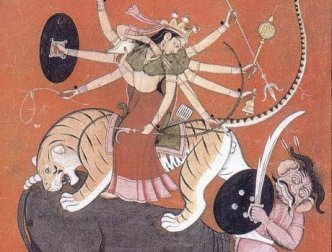
Read many more details at the link.
The media has begun vetting Beto O’Rourke. Two interesting reads:
Reuters: Beto O’Rourke’s secret membership in America’s oldest hacking group.
While a teenager, O’Rourke acknowledged in an exclusive interview, he belonged to the oldest group of computer hackers in U.S. history.
The hugely influential Cult of the Dead Cow, jokingly named after an abandoned Texas slaughterhouse, is notorious for releasing tools that allowed ordinary people to hack computers running Microsoft’s Windows. It’s also known for inventing the word “hacktivism” to describe human-rights-driven security work.
Members of the group have protected O’Rourke’s secret for decades, reluctant to compromise his political viability. Now, in a series of interviews, CDC members have acknowledged O’Rourke as one of their own. In all, more than a dozen members of the group agreed to be named for the first time in a book about the hacking group by this reporter that is scheduled to be published in June by Public Affairs. O’Rourke was interviewed early in his run for the Senate.
Mayan Jaguar god
There is no indication that O’Rourke ever engaged in the edgiest sorts of hacking activity, such as breaking into computers or writing code that enabled others to do so. But his membership in the group could explain his approach to politics better than anything on his resume. His background in hacking circles has repeatedly informed his strategy as he explored and subverted established procedures in technology, the media and government.
“There’s just this profound value in being able to be apart from the system and look at it critically and have fun while you’re doing it,” O’Rourke said. “I think of the Cult of the Dead Cow as a great example of that.”

That doesn’t seem to problematic to me. As younger candidates come forward, they are likely to have on-line histories. This story from Politico is a bit more embarrassing: O’Rourke ‘not … proud’ of teenage murder fantasy writing.
Beto O’Rourke said Friday he is “not … proud” of fiction he wrote as teenager about murdering children, while acknowledging its surfacing could hurt his campaign.
“Stuff I was part of as a teenager … not anything that I’m proud of today,” O’Rourke told reporters outside a meet-and-greet here. “And I mean, that’s the long and short of it.”
O’Rourke’s remarks followed a report in Reuters that O’Rourke, as a young member of the computer hacking group Cult of the Dead Cow, wrote an online article about how society could work without money and, in a more disturbing missive, about killing children.
“One day, as I was driving home from work, I noticed two children crossing the street. They were happy, happy to be free from their troubles. … This happiness was mine by right. I had earned it in my dreams,” he wrote, according to Reuters. “As I neared the young ones, I put all my weight on my right foot, keeping the accelerator pedal on the floor until I heard the crashing of the two children on the hood, and then the sharp cry of pain from one of the two. I was so fascinated for a moment, that when after I had stopped my vehicle, I just sat in a daze, sweet visions filling my head.”
There’s more of this stuff, definitely creepy; but it was a long time ago. Bernie Sanders survived his early fantasy writings about rape and his theories about breast cancer being caused by sexual frustration.
What else is happening? What stories are you following today?
Tuesday Reads: Some Democrats Are Getting On My Nerves
Posted: March 12, 2019 Filed under: morning reads, U.S. Politics | Tags: 2020 Democratic nomination race, Donald Trump, Elizabeth Warren, impeachment, Joe Biden, Kamala Harris, Nancy Pelosi, school busing, Super Tuesday 28 Comments Good Morning!!
Is there some way I can just resign from the human race? I don’t want to live in the hell that the Trump gang has turned this country into. I’m also getting sick and tired of a lot of the people who supposedly want to get rid of Trump, but are working in opposition to that goal–not only people like Bernie Sanders and his followers obviously, but also a lot of other Democrats.
Yesterday, Nancy Pelosi made what I considered to be a strategic statement about impeachment, and suddenly a lot of people who claimed to like the way she has been handling Trump are now attacking her.
The Washington Post: Nancy Pelosi on Impeaching Trump: ‘He’s Just Not Worth It.’
Pelosi began the interview by sharing a quote from Abraham Lincoln that is etched into a plaque in her office: “Public sentiment is everything. With public sentiment, nothing can fail. Without it, nothing can succeed.”
It was public sentiment, Pelosi says, that convinced her President Trump would back down in the standoff over funding a border wall that partially shut down the government for 35 days earlier this year. And it is public sentiment, she says, that will guide her as she leads the House Democrats and seeks to use their powers as a check on a president she believes disregards the Constitution.
When she was asked about impeachment, Pelosi said:
I’m not for impeachment. This is news. I’m going to give you some news right now because I haven’t said this to any press person before. But since you asked, and I’ve been thinking about this: Impeachment is so divisive to the country that unless there’s something so compelling and overwhelming and bipartisan, I don’t think we should go down that path, because it divides the country. And he’s just not worth it.
This is being reported by many so-called journalists as “taking impeachment off the table.” But that isn’t what Pelosi said. Back in 2005, she did say exactly that about George W. Bush. This time, she’s clearly saying that she needs “compelling and overwhelming” evidence and “bipartisan” support before she’ll call for impeachment. She’s not telling committee chairs to stop investigating Trump, because it is exactly those investigations that will lead to the “public sentiment” necessary to impeach and convict him.
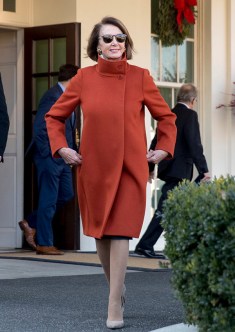 That’s my take too. We need public committee hearings in which the American people will be educated as to the level of corruption and criminality that is going on in the Trump administration. And when public opinion shifts, Pelosi will say that she has been convinced by the evidence and she will call for impeachment.
Pelosi also managed to work in a dig that will get under Trump’s skin–“he’s not worth it.” In addition she said this in the interview:
You said earlier you don’t feel it’s worth it to pursue impeachment. Do you believe he’s fit to be president?
Are we talking ethically? Intellectually? Politically? What are we talking here? [….]
All of the above. No. No. I don’t think he is. I mean, ethically unfit. Intellectually unfit. Curiosity-wise unfit. No, I don’t think he’s fit to be president of the United States. And that’s up to us to make the contrast to show that this president — while he may be appealing to you on your insecurity and therefore your xenophobia, whether it’s globalization or immigrants — is fighting clean air for your children to breathe, clean water for them to drink, food safety, every good thing that we should be doing that people can’t do for themselves. You know, I have five kids, and I think I can do everything for them, but I can’t control the air they breathe, the water that they drink. You depend on the public sector to do certain things for the health and well-being of your family, and he is counter to that.
I’m confident that when the time comes, Pelosi will call for impeachment.
Another thing Democrats are doing that has me ready to scream and pull my hair out is the calls for Joe Biden to run for president and the claims that only he can win back the rust belt. I’m sorry, but I don’t think he can do that and, in any case, I don’t think the rust belt is going to be as important this time.
The person who wins the nomination in 2020 is going to have to carry the black vote–especially the votes of black women–and I don’t think Biden can do that once all his baggage comes out. In 2020, California will vote on Super Tuesday, so whoever wins there is going to be in a powerful position. I don’t think Biden can beat Kamala Harris there, since she has already tied up endorsements from so many public officials there.
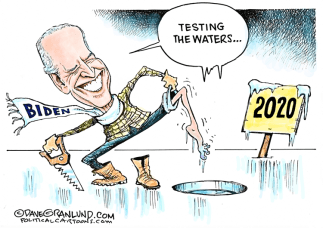 Some of Biden’s baggage: 1) he is 76 year old; 2) he has already run for president twice and lost decisively; 3) he helped put Clarence Thomas on the Supreme Court by minimizing Anita Hill’s testimony about Thomas’ sexual harassment of her and refusing to allow testimony by other women abused by Thomas. 4) his horrible criminal justice record; his support of and vote for the bankruptcy bill; his opposition to integration through busing, which was basically just opposition to integration period; his plagarism scandals; his groping of women; and his constant, embarrassing gaffes.
I’m sure there is more baggage, but those are the things I can think of off the top of my head.
Here’s Jamelle Bouie on Biden and busing: The Trouble With Biden.
As they begin their search for a nominee, most Democrats — more than half, according to a February poll from Monmouth University — prize electability above all else. They want a sure thing, someone who will beat President Trump.
But beating Trump isn’t the same as beating Trumpism. Unseating the president won’t automatically undermine the white resentment and racial chauvinism that drive his movement. That will depend on the nature of the campaign against him and whether it challenges the assumptions of his ideology or affirms them in the name of electoral pragmatism.
Joe Biden in the 1970s
The possibility of defeating Trump without defeating Trumpism looms over Joe Biden’s possible run for the 2020 Democratic nomination. The former vice president’s not-yet-candidacy centers on his appeal to the white, blue-collar workers who rejected Hillary Clinton in favor of Donald Trump. He believes he could have won them in 2016, and he thinks he can win them now. This isn’t just about Biden’s working-class affect. As a senator from Delaware, Biden understood himself as a staunch defender of Middle American interests.
But those interests were racialized, which is how a younger Biden could at once be a committed liberal and an ardent opponent of busing to desegregate his state’s public schools. As an article in The Washington Post last week demonstrated, Biden was at the forefront of opposition to busing in Delaware. The rhetoric he deployed in defense of his position channeled the visceral hostility of suburban (and urban) whites whose children were bused or whose schools took in bused children.
“I do not buy the concept, popular in the ’60s, which said, ‘We have suppressed the black man for 300 years and the white man is now far ahead in the race for everything our society offers. In order to even the score, we must now give the black man a head start, or even hold the white man back, to even the race,’” Biden told a Delaware-based weekly newspaper in 1975. “I don’t buy that.”
Biden made his argument using language that is still common to opponents of efforts to rectify racial inequality: “I don’t feel responsible for the sins of my father and grandfather. I feel responsible for what the situation is today, for the sins of my own generation. And I’ll be damned if I feel responsible to pay for what happened 300 years ago.”
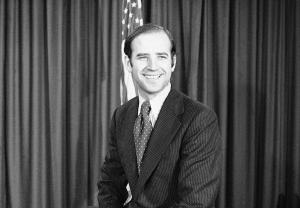
Read the rest at the New York Times.
Politico has an interesting article about the “yearslong feud” between Elizabeth Warren and Joe Biden.
On a February morning in 2005 in a hearing room in the Dirksen Senate Office Building, Joe Biden confronted Elizabeth Warren over a subject they’d been feuding over for years: the country’s bankruptcy laws. Biden, then a senator from Delaware, was one of the strongest backers of a bill meant to address the skyrocketing rate at which Americans were filing for bankruptcy. Warren, at the time a Harvard law professor, had been fighting to kill the same legislation for seven years. She had castigated Biden, accusing him of trying “to sell out women” by pushing for earlier versions of the bill. Now, with the legislation nearing a vote, Biden publicly grappled with Warren face to face.
Warren, Biden allowed, had made “a very compelling and mildly demagogic argument” about why the bill would hurt people who needed to file for bankruptcy because of medical debt or credit card bills they couldn’t pay. But Biden had what he called a “philosophic question,” according to the Congressional Record’s transcript of the hearing that day: Who was responsible? Were the rising number of people who filed for bankruptcy each year taking advantage of their creditors by trying to escape their debts? Or were credit card companies and other lenders taking advantage of an increasingly squeezed middle class?
Warren blamed the lenders. Many credit card companies charged so much in fees and interest that they weren’t losing money when some of their customers went bankrupt, she said. “That is, they have squeezed enough out of these families in interest and fees and payments that never paid down principal,” Warren said.
Biden parried. “Maybe we should talk about usury rates, then,” he replied. “Maybe that is what we should be talking about, not bankruptcy.”
“Senator, I will be the first. Invite me.”
“I know you will, but let’s call a spade a spade,” Biden said. “Your problem with credit card companies is usury rates from your position. It is not about the bankruptcy bill.”
Read the rest at Politico.
One more from Josh Voorhees at Slate, who worries that Biden could win the nomination: The Old, White Giant.
The one major constant throughout [the 2020 Democratic race so far]: the looming presence of Joe Biden, who has been teasing a presidential run more or less since the day after the 2016 election. Biden would face many hurdles if he gets into the race—his age and his record chief among them—but it’s far from certain any are the deal breakers that some pundits and prognosticators have suggested.
To be clear, I do not think Biden should win the Democratic nomination; I simply fear that he will. Despite a record that looks conservative in hindsight, a worldview that is troubling in the present, and an identity that does little for the future, Biden appears to be too well-known, well-liked, and well-connected to be denied the nomination.
Let’s begin with the polls. Biden has led nearly every hypothetical field in almost every single major survey taken since Election Day 2016, notwithstanding the usual caveats about polls. Polls can’t predict the future, but they can tell us plenty about the present—and the present looks mighty good for Uncle Joe. He sits just shy of 30 percent in RealClearPolitics’ rolling average, roughly 10 points clear of a crowded field in which all but Sanders and Harris remain mired in single digits. More telling than the size of Biden’s lead is the consistency of his support, which has not wavered even as a bevy of credible and compelling contenders has taken turns introducing themselves to the nation.
The common refrain this far out from the early nominating contests is that polling performances are driven largely by name recognition, which is true. But last I checked, name recognition is a requirement for electoral success, especially in a crowded field. Any candidate would love to be in Biden’s position, which allows him to take press coverage as a given and would help him overcome his lack of a small-donor network. And more crucial than being well-known is being well-liked, and no one in the field is more beloved than Uncle Joe, even when you account for his national profile. According to the latest data from Morning Consult, which has been in the field daily since early January, a whopping 79 percent of Democrats have a favorable opinion of the former veep, compared with just 11 percent of Democrats who do not. That’s largely why Biden was also the most common answer when fans of Sanders, Harris, Elizabeth Warren, and Beto O’Rourke were asked for their second choice.
Read the rest at Slate. I disagree; I think Biden will screw up again if he runs, but I would much rather he just didn’t run.
What stories are you following today? Please post your thoughts and links on any topic in the comment thread.

 peej
peej Carissa
 bostonboomer
 dakinikat
 ecocatwoman
 jjlo
jjlo mablue2
 Mama Lopez
 peggysue22
 quixote
 skydancingguestblogger
 Mona (aka Wonk the Vote)





Recent Comments