I’m getting a late start today after a night of tossing and turning. The news is depressing, as usual. Crazy Grandpa Trump is making an complete ass of himself on his Asian trip, where he’s temporarily left behind all the messes he’s left us with here.
People walk along a road during the passing of Hurricane Melissa in Rocky Point, Jamaica, on Tuesday. Matias Delacroix AP
Before I get to the politics news, here’s a brief update from CNN on the devastation Hurricane Melissa is leaving in her wake.
• Severe damage: Melissa hit Jamaica as one of the strongest Atlantic hurricanes on record, caused major damage to public infrastructure and left most of the island without power. The full extent of the devastation there is unclear with some areas inaccessible.
• Deadly storm: Twenty five people have died in Petit-Goâve, Haiti, after a river flooded by Melissa burst its banks, the local mayor said. Three people were killed in Jamaica during storm preparations, and one person died in the Dominican Republic.
Hurricane Melissa made landfall in Jamaica Tuesday as the strongest storm in the island’s history. The Category 5 hurricane tore a path of destruction across the island, causing major flooding and power cuts. Prime Minister Andrew Holness declared the country a “disaster area.”
The massive storm swept through Cuba early this morning as a Category 2 hurricane. Over 750,000 residents were evacuated ahead of the storm. Melissa is now carving a path towards the Bahamas.
The intense winds have diminished in Jamaica, but the National Hurricane Center warns that heavy rains and flooding might continue.
And this is a monster of a storm that meteorologists say will be in the history books. Only six other Atlantic storms have done that since record-keeping began.
Click the NPR link to see more photos.
We’re expecting stormy weather from Melissa here in Massachusetts on Thursday night and Friday. I hope it won’t interfere too much with kids’ Halloween plans.
Some lowlights from Trump’s embarrassing foreign trip:
You probably saw this video of spaced-out Trump being guided around by the new Japanese Prime Minister Sanae Takaichi.
Trump in Japan.He has no idea what's going on, just wanders off.His brain is cooked.This is insane.
President Donald Trump treated his time in Japan on Tuesday as a victory lap — befriending the new Japanese prime minister, taking her with him as he spoke to U.S. troops aboard an aircraft carrier and then unveiling several major energy and technology projects in America to be funded by Japan.
By the end of the day, Trump — by his administration’s count — came close to nailing down the goal of $550 billion in Japanese investment as part of a trade framework. At a dinner for business leaders in Tokyo, Commerce Secretary Howard Lutnick announced up to $490 billion in commitments, including $100 billion each for nuclear projects involving Westinghouse and GE Vernova….
It was not immediately clear how the investments would operate and how they compared with previous plans, but Trump declared a win as he capped off a day of bonding with Takaichi.
Because they are probably fake “investments.” There’s more at the link.
President Donald Trump rarely has anything negative to say about the men and women of the U.S. military, but he made an exception on Tuesday to offer a rare criticism of America’s fighting forces: They may be too “good-looking” for his tastes.
Trump was in the midst of an address to sailors aboard the U.S.S. George Washington, the Nimitz-class aircraft carrier that is semi-permanently based at the American naval base in Yokosuka, Japan, when he paused an attempt to praise the assembled service members to rant about their excessive attractiveness.
Speaking on the second day of a multi-day, multi-country trip through Asia that will conclude after a planned summit with Chinese leader Xi Jinping on Thursday, Trump said the Navy’s “ultimate strength” comes from “the men and women of the rank and file,” calling his uniformed audience “incredible people” and “good-looking people.”
After a beat, he said there were “too many good-looking people” present.
“I don’t like good-looking people,” he continued, as the sailors laughed at their commander-in-chief’s bizarre remark.
“I never liked good-looking people, I’ll be honest with you … never admitted that before,” he said.
Trump: You take a little glass of water and you drop it on magnets. I don't know what's going to happen.
Donald Trump went on a deranged rant about the power of water to destroy magnets during a rambling address to the U.S. Navy just off the coast of Japan.
Speaking aboard the USS George Washington aircraft carrier during his tour of East Asia, the president appeared to suggest—in a largely incoherent speech—that he is pushing for aircraft carriers to use “steam for the catapults” and hydraulics for elevators, while wrongly claiming that water can disable magnets.
The elderly president was talking about the magnetic catapults used to launch planes from the latest Navy super carriers, the USS Gerald R. Ford class, and the electromagnetic elevators used to move weaponry to the flight deck. Both systems double the speed with which planes can be armed and launched but slowed the delivery and commissioning of the $13 billion flagship of the class.
“You know, the new thing is magnets. So instead of using hydraulic that can be hit by lightning and it’s fine. You take a little glass of water, you drop it on magnets, I don’t know what’s going to happen,” Trump said.
“So, you know, the elevators come up in the new carriers—I think I’m going to change it, by the way—they have magnets. Every tractor has hydraulic, every excavator, every excavating machine of any kind has hydraulic. But somebody decided to use magnets.”
The 79-year-old president then stumbled over his words and failed to complete a coherent sentence before moving on and asking the watching troops whether they preferred hydraulics or magnets.
Trump then called out to a “top-ranking general” in the crowd for his opinion before continuing his tirade against the 2,000-year-old technology.
“I’m going to sign an executive order. When we build aircraft carriers, it’s steam for the catapults and it’s hydraulic for the elevators. We’ll never have a problem,” Trump said. “He agrees. Everybody agrees. But, ahh, these people in Washington.”
President Trump told American troops assembled in Japan on Tuesday that he was prepared to send “more than the National Guard” into cities to enforce his crackdowns on crime and immigration, further escalating how he has talked about using the military at home and abroad.
Trump “dances” for the troops in Japan.
Speaking to thousands of military service members aboard an aircraft carrier at the Yokosuka Naval Base in Japan on Tuesday, Mr. Trump delivered a partisan speech that resembled the raucous rallies that made him an ascendant force in U.S. politics.
But throughout his nearly hourlong speech, his usual ramblings about the physical appearances of audience members and steam-powered catapults were laced with dark warnings about how he might choose to deploy military forces.
“We have cities that are troubled, we can’t have cities that are troubled,” Mr. Trump said. “And we’re sending in our National Guard, and if we need more than the National Guard, we’ll send more than the National Guard, because we’re going to have safe cities.”
Legal disputes over what troops under federal control may be used to do on domestic soil — like a bar on using them to enforce the law, except when there is an insurrection — treat National Guard troops under federal control and active-duty troops as the same.
Mr. Trump also defended the U.S. military’s strikes against what the administration has said are suspected drug smugglers. The tactics have drawn widespread rebuke from experts who have said it is illegal to use the military to target civilians — including criminal suspects — who are not directly participating in hostilities.
Mr. Trump has increasingly used speeches to the military to air his grievances and bolster his accomplishments. Still, the scene was striking: an American president defending war and military deployments on U.S. soil, and employing partisan talking points on the global stage.
It’s a lot more than “striking,” IMHO.
Next stop for Trump: South Korea.
They all know how to play him. It isn’t difficult. bsky.app/profile/acyn…
GYEONGJU, South Korea, Oct 29 (Reuters) – South Korea welcomed U.S. President Donald Trump on Wednesday with a replica gold crown and awarded him with the “Grand Order of Mugunghwa”, the country’s highest decoration, the presidential office said.
Trump landed in South Korea on the final leg of a trip through Asia that also saw stops in Malaysia and Japan, with high-profile trade talks expected with South Korean President Lee Jae Myung and Chinese President Xi Jinping.
U.S. and South Korean warplanes escorted Air Force One on approach, and on the tarmac a South Korean military band greeted Trump with a rendition of “YMCA” and guns fired a salute.
Lee is hoping to win concessions from Trump in drawn-out negotiations aimed at lowering U.S. tariffs on South Korea, and has wooed the U.S. president by praising his outreach to North Korea.
Lee’s office said that in recognition of Trump’s role as a “peacemaker” on the Korean peninsula, he was awarded the “Grand Order of Mugunghwa”, which is named after South Korea’s national flower, a pink hibiscus also known as the Rose of Sharon in English.
They really know how to suck up to Trump.
Trump was gifted a replica of the golden Cheonmachong crown. The delicate original, which was found in a tomb in Gyeongju, features towering gold prongs and dangling leaf shapes.
“This symbolizes the history of Silla, which maintained a long-term era of peace on the Korean Peninsula, and a new era of peaceful coexistence and common growth on the Korean Peninsula that the United States and South Korea will work together for.”
The leaders had a working lunch that included Thousand Island salad dressing, in what Lee’s office said was a nod to Trump’s “success story in his hometown of New York.” The meal also included local specialties “according to President Trump’s preferences.”
On the menu were “mini beef patties with ketchup”, a “Korean Platter of Sincerity” featuring U.S. beef and local rice and soybean paste, and grilled fish with a glaze of ketchup and gochujang, a red chilli paste.
The lunch was capped by a “Peacemaker’s Dessert” consisting of a brownie adorned with gold.
A gold crown, junk food and being lauded as a “peacemaker.” What more could Trump ask for?
Donald Trump gushed over Indian Prime Minister Narendra Modi in the most cringeworthy way possible on Wednesday, describing the leader as “the nicest-looking guy” and then attempting to impersonate him.
The elderly president went there at the Asia-Pacific Economic Cooperation summit in Gyeongju, South Korea, during his tur of East Asia. He was bragging again that he single-handedly brought a swift end the four-day armed conflict between nuclear rivals India and Pakistan earlier this year by allegedly threatening both nations with 250 percent tariffs.
Indian officials have publicly rejected Trump’s repeated claims that he mediated the ceasefire. Sources told Bloomberg that Modi skipped the entire summit in Malaysia this week because Indian officials were worried Trump would once again repeat his self-proclaimed role in ending the conflict. They probably didn’t anticipate the accent.
“I’ll tell you what, Prime Minister Modi is the nicest looking guy,” Trump said, adding Modi looked like someone “you’d like to have as your father.”
“He’s tough as hell,” Trump said, before launching into a Modi impersonation, complete with what sounded like an attempt at an Indian accent: “No, we will fight!”
“I said, ‘Whoa, is that the same man that I know?’” Trump told the room.
Trump then took credit again for ending the escalating crisis, a claim disputed by officials in New Delhi. He said it wouldn’t have been resolved “if it wasn’t for the tariffs.”
“After a little while, and they’re good people, and after literally two days they called up, and they said we understand, and they stopped fighting—isn’t that amazing?”
The White House on Tuesday fired all six members of the Commission of Fine Arts, an independent federal agency that had expected to review some of President Donald Trump’s construction projects, including his planned triumphal arch and White House ballroom.
“On behalf of President Donald J. Trump, I am writing to inform you that your position as a member of the Commission of Fine Arts is terminated, effective immediately,” reads an email reviewed by The Washington Post that was sent to one of the commissioners by a staffer in the White House presidential personnel office.
The commission, which was established by Congress more than a century ago and traditionally includes a mix of architects and urban planners, is charged with providing advice to the president, Congress and local government officials on design matters related to construction projects in the capital region. Its focus includes government buildings, monuments and memorials. White House officials have traditionally sought the agency’s approval.
President Joe Biden appointed the six sitting commissioners to four-year terms, several of which would have extended through 2028. Their termination comes as the White House gears up for several Trump construction projects, including his planned $300 million White House ballroom, and seeks to install allies on key review boards.
A White House official confirmed that the Commission of Fine Arts members had been terminated.
“We are preparing to appoint a new slate of members to the commission that are more aligned with President Trump’s ‘America First’ policies,” said the official, who spoke on the condition of anonymity to discuss personnel matters.
I guess Trump will get approval for his tasteless ballroom and Hitler arch then.
Democrats are expanding their probes into President Donald Trump’s demolition of the East Wing and construction of his planned ballroom, with lawmakers pressing the White House and outside companies to explain the project’s finances and what was promised to contributors.
Sen. Adam Schiff (D-California), a frequent critic of President Donald Trump, is opening a probe into the president’s planned White House ballroom. (Demetrius Freeman, The Washington Post)
Sen. Adam Schiff (D-California) and colleagues on Tuesday demanded that the White House provide a “complete accounting” of how it is paying for the ballroom, including any terms for donors. Trump said Friday that he had raised more than $350 million to pay for the project, and the White House has said that at least three dozen companies and private individuals have helped fund it.
“The opaque nature of this scheme reinforces concern that President Trump is again selling presidential access to individuals or entities, including foreign nationals and corporate actors, with vested interests in federal action,” Schiff wrote to White House Chief of Staff Susie Wiles in a letter shared with The Washington Post. Schiff, a frequent critic of the president, also sent his request to the Government Accountability Office, a nonpartisan watchdog that conducts oversight of the executive branch.
Sen. Richard Blumenthal (D-Connecticut) separately sent letters Tuesday to contractors involved in the White House construction project, including McCrery Architects, Clark Construction and engineering firm AECOM, questioning the “rapidly changing and secretive terms” of Trump’s planned ballroom. The letters were also shared with The Post.
Trump said in July that the ballroom would cost about $200 million and hold 650 guests, estimates that he increased last week to $300 million and nearly 1,000, respectively. The ballroom donors include defense and tech companies including Amazon, Apple, Google, Lockheed Martin and Meta, which frequently have business before the administration. (Amazon founder Jeff Bezos owns The Post.)
Lawmakers said they were frustrated that the White House had neither consulted Congress nor received approval from at least two relevant federal commissions before rapidly demolishing the East Wing last week.
Five Senate Republicans voted with Democrats on Tuesday night to pass a resolution terminating President Trump’s emergency authority to impose steep tariffs on Brazil, one of the biggest exporters of coffee to the United States.
The Senate voted 52 to 48 to pass the resolution sponsored by Sens. Tim Kaine (D-Va.) and Rand Paul (R-Ky.) to terminate Trump’s 50 percent tariffs on Brazilian imports, such as coffee, oil and orange juice.
Paul, speaking on the Senate floor, called the tariff a tax on U.S. consumers.
The Kentucky Republican argued that the Constitution requires that “taxes must originate in the House” of Representatives.
“Yet, these taxes are originating with the White House,” he said.
McConnell, in a statement, said that Trump’s tariffs are hurting Kentucky businesses and farms.
It’s symbolic, but still could be a positive sign.
I guess this post is kind of disorganized–I’m just not that with it today. But that’s all I have for you. I hope there’s something here worth reading/watching.
Did you like this post? Please share it with your friends:
Leandro M. Velasco (b.1933), Blonde in Red with a White Cat
I’m still focused on Trump’s demolition of the White House East Wing. Lately I’ve been wondering what happened to all the furniture and art work.
Was any of it saved, or was everything destroyed along with the building? Has anyone reported seeing moving vans outside the White House that could have been removing some of the valuable items and putting them in storage? If not, could all these things be stored in the White House itself? I doubt it. Why aren’t journalists asking these questions?
I don’t trust Trump to preserve anything of historical value. I would not be at all surprised if he simply demolished the building and all of its contents. After all, he destroyed the Rose Garden and replaced it with a pavement and tacky tables with attached umbrellas. And Trump has a history of carelessly destroying important art works.
With Donald Trump demolishing the White House’s East Wing to make room for a 90,000-square-foot ballroom, the president is returning to the playbook from his Trump Tower days—move fast, build big and leave preservationists fuming.
Key Facts
In October 1979, New York City’s Planning Commission approved a special permit for Trump to build a 56-story mixed-use tower on the site of the Bonwit Teller department store on Fifth Avenue.
Trump later wrote in “The Art of the Deal” that in December 1979, a representative of the Metropolitan Museum of Art asked him to donate two 15-foot-tall Art Deco bas-relief sculptures of semi-nude goddesses and a 15-by-25-foot nickel-plated grill from the condemned building’s facade.
“I said that if the friezes could be saved, I’d be happy to donate them to the museum,” Trump wrote in “The Art of the Deal”; he later confirmed the deal in writing, according to Preservation News, a publication of the National Trust for Historic Preservation of the United States.
In June 1980, however, the “sculptures were smashed by jackhammers” while the grillwork, which was supposed to be shipped to a New Jersey warehouse, went missing, Preservation News reported at the time.
Trump said he had the friezes torn down after being told their weight would require “special scaffolding for safety’s sake,” delaying the project by several weeks.
“I just wasn’t prepared to lose hundreds of thousands of dollars to save a few Art Deco sculptures that I believed were worth considerably less, and perhaps not very much at all,” he wrote.
“We are certainly very disappointed and quite surprised,” Ashton Hawkins, vice president and secretary of the Met’s board of trustees, told the New York Times, which ran an article about the destruction on the front page. “Can you imagine the museum accepting them if they were not of artistic merit?”
Read more details about Trump’s path of destruction:
The White House Family Theater, the movie theater which first came to be in 1942 when a cloakroom was converted into a screening room, was demolished this week as part of the destruction of the East Wing to make room for President Donald Trump’s planned $300 million ballroom.
By Lina Rivo
From sporting events to film screenings, the theater provided entertainment and enjoyment to presidents and their families since the latter part of Franklin D. Roosevelt’s presidency.
According to The White House Historical Association, Roosevelt enjoyed watching World War II-era news reels in the former cloakroom in the East Terrace at 1600 Pennsylvania Avenue, “and took special interest in the battles fought in Europe and Asia.”
The 32nd US president demonstrated an understanding of the importance of pop culture, including movies.
“Entertainment is always a national asset,” Roosevelt said in 1943 as the United States was engaged in WWII. “Invaluable in time of peace, it is indispensable in wartime.” [….]
Later presidents greatly enjoyed showing movies in the theater, and the George W. Bush Library detailed that film screenings would run the gamut from official events with members of the public invited as guests to “private events and intended for the enjoyment of the President, his family, and his close friends and staff.”
“The best perk out in the White House is not Air Force One or Camp David or anything else,” said former President Bill Clinton. “It’s the wonderful movie theatre I get here, because people send me these movies all the time.”
I suppose Trump could have saved the vintage chairs with footrests, lights, and decorations, but I’m sure he didn’t.
Satellite images show President Donald Trump’s project to build a $300 million grand ballroom has appeared to take down at least six trees on the White House grounds — including two historic magnolia trees commemorating Presidents Warren G. Harding and Franklin D. Roosevelt.
The satellite images released on Thursday provide the fullest picture yet of the extent of the demolition work on the White House’s East Wing and its effect on the surrounding parkland — changes made without consulting the government commission established by federal law to ensure the preservation and integrity of government buildings in D.C., according to former commission officials who spoke to ABC News.
Visible construction work on the new ballroom appears to have begun more than three weeks ago, according to satellite images of the White House complex taken over the last month. An image taken on Sept. 26 shows preparations for the construction, including the removal of multiple trees in President’s Park.
The Jacqueline Kennedy Garden — established by first lady Edith Roosevelt as the Colonial Garden in 1903 adjacent to the East Wing — was also leveled during the demolition, according to satellite images. Earlier this year, Trump also paved over the Rose Garden, which was designed by the same architect who designed the Kennedy Garden.
President Donald Trump says he has no plans to name his $300 million White House ballroom after himself.
Speaking to reporters in brief remarks while departing the White House on Friday evening for a trip to Asia, Trump denied an earlier report that he was likely to add his name to the new ballroom.
“I don’t have any plan to call it after myself,” Trump said. “That was fake news. Probably going to call it the presidential ballroom or something like that. We haven’t really thought about a name yet.”
Earlier, senior administration officials told ABC News that some in the administration were already referring to it as “The President Donald J. Trump Ballroom” and that that name was likely to stick….
Before Friday, Trump had not publicly said what he intends to name the ballroom, but he is known for branding his construction projects after himself.
When asked by ABC News Chief White House Correspondent Mary Bruce on Thursday if he had a name for his ballroom yet, Trump smiled and said: “I won’t get into that now.”
Manfred W. Juergens, The Girl with the Cat
Give me a break. Of course he’ll name it after himself. He’ll probably put a huge “Trump” sign on it–like the one on Trump tower. And I expect his name will also be on the Hitler arch he’s planning that will overshadow the Lincoln Memorial.
President Donald Trump is accepting anonymous donations for the grand ballroom he is currently having built at the White House, an aide told NBC News on Friday.
While the Trump administration has released a list of donors for the project that has become a fixation for the president (which includes NBCUniversal’s parent company, Comcast), the aide said that some may contribute anonymously.
“We will, and have so far, released names of donors and companies who wish to be named publicly. Donors also have the option to remain anonymous and we will honor that if that’s what they choose,” said the aide, who spoke on the condition of anonymity to candidly discuss the undertaking.
The White House would not commit to publicly releasing the amount of money each donor gives to the project, with the aide saying similarly that the administration “will honor the wishes of the donors of what they want publicly shared.”
Trump claims he won’t accept foreign donations, but how would we know? He’s a fucking liar; you can’t believe anything he says.
The 123-year-old East Wing of the White House, the home of offices for every first lady for almost half a century, is now a pile of rubble. After Trump said in July that the historic building would not be touched, it was stealthily bulldozed to make way for a $300m ballroom. According to Trump, there was a teeny little change of plans “after really a tremendous amount of study with some of the best architects in the world”.
While the likes of the National Trust for Historic Preservation are upset about the destruction of a “National Historic Landmark, a National Park, and a globally recognized symbol of our nation’s ideals”, some large corporations appear to be looking on the bright side. Trump has said the new 90,000 sq ft ballroom is going to be “paid for 100% by me and some friends of mine”. Now the world’s CEOs have a wonderful opportunity to prove just how friendly to Trump they are….
By Jane Wood
National history aside, this sudden demolition of the first ladies’ headquarters raises a lot of questions. If I lived in a house that I didn’t own – one that I was scheduled to move out of in January 2029 – I probably wouldn’t start an enormous and extremely controversial construction project. Why is Trump doing this?
The short answer is: because he wants to. As I think we all know by now, the president does whatever the hell he feels like regardless of norms, conventions, or silly little laws. And, increasingly, there’s nobody there to stop him. The only checks that Trump cares about are the ones made out to him and the only balances he is interested in are those of his bank accounts.
Trump has given a few rationales for the project that go beyond ‘because I want to.’ He’s argued that the old East Wing was no longer fit for purpose and a much larger space was needed. There are some people out there who agree with him. Gahl Hodges Burt, for example, who was social secretary for three years under President Ronald Reagan, told the New York Times that tearing down the East Wing to make space for the ballroom was unfortunately necessary and overdue.
Beyond practical issues, there’s also ego. Trump’s big boy ballroom will be a big shiny monument to him long after he’s gone.
Still, you’ve got to wonder whether this mega-project means the president is not actually planning on going anywhere anytime soon. Particularly since Trump doesn’t seem to be the sort of person to start a large project he won’t have a chance to personally enjoy. The US Constitution’s 22nd amendment makes it very clear that a president cannot have more than two terms. But that hasn’t stopped Trump from repeatedly teasing the idea that he might serve a third term. In March he told NBC News he was “not joking” about the idea and there were methods for doing so.
Read more at the link.
According to Nancy Walecki at The Atlantic, Trump may be planning to use the rubble and dirt from the East Wing teardown to upgrade a golf course (gift link). My Quest to Find the East Wing Rubble.
I’d heardthat the dirt from the East Wing demolition was being deposited three miles away, on a tree-lined island next to the Jefferson Memorial called East Potomac Park. So yesterday I drove around until I saw trucks and men in construction gear. They were congregating at an entrance to the public East Potomac Golf Links, where rounds of golf carried on as usual, except every few minutes, dump trucks entered the green.
By Giovanni Parlatto da Massaquano
The trucks would cut across the course to a cordoned-off site in the middle, where the grass had been torn away and replaced with piles of dirt. It did not look like much, but several employees at the site confirmed: This was not just any dirt. This was White House dirt. The precursor to the East Wing was constructed during Theodore Roosevelt’s administration in 1902 and updated during Franklin D. Roosevelt’s administration in the ’40s. Maybe this was not just White House dirt but Roosevelt-era dirt. I gazed upon the golfers going about their games. Do they know, I wondered, that they are in the presence of such particularly American soil?
I asked one employee what the plan was for all this dirt. “Oh, they’re gonna turn it into another hole,” he said. Other reportershave heard the same. But when I asked a different employee about it, he demurred; his boss drove by and said, “No comment” before my colleague Grace Buono had even asked him a question. Donald Trump has reportedly been considering rebranding East Potomac Golf Links as the Washington National Golf Course and giving it a makeover. He even mocked up a new golden logo for it that’s nearly identical to those of the courses he owns. I suppose the East Wing demolition is an excellent source of soil. (The White House did not respond to my request for comment. It told CBS News that wood and plants from the site could end up being recycled for garden nurseries.)
Use the gift link to read more if you’re interested.
This might be a dumb question, but where will all those hundreds of people going to the ballroom park their fancy cars and limos? Maybe Trump is planning to knock down the entire White House and replace it with a parking lot?
Meanwhile, thanks to the government shutdown, the “big beautiful bill,” and Mike Johnson’s keeping the House from meeting, millions of Americans will soon be facing hunger and lack of health care.
While Republicans have sought to blame Democrats for the potential loss in benefits that people who make little money rely on, those who work in the food-insecurity space say that is misleading because Donald Trump’s One Big Beautiful Bill Act already eliminated almost $187bn in funding for Snap through 2024, according to a congressional budget office estimate.
Should funding run out at the end of the month, “we will have the greatest hunger catastrophe in America since the Great Depression, and I don’t say that as hyperbole”, said Joel Berg, CEO of Hunger Free America.
Snap supports working families with low-paying jobs, low-income people aged 60 years and older and people with disabilities living on a fixed income, according to the Center on Budget and Policy Priorities.
Snap participants generally must be at or below 130% of the federal poverty line. The average participant receives about $187 a month, the center reports.
The Department of Agriculture recently sent a letter to regional Snap directors warning them that funding for Snap will run out at the end of the month and directing them to hold payments “until further notice”.
More than 200 Democratic representatives have urged the USDA to use contingency funds to continue paying for Snap benefits.
“There are clear steps the administration can and must take immediately to ensure that millions of families across the country can put food on their table in November,” a letter from the lawmakers to the USDA states. “SNAP benefits reach those in need this November would be a gross dereliction of your responsibilities to the American people. We appreciate your consideration of these requests.”
The Trump administration won’t tap emergency funds to pay for federal food benefits, imperiling benefits starting Nov. 1 for nearly 42 million Americans who rely on the nation’s largest anti-hunger program, according to a memo obtained by POLITICO.
USDA said in the memo that it won’t tap a contingency fund or other nutrition programs to cover the cost of the Supplemental Nutrition Assistance Program, which is set to run out of federal funds at the end of the month.
By Gurutze Ramos
The contingency fund for SNAP currently holds roughly $5 billion, which would not cover the full $9 billion the administration would need to fund November benefits. Even if the administration did partially tap those funds, it would take weeks to dole out the money on a pro rata basis — meaning most low-income Americans would miss their November food benefits anyway.
In order to make the deadline, the Trump administration would have needed to start preparing for partial payments weeks ago, which it has not done.
White House and Trump administration officials warned earlier this week they were unlikely to shift funds around to avert SNAP lapsing for 40 million low-income Americans in November — instead blaming Democrats for the pending lapse.
Premiums for the most popular types of plans sold on the federal health insurance marketplace Healthcare.gov will spike on average by 30 percent next year, according to final rates approved by the Centers for Medicare and Medicaid Services and shown in documents reviewed by The Washington Post.
The higher prices — affecting up to 17 million Americans who buy coverage on the federal marketplace — reflect the largest annual premium increases by far in recent years. The higher premiums, along with the likely expiration of pandemic-era subsidies, mean millions of people will see their health insurance payments double or even triple in 2026.
The premium spikes, mirroring the rising cost of private-employer-sponsored plans,arrive during a protracted and bitter congressional battle over health insurance costs that prompteda government shutdown Oct. 1.Democrats have urged an extension of enhanced subsidies for plans sold through the Affordable Care Act to soften the blow of rising insurance costs, while Republicans have said the additional assistance was never meant to be permanent.
The spike in premiums will become visible to more Americans on Monday, when the Trump administration is expected to open Healthcare.gov for window shopping to browse the price of plans ahead of the Nov. 1 start to open enrollment.
But Trump will get his ugly ballroom.
I’ll end there, and add some links in the comment thread. What do you think about the Trump’s destruction of the East Wing? What else is on your mind today?
Did you like this post? Please share it with your friends:
I’m heartsick about what Trump is doing to the White House. The White House belongs to the American people, not to the current president. But Trump is doing whatever he wants to our government and to “the people’s house.”
Yesterday, at his substack, Law Dork, Chris Geidner posted the clearest photos of Trump’s demolition I have seen so far. From the photos, it’s clear that either the entire East Wing or most of it will be destroyed. The first photo shows the destruction of the front of the building, and the second shows the damage from above, show how far back the damage to the roof goes. I can’t post the photos here–they are protected–but you can see them at the link.
Photos obtained exclusively by Law Dork on Tuesday show that President Donald Trump is completely demolishing the East Wing of the White House as part of his stated plan to build a ballroom befitting his standards on the White House grounds.
Although Trump earlier had said the ballroom “won’t interfere with the current building,“ this week it became abundantly clear that was a lie. And, this dramatic change to the governmental building, Trump says, is happening care of private money and outside of any governmental — and transparent — funding process.
After The Washington Post first reported on Monday that demolition had begun, The Wall Street Journalreported on Monday night that Treasury Department employees next door to the demolition were told to “refrain from taking and sharing photographs of the grounds, to include the East Wing, without prior approval from the Office of Public Affairs.“
On Tuesday, Law Dork obtained these photographs taken of the ongoing demolition.
Although the Post’s initial story detailed the “East Wing facade“ being demolished and that teams on Monday were “demolishing a portion ofthe East Wing,“ the Tuesday photograph obtained by Law Dork makes clear that most if not all of the entirety of the East Wing is being demolished.
A second photo obtained by Law Dork from another angle shows the extent of the demolition has already reached all but the western and northern walls of the East Wing.
Demolition crews began work Oct. 20 on the East Wing of the White House to clear space for a privately funded 90,000-sq-ft ballroom addition valued at roughly $200 million at the behest of President Donald Trump
The project, announced July 31 by the White House, will be built by Clark Construction Group with AECOM as engineer and McCrery Architects as designer.
Officials said it will create a larger venue for state and ceremonial events, financed entirely by the president and “patriot donors.”
The addition marks the most substantial change to the Executive Residence since the Truman reconstruction of 1948-52. Renderings depict a limestone-clad structure with tall arched windows, ballistic-resistant glazing and interiors described by the White House as “ornately designed.” [….]
The design calls for the addition to remain structurally distinct from the residence while echoing its neoclassical form. The press office said the ballroom “will be substantially separated from the main building… but its theme and architectural heritage will be almost identical.”
As for Trump gaining approval for the project, he took care of that by appointing a sycophant.
Regulatory filings show that as of Sept. 4 no submission had been made to the National Capital Planning Commission, which reviews major federal projects in the capital region.
Commission Chairman Will Scharf, who also serves as White House staff secretary, said during a public meeting that “what we deal with is essentially construction, vertical build,” explaining why demolition and site-preparation work began before commission review. The interpretation leaves design oversight unresolved, even as groundwork proceeds.
Under the Presidential Residence Act, the White House is managed by the National Park Service and operated by the Executive Office of the President’s Facilities Management Division.
While Section 107 of the act exempts the executive residence from mandatory review, Executive Order 11593, issued in 1971, directs federal agencies to consult with the U.S. Interior Dept. before altering historic structures.
Past administrations have voluntarily submitted major projects for review by the National Capital Planning Commission and the Commission of Fine Arts. These measures, while not legally binding, form the preservation framework that has guided White House alterations for decades and remains relevant even for privately funded work.
A demolition job that began Monday with the disappearance of the White House’s eastern entrance advanced Tuesday with the destruction of much of the East Wing, according to a photograph obtained by The Washington Post and two people who spoke on the condition of anonymity to describe the scene.
Photos of construction teams knocking down parts of the East Wing, first revealed by The Washington Post on Monday, shocked preservationists, raised questions about White House overreach and lack of transparency, and sparked complaints from Democrats that President Donald Trump was damaging “the People’s House” to pursue a personal priority.
“They’re wrecking it,” said Martha Joynt Kumar, a political scientist and professor emeritus at Towson University in Maryland. “And these are changes that can’t be undone. They’re destroying that history forever.”
A White House spokesman said that the “entirety” of the East Wing would eventually be “modernized and rebuilt.”
WASHINGTON, DC – OCTOBER 20: Workers demolish the facade of the East Wing of the White House on October 20, 2025 in Washington, DC. (Photo by Kevin Dietsch/Getty Images)
The National Trust for Historic Preservation, a nonprofit created by Congress to help preserve historic buildings, sent a letter Tuesday to administration officials, warning that the planned 90,000-square-foot ballroom “will overwhelm the White House itself,” which is about 55,000 square feet.
“We respectfully urge the Administration and the National Park Service to pause demolition until plans for the proposed ballroom go through the legally required public review processes,” Carol Quillen, National Trust’s CEO, said in a statement, citing two federal commissions that have traditionally reviewed White House additions.
White House officials dismissed the criticism as “manufactured outrage,” arguing that past presidents had pursued their own changes to the executive campus as necessary. They said that the privately funded ballroom will be a “bold, necessary addition” to the presidential grounds.
You can read more using the gift link.
After the backlash, Trump has decided to submit his plans for review–now that the work is in progress.
The White House said on Tuesday it will submit plans for President Donald Trump’s $250 million White House ballroom project to a body that oversees federal building construction, even though demolition work began earlier this week.
Trump reveled on Tuesday in the demolition sounds by construction workers for the ballroom addition to the White House, the first major change to the historic property in decades.
But critics, aghast about images of the White House walls crumbling after Trump had pledged the project would not interfere with the existing landmark, said a review process should have taken place before the work began.
This schematic from the Washington Post article shows the planned layout of the new White House complex.
The White House still intends to submit those plans to the National Capital Planning Commission, which oversees federal construction in Washington and neighboring states, a White House official told Reuters
“Construction plans have not yet been submitted to the National Capital Planning Commission but will be soon,” the official said, adding that the NCPC does not have jurisdiction over demolition work.
The commission is now led by Will Scharf, a White House aide.
Asked why the demolition of East Wing walls was occurring despite Trump’s promise that it would not affect the existing building, the official said modernization work was required in the East Wing and changes had always been a possibility.
“The scope and size was always subject to vary as the project developed,” he said.
Trump spokesperson Karoline Leavitt thinks the critics of the East Wing teardown are just jealous.
Karoline Leavitt thinks Democrats are just jealous that Donald Trump is building a swanky $250 million ballroom at the White House.
The White House press secretary says that’s the only way to explain the “fake outrage” after part of the White House’s iconic East Wing was demolished to make way for the 90,000-square-foot structure.
The Trump administration has received widespread backlash for starting work on the event space that will eventually dwarf the White House itself. “It’s not his house. It’s your house. And he’s destroying it,” former Secretary of State Hillary Clinton posted on X.
But Trump officials have attempted to convince the public that it’s what presidents, administrations, and White House staff have longed for, for 150 years.
“Are the Democrats jealous that Trump is building this big beautiful ballroom?” Fox News host Jesse Watters asked Leavitt on Tuesday.
Leavitt replied that it “certainly appears that way.”
“I believe there’s a lot of fake outrage right now because nearly every single president who has lived in this beautiful White House behind me has made modernizations and renovations of their own,” she added.
I’m speechless at this point.
Another Trump outrage from yesterday: Trump is demanding that he be paid $230 million for the prosecutions against him.
President Trump is demanding that the Justice Department pay him about $230 million in compensation for the federal investigations into him, according to people familiar with the matter, who added that any settlement might ultimately be approved by senior department officials who defended him or those in his orbit.
The situation has no parallel in American history, as Mr. Trump, a presidential candidate, was pursued by federal law enforcement and eventually won the election, taking over the very government that must now review his claims. It is also the starkest example yet of potential ethical conflicts created by installing the president’s former lawyers atop the Justice Department.
Todd Blanche, the deputy attorney general; Attorney General Pam Bondi; and Kash Patel, the F.B.I. director, with President Trump in the Oval Office last week.Credit…Doug Mills/The New York Times
Mr. Trump submitted complaints through an administrative claim process that often is the precursor to lawsuits. The first claim, lodged in late 2023, seeks damages for a number of purported violations of his rights, including the F.B.I. and special counsel investigation into Russian election tampering and possible connections to the 2016 Trump campaign, according to people familiar with the matter. They spoke on the condition of anonymity because the claim has not been made public.
The second complaint, filed in the summer of 2024, accuses the F.B.I. of violating Mr. Trump’s privacy by searching Mar-a-Lago, his club and residence in Florida, in 2022 for classified documents. It also accuses the Justice Department of malicious prosecution in charging him with mishandling sensitive records after he left office.
Asked about the issue at the White House after this article published, the president said, “I was damaged very greatly and any money I would get, I would give to charity.”
He added, “I’m the one that makes the decision and that decision would have to go across my desk and it’s awfully strange to make a decision where I’m paying myself.”
A bit more:
Lawyers said the nature of the president’s legal claims poses undeniable ethics challenges.
“What a travesty,” said Bennett L. Gershman, an ethics professor at Pace University. “The ethical conflict is just so basic and fundamental, you don’t need a law professor to explain it.”
He added: “And then to have people in the Justice Department decide whether his claim should be successful or not, and these are the people who serve him deciding whether he wins or loses. It’s bizarre and almost too outlandish to believe.”
The president also seemed to acknowledge that point in the Oval Office last week, when he alluded vaguely to the situation while standing next to the F.B.I. director, Kash Patel, Attorney General Pam Bondi, and her deputy, Todd Blanche. According to Justice Department regulations, the deputy attorney general — in this case, Mr. Blanche — is one of two people eligible to sign off on such a settlement.
Unbelievable.
Arizona’s attorney general filed a lawsuit against House Speaker Mike Johnson yesterday.
Arizona Attorney General Kris Mayes on Tuesday filed a lawsuit to try to force House Speaker Mike Johnson to swear in Rep.-elect Adelita Grijalva, the Arizona Democrat who won her late father’s seat in a special election nearly one month ago.
Johnson, R-La., has said he will seat Grijalva once Senate Democrats agree to reopen the government. But the two parties haven’t been talking for weeks, and there is no indication when the shutdown might end.
The lawsuit, which Mayes threatened in a letter to Johnson last week, argues that the speaker’s delay is depriving the 813,000 residents living in Arizona’s 7th District of congressional representation. It lists the state of Arizona and Grijalva herself as plaintiffs and the U.S. House, as well as the House clerk and sergeant at arms, as defendants.
“Speaker Mike Johnson is actively stripping the people of Arizona of one of their seats in Congress and disenfranchising the voters of Arizona’s seventh Congressional district in the process,” Mayes said in a statement. “By blocking Adelita Grijalva from taking her rightful oath of office, he is subjecting Arizona’s seventh Congressional district to taxation without representation. I will not allow Arizonans to be silenced or treated as second-class citizens in their own democracy.”
As he left the Capitol on Tuesday evening, Johnson blasted the Arizona lawsuit as “patently absurd.”
Mayes, he said, has “no jurisdiction.”
We’ll see what the judge has to say about it.
At the Department of Defense, Pete Hegseth (Secretary of War) tells military officials they can’t talk to Congress without his approval.
Leaders at the Pentagon have significantly altered how military officials will speak with Congress after a pair of new memos issued last week.
In an Oct. 15 memo, Defense Secretary Pete Hegseth and his deputy, Steve Feinberg, ordered Pentagon officials — including the chairman of the Joint Chiefs of Staff — to obtain permission from the department’s main legislative affairs office before they have any communication with Capitol Hill.
The memo was issued the same day the vast majority of Pentagon reporters exited the building rather than agree to the Defense Department’s new restrictions on their work, and it appears to be part of a broader effort by Hegseth to exert tighter control over what the department communicates to the outside world.
According to the memo, a copy of which was authenticated by a Pentagon official, “unauthorized engagements with Congress by (Pentagon) personnel acting in their official capacity, no matter how well-intentioned, may undermine Department-wide priorities critical to achieving our legislative objectives.”
It’s a departure from current practice; previously, Defense Department agencies were free to manage their own interactions with Capitol Hill.
But under Hegseth, the department has sought stricter control over messaging coming out of the Pentagon. Dozens of reporters turned in their badges and left the building last week, when most news agencies refused to sign unprecedented restrictions Hegseth imposed that threatened consequences for journalists who reported information he had not approved for release, even if it was unclassified.
The new directive, which would further curb information flow from the Pentagon to Congress, is designed “to achieve our legislative goals,” Hegseth and his deputy wrote in the memo.
“Unauthorized engagements with Congress by DoW personnel acting in their official capacity, no matter how well-intentioned, may undermine Department-wide priorities critical to achieving our legislative objectives,” the memo says, using the initialism for the “Department of War,” the Defense Department’s secondary but unofficial name used by the Trump administration.
Why is Hegseth so paranoid? Is it because he’s incompetent and realizes the competent DOD people know that?
Millions of Americans are already seeing their health insurance costs soar for 2026 as Congress remains deadlocked over extending covid-era subsidies for premiums.
The bitter fight sparked a government shutdown at the start of October. Democrats refuse to vote on government-funding legislation unless it extends the subsidies, while Republicans insist on separate negotiations after reopening the government. Now lawmakers face greater pressure to act as Americans who buy insurance through the Affordable Care Act are seeing, or about to see, the consequences of enhanced subsidies expiring at the end of the year.
Healthcare.gov — the federal website used by 28 states — is expected to post plan offerings early next week ahead of the start of open enrollment in November. But window shopping has already begun in most of the 22 states that run their own marketplaces, offering a preview of the sticker shock to come.
Premiums nationwide are set to rise by 18 percent on average, according to an analysis of preliminary rate filings by the nonpartisan health policy group KFF. That, combined with the loss of extra subsidies, have left Americans with the worst year-over-year price hikes in the 12 years since the marketplaces launched.
Nationally, the average marketplace consumer will pay $1,904 in annual premiums next year, up from $888 in 2025, according to KFF.
The situation is particularly acute in Georgia, which recorded the second-highest enrollment of any state-run marketplace this year and posted prices for 2026 earlier in October. About 96 percent of marketplace enrollees in Georgia received subsidies this year, according to the Center on Budget and Policy Priorities, a liberal think tank that supports extending the subsidies.
Now Georgians browsing the state website are seeing estimated monthly costs double or even triple, depending on their incomes, as lower subsidy thresholds resume.
Sen. Jeff Merkley has been speaking on the Senate floor for more than 12 hours after announcing he would protest what he called President Donald Trump’s “grave threats to democracy.”
The Oregon Democrat began his remarks at 6:24 p.m. ET Tuesday and was still speaking as of Wednesday morning.
Senator Jeff Merkley
“I’ve come to the Senate floor tonight to ring the alarm bells. We’re in the most perilous moment, the biggest threat to our republic since the Civil War. President Trump is shredding our Constitution,” he said at the start of his remarks.
The senator’s marathon speech stands as a symbolic show of Democratic resistance as his party remains in a standoff with Republicans over health care subsidies amid the government shutdown. The shutdown is expected to drag on with the impasse entering a fourth week Wednesday. Democrats have so far held their position, blocking the GOP stopgap bill to reopen the government 11 times until their demands are met.
Merkley in his speech pointed to the Trump administration’s previous halting of research grants for universities in its battle over campus oversight as well as the recent indictments of several of the president’s political opponents as well as his push to deploy National Guard troops to Portland.
“President Trump wants us to believe that Portland, Oregon, in my home state, is full of chaos and riots. Because if he can say to the American people that there are riots, he can say there’s a rebellion. And if there’s a rebellion, he can use that to strengthen his authoritarian grip on our nation,” he said.
Read the rest at CNN.
Those are my offerings for today. Sorry there’s not more good news.
Did you like this post? Please share it with your friends:
Americans across all 50 states will march in protests against the Trump administration on Saturday, aligning behind a message that the country is sliding into authoritarianism and there should be no kings in the US.
Millions are expected to turn out for the No Kings protests, the second iteration of a coalition that marched in June in one of the largest days of protest in US history. Events are scheduled for more than 2,700 locations, from small towns to large cities.
Donald Trump has cracked down on US cities, attempting to send in federal troops and adding more immigration agents. He is seeking to criminalize dissent, going after left-leaning organizations that he claims are supporting terrorism or political violence. Cities have largely fought back, suing to prevent national guard infusions, and residents have taken to the streets to speak out against the militarization of their communities.
Trump’s allies have sought to cast the No Kings protests as anti-American and led by antifa, the decentralized anti-fascist movement, while also claiming that the protests are prolonging the government shutdown. Greg Abbott, the governor of Texas, has said he will send the state’s national guard to Austin, the state’s capital, in advance of the protests….
“What’s most important as a message for people to carry is that the president wants us to be scared, but we will not be bullied into fear and silence,” said Lisa Gilbert, the co-president of Public Citizen, one of the protest organizers. “And it’s incredibly important for people to remain peaceful, to stand proud and to say what they care about, and not to be cowed by that fear.”
The simple framing of the protests is that the US has no kings, a dig at Trump’s increasing authoritarianism. Among the themes the organizers have pointed to: Trump is using taxpayer money for power grabs, sending in federal forces to take over US cities; Trump has said he wants a third term and “is already acting like a monarch”; the Trump administration has taken its agenda too far, defying the courts and slashing services while deporting people without due process.
I expect that some Republicans will try to spark violence at these protest rallies. I hope people will remain peaceful no matter what.
The nationwide “No Kings” protest movement is back for round two — and after avoiding Washington during the summer, protesters are expected to descend on the nation’s capital Saturday amid an 18-day government shutdown that has no end in sight.
The demonstrations are part of the second national day of action, organized by dozens of liberal advocacy groups to protest what they call “authoritarian power grabs” on the part of President Donald Trump.
Organizers said they expect the more than 2,600 events across all 50 states to surpass the more than 5 million people who attended the first wave of “No Kings” rallies in June. The marches come amid heightened criticism from Republicans about this weekend’s rallies.
“They might try to paint this weekend’s events as something dangerous to our society, but the reality is there is nothing unlawful or unsafe about organizing and attending peaceful protests,” said Deirdre Schifeling of the American Civil Liberties Union. “It’s the most patriotic and American thing you can do, and we have a 250-year-old history of disagreeing in public.”
Amid the heightened tensions of the shutdown, Republicans have repeatedly sought to vilify the planned protests. House Speaker Mike Johnson and other leading Republicans have referred to the protests as a “hate America rally” and sought to tie it to Hamas and antifa. And Texas Gov. Greg Abbott also announced Thursday that he would be sending members of the state’s National Guard — as well as state troopers, Texas Rangers and Department of Public Safety personnel — to Austin on Saturday in response to the planned demonstrations.
In an interview with Fox News earlier this week, Trump said “some people say [Democrats] want to delay” ending the government shutdown because of the rallies.
The Marines plan to fire 155-millimeter artillery shells over a major freeway in Southern California on Saturday as part of a demonstration at Camp Pendleton to celebrate the Marine Corps’ 250th anniversary.
The plans to fire over the freeway triggered outrage by Gov. Gavin Newsom late Friday night after his office had been informed days earlier that the celebration would not involve firing munitions across Interstate 5, a heavily traveled corridor between Los Angeles and San Diego.
Early Saturday, Mr. Newsom said the state would shut a 17-mile section of the freeway from noon to 3 p.m. Pacific time because of potential hazards posed by the military’s plans.
“This is a profoundly absurd show of force that could put Californians directly in harm’s way,” Mr. Newsom said in a statement to The New York Times.
He criticized President Trump and said the lack of coordination among state, federal and local officials was creating a dangerous situation. The artillery demonstration, to be attended by Vice President JD Vance, Secretary of Defense Pete Hegseth and military officials, will take place on the same day that anti-Trump activists plan to hold “No Kings” protests across the country, including in Southern California.
“Using our military to intimidate people you disagree with isn’t strength — it’s reckless, it’s disrespectful, and it’s beneath the office the president holds,” Mr. Newsom said.
I hope no one gets hurt. As I said earlier, I would not be at all surprised to see efforts by right wingers to spark violence at the demonstrations.
In Ukraine war news, Trump met with Ukraine president Vladimir Zelensky yesterday, and he refused Zelensky’s request for Tomahawk cruise missiles, seemingly based on a phone conversation with Vladimir Putin.
Russian President Vladimir Putin put his relationship with President Donald Trump back on track with a phone call just ahead of Trump’s crucial Friday meeting with Ukraine’s president, Volodymyr Zelensky, that was meant to include discussions of providing Ukraine with powerful new long range weapons.
Up until the Thursday phone call, Trump had seemed ready to boost Ukraine’s arsenal and negotiating position with Tomahawk cruise missiles. But in its wake and after the subsequent meeting with Zelensky, Trump played down all talk of the missiles and instead focused on yet another summit with Putin.
It was the latest swing in Trump’s back and forth positions on the Russia-Ukraine war that often change following contact with Putin, who has shown a great deal of skill in persuading the U.S. president to his view of the conflict.
“Hopefully we’ll be able to get the war over with without thinking about Tomahawks. I think we’re fairly close to that,” Trump said to journalists as he began his meeting with Zelensky. “We don’t want to be giving away things that we need to protect our country.”
Instead of new support for Ukraine or sanctions on Russia, Trump announced a new summit with Putin — a bonus for the Russian leader — “to see if we can bring this ‘inglorious’ War, between Russia and Ukraine, to an end.” There was no talk of Russia curtailing its ongoing bombardment of Ukraine’s energy infrastructure ahead of winter.
So far, Russia has succeeded in deterring Trump from imposing further sanctions — or sending more powerful weapons to Ukraine — by continually dangling hopes of a peace deal, while it ramps up attacks.
President Donald Trump on Friday called on Kyiv and Moscow to “stop where they are” and end their brutal war following a lengthy White House meeting with Ukrainian President Volodymyr Zelenskyy.
Trump’s frustration with the conflict has surfaced repeatedly in the nine months since he returned to office, but with his latest comments he edged back in the direction of pressing Ukraine to give up on retaking land it has lost to Russia.
“Enough blood has been shed, with property lines being defined by War and Guts,” Trump said in a Truth Social post not long after hosting Zelenskyy and his team for more than two hours of talks. “They should stop where they are. Let both claim Victory, let History decide!”
Later, soon after arriving in Florida, where he’s spending the weekend, Trump urged both sides to “stop the war immediately” and implied that Moscow keep territory it’s taken from Kyiv.
“You go by the battle line wherever it is — otherwise it’s too complicated,” Trump told reporters. “You stop at the battle line and both sides should go home, go to their families, stop the killing, and that should be it.”
So Trump is hanging out at Mar-a-Lago as the government shutdown continues.
President Trump has repurposed money to fund military salaries during the government shutdown. He has pledged to find ways to make sure many in law enforcement get paid. He has used the fiscal impasse to halt funding to Democratic jurisdictions, and is trying to lay off thousands of federal workers.
Government shutdowns are usually resolved only after the pain they inflict on everyday Americans forces elected officials in Washington to come to an agreement. But as the shutdown nears a fourth week, Mr. Trump’s actions have instead reduced the pressure for an immediate resolution and pushed his political opponents to further dig in.
“We’re not going to bend,” Representative Hakeem Jeffries, Democrat of New York and the minority leader, said on Friday, the 17th day of the shutdown. “We’re not going to break.” He added: “All of these efforts to try to intimidate Democratic members of the House and the Senate are not going to work.”
Unlike past presidents, Mr. Trump appears to feel little urgency to strike a deal to reopen the government. Instead, he has used the shutdown, which began Oct. 1, as an opportunity to further remake the federal bureaucracy and jettison programs he does not like, seizing on unorthodox budgetary maneuvers that some have called illegal.
Administration officials appear undaunted by the criticism, even after a federal judge temporarily blocked their efforts to conduct mass firings. On Friday, some agencies indicated in court filings that they might proceed with layoffs that officials suggested were not covered by the order.
Russell T. Vought, the director of the Office of Management and Budget and the architect of the effort to remake the government, has pledged to “stay on offense” throughout the shutdown.
“He now has this cover for doing what at least Russ Vought and that coalition has wanted to do all along,” Sarah Binder, a political science professor at George Washington University, said of Mr. Trump.
Trump claims to be working on making health care more affordable.
Asked in the Oval Office this week whether he would use his deal-making skills to bring the shutdown to an end, Mr. Trump said that he was instead working to lower health care costs without the help of Congress, by negotiating agreements directly with pharmaceutical companies for lower prescription costs.
“We have to take care of our health care,” he said.
White House officials say that the administration’s moves are meant to send the message that it is Mr. Trump, not congressional Democrats, who is helping Americans when government funding has lapsed.
“Any negative impacts felt by the American people have purely been caused by the Democrats,” said Abigail Jackson, a White House spokeswoman.
Use the gift link to read more if you’re interested. Honestly, I wouldn’t be surprised if Trump lets the shutdown go on until next year and beyond. We’ll see if the Republicans fight back after hearing from their constituents.
An eminent ER doctor and health policy expert has warned that President Donald Trump’s government shutdown talk about “deserving” patients mirrors a “eugenics” policy adopted by the Nazis.
The shutdown is about to enter its fourth week after Congress failed to pass full-year funding. The White House and Speaker Mike Johnson are demanding spending cuts and immigration concessions, while Senate Democrats insist on extending ACA subsidies and undoing the summer healthcare cuts before reopening agencies.
Dr. Craig Spencer, who lectures on the history of health and eugenics at Brown University and is one of the country’s most influential clinician voices on emergency care, said the administration’s framing echoes America’s 1920s policy of sorting people by “worthiness… cloaked in what’s ‘acceptable’ by the state.
Spencer warns that President Donald Trump and Secretary of Health and Human Services Robert F. Kennedy Jr. are pursuing eugenics with their health policies.Andrew Caballero-Reynolds/AFP via Getty Images
“It’s not a stretch to say this administration is touting a eugenics agenda, which was perfected by the U.S. in the 1920s and 1930s and later adopted by the Nazis. People don’t want to call it that because it feels unsayable. But it’s real,” Spencer told the Daily Beast.
In 1920s America, eugenics was a mainstream policy movement that used bogus “race science” to justify restrictive immigration laws and state-mandated sterilization of people labeled “unfit.”
The language of Trump’s government, Spencer said, is “almost the same on immigration, access to healthcare, and who deserves the fruits of government,” and its “logical conclusion—while they won’t say it out loud—is letting certain people die.”
“I’ve been reluctant to compare what’s happening now to the eugenics movement 100 years ago, but as every new day goes by I’m less reluctant,” he added.]
There’s more at the link.
Meanwhile, some people will soon learn what their health insurance is going to cost them next year and what will happen to their food stamp benefits.
Health insurance prices for next year under the Affordable Care Act are now available in about a dozen states, giving Americans their first look at the sharp increases many will pay for coverage if Congress does not extend subsidies that have made some plans more affordable.
The annual enrollment period for Obamacare is expected to begin Nov. 1, but the costs for some Americans are becoming publicly available piecemeal through some state marketplaces. The federal website healthcare.gov, which includes 28 other state marketplaces, is slated to post prices before the end of October.
People shopping for coverage can now preview the costs they face from potentially expiring subsidies and sharply rising premiums in many markets, including California, New York, Nevada, Maryland and Idaho. Some consumers also found out that they would have fewer choices because their insurers dropped out of some markets for 2026.
Based on the newly posted information, a family of four making $130,000 in Maine would face an increase of $16,100 in annual premiums next year because they would no longer qualify for more generous subsidies, said Gideon Lukens, a health policy researcher for the Center on Budget and Policy Priorities, which supports extending the subsidies.
Older people will also see sharp increases, according to his calculations. In Kentucky, a 60-year-old couple making $85,000 per year could face an increase of $23,700 in annual premiums. In Nevada, a similar couple could pay an additional $18,100 in annual premiums, while in Minnesota, the cost might be $15,500 more and, in Maryland, an additional $13,700.
The government shutdown has already amplified the potential for higher health insurance costs for millions of Americans if the subsidies are not continued. Democrats have demanded that Republicans extend the more generous subsidies in any deal to reopen the federal government, which has been closed for 17 days over a spending impasse.
If the government shutdown continues into November, about 42 million low-income people could face severe disruptions to their food stamp benefits, the Agriculture Department warned in a letter to state agencies last week, saying that the federal government would have “insufficient funds.”
More than a dozen states have since warned that food stamp recipients may experience significant delays in obtaining benefits next month, see their aid reduced or not receive assistance at all.
The letter, a copy of which was obtained by The New York Times, said that the Agriculture Department’s Food and Nutrition Service, which operates the food stamp program, known as the Supplemental Nutrition Assistance Program, or SNAP, was exploring contingency plans. But it directed state agencies to pause sending vendors the electronic files typically used to load the benefits for November.
“We’re going to run out of money in two weeks,” Brooke L. Rollins, the agriculture secretary, told reporters at the White House on Thursday. “So you’re talking about millions and millions of vulnerable families, of hungry families that are not going to have access to these programs because of this shutdown.”
In a statement, a White House official said that Democrats “chose to shut down the government knowing that programs like SNAP would soon run out of funds.”
Such a disruption would be the first in recent decades. Benefits have remained available through every shutdown in the last 20 years, said Carolyn Vega, the associate director of policy analysis for Share Our Strength, a nonprofit that supports antipoverty programs.
The Department of Homeland Security has purchased two Gulfstream private jets for Kristi Noem, the secretary, and other top department officials at a cost of $172 million, according to documents reviewed by The New York Times.
The jets, which a department official said were needed for safety, are the latest expenditures on behalf of Ms. Noem to draw scrutiny from Democrats and other critics who have noted her lavish spending on living and other expenses during her time in public life.
The Coast Guard put in its budget earlier this year a request to purchase a new long-range Gulfstream V jet, estimated to cost $50 million, to replace an aging one used by Ms. Noem.
“The avionics are increasingly obsolete, the communications are increasingly unreliable and it’s in need of recapitalization, like much of the rest of the fleet,” Kevin Lunday, the acting commandant of the Coast Guard, told members of Congress at a hearing in May.
He said a new aircraft was necessary to provide agency leaders with “secure, reliable, on-demand communications and movement to go forward, visit our operating forces, conducting the missions and then come back here to Washington and make sure we can work together to get them what they need.”
Documents that were posted to a public government procurement website and reviewed by The Times show that the department has since signed a contract with Gulfstream to buy not one but two “used” G700 jets, touted by the company as having the “most spacious cabin in the industry.” The total contract value is listed as a little over $172 million.
It was not immediately clear where the funding for the jets came from.
Only the best for the puppy killer.
That’s it for me today. If you are going to a No Kings protest, have fun and stay safe.
Did you like this post? Please share it with your friends:
It seems there’s no end in sight for the government shutdown. The House is on a long paid vacation, and the Senate keeps voting again and again on the House Republican plan.
The government shutdown, which started on October 1, is entering its third week. As Senator Chris Murphy (D-CT) explained this morning, the Senate is in session, and it keeps voting on two bills to reopen the government. Majority leader John Thune (R-SD) keeps having the Senate vote on the measure passed by Republicans in the House. That measure funds the government until November 21. It has failed repeatedly to get past the 60 votes necessary to avoid a filibuster. The Democrats have offered an alternative measure, which extends the healthcare premium tax credit—without which health insurance costs on the Affordable Care Act market will skyrocket—and restores nearly $1 trillion in cuts to Medicaid. That measure, too, has repeatedly failed to pass.
Murphy notes that normally the two sides would negotiate. But, he says, President Donald J. Trump is telling Republican senators to “BOYCOTT NEGOTIATING,” and they are “following orders.”
The House of Representatives is even more dysfunctional. House speaker Mike Johnson (R-LA) pushed the continuing resolution through the chamber on September 19, the Friday before leaving town for a week. Then Johnson canceled the House sessions on Monday and Tuesday, September 29 and 30, both to jam the Senate into having to accept the House measure and to avoid swearing in Adelita Grijalva (D-AZ), who was elected on September 23. Grijalva will provide the 218th signature on a discharge petition to force a vote on the release of the files collected during the federal investigation into the crimes of convicted sex offender Jeffrey Epstein. Trump and his officials promised to release those files, but have tried to avoid doing so since news broke that Trump, who was a close friend of Epstein, is named in them.
I really think the Epstein issue is the reason for the Republican resistance to compromise. Trump really really doesn’t want the Epstein files to be released. There must be some terrible stuff about him in those records.
Emily Brooks of The Hill notes that jamming the Senate as Johnson tried to do was a tactic employed by the far-right Freedom Caucus, and they are cheering him on. But Democratic senators refused to vote in favor of the House measure, standing firm on extending the premium tax credits before their loss decimates the healthcare markets. Now, although Democrats are in Washington, D.C., ready to negotiate, Johnson says he will not call House members back to work until the Senate passes the House measure.
Brooks notes that not all Republicans are keen on the optics of staying out of session during a shutdown. Mike Lillis of The Hill reported on Sunday that the cancellation of all House votes since late September has some Republicans warning that the tactic will backfire. In addition to the question of healthcare premiums, there is the issue of military pay stalled by the shutdown, and the fact that, by law, Congress was supposed to deliver its 2026 budget by September 30.
Over the weekend, the administration tried to ratchet up the pressure on Democratic senators to cave when it announced it would fire about 4,200 federal employees. Josh Marshall at Talking Points Memo notes that the threat seemed at least in part to be designed to follow through on a threat Office of Management and Budget director Russell Vought had made to pressure Democrats before the shutdown. When those layoffs didn’t happen, the administration then suggested it would not pay furloughed workers after the shutdown ends. After backlash, they walked that threat back. The new announcement seemed in part an attempt to prove they would do something.
I’m glad the Democrats are standing firm on their insistence that the cuts to health care be restored. Read more from Richardson at the substack link.
Today the Supreme Court is going to hear a case that could allow John Roberts to achieve his lifelong goal of completely destroy the Voting Rights Act.
The conservative-majority Supreme Court on Wednesday will consider whether to eviscerate a key provision of the landmark Voting Rights Act in a congressional redistricting case from Louisiana.
The justices, who expanded the scope of the case over the summer, will hear oral arguments on whether states can ever consider race in drawing new districts while seeking to comply with Section 2 of the 1965 law, which was enacted against a backdrop of historic racial discrimination to protect minority voters.
The long-running dispute concerns the congressional map that Louisiana was required to redraw last year after being sued under the Voting Rights Act to ensure that there were two majority-Black districts. The original map only had one such district in a state where a third of the population is Black.
The Supreme Court originally heard the case earlier this year on a narrower set of legal issues but, in a rare move, it asked in June for the parties to reargue it. The court then raised the stakes by asking the lawyers to focus on a larger constitutional issue.
Now, the justices will be deciding whether drawing a map to ensure there are majority-Black districts violates the Constitution’s 14th and 15th amendments, which were both enacted after the Civil War to ensure equal rights for former slaves, including the right to vote.
This is interesting:
Conservatives argue that both constitutional amendments prohibit consideration of race at any time. The Supreme Court has previously embraced this “colorblind” interpretation of the Constitution, most notably in its 2023 ruling that ended the consideration of race in college admissions.
Louisiana, which initially defended its new map, has switched sides and joined a group of self-identified “non-African-American” voters who sued to block it on constitutional grounds. The Trump administration also backs the state’s new position.
The map is being defended by civil rights groups that challenged the original map.
A major redistricting case returning to the U.S. Supreme Court on Wednesday could not only determine the fate of the federal Voting Rights Act, but also unlock a path for Republicans to pick up a slew of additional congressional seats.
If the high court overturns the act’s Section 2 — a provision that bans racial discrimination in voting — GOP-controlled states could redraw at least 19 more voting districts for the House of Representatives in favor of Republicans, according to a recent report by the voting rights advocacy groups Black Voters Matter Fund and Fair Fight Action.
And depending on when the court rules in the case, known as Louisiana v. Callais, some number of the seats could be redistricted prior to next year’s midterm election.
The analysis comes as President Trump continues to lead a GOP push for new maps in Texas, Missouri, North Carolina and other states that could help Republicans preserve their slim House majority after the 2026 election.
The GOP effort could be bolstered by a Supreme Court ruling that eliminates longstanding Section 2 protections against the dilution of the collective power of racial minority voters.
Many of the landmark law’s supporters fear such an outcome after the conservative-majority court didn’t rule last term on the Louisiana case, and instead scheduled a rare second round of oral arguments, which is expected to focus on the constitutionality of Section 2’s redistricting requirements.
A ruling gutting Section 2 could have a cascading effect on congressional maps in mostly Southern states where Republicans either control both legislative chambers and the governor’s office or have a veto-proof majority in the legislature — and where voting is racially polarized, with Black voters tending to vote Democratic and white voters tending to vote Republican.
On Monday, Dakinikat posted a story about a 13-year-old Massachusetts boy who was arrested and then taken by ICE to a facility in Virginia. After many people reacted in shock, ICE claimed the boy had a knife and a gun when he was arrested. The local police say he had a knife but no gun.
A vigil was held outside City Hall Tuesday night for a 13-year-old boy who is being held in an Immigration and Customs Enforcement detention facility in Virginia after police arrested the armed teen at a bus stop last week while following up on a credible tip about a violent threat against another student.
Officers recovered a 6- to 7-inch, double-sided knife, Everett Mayor Carlo DeMaria said at a news conference earlier Tuesday. He said, however, that the teenager did not have a gun, contradicting a report by a Department of Homeland Security official.
In response to questions about how the teenager was handed over to ICE, the mayor also said the Everett Police Department did not contact ICE about the juvenile’s arrest.
“Everett police does not make arrests based on immigration status,” DeMaria said.
Tricia McLaughlin, an assistant secretary in the Department of Homeland Security, posted on social media Monday that the juvenile posed a “public safety threat” and was in possession of a firearm and a large knife when arrested. Everett Police Chief Paul Strong said Tuesday that no firearm was recovered….
The juvenile was booked at the police station on Thursday and then was detained by ICE at the station. He is now being held at the Northwestern Regional Juvenile Detention Center in Winchester, Va., according to his family.
A 13-year-old Massachusetts boy is in ICE custody hundreds of miles from home, and trying to figure out how this was allowed to happen has been challenging. A local news story about the ordeal went viral on Sunday, prompting more questions than answers about the conduct of local police, their relationship to federal immigration enforcement and whether the boy’s family even knew he was being taken out of state. While we have some new information, the cloud of confusion remains.
A 13-year-old boy was arrested by ICE in Everett and sent to a juvenile detention facility in Virginia. (Photo from The Boston Globe)
Here’s what we know at this point: Last Thursday, police in Everett, Massachusetts say the boy made a credible threat of violence against another student in the school district. When officers picked him up at a bus stop outside his school, they allegedly found a knife in his possession. Once the boy was fingerprinted, ICE became aware of the case. According to the Boston Globe, the boy’s mother was called to pick him up after he was arrested, waited for about an hour and a half, and was then told her son was taken by ICE. He was held overnight in a Massachusetts ICE facility and then taken Friday to one in Virginia. We know he came to the US from Brazil and, along with his family, has a pending asylum case.
“I’ve never done a bond or a habeas for a kid this young, ever,” US District Judge Richard G. Stearns said during an emergency habeas corpus hearing Friday filed by a lawyer on behalf of the boy. “This is the youngest.”
Everett is a city of nearly 50,000 people that borders Boston directly to the north. According to the 2010 Census, 33% of residents were born outside of the US. Per the 2020 Census, the city is a little more than 50% white, with a big Hispanic and Latino community, as well as large Italian and Brazilian populations. As people at a city council meeting testified Tuesday night, ICE has had a bombastic presence in the community since the start of the second Trump administration.
Here’s what Kabas was told by a DHS spokesperson:
After I reached out to ICE spokesperson Casey Latimer on Monday regarding the boy taken from Everett, I received a reply from a different spokesperson named James Covington. He wrote “Please see the below from DHS on the 13-year-old alien. Please feel free to direct any questions to them.”
The “below” Covington was referring to was—and bear with me here—a screenshot of an X post from DHS Assistant Secretary Tricia McLaughlin who had quote posted Aaron Reichlin-Melnick, a Senior Fellow at the American Immigration Council. Reichlin-Melnick had posted about the story, writing “This makes NO SENSE. A 13-year-old was arrested by local police for unknown reasons, and then turned over to ICE, which is detaining him far away from his mother — who is going through immigration court, has an asylum application on file, and is legally authorized to work.”
Latimer went on to accuse the boy of “an extensive rap sheet” and possessing a gun,” which the local authorities say is not true. So maybe this is a troubled kid, but the local police should be dealing with that, not DHS, especially since his family has an active asylum case.
The Young Republicans are in the news and not in a good way.
Leaders of Young Republican groups throughout the country worried what would happen if their Telegram chat ever got leaked, but they kept typing anyway.
They referred to Black people as monkeys and “the watermelon people” and mused about putting their political opponents in gas chambers. They talked about raping their enemies and driving them to suicide and lauded Republicans who they believed support slavery.
William Hendrix, the Kansas Young Republicans’ vice chair, used the words “n–ga” and “n–guh,” variations of a racial slur, more than a dozen times in the chat. Bobby Walker, the vice chair of the New York State Young Republicans at the time, referred to rape as “epic.” Peter Giunta, who at the time was chair of the same organization, wrote in a message sent in June that “everyone that votes no is going to the gas chamber.”
Giunta was referring to an upcoming vote on whether he should become chair of the Young Republican National Federation, the GOP’s 15,000-member political organization for Republicans between 18 and 40 years old.
“Im going to create some of the greatest physiological torture methods known to man. We only want true believers,” he continued.
Two more members of a Young Republican group chat strewn with racist epithets and hateful jokes stepped down from their jobs Tuesday after POLITICO published an exclusive report on the Telegram exchanges.
Bobby Walker and other young Republicans who took part in an epithet-filled Telegram chat are out of jobs after POLITICO began asking questions about their statements.
Peter Giunta’s time working with New York Assemblymember Mike Reilly “has ended,” the Republican lawmaker said. Giunta served as chair of the New York State Young Republicans when the chat took place. Joseph Maligno, who previously identified himself as the general counsel for that group, is no longer an employee of the New York State Unified Court System, a courts spokesperson confirmed.
Another chat member, Vermont state Senator Sam Douglass, faced mounting calls for his resignation as well, including from the state’s Gov. Phil Scott, a Republican, and Douglass’ fellow Republican lawmakers, who called his statements “deeply disturbing.”
POLITICO’s in-depth look into how one group of Young Republicans spoke privately was met Tuesday with widespread condemnation in New York, Washington and beyond. The members of the chat — 2,900 pages of which were leaked and reviewed by POLITICO — called Black people monkeys, repeatedly used slurs for gay, Black, Latino and Asian people, and jokingly celebrated Adolf Hitler.
In a bipartisan outcry, members of Congress and other political leaders from around the country said they were appalled by the contents of the group chat. The board of directors of the National Young Republicans said every member of the chat “must immediately resign” their state organization.
Trump is destroying the White House. The mess in the oval office can be fixed by a new president and the giant flagpoles could be removed, but what about the huge ballroom he’s building and the proposed Nazi-style victory arch? What about the ruined rose garden? He’s turning the people’s house into Mar-a-Lago north.
Donald Trump is obsessing over remodeling the White House like no other president.
— He has gilded the Oval Office, replaced trees, paved the Rose Garden lawn,hung art and mirrors all over, erected flagpoles and begun work on a $250 million ballroom.
— He’s not done: Trump has had models and dioramas built for other projects he’s considering, and even directed how and where new marble-tiled floors are laid….
Long after Trump has exited the presidency, his imprint will be on the executive mansion in an unprecedented scope and scale — even if a successor removes the Oval Office gold leaf.
What’s next: The president’s wandering architectural eye is now gazing southwest from the White House to land around the Memorial Bridge. He wants to erect a giant arch as a grand entrance into Washington from Arlington National Cemetery.
— “Let’s build something like the Arc de Triomphe in that space, it would be beautiful when you drive or fly in,” Trump told a White House visitor a few weeks ago.
— Trump has three differently sized models of the “Arc de Trump” that he’s been positioning on a map of D.C. to determine the right scale.
— On Saturday, Trump posted on Truth Social a rendition of the arch by Washington architect Nicolas Leo Charbonneau.
The models for the arch were 3D printed on Trump’s orders by the architects involved in designing the new ballroom. He says it’d be privately funded, along with some of the other projects. The total cost is unclear.
There’s much more horrifying stuff to read at Axios, if you stomach it.
Look inside the Donald J. Trump Grand Ballroom at Mar-a-Lago in 2005 (from The Palm Beach Post)
Eric Trump is sharing how renovations to the White House are a nod to Mar-a-Lago.
Trump gave a tour to Fox News anchor Steve Doocy of his family’s Florida golf club as he promotes his new book, “Under Siege,” which is out Tuesday. It offers an unfiltered look into the Trump world and criticism against his father, according to the memoir’s synopsis.
Moving throughout the patio and home of the Palm Beach estate, Doocy later admired the “fantastic view” of the beach, while pointing to how the resort displays the same umbrellas from the new Rose Garden.
“Exact same umbrellas as the Rose Garden,” Trump responded on “Fox & Friends.”
He added: “And by the way, that beautiful flag pole right there — the exact same flag pole that we have at the White House. I got a call from my father. He goes, “Honey, I need two great flag poles. I want to donate them to the White House.”
Trump went on to say that “we’re very happy to have the same Mar-a-Lago flagpole on the south and north grounds now.”
The Sky Dancing banner headline uses a snippet from a work by artist Tashi Mannox called 'Rainbow Study'. The work is described as a" study of typical Tibetan rainbow clouds, that feature in Thanka painting, temple decoration and silk brocades". dakinikat was immediately drawn to the image when trying to find stylized Tibetan Clouds to represent Sky Dancing. It is probably because Tashi's practice is similar to her own. His updated take on the clouds that fill the collection of traditional thankas is quite special.
You can find his work at his website by clicking on his logo below. He is also a calligraphy artist that uses important vajrayana syllables. We encourage you to visit his on line studio.















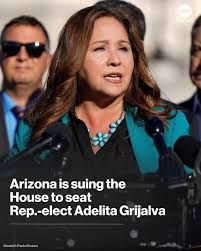

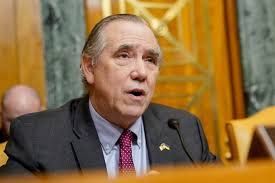













 peej
peej Carissa
 bostonboomer
 dakinikat
 ecocatwoman
 jjlo
jjlo mablue2
 Mama Lopez
 peggysue22
 quixote
 skydancingguestblogger
 Mona (aka Wonk the Vote)



 Sky Dancing
Recent Comments