
Lazy Saturday Reads: America Held Hostage by Madman
Posted: October 14, 2017 Filed under: Afternoon Reads, Foreign Affairs, U.S. Economy, U.S. Politics | Tags: Affordable Care Act, Chad, Donald Trump, health care system, Iran nuclear deal, Trump travel ban 37 Comments
Two Sisters on the Terrace, 1881, Pierre Auguste Renoir
Good Afternoon!!
I’m starting to feel as if we normal Americans are being held hostage. Maybe that’s not the right word for our situation; I’m not sure what to call it, but something awful is happening to us. A minority of deplorable or just plain stupid people elected an ignorant, incompetent, narcissistic wanna-be tyrant to the presidency; and we are being forced to bear witness as he burns our democracy down. The people who could take action–the Republicans refuse to do anything to protect the country. All we can do is hope that Bob Mueller is able to make something happen–and that he does it in time to prevent World War III.
After what Trump did yesterday and the night before, I’m really struggling to write a post this morning. I’ve been feeling increasingly depressed. For months I’ve been waking up every morning fearful of what Trump may have done, and recently I’ve been waking up in the middle of the night and checking Twitter to see if anything horrible has happened. I know this isn’t normal or healthy, but what can I do? I can’t zone out and pretend nothing is happening. Besides, I know I’m not alone. I’ve seen a number of people here and on Twitter who say they are going through the same anxiety. What can we do about the madman in the White House?
Late Thursday night, Trump announced that he will end subsidies that help lower income people purchase health insurance in the ACA exchanges, a move that threatens 1/6th of the U.S. economy. Then yesterday he announced that he will refuse to certify that Iran is in compliance with the nuclear deal we agreed to with numerous other countries under Obama. Dakinikat covered both of these stories in her Friday post, so I won’t go into any more detail about these nightmarish “presidential” decisions.
Now what? The consequences of both of these destructive actions by Trump could be extremely serious, and we’re still dealing with the aftermath of Hurricanes Harvey, Irma, and Maria, as well as the wildfires in California. Will this administration be able (or willing) to handle these Trump-made and natural catastrophes? I fear the answer is no.
Maybe I’m overreacting. If so, I hope someone here can talk me off the ledge.
Meanwhile Trump is very pleased with himself.
When is the last time a POTUS celebrated tanking stocks? Has that ever happened before?

Young girl reading, Renoir
Buzzfeed reports on the Democratic response to the cancellation of the subsidies: Democrats Are Launching A Legal Fight To Save Obamacare’s Subsidy Payments.
A coalition of 19 attorneys general — representing 18 states and the District of Columbia — filed a lawsuit in the US District Court for the Northern District of California that accuses the Trump administration of violating the sections of the Affordable Care Act that require the subsidies, as well as other federal law.
“It’s well past time that President Trump learns that he doesn’t just get to pick and choose which laws he’ll follow or which bills he’ll pay,” California Attorney General Xavier Becerra said on a call with reporters. “Just because he’s in the White House doesn’t mean he can make those decisions.” ….
A coalition of 19 attorneys general — representing 18 states and the District of Columbia — filed a lawsuit in the US District Court for the Northern District of California that accuses the Trump administration of violating the sections of the Affordable Care Act that require the subsidies, as well as other federal law.
“It’s well past time that President Trump learns that he doesn’t just get to pick and choose which laws he’ll follow or which bills he’ll pay,” California Attorney General Xavier Becerra said on a call with reporters. “Just because he’s in the White House doesn’t mean he can make those decisions.
”The lawsuit was filed by attorneys general from California, Connecticut, Delaware, Illinois, Iowa, Kentucky, Maryland, Massachusetts, Minnesota, New Mexico, New York, North Carolina, Oregon, Pennsylvania, Rhode Island, Vermont, Virginia, Washington, and the District of Columbia.
Other stories to check out
Newsweek: Trump Just Made War With Iran and North Korea More Likely Than Ever, Retired Army General Says.
The U.S. and Iran have both taken defensive measures to prepare for a potential conflict following President Donald Trump’s controversial decision Friday to not certify a landmark nuclear treaty between both countries and four other leading powers….
In response to Trump’s decision to add the IRGC to the State Department’s list of foreign terrorist organizations, Iranian lawmaker Alireza Rahimi, a member of the National Security and Foreign Policy Commission, told the Iranian Students’ News Agency that Iran would put the U.S. military on its “list of groups that undermine international security and stability.” The IRGC is an official branch of Iran’s armed forces but also maintains external operations and operates under direct orders from an appointee of Supreme Leader Ayatollah Ali Khamenei.
Renoir, Two girls reading
“Given that the army and [other] armed forces of a country are guarantors of its security, the [possible] move [by the U.S. to designate IRGC forces as terrorists] is tantamount to a declaration of war,” Ali Akbar Salehi, head of Iran’s atomic agency, told British analysts and media figures Thursday during a meeting in London, according to the semiofficial Tasnim News Agency….
Retired Army Major General Paul Eaton, who played a key role in rebuilding and training the Iraqi military in the wake of the 2003 U.S. invasion, on Friday warned that Trump’s decision may not only bring about a new crisis in the Middle East, but further escalate an already tense nuclear standoff with North Korea and further complicate the U.S.’s 16-year military campaign in Afghanistan. He appealed to Congress to not destroy the deal by adding more sanctions during the 60-day window lawmakers now have to take action.
“Donald Trump has moved us closer to a war with Iran, while he has also moved us closer to a nuclear war with North Korea. All while we’re in a war in Afghanistan,” Eaton said in a statement.

Those are the highlights; you might want to read the whole story.
The Boston Globe has an explainer story on Trump’s health care moves: Key questions and answers about Trump’s health care move.
President Donald Trump’s move to stop paying a major “Obamacare” subsidy will raise costs for many consumers who buy their own health insurance, and make an already complicated system more challenging for just about everybody.
Experts say the consequences will vary depending on how much money you earn, the state you live in, and other factors.
Overall, Trump’s decision will make coverage under the Affordable Care Act less secure, because more insurers may head for the exits as their financial losses mount.
I can’t really excerpt this very well, but the story isn’t long and has some helpful information. Basically, poor, working class, and middle class Americans will all be negatively affected.
This piece by ex-Republican conservative George Will is worth reading. It’s directed at the white supremacists like Steve Bannon and Stephen Miller who have Trump’s ear, but I was most interested in what Will had to say about two Republicans who have enabled Trump in his destructive behavior, Mike Pence and Bob Corker:
Renoir, Woman reading
With eyes wide open, Mike Pence eagerly auditioned for the role as Donald Trump’s poodle. Now comfortably leashed, he deserves the degradations that he seems too sycophantic to recognize as such. He did Trump’s adolescent bidding with last Sunday’s preplanned virtue pageant of scripted indignation — his flight from the predictable sight of players kneeling during the national anthem at a football game. No unblinkered observer can still cling to the hope that Pence has the inclination, never mind the capacity, to restrain, never mind educate, the man who elevated him to his current glory. Pence is a reminder that no one can have sustained transactions with Trump without becoming too soiled for subsequent scrubbing.
A man who interviewed for the position Pence captured, Sen. Bob Corker (R-Tenn.), is making amends for saying supportive things about Trump. In 2016, for example, he said he was “repulsed” by people trying to transform the Republican National Convention from a merely ratifying body into a deliberative body for the purpose of preventing what has come to pass. Until recently, Corker, an admirable man and talented legislator, has been, like many other people, prevented by his normality from fathoming Trump’s abnormality. Now Corker says what could have been said two years ago about Trump’s unfitness.
The axiom that “Hell is truth seen too late” is mistaken; damnation deservedly comes to those who tardily speak truth that has long been patent. Perhaps there shall be a bedraggled parade of repentant Republicans resembling those supine American communists who, after Stalin imposed totalitarianism, spawned the gulag, engineered the Ukraine famine, launched the Great Terror and orchestrated the show trials, were theatrically disillusioned by his collaboration with Hitler: You, sir, have gone too far.

Wow. Read the rest at the WaPo.
More fallout from Trump’s disastrous policies at Newsweek: After Trump Travel Ban, Chad Pulls Troops from Boko Haram fight in Niger.
President Donald Trump’s decision to place Chad on his revised travel ban shocked experts and former U.S. officials who warned it could have major consequences for the fight against terrorism in Africa.
And it appears Trump’s controversial decision may have already damaged alliances on the continent—which is threatened by a range of militants, including affiliates of Al-Qaeda and the Islamic State militant group.
Chad has pulled hundreds of troops from neighboring Niger, where they had been stationed to assist in a regional fight against Boko Haram, the Nigerian militant Islamist group, Reuters reported.
I’m going to end with an odd Trump story from Vanity Fair: Donald Trump’s Face Renoir: The Untold Story.
A girl reading, 1891, Renoir
Years ago, while reporting a book about a real-estate developer and reality-TV star named Donald Trump,Tim O’Brienaccompanied his subject on a private jet ride to Los Angeles. The plane, as you can imagine, was overly ornate; hanging on one wall, for instance, was a painting of two young girls—one in an orange hat, the other wearing a floral bonnet—in the impressionistic style of Renoir.
Curious, O’Brien asked Trump about the painting: was it an original Renoir? Trump replied in the affirmative. It was, he said. “No, it’s not Donald,” O’Brien responded. But, once again, Trump protested that it was.
“Donald, it’s not,” O’Brien said adamantly. “I grew up in Chicago, that Renoir is called Two Sisters on the Terrace, and it’s hanging on a wall at the Art Institute of Chicago.” He concluded emphatically: “That’s not an original.”
Trump, of course, did not agree, but O’Brien dropped the conversation topic and moved on with his interview. He thought that he had heard the last of the Renoir conversation. But the next day, when they boarded the plane to head back to New York City, Trump again pointed to the painting, and as if the conversation had never happened, he pointed to the fake and proclaimed, “You know, that’s an original Renoir.” O’Brien, chose not to engage, and dropped the conversation….
Then, in 2016, the unimaginable happened: Trump was elected president of the United States. A few days afterward, Trump sat down with 60 Minutes for one of his first interviews as president-elect. O’Brien was watching the interview, which took place in Trump Tower. It was highly choreographed, with cameras set up precisely where Trump wanted them. O’Brien watched Trump seated in an ugly mini-throne—“the kind of furniture Trump loves,” O’Brien notes—and sure enough, in the background, hanging on the a wall, was that fake Renoir.

It’s not just dementia; Trump has always been insane. I’ve illustrated the post with Renoir paintings in honor of his lunacy.
What stories are you following today?
Thursday Reads: Donald Trump, the Worst Person in the World, and Other News
Posted: October 12, 2017 Filed under: Afternoon Reads, U.S. Politics | Tags: Ben Affleck, Carmen Yulín Cruz, child abuse, Donald Trump, Donald Trump Jr, Harvey Weinstein, Hillary Clinton, Hurricane Maria, Ivana Trump, Melissa McEwan, Puerto Rico, rape culture, Sexual harassment, stock market and national debt, Trump is a moron 22 Comments Good Afternoon!!
Every day I wake up to find that Trump has topped himself in terms of cruelty, ignorance, and selfishness. I guess if Hitler were alive, he’d be a worse person than Trump, but Trump is just beginning his attack on human decency from his powerful position.
The Washington Post: Trump threatens to abandon Puerto Rico recovery effort.
President Trump served notice Thursday that he may pull back federal relief workers from Puerto Rico, effectively threatening to abandon the U.S. territory amid a staggering humanitarian crisis in the aftermath of Hurricane Maria.
Declaring the U.S. territory’s electrical grid and infrastructure to have been a “disaster before hurricanes,” Trump wrote Thursday that it will be up to Congress how much federal money to appropriate to the island for its recovery efforts and that relief workers will not stay “forever.”
Three weeks after Maria made landfall, much of Puerto Rico, an island of 3.4 million people, remains without power. Residents struggle to find clean water, hospitals are running short on medicine, and commerce is slow, with many businesses closed.
Trump on Thursday sought to shame the territory for its own plight. He tweeted, “Electric and all infrastructure was disaster before hurricanes.” And he quoted Sharyl Attkisson, a television journalist, as saying, “Puerto Rico survived the Hurricanes, now a financial crisis looms largely of their own making.”
He also wrote: “We cannot keep FEMA, the Military & the First Responders, who have been amazing (under the most difficult circumstances) in P.R. forever!”

San Juan Mayor Carmen Yulín Cruz comforts a hurricane survivor.
It has been three weeks, and the Federal Government response has been pathetic and incompetent. People in Puerto Rico have been for help, and Trump has interpreted their pleas as criticism of him personally. This is a very sick man, and he must be removed from power before he destroys our country.
Vox: Everything that’s been reported about deaths in Puerto Rico is at odds with the official count.
Death tolls are the primary way we understand the impact of a disaster. And for nearly two weeks after Hurricane Maria hit Puerto Rico, as a humanitarian crisis was intensifying, the death toll was frozen at 16.
“Sixteen people certified,” Trump said on October 3 during his visit to the island, repeating a figure confirmed by the territory’s governor. “Everybody watching can really be very proud of what’s taken place in Puerto Rico.” ….
The death toll from the hurricane is now up to 45, according to Gov. Ricardo Rosselló. But 90 percent of the 3.4 million American citizens on the island still don’t have power, and 35 percent still don’t have water to drink or bathe in. And given how deadly power outages can be, 45 deaths seems low, according to disaster experts.
At Vox, we decided to compare what the government has been saying with other reports of deaths from the ground. We searched Google News for reports of deaths in English and Spanish media from Puerto Rico since Hurricane Maria. We found reports of a total of 81 deaths linked directly or indirectly to the hurricane. Of those, 45 were the deaths certified by the government. The remaining 36 deaths were confirmed by local public officials or funeral directors, according to the reports. We also found another 450 reported deaths, most of causes still unknown, and reports of at least 69 people still missing.
Please go read the rest if you can.

Donald Trump Jr. and Donald Trump during 1988 U.S. Open in 1988 (Photo by Ron Galella, Ltd./WireImage)
In case you imagined Trump ever had any human decency, here’s a little about what he did to his eldest son Donald Jr.
At The New York Times: Gail Collins discusses some revelations from Ivana Trump’s new book: The Trumps, the Poodle, the Sex Scandal.
The book is supposed to be about good parenting. But the most important thing you learn is that we can never say another mean thing about Donald Jr. again. Really, it sounds like the worst childhood ever. His story begins with Dad resisting the idea of naming the baby after him, in case his first born turned out to be “a loser.”
As a toddler, Don Jr. broke his leg due to a negligent babysitter. Then one day when Ivana was out of town, he and Eric called hysterically to report they had found their nanny unconscious in the basement. (She died.)
Wait, there’s more: During their infamous divorce, Dad sent a bodyguard from his office to get Junior, announcing: “You’re not getting him back. I’m going to bring him up myself.”
Ivana says she responded: “O.K., keep him. I have two other kids to raise.” Silence and 10 minutes later the bodyguard returned her son.
It was, Trump’s ex-wife concluded, “a tactic to upset me.” However for some reason, at around this time Don Jr. stopped speaking to his father and wound up getting shipped to boarding school.
After several more years of being the namesake of a man who was then famous for starring in the most sensational tabloid stories of the era, Don Jr. graduated from college, moved to Colorado and got a job bartending. Ivana said she made her disapproval clear by “cutting him off” until he gave up, returned to New York and joined the Trump Organization.

People Magazine recounts the stories told by a college classmate–I wrote about this when it first came out.
Vanity Fair reported that Scott Melker, a Penn classmate, wrote on Facebook, “Donald Jr. was a drunk in college. Every memory I have of him is of him stumbling around on campus falling over or passing out in public, with his arm in a sling from injuring himself while drinking. He absolutely despised his father, and hated the attention that his last name afforded him.”
Melker also described an alleged incident in which Trump showed up to his son’s dorm room to take him to a Yankees game. Trump Jr. was dressed in a Yankees jersey and when he opened the door to his father, “without saying a word, his father slapped him across the face, knocking him to the floor in front of all of his classmates. He simply said, ‘Put on a suit and meet me outside,’ and closed the door.” A spokesperson for the Trump family told Vanity Fair this story is “completely false.”
The man in the White House is pure evil. There is so much horrifying news about him that it’s impossible to pay attention to all of it. Here’s more proof that Trump is not only evil, but he is a moron, just as Rex Tillerson said last summer.
CNBC: Trump just claimed stock market gains actually offset national debt.
President Donald Trump on Wednesday said that, “in a sense,” gains made by private financial markets reduce the national debt. The claim is incorrect on its face, but it does point to how the president views the economic interplay between the federal government and Wall Street.
“The country — we took it over and owed over $20 trillion,” Trump said in an interview on Fox News, referring to the total national debt, which has hovered near $20 trillion since early 2016.
“As you know, the last eight years, [the federal government] borrowed more than it did in the whole history of our country,” Trump said. “So they borrowed more than $10 trillion, right? And yet we picked up $5.2 trillion just in the stock market. Possibly picked up the whole thing in terms of the first nine months, in terms of value.”
“So you could say, in one sense, we’re really increasing values. And maybe in a sense we’re reducing debt. But we’re very honored by it,” Trump said.

WTF?!
For evidence that the two metrics have little to no bearing on one another, look no further than the eight years of the Obama presidency: Between 2009 and 2017, the S&P 500 returned 235 percent while the national debt soared.
And while Trump likes to talk about “reducing debt,” the economic policy proposals he’s unveiled so far, especially his tax reform plan, could easily add another trillion dollars to the debt, according to economists.
The Harvey Weinstein scandal continues as more women come forward every day. Oh, and have you heard that the whole thing is Hillary Clinton’s fault? I wonder was it also her fault when Trump said he liked to “grab them by the pussy?”
Sady Doyle at Elle: Harvey Weinstein and the Crisis of Complicity.
When giants fall, they fall fast. We haven’t even been living with the revelation of Harvey Weinstein’s sexual harassment history for a week, yet the news has gotten worse every day. From the New York Times’ initial report — which specified the now-familiar details of hotel meetings, ulterior motives, and “massages” that were less than optional — the accusations have escalated to include masturbating in front of an actress, forced oral sex, and vaginal rape. (Weinstein’s spokesperson, Sallie Hofmeister, says ““Any allegations of non-consensual sex are unequivocally denied by Mr. Weinstein. Mr. Weinstein has further confirmed that there were never any acts of retaliation against any women for refusing his advances.”) Weinstein’s accusers now include Gwyneth Paltrow, Asia Argento, Patricia Arquette, and Angelina Jolie. Meanwhile, a former New York Times reporter has now alleged that a story she was working on in 2004 related to Weinstein’s behavior was “gutted” after she received phone calls from Russell Crowe and Matt Damon vouching for a former Weinstein colleague. (Damon vigorously denies he knew anything about Weinstein’s behavior). Weinstein himself has been forced out of the Weinstein Company.
As always, with such a disturbing story, people are looking to assign blame. Whose fault is Harvey Weinstein?
Harvey Weinstein, apparently, is Hillary Clinton’s fault.
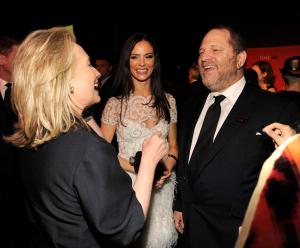
Click on the link to read the rest.
Actress Rose McGowan was suspended from Twitter after she accused actor Ben Affleck of having “prior knowledge of Harvey Weinstein’s misconduct, including toward her”.
From the New York Times:
Rose McGowan
In a sign that the controversy over the producer Harvey Weinstein could engulf other people in the film industry, the actress Rose McGowan accused Ben Affleck of lying on Tuesday about his knowledge of Mr. Weinstein’s alleged sexual harassment and assaults of women.
Ms. McGowan, in a tweet and a subsequent email exchange with The New York Times on Tuesday night, said she had told Mr. Affleck that Mr. Weinstein had behaved inappropriately with her.
Mr. Affleck, who rose to stardom with help from Mr. Weinstein on the 1997 film “Good Will Hunting,” had said earlier Tuesday that he was “angry” over Mr. Weinstein’s alleged abuse of women, but he gave no indication of whether he knew about it. “I find myself asking what I can do to make sure this doesn’t happen to others,” Mr. Affleck said in a statement.

From Shakesville: This is Rape Culture.
Two things I’ve seen this morning are perfect, terrible illustrations of how the rape culture works.
First, there was the news that Twitter has suspended Rose McGowan for publicly stating that Ben Affleck had lied about what he knew regarding Harvey Weinstein.
https://twitter.com/Shakestweetz/status/918454326519123970
Yesterday, Ben Affleck has to apologize for actually sexually assaulting someone, which trended on Twitter all day, but he isn’t suspended. Who is suspended is Rose McGowan, who merely contradicted Affleck’s claim not to have known about Weinstein’s sexual abuse, which she knows because she’s the one who told him.
This, as I shouldn’t have to point out, couldn’t be a clearer case of the way institutions work to protect abusers and their abettors, while silencing survivors.
The second thing Melissa wrote about is this excerpt from a piece by Doree Shafrir at Buzzfeed: What To Do With “Shitty Media Men”?
I’ve never been assaulted or harassed by someone I worked with, and it’s only been lately that I’ve realized how messed up it is that I feel fortunate that’s the case. There have been a few uncomfortable incidents for me personally, like the editor who Gchatted me late at night, seemingly drunk, and propositioned me, or the art director who was way too interested in my intern experience and put his hand on my thigh at a party. But people whispered about the guys who were really bad, the ones who coerced young women into sex, the ones who were physically abusive. The ones to stay away from.
Back to Melissa’s piece:
Shafrir begins by saying she’s “never been assaulted or harassed,” only to then describe two instances of harassment. To be clear, I’m not auditing the way she feels about or identifies those experiences, but simply noting they meet the definition of workplace harassment.
The instinct to mitigate manifests in different ways: Here, Shafrir straightforwardly discounts her own experiences as harassment. My go-to strategy as a younger woman was always to turn incidents of sexual harassment and/or assault into “humorous” anecdotes, which allowed me to talk about what happened without really talking about what happened.
I hope you’ll go to Shakesville to read the rest.
I have so many more links saved up, but I’m out of time and space. Please post your thoughts and recommended links in the comment thread below.
Monday Reads: Adult Day Care
Posted: October 9, 2017 Filed under: morning reads, U.S. Politics | Tags: Bob Corker, Columbus Day, corruption, Dana Rohrabacher, Donald Trump, freedom of speech, Indianapolis Colts, Mike Pence, Puerto Rico, San Francisco 49ers, White House adult day care, World War III 46 Comments
Good Morning!!
Is this finally the beginning of the end? Trump has been attacking fellow Republicans for months, and this time one of them finally hit back hard. Yesterday Trump lashed out at Tennessee Senator Bob Corker on Twitter.
Of course none of that is true. Corker’s office said that Trump had repeatedly asked him to run for reelection, and offered to endorse him. As for the Secretary of State job, Corker withdrew his name from contention after his interview with Trump.
Corker’s Twitter response:
Then last night Corker gave a stunning interview to the New York Times: Bob Corker Says Trump’s Recklessness Threatens ‘World War III’
Senator Bob Corker, the Republican chairman of the Senate Foreign Relations Committee, charged in an interview on Sunday that President Trump was treating his office like “a reality show,” with reckless threats toward other countries that could set the nation “on the path to World War III.”
In an extraordinary rebuke of a president of his own party, Mr. Corker said he was alarmed about a president who acts “like he’s doing ‘The Apprentice’ or something.”
“He concerns me,” Mr. Corker added. “He would have to concern anyone who cares about our nation.”
Mr. Corker’s comments capped a remarkable day of sulfurous insults between the president and the Tennessee senator — a powerful, if lame-duck, lawmaker, whose support will be critical to the president on tax reform and the fate of the Iran nuclear deal….
The senator views Mr. Trump as given to irresponsible outbursts — a political novice who has failed to make the transition from show business.
Mr. Trump poses such an acute risk, the senator said, that a coterie of senior administration officials must protect him from his own instincts. “I know for a fact that every single day at the White House, it’s a situation of trying to contain him,” Mr. Corker said in a telephone interview.

There’s more:
…Mr. Corker, speaking carefully and purposefully, seemed to almost find cathartic satisfaction by portraying Mr. Trump in terms that most senior Republicans use only in private….
Without offering specifics, he said Mr. Trump had repeatedly undermined diplomacy with his Twitter fingers. “I know he has hurt, in several instances, he’s hurt us as it relates to negotiations that were underway by tweeting things out,” Mr. Corker said.
All but inviting his colleagues to join him in speaking out about the president, Mr. Corker said his concerns about Mr. Trump were shared by nearly every Senate Republican.
“Look, except for a few people, the vast majority of our caucus understands what we’re dealing with here,” he said, adding that “of course they understand the volatility that we’re dealing with and the tremendous amount of work that it takes by people around him to keep him in the middle of the road.”

Two Media reactions:
ABC News The Note: What’s dangerously serious about Trump’s feud with Corker
What happened to the calm part? The storms have begun, and just might spill over into real wars before they’re done. Sen. Bob Corker’s public feud with President Trump is no mere war of words, even in the Trumpian insult era. Corker is blowing the lid off of months of private frustrations and worries, harbored by erstwhile allies of the president, that the commander-in-chief is reckless, dishonest and could put the nation “on the path to World War III,” as Corker told The New York Times’ Jonathan Martin. “He would have to concern anyone who cares about our nation,” Corker said. Combine that with the tensions between Trump and Secretary of State Rex Tillerson, and Trump and Chief of Staff John Kelly, and this has far bigger consequences than your typical Twitter feud. Just words? Perhaps. But they are words that are spurring confrontation with a nuclear-armed North Korea, and more words will come this week that could lead Iran to restart its own nuclear program. Corker’s reference to the White House as an “adult day care center” suggests that grown-ups are ultimately in charge. This may be the week that tests that proposition, and sorts out high-level presidential strategy from absolute and dangerous recklessness.
Greg Sargent at The Washington Post, referring to the NYT interview: Bob Corker just confirmed it: Republicans know Trump is unfit.
Corker declined to answer when asked if he believes Trump is unfit for the presidency. But the only reasonable way to read all these comments is as a declaration that Trump is indeed unfit — and that most Republicans know it. After all, Corker had previously said that Trump’s inner circle is helping to “separate our country from chaos.” Now he has added that Trump needs to be restrained by his inner circle from devolving into conduct that could end up unleashing untold global destruction — and that most Republicans know it.
Corker is getting a lot of press plaudits for his unvarnished appraisal. But as James Fallows writes, there is a good deal that Corker can actually do right nowif he wants to mitigate the threat that he himself says Trump poses. As chairman of the Senate Foreign Relations Committee, he has a range of powers that could help constrain Trump, including the power to hold public hearings to draw public attention to the ways in which Trump’s temperament threatens untold damage. At a minimum, Corker can be asked whether he intends to do these things, and if not, why not.
But whatever Corker says and does now, his new comments should precipitate a fundamental change in the way the press treats the ongoing GOP enabling of Trump. Corker has forced out into the open the fact that Republicans recognize the sheer abnormality and danger to the country of the situation we’re in, which opens the door for much tougher media questioning of them about their awareness of — and acquiescence to — this state of affairs.
This can start with a simple query: Do Republicans agree with Corker that Trump regularly needs to be constrained by his top advisers from engaging in conduct that threatens severe damage to the country and the world? If so, what are Republicans prepared to do about itrgent mentions.

People are still talking about Mike Pence’s ridiculous display at the Indianapolis Colts game yesterday on a day that was supposed to be dedicated to honoring long-time Colts quarterback Peyton Manning.
As I’m sure you’re aware, Trump and Pence cooked up a public relations stunt. Knowing that a number of players for the Colts’ opponent the SF 49ers would kneel during the national anthem, the two agreed that Pence would fly to Indy from Las Vegas and then abruptly walk out on the game after the anthem. The press knew this, because Pence told them to wait outside for him because he’d be leaving soon. Pence then flew back out to California for a fund-raiser for Putin’s favorite Congressman Dana Rohrabacher and other Republicans.
Pence is getting plenty of criticism for using taxpayer money to fly back and forth across the country for a political stunt.
CNN: The price tag for Pence’s trip to Indianapolis.
How much did Vice President Mike Pence’s trip to Indianapolis to watch — and then abruptly leave — a football game Sunday between the Indianapolis Colts and San Francisco 49ers cost?
Holier than thou
Here is an estimate of just the air costs (which does not include costs of advance personnel, Secret Service or support on the ground):According to the Air Force, flying a C-32, the model of plane used for Air Force 2, for one hour costs about $30,000. Pence’s flight from Las Vegas to Indianapolis Saturday took about three hours and 20 minutes, so it cost about $100,000.\
Pence then flew from Indianapolis to Los Angeles on Sunday, which took about four hours and 45 minutes, costing about $142,500.Some costs of the flight into Los Angeles will be reimbursed by the Republican National Committee because Pence is attending a political event there.
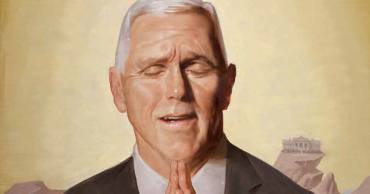
If he had flown just from Las Vegas to Los Angeles, a trip lasting about 90 minutes, the cost would have been about $45,000.
I don’t usually like Connor Friedersdorf, but he has a good reaction at The Atlantic: Mike Pence’s Flagrant Waste of Taxpayer Money.
On Sunday, Vice President Mike Pence made a big show of leaving an NFL game early. He declared himself upset that some players knelt during the singing of the Star Spangled Banner. “I will not dignify any event that disrespects our soldiers, our flag, or our national anthem,” he declared, as if attacking those things was the intent of the athletes.
The NFL players knelt in protest because they believe that African Americans are being denied their self-evident rights to life and liberty by a prejudiced criminal-justice system.
“This is not about the military, this is not about the flag, this is not about the anthem,” 49ers Safety Eric Reid later told reporters. “My mother served in the armed forces. Three of my uncles served … I have the utmost respect for the military, for the anthem, for the flag … This is about systemic oppression that has been rampant in this country … I will keep doing what I feel is necessary, to use the platform that I have, to make changes. It’s really disheartening when everything you were raised on, everything I was raised on, was to be the best person I can be, to help people who need help, and the vice president of the United States is trying to confuse the message that we’re trying to put out there. I don’t know what to say about it.”
Pence is not compelled to agree with how players protest. But by fleeing the entire NFL game, he adopted the tactics of a childish, petulant snowflake who reacts to speech he dislikes by misrepresenting it, expressing umbrage, and retreating to a “safe space.”
The major difference?
When an immature teenager makes a show of fleeing from expression that he regards as politically incorrect, he’s typically evading ideas he ought to confront on his own dime. Whereas Pence spent taxpayer money to get to that NFL game. Lots of it.
There is so much more news, and so little time and space to discuss it. Most notably, Puerto Rico is still in agony, and the Trump administration seems determined not to help.
The Daily Beast: Without Power Until Next Year, Puerto Ricans Are Leaving—Maybe Forever
VIEQUES, Puerto Rico—Joe and Maria Bernard cook in the dark over a gas stove outside their small hotel, the Tropical Guest House. “The days feel shorter,” says Maria, “we just have 12 hours of daylight to get everything done.”
When it gets dark, the entire island of Vieques is dark.
Turnkey Hotel
This is life on the world-renowned tourist island. And it’s going to be life for at least the next six to eight months, if not longer, before electricity is restored here.
“We’re in denial,” says Maria, “we’re going to give it another two weeks maybe a month, then maybe we’ll have to go back to the States.”
In 2005, the couple traded in the bustle of New York and jobs in the television industry for a more rewarding future in Puerto Rico, which offered triple-tax exemption for resettling here. With their savings, they got a loan to buy their turnkey hotel.
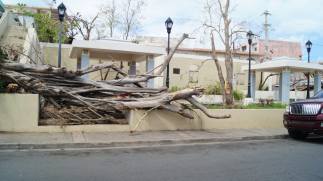
Read more painful stories at the link.
Oh, and today is Columbus Day. From the New York Times: Why People Have Protested Columbus Day Almost From Its Start.
A reverend at Calvary Baptist Church in Manhattan appeared on the front page of The New York Times after he criticized Christopher Columbus, the Italian navigator who sailed to the Americas on behalf of Spain in 1492.
The reverend, R. S. MacArthur, said Columbus was “cruel, and guilty of many crimes.”
That complaint may sound familiar to those who condemn the explorer for opening a door to European colonialism, which brought disease, destruction and catastrophic wars to the people who already lived here.
But Mr. MacArthur said those words more than a century ago, in 1893. His comments suggested he was more affronted by Spain, which he called “the poorest and most ignorant country in Europe,” than concerned about Native Americans.
He was one of many to have questioned the legacy of the explorer, whose arrival in the Americas has been celebrated in the United States for hundreds of years.
Read the rest at the NYT.
What’s left of Hurricane Nate has arrived in New England this morning giving us lots of rain and 40mph winds. I’m glad because it has been hot here for the past few days.
What’s happening where you are? What stories are you following today?
Thursday Reads
Posted: October 5, 2017 Filed under: Afternoon Reads, U.S. Politics | Tags: Boston, Chicago, Donald Trump, elderly abuse, guardian system, Jesus Campos, Kody Robertson, Las Vegas Mass shooting, libraries, Michelle Vo, Nevada, Puerto Rico, Russia investigation 36 Comments
Dream Series 5 The Library by Jacob Lawrence 1967
Good Afternoon!!
Before I get to today’s news, I want to call attention to this investigative article in The New Yorker on legal elderly abuse. The author, Rachel Aviv, deeply researched the guardianship system in Nevada, but this apparently happens in other states as well. It’s a long read, but well worth it, especially for those of us who have elderly parents–and who are getting older ourselves.
How the Elderly Lose Their Rights
For years, Rudy North woke up at 9 a.m. and read the Las Vegas Review-Journal while eating a piece of toast. Then he read a novel—he liked James Patterson and Clive Cussler—or, if he was feeling more ambitious, Freud. On scraps of paper and legal notepads, he jotted down thoughts sparked by his reading. “Deep below the rational part of our brain is an underground ocean where strange things swim,” he wrote on one notepad. On another, “Life: the longer it cooks, the better it tastes.”
Rennie, his wife of fifty-seven years, was slower to rise. She was recovering from lymphoma and suffered from neuropathy so severe that her legs felt like sausages. Each morning, she spent nearly an hour in the bathroom applying makeup and lotions, the same brands she’d used for forty years. She always emerged wearing pale-pink lipstick. Rudy, who was prone to grandiosity, liked to refer to her as “my amour.”
In the Library, John Watkins Chapman
On the Friday before Labor Day, 2013, the Norths had just finished their toast when a nurse, who visited five times a week to help Rennie bathe and dress, came to their house, in Sun City Aliante, an “active adult” community in Las Vegas. They had moved there in 2005, when Rudy, a retired consultant for broadcasters, was sixty-eight and Rennie was sixty-six. They took pride in their view of the golf course, though neither of them played golf.
Rudy chatted with the nurse in the kitchen for twenty minutes, joking about marriage and laundry, until there was a knock at the door. A stocky woman with shiny black hair introduced herself as April Parks, the owner of the company A Private Professional Guardian. She was accompanied by three colleagues, who didn’t give their names. Parks told the Norths that she had an order from the Clark County Family Court to “remove” them from their home. She would be taking them to an assisted-living facility. “Go and gather your things,” she said.
Rennie began crying. “This is my home,” she said.
One of Parks’s colleagues said that if the Norths didn’t comply he would call the police. Rudy remembers thinking, You’re going to put my wife and me in jail for this? But he felt too confused to argue.
Parks drove a Pontiac G-6 convertible with a license plate that read “crtgrdn,” for “court guardian.” In the past twelve years, she had been a guardian for some four hundred wards of the court. Owing to age or disability, they had been deemed incompetent, a legal term that describes those who are unable to make reasoned choices about their lives or their property. As their guardian, Parks had the authority to manage their assets, and to choose where they lived, whom they associated with, and what medical treatment they received. They lost nearly all their civil rights.

That’s just the introduction. I hope you’ll go read the rest.

The Library, Elizabeth Shippen Green, 1905
The Las Vegas gun massacre continues to dominate the news. I’d like to recommend a couple of positive articles coming out of the horror. You may have read this one by Wesley Lowery of the Washington Post already, but just in case: Two strangers bond over country music and beer. Then the gunshots started.
Up-and-coming country star Luke Combs had just started his set on the smaller of the two festival stages when Kody Robertson, an auto parts salesman from Columbus, Ohio, squeezed in at the end of the bar next to Michelle Vo, an insurance agent from Los Angeles.
The 32-year-olds connected immediately. They joked about their mutual love of golf. He recommended new beers for her to try as she showed him the large floral tattoo covering much of her back. They realized that they were both staying at the Luxor.
A longtime country music fan, Robertson was in Vegas with a group of friends and told Vo about the fun they’d had at last year’s Route 91 Harvest festival. Vo replied that she’d only recently fallen for the genre; this was her first festival. She was here alone. By the time the night’s final act took the main stage, the fast friends had settled into a spot about 20 yards from the right side of the stage, nestled between a few cuddly married couples and a rambunctious bachelorette party.
It was 10:08 p.m. Robertson and Vo searched the air for the fireworks they assumed they were hearing. Then came a second burst: indiscriminate gunfire hailing from a 32nd-floor window at the Mandalay Bay Resort and Casino.
Screams punctuated the pop-pop-pop. Jason Aldean, the headline act, ran from the stage. A bullet pierced the left side of Vo’s chest.
“She got hit and I turned and saw her immediately fall to the ground,” Robertson recalls. “She was literally right beside me, maybe two feet away.”
Robertson threw his body on top of hers as a shield from the bullets and, when the firing finally seemed to stop, worked with another man to carry Vo out of the venue — pausing for cover each time the gunfire resumed.
Robertson could have just left it there, but instead he recovered Vo’s purse and cell phone and embarked on a long search to find Michelle as well as communicating with her family. If you haven’t read it already, please do. Lowery’s writing is just brilliant.
The Daily Beast: Unarmed Security Guard Took On Las Vegas Killer Stephen Paddock.
LAS VEGAS—Jesus Campos had no firearm when he found Stephen Paddockand approached his room on the 32rd floor of Mandalay Bay on Sunday night.
Paddock, who had rigged cameras in the hallway and on the peephole of the door, saw Campos coming and fired through the door, hitting him in the leg, said Dave Hickey, president of the International Union, Security, Police and Fire Professionals of America. The union represents Campos and hundreds of security guards at Mandalay Bay.
The Library, Hotel Lambert, Alexandre Serebriakoff
When Campos was hit, he radioed casino dispatch and told them his location—and Paddock’s.
“We received information via their dispatch center…that helped us locate where this individual was sequestered,” Clark County Sheriff Joseph Lombardo told reporters Tuesday.
When Campos first arrived on the 32nd floor, he did so by elevator because Paddock had somehow blocked stairwell doors leading to the hallway outside of his room, Hickey said. The door to the room itself was also barricaded, Campos found when he tried to open it, just before the bullets came through the door.
Police officers subsequently approached the room and were met with 200 rounds from Paddock, Lombardo said on Wednesday night. Police fell back until SWAT arrived.
Campos, wounded, stayed on the floor and even went door-to-door, clearing rooms with police, Lombardo said, until he was ordered to leave because he was wounded.

Click on the link to read the rest. Here are a few more stories you might want to check out.
The New York Times: Las Vegas Shooting: Investigators Grapple With Gunman’s ‘Secret Life’
Las Vegas Journal-Review: Las Vegas Strip shooter targeted aviation fuel tanks, source says.
BBC News: Las Vegas shooting: Paddock may have planned to escape.
NBC Boston: Sources: Las Vegas Shooter TheResearched Possible Boston Locations.
Chicago Tribune: Chicago police investigating reports that Las Vegas gunman booked hotel rooms overlooking Lollapalooza.

The Library, WindsorCastle, 1838 James Baker Pyne
The massacre in Las Vegas has completely overshadowed the Puerto Rico crisis in the headlines, but the situation there is still dire. NPR reports: 112 Degrees With No Water: Puerto Rican Hospitals Battle Life And Death Daily.
Every day across Puerto Rico, with its shattered power grid, hospitals are waging a life-and-death battle to keep their patients from getting sicker in the tropical heat. Now two weeks after the storm, about three-quarters of Puerto Rico’s hospitals remain on emergency power. This creates dangerous conditions for critically ill patients.
At the Pavia Arecibo Hospital, about an hour west of San Juan, administrator Jose Luis Rodriguez wipes sweat from his worried brow. “We don’t have any air conditioning,” he says. “We can handle maybe a week, but it’s already been two weeks almost.”
The government calls them “indirect deaths” – those who died after the violent storm: heart attack victims, people on kidney dialysis machines that failed, people who fell off roofs inspecting storm damage, and people killed in auto accidents on highways made more treacherous from Maria’s destruction.
“So far after the storm we have had 49 dead bodies,” says Rodriguez. Earlier this week, the governor of Puerto Rico raised the official fatality figure for Hurricane Maria from 16 people to 34. But with unofficial reports like the one from Arecibo, that number is expected to rise.
More at the link.
USA Today: Puerto Rico health system on life support two weeks after Hurricane Maria.
SAN JUAN, Puerto Rico — Two weeks after Hurricane Maria toppled Puerto Rico’s communications towers, wrecked its electrical grid and knocked out power to water systems, medical officials said the island’s health system is “on life support.”
Among the multiple impacts that have left the island’s medical system deeply damaged:
-Patients are dying because of complications related to the primitive conditions and difficult transportation issues so many island residents now endure.
-A lack of transportation in small towns makes it difficult to transfer patients to larger hospitals.
-An administrator in a small-town hospital has to drive her car to an ambulance company a mile away to ask for a patient to be transferred to a larger hospital.
– Severe lack of communications on the island has resulted in less triage and coordination between hospitals, and more patients arriving at large medical centers than usual, which has stretched capacity.
-Doctors are afraid to discharge patients after surgery to places with unsanitary conditions and where care and transportation may not exist, adding strain to an already strained system.

Other stories of possible interest:
The Guardian: Trump came to Puerto Rico like an emperor: with pomp and little sympathy.
GQ: Turns Out Trump Spent His Puerto Rico Trip “Helping” in the Wealthy Suburbs.
Chicago Tribune: Trump said he wants to bail out Puerto Rico. His budget head says he didn’t mean it.
This is turning out to be a link dump, because there is so much news. I haven’t even gotten to the latest stories on the Russia investigation, and I’m running out of space. Some links to explore:
Business Insider: ‘The issue of collusion is still open’: Top senators hint the Russia probe is heating up.
Newsweek: Russia Investigation: Tell-Tale Signs Trump is Expecting the Worst.
Bloomberg: Russia Needed Help Targeting U.S. Voters, Two Former CIA Leaders Say.
Talking Points Memo: Russia Appeared To Target Wisconsin’s Elections Body Via A Banner Or Popup Ad.
Politico: Trump pushes for Senate intel panel probe of ‘Fake News Networks’ in U.S. (What a moron!)
CNN: FBI chief on Russian hacking: We ‘should have seen this coming.’
What else is happening? What stories are you following?
Lazy Saturday Reads: Trump Blames Puerto Rico for Hurricane Maria
Posted: September 30, 2017 Filed under: morning reads, U.S. Politics | Tags: Donald Trump, Hurricane Maria, malignant narcissism, Mayor Carmen Yulín Cruz, natural disasters, Puerto Rico 58 Comments
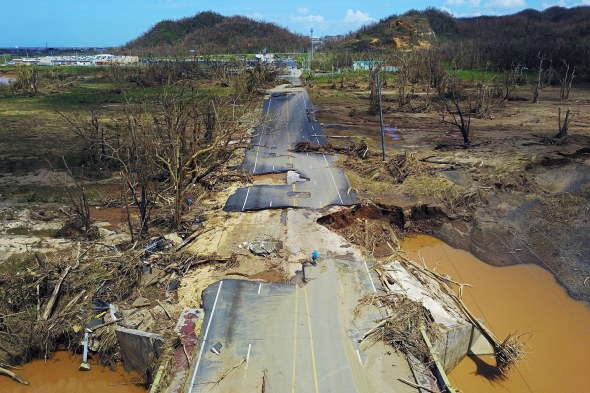
A bicyclist rides down a damaged road in Toa Alta, west of San Juan, Puerto Rico. RICARDO ARDUENGO AFP GETTY IMAGES
Good Morning!!
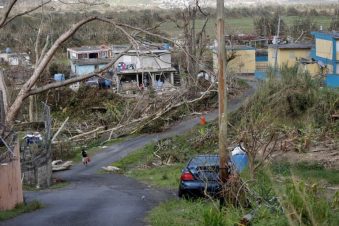
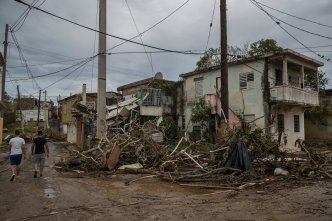
The illustrations in this post are scenes of the devastation in Puerto Rico in the aftermath of Hurricane Maria.
Yesterday Carmen Yulín Cruz, Mayor of San Juan, Puerto Rico begged for help from the “president” of the U.S. and/or anyone who could hear her plea. The transcript of her remarks from The Guardian:
“We are dying here. And I cannot fathom the thought that the greatest nation in the world cannot figure out the logistics for a small island of 100 miles by 35 miles. So, mayday, we are in trouble.
“Fema [the Federal Emergency Management Administration] asks for documentation, I think we’ve given them enough documentation.”
“They had the gall this morning – look at this [gestures to two large binders filled with paper] – they had the gall this morning of asking me: ‘What are your priorities, mayor?’
“Well, where have you been?
“And I have been very respectful of the Fema employees. I have been patient but we have no time for patience any more.
“So, I am asking the president of the United States to make sure somebody is in charge that is up to the task of saving lives.
“They were up the task in Africa when Ebola came over. They were up to the task in Haiti [after the earthquake of 2010]. As they should be. Because when it comes to saving lives we are all part of one community of shared values.
“I will do what I never thought I was going to do: I am begging. I am begging anyone that can hear us to save us from dying. If anybody out there is listening to us, we are dying. And you are killing us with the inefficiency and bureaucracy.
“We will make it with or without you because what stands behind me is all due to the generosity of other people.
“Again, this is what we got last night: four pallets of water, three pallets of meals and 12 pallets of infant food. Which, I gave them to Comerío, where people are drinking out of a creek.
“So I am done being polite. I am done being politically correct. I am mad as hell because my people’s lives are at stake. And we are but one nation. We may be small, but we are huge in dignity and zealous for life.
“So I’m asking members of the press to send a mayday call all over the world. We are dying here. And if we don’t stop and if we don’t get the food and the water into people’s hands, what we we are going to see is something close to a genocide.
“So, Mr Trump, I am begging you to take charge and save lives. After all, that is one of the founding principles of the United States of North America. If not, the world will see how we are treated not as second-class citizens but as animals that can be disposed of. Enough is enough.”
Early this morning the fake “president” sat in his gold-plated golf club and responded to her on Twitter.
Next he attacked the media for reporting what is actually happening on the ground in Puerto Rico.
If people around the world didn’t know by now what a heartless, self-involved monster Trump is, they certainly know it now. It’s difficult even to write about this horror, because thinking about him makes me sick to my stomach. The comparisons to Bush and Katrina are completely inadequate. This is a whole new level of incompetence and true evil. Responses from Twitter:
More responses to the behavior of the useless piece of human garbage the Russians stuck us with:
Eric Boelert at Shareblue: Trump attacks Puerto Rico: “They want everything to be done for them.”
Residents in Puerto Rico have no power and many may not have power until 2018. There’s a dangerous shortage of water, food, and fuel, and Trump is blaming these American citizens for not doing their part in fix the situation….
Obviously, Trump is lashing out in response to the mounting criticism that his administration hasn’t done enough to help Puerto Rico, more than one week after the story demolished the island, and that he has taken a passive, indifferent approach compared to the active one he took when hurricanes barreled into Texas and Florida this summer.
Specifically, Trump’s responding to the righteous indignation of San Juan’s mayor who on Friday pleaded for American assistance.
Even when people are dying for lack of water and food and he has to power to help, Trump only cares about how the situation affects him.
Sarah Kendzior at Fast Company yesterday: Why Puerto Rico is not Trump’s Katrina.
As the hurricane hit, Facebook and Twitter filled with warnings from Puerto Rican officials telling residents to evacuate or die, videos of palm trees snapping, and homes collapsing, and then an agonizing drop in live reports as the island’s power grid and many transmission lines were destroyed. More anguish followed: Many Puerto Ricans on the U.S. mainland are still wondering if their loved ones are alive, and the mayor of San Juan wept as she declared a humanitarian crisis amid “apocalyptic”conditions. U.S. politicians ranging from Hillary Clinton to John McCain urged the federal government to send aid, while Latinx celebrities like Pitbull and Jennifer Lopez pledged money and asked for help.
As this disaster played out on U.S. soil, President Trump said nothing. When he finally tweeted on September 25, it was seemingly to cast blame: “Texas & Florida are doing great but Puerto Rico, which was already suffering from broken infrastructure & massive debt, is in deep trouble,” hetweeted, adding that “Much of the Island was destroyed, with billions of dollars owed to Wall Street and the banks which, sadly, must be dealt with.”
That is what Donald Trump thought was sad about Puerto Rico, not the hospitals in rubble and the patients near death, not the shortage of food and water, not the millions of American citizens who lost their jobs and homes. Wall Street, not Puerto Ricans, won his pity. As president, he put this philosophy into practice, initially refusing to waive the Jones Act and allow supplies to be shipped to Puerto Rico unimpeded. The Jones Act was finally lifted on September 28. His rationale for the delay? “We have a lot of shippers and a lot of people that work in the shipping industry that don’t want the Jones Act lifted,” he explained. Heaven forbid millions of desperate U.S. citizens disturb them.
Much as Hurricane Maria was a predictable catastrophe, so is Trump’s cruel reaction. It is what one would expect from a narcissist unable to detach an external crisis from his own reputation. Much as Trump invents fake threats–voter fraud, soaring crime, “The Bowling Green Massacre”–he denies real crises, often while fabricating fake triumphs. Even when dealing with a disaster that is, for once, not caused by him, Trump cannot fathom the suffering others experience as anything other than a potential blight on his image, and it appears that he attempts to remove that suffering from public view. On September 27, the White House announced that all U.S. lawmakers would be prohibited from visiting the island, thereby reducing oversight and official complaints about the botched recovery.
Please go read the rest if you haven’t already.
The Washington Post: Lost weekend: How Trump’s time at his golf club hurt the response to Maria.
As Hurricane Maria made landfall on Wednesday, Sept. 20, there was a frenzy of activity publicly and privately. The next day, President Trump called local officials on the island, issued an emergency declaration and pledged that all federal resources would be directed to help.
But then for four days after that — as storm-ravaged Puerto Rico struggled for food and water amid the darkness of power outages — Trump and his top aides effectively went dark themselves.
Trump jetted to New Jersey that Thursday night to spend a long weekend at his private golf club there, save for a quick trip to Alabama for a political rally. Neither Trump nor any of his senior White House aides said a word publicly about the unfolding crisis.
Trump did hold a meeting at his golf club that Friday with half a dozen Cabinet officials — including acting Homeland Security secretary Elaine Duke, who oversees disaster response — but the gathering was to discuss his new travel ban, not the hurricane. Duke and Trump spoke briefly about Puerto Rico but did not talk again until Tuesday, an administration official said.
Administration officials would not say whether the president spoke with any other top officials involved in the storm response while in Bedminster, N.J. He spent much of his time over those four days fixated on his escalating public feuds with North Korean leader Kim Jong Un, with fellow Republicans in Congress and with the National Football League over protests during the national anthem.
Click on the link to read the rest.
Aaron Blake at The Washington Post: Trump doesn’t get it on Puerto Rico. He just proved it by lashing out at San Juan’s mayor.
President Trump is facing growing — but still measured — criticism of the federal response to the devastation in Puerto Rico. So what does he do? Lash out at the mayor of a hurricane-ravaged city, naturally.
Trump responded Saturday morning to harsh critiques from San Juan Mayor Carmen Yulín Cruz by targeting her personally. The president accused the mayor of playing politics and succumbing to pressure from fellow Democrats to attack his administration. He also, remarkably, directly attacked her and other Puerto Rican officials’ leadership….
Anybody who is surprised at this from a president who attacked a former prisoner of war for being a prisoner war, criticized a Gold Star family and made fun of a reporter’s physical disability has a short memory. This is who Trump is. He doesn’t accept criticism and move on; he brings a bazooka to a knife fight — even when those wielding the knife are trying to save lives.
But it’s also hugely counterproductive. In three tweets, Trump has moved a simmering, somewhat-negative story for his administration to the front burner. He decided to attack a sympathetic character and turn this into a partisan political debate. Cruz is pleading for help by saying, “We are dying.” Trump essentially told her to stop complaining. He’s also arguing that somebody who is in charge of saving lives is somehow more interested in politics. That’s a stunning charge.

I wonder how the Republicans are going to defend their sorry-ass “president” this time?
That’s all I have the strength for this morning. What stories are you following?

 peej
peej Carissa
 bostonboomer
 dakinikat
 ecocatwoman
 jjlo
jjlo mablue2
 Mama Lopez
 peggysue22
 quixote
 skydancingguestblogger
 Mona (aka Wonk the Vote)





Recent Comments