Trump had his 4th physical exam this term last Tuesday. The White House claims he is in excellent health, but he hasn’t been seen in public for 7 days since the checkup. He has been posting on Truth Social, but no public appearances.
President Trump has no public events on his schedule again today. That means it has now been one week since he has appeared publicly for anything besides a pre-taped interview. His last public event was his cabinet meeting last Wednesday, one day after his trip to Walter Reed.
The Mirror US reports that Trump last held a public event on May 27, when he met with his cabinet.
The meeting came a day after Trump had a medical exam at Walter Reed National Military Medical Center, an exam that the president said showed that he was in tip-top shape.
But critics aren’t buying it.
“They are lying to us about Donald Trump’s health,” one social media user said.
Said another: “Six days between public appearances feels like a long time for a president. Wonder if something is up or if this is just how his schedule works now.”
It’s been a troubling week for Trump regardless of the speculation over the medical exam.
The president in recent days has canceled a planned America 250 concert after a number of performers dropped out and he also pulled the plug on his $1.8 billion fund to compensate Americans who claimed to have had the federal government “weaponized” against them.
There have also been questions raised about Trump’s staging of a UFC match on the grounds of the White House.
But eyebrows were raised when the White House took longer than usual to release the results of the exam.
US Navy Captain Sean Barbabella, Trump’s doctor, said the president “remains in excellent health” and has “strong cardiac, pulmonary, neurological, and overall physical function.”
But some doctors said that the report was almost too good to be true for a man of Trump’s age.
There’s more at the link.
Today, Trump again has no public events on his schedule.
Concerns over Donald Trump’s health are mounting as the president goes more than a week without making any public appearances
Trump, who turns 80 next week, has a packed schedule on Wednesday. He will start the morning by participating in “executive time,” followed by in-town pool call time, the daily arrival or briefing time for the rotating journalists covering the President.
He will then participate in a policy meeting from 11am until 2pm, before signing executive orders in the Oval Office at 3pm and having another policy meeting at 4:30pm. Finally, he will attend a dinner with his so-called Rose Garden Club at 7pm.
But there’s something unusual about the schedule for his busy day, every single event, with the exception of the in-town pool call time, is closed to members of the press. Trump has not made any public appearances since May 27, when he attended his Cabinet meeting.
Since that time, the president has only been seen in a pre-taped interview. His last public appearance came just a day after he made an hours-long visit to Walter Reed National Military Medical Center — his third such visit within a year.
President Donald Trump had another medical exam on Tuesday, his fourth publicly disclosed medical exam since he returned to office for a second term.
The 79-year-old president spent more than three hours at Walter Reed National Military Medical Center for what the White House described as preventive medical and dental checkups.
In a social media post after the visit, Trump said that he had just finished his “6 month physical” and that “Everything checked out PERFECTLY.”
Trump, a Republican, turns 80 next month and was the oldest person elected U.S. president….
For a president of Trump’s age, a complete physical would be expected to include advanced heart testing, screening for common cancers and a cognitive assessment, along with basics like height, weight and blood pressure, according to Dr. Jeffrey Kuhlman.
“President Trump is the sharpest and most accessible President in American history who is working nonstop to solve problems and deliver on his promises, and he remains in excellent health,” White House spokesperson Davis Ingle said in a statement.
Several days went by before the White House released a report on Trump’s physical, and some doctors were skeptical about its contents.
look at how swollen the area under Trump's right eye is in his latest podcast appearance
Doctors who reviewed Donald Trump’s latest medical report say it is conspicuously short on the clinical specifics that would support its rosy conclusions.
Trump’s personal physician, Navy Capt. Sean Barbabella, wrote in a memorandum that the 79-year-old president “remains in excellent health, demonstrating strong cardiac, pulmonary, neurological and overall physical function,” after a roughly three-hour examination at Walter Reed National Military Medical Center.
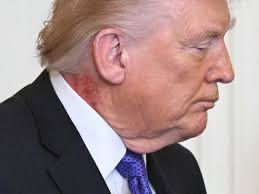
Trump’s neck rash
The memo reported a perfect cognitive score, enviable low cholesterol levels, and a heart that an AI analysis estimated to be 14 years younger than the rest of him….
That last claim drew immediate ridicule from cardiologists.
“When I discuss [sic] this with some of my colleagues in cardiology, everyone laughed!” Dr. Jonathan Reiner, who was former Vice President Dick a cardiologist, told CNN’s Laura Coates Live.
The memo cited results from a coronary CT angiography, an echocardiogram, and the AI-enhanced electrocardiogram—but omitted the specific metrics physicians said they would expect to see from those tests. There was no calcium score, no description of arterial plaque, and no CAD-RADS score, which would assess arterial narrowing. The report simply stated there is “no arterial obstruction or structural abnormalities,” language doctors said could mean only that there is no total blockage, not that the arteries are clean.
“If I was creating a report to send to another physician, I would have mentioned a little bit more about the carotid ultrasound,” Dr. William Shutze, a Texas vascular surgeon, told The Wall Street Journal. “What amount of plaque there is going to be—because almost all of us are going to have some buildup there.”
The echocardiogram results were similarly sparse. Trump’s 2018 report included an ejection fraction, the percentage of blood the heart pumps with each contraction, but this one did not….
The report was also notably silent on Trump’s neck rash, which appeared earlier this year and prompted a memo from Barbabella saying the president was using a preventive cream for an unspecified skin condition. Prior physicals noted sun damage and benign skin lesions in some detail, while this one didn’t mention the rash at all.
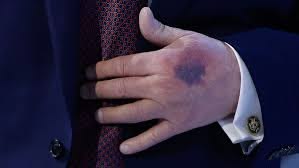
Trump’s bruised left hand without makeup. I don’t think that’s from handshaking.
The report did note bruising on Trump’s hands, which Barbabella attributed to “frequent handshaking” and aspirin therapy.
On his leg swelling, a condition diagnosed last year as chronic venous insufficiency, a common circulatory problem in older patients, the report noted “slight lower leg swelling” and “improvement from last year” without explaining why….
The cholesterol numbers were exceptional: an HDL of 70 mg/dL and an LDL of 53 mg/dL. “He’s got like the best cholesterol numbers you’ll see,” said Dr. Daniel Torrent, a Georgia vascular surgeon, who called it unusual for medication to produce such results. “We don’t usually manage people to the point where they’re that good.” [….]
Trump’s physical included a prostate-specific antigen score, reported at 1 ng/mL, elevated from prior scores but still well within a healthy range.
Taken together, the doctors said, the Trump report paints an oddly perfect picture with suspiciously little supporting evidence.
“That report is almost too good to be true for somebody of his age,” Shutze said. “This seems to be a filtered narrative.”
If Trump is in such great health, why has he disappeared from public view? I’m sure the White House is lying. There is a long history of presidents’ medical problems being covered up by their doctors. But we can’t avoid noticing the problems that can easily be seen in the photos I’ve posted.Trump is nearly 80 years old. He has observable issues–the bruised hands, the gait problems, his falling asleep in meetings, and his verbal difficulties–incoherent rambling and general inability to stay on topic or even finish a sentence. And why are they giving him a dementia test with each physical? This is the fourth one that has been reported. That suggests that they are monitoring the progress of his dementia.
Here’s a video of Trump’s gait issues.
In my opinion, the bruising on Trump’s hands is likely caused by medicine being given to him by infusion, likely for dementia. The neck rash and the bumps that periodically show up on his face I have no clue about.
I know I’ve spent a lot of time on this issue, but I think it’s important and the legacy media organizations should be covering it more.
In other news, there were primaries in several states yesterday, and Democrats generally did well. The big races California are still undecided. For now, I’ll just post this gift article from The Washington Post by Theodoric Meyer, Dan Merica, and Hannah Knowles: Nine takeaways from a big primary night in Iowa, California and more.
Here are nine takeaways from Tuesday’s primaries:
1. A Schumer critic loses in Iowa
Turek defeated state Sen. Zach Wahls, a Schumer critic, in the Democratic primary for an open Senate seat in Iowa.
Turek will face Rep. Ashley Hinson, who won the Republican primary, in November. Sen. Joni Ernst (R-Iowa) decided not to run for reelection.
2. Trump’s pick for Iowa governor flames out
Trump endorsed Feenstra last week in the race to succeed Iowa Gov. Kim Reynolds (R) — but Feenstra lost to Zach Lahn, a businessman and farmer whose slogan is “Iowa First.”
It marked a rare primary defeat for Trump, whose endorsement typically carries enormous weight in Republican contests.
3. Hilton, Becerra lead in California governor’s race
The race to succeed California Gov. Gavin Newsom (D) was rocked in April when Rep. Eric Swalwell, one of the leading Democratic candidates, was accused of sexual assault and dropped out. His exit made room for Becerra, a former congressman and state attorney generalwho served as President Joe Biden’s health secretary, to rise in the polls.
Hilton and Becerra were leading the wide field of candidates early Wednesday morning. Tom Steyer, a billionaireDemocratic donor and former presidential candidate, trailed behind them. California is often slow to count ballots, and the results could shift as more are tallied.
4. Political newcomer advances in South Dakota governor’s race
Toby Doeden, a car salesman whose campaign pitch relied on describing himself as a “total political outsider” with fierce conservative values, advanced to a runoff in South Dakota’s gubernatorial race.
His lead has left three other Republicans vying for the second spot in the runoff. The trio includes incumbent Larry Rhoden, who became South Dakota governor when Kristi L. Noem resigned to become the homeland security secretary, Rep. Dusty Johnson and state Rep. Jon Hansen. The race has not yet been called, but Rhoden held the second-highest percentage of votes with most counted.
5. A strong night for former Biden Cabinet members
Becerra was not the only former Biden Cabinet member on primary ballots Tuesday. Deb Haaland, who served as Biden’s interior secretary, won the Democratic primary for New Mexico governor. She will face Greggory Hull, the former Rio Rancho mayor, in November but is heavily favored in the Democratic-leaning state.
6. Absent GOP congressman lands an opponent
Rebecca Bennett, a former Navy helicopter pilot, won the Democratic primary in a swing House seat in New Jersey. She will face Republican Rep. Tom Kean Jr., who has drawn attention for disappearing from public view.
Kean has not voted in Congress or appeared in public in nearly three months as he deals with what he described in April as “a personal medical issue” that he has declined to disclose. Republicans have grown increasingly worried that his absence could cost them his seat — and possibly their House majority.
7. Los Angeles mayor’s race remains uncalled
Los Angeles Mayor Karen Bass, a Democrat, was facing two challengers on Tuesday: Spencer Pratt, a Republican who became famous on MTV’s reality TV show “The Hills,” and Nithya Raman, a Democratic city council member. Pratt lost his home last year in the Pacific Palisades Fire and has aggressively criticized Bass’s handling of the fire and leadership more broadly.
Bass was leading Pratt early Wednesday morning with nearly half of ballots counted, with Raman trailing in third. If no one wins more than 50 percent of the vote, which appears likely, the top two finishers face off in November.
8. An unusual three-way Senate race in Montana
Alani Bankhead, an Air Force veteran, won the Democratic primary for an open Senate seat in Montana — and now the biggest question about the race is whether she will drop out.
Sen. Steve Daines (R-Montana), who was expected to run for reelection, withdrew in March minutes before the filing deadline, denying Democrats the opportunity to recruit a well-known candidate. Kurt Alme, a former U.S. attorney, filed to run for the seat right before the filing deadline after coordinating with Daines and easily won the Republican primary on Tuesday.
Alme and Bankhead will face an independent candidate, Seth Bodnar, former president of the University of Montana who has raised more than $2 million — far more than Bankhead. Bodnar’s strength has fueled speculation that Bankhead could drop out so Democrats could unite behind Bodnar, which she has repeatedly denied.
9. Another Israel critic is likely to join New Jersey’s delegation
Adam Hamawy, an Army veteran, won the crowded Democratic primary race in New Jersey’s 12th Congressional District, to succeed retiring Rep. Bonnie Watson Coleman (D). Hamawy will face Republican Gregg Mele, a perennial candidate, in the general election, but the district is reliably Democratic.
This means the New Jersey delegation will probably gain another vocal critic of Israel’s war in Gaza. Like Rep. Analilia Mejia (D-New Jersey) — who recently won a special election and secured the Democratic nomination Tuesday for a full term — Hamawy has accused Israel of committing genocide in Gaza.
You can read more details at the gift link above, if you’re interested.
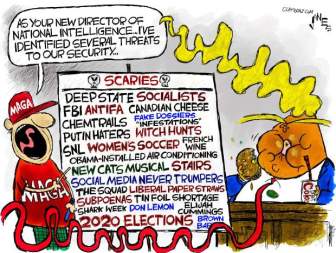
Yesterday, Trump named his chosen successor to Tulsi Gabbard–someone even less qualified than she was.
President Donald Trump on Tuesday named an ally with no background in intelligence to oversee the nation’s spy agencies, taking the helm as the U.S. remains at war with Iran after a fresh round of peace talks stalled.
Bill Pulte is the head of the Federal Housing Finance Agency, and in that position, he has helped the Trump administration compile information to fuel investigations into the president’s perceived political enemies.
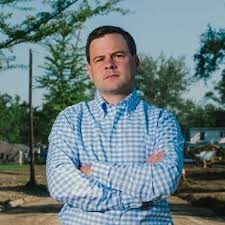
Bill Pulte
As acting director of national intelligence, Pulte will be the highest-ranking intelligence official, overseeing a vast network of 18 agencies, including the CIA and the National Security Agency. He will also be the president’s principal adviser on intelligence issues and will manage the daily intelligence briefing for the president.
Trump announced on social media that Pulte will remain as director of the housing finance agency, as well as chairman of Fannie Mae and Freddie Mac, government-sponsored enterprises created by Congress to support the mortgage market.
The director of national intelligence was created after 9/11 and is a Cabinet-level role that requires Senate confirmation, but naming Pulte in an acting capacity allows the president to bypass that process for now. It was not immediately clear if Pulte will be Trump’s permanent pick for the job.
Sen. Mark Warner of Virginia, the top Democrat on the Senate Intelligence Committee, slammed the decision, saying in a statement that Pulte was not only unqualified, but that he was chosen “precisely because the White House believes he will provide the narrative it wants, not the intelligence we need,” Warner said.
President Donald Trump announced Tuesday that Federal Housing Finance Agency Director Bill Pulte would become acting director of national intelligence. Pulte is stepping in to replace Tulsi Gabbard, who resigned from her post last month. Though Trump claimed his appointee “has deep experience managing the most sensitive matters in America,” he’ll take the position with literally zero relevant experience for coordinating 17 American intelligence agencies’ work.
But Pulte’s appointment makes slightly more sense when you consider his place in Trump’s orbit. The 38-year-old heir to his family’s massive home construction company shares the president’s love of social media bullying, golf and abusing power for personal gain. In currying Trump’s favor, he’s become the boy who cried “fraud,” using his limited portfolio to find leverage against the president’s enemies. With the broader remit his new perch provides, Pulte could do much more harm that he already has, opening the door to threats both foreign and domestic….
Before Tuesday, acting Attorney General Todd Blanche would have been the slam-dunk pick for most dangerous sycophant Trump has installed. Pulte’s new appointment challenges that claim. Since stepping into his role at the FHFA — which he will still hold while overseeing America’s intelligence operation — he has acted as though he is part of the president’s law enforcement team.
Over the past year, Pulte has referred at least four members of Trump’s enemies list — New York Attorney General Letitia James, then-Rep. Eric Swalwell, Sen. Adam Schiff of California and Fulton County District Attorney Fani Willis — to the Justice Department for investigation for alleged mortgage fraud.
In all but one of the cases he has passed on to prosecutors, no charges have come about — a testament to the flimsiness of the evidence Pulte provided in his. A federal grand jury handed up charges against James in Virginia, but they were later thrown out and two subsequent grand juries refused to indict her. Undeterred, Pulte pushed a new criminal referral against James for alleged insurance fraud earlier this year.
It should be obvious that drawing predetermined conclusions, then searching for evidence, isn’t ideal when dealing with the life-and-death stakes of foreign intelligence. Pulte appears to have done just that from his position overseeing Fannie Mae and Freddie Mac, prompting concerns from internal watchdogs about just how he gathered the mortgage documents he then passed on to prosecutors. Last year, the Government Accountability Office opened an investigation into Pulte’s actions and a federal grand jury began investigating whether he illegally shared grand jury information, though neither have issued any conclusion.
Pulte has also stretched beyond the confines of his remit in the name of pleasing Trump. Last year, Pulte inserted himself into the president’s war against the Federal Reserve’s then-Chair Jerome Powell for not cutting interest rates quickly enough. The New York Times noted in July that he would leap to echo any of Trump’s gripes about interest rates “with a post demanding Mr. Powell’s resignation.” The Times also reported Pulte drafted a letter for Trump to fire Powell that was never issued, but made its way to the Resolute Desk. Alongside the previously mentioned fraud claims, he has also targeted Federal Reserve board member Lisa Cook for investigation. (Any wrongdoing proved on Cook’s part freeing up her seat for Trump to appoint a replacement would surely only be a knock-on effect.)
Since Pulte will be acting DNI, he won’t have to be confirmed by the Senate. We just have to hope that some Republicans will push back on this appointment.
One more big story: you probably heard that CBS has fired 60 Minutes star Scott Pelley because he criticized the network’s changes to the long-time new program.
CBS News fired Scott Pelley on Tuesday, jettisoning one of the network’s best-known journalists in a clash over the future of “60 Minutes,” the country’s top-rated news program.
Mr. Pelley, 68, a “60 Minutes” correspondent and a former anchor of “CBS Evening News,” joined the network in 1989. At a staff meeting on Monday, he accused the network’s editor in chief, Bari Weiss, of “murdering ‘60 Minutes,’” citing the ouster last week of the program’s leadership team and two on-air correspondents.
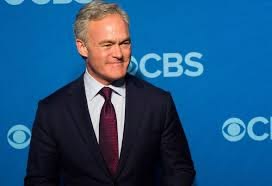
Scott Pelley
“We have parted ways with Scott Pelley,” Nick Bilton, the tech journalist who was hired last week as the new “60 Minutes” executive producer, wrote in a memo to the show’s staff on Tuesday night.
CBS News declined to comment. In a formal letter to Mr. Pelley, which was obtained by The New York Times, Mr. Bilton wrote that the correspondent had been “terminated for cause effective immediately.”
Mr. Pelley, in a telephone interview on Tuesday evening shortly after he was fired, said he had devoted decades of his life to “60 Minutes,” which he said he still cared about deeply.
“I have been in combat in Afghanistan,” Mr. Pelley said. “I have been in combat in Iraq. I have been in the war zone in Ukraine multiple times, risking my life and the happiness of my family because of my devotion to the broadcast.”
The firing of Mr. Pelley is among the most consequential moves of Ms. Weiss’s rocky tenure at CBS. And it is almost certain to spike tensions that have coursed through the network for months.
It also raises the stakes of Ms. Weiss’s surprising decision to replace the entire leadership team at “60 Minutes,” CBS News’s most successful franchise, and hire Mr. Bilton, who has no experience in broadcast TV, to oversee the show. The program’s viewership was up 9 percent this past season from a year prior, and the show is routinely among the nation’s highest-rated weekly broadcasts, according to Nielsen.
Those viewers are accustomed to familiar faces like Mr. Pelley, who has contributed to the program since 2004. The “60 Minutes” staff prides itself on autonomy, and it is not clear how the show’s production team may react to the firing of Mr. Pelley.
At the staff meeting on Monday, which Ms. Weiss did not attend, Mr. Pelley repeatedly pressed Mr. Bilton about the network’s decision to fire Tanya Simon, the show’s previous executive producer. He also told Mr. Bilton that he had “slender” qualifications to oversee the show and that he would “never be welcome” at “60 Minutes.”
It’s not just 60 Minutes that is being murdered. It’s CBS itself.
That’s all I have for today. What stories have you been following?
Did you like this post? Please share it with your friends:
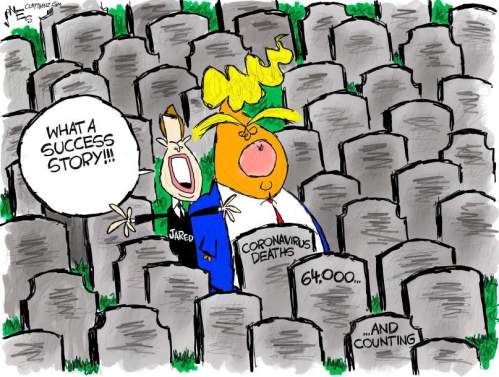
It’s another terrifying Tuesday in the American apocalypse. During his insane inauguration speech, Trump said he was going to end American carnage. Instead he has brought us to our knees as a country as we endure a pandemic and economic hardship with almost no help from the federal government. Trump has hollowed out or destroyed nearly every important American institution–the State Department, the Justice Department, the CDC, the Supreme Court, the federal court system, the Defense Department leadership, the Department of Homeland Security and FEMA. And now he’s working on taking control of the intelligence community.
This morning Trump’s insane appointee as Director of National Intelligence, Rep. John Ratcliffe of Texas is testifying in his Senate confirmation hearing.
President Donald Trump’s pick to be director of national intelligence, Rep. John Ratcliffe, pledged to deliver unbiased intelligence to the President and Congress amid questions about the Texas Republican’s loyalty to a President deeply skeptical of the intelligence community.
Ratcliffe is appearing before the Senate Intelligence Committee after he was selected by the President a second time to be the nation’s spy chief. Ratcliffe withdrew from consideration when he was first tapped for the role last summer amid concerns from even some Republicans about exaggerations to his national security resume, but Trump picked him again in February for the role.
“Let me be very clear. Regardless of what anyone wants our intelligence to reflect, the intelligence I will provide, if confirmed, will not be impacted or altered as a result of outside influence. Above all, my fidelity and loyalty will always be with the Constitution and the rule of law, and my actions as DNI will reflect that commitment,” Ratcliffe said in his opening statement.
Ratcliffe appears to have the support he needs from Republicans who were skeptical the first time he was picked, but Democrats are sure to press him on his ability to be independent from Trump when the President has expressed an open distrust of the intelligence community and refused to agree with the assessment on Russian election interference.
The hearing comes amid questions about Trump’s claims of intelligence on the origins of the coronavirus outbreak in Wuhan, China, and the removal of top intelligence officials earlier this year, including former intelligence community inspector general Michael Atkinson and then-acting Director of National Intelligence Joseph Maguire….
Virginia Sen. Mark Warner, the committee’s top Democrat, said he has concerns about what he described as Ratcliffe’s “inexperience, partisanship, and past statements that seemed to embellish” his record.
Ratcliffe’s official, verified campaign Twitter account follows several accounts on the political fringe, including a 9/11 truther account with just one follower besides himself and four promoting the outlandish QAnon conspiracy theory, which posits that the world is run by a cabal of Democratic pedophile-cannibals—and has been ruled a potential source of domestic terrorism by the FBI.
The conspiracy theorists followed by Ratcliffe, whose nomination for director of national intelligence goes before the Senate intelligence committee Tuesday morning, cover a bizarre range of beliefs. They posit that John F. Kennedy Jr. faked his death to help Trump to take down the Deep State. Others claim a Democratic sex dungeon exists in in a Washington pizzeria. But Ratcliffe and the QAnon promoters he follows have one thing in common: utter loyalty to Trump.
Even before Ratcliffe’s QAnon interest was known, Sen. Ron Wyden (D-OR), a committee member, told The Daily Beast, “Congressman Ratcliffe is a partisan politician who has spent the last two years promoting conspiracy theories in defense of Donald Trump.” [….]
Veteran intelligence officials expressed alarm that the Senate may soon confirm a Trump loyalist atop the U.S.’s 16 intelligence agencies. “Ratcliffe would be the least qualified person to run the intelligence community, ever, and that includes Ric Grenell,” said former CIA and National Counterterrorism Center analyst Aki Peritz, referring to the acting director of national intelligence. “The hardest job for any intelligence officer is to speak truth to power. Based on Ratcliffe’s past performance, it’s doubtful he can resist the urge to politicize intelligence on behalf of Donald Trump.”
Read more at the Daily Beast link.
Meanwhile, as Trump pushes states to reopen their economies, predictions for the future course of the pandemic are alarming. Yesterday Dakinikat posted about a draft study that predicts we will see 200,000 Covid0-19 cases per day by June 1. That link goes to another story at The Washington Post.
(CNN)President Donald Trump now knows the price of the haunting bargain required to reopen the country — tens of thousands more lives in a pandemic that is getting worse not better.
It’s one he now appears ready to pay, if not explain to the American people, at a moment of national trial that his administration has constantly underplayed.
Depressing new death toll projections and infection data on Monday dashed the optimism stirred by more than half the country taking various steps to reopen an economy that is vital to Trump’s reelection hopes and has shed more than 30 million jobs. Stay-at-home orders slowed the virus and flattened the curve in hotspots like New York and California, but they have so far failed to halt its broader advance, leaving the nation stuck on a grim plateau of about 30,000 new cases a day for nearly a month.
Despite those projections, two administration officials told CNN’s Kaitlan Collins the latest numbers are not currently expected to affect the White House’s plans for reopening the country.
New evidence of the likely terrible future toll of Covid-19 came on a day when Trump stayed out of sight — his wild briefings that hurt his political prospects now paused — meaning he could not be questioned on his enthusiasm for state openings in the light of new evidence.
But in an interview published in Tuesday’s edition of the New York Post, Trump said Americans were ready come out of isolation and get back to normal life.
“I think they’re starting to feel good now. The country’s opening again. We saved millions of lives, I think,” Trump said. “You have to be careful, but you have to get back to work,” he said. “People want the country open… I guess we have 38 states that are either opening or are very close.”
Opinion polls don’t support Trump’s claims however. Read more at CNN.
Despite a century’s progress in science, 2020 is looking a lot like 1918.
In the years between two lethal pandemics, one the misnamed Spanish flu, the other COVID-19, the world learned about viruses, cured various diseases, made effective vaccines, developed instant communications and created elaborate public-health networks.
Yet here we are again, face-masked to the max. And still unable to crush an insidious yet avoidable infectious disease before hundreds of thousands die from it.
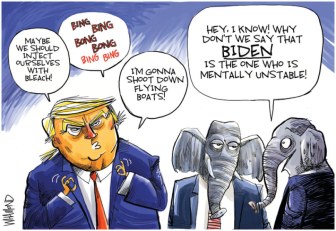
As in 1918, people are again hearing hollow assurances at odds with the reality of hospitals and morgues filling up and bank accounts draining. The ancient common sense of quarantining is back. So is quackery: Rub raw onions on your chest, they said in 1918. How about disinfectant in your veins now? mused President Donald Trump, drawing gasps instead of laughs over what he weakly tried to pass off as a joke.
In 1918, no one had a vaccine, treatment or cure for the great flu pandemic as it ravaged the world and killed more than 50 million people. No one has any of that for the coronavirus, either.
Modern science quickly identified today’s new coronavirus, mapped its genetic code and developed a diagnostic test, tapping knowledge no one had in 1918. That has given people more of a fighting chance to stay out of harm’s way, at least in countries that deployed tests quickly, which the U.S. didn’t.
But the ways to avoid getting sick and what to do when sick are little changed. The failure of U.S. presidents to take the threat seriously from the start also joins past to present
A jump in flu deaths early in the 20th century may have helped to drive the rise of the Nazi Party in Germany, Federal Reserve Bank of New York research showed, in a stark warning that pandemics can drive societal change.
“Influenza deaths of 1918 are correlated with an increase in the share of votes won by right-wing extremists,” Fed economist Kristian Blickle wrote. The finding holds even counting for a city’s ethnic and religious makeup, regional unemployment, past right-wing voting, and other local characteristics.
He points out that local public spending dropped in the wake of the deadly flu, especially on services that benefitted young people, like school. That spending decline itself does not seem to drive the right-wing political extremism that followed, the paper found.
On the other hand, “the correlation between influenza mortality and the vote share won by right-wing extremists is stronger in regions that had historically blamed minorities, particularly Jews, for medieval plagues,” Mr. Blickle wrote. He adds that “the disease may have fostered a hatred of ‘others’, as it was perceived to come from abroad.”
Scientists are learning more about the virus and its effects on the human body. Here are three interesting (and scary) science-based articles to check out.
When some people become infected with the coronavirus, they only develop mild or undetectable cases of COVID-19. Others suffer severe symptoms, fighting to breathe on a ventilator for weeks, if they survive at all.
Despite a concerted global scientific effort, doctors still lack a clear picture of why this is.
Could genetic differences explain the differences we see in symptoms and severity of COVID-19?
The article is too dense to summarize in an excerpt, so you’ll need to read the article. But here’s the gist of the findings:
Based on our study, we think variation in HLA genes is part of the explanation for the huge differences in infection severity in many COVID-19 patients. These differences in the HLA genes are probably not the only genetic factor that affects severity of COVID-19, but they may be a significant piece of the puzzle. It is important to further study how HLA types can clinically affect COVID-19 severity and to test these predictions using real cases. Understanding how variation in HLA types may affect the clinical course of COVID-19 could help identify individuals at higher risk from the disease.
Fifteen children, many of whom had the coronavirus, have recently been hospitalized in New York City with a mysterious syndrome that doctors do not yet fully understand but that has also been reported in several European countries, health officials announced on Monday night.
Many of the children, ages 2 to 15, have shown symptoms associated with toxic shock or Kawasaki disease, a rare illness in children that involves inflammation of the blood vessels, including coronary arteries, the city’s health department said.
None of the New York City patients with the syndrome have died, according to a bulletin from the health department, which describes the illness as a “multisystem inflammatory syndrome potentially associated with Covid-19.” [….]
The syndrome has received growing attention in recent weeks as cases began appearing in European countries hit hard by the coronavirus.
“There are some recent rare descriptions of children in some European countries that have had this inflammatory syndrome, which is similar to the Kawasaki syndrome, but it seems to be very rare,” Dr. Maria Van Kerkhove, a World Health Organization scientist, said at a news briefing last week.
Scientists have identified a new strain of the coronavirus that has become dominant worldwide and appears to be more contagious than the versions that spread in the early days of the COVID-19 pandemic, according to a new study led by scientists at Los Alamos National Laboratory.
The new strain appeared in February in Europe, migrated quickly to the East Coast of the United States and has been the dominant strain across the world since mid-March, the scientists wrote.
In addition to spreading faster, it may make people vulnerable to a second infection after a first bout with the disease, the report warned.
The 33-page report was posted Thursday on BioRxiv, a website that researchers use to share their work before it is peer reviewed, an effort to speed up collaborations with scientists working on COVID-19 vaccines or treatments. That research has been largely based on the genetic sequence of earlier strains and might not be effective against the new one.
That’s it for me. What stories are you following today?
Did you like this post? Please share it with your friends:
The Sky Dancing banner headline uses a snippet from a work by artist Tashi Mannox called 'Rainbow Study'. The work is described as a" study of typical Tibetan rainbow clouds, that feature in Thanka painting, temple decoration and silk brocades". dakinikat was immediately drawn to the image when trying to find stylized Tibetan Clouds to represent Sky Dancing. It is probably because Tashi's practice is similar to her own. His updated take on the clouds that fill the collection of traditional thankas is quite special.
You can find his work at his website by clicking on his logo below. He is also a calligraphy artist that uses important vajrayana syllables. We encourage you to visit his on line studio.




 peej
peej Carissa
 bostonboomer
 dakinikat
 ecocatwoman
 jjlo
jjlo mablue2
 Mama Lopez
 peggysue22
 quixote
 skydancingguestblogger
 Mona (aka Wonk the Vote)



 Sky Dancing
Recent Comments