




Federal agents clashed with protesters and threw a congressional candidate to the ground Friday morning during a protest outside a Chicago-area Immigration and Customs Enforcement facility.
Lazy Caturday Reads: Another Horrible Week Under the Trump Regime
Posted: September 20, 2025 Filed under: just because | Tags: ABC, authoritarianism, Brendan Carr, Charlie Kirk, Chicago, dictatorship, Disney, Donald Trump, Erik S. Siebert, extra legal boat strikes, fascism, FCC, first amendment, H1B visas, ICE, immigration, Jimmy Kimmel, Kat Abughazaleh, Midway Blitz, Pentagon reporter rules, Ted Cruz, Tyler Robinson 16 CommentsGood Morning!!

By Leonid Kiparisov
It has been another horrible week under the Trump regime. Almost no one who is paying attention still believes that we still live in a democracy. We retain a few of the trappings–the courts (except the Supreme Court, of course), a few Congresspeople, some courageous journalists, citizens protesting in the streets.
The “president” who would be king is busy slapping gold on the walls of the oval office and talking to architects about his planned $200 million golden ballroom, while Stephen Miller runs the country. Oh, and he’s still signing executive orders prepared by Project 2025 and throwing tantrums when anyone dares to criticize or make fun of him.
Andrew Perez, Nikki McCann Ramirez, Asawin Suebsaeng summarize the latest dictatorish happenings at Rolling Stone: Donald Trump’s Most Authoritarian Week Yet.
It was clear Donald Trump and his allies would ramp up their crackdown against any and all opposition in the wake of the assassination of right-wing activist Charlie Kirk — and this week, the president’s second administration unleashed its most authoritarian blitz yet.
The Trump administration got late-night host Jimmy Kimmel’s show taken off the air by threatening companies’ broadcast licenses if they continued to run his show. Trump and his team threatened to strip the tax-exempt status of liberal nonprofit groups, while the president called for left-wing activists to be jailed for protesting him at dinner. Trump announced he’ll once again try to designate “antifa” — America’s disparate anti-fascist movement — as a terrorist group, with no legitimate basis, clarifying once again where he stands on the whole fascism question.
Meanwhile, the administration worked toward its goal to deport a legal U.S. resident for speaking out against Israel’s relentless assault on Palestine. Reports trickled out that Trump would fire a U.S. attorney for failing to bring charges against one of his enemies, before Trump publicly called for his departure and he quit.
This ugly, authoritarian week didn’t happen in a vacuum. Trump just last month mused about how Americans want a “dictator,” and the administration now appears to be using Kirk’s shocking murder as an excuse to escalate Trump’s ongoing campaign for total power.
The ramp-up began on Monday, as Vice President J.D. Vance hosted Kirk’s podcast from the White House and huddled with Stephen Miller, Trump’s deputy White House chief of staff and the man responsible for leading his mass vengeance campaign.
“You have the crazies on the far left who are saying, ‘Stephen Miller and J.D. Vance, they’re going to go after constitutionally protected speech. No, no, no,” Vance said, before immediately pledging to go after a network of liberal nonprofits that supposedly “foments, facilitates, and engages in violence.”
During the discussion, Miller repeatedly invoked Kirk’s death to justify the effort to shut down liberal groups.
On the Jimmy Kimmel firing:
…[O]n Wednesday, Trump’s Federal Communications Commission (FCC) chairman, Brendan Carr, began issuing explicit threats, demanding that broadcasters take Jimmy Kimmel Live! off the air.
Speaking with right-wing influencer Benny Johnson, Carr pressured broadcasters to tell ABC: “‘Listen, we are going to preempt, we are not going to run Kimmel anymore, until you straighten this out because we, we licensed broadcaster, are running the possibility of fines or license revocation from the FCC.’”
By Diya Sanat
Carr added, “We can do this the easy way or the hard way. These companies can find ways to take action on Kimmel, or there is going to be additional work for the FCC ahead.”
Within hours, ABC had indefinitely suspended Kimmel’s show and two large broadcast companies, Nexstar and Sinclair, announced they wouldn’t run it. (Note: The companies all have regulatory matters before the FCC.) Sources told Rolling Stone that while multiple executives at ABC and its parent company, Disney, did not feel that Kimmel’s comments merited a suspension, they caved to pressure from Carr.
“They were terrified about what the government would do, and did not even think Jimmy had the right to just explain what he said,” a person familiar with the internal situation said on Thursday, calling the decision “cowardly.”
Throughout Trumpland and the federal government, there was a heightened sense of glee over their silencing of Kimmel. Administration officials feel emboldened by the multiple scalps they’ve now collected — first Stephen Colbert, now Kimmel — to the point that they’re confident they have momentum to pressure corporate bosses to get rid of Trump’s late-night nemeses over at other networks.
Trump has gotten so full of himself after this big win that he’s now claiming that criticism of him is illegal.
Luke Broadwater at The New York Times: Trump Says Critical Coverage of Him Is ‘Really Illegal.’
President Trump said Friday that news reporters who cover his administration negatively have broken the law, a significant broadening of his attacks on journalists and their First Amendment right to critique the government.
A day after asserting that broadcasters should potentially lose their licenses over negative news coverage of him, Mr. Trump escalated his condemnations of the press, suggesting such reporters were lawbreakers.
“They’ll take a great story and they’ll make it bad,” he said, speaking to reporters in the Oval Office. “See, I think that’s really illegal.”
He added: “Personally, you can’t take, you can’t have a free airwave if you’re getting free airwaves from the United States government.”
Mr. Trump did not cite a specific law he said he believed had been violated. It remained unclear Friday why Mr. Trump believed negative news coverage, which every president has faced and is protected by the Constitution, would be “really illegal.”
Asked for comment, the White House did not cite a specific law Mr. Trump believed was being violated, but a White House official pointed to settlements that media companies, including ABC, have agreed to pay after Mr. Trump’s legal team filed lawsuits against them, and suggested Mr. Trump was attempting to rein in “extreme left-wing bias in television.” [….]
Mr. Trump’s comments on Friday came a day after he suggested that protesters who called him “Hitler” to his face inside a Washington restaurant should be jailed.
The president, who has accused the protesters of being paid agitators and said such people “should be put in jail,” told reporters on Air Force One that he believed the protesters were “very inappropriate” and “a threat.”
Trump got some pushback from a surprising source. NBC News: Ted Cruz rips FCC chair’s Jimmy Kimmel threat as ‘unbelievably dangerous.’
Sen. Ted Cruz, R-Texas, blasted Federal Communications Commission Chair Brendan Carr on Friday for threats he made this week related to Jimmy Kimmel’s show, calling the Trump administration official’s actions “dangerous as hell.”
“I think it is unbelievably dangerous for government to put itself in the position of saying we’re going to decide what speech we like and what we don’t, and we’re going to threaten to take you off air if we don’t like what you’re saying,” Cruz said on his podcast, “Verdict with Ted Cruz.”
Girl with Cat – Augusta Oelschig , 1945 American, 1918–2000
“I like Brendan Carr. He’s a good guy, he’s the chairman of the FCC. I work closely with him, but what he said there is dangerous as hell,”Cruz said.
Cruz is chairman of the Senate Commerce Committee, which has jurisdiction over the FCC. He warned Carr’s actions could have long-term consequences.
“It might feel good right now to threaten Jimmy Kimmel, yeah, but when it is used to silence every conservative in America, we will regret it,”Cruz said….
Cruz went on to say Friday: “I hate what Jimmy Kimmel said,” but likened Carr’s comments about Disney taking the easy way or the hard way to a classic mob movie.
“I gotta say, that’s right out of ‘Goodfellas.’ That’s right out of a mafioso coming into a bar going, nice bar you have here, it’d be a shame if something happened to it,” Cruz said.
Of course Kimmel never said anything critical of Charlie Kirk. What he did do was make fun of Trump blowing of a question about how he was recovering from the loss of his friend to brag about his White House ballroom construction:
Kimmel has also mocked Trump for a specific comment he made in response to being asked by a reporter how he was personally “holding up” after the assassination of Kirk, who he has said was a friend.
Trump had replied saying he was “very good” and then immediately started boasting about the new ballroom he is building at the White House.
Kimmel said after the clip: “This is not how an adult grieves the murder of somebody called a friend. This is how a four-year-old mourns a goldfish.”
There’s also no evidence of involvement of left wing groups in the Kirk assassination. NBC News:
The federal investigation into the assassination of conservative activist Charlie Kirk has yet to find a link between the alleged shooter, 22-year-old Tyler Robinson, and left-wing groups on which President Donald Trump and his administration have pledged to crack down after the killing, three sources familiar with the probe told NBC News.
One person familiar with the federal investigation said that “thus far, there is no evidence connecting the suspect with any left-wing groups.”
“Every indication so far is that this was one guy who did one really bad thing because he found Kirk’s ideology personally offensive,” this person continued.
In addition, two of the people familiar with the probe said it may be difficult to charge Robinson at the federal level for Kirk’s killing, while the third source said there is still an expectation that some kind of federal charge is filed against Robinson.
Factors that have complicated the effort to bring charges at the federal level include that Robinson, a Utah resident, did not travel from out of state; Kirk was shot during an open campus debate at Utah Valley University. Additionally, Kirk himself is not a federal officer or elected official.
Disney (and perhaps even right wing Sinclair) apparently regret the sudden firing of Jimmy Kimmel.
Screen Rant: Disney Is Scrambling After The Backlash To Jimmy Kimmel’s Cancellation Blew Up.
Wholly unsurprising to anyone paying attention, the backlash over the abrupt cancellation of Jimmy Kimmel Live! is only continuing to grow and spread, and Disney is now scrambling to fix a situation quickly spiraling out of its control. After far-right podcaster Charlie Kirk was shot and killed, reactions have been intense, but it’s Disney’s knee-jerk reaction that has drawn the most ire.
Carl Wilhelmson, Svarta Katten (Black Cat).
There has been considerable pressure from the right to crack down on anyone saying anything even remotely controversial about Kirk, and media companies have acquiesced to this pressure. Earlier this week, on Wednesday, Disney announced that it was pulling Jimmy Kimmel from the air indefinitely after a monologue in which he didn’t hold back about Trump’s seeming indifference to Kirk’s murder. [See the quote from Kimmel that I posted above.] You can watch the video at the link.
The media is generally framing it as Kimmel being indefinitely suspended for his comments about Charlie Kirk. If you just watched the above, however, and are now wondering why, as Kimmel’s jabs weren’t aimed at Kirk, but Trump, then you’ve hit on precisely why the backlash against Disney’s Jimmy Kimmel decision is growing – and why it’s not likely to stop any time soon.
Read more at Screen Rant.
In more First Amendment news, Trump’s lawsuit against The New York Times isn’t going well.
Balls and Strikes: Federal Judge Strikes Trump Defamation Lawsuit For Being Too Annoying to Read.
On Friday, September 19, a federal district judge in Florida struck President Donald Trump’s complaint in his $15 billion defamation lawsuit against The New York Times, four Times reporters, and Penguin Random House, describing the complaint as “decidedly improper and impermissible.” Under Rule 8 of the Federal Rules of Civil Procedure, a complaint is supposed to include “a short and plain statement” alleging enough facts that, if true, could warrant legal relief. The complaint Trump filed on Monday, by contrast, is 85 pages long and reads more like an anthology of his Truth Social posts, with slightly better punctuation.
By Leonid Kiparisov
Most complaints filed in federal courtrooms do not get tossed under Rule 8, but most complaints filed in federal courtrooms do not spend dozens of pages recounting, as Trump’s does, the plaintiff’s “singular brilliance” and “history-making media appearances” in programs like Fallen Champ: The Untold Story of Mike Tyson. Trump’s complaint is also crowded with boasts about his purported magnificence (for example, “President Trump secured the greatest personal and political achievement in American history”) and snipes about legacy media’s anti-Trump bias (for example, “Defendants baselessly hate President Trump in a deranged way”).
Friday’s order, in turn, is full of the judge’s unmasked exhaustion. “As every lawyer knows (or is presumed to know), a complaint is not a public forum for vituperation and invective,” wrote Steven Merryday, a judge appointed by President George H.W. Bush in 1992. “This complaint stands unmistakably and inexcusably athwart the requirements of Rule 8.” Merryday gave Trump 28 days to amend the complaint and come back with something less ridiculous, and not exceeding forty pages. “This action will begin, will continue, and will end in accord with the rules of procedure and in a professional and dignified manner,” he wrote.
Read the rest at the link.
In immigration news, ICE is ramping up their activities in Chicago.
AP: ICE arrests nearly 550 in Chicago area as part of ‘Midway Blitz.’
PARK RIDGE, Ill. (AP) — Immigration enforcement officials have arrested almost 550 people as part of an operation in the Chicago area that launched a little less than two weeks ago, the Department of Homeland Security said Friday.
The updated figure came hours after a senior immigration official revealed in an interview with The Associated Press that more than 400 people had been arrested in the operation so far. The figures offer an early gauge of what is shaping up as a major enforcement effort that comes after similar operations were launched in Los Angeles and Washington, D.C.
The figures released by Homeland Security include arrests by Immigration and Customs Enforcement as well as other federal agencies assisting in the operation.
ICE launched its Chicago area operation dubbed “Midway Blitz” on Sept. 8, drawing concern from activists and immigrant communities who say there’s been a noticeable uptick in immigration enforcement agents. That has deepened dread in communities already fearful of the large-scale arrests or aggressive tactics used in other cities targeted by President Donald Trump ’s hardline immigration policies.
The operation has brought allegations of excessive force and heavy-handed dragnets that have ensnared U.S. citizens, while gratifying Trump supporters who say he is delivering on a promise of mass deportations.
A political candidate was roughed up. The Washington Post: Congressional candidate thrown to ground during protest outside ICE facility.


The third grade “president” has spoken.
The New York Times: U.S. Attorney Investigating Two Trump Foes Departs Amid Pressure From President.
The U.S. attorney investigating New York’s attorney general, Letitia James, and the former F.B.I. director James B. Comey said he had resigned on Friday, hours after President Trump called for his ouster.
Erik S. Siebert, the U.S. attorney for the Eastern District of Virginia, had recently told senior Justice Department officials that investigators found insufficient evidence to bring charges against Ms. James and had also raised concerns about a potential case against Mr. Comey, according to officials familiar with the situation. Mr. Trump has long viewed Ms. James and Mr. Comey as adversaries and has repeatedly pledged retribution against law enforcement officials who pursued him.
By Ruskin Spear, 1911
Mr. Siebert informed prosecutors in his office of his resignation through an email hours after the president, speaking to reporters in the Oval Office, said he wanted him removed because two Democratic senators from Virginia had approved of his nomination.
“When I saw that he got two senators, two gentlemen that are bad news as far as I’m concerned — when I saw that he got approved by those two men, I said, pull it, because he can’t be any good,” Mr. Trump said. The president did not mention that he nominated Mr. Siebert only after the two senators, Mark Warner and Tim Kaine, had already written Mr. Trump praising him.
When asked if he would fire Mr. Siebert, Mr. Trump responded, “Yeah, I want him out.”
Ms. James, he told reporters, was “very guilty of something.”
Mr. Trump later disputed that Mr. Siebert had resigned, saying in a late-night social media post, “He didn’t quit, I fired him!”
Mr. Trump’s comments came after a high-stakes internal debate raged on Friday over the fate of Mr. Siebert — with Mr. Trump’s own appointees at the Justice Department and key Republicans on Capitol Hill arguing to retain the veteran prosecutor.

Another childish tantrum. It’s so embarrassing for our country.
The New York Times: Pentagon Expands Its Restrictions on Reporter Access.
The Pentagon said Friday it would impose new restrictions on reporters covering the Department of Defense, requiring them to pledge not to gather or use any information that had not been formally authorized for release or risk losing their credentials to cover the military.
The new mandate, described in a memorandum circulated to the press on Friday, was the latest in a series of actions by the Trump administration to limit the ability of the media to cover the federal government without interference.
The Department of Defense said in the 17-page memo that it “remains committed to transparency to promote accountability and public trust.” But it added that “information must be approved for public release by an appropriate authorizing official before it is released, even if it is unclassified.”
In addition, the document constrains the movements of the media within the Pentagon itself, designating large areas of the building off limits without escorts for the roughly 90 reporters credentialed to cover the agency. Although many offices and meeting rooms in the Pentagon are restricted, the Pentagon press corps had previously been given unescorted access throughout much of the building and its hallways.
The move could drastically restrict the flow of information about the U.S. military to the public. The National Press Club called the policy “a direct assault on independent journalism” and called for it to be immediately rescinded.
Those are my recommended reads for today. What stories are you following?
Wednesday Reads: Can We Still Prevent A Trump Dictatorship?
Posted: April 23, 2025 Filed under: Donald Trump, ICE Immigration and Customs Enforcement, immigration, just because | Tags: Abrego Garcia, Autocracy, Chris Van Hollen, Cory Booker, dictatorship, Gary Kasparov, Mahmoud Khalil, Maria Ressa, Philippines, Rodrigo Duterte, Rumeysa Ozturk, Steven Levitsky 11 CommentsGood Morning!!
We are in deep trouble as a country. Trump hasn’t even been in the White House for 100 days, and he has made rapid progress toward turning us into a dictatorship. I think Congressional Democrats are beginning to wake up, but not nearly quickly enough. Too many of these elected Democrats still aren’t taking the danger seriously enough. In my opinion, they should calling press conferences at least every few days to explain how Trump is destroying our government.
There’s an excellent piece in The Atlantic by executive editor Adrienne LaFrance (gift link): A Ticking Clock on American Freedom. It’s later than you think, but it’s not too late.
Look around, take stock of where you are, and know this: Today, right now—and I mean right this second—you have the most power you’ll ever have in the current fight against authoritarianism in America. If this sounds dramatic to you, it should. Over the past five months, in many hours of many conversations with multiple people who have lived under dictators and autocrats, one message came through loud and clear: America, you are running out of time.
Maria Ressa
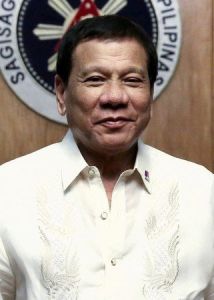
People sometimes call the descent into authoritarianism a “slide,” but that makes it sound gradual and gentle. Maria Ressa, the journalist who earned the Nobel Peace Prize for her attempts to save freedom of expression in the Philippines, told me that what she experienced during the presidency of Rodrigo Duterte is now, with startling speed and remarkable similarity, playing out in the United States under Donald Trump. Her country’s democratic struggles are highly instructive. And her message to me was this: Authoritarian leaders topple democracy faster than you can imagine. If you wait to speak out against them, you have already lost.
Shortly after Trump was reelected last fall, I called Ressa to ask her how she thought Americans should prepare for his return. She told me then that she worried about a failure of imagination. She knew that the speed of the destruction of institutions—one of the first steps an authoritarian takes to solidify and centralize power—would surprise people here, even those paying the closest attention. Ressa splits her time between Manila and New York, and she repeatedly warned me to be ready for everything to happen quickly. When we spoke again weeks after his inauguration, Ressa was shaken. President Trump was moving faster than even she had anticipated.
I heard something similar recently from Garry Kasparov, the Russian dissident and chess grand master. To him, the situation was obvious. America is running out of time, he told me. As Kasparov wrote recently in this magazine, “If this sounds alarmist, forgive me for not caring. Exactly 20 years ago, I retired from professional chess to help Russia resist Putin’s budding dictatorship. People were slow to grasp what was happening there too.”
The chorus of people who have lived through democratic ruin will all tell you the same thing: Do not make the mistake of assuming you still have time. Put another way: You think you can wait and see, and keep democracy intact? Wanna bet? Those who have seen democracy wrecked in their home country are sometimes derided as overly pessimistic—and it’s understandable that they’d have a sense of inevitability about the dangers of autocracy. But that gloomy worldview does not make their warnings any less credible: Unless Trump’s power is checked, and soon, things will get much worse very quickly. When people lose their freedoms, it can take a generation or more to claw them back—and that’s if you’re lucky.

Trump’s methods clearly mirror those of authoritarian leaders in other countries.
The Trump administration’s breakneck pace is obviously no accident. While citizens are busy processing their shock over any one shattered norm or disregarded law, Trump is already on to the next one. This is the playbook authoritarians have used all over the world: First the leader removes those with expertise and independent thinking from the government and replaces them with leaders who are arrogant, ignorant, and extremely loyal. Next he takes steps to centralize his power and claim unprecedented authority. Along the way, he conducts an all-out assault on the truth so that the truth tellers are distrusted, corruption becomes the norm, and questioning him becomes impossible. The Constitution bends and then finally breaks. This is what tyrants do. Trump is doing it now in the United States.
Philippines, it took about six months under Duterte for democratic institutions to crumble. In the
Rodrigo Duterte
United States, the overreach in executive power and the destruction of federal agencies that Ressa told me she figured would have kept Trump busy through, say, the end of the summer were carried out in the first 30 days of his presidency. Even so, what people don’t always realize is that a dictator doesn’t seize control all at once. “The death of democracy happens by a thousand cuts,” Ressa told me recently. “And you don’t realize how badly you’re bleeding until it’s too late.” Another thing the people who have lived under authoritarian rule will tell you: It’s not just that it can get worse. It will.
Americans who are waiting for Trump to cross some imaginary red line neglect the fact that they have more leverage to defend American democracy today than they will tomorrow, or next week, or next month. While people are still debating whether to call it authoritarianism or fascism, Trump is seizing control of one independent agency after another. (And for what it’s worth, the smartest scholars I know have told me that what Trump is trying to do in America is now textbook fascism—beyond the authoritarian impulses of his first term. Take, for example, his administration’s rigid ideological purity tests, or the extreme overreach of government into freedom of scientific and academic inquiry.)
Between the time I write this sentence and the moment when this story will be published, the federal government will lose hundreds more qualified, ethical civil servants. Soon, even higher numbers of principled people in positions of power will be fired or will resign. More positions will be left vacant or filled by people without standards or scruples. The government’s attacks against other checks on power—the press, the judiciary—will worsen. Enormous pressure will be exerted on people to stay silent. And silence is a form of consent.
This article is essential reading. I hope you’ll use the gift link to read the rest at The Atlantic.
Dave Davies of NPR’s Fresh Air interviewed political science Professor Steven Levitsky, co-author of How Democracies Die: Harvard professor offers a grim assessment of American democracy under Trump.
In the 2024 presidential campaign, Democrats’ warnings that American democracy was in jeopardy if Donald Trump was elected failed to persuade a majority of voters. Our guest, Steven Levitsky, says there’s plenty of reason to worry about our democracy now….
In a new article for the journal Foreign Affairs, Levitsky and co-author Lucan A. Way write, quote, “U.S. democracy will likely break down during the Second Trump administration in the sense that it will cease to meet standard criteria for a liberal democracy – full adult suffrage, free and fair elections, and broad protection of civil liberties,” unquote. We’ve invited Levitsky here to explain the threats he sees to democracy and to talk about dramatic developments in the Trump administration’s confrontation with Harvard University.
DAVIES: You note in this article that Freedom House, which is a nonprofit that’s been around for a long time, which produces an annual global freedom index, has reduced the United States’ rating. It has slipped from 2014 to 2021. How much? Where are we now, and where did we used to be?
Steven Levitsky
LEVITSKY: Freedom House’s scores range from zero, which is the most authoritarian to a hundred, which is the most democratic. I think a couple of Scandinavian countries get scores of 99 or 100. The U.S. for many years was in the low 90s, which put it broadly on par with other Western democracies like the U.K. and Italy and Canada and Japan. But it slipped in the last decade, from Trump’s first victory to Trump’s second victory, from the low 90s to 83, which placed us below Argentina. And in a tie with Romania and Panama. So we’re still above what scholars would consider a democracy, but now in the very low-quality democracy range, comparable, again, to Panama, Romania and Argentina.
DAVIES: And does Freedom House explain its demotion? Why? Why did this happen?
LEVITSKY: Oh, yeah. Freedom House has annual reports for every country – the rise in political violence, political threats, threats against politicians, refusal to accept the results of a democratic election in 2020, an effort to use violence to block a peaceful transfer of power are all listed among the reasons for why the United States has fallen. I should say that even in the first four months of the Trump administration, it’s quite certain that what’s happening on the ground in the United States is likely to bring the U.S. score down quite a bit.
DAVIES: You say that the danger here is not that the United States will become a classic dictatorship with sham elections, you know, opposition leaders arrested, exiled or killed. What kind of autocracy might we become?
LEVITSKY: I think the most likely outcome is a slide into what Lucan Way and I call competitive authoritarianism. These are regimes that constitutionally continue to be democracies. There is a Constitution. There are regular elections, a legislature and importantly, the opposition is legal, above ground and competes for power. So from a distance, if you squint, it looks like a democracy, but the problem is that systematic coming (ph) abuse of power tilts the playing field against the opposition. This is the kind of regime that we saw in Venezuela under Hugo Chavez. It’s subsequently become a full-on dictatorship. It’s what we see in Turkey under Erdogan. It’s what we see in El Salvador. It’s what we see in Hungary today. Most new autocracies that have emerged in the 21st century have been led by elected leaders and fall into this category of competitive authoritarianism. It’s kind of a hybrid regime.
DAVIES: So free and fair elections lead us to a leader which takes us in a different direction?
LEVITSKY: Right. And because the leader is usually freely and fairly elected, he has a certain legitimacy that allows him to say, hey, how can you say I’m an authoritarian if I was freely and fairly elected? So citizens are often slow to realize that their country is descending into authoritarianism.

You can read the rest of the interview or listen to it at the NPR link.
Jamelle Bouie writes at The New York Times (gift link): Trump Wants You to Think Resistance Is Futile. It Is Not.
The American constitutional system is built on the theory that the self-interest of lawmakers can be as much of a defense against tyranny as any given law or institution.
As James Madison wrote in Federalist 51, “The provision for defense must in this, as in all other cases, be made commensurate to the danger of attack. Ambition must be made to counteract ambition. The interest of the man must be connected with the constitutional rights of the place.” Our Constitution is nothing more than a “parchment barrier” if not backed by the self-interest and ambition of those tasked with leading the nation.
One of the most striking dynamics in these first months of the second Trump administration was the extent to which so many politicians seemed to lack the ambition to directly challenge the president. There was a sense that the smart path was to embrace the apparent “vibe shift” of the 2024 presidential election and accommodate oneself to the new order.
But events have moved the vibe in the other direction. Ambition is making a comeback.
Last week, Senator Chris Van Hollen of Maryland traveled to El Salvador, where he met with Kilmar Armando Abrego Garcia, a victim of the Trump administration’s removal program under the 1798 Alien Enemies Act….
Abrego Garcia is one of the men trapped in this black zone. Despite his protected legal status, he was arrested, detained, accused of gang activity and removed from the United States. At no point did the government prove its case against Abrego Garcia, who has been moved to a lower-security prison, nor did he have a chance to defend himself in a court of law or before an immigration judge. As one of Abrego Garcia’s representatives in the United States Senate, Van Hollen met with him to both confirm his safety and highlight the injustice of his removal.
Sen. Chris Van Hollen
“This case is not just about one man,” Van Hollen said at a news conference following his visit. “It’s about protecting the constitutional rights of everybody who resides in the United States of America. If you deny the constitutional rights of one man, you threaten the constitutional rights and due process for everyone else in America.” [….]
The goal of Van Hollen’s journey to El Salvador — during which he was stopped by Salvadoran soldiers and turned away from the prison itself — was to bring attention to Abrego Garcia and invite greater scrutiny of the administration’s removal program and its disregard for due process. It was a success. And that success has inspired other Democrats to make the same trip, in hopes of turning more attention to the administration’s removal program and putting more pressure on the White House to obey the law.
Senator Cory Booker of New Jersey is reportedly organizing a trip to El Salvador, and a group of House Democrats led by Representative Robert Garcia of California arrived on Monday. “While Donald Trump continues to defy the Supreme Court, Kilmar Abrego Garcia is being held illegally in El Salvador after being wrongfully deported,” Representative Garcia said in a statement. “That is why we’re here, to remind the American people that kidnapping immigrants and deporting them without due process is not how we do things in America.”
“We are demanding the Trump administration abide by the Supreme Court decision and give Kilmar and the other migrants mistakenly sent to El Salvador due process in the United States,” Garcia added.
All of this negative attention has had an effect. It’s not just that the president’s overall approval rating has dipped into the low 40s — although it has — but that he’s losing his strong advantage on immigration as well. Fifty percent of Americans disapprove of Trump’s handling of immigration, according to a recent poll from Quinnipiac University, and a new Reuters poll shows Trump slightly underwater on the issue with a 45 percent approval to 46 percent disapproval.

These lawmakers are getting positive attention for standing up to Trump, and their actions are waking up Americans who may not have been paying enough attention to Trump’s illegal and cruel deportations.
A group of Congress people traveled to Louisiana yesterday to meet with university students who have been kidnapped and held without charges. CNN: Congressional delegation visits Mahmoud Khalil and Rumeysa Ozturk in Louisiana detention centers.
A delegation of congressional members traveled to Louisiana Tuesday to demand the release of Mahmoud Khalil and Rümeysa Öztürk and inspect conditions at the two Immigration and Customs Enforcement detention facilities where the two remain in custody.
It’s the first time a congressional delegation has met with Khalil or Ozturk.
Khalil, a Columbia University graduate, and Ozturk, a Tufts University PhD student, have been in ICE custody for more than a month after being arrested near their homes by federal agents.
The Democrat delegation, led by Rep. Troy Carter of Louisiana traveled to Jena, where Khalil is being held, and then two hours south to Basile, where Ozturk is detained. The group included Reps. Bennie Thompson of Mississippi, Ayanna Pressley and Jim McGovern of Massachusetts and Sen. Ed Markey.
Mahmoud Khalil
The facilities were clean but “chilly” according to Carter, who said detainees complained of cold temperatures at night, making it difficult to sleep. Carter said the facilities appeared to have been cleaned prior to their visit and that conditions appeared to be “fine” while they visited.
Following the visit, lawmakers said the detainees they met with also complained about a lack of medical care, food and religious accommodations.
“I really worry that this administration is ushering in a new era of McCarthyism. And unless Congress and unless the American people stand up and push back, they will succeed,” McGovern said during a press conference after the visits.
Markey accused the Trump administration of wanting to “make an example” out of Khalil and Ozturk in an effort to chill free speech. Markey also said ICE had intentionally transferred them to Louisiana for political reasons.
Through the Trump administration, ICE feels “they have a right to take people from across our country, and to put them into facilities like this here in Louisiana,” Markey said. “And why did they do that? They have done that in order to go to the single most conservative Circuit Court of Appeals in the United States of America.”

Again, these Congress people received positive media coverage. As Jamelle Bouie wrote (see above article), perhaps their ambition has led them to publicly oppose Trump’s dictatorial actions.
David Atkins at Washington Monthly: Democrats Need to Make Republicans Fear the Consequences of Attempting a Dictatorship.
Imagine that you were a high-ranking official in Donald Trump’s administration. Imagine that you believed in the Dark Enlightenment dream of dismantling liberal democracy itself—of “killing the woke mind virus,” ending birthright citizenship, and using federal power to suppress dissent. Now imagine you’re openly defying the Supreme Court, declaring that protest aids and abets terrorism, directing the FBI and IRS to target political enemies, and seriously considering invoking the Insurrection Act on flimsy pretexts. What would stop you?
Certainly not impeachment. Not with a compliant Republican Congress. Not with a conservative media ecosystem ready to justify any abuse of power as a patriotic necessity. The only thing that might give you pause is the possibility that Democrats would regain control and then do to you what you’ve done to them.
That fear of reciprocal power and legal accountability was once enough to preserve American political norms. It was the logic of mutually assured destruction: if you break democracy now, they’ll break you later. That’s how informal guardrails were enforced, even through dark chapters like Watergate or Iran-Contra. But those norms no longer hold because no one believes Democrats will retaliate.
This is the context for the quiet battle raging within the Democratic Party leadership. A few anonymous but influential centrists are urging party leaders to soft-pedal Trump’s detention of legal residents in foreign internment camps and pivot to kitchen-table economics instead. Even as constituents demand action and donors grow restless, Senate Majority Leader Chuck Schumer and House Minority Leader Hakeem Jeffries still signal caution, urging patience and restraint…..
Rumeysa Ozturk
There have been some bright spots. Senator Cory Booker broke Strom Thurmond’s filibuster record in a marathon floor speech denouncing Trump’s abuses. Senator Chris Van Hollen forced a meeting with abducted U.S. resident Abrego Garcia in El Salvador, delivering proof of life and drawing global attention. Senator Chris Murphy’s rhetoric has been sharp and effective. House Democrats like Alexandria Ocasio-Cortez (along with her “anti-oligarchy tour” partner Senator Bernie Sanders), Jasmine Crockett, and Robert Garcia have been doing excellent work. Their energy and determination carry the tacit message that those who broke the law and tried to impose an authoritarian regime on the U.S. will face appropriate justice at the end of the day. Representative Jamie Raskin was explicit about warning El Salvador’s leader: “Look, President Bukele—who’s declared himself a dictator—and the other tyrants, dictators, autocrats of the world have to understand that the Trump administration is not going to last forever,” Raskin said. “We’re going to restore strong democracy to America, and we will remember who stood up for democracy in America and who tried to drive us down towards dictatorship and autocracy.”
But these have been exceptions rather than the rule. Most Democrats in leadership and positions of power have stayed quiet—avoiding press conferences, shunning symbolic actions, and allowing business to continue as if the country weren’t barreling toward authoritarianism.
When pressed, party leaders often respond that they can do little substantively. That protests are performative. That voters are tired of drama. But that’s not the point. The point isn’t what Democrats can do today. It’s what they’re signaling they’re willing to do when they return to power.
If Trump and his allies face no meaningful consequences, they have no reason to stop. If Republicans don’t believe that Democrats will act with equal force to protect democracy—legally, aggressively, unapologetically—then there’s no deterrent to further escalation.

Click the link to read the rest.
One more from Toby Buckle at Liberal Currents: Trump ‘Alarmists’ Were Right. We Should Say So.
Throughout the Trump era I’ve been firmly in the camp unaffectionately dismissed as ‘alarmist’ by most commentators. Put simply: It is that bad. Liberal democracy is in danger. Fascism is a reasonable term for what we’re fighting.
For veteran ‘alarmists’ this is a strange moment. People are at a loss. It seems wrong, given all that is at stake, to say “I told you so”. I’ve felt that discomfort. For the longest time I avoided saying that. It felt . . . petty, childish, gauche, it just wasn’t the done thing. One of the big political awakenings I’ve had over the last year, and particularly since Trump’s 2024 victory, is realizing that it’s OK to say “called it”. More than OK. Even if it feels awkward, it’s actually important, perhaps necessary, that we do.
My view has not been, to put it mildly, the mainstream position. You’re allowed, with a certain amount of resentment, to say it today. But that wasn’t always the case. I recall first voicing it as the antecedents of Trump, the tea party and growing white supremacy, started to arise. Obama’s “the fever will break” seemed hopelessly naive to me. The press treated them either as legitimate libertarians or an eccentric curiosity, not a threat. To the activist left, what would become the Bernie movement, they were a joke—the punchline to a Jon Stewart monologue. Nothing more. When Trump first rode the elevator down to announce his candidacy, it was entertainment, not omen.
If you saw in any of this a threat to liberal democracy writ large, much less one that could actually succeed, you were looked at with the kind of caution usually reserved for the guy screaming about aliens on the subway. Trump’s election in 2016 was a shock to people who insisted it could never happen. But those most complacent before quickly found their way back to complacency after. For a certain type—specifically, the type who has a column in legacy media despite never having written an interesting or original paragraph in their lives—smug condescension became the order of the day: yes, Trump is bad, but dear me those liberals are being hysterical. As late as the last election they were writing pieces with titles like “A Trump Dictatorship Won’t Happen” or “No, Trump won’t destroy our democracy.” Even after the election, as the scale of the incoming lawlessness became clear, we were dismissed: “Trump Is Testing Our Constitutional System. It’s Working Fine” respected legal commentator Noah Feldman told us—the legal rationale for his actions was very flimsy. Courts would strike it all down. And certainly the administration would not ignore a court order.
One thing I’ve always wondered about the anti-alarmists during this decade was, to put it bluntly, weren’t they worried about looking stupid? The path we were on seemed clear enough to me, but I didn’t know the future. I always stressed that my predictions were one of any number of possible outcomes. They didn’t. What I was saying was dismissed, not just as unlikely, but impossible. Did they not want to hedge their bets even a bit? And it’s not as if the liberal democratic collapse happened all at once. The last decade has been a steady drum beat of them being wrong, again and again. Yet it never shook them.
Read more at Liberal Currents.
I have been fearful of Trump’s authoritarian tendencies since the 2016 campaign and so have most Sky Dancers. It does feel sometimes that people who didn’t see it are stupid, but I’m willing to welcome people who are beginning to change their minds to the resistance. We need as many resisters as possible. Trump’s polls are dropping now, as more people begin to see what he’s really up to–and it isn’t about bringing down grocery prices. I want to believe there is still hope for our democracy. Lately, it looks like some Democratic leaders are ready to fight back. Some of that fight must have come from seeing the protests all over the country. Now we need a few Republicans to grow spines and stand up to Trump.
That’s all I have for today. What do you think? What’s on your mind?
Wednesday Reads
Posted: July 31, 2024 Filed under: 2024 presidential Campaign, Donald Trump, Kamala Harris 2024 | Tags: dictatorship, Harris rally in Atlanta, JD Vance, Laura Ingraham, Philadelphia, Project 2025, Republicans are weird, Tim Waltz, voting 4 Comments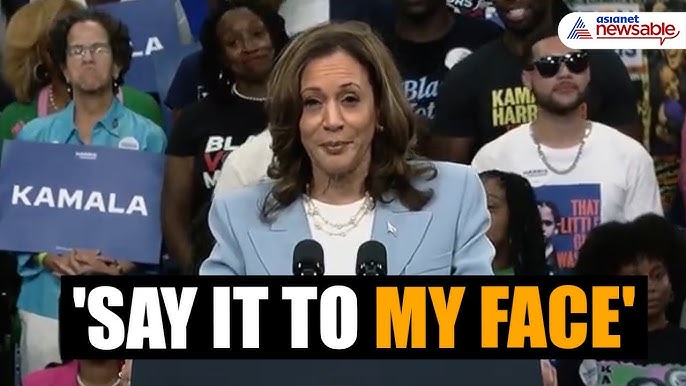
Good Morning!!
Kamala Harris held a joyful, boisterous rally last night in Atlanta. What a contrast to old sad sack Grandpa Trump! The enthusiastic crowd filled a 10,000-seat auditorium, cheering as she directly challenged Trump.
CBS News: Harris dares Trump to debate her as she campaigns in Atlanta: “Say it to my face”
Vice President Kamala Harris taunted former President Donald Trump to meet her on a debate stage before the November election while she campaigned in Atlanta on Tuesday night.
“He won’t debate, but he and his running mate sure seem to have a lot to say about me,” Harris said. “Well, Donald, I do hope you’ll reconsider to meet me on the debate stage because, as the saying goes, if you got something to say, say it to my face.”
A debate between Trump and Mr. Biden was planned for Sept. 10 before the president dropped out of the race. On Monday, Trump told Fox News he wanted to debate but that he could also “make a case for not doing it.”
Harris portrayed herself as the underdog in the race against Trump but said the “momentum in this race is shifting and there are signs that Donald Trump is feeling it.”
It’s Harris’ first visit to Georgia since President Biden ended his reelection campaign. Her campaign is trying to keep the battleground state in play. Harris, the presumptive Democratic nominee, noted the importance of the state moments into her speech.
“I am very clear: The path to the White House runs right through this state,” Harris said. “You all helped us win in 2020 and we are going to do it again in 2024.” [….]
Harris also laid out some priorities for her potential administration, including bringing back a bipartisan border bill that Trump lobbied Republican members of Congress to sink, taking on price gouging, and capping “unfair rent increases” and prescription drug costs….
More than 10,000 people attended the event, according to the campaign, which said it was her largest rally to date.
George Chidi at The Guardian: Atlanta rally: Harris tells Trump to ‘say it to my face’ and challenges him to debate.
Three weeks ago, the political commentariat was writing off Georgia and talking of narrow pathways for Joe Biden to hold the White House. Georgia was a desert. On Tuesday evening, an Atlanta crowd greeted Kamala Harris like she backed up a truck full of sweet tea to that desert.
It’s probably too early – nine days since the president’s withdrawal and the vice-president’s ascension – to know if sentiment in Georgia had shifted enough to justify jubilation. But the crowd in Atlanta treated the new presumptive presidential nominee as a reason to celebrate after months of her quieter campaigning in the city as the vice-presidential nominee.
“As many of you know, before I was elected vice-president … I was an elected attorney general and an elected district attorney,” Harris said after taking the stand. “Hear me when I say, I know Donald Trump’s type, and I have been dealing with people like him my entire career.” [….]
Harris addressed a crowd of 10,000 who filled the Georgia State Convocation Center, with people waiting outside for a seat. She touted her prosecution record and referenced Trump’s criminal convictions and the findings of fraud in his businesses.
“As an attorney general, I held big Wall Street banks accountable for fraud. Donald Trump was found guilty of fraud,” Harris said. “In this campaign, I will proudly put my record against his any day, including on the issue of immigration.”
Harris spoke of walking underground tunnels at the California border and prosecuting traffickers, and pledged to bring back the border security bill that was tanked in Congress by Republicans to preserve the issue in the campaign.
Referencing a Migos song – popular as an Atlanta group – she said: “He does not walk it as he talks it.” [….]
Harris is expected back in the state next week, and will debut her running mate on a seven-stop swing state tour, according to details confirmed by her campaign. Politico reported Harris will hold the first rally in Philadelphia on Tuesday. Harris said she as of today had not picked the candidate.
For the last two years, Harris has been Joe Biden’s chief campaign surrogate in Georgia, making deliberate connections with campaign organizers and Black community leaders, a weapon in the Democratic arsenal that Republicans have not been able to match.
Harris is planning to announce her running mate soon, and they will appear together at a rally in Philadelphia on Tuesday. People are speculating that the location indicates her pick will be Pennsylvania Governor Josh Shapiro. We’ll find out soon.
Politico: Harris to hold first rally with running mate Tuesday in Philadelphia.
Vice President Kamala Harris is expected to announce her running mate by Tuesday, when she will hold her first rally with her pick in Philadelphia.
The two will barnstorm cities in seven swing states in four days. In addition to Philadelphia, they’ll hit western Wisconsin, Detroit, Raleigh, Savannah, Phoenix and Las Vegas.
The stops will mark the first major campaign swing the presumptive ticket will make since Harris became the all-but-certain Democratic presidential nominee following President Joe Biden’s sudden departure from the race. The tour also underscores that the campaign believes the electoral map has expanded since Biden passed the baton to Harris.
The details of Harris and her running mate’s schedule were first shared with POLITICO by the campaign.
Harris’ decision to kick off her tour in the biggest city in Pennsylvania is sure to set off speculation about her vice presidential pick. One of the top contenders being vetted by Harris’ team is Josh Shapiro, the governor of the swing state.
If Harris chooses Shapiro as her running mate, Philadelphia would make an obvious place to roll out the news, given that he hails from the area’s suburbs. But it’s also a diverse, vote-rich city that every presidential nominee must tend to thanks to the state’s 19 electoral votes, and it’s possible Harris’ plans don’t signal anything beyond that.
A Harris campaign aide cautioned against reading too much into the first city chosen for the tour.
Harris said a decision about her No. 2 spot on ticket has not been finalized. Asked by reporters on Tuesday if she has selected her running mate, she said “not yet.”
Harris is planning to interview potential vice presidential nominees in the upcoming days, said people familiar with the vetting process and granted anonymity to speak freely. Other names in the mix include Arizona Sen. Mark Kelly, Minnesota Gov. Tim Walz, Kentucky Gov. Andy Beshear and Transportation Secretary Pete Buttigieg.
Personally, I like Tim Waltz, but Minnesota will be in the Democratic column either way. Pennsylvania may be more problematic.
David M. Perry, who bills himself as a journalist and historian, advocates for Walz at MSNBC: I didn’t vote for Tim Walz originally. Now I’m completely Walz-pilled.
Minnesota Gov. Tim Walz thinks the leaders of the modern Republican Party — especially but not exclusively former President Donald Trump and Sen. JD Vance of Ohio — are extremely “weird.” He has been saying so for months, but ever since Vice President Kamala Harris emerged as the presumptive Democratic nominee for president, he has become one of her most effective messengers, doing the dirty work of attacking the Republicans so Harris can focus on a positive message — “Freedom.”
It has become easy to imagine Walz as the next Democratic nominee for vice president, one of a handful of politicians who have emerged as front-runners for the honor. If it happens, I’ll be thrilled. I’m a Minnesotan and have watched Walz since he started running for governor in the 2018 election. Before that, he was just a “downstate” congressman and not so much on my radar.
But much to my surprise, I’ve become fully “Walz-pilled,” not so much because of the viral clips, but because when he has had the opportunity, he has done everything he can to make Minnesota a better place for everyone.
Frankly, I’m surprised at my own enthusiasm, because I wasn’t a Walz supporter when he ran for governor in 2018. This is inside baseball for Minnesota Democratic-Farmer-Labor politics (not technically the Democratic Party), but Walz came into the race as the more electable, more conservative major candidate for governor. He seemed fine but boring, and it felt like in the coming blue wave anti-Trump election cycle, Minnesota could do better.
Why has Walz captured his support?
Walz’s first term was fine, marked by generally solid health-related leadership during Covid and some questionable decisions during the 2020 George Floyd uprising, but it was last year that everything changed.
In the 2022 elections, Democrats won a trifecta, taking full control of state government, but with a Senate majority of only one seat. DFL leaders never hesitated, taking advantage of a large budget surplus to quickly enact a wide range of progressive policies across the board that changed our state for the better.
They made Minnesota a safe haven for the trans community. They affirmed abortion as a fundamental right and removed restrictions that limited access. They legalized recreational cannabis use and passed laws for driver’s licenses for all Minnesotans regardless of immigration status, automatic voter registration, paid family and medical leave, tax rebates for people making less than $75,000 and new climate goals, and they phased out parental fees for families with kids on Medicaid. This last one is perhaps narrower than the others, but my son has Down syndrome and is on Medicaid, so I sure paid close attention to this….
I’m less interested in the identity politics surrounding Walz, though I recognize that as a Midwestern white dad, a veteran, a former social studies teacher and football coach and a dad from a small rural town, he has a background very distinguishable from Harris’.
But there’s an advantage to this. He can argue, as he did on MSNBC, that the genuine problems facing small-town white Americans are the fault of plutocrats — the Trumps of the world, venture capitalists like JD Vance and their backers. Because the problem isn’t just that they are weird creeps, but that they’re genuinely making lives worse for more people.
Walz believes Democratic policies make lives better. At the end of the 2023 legislative session, Walz gave the memorable quote “Minnesota is showing the country you don’t win elections to bank political capital — you win elections to burn political capital and improve lives.”
As we’ve noted previously, Trump has been going around saying threatening things about voting. At rallies, he has told supporters he doesn’t need their votes, because he already has plenty of votes. He has also told “christians” they need to vote just this time, and after that they’ll never have to vote again. What does he mean? I think he means he’ll be a dictator and then he will abolish elections. Republicans claim he’s just “joking.” Yesterday, Fox News’s Laura Ingraham asked him to explain.
The Hill: Ingraham presses Trump on telling Christians ‘You won’t have to vote anymore’ in 4 years.
Fox News host Laura Ingraham repeatedly prodded former President Trump on Monday over his comments at a conservative Christian summit, where he told attendees they won’t have to vote anymore after November.
Trump did little to push back on the backlash over his remarks, as some Democrats have suggested the former president was saying there would be no more elections if he won. Instead, Trump repeatedly argued his comments were because Christians do not vote in large numbers, and he offhandedly questioned Jewish voters who support Democrats.
“That statement is very simple. I said, ‘Vote for me, you’re not going to have to do it ever again.’ It’s true, because we have to get the vote out. Christians are not known as a big voting group,” Trump said.
“This time, vote. I’ll straighten out the country, you won’t have to vote anymore. I won’t need your vote. You can go back to not voting,” he added.
“You meant you won’t have to vote for you because you have four years in office. Is that what you meant?” Ingraham asked.
When Trump did not directly answer, Ingraham pointed out that some liberals were interpreting Trump’s original remarks to mean there would not be another election. Trump said he had not heard that criticism previously, and he repeated his argument that Christians tend not to vote in large numbers….
“’Don’t worry about the future,’” he continued. “’You have to vote on Nov. 5. After that, you don’t have to worry about voting anymore. I don’t care, because we’re going to fix it. The country will be fixed … We won’t even need your vote anymore because, frankly, we will have such love.’”
 Moustafa Bayoumi at The Guardian: Donald Trump sure makes a lot of ‘jokes’ about ruling as a dictator, doesn’t he?
Last Friday, Donald Trump told an audience of Christian conservatives to “get out and vote, just this time. You won’t have to do it any more. Four more years, you know what? It’ll be fixed, it’ll be fine, you won’t have to vote any more, my beautiful Christians.”
Selling the idea to US citizens that their next vote will be their last one just doesn’t seem like a winning proposition to me, but what do I know? I’m not running to be elected dictator on day one of my second presidency.
That campaign pledge is of course what the former president told Sean Hannity last December. Hannity posed a question to Trump, who weeks earlier had called his political opponents “vermin”. “You are promising America tonight, you would never abuse power as retribution against anybody?” Hannity asked.
“Except for day one,” Trump responded. “I want to close the border, and I want to drill, drill, drill.”
Democrats rang all the alarm bells then, as they are ringing them now, responsibly warning us of our impending authoritarian future under Trump. And Trump’s supporters? They just thought he was kidding. “Of course he’s joking,” one attendee who’s been to more than a dozen Trump events told the Washington Post last December. “You can’t be a dictator with a constitutional republic.”
Whether this attendee is right isn’t the point. The issue is how one side hears jackboots marching just over the hill, ready to trample on our democracy. And the other side hears only guffaws.
And this disconnect continues, day by day, week by week, month by month. After Trump’s comments on Friday, the prominent Democrat and California representative Adam Schiff stated: “Democracy is on the ballot, and if we are to save it, we must vote against authoritarianism.” Meanwhile, on CNN’s State of the Union, Senator Tom Cotton dismissed any worry about Trump’s call to end voting by 2028 by saying that Trump was “obviously making a joke”.
I don’t find Trump’s jokes funny, but what’s really missing from this conversation is how much Trump’s so-called sense of humor draws from the information strategies of the contemporary far right, and how much the Democrats end up playing right into his hands.
Bayoumi’s reasoning is interesting, considering the Democrats’ attacks on Trump and Vance for being weird.
Today’s right wing… “weaponizes irony to attract and radicalize potential supporters”, according to media studies scholar Viveca Greene. She argues that today’s far right uses irony and humor “to challenge progressive ideologies and institutions”, and in so doing, the right is able “to create a toxic counter public”.
Greene is mostly concerned with the alt-right – that is to say, the more extreme elements of the right wing – but Trump’s signature contribution to this discourse is to mainstream alt-right communication strategies on to a national stage. And a kind of plausible deniability plays an enormous role in this rhetorical ecosystem.
Did Trump just call for democracy to end in the next election cycle? Oh, come on. He’s just being funny! (But yes, he did.) Did Trump guarantee to root out the “radical left thugs” that “live like vermin” in our country? That’s hilarious! (He said he will.) Did Trump promise that he will be president for three terms? Stop! My sides are aching! (You bet he did.) Will Trump “terminate” the US constitution if he’s elected? So funny! It’s like he’s saying: “You’re fired!” to a piece of paper! (It’s on the record.)
Bayoumi suggests that making fun of Trump and his threats might work better.
Wouldn’t it be smarter to draw attention to Trump’s ridiculousness rather than his threats? Isn’t there some cliche out there about choosing honey over vinegar? Can the Democrats rediscover the extraordinary political power of satire before it’s too late? The demands on humor on a national stage have never been greater, and that’s no laughing matter.
And that is just what Tim Walz started by calling Republican ideas weird. This week, the Harris campaign and many other Democrats took up that argument and it’s working! Let’s hope they keep coming up with more ways to make fun of Trump. He hates being laughed at, especially by women.
The attacks on Project 2025 are working too. Trump has tried very hard to distance himself from the Heritage Foundation project, but it’s not working because so many former Trump administration people are working on it. Not only that, JD Vance wrote the introduction to the Project 2025 book!
Rolling Stone: Trump Flipped Out That ‘Lunatic’ Project 2025 Could Tank His Campaign.
As he entered the final stretch of the 2024 presidential race, Donald Trump spent much of this month trying to disown the highly Trumpy, Heritage Foundation-led Project 2025 — to the point that he even got his fans to boo the initiative during a recent campaign rally. His protracted freakout over the conservative project — to which he has multiple direct ties, and which is only as extreme as it is largely because of his influence — is driven almost entirely by Trump’s fear over one thing.
When the twice-impeached ex-president and convicted felon took to social media in early July to make the (patently absurd) claim that “I know nothing about Project 2025 [and] I have no idea who is behind it,” he added, “I disagree with some of the things they’re saying and some of the things they’re saying are absolutely ridiculous and abysmal.” He did not specify what “things” he meant.
But according to two sources with direct knowledge of the matter, shortly before he posted that brief message, Trump had been privately — and very bitterly — complaining about the abortion policies laid out in the lengthy Project 2025 manifesto, and trashing the Project 2025-linked “lunatics” who keep demanding unpopular abortion bans and restrictions. Among the policy proposals in Project 2025’s policy roadmap are plans to end federal approval for abortion pills, use federal agencies for expanded “abortion surveillance,” restrict access to emergency contraception, end the federal requirement that hospitals provide medically necessary emergency abortion care, and revive a 150-year-old law that could serve as a de facto national abortion ban.
For what it’s worth, some of the people who helped author Project 2025’s abortion provisions were appointed under Trump to influential federal posts during his first stint in the White House — including Roger Severino, who headed the HHS’ Office of Civil Rights under Trump, and Gene Hamilton, who worked in Trump’s Justice Department and Homeland Security Department.
Trump, now the 2024 GOP presidential nominee, vented that the abortion policies could badly damage his chances at retaking the White House, even at a point in the election cycle when Trump was riding high on strong polling numbers against President Joe Biden. (In the time since, Biden has dropped out of the 2024 contest, with Vice President Kamala Harris now the presumptive Democratic nominee.)
Of course, it was Trump himself who made the hard-right, ambiently unpopular abortion policies embedded in Project 2025 possible at all, as it was Trump’s Supreme Court nominees who were necessary to destroy Roe v. Wade in the first place.
The Daily Beast: Trump Forces Out Project 2025 Mastermind.
The Trump campaign forced the architect of the ultraconservative Project 2025 manifesto out of his job on Tuesday as it sought political cover from a controversy dogging Republicans, the Daily Beast can report exclusively.
Trump campaign manager Chris LaCivita “put the screws” to mastermind Paul Dans in an effort to force him out and shut down the right-wing shop behind Proejct 2025, a sprawling blueprint that sought to overhaul the federal government and implement an array of far-right policies for a potential second Trump administration, a well-placed source told the Daily Beast.
The president of Heritage Foundation, the conservative think tank that employed Dans and conceived of the controversial handbook, fired back on X, formerly Twitter, that Project 2025 is going nowhere.
“Project 2025 will continue our efforts to build a personnel apparatus for policymakers of all levels—federal, state, and local,” Heritage President Kevin Roberts said, adding that he was “extremely grateful” for Dans’ work on the policy platform and his “dedication to saving America.” [….]
His departure hinted that Heritage was shutting down its work on the initiative more than a year after Project 2025 produced its cornerstone 900-page policy mandate that came to define the MAGA movement. The manifesto attracted widespread criticism in recent weeks over its extremist proposals that would demand fealty from federal workers, promote Christian nationalism and overhaul policies from abortion to civil liberties and climate and restructure the departments of Justice and Defense, among other agencies.
As the project backfired politically, Trump sought to distance himself from the group despite its naked ties to his first administration, with Project leadership boasting a number of senior Trump aides and close advisers.
 Of course everyone with half a brain knows that Project 2025 is still the plan for a second Trump administration.
Trump’s campaign staff are worried about his expected sexist and racist attacks on Kamala Harris.
The New Republic: Team Trump Panics About His Attacks on Kamala Harris Backfiring.
As Republicans begin developing lines of attack against Vice President Kamala Harris, many on Team Trump worry that those on their side—including Trump himself—will make disparaging comments about Harris’s identity, alienating key voters.
On Tuesday, The Washington Post reported that Trump’s allies believe attacks on Harris’s political record are more effective than personal insults, but “they also worry that Trump and some of his more extreme supporters will be unable to refrain from deploying sexist and racially fraught language, which they fear will hurt him with crucial voting blocs.”
A source “familiar with the Trump campaign’s thinking” who spoke with the Post “on the condition of anonymity to share candid views,” seemed to think that it’s all but inevitable that Trump will make problematic comments toward Harris. “We hope he doesn’t act like a crazy racist and sexist person, but we can’t control him,” the source said. “There are probably dog whistles and racist and sexist tropes he’ll stumble into. His campaign is going to try to keep him out of that rhetoric, but it’s going to be difficult.”
This isn’t the first time that Republicans have fretted about the bigotry in their own ranks affecting their electoral prospects. Last week, Politico reported that leading House Republicans had to tell “lawmakers to focus on criticizing [Harris’s] record without reference to her race and gender,” following “a series of comments by their members that focused on Harris’ race as well as claims she is a ‘DEI’ pick.”
Over the weekend, several Republican lawmakers and Black Trump supporters told Reuters they worried about “demeaning racist and sexist attacks” and “whether the onslaught could harm Republicans at the ballot box.”
Good luck trying to control him. He can’t control himself.
One more on Trump’s weird VP pick.
The Daily Beast: Michael Ian Black: J.D. Vance’s Obsessions Are Way Creepier Than Being Childless.
[W]hether somebody has children or doesn’t have children isn’t a reflection of their values, their patriotism, or their commitment to the nation.
So why won’t J.D. Vance shut up about children? The man is child-obsessed. CNN published an article Tuesday, “It’s not just ‘cat ladies’: J.D. Vance has a history of disparaging people without kids.” The piece highlights Vance’s obsession with the childless dating as far back as 2020.
One series of fundraising emails that authors Andrew Kaczynski and Em Steck uncovered include lines like, “We’ve allowed ourselves to be dominated by childless sociopaths—they’re invested in NOTHING because they’re not invested in this country’s children.”
What?!?
Those without children are sociopaths? Dolly Parton is a sociopath? Lindsey Graham isn’t invested in the country? Elon Musk, father of God knows how many, is somehow preferable as a person to Taylor Swift? Why? Who the hell is J.D. Vance to make these kinds of broad, grotesque statements? [….]
The childless are people without children. That’s it. Why must any other inference be drawn, unless you’re just a creepy fuck who wears too much eyeliner at all the wrong events?
And it’s not as if the childless are somehow an aberration. A Pew Research Study published just a few days ago reveals that 47 percent of Americans under the age of 50 do not have children. If almost half of the country is sociopathic, as Vance believes, we’ve got bigger problems than the current election cycle.
But, of course, the narrative that childless people are somehow sinister is absurd on its face. Jesus didn’t have any kids. Neither does the Pope. I don’t know if either of them had/have cats, which is J.D. Vance’s one-two whammy of degeneracy, but I’d be hard-pressed to make the argument that Jesus F. Christ didn’t care about the future.
As stupid as the argument may be, I think it speaks to something more subtle about the Republican Party. Under the leadership of Donald Trump (and before, but I’ll confine this piece to the current Republican Party), the GOP has become a shell company for investors attempting to strip-mine the nation of its value, and grab as much as they possibly can for themselves. Why do you think Trump supports Putin so much? Because Putin has already implemented this model in Russia to great success—for Putin….
In this Hobbesian model of America, the contest between the political parties is a blood sport in which to the victors go all the spoils. The “spoils” can be financial and/or cultural, but it’s a fundamentally anti-democratic and anti-American view of political power. And it very much involves children because children give them the moral license to conduct their snatch-and-grab.
Reducing expenditures on social programs, which Republicans support, will certainly hurt other people’s children but will lower public expenditures for themselves and their children. It is for the children that they wreak havoc on the American experiment and call it pro-family. Book bans, school vouchers, anti-LGBTQ legislation, anti-abortion legislation. All of it “for the children.”
No. Fuck you.
Read the rest at The Daily Beast.
That’s it for me today. What’s on your mind?

 peej
peej Carissa
 bostonboomer
 dakinikat
 ecocatwoman
 mablue2
 Mama Lopez
 peggysue22
 quixote
 skydancingguestblogger
 Mona (aka Wonk the Vote)



 Sky Dancing
Recent Comments