
Wednesday Reads
Posted: January 3, 2024 Filed under: 2024 Elections, 2024 presidential Campaign, just because, Media, polling, The Media SUCKS | Tags: Autocracy, big media, Claudine Gay, democracy, diversity, Greg Sargent, Harvard, journalism, Joyce Vance, Racism, Rick Perlstein, The Washington Post 13 CommentsGood Morning!!
It’s 2024, and the media and the Republicans are gearing up for the presidential election in November. What are the Democrats doing? I’m sure they are raising plenty of money, but when will they wake up and start fighting back against the Republicans and the media? Make no mistake, big media is hoping for another Trump presidency, because it will mean chaos and gobs of money for those who cover the chaos. It will mean riches for the media bosses and reporters alike–think of all the new books they can sell as Trump destroys democracy and attempts to gain dictatorial power?
You’ve probably heard that The Washington Post recently got rid of 240 employees through buyouts. They chose to keep right wing columnists like Hugh Hewitt and dumped liberals like Greg Sargent. Fortunately, Sargent has been hired by The New Republic.
This post by Tom Jones is from Poynter, a site that reports on and critiques the media: Opinion | Washington Post reaches buyout goals to, for now, avert layoffs.
The good news is that the Post has been able to meet its goal of trimming staff through buyouts instead of layoffs. The bad news is the Post will enter the new year with fewer employees — perhaps a couple of hundred.
Greg Sargent
Back in October, the Post announced that it was offering buyouts with the hopes of reducing staff by 240. (At the time, the Post had approximately 2,500 employees.)
Then late last month, Post interim CEO Patty Stonesifer told staff only half of the desired number of staffers — about 120 or so — had accepted the buyouts and that there would be layoffs if not enough employees took the buyouts. At the same time, The Daily Beast’s Corbin Bolies reported that Post executive editor Sally Buzbee told staff in an email that about 36 of the 120 who accepted the buyouts were from the newsroom. She said that was “about 30 percent of our goal across the News department.”
Then came Tuesday’s news that the Post had enough buyouts to avoid layoffs — for now (my words, not the Post’s). The exact number of buyouts isn’t known publicly.
In an email to staff, Stonesifer said the company “will enter the new year with a smaller organization but a better financial position.” Stonesifer also wrote, “I am very aware of how difficult this process has been for everyone involved and I want to thank you for the grace and respect you have shown at every step.”
In July, The New York Times Benjamin Mullin and Katie Robertson reported the Post was on track to lose about $100 million this year.

For the gossip columnists at the WaPo, President Biden is boring. Imagine how much better the paper’s “financial position” will be when Trump gets back in the White House and consolidates his power. The same will be true of The New York Times. Maggie Haberman will be cleaning up, along with her co-writers.
In another positive development, historian and political observer Rick Perlstein will be writing for The American Prospect. I’m seriously thinking about dumping my Washington Post subscription and giving that money to one of these liberal publications.
Perlstein has published his first column. In it, he addresses three issues I worry about: the media focus on polls, the failure of journalists to address real issues, while tending to favor right wing narratives, and the failure of Democratic politicians to fight back hard against those narratives.
Rick Perlstein at The American Prospect: You are Entering the Infernal Triangle: Authoritarian Republicans, ineffectual Democrats, and a clueless media.
Perlstein on Polling:
As a historian who also writes about the present, there are certain well-worn grooves in the way elections get written about by pundits and political journalists from which I instinctively recoil. The obsession with polling, for one. Polls have value when approached with due humility, though you wonder how politicians and the public managed to make do without them before their modern invention in the 1930s. But given how often pollsters blow their most confident—and consequential—calls, their work is as likely to be of use to historians as object lessons in hubris as for the objective data they mean to provide.
Pollsters themselves are often the more useful data to study, especially when their models encode mistaken presumptions frozen in place from the past. In 1980, for instance, Ronald Reagan’s landslide was preceded by a near-universal consensus that the election was tied. The pollster who called it correctly, Lou Harris, was the only one who thought to factor into his models a variable that hadn’t been accounted for in previous elections, because it did not yet really exist: the Christian right.
Polling is systematically biased in just that way: toward variables that were evident in the last election, which may or may not be salient for this election. And the more polls dominate discussions of campaigns and elections, the more they crowd out intellectual energy that could be devoted to figuring out those salient, deeper, structural changes conditioning political reality: the kind of knowledge that doesn’t obediently stand still to be counted, totted up, and reduced to a single number.
On media predictions:
Another waaaaay too well-worn journalistic groove isprediction. I have probably read thousands of newspaper opinion column prognostications going back to the 1950s. Their track record is too embarrassing for me to take the exercise seriously, let alone practice it myself. Like bad polls, pundits’ predictions are most usefulwhen they are wrong. They provide an invaluable record of the unspoken collective assumptions of America’s journalistic elite, one of the most hierarchical, conformist groups of people you’ll ever run across. Unfortunately, they help shape our world nearly as much, and sometimes more, than the politicians they comment about. So their collective mistakes land hard….
Rick Perlstein, author, Reaganland: America’s Right Turn 1976-1980.
And how ritualized? Consider one of elite journalism’s most deeply worn grooves: the morning-after declarations, should any Democrat win a presidential election, that the Republican politics of demagogic hate-mongering has shown itself dead and buried for all time—forgetting how predictably it returns in each new election, often in an increasingly vicious form.
In 1964: When the author of the Civil Rights Act, Lyndon Johnson, defeated a Republican who voted against the Civil Rights Act, Barry Goldwater, one of the most distinguished liberal newspaper editors in the South, Sam Ragan of the Raleigh News & Observer, pronounced that all future American elections would be decided “on issues other than civil rights.” His essay quoted the Los Angeles Times’ Washington bureau chief, who affirmed that conventional wisdom by observing that henceforth, whichever party takes the Black vote would be no more predictable than who would win “freckle-faced redheads and one-armed shortstops.” [There are many more examples of this phenomenon in the essay.]
This particular bias is rooted into elite punditry’s deepest, most dangerous groove of all: a canyon, if you will. On one side of the yawning gulf is the perennial fantasy that America is a nation fundamentally united and at peace with itself, “moderate,” “centrist,” where exceptions are epiphenomena entirely alien to settled American “norms.”

On “Reality”:
On the other side of the gulf is, well, reality.
The media habits that make it so hard to grasp that reality—that made Trump and his merry band of insurrectionists such a surprise to us—are perhaps as systematic as any foisted upon the public by state media in authoritarian nations. A little more innocent than, say, Pravda, however, because one wellspring of this stubborn fantasy, and why audiences are so receptive to it, is simple psychology. To acknowledge the alternative is to stare into a terrifying abyss: the realization that America has never not been part of the way to something like a civil war.But suddenly, in 2024, no one can avoid acknowledging that abyss anymore. And that leaves journalism in a genuine crisis.
Generations of this incumbent, consensus-besotted journalism have produced the very conceptual tools, metaphors, habits, and technologies that we understand as political journalism. But these tools are thoroughly inadequate to understanding what politics now is.
According to polls (which, yes, have their uses, in moderation), something around half of likely voters would like to see as our next president a man who thinks of the law as an extension of his superior will, who talks about race like a Nazi, wants to put journalistic organizations whose coverage he doesn’t like in the dock for “treason,” and who promises that anyone violating standards of good order as he defines them—shoplifters, for instance—will be summarily shot dead by officers of the state who serve only at his pleasure. A fascist, in other words. We find ourselves on the brink of an astonishing watershed, in this 2024 presidential year: a live possibility that government of the people, by the people, and for the people could conceivably perish from these United States, and ordinary people—you, me—may have to make the kind of moral choices about resistance that mid-20th-century existentialist philosophers once wrote about. That’s the case if Trump wins. But it’s just as likely, or even more likely, if he loses, then claims he wins. That’s one prediction I feel comfortable with.
I’ve already quoted too much, but I hope it’s enough so that you’ll want to read the rest at The American Prospect.
Every morning, I read Joyce Vance’s substack, Civil Discourse. Today, she offered “a warning” to all of us who want to save democracy. We have to remember that no everyone is following news and politics closely.
One morning before Christmas, I was working out with a friend who I adore, and workout with regularly. She’s young, smart, and a recent college graduate. In the middle of our session, my phone started going off incessantly and I finally picked it up. It was, of course, breaking news. That day, it was about the Giuliani bankruptcy.
I apologized to her for taking the call. I got off quickly and told her, by way of explanation, “Rudy Giuliani just filed for bankruptcy.”
Joyce Vance
“Who’s Rudy Giuliani?” she asked.
One morning before Christmas, I was working out with a friend who I adore, and workout with regularly. She’s young, smart, and a recent college graduate. In the middle of our session, my phone started going off incessantly and I finally picked it up. It was, of course, breaking news. That day, it was about the Giuliani bankruptcy.
I apologized to her for taking the call. I got off quickly and told her, by way of explanation, “Rudy Giuliani just filed for bankruptcy.”
“Who’s Rudy Giuliani?” she asked.
You know that noise they make in TV sitcoms, the one where the needle scratches across the record, and everything is interrupted? That was what I heard in my head. My mind worked over the implications of her question for the remainder of our time together.
She was born after 9-11. She never knew Giuliani as America’s mayor when the Towers fell and certainly not as the staunch pro-law enforcement mayor in the city in earlier years. But it shocked me that someone of voting age was unaware of Giuliani—didn’t recognize his name and associate it with Trump’s efforts to overturn the 2020 election.
She asked me about the bankruptcy. “Is that a good thing or a bad thing?” I explained that he’d lost a big defamation case in Georgia because he said horrible things about two election workers and disrupted their lives. Still no signs of recognition, but she got the point. “What an a**hole,” she concluded, based on my brief description of what he’d done.

Read the rest at the substack link.
Like Joyce Vance, I grew up in a politically engaged family. It’s always a shock to me when I learn that some people have no idea what’s going on in the government. We need to reach out to the people us and discuss the danger of autocracy.
I’m really troubled by what happened to Claudine Gay, Harvard’s first Black president. She may well have some issues with past plagiarism, but if she had been white, I doubt if the issue would have even come up. The truth is, she was set up by Congressional Republicans who hate diversity in education. Two articles:
At The Atlantic, David Graham expresses the typical liberal media response: it’s a shame and of course she was targeted by right wingers, but Harvard still had to do the “right” thing: An Old-Fashioned Scandal Fells a New Harvard President.
Gay, a political scientist, resigned…, making her the second president of an Ivy League institution to bow out in the past month. University of Pennsylvania President Liz Magill stepped down on December 9, but the cases are not as similar as they might initially seem. Magill’s departure stemmed directly from the shaky December 5 congressional testimony by a panel of college presidents about anti-Semitism and the Israeli-Palestinian conflict, and was viewed as a victory for Elise Stefanik, the Republican representative who led the questioning.
What appear to have doomed Gay were the allegations of plagiarism lodged against her. This is an important distinction. Penn’s board of trustees was spooked by pressure from donors and politicians. The Harvard Corporation, an equivalent body, was not. In a December 12 statement, it acknowledged that Gay’s testimony had gone poorly, but said she would remain in her post, describing its position as a defense of open discourse and academic freedom. Although Stefanik is already claiming credit, what ended Gay’s short tenure were not the hot-button issues of campus speech and anti-Semitism but was instead the kind of scandal that one might expect to fell the president of any educational institution, whether a member of the Ivy League or a community college.
Yes, because Harvard initially supported her remaining president, so the right wingers had to find another reason to get rid of her.
On December 5, Gay, Magill, and MIT’s Sally Kornbluth were hauled before Congress to speak about anti-Semitism on campus, though many GOP members really seemed to be upset about what they saw as inconsistent standards for deciding what speech is and isn’t acceptable on campuses. The hearing was remarkable for, among other things, how little intellectual agility the presidents showed in the face of questioning. A college president has to fulfill a dual role, serving not only as an academic officer but also as a sort of front woman for her institution. The failure of these presidents to represent their universities well in such a public setting was bound to raise questions about their leadership, regardless of the subject matter.
Claudine Gay
Gay survived the initial backlash to her testimony, but since then, the furor around allegations of plagiarism has grown. Many of the examples that have been made public represent extremely lazy rewriting of source material—Gay borrowed sentences or paragraphs, making minor changes to their wording or order of clauses without adding much analysis of her own. Some academics have described this as entirely unacceptable, while others have defended Gay—including some, such as David Canon, from whose work she repeatedly drew. “I am not at all concerned about the passages. This isn’t even close to an example of academic plagiarism,” Canon told The Washington Free Beacon….
The origin of the complaints is still murky. Allegations of academic misconduct against Gay had floated around online message boards for some time, The Wall Street Journal reported. One unnamed individual claims to be the source of the current charges. On October 24, the New York Post contacted the university to ask about allegations against Gay. On December 10, the conservative agitator Christopher Rufo and the journalist Christopher Brunet published claims of plagiarism in Gay’s 1997 Harvard dissertation. The next day, The Washington Free Beacon added more reporting….
Conservatives have long had it out for Gay, Harvard’s first Black president, whose appointment they viewed as a sop to progressive diversity, equity, and inclusion initiatives. The identity of the initial anonymous complainant against Gay is unclear, as is when he or she brought the complaints forward. The appearance of the allegations in conservative outlets and their timing, coming shortly after the war in Gaza thrust Gay into the spotlight, certainly suggest a politically motivated effort.
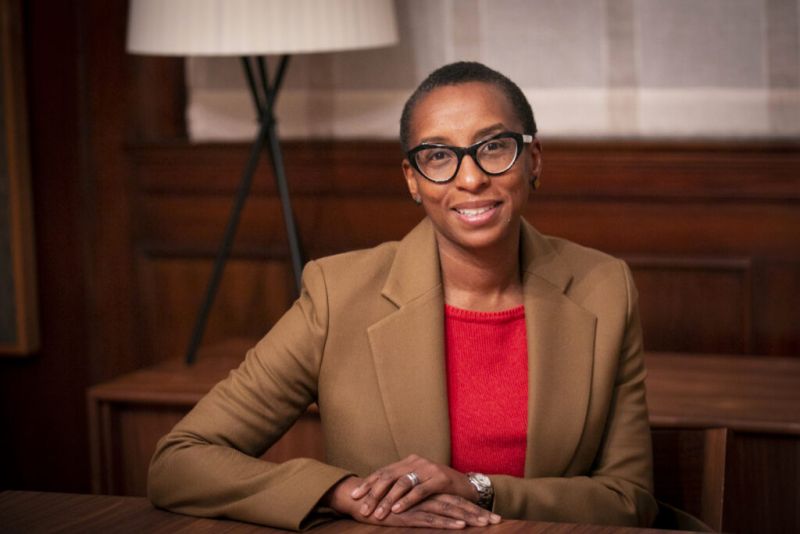
I’ve quoted the parts of Graham’s article that support my point of view. He still thinks she should have been fired.
Nia T. Evans at Mother Jones: What Claudine Gay’s Resignation From Harvard Means for the Rest of Us.
Claudine Gay’s resignation from her post as president of Harvard University is a shocking new twist in the ongoing saga over campus free speech. Gay resigned on Tuesday amid new allegations of plagiarism leveled through an unsigned complaint published in the Washington Free Beacon, a conservative outlet that has long criticized Gay. The news, which was broken by the Crimson, comes after months of attacks on Gay’s response to campus antisemitism and weeks after university leaders reaffirmed their support for her. Gay’s stunning departure is the latest casualty in a growing conservative crusade against “diversity in education” and a chilling reminder of the state of campus free speech amid Israel’s war on Gaza.
“It has become clear that it is in the best interests of Harvard for me to resign,” Gay wrote in a letter to the Harvard community. “It has been distressing to have doubt cast on my commitments to confronting hate and to upholding scholarly rigor—two bedrock values that are fundamental to who I am.”
Gay’s 186-day tenure is the shortest in the school’s 388-year history.
Just six months ago, Gay was heralded as the future of Harvard University. “I stand before you on this stage with the weight and honor of being a first,” she told a rain-soaked crowd during her inauguration ceremony. Her journey to becoming Harvard’s first Black female president felt like the quintessential American dream: she is the daughter of Haitian immigrants, a Stanford graduate with a doctorate from Harvard. An accomplished political scientist with an emphasis on race, democracy, and politics, she was praised by university and political leaders alike after being named Harvard’s 30th president in late 2022. Massachusetts Gov. Maura Healey called her “a leader for our time” driven by the “values to meet the moment” at Gay’s September inauguration ceremony. Harvard’s governing board announced her selection with glee. “We are confident Claudine will be a thoughtful, principled, and inspiring president for all of Harvard,” wrote Harvard Corporation senior fellow Penny Pritzker. “She will be a great Harvard president in no small part because she is such a good person.”
Gay’s brief tenure collided with historic political assaults against diversity and education. In June, the Supreme Court struck down affirmative action in a case in which Harvard was at its center. The October 7 terrorist attack on Israel by Hamas instigated an ongoing war that’s claimed more than 22,000 lives. The war also set off a fierce debate on college campuses across the country over free speech. In one well-documented incident, a conservative group paid for a truck to circle around Harvard Square with a billboard on which the names and photos of opponents of Israel’s actions were displayed. The billboard dubbed them “Harvard’s Leading Antisemites.”
The end result of the controversy and the efforts of right wingers:
Her resignation not only shakes things up at the most prestigious university in the country, it also exposes a larger trend of racial regression that picked up in the years following the 2020 uprisings as Black leaders have been installed in positions of power only to find themselves undermined by the systems they sought to save. Love it or hate it, Harvard sets the tone for national and international debates. To conservative activists celebrating on Twitter, Gay’s ouster is part of a larger project to purge progressive Black leaders from public institutions. Or as Chris Rufo put it, to abolish “DEI ideology from every institution in America.” In the end, Gay’s presidency has created yet another first: Harvard’s first Black female president was also its shortest-serving.
Those are my top stories for today. Lots more is happening, of course. Here are more stories you might find interesting/enraging:
Times of Israel: Israel in talks with Congo and other countries on Gaza ‘voluntary migration’ plan.
The Texas Tribune: Emergency rooms not required to perform life-saving abortions, federal appeals court rules.
Jose Pagliery at The Daily Beast: Jack Smith Keeps Telegraphing Some Seriously Scandalous Trump Crimes.
David Kurtz at TPM’s Morning Memo: The New Argument That Might Save Trump’s March Trial Date.
Newsweek: ‘Storm the Capitol’ Board Game Celebrates Jan. 6 Rioters.
That’s it for me today. What’s on your mind?
Friday Reads
Posted: October 29, 2021 Filed under: Afternoon Reads | Tags: Build Back Better plan, CIA black sites, democracy, Facebook name change, Filibuster, Gender Equality, George W. Bush, Guantanamo, Joe Manchin, Mark Zukerberg is evil, National Cat Day, paid family leave, right to vote, Torture 23 Comments
Audrey Hepburn, Breakfast of Tiffany’s publicity photo by Howell Conant, 1960
Happy National Cat Day!!
47ABC: National Cat Day shines light on fostering, adopting.
SALISBURY, Md. – Friday is National Cat Day, a day all about celebrating our feline friends, but also about raising awareness of adopting and fostering.
This time of year especially, local shelters tell us they’re very busy with kittens and are in need of fosters.
Arynn Brucie with the Brandywine Valley SPCA says adopting and fostering cats and kittens are equally important, and National Cat Day can shed a light on all of the four legged friends who are looking for temporary and permanent homes.
“The shelter is a great stop for them, but not necessarily great long term, so for the older kitties that may not be adjusting well to the shelter, fostering is great for that, kittens that come in without a mom, or super young or a mom with kittens that may not have a soft nice place to land, fostering is really important for that,” she said.
According to nationaltoday.com, National Cat Day was founded in 2005 by Colleen Paige, a lifestyle writer who set out to celebrate beloved pet cats while also putting a spotlight on the thousands still waiting to be rescued.
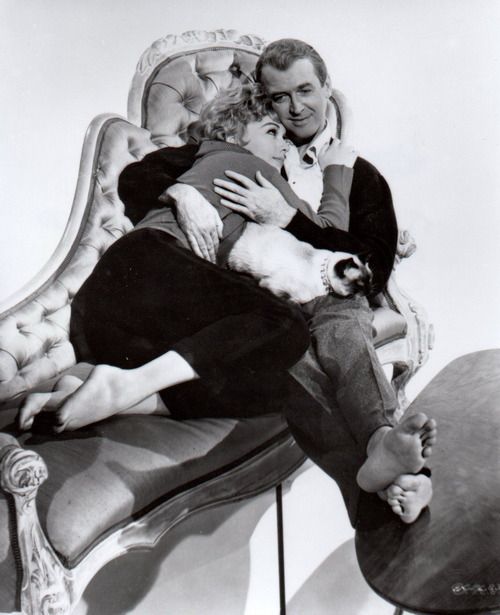
Jimmy Stewart, Kim Novak and Pyewacket. Promo for “Bell, Book and Candle” (1958)
In celebration of this year’s event, here are some facts, tips and must-have feline finds for any cat lover:
- Cats have been companion animals to humans since ancient times. Research suggests that cats first lived close to humans and primarily served as pest control before being domesticated as pets.
- Cats have been sharing our daily lives for a long time. It’s estimated that cats were first domesticated in Egypt between 10,000 and 12,000 years ago. Today, there are more than 400 million pet cats worldwide and around 90 million pet cats in the United States.
- Cats’ whiskers help them navigate their surroundings. While face whiskers are the most obvious, cats also have object-sensing hairs throughout their bodies.
- Most cats experience a euphoric reaction to catnip. Purring, pawing, rolling and romping are common reactions. Catnip is a safe treat that many felines enjoy as much as their humans enjoy watching their reactions.
- There are a lot of cats in need of rescue. According to the ASPCA, about 3.2 million cats end up in animal shelters each year. Spaying and neutering cats are vital to preventing unwanted litters of kittens.
- Pet cat ownership increased during the pandemic. A 2021 survey by the American Pet Products Association found that 14% of respondents got a new pet in the past year, many of whom chose to get a cat.
Here’s what’s happening in non-cat news:
Jill Filipovic at The Guardian: Joe Manchin single-handedly denied US families paid leave. That’s just cruel.
Americans will remain some of the last people on the planet to have no right to paid leave when they have children, and for that, you can thank Joe Manchin.
To be fair, 50 Republicans are to blame for this as well. All 50 of them oppose Biden’s paid family leave plan, and none were expected to vote for this bill. If even a few of them had been willing to cross the aisle to support parents and new babies – to be, one might say, “pro-life” and “pro-family” – then Manchin would not have the power he does to deny paid family leave to millions of American parents. So let’s not forget this reality, too: most Democrats want to create a paid family leave program. Republicans do not.
Sigourney Weaver in Alien, 1979
But Manchin’s actions are particularly insulting and egregious because he is a Democrat. He enjoys party support and funding. He benefits when Democrats do popular things. And now, he’s standing in the way of a policy that the overwhelming majority of Democrats want, and that is resoundingly popular with the American public, including conservatives and Republicans.
Paid family leave brings a long list of benefits to families, from healthier children to stronger marriages. And it benefits the country by keeping more working-age people in the workforce – when families don’t have paid leave, mothers drop out, a dynamic we’ve seen exacerbated by the pandemic. By some estimates, paid family leave could increase US GDP by billions of dollars.
This is good policy. But it’s also a policy that is, in large part, about gender equality. While paid leave is (or would have been) available to any new parent, the reality is that it’s overwhelmingly women who are the primary caregivers for children, it’s overwhelmingly women who birth children, and it’s overwhelmingly women who are pushed out of the paid workforce when they have kids.

Read more at the The Guardian.
Not to worry though, we can also thank Manchin for preserving the filibuster (sarcasm). Joyce White Vance at MSNBC: Democracy is dying a slow death in America. At least we have the filibuster!
Those who suggest we should sacrifice the right to vote in order to preserve the filibuster are telling a fairy tale about a democracy gone bad.
As of this month, 19 states have passed 33 new laws since the 2020 election that will make it harder for Americans to vote. Using false allegations of voter fraud like a monster beneath the bed, Republican state legislatures have passed laws that make it harder to register to vote, stay registered, cast a ballot and have it counted. We’re already entering the next wave of voting rights violations, as data from the 2020 census is stretched and pulled into politically gerrymandered districts that will be with us for the decade.
These laws will make it much more difficult for some voters — and especially for people of color, people with disabilities, and people of lower economic status — to exercise their rights. Some of the statutes veer perilously close to enabling future candidates to do what former President Donald Trump and his allies attempted in 2020: cancel just enough votes to win.
Anita Ekberg in La Dolce Vita, 1960
Democrats have passed legislation in the House of Representatives that would provide a fix. But it’s come to a standstill in the Senate. That’s true even though Sen. Joe Manchin, D-W.Va., morphed the House’s Help America Vote Act into the less beefy but still important Freedom to Vote Act. He thought, unlike anyone who’s been paying attention to Congress over the last few years, that he could attract Republican votes. Whether Republicans are afraid of their party’s de facto leader or afraid of their own political prospects if all of their constituents are free to vote, the Senate floor vote last week made the state of play clear. We are losing ground, and dangerously so, in the fight to ensure American voters can exercise their most essential right in our democracy. But that’s OK! Because we’ll have something much more important, at least according to the Republicans and to Sens. Manchin and Kyrsten Sinema of Arizona — the filibuster.
In 2024, your state legislature may decide that because your majority-Black county voted Democratic in the presidential election, there must have been fraud involved. They may remove your local election officials and replace them with their own handpicked people who will “find” enough votes to “fix” the outcome of the election for the Republican — all legal because the Senate failed to pass the law that would have prevented states from doing this. When your vote isn’t counted, you can console yourself with the knowledge that the filibuster is still there for you.

I wonder which side Manchin and Sinema would have been supported in the Civil War?
Mark Zukerberg–another candidate for most valuable player in the destruction of democracy–announced yesterday that he’s changing Facebook’s name to Meta. Jason Koebler at Vice News: Zuckerberg Announces Fantasy World Where Facebook Is Not a Horrible Company.
Moments before announcing Facebook is changing its name to “Meta” and detailing the company’s “metaverse” plans during a Facebook Connect presentation on Thursday, Mark Zuckerberg said “some people will say this isn’t a time to focus on the future,” referring to the massive, ongoing scandal plaguing his company relating to the myriad ways Facebook has made the world worse. “I believe technology can make our lives better. The future will be built by those willing to stand up and say this is the future we want.”
Marlon Brando in The Godfather, 1972
The future Zuckerberg went on to pitch was a delusional fever dream cribbed most obviously from dystopian science fiction and misleading or outright fabricated virtual reality product pitches from the last decade. In the “metaverse—an “embodied” internet where we are, basically, inside the computer via a headset or other reality-modifying technology of some sort—rather than hang out with people in real life you could meet up with them as Casper-the-friendly-ghost-style holograms to do historically fun and stimulating activities such as attend concerts or play basketball.
These presentations had the familiar vibe of an overly-ambitious video game reveal. In the concert example, one friend is present in reality while the other is not; the friend joins the concert inexplicably as a blue Force ghost and the pair grab “tickets” to a “metaverse afterparty” in which NFTs are for sale. This theme continued throughout as people wandered seamlessly into virtual fantasy worlds over and over, and the presentation lacked any sense of what this so-called metaverse would look like in practice. It was flagrantly abstract, showing more the dream of the metaverse than anything resembling reality. We’re told that two real people, filmed with real cameras on real couches, are in a “digital space.” When Zuckerberg reveals that Facebook is working on augmented reality glasses that could make any of this even a possibility, it doesn’t show any actual glasses, only “simulated footage” of augmented reality.
“We have to fit holograms displays, projectors, batteries, radios, custom silicon chips, cameras, speakers, sensors to map the world around you, and more, into glasses that are five millimeters thick,” Zuckerberg says.
Whatever the metaverse does look like, it is virtually guaranteed to not look or feel anything like what Facebook showed on Thursday.

Read more delusional stuff at the link. I’m not sure what any of this has to do with the mess I see when I dare to open Facebook.
Of course George W. Bush contributed to the anti-democratic world we’re in today. Here’s a flashback for you from Carol Rosenberg at The New York Times: For First Time in Public, a Detainee Describes Torture at C.I.A. Black Sites.
GUANTÁNAMO BAY NAVAL BASE, Cuba — A suburban Baltimore high school graduate turned Al Qaeda courier, speaking to a military jury for the first time, gave a detailed account on Thursday of the brutal forced feedings, crude waterboarding and other physical and sexual abuse he endured during his 2003 to 2006 detention in the C.I.A.’s overseas prison network.
Art Carney in Harry and Tonto
Appearing in open court, Majid Khan, 41, became the first former prisoner of the black sites to openly describe, anywhere, the violent and cruel “enhanced interrogation techniques” that agents used to extract information and confessions from terrorism suspects.
For more than two hours, he spoke about dungeonlike conditions, humiliating stretches of nudity with only a hood on his head, sometimes while his arms were chained in ways that made sleep impossible, and being intentionally nearly drowned in icy cold water in tubs at two sites, once while a C.I.A. interrogator counted down from 10 before water was poured into his nose and mouth.
Soon after his capture in Pakistan in March 2003, Mr. Khan said, he cooperated with his captors, telling them everything he knew, with the hope of release. “Instead, the more I cooperated, the more I was tortured,” he said.
The dramatic accounting capped a day in which eight U.S. military officers were selected to serve on a jury, which will deliberate Friday on his official sentence in the range of 25 to 40 years, starting from his guilty plea in February 2012.

Read the rest at the NYT.
More stories to check out:
Will Sommer at The Daily Beast: He’s Writing Tucker’s Deranged Jan. 6 Movie—After Directing a Pizzagater’s Opus.
The Washington Post: Flight attendant suffers broken bones in ‘one of the worst displays of unruly behavior’ in the skies.
Reuters: Trump’s real-estate empire pays the price for poisonous politics.
The Bulwark: Truth Social Violated Mastodon’s ToS; Trump’s Entire Platform Might Now Be DOA.
The Washington Post: Chief federal judge in D.C. assails ‘almost schizophrenic’ Jan. 6 prosecutions: ‘The rioters were not mere protesters’
Buzzfeed News: White Supremacists Used Racist Slurs And Cursed In Bizarre Opening Statements For The Charlottesville Trial.
Jane Mayer at The New Yorker: A Retiring Democrat Places Blame for Paralysis in Congress.
Lazy Caturday Reads: Trump and GOP Try to Destroy U.S. Democracy
Posted: December 12, 2020 Filed under: Afternoon Reads, Republican politics, SCOTUS, U.S. Politics | Tags: caturday, democracy, Donald Trump, Ken Paxton, Korean folk art, Sedition, Texas 12 Comments
Good Afternoon!!
I was so taken with the Korean folk art paintings that Dakinikat posted on Monday that I decided to focus on Korean cat art today. I hope these paintings will help you deal with today’s news, which is mostly stupid coup stories. Now that the Supreme court has rejected Trump’s last ditch effort to overturn the election results, he is melting down in even more embarrassing ways than ever. Will U.S. democracy survive?
The New York Times: Supreme Court Rejects Texas Suit Seeking to Subvert Election.
The Supreme Court on Friday rejected a lawsuit by Texas that had asked the court to throw out the election results in four battleground states that President Trump lost in November, ending any prospect that a brazen attempt to use the courts to reverse his defeat at the polls would succeed.
The court, in a brief unsigned order, said Texas lacked standing to pursue the case, saying it “has not demonstrated a judicially cognizable interest in the manner in which another state conducts its elections.”
The order, coupled with another one on Tuesday turning away a similar request from Pennsylvania Republicans, signaled that a conservative court with three justices appointed by Mr. Trump refused to be drawn into the extraordinary effort by the president and many prominent members of his party to deny his Democratic opponent, former Vice President Joseph R. Biden Jr., his victory.
Korean folk art – Magpie and Tiger
It was the latest and most significant setback for Mr. Trump in a litigation campaign that was rejected by courts at every turn.
Texas’ lawsuit, filed directly in the Supreme Court, challenged election procedures in four states: Georgia, Michigan, Pennsylvania and Wisconsin. It asked the court to bar those states from casting their electoral votes for Mr. Biden and to shift the selection of electors to the states’ legislatures. That would have required the justices to throw out millions of votes.
Mr. Trump has said he expected to prevail in the Supreme Court, after rushing the confirmation of Justice Amy Coney Barrett in October in part in the hope that she would vote in Mr. Trump’s favor in election disputes.

None of the three justices Trump appointed were willing to hear the case. But Republican support for Trump’s efforts have done permanent damage to our country.
The New York Times: ‘An Indelible Stain’: How the G.O.P. Tried to Topple a Pillar of Democracy.
The Supreme Court repudiation of President Trump’s desperate bid for a second term not only shredded his effort to overturn the will of voters: It also was a blunt rebuke to Republican leaders in Congress and the states who were willing to damage American democracy by embracing a partisan power grab over a free and fair election.
The court’s decision on Friday night, an inflection point after weeks of legal flailing by Mr. Trump and ahead of the Electoral College vote for President-elect Joseph R. Biden Jr. on Monday, leaves the president’s party in an extraordinary position. Through their explicit endorsements or complicity of silence, much of the G.O.P. leadership now shares responsibility for the quixotic attempt to ignore the nation’s founding principles and engineer a different verdict from the one voters cast in November.
Many regular Republicans supported this effort, too — a sign that Mr. Trump has not just bent the party to his will, but pressed a mainstay of American politics for nearly two centuries into the service of overturning an election outcome and assaulting public faith in the electoral system. The G.O.P. sought to undo the vote by such spurious means that the Supreme Court quickly rejected the argument.
Cat looking at butterfly, Byeon Sang-byeok, mid 18th century
Even some Republican leaders delivered a withering assessment of the 126 G.O.P. House members and 18 attorneys general who chose to side with Mr. Trump over the democratic process, by backing a lawsuit that asked the Supreme Court to throw out some 20 million votes in four key states that cemented the president’s loss.
“The act itself by the 126 members of the United States House of Representatives, is an affront to the country,” said Michael Steele, the former chairman of the Republican National Committee. “It’s an offense to the Constitution and it leaves an indelible stain that will be hard for these 126 members to wipe off their political skin for a long time to come.”

Read more at the link.
In response to the SCOTUS decision, Texas GOP chairman Adam West suggested that states that supported the lawsuit should secede from the union. Speaker Nancy Pelosi offered a more rational response:
Speaker Nancy Pelosi issued this statement after the U.S. Supreme Court ruled to reject the sham GOP lawsuit demanding that Electoral College votes in four states be overturned and awarded to Donald Trump:
“The Court has rightly dismissed out of hand the extreme, unlawful and undemocratic GOP lawsuit to overturn the will of millions of American voters.
“The 126 Republican Members that signed onto this lawsuit brought dishonor to the House. Instead of upholding their oath to support and defend the Constitution, they chose to subvert the Constitution and undermine public trust in our sacred democratic institutions.
“The pandemic is raging, with nearly 300,000 having died and tens of millions having lost jobs. Strong, unified action is needed to crush the virus, and Republicans must once and for all end their election subversion – immediately.”
Trump reacted by skipping last night’s superspreader White House Christmas party and proceeding to melt down on Twitter. He was at it again this morning. I won’t reproduce the tweets; you can read them on Twitter if you want to endure the idiocy.
 Some thoughtful reactions to Trump and GOP attacks on democracy:
Tom McCarthy at The Guardian: After the fact: the five ways Trump has tried to attack democracy post-election.
Historians could mark 2020 as the moment when Republicans applied the same zeal they have used to attack democracy in advance of elections, through voter suppression and gerrymandering, to attacking democracy on the back end, by trying to deny and overturn the results.
Here is a list of five post-election attacks on democracy by Donald Trump and Republicans that were new in 2020 but might haunt elections for years to come.
Here’s McCarthy’s list–read the article for details: 1) Especially reckless and sustained election fraud charges, 2) Political pressure on local elections officials, 3) External legal challenges to the certification of state election results, 4) Internal political challenges to the certification of state election results, 5) The president’s role.
McCarthy on Trump’s behavior:
Should a president of the United States, after an election, be calling up county election officials in charge of certifying the results? Should a president invite lawmakers weighing an intervention in their state’s certification process for lunch? Should a president call out the mob on Twitter against a local election official or a state secretary of state who has resisted his schemes?
Whatever damage US democracy has sustained in 2020, much of it traces back to the source, to a president who did not see anything wrong in 2019 with coercing a foreign leader to try to take out a political opponent, who made the fealty of state governors a condition of pandemic aid, and who now has twisted the arms of elected officials across the United States in an effort to subvert the will of American voters.
The role that Trump has played in attacking the integrity of the American system is the most outrageous and unprecedented of all the unholy perversions of democracy that 2020 has seen. Whether that role will be replicated or reprised in future White Houses, and in future elections, could make all the difference.

Painting of Cats and Sparrows, drawn by Byeon Sang-bteij during the late period of Korean Joseon Dynasty, 1392-1910
William Saletan at Slate: Trump Is Finishing Russia’s Smear Campaign Against America.
Donald Trump’s presidency has been a gift to Russia. He has undermined NATO, withheld military aid to Ukraine, and abandoned America’s commitments to democracy and human rights. He has excused Vladimir Putin’s crimes, yielded to Russian troops in the Middle East, and dismissed Russia’s 2016 election interference as a hoax. Now Trump has been voted out by Americans, but he’s still serving Russia. He’s devoting his final days in office—and suggesting he might devote his post-presidency—to a long-standing Russian objective: destroying faith in U.S. elections.
For weeks, Trump has rejected Joe Biden’s victory as a fraud. In interviews, tweets, speeches, and a campaign rally in Georgia, Trump has accused Democrats of using dead people, undocumented immigrants, and software to manipulate the outcome. These allegations aren’t just lies. They’re replications, almost word for word, of propaganda that was spread by Russia in the United States and adopted by the Trump campaign in 2016. Russia expected Trump to lose that election, and it planned to portray his loss as evidence that American elections were rigged, that the U.S. government was illegitimate, and that the United States wasn’t really a democracy. Now that Trump has lost to Biden, that campaign of slander is underway. But it’s not being driven by Russians. It’s being driven by Republicans.
Russia’s strategy is detailed in three reports: one by the U.S. Intelligence Community, another by special counsel Robert Mueller, and a third by the Republican-led Senate Intelligence Committee. The ultimate goal of the operation wasn’t to elect Trump. It was to spread the idea that “U.S. election results cannot be trusted.” In 2016, Putin’s propagandists used fake Facebook pages and Twitter accounts (“Army of Jesus,” “Secured Borders,” “Tea Party News”) to plant bogus rumors of “voter fraud” in multiple states. They told the same horror stories and used the same trigger words Republicans use now: “rigged,” “dead people,” “illegal aliens,” globalist-controlled voting machines, “tens of thousands of ineligible mail in … votes,” and “voter fraud caught in Philadelphia.”
Trump and his followers parroted this propaganda during the 2016 campaign. Donald Trump Jr. and Eric Trump retweeted fake “#VoterFraud” updates written by Russian operatives. Kellyanne Conway, Brad Parscale, Michael Flynn, and other Trump campaign advisers also retweeted messages from the Russian accounts. When the Russians circulated a false rumor that voting machines were rigged against Trump, he repeated it on Fox News. After the election, when Russian front groups spread the word that “illegals” and “machines” had robbed Trump of the popular vote, he repeated that, too. “I won the popular vote if you deduct the millions of people who voted illegally,” he declared.
There’s much more at the link.
 Ryan Cooper at The Week: The Constitution has an answer for seditious members of Congress. Cooper notes that the pandemic is growing exponentially, while Trump and the GOP do nothing about it. At the same time Republicans supported Trump’s effort to overturn the election results.
In short, material conditions in this country have not been this bad since 1932 at least, and the political situation has not been this bad since 1860. The logical endgame of the rapidly-accelerating Republican attempt to destroy democracy while the country burns would be civil war — if it weren’t for the high probability that Democratic leaders would be too cowardly to fight.
But it’s worth thinking about what a party seriously committed to preserving democracy would do when faced with a seditious opposition party — namely, cut them out of power and force them to behave. Democrats could declare all traitors ineligible to serve in national office, convene a Patriot Congress composed solely of people who have not committed insurrection against the American government, and use that power to re-entrench democracy….
All members of Congress swear an oath to protect and defend the Constitution, which establishes a republican form of government. The whole point of a republic is that contests for power are conducted through a framework of rules and democratic elections, where all parties agree to respect the result whether they lose or win. Moreover, the premise of this lawsuit was completely preposterous — arguing in effect that states should not be allowed to set their own election rules if that means more Democrats can vote — and provides no evidence whatsoever for false allegations of tens of thousands of instances of voter fraud….
…this lawsuit, even though it didn’t succeed, is a flagrant attempt to overturn the constitutional system and impose through authoritarian means the rule of a corrupt criminal whose doltish incompetence has gotten hundreds of thousands of Americans killed. It is a “seditious abuse of the judicial process,” as the states of Georgia, Pennsylvania, Michigan, and Wisconsin jointly wrote in their response to Texas trying to steal their elections.
The Constitution, as goofy and jerry-rigged as it is, stipulates that insurrectionists who violate their oath are not allowed to serve in Congress. Section 3 of the Fourteenth Amendment, written to exclude Confederate Civil War traitors, says that “No person shall be a Senator or Representative in Congress … who … having previously taken an oath, as a member of Congress … to support the Constitution of the United States, shall have engaged in insurrection or rebellion against the same[.]” How the Supreme Court ruled, or whether Republicans actually believe their lunatic claims, is irrelevant. It’s still insurrection even if it doesn’t work out.
Democrats would have every right, both under the Constitution and under the principle of popular sovereignty outlined in the Declaration of Independence, to convene a traitor-free Congress (also including similar acts committed by Republican senators like Lindsey Graham, David Perdue, Kelly Loeffler, and others), and pass such laws as would be necessary to preserve the American republic. That might include a national popular vote to decide the presidency, ironclad voting rights protections, a ban on gerrymandering either national or state district boundaries, full representation for the citizens of D.C. and Puerto Rico, regulations on internet platforms that are inflaming violent political extremism, a clear legal framework for the transfer of power that ends the lame duck period, and so on. States would be forced to agree to these measures before they can replace their traitorous representatives and senators. If the Supreme Court objects, more pro-democracy justices can be added.
Unfortunately the Democrats are probably too cowardly to take these necessary actions. Two more articles to check out along these lines.
The Hill: Democrat asks Pelosi to refuse to seat lawmakers supporting Trump’s election challenges.
Greg Sargent at The Washington Post: Chris Murphy’s surprise floor speech raises tough questions for Democrats.
That’s all I have for you today. Have a nice weekend, and please stop by and leave a comment if you have the time and inclination.
Tuesday Reads: Trump’s “Autocratic Attempt”
Posted: November 10, 2020 Filed under: morning reads, U.S. Politics | Tags: Autocracy, autocratic attempt, autocratic breakthrough, Bálint Magyar, democracy, Department of Defense, Donald Trump, famous autocrats, GSA, Joe Biden, Kamala Harris, Mark Esper, NSA, Richard PIlger, U.S. nuclear arsenal, William Barr 18 CommentsGood Morning!!

Benito Mussolini
The U.S. is going through a very dangerous time. Joe Biden and Kamala Harris have been elected decisively, but Trump and his GOP cult followers are trying to overthrow the election results. They are, in fact, attempting a coup.
Masha Gessen at The New Yorker, November 5: By Declaring Victory, Donald Trump Is Attempting an Autocratic Breakthrough.
The President of the United States has called the election a fraud. He has declared victory without basis, tweeting on Wednesday, “We have claimed” Pennsylvania, Georgia, North Carolina, and perhaps Michigan—all states that were still counting votes. Donald Trump, who has been engaged in an autocratic attempt for the last four years, is now trying to stage an autocratic breakthrough.
I have borrowed the term “autocratic attempt” from the work of Bálint Magyar, a Hungarian sociologist who set out to develop analytical tools for understanding the turn away from democracy in many Eastern and Central European countries. I have found Magyar’s ideas surprisingly illuminating when applied to the United States.
Magyar divides the autocrat’s journey into three stages: autocratic attempt, autocratic breakthrough, and autocratic consolidation. The attempt is a period when autocracy is still preventable, or reversible, by electoral means. When it is no longer possible to reverse autocracy peacefully, the autocratic breakthrough has occurred, because the very structures of government have been transformed and can no longer protect themselves. These changes usually include packing the constitutional court (the Supreme Court, in the case of the U.S.) with judges loyal to the autocrat; packing and weakening the courts in general; appointing a chief prosecutor (the Attorney General) who is loyal to the autocrat and will enforce the law selectively on his behalf; changing the rules on the appointment of civil servants; weakening local governments; unilaterally changing electoral rules (to accommodate gerrymandering, for instance); and changing the Constitution to expand the powers of the executive.
Josef Stalin
For all the apparent flailing and incompetence of the Trump Administration, his autocratic attempt checks most of the boxes. He has appointed three Supreme Court Justices and a record number of federal judges. The Justice Department, under William Barr, acts like Trump’s pocket law-enforcement agency and personal law firm. Trump’s army of “acting” officials, some of them carrying out their duties in violation of relevant federal regulations, have made mincemeat of the rules and norms of federal appointments. Trump has preëmptively declared the election rigged; has incited voter intimidation and encouraged voter suppression; has mobilized his armed supporters to prevent votes from being counted; and has explicitly stated that he is changing the rules of the election. “We want all voting to stop,” he said on Wednesday morning, and vowed to take his case to the Supreme Court.

Please go read the rest at The New Yorker.
Ezra Klein makes a similar argument at Vox: Trump is attempting a coup in plain sight.
The Trump administration’s current strategy is to go to court to try and get votes for Biden ruled illegitimate, and that strategy explicitly rests on Trump’s appointees honoring a debt the administration, at least, believes they owe. One of his legal advisers said, “We’re waiting for the United States Supreme Court — of which the President has nominated three justices — to step in and do something. And hopefully Amy Coney Barrett will come through.”
If that fails, and it will, Mark Levin, one of the nation’s most popular conservative radio hosts, is explicitly calling on Republican legislatures to reject the election results and seat Donald Trump as president anyway. After Twitter tagged the tweet as contested, Trump’s press secretary weighed in furiously on Levin’s behalf.
That this coup probably will not work — that it is being carried out farcically, erratically, ineffectively — does not mean it is not happening, or that it will not have consequences. Millions will believe Trump, will see the election as stolen. The Trump family’s Twitter feeds, and those of associated outlets and allies, are filled with allegations of fraud and lies about the process (reporter Isaac Saul has been doing yeoman’s work tracking these arguments, and his thread is worth reading). It’s the construction of a confusing, but immersive, alternative reality in which the election has been stolen from Trump and weak-kneed Republicans are letting the thieves escape.
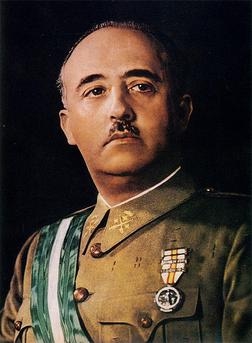
Francisco Franco, Spain
This is, to borrow Hungarian sociologist Bálint Magyar’s framework, “an autocratic attempt.” That’s the stage in the transition toward autocracy in which the would-be autocrat is trying to sever his power from electoral check. If he’s successful, autocratic breakthrough follows, and then autocratic consolidation occurs. In this case, the would-be autocrat stands little chance of being successful. But he will not entirely fail, either. What Trump is trying to form is something akin to an autocracy-in-exile, an alternative America in which he is the rightful leader, and he — and the public he claims to represent — has been robbed of power by corrupt elites.
“Democracy works only when losers recognize that they have lost,” writes political scientist Henry Farrell. That will not happen here.
It won’t happen, because the GOP is going along with Trump’s attempt.
Here’s the grim kicker: The conditions that made Trump and this Republican Party possible are set to worsen. Republicans retained control of enough statehouses to drive the next redistricting effort, too, and their 6-3 majority on the Supreme Court will unleash their map-drawers more fully. The elections analyst G. Elliott Morris estimates that the gap between the popular vote margin and the tipping point state in the Electoral College will be 4 to 5 percentage points, and that the GOP’s control of the redistricting process could push it to 6 to 7 points next time.
To say that America’s institutions did not wholly fail in the Trump era is not the same thing as saying they succeeded. They did not, and in particular, the Republican Party did not. It has failed dangerously, spectacularly. It has made clear that would-be autocrats have a path to power in the United States, and if they can walk far enough down that path, an entire political party will support them, and protect them. And it has been insulated from public fury by a political system that values land over people, and that lets partisan actors set election rules and draw district lines — and despite losing the presidency, the GOP still holds the power to tilt that system further in its direction in the coming years.
What happens when the next would-be autocrat tries this strategy — and what if they are smoother, more strategic, more capable than this one?
How is Trump’s autocratic attempt going so far? He has fired the Secretary of Defense and replaced him with a partisan loyalist.
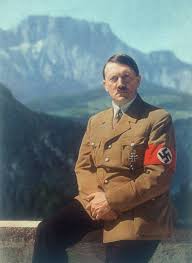
Adolf HItler, Germany
The Independent: ‘God help us’: Fired defence secretary Mark Esper worries about ‘yes men’ under Trump.
In an exclusive interview with Military Times that dropped shortly after his abrupt firing, Mr Esper took exception with critics who have called him a “yes man”, the source of the derogatory nickname “Yesper” used by the president.
“Name another Cabinet secretary that’s pushed back… Have you seen me on a stage saying, ‘Under the exceptional leadership of blah-blah-blah, we have blah-blah-blah-blah?” Mr Esper said.
“At the end of the day, it’s as I said — you’ve got to pick your fights… I could have a fight over anything, and I could make it a big fight, and I could live with that —why? Who’s going to come in behind me? It’s going to be a real ‘yes man.’ And then God help us.”
The interview was conducted on 4 November, before Mr Esper’s replacement would have been known.
Trump also fired the three officials who were in charge of our nuclear weapons. NPR:
The Trump administration abruptly dumped the leaders of three agencies that oversee the nuclear weapons stockpile, electricity and natural gas regulation, and overseas aid during the past two days, drawing a rebuke from a prominent Republican senator for one of the decisions.
The sudden departures included:
- Lisa Gordon-Hagerty, administrator of the National Nuclear Security Administration, the first woman to oversee the agency in charge of the nuclear stockpile. She was required to resign on Friday.
- Bonnie Glick, deputy administrator of the U.S. Agency for International Development. She was replaced by acting Administrator John Barsa, who had run out of time for his more senior role under the Federal Vacancies Reform Act.
- Neil Chatterjee, chairman of the Federal Energy Regulatory Commission and a former aide to Senate Majority Leader Mitch McConnell. He was replaced as chairman, though he will remain at FERC, an independent agency, as a commissioner.
The firings were overshadowed by the prolonged drama of the presidential election.

Hideki Tojo, Japan
Trump is expected to fire CIA director Gina Haspel and FBI director Christopher Wray, according to Axios.
He has named another yes man as general counsel at the NSA. The Washington Post: White House official and former GOP political operative Michael Ellis named as NSA general counsel.
The Pentagon general counsel has named a White House official and former GOP political operative to be the top lawyer at the National Security Agency, the U.S. government’s largest and most technically advanced spy agency, U.S. officials said.
There’s much more at the link.
Bill Barr is also on the case. The New York Times: Barr Hands Prosecutors the Authority to Investigate Voter Fraud Claims.
Attorney General William P. Barr, wading into President Trump’s unfounded accusations of widespread election irregularities, told federal prosecutors on Monday that they were allowed to investigate “specific allegations” of voter fraud before the results of the presidential race are certified.
Augusto Pinochet, Chile
Mr. Barr’s authorization prompted the Justice Department official who oversees investigations of voter fraud, Richard Pilger, to step down from the post within hours, according to an email Mr. Pilger sent to colleagues that was obtained by The New York Times.
Mr. Barr said he had authorized “specific instances” of investigative steps in some cases. He made clear in a carefully worded memo that prosecutors had the authority to investigate, but he warned that “specious, speculative, fanciful or far-fetched claims should not be a basis for initiating federal inquiries.”
Mr. Barr’s directive ignored the Justice Department’s longstanding policies intended to keep law enforcement from affecting the outcome of an election. And it followed a move weeks before the election in which the department lifted a prohibition on voter fraud investigations before an election.

More from NBC News: DOJ’s election crimes chief resigns after Barr allows prosecutors to probe voter fraud claims.
The head of the branch of the Justice Department that prosecutes election crimes resigned Monday hours after Attorney General William Barr issued a memo to federal prosecutors authorizing them to investigate “specific allegations” of voter fraud before the results of the presidential race are certified.
Richard Pilger, who was director of the Election Crimes Branch of the DOJ, sent a memo to colleagues that suggested his resignation was linked to Barr’s memo, which was issued as the president’s legal team mount baseless legal challenges to the election results, alleging widespread voter fraud cost him the race.
“Having familiarized myself with the new policy and its ramifications, and in accord with the best tradition of the John C. Keeney Award for Exceptional Integrity and Professionalism (my most cherished Departmental recognition), I must regretfully resign from my role as Director of the Election Crimes Branch,” Pilger’s letter said, according to a copy obtained by NBC News.
“I have enjoyed very much working with you for over a decade to aggressively and diligently enforce federal criminal election law, policy, and practice without partisan fear or favor. I thank you for your support in that effort.”

Kim Il-sung, North Korea
Finally, Trump is preventing the Biden transition team from beginning their work. The Washington Post: White House, escalating tensions, orders agencies to rebuff Biden transition team.
The Trump White House on Monday instructed senior government leaders to block cooperation with President-elect Joe Biden’s transition team, escalating a standoff that threatens to impede the transfer of power and prompting the Biden team to consider legal action.
While media outlets on Saturday projected Biden as the winner, President Trump has not conceded the election.
“We have been told: Ignore the media, wait for it to be official from the government,” said a senior administration official, who like others spoke on the condition of anonymity because the person was not authorized to speak publicly.
The GSA, the government’s real estate arm, remained for a third day the proxy in the battle. Administrator Emily Murphy, a Trump political appointee who has lasted a full term in an administration where turnover has been the norm, is refusing to sign paperwork that releases Biden’s $6.3 million share of nearly $10 million in transition resources and gives his team access to agency officials and information.
So that’s where things stand right now, as we battle an out-of-control pandemic with no help from the federal government and the Supreme Court hears arguments that may end the Affordable Care Act and strip 20,000,000 people of health insurance.
Hang in there Sky Dancers! Take care of yourselves in this dangerous time.
Tuesday Reads: Looking Back and Looking Forward
Posted: December 26, 2017 Filed under: Afternoon Reads, Foreign Affairs, U.S. Politics | Tags: democracy, Donald Trump, Ivanka Trump, journalism, media, money laundering, Russia, Twitter 32 Comments
Breton Children Reading, Emile Vernon, 1913
Good Afternoon!!
Thank goodness the “holidays” are almost over now, and soon a new year will begin. What will 2018 bring? Will Trump continue his goal of destroying democracy or will we somehow manage to keep it alive? First we have to get through the journalistic ritual of looking back over the year that is ending.
Eugene Robinson posted his evaluation of 2017 last night: Trump’s first year was even worse than feared.
Grit your teeth. Persevere. Just a few more days and this awful, rotten, no-good, ridiculous, rancorous, sordid, disgraceful year in the civic life of our nation will be over. Here’s hoping that we all — particularly special counsel Robert S. Mueller III — have a better 2018.
Many of us began 2017 with the consoling thought that the Donald Trump presidency couldn’t possibly be as bad as we feared. It turned out to be worse.
Did you ever think you would hear a president use the words “very fine people” to describe participants in a torch-lit rally organized by white supremacists, neo-Nazis and the Ku Klux Klan? Did you ever think you would hear a U.S. ambassador to the United Nations thuggishly threaten that she would be “taking names” of countries that did not vote on a General Assembly resolution the way she wanted? Did you ever think the government of the world’s biggest military and economic power would reject not just science but also empiricism itself, preferring to use made-up “alternative facts” as the basis for major decisions?
We knew that Trump was narcissistic and shallow, but on Inauguration Day it was possible to at least hope he was self-aware enough to understand the weight that now rested on his shoulders, and perhaps grow into the job. He did not. If anything, he has gotten worse.
Read the rest at The Washington Post.
Paul Krugman still has hope: America Is Not Yet Lost.
Auguste reading to her daughter, by Mary Cassatt
Donald Trump has been every bit as horrible as one might have expected; he continues, day after day, to prove himself utterly unfit for office, morally and intellectually. And the Republican Party — including so-called moderates — turns out, if anything, to be even worse than one might have expected. At this point it’s evidently composed entirely of cynical apparatchiks, willing to sell out every principle — and every shred of their own dignity — as long as their donors get big tax cuts.
Meanwhile, conservative media have given up even the pretense of doing real reporting, and become blatant organs of ruling-party propaganda….
What we’ve seen instead is the emergence of a highly energized resistance. That resistance made itself visible literally the day after Trump took office, with the huge women’s marches that took place on Jan. 21, dwarfing the thin crowds at the inauguration. If American democracy survives this terrible episode, I vote that we make pink pussy hats the symbol of our delivery from evil….
Let’s be clear: America as we know it is still in mortal danger. Republicans still control all the levers of federal power, and never in the course of our nation’s history have we been ruled by people less trustworthy.
This obviously goes for Trump himself, who is clearly a dictator wannabe, with no respect whatsoever for democratic norms. But it also goes for Republicans in Congress, who have demonstrated again and again that they will do nothing to limit his actions. They have backed him up as he uses his office to enrich himself and his cronies, as he foments racial hatred, as he attempts a slow-motion purge of the Justice Department and the F.B.I.

I count it as a good sign that journalists are coming right out and calling Trump a wannabe dictator. Also a good sign: both Robinson and Krugman acknowledge that if we are to survive Trump, women’s leadership will be the reason. How ironic that a woman had to be excoriated and mocked by abusive male journalists for this awakening of women’s power to happen.

Jan Van Eyck – Madonna with the Child Reading (1433)
It’s also a good sign that journalists finally recognized the Russian threat, although this only happened after a monster was installed as POTUS. Yesterday The Washington Post published a breathtaking analysis of what the Russians accomplished last year and the danger they still pose to our democracy: Kremlin trolls burned across the Internet as Washington debated options. Here’s a brief excerpt; please go read the whole thing if you haven’t already.
The events surrounding the FBI’s NorthernNight investigation follow a pattern that repeated for years as the Russian threat was building: U.S. intelligence and law enforcement agencies saw some warning signs of Russian meddling in Europe and later in the United States but never fully grasped the breadth of the Kremlin’s ambitions. Top U.S. policymakers didn’t appreciate the dangers, then scrambled to draw up options to fight back. In the end, big plans died of internal disagreement, a fear of making matters worse or a misguided belief in the resilience of American society and its democratic institutions.
One previously unreported order — a sweeping presidential finding to combat global cyberthreats — prompted U.S. spy agencies to plan a half-dozen specific operations to counter the Russian threat. But one year after those instructions were given, the Trump White House remains divided over whether to act, intelligence officials said….
The miscalculations and bureaucratic inertia that left the United States vulnerable to Russia’s interference in the 2016 presidential electiontrace back to decisions made at the end of the Cold War, when senior policymakers assumed Moscow would be a partner and largely pulled the United States out of information warfare. When relations soured, officials dismissed Russia as a “third-rate regional power” that would limit its meddling to the fledgling democracies on its periphery.
Senior U.S. officials didn’t think Russia would dare shift its focus to the United States.
“I thought our ground was not as fertile,” said Antony J. Blinken, President Barack Obama’s deputy secretary of state. “We believed that the truth shall set you free, that the truth would prevail. That proved a bit naive.”
Much more at the WaPo link.
From former CIA Deputy Director and Acting Director Michael Morrell: Russia never stopped its cyberattacks on the United States.
Every first-year international-relations student learns about the importance of deterrence: It prevented a Soviet invasion of Western Europe during the height of the Cold War. It prevented North Korea from invading South Korea in the same time frame. Today, it keeps Iran from starting a hot war in the Middle East or other nations from initiating cyberattacks against our infrastructure.
The Reader, by Federico Zandomeneghi (Italian, 1841)
And yet, the United States has failed to establish deterrence in the aftermath of Russia’s interference in the 2016 election. We know we failed because Russia continues to aggressively employ the most significant aspect of its 2016 tool kit: the use of social media as a platform to disseminate propaganda designed to weaken our nation.
There is a perception among the media and general public that Russia ended its social-media operations following last year’s election and that we need worry only about future elections. But that perception is wrong. Russia’s information operations in the United States continued after the election and they continue to this day.
This should alarm everyone — Republicans, Democrats and independents alike. Foreign governments, overtly or covertly, should not be allowed to play with our democracy.

Read about the continuing threats from Russia at the WaPo link.
At the Columbia Journalism Review, Jonathan Peters reports on the work of NYT master’s student to examine Trump’s Twitter attacks on the media.
Trump’s prolificacy on Twitter is well documented, and some of his press-related tweets have captured vast public attention. For example, Trump tweeted in July a doctored video in which he wrestled a man whose head had been replaced by the CNN logo. It got hundreds of thousands of retweets.
Off Twitter, of course, Trump has waged a rhetorical war on the press, threatening to sue various newspapers and calling journalists “the most dishonest human beings on Earth,” all while characterizing as “fake news” any story he dislikes.
That’s what prompted an NYU master’s student to start tracking Trump’s tweets critical of the press. “I took it on as a labor of love and hate, and I suffered through his tweets every few days to log them,” says Stephanie Sugars, who is pursuing a joint MA in journalism and international relations. “It seemed important to maintain a record of what has appeared to be a deliberate and sustained campaign to discredit the media as an institution.”
By Zulia Gotay de Anderson
Sugars was working as a researcher at the Committee to Protect Journalists last spring when she created the Trump-tweet spreadsheet that she recently shared with me. She was helping to launch a website that documents press freedom incidents in the US. (CJR is a partner.) Originally, she and others at CPJ thought it would include not only arrests and equipment seizures but also anti-press social media posts.
“That just wasn’t manageable,” Sugars says. “We decided to pare the site back and not focus on tweets. I kept up with the spreadsheet, though, and continued to add to it, even after leaving [CPJ] when my term as a researcher there ended.”

Peters then assigned his students a the University of Georgia to “review the spreadsheet and to help me identify notable items and trends in the data.” Read the rest at the CJR link to see the results.
One more interesting read: could Ivanka be in trouble with the law? GQ: Ivanka Trump’s Old Jewelry Business Is Now Caught Up in an Alleged Fraud Scheme. Author Ben Schreckenger begins by asking, “Why do people looking to launder money seem to find Trump family businesses so appealing?”
Throw a dart at a map of the world and there’s a solid chance it will land near a spot where a Trump family business has allegedly gotten caught up in a money laundering scheme.
There’s Panama, where the Trump Ocean Club is said to have washed dirty cash for Russian gangsters and South American drug cartels. There’s Azerbaijan and the Trump Baku, where the money allegedly being laundered was said to belong to Iran’s Revolutionary Guard. And of course, there’s the Trump Soho in Manhattan, a magnet for money from Kazakhstan and Russia, and a property that one former executive on the project now calls “a monument to spectacularly corrupt money-laundering and tax evasion.”
In each of those cases, the Trump Organization has denied any wrongdoing and has sought to distance itself—and the Trump family—from the property, saying they merely licensed the Trump name. But as it turns out, it’s not just Trump-branded real estate developments that perhaps have attracted the wrong kinds of money.
Thanks to an overlooked filing made in federal court this past summer, we can now add a jewelry business to the list of Trump family enterprises that allegedly served as vehicles to fraudulently hide the assets of ultra-rich foreigners with checkered backgrounds. In late June, the Commercial Bank of Dubai sought—and later received—permission to subpoena Ivanka Trump’s now-defunct fine jewelry line, claiming its diamonds were used in a massive scheme to hide roughly $100 million that was owed to the bank, according to filings at the U.S. District Court for the Southern District of New York.
Read the rest at GQ.
What else is happening? What stories are you following today?

 peej
peej Carissa
 bostonboomer
 dakinikat
 ecocatwoman
 mablue2
 Mama Lopez
 peggysue22
 quixote
 skydancingguestblogger
 Mona (aka Wonk the Vote)



 Sky Dancing
Recent Comments