Posted: December 30, 2023 | Author: bostonboomer | Filed under: 2024 Elections, 2024 presidential Campaign, cat art, caturday, Corrupt and Political SCOTUS, Donald Trump, just because, SCOTUS | Tags: 14th amendment, Civil War, Elon Musk, fake electors, Jack Smith, Kenneth Chesebro, lost cause theory, Niki Haley, Ron DeSantis, slavery, Supreme Court |
Happy Caturday!!

Benson B. Moore, born Washington, DC 1882-died Stuart, FL 1974
We’ve nearly reached the end of 2023. We’re also at the end of the typically slow news time known as “the holidays.” Therefore, there isn’t a lot of breaking news for me to post about. But here are a few interesting stories that are worth reading, along with some cat art from the Smithsonian “artful cats” collection.
Alex Shephard at The New Republic: Elon Musk Is The New Republic’s 2023 Scoundrel of the Year.
In one sense, Elon Musk has gotten exactly what he wanted. For all his talk about free speech, his primary motivation for sinking $44 billion into buying Twitter last year was clearly an unquenchable desire to be the center of attention. After Donald Trump’s defenestration in the wake of the January 6 insurrection, there was a main-character-size hole on the social network: Enter Musk and his infantile need for validation.
That Twitter—now renamed X, for reasons only Musk really understands—is now teetering on the brink of collapse and worth less than half what the world’s second-richest man paid for it is funny. It elicits deserved schadenfreude. Musk entered Twitter’s office carrying a sink—a terrible joke, and one of his better ones—last fall and has subsequently made countless decisions, big and small, all of which have made the platform significantly less viable and less worth spending any amount of time on. It is hard to think of a billionaire who has done more to damage their own reputation in such a short period of time.
Not so long ago, Musk was seen by many as a good tech billionaire, if not the good tech billionaire. While others like Meta’s Mark Zuckerberg built digital trinkets that actively made the world a worse place, Musk was something different: a visionary intent on building real things, whether they be electric cars or rockets, that were aimed at accelerating a Jetsons-like vision of the future. While rivals at Google and Facebook—and, for that matter, Twitter—were hauled before Congress to testify about the deleterious effects of their creations, Musk remained relatively unscathed. Now it is clear that he is not just more villainous than all of them but that he is also a deeply stupid and unserious person.
Elon Musk is evil. While he has mostly made headlines for his incompetence, he has unleashed and legitimized truly heinous forces on Twitter: He has welcomed back some of the world’s most toxic people—Alex Jones, Donald Trump, innumerable Nazis and bigots—and has gone out of his way, again and again, to validate them. That Musk would endorse a heinous antisemitic conspiracy theory, as he did last month, is both unsurprising and reprehensible. It is, more than anything else, a reflection of who he is: He may be fantastically wealthy, but he is also deeply hateful, someone who has decided to devote his fortune and his time to attacking diversity and progress on nearly every front.
Musk has insisted again that he bought Twitter to save it from itself—that the platform had become too restrictive and that, to become a true “digital town square” where the best ideas rise to the top, it needed to welcome everyone. It is now abundantly clear that Musk’s real intention is and always has been to put his thumb on the scale: to elevate his own hateful views about, in no particular order: liberals; the media; diversity, equity, and inclusion programs; trans people; and liberal Jews. He sees Twitter as a weapon, a way to not only push his agenda but to sic his army of loyalist losers on anyone he deems an enemy.
For all of the talk about Musk being a “real life Tony Stark,” he has always been a deeply uncool person’s idea of a cool person: He is, in many ways, a sentient m’lady Reddit post circa 2011. It’s hard to think of a more pathetic figure now: someone scraping the internet for conspiracy theories and “jokes” aimed at affirming his status and influence. He has, again and again, done the opposite: Far from showing himself as a swaggering, popular figure, he has revealed himself to be a venal, thin-skinned moron. He may very well be the most unfunny person alive, a fact reified dozens of times a day.
Wow! Read the rest at The New Republic. I wonder if Musk is too stupid to read TNR. If he does read this, he’ll probably sue Alex Shephard
At HuffPost, SV Date assesses the DeSantis campaign: DeSantis’ 2023: More Than $160 Million Spent To Buy A Collapse In The Polls.
A year after Ron DeSantis led Donald Trump in some 2024 presidential primary polls, and with just weeks to go before the first ballots are cast, the Florida governor is already explaining how Democrats conspired to stop him: by repeatedly charging the coup-attempting former president with breaking the law.
DeSantis’ campaign and super PAC have spent more than $160 million to boost him, and he spent the better part of 2023 on the road. But, he now says, it may not have been enough to overcome the advantage he believes Trump received from getting indicted four times.

Jacques Hnizdovsky, born Pylypcze, Ukraine 1915-died New York City 1985
“If I could have one thing change, I wish Trump hadn’t been indicted on any of this stuff,” he told the Christian Broadcasting Network last week. “It sucked out a lot of oxygen.” [….]
“The race was decided totally out of their control,” said one DeSantis donor and supporter who spoke on condition of anonymity. “Trump got indicted. And indicted and indicted and indicted. The race was over after the first indictment.”
Other Republicans are less charitable as they describe DeSantis’ steady decline over the year ― which began with GOP donors giving him unsolicited six- and seven-figure checks, saw him spend far more time and energy attacking the Walt Disney Co. and the nation’s top doctor during the COVID pandemic than he ever did taking on the front-runner in his race, and ended with DeSantis some 40 points behind Trump in national polls.
“He started the primary on third base and stole second,” said David Jolly, who served with DeSantis as a fellow Republican member of Congress from Florida. “We’ve now witnessed one of the most expensive and embarrassing collapses in Republican history.”
Fergus Cullen, a former New Hampshire Republican Party chair, wondered about DeSantis’ apparent strategy of trying to win over the roughly one-third of primary voters who are “only Trump,” rather than the two-thirds who are open to someone else….
The Florida governor’s various missteps over the year ― as well as those of his campaign and his supporting super political action committee ― have been well documented, from the time he called Russia’s invasion of Ukraine a “territorial dispute” to the mass campaign layoffs just two months after he officially began his run to the recent dysfunction at the super PAC, Never Back Down.
There’s more at the link.
Historian Heather Cox Richardson weighed in on Niki Haley’s Civil War gaffe at her substack, Letters from an American:
When asked at a town hall on Wednesday to identify the cause of the United States Civil War, presidential candidate and former governor of South Carolina Nikki Haley answered that the cause “was basically how government was going to run, the freedoms, and what people could and couldn’t do…. I think it always comes down to the role of government and what the rights of the people are…. And I will always stand by the fact that, I think, government was intended to secure the rights and freedoms of the people.”
Haley has correctly been lambasted for her rewriting of history. The vice president of the Confederacy, Alexander Stephens of Georgia, was quite clear about the cause of the Civil War. Stephens explicitly rejected the idea embraced by U.S. politicians from the revolutionary period onward that human enslavement was “wrong in principle, socially, morally, and politically.” Instead, he declared: “Our new government is founded upon…the great truth, that the negro is not equal to the white man; that slavery—subordination to the superior race—is his natural and normal condition.” [….]
Haley has been backpedaling ever since—as well as suggesting that the question was somehow a “gotcha” question from a Democrat, as if it was a difficult question to answer—but her answer was not simply bad history or an unwillingness to offend potential voters, as some have suggested. It was the death knell of the Republican Party.

Robert Smithson, American, b. Passaic, New Jersey, 1938–1973
That party formed in the 1850s to stand against what was known as the Slave Power, a small group of elite enslavers who had come to dominate first the Democratic Party and then, through it, the presidency, Supreme Court, and Senate. When northern Democrats in the House of Representatives caved to pressure to allow enslavement into western lands from which it had been prohibited since 1820, northerners of all political stripes recognized that it was only a question of time until elite enslavers took over the West, joined with lawmakers from southern slave states, overwhelmed the northern free states in the House of Representatives, and made enslavement national.
So in 1854, after Congress passed the Kansas-Nebraska Act that allowed the spread of enslavement into previously protected western lands, northerners abandoned their old parties and came together first as “anti-Nebraska” coalitions and then, by 1856, as the Republican Party.
At first their only goal was to stop the Slave Power, but in 1859, Illinois lawyer Abraham Lincoln articulated an ideology for the new party. In contrast to southern Democrats, who insisted that a successful society required leaders to dominate workers and that the government must limit itself to defending those leaders because its only domestic role was the protection of property, Lincoln envisioned a new kind of government, based on a new economy.
Lincoln saw a society that moved forward thanks not to rich people, but to the innovation of men just starting out. Such men produced more than they and their families could consume, and their accumulated capital would employ shoemakers and storekeepers. Those businessmen, in turn, would support a few industrialists, who would begin the cycle again by hiring other men just starting out. Rather than remaining small and simply protecting property, Lincoln and his fellow Republicans argued, the government should clear the way for those at the bottom of the economy, making sure they had access to resources, education, and the internal improvements that would enable them to reach markets.
When the leaders of the Confederacy seceded to start their own nation based in their own hierarchical society, the Republicans in charge of the United States government were free to put their theory into practice. For a nominal fee, they sold farmers land that the government in the past would have sold to speculators; created state colleges, railroads, national money, and income taxes; and promoted immigration.
Click the link to read more serious history.
The rest of the notable news this morning is Trump-related. Here’s what’s happening:
At her substack, Civil Discourse, Joyce Vance writes about latest on Trump lawyer Kenneth Chesebro, (which Dakinikat covered yesterday): What does the new reporting about Kenneth Chesebro mean?
CNN had a lengthy piece late Thursday on Kenneth Chesebro’s statement to prosecutors in Michigan (he is also talking to prosecutors elsewhere), that included his emails with others involved in the fake electors scheme and some audio of his statement to prosecutors. You will recall that Chesebro is a Harvard educated lawyer, who has been attributed with the role of architect of the fake electors scheme. Chesebro was charged in the Fulton County case, where he pled guilty, but with an asterisk. Chesebro continues to maintain that there was nothing illegal about the fake electors scheme. He pled guilty to one felony count of conspiracy to file false documents. He continues to maintain through his lawyer that the fake electors scheme was a legitimate strategy, put into play to protect Trump’s legal options. Chesebro’s attorney has said Trump has nothing to fear from his testimony.
So, Chesebro doesn’t look like a cooperator in the traditional sense. Cooperation means pleading guilty, making a full confession, and agreeing to testify against others. And that doesn’t seem to be what has happened here, making the deal Chesebro got in Fulton County, something of a mystery. Chesebro, at least on the surface, isn’t much of a witness for the government. It seems like he would testify there wasn’t an illegal conspiracy to interfere with the results of the election. In some cases, cooperating witness’ statements evolve overtime. Every prosecutor has put a cooperator on the stand who started out with lies, maintaining their innocence, but evolved progressively over time towards the truth—which then had to be corroborated with other evidence and a candid confession to the lies as well, as the crimes. But that doesn’t seem to be what’s happening here, either.

Cat with Lantern Woodblock print, by Kobayashi Kiyochika
Chesebro, and his “cooperation” remain something of an enigma, which makes this new report all the more interesting. Is Chesebro being more cooperative with prosecutors in Michigan? Has he finally had his come to Jesus moment? But much of the story is not new. The Washington Post, for instance, reported previously on his proffer in Georgia. But the CNN story is illuminating when we put it in context with everything else, and particularly with what we already know from the work of the January 6 committee.
Perhaps the most interesting new detail comes midway through the story, when we learn that prior to Chesebro’s guilty plea in Georgia, his lawyers reached out to Smith’s team. But they have still not received a response (or an invitation to proffer as have others, like Rudy Giuliani) from prosecutors. No reason is offered for this.
CNN obtained access to audio of some of Chesebro’s proffer with Michigan prosecutors, however. He has apparently been on the circuit, speaking with prosecutors in a number of different states where there are investigations in progress. The audio reveals a petulant, childish witness, upset about what he perceives as lies told about him by other Trump campaign lawyers and his financial problems. You can read the entire report from CNN here.
That’s a lot of questions. Read Vance’s take at her substack link above.
At Aaron Rupar’s substack Public Notice, Liz Dye writes about Jack Smith’s latest filing in the January 6 case: Jack Smith’s new motion could obliterate Trump’s DC strategy.
On Wednesday, Special Counsel Jack Smith asked the court to put the kibosh on Donald Trump’s efforts to “turn the courtroom into a forum in which he propagates irrelevant disinformation.” If Judge Tanya Chutkan grants this motion, it will eviscerate the former president’s plan to defend himself in DC by making the case about anything other than his own plot to obstruct the congressional certification of President Biden’s 2020 victory.
Broadly speaking, Trump wants to make the election interference trial into a glorified segment of Steve Bannon’s podcast. As he screams WITCH HUNT on social media, his lawyers accuse Biden of weaponizing the Justice Department and seek to introduce evidence of every crackpot election theory ever aired on Newsmax.
Unsurprisingly, the prosecution would like to avoid all that, so the special counsel has filed a motion to block Trump from bombarding the jurors with irrelevant and prejudicial evidence. And because Smith takes no prisoners, he’s done it in the most aggressive way possible….
Since before the indictment even dropped in August, Trump screamed daily that Biden is directing the Justice Department to persecute him. He also claimed that Biden is controlling the New York criminal and civil cases, as well as the RICO case in Georgia. He never presents any evidence of this because it’s patently ridiculous. The DOJ has no control over state prosecutions, and the entire purpose of the special counsel statute is to remove investigations which pose a conflict of interest from the immediate control of the DOJ….

Ted Gordon, born Louisville, KY 1924
[The Trump team’s] legal filings are scarcely more subtle. In October, Trump filed a motion to dismiss the case based on “selective and vindictive prosecution” — essentially a claim that the DOJ indicted him solely to kneecap Biden’s 2024 opponent.
The motion itself is a farcical hash of anonymously sourced articles from the supposedly fake news Washington Post and New York Times alleging that Biden confided to his inner circle that he wished AG Garland would be more aggressive. In fact, both stories confirm that Biden stayed far away from the Trump cases, even before Garland handed them off to Smith to avoid the appearance of conflict. Trump’s motion also mangles a quote from a press conference to suggest that “Biden’s publicly stated objective is to use the criminal justice system to incapacitate President Trump, his main political rival and the leading candidate in the upcoming election.” (That’s not remotely what he said.)
Even the most mundane scheduling brief is larded with assertions that “the incumbent administration has targeted its primary political opponent — and leading candidate in the upcoming presidential election — with criminal prosecution.”
In response, Smith argues:
“Through public statements, filings, and argument in hearings before the Court, the defense has attempted to inject into this case partisan political attacks and irrelevant and prejudicial issues that have no place in a jury trial,” Special Counsel Smith argued in a pretrial motion filed Wednesday. “Although the Court can recognize these efforts for what they are and disregard them, the jury — if subjected to them — may not.”
Prosecutors accuse Trump of attempting to engage in jury nullification, that is, securing an acquittal by convincing jurors to disregard the evidence and law in favor of their own personal feelings of justice. They argue that “the defendant should be precluded from raising irrelevant political issues” which might “improperly suggest to the jury that it should base its verdict on something other than the evidence at trial.”
Toward that end, they seek to exclude a broad swath of evidence which maps almost perfectly onto Trump’s motions to compel and to dismiss for selective prosecution.
There’s much more explanation and analysis at the Public Notice link.
Two legal minds weighed in on what the Supreme Court might do about states dropping Trump’s from their ballots.
Adam Liptak at the New York Times: How the Supreme Court May Rule on Trump’s Presidential Run.
The Supreme Court, battered by ethics scandals, a dip in public confidence and questions about its legitimacy, may soon have to confront a case as consequential and bruising as Bush v. Gore, the 2000 decision that handed the presidency to George W. Bush.
Until 10 days ago, the justices had settled into a relatively routine term. Then the Colorado Supreme Court declared that former President Donald J. Trump was ineligible to hold office because he had engaged in an insurrection. On Thursday, relying on that court’s reasoning, an election official in Maine followed suit.
An appeal of the Colorado ruling has already reached the justices, and they will probably feel compelled to weigh in. But they will act in the shadow of two competing political realities.

Jimmy Tsutomu Mirikitani, born Sacramento, CA 1920-died New York City 2012
They will be reluctant to wrest from voters the power to assess Mr. Trump’s conduct, particularly given the certain backlash that would bring. Yet they will also be wary of giving Mr. Trump the electoral boost of an unqualified victory in the nation’s highest court.
Chief Justice John G. Roberts Jr. will doubtless seek consensus or, at least, try to avoid a partisan split of the six Republican appointees against the three Democratic ones.
He may want to explore the many paths the court could take to keep Mr. Trump on state ballots without addressing whether he had engaged in insurrection or even assuming that he had.
Among them: The justices could rule that congressional action is needed before courts can intervene, that the constitutional provision at issue does not apply to the presidency or that Mr. Trump’s statements were protected by the First Amendment.
“I expect the court to take advantage of one of the many available routes to avoid holding that Trump is an insurrectionist who therefore can’t be president again,” said Nicholas Stephanopoulos, a law professor at Harvard.
Read the rest at The New York Times.
Shan Wu at The Daily Beast: Here’s What SCOTUS Should Do With the Trump Ballot Cases.
The U.S. Supreme Court needs to understand that the disqualification of former President Donald J. Trump under Section 3 of the 14th Amendment from running again for President of the United States is going exactly as it should. The Maine Secretary of State ruled in an administrative proceeding that Trump is disqualified, and the Colorado Supreme Court ruled similarly.
Both states followed the law set forth in the U.S. Constitution that anyone who once took an oath to support the Constitution but then “shall have engaged in insurrection or rebellion against the same, or given aid or comfort to enemies of the same” cannot again serve our country. But four other states (Florida, Michigan, Minnesota, California) came out the other way, while fourteen other states (Alaska, Arizona, Nevada, New Jersey, New Mexico, New York, Oregon, South Carolina, Texas, Vermont, Virginia, West Virginia, Wisconsin and Wyoming) still have disqualification cases pending. This sets up a potential crazy quilt map of states where Trump is on the ballot in some state but not in others. There is nothing wrong with this. It’s federalism at work.
Under the Constitution, the states have primary power over administering federal elections with Congress also possessing authority to regulate how the elections are run—voter registration being an example. So, the fact that who can run, who can vote and the “time place and manner” in which voting takes place varies from state to state is normal—and, arguably, the high court need not concern itself with these issues.

Woman and Cats, Will Barnet, born Beverly, MA 1911-died New York City 2012
Given this, SCOTUS does not have to take the ultimate appeal of any of these cases. Its discretion to take cases is complete, and letting the different cases stand would be an unreviewable decision on their part that would both keep them out of a repeat of their gross interference in the 2000 presidential election where the high court, not the people, made George W. Bush the 43rd President, and perhaps staunch the bleed out of their credibility. But the justices—liberal and conservative alike—are unlikely to be able to resist the glamour of taking on a case that can decide who will be president in 2024, and most legal experts believe they will take on the case.
If the justices do take on the cases, then they should limit what issues they decide to the ones that most clearly relate to Constitutional interpretation. Chief among those is the question of whether the president of the United States is an “officer” of the United States since some—including Trump—argue that the President is not an officer of the United States, and therefore the disqualification provision does not apply.
The justices should dispose of this question by holding that the President is an officer of the United States. To conclude otherwise begs the question of what is the president then? Trump would like the answer to be that the president is an emperor or a king rather than a mere officer serving the Constitution, and that’s what SCOTUS would be anointing him if it concludes that presidents do not hold office.
Read more analysis at The Daily Beast.
I hope everyone is having a nice, peaceful end-of-2023 weekend. All the best for the new year!
Did you like this post? Please share it with your friends:
Posted: June 10, 2023 | Author: bostonboomer | Filed under: cat art, caturday, Donald Trump | Tags: Civil War, DOJ, Indictments of Trump and Nauta, MAGA crazies, national security, Special Counsel Jack Smith, Walt Nauta |
Happy Caturday!!

Greek Kitties, by Timothy Adam Matthews
Honestly, I don’t even know where to begin today. What is happening in U.S. politics right now is beyond anything we have ever experienced as a country, with the exception of the Civil War.
A former president of the U.S. tried to overthrow his own government in order to prevent a transition to a new president after he lost an election. He incited an attempted coup; and when that failed, he tried to overthrow the results of presidential votes in several states.
Finally, when all that failed to keep him in office, he stole hundreds of government documents and stored them in his private club in locations in which all kinds of people could have access to them. He displayed some of the documents to people without clearance to see them and, for all we know, could have given classified information to other countries.
It’s simply breathtaking.
Now the former president has been indicted for serious crimes, and his political party is still supporting him and vowing revenge on our most important institutions. Could it get any worse? The answer is yes, of course it could. He could end up winning his party’s 2024 nomination and being elected president again, even if he is in prison by that time.
So that’s where we stand right now. I’ll share some reads, but there is no way I have the time or space to include everything that’s out there.
First, here is a pdf of the indictment, if you’d like to read it. And here is an annotated version by Charlie Savage at the New York Times: The Trump Classified Documents Indictment, Annotated.
I think this description of the situation we are in by Tom Nichols at The Atlantic is very good. I could only read it in my email, because I’m not a subscriber. The title: Trump’s Indictment Reveals a National-Security Nightmare.
The charges—38 of them—are a big deal. And before the GOP gaslighting reaches supernova levels, let’s also bear in mind that what Trump actually did is a big deal too. He claimed that he declassified, by fiat, boxes of classified information, and then appears to have left all of that material sitting in ballrooms, bedrooms, and bathrooms. To this day, he insists that he had every right to do whatever he wanted with America’s secrets. Fortunately, the court has unsealed the indictment, because Americans need to know, and care, about the magnitude of Trump’s alleged offenses.
To understand the severity of the charges against Trump, consider a thought experiment: Imagine that Vladimir Putin is one day driven from the Kremlin, perhaps in a coup or in the face of a popular revolt. He jumps into his limousine and heads for self-imposed exile in a remote dacha. His trunk is full of secret documents that he decided belong to him, including details of the Russian nuclear deterrent and Russia’s military weaknesses.
Now imagine how valuable those boxes would be to any intelligence organization in the world. I spent the early years of my career analyzing Soviet and Russian documents as an academic Sovietologist, and I would have loved to see such materials. Small, seemingly trivial details—something as innocuous as a desk calendar or a notepad—might not mean much to a layperson, but to a professional, they could be pure gold. To get even a peek at such Russian materials would be an intelligence triumph.

By Timothy Adams Matthews
But of course, I would never have been able to lay my hands on them, because a cache of such immense importance, if U.S. operatives spirited any of it out of Russia, would have been secured in a vault somewhere deep in the CIA. Trump, meanwhile, left highly sensitive American documents lying around at a golf resort like practice balls on the driving range. According to the indictment:
“The Mar-a-Lago Club was an active social club, which, between January 2021 and August 2022, hosted events for tens of thousands of members and guests. After TRUMP’s presidency, The Mar-a-Lago Club was not an authorized location for the storage, possession, review, display, or discussion of classified documents. Nevertheless, TRUMP stored his boxes containing classified documents in various locations at The Mar-a-Lago Club—including in a ballroom, a bathroom and shower, an office space, his bedroom, and a storage room.”
Actually, it might be harder to steal practice balls. “The Storage Room,” the indictment notes, “was near the liquor supply closet, linen room, lock shop, and various other rooms.” These are not exactly low-traffic areas. Worse yet, the indictment asserts that Trump had some of these documents at his club in New Jersey, where he showed files to people who had no business seeing them. (One of them, according to the indictment, was something Trump claimed was a plan of attack on a foreign country prepared for him by the Department of Defense and a senior military official.)
If you can access The Atlantic website, you can read more, but I think that is a good summary of the seriousness of what this country is facing.
Here are a some long reads that address various aspects of the Trump indictment and it’s possible effects on U.S. politics and national security.
For more details on the national security situation, read this piece at Just Security: National Security Implications of Trump’s Indictment: A Damage Assessment.
At The Washington Post, Rachael Weiner writes about the specific charges: Here are the 37 charges against Trump and what they mean.
One of my least favorite New York Times writers, Peter Baker, evaluates what the indictment means for President Biden and the U.S. justice system: Trump’s Case Puts the Justice System on Trial, in a Test of Public Credibility. Why am I not surprised that this is what Baker chose to write about? Still, it’s worth considering.
More helpful reads, with excerpts:
John Gerstein at Politico: The startling, damning details in the Trump indictment.
Classified documents found in a shower. A clumsy effort to move boxes and hide them from the FBI. A damaging admission, caught on tape. And Donald Trump’s own public statements, used against him.
Those are some of the details in the indictment charging Trump and a longtime aide with an extraordinary scheme to hoard national secrets that Trump took to his Mar-a-Lago estate after leaving the White House.
Here are some of the most notable revelations.

By Timothy Adam Matthews
Showing off military plans
On at least two occasions after leaving office, Trump displayed classified documents to others visiting him at his golf club in Bedminster, New Jersey, the indictment alleges. In July 2021, Trump showed a writer, a publisher and two staff members a “plan of attack” that he said had been prepared for him by the U.S. military, the charges say. The audio-recorded meeting reportedly involved a document that Joint Chiefs of Staff Chairman Mark Milley drafted about Iran.
Trump allegedly made a potentially damning admission at that session, saying he could have declassified the document while he was president but “now I can’t.”
A longtime aide turned co-conspirator
Trump isn’t the only person facing criminal charges over the classified documents fiasco: His longtime aide and “body man,” Walt Nauta, was also hit with six felony counts including obstruction of justice and making false statements to the FBI. The indictment says Trump instructed Nauta to move boxes containing classified documents in order to conceal them from both Trump’s own lawyers and the FBI.
Prosecutors accused Nauta of lying months ago and pressured him to cooperate in the investigation, a source familiar with the situation told POLITICO, but the charges unsealed Friday indicate that he and prosecutors didn’t come to terms on a deal – at least not yet.
Classified docs in a bathroom
The indictment says that Mar-a-Lago was a particularly vulnerable location for the classified documents because it’s “an active social club [that] hosted events for tens of thousands of members and guests” – a far cry from the closely guarded “sensitive compartmented information facility,” or SCIF, that is typically used to store the most sensitive national security secrets.
Trump has railed at the FBI for spreading classified documents across the floor of a closet during a search of Mar-a-Lago last August. But prosecutors say Trump’s own storage of the documents was just as sloppy. The indictment says some of the classified records at Mar-a-Lago were stored in “a ballroom, a bathroom and shower [and] his bedroom.”
Spilling secrets, literally
Other details from the indictment emphasize the haphazard nature with which sensitive government documents were strewn around the estate. The indictment alleges that, on at least one occasion in December 2021, boxes containing a mix of classified and unclassified records “spilled onto the floor” of a storage room. Helpfully for prosecutors, Nauta allegedly texted a photo of the scene to another Trump aide.
One of the documents, classified “Secret” and marked for release only to U.S. officials and close allies, discussed “military capabilities of a foreign country,” the indictment says.
More at the link
 The Daily Beast: Photographic Proof: Feds Found Boxes of Classified Docs All Over Mar-a-Lago.
The 37-count indictment accusing Donald Trump of illegally hoarding classified documents used a wealth of surveillance footage, private conversations, employees’ text messages, audio-taped meetings, and witness statements to make a damning case.
But the 44-page document also included a half-dozen images of the documents themselves, stacked in boxes next to a toilet, spilling out onto the floor of a storage room, and piled up in rows on the stage of a ballroom at Trump’s resort in South Florida….
In one exchange outlined in the indictment and backed up with a photograph, Trump employees discussed moving some of Trump’s boxes of documents out of a Mar-a-Lago business center and into a bathroom instead so staff could use the business center as an office.
“Woah!! Ok so potus specifically asked Walt for those boxes to be in the business center because they are his ‘papers,’” one Trump employee texted to another, referencing Walt Nauta.
The two employees then went back and forth discussing what they could move to storage. “There is still a little room in the shower where his other stuff is,” one employee texted. “Is it only his papers he cares about? Theres some other stuff in there that are not papers. Could that go to storage? Or does he want everything in there on property.”
“Yes,” the second employee responds. “Anything that’s not the beautiful mind paper boxes can definitely go to storage.”
In another instance in May 2021, Trump told staff to move some of his boxes to a storage room, the indictment says. Images show the boxes stacked up in the storage room as well as a hallway leading to the room that prosecutors say could easily be reached from Mar-a-Lago’s pool patio. The storage room was right next to a liquor supply closet and a linen room.
In December 2021, Trump’s personal aide, Walt Nauta, found that some of those 80 boxes had fallen over and their contents spilled out on the floor.
Among the papers scattered around the storage room were, according to the indictment, a document marked “SECRET//REL TO USA//FVEY” which denoted information releasable only to the Five Eyes intelligence alliance of the U.S., the U.K., Australia, Canada and New Zealand.
You might want to read what Marcy Wheeler of Emptywheel has to say about the indictment: The Mar-a-Lago Indictment is a Tactical Nuke.
I’ve become convinced that what I will call the Mar-a-Lago indictment — because I doubt this will be the only stolen documents one — is a tactical nuke: A massive tool, but simply a tactical one.
As I’ve laid out, it charges 31 counts of Espionage Act violations, each carrying a 10-year sentence and most sure to get enhancements for how sensitive the stolen documents are, as well as seven obstruction-related charges, four of which carry 20-year sentences. The obstruction-related charges would group at sentencing (meaning they’d really carry 20 year sentence total), but Espionage Act charges often don’t and could draw consecutive sentences: meaning Trump could be facing a max sentence of 330 years. Walt Nauta is really facing 20 years max — though probably around three or four years.

New York Kitty, by Timothy Adam Matthews
Obviously, Trump won’t serve a 330 year sentence, not least because Trump is mortal, already 76, and has eaten far too many burgers in his life.
For his part, Nauta should look on the bright side! He has not, yet, been charged with 18 USC 793(g), conspiring with Trump to hoard all those classified documents, though the overt acts in count 32, the conspiracy to obstruct count, would certainly fulfill the elements of offense of a conspiracy to hoard classified documents. If Nauta were to be charged under 793(g), he too would be facing a veritable life sentence, all for helping his boss steal the nation’s secrets. And for Nauta, who is in his 40s and healthy enough to lug dozens of boxes around Trump’s beach resort, that life sentence would last a lot longer than it would for Trump.
And that’s something to help understand how this is tactical.
I first started thinking that might be true when I saw Jack Smith’s statement.
He emphasized:
- A grand jury in Florida voted out the indictment
- The gravity of the crimes
- The talent and ethics of his prosecutors
- That Trump and Walt Nauta are presumed innocent
- He will seek a Speedy Trial
- A Florida jury will hear this case
- The dedication of FBI Agents
He packed a lot in fewer than three minutes, but the thing that surprised me was his promise for a Speedy Trial. He effectively said he wants to try this case, charging 31 counts of the Espionage Act, within 70 days.
That means the trial would start around August 20, and last — per one of the filings in the docket — 21 days, through mid-September. While all the other GOP candidates were on a debate stage, Trump would be in South Florida, watching as his closest aides described how he venally refused to give boxes and boxes of the nation’s secrets back.
There’s not a chance in hell that will happen, certainly not for Trump. Even if Trump already had at least three cleared attorneys with experience defending Espionage Act cases, that wouldn’t happen, because the CIPA process for this case, the fight over what classified evidence would be available and how it would be presented at trial, would last at least six months. And as of yesterday, he has just one lawyer on this case, Todd Blanche, who is also defending Trump in the New York State case.
There’s much more to read and think about at the link. Her main point seems to be that Smith wants to convince Walt Nauta to testify against Trump.
The New York Times’ Maggie Haberman: Who Is Walt Nauta, the Other Person Indicted Along With Trump?
Walt Nauta, the only other person indicted along with former President Donald J. Trump, has been serving as his personal aide after previously working for him in the White House.
A native of Guam, Mr. Nauta enlisted in the military at some point and was a military aide working as a White House valet while Mr. Trump was president.
The valets in the White House have unusual proximity to the commander in chief, encountering them at moments of vulnerability, including at meals and on foreign trips.
Mr. Trump and Mr. Nauta forged a bond during the Trump administration, and when the term ended, Mr. Nauta retired and went to go work for Mr. Trump personally.

A Closer Look, by Timothy Adam Matthews
He was one of the very few members of Mr. Trump’s post-presidential office when Mr. Trump first returned to private life at his club, Mar-a-Lago, in Palm Beach, Fla. There, Mr. Nauta resumed the kind of personal chores that he had helped Mr. Trump with while he was president.
Mr. Nauta has been seen as deeply loyal to Mr. Trump by other aides.
But he attracted the attention of the government for his appearance on security camera footage from the club, which was subpoenaed by prosecutors, moving boxes in and out of a basement storage room after a grand jury subpoena.
In interviews with government officials, according to the indictment, he gave false testimony about whether he had moved boxes to Mr. Trump’s residence earlier in the year. In reality, according to the indictment, Mr. Nauta brought several boxes to Mr. Trump’s residence from the storage room at a time when National Archives officials were seeking the return of presidential material, but he told investigators he didn’t.
Read the rest at the NYT.
As I’m sure you know, Republicans in the House are vociferously defending Trump. For example:
Insider: Trump’s defenders have launched a plan months in the making that ignores the substance of the indictment while attacking the credibility of federal prosecutors.
Former President Donald Trump’s indictment on charges of mishandling classified documents is set to play out in a federal court in Florida. But hundreds of miles away, part of Trump’s defense is well underway in a different venue — the halls of Congress, where Republicans have been preparing for months to wage an aggressive counter-offensive against the Justice Department.
The federal indictment against Trump, unsealed Friday, includes 37 counts, including allegations that the former president intentionally possessed classified documents, showed them off to visitors, willfully defied Justice Department demands to return them and made false statements to federal authorities about them. The evidence details Trump’s own words and actions as recounted by lawyers, close aides and other witnesses.
The Republican campaign to discredit federal prosecutors skims over the substance of those charges, which were brought by a grand jury in Florida. GOP lawmakers are instead working, as they have for several years, to foster a broader argument that law enforcement — and President Joe Biden — are conspiring against the former president and possible Republican nominee for president in 2024.
“Today is indeed a dark day for the United States of America,” tweeted House Speaker Kevin McCarthy, soon after Trump said on his social media platform Thursday night that an indictment was coming. McCarthy blamed Biden, who has declined to comment on the case and said he is not at all involved in the Justice Department’s decisions.
Republicans “will hold this brazen weaponization of power accountable.”
Republican lawmakers in the House have already laid extensive groundwork for the effort to defend Trump since taking the majority in January. A near constant string of hearings featuring former FBI agents, Twitter executives and federal officials have sought to paint the narrative of a corrupt government using its powers against Trump and the right. A GOP-led House subcommittee on the “weaponization” of government is probing the Justice Department and other government agencies, while at the same time Republicans are investigating Biden’s son Hunter Biden.
“It’s a sad day for America,” Senate Judiciary Committee Chairman Jim Jordan of Ohio, a leading Trump defender and ally in the House, said in a statement on Thursday evening. “God bless President Trump.”
And of course, the MAGA crazies are calling for civil war.
Tim Dickenson at Rolling Stone: Trump Extremists Demand Civil War, Mass Murder After New Indictment.
EXTREME SUPPORTERS OF Donald Trump have met news of his federal indictment with visions of violence and retribution.
At The Donald, a forum for ultra-MAGA Trump supporters, users demanded public executions and other forms of lynching to avenge the federal prosecution of Trump, for the alleged mishandling of state secrets at Mar a Lago after he was no longer president.

By Timothy Adam Matthews
The calls for violence appeared in comment threads, responding to posts on the front page of the forum Thursday night, after news broke of Trump’s latest legal troubles. The most extreme comments were written in response to a fanciful post insisting “the only solution” to DOJ’s efforts to lock up Trump would be to vote him back into the presidency, so Trump could “pardon himself and begin arresting those guilty of insurrection and sedition.”
A user named “Belac186” offered a far deadlier fix: “The only way this country ever becomes anything like the Constitution says this country should be is if thousands of traitorous rats are publicly executed.” Commenter “DogFaceKilla” quickly chimed in to offer supplies: “I got some rope somewhere in the garage…” And “Heavy_Metal_Patriot” added: “Hans says we can borrow the flammenwerfer” — a reference to a battlefield flame thrower used to by German soldiers in World War II.
The proposal for mass killing struck user “BlackPilledMAGA” as going too far: “Doesn’t have to be thousands, just a few dozen would do. Shit would STOP immediately.” But user “Nerdrem1” insisted taking out a few elites wouldn’t make the difference, suggesting the number of dead required was on a genocidal scale: “Millions. The real problem is the people that vote for them, as long as they exist the problem can’t be solved.” A user named “Heavy_Metal_Patriot” concurred: “Correct.”
It might be tempting to dismiss these calls for mass murder as loose talk among angry MAGAdonians. Yet there is dark history here. In a previous iteration, The Donald was used to help plot and promote the violence at the Capitol in 2021, as detailed in the final report of the House Jan. 6 Committee, including by users who “openly discussed surrounding and occupying the U.S. Capitol.”
More insanity at the link.
Daniel Gilbert at Vice: ‘We Need to Start Killing’: Trump’s Far-Right Supporters Are Threatening Civil War.
In what is becoming a now all-too-familiar trend, former President Donald Trump’s far-right supporters have threatened civil war after news broke Thursday that the former president was indicted for allegedly taking classified documents from the White House without permission.
“We need to start killing these traitorous fuckstains,” wrote one Trump supporter on The Donald, a rabidly pro-Trump message board that played a key role in planning the January 6 attack on the Capitol. Another user added: “It’s not gonna stop until bodies start stacking up. We are not civilly represented anymore and they’ll come for us next. Some of us, they already have.” [….]
Trump supporters are making specific threats too. In one post on The Donald titled, “A little bit about Merrick Garland, his wife, his daughters,” a user shared a link to an article about the attorney general’s children.
Under the post, another user replied: “His children are fair game as far as I’m concerned.”
In a post about the special counsel conducting the probe, one user on The Donald wrote: “Jack Smith should be arrested the minute he steps foot in the red state of Florida.”
In addition to threats of violence against lawmakers and politicians, many were also calling for a civil war.
“Perhaps it’s time for that Civil War that the damn DemoKKKrats have been trying to start for years now,” a member of The Donald wrote. Another, referencing former President Barack Obama and former secretary of State Hillary Clinton, said: “FACT: OUR FOREFATHERS WOULD HAVE HUNG THESE TWO FOR TREASON…”
More crazy at the link.
That’s just a sampling of what’s out there in the media today. What do you think? What stories have caught your attention?
Did you like this post? Please share it with your friends:
Posted: May 23, 2022 | Author: bostonboomer | Filed under: just because, morning reads | Tags: Barbara F. Walter, Civil War, Donald Trump, January 6 insurrection, Republicans |
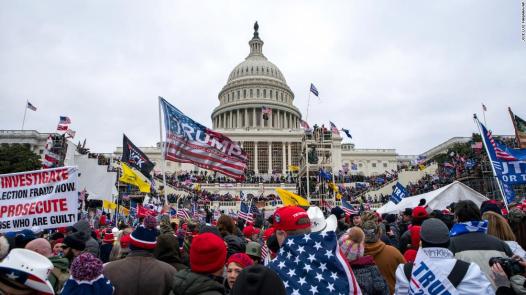
Good Morning!!
The news this morning is full of stories about corruption by Trump and his cronies; but even more horrifying, Trump himself spent the weekend ranting on Truth Social–his own social media company–and he seemed to suggest that he wants a civil war in the U.S.
Business Insider: Trump reshares post on Truth Social that appears to suggest or predict a civil war in America.
Trump re-posted a suggestion from a Truth Social user called “MAGA King Thanos,” who commented on a screenshot of a tweet from El Salvador’s president, Nayib Bukele.
In the tweet, Bukele wrote: “The most powerful country in the world is falling so fast, that it makes you rethink what are the real reasons. Something so big and powerful can’t be destroyed so quickly, unless the enemy comes from within.
Bukele’s remarks came in response to a Bloomberg tweet on coping with inflation in the US if one earns under $300,000 a year.
The post that Trump re-shared captured the Truth Social user’s comment on Bukele’s tweet, which read “Civil war.”
Here’s the post Trump shared:
More from Business Insider:
Bukele is El Salvador’s millennial president — a controversial figure who once switched up his Twitter bio to call himself “the coolest dictator in the world.”
Trump’s re-post was picked up on by conservative political activist George Conway, the husband of former Trump aide Kellyanne Conway.
“Nothing to see here. Just a former president of the United States sharing a social media post advocating or predicting civil war in the United States. No biggie,” he tweeted.
Trump’s comment was also swiftly rebuked by Rep. Adam Kinzinger, one of Trump’s staunchest critics in the GOP.
“Any of my fellow Republicans wanna speak out now?” Kinzinger tweeted. “Or are we just wanting to get through ‘just one more election first…?”
Democratic Rep. Eric Swalwell also weighed in on Trump’s post, tweeting: “Donald Trump is calling for Civil War. Of course, like Vietnam and the walk to the Insurrection, he won’t be man enough to fight it.”
In January, Barbara F. Walter published a book called How Civil Wars Start and How to Stop Them. I believe I put something in a post about it at the time. Here are some articles from the time the book came out.
Dana Millbank at The Washington Post: ‘We are closer to civil war than any of us would like to believe,’ new study says.
A startling new finding by one of the nation’s top authorities on foreign civil wars says we are on the cusp of our own.
Barbara F. Walter, a political science professor at the University of California at San Diego, serves on a CIA advisory panel called the Political Instability Task Force that monitors countries around the world and predicts which of them are most at risk of deteriorating into violence. By law, the task force can’t assess what’s happening within the United States, but Walter, a longtime friend who has spent her career studying conflicts in Syria, Lebanon, Northern Ireland, Sri Lanka, the Philippines, Rwanda, Angola, Nicaragua and elsewhere, applied the predictive techniques herself to this country.
Her bottom line: “We are closer to civil war than any of us would like to believe.” She lays out the argument in detail in her must-read book, “How Civil Wars Start,” out in January. “No one wants to believe that their beloved democracy is in decline, or headed toward war,” she writes. But, “if you were an analyst in a foreign country looking at events in America — the same way you’d look at events in Ukraine or the Ivory Coast or Venezuela — you would go down a checklist, assessing each of the conditions that make civil war likely. And what you would find is that the United States, a democracy founded more than two centuries ago, has entered very dangerous territory.”
Indeed, the United States has already gone through what the CIA identifies as the first two phases of insurgency — the “pre-insurgency” and “incipient conflict” phases — and only time will tell whether the final phase, “open insurgency,” began with the sacking of the Capitol by Donald Trump supporters on Jan. 6.
Things deteriorated so dramatically under Trump, in fact, that the United States no longer technically qualifies as a democracy. Citing the Center for Systemic Peace’s “Polity” data set — the one the CIA task force has found to be most helpful in predicting instability and violence — Walter writes that the United States is now an “anocracy,” somewhere between a democracy and an autocratic state.
Dropping five points in five years greatly increases the risk of civil war (six points in three years would qualify as “high risk” of civil war). “A partial democracy is three times as likely to experience civil war as a full democracy,” Walter writes. “A country standing on this threshold — as America is now, at +5 — can easily be pushed toward conflict through a combination of bad governance and increasingly undemocratic measures that further weaken its institutions.”
The Boston Globe published an interview with Walter by Shannon Larson: Q&A with Barbara F. Walter, author of ‘How Civil Wars Start,’ on the prospect of open civil conflict breaking out in the US.
Barbara F. Walter, a political science professor at the University of California at San Diego, has spent over three decades studying civil conflict. In her new book, “How Civil Wars Start: and How to Stop Them,” Walter examines the rise of violent extremism on a global scale and warns of the increasing likelihood of a second civil war breaking out in the United States.
“January 6, 2021 was a gift to the American people,” she tweeted on the one-year anniversary of the insurrection at the Capitol. “It made it impossible for the country to ignore or deny the cancer that has been growing out of the public eye for years. We can fix this!”
From the interview:
1) In your book, you write that the United States is “closer to civil war than any of us would like to believe.” How did you reach that conclusion?
“I’m a quantitative social scientist who studies civil wars. That means that I don’t study just one civil war in one country. I study all civil wars that have occurred over the last 80 years (and there have been over 200 of them). There has been an enormous amount of data collected by scholars on the factors that lead to civil war — so we know what things tend to put countries at greater risk of civil war.
“In addition, between 2017 and 2021, I served on the Political Instability Task Force run by the US government. The Task Force included political scientists, economists, anthropologists, and data analysts. The task of the Task Force was to put together a predictive model that would help the US government predict where around the world political instability and political violence was likely to break out. The Task Force included over 50 variables in the model — variables that the experts thought might matter, like poverty, income inequality, the ethnic diversity of a country, the size of a country, etc. Only two factors turn out to be highly predictive: anocracy and ethnic factionalism.”
2) What is an anocracy? What does it mean when a government is defined as such?
“Anocracy is a term that political scientists use for a government that is neither fully democratic nor fully autocratic, it is something in between. You can think of it as a partial democracy, weak democracy, illiberal democracy. It turns out that it is in this middle zone — between democracy and autocracy — that most civil wars occur. The second factor was whether a political faction had emerged in an anocracy that was based on ethnic, religious, or racial identity, and that faction then had the goal to gain power in order to exclude everyone else.”
3) What are some of the more notable examples in recent history demonstrating that the country is heading down the path toward a civil war?
“The US’s democracy has been weakening since 2016. It was downgraded first in 2016, then again in 2019, and then finally again after the January 6th attack on the Capitol, when it was classified as an anocracy for the first time since 1800.
“And then, one of America’s two big parties — the Republican Party — has become a faction based on race. As late as 2008, white Americans were equally likely to be a Democrat as a Republican. Today, 90 percent of the Republican Party is white, and it is doing everything possible to disenfranchise those who don’t vote Republican.” [….]
6) What would a modern civil war look like?
“The next civil war will look nothing like the last civil war. 21st-century civil wars tend to look much more like insurgencies — often fought by multiple factions, militias, and paramilitary groups — sometimes working together, sometimes competing. And they tend to use unconventional methods such as terrorism and guerilla warfare. It will look more like Northern Ireland and the 1st and 2nd intifada than Gettysburg.”
I’ve quoted quite a bit of the article, because it is behind a paywall.
This piece by Stephen Marche at The Guardian is also an important read. The next US civil war is already here – we just refuse to see it.
The United States today is, once again, headed for civil war, and, once again, it cannot bear to face it. The political problems are both structural and immediate, the crisis both longstanding and accelerating. The American political system has become so overwhelmed by anger that even the most basic tasks of government are increasingly impossible.
The legal system grows less legitimate by the day. Trust in government at all levels is in freefall, or, like Congress, with approval ratings hovering around 20%, cannot fall any lower. Right now, elected sheriffs openly promote resistance to federal authority. Right now, militias train and arm themselves in preparation for the fall of the Republic. Right now, doctrines of a radical, unachievable, messianic freedom spread across the internet, on talk radio, on cable television, in the malls.
The consequences of the breakdown of the American system is only now beginning to be felt. January 6 wasn’t a wake-up call; it was a rallying cry. The Capitol police have seen threats against members of Congress increase by 107%. Fred Upton, Republican representative from Michigan, recently shared a message he had received: “I hope you die. I hope everybody in your family dies.” And it’s not just politicians but anyone involved in the running of the electoral system. Death threats have become a standard aspect of the work life of election supervisors and school board members. A third of poll workers, in the aftermath of 2020, said they felt unsafe.
Two things are happening at the same time. Most of the American right have abandoned faith in government as such. Their politics is, increasingly, the politics of the gun. The American left is slower on the uptake, but they are starting to figure out that the system which they give the name of democracy is less deserving of the name every year.
An incipient illegitimacy crisis is under way, whoever is elected in 2022, or in 2024. According to a University of Virginia analysis of census projections, by 2040, 30% of the population will control 68% of the Senate. Eight states will contain half the population. The Senate malapportionment gives advantages overwhelmingly to white, non– college educated voters. In the near future, a Democratic candidate could win the popular vote by many millions of votes and still lose. Do the math: the federal system no longer represents the will of the American people.
The right is preparing for a breakdown of law and order, but they are also overtaking the forces of law and order. Hard right organization have now infiltrated so many police forces – the connections number in the hundreds – that they have become unreliable allies in the struggle against domestic terrorism.
I’ve focused this post on civil war, because I think this is where the Trumpists and the rest of the Republicans who cower in fear of their base are taking us. And I don’t think the Democrats are taking this seriously enough. I hope I’m wrong about that.
More stories to check out today:
The New York Times: Kushner’s and Mnuchin’s Quick Pivots to Business With the Gulf.
Crew: The Secret Service spent nearly $2 million at Trump properties.
The Guardian: Capitol attack panel to hold six public hearings as it aims to show how Trump broke law.
Just Security: Prosecuting Trump for the Insurrection: The Well-Founded Case f.or Optimism.
The Daily Beast: How Trump’s Fear of Getting Pied in the Face May Come Back to Cream Him.
The Washington Post: Russian diplomat resigns protesting Putin’s ‘aggressive war.’
The New York Times: U.S. Military Airlifts Baby Formula From Europe.
CNN: Biden says US would respond ‘militarily’ if China attacked Taiwan, but White House insists there’s no policy change.
Melissa Murray at The New York Times How the Right to Birth Control Could Be Undone.
Politico: State Democrats, abortion-rights activists ‘incredibly frustrated’ with federal inaction.
Have a nice Monday, Sky Dancers!!
Did you like this post? Please share it with your friends:
Posted: June 13, 2020 | Author: bostonboomer | Filed under: morning reads, U.S. Politics | Tags: Abraham Lincoln, caturday, Civil Rights, Civil War, Donald Trump, Fox News, Harris Faulkner, John F. Kennedy, Racism |

Good Morning!!
On Thursday, June 11, Lawrence O’Donnell discussed the speech on Civil Rights that President John F. Kennedy gave from the Oval Office on that day in 1963. The purpose of the speech was to propose the Civil Rights bill that passed after Kennedy’s assassination. Fifty-seven years later, we’ve made some progress, but systemic racism still runs rampant in this country. I thought I’d share some excerpts from that long-ago speech today.
NPR: John F. Kennedy’s Address on Civil Rights.
On June 11, 1963, President John F. Kennedy addressed the nation on the most pressing domestic issue of the day: the struggle to affirm civil rights for all Americans. His administration had sent National Guard troops to accompany the first black students admitted to the University of Mississippi and University of Alabama.
Excerpts selected by NPR:
…It ought to be possible… for American students of any color to attend any public institution they select without having to be backed up by troops.
…It ought to be possible for American consumers of any color to receive equal service in places of public accommodation, such as hotels and restaurants and theaters and retail stores, without being forced to resort to demonstrations in the street, and it ought to be possible for American citizens of any color to register and to vote in a free election without interference or fear of reprisal.

Painting by Ekaterina Mateckaya
It ought to be possible, in short, for every American to enjoy the privileges of being American without regard to his race or his color. In short, every American ought to have the right to be treated as he would wish to be treated, as one would wish his children to be treated. But this is not the case….
…This is not a sectional issue…Nor is this a partisan issue…This is not even a legal or legislative issue alone. It is better to settle these matters in the courts than on the streets, and new laws are needed at every level, but law alone cannot make men see right.
We are confronted primarily with a moral issue. It is as old as the scriptures and is as clear as the American Constitution.
The heart of the question is — whether all Americans are to be afforded equal rights and equal opportunities. Whether we are going to treat our fellow Americans as we want to be treated. If an American, because his skin is dark, cannot eat lunch in a restaurant open to the public, if he cannot send his children to the best public school available, if he cannot vote for the public officials who represent him, if, in short, he cannot enjoy the full and free life which all of us want, then who among us would be content to have the color of his skin changed and stand in his place? Who among us would then be content with the counsels of patience and delay?
One hundred years of delay have passed since President Lincoln freed the slaves, yet their heirs, their grandsons, are not fully free….
…It is not enough to pin the blame on others, to say this is a problem of one section of the country or another, or deplore the fact that we face. A great change is at hand, and our task, our obligation, is to make that revolution, that change, peaceful and constructive for all.
Those who do nothing are inviting shame as well as violence. Those who act boldly are recognizing right as well as reality…
You can watch the entire speech at C-Span. I watched it yesterday and it made me so sad. The comparison between Kennedy and the current occupant of the White House so so glaring. Not only was Kennedy capable of compassion and empathy, but he also spoke eloquently, in complete sentences and paragraphs. Today we have a fraudulent “president” who babbles nonsense, effortlessly lies about everything and has no idea how to do the job he holds even if he actually wanted to be a leader.

Cat in the window, by Joanna DeRitis
Speaking of Trump’s incoherent babbling, on Thursday he gave another strange Fox News interview with Harris Faulkner (who is black). For Fox, the questions were pretty tough. You can read the transcript and watch video excerpts at Factbase.
The most stunning moment in the interview was when Trump claimed to have done more for black Americans than any previous president, including Abraham Lincoln. Business Insider: Trump says Abraham Lincoln ‘did good’ for the Black community but that ‘the end result’ is ‘questionable.’
“So I think I’ve done more for the Black community than any other president, and let’s take a pass on Abraham Lincoln because he did good, although it’s always questionable, you know, in other words, the end result —” Trump said before Faulkner interjected.
“Well, we are free, Mr. President, so I think he did pretty well,” she said, referring to Lincoln.
“We are free,” Trump said. “You understand what I mean.”
“Yeah, I get it,” Faulkner said.
This isn’t the first time Trump has claimed he’s done more for the Black community than his predecessors.
“This may well be the president’s most audacious claim ever,” Michael Fauntroy, a professor of political science at Howard University, told The New York Times earlier this month. “Not only has he not done more than anybody else, he’s done close to the least.”
Of course it’s not really clear what Trump was trying to say, because his speech is so incoherent. At Slate, Jeremy Stahl tries to make sense of Trump’s words: What Was Trump Trying to Say About Abraham Lincoln?
A lot of people saw the transcript of those words—and perhaps watched the clip—and interpreted Trump as having said that “the end result” of Lincoln’s presidency—i.e., winning the Civil War, preserving the union, and ending the atrocity of chattel slavery—was “always questionable.” [….]

By Utagawa Hiroshige
I would never definitively state that I believed Trump didn’t mean the most racist possible interpretation of one of his often hard-to-grasp word salads. Indeed, he has in the past questioned the fact that the Civil War needed to occur, stating in 2017 that had Andrew Jackson been president at the time he would have stopped the Civil War from happening because he would have realized “there’s no reason for this.”
“The Civil War, if you think about it, why? People don’t ask the question, but why was there the Civil War? Why could that one not have been worked out?” Trump said back then.
As my former colleague, Jamelle Bouie, wrote at the time, that statement—apparently that Jackson could have come up with a perfect “deal” to prevent the Civil War—was as dangerous as it was ahistorical.
Given that past remark, it’s certainly plausible that Trump’s brain is so rotted from his own racism that he would say that the end results of Lincoln’s presidency were “questionable.” Based on the context of the question, though, and more recent comments from Trump, I think that is unlikely.
I interpret this particular word salad to be an attempt by Trump to validate his recent tweet that his administration “has done more for the Black Community than any President since Abraham Lincoln.”
Trump was likely attempting to say that while “I think I’ve done more for the black community than any other president,” he would ask that in such a ranking “let’s take a pass” on including Lincoln, because it’s an unfair comparison, but—even if he were to go head-to-head with Lincoln for the title of “best president for black people ever”—despite the fact that Lincoln “did good,” it would still be “always questionable” whether Trump was better, because you have to consider “the end result” of each man’s presidency.
Okay . . . I guess that’s as good an interpretation as any.
At Vox, Zach Beauchamp discusses another howler from the interview: Trump: “The concept of chokehold sounds so innocent, so perfect.”
When asked about police use of chokeholds on suspects like George Floyd, who was killed after a Minneapolis officer pinned him by the neck with his knee for nearly nine minutes, Trump initially told Faulkner that “I don’t like chokeholds,” even saying that “generally speaking, they should be ended.” But he contradicted that pretty quickly, saying that when you’ve got someone who is “a real bad person … what are you gonna do now — let go?”
He even went further, saying that “the concept of chokehold sounds so innocent, so perfect,” if a lone police officer is attempting to detain someone.

Deborah DeWitt, Birdwatching
His position, as far as I can tell, seems to be that maybe sometimes individual officers need to use chokeholds, but the more police there are, the less likely it is they’ll need to use one:
TRUMP: I think the concept of chokehold sounds so innocent, so perfect. And then you realize, if it’s a one-on-one. But if it’s two-on-one, that’s a little bit a different story. Depending on the toughness and strength — you know, we’re talking about toughness and strength. There’s a physical thing here too.
FAULKNER: If it’s a one-on-one for the [officer’s] life …
TRUMP: And that does happen, that does happen. You have to be careful.
The most relevant part here isn’t the president’s views on the details of self-defense tactics, but rather the lack of empathy in the way he talks about the issue. The only world in which police using chokeholds could sound “innocent” or “perfect” is a world in which you don’t think about what happens to people when they’re literally being choked — or one where you assume that it won’t happen to people like you.
A recent LA Times investigation found that 103 people were “seriously injured” by police using “carotid neck restraints” in California between 2016 and 2018. Black people, who make up 6.5 percent of the state’s population, were 23 percent of those injured in such holds.
Trump’s thinking seems so deeply shaped by his sense of generalized police innocence, his unwillingness to really process the fact of racial discrimination in police use of force, that he’s capable of saying out loud that chokeholds sound “innocent.”
What all this interpretation really boils down to is that Trump is disastrously incapable of doing the job of POTUS. And yet we’re stuck with him, so writers struggle to figure out what the hell he is talking about.
Stories to check out today
David Smith at The Guardian: ‘He just doesn’t get it’: has Trump been left behind by America’s awakening on racism?
The Washington Post: Trump says he’ll ‘go on and do other things’ if he loses in November.
Julian Borger at The Guardian: ‘Trump thought I was a secretary’: Fiona Hill on the president, Putin and populism.
The New York Times: Trump’s Actions Rattle the Military World: ‘I Can’t Support the Man’
NBC News: From ‘beautiful letters’ to ‘a dark nightmare’: How Trump’s North Korea gamble went bust.
The New York Times: Trump Moves Tulsa Rally Date ‘Out of Respect’ for Juneteenth.
The Daily Beast: Survivors of KKK’s Ax Handle Attack Appalled at Trump Speech.
The Washington Post: Republicans and Trump want a Jacksonville convention party. Some locals are worried about the area’s health.
The Daily Beast: A Black Man Was Found Hanging From a Tree—Residents Don’t Buy That It Was a Suicide.
Jonathan Chait at New York Magazine: Michael Flynn Writes Column Confirming He Is Definitely Insane.
The Atlantic: Coronavirus Researchers Tried to Warn Us. Before the pandemic hit, they struggled to get funding that might have helped us fight COVID-19.
USA Today: Fired Florida scientist builds coronavirus site showing far more cases than state reports.
Did you like this post? Please share it with your friends:








 peej
peej Carissa
 bostonboomer
 dakinikat
 ecocatwoman
 mablue2
 Mama Lopez
 peggysue22
 quixote
 skydancingguestblogger
 Mona (aka Wonk the Vote)



 Sky Dancing
Recent Comments