There’s not a lot of exciting politics news today; and that is probably a good thing, considering how bad things are looking for the country in the long run. We only have a little more than a month until Trump moves into the White House and tries to become president for life.
Have you heard the latest gossip? Donald Trump, Jr., who is still engaged to Kimberly Guilfoyle, has a new girlfriend.
Is there trouble in paradise for one of America’s most unsettling couples? Sure seems like it. Donald Trump Jr. and Kimberly Guilfoyle may be on the rocks, if the Daily Mail is to be believed. While the fiancés were spotted together about a week after the election, the tabloid has been all over what looks like Don Jr.’s new relationship with Bettina Anderson, a Republican socialite who lives in Florida. So what’s going on here?
Let’s back up a few months. In September, the Daily Mail reported that Don Jr. and Anderson had been “spotted canoodling” during a brunch date the month prior. According to their sources, this new fling was “the talk of Palm Beach.” One source said that Anderson reached over “to plant a sexy kiss” on Don Jr. three times during their meal at the Honor Bar.
“She seemed totally smitten with Don — and he with her,” the source told the Daily Mail.
Bettina Anderson
Guilfoyle was probably shocked to learn this information, right? Well, not so fast. The day after the first Daily Mail reports, friends of the former Fox News host told the tabloid that she might have had an idea of what was going on.
“Kimberly either didn’t know about Bettina — or didn’t want to know. Did she hear whispers that Don Jr. was fooling around with someone else? Probably,” one of Guilfoyle’s so-called friends said. “She’s no fool but it’s easy to deceive yourself when you’re so committed to someone and believe he’s committed to you.”
Guilfoyle and Trump have been together since 2018, and got engaged on New Year’s Eve 2020 (his birthday). During their time together, she became a mainstay in the MAGA world, often seen at Trump events, delivering speeches at Republican National Conventions, and sharing almost nothing but pro-Trump content on Instagram. By Election Night this year, it seemed like she and Trump Jr. had worked things out, as she stood by his side at his father’s victory speech.
But all was reportedly not well. The Daily Mail is back on the Trumpfoyle beat, and on Tuesday, they reported that the purportedly engaged couple has not been spotted together since November 12. Meanwhile, on Monday, Don Jr. and Bettina were photographed holding hands while out to dinner to celebrate her 38th birthday. The tabloid also reported that he has been living with his new girlfriend at her West Palm Beach townhouse instead of in the $15.5 million mansion he and Guilfoyle bought in 2021.
Gross. Who would want to hang around with Don Jr., much less live with him? I guess it takes all kinds.
According to US Magazine, via Yahoo News, Anderson is “a model and an influencer” with “more than 38,000 followers on” Instagram.
Anyway, Trump Sr. is giving Guilfoyle a consolation prize–He plans to appoint her Ambassador to Greece.
“For many years, Kimberly has been a close friend and ally,” the president-elect said in his announcement, which he posted to Truth Social.
Kimberly Guilfoyle and Don Jr
“Her extensive experience and leadership in law, media, and politics along with her sharp intellect make her supremely qualified to represent the United States, and safeguard its interests abroad. Kimberly is perfectly suited to foster strong bilateral relations with Greece, advancing our interests on issues ranging from defense cooperation to trade and economic innovation.”
Guilfoyle’s nomination requires Senate confirmation and would see her handling foreign affairs.
The announcement hit conspicuously soon after Trump Jr., 46, was pictured cozying up with Palm Beach socialite Bettina Anderson, 38.
Trump Jr. made no comment on the rumors on social media when he congratulated Guilfoyle in a brief statement to X Tuesday night: “I am so proud of Kimberly. She loves America and she always has wanted to serve the country as an Ambassador. She will be an amazing leader for America First.”
There’s more information coming out on Luigi Mangione, the man who has been arrested and charged with murdering of United Health Care CEO Brian Thompson in NYC. Here’s the latest:
The mainstream media has refused to publish Mangione’s “manifesto,” but Ken Klippenstein has posted it on his website:
I’ve obtained a copy of suspected killer Luigi Mangione’s manifesto — the real one, not the forgery circulating online. Major media outlets are also in possession of the document but have refused to publish it and not even articulated a reason why. My queries to The New York Times, The Washington Post, CNN and NBC to explain their rationale for withholding the manifesto, while gladly quoting from it selectively, have not been answered.
I’ll have more to say on this later — on how unhealthy the media’s drift away from public disclosure is — but for now, here’s the manifesto:
“To the Feds, I’ll keep this short, because I do respect what you do for our country. To save you a lengthy investigation, I state plainly that I wasn’t working with anyone. This was fairly trivial: some elementary social engineering, basic CAD, a lot of patience. The spiral notebook, if present, has some straggling notes and To Do lists that illuminate the gist of it. My tech is pretty locked down because I work in engineering so probably not much info there. I do apologize for any strife of traumas but it had to be done. Frankly, these parasites simply had it coming. A reminder: the US has the #1 most expensive healthcare system in the world, yet we rank roughly #42 in life expectancy. United is the [indecipherable] largest company in the US by market cap, behind only Apple, Google, Walmart. It has grown and grown, but as our life expectancy? No the reality is, these [indecipherable] have simply gotten too powerful, and they continue to abuse our country for immense profit because the American public has allwed them to get away with it. Obviously the problem is more complex, but I do not have space, and frankly I do not pretend to be the most qualified person to lay out the full argument. But many have illuminated the corruption and greed (e.g.: Rosenthal, Moore), decades ago and the problems simply remain. It is not an issue of awareness at this point, but clearly power games at play. Evidently I am the first to face it with such brutal honesty.”
When the identity of Luigi Mangione, the alleged UnitedHealthcare CEO shooter, was revealed on Monday, the online search — a reporting process that’s become a collective online ritual — began. It turns out he left a lot of information online: an active account on X, an Instagram, a Facebook, a Goodreads, a Reddit account, and maybe even a Tinder profile. The dossier came together fast.
Luigi Mangione
Reporters and social-media users noted possible red flags, strange and eerie fragments of information, and small ironies. On Goodreads, he had posted a contrarian riff on Ted Kaczynski’s manifesto. Was it evidence of violent tendencies? He also reviewed a couple of books about back pain. On X, he posted about AI superintelligence and followed some anti-woke pundits. Had he tumbled down a slippery slope? Was he blackpilled? Some sort of accelerationist? On Reddit, he posted about backpacks and spinal injuries. Had he been hiding in plain sight all along?
In isolation, with the hindsight that they were posted by someone who went on to allegedly assassinate a health-care CEO, these accounts, and some of these posts, assumed new meaning, which is reasonable and understandable: It’s a crazy story that people want to understand, and the way social media has been processing it more broadly is unprecedented in about six different ways. But what’s most striking about Mangione’s extensive online dossier is that, had it been studied before the shooting took place, it wouldn’t have raised much alarm. You can spend hours reading these posts, sifting through his follows, and looking for clues about what Type of Guy he is, but the supportable theories are pretty thin: Mangione had an online profile consonant with his identity and context. He shared and posted and followed like a 20-something striver with a foot in the tech industry, listened to Rogan, and considered himself a rationalist or at least unusually rational….
His media consumption — wellness podcasts, a dash of “heterodox” punditry, tech personalities on X — might have placed him near some worrying ideological tendencies, but no more so than millions of other young men in his social milieu; on digital paper, he’s a bit like one of those young male swing voters that dominated post-election recriminations, albeit with an Ivy on his LinkedIn. If a dating profile led you to these accounts, you might wonder if he was going to talk at you about AI or if he might be sort of socially awkward. You might wonder if he’s a bit of a pod bro, or an RFK guy, but you’d also see a lot of stuff that looks — again, without future context — if not normal, then demographically typical. You wouldn’t have wondered if he was planning an assassination. You’d probably have assumed he was friendly! Now, everyone’s looking for the online trail that leads directly the sidewalk in front of the Midtown Hilton, but they haven’t quite found it. Nor, in 2024, should they expect to.
Herrmann argues that a criminal’s “on-line footprint” doesn’t really reveal who a person is anymore, if it ever did.
Faith in the existence of meaning in the “online trail” started waning when social media achieved full ubiquity. By the mid-2010s, the sorts of evidence you’d find in the aftermath of a shocking news event tended to be either hidden in places like 4chan — intentionally inscrutable communities within a fully mainstream internet — or left behind intentionally to be found and shared in the form of a manifesto, an archived Discord channel, or a recording of the act itself. These revelations could still be illuminating or at least shocking — the Pittsburgh synagogue shooter left a trail of posts on the right-wing social-media site Gab, for example — but in recent years, the post-news deep-dive, which has become a messy and fraught spectacle unto itself, wasn’t producing much in the way of understanding. Mostly, if you were planning a dramatic crime, you knew better than to post about it. If you wanted nobody to see you, or suspect you of anything, you simply didn’t post about it.
Mangione’s stubbornly normal online footprint, and the way the media and public have feasted upon it, marks the closing of this circle. Online, he was a guy with unremarkable niche interests and a serious appetite for boring productivity books. The reflexive assumption that his digital trail must contain essential, decodable truths about his motives has produced less in the way of insight than of fandom, which is constructed online through a similar process of breathless driven data aggregation.
Luigi Mangione, who has been charged with killing the chief executive of UnitedHealthcare at a company investors’ day, was arrested with a notebook that detailed plans for the shooting, according to two law enforcement officials.
The notebook described going to a conference and killing an executive, the officials said.
Luigi Mangione
“What do you do? You wack the C.E.O. at the annual parasitic bean-counter convention. It’s targeted, precise, and doesn’t risk innocents,” was one passage written in the notebook, the officials said….
When Mr. Mangione was arrested, the authorities also found a 262-word handwritten note with him, which begins by appearing to take responsibility for the murder. The note, which officials described as a manifesto, also mentioned the existence of a notebook. The recovery of the notebook was first reported by CNN.
The suspect saw the killing as a “symbolic takedown,” according to a New York Police Department internal report that detailed parts of a three-page manifesto found with him at the time of his arrest. The report added that the suspect “likely views himself as a hero of sorts who has finally decided to act upon such injustices” and expressed concern that others might see him as a “martyr and an example to follow.” [….]
On his way into court on Tuesday afternoon, Mr. Mangione shouted about “an insult to the intelligence of the American people and their lived experience.”
It was not exactly clear what he was referring to as deputies worked to push him into the courthouse. On Wednesday, the sheriff of Blair County, James E. Ott, said that otherwise Mr. Mangione had not given deputies any problems.
Even when Luigi Mangione was surrounded with people who cared about him, he was isolated by a spinal defect that dealt the athletic young man crippling pain and contributed to a jaundiced view of the American health-care system.
Authorities charged Mangione, 26, with murder in the shooting of UnitedHealthcare CEO Brian Thompson in New York, but have said little about a motive for the killing. They found a three-page, handwritten document on Mangione that expressed disdain for the American health-care system, they’ve said.
On Reddit in April, Mangione foreshadowed that skepticism about the health-care industry as he offered advice for getting a doctor to perform spinal surgery.
“Tell them you are ‘unable to work’ / do your job,” he wrote. “We live in a capitalist society. I’ve found that the medical industry responds to these key words far more urgently than you describing unbearable pain and how it’s impacting your quality of life.”
Nothing in his Reddit posts reviewed by The Postindicate violent intentions. Authorities have not laid out their case for what drove Mangione to escalate his frustration with the health system, which is common in the United States, into an allegedly premeditated murder of a prominent health-care executive….
Mangione’s arrest has stunned his friends and family, most of whom appear to have lost touch with him in the last six months.
“We all condemn violence of any kind,” said Josiah Ryan, a spokesman for Surfbreak HNL, a co-living community in Honolulu where Mangione lived for six months in 2022. He added, “There’s sadness, because he was a person who was well-loved and no one saw this coming.”
Mangione’s back X-ray
Ryan said that Mangione’s back pain was well known within the Surfbreak community. “It was a real problem for him, and he had to think about that in a way that most 24-year-old young men living in Hawaii would not have to worry about their health,” he said.
Mangione’s struggles with his back pain offer a glimpse into the interior life of a young man who outwardly lived a charmed existence — the scion of a wealthy family in Maryland who was valedictorian of his prestigious private school in Baltimore and earned degrees in computer science from the University of Pennsylvania….
In archived Reddit comments, Mangione doesn’t express anger toward UnitedHealthcare or other health insurers. But the posts chronicle his struggle over years to deal with back pain that became increasingly debilitating.
“From childhood until age 23, my back would always ache if I stood too long, but it wasn’t too bad,” he wrote in February. But as he entered his mid-20s, the pain began to disrupt his life, and he also struggled with cognitive issues.
In a Reddit group focused on brain fog, he wrote, “The people around you probably won’t understand your symptoms — they certainly don’t for me.”
Lots of people live with chronic pain (including me), but we don’t kill people over it.
In an 82-page court filing made public Tuesday, Manhattan prosecutors say Donald Trump’s “history of malicious conduct” is too serious for his hush-money case to be dismissed.
The filing, signed by DA Alvin Bragg, also fights Trump’s claim that he enjoys something called presidential-elect immunity — above and beyond the presidential immunity bestowed on him by the US Supreme Court in June.
“There are no grounds for such relief now, prior to inauguration,” Bragg wrote in opposing Trump’s 11th-hour motion to dismiss, “because President-elect immunity does not exist.”
With just six weeks left before his January 20 inauguration — and six months after a Manhattan jury convicted him — Trump is again demanding that New York Supreme Court Justice Juan Merchan immediately dismiss his hush-money case.
It’s his third time trying to void his indictment or his conviction. If successful, Trump would escape altogether his already thrice-delayed sentencing.
Manhattan District Attorney Alvin Bragg
The president elect faces as little as no jail time and a potential maximum of four years prison for falsifying 34 business records throughout his first year of office to retroactively hide a hush-money payment to adult actress Stormy Daniels. (Legal experts have said that it’s unlikely Trump would be sentenced to jail time as a 78-year-old first-time offender convicted of low-level felonies, and any jail sentence would be stayed as he appeals.)
Trump paid for Daniels’ silence just eleven days before 2016 election, and jurors unanimously found that he thereby conspired to promote his own election by unlawful means, Bragg wrote.
The evidence presented against Trump was “overwhelming,” reads the filing, which is also signed by a lead prosecutor on the case, Christopher Conroy.
“The crimes that the jury convicted defendant of committing are serious offenses that caused extensive harm to the sanctity of the electoral process and to the integrity of New York’s financial marketplace,” which relies on honest record-keeping, Bragg wrote.
One of the strangest aspects in living in a declining democracy is that everyone is forced to learn about arcane areas of the law … if only to see them trampled by the despot.
The first Trump administration taught us about the Logan Act, the Federal Vacancies Reform Act, and the Presidential Records Act. Those were all about the limits of the president’s authority. Could Trump dispatch Mike Flynn to secretly negotiate with the Russian ambassador before taking office? Could he simply stack federal agencies with his cronies serving in an acting capacity and avoid Senate confirmation? Could he steal or destroy government records?
The answer was an enthusiastic “yes,” thanks to the Supreme Court, with an assist from Judge Aileen Cannon. In the name of ensuring that he can act “boldly” and “without hesitation,” six conservative justices gave the president unlimited authority to commit crimes without fear of prosecution. The imperial presidency is upon us.
But even that blank check isn’t enough for Trump and his enablers. To reshape society, they need the legislative and judicial branches to be more than supine. They need to steal Congress’s power, too. And so, while we’re learning about Trump’s plans to use recess appointments to sidestep the senate’s constitutionally mandated “advice and consent” role, we now have to learn about the Impoundment Control Act of 1974.
I can’t do this important post justice with excerpts, but there’s no paywall, so please go read it at Public Notice. Here’s a bit more.
It all goes back to Nixon
The Constitution vests “the power of the purse” in Congress.
Article I, Section 8, Clause 1, AKA the Spending Clause, specifies that “Congress shall have Power To lay and collect Taxes, Duties, Imposts and Excises, to pay the Debts and provide for the common Defence and general Welfare of the United States.” And Section 9 says that “No Money shall be drawn from the Treasury, but in Consequence of Appropriations made by Law.”
Congress passes the budget and allocates government revenues as it sees fit — that’s just black-letter law. And so in 1972, Congress passed the Federal Water Pollution Control Act, allocating $5 billion for 1973, $6 billion for 1974, and $7 billion for 1975 for municipal sewer updates. President Richard Nixon tried and failed to veto the law, and, after it was passed, he instructed EPA Administrator William Ruckelshaus to allot “[n]o more than $2 billion of the amount authorized for the fiscal year 1973, and no more than $3 billion of the amount authorized for the fiscal year 1974.”
The City of New York sued, and in a 1975 case called Train v. City of New York, the Supreme Court held that Nixon had no discretion to refuse to spend money allocated by Congress. Ruckelshaus was obligated to dispense the $18 billion over three years, despite Nixon’s strong belief that cities should simply live with rotting pipes.
And while that case was percolating through, Congress went one further and passed the Impoundment Control Act, to make it clear to Nixon that he should quit encroaching on their turf and monkeying with the budget….
Under the ICA, the president must either spend the funds obligated by the legislature, or come to Congress with a “special message” and explain why not. Congress then has 45 days to vote for rescission, rescinding the original allocation. If Congress doesn’t agree, or simply ignores the message, the funds must be spent as originally ordained. (Here’s a handy ICA fact sheet from the Dems on the House Budget Committee.)
Elon Musk and Vivek Ramaswamy, who clearly don’t know or care about the separation of powers, are currently promising to slash $2 trillion from the federal budget and delete entire federal agencies through their fake DOGE committee. But even in his first administration, Trump violated the ICA by withholding the defense allocation for Ukraine in 2019.
Read the rest at the link.
That’s all I have for today. We’re having a stormy day here, so I’m going to try to distract myself with a good book. Have a nice day, everyone.
Did you like this post? Please share it with your friends:
“And just like that, America is respecting on the world stage once again.” John Buss, @repeat1968
Good Day, Sky Dancers!
I’m going down a very dank, dark rabbit hole today because one of the things that concern me the most are the ongoing threats that President Eject Incontinentia Buttocks against people who make him feel bad about himself or correct his story weaving for the sake of reporting reality. We keep seeing the lists and hearing direct attacks on what he considers “enemies.” This ranges from politicians of past and present to members of the press. It is the true sign of a despot, and one of the major things the U.S. Constitution and our form of government were designed to toss in history’s trash heap. The other is the feudal tradition of bending or taking the knee. That is why public servants take an oath to uphold and protect the Constitution and not to a cult of personality.
It is evident during this transition period that these feudal and dictatorial aspirations are a serious part of the vetting of Cabinet officers and the oncoming attempt to prosecute and persecute outspoken critics of the tremendous number of unfit, immoral cretins, loyal to an insane and craven political figure. King George was the Mad King we had to dethrone to gain independence. What do we do with a Mad Politician chosen by the Electoral College and many voters who live in states with more livestock than people? He’s an obvious threat to democracy, but he managed to Pied Piper, a bunch of rubes.
An interview this weekend shows how obsessed he is with ensuring his warped reality rules the day and the country.
Let me share a few headlines that are giving me some severe heartburn. This is from CNN and is reported byAaron Pellish. “Trump lays out sweeping early acts on deportation and January 6 pardons, says Cheney and others ‘should go to jail.’”
President-elect Donald Trump in a television interview that aired Sunday previewed a sweeping agenda for his first days in office, outlining how his administration will prioritize deporting migrants with criminal records, vowing to pursue pardons for January 6 defendants on his first day, and raising the possibility that former Rep. Liz Cheney and other political opponents could face jail time.
Trump said he would not seek “retribution” against President Joe Biden and against his political enemies, but he repeatedly left room for his appointees to decide whether to go after specific people. He suggested members of Congress who led the investigations into his conduct during the January 6, 2021, attack on the US Capitol should be put in jail and that he’ll look on his first day at issuing pardons to supporters involved in the riot.
“These people have been there, how long is it? Three or four years? You know, by the way, they’ve been in there for years, and they’re in a filthy, disgusting place that shouldn’t even be allowed to be open,” he said. Nearly 1,200 people either have pleaded guilty or were found guilty at trial for crimes connected to the January 6 attack, according to the Justice Department. More than 645 defendants were ordered to serve some jail time.
Trump said he would not direct his Justice Department to investigate members of Congress and Biden administration officials who led the investigations into his role in January 6, but continued to suggest his DOJ would be justified in deciding to launch investigations without his input.
When asked about the possibility of investigating special counsel Jack Smith, who brought the two since-dropped federal cases against him, Trump said he wants his pick for attorney general, Pam Bondi, to “do what she wants to do.”
“She’s very experienced. I want her to do what she wants to do. I’m not going to instruct her to do it,” he said.
Trump was more direct when speaking about the members of Congress who led the January 6 committee, telling Welker that the co-chairs of the committee — Republican Cheney, who has since left Congress, and Democrat Bennie Thompson — should “go to jail.”
“Cheney was behind it. So is Bennie Thompson and everybody on that committee,” he said. “For what they did, honestly, they should go to jail.”
Trump also suggested that committee members might do well to receive preemptive pardons from Biden to protect themselves from criminal prosecution. CNN reported last week that Biden White House aides, administration officials and prominent defense attorneys in Washington were discussing potential preemptive pardons or legal aid for people who might be targeted by Trump.
“Biden can give them a pardon if he wants to,” Trump said. “And maybe he should.”
In a statement later Sunday, Cheney said, “Donald Trump’s suggestion that members of Congress who later investigated his illegal and unconstitutional actions should be jailed is a continuation of his assault on the rule of law and the foundations of our republic.”
Republican former Rep. Adam Kinzinger, who served on the committee, told CNN’s Manu Raju on Sunday he’s “not worried” about the Trump administration investigating him or his fellow committee members.
The Constitution’s Speech or Debate Clause protects lawmakers from certain law enforcement actions targeted at their legislative duties.
CNN has reached out to Thompson for comment.
The problem is mostly with “political enemies.” However, it does go deeper than that. This is from Phillip Bump’s column today at the Washington Post.”Trump sees the investigators, not the rioters, as the Jan. 6 criminals. It’s not just that he seeks to avoid accountability. It’s that he hopes to invert it.” So, the criminals arrested by law officers, prosecuted in courts, and found guilty in the process by a duly appointed Judge or Jury are the law breakers here? How horrifying is that?
History will tell the story of the riot at the Capitol on Jan. 6, 2021, in direct terms. President Donald Trump, increasingly desperate to block Joe Biden’s inauguration to replace him, summoned his supporters to Washington for a “wild” protest. Tens of thousands came, including members of violent, fringe-right groups.
As legislators convened to formalize Biden’s victory, angry throngs of Trump supporters pushed toward the building, some engaging in violent altercations with law enforcement in an effort to stop Congress from counting electoral votes. Hundreds were injured, including more than 100 police officers.
Congress tried to hold Trump accountable for his role in the riot twice, first by impeaching him — enough Republican senators sided with Trump to prevent conviction — and then by launching a high-profile investigation of his broad effort to retain power. Meanwhile, the justice system went to work arresting and imprisoning those who had engaged in the riot. Special counsel Jack Smith brought federal charges against Trump.
Pressed whether he’d direct Bondi or Kash Patel, his pick to lead the FBI, to send them to jail, Trump said, “No, not at all,” before adding, “I think they’ll have to look at that.”
Asked whether he plans to follow up on his frequent campaign promise to investigate Biden — whom he repeatedly labeled as “corrupt” and a “criminal” on the campaign trail — Trump said he doesn’t want to “go back into the past.”
“I’m really looking to make our country successful. I’m not looking to go back into the past,” he said, adding, “Retribution will be through success.”
When asked about previously saying he would direct his Justice Department to appoint a special prosecutor to investigate Biden, Trump said he would not do that but left the door open for top DOJ officials to make their own determinations.
“No, I’m not doing that unless I find something that I think is reasonable,” he said. “But that’s not going to be my decision. That’s going to be Pam Bondi’s decision, and, to a different extent, Kash Patel, assuming they’re both there, and I think they’re both going to get approved.” Trump has tapped Patel to lead the FBI, despite the current director, Trump appointee Christopher Wray, still having several years left in his 10-year term.
Throughout the interview, Trump at times struck a more temperate tone toward his political opponents and appeared to prioritize uniting the country over exacting vengeance. He said he plans to make unity a central theme of his inauguration address and expressed confidence that his administration will achieve a level of success that will bring the country together.
But Trump invoked similar calls for unity at various points throughout his campaign — including in the wake of the first assassination attempt against him — before often reverting to bitter, divisive rhetoric and personal attacks. During the NBC interview, Trump again refused to concede that he lost the 2020 presidential election.
President Eject Incontinentia Buttocks rejects reality for a version that suits his malignant narcissism and purposes. The New Republic’s Greg Sargent interviews Brian Beutler about this on his PodCast. “Transcript: Trump’s Private Rage at “Traitors” Reveals Dark 2025 Plans. An interview with Brian Beutler, author of the “Off Message” Substack, who explains how Democrats can and must do more to alert the public to the dangers of a second Trump term.” Dangers, indeed.
The New York Timesreports that Donald Trump is telling advisers that his biggest regret from his first term was that he appointed “traitors.” Not traitors to the country, of course; traitors to him. As a result, his transition team is grilling prospective officials to gauge their loyalty to Trump; that is, loyalty to the person. Is there some way for Democrats to explain how absurd and dangerous all this is in a manner that gets through to the public? We’re talking about this today with Brian Beutler, author of the excellent Substack Off Message, who’s been arguing that Dems need to get more aggressive with their communications about all this right now before Trump takes office. Thanks for coming back on, Brian.
Brian Beutler: It’s always good to be with you.
Sargent: The New York Times reports that he’s privately telling advisors that his biggest first-term regret was appointing traitors. Importantly, traitors are those who came to see Trump accurately as a threat to the system: Chief of Staff John Kelly, Defense Secretaries Jim Madison, Mark Esper, and even Attorney General William Barr, who was relentlessly loyal up to the very last minute. That’s his regret, appointing people who describe the threat he poses accurately. Brian, in some sense, this isn’t a surprise, but it’s rarely reported quite this clearly. Your thoughts?
Beutler: It’s inauspicious. And it probably portends some conflict between him and the Senate insofar as the people that he’s vetting are going to be appointed to positions that require Senate confirmation. That’s because, as I understand, the loyalty test as reported in the article is not just, Do you support Donald Trump? Do you support the MAGA movement? Do you support its policy goals?—it’s really, Do you believe Donald Trump won or lost the 2020 election? If they acknowledge the truth that he lost, they’re out, they’re not going to get the nomination.
And similarly, with questions like, Do you think January 6 was good or bad? Do you think it was something that Donald Trump is responsible for? Are these patriots or are they insurrectionists?, if you answer that the wrong way, you’re not getting the job. And insofar as anyone who answers the way Trump wants them to answer has to go before the Senate. Well, it’s going to raise questions for both Democrats and Republicans in different ways.
Democrats are going to have to decide whether those are red lines for them that they won’t cross. If Trump finds somebody who’s qualified as in their resume is good, that they’re credentialed to do the job he’s appointed them to, but they’re also supportive of the Big Lie or they think that the insurrection was OK, will Democrats look past that to say, Well, at least you’ll know how to do the job that you’re being appointed to do? I would like Democrats to say there will be zero Democratic votes for any nominees who take that loyalty test. And if they do that, then it will fall to Republicans.
Are 50 out of 53 Republican senators willing to take that vote? An ancillary benefit of Democrats drawing a hard line here is that’ll be really tough for them because there are still at least a handful of Senate Republicans who don’t support the Big Lie, who won’t repeat it, and who think the people who peddle it are real threats to democracy. Then we’ll find out whether they just decided, You know what, Trump won, so it’s revisionist history all the way down now.
Sargent: His use of the term traitors in his conversations with his advisors, which shows that he’s still seething with anger about those who refuse to go along with his rewritten history: This is one of the keys to understanding what he really intends with current picks like Pete Hegseth as defense secretary, Kash Patel as FBI director, and Pam Bondi as attorney general. It won’t be that hard for all Democrats to oppose Pete Hegseth and Kash Patel, but I’m not sure all Democrats will oppose Pam Bondi.
We do have precedent for politicizing the FBI. I remember all of this very well, as well as the entire setup with AG John Mitchell. I had thought laws were put into place to prevent this from happening again. I also was aware that many Republicans at the time thought those laws went too far. Aaron Rupar and Thor Bensure, writing for Public Notice, share this headline. “The J. Edgar Hoover precedent for weaponizing the FBI. “Yes, we could have a repeat of that,” Frank Figliuzzi tells us.”
After serving in the FBI for more than two decades, in 2011 Frank Figliuzzi became the assistant director of the FBI’s counterintelligence division, where he worked alongside FBI Director Robert Mueller. Suffice it to say he saw a lot in his career.
So it should be taken seriously that Figliuzzi, now an MSNBC senior national security and intelligence analyst, describes Trump’s picks to run what are sometimes referred to as the power ministries — among them the DOJ (including the FBI) and the defense department — as a “hijacking of the entire national security structure.”
“My chief concern is this single characteristic that seems to run through these nominees — blind allegiance to Donald Trump,” Figliuzzi told us.
We recently connected with Figliuzzi to get his insight on Trump’s picks and what they signal about how the federal government will operate over the next four years. He warned that “we could be heading toward tremendous abuses of power, with the FBI going after Trump’s political enemies.” And he noted that a previous FBI director provided the president-elect and his choice to run the bureau, Kash Patel, with a blueprint.
Benson interviewed Figluzzi. It went like this.
Thor Benson
As someone who’s focused on national security and has a background there, what are your top concerns with Trump’s choices for national security roles?
Frank Figliuzzi
Sadly, we’ll have to rank order them.
It’s not just that many of Trump’s nominees are remarkably unqualified for the jobs, and they are — from the DNI pick with Tulsi Gabbard to the DHS with Kristi Noem to Hegseth at DOD and now Kash Patel. But the lack of competence is not my chief concern anymore.
My chief concern is this single characteristic that seems to run through these nominees — blind allegiance to Donald Trump. Yes, there are national security issues with someone like Gabbard or Hegseth — I say national security with Hegseth, particularly, because similar to the concerns about Matt Gaetz, we don’t know what we don’t know. Is there more coming with Hegseth? Is it extortion and blackmail?
He’s already written a check to a woman in California. What else do we not know about? According to the latest reporting, he appears to have an alcohol problem. He’s had to physically be carried out of events he attended because he was drunk. That’s not good with someone who’s running things at the Pentagon. Are there more women and incidents out there? According to the New Yorker, he also yells “kill all the Muslims” when he gets drunk.
Out of all of the nominees, Kash Patel lacks the capacity to have his own independent thoughts and ideology. His record is replete with nothing but kissing Trump’s ass. That’s it. You don’t have to take my word for it. Look at his public statements about persecuting the “deep state,” prosecutors, the media, for christ’s sake. Combine that with Pam Bondi’s almost identical comments, and we’ve now got a Trump hijacking of the entire national security structure.
Thor Benson
So where does that take us?
Frank Figliuzzi
Well, we could be heading toward tremendous abuses of power, with the FBI going after Trump’s political enemies.
So, my hair is on fire again, although it never really goes out, to be honest. There are warning signs all over the place, and only a small segment of the American populace appears to be aware of all of this. You can read Figliuzzi’s discussion of Nixon’s tricks at the link. The other headline grabber today is how a set of unelected and affirmed idiot billionaires will be going after our Social Security. This is from Truth Out. “DOGE Heads Musk and Ramaswamy Signal Social Security Cuts Are Coming. Trump vowed to “not cut one penny” from Social Security, but his other statements and actions suggest that he plans to.” Chris Walker has the lede and the story.
On Sunday, president-elect Donald Trump sought to assuage concerns that he will make cuts to Social Security and other safety net programs after Republicans signaled last week that Social Security could be targeted by Trump’s “Department of Government Efficiency” (DOGE) initiative, managed by Elon Musk and Vivek Ramaswamy.
Asked by host Kristen Welker on NBC’s “Meet the Press” program whether the DOGE initiative would include cuts to Social Security, Trump said “no,” other than perhaps cuts related to allegations of “abuse” or “fraud” associated with the program.
“We’re not touching Social Security, other than — we might make it more efficient,” Trump said about the national insurance program that helps retirees, disabled people, widowers and children of deceased parents. “But the people are going to get what they get.”
“We’re not raising ages or any of that stuff,” he added.
Trump’s comments echo talking points from his “Agenda 47” platform during his presidential campaign, which stated that he would “not cut one penny from Medicare or Social Security.” However, he and his allies have repeatedly suggested that cuts to both programs are possible.
Musk and Ramaswamy have made it evident that cuts to Social Security will be considered. After the two met with Republican lawmakers on Capitol Hill last week about the DOGE initiative, House Majority Leader Rep. Steve Scalise (R-Louisiana) said they had expressed sentiments that contradicted Trump’s comments on Sunday.
“Nothing is sacrosanct. Nothing. They’re going to put everything on the table,” Scalise told reporters after the meeting, with Fox Business elaborating that cuts to Social Security, Medicare and Medicaid would be discussed.
In September, when the idea of DOGE was first being discussed, vice president-elect J.D. Vance also indicated that there could be cuts to Social Security. A DOGE-type commission is “going to look much different in, say, the Department of Defense versus Social Security,” Vance said during a podcast interview, insinuating that cuts were going to be considered for the latter agency.
In March, Trump himself said that cuts to the program were a possibility.
“There is a lot you can do in terms of entitlements — in terms of cutting — and in terms of also the theft and the bad management of entitlements,” Trump said in a statement starkly different from his comments over the past weekend.
Perhaps most importantly, Trump attempted to make drastic cuts to Social Security and other programs in his first term as president. In one of his later proposed budgets (which didn’t go on to pass in the then-Democratic-controlled Congress), the president-elect sought to cut Social Security by $25 billion — despite promising in the 2016 presidential campaign that he wouldn’t make any cuts to the agency, just as he promised this last election cycle.
Nothing is Sacred in Trumplandia except Trump and his money. You can read more about the proposed cuts at these links.
Lara Trump is stepping down as co-chair of the Republican National Committee, a role she has held since March, as some of Donald Trump’s allies continue to push for her to replace Florida Sen. Marco Rubio on Capitol Hill.
In announcing her resignation on X, Lara Trump, who is the president-elect’s daughter-in-law, said “the job I came to do is now complete,” touting the RNC’s fundraising records, election integrity efforts and voter turnout.
She’s expressed openness to replacing Rubio, the president-elect’s pick to be secretary of State, in the Senate, telling The Associated Press it’s a role she “would seriously consider.”
“If I’m being completely transparent, I don’t know exactly what that would look like,” she told the AP in an article published Sunday. “And I certainly want to get all of the information possible if that is something that’s real for me. But yeah, I would 100% consider it.”
Among those supporting her as a potential Rubio replacement is billionaire Elon Musk, a close ally of the incoming president, and his mother, Maye Musk.
When did all these tacky people get a say in stuff like this? The Trump Boys will be in charge of the Merch and Grift Wing of the White House while the Kushners milk what they can from the State Department and foreign nations. We are definitely headed to a Nepocracy. Just watch out for that Douche Commission headed by First Lady Elonia and DIE hire Vivek.
What’s on your reading and blogging list?
Did you like this post? Please share it with your friends:
The assassination of United Health Care CEO Brian Thompson has set off a spirited public discussion of the U.S. health insurance system. That is the top news story today.
The shooter wrote the words “Delay,” “Deny,” and “Depose” on bullets left at the scene, suggesting that his action was triggered by denial of coverage by the health insurance giant. That has set off angry discussions on social media and probably in homes and workplaces around the country.
People are also wondering how the shooter managed to evade police, disappear in Central Park and escape New York City for an unknown destination. Police are examining security footage to try to find out where he went. They have also found images of the shooter’s face, which should help the effort to locate him.
He killed a high-profile CEO on a sidewalk in America’s largest city, where thousands of surveillance cameras monitor millions of people every day.
But the man who killed UnitedHealthcare CEO Brian Thompson outside a busy hotel keeps evading capture. Now, authorities say he might have slipped out of New York – meaning the elusive gunman could be anywhere….
Police believe the suspect arrived in New York City 10 days before the killing – on November 24, a law enforcement official told CNN. Throughout his stay, the suspect appeared on camera numerous times – but always kept his hood over his head and wore a mask in public places.
“He knows he’s on camera – it’s New York,” said John Miller, CNN’s chief law enforcement and intelligence analyst.
Police are searching for and scouring countless hours of video footage in hopes of finding more clues, such as whether the suspect met with anyone while in the city.
“It will take them weeks. … They will build out every step of his trip that’s on video,” Miller said. “They will create a movie of his every move.”
While the gunman meticulously planned many parts of his crime and getaway, he might be surprised by “how far the NYPD is going to go in collecting video,” said former NYPD Chief of Department Kenneth Corey.
“And they’re not just going to take it from the crime scene to his escape route,” Corey said. “They’re actually going to rewind now, and they’re going to try to account for all 10 days that he spent in New York City. And I don’t think that he anticipates that.”
The police on Friday offered a nearly minute-by-minute timeline of a gunman’s movements before and after he fatally shot Brian Thompson, the chief executive of UnitedHealthcare, in Midtown Manhattan two days earlier.
The police have made no arrests in the shooting, and do not have a name for a suspect, but investigators have begun to piece together the movements of a man they believe killed Mr. Thompson on a city sidewalk early Wednesday morning.
Joseph Kenny, the Police Department’s chief of detectives, said at a news briefing on Friday that the suspect arrived in the city at 10:11 p.m. on Nov. 24 on a bus that originated out of Atlanta. Detectives have looked at the route the bus took and plan to reach out to the police department of each of the six or seven towns the bus stopped in, he said.
Upon arrival in New York, the man took a cab to the New York Hilton Midtown — where he would later fatally shoot Mr. Thompson — and spent about half an hour walking in the area of the hotel before checking in to a hostel on the Upper West Side, the chief said.
By Katrina Pallon
At the hostel, he stayed under fake identification, always using cash, avoiding conversation and hiding his face with his mask even during meals, the chief said. He never spoke with anyone and lowered his mask once to speak, smiling, to the hostel clerk when he first checked in, the chief said.
On Wednesday, the day of the shooting, the gunman left the hostel at 5:30 a.m. and likely rode a bicycle toward Midtown, Chief Kenny said. Though investigators do not have video of him taking the bike to the scene of the shooting, they are speculating that he did because it took him only 10 minutes to get from the hostel on 103rd Street to West 54th Street. The police are “still looking into” the possibility that he could have stolen the bike, he said.
At 5:41 a.m., he arrived at the Hilton and began wandering the area near the hotel, walking back and forth on West 54th Street, before entering a Starbucks, where he bought a bottle of water and a snack bar.
He fatally shot Mr. Thompson at 6:44 a.m. He then got back on the bike and made it into Central Park four minutes later. He left the park at 6:56 a.m., still on the bicycle.
Surveillance cameras captured footage of him, still on the bicycle, two minutes later at 86th Street and Columbus Avenue. By 7 a.m. he was still on 86th street, but no longer on the bicycle. He then took a cab northbound, to a bus station near the George Washington Bridge that is used by interstate buses.
By 7:30 a.m. he had made it to the station, where video surveillance showed him going in but not coming out, Chief Kenny said.
It started barely minutes after the horrifying news broke that the chief executive of UnitedHealthcare, Brian Thompson, had been fatally shot in Midtown Manhattan. Even before any details were available, the internet was awash in speculation that the company had refused to cover the alleged killer’s medical bills — and in debates about whether murder would be a reasonable response.
Soon there was a video of a man in a hoodie, face not visible, walking up behind Thompson and shooting him multiple times, ignoring a woman standing nearby before walking away. Could he be a hit man?
Then came the reports that bullet casings bearing the words “delay,” “deny” and “depose”were found at the scene. “Delay” and “deny” clearly echo tactics insurers use to avoid paying claims. “Depose”? Well, that’s the sudden, forceful removal from a high position. Ah.
After that, it was an avalanche.
The shooter was compared to John Q, the desperate fictional father who takes an entire emergency room hostage after a health insurance company refuses to cover his son’s lifesaving transplant in a 2002 film of the same name. Some posted “prior authorization needed before thoughts and prayers.” Others wryly pointed out that the reward for information connected to the murder, $10,000, was less than their annual deductibles. One observer recommended that Thompson be scheduled to see a specialist in a few months, maybe.
Many others went further. They urged people with information about the killing not to share it with the authorities. Names and photos of other health insurance executives floated around. Some of the posts that went most viral, racking up millions of views by celebrating the killing, I can’t repeat here….
The rage that people felt at the health insurance industry, and the elation that they expressed at seeing it injured, was widespread and organic. It was shocking to many, but it crossed communities all along the political spectrum and took hold in countless divergent cultural clusters.
Even on Facebook, a platform where people do not commonly hide behind pseudonyms, the somber announcement by UnitedHealth Group that it was “deeply saddened and shocked at the passing of our dear friend and colleague” was met with, as of this writing, 80,000 reactions; 75,000 of them were the “haha” emoji.
Before UnitedHealthcare CEO Brian Thompson was gunned down in Midtown Manhattan this week, he was steering his company through court battles and legislative threats at a time of public frustration over health insurance industry tactics.
UnitedHealthcare’s parent company — which generates $400 billion in annual revenue — has been under increasing scrutiny by lawmakers and federal officials for allegedlyhurting consumers with monopolistic practices. Some Democratic lawmakers have accused UnitedHealthcare of intentionally denying claims to boost profits. And Thompson himself has been accused of insider trading.
By Katrina Pallon
Thompson, 50, was well liked internally at UnitedHealth, where he had risen in the ranks over 17 years before being named CEO of the insurance giant in 2021, according to his LinkedIn profile and company statements. He had previously run the Medicare business within UnitedHealthcare.
Legal scrutiny around UnitedHealthcare’s Medicare business regarding potentially overbilling the government affected Thompson personally during that time, said a former colleague, who spoke on the condition of anonymity given the sensitivity of Thompson’s death.
“He called me and said, ‘I’m from Iowa, my parents have difficulty explaining what I do, let alone being sued for a billion dollars,’” he said.
Colleagues described him as smart and affable, with an Iowa farm background that allowed him to explain complexities of health care in relatable terms. Known affectionately as “BT,” with the build of a former high school athlete, Thompson had the presence to give major speeches and lead corporate events — and a self-effacing manner that drew staff to him in more intimate settings, remembering personal details about hundreds of UnitedHealth employees, colleagues said.Thompson was known within the company for his focus on keeping premiums low, said one UnitedHealthcare staffer who spoke on the condition of anonymity to protect their job.
More information on Thompson at the WaPo link.
In other news, Trump is in Paris today acting as if he is already president as Macron sucks up to him.
President-elect Donald Trump kicked off his first foreign trip since his reelection with a meeting with French President Emmanuel Macron at the Elysee Palace.
Ahead of the meeting, Macron welcomed Trump, saying, “It’s a great honor for the French people to welcome you five years later.”
Macron thanked Trump for his “solidarity” and “immediate action” during his first presidency: “You were at the time the president, the first time, and I remember the solidarity and your immediate action. Welcome back again. Thank you. We are very happy to have you here.”
Trump in return celebrated the “great success” the United States and France had together on “defense and offense” during his first term and said they will talk about how the world is “going a little crazy right now.” [….]
Ukrainian President Volodymyr Zelenskyy joined Macron and Trump at about 11:34 a.m. Eastern time. However, he did not offer remarks ahead of the meeting.
Trump is in France to partake in the reopening ceremonies for Notre Dame more than five years after a fire severely damaged the cathedral. First lady Jill Biden is also among the representatives from around the world attending the ceremonies.
The meeting comes at a time when Macron’s government is undergoing a political crisis after his prime minister, Michel Barnier, resigned after facing a no-confidence vote. Macron, who became president in 2017, has vowed he will serve until the end of his term in 2027 despite facing calls from some to resign.
French President Emmanuel Macron welcomed Donald Trump to Paris on Saturday with a full a dose of presidential pomp as the two men resumed the relationship they established during Trump’s first term after a four-year hiatus….
By Katrina Pallon
As Trump arrived at the Elysee Palace, the official residence of the French president, Macron went out of his way to project an image of close ties, posing for multiple handshakes interspersed with plenty of back-patting. Trump said it was “a great honor” and talked about the “great relationship” they have had.
Trump said the two would be discussing a world that’s gone “a little crazy” as they met one-on-one ahead of a celebration of the reopening of Notre Dame Cathedral five years after a devastating fire.
At the palace, a grand red carpet was rolled in the same way the French welcome sitting American presidents….
Macron, who has had an up-and-down relationship with Trump, has made a point of cultivating a relationship since the Republican defeated Democrat Kamala Harris last month. But Macron’s office nonetheless played down the significance of the invitation, saying other politicians not now in office had been invited as well.
Trump was invited as president-elect of a “friendly nation,” Macron’s office said, adding, “This is in no way exceptional, we’ve done it before.”
The red carpet treatment was yet another sign of how eager both Macron and other European leaders are to win Trump’s favor and placate him even before he takes office.
Macron is hoping to convince Trump to continue supporting Ukraine’s fight to remain and independent democracy.
Trump’s visit to France comes as Macron and other European leaders are trying to win Trump’s favor and persuade him to maintain support for Ukraine in its defense against Russia’s invasion. Macron’s office said Macron and Trump would discuss that as well as wars in the Middle East.
That meeting will take place before the Notre Dame event, as will the get-together with Prince William, who’s also scheduled to meet with Jill Biden, according to the British royal palace.
Macron also planned to meet with Ukrainian President Volodymyr Zelenskyy. It’s not clear whether Trump will meet Zelenskyy, too. Trump has pledged to end the war in Ukraine swiftly but has not specified how, raising concerns in Kyiv about what terms may be laid out for any future negotiations.
In an effort to build trust with the incoming U.S. administration, Zelenskyy’s top aide Andriy Yermak met key members of Trump’s team on a two-day trip earlier this week. A senior Ukrainian official, who spoke on condition of anonymity as he was not authorized to speak publicly, described the meetings as productive, but declined to disclose details.
Meanwhile, Syrian insurgents continue to threaten Bashar al-Assad’s control of the Syrian government.
Insurgents’ stunning march across Syria gained speed on Saturday with news that they had reached the suburbs of the capital and with the government forced to deny rumors that President Bashar Assad had fled the country.
The rebels’ moves around Damascus, reported by an opposition war monitor and a rebel commander, came after the Syrian army withdrew from much of southern part of the country, leaving more areas, including two provincial capitals, under the control of opposition fighters.
The advances in the past week were among the largest in recent years by opposition factions, led by a group that has its origins in al-Qaida and is considered a terrorist organization by the U.S. and the United Nations. As they have advanced, the insurgents, led by the Hayat Tahrir al-Sham group, or HTS, have met little resistance from the Syrian army.
The U.N.’s special envoy for Syria, Geir Pedersen, on Saturday called for urgent talks in Geneva to ensure an “orderly political transition.” Speaking to reporters at the annual Doha Forum in Qatar, he said the situation in Syria was changing by the minute.
In Damascus, people rushed to stock up on supplies. Thousands rushed the Syria border with Lebanon, trying to leave the country.
Many shops in the capital were shuttered, a resident told The Associated Press, and those that remained open ran out of staples such as sugar. Some shops were selling items at three times the normal price.
Once again, the government is denying that al-Assad has fled the country.
Amid the developments, Syria’s state media denied rumors flooding social media that Assad has left the country, saying he is performing his duties in Damascus.
By Katrina Pallon
Assad’s chief international backer, Russia, is busy with its war in Ukraine, and Lebanon’s powerful Hezbollah, which at one point sent thousands of fighters to shore up his forces, has been weakened by a yearlong conflict with Israel. Iran, meanwhile, has seen its proxies across the region degraded by regular Israeli airstrikes.
Pedersen said a date for the talks in Geneva on the implementation of U.N. Resolution 2254 would be announced later. The resolution, adopted in 2015, called for a Syrian-led political process, starting with the establishment of a transitional governing body, followed by the drafting of a new constitution and ending with U.N.-supervised elections.
Iran began to evacuate its military commanders and personnel from Syria on Friday, according to regional officials and three Iranian officials, in a sign of Iran’s inability to help keep President Bashar al-Assad in power as he faces a resurgent rebel offensive.
Among those evacuated to neighboring Iraq and Lebanon were top commanders of Iran’s powerful Quds Forces, the external branch of the Revolutionary Guards Corps, the officials said.
Guards personnel, some Iranian diplomatic staff, their families, and Iranian civilians were also being evacuated, according to the Iranian officials, two of them members of the Guards, and regional officials. Iranians began to leave Syria on Friday morning, the officials said, speaking on condition of anonymity to discuss a sensitive issue.
Evacuations were ordered at the Iranian Embassy in Damascus, and at bases of the Revolutionary Guards, the Iranian and regional officials said. At least some of the embassy staff has departed.
Some are leaving by plane to Tehran, while others are leaving via land routes to Lebanon, Iraq and the Syrian port of Latakia, the officials said.
“Iran is starting to evacuate its forces and military personnel because we cannot fight as an advisory and support force if Syria’s army itself does not want to fight,” Mehdi Rahmati, a prominent Iranian analyst who advises officials on regional strategy, said in a telephone interview.
The convergence of all these crises creates a situation where we need to work globally more than ever. So, the country, usually seen as the leader on the global stage, has a voting populace that just sent a clown car. Tom Nichols has this analysis written in The Atlantic. “Trump Voters Got What They Wanted. Those who expect Donald Trump will hurt others, and not them, are likely to be unpleasantly surprised.” The pathology of Trump voters is clearly stated in the clip below from The Bulwark Podcast. “The American people made their choice, and the fight to preserve the global democratic coalition against the global authoritarian movement continues. But maybe letting those voters see unadulterated Trumpism in the White House, without the baby bumpers—at least for a little while—is how we save America. Plus, the price of eggs v fascism, and Trump is going to inherit a great economy and claim responsibility for it.”
What do we do now that the lemmings are plunging over the cliff while chanting, “We really owned the libs”?
I think we can sum it up with a simple quote by George Carlin. “Think of how stupid the average person is and realize half of them are stupider than that.”
So, given that we’re firmly in a state of Polycrisis, what can be made of Trump’s ill-suited cabinet choices? For one, we know they’re there to throw out every specialist in each Federal Department to cripple that department and to lessen the number of folks that carry out the mandates (i.e., laws) established by Congress over the years over a few centuries. Are we really going to be stuck with Patel of the Crazy Eyes and crazier thoughts? RFK jr, who is responsible for killing children in Samoa with his bizarre, unschooled thoughts on vaccines? Will he really yank all the passports of his so-called enemies, and how long will that list eventually be? The entire west wing will be filled with sociopaths, narcissists, and conspiracy nuts at this rate.
So here’s Pete again. Is Trump still trying to inflict him on our military? You know, the ones that President-Reject Incontinentia Buttocks called ‘Losers’ and ‘Suckers’? Here are some thoughts by writer Cathy Young. “In Pete Hegseth’s Totalitarian Vision, Opponents of Christian Nationalism Are Commies and Political Enemies. Trump’s defense pick will help him pave the way to an authoritarian America.”
President-elect Donald Trump’s pick for Secretary of Defense, Pete Hegseth, is in trouble. While initial reactions to his nomination focused on the absurdity of this former Fox News anchor being elevated to second in command of the military, the main obstacles to Hegseth’s confirmation remain his various problems with women: a sexual assault allegation from 2017, disparaging comments about women in the military, and a newly surfaced 2018 email from his mother berating him for habitual mistreatment of the opposite sex.
But even more alarmingly: Hegseth is an ideological extremist who views political opponents as “the enemy” and political differences as war by another name. Worse, he’s a Christian nationalist of the stridently militaristic kind, which raises disturbing questions about his potential willingness to misuse the U.S. military for political purposes. This is not a characterization pieced together from the odd soundbite or two—Hegseth himself tells us who he is in his books. The image of Hegseth that emerges from The War on Warriors (2024), Battle for the American Mind (2022), and American Crusade (2020), is of a militant Christian extremist who is obsessed with the Crusades and whose highest aspiration is redesigning the U.S. military into his ideological mold.
The central idea of American Crusade is that the survival of the United States as a free country requires a “holy war” to achieve “a single paramount objective: the categorical defeat of the Left.” Hegseth accuses the left—by which he doesn’t just mean an extremist fringe but the Democratic Party and its supporters in general—of seeking the “utter annihilation” of true patriots. “We are two Americas; a house divided,” he declares, and the other half is full of people whose “ignorance and ideologies threaten America’s very survival.” Hegseth writes: “Only the categorical defeat of the Left will secure the blessings of liberty to ourselves and our posterity. We must reelect Donald Trump in 2020 and continue the cultural counterattack until Leftists are no longer electorally viable.” The implication is clear: liberty requires one-party rule. This is far from an unrepresentative line. In The War on Warriors, complaining that “the Left has never fought fair,” Hegseth lists “electing Obama” among its dirty tricks, despite the fact that Obama won a greater share of both the popular and the electoral vote in 2008 and 2012 than Trump did in 2016 and 2024.
Amanda Marcotte also writes about his love affair with White Christian Nationalism, a truly perverse twist on the New Testament, at Salon.
The central idea of American Crusade is that the survival of the United States as a free country requires a “holy war” to achieve “a single paramount objective: the categorical defeat of the Left.” Hegseth accuses the left—by which he doesn’t just mean an extremist fringe but the Democratic Party and its supporters in general—of seeking the “utter annihilation” of true patriots. “We are two Americas; a house divided,” he declares, and the other half is full of people whose “ignorance and ideologies threaten America’s very survival.” Hegseth writes: “Only the categorical defeat of the Left will secure the blessings of liberty to ourselves and our posterity. We must reelect Donald Trump in 2020 and continue the cultural counterattack until Leftists are no longer electorally viable.” The implication is clear: liberty requires one-party rule. This is far from an unrepresentative line. In The War on Warriors, complaining that “the Left has never fought fair,” Hegseth lists “electing Obama” among its dirty tricks, despite the fact that Obama won a greater share of both the popular and the electoral vote in 2008 and 2012 than Trump did in 2016 and 2024.
In addition to treating a broadly defined “Left” as the enemy, American Crusade also heaps scorn on ostensibly patriotic but overly complacent “fifty-fifty Americans.” The term comes from Theodore Roosevelt, who is quoted in the epigraph to the first part of the book: “There is not room in the country for any fifty-fifty American, nor can there be but one loyalty—to the Stars and Stripes.” The quote appears to be a garbled amalgam of several passages in Roosevelt’s speeches and writings, all of them from a very specific context: divided loyalties among some German-Americans during World War I. Hegseth’s “fifty-fifty American,” by contrast, refers to a well-meaning non-combatant in the culture war: a “squish” who disapproves of the perceived excesses of the progressive left but shrugs them off in the hope that “common sense will prevail,” or who doesn’t want to be “overly political,” or who thinks his or her local public school is great. For all his talk of reverence for America’s founding ideals, Hegseth’s version of Americanism sounds at times more like proto-totalitarian French Jacobinism, whose ideologues asserted that not only “traitors” but the “indifferent” and the “passive” must be punished.
After reading these analyses and their supporting citations, you can only be left with the idea that this man will have no problem turning the military on Americans out of step with his bizarre beliefs. I focus on this because Incontinentia Buttocks’ most recent picks have to do with ICE and his planned massive deportations and establishment of Concentration Camps. This is from Politico‘s Myah Ward. “Trump names ICE chief and makes another round of immigration announcements. The president-elect is planning an ambitious immigration agenda during his first 100 days.”
Trump said he was nominating Rodney Scott as commissioner of Customs and Border Protection. Scott served for almost three decades in the Border Patrol, and as the chief of the agency during the last year of the Trump administration and beginning of the Biden administration. He helped implement Trump’s Remain in Mexico Policy, Title 42 and Safe Third Country agreements.
Trump also announced he was tapping Caleb Vitello, who’s currently the assistant director of the Office of Firearms and Tactical Programs in Immigration and Customs Enforcement, to serve as acting director of ICE.
And the president-elect picked Tony Salisbury, who serves as the special agent in charge for ICE Homeland Security Investigations in Miami, to serve as the deputy homeland security adviser on the White House Homeland Security Council. Brandon Judd, the president of the National Border Patrol Council, which represents more than 17,000 Border Patrol Agents and support staff, was also announced as Trump’s nominee to be ambassador to Chile.
Immigration was Trump’s top priority on the campaign trail, and in his first 100 days he plans to begin the process of deporting hundreds of thousands of people and to roll back President Joe Biden’s immigration policies. Outside allies expect the administration’s immigration policy, similar to Trump’s first term, to be run out of the White House by incoming Border Czar Tom Homan and Stephen Miller, deputy chief of staff for policy and homeland security adviser.
Billionaire Elon Musk poured more than $20 million into a mysterious super PAC at the end of the 2024 campaign, part of more than $250 million he spent overall to boost President-elect Donald Trump, new campaign finance reports show.
Musk financed RBG PAC, according to the report the group filed Thursday night with the Federal Election Commission. The super PAC, which did not disclose its donors before the election, launched ads contending that Trump did not support a federal abortion ban.
All of the money the group pulled in — $20.5 million — came from a single donation from the Elon Musk Revocable Trust in Austin, Texas. RBG PAC spent almost all of its money on digital ads, mailers and text messages, according to the campaign finance report, which covered Oct. 17 through Nov. 25.
Robert Reich believes that Trump might just bring on a Civil War. That’s a frightening thought that was discussed during his first term. But that was before he figured out how to blow things up. “How Trump could bring on a second civil war. “With his plans to use the military to root out undocumented immigrants and to use the Justice Department and FBI to punish his political enemies.”
Trump may force a second civil war on America with his plan to use the military to round up at least 11 million undocumented people inside the United States — even if it means breaking up families — send them to detention camps, and then deport them.
As well as his plan to target his political enemies for prosecution — including Democrats, journalists, and other critics.
What happens when we, especially those of us in blue states and cities, resist these authoritarian moves — as we must, as we have a moral duty to?
What happens when we try to protect hardworking members of our communities who have been our neighbors and friends for years, from Trump’s federal troops?
What happens when we refuse to allow Trump’s lackeys to wreak revenge on his political enemies who live within our states and communities?
Will our resistance give Trump an excuse to use force against us?
This is not far-fetched. We need to answer these questions for ourselves. We should prepare.
Trump has said he’ll use the Insurrection Act — which grants a president the power to “take such measures as he considers necessary” to suppress “any insurrection, domestic violence, unlawful combination, or conspiracy.”
He’s also said he’ll use the Alien Enemies Act of 1798 to end sanctuary cities. Such cities now limit cooperation with federal immigration authorities. Trump told Fox News’s Harris Faulkner that “we can do things in terms of moving people out.”
Those are all very good questions. Senators Elizabeth Warren and Richard Blumenthal are trying to get some changes made to the Insurrection Act right now. The Brennan Centerhas this analysis. “The Insurrection Act: A Presidential Power That Threatens Democracy. Congress must reform the outdated law, which is ripe for abuse.”
When former President Trump says he would conduct mass deportations of millions of people if elected again, some of his advisers talk about deploying the states’ National Guard to help carry out the task, even in states that oppose this extreme immigration policy.
But would he have the legal authority to do that? The answer is yes, it is legally possible under the Insurrection Act, an outdated law that is in urgent need of reform to prevent abuses of power and adapt to modern times.
The Insurrection Act is among the most powerful emergency powers at the disposal of a president, who can use it to deploy the U.S. armed forces and the militia to suppress insurrections, quell civil unrest or domestic violence, and enforce the law when it is being obstructed.
There are few constraints to this presidential power — neither Congress nor the courts play a role in deciding what constitutes an obstruction or rebellion — and the law does not limit what actions military forces may take once deployed.
The law, which was last amended in the 1870s, has been rarely invoked. But it has been both used and misused in the past. Past uses include enforcing civil rights laws, helping companies break strikes, and suppressing so-called “race riots.”
Currently, there are calls for President Biden to invoke it to gain control of the Texas National Guard and order it to stand down in the city of Eagle Pass, where National Guard soldiers have occupied a park along the southern border to militarize the border and deny federal border protection agents access.
And let’s not forget Trump’s supporters urged him to use it to impede the transition of power after the 2020 presidential election.
Although there is no question that Biden could turn to the Insurrection Act to respond to a deliberate obstruction that prevents the federal government from performing immigration duties, he should refrain from doing so and instead seek to assert federal authority through the courts. The act should be a tool of last resort, and any power of this magnitude requires robust checks and balances that it currently lacks.
That’s why the Brennan Center has proposed comprehensive reforms that would narrow the criteria for deployment, specify what actions are and are not authorized when the act is invoked, and give Congress and the courts approval and review authority to serve as checks against abuse or overreach.
The current changes asked for by Warren and Blumenthal are outlined here by the Washington Insider. “Democratic Senators Urge Biden to Restrict Military Deployment, Citing Concerns Over Trump’s Plans.” Stacy M. Brown reports the details.
Sens. Elizabeth Warren (D-Mass.) and Richard Blumenthal (D-Conn.) have called on President Joe Biden and Defense Secretary Lloyd Austin to issue a directive limiting the use of military personnel for domestic purposes, warning against potential misuse by President-elect Donald Trump after he takes office on Jan. 20.
The senators stressed the importance of clear guidelines to prevent the military from being deployed against American citizens without explicit constitutional or congressional authorization.
The request is rooted in the Posse Comitatus Act, which prohibits using federal troops in domestic law enforcement unless authorized by the Constitution or Congress.
While the Insurrection Act provides a narrow exception in cases of insurrection, rebellion, or extreme unrest, Warren and Blumenthal called for further restrictions to prevent abuse.
“Any deployment of federal forces must occur only when state or local authorities are overwhelmed and unable to ensure public safety,” the senators wrote.
They also emphasized the importance of consulting Congress before deploying troops and ensuring service members understand their obligations to reject unlawful orders.
The senators’ letter notes growing concerns over Trump’s rhetoric and past actions.
During his first term, Trump considered invoking the Insurrection Act to respond to Black Lives Matter protests, and some allies urged him to declare martial law after his 2020 election defeat. More recently, Trump has suggested using the military to deport immigrants without permanent legal status and relocating troops from overseas to the southern border.
Trump has picked a deputy for Kristy Noem at Homeland Security. This is reported by South Florida’s Channel 6 News. “Trump picks Miami HSI special agent in charge for deputy homeland security advisor. Anthony Salisbury is currently a Miami Homeland Security Investigations special agent in charge.”
In his current role, Anthony W. Salisbury “manages all of HSI’s complex Federal Law Enforcement investigative programs related to National Security and smuggling violations, including counter-proliferation, financial crimes, commercial fraud, human trafficking, human smuggling, narcotics smuggling, transnational,” the former president shared in a post on Truth Social.
He has previously served as the acting deputy executive associate director of HSI in Miami, and supervised the activities of HSI offices throughout the Republic of Mexico as the deputy attaché.
In his post, Trump wrote: “Tony will bring his vast Law Enforcement, counter-narcotics, and counter-cartel experience to the White House where he will serve under Stephen Miller, Deputy Chief of Staff for Policy and Homeland Security Advisor.”
Miller is Trump’s pick for deputy chief of policy, longtime adviser and an immigration hard-liner, AP News reports.
The more deeply these picks get embedded and embed The True Believers, the more difficult it will be to find and remove them as needed. Again, I see most of the action needed to stop this lies within the courts and Congress. Fortunately and unfortunately, the House and Senate are quite close even though they will be controlled by Republicans. Are there enough sane people to stand up to these MAGA terrorists? The courts will likely follow the law until we hit SCOTUS. There are obviously embedded MAGA nuts there who continue to rewrite the Constitution and precedent.
We’ve got less than a month to develop a strategy that lets them know that We, the People, are not interested in becoming MAGA-compliant serfs. This won’t be pretty, but I’m not gonna quietly take it.
What’s on your reading and blogging list today?
S0, this is for all of you butt-wipers for Incontinentia Buttocks …
Did you like this post? Please share it with your friends:
There’s some breaking news from NYC. The CEO of United Health Care was shot and killed on the street, and it is believed to be a “targeted attack.” The New York Times has live updates.
The executive, Brian Thompson, was shot in the chest in what people briefed on the investigations said appeared to be a targeted attack.
The chief executive of UnitedHealthcare, one of the nation’s largest health insurers, was fatally shot outside a hotel in Midtown Manhattan on Wednesday morning, the police said.
The executive, Brian Thompson, 50, was shot just after 6:45 a.m. at the New York Hilton Midtown on Avenue of the Americas near 54th Street, according to a police report. Mr. Thompson was taken to Mount Sinai West, where he was pronounced dead….
Officials with the Metropolitan Transportation Authority, which runs New York City’s transit system, said that the shooting did not impact subway or bus service during the morning commute….
Brian Thompson’s sister, Elena Reveiz, told The Times she is still processing the news of her brother’s death. “He was a good person and I am so sad,” Reveiz said when reached by phone. She said Thompson was a good father to his two children. She said she was on her way to see her sister, and to be with their family….
Gov. Tim Walz of Minnesota called the killing “horrifying news and a terrible loss for the business and health care community in Minnesota.” [….]
New York’s police commissioner, Jessica Tisch, and Jeffrey Maddrey, chief of department, will hold a news conference at 1 Police Plaza at 11:30 a.m., the police said.
Another huge story broke yesterday from South Korea. Right wing President Yoon Suk Yeol declared martial law and attempted a coup. Fortunately he failed.
At 10.23pm on 3 December in Seoul, I was already in bed, alternating between reading a book and watching YouTube cooking reels. That was when Yoon Suk Yeol, the president, declared emergency martial law in South Korea for the first time since 1979.
In an unannounced televised address, Yoon said the imposition of martial law was “aimed at eradicating pro-North Korean forces and protecting the constitutional order of freedom”.
Immediately, my text messages and online chat forums flared up. What the hell is going on? Is this a joke? Can I keep drinking at the bar tonight? Can my children go to school tomorrow? What exactly is the emergency? Utter confusion ensued for the next six hours, until a dramatic sequence of events led to the end of martial law at 4.30am.
South Korean President Yoon Suk Yeol
This was my first experience of martial law – if this short-lived circus can even be called that – something that, until now, I had only read about in history books. But even in that short time, I was terrified. The experience woke me up, once again, to the severe, unavoidable reality of Korean division. And I remembered how it can be exploited by our leaders to justify repression and control.
Thankfully, this time, Yoon’s antics were curbed. But the martial law fiasco is a testament to both the instability and resilience of South Korean democracy. It is a chilling reminder that the collective trauma of the 20th century dictatorship is not simply history.
It’s still unclear why Yoon took such an extreme measure. Martial law is defined as the temporary rule by military authorities in a time of emergency, when civil authorities are deemed unable to function. In the past, dictators have declared martial law at times of widespread national unrest and turmoil, including the Korean war. This time, it was a business-as-usual Tuesday; earlier that evening I had been for a swim at a government-run public pool.
Yoon’s measure came at a time of personal and political turmoil for him. Corruption scandals have rocked him and his family; the opposition Democratic Party has just insisted on big cuts to the budget bill despite the ruling party’s protests; Yoon’s approval ratings are hovering in the 20s – all unpleasant, sure, but stories that don’t seem all that surprising in a relatively functional democracy.
In his speech declaring martial law, Yoon expressed clear vitriol for his political opposition, for its “anti-state activities plotting rebellion”. Most South Koreans are familiar with this insidious sort of rhetoric. I grew up with this language, and still live with it, through my very conservative family in Busan. It’s a regular reminder that there is a clear political and generational divide related to the Korean division.
South Korea’s president, Yoon Suk Yeol, invoked martial law, tried to install a military dictatorship — and failed completely. In his actions there are some likely similarities with the coming Trump regime, and some clear lessons for Americans to learn right now.
Yoon won a very narrow election, as did Trump. Like Trump, he refers constantly to “fake news” and calls his political opponents enemies of the state (as Trump says, “the enemy within.”) Yoon used this language to justify the imposition of martial law, as will Trump if he decides to invoke the Insurrection Act in the United States.
Like Trump, Yoon telegraphed his move in advance, and not only with such language. He surrounded himself with military men and intelligence officers who were characterized by personal loyalty. Trump is trying to do the same, now, with his proposals for Tulsi Gabbard as director of national intelligence, Kash Patel as director of the FBI, and Pete Hegseth as secretary of defense. He also wants to purge the top ranks of the armed forces.
Yoon’s main political opponent, Lee Jae-myung, had correctly predicted that Yoon would try to implement martial law. Trump makes this prediction rather easy. Trump has spoken openly of being “dictator for a day,” and of invoking the Insurrection Act, which would allow him to deploy the military inside the United States.
The Insurrection Act is not quite the same thing as martial law. Under martial law, the military assumes the basic responsibilities associated with a civilian government. The Insurrection Act, in principle, only allows the American president to use the armed forces to assist civilian authorities to enforce some law in the presence of an insurrection. But the language of the law is quite vague. Trump makes it clear that he has in mind invoking the Insurrection Act to very broad purposes, essentially to change the regime.
In both South Korea and the United States, the legal basis for asserting greater presidential authority is antiquated. Martial law was declared in South Korea for the last time in 1979. Since the late 1980s, South Korea has moved quite decisively in the direction of meaningful elections and civil rights, thanks to the forceful activity of civil society, especially trade unions. In the United States, the Insurrection Act is an assemblage of laws passed between 1792 and 1871. It was last invoked during racial violence in Los Angeles in 1992.
Yoon’s actions, although rooted of course in his own personality and South Korean career, and enabled by South Korean law, were very trumpy. Indeed, it seems likely to me that the very presence of Trump on the international scene will make such attempts more likely, among America’s democratic allies (such as South Korea) and generally.
But Yoon failed, and very badly. His dictatorship for a day lasted only about six hours. What can Americans learn from his less-than-a-day dictatorship?
Read the rest at the Substack link.
Pete Hegseth
Back in the USA, It looks like Pete Hegseth will not be the Secretary of Defense. Yesterday, Dakinikat wrote about the devastating New Yorker article by Jane Mayer. Mayer reported in great detail Hegseth’s out-of-control drinking, his abuse of women, and his incompetence when trusted with leadership roles in small organizations.
Two of those people said that on more than a dozen occasions during Hegseth’s time as a co-host of “Fox & Friends Weekend,” which began in 2017, they smelled alcohol on him before he went on air. Those same two people, plus another, said that during his time there he appeared on television after they’d heard him talk about being hungover as he was getting ready or on set.
One of the sources said they smelled alcohol on him as recently as last month and heard him complain about being hungover this fall.
None of the sources with whom NBC News has spoken could recall an instance when Hegseth missed a scheduled appearance because he’d been drinking.
“Everyone would be talking about it behind the scenes before he went on the air,” one of the former Fox employees said….
Three current employees said his drinking remained a concern up until Trump announced him as his choice to run the Pentagon, at which point Hegseth left Fox.
“He’s such a charming guy, but he just acted like the rules didn’t apply to him,” one of the former employees said.
DONALD TRUMP AND RON DESANTIS have personally discussed the possibility of the Florida governor becoming the next secretary of defense amid concerns that sexual assault allegations could engulf the president-elect’s current nominee for the post, Pete Hegseth.
The talks, relayed by four sources briefed on them, are in their advanced stages. They underscore the fears within Trump world about Hegseth’s ability to survive a Senate confirmation process—despite public posturing from Hegseth and allies that he remains committed to ending up at DoD.
“These discussions are real. It’s serious. I can’t say it’s definitely going to happen, but the governor is receptive and Trump is serious, too,” a top Republican source familiar with the conversations told The Bulwark on condition of anonymity.
The discussions around DeSantis involve untangling several different political threads. The governor is currently handling the fallout of a separate Trump cabinet pick: Marco Rubio’s nomination to be secretary of state. DeSantis is weighing whether to appoint Trump’s daughter-in-law, Lara Trump, to fill Rubio’s Senate seat. The possibility that the governor himself could end up at the Pentagon may factor into that decision.
Pete Hegseth, Trump’s embattled pick to run the Pentagon, is back on Capitol Hill today as his nomination faces even more hurdles.
Pete Hegseth’s tatoos
Concerns over Hegseth’s personal controversies are driving Trump allies to think the Defense secretary designate may not survive further scrutiny. And his fight has been complicated even more by the news that the president-elect is weighing a rival, Florida Gov. Ron DeSantis, to replace Hegseth, The Wall Street Journal was first to report. DeSantis, a former opponent in the 2024 GOP presidential primaries, offers a conservative military record and alignment with Trump’s views on “woke” military policies.
Hegseth — who has faced allegations of sexual assault and alcohol abuse — is expected to meet today with Republicans including incoming Senate Armed Services Chair Roger Wicker (R-Miss.) and the next majority leader, Sen. John Thune (R-S.D.).
Hegseth’s most crucial meeting, though, is expected to be with Sen. Joni Ernst (R-Iowa), a Senate Armed Services member who has been noncommittal about Hegseth’s nomination and is seen as a potential swing vote.
Ernst was previously floated as a potential pick for defense secretary before Trump opted for Hegseth, though she was seen as a dark horse candidate. The Iowa Republican is a traditional defense hawk, clashing somewhat with the Trump team’s views. There may also be a political divide to bridge for Ernst — who took until March to endorse Trump’s 2024 White House bid after the former president nearly swept the Republican primaries and was on a path to clinch the GOP nomination.
Ernst, the first woman combat veteran in the Senate, has a long track record of legislation aimed at addressing sexual assault and harassment in the military. That would seem to put her at odds with Hegseth, who is not only the subject of sexual assault allegations but opposes women serving in combat roles.
Ernst has also been outspoken about her own experiences with sexual assault and domestic violence. Asked about the sexual assault accusations against Hegseth, she’s said: “Any time there are allegations, you want to make sure they are properly vetted, so we’ll have that discussion.”
Another problematic candidate, Kash Patel for FBI director is facing headwinds. I’m sure we’ll be hearing much more about him, but here are a couple of articles about him.
Kash Patel, Donald Trump’s pick to direct the Federal Bureau of Intelligence, has never served in the FBI. But he has hosted Steve Bannon’s podcast.
Patel is a contributor at Real America’s Voice, the right-wing news network that produces Bannon’s show War Room, and has long appeared as a guest on the show. After top Trump adviser Bannon was imprisoned for four months earlier this year — on charges of contempt of Congress after he refused to comply with a January 6 Committee subpoena — Patel stepped up to serve as an occasional guest host.
Crazy Eyes Kash Patel
To try and understand Patel better, I listened to every episode and clip tagged with “Kash Patel” on the War Room website — and a few others that Bannon’s team missed. The overwhelming impression is that Patel is a man whose entire worldview revolves around paranoid conspiracy theories — specifically, conspiracies against both America and Trump, which for him are one and the same. It’s a specific kind of obsession that reminds me of the FBI’s first director: J. Edgar Hoover, a man who infamously abused his power to persecute political enemies.
During his various appearances on Bannon’s show, Patel and/or his interviewees declared that:
China is funding the Democratic Party and sending “military-aged males” across the Mexican and Canadian borders to prepare for a preemptive strike.
Barack Obama directs a “shadow network” that is quietly directing the intelligence community and Big Tech to persecute Trump.
Attorney General Merrick Garland wants to throw “all of us” — which is to say, Trump allies — in prison.
And Patel is willing to go to extreme measures in response to these alleged threats.
In one episode, he called on the Republican majority in Congress to unilaterally arrest Garland — invoking an obscure legal doctrine called “inherent contempt” that has never been used in this fashion in the entirety of American history. In another, he outlined a plan for a MAGA blitz of American institutions focused on getting loyalists into high office.
For years, Kash Patel, the MAGA provocateur, conspiracy theory monger, and seller of pills he claims reverse the effects of Covid vaccines, who Donald Trump has announced as his pick to replace FBI Director Chris Wray, has made his mission plain: He wants to crush the supposed Deep State that has conspired against Trump. Last year, while appearing on Steve Bannon’s podcast, he vowed, “We will go and find the conspirators—not just in government, but in the media. Yes, we’re going to come after the people in the media who lied about American citizens to help Joe Biden rig presidential elections. We’re going to come after you, whether it’s criminally or civilly.” This was not an empty threat, for Patel has a list of specific targets for his score-settling. And that line-up includes not only Democrats but also prominent Republicans.
Patel laid out his plans in a 2023 book titled Government Gangsters: The Deep State, the Truth, and the Battle for our Democracy. In this work, he breathlessly described the Deep State as a “coordinated, ideologically rigid force independent from the people that manipulates the levers of politics and justice for its own gain and self-preservation.” It is run “by a significant number of high-level cultural leaders and officials who, acting through networks of networks, disregard objectivity, weaponize the law, spread disinformation, spurn fairness, or even violate their oaths of office for political and personal gain, all at the expense of equal justice and American national security.” He added, “They are thugs in suits, nothing more than government gangsters.” And he inveighed that this is “a cabal of unelected tyrants.”
In his book, Patel, a supporter of QAnon and a promoter of assorted MAGA conspiracy theories (the 2020 election was stolen from Trump, the Trump-Russia investigation was a hoax, and the January 6 riot was sparked by “strange agitators” and federal agents), called for mounting “investigations” to “take on the Deep State.” Though he doesn’t specify what the cause for these inquiries would be, he has plenty of people in mind. In an appendix to the book, Patel presented a list of 60 supposed members of the Deep State who are current or former executive branch officials and who presumably would be the prey. He noted this roster did not include “other corrupt actors,” such as California Democrats Reps. Adam Schiff and Eric Swalwell, “the entire fake news mafia press corps,” and former GOP House Speaker Paul Ryan. (When Patel worked for the GOP-controlled House intelligence committee, he had run-ins with Ryan over the issuance of subpoenas and Patel leaking information to a Fox News reporter—which must mean that Ryan was a Deep State operative.)
After the Supreme Court ended federal abortion rights in 2022, there was a robust debate between pro- and anti-choice activists over whether or not banning abortion would kill women. Pro-choicers pointed to evidence, from both history and other countries, showing that abortion bans kill women. Anti-choice activists dismissed the record and pointed to toothless “exceptions” in abortion ban laws as “proof” that women could get abortions to save their lives.
Portia Ngumezi
The latter argument was frustrating not just because it was wrong but was generally offered in bad faith. Anti-abortion leaders know that abortion bans kill women. They don’t care. Or worse, many view dying from pregnancy as a good thing. In some cases, it’s viewed as just punishment for “sinful” behavior. Other times, it’s romanticized as a noble sacrifice on the altar of maternal duty. But conservatives are aware that this death fetish cuts against their “pro-life” brand. So there was a lot of empty denials and hand-waving about the inevitable — and expected — outcome of women dying.
We now have another proof point that abortion bans are about misogyny, not “life,” as the first deaths from red state abortion bans are being reported. Instead of admitting they were wrong and changing course, Republicans are behaving like guilty liars do everywhere, and destroying the evidence. In the process, they are also erasing data needed to save the lives of pregnant women across the board, whether they give birth or not.
ProPublica has published a series of articles detailing the deaths of women in Georgia and Texas under the two states’ draconian abortion bans. They most recently reported the death of Porsha Ngumezi, a 35-year-old mother of two from Texas. Ngumezi suffered a miscarriage at 11 weeks but was left to bleed to death at the hospital, instead of having the failing pregnancy surgically removed. Multiple doctors in Texas confirmed that hospital staff are often afraid to perform this surgery, however, because it’s the same one used in elective abortions. Rather than risk criminal charges, doctors frequently stand by and let women suffer — or die.
Ngumezi’s youngest son doesn’t fully understand that his mother is dead. ProPublica reported that he chases down women he sees in public who have similar hairstyles, calling for his mother.
A day after this story was published, the Washington Post reported that the Texas maternal mortality board would skip reviewing the deaths of pregnant women in 2022 and 2023 — conveniently, the first two years after the abortion ban went into place. The leadership claims it’s about speeding up the review process, but of course, many members pointed out the main effect is that “they would not be reviewing deaths that may have resulted from delays in care caused by Texas’s abortion bans.”
This is especially noteworthy because it’s become standard after one of these reports for anti-abortion activists to blame the victims and/or the doctors, and not the bans. Christian right activist Ingrid Skop, for instance, responded to Nguzemi’s death by insisting “physicians can intervene to save women’s lives in pregnancy emergencies” under the Texas law. If she really believed that, however, she would desperately want the state maternal mortality board to review this, and other cases like it, so they could come up with recommendations for hospital staff to treat women without running afoul of the law. Strop, however, is on the Texas maternal mortality board. She was likely part of the decision to refuse to look into whether women like Nguzemi might be saved.
So the likeliest explanation is the simple, if brutal one: Anti-abortion activists do not want doctors to save women’s lives. The current situation, where doctors are afraid to treat women and have no guidance on how to do so safely, is a status quo they are fighting to preserve. We also know this because, as Jessica Valenti reported at Abortion Every Day last week, these same activists are lobbying to rewrite current abortion bans to remove the paltry “exceptions” that do exist. Instead of allowing doctors to abort pregnancies that are failing, they want to force them to induce labor instead. That is not just cruel but will kill women. We know this because that’s exactly how Nguzemi died; her doctor gave her a drug in hopes it would push the pregnancy out, rather than surgically remove it, as is the standard of care.
Read the whole thing at Salon.
That’s all I have for you today. Please take care of yourselves. We live at a very dangerous time.
Did you like this post? Please share it with your friends:
The Sky Dancing banner headline uses a snippet from a work by artist Tashi Mannox called 'Rainbow Study'. The work is described as a" study of typical Tibetan rainbow clouds, that feature in Thanka painting, temple decoration and silk brocades". dakinikat was immediately drawn to the image when trying to find stylized Tibetan Clouds to represent Sky Dancing. It is probably because Tashi's practice is similar to her own. His updated take on the clouds that fill the collection of traditional thankas is quite special.
You can find his work at his website by clicking on his logo below. He is also a calligraphy artist that uses important vajrayana syllables. We encourage you to visit his on line studio.


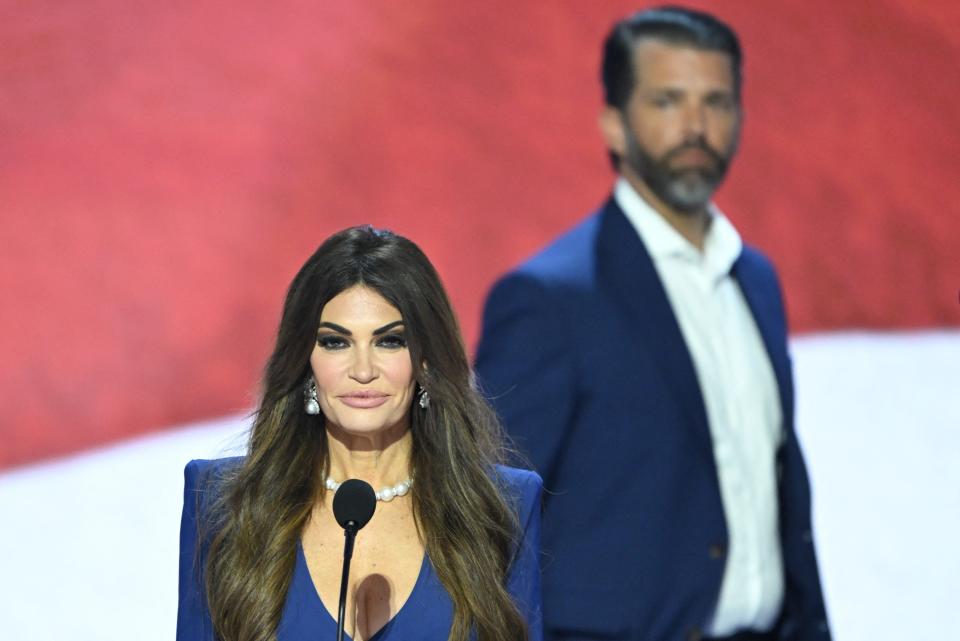
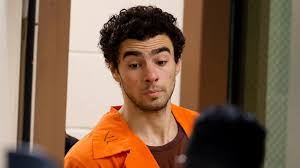
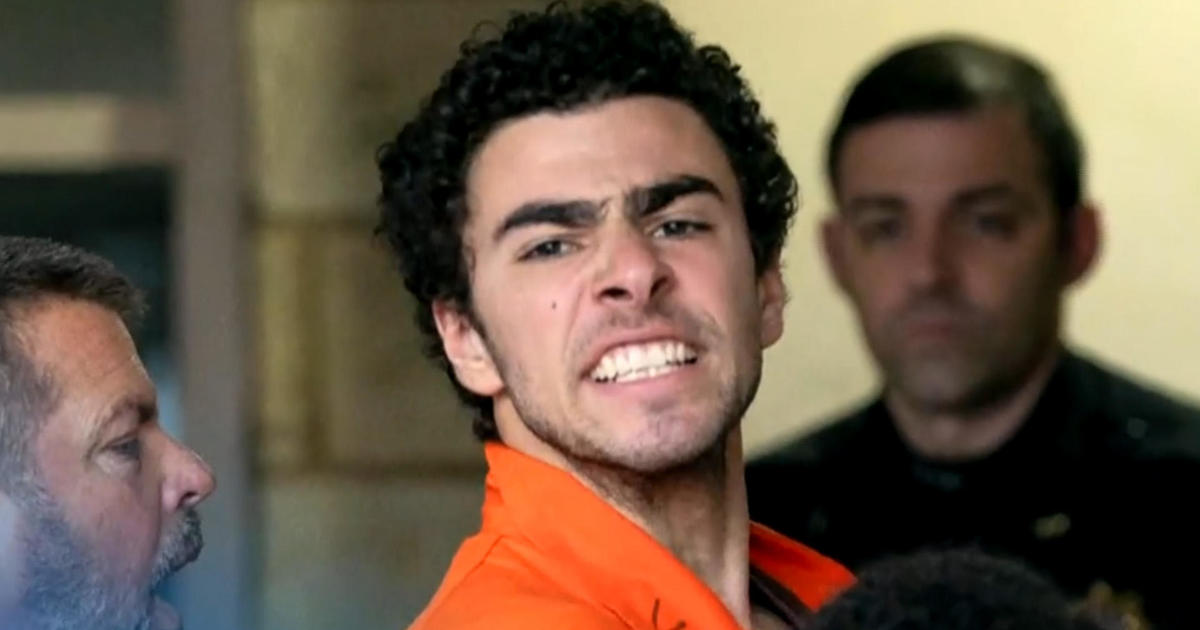

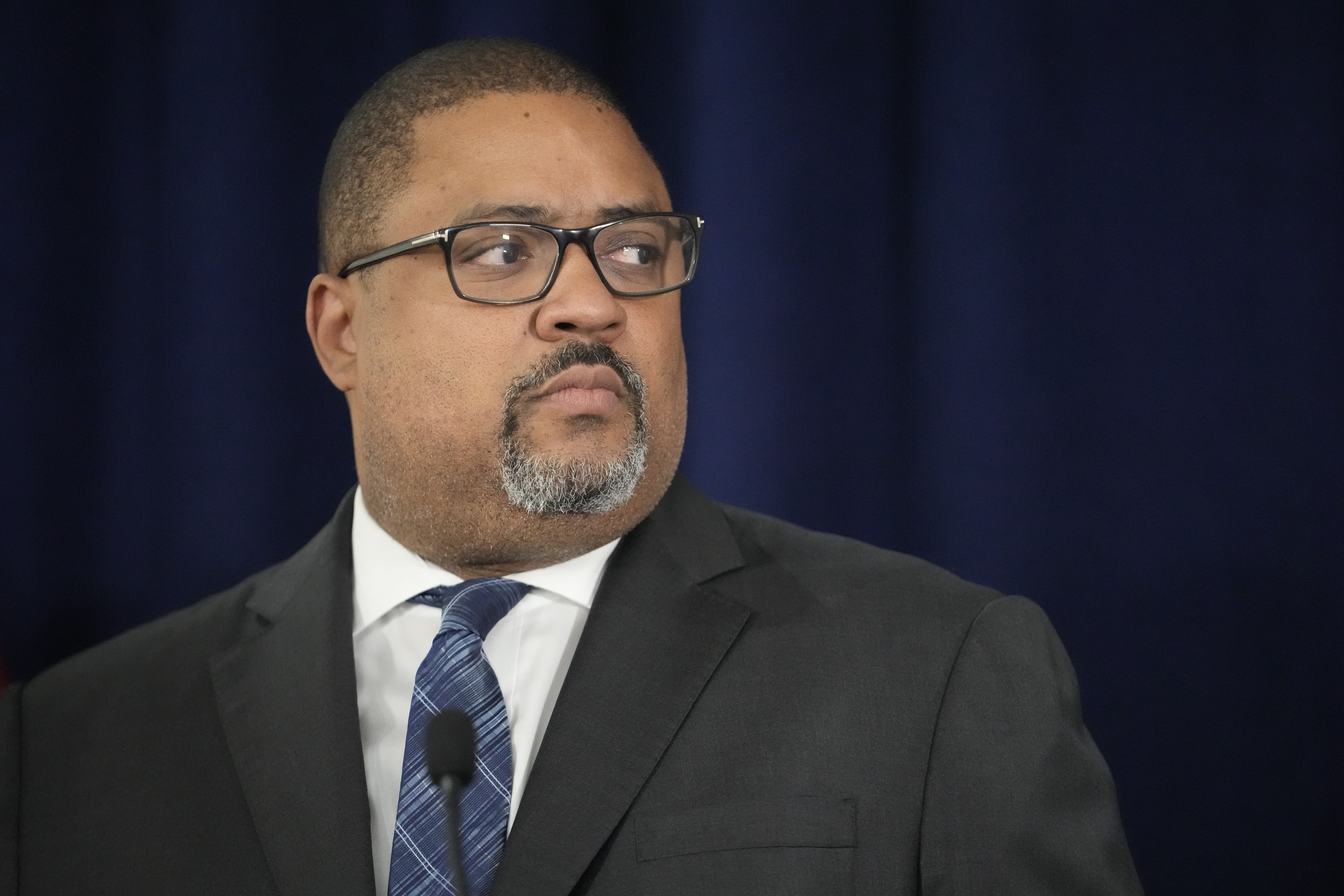

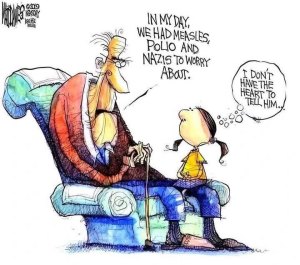 Let me share a few headlines that are giving me some severe heartburn.
 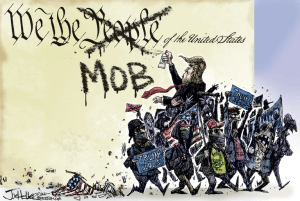 The problem is mostly with “political enemies.” However, it does go deeper than that. This is from Phillip Bump’s column today at the
  President Eject Incontinentia Buttocks rejects reality for a version that suits his malignant narcissism and purposes.
 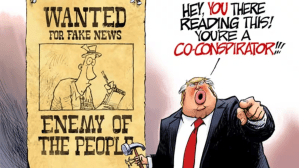 We do have precedent for politicizing the FBI. I remember all of this very well, as well as the entire setup with AG John Mitchell. I had thought laws were put into place to prevent this from happening again. I also was aware that many Republicans at the time thought those laws went too far. Aaron Rupar and Thor Bensure, writing for
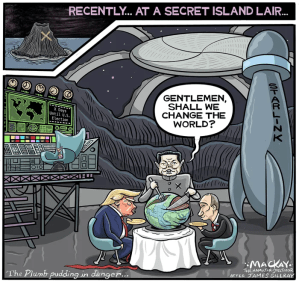 So, my hair is on fire again, although it never really goes out, to be honest. There are warning signs all over the place, and only a small segment of the American populace appears to be aware of all of this. You can read Figliuzzi’s discussion of Nixon’s tricks at the link. The other headline grabber today is how a set of unelected and affirmed idiot billionaires will be going after our Social Security. This is from
 Nothing is Sacred in Trumplandia except Trump and his money. You can read more about the proposed cuts at these links.
 And, in the latest from Corruption and Kleptocracy Central, we have this headline in




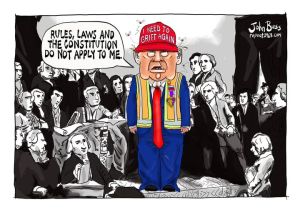
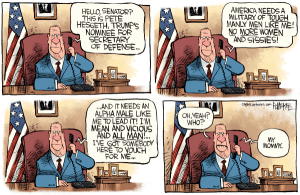 So here’s Pete again. Is Trump still trying to inflict him on our military? You know, the ones that President-Reject
 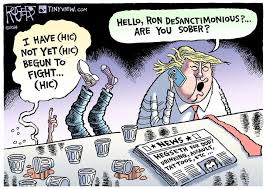 Amanda Marcotte also writes about his love affair with White Christian Nationalism, a truly perverse twist on the New Testament, at
 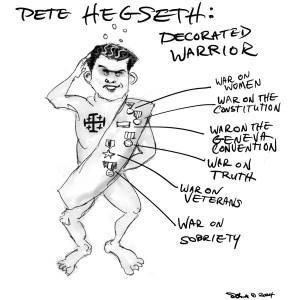 After reading these analyses and their supporting citations, you can only be left with the idea that this man will have no problem turning the military on Americans out of step with his bizarre beliefs. I focus on this because
 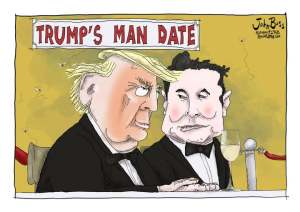 So, what happens with those Concentration Camps once he starts outloading Hispanic Americans? Also, will we ever rid ourselves of Biggest Dickus? More about his funding of the Trump campaign is coming out, and it’s horrifying!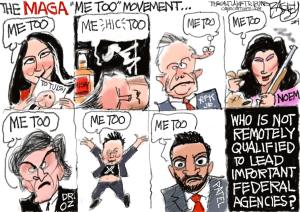
 Those are all very good questions. Senators Elizabeth Warren and Richard Blumenthal are trying to get some changes made to the Insurrection Act right now.
  The current changes asked for by Warren and Blumenthal are outlined here by the
  Trump has picked a deputy for Kristy Noem at Homeland Security. This is reported by
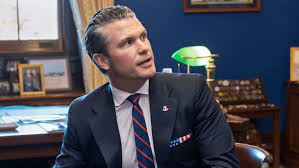
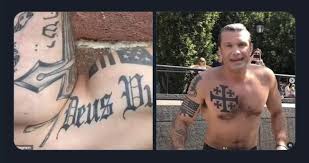
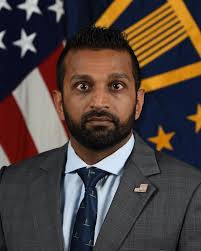


 peej
peej Carissa
 bostonboomer
 dakinikat
 ecocatwoman
 mablue2
 Mama Lopez
 peggysue22
 quixote
 skydancingguestblogger
 Mona (aka Wonk the Vote)



 Sky Dancing
Recent Comments