
Lundi Gras Reads
Posted: February 12, 2018 Filed under: 2018 elections, Afternoon Reads, Women's Rights | Tags: allegations of predatory behavior by Donald Trump, Caroline Thomas, Harvey Weinstein, Krewe D'Etat 2018, lundi gras, mardi gras, Mardi Gras artists, Trump and women 37 Comments Happy Lundi Gras!
It’s the day before Mardi Gras and traditionally a day of resting up to go full out on the big day. I’ll be working since–last time I checked–Indiana doesn’t recognize the day. Unlike the Universities here, Purdue ignores the chance to break the winter blues.
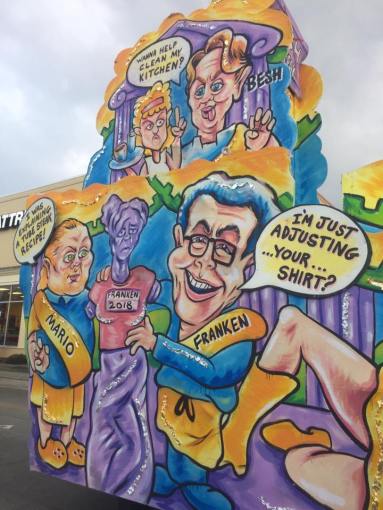
And, it is a bit New Orleans wintry down here. I’m putting up pictures for parades I’ve been missing due to the ongoing sinus crud. These parade pictures are from Krewe D’Etat. It’s always got serious satire going plus I have a friend that does a lot of the pictures and float designs. She’s basically a full time Mardi Gras artist which has to be the best gig ever. She also designs amazing headdresses. Meet Caroline Thomas!
It takes a lot to put on these huge parades. I think a lot of folks get carried away by the sheer spectacle of it all. But, I’d just like to remind you that it takes the creative genius of Caroline and her peers to really capture the sense of it all. Each krewe has its own vibe. It’s a real skill to be able to make art that’s a combination of show and tell.

So, that’s Caroline! And here’s some of her work for Krewe D’etat and Chaos. Enjoy it before I share my reads that have given so much fodder to the satire krewes and all the parade artists for two very long years. I love Caroline’s comment that accompanied her caricatures of “creepy men”.
So, speaking of creepy men,Harvey Weinstein’s office was basically a little shop of predatory horrors that he forced employees to stock.
Among notable examples of harassment cited by the lawsuit:
• Harvey Weinstein told several employees words to the effect of “I will kill you,” “I will kill your family,” and “You don’t know what I can do.” He also asserted that he had contacts within the Secret Service who could take care of problems for him.
• The Weinstein Company, the suit says, “employed one group of female employees whose primary job it was to accompany (Harvey) to events and to facilitate (his) sexual conquests. … One of the members of this entourage was flown from London to New York to teach” his assistants “how to dress and smell more attractive” to him.
• Another group of employees were assigned to “further his regular sexual activity, including by contacting … prospective sexual partners via text message or phone at his direction and maintaining space on his calendar for sexual activity.”• A third set of employees also were forced to facilitate his sexual conquests. These female employees were supposed to help his company produce films and television projects. But despite their skills and stated job responsibilities, he required them to meet with prospective sexual conquests for his own personal interests. “This compelled service demeaned and humiliated them, contributing to the hostile work environment.”
• His use of vulgarity was widely noted in the suit, which described how he would call female employees “c—” or “p—-” when he was angry with them or felt they had done a task poorly or incorrectly. And he also used those terms to scold or degrade male employees. On some occasions, he asked female employees if they had their period, including asking an employee if her tampon was “up too far,” the filing says. In one 2012 incident, he launched into a tirade against a female employee in which he berated her in front of other employees and threatened to “cut (her) loins.”
• Weinstein’s assistants were required to provide childcare for his young children and handle other domestic work for his wife, Georgina Chapman, and an adult daughter.
• Assistants had copies of a document called the “Bible,” which included information about his likes and dislikes, and a list of people to assist arranging “personals,” or sexual activity.
• His drivers in both New York and Los Angeles were required to have available condoms and erectile dysfunction injections in the car at all times.
• The suit says the head of human resources at Weinstein’s company was not empowered to do anything about his ongoing sexual harassment of female employees. Victims were told by the director of HR that he “sympathized” with them, acknowledging that they had a “tough job,” but that there was nothing he could do.

Yeah, that’s pretty much representative of the mind of a psychopath. But, you know, KKKremlin Caligula is pretty disturbed along those lines too. Here’s Jennifer Rubin on Trump and breach of classified information.
Candidate Donald Trump used, more than any other issue, Hillary Clinton’s home email server to argue that she was unfit for office and, moreover, that there were grounds for sending her to jail. The eerie chants, more common in banana republics, to imprison his opponent (“Lock her up!”) would thrill his crowds and reignite the anti-Clinton anger that had gripped Republicans for decades. For less crazed voters, it was an effective reminder of the Clintons’s proclivity to break the rules, to disregard conflicts of interest and to only grudgingly come clean when caught misbehaving. Her offense, in retrospect, seems small and innocuous, in large part because Trump’s defiance of rules, indulgence in massive conflicts of interest and habitual lying in just one year in office dwarf anything (and everything) both Clintons have done in a lifetime in the public eye.
And that brings us to President Trump’s handling and mishandling of classified information. No president has more recklessly exposed the country’s secrets than this one.
Consider that he blabbed code-word intelligence to Russian Foreign Minister Sergei Lavrov and then-Russian Ambassador to the U.S. Sergey Kislyak in the Oval Office. According to national security expert Amy Zegart of Stanford University, “On a scale of 1 to 10—and I’m just ball parking here—it’s about a billion. … The president could have jeopardized a critical source of intelligence on the Islamic State. Not America’s source. Somebody else’s. Presumably from an allied intelligence service who now knows that the American president cannot be trusted with sensitive information.”
Fast-forward to House Intelligence Chairman Devin Nunes (R-Calif.), who cooked up a memo falsely accusing the FBI of omitting information on a warrant application to the FISA court to conduct surveillance on longtime suspected spy Carter Page. Nunes has stubbornly refused to say if he drafted the memo in concert with the White House, but his refusal to deny the accusation speaks volumes. The president, contrary to the pleading of FBI Director Christopher A. Wray and Deputy Attorney General Rod J. Rosenstein, released the memo publicly, sending out to everyone on the planet a document originally labeled “top secret.” (Countless national security experts have explained that “top secret” is usually the designation of material whose release would expose sources and methods of intelligence gathering.) Trump, even before the so-called vetting process, told a lawmaker at the State of the Union address that he intended to release the memo. Keeping our nation’s secrets, as well as releasing his tax records, are hindrances to his self-protection. Therefore, top-secret classification (and personal financial transparency) be damned.
Then, there’s his continued defense of predators and men that commit physical violence on women. It’s undoubtedly because he’s been there done it.
One could barely get a night’s sleep before another White House aide, the speechwriter David Sorensen, was forced to resign after it was revealed that, during a background check, his ex-wife, Jessica Corbett, had told the F.B.I. that he had abused her by, among other acts, putting out a cigarette on her hand and running over her foot with a car.
Trump’s response on social media to these allegations was not entirely surprising. He tweeted his suspicion of the #MeToo movement, saying, “People’s lives are being shattered and destroyed by a mere allegation. Some are true and some are false. Some are old and some are new. There is no recovery for someone falsely accused—life and career are gone. Is there no such thing any longer as Due Process?”
Trump responded with similar fellow-feeling when charges were levelled at Roger Ailes and Bill O’Reilly, late of Fox News, and Roy Moore, the right-wing former judge who had seemed headed to victory in an Alabama Senate race. (Trump, of course, is unforgiving when it comes to Democrats like Al Franken and John Conyers.)
Kellyanne Conway, whose defenses of Trump’s most preposterous statements are sometimes so tortured that they become the stuff of late-night satire, could not bear to back the President on this one. She told CNN that she saw “no reason not to believe” Porter’s former spouses. “In this case, you have contemporaneous police reports, you have women speaking to the FBI under threat of perjury,” Conway said. “You have photographs, and when you look at all of that pulled together, Rob Porter did the right thing by resigning.” This was hardly a condemnation, but, in the context of this White House and these times, she showed, if fleetingly, common sense.
Trump is considered the “most anti-woman President* ever and polls are confirming what women think of him.

Donald Trump wants you to believe he has “great respect” for women, but his words and actions tell a far different story. In fact, Trump may be the most anti-women US president ever.
Case in point: On Friday, Trump defended his former aide Rob Porter after news broke of allegations that Porter had been physically abusive to his two ex-wives, Colbie Holderness and Jennifer Willoughby.
At that point, America had already seen the photo of Holderness with a black eye caused when Porter allegedly punched her. We had heard Porter’s second wife, Willoughby tell us that while married to Porter he had been abusive. He “grabbed me from the shower by my shoulders up close to my neck and pulled me out to continue to yell at me,” she said. Porter has denied these allegations.
…
It’s clear that women are increasingly not buying Trump’s lie that he respects them. According to exit polls for the 2016 election, Trump received the support of 41% of female voters, including 52% of white women. But now it appears Trump is losing favor among women, with a recent Marist Poll showing he not only has just a 33% approval rating among women, but also that 50% of women strongly disapprove of the job he is doing as president.

These twin forces—of class and gender—have established a sharp continuum of white attitudes toward Trump. White men without a college degree remain his foundation, even if the pillar is showing some cracks: Relative to his 2016 vote, Trump’s approval rating in 2017 among this group declined in all 13 states. But given his commanding initial position, Trump retains a very strong hold on those men, drawing 60 percent or more approval from them in each state except Michigan, Colorado, and Minnesota (though he still retains majority support in those).
At the opposite pole, college-educated women remain the engine of white resistance to Trump. In only four of the 13 states (more on them below) did Trump’s approval among college-educated white women exceed an anemic 34 percent. That widespread rejection of Trump keys the Democratic opportunity in 2018 in House seats in information-age, white-collar suburbs in major metropolitan areas.
The two other groups of whites are more conflicted. Among college-educated white men, Trump retains majority approval in five of the states and draws at least 45 percent in four more. The intense backlash against Trump from well-educated white women means that GOP hopes of minimizing their suburban losses may depend on maintaining majority support from college-educated white men—who many Republican strategists consider the audience most likely to snap back to GOP candidates over the tax bill and generally brightening economic picture (the stock market’s tumble this week notwithstanding).
The situation looks even more volatile among white women without a college degree. No group was more central to Trump’s victory, especially in the Rustbelt states that effectively decided the election. (Trump won at least 56 percent of those women in Ohio, Wisconsin, Michigan, and Pennsylvania, according to exit polls.) In 2017, Gallup found, Trump averaged majority approval from these blue-collar white women in six of the 13 states. But that finding highlights the continuing force of regional variation in shaping attitudes about Trump: All six of those states are in the South and Southwest.
In the Rustbelt states that decided 2016, Trump has slipped into a much more precarious position with these women: Gallup put his 2017 approval with them at 45 percent in Pennsylvania, 42 percent in Michigan, and 39 percent or less in Minnesota, Iowa, Ohio, and Wisconsin. Compared to his 2016 vote, his 2017 approval among blue-collar white women in the Rustbelt represented some of his largest declines anywhere—18 percentage points in Ohio and 19 in Wisconsin and Minnesota. That erosion, which intensified during Trump’s effort to repeal the Affordable Care Act, creates the opening for Democrats to contest blue-collar and non-urban House seats this fall through the Midwest and Northeast.

I love the title of this piece in the Kansas City Star. “Rob Porter and the Team Trump men’s club: Accused of mistreating women? You’re hired!”
It’s almost as if domestic violence allegations are a résumé enhancer for the Trump administration.President Donald Trump’s staff secretary, Rob Porter, who had the power to decide what information would cross the commander in chief’s uncluttered desk, was the second top Trump aide to have been accused of past spousal abuse. A third was out before week’s end.Back when Steve Bannon was the new CEO of the Trump campaign, the news broke that he had been charged with domestic violence in 1996. But that in no way diminished his influence with the candidate.Can Team Trump’s indifference to allegations of wife-beating endure in the #MeToo moment? It can, it has and it continues to. White House officials didn’t fire, suspend or otherwise signal they thought any less of Porter after reports that two ex-wives and an ex-girlfriend had accused him of physical abuse. Why would they flinch when that was not news to them?

But let’s not forget!!!
… on Saturday, Trump remained sad for his former aides, tweeting that men can be “shattered and destroyed by a mere allegation.”Presumably, the president can relate. His first wife, Ivana, later withdrew her allegations that Trump had raped her and ripped a handful of her hair out around the time of their divorce. Some 19 women willing to be quoted by name have accused him of harassment and assault in the years since.Trump, who has bragged about grabbing women but denied all specific allegations, is reportedly still looking for a job for former Carl’s Jr. head Andy Puzder, who took himself out of the running to be labor secretary after reports that ex-wife once went on “The Oprah Winfrey Show” and accused him of abusing her. Like Bannon’s ex-wife, she has taken it back.The president also remains in a mutual admiration society with former campaign manager Corey Lewandowski, who was charged with assaulting Breitbart reporter Michelle Fields. Like the charges against Bannon, those were dropped as well.How did all these alleged hotheads slip past the filter? They didn’t.

I can only hope all the blowback from this translates to votes the House and Senate just in time to impeach Pence and Trump using Mueller’s findings. Oh, and with a Democratic Speaker.
What’s on your reading and blogging list today?
(Note: The Day time pictures are Caroline’s and “creepy men”.)
You can find Caroline’s work on Instagram. She goes by C_to_the_line and her website. Also, d’Etat designs are by Ryan Blackwood. The float with Matt Lauer on the front is painted by the very talented Noah Church.

#MeToo and why sex is in no danger
Posted: January 19, 2018 Filed under: Discrimination against women, Feminists, misogyny, Violence against women, Women's Rights 38 CommentsThe status quo is beginning to regroup after the initial onslaught of the #MeToo movement. Of course, it’s more effective to have women to make its case. Keeps everything polite. It’s just a bunch of women with different opinions, right?
Recently, for instance, Catherine Deneuve, who has been a movie star since the 1960s, and her co-signatories lamented the loss of sexual fun if men had to start paying attention to what women want. As Laura Kipnis points out at the end of her excellent article:
It’s the historical amnesia of the Deneuve document that’s so objectionable. To the extent that women’s bodies are still treated as public property by men, whether that means groping us or deciding what we can do with our uteruses, women do not have civic equality. To miss that point is to miss the political importance and the political lineage of #MeToo: the latest step in a centuries long political struggle for women to simply control our own bodies. …
The political requirement of the post-#MeToo moment is insisting that control of our bodies is the beginning of freedom. Not its terminus, but a starting point. Freedom needs to be more than notional, it also needs to be embodied.
Autonomy, freedom, civil rights are the substance of #MeToo.
But I wanted to address the silly end of the spectrum: the concept that somehow sex will become a robotic interaction requiring permission slips signed in triplicate.
The problem is that we (humans) don’t have a reality-based concept of what sex is.
No, really. Hear me out.
One school of thought imagines that it’s anything to do with sex organs. So, if sex organs are involved, rape and torture are somehow about sex. As if anyone spends their days dreaming about how to be brutalized. To paraphrase Kipnis a bit, “It sounds like an especially Catholic form of [sex], involving much mortification of the flesh.”
The intense stupidity of that definition has led to the recent refinement centering consent. Sex is still about using sex organs, but it has to be preceded by the people involved saying, “Oh, awright already.”
That means out-and-out crimes can’t hide behind sex, but it doesn’t solve the problem of jerks or of the social power they hold. Jill Filipovic wrote an insightful article pointing out that “sex in a misogynist world” has thousands of ways of giving women colorless unsatisfying experiences at best. They may not be assault, but they have the same philosophy: women don’t count.
#MeToo exploded at that attitude. The movement wants the end of the entire steaming pile of crap, and that’s what has some people so worried. They may not really see why sex crimes are crimes and not sex, but they’re learning to shut up about it. They’ve heard of the concept that the woman should be getting something she wants out of sex and they’re so broadminded they’re fine with that if it doesn’t require anything from them.
But the #MeToo movement is also objecting to, well, what can you call it but plain old rudeness? That lack of consideration you dump on worthless people because there’s not a damn thing they can do about it. Where will it all end? (Yes, of course those same men are quite capable of being polite to bosses and policemen, but women are so weird and mysterious, you know? They don’t understand jokes. They take offense at mistakes.) Nobody will be able to do anything and you’ll never get any sex again.
(In one limited respect it is a valid concern. We’re dealing with a scale that goes from criminal to socially unacceptable to rude. At the nether ends of the scale, the sorts of situations where exposure or job loss or jail are good consequences, due process is a real concern. Margaret Atwood was jumped on by the twitverse for having the temerity to point that out. Due process may not always entail the full nine legal yards. It might be less formal ways of verifying the truth of complaints. But whatever its precise form, the point is to avoid lumping the innocent in with the guilty. How can anybody, whose whole complaint is an inability to find justice for themselves, insist on depriving others of justice?)
So, to return to the worry that sex as we know it will vanish and nobody will ever get any again, that would be true. If sex is something to get, there’s no part of that spectrum that’s any use to the thing being got. Not the relatively less harmful end of intravaginal masturbation, and growing worse all the way down till it disappears into criminal types of getting. That’s why Rebecca Traister in her excellent article points out that consensual sex can still be bad and quotes Dusenbery saying that what’s needed is to “promote a specific vision of what sexual equality could entail.”
Well, here’s my version of that vision.
Have you ever been with a group of good friends, sharing jokes that just get funnier and funnier until you’re all helpless with laughter? Possibly the individual jokes aren’t even all that hilarious, but the mood catches everyone and gets stronger in the sharing. If you told yourself the same joke in an empty room, it might be funny but you’d barely smile.
You see where that analogy is headed. That’s how to view sex. It’s a feeling of play, and fun, and delight, and pleasure that’s gets stronger in the sharing. And it’s definitely not the same by yourself in an empty room. Sex organs help trigger the feeling, but the feeling is the point, not the organs. Just as breath and vocal cords enable laughter. The feeling of fun is the point, not vocal exercise.
Another way the analogy is useful is to demonstrate that sex is not and cannot be on any spectrum where sharing is impossible. If the boss tells a joke and everybody has to dutifully laugh, it’s not fun at all. And that’s analogous to the relatively benign, masturbatory end of the scale of unshared sex. There’s no equivalent for the tortured end because nobody ever terrorizes someone into immobility and chokes puffs of air out of them and tries to call that laughter.
Power differentials preclude sharing, and the bigger the difference the less sharing is possible.
But wait, I hear objections at the back. Men get off. They don’t care about the rest of these fancy sex feelings.
That would be like saying sneezing is the same as laughter. It is not. Laughter happens when you’re having fun. Sneezing, like orgasm without feelings, is just a reflex. It’s a release, but it’s not exactly fun. The two are not the same. One doesn’t feel like happiness. The other does.
Besides, if getting off was the only requirement, everybody would simply masturbate. Much simpler, if the result was the same. It’s not. Instead, women turn themselves inside out and their lives upside down in the hope of sharing good time with men. And men bend the whole society into making sure women need them and will be there for them. If men didn’t care about loving feelings, they wouldn’t need to try to turn women into some kind of domestic pets trained to provide them.
Trying to keep humans as sex pets requires crosslinkage between dominance and sex. That may work to justify keeping human pets, but it doesn’t change the fundamental incompatibility between sharing fun and forcing submission. You can crosslink the use of sex organs and dominance all you want, it’ll never bring happiness. It’s like crosslinking a bicycle and a sledgehammer and expecting the combination to bake a cake. None of those things work together or achieve any result. It’s a fundamental error about what sex is.
The result is an irony floating on top of the cosmic waste that is patriarchy: you’ll only get the highs it promises when you ditch it.
The thing is, love and life and laughter will always pull people like the sun pulls the earth. People will always stream toward sex that feels good and away from pain and humiliation. Sex is in no danger. The patriarchy is.
Crossposted from Acid Test
Tuesday Reads: Jeff Sessions Dog Whistles Dixie
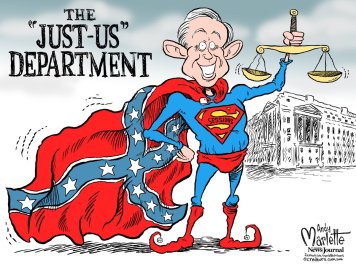
Posted: January 10, 2017 Filed under: 2016 elections, Black Lives Matter, Psychopaths in charge, public hangings, Rule of Law, Voting Rights, War on Women, Women's Rights | Tags: Jeff Sessions Hearings 54 Comments The first of our new theocratic, Putin-loving, grifter overlords is sitting in front of a Senate committee with absolutely no vetting being grilled and testified against by his peers. Neoconfederate radical christianist Senator Jeff Sessions can sure tell some whoppers and he sure does whistle Dixie.
In an unprecedented move, Senator Corey Booker has chosen to testify about Session’s treatment of the law and of black people.
Democratic Sen. Cory Booker is set to testify against Republican Sen. Jeff Sessions Wednesday in an unprecedented move during his attorney general confirmation.
This would be the first time in Senate history that a sitting senator will testify against another sitting senator for a Cabinet post during a confirmation.”I do not take lightly the decision to testify against a Senate colleague,” Booker said. “But the immense powers of the attorney general combined with the deeply troubling views of this nominee is a call to conscience.”
Sessions’ confirmation hearings, which started Tuesday, are expected to raise additional questions on old allegations of racism from his past. When Sessions was a 39-year-old US attorney in Alabama, he was denied a federal judgeship because the Senate Judiciary Committee heard testimony during hearings in March and May 1986 that Sessions had made racist remarks and called the NAACP and ACLU “un-American.”
Booker told CNN on Tuesday morning shortly before Sessions’ hearing started that it was “consequential moment.”
“This is one of the more consequential appointments in American history right now given the state of a lot of our challenges we have with our policing, a lot of challenges we have with race relations, gay and lesbian relations,” Booker said.
LIVE Trump confirmation hearings: Jeff Sessions’ first hearing
Representative John Lewis will also testify against Sessions along with my Congressman Cedric Richmond who will represent the Black Caucus and me for that matter.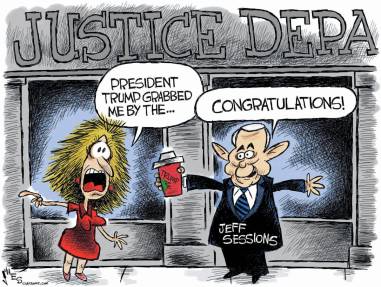
Several other prominent African-American figures in addition to Booker also plan to testify against Sessions, including two members of the House: Rep. John Lewis, D-Georgia, a leader of the civil rights movement of the 1960s; and Rep. Cedric Richmond, D-Louisiana, the chairman of the Congressional Black Caucus.
The NAACP has also strongly opposed Sessions’ nomination, calling him “a threat to desegregation and the Voting Rights Act.”
Sessions is a hodgepodge of bad things. He’s failed to disclose his oil interests and ethnics experts are taking issue.
Attorney general nominee Jeff Sessions did not disclose his ownership of oil interests on land in Alabama as required by federal ethics rules, according to an examination of state records and independent ethics lawyers who reviewed the documents.
The Alabama records show that Sessions owns subsurface rights to oil and other minerals on more than 600 acres in his home state, some of which are adjacent to a federal wildlife preserve.
The holdings are small, producing revenue in the range of $4,700 annually. But the interests were not disclosed on forms sent by Sessions to the Office of Government Ethics, which reviews the assets of Cabinet nominees for potential conflicts of interest.
 He is currently up on the stand doing things like telling Dianne Feinstein that he really thinks Roe v. Wade is unconstitutional and badly decided but it’s established law. He’s explaining his vote against laws to protect women victims of violence as being against the establishment of the rights of Native Americans to hold trials against accused rapists in their own courts. He’s just a big ol’ bug hiding nasty fangs and a poison sac right out there for every one to see.
You may want to read the story of Sessions and his role in prosecuting the Klan to really understand how deep his southern roots go. Sessions has also testified he loathes the clan today. Sessions apologists hold this case up as proof he’s really not all that racist.
letter from 23 former assistant attorney generals cited the fact that he had “worked to obtain the successful capital prosecution of the head of the Alabama Ku Klux Klan” as evidence of his “commitment to the rule of law, and to the even-handed administration of justice.” The Wall Street Journal said that Sessions, “won a death-penalty conviction for the head of the state KKK in a capital murder trial,” a case which “broke the Klan in the heart of dixie,” and The New York Post praised him for having “successfully prosecuted the head of the state Ku Klux Klan for murder.” Grant Bosse wrote in the Manchester, New Hampshire, Union Leaderwrote that “when local police wrote off the murder as a drug deal gone wrong, Sessions brought in the Justice Department’s Civil Rights Division, and brought Hays and the Klan to justice.”
Sessions himself recently listed the case as one of the “ten most significant significant litigated matters” he had “personally handled” on his Senate confirmation questionnaire. And in 2009, Sessions told National Review that there had been a campaign to “smear my record,” whereas in fact, he had “prosecuted the head of the Klan for murdering somebody.”
No one involved in the case disputes that Sessions lent his support to the prosecution. “Not all southern United States attorneys welcomed civil-rights division attorneys into their districts back then,” said Barry Kowalski, a former civil-rights division attorney who was one of the main lawyers on the investigation, and who defended Sessions in his 1986 confirmation hearing. “He did, he cooperated with us completely.”
However, in seeking to defend Sessions from charges of racism, Sessions’s allies, and even Sessions himself, seem to have embellished key details, and to have inflated his actual role in the case, presenting him not merely as a cooperative U.S. attorney who facilitated the prosecution of the two Klansmen, but the driving force behind the prosecution itself. The details of the case don’t support that claim.
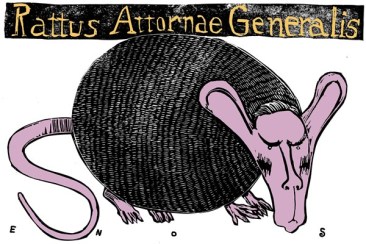 You can read the details in the feature I’ve linked to which came for The Atlantic.
The Sessions hearings are on CSPAN if you want an uninterrupted view of it all. The Hill has a list of five things to watch. This first one is as important as questions on policing and voting rights.
Does he detail Trump’s plans on immigration?
Sessions is known as the foremost immigration hawk in the Senate, so you can bet he’ll be pressed on an issue that has liberals on edge in the age of Trump.
Expect Democrats to come armed with statistics challenging the notion that illegal immigrants are flooding across the southern border; that crime is out of control among illegal immigrants; and that President Obama has not done enough to deport those in the country illegally who have committed other crimes.
In addition, while it won’t necessarily fall under his purview at the Justice Department, Democratic senators will likely look to score political points by challenging Sessions on the complications of building a border wall.
And they’ll likely look to get him to say that he won’t move to deport, en masse, the estimated 10 million illegal immigrants in the country, and in particular the estimated 700,000 young undocumented immigrants protected under the Deferred Action for Childhood Arrivals program.
As president, Trump could do away with that program by executive order.
 I have to work and grade today but will try to follow comments on Twitter. They are plentiful.
I could use a few donations if you have a few bucks to spare. Our TypeKit subscription is up in January. It’s not a lot, but every little bit you can help me defray would be great. It basically keeps our nice logo up there in its cursive glory
So, anyway, I’ve got to go warp minds and grade papers. BB’s successfully moved to her new apartment too! She’s patiently waiting for the cable guy. JJ is still with her mom in the facility and is having up and down days. We’re just happy to have you all here for breaks in our mundane lives!!!
What’s on your reading and blogging list today?
Monday Reads: The Supremes Speak
Posted: June 20, 2016 Filed under: Afternoon Reads, SCOTUS, U.S. Politics, War on Women, Women's Healthcare, Women's Rights | Tags: Clarence Thomas, SCOTUS, Texas Trap Laws 26 CommentsGood Afternoon!
I’m in an absolute haze from a summer cold that popped up yesterday and sent me directly to bed. I’m trying to write and work right now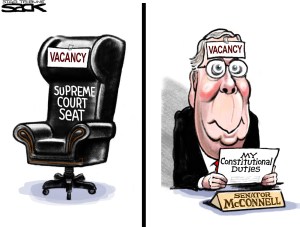 but it’s not easy at all. I want to try to discuss a lot of upcoming things that will be important including the SCOTUS decision on the Texas Trap laws regarding abortion and abortion clinics. These law certainly create an undue burden and they reflect specific religious view rather than medical or biological science. Here’s a few reads to prepare us all because it’s important for all of us to understand this basic constitutional right.
Abortion opponents regularly talk as though no restriction is off the table when it comes to stripping away reproductive rights. And supporters of abortion rights don’t always set them straight. If we don’t know what our established rights are, we can’t defend them. Pro-choicers need to know why abortion is a constitutional right and what boundaries the U.S. Supreme Court has set out to protect it.
1. Abortion is protected by the rights to bodily integrity and to make decisions about family. The Court explained that decades ago.
The 14th Amendment prohibits states from depriving a person of liberty without due process of law. A person has the right to end a pregnancy without undue interference from the government because that right to liberty includes (1) the right to make decisions about family and (2) the right to bodily integrity.
However, in order to portray abortion rights as illegitimate, conservatives like to argue—inaccurately—that the Court legalized abortion in Roe v. Wade by inventing a right to privacy that is not grounded in the Constitution’s actual text.
In the pre-Roe contraception case Griswold v. Connecticut (1965), the Court did hold that “penumbras, formed by emanations” or various interpretations of the First, Third, Fourth, Fifth, and Ninth Amendments protect a right to privacy. But in deciding Roe, the Warren court located the right to privacy in the 14th Amendment’s explicit protection of the right to liberty. Regardless, the Court’s understanding of the rights that protect reproductive freedom expanded beyond just privacy decades ago.
Privacy is barely mentioned in Planned Parenthood v. Casey, which established the current law governing abortion rights more than 20 years ago. “The controlling word in the cases before us is ‘liberty,’” the decision explained. It was settled law prior to Roe that liberty includes “the right to make family decisions and the right to physical autonomy.”
Privacy is also a constitutional right, and it was indeed violated by the laws at issue in Roe and its companion case,Doe v. Bolton. Those laws required a woman seeking an abortion to share her reasons for wanting the procedure with legal or medical authorities to have any hope of receiving legal abortion care. However, the law and discourse around privacy at the time of Roe implied a woman should be permitted to use contraception or end a pregnancy because the state should not interfere in decisions made in secret with the permission of her doctor, husband, father, pastor, or others. Casey instead properly recognized that the 14th Amendment protects a person’s right to control her body and destiny.
So why has the idea persisted that all we’ve got is a privacy right made up out of thin air? A counterintuitive and less textually based right serves abortion opponents, but abortion rights advocates also have a history of telling us abortion restrictions are primarily a threat to privacy. As William Saletan documented in Bearing Right: How Conservatives Won the War on Abortion, in the run-up to Casey, pro-choice leaders emphasized privacy on the advice of pollsters and political consultants to appeal to anti-government, anti-welfare, anti-tax, and anti-integration sentiments. While reproductive rights lawyers argued to the Supreme Court that the Constitution’s protection of autonomy, bodily integrity, and equality protected abortion access, outside of court pro-choice leaders told the public the right at stake was privacy. But, ultimately, the Casey decision provided a much fuller discussion of why abortion is constitutionally protected by rights beyond privacy.
Abortion is protected by the due process clauses of the Fifth Amendment (which restricts the federal government) and the 14th Amendment (which was added to the Constitution to restrict the states). As Casey explained, “It is a promise of the Constitution that there is a realm of personal liberty which the government may not enter.” Using the force of law to compel a person to use her body against her will to bring a pregnancy to term is a violation of her physical autonomy and decisional freedom—which the Constitution does not allow.
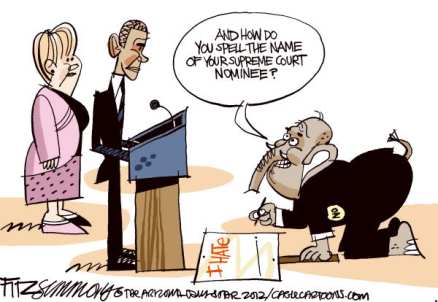 Follow the link to read about the other two basic rights that include:” 2. Any pre-viability ban is unconstitutional. Period.” and “3. Casey‘s “undue burden” standard is a meaningful protection of abortion rights when courts apply it properly.”
There’s no doubt that the Texas Trap Law creates an “undue” burden. Clinic closures have left the few remaining clinics overwhelmed.
The war on abortion access in Texas has already fundamentally shifted the landscape of women’s lives in the state. Now, the fallout continues: The closure of Planned Parenthood (PP) clinics in the state—which once served as primary sources of reproductive health care for women there—has left the few clinics remaining in west Texas underfunded, understaffed, and overwhelmed by demand.
According to new research, 60 percent of women receiving a low salary who were of reproductive age accessed health care through PP before the cuts and defunding which took place in 2013. The majority of those patients have since been directed to Texas Tech University and Midland County Health Services (MCHS) after PP’s clinics in west Texas closed—increasing demand at an overwhelming rate for their capacity to provide services.
“There are women [who] need these services but can’t afford them and we see as many as we can,” Michael Austin, director of MCHS, told Women’s Health Policy Report. “But the state program to help these folks along has basically evaporated. So I’m afraid there are probably a lot of folks flying under the radar who need care and aren’t getting it.” Austin pointed to the challenges of seeking funding in a state that has “eliminated or severely messed up” many of their programs which provide reproductive health care to women.
In 2011, the Texas State Assembly passed legislation which blocked funding to women’s health clinics, including Planned Parenthood, and cut the state’s family planning budget by two-thirds. Two years later, the draconian anti-abortion bill known as HB2 was signed into law by Governor Rick Perry, putting in place numerous obstacles meant to shutter clinics and restrict women’s access to safe and legal abortion. HB2 requires that abortion providers have admitting privileges at a local hospital and clinics are licensed ambulatory centers. It also bans surgical abortion after 20 weeks and medication abortion after seven. (Medication abortion is the most cost- and time-effective abortion procedure.)
HB2’s impact was immediate and drastic. 82 percent of family planning clinics closed. The number of abortion practitioners decreased by over 75 percent. Over half of the clinics performing abortion closed, which in turn drastically increased the time it would take for women to make an appointment to 28 days— essentially rendering the option of medication abortion moot. When it comes to clinics, Texas is in crisis.
The Supreme Court has declined to hear the Connecticut law banning assault weapon as well as the challenge to other state laws. This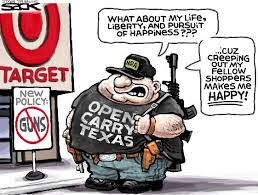 leaves the bans in place.
SCOTUS will look at certain key rights of jailed inmates that have illegal immigration status.
The Supreme Court announced Monday that it will take up a case exploring when immigrants detained solely for immigration violations have the right to be released from jail.
The justices agreed to consider a federal appeals court decision that essentially found detained immigrants were entitled to a bond hearing after six months in custody and every six months thereafter.
The high court’s announcement comes as immigrant rights advocates are awaiting a Supreme Court decision on the legality of President Barack Obama’s executive actions granting quasi-legal status and work permits to millions of immigrants who entered or stayed in the U.S. illegally.
In that case, the Obama administration is aligned with most immigrants rights groups. However, in the case the court said Monday that it would take up, the Obama administration is pressing for fewer rights for detained immigrants. In fact, the administration is asking the justices to overturn the 9th Circuit Court of Appeals ruling that found immigrants have the right to regular review of their detention.
The newly-accepted case, Jennings v. Rodriguez, could also explore when immigrants accused of ties to terrorism have to be released if authorities are having difficulty deporting them.
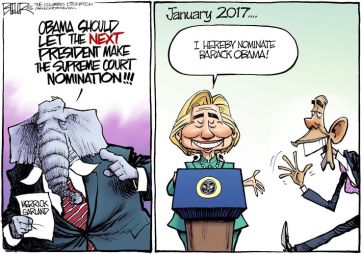 SCOTUS blog has some basic information on the remaining cases in the docket. Here’s a few of the remaining 13.
Between tomorrow morning, when the Justices will take the bench at ten o’clock, and the end of June, the Court is expected to issue thirteen rulings in cases involving everything from tribal-court jurisdiction to abortion, immigration, and the scope of federal laws prohibiting political corruption. Here are summaries of each pending case:
Dollar General Stores v. Mississippi Band of Choctaw Indians (argued December 7, 2015). This case stems from accusations by a thirteen-year-old member of the tribe that a manager at a Dollar General store within the tribe’s reservation had sexually molested him while the boy was interning at the store. The child and his parents filed a lawsuit against the manager and the store in tribal court, arguing that the store was liable for the manager’s conduct. The issue before the Court is whether the tribal court has jurisdiction over tort claims against defendants, like Dollar General, who are not members of the tribe.
Fisher v. University of Texas at Austin (argued December 9, 2015). This case, a challenge to the university’s consideration of race in its undergraduate admissions process, is on its second trip to the Court. In 2013, the Court sent the case back to the lower courts for a more critical look at whether the university really needed to consider race to achieve a diverse student body. After the Fifth Circuit once again upheld the policy, the Court agreed to weigh in. Unlike some of the Court’s other high-profile cases this Term, no one expects the Court to deadlock: Justice Elena Kagan is not participating, which in the wake of Justice Antonin Scalia’s death leaves the Court with just seven Justices to decide the case.
Utah v. Strieff (argued February 22, 2016). When a police officer stops a pedestrian in violation of the law, asks him for identification, discovers that there is a traffic warrant for his arrest, arrests him, and in the process of searching him discovers drug paraphernalia and methamphetamines, can the evidence found in the search of the pedestrian be used against him? Edward Strieff argues that it cannot: because the police officer’s stop was illegal, then anything obtained as a result of the stop is also tainted. The state, on the other hand, contends that the evidence should be admitted because it resulted from the lawful warrant for his arrest, rather than the illegal stop.
Taylor v. United States (argued February 23, 2016). The petitioner in this case, David Taylor, was part of a Virginia gang that robbed drug dealers. The two robberies that led to this case, however, did not yield any drugs – only cellphones, jewelry, and a small amount of money. Taylor was indicted on federal charges that he had violated the Hobbs Act, which punishes robberies and extortion but applies only when the defendant “obstructs, delays, or affects commerce or the movement of any article or commodity in commerce.” The question before the Court is whether the federal government is required to prove facts to show that the defendant’s conduct actually affects commerce.
Voisine v. United States (argued February 29, 2016). Stephen Voisine and William Armstrong, the other petitioner in this case, both pleaded guilty in state court to misdemeanor assaults on their respective domestic partners. Several years later, each man was charged with violating a federal law that prohibits the possession of firearms and ammunition by individuals who have previously been convicted of a misdemeanor crime of domestic violence. Voisine and Armstrong contend their state convictions do not automatically qualify as misdemeanor crimes of domestic violence because the state-law provisions can be violated by conduct that is merely reckless, rather than intentional.
Whole Woman’s Health v. Hellerstedt (argued March 2, 2016). This is a challenge to the constitutionality of two provisions of a Texas law regulating abortion in that state. One provision requires doctors who perform abortions to have privileges to admit patients to a local hospital; the other requires abortion clinics to have facilities that are comparable to outpatient surgical centers. Texas contends that these new laws are constitutional because they were intended to protect women’s health, while the challengers argue that the law was actually intended to close most clinics and therefore limit women’s access to abortions.
RJR Nabisco v. The European Community (argued March 21, 2016). The issue in this case is whether and to what extent the Racketeer Influenced and Corrupt Organizations Act (RICO), a 1970 law that was originally enacted to target organized crime, applies outside the United States. The European Community filed a lawsuit in the United States, seeking to hold RJR liable for what it says is the company’s role in an international money-laundering plot that harmed European countries. RJR counters that nothing in the law suggests that Congress intended it to apply to a situation like this. Justice Samuel Alito is almost certainly writing the Court’s opinion in this case, because he is the only Justice who has not yet written for the Court’s March sitting; based on the oral argument, that could bode well for RJR.
United States v. Texas (argued April 18, 2016). This case is a challenge to an Obama administration policy, announced in November 2014, that would allow some undocumented immigrants to apply to stay in the country and work legally for three years. Before the policy could go into effect, Texas and a large group of other states went to court to block its implementation, arguing that the administration lacks the authority to issue a policy like this. But before the Supreme Court can weigh in on that question, it will also have to agree that the states have the legal right, known as “standing,” to challenge the policy at all; the lower courts ruled that they did, because at least Texas would incur additional costs from the undocumented immigrants who would become eligible for driver’s licenses if the policy goes into effect.
Birchfield v. North Dakota (argued April 20, 2016). Twelve states and the National Park Service impose criminal penalties on suspected drunk drivers who refuse to submit to testing to measure their blood-alcohol levels. The question before the Court is whether those penalties violate the Fourth Amendment, which only allows police to “search” someone if they have a warrant or one of a handful of exceptions to the warrant requirement applies. Three drivers from North Dakota and Minnesota argue that neither of those conditions is met, and so the laws must fall.
Encino Motorcars v. Navarro (argued April 20, 2016). This case requires the Court to weigh in on the interpretation of the Fair Labor Standards Act, which generally requires employers to pay overtime to employees who work for more than forty hours in a week but also contains a variety of exceptions – including for a salesman whose primary job is selling or servicing cars. The respondents in this case are service advisors at a car dealership, who argue that they are not included in the exemption and are therefore entitled to overtime.
You can check out the rest on the link to SCOTUS blog. So, there’s a lot of interesting things coming down the pipe. We’ll definitely be following a lot of them.
There’s one piece of SCOTUS gossip that you might be interested in today. Check out this lede by David Badash: “DC Insider Report SCOTUS Justice Clarence Thomas Thinking of Retiring Throws Twitter Into Frenzy.”
The Washington Examiner Sunday afternoon posted a piece by DC insider columnist Paul Bedard that claims uber-conservative Supreme Court Justice Clarence Thomas “is mulling retirement after the presidential election, according to court watchers.” Those “court watchers” of course are unnamed, so the actual source of the claim is unknown.
It could be true, it could be false, but the implications of course are tremendous. Assuming Republicans in the Senate successfully keeps their vow to not confirm any SCOTUS justice nominated by President Obama, and wait until the next president takes office, this would mean the next president would automatically nominate not one but two justices to the nation’s top court, controlling its destiny for decades.
So naturally, Clarence Thomas began trending on Twitter.
Follow the link for the Twitter Frenzy.
What’s on your reading and blogging list today?
h/t to Delphyne
Saturday Reads: white privilege and the enabling of rape culture
Posted: June 11, 2016 Filed under: Afternoon Reads, Rape Culture, Reproductive Health, Reproductive Rights, Vagina, Violence against women, Women's Rights | Tags: Brock Turner, rape culture, violence against women 24 Comments Good Afternoon!
(Rape and sexual assault trigger warnings)
I went to undergraduate school at the University of Nebraska in Lincoln, Nebraska where I immediately joined the University Women’s Action Group and followed the work I did in high school as a volunteer for what was the the nascent Rape Crisis line set up by the Junior League in Omaha. I had been assaulted in the choir room at my high school when I was a junior by two seniors. I was forcibly held down for a period of time and had bible verses and other things shouted at me. It made me realize how vulnerable every girl and woman is to the pack mentality of white men and boys with privilege who are taught by their parents, religions, coaches, teachers and friends to go out and grab anything they want because they are told they are the masters of the universe and entitled to go for it.
I worked hard to change the old laws in Nebraska when I hit college so that violent crimes against women and children would be removed from the Property Crimes Divisions of police departments, so that female police officers were assigned to victims, so that women didn’t need 3 witnesses to their assaults to even be considered assaulted rather than just telling tales, so that husbands could be found guilty of rape, and so that women’s sexual history and facts not pertinent to the rape would not be brought up to slander the victim in court. I taught basic self defense and lectured at sororities which mostly meant telling my peers to assume they’d be assaulted at some time so here’s ways to lower your risk.
I wound up helping a friend who had been raped in the stacks at the library through the legal process that re-victimized her. She was afraid to even report the rape since she had been smoking pot earlier in the evening. This was in the mid 1970s. My lecture to those girls was to basically warned them to avoid the male athletes; especially the football players and travel and stay in packs in well-lit areas. But how and why should you tell any student to avoid studying in the library? A serial rapist was later found to haunt there and it proves women can’t assume they are safe anywhere, and that thought rules our lives.
I had planned to be a lawyer at that time and the way the system treated women and children that were assaulted by men was at the top of my list of things I intended to change. At 60, a full forty years later after my core activism, I know now that even systemic changes do not change men like Judge Aaron Persky. He’s getting some blow back but, he just won another term. It also hasn’t apparently changed how many boys are raised in this country.
 I’d like to think that my work at that time made women and children safer but then I read about Brock Turner, Stanford University where rapes are frequent , Turner’s parents, and our justice system that still metes out justice based on levels of privilege.
Yes, it’s that post. It’s where we confront a society that raises and enables rapists. We face a judge and court system that fails when it comes to privileged white males. My oldest daughter’s first labor day weekend at LSU turned into an ER visit when she was roofied at a local college bar and temporarily paralyzed. Fortunately, she was with other girls and some properly-raised boys took her to the hospital. Believe me, I never lectured my daughters on much of anything because my mother raised me in fear of all kinds of things like being captured for white slavery. You kinda stop listening to it after awhile and I never wanted that to happen so I chose my lectures carefully. I lectured my daughters on never, ever leaving their drinks uncovered or unattended at any time. Gigging in the French Quarter left me knowing that the tricks of Bill Cosby live on. Let me tell you about a local eye surgeon on that account … but that’s for another day.
The deal is that we still live in a world where many men think they have a right to anything they want including the bodies of women. To quote one of my favorite lyricists, “you have to be carefully taught.”
Well, it’s as good a day as any to discuss how a judge in California enabled a rapist after a jury of his peers delivered a guilty plea on 3 felony accounts. The six month sentence–which appears to look more like a three month sentence–has outraged the American Public. Follow this link to CNN for a good understanding of the basics of the case.
Please be aware that this post will contain information that may trigger visceral responses in any of our readers that have been sexually assaulted. I know that we have quite a few survivors here, so I want to make it clear that this post and the links may upset you.
Believe me, I’m amazed that our country is finally at the point where a sexual assault case can garner so much attention. I don’t know what got us to that point. I only know that it’s been a long time coming. One in five women and one in thirty three men will be the victims of sexual violence at least once in their lives. An American is sexually assaulted every two minutes. That is no small number.
The victim’s statement to Brock Turner, the former Stanford student convicted of sexually assaulting her, has been viewed online millions of times since last week. A CNN anchor read the statement, in full, on television. Representative Jackie Speier, a California Democrat, read it aloud on the House floor. The case, which resulted in a six-month jail sentence and probation for Turner, has touched off furor among those who say the punishment is too light, and sparked vigorous debate about the intersection of sexual assault, privilege, and justice.
This is an astounding moment, in part because it’s so rare for sexual violence, despite its ubiquity, to garner this kind of attention.
“It’s incredible,” said Michele Dauber, a Stanford Law School professor who has pressed for the recall of the judge who sentenced Turner. “Why did that happen? First of all, it’s the tremendous power and clarity of thought that is reflected in the survivor’s statement.”
“She is helping people to understand this experience in a visceral and clear way,” Dauber added. “And she’s brushing away all the really toxic politics around campus assault that have built up. People have said, ‘How can we really believe these women? It’s his word against hers.’ This men’s rights movement has emerged. And there’s been a lot of rage happening out there. Then, whoosh, [this statement] really reframed it.”
It wasn’t just the statement. In March, Turner was convicted of three felony counts: sexually penetrating an unconscious person with a foreign object, sexually penetrating an intoxicated person with a foreign object, and assault with an intent to commit rape. If it’s rare for someone to report a sexual assault in the first place, it’s even more unusual for that report to result in a conviction. In the vast majority of sexual assaults the perpetrators never serve time in prison—97 percent of cases, an analysis of Justice Department data by the anti-sexual violence advocacy group RAINN concludes.
Another unusual component of the case at Stanford: There were eyewitnesses. Two graduate students were riding their bikes through Stanford’s campus when they saw, “a man on the ground, thrusting toward a body,” The Mercury News reported in March.
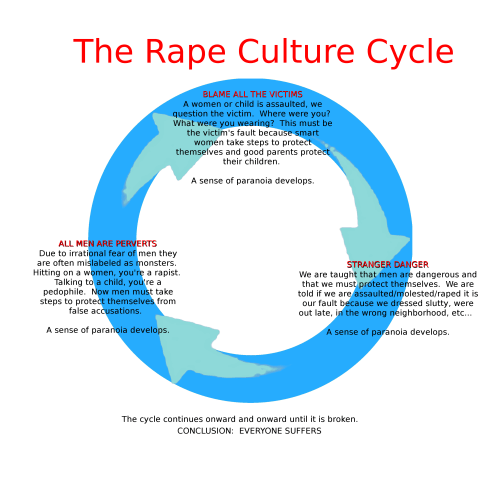 We’ve found out some horrible things since the sentence was handed down. The parents wrote letters to the judge pleading for leniency that are so appallingly clueless and selfish that you wonder how this boy has not become a full blown sociopath. The letters fell on sympathetic ears, however, since the judge himself was a Stanford athlete at one time. I’ve linked to the mother’s newly released letter since the father’s has pretty much gone viral and we’ve discussed it already in some downthread conversations.
A letter to the judge from Brock Turner‘s mother calls the convicted rapist the “most trustworthy and honest person I know.”
The emergence of Carleen Turner‘s glowing assessment of her “beautiful son,” a former Stanford swimmer, comes after his victim’s letter went viral, his father’s letter sparked outrage, andBrock’s own statement maintained the encounter was consensual.
His mother’s letter depicts Brock as a model student and citizen, and she laments the misfortune that has struck her son:
My first thought upon wakening every morning is “this isn’t real, this can’t be real. Why him? Why HIM? WHY? WHY?”
She goes on to describe the devastating effect of this “awful, horrible, terrible, gut-wrenching, life-changing verdict” on her family:
My once vibrant and happy boy is distraught, deeply depressed, terribly wounded, and filled with despair. His smile is gone forever-that beautiful grin is no more. … We are devastated beyond belief. My beautiful, happy family will never know happiness again.
In her concluding plea for mercy, she says Brock isn’t tough enough to survive prison and would be a “target” for other inmates:
I beg of you, please don’t send him to jail/prison. Look at him. He won’t survive it. He will be damaged forever and I fear he would be a major target. Stanford boy, college kid, college athlete- all the publicity……..this would be a death sentence for him.
This is from the mother of a convicted rapist worrying about her son being raped in prison. No one should be raped. EVER. Not even her rapist son deserves to be raped. But, really, how can anyone be so unaware of the suffering of her son’s rape victim and yet be so concerned about his potential rape? Here are some new developments found by the press since the story has garnered so much attention. Turner sent pictures of the rape victim’s breast to his friends.
Investigators believe Brock Turner may have photographed his assault victim’s breasts, then sent the pictures to a group of friends, the Daily Mail reported.
According to police, Turner received a text message via the GroupMe online app asking, “Who’s [sic] t*ts are those” from a fellow swimmer, identified as Justin Buck. However, the picture that prompted the question was deleted from the group chat by an unknown party.
A witness also told police that he saw a man standing over the victim holding his cell phone.
“The cell phone had a bright light pointed in the direction of the female, using either a flashlight app in his phone or its built-in app,” a police statement read.
The witness, identified as Blake Bolton, then “told the male subject to roll her over onto her side to breathe. The male subject did not do this. Bolton then got on his knees and checked her pulse. When he got back up, the male subject was gone.”
USA Swimming has banned Brock Turner for life. 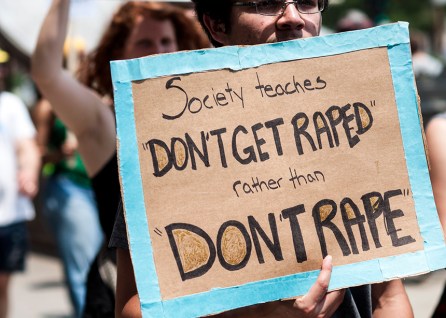
The U.S. governing body for the sport of swimming on Friday banned ex-Stanford University swimmer Brock Turner, whose six-month jail sentence for sexually assaulting an unconscious woman has stirred widespread outrage.
Condemning Turner’s “crime and actions,” USA Swimming said that he is not a current organization member and is ineligible for membership.
“Brock Turner’s membership with USA Swimming expired at the end of the calendar year 2014 and he was not a member at the time of his crime or since then,” USA Swimming spokesman Scott Leightman said. “As a result, USA Swimming doesn’t have any jurisdiction over Brock Turner.”
Court documents have been released and show that Brock Turner lied about his past partying exploits. Turner’s parents and the student himself indicated that Stanford made him do it. Evidence shows otherwise.
In a letter submitted to Persky prior to sentencing, Turner said he came from a small town in Ohio and never experienced partying that involved alcohol. But when he started attending Stanford, Turner wrote, he began drinking to relieve the stress of school and competitive swimming. He blamed a “party culture and risk-taking behavior” for his actions.
But prosecutors said they found text messages and photographs that show Turner lied and has a history of partying.
Investigators found photographs of Turner smoking from a pipe and another teammate was holding a bong, according to court documents. A photo of a bong was found as well as a video showing Turner smoking from a bong and drinking from a bottle of liquor.
“Furthermore, there are many text messages that are indicative of drug use, both during the defendant’s time at Stanford and during his time in Ohio when he was still in high school.”
In a message sent to a friend in 2014, Turner asked: “Do you think I could buy some wax so we could do some dabs?” Dabs is a reference to smoking a highly potent form of cannabis, known as honey oil.
Turner also talked about using acid while in high school and at Stanford. He bragged about taking LSD and MDMA together, an act referred to as “candyflippin,” according to prosecutors.
A professor in his Ohio community indicates that Turner’s surroundings enable all kinds of white privilege and bad behavior. It sounds a lot like the place where I grew up. (H/T to BostonBoomer)
The kids walk to school and go home for lunch. The schools are nationally recognized. In fact, the local nickname for Oakwood is “the Dome,” so sheltered are its residents from violence, poverty and inconvenient truths. I have lived here for more than 20 years.
Communities like this one have a dark side, though: the conflation of achievement with being “a good kid”; the pressure to succeed; the parents who shrug when the party in their basement gets out of control (or worse yet, when they host it) because “kids are gonna drink”; the tacit understanding that rules don’t necessarily apply. The cops won’t come. The ax won’t fall.
Yet now it has.
Invariably, when I tell someone who knows the Dayton area that I live in Oakwood, they assume that I am rich, narrow-minded, a Republican or some combination thereof. If most residents were just the stereotype, though, I would not have been happy here as long as I have. For the most part, I have loved raising my kids here. But I have struggled, too. My closest friends and I have a long-standing joke about needing to remember to “lower the bar” around here — about not falling prey to the pressures to conform and compete, not buying the line that the schools or the kids are special. Most of us understand our privilege and good fortune. Many do not.
There is an Oakwood in every city; there’s a Brock Turner in every Oakwood: the “nice,” clean-cut, “happy-go-lucky,” hyper-achieving kid who’s never been told no. There’s nothing he can’t have, do or be, because he is special. Fortunately, most kids like this will march into their predictably bright futures without victimizing anyone along the way. Many will do good in the world.
But it’s not hard to draw a straight line from this little ’burb (or a hundred like it) to that dumpster at Stanford. What does being told no mean to that kid? If the world is his for the taking, isn’t an unconscious woman’s body? When he gets caught, why wouldn’t his first impulse be to run, to make excuses — to blame the Fireball or the girl or the campus drinking culture? That is entitlement. That is unchecked privilege.

I’ve been in conversations about rape, violence, and rape culture for over 40 years. I feel like there’s not much new that can be added to the conversation although all the wisdom beings in the multiverse know that those of us that really care about this try angles old and new. It rarely captures public opinion unless it’s part of the rescuing the princess paradigm and that worries me.
It’s interesting that the thing that started this latest outrage also displays intersectionality so we not only see that rape culture is alive and well but the treatment of rapists by judges depends on factors like privilege and race. My guess is that treatment of victims depends on similar factors. The referenced article is by Shaun King. I wish he would investigate the justice meted out for poor women and for women that are racially minorities brutalized by men because my guess is they don’t get their day in court let alone their week in the press. Would this story have gotten so far if the victim was less educated or “articulate”? If she were a sex worker or poor? If she were a Hispanic woman who overstayed her VISA?
All victims of rape deserve justice as do all perpetrators.
Mothers and Fathers, don’t let your babies grow up to be rapists.

 peej
peej Carissa
 bostonboomer
 dakinikat
 ecocatwoman
 jjlo
jjlo mablue2
 Mama Lopez
 peggysue22
 quixote
 skydancingguestblogger
 Mona (aka Wonk the Vote)



 Sky Dancing
Recent Comments